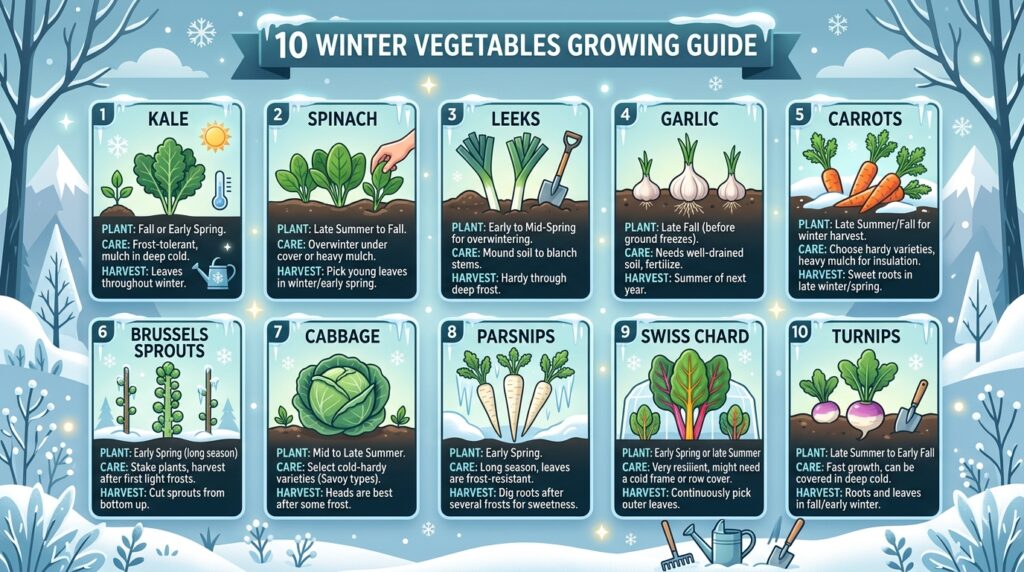
Think growing your own food stops when the temperatures drop? Think again! Winter vegetables are some of the most rewarding crops you can grow — they’re sweeter after a frost, easier on pests, and honestly just really satisfying to harvest when everything outside looks grey and dormant. Whether you’ve got a backyard plot, a balcony, or just a few containers on a windowsill, there’s a cold-season crop with your name on it. Let’s dive in!
At a Glance
- Many winter vegetables actually taste sweeter after exposure to frost, as cold temperatures convert their starches into sugars.
- Using a simple cold frame or row cover can extend your growing season by weeks and protect crops from the harshest freezes without any heating required.
- Most cold-season crops prefer to be direct sown or transplanted in late summer to early fall, so timing your planting is just as important as choosing the right variety.
- Container gardening works brilliantly for winter vegetables like spinach, lettuce, and mâche — a south-facing balcony with decent light is all you need.
- Watering needs drop significantly in winter, but consistent moisture (not waterlogging) is still essential for healthy root development in cold-season crops.
1. Kale
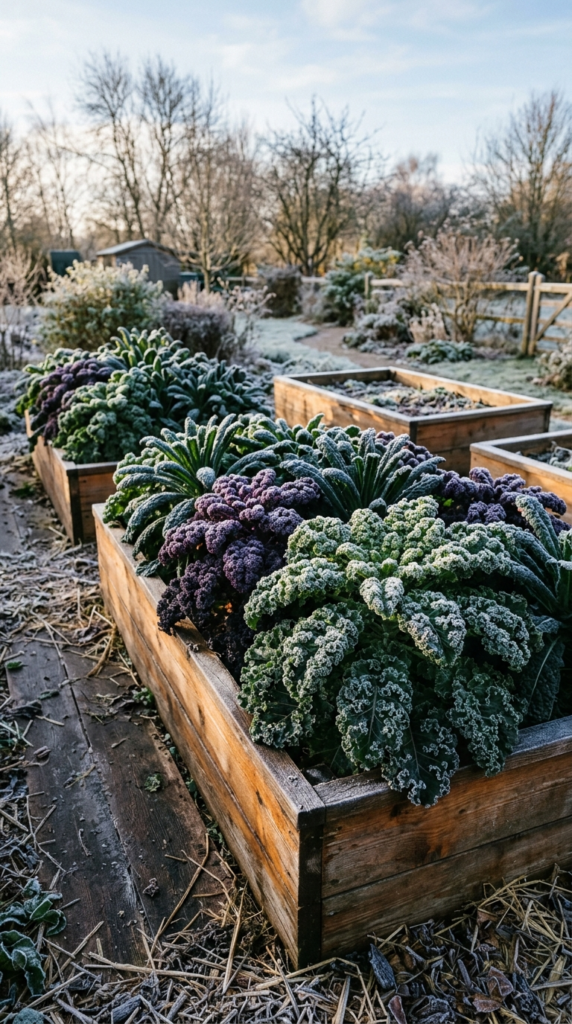
Kale is basically the undisputed champion of the winter vegetable garden — and for very good reason. It survives hard frosts, keeps producing leaves for months, and gets genuinely sweeter the colder it gets.
The secret is: harvest kale after a few good frosts for the best flavor. The cold stress triggers the plant to convert starches to sugar, giving you leaves that are tender and almost nutty-sweet.
You can grow kale in beds, borders, or large containers — it’s not fussy. Varieties like ‘Winterbor’, ‘Cavolo Nero’ (Tuscan kale), and ‘Red Russian’ are all excellent cold-hardy choices that’ll keep delivering right through the darkest months.
Plant kale in full sun to partial shade in rich, well-draining soil. Keep it consistently moist and harvest the outer leaves regularly — this encourages the plant to keep pushing out fresh new growth from the center.
Explore our full guide on growing kale in containers year-round for balcony-friendly tips.
For variety comparisons and nutritional profiles, Gardener’s World has a brilliant growing guide.
Kale is tough, beautiful, and delicious — the ultimate winter overachiever!
2. Spinach
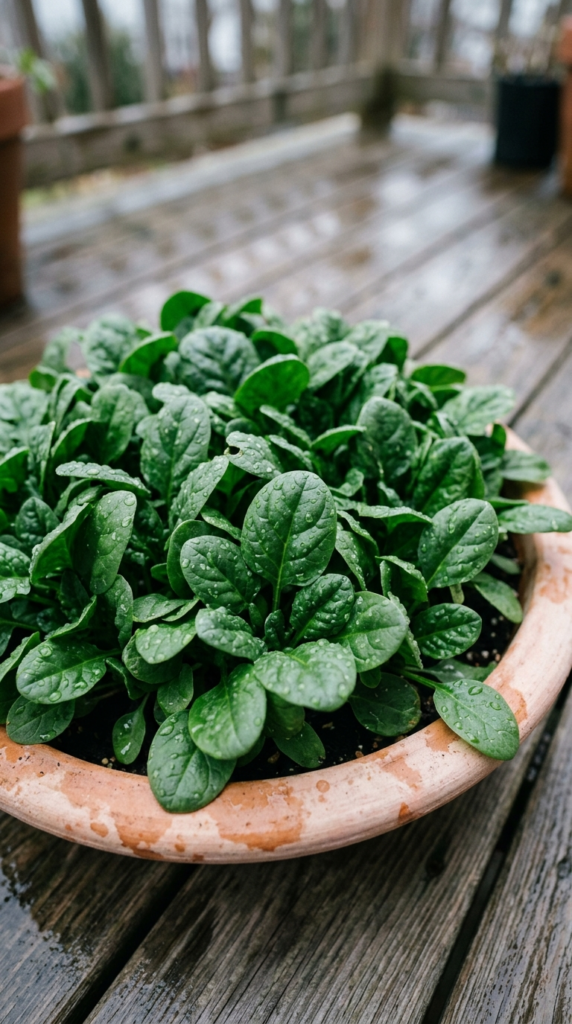
Spinach is one of those winter vegetables that feels almost too easy once you get the hang of it. It germinates in cold soil, grows quickly, and can be harvested as baby leaves within just a few weeks of planting.
Hardy to about 15°F (-9°C), spinach thrives when temperatures hover between 35–65°F (2–18°C). Above that range it bolts; below it, it goes dormant but doesn’t die — it just waits patiently for a warmer day to start growing again.
- Sow seeds directly ½ inch deep, 2 inches apart
- Thin seedlings to 4–6 inches apart for full-size leaves
- Water consistently but never let soil sit waterlogged
- Harvest outer leaves to keep the plant producing
- Under a cold frame, spinach can produce almost year-round
Container growing works brilliantly for spinach. A window box or deep tray on a south-facing balcony is genuinely all you need — just make sure you’ve got at least 6 inches of depth for roots to develop properly.
Check out our balcony vegetable garden setup guide for container sizing tips.
You’ve totally got this — spinach is one of the most beginner-friendly winter crops you can grow!
3. Garlic
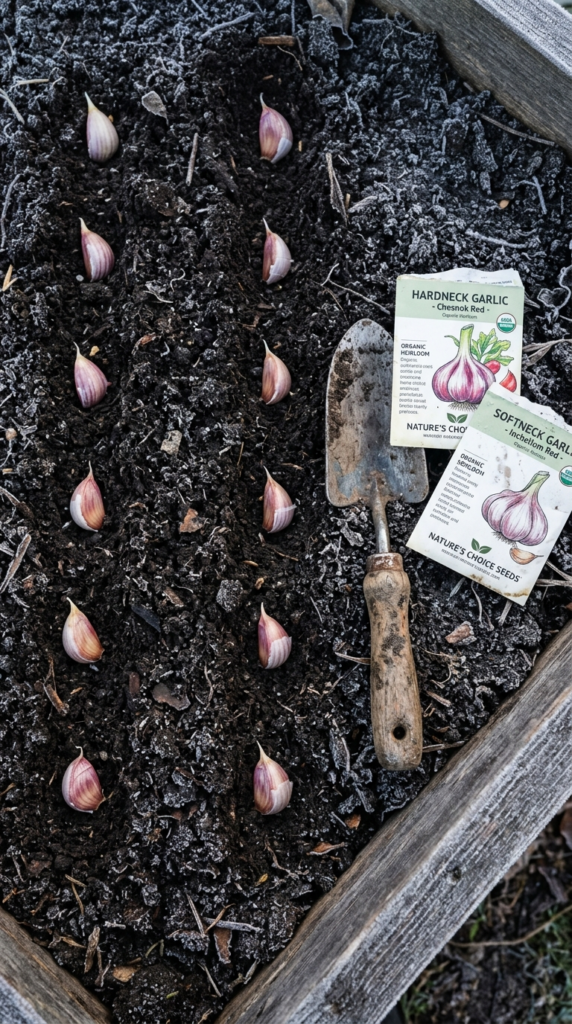
Here’s the deal: garlic is one of the greatest slow-burn joys in the vegetable garden. You plant it in autumn, it quietly grows roots through winter, then springs up in early summer with fat, flavorful bulbs that’ll blow any supermarket garlic out of the water.
Here’s the thing: garlic actually needs a cold period (called vernalization) to split into individual cloves and form a proper bulb. Planting in autumn is not optional — it’s essential for a good harvest!
Plant individual cloves pointed-end-up, about 2 inches deep and 6 inches apart. Hardneck varieties like ‘Rocambole’ or ‘Purple Stripe’ are generally more cold-hardy and more flavorful than softneck types, though softneck stores longer.
Mulch generously over your garlic bed once the ground starts to freeze. This insulates the roots, prevents heaving from freeze-thaw cycles, and keeps moisture levels more consistent. Come spring, pull back the mulch to let the sun warm the soil.
Explore our detailed autumn planting calendar for edible gardens to time your garlic perfectly.
The RHS garlic growing guide is an excellent reference for variety selection and timing.
Plant it, forget it (mostly), and prepare to be amazed next summer!
4. Brussels Sprouts
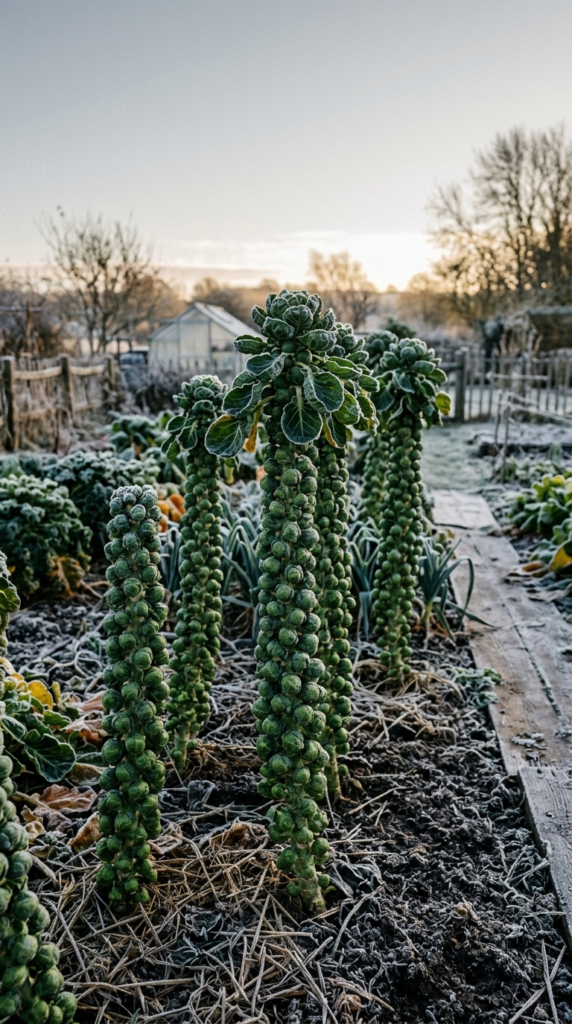
Brussels sprouts are the long game of the winter vegetable world — they take months to mature, but the payoff is absolutely worth it. And just like kale, a good hard frost makes them taste dramatically better.
These tall, architectural plants need to go in the ground in late spring or early summer to be ready by winter. They’re heavy feeders, so plant them in rich soil and give them a nitrogen boost mid-season. They also need staking in exposed spots — those tall stalks can get top-heavy!
| Variety | Days to Maturity | Cold Hardiness | Flavor Notes |
| ‘Long Island Improved’ | 90 days | Zone 4+ | Classic, nutty |
| ‘Jade Cross’ | 80 days | Zone 4+ | Sweet, uniform |
| ‘Rubine’ | 105 days | Zone 5+ | Red, mild, sweet |
| ‘Falstaff’ | 90 days | Zone 4+ | Purple, bold flavor |
Companion planting with dill or thyme can help deter aphids, which are the main pest problem with Brussels sprouts. Don’t plant them near strawberries — they’re not good neighbors.
Browse our companion planting guide for brassicas to plan your winter beds.
Patience is the secret ingredient — and Brussels sprouts reward it spectacularly!
5. Carrots
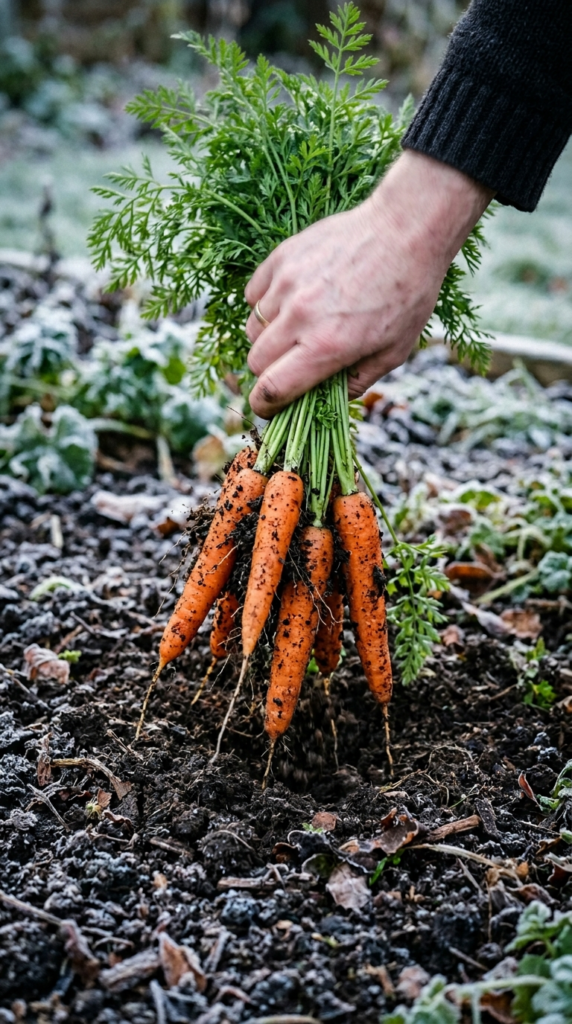
Carrots left in the ground through winter are one of gardening’s best-kept secrets. Frost converts their starches to sugars, meaning a carrot pulled in January can be noticeably sweeter than one harvested in October. Talk about a game-changer!
The secret is mulching heavily over your carrot bed once the ground threatens to freeze. A thick layer of straw keeps the soil workable so you can dig carrots all winter long, even when the surface is frozen solid.
Choose shorter, stockier varieties for winter growing — ‘Chantenay’, ‘Danvers’, or ‘Nantes’ types do better in heavier or colder soils than long, slender varieties. They’re also better suited to container growing if you’re working with a balcony or patio setup — just make sure your container is at least 12 inches deep.
Sow carrot seeds in late summer for a winter harvest. They’re slow germinators, so keep the soil consistently moist until sprouts appear. Thin seedlings carefully — crowded carrots fork and twist rather than growing straight.
See our container carrot growing guide for pot size and variety recommendations.
Sweet, crunchy, and totally homegrown — winter carrots are one of those harvests you’ll never forget!
6. Leeks
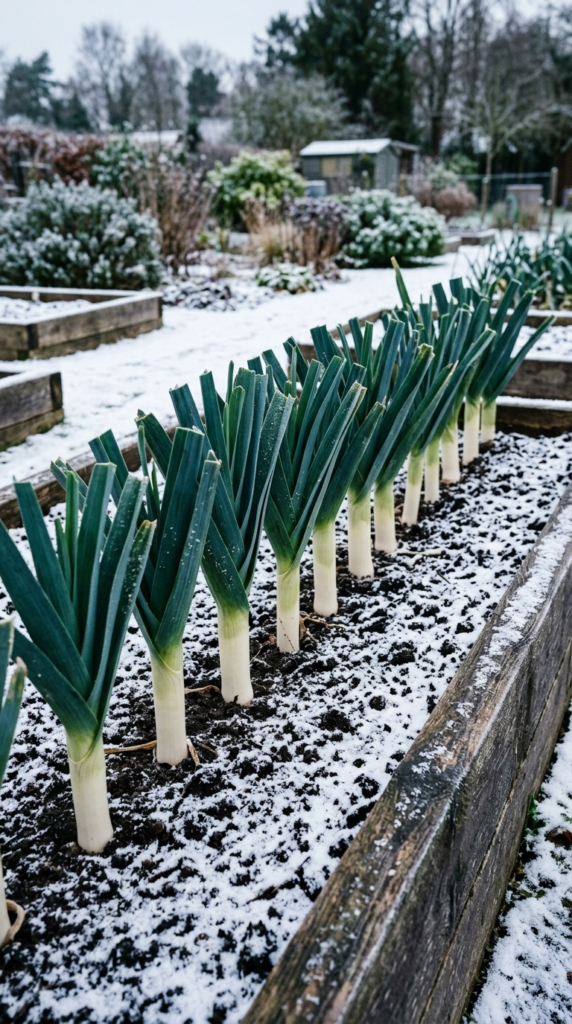
Leeks are the quiet, dependable backbone of the winter vegetable patch. They’re genuinely frost-hardy, they stand upright in the ground for months, and you just pull them as you need them — no storage required!
Plant leeks in spring for a winter harvest. The trick to getting those long, pale white shanks is earthing up — gradually mounding soil around the stems as they grow to blanch them and extend the white edible portion. It sounds fussy but it’s really just a bit of extra soil pushed up around the plants every few weeks.
Hardy varieties like ‘Musselburgh’, ‘Bleu de Solaize’, and ‘St. Victor’ will happily stand through temperatures well below freezing. ‘Bleu de Solaize’ is particularly beautiful — the leaves turn a stunning steel-blue color in cold weather, making it as ornamental as it is edible.
Leeks grow well in containers too, as long as your pot is at least 12 inches deep. A large window box or trough planter works perfectly, and you can harvest them one by one as you need them in the kitchen.
Check out our year-round allium growing guide covering leeks, garlic, and more.
Leeks are steady, reliable, and endlessly useful in winter cooking — plant them and you’ll wonder how you ever managed without them!
7. Swiss Chard
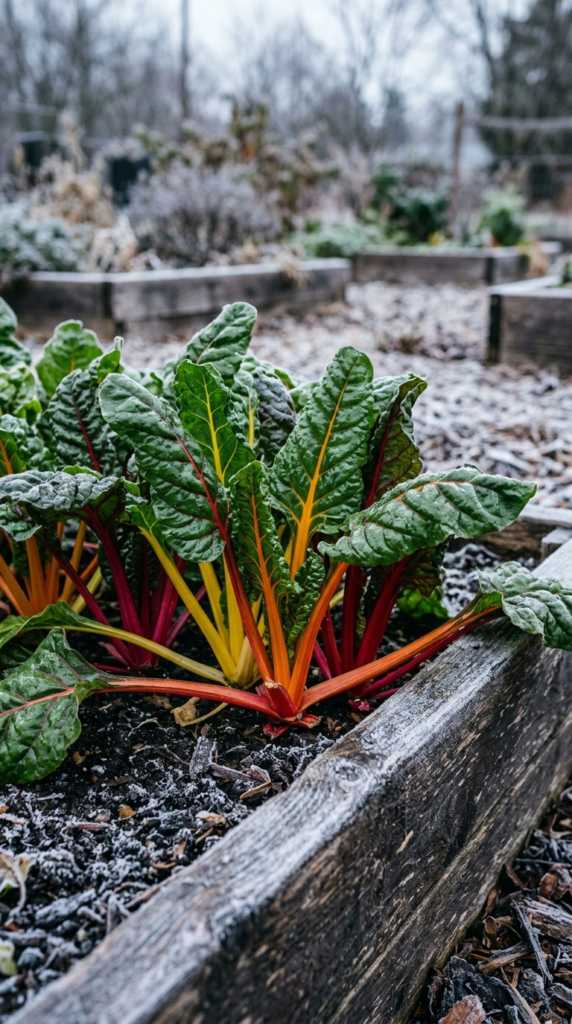
Swiss chard brings a splash of pure color to the winter vegetable garden that no other crop quite matches. Those blazing red, yellow, and orange stems are like stained glass in a grey winter landscape — genuinely stunning.
Pretty cool, right? It’s also remarkably cold-hardy, tolerating temps down to about 15°F (-9°C), and the flavor actually mellows and sweetens slightly in cooler weather. Young leaves are excellent raw in salads; larger leaves are wonderful sautéed.
Rainbow chard (a mix of differently colored varieties) is a brilliant choice if you want maximum visual impact in both your garden and your kitchen. Grow it in beds or containers — it’s not fussy, and a single large pot of rainbow chard on a balcony looks genuinely spectacular.
Sow in late summer for winter harvesting, or buy transplants in early autumn. Pick the outer leaves regularly and the plant will keep producing from the center. In mild winters, a single plant can produce for six months or more without any protection.
Explore growing colorful winter vegetables in containers for design-forward growing ideas.
Swiss chard proves that your winter garden can be gorgeous and productive at the same time!
8. Mâche (Corn Salad)
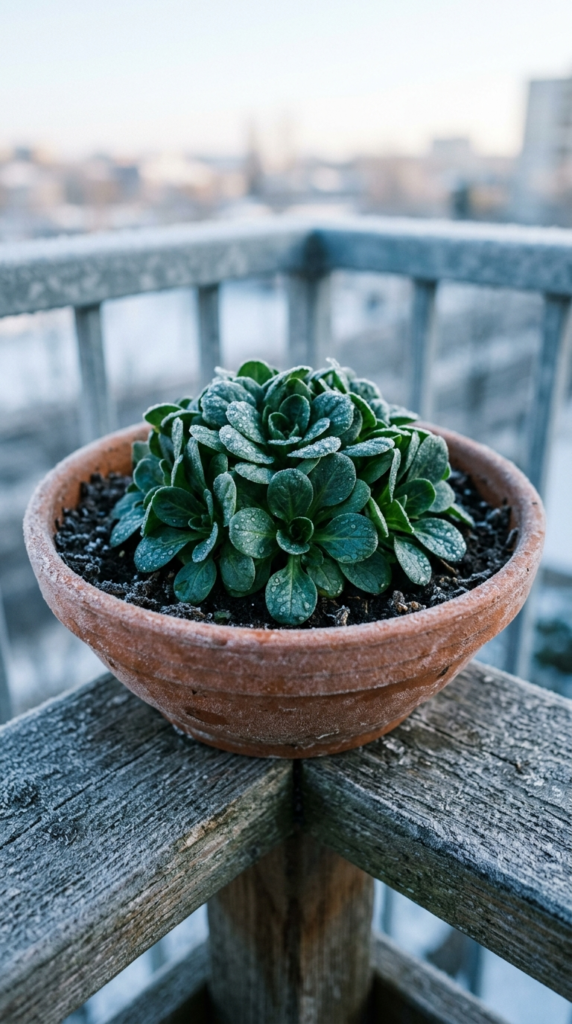
Mâche, also called corn salad or lamb’s lettuce, is one of the most cold-tolerant salad crops you can grow — and it’s criminally underrated. This little plant laughs at frost that would kill other salad greens.
Here’s the deal: mâche can survive temperatures down to 5°F (-15°C) without protection. Under a simple cold frame or cloche, it’ll produce fresh, tender leaves all winter long even in Zone 5 or 6.
The flavor is mild, nutty, and slightly sweet — completely different from regular lettuce. The small, spoon-shaped leaves are delicate and silky, making mâche a genuinely luxurious salad green that costs a fortune at farmers’ markets but costs almost nothing to grow yourself.
Sow seeds thickly in late summer or early autumn — mâche needs cool conditions to germinate and won’t do well if sown during warm spells. It grows slowly but steadily, forming dense little rosettes that you harvest whole or leaf by leaf. It’s perfect for windowsill growing or shallow containers on a sheltered balcony.
See our guide to growing salad greens in winter for more cold-hardy salad options.
Once you grow mâche, you’ll make space for it in your winter garden every single year!
9. Winter Lettuce
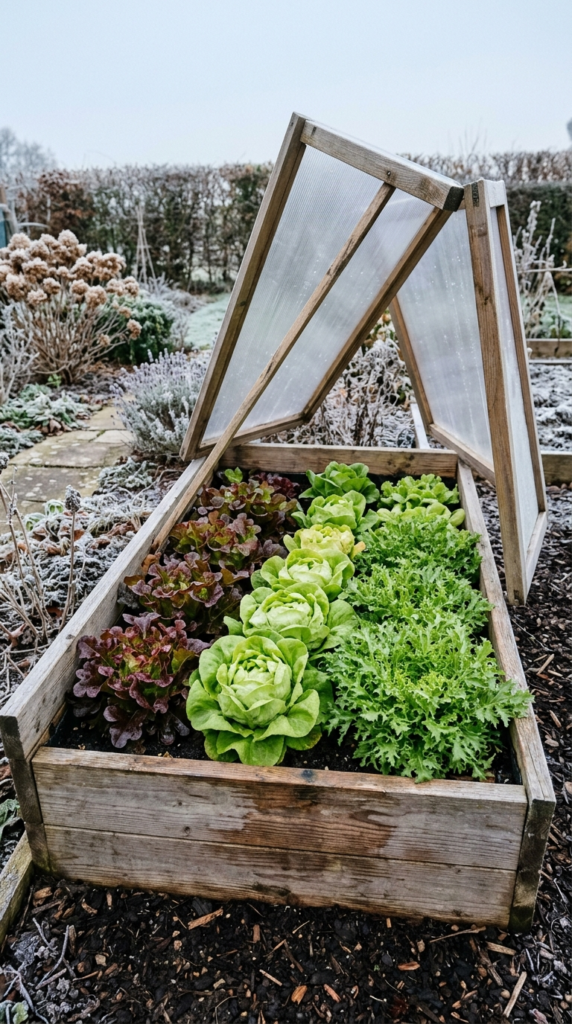
Not all lettuce is created equal when it comes to winter, but the right cold-hardy varieties can keep you in fresh salads from October right through to April. The key is choosing varieties specifically bred for low-light, low-temperature growing.
Look for varieties labeled as winter lettuce or arctic varieties:
- ‘Winter Density’ — butterhead type, incredibly hardy
- ‘Rouge d’Hiver’ — beautiful red romaine, nutty flavor
- ‘Arctic King’ — small butterhead, survives hard frosts
- ‘Valdor’ — deep green butterhead, excellent cold tolerance
- ‘Merveille des Quatre Saisons’ — stunning red and green, French heirloom
The biggest enemy of winter lettuce isn’t cold — it’s waterlogging. Make sure your containers or beds have excellent drainage, because cold wet soil is a recipe for rotting roots and crown rot. Under a cold frame or fleece row cover, even relatively tender varieties can push through mild winters without damage.
Sow seeds in late summer for autumn transplanting, or direct sow in early autumn. In containers, space plants 8 inches apart and give them as much light as possible — a south-facing windowsill or balcony is ideal.
Explore our indoor winter salad garden setup guide for windowsill growing tips.
Fresh homegrown salad in the middle of winter feels like a genuine superpower — you’ve totally got this!
10. Broad Beans (Fava Beans)
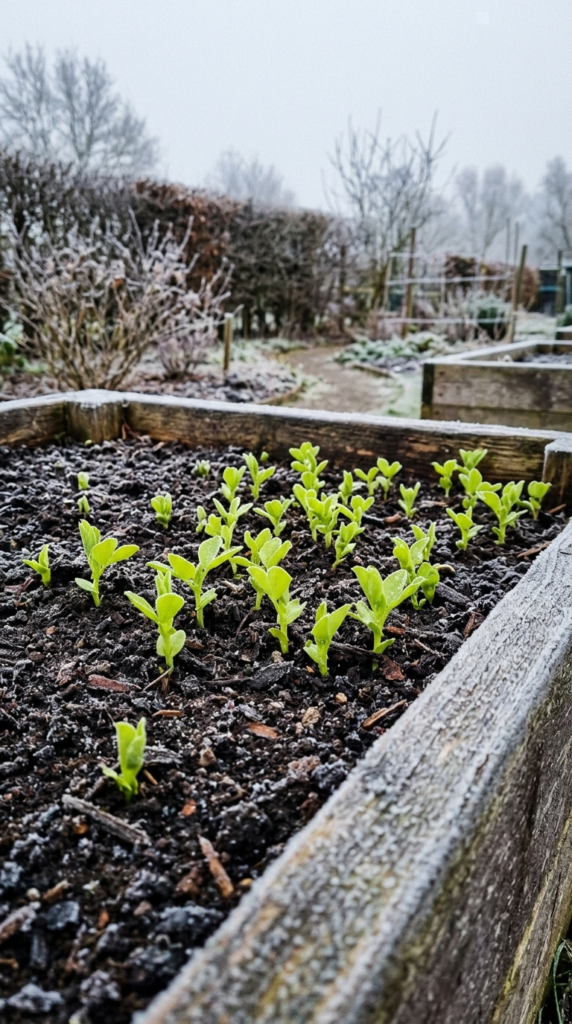
Broad beans (fava beans) are a brilliant example of a winter vegetable you plant now and harvest gloriously in late spring — and autumn-sown broad beans consistently outperform spring-sown ones in both yield and flavor. They’re genuinely one of the best-kept secrets in the winter garden.
Pretty cool, right? Autumn-sown broad beans develop stronger root systems over winter, which means they hit the ground running in spring and produce bigger, earlier harvests than seeds sown in March.
Plant seeds 2 inches deep and about 9 inches apart in double rows in October or November. Hardy varieties like ‘Aquadulce Claudia’ and ‘Super Aquadulce’ are specifically bred for autumn sowing and will shrug off temperatures down to about 14°F (-10°C) once established.
They’ll grow slowly through winter, looking rather small and unimpressive — don’t panic! Once spring arrives, they’ll explode with growth. Pinch out the growing tips once the first flowers set to deter blackfly (a common pest) and encourage the pods to fill out quickly.
Check out our spring harvest planning guide to time your broad bean planting alongside other crops.
The University of Illinois Extension vegetable guide has excellent information on legume growing across different climates.
Plant broad beans this autumn and treat yourself to the best spring harvest you’ve ever had!
Frequently Asked Questions
What are the easiest winter vegetables for beginners to grow?
Spinach, kale, and mâche are the three best starting points for beginner winter growers. They’re all cold-tolerant, fast-growing (especially for baby leaves), and work well in containers as well as open ground. Start with these three and you’ll build the confidence to tackle everything else on this list.
Do I need a greenhouse to grow winter vegetables?
Not at all! Most of the winter vegetables on this list grow perfectly well outdoors with little or no protection. A simple cold frame, fleece row cover, or even a layer of straw mulch can dramatically extend your season and protect plants during the harshest cold snaps — all without any heating or a greenhouse. Urban gardeners do brilliantly with just these basic tools.
Can I grow winter vegetables in containers on a balcony?
Absolutely — and many of these crops actually thrive in containers! Spinach, lettuce, mâche, kale, Swiss chard, and carrots are all excellent choices for balcony container growing in winter. Make sure your containers have good drainage, use a quality potting mix, and position them in the sunniest spot your balcony offers. A south or west-facing balcony is ideal.
When should I start planting for a winter vegetable harvest?
Most winter crops need to be planted in late summer to early autumn — typically August to October depending on your climate. This gives them enough time to establish before growth slows in the shortest days of winter. Garlic and broad beans are exceptions — these are planted in autumn specifically to grow through winter and harvest in summer and late spring respectively.
How do I protect winter vegetables from hard frosts?
The most effective and affordable methods are fleece row covers (also called floating row covers or garden fabric), cold frames, and cloches. These trap warmth from the soil and shield plants from the worst of the wind and frost. For container plants, moving pots against a south-facing wall or into an unheated porch on the coldest nights can make a significant difference without any special equipment.
A Few Final Thoughts
Growing winter vegetables is one of the most rewarding decisions you can make as a home gardener — it keeps you connected to your garden year-round, fills your kitchen with genuinely fresh seasonal produce, and honestly gives you a serious edge over fair-weather gardeners who pack up at the first frost. The ten crops in this guide cover every level of experience, from foolproof baby spinach for first-timers to the slow, satisfying rhythm of autumn-sown broad beans and garlic. The cold season is not the end of your growing year — it’s just a different, quieter, and often sweeter chapter of it. Pick two or three crops from this list to start with, get them in the ground, and build from there. Your winter harvest is waiting for you — now go make it happen!