Does your home feel dull, lifeless, and a little depressing once the outdoor garden goes dormant for winter? You’re not imagining it — and the fix is way simpler than you think! The best indoor plants for winter months don’t just survive the cold season, they genuinely thrive indoors, adding color, texture, and life to every room when you need it most. The right houseplants can transform your home from a winter hideout into a lush, breathing green sanctuary. Ready to find out which ones make the cut?
At a Glance
- Most of the best indoor plants for winter months are low-light tolerant, which is crucial since winter days are shorter and natural light is significantly reduced indoors.
- Overwatering is the number one killer of houseplants in winter — most plants need watering far less frequently in cold months due to slower growth and lower evaporation rates.
- Adding a humidifier near your indoor plants in winter counteracts the dry air from heating systems, which is one of the biggest stressors houseplants face during cold months.
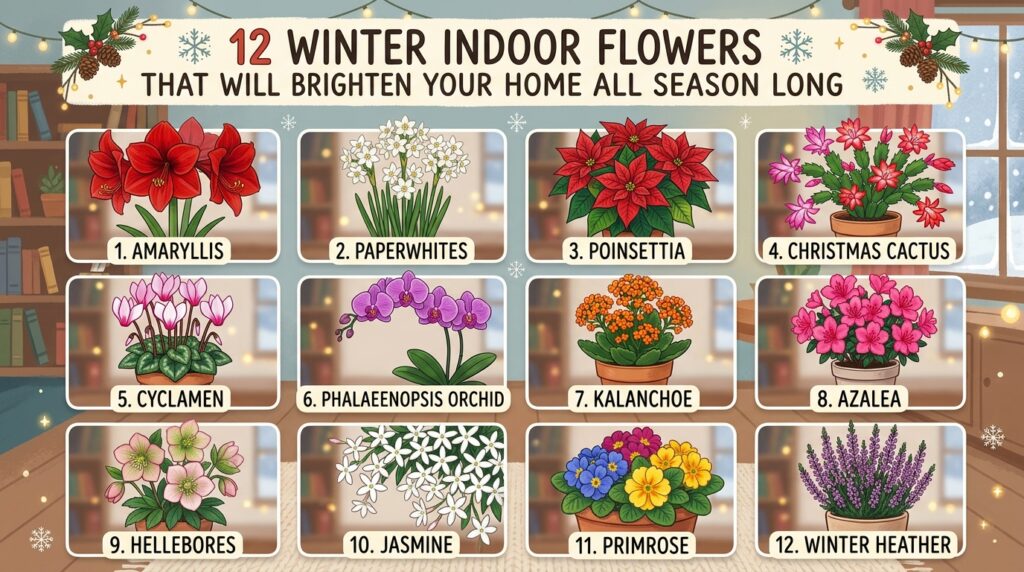
- Flowering winter houseplants like cyclamen, Christmas cactus, and paperwhite narcissus add genuine color and fragrance to your home at the most dreary time of year.
- Winter is actually a great time to expand your houseplant collection — most of these plants are widely available at garden centers and grocery stores throughout the season.
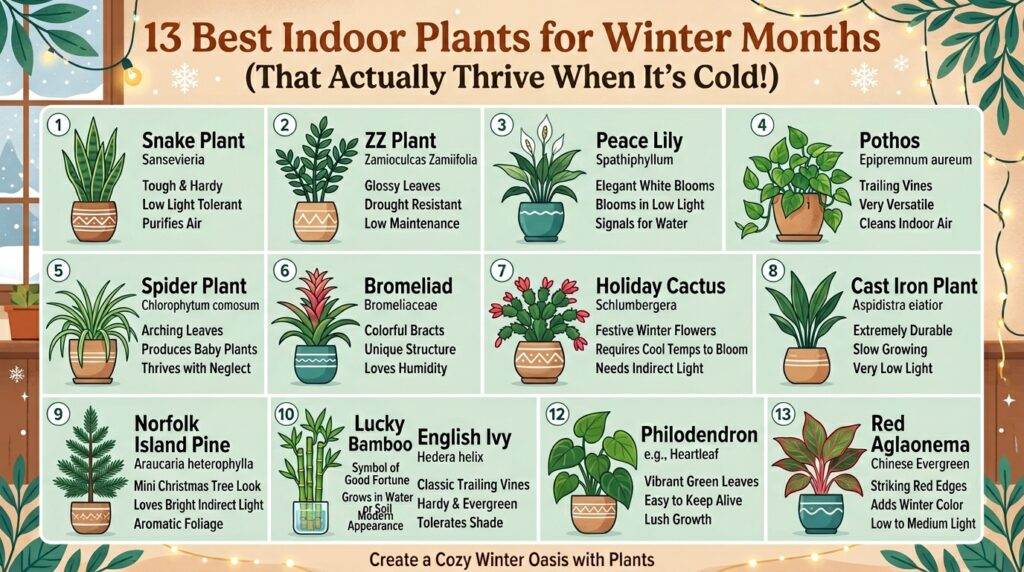
1. Pothos — The Ultimate Low-Light Winter Survivor
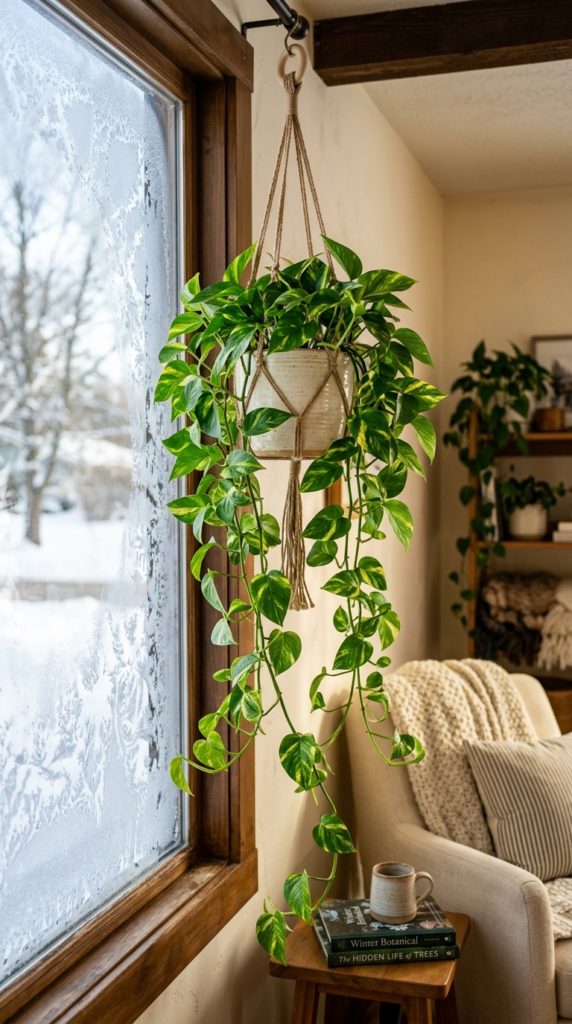
If you could only own one indoor plant for winter, pothos would be the easy winner. It tolerates low light, survives inconsistent watering, and keeps growing cheerfully even when you’re neglecting it in your winter hibernation mode!
Pothos (Epipremnum aureum) thrives in the kind of dim, short-daylight conditions that winter delivers. While other plants sulk and drop leaves, pothos just keeps putting out new growth. The trailing vines look absolutely gorgeous cascading from a high shelf or hanging basket — especially with frost on the windows behind it.
💡 The secret is: Water your pothos even less in winter than usual. Wait until the top 2 inches of soil feel completely dry, then water thoroughly. Root rot from overwatering is far more common in winter than underwatering.
Golden pothos, marble queen, and neon pothos are all excellent winter performers. Neon pothos — with its electric lime-green leaves — is especially striking against the gray, muted tones of winter interiors. It’s like a little burst of sunshine when there’s none outside!
Place your pothos in bright indirect light if possible, though it’ll manage in quite dim corners too. Keep it away from cold drafts and heating vents — both are equally damaging to tropical houseplants in winter.
Explore our guide to the best trailing houseplants for indoor display in winter for more hanging plant ideas. The Missouri Botanical Garden plant finder has excellent pothos care info too.
You genuinely can’t kill this one — give it a try!
2. Snake Plant — Best Indoor Plant for Winter Air Quality
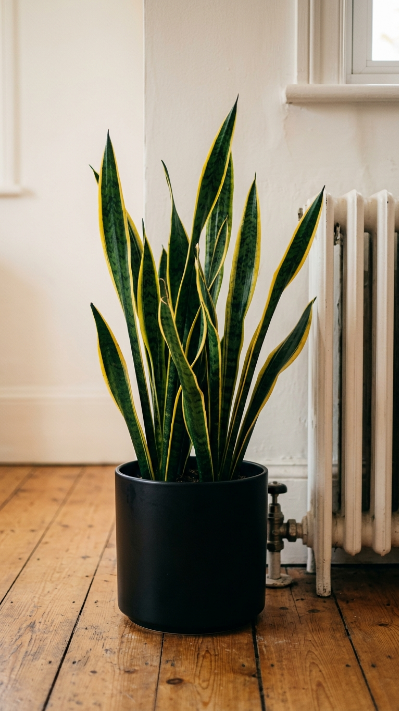
The snake plant is basically the superhero of winter houseplants — tough, architectural, and able to survive in conditions that would finish off lesser plants. It even tolerates the hot, dry air that blasts from radiators and forced-air heaters all winter long!
Here’s the deal: snake plants are succulent-like in their water storage, which means they genuinely prefer to be slightly neglected in winter. Watering once every three to six weeks is completely sufficient — and that’s not a typo. In winter, these plants barely drink at all.
Sansevieria (now officially reclassified as Dracaena trifasciata) comes in gorgeous architectural varieties — from the classic upright mother-in-law’s tongue to the squat bird’s nest varieties. All of them handle low winter light better than almost any other houseplant.
An added bonus? Snake plants are recognized for their air-purifying qualities, processing carbon dioxide at night and releasing oxygen — making your home air a little fresher through those sealed-up winter months.
- Water frequency in winter: every 3–6 weeks
- Light tolerance: very low to bright indirect
- Humidity requirement: low (loves dry air!)
- Cold tolerance: keep above 50°F (10°C)
- Growth rate in winter: very slow — that’s totally normal
Read our post on snake plant care in winter — what you need to know for a full seasonal care guide.
Set it, (barely) water it, and enjoy it — all winter!
3. Peace Lily — Winter Blooms in Low Light
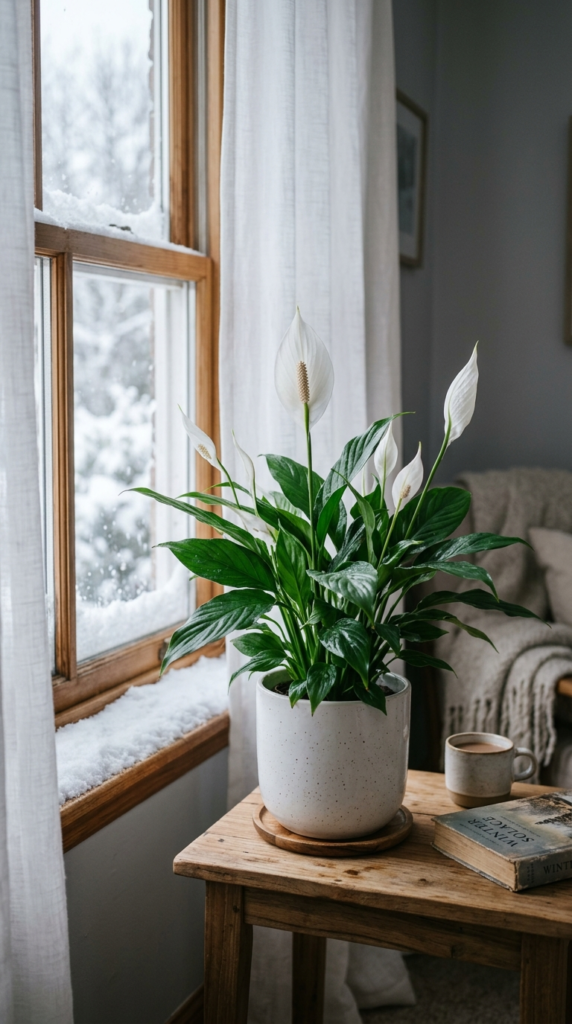
One of the few indoor plants that actually blooms in winter low light — the peace lily is extraordinary. Those elegant white sail-shaped flowers brighten up any room, and this plant asks for almost nothing in return!
Peace lilies (Spathiphyllum) are one of the most forgiving houseplants for low-light winter conditions. They don’t need a south-facing window to bloom — a bright bathroom, a dim office, or a shaded corner of the living room all suit them perfectly.
💡 Here’s the thing: Peace lilies are dramatic but not delicate. When they need water, their leaves droop noticeably — and then perk right back up within hours of being watered. It’s basically a built-in watering alarm system!
In winter, the cool room temperatures that might stress other tropical plants actually encourage peace lilies to push out new flower spikes. Keep them in rooms around 60–75°F (15–24°C), away from heating vents that would dry them out excessively.
Mist the leaves occasionally or wipe them with a damp cloth in winter — the dry heating-season air isn’t their favorite, and a little extra humidity keeps them looking lush. Peace lilies are also low-maintenance in terms of fertilizing — skip feeding entirely in winter and resume in spring.
Check out our full guide to peace lily care through winter and beyond. For authoritative houseplant care guides, Clemson University Cooperative Extension is an excellent resource.
Beautiful, forgiving, and blooming in winter — what’s not to love!
4. ZZ Plant — Nearly Indestructible in Winter
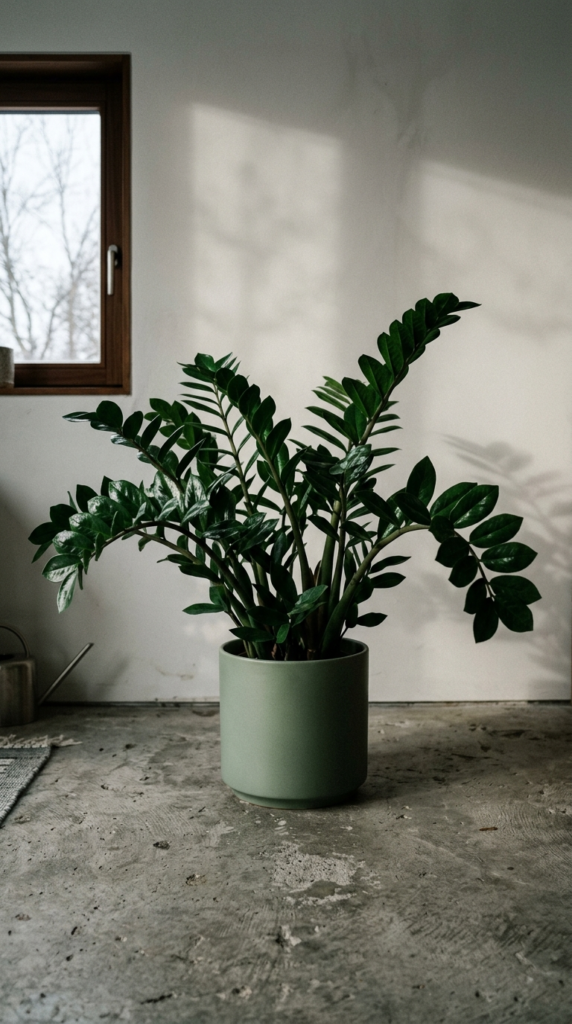
Talk about a game-changer — the ZZ plant practically laughs at winter conditions. Low light? Fine. Dry air? No problem. Forgot to water it for six weeks? It genuinely doesn’t care.
ZZ plants (Zamioculcas zamiifolia) store water in thick underground rhizomes, which means they’re engineered by nature to survive long dry spells — making them the ideal plant for winter months when you’re busy, distracted, or just not in the mood to remember watering schedules.
The glossy, waxy dark green leaves reflect light beautifully in dim winter rooms, creating a presence that’s rich and architectural without requiring any effort from you. In low-light conditions where other plants get leggy and sad-looking, ZZ plants just stay polished and perfect.
💡 Water your ZZ plant just once a month in winter — and if you forget entirely for a couple of months, it will almost certainly recover. Just never let it sit in water or a wet saucer, or you’ll get the one thing that CAN kill it: root rot.
Raven ZZ, a stunning variety with near-black leaves, is one of the most dramatic houseplants you can own and it’s just as tough as the standard green variety. If you want something genuinely striking in your winter home, this is it.
See our article on ZZ plant varieties and how to care for them in winter.
Indestructible, gorgeous, and zero drama — the ZZ is your winter best friend!
5. Chinese Evergreen — Color and Drama All Winter Long
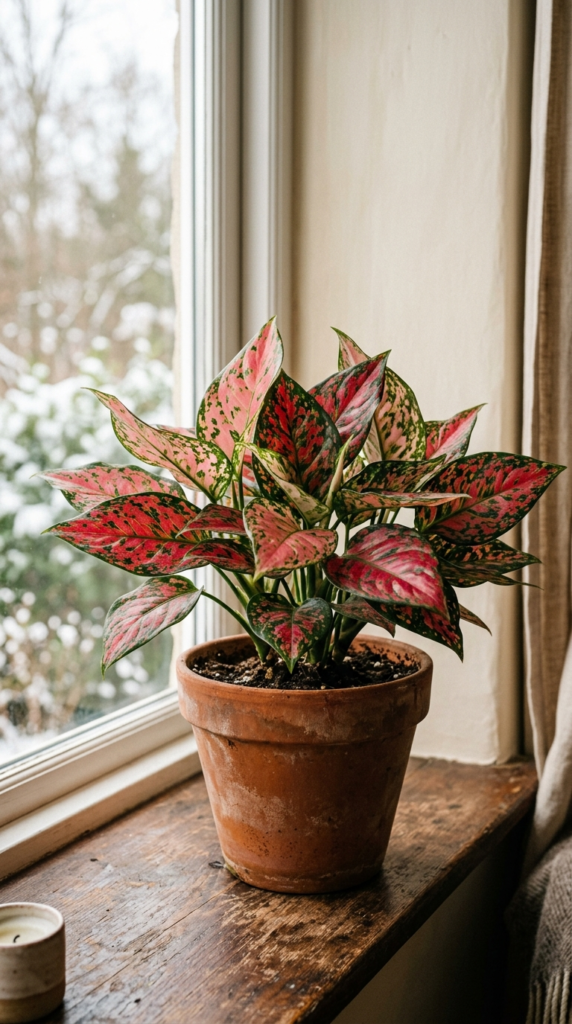
Chinese evergreens are wildly underrated — and once you discover them, you’ll wonder how you ever made it through winter without one. They come in a dazzling range of colors from silver-green to hot pink to deep red, and they thrive in exactly the low-light, dry-air conditions that winter delivers.
Aglaonema varieties are practically made for winter indoor conditions. They tolerate low humidity (hello, forced-air heating), inconsistent watering, and dim light better than nearly any other colorful-leaved plant. You get maximum visual drama for minimum care investment — that’s the deal!
The pink and red varieties like Aglaonema ‘Siam Aurora’ or ‘Red Valentine’ are especially spectacular in winter, when you’re starved for color. Their richly saturated leaves genuinely look like living abstract art, and they hold that color even in dim conditions.
Keep your Chinese evergreen away from cold windows and drafts — they’re tropical at heart and don’t love temperatures below 60°F (15°C). Beyond that, they’re genuinely one of the most hands-off colorful houseplants you can own.
Discover more in our post on the best colorful indoor plants for winter months.
Winter just got a whole lot more colorful — you’re welcome!
6. Cyclamen — The Showstopping Winter Flowering Plant
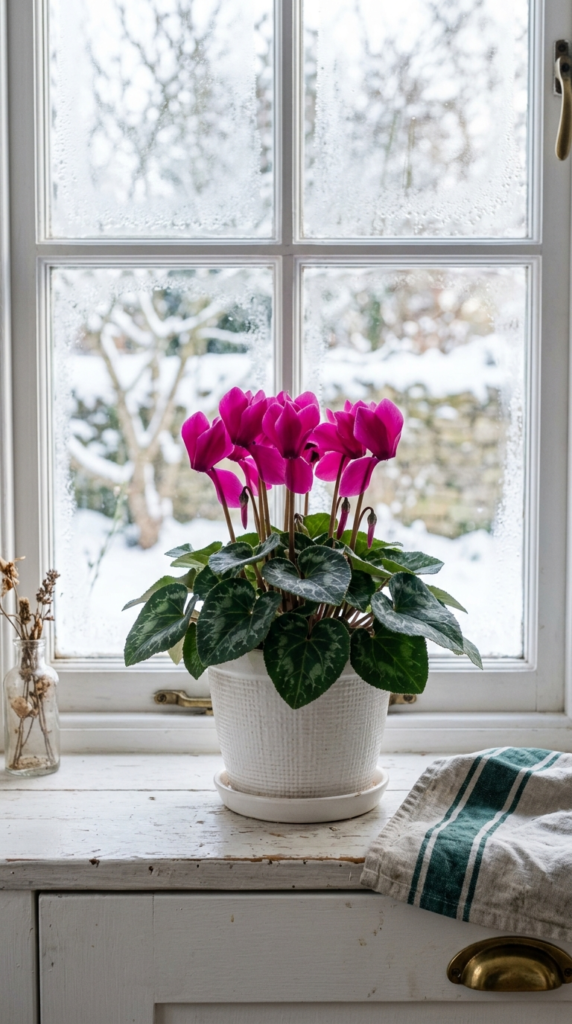
If you want winter flowering indoor plants that genuinely stop people in their tracks, cyclamen is your answer. Those swept-back butterfly flowers in magenta, pink, red, white, and coral are absolutely breathtaking — and they bloom their hearts out during the coldest months of the year!
Here’s the thing that most people get wrong about cyclamen: they’re actually cool-weather lovers, not tropical plants. They prefer temperatures of 50–65°F (10–18°C) — which means a cool windowsill, an unheated sunroom, or even a cool bedroom is exactly where they want to be. Keep them away from radiators and they’ll reward you with weeks of blooms!
💡 Water cyclamen from the bottom, not the top. Fill a saucer with water and let the plant drink upward for 20–30 minutes, then discard any remaining water. Getting water on the tuber or leaves invites rot.
Deadhead spent flowers by twisting and pulling the stem cleanly from the base rather than cutting — this encourages new blooms to keep coming. A well-cared-for cyclamen can bloom continuously for three to four months through winter!
After blooming finishes, you can actually encourage cyclamen to go dormant and rebloom the following season — but that’s an advanced move. For most people, treating it as a long-season annual and replacing it each year is perfectly reasonable.
Read our full cyclamen care guide for indoors in winter.
Weeks of incredible color for very little effort — cyclamen delivers every time!
7. Cast Iron Plant — Thrives on Neglect in Cold Months
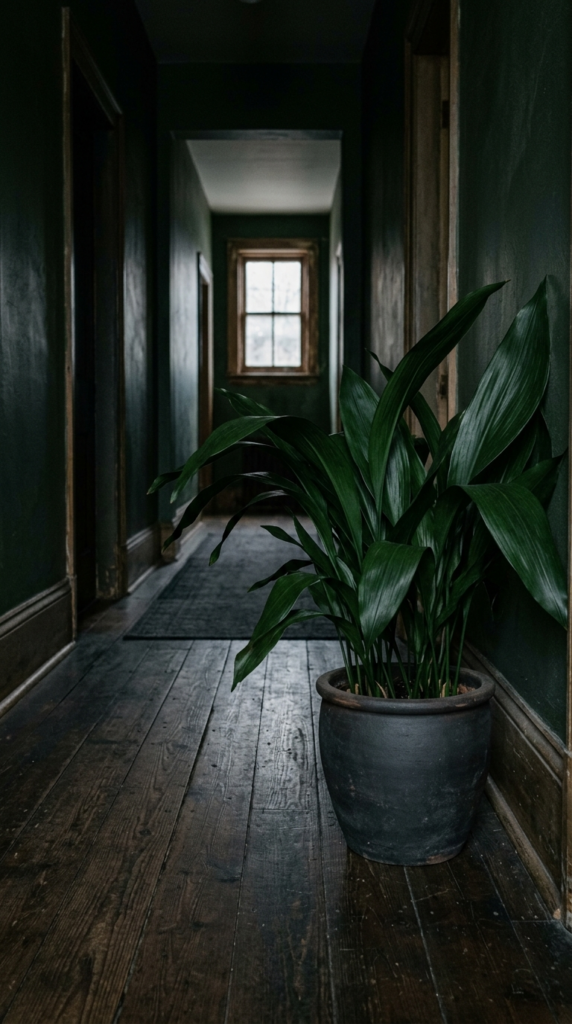
The name says it all — the cast iron plant (Aspidistra elatior) is practically legendary for its ability to endure conditions that would destroy anything else. Dim hallway? Zero problem. Forgotten for weeks? Shrugs it off. Cold drafts near the door? Doesn’t flinch.
Aspidistra is one of the only houseplants that genuinely thrives in very dark corners — not just “tolerates” them, but actually prefers low light. This makes it invaluable in winter, when natural light is at its annual minimum.
The long, arching, deep-green strap leaves add a bold architectural statement to any space, and the plant grows slowly and steadily without any fuss. It’s the ultimate set-it-and-forget-it plant for winter months.
Water it every two to four weeks in winter, give it almost zero fertilizer until spring, and simply let it do its thing. The cast iron plant genuinely asks for almost nothing — and delivers a reliably lush, dramatic look in return.
This is the plant for dim hallways, dark staircases, and windowless bathrooms — all those spots where every other plant you’ve tried has slowly faded and died.
Get more ideas at our post on the best indoor plants for dark rooms and low-light spaces.
This one has “unkillable” energy — and we are here for it!
8. Heartleaf Philodendron — Fast-Growing Winter Favorite
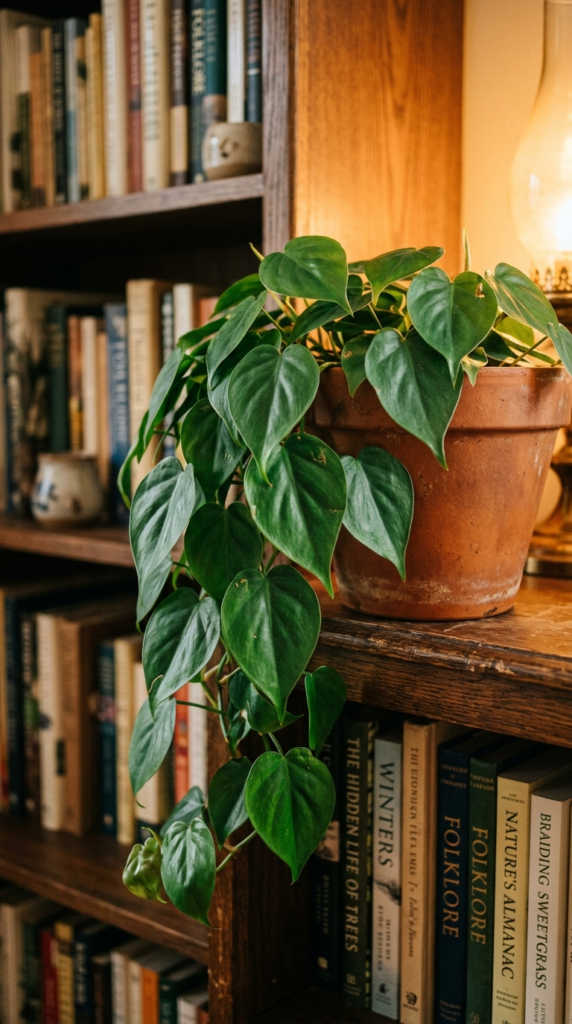
The heartleaf philodendron grows so enthusiastically in winter that you might actually forget it’s the dormant season! Those glossy, heart-shaped leaves just keep coming, making this one of the most rewarding indoor plants for winter months.
Philodendron hederaceum is incredibly adaptable — it handles low light, inconsistent watering, and dry indoor air with grace. Unlike its fussier tropical cousins, the heartleaf philodendron doesn’t drop leaves at the first sign of imperfect conditions.
💡 Pinch the tips of trailing stems every few weeks to encourage bushier, fuller growth. Without occasional pinching, philodendrons can get leggy — especially in lower winter light when they’re reaching for every available ray.
You can grow heartleaf philodendron as a trailing plant from a hanging basket, or train it to climb a moss pole for a more dramatic upright display. Both look absolutely gorgeous and the plant adapts happily to either form.
Keep it in medium to bright indirect light for the fastest winter growth, and water when the top inch of soil dries out. Skip fertilizer from November through February and resume a light feeding schedule in spring.
Browse our article on philodendron varieties and how to grow them indoors.
Fast-growing, forgiving, and genuinely joyful — you’ve totally got this!
9. Christmas Cactus — The Best Blooming Indoor Plant for Winter
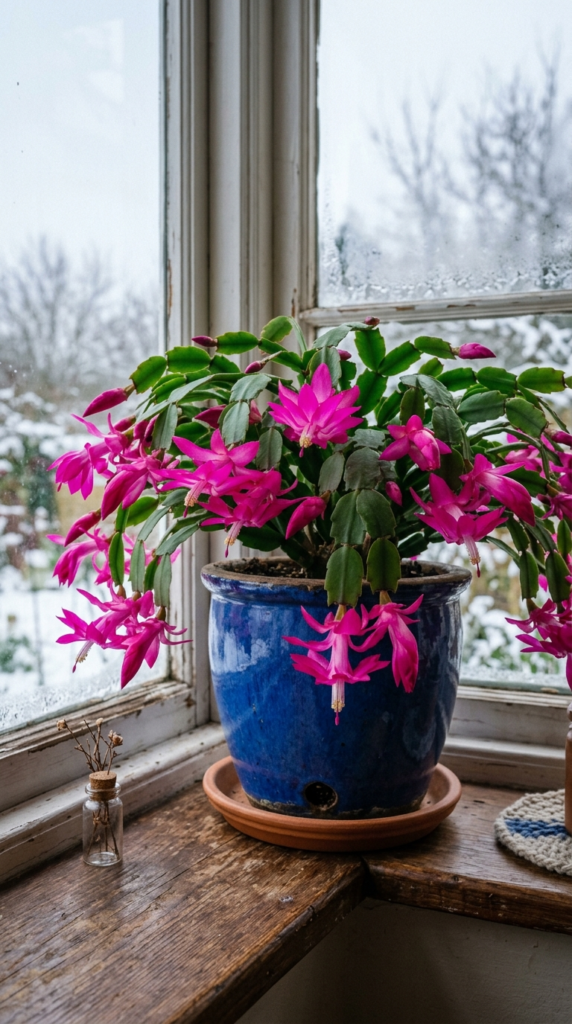
The Christmas cactus (Schlumbergera) is one of those plants that earns its seasonal name completely — it blooms in vivid fuchsia, red, orange, white, or peach right through the heart of winter, and it does it year after year with just a little seasonal prompting!
Here’s the deal: Christmas cactus blooming is triggered by cool temperatures and long nights, which winter naturally provides. If yours isn’t blooming, try moving it to a cooler room (around 50–55°F/10–13°C) at night for six weeks leading up to when you want flowers. That temperature drop is the signal it needs!
Unlike true cacti, Christmas cactus actually prefers slightly more moisture — water when the top inch of soil is dry, rather than waiting until completely parched. In winter, they’re actively blooming and need more water than during their dormant summer period.
The flat, segmented stems cascade beautifully, making Christmas cactus stunning in hanging baskets or elevated pots where the stems can trail downward. After blooming, it settles into an undemanding foliage plant until next season.
With proper care, Christmas cactus plants can live for decades and even become heirloom plants passed between generations. They’re genuinely worth investing in!
| Schlumbergera Variety | Bloom Time | Flower Colors |
| Christmas Cactus | December–January | Pink, red, white, purple |
| Thanksgiving Cactus | November | Orange, pink, red |
| Easter Cactus | March–April | Pink, red, white |
See our full guide on how to get Christmas cactus to bloom every winter.
Decades of winter blooms from one plant — now that’s an investment!
10. Potted Paperwhite Narcissus — Fragrant Winter Indoor Blooms
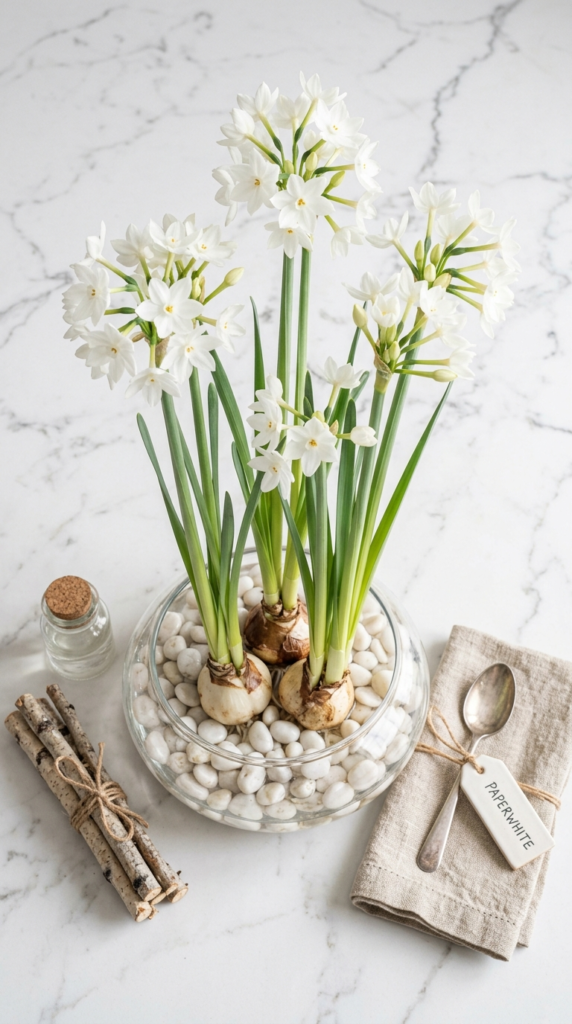
Paperwhite narcissus are one of winter’s greatest indoor pleasures — fragrant, white, and impossibly cheerful, they grow from bulb to full bloom in just three to six weeks with zero soil required. It’s basically gardening magic!
Forcing paperwhite bulbs indoors is one of the easiest and most rewarding things you can do in winter. Simply nestle the bulbs pointy side up in a shallow bowl of pebbles or marbles, add water to just below the base of the bulbs, and place in a bright spot. They do the rest themselves!
💡 Once the shoots are about 5 inches tall, water your paperwhites with a solution of 4–6% alcohol (gin, vodka, or rubbing alcohol diluted with water at a 1:7 ratio). This quirky trick keeps stems shorter and prevents them from flopping over — without affecting the blooms at all. Pretty cool, right?
The fragrance of paperwhite narcissus in bloom is genuinely intoxicating — intensely sweet and floral, it fills a whole room. Keep them in a cool spot (60–65°F) to extend the bloom time as long as possible, since warmth accelerates flowering and shortens the display.
After blooming, paperwhites can’t be reflowered indoors, but you can plant the spent bulbs outdoors in mild climates (USDA zones 8–11) where they’ll naturalize in the garden.
Explore our article on how to force bulbs indoors for winter flowers. For detailed bulb forcing advice, the University of Minnesota Extension has an excellent guide.
Three weeks from bulb to blooms — that instant gratification is everything!
11. Dracaena — Architectural Elegance for Winter Interiors
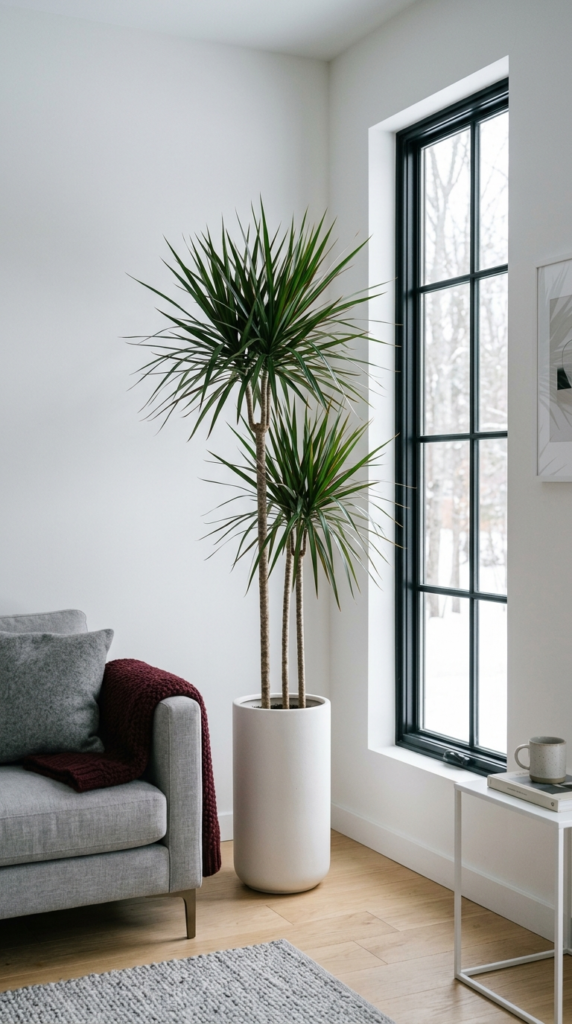
If you want indoor plants for winter that make a dramatic architectural statement without demanding constant attention, dracaena is exactly what you’re looking for. These plants look like they belong in a designer showroom — and they’re surprisingly easy to keep!
Dracaena marginata (Dragon Tree) with its slender red-edged leaves, Dracaena fragrans (Corn Plant) with its broad arching foliage, and Dracaena sanderiana (Lucky Bamboo) are all excellent winter performers. All of them handle low light and dry heating-season air without complaint.
The tall, sculptural silhouette of most dracaena varieties adds vertical interest to winter rooms in a way that round, mounding plants simply can’t. Place a large dracaena in a corner and the whole room gets a design upgrade instantly.
Water dracaenas sparingly in winter — every two to three weeks is plenty. Here’s the thing most people don’t know: dracaenas are sensitive to fluoride in tap water, which can cause brown leaf tips. Using filtered water or letting tap water sit overnight before using solves this problem completely.
Check out our guide to dracaena varieties and care for indoor growing.
Sleek, sculptural, and zero-drama — dracaena is the designer plant you deserve!
12. Spider Plant — Cheerful, Easy, and Perfect for Winter
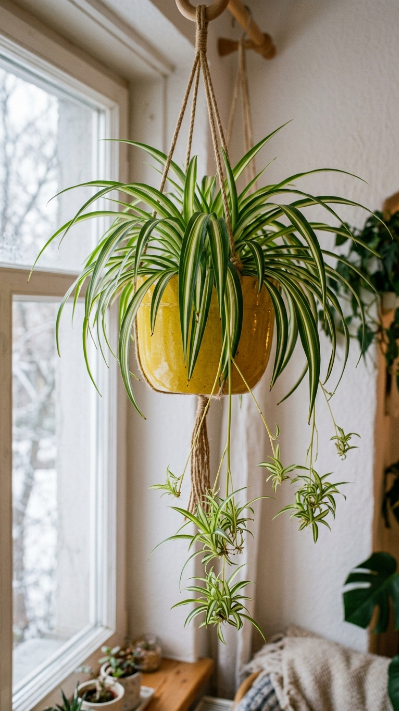
Spider plants have been beloved houseplants for generations — and for genuinely good reason. They’re cheerful, adaptable, nearly impossible to kill, and they literally make more of themselves by producing cascading baby plantlets on long arching runners!
Chlorophytum comosum is one of the most adaptable houseplants for winter months — it handles low light, cool temperatures, and irregular watering with complete equanimity. The cascading plantlets — called spiderettes — look especially charming in hanging baskets where they can dangle freely.
💡 The spiderettes are free plants! Once they develop tiny roots, snip them off and pot them in moist soil — and you’ve got a brand new spider plant. Share them with friends or fill your whole home with them over winter.
In winter, cut back watering to when the top half of the soil is dry — spider plants are prone to root rot if they stay wet in cold months. The variegated green and cream varieties are the most popular and look gorgeous against the neutral tones typical of winter interiors.
One lovely bonus: spider plants help clean indoor air, processing common VOCs, which is a meaningful perk in winter when houses are sealed up tight and ventilation is minimal.
Read our post on spider plant care through every season.
Generations of houseplant lovers can’t be wrong — spider plants deliver every time!
13. Anthurium — Long-Lasting Tropical Color in Winter
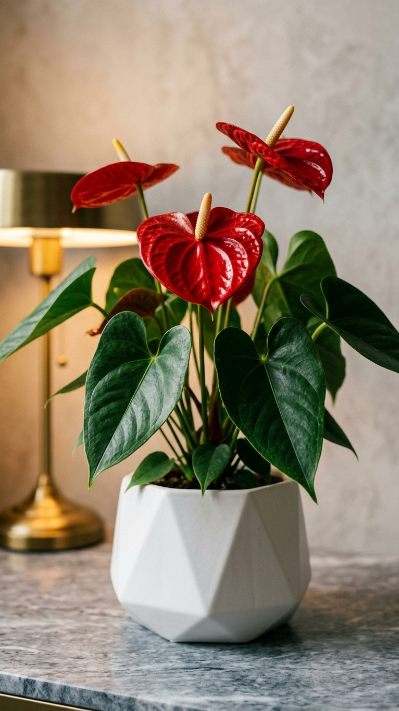
The anthurium is one of the most spectacular flowering houseplants you can own in winter — and those glossy, waxy spathes in brilliant red, coral, pink, or white last not just days but weeks and sometimes months on the plant. Extraordinary!
Anthurium andraeanum is fully comfortable as a long-term indoor plant, not just a temporary grocery store purchase. With proper care — bright indirect light, regular watering when the top inch of soil dries, and high humidity — it reblooms reliably multiple times a year, including through winter months.
The shiny, lacquered look of anthurium spathes is what makes them so visually striking — they almost look artificial, they’re so perfect. That glossy texture reflects warm winter lamplight beautifully and adds a genuinely tropical energy to a room in the coldest months.
Increase humidity around your anthurium in winter by placing the pot on a tray of wet pebbles or running a nearby humidifier. Dry heating-season air is the main challenge for anthuriums indoors, and addressing humidity pays off in longer bloom times and healthier foliage.
Explore our full care guide at how to keep anthurium blooming all winter indoors.
Tropical drama delivered straight to your winter living room — the anthurium never disappoints!
Frequently Asked Questions
Why do my indoor plants struggle in winter even indoors?
The biggest challenges for indoor plants in winter are reduced natural light (shorter days plus lower sun angle), dry air from heating systems, cold drafts from windows and doors, and overwatering by well-meaning plant owners who don’t realize plants need less water in cold months. Addressing all four factors — adding a grow light if needed, using a humidifier, repositioning plants away from drafts, and scaling back watering — makes an enormous difference to plant health through the cold season.
How often should I water indoor plants in winter?
Most houseplants in winter need watering roughly half as often as they do in summer. Growth slows dramatically, evaporation decreases, and the soil stays moist much longer. A general guideline: check the soil before every watering, and only water when the top 1–2 inches feel dry (or for drought-tolerant plants like snake plants and ZZ plants, when the entire pot feels light and dry). When in doubt, wait — overwatering in winter kills far more houseplants than underwatering.
Do indoor plants need fertilizer in winter?
The short answer: no fertilizer for most houseplants from November through February. Most plants enter a slow or dormant growth phase in winter and can’t process nutrients efficiently. Applying fertilizer to dormant plants can actually damage roots. Resume a diluted balanced fertilizer schedule in early spring when you start seeing new growth emerge — that’s the signal that your plants are ready to eat again.
What’s the best placement for indoor plants in winter?
Move plants closer to windows in winter to maximize the reduced light — typically within 3–5 feet of the brightest window in your home, ideally south or east facing. At the same time, make sure leaves aren’t actually touching the glass, which can be cold enough to cause frost damage on contact. Avoid placing plants near radiators, forced-air heating vents, or exterior doors where cold drafts are common.
Can I use grow lights to help my indoor plants in winter?
Absolutely — full-spectrum grow lights are one of the single best investments you can make for your indoor plants during winter months. LED grow lights are efficient, run cool, and are available in a wide range of sizes and price points. Even a modest grow light running 12–14 hours daily can dramatically improve plant health, prevent legginess, and even encourage flowering in plants like anthuriums and African violets through the darkest months of the year.
A Few Final Thoughts
Winter doesn’t have to mean the end of your gardening joy — in fact, it can be the beginning of a whole new relationship with indoor plants. From the bulletproof staying power of ZZ plants and snake plants to the incredible winter blooms of cyclamen, Christmas cactus, and paperwhite narcissus, there are genuinely spectacular options for every light level, every skill level, and every style preference. The best indoor plants for winter months don’t just survive — they make your home warmer, greener, and more alive when the world outside goes grey. Start with one or two of these picks, learn what they love, and let your indoor garden grow from there. Your winter home deserves plants as beautiful and resilient as you are. Now go make it happen!