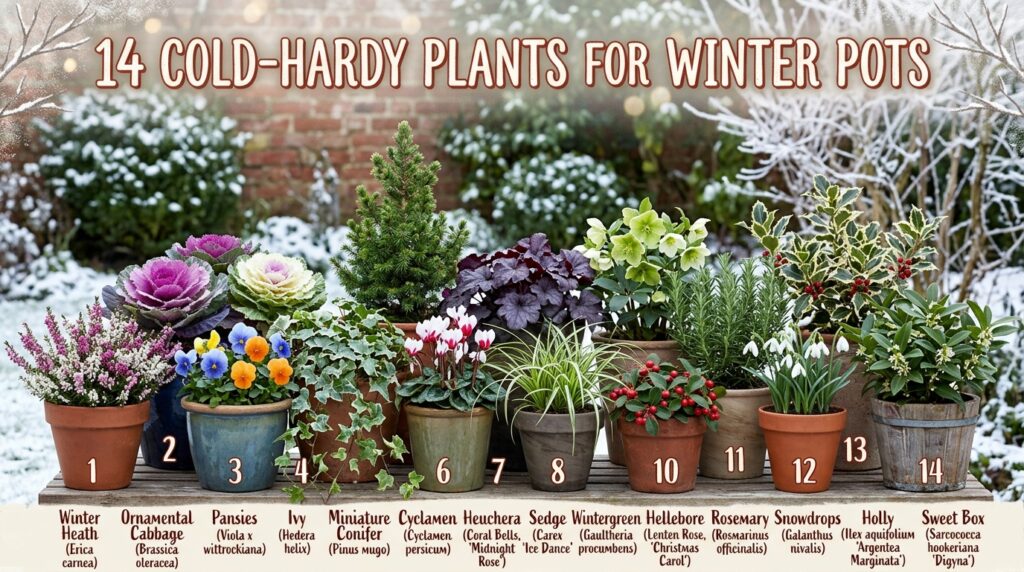
Think your pots have to stay empty and sad all winter long? Think again! Cold-hardy plants for winter pots are a total game-changer, and once you discover how many gorgeous options you have, you’ll never look at a bare front porch the same way again. The right plants can survive freezing temps, look stunning through snow and frost, and give your outdoor space life and color when everything else has called it quits. Ready to find out which plants are built for the cold? Let’s dive in!
At a Glance
- Many cold-hardy plants for winter pots can survive temperatures well below freezing, so you don’t need to bring every container indoors when the mercury drops.
- Combining textures — spiky evergreens, trailing ivy, and bold foliage plants — creates winter containers that look intentionally designed rather than just “surviving.”
- Choosing containers made from fiberglass, resin, or thick glazed ceramic helps prevent cracking and keeps roots insulated during hard freezes.
- Watering needs drop significantly in winter, but you should still check pots during dry cold spells because containers can dry out even when it’s freezing.
- Even a single well-planted winter pot on your front porch makes a huge difference in curb appeal during the dreariest months of the year.
1. Pansies — The Winter Warrior You Already Know
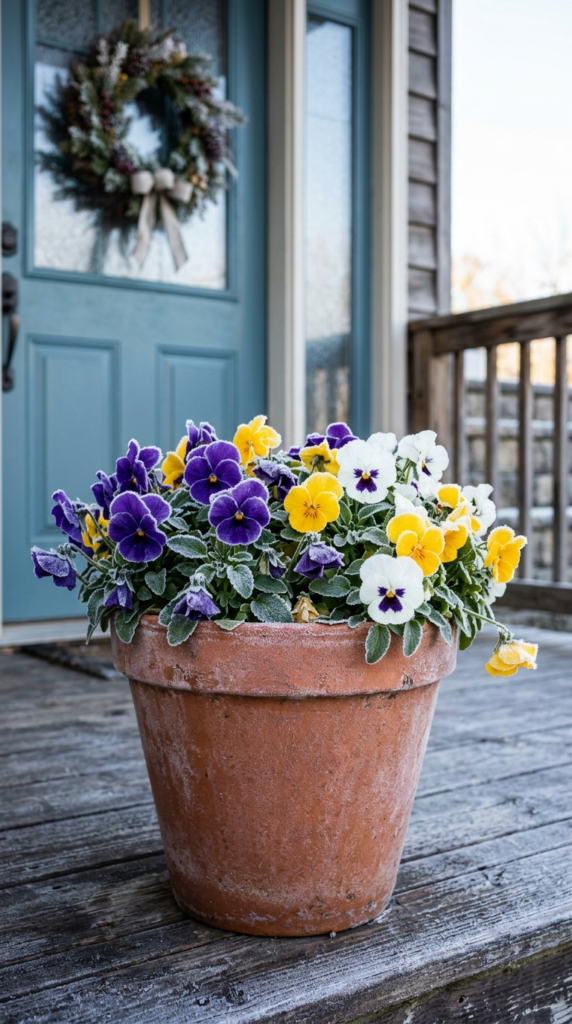
Pansies are basically the superheroes of the cold-hardy plant world — and they’ve got the track record to prove it. These cheerful little blooms can handle temperatures down to around 20°F (-6°C) and bounce right back after a frost like nothing happened!
Here’s the deal: pansies actually prefer cool weather. They bloom most vigorously in fall and late winter, which means they look their absolute best during the months most other plants are completely dormant. Plant them in early fall, let them establish, and they’ll greet you with color right through to spring.
Pro tip: If a hard freeze is coming, tuck a layer of straw mulch around the base of your pansy pot. They’ll come through the cold snap looking fresh and fabulous.
Pick varieties labeled “winter pansies” or “ice pansies” specifically — these are bred for cold tolerance and outperform regular garden pansies by a mile. Colors range from deep velvety purples and near-blacks to sunny yellows and icy whites, so you can build a truly stunning winter display.
How to keep pansies blooming all winter long University of Maryland Extension: Growing Pansies
Pansies are your most reliable bet for a winter pot that actually looks alive — start there!
2. Ornamental Kale and Cabbage
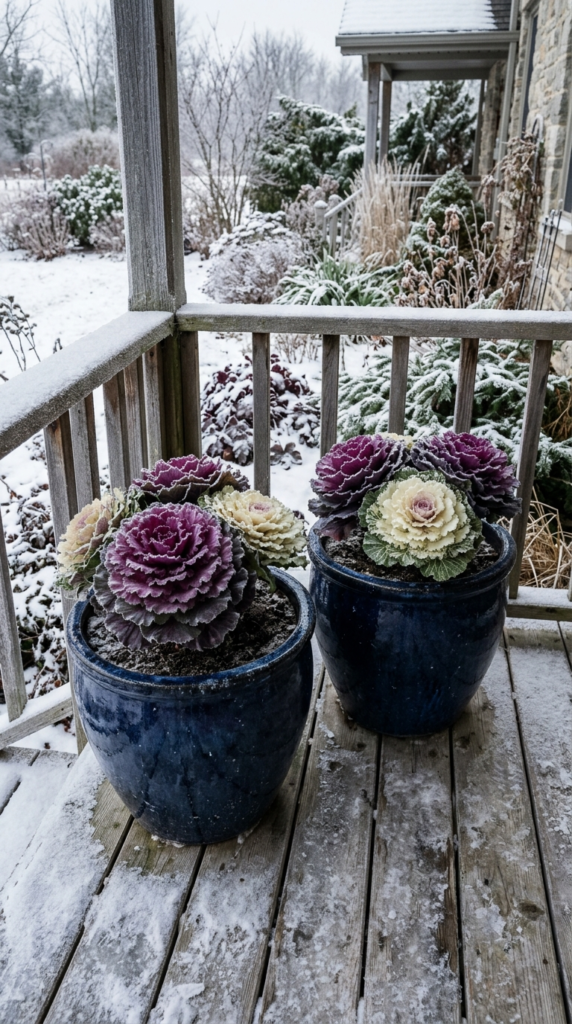
If you want serious visual drama in your winter containers, ornamental kale and cabbage are your answer. These plants are basically works of art — giant rosettes of ruffled, frilled foliage in the most gorgeous shades of purple, burgundy, cream, and pink.
The best part? Cold actually improves them. Ornamental kale becomes more intensely colored after a frost because the cold triggers the production of anthocyanins (the pigments that create those rich purples and pinks). So the colder it gets, the better they look!
They handle temperatures down to around 5°F (-15°C) once established, making them one of the toughest players on this list. Plant them as the bold centerpiece thriller in a large container and surround them with trailing ivy or silver dusty miller for a winter pot that commands attention.
- ‘Redbor’ kale — feathery, deeply cut leaves in rich burgundy
- ‘Nagoya’ series — tightly ruffled rosettes in pink and white
- ‘Osaka’ series — smooth, upright leaves in red or white
- ‘Peacock’ kale — finely cut, fern-like foliage in pink and white
Best ornamental kale varieties for containers Fine Gardening: Ornamental Kale and Cabbage Guide
Gorgeous, tough as nails, and gets better with frost — ornamental kale is a winter pot essential!
3. Hellebores — The Showstopper No One Expects
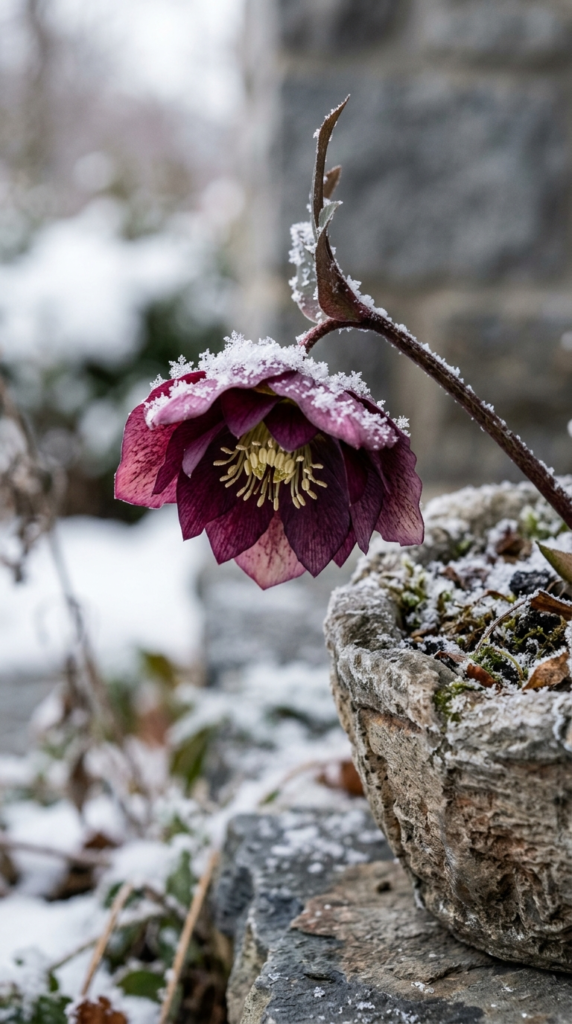
Hellebores are the best-kept secret in winter gardening — and once you discover them, you’ll wonder how you ever lived without them. These evergreen perennials bloom from late winter through early spring and laugh in the face of snow.
Here’s the thing: Hellebores are perennials, which means you can pot them up, enjoy them through winter and spring, then plant them out into your garden beds where they’ll come back year after year.
They prefer a sheltered spot out of harsh winds, and they don’t love being waterlogged, so excellent drainage is non-negotiable. A mix of compost and grit works beautifully. Colors range from pure white to nearly black, with gorgeous spotted, picotee, and double-flowered varieties available.
The blooms nod downward, which gives them that moody, elegant look — and it actually protects the flowers from frost damage. Clever plant!
Growing hellebores in containers: the complete guide RHS: Hellebore Growing Guide
Hellebores are the sophisticated choice that’ll have every visitor asking what that incredible plant is!
4. Evergreen Boxwood
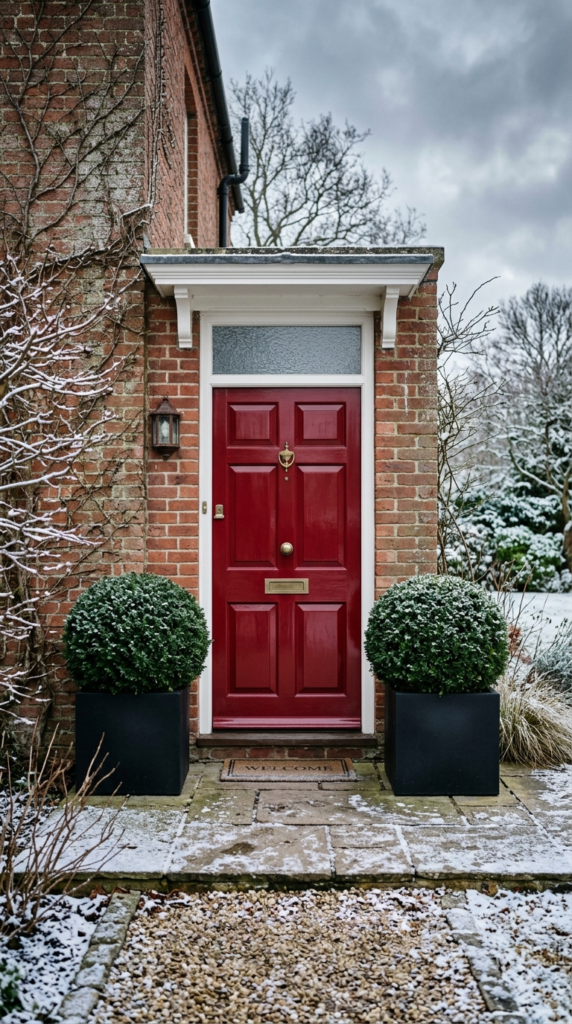
Few plants deliver year-round, low-maintenance structure like evergreen boxwood. Plant it in a container, clip it into a ball, cone, or topiary shape, and it will hold that form through ice, snow, and bitter cold without missing a beat.
Boxwood is cold-hardy down to about -10°F (-23°C) depending on the variety — so unless you’re gardening in truly extreme climates, it’s virtually bulletproof. ‘Green Velvet’ and ‘Winter Gem’ are particularly excellent container varieties because of their compact, tidy growth habits.
The key with boxwood in pots is to use a large, insulating container and mulch the top of the soil heavily to protect roots from freeze-thaw cycles. In very exposed positions, you can wrap the pot (not the plant!) with burlap for extra root insulation.
How to grow boxwood in containers year-round Clemson Extension: Boxwood Care
Boxwood gives your winter pots instant structure and sophistication — it’s a classic for a reason!
5. Winterberry Holly
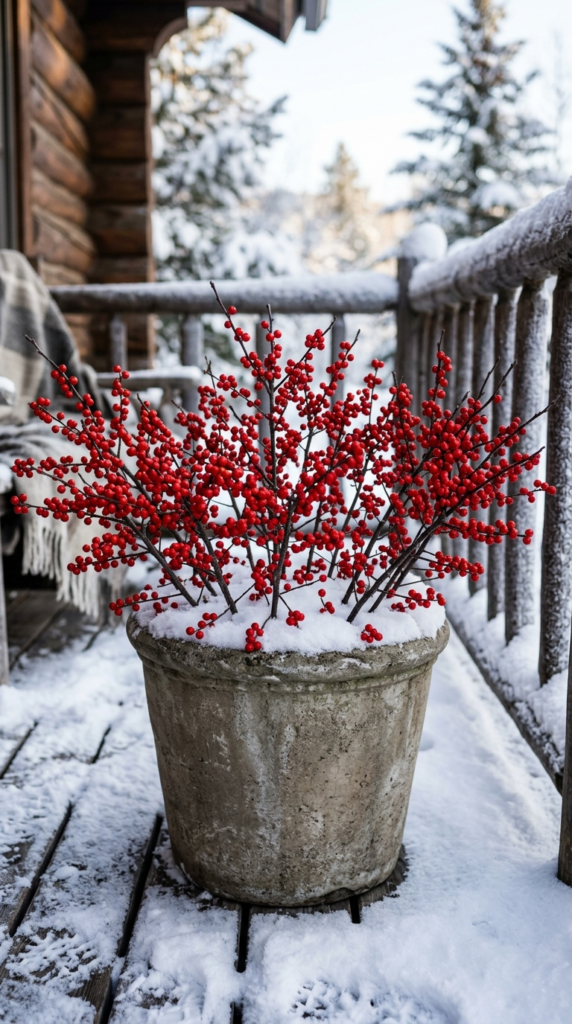
If you want a jaw-dropping winter container that practically glows in the gray winter light, winterberry holly is it. This native shrub drops all its leaves in autumn and then explodes with hundreds of brilliant scarlet, orange, or yellow berries that persist right through winter.
Talk about a game-changer! Those densely packed berries on bare branches look absolutely stunning in containers, especially against a backdrop of snow. They also attract birds, which makes your porch a little wildlife habitat — a lovely bonus.
Important note: Winterberry is dioecious, meaning you need both a male and female plant for the female to set berries. Plant one male for every three to five females, and you’ll have a berry bonanza!
It’s cold-hardy to about -30°F (-34°C), making it suitable for even the coldest climates. ‘Winter Red’ and ‘Berry Heavy’ are popular female varieties with exceptional berry production.
Growing winterberry holly in containers USDA Native Plants: Ilex verticillata
Those berries will stop traffic — winterberry holly is pure winter magic in a pot!
6. Heuchera (Coral Bells)
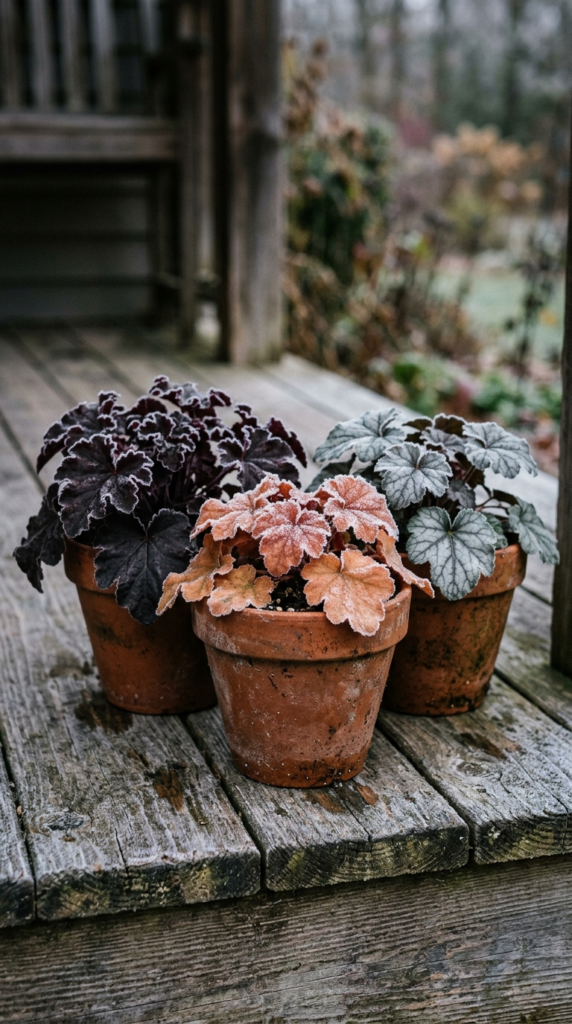
Heuchera plants are basically the jewels of the winter container garden — stunning foliage in colors that seem almost unreal, from deep plum and charcoal to burnt caramel and electric lime. And they’re evergreen in most climates!
Hardy to about -30°F (-34°C) for most varieties, heucheras are serious troopers. Their metallic, ruffled leaves look spectacular throughout winter, especially when you mix two or three different colors in the same container. The foliage often becomes even more intensely colored in cold weather, similar to ornamental kale.
They’re relatively compact, which makes them ideal for smaller pots or as the filler layer in a larger mixed container. Pair dark burgundy heucheras with silvery dusty miller and trailing green ivy for a winter pot combination that looks genuinely professional.
Best heuchera varieties for container gardens American Horticultural Society: Heuchera
Heucheras give you full-season foliage interest without lifting a finger — they really are that easy!
7. Creeping Jenny
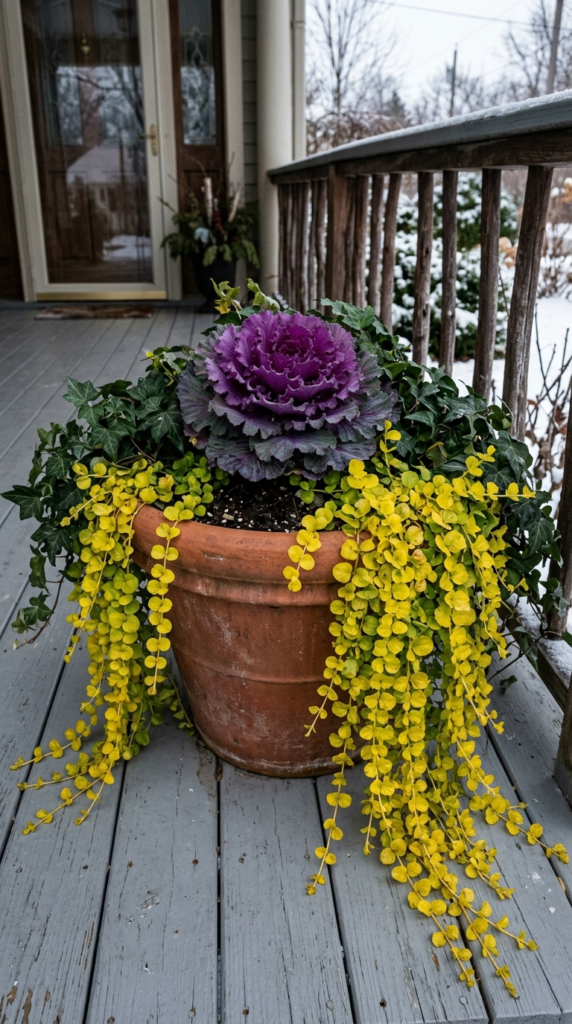
Don’t underestimate creeping Jenny as a winter pot plant — this little trailer is tougher than it looks and provides the most gorgeous cascading effect that makes containers look full and lush even in the dead of winter.
The golden-leaved variety (Lysimachia nummularia ‘Aurea’) is particularly stunning because that bright chartreuse-yellow color practically glows in low winter light. It creates the perfect contrast against darker foliage plants like heucheras or ornamental kale, making your whole container pop.
It’s hardy to around -30°F (-34°C) and stays semi-evergreen in mild winters. In colder climates it may die back a bit, but it bounces back enthusiastically come spring. Pretty cool, right?
Using trailing plants in winter container combos Missouri Botanical Garden: Lysimachia nummularia
Let it spill, let it trail — creeping Jenny makes every container look professionally designed!
8. Dwarf Conifers
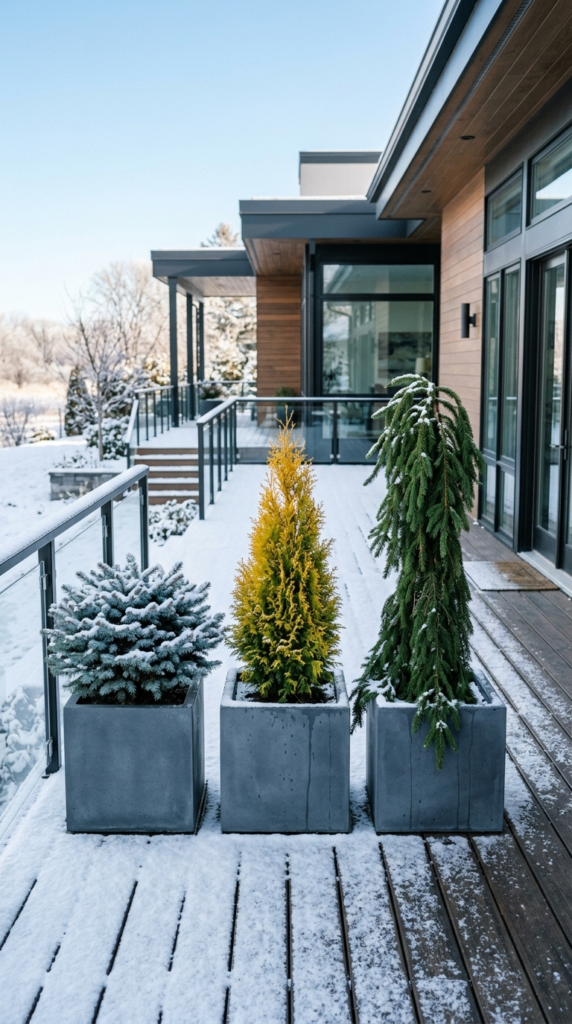
Dwarf conifers are the backbone of a great winter container display — they provide year-round evergreen structure, come in the most amazing range of colors and forms, and are virtually indestructible in cold weather.
The secret is variety: Mix a globe form, a columnar form, and a weeping form for incredible visual interest. Add color variation — blue spruces, golden arborvitaes, and green junipers together in a grouping create a winter scene that looks like it came straight out of a design magazine.
Here are some fantastic choices for containers:
- Blue Star Juniper — silvery blue, compact globe form
- ‘Golden Mop’ Cypress — soft golden-yellow, mounding habit
- ‘Jean’s Dilly’ Spruce — tiny, perfect cone shape
- ‘Pendula’ Norway Spruce — dramatic weeping form
- ‘Green Giant’ Arborvitae (dwarf) — narrow, fast columnar form
Most dwarf conifers are cold-hardy to -20°F (-29°C) or colder, making them suitable for nearly every climate in the continental US.
Best dwarf conifers for patio containers American Conifer Society: Dwarf Conifers for Containers
Once you start collecting dwarf conifers, you won’t be able to stop — they’re absolutely addictive!
9. Cyclamen
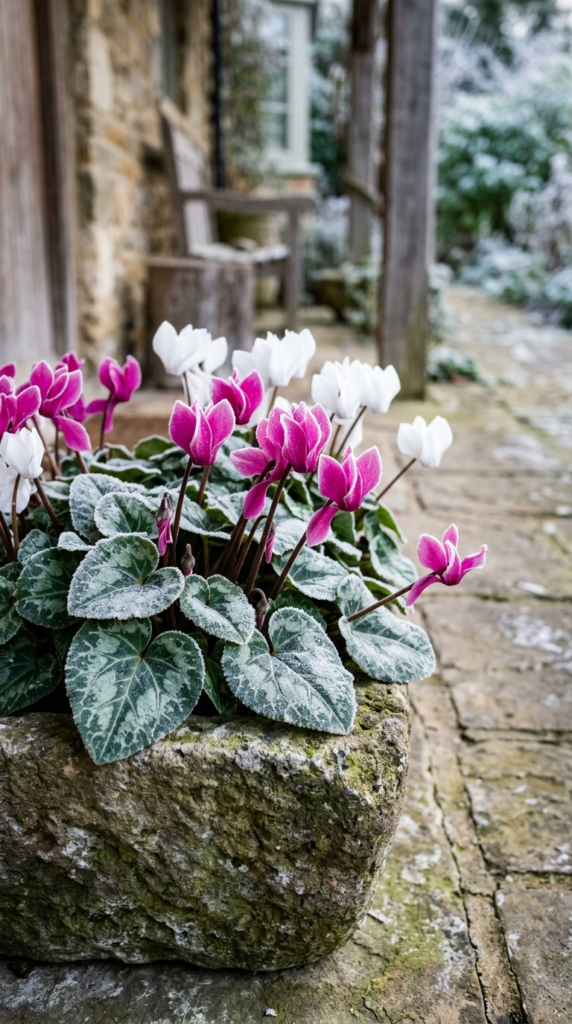
Hardy outdoor cyclamen (Cyclamen hederifolium and C. coum) are one of winter’s most magical surprises — delicate-looking blooms that somehow survive conditions that would flatten most plants. These are NOT the tender florist cyclamen you find at the grocery store, so make sure you’re buying outdoor-hardy varieties!
Hardy cyclamen are cold-tolerant to around 0°F (-18°C) and actually prefer cool to cold conditions for blooming. C. coum blooms from late winter through early spring in shades of pink, magenta, and white — right when you desperately need something cheerful in the garden.
The silvery marbled foliage is almost as beautiful as the flowers and stays attractive throughout winter even when the plant isn’t blooming. It’s a win-win situation! Plant them in a very well-draining mix — they hate sitting in wet soil — and tuck them in a sheltered spot on your porch out of the worst wind.
Growing hardy cyclamen in outdoor containers RHS: Cyclamen hederifolium Guide
Hardy cyclamen prove that delicate and tough aren’t mutually exclusive — what a gem!
10. Dusty Miller
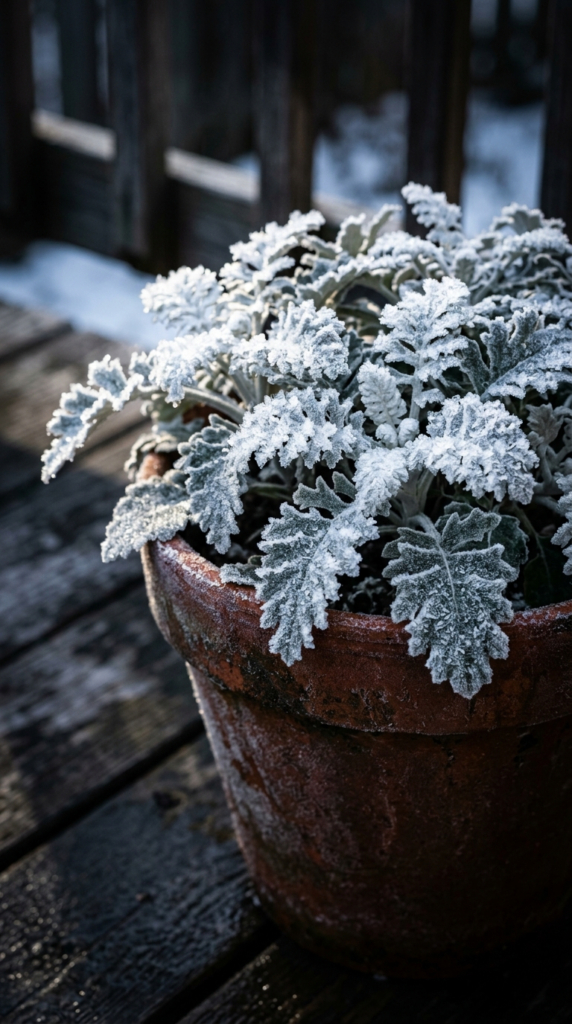
Dusty miller is the ultimate supporting actor of the winter container world — that silver-white, finely cut foliage makes absolutely every other plant around it look better. And it’s significantly hardier than most people realize!
It tolerates temperatures down to around 10–15°F (-9 to -12°C) without drama, which covers a huge portion of the country. The silvery, felted leaves actually look even more spectacular when frosted, almost like they’re gilded with ice crystals. Few plants photograph as stunningly in winter light!
Use it as a filler or trailer around taller centerpiece plants like ornamental kale or dwarf conifers. A rim of silvery dusty miller makes any container look more elegant, more intentional, and about ten times more expensive than it actually was. You’ve totally got this!
How to use foliage plants in winter containers Proven Winners: Dusty Miller Care
Silver and stunning — dusty miller is the secret weapon your winter pots have been missing!
11. Sedum (Stonecrop)
Sedums are the tough-as-nails succulents that thrive in cold climates — a fact that surprises most people who associate succulents with desert heat. Cold-hardy sedums like Sedum spurium, S. kamtschaticum, and the big-bloomed Hylotelephium (formerly called Sedum) are rock solid in zones 3–9!
These plants store water in their thick, fleshy leaves, which means they’re naturally drought-tolerant — perfect for winter when you’re watering less. The architectural rosette shapes and bronze-red winter coloring make them visually interesting even when nothing is actively blooming.
Sedums need excellent drainage above all else in winter — they’d rather be a bit dry than sit in cold, wet soil. A gritty, fast-draining potting mix is ideal. Place them in your sunniest pot location for the best winter color development.
Cold-hardy succulents for outdoor winter containers North Carolina State Extension: Sedum
Hardy, beautiful, and nearly impossible to kill — sedum belongs in every winter container lineup!
12. Violas
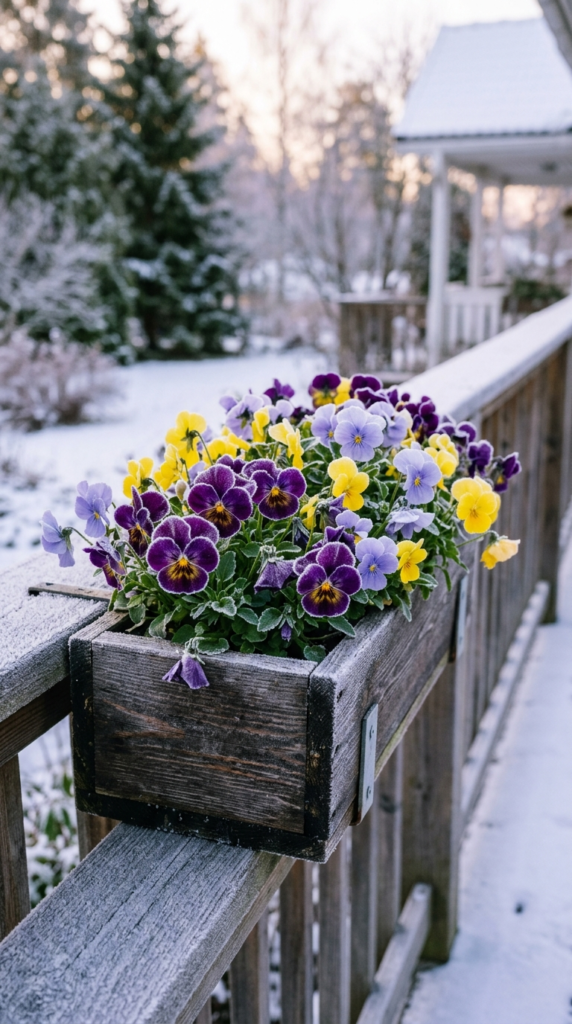
Violas are basically pansies’ slightly more delicate-looking but equally tough cousins — and they deserve way more credit than they get in the winter garden! These little blooms push out flowers in waves through cold weather, taking a brief pause during the very hardest freezes before bouncing right back.
Here’s the thing: Violas are often even more cold-tolerant than standard pansies, surviving temperatures down to around 10°F (-12°C) when they’re established. Their smaller flowers mean they recover from frost damage faster and keep the show going longer into winter.
Plant them densely in containers for the fullest effect — a pot absolutely packed with violas in a rich jewel-tone mix of purples, yellows, and whites looks absolutely incredible against bare winter branches or a snowy backdrop.
Violas vs. pansies: which is better for winter pots? Cornell Cooperative Extension: Winter-Blooming Annuals
Small but mighty, violas will keep your winter containers blooming through conditions that seem impossible!
13. Ornamental Grasses
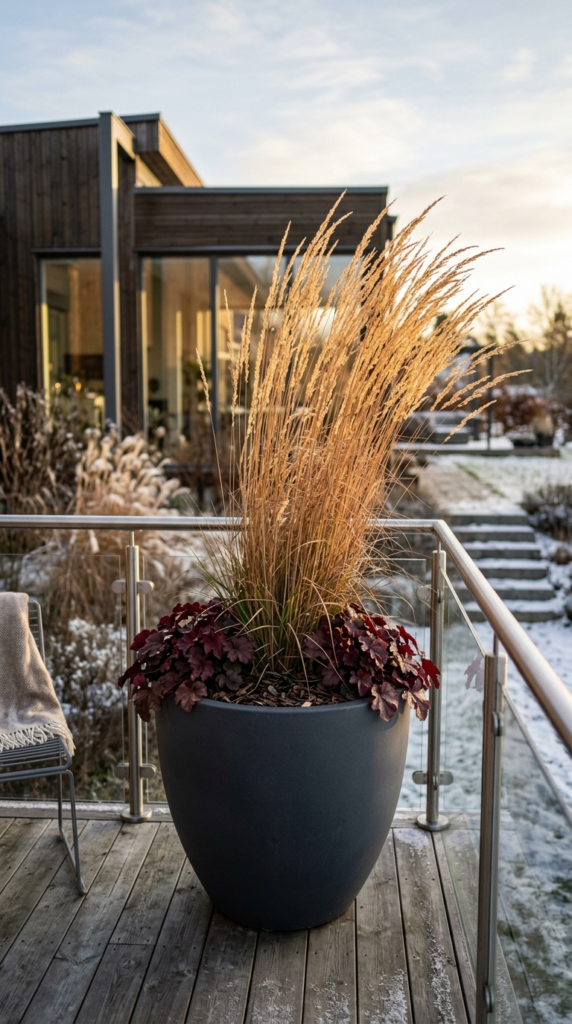
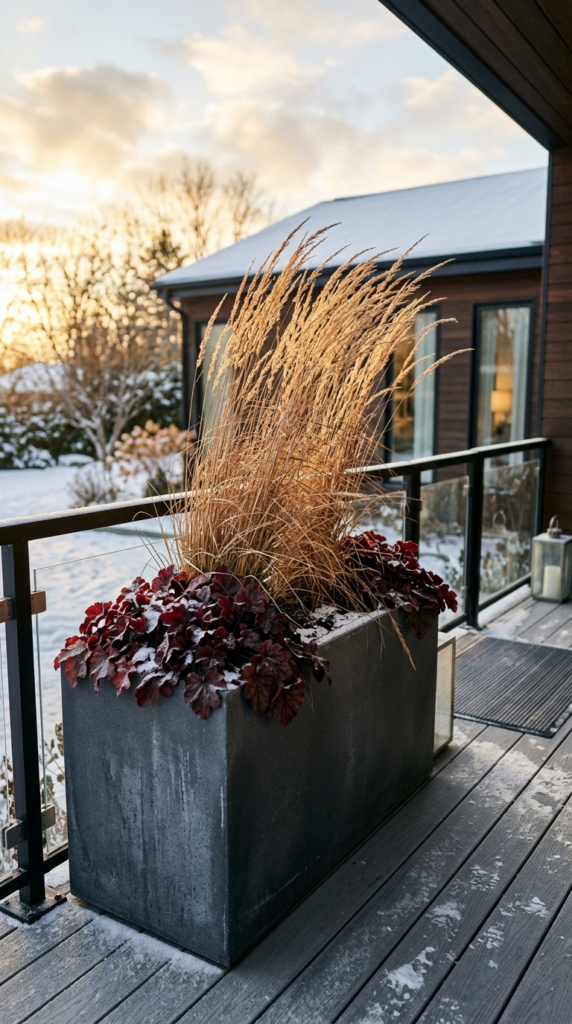
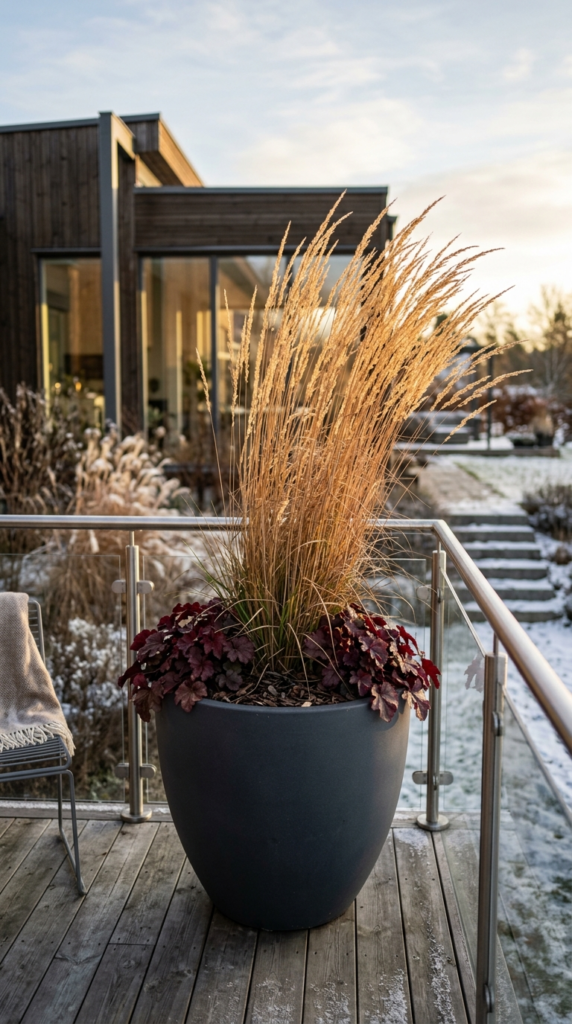
Ornamental grasses bring movement, texture, and drama to winter containers that no other plant can replicate — their rustling seed heads and tawny, golden winter foliage catch every bit of low winter light and look spectacular even in the bleakest weather.
Feather reed grass (Calamagrostis ‘Karl Foerster’) is one of the absolute best — it stays upright through wind and snow, its bronze seed heads persisting beautifully all winter. ‘Shenandoah’ switchgrass turns a brilliant red-burgundy in fall that holds through winter, and blue oat grass (Helictotrichon) maintains its icy blue foliage year-round.
Most ornamental grasses are cold-hardy to zones 4–5 and below. In a container, give their roots extra insulation with a thick layer of mulch on top of the soil and place pots in a slightly sheltered location to protect from the worst wind.
Best ornamental grasses for winter container gardens Fine Gardening: Top Ornamental Grasses
Add a grass to your winter pots and watch them transform from static to spectacular!
14. Ivy (Hedera)
English ivy is the tireless workhorse of winter containers — it trails, it fills, it stays green, and it simply does not quit no matter what winter throws at it. Hardy to around -10°F (-23°C) for most varieties, ivy is one of the most reliable choices for year-round container interest.
Here’s the deal: ivy’s real superpower is making every other plant in a container look better. Its cascading vines and glossy dark green leaves create the perfect backdrop and “spiller” element for a thriller-filler-spiller combination. Pair it with ornamental kale, winterberry holly, or a dwarf conifer and the whole arrangement looks instantly luxurious.
Variegated ivy varieties — those with white, cream, or yellow margins — add even more visual interest and catch the light beautifully in winter’s low-angle sun. Look for ‘Glacier’, ‘Goldheart’, or ‘Sagittifolia Variegata’ for especially beautiful winter containers.
How to use ivy in winter porch container arrangements Penn State Extension: English Ivy
Ivy just works — pair it with anything and your winter container instantly looks gorgeous!
Frequently Asked Questions
What are the most cold-hardy plants for winter pots in very cold climates (Zone 4 and below)?
For very cold climates, your most reliable options are dwarf conifers, boxwood, winterberry holly, ornamental grasses, and ivy — all of which handle temperatures of -20°F or colder with proper container insulation. The key in extreme cold is protecting the roots, since containerized roots are more vulnerable than in-ground roots. Use large, thick-walled containers, mulch heavily on top of the soil, and consider wrapping the outside of pots with burlap or bubble wrap for extra insulation during the coldest spells.
How do I water my cold-hardy plants for winter pots without overwatering?
Winter watering is all about checking before you pour! Stick your finger two inches into the soil — if it’s still moist, wait. Most cold-hardy winter pot plants need water only every 1–3 weeks in winter, depending on rainfall and temperatures. On days when temps are above freezing, give pots a thorough drink if the soil is dry. Avoid watering when the soil is frozen solid, and always make sure your containers have adequate drainage holes to prevent root rot from sitting water.
Can I leave my winter pots outside in snow?
Yes — most of the plants on this list are absolutely fine in snow! In fact, a layer of snow actually acts as natural insulation for plant roots. The real threat is not snow but freeze-thaw cycles, which can crack containers and heave plants out of the soil. Choose frost-proof containers (fiberglass, resin, or thick glazed ceramic rated for outdoor winter use), and most cold-hardy plants for winter pots will sail through a snowy winter without problems.
How do I create a good-looking winter container using these plants?
Use the classic thriller-filler-spiller method but with cold-hardy plants! Choose one tall, dramatic plant as your thriller (dwarf conifer, ornamental kale, or winterberry holly), a mounding plant as your filler (heuchera, pansies, or violas), and a trailing plant as your spiller (ivy, creeping Jenny, or dusty miller). Stick to a limited color palette of 2–3 colors, and repeat the same plant in multiple pots across your porch to create a cohesive, polished winter display.
Do cold-hardy winter pot plants need fertilizer in winter?
Generally, no — winter is not the time to fertilize. Most cold-hardy plants go into a slower growth mode in winter, and pushing them with fertilizer can actually make them produce soft new growth that’s vulnerable to frost damage. Hold off on feeding until late winter or early spring when you start seeing new growth emerging, then give them a balanced slow-release fertilizer to fuel the new season’s growth.
A Few Final Thoughts
Who says winter has to mean bare, boring pots on a cold, sad porch? Armed with this list of 19 cold-hardy plants for winter pots, you have everything you need to keep your outdoor space looking lively, colorful, and intentionally designed straight through to spring. The secret is layering — combining structural evergreens, colorful foliage plants, and hardy blooming annuals into containers that work together as a cohesive display. Winter container gardening is genuinely one of the most rewarding things you can do as a gardener, because the contrast of vibrant plants against a gray or snowy backdrop is just indescribably beautiful. Pick two or three plants from this list, grab a pot you love, and get started — your porch deserves to shine all year long. Now go make it happen!