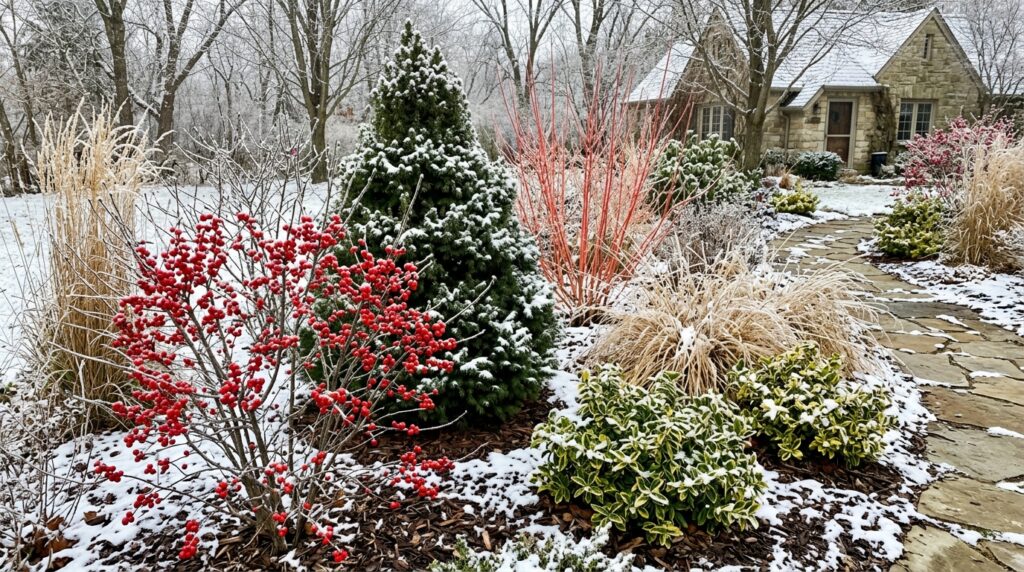
Is your garden looking bleak and bare the moment temperatures drop? You don’t have to settle for a dull, colorless yard all winter long — the right winter-hardy shrubs can keep your outdoor space looking stunning through frost, snow, and everything in between. Whether you’re building a brand-new garden or filling in the gaps in an existing one, these plants deliver reliable color, texture, and structure across every single season. Let’s dive in!
At a Glance
- Planting a mix of winter-hardy shrubs with different seasonal features ensures your garden has color, texture, and visual interest across all twelve months.
- Shrubs like winterberry holly, dogwood, and beautyberry provide spectacular winter color through vivid berries and stems even after all their leaves have dropped.
- Many year-round color shrubs — including witch hazel and sweetbox — bloom in the coldest months, making them invaluable for brightening up a winter garden.
- Evergreen shrubs like boxwood, inkberry, and dwarf Alberta spruce give your garden structure and a living green backdrop that keeps the space from looking bare.
- Most winter-hardy shrubs require very little maintenance once established, making them a smart, long-term investment in your garden’s beauty.
1. Winterberry Holly — Blazing Red Berries Against the Snow
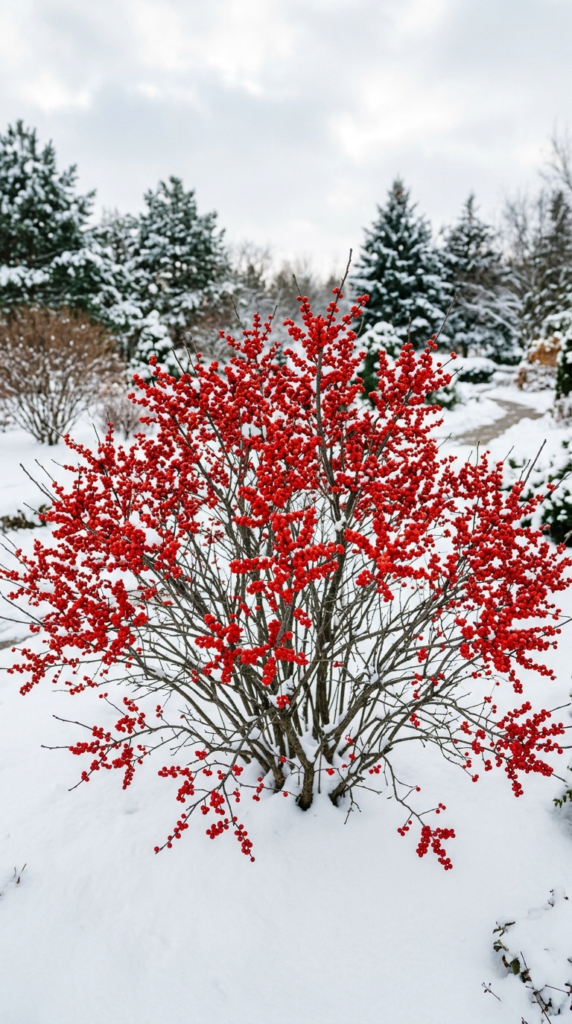
If you plant only one winter-hardy shrub this year, make it winterberry holly. When those neon-red berries explode against a white snowy backdrop, the effect is genuinely breathtaking — like nature’s own Christmas decoration.
Ilex verticillata is a native North American shrub that’s completely cold-hardy in USDA zones 3–9. It drops its leaves in autumn, which actually makes the berry display even more spectacular since nothing gets in the way of all that vivid color.
💡 Here’s the thing: You need at least one male plant for every five to six female plants to get those gorgeous berries. The male doesn’t berry up, but he’s essential — don’t skip him!
Winterberry loves moist to wet soil and is one of the few shrubs that actually thrives near rain gardens, pond edges, or low-lying spots in your yard that stay damp. It’s a natural fit for areas where other plants struggle.
The berries are also a critical winter food source for birds — robins, cedar waxwings, and bluebirds will flock to your garden, turning your yard into a wildlife haven.
Learn more in our guide to native shrubs for wildlife gardens. The Missouri Botanical Garden has an excellent detailed profile on winterberry holly.
Plant one this fall and prepare to be absolutely amazed come January!
2. Witch Hazel — Flowers in the Dead of Winter
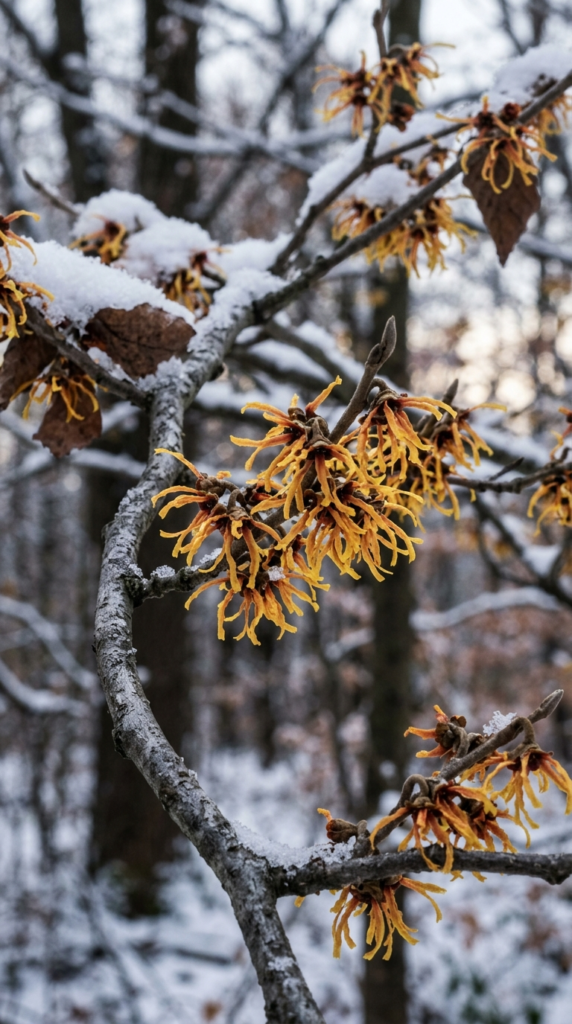
Witch hazel might be the most magical shrub in existence. Imagine walking into your garden in January or February and finding a shrub absolutely covered in delicate, spidery blooms — while everything else is completely dormant. That’s exactly what Hamamelis delivers!
The ribbon-like petals in yellow, orange, and red are frost-tolerant and curl up on the coldest days, then unfurl again when temperatures rise slightly — a survival trick that’s as clever as it is beautiful. The fragrance is also extraordinary: sweet, spicy, and completely unexpected in the depths of winter.
Witch hazel grows into a large, vase-shaped shrub or small tree over time, reaching up to 15 feet, so give it space to shine. It also offers brilliant orange and red fall foliage before the leaves drop, meaning you get a spectacular show in both autumn and winter.
It prefers moist, well-drained, slightly acidic soil and full sun to partial shade. Once established, it’s remarkably drought-tolerant and unfussy.
Explore our article on shrubs with multi-season interest for more ideas like this one. The Arnold Arboretum at Harvard has superb witch hazel research and variety guides.
This is the shrub that will make your neighbors stop and stare in the middle of February!
3. Inkberry — Glossy Black Berries and Evergreen Elegance
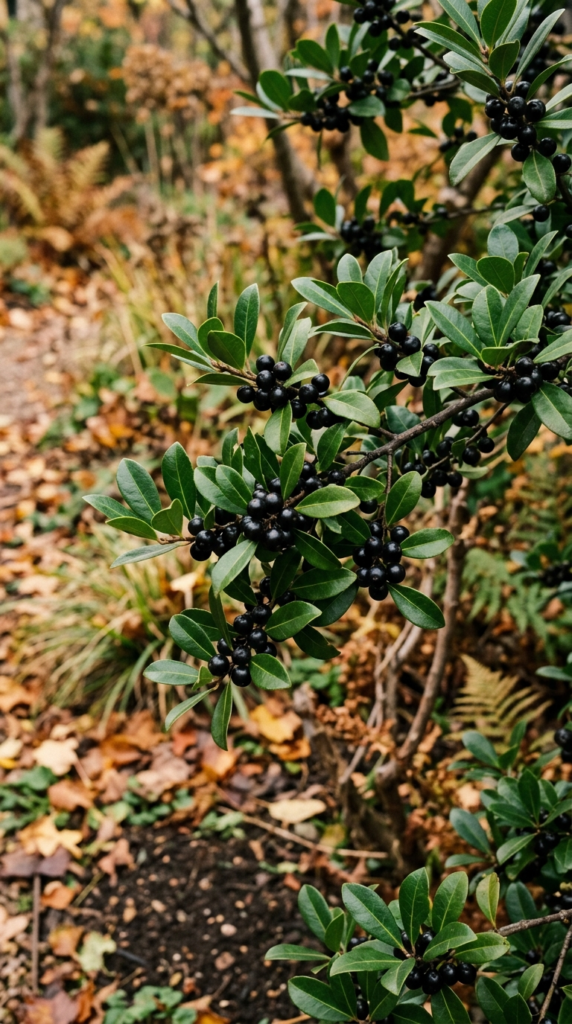
Here’s the deal — inkberry (Ilex glabra) is one of the most underused native shrubs in American gardens, and that needs to change immediately. This evergreen holly brings year-round structure, glossy green foliage, and striking black berries that persist through winter.
Unlike its flashier cousin winterberry, inkberry is evergreen, so you get that beautiful dense green backdrop all winter long. The small, rounded black berries are beloved by over 20 species of birds, making it one of the best wildlife-supporting shrubs you can plant.
💡 The secret is choosing a compact cultivar like ‘Shamrock’ or ‘Gem Box’ if you’re working with a smaller garden — the straight species can spread quite aggressively through suckering.
Inkberry is incredibly adaptable, tolerating wet soils, drought once established, salt spray, and full sun to deep shade. It’s native across the Eastern US and thrives in zones 4–9.
Mass plant inkberry as a low-maintenance hedge or use it as a foundation shrub for year-round structure that never needs much attention.
Read our full guide on evergreen shrubs for low-maintenance gardens for more options. The Native Plant Society endorses inkberry as an exceptional wildlife garden plant.
Reliable, beautiful, and native — inkberry is a true garden workhorse!
4. Oakleaf Hydrangea — Four Seasons of Interest
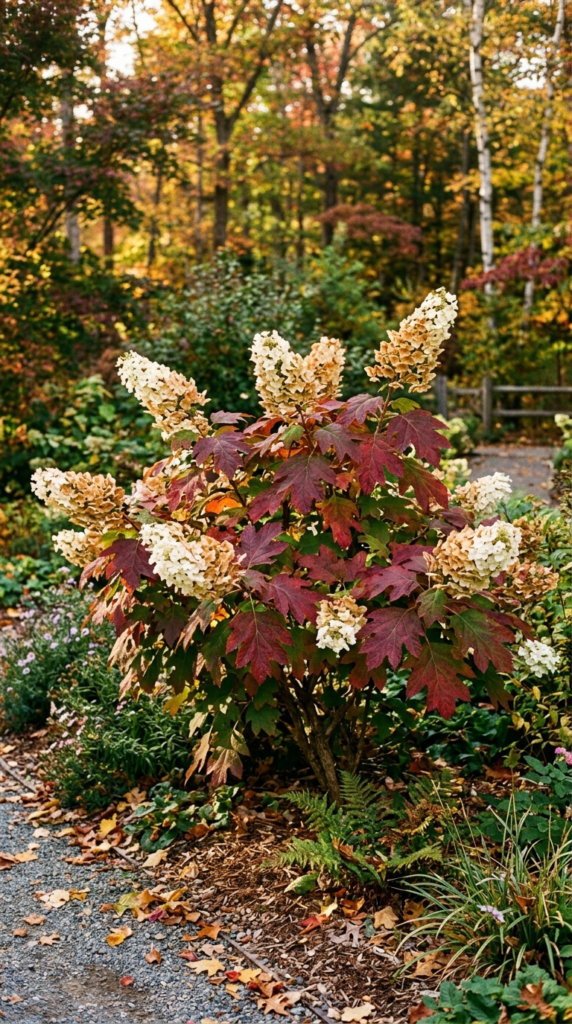
If you’re searching for a single shrub that earns its keep across all four seasons, the oakleaf hydrangea (Hydrangea quercifolia) is your answer. White summer blooms, spectacular fall foliage, papery winter flower heads, and exfoliating cinnamon-colored bark — this plant genuinely never looks boring.
The cone-shaped white flower clusters open in early summer and slowly age to parchment, blush, and warm tan as the season progresses. They persist right through winter, holding their shape beautifully and adding texture to the garden long after everything else has faded.
Fall foliage is nothing short of sensational — those distinctive oak-shaped leaves turn deep burgundy, scarlet, and purple before dropping to reveal the beautiful peeling cinnamon bark underneath, which provides winter interest all on its own.
Oakleaf hydrangea is native to the southeastern US, cold-hardy to zone 5, and much more drought-tolerant than other hydrangea species once established. It thrives in partial shade, making it ideal for woodland gardens and shaded borders.
- Mature size: 6–8 feet tall and wide
- Hardiness: USDA zones 5–9
- Light: Full sun to partial shade
- Best feature: Multi-season interest from bark, blooms, and foliage
See our complete hydrangea variety comparison guide for help choosing the right one. The UNC Extension has a thorough oakleaf hydrangea growing guide.
Four seasons of beauty from one plant — you absolutely cannot go wrong!
5. Dogwood Shrub — Fiery Winter Stems
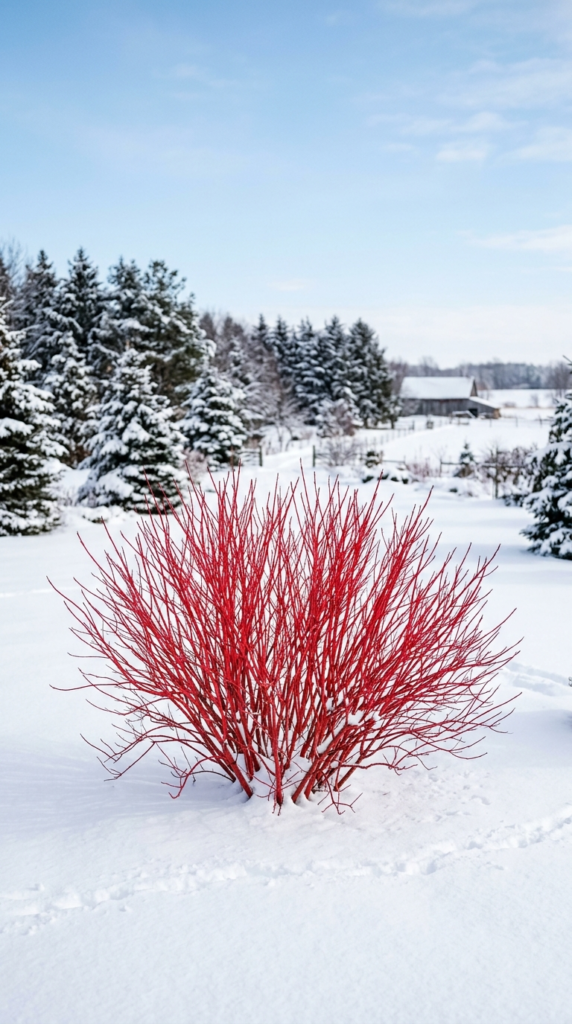
Talk about a game-changer! Red-twig dogwood (Cornus sericea) is proof that a shrub doesn’t need flowers or berries to be absolutely showstopping. Those fiery red stems glow like embers against winter snow in a way that photographs almost too beautifully to believe.
The color is most vivid on young stems, which is why an annual hard pruning in late winter or early spring is essential — cut about one-third of the oldest stems to the ground each year to keep that stem color blazing bright. Pretty cool, right?
💡 Pro Tip: Yellow-twig dogwood (Cornus sericea ‘Flaviramea’) offers the same incredible winter stem interest in electric golden-yellow — plant both together for a stunning two-toned winter display!
Beyond the winter stems, red-twig dogwood also offers white spring flowers, blue-white berries loved by birds, and decent reddish fall foliage. It’s a genuinely four-season performer.
It thrives in wet to moist soils, making it perfect for rain gardens, stream banks, and boggy spots. Hardy to zone 2, it’s also one of the toughest shrubs you can plant in cold climates.
Dive into our article on shrubs for wet garden areas for companion planting ideas. The University of Minnesota Extension has excellent cold-climate shrub recommendations including dogwood.
Plant red and yellow twig dogwood together and your winter garden will stop traffic!
6. Forsythia — The First Blaze of Spring Color
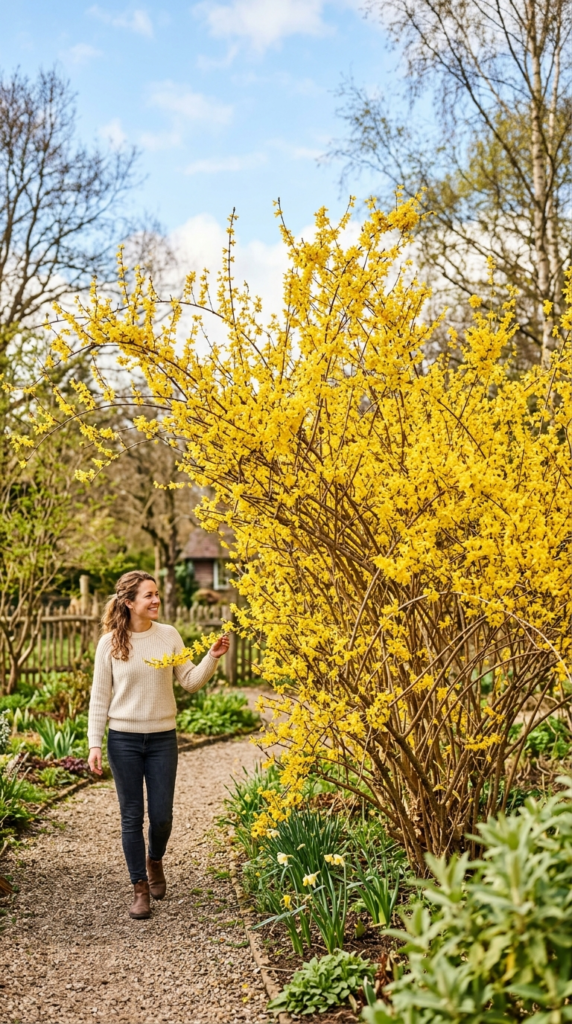
Nothing — and we mean nothing — announces the end of winter quite like forsythia erupting into a cloud of golden yellow while everything else is still completely bare. This is the shrub that makes the whole neighborhood feel like spring has arrived.
Forsythia blooms on bare stems in late winter to early spring, typically February through April depending on your zone, and the display is genuinely electric. Those arching branches loaded with bright yellow flowers are pure visual joy after months of grey winter.
The key to maximum blooms is never pruning in fall or winter — forsythia blooms on old wood, so if you cut it back in autumn you’ll remove next year’s flower buds. Prune only immediately after blooming finishes in spring.
Forsythia is incredibly tough and fast-growing, thriving in zones 5–8 in almost any well-drained soil and full to partial sun. It makes an excellent informal flowering hedge that needs minimal care to put on a spectacular annual show.
- Bloom time: Late February to April
- Hardiness: Zones 5–8
- Growth rate: Fast — up to 2 feet per year
- Pruning rule: Only prune immediately after spring bloom
Get the full details in our forsythia pruning and care guide. The Royal Horticultural Society has comprehensive forsythia growing advice.
After a long winter, forsythia’s golden display will genuinely lift your spirits every single year!
7. Leucothoe — Dramatic Foliage That Changes With the Seasons
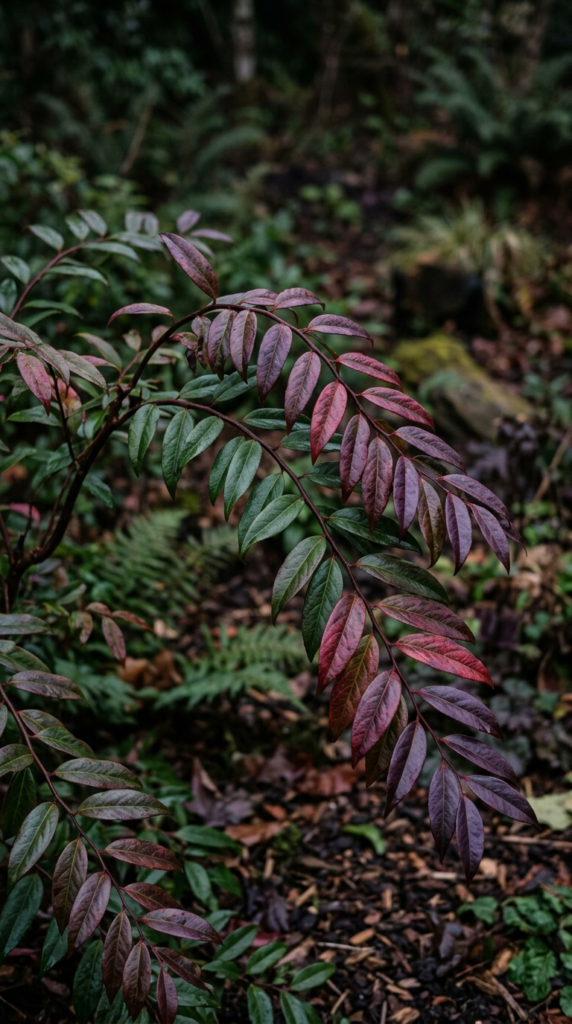
Leucothoe is the shade garden’s secret weapon for year-round color, and if you have a tricky shaded corner, this shrub is about to become your best friend. The graceful, arching stems carry leaves that shift dramatically from green in summer to deep burgundy, plum, and bronze as temperatures drop in autumn.
The most popular variety, ‘Rainbow’ leucothoe, offers a kaleidoscope of pink, cream, green, and copper all at once — it’s one of the most visually complex and interesting foliage plants you can grow in a shade border.
💡 Here’s the thing: Leucothoe is evergreen, which means those gorgeous burgundy winter leaves provide color and coverage even in the coldest months — no bare stems, no empty spots!
It loves moist, acidic, well-drained soil and performs beautifully under the canopy of large trees where other shrubs struggle. It’s a natural companion for rhododendrons, azaleas, and ferns.
Hardy in zones 5–9, leucothoe stays relatively compact at 3–5 feet, making it ideal for smaller gardens, foundation plantings, and layered woodland borders.
Explore our full shade-loving shrubs guide for more ideas. The American Horticultural Society has excellent leucothoe variety recommendations.
If your shady spots need color all year long, leucothoe is your answer!
8. Viburnum — Berries, Blooms, and Brilliant Fall Color
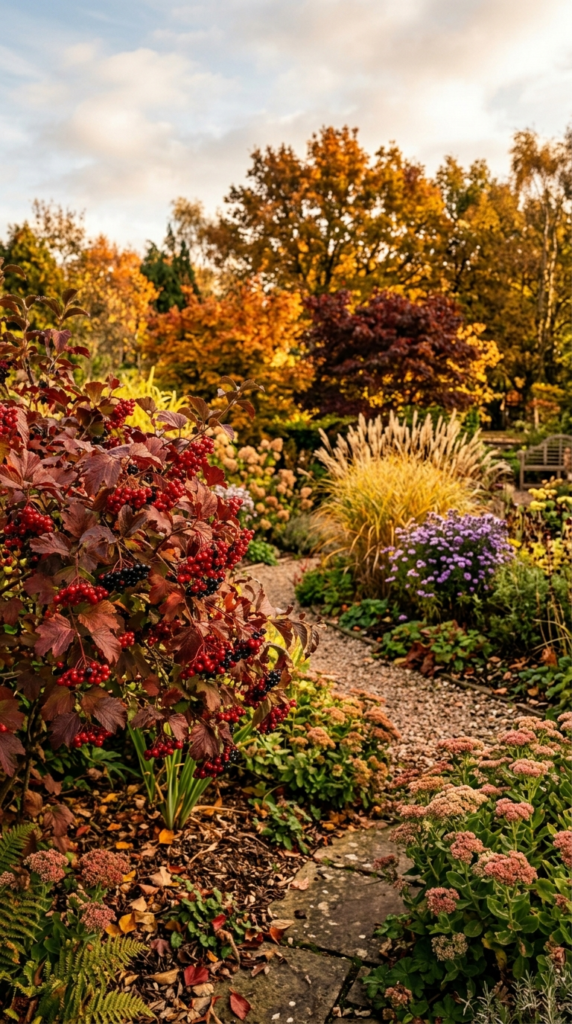
The viburnum family is so extraordinarily diverse and beautiful that it deserves its own encyclopedia — but here’s the short version: plant one and you get fragrant spring flowers, gorgeous summer foliage, brilliant fall color, AND persistent winter berries. It’s a complete garden package.
Arrowwood viburnum (V. dentatum) and American cranberrybush (V. trilobum) are two of the very best winter-hardy shrubs for year-round interest in cold climates. Both are North American natives, hardy to zone 2–3, and absolutely beloved by birds for their abundant berry crops.
The spring flower clusters are sweetly fragrant and excellent for pollinators, the summer foliage is clean and attractive, and the fall color rivals maples in some years — deep red, burgundy, and purple depending on the variety and conditions.
For the best berry production, plant two different viburnum varieties nearby for cross-pollination. The berry display that follows is genuinely stunning — rich red, blue-black, or orange clusters that persist well into winter.
Browse our top native shrubs for pollinators for companion planting inspiration. The Lady Bird Johnson Wildflower Center has excellent native viburnum profiles.
Viburnum is genuinely one of the most complete, rewarding shrubs you can grow — you’ll love every season!
9. Dwarf Alberta Spruce — Evergreen Structure Year-Round
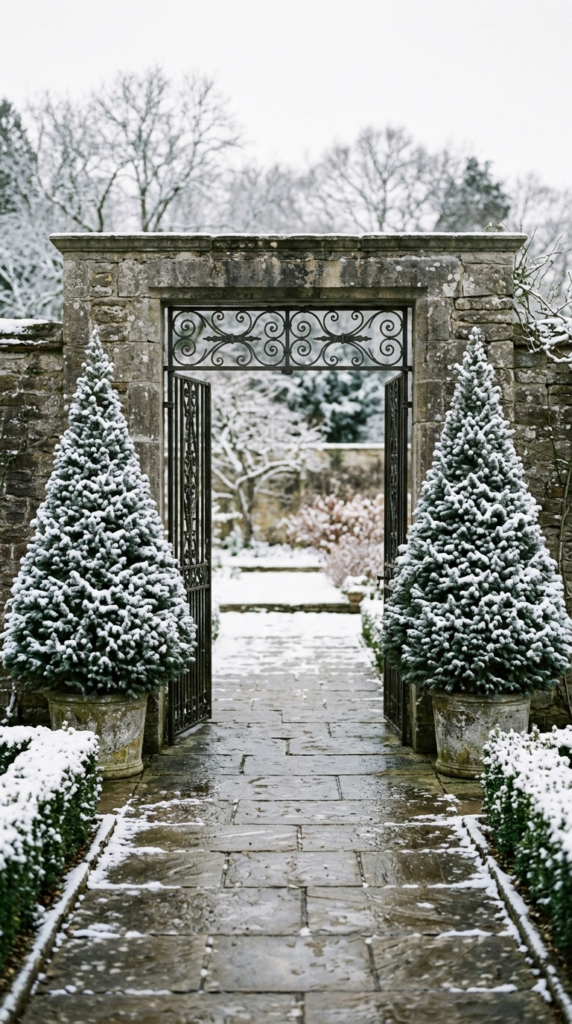
Here’s the deal: every garden needs structural anchor plants — shrubs that hold the design together through every season regardless of what else is blooming or dormant. The dwarf Alberta spruce is exactly that plant.
This slow-growing conifer forms a perfect, naturally dense cone shape without any pruning — just plant it and let it do its thing. The fine-textured, silvery-green needles look beautiful in every season and become even more magical with a light dusting of snow in winter.
💡 The secret is placing dwarf Alberta spruce in a spot with good air circulation and protection from harsh winter winds, which can cause winter burn on the foliage — brown tips on the sunny, windward side.
Because they grow only 2–4 inches per year, these are incredibly low-maintenance plants that rarely need any intervention. They’re perfect as flanking plants on either side of an entrance, as container specimens on a patio, or as focal points in a formal garden design.
Hardy to zone 2, the dwarf Alberta spruce is one of the toughest evergreen garden shrubs available and will provide reliable structure for decades.
See how we use conifers in our four-season container garden designs. The Colorado State University Extension has excellent conifer selection guides for cold climates.
For effortless, year-round structure and elegance, you absolutely cannot beat this classic!
10. Nandina — The Heavenly Bamboo With a Fiery Winter Show
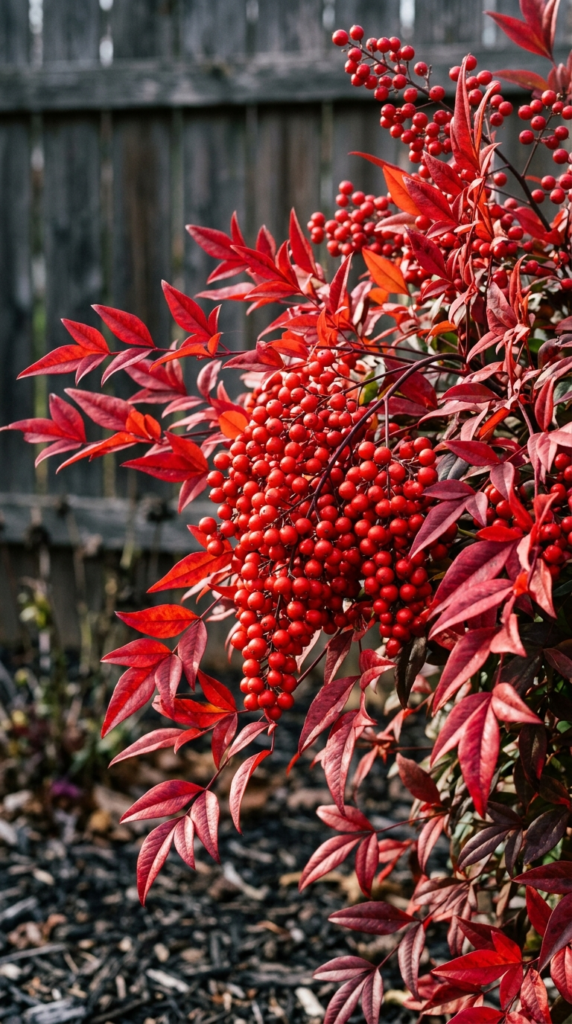
Nandina domestica earns its nickname “heavenly bamboo” with those graceful, bamboo-like stems and delicate, compound leaves — but the real show begins in winter when the foliage turns the most extraordinary shades of fiery red and crimson. It’s absolutely dramatic.
Large clusters of bright red berries accompany the foliage display and persist through much of the winter, adding to the festive, vivid color palette. From a distance, a nandina in full winter color looks almost unreal.
One important note: nandina is invasive in some southeastern states including Georgia, Florida, and Tennessee, where birds spread the seeds into natural areas. Check your local guidelines before planting, or choose sterile compact cultivars like ‘Firepower’ or ‘Gulf Stream’ that produce little to no fruit.
In non-invasive regions, nandina is a low-maintenance powerhouse — drought-tolerant once established, adaptable to sun or shade, and evergreen to semi-evergreen depending on your climate zone (hardy in zones 6–9).
Check out our year-round color shrubs for Southern gardens for more warm-climate ideas. The University of Georgia Extension has important regional guidance on nandina.
When chosen carefully for your region, nandina delivers one of the most spectacular winter color displays of any shrub!
11. Mahonia — Spiky Texture and Winter Yellow Blooms
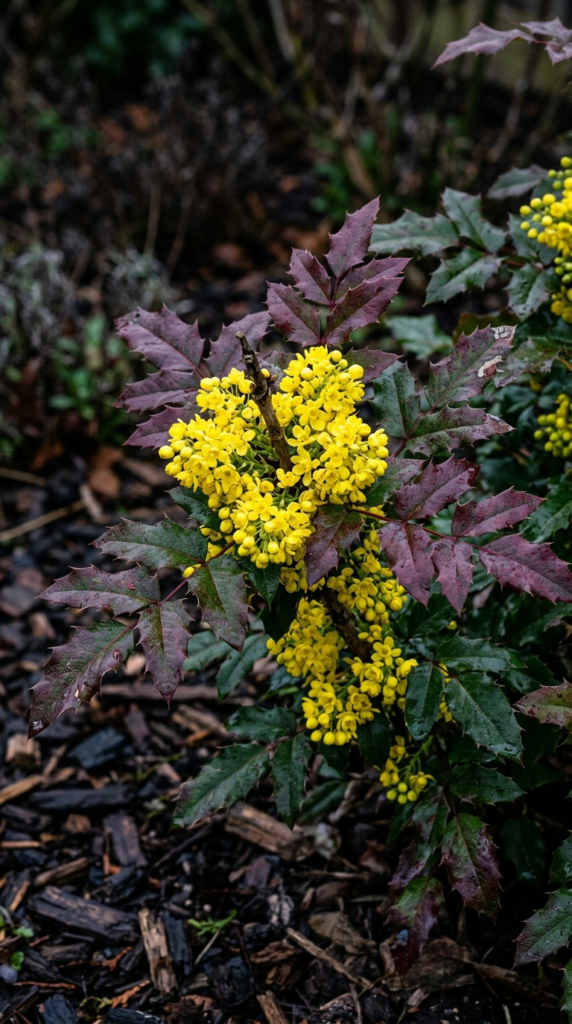
Mahonia is one of those shrubs that makes serious gardeners absolutely giddy — and once you know what it does, you’ll completely understand why. It blooms in the dead of winter with bright clusters of yellow flowers that smell like lily of the valley, then follows up with dusty blue-purple berries loved by birds.
The foliage is bold, spiky, and holly-like, turning shades of bronze, purple, and burgundy in winter before returning to deep green in spring. The textural contrast it creates in a garden border is genuinely fantastic.
💡 Here’s the deal: Mahonia aquifolium (Oregon grape holly) is native to North America and one of the best wildlife shrubs you can plant — birds, bees, and butterflies all rely on it for food at different times of year.
Most mahonia varieties are hardy in zones 5–9 and perform best in partial to full shade with moist, well-drained, acidic soil. They’re an outstanding choice for difficult shaded spots under trees where other shrubs refuse to thrive.
The winter fragrance alone is worth planting mahonia — on a mild winter day, the sweet scent drifting across the garden is one of those unforgettable gardening moments.
Get inspired with our best shrubs for shaded borders guide. The USDA Plants Database has detailed native range and growing info for Oregon grape holly.
Plant mahonia and enjoy fragrant yellow blooms when almost nothing else dares to flower!
12. Pieris Japonica — Year-Round Color From Leaf to Flower
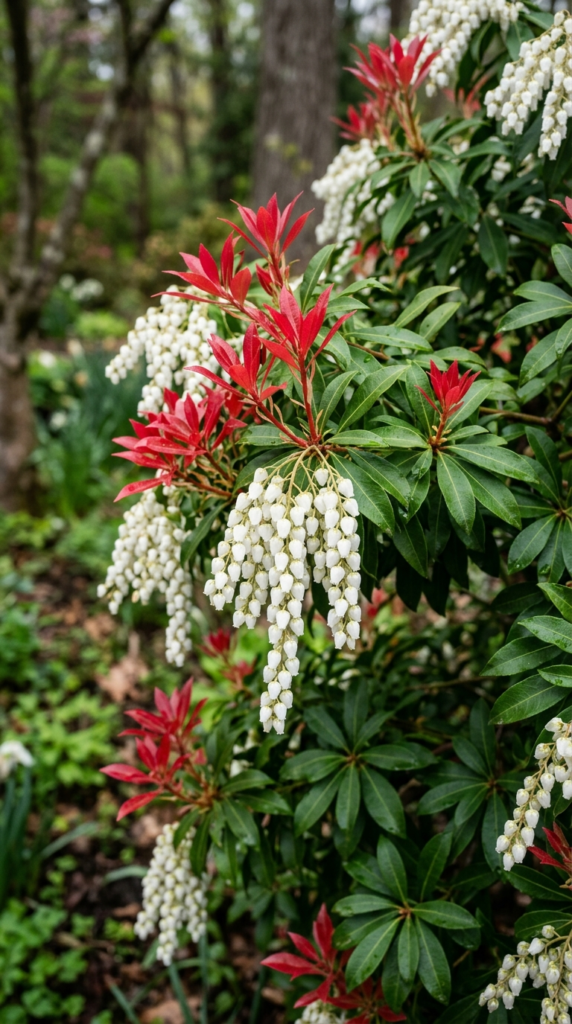
Pieris japonica — commonly called Japanese andromeda or lily of the valley shrub — is one of the most effortlessly beautiful evergreen shrubs for year-round garden interest. The combination of glossy dark green foliage, dangling chains of white flowers, and brilliantly colored new growth makes it a genuine four-season star.
The new spring growth emerges in shades of vivid red, copper, and bronze, creating a striking display that almost resembles flowers from a distance. This is followed by long chains of white urn-shaped flowers that hang like pearl necklaces across the whole shrub in late winter to early spring.
Pieris is an acid-loving shrub that thrives alongside rhododendrons, azaleas, and camellias in moist, well-drained, humus-rich soil. It prefers dappled shade to partial sun and is hardy in zones 5–8.
Note that all parts of pieris are toxic if ingested, so it’s worth knowing if you have browsing deer or curious children — though deer tend to avoid it naturally due to its toxicity.
Explore our guide to acid-loving shrubs for woodland gardens for perfect companion plants. The Royal Horticultural Society has detailed pieris variety profiles.
Pieris is one of those rare shrubs that looks genuinely stunning in every single month of the year!
13. Beautyberry — Shocking Purple Berries You Won’t Believe Are Real
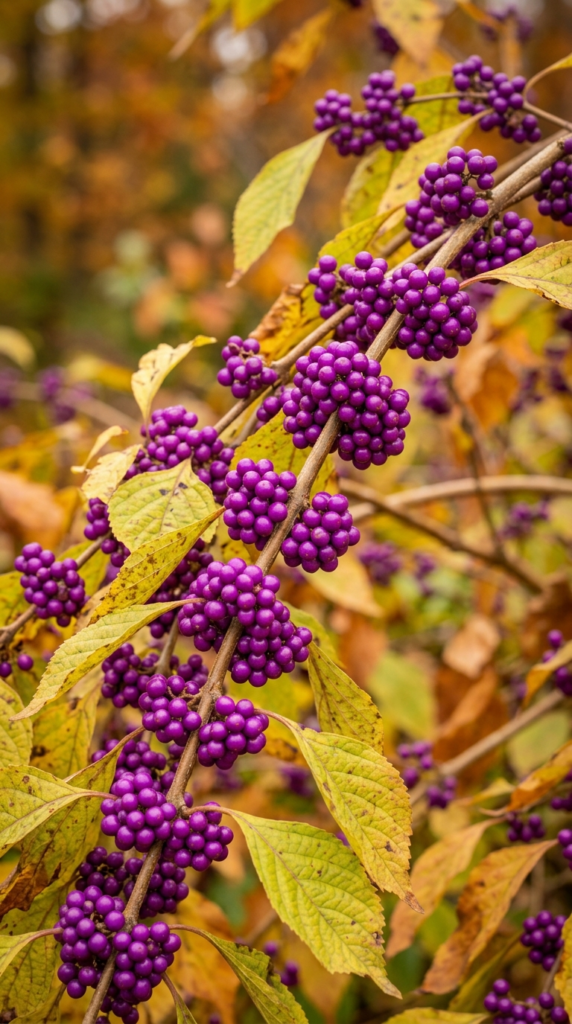
The first time most people see beautyberry (Callicarpa americana) in full fruit, they’re convinced it must be fake. That color — a shocking, electric violet-purple — is unlike anything else in the plant kingdom. It genuinely looks like someone spray-painted the berries!
American beautyberry is a native shrub that produces those incredible berry clusters tightly wrapped around the stems in late summer and autumn, persisting into early winter. The display is so vivid and unexpected that it works as a focal point in any garden design.
💡 Pro Tip: Cut a few berry-laden branches and bring them indoors — they make extraordinary, free autumn arrangements that last for weeks in a vase without water!
Beautyberry grows to about 4–6 feet tall and wide, thrives in part shade to full sun, and is incredibly adaptable to most soil types. It’s cold-hardy in zones 6–10 and dies back to the ground in colder zones, then re-sprouts vigorously each spring.
For maximum visual impact, plant three or more together in a mass — the collective berry display is even more jaw-dropping than a single shrub.
See our article on fall-interest native plants for companion planting ideas. The Lady Bird Johnson Wildflower Center has detailed beautyberry information.
Once you see beautyberry in full fruit, you’ll wonder how you ever gardened without it!
14. Spirea — Easy-Care Blooms From Spring Through Fall
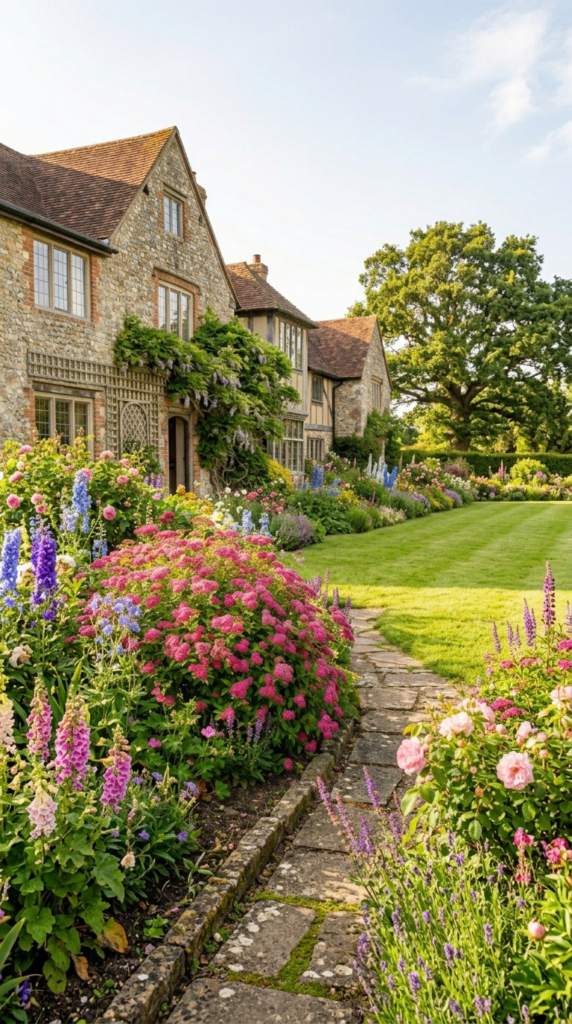
Spirea is the definition of a workhorse garden shrub — virtually indestructible, incredibly floriferous, and available in sizes and colors to suit almost any garden situation. If you’re new to gardening and want guaranteed color with minimal effort, start here.
Spiraea japonica varieties like ‘Magic Carpet’, ‘Double Play’, and ‘Goldflame’ bring a double dose of color with vivid golden-orange new foliage AND pink or red flower clusters that bloom for weeks in summer. The foliage then transitions through lime green in summer before developing warm autumn tints.
Spirea is cold-hardy to zone 3 in most varieties, grows in almost any well-drained soil, and thrives in full sun. Dead-heading spent blooms encourages a second flush of flowers later in the season — an easy task that takes just a few minutes and dramatically extends the color show.
At just 2–4 feet tall for most compact varieties, spirea is incredibly versatile — use it as a low border hedge, a foundation plant, a mass planting on a slope, or a single specimen in a mixed border.
Read our beginner’s guide to flowering shrubs for easy-care options like this one. The Fine Gardening website has outstanding spirea variety reviews.
Spirea is genuinely foolproof — perfect for gardeners at any experience level!
15. Boxwood — The Classic Evergreen Foundation Shrub
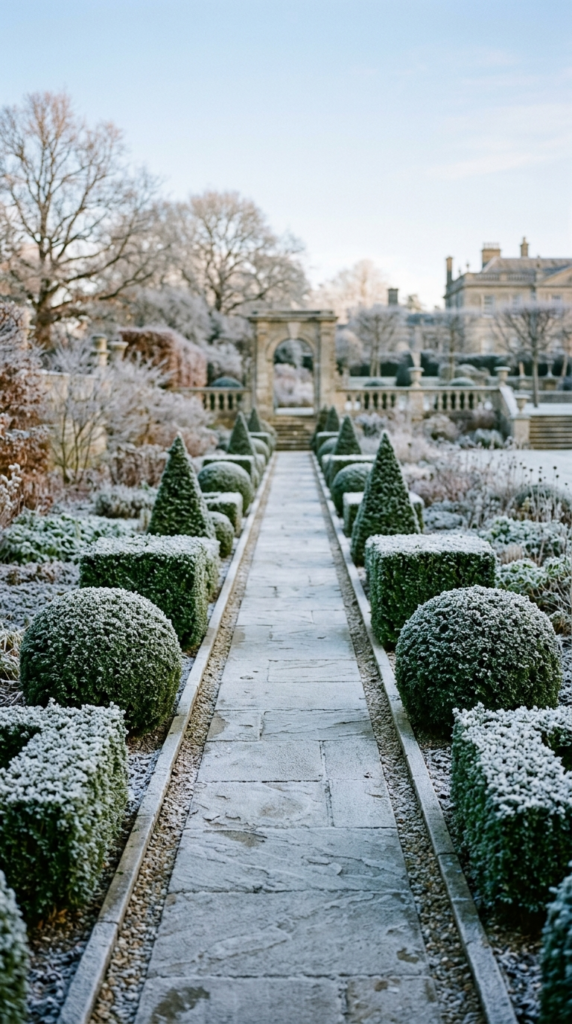
There’s a reason boxwood has been a garden staple for centuries — nothing else provides that combination of dense, fine-textured, deep evergreen foliage and willingness to be clipped into virtually any shape, from tight spheres to flowing hedges to architectural topiaries.
In winter especially, a well-maintained boxwood planting gives a garden structure and elegance that no other plant can replicate. That rich green color holds beautifully through frost and snow, anchoring the garden design when everything else is bare.
💡 Here’s the thing: Boxwood blight and boxwood leafminer are serious concerns in many regions. Look for disease-resistant varieties like ‘NewGen Independence’ or ‘ScentAmazing’ to stay ahead of these issues!
Boxwood is hardy in zones 5–9 depending on variety, and Korean boxwood (Buxus sinica var. insularis) is an excellent cold-hardy option for zones 4–5 where standard English boxwood struggles.
For a lower-maintenance, blight-resistant alternative with a similar look, consider Japanese holly (Ilex crenata) — it clips just as beautifully and is far less disease-prone.
Explore our full guide to evergreen foundation shrubs for design inspiration. The American Boxwood Society is the definitive resource for boxwood varieties and disease management.
Classic, elegant, and timeless — boxwood earns its place in gardens year after year!
16. Sweetbox — Fragrant Winter Blooms in the Shade
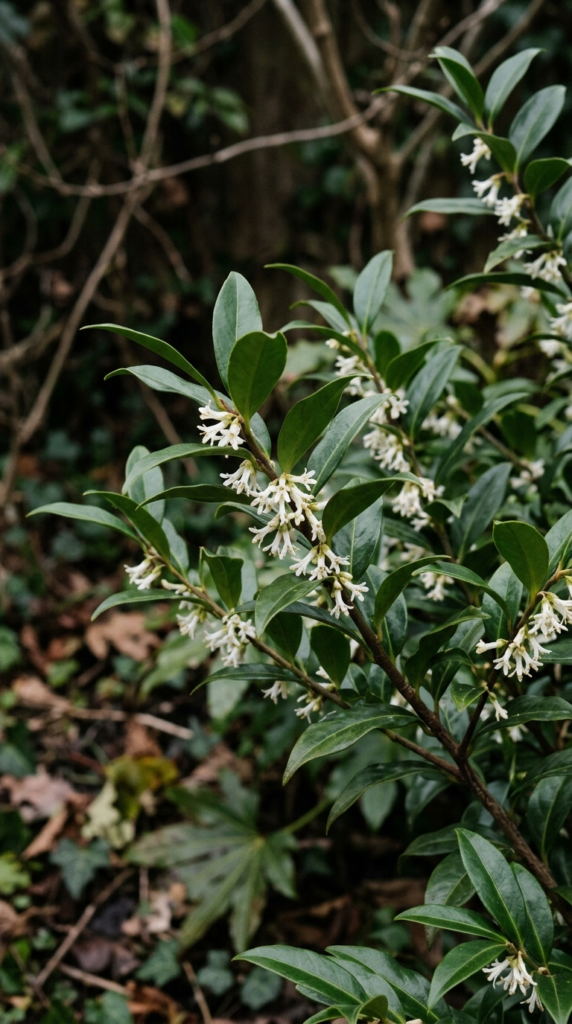
Last but absolutely not least — sweetbox (Sarcococca hookeriana) is perhaps the best-kept secret in the world of winter-hardy shrubs. This compact, shade-loving evergreen produces tiny white flowers in late winter that release the most extraordinarily powerful, sweet vanilla-like fragrance from the tiniest blooms you’ve ever seen.
The contrast between those modest little flowers and that enormous, room-filling fragrance is genuinely one of gardening’s greatest surprises. Plant sweetbox near a path, entryway, or window where you’ll catch that scent on winter walks — it’s an experience you won’t forget.
Beyond the winter fragrance, sweetbox offers year-round glossy evergreen foliage, small black berries that follow the flowers, and an incredibly compact, tidy growth habit of just 2–3 feet. It requires almost no maintenance and never needs pruning.
It thrives in deep shade and moist, humus-rich soil, making it ideal for those challenging dark corners under large trees or on the north side of buildings where almost nothing else will perform.
Hardy in zones 6–9, sweetbox is the perfect finishing touch for a shaded garden that needs fragrance, structure, and year-round evergreen coverage all in one plant.
Discover more fragrant plants for shady spots in our fragrant shade garden guide. The RHS Plant Selector has excellent sweetbox variety comparisons.
Plant sweetbox near your front door and enjoy the most magical winter fragrance every time you come home!
Frequently Asked Questions
What are the best winter-hardy shrubs for cold climates (zones 3–4)?
Red-twig dogwood, forsythia, winterberry holly, arrowwood viburnum, and Korean boxwood are all outstanding choices for very cold climates in zones 3–4. These shrubs have proven cold hardiness and deliver excellent color and interest through harsh winters. Always check the specific hardiness zone rating of any cultivar you purchase, as some named varieties within a species may be hardier or more tender than the species average.
How do I choose winter-hardy shrubs for year-round color in a small garden?
Focus on multi-season performers that earn their space across multiple seasons rather than single-season plants. Oakleaf hydrangea, pieris japonica, and leucothoe are all excellent compact options that offer at least three distinct seasons of visual interest from foliage, flowers, and structure. Pair one evergreen structural shrub with one deciduous shrub that offers winter berries or stems for a complete, space-efficient planting.
When is the best time to plant winter-hardy shrubs?
Early fall is generally the best time to plant most hardy shrubs — cooler temperatures reduce transplant stress, and the shrub has several weeks to establish roots before the ground freezes. Spring planting is also excellent, ideally after the last hard frost. Avoid planting in the heat of summer or in frozen ground. Whichever season you choose, water thoroughly and mulch the root zone to conserve moisture and moderate soil temperature.
Do winter-hardy shrubs need fertilizing?
Most established, hardy shrubs need very little fertilization once they’re settled into good garden soil. A light application of balanced slow-release fertilizer in early spring is sufficient for most varieties. Acid-loving shrubs like pieris, leucothoe, and mahonia benefit from an acid-specific fertilizer or a top-dressing of composted pine bark. Avoid heavy fertilizing in late summer or fall, which can stimulate soft new growth that’s vulnerable to winter damage.
Which winter-hardy shrubs are best for attracting wildlife in winter?
Winterberry holly, viburnum, beautyberry, inkberry, and mahonia are the top five shrubs for supporting wildlife through winter. Their persistent berry crops provide critical food for overwintering birds like robins, cedar waxwings, and bluebirds when other food sources are scarce. Native species are always the best choice for wildlife value — their berries and seeds have co-evolved with local bird and insect populations over thousands of years.
A Few Final Thoughts
Building a garden with genuine year-round color and interest isn’t about luck — it’s about choosing the right plants deliberately, and these 16 winter-hardy shrubs give you an incredible toolkit to work with across every season. From the blazing red stems of dogwood to the shocking purple berries of beautyberry to the extraordinary winter fragrance of sweetbox, there is a perfect shrub on this list for every garden style, size, and climate. Start by picking two or three that excite you most and plant them this season — your future self will thank you every time you look out the window in January and see color, life, and beauty where there used to be nothing but bare grey stems. Your dream garden is closer than you think — now go make it happen!