Think your balcony has to look sad and bare all winter long? Think again! With the right plants and a little creativity, you can create stunning frost-proof balcony winter displays that actually look better than your summer setup. We’re talking lush evergreens, pops of berry-red color, and textures that make people stop and stare — even in January. Ready to find out how? Let’s dive in!
At a Glance
- You can create beautiful, frost-resistant balcony displays using a mix of evergreen shrubs, ornamental grasses, and cold-hardy flowering plants that survive temperatures well below freezing.
- Choosing insulated containers and grouping pots together dramatically improves plant survival through harsh winter months.
- Plants like Skimmia, Hellebores, and winter Heather provide color, fragrance, and structure all season long without needing to come indoors.
- A layered planting approach — tall thrillers, medium fillers, and low spillers — works just as well in winter as it does in summer and creates a professionally styled look.
- Even a small urban balcony can host a fully styled winter garden with just 3–5 well-chosen containers and the right plant combinations.
1. Classic Evergreen Conifer Combo

Here’s the deal: nothing says “winter garden done right” like a trio of dwarf conifers anchoring your balcony display. They’re tough, they’re evergreen, and they look absolutely incredible dusted with a little frost.
Go for a dwarf Alberta spruce or a compact blue spruce as your thriller plant — the vertical structure does a lot of heavy lifting visually. Pair it with trailing ivy and a few white-berried Skimmia japonica for contrast and wow-factor.
💡 Pro Tip: Group your pots in odd numbers (3 or 5) — it’s a classic design rule that instantly makes any display look more intentional and stylish.
- Works in containers as small as 30cm diameter
- Frost-hardy down to -15°C / 5°F
- Evergreen all season — zero maintenance required for color
Check out our guide on choosing the right pot size for balcony conifers for sizing tips. For cold-hardiness info, RHS Plant Selector is your best friend.
You’ve totally got this — start here and build your whole display around this anchor plant!
2. Winter Heather in Full Bloom
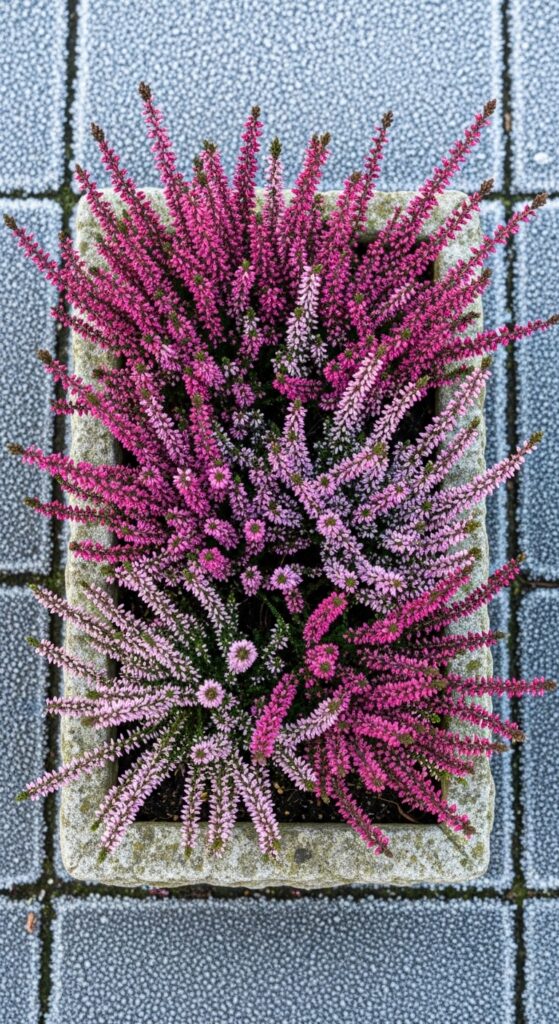
Winter heather (Erica carnea) is honestly one of the most underrated plants you can put on a balcony in winter. It flowers from November right through to March — that’s four solid months of color when everything else has given up!
The secret is buying plants already in bud so you know exactly what color you’re getting. Mix pink, white, and deep purple varieties together in one trough for a gorgeous tapestry effect.
Heather loves acidic, free-draining soil — so use an ericaceous compost mix and don’t let it sit in waterlogged soil. A little grit in the bottom of your pot goes a long way.
Learn more about growing heather in urban containers on our site. The University of Minnesota Extension also has excellent cold-hardy plant guides at extension.umn.edu.
Heather is the gift that keeps giving all winter long — don’t skip it!
3. Ornamental Kale & Cabbage Centerpieces
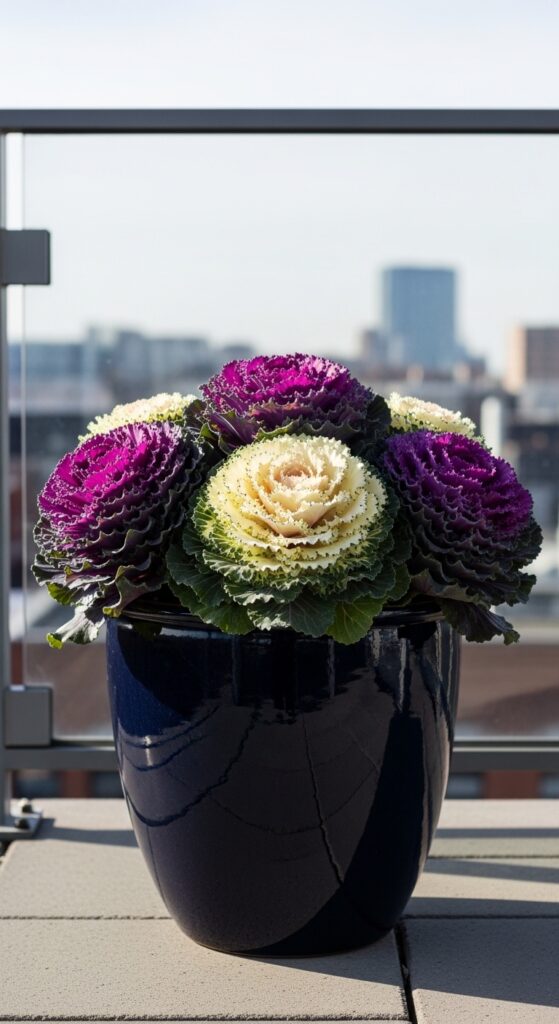
Okay, hear me out — ornamental kale looks absolutely sculptural in winter containers and it handles frost like an absolute champion. In fact, the cold actually intensifies the purple and pink pigments, making it look even more dramatic after a freeze. Pretty cool, right?
Use it as a bold centerpiece in a large pot, or plant several together in a trough for a runway-worthy display. The rosette shapes add amazing texture that contrasts beautifully with fine-leaved grasses or trailing ivy.
💡 Pro Tip: Ornamental kale lasts longest when you remove any yellowing outer leaves promptly — it keeps the display looking fresh for months.
Pair it with silver Dusty Miller or dark-leaved Ajuga for a high-contrast winter combo that’s straight out of a garden magazine. Check out our ornamental edibles for balcony gardens post for more ideas like this.
Bold, beautiful, and practically indestructible — ornamental kale earns its spot every single time!
4. Skimmia Japonica for Berries & Fragrance
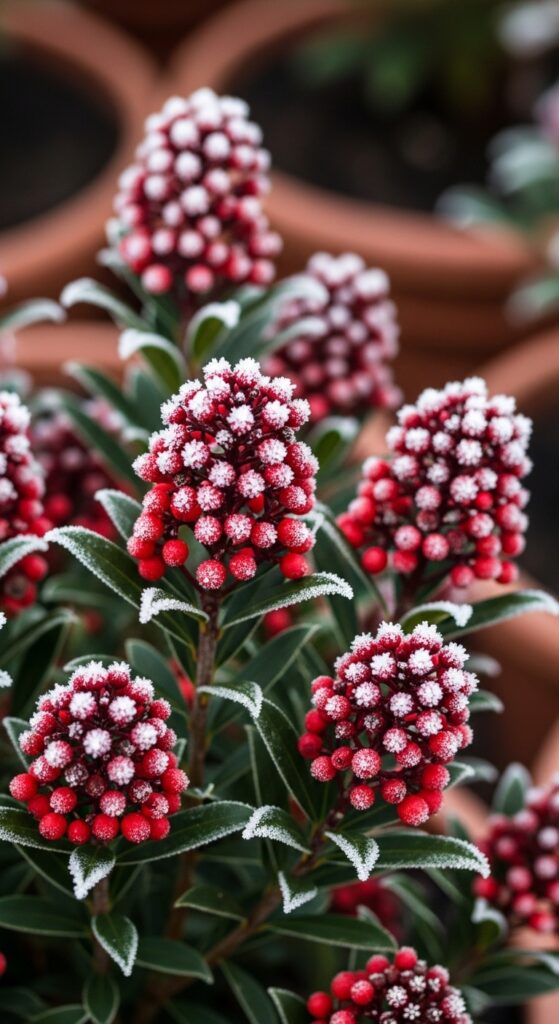
Here’s the thing: if you want one plant that brings berries, fragrance, and evergreen foliage all at once, Skimmia japonica is it. The red berry clusters last from autumn right through winter and the flower buds that form in fall open into sweetly scented blooms come spring.
Skimmia reevesiana is a self-fertile variety (meaning you only need one plant for berries), while other types need a male and female plant nearby. Check your label before buying!
It’s slow-growing and perfectly suited to container life — it’ll happily stay in the same pot for years with minimal fuss. Just give it partial shade and don’t let it dry out completely.
Find out which shade-tolerant plants work best for north-facing balconies on our blog. The RHS has a brilliant Skimmia growing guide at rhs.org.uk.
Skimmia is basically the perfect low-maintenance winter balcony plant — your future self will thank you!
5. Festive Red Dogwood Stems Display
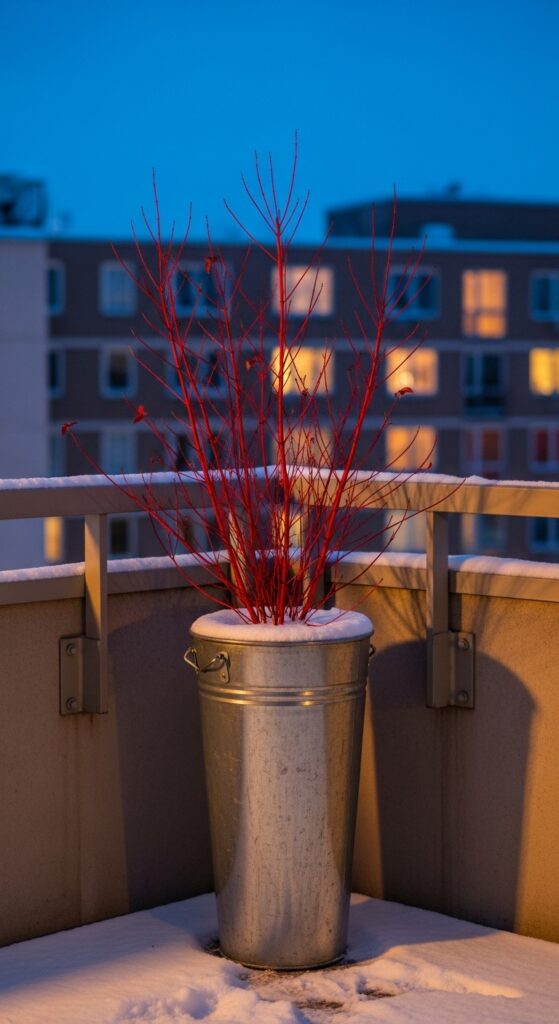
Talk about a game-changer! Red-stemmed dogwood (Cornus alba) is one of those winter plants that looks almost fake — the stems are such an intense, vivid scarlet that people genuinely stop to ask what it is.
The trick is cutting the stems back hard in spring to encourage the brightest new growth each winter. The younger the stem, the more intense the color — that’s the secret right there.
Plant it in a tall statement pot and underplant with white cyclamen or silver Carex grass for a display that looks absolutely spectacular against snow or a frost-white railing.
| Variety | Stem Color | Max Height |
| Cornus alba ‘Sibirica’ | Brilliant red | 1.5m |
| Cornus sericea ‘Flaviramea’ | Lime yellow | 1.5m |
| Cornus sanguinea ‘Midwinter Fire’ | Orange-red gradient | 1.2m |
Explore our winter stem plants for urban containers post for the full lineup. The Missouri Botanical Garden has excellent Cornus profiles at missouribotanicalgarden.org.
Once you see those red stems against a white winter sky, you’ll wonder how you ever did winter without them!
6. Hellebores: The Winter Rose
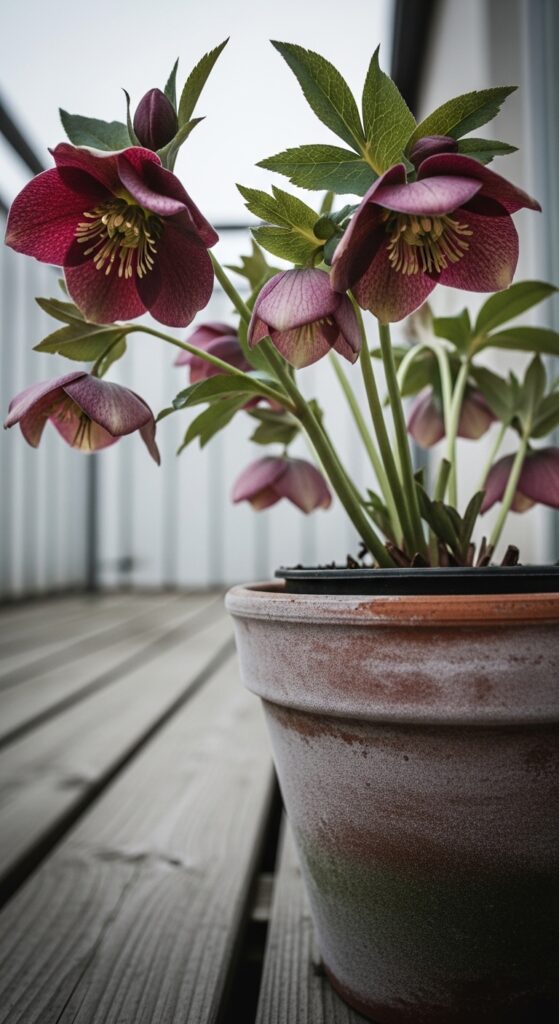
Hellebores bloom from December through March and they do it with a quiet, moody elegance that’s completely addictive. They’re sometimes called the Christmas Rose or Lenten Rose depending on when they flower, and they’re absolutely perfect for shady balcony spots.
The downward-nodding flowers are part of their charm — plant them in raised pots so you can actually see those gorgeous faces looking down at you. Tilt the pot slightly forward for maximum impact.
💡 Pro Tip: Hellebores actually bloom better after a cold spell — so don’t bring them inside! Let the frost work its magic and watch them reward you with even more flowers.
They’re also deer and rabbit proof (a bonus if your building has ground-floor green spaces) and they’re toxic to pets, so keep them out of reach of curious cats. Visit our shade plants for balcony containers guide for companion planting ideas.
Hellebores are genuinely one of winter’s greatest secrets — once you grow them, you’re hooked for life!
7. Silver & White Frosty Foliage Display
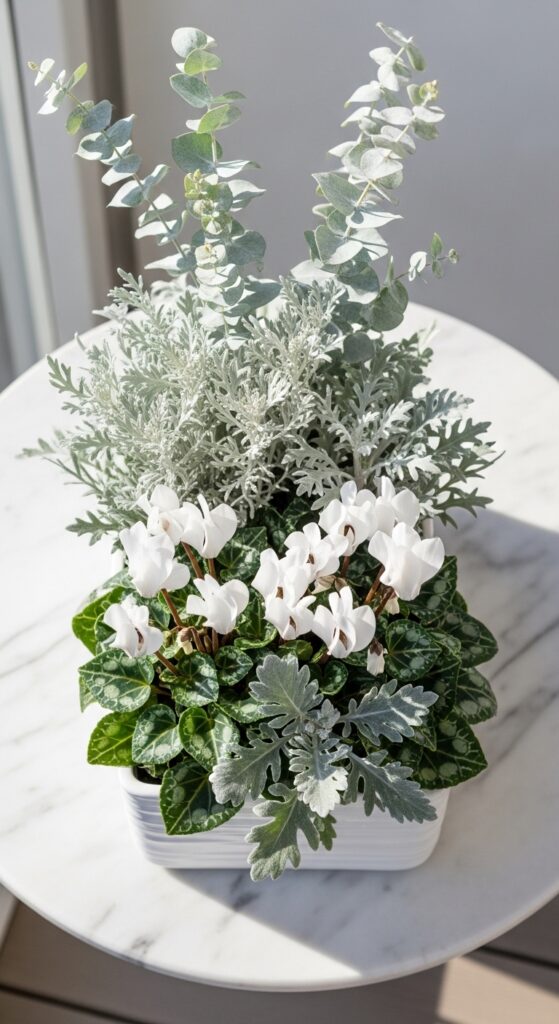
If you love a cool, minimalist aesthetic, a monochromatic silver-and-white display is absolutely breathtaking in winter. It plays into the season rather than fighting it — and it photographs beautifully!
Use Dusty Miller (Senecio cineraria), silver Artemisia, white-flowered Cyclamen, and some frosted Eucalyptus stems for a display that feels like a living Nordic Christmas installation. Pretty cool, right?
Everything in this palette is frost-tolerant and the silvery foliage actually intensifies in cold temperatures, giving you more visual bang for your buck as winter deepens.
Swap out spent Cyclamen blooms for white Violas in late winter to keep the display fresh as temperatures begin to rise. Check out white and silver container garden ideas for even more inspo.
Simple, sophisticated, and completely seasonal — this display proves that less really is more!
8. Hardy Cyclamen Carpet

Hardy Cyclamen coum is one of those plants that feels like a tiny miracle in winter — those little swept-back flowers push up right through snow and frost like they haven’t got a care in the world.
The secret is the marbled silver foliage, which looks incredible even when the plant isn’t flowering. You’re essentially getting two seasons of beauty in one compact little plant.
Plant them densely in a wide shallow bowl for maximum impact. They spread slowly over time so your display actually gets better year after year as the tubers establish.
💡 Pro Tip: Hardy Cyclamen coum is a different beast from the tender florist cyclamen — make sure you’re buying the right one or you’ll lose it in the first hard frost!
Read our buying guide for hardy winter bulbs and tubers to avoid this common mix-up. The American Horticultural Society at ahsgardening.org has excellent hardiness resources.
These little charmers will genuinely surprise you with how tough they are — they’re total winter warriors!
9. Architectural Grasses & Seedheads
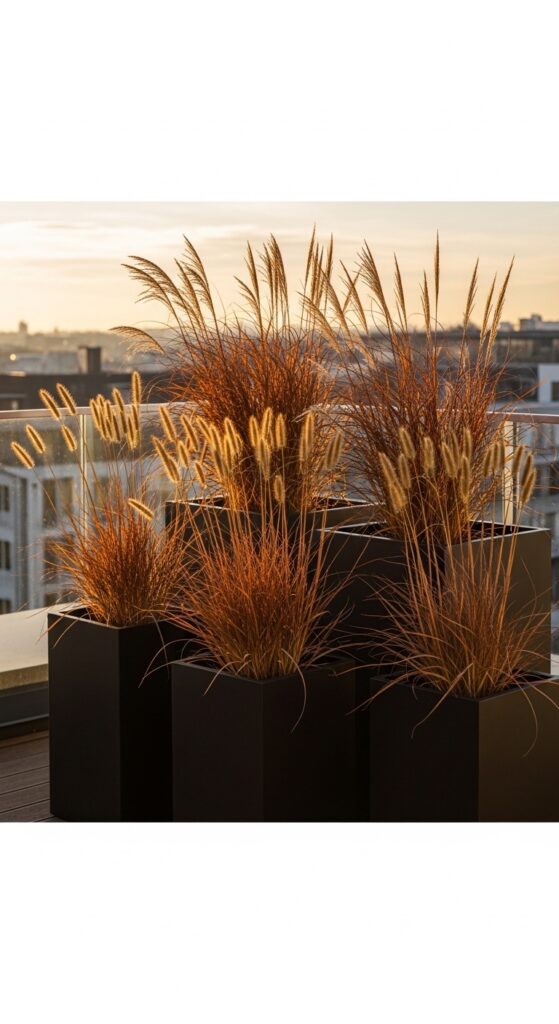
Here’s the deal: ornamental grasses are the secret weapon of winter container gardening. While everything else is dormant, grasses just keep looking better — moving in the breeze, catching the low winter light, and adding that all-important height and texture to your display.
Carex oshimensis ‘Evergold’ stays bright yellow-green all winter. Hakonechloa macra ‘Aureola’ turns copper-gold in the cold. Pennisetum holds its feathery seedheads for weeks of architectural interest.
Mix grasses with bare-stemmed plants like red dogwood or preserved eucalyptus branches to create a display that looks like it was designed by a professional landscaper — because now it basically was.
| Grass Variety | Winter Color | Height | Frost Hardy? |
| Carex ‘Evergold’ | Yellow-green | 30cm | Yes, to -20°C |
| Hakonechloa ‘Aureola’ | Gold-copper | 40cm | Yes, to -15°C |
| Festuca glauca | Silver-blue | 25cm | Yes, to -20°C |
Explore grasses for balcony containers in all seasons on our blog.
Movement, texture, and zero drama — ornamental grasses are the ultimate winter balcony multitaskers!
10. Pansy & Viola Winter Patchwork
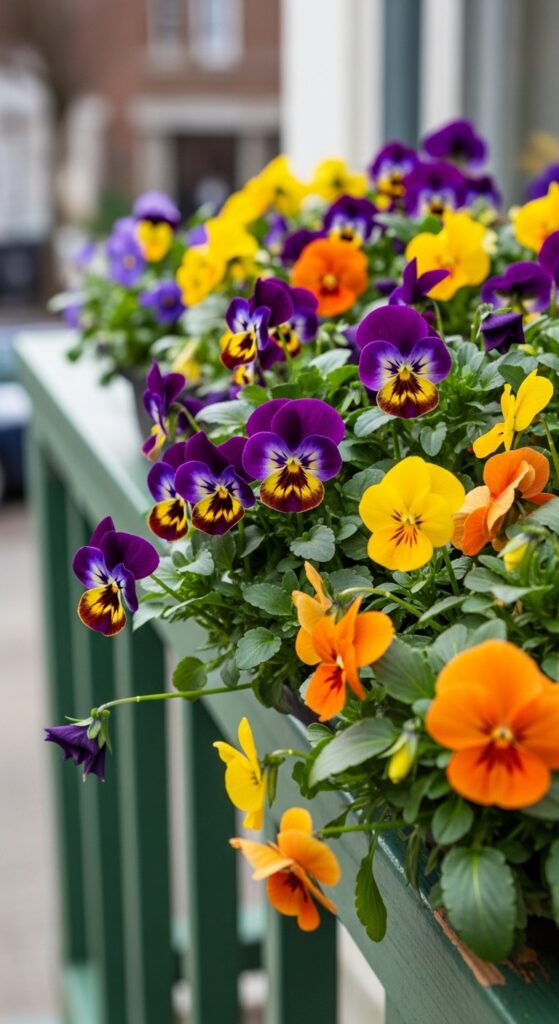
Winter pansies are basically the unsung heroes of the cold-season garden. They bloom through frosts, bounce back after being frozen solid, and come in colors so vivid they look almost digital. Plant them and watch heads turn!
The secret is planting extra-densely — pack them in tightly for that luxuriant, overflowing look. A window box stuffed with mixed pansies and Violas in contrasting colors is one of the most cheerful sights on any urban street.
💡 Pro Tip: Deadhead spent blooms every week or two and your pansies will keep flowering from October right through to May. That’s seven months of color from one planting!
Pair deep violet pansies with bright yellow Violas for a classic color combination, or go all-in on a warm orange-and-red palette for a fiery winter display. Read our winter window box planting guide for more combos.
Pansies prove that winter containers can be just as colorful and joyful as summer ones — never underestimate them!
11. Festive Conifer & Berry Wreath Pot
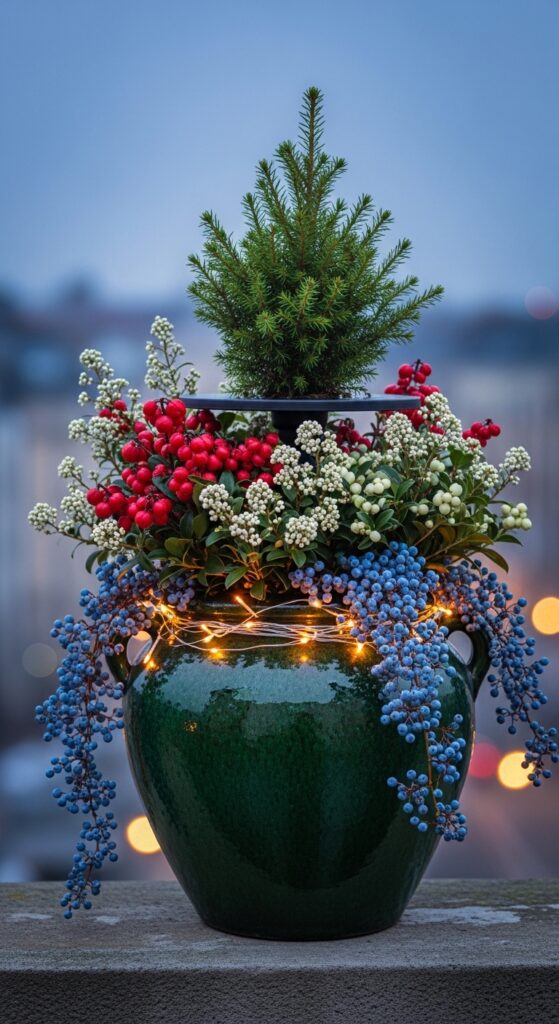
This one’s basically a living Christmas decoration — and it works from November right through January. The idea is to build a container that mirrors a classic holiday wreath using living plants instead of cut material.
Layer a compact conifer as your centerpiece, then ring it with Gaultheria (wintergreen) for those brilliant red berries, trailing Viburnum davidii for blue-black berries, and a few sprigs of white-berried Skimmia for contrast.
Wrap the pot itself in warm fairy lights and you’ve got a display that looks absolutely magical at dusk — no wreath-hanging required. Talk about a game-changer for apartment balconies!
This combo is frost-hardy to around -10°C and all plants can be repotted and reused in your spring display once the season ends. Check out our festive container garden ideas for more holiday plant combinations.
Festive, reusable, and genuinely beautiful — this pot wins every single time!
12. Architectural Phormium Statement Pot

If you want one plant that delivers year-round architectural drama, Phormium tenax is your answer. Those bold, sword-like leaves in deep burgundy, bronze, or variegated cream-and-green stay looking incredible all winter and need almost zero attention.
The secret to using Phormium well is giving it a container that matches its drama — think tall fibreglass, dark zinc, or sleek concrete pots rather than terracotta. The contrast between the bold foliage and a minimalist pot is genuinely stunning.
Most Phormium varieties tolerate light frost well (down to about -5°C), but mulch the top of the pot with bark chippings in hard freezes to protect the roots. In very exposed locations, wrap the pot in horticultural fleece during the coldest weeks.
Read our guide on architectural plants for modern balcony gardens to find more statement-makers like this. The New Zealand Plant Conservation Network has fascinating info on Phormium at nzpcn.org.nz.
One well-chosen Phormium can elevate your entire balcony aesthetic — it really is that powerful!
13. Ivy Topiary Shapes in Frosty Containers
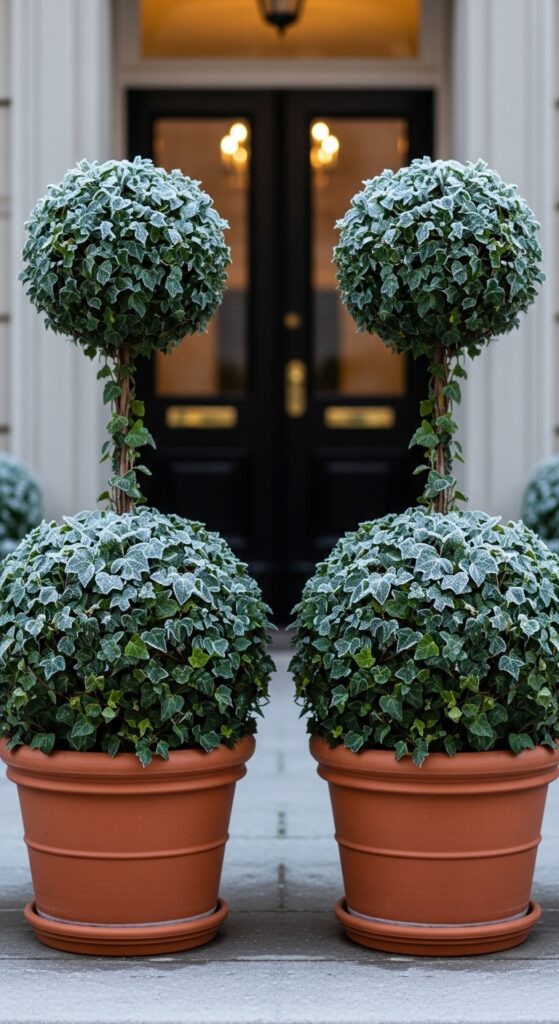
Ivy topiary is the classic winter balcony move for good reason — it’s evergreen, incredibly hardy, and that formal symmetry looks effortlessly chic even on the smallest balcony. A matching pair flanking your door or railing is timeless.
The secret is using frames (you can buy wire ball or cone shapes from garden centers) to train your ivy over a season, then just let it hold its form through winter. Hardy ivy varieties like Hedera helix ‘Glacier’ or ‘Goldheart’ are perfect and frost-proof to -20°C.
💡 Pro Tip: Give your ivy topiary a light trim every 4–6 weeks to keep the shape crisp. Use small scissors rather than large shears for a clean, precise finish.
Once established, ivy topiary is genuinely the lowest maintenance winter display you can have — water occasionally, trim lightly, and admire constantly.
Explore topiary for balcony containers for more shapes and styles on our blog.
Classic, elegant, and completely fuss-free — ivy topiary is a winter balcony essential!
14. Snowdrop & Early Bulb Pre-Planting
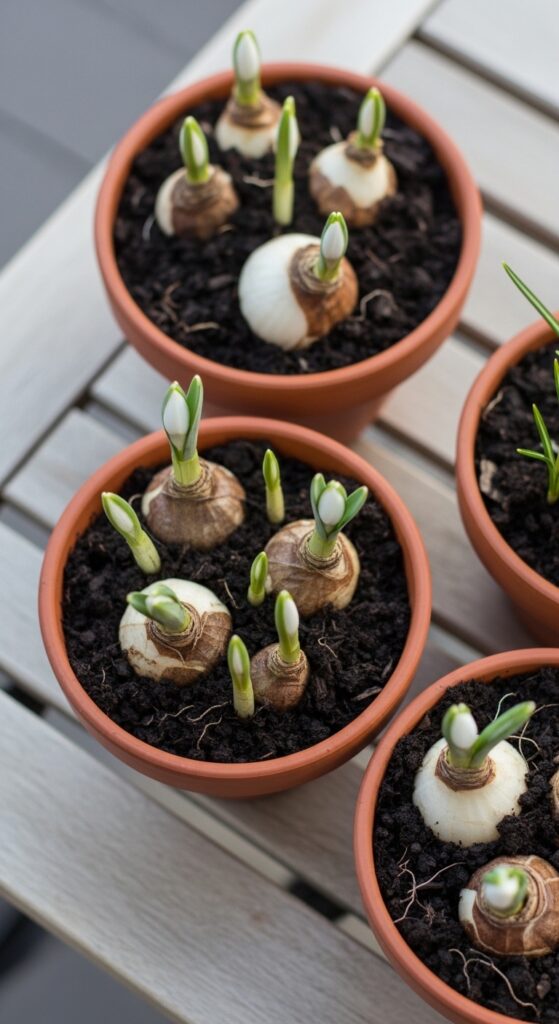
Here’s the thing: the best frost-proof balcony winter displays aren’t just about what’s happening now — they’re about what’s coming. Planting snowdrop bulbs (Galanthus) in autumn gives you those magical emerging shoots right through winter, building to a gorgeous February bloom.
Layer your bulb pots with Galanthus at the bottom, then Crocus in the middle, then Iris reticulata at the top for a continuous wave of early spring color that starts appearing in the coldest months.
This lasagna planting technique is one of the most rewarding things you can do in a container garden — and watching those first green shoots push up through frozen soil in January is genuinely one of gardening’s great joys.
Read our full bulb lasagna planting guide for containers for detailed instructions. The Chicago Botanic Garden has a wonderful resource on winter bulbs at chicagobotanic.org.
Plant now, wait, and then prepare to be absolutely delighted — this one’s worth every bit of the anticipation!
15. Japanese-Inspired Minimalist Winter Pot

If “less is more” is your design philosophy, a Japanese-inspired minimalist winter pot is absolutely the move. The bare, sculptural branches of a dwarf Japanese maple (Acer palmatum) in winter are genuinely breathtaking — all that intricate branching structure is hidden during summer behind the leaves.
Pair it with black mondo grass (Ophiopogon planiscapus ‘Nigrescens’) and top-dress with smooth white or grey pebbles for a Zen-garden aesthetic that looks more like fine art than a plant pot.
The maple needs frost protection for its roots (wrap the pot in bubble wrap or hessian in hard freezes), but the plant itself is fully cold-hardy and actually needs the cold to develop its brilliant spring foliage color.
Explore our Japanese-inspired balcony garden ideas for a deeper dive into this aesthetic.
Calm, considered, and impossibly beautiful — this display proves that winter is the season for sculpture!
16. Colourful Primrose Tiered Display
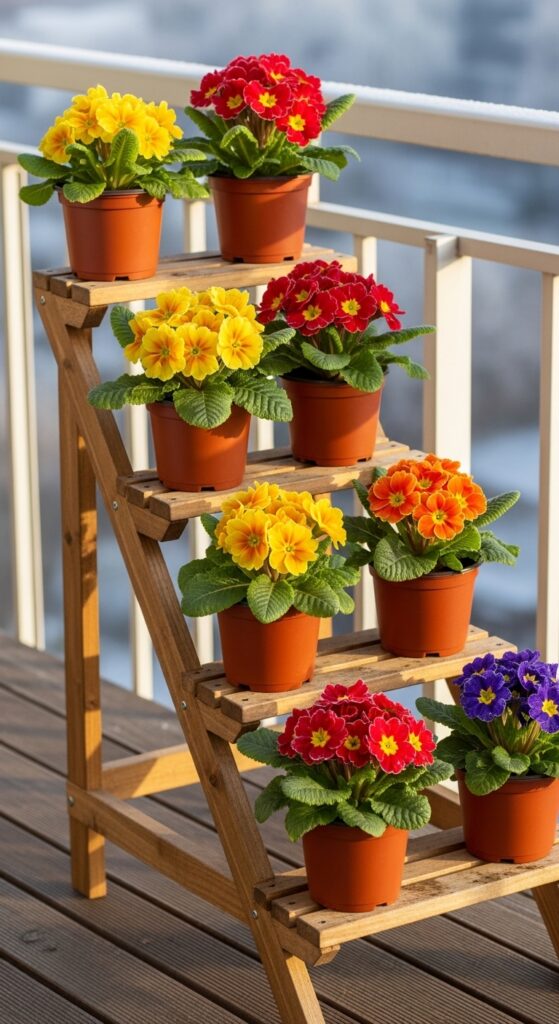
Primroses (Primula vulgaris) are cold-hardy to about -10°C and they come in every color imaginable — use that! A tiered plant stand packed with primroses in contrasting bold colors is like having a paint palette on your balcony.
The secret is using a tiered display to get maximum visual impact from minimum floor space — perfect for smaller urban balconies where you need to think vertically. Stack your most colorful varieties at eye level and let the deeper tones anchor the bottom tier.
💡 Pro Tip: Bring primroses indoors overnight if temps drop below -12°C, then put them back out the next day. They’re tough but not quite indestructible at the very extreme end of cold.
Refresh spent plants with new ones from the garden center every few weeks — primroses are incredibly affordable and the color payoff is enormous. Check out our tiered planter display ideas for small balconies for more vertical gardening inspiration.
Bright, bold, and endlessly cheerful — primroses are winter’s answer to summer bedding plants!
17. Rustic Wooden Crate Winter Herb & Evergreen Mix
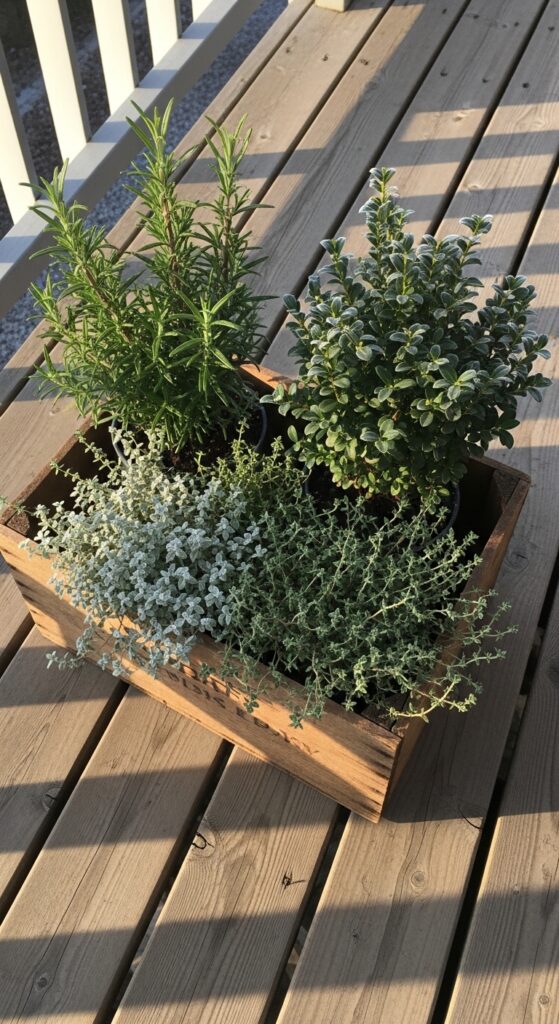
Here’s the deal: who says your winter display can’t be beautiful AND useful? A rustic wooden crate planted with evergreen herbs and low-growing shrubs gives you that gorgeous cottage-garden aesthetic plus actual, usable fresh herbs through winter.
Rosemary is frost-hardy and looks stunning all winter with its silvery needles. Trailing thyme cascades beautifully over the edges. Winter savory (Satureja montana) is hardier than summer savory and keeps its leaves right through the cold.
Add a small Euonymus fortunei shrub in a variegated or golden variety for year-round evergreen structure, and you’ve got a display that’s both decorative and functional. Pretty cool, right?
Line the wooden crate with burlap or hessian to hold the compost while allowing drainage, then fill with a gritty, free-draining mix. Find our herb container garden winter guide for full growing details.
Practical, pretty, and totally Instagram-worthy — this is the winter display that works twice as hard as any other!
18. Layered Thriller-Filler-Spiller Winter Masterpiece

This is the one that ties everything together — the thriller-filler-spiller method applied to winter containers creates the most professional-looking display you can achieve, and once you understand the formula, you can do it with any plant combination.
Your thriller is your tallest, most dramatic plant — red-stemmed dogwood, a small conifer, or architectural Phormium. Your fillers are your mid-height workhorses — Skimmia, heather, and ornamental kale are perfect. Your spillers are trailing plants that cascade over the pot edges — ivy, trailing Dichondra, or creeping Euphorbia.
💡 Pro Tip: Always plant your thriller slightly off-center (about one-third from the edge rather than dead center) — it creates a much more dynamic, natural-looking composition.
The beauty of this approach is that it works with any budget and any balcony size — scale up for a large terrace statement pot or scale down for a compact apartment balcony using smaller varieties of each role. Check out our complete thriller-filler-spiller container planting guide for the full breakdown.
Master this one formula and every container you ever plant will look like a professional designed it — that’s the power of the thriller-filler-spiller!
Frequently Asked Questions
What makes a plant truly frost-proof for balcony displays?
A truly frost-proof balcony plant can withstand repeated freeze-thaw cycles without dying back, and its roots can tolerate cold even when exposed in an above-ground container. Look for plants rated at least 1–2 hardiness zones colder than your actual zone, since container roots experience much colder temperatures than ground-planted roots. Always check the hardiness rating on the label and lean toward plants rated to at least -10°C / 14°F for reliable winter survival.
How do I protect container roots from freezing in winter?
The best approach is wrapping your pots in bubble wrap, hessian, or horticultural fleece to insulate the root zone. Grouping pots together also creates a microclimate that significantly reduces temperature extremes. Placing pots against a wall (especially a south- or west-facing one) adds another layer of protection, as the wall radiates heat overnight.
Can I keep my winter balcony display looking good in very heavy snow?
Yes! Most frost-proof winter plants handle snow just fine — and honestly, a light dusting of snow on your display looks absolutely magical. For heavy snow accumulation, gently brush snow off conifer branches to prevent them from snapping under the weight. Most flowering plants like pansies and Cyclamen will flatten under snow but bounce back perfectly once it melts.
What’s the best compost to use for winter balcony containers?
Use a good-quality multipurpose or peat-free compost mixed with about 20–30% horticultural grit or perlite for improved drainage. Waterlogging is the number one killer of winter container plants — not cold. Avoid heavy topsoil or cheap compost that compacts and retains too much moisture. For acid-loving plants like heather and Skimmia, use a specialist ericaceous compost mix.
How often should I water my winter balcony displays?
Much less often than in summer! In cold weather, plants go semi-dormant and soil dries out slowly. Check your containers once a week by pushing your finger 2–3cm into the compost — only water if it feels dry at that depth. On freezing days, skip watering entirely since the roots can’t absorb frozen water anyway. Resume regular watering as temperatures rise in late winter and early spring.
A Few Final Thoughts
Your balcony doesn’t have to hibernate just because winter does — and now you’ve got 18 incredible ideas to prove it! From bold conifer centerpieces to layered thriller-filler-spiller masterpieces, there’s a winter display here for every style, every budget, and every size of outdoor space. The secret really does come down to choosing the right frost-hardy plants, protecting your container roots, and having a little fun with color, texture, and structure. Don’t wait for spring to start enjoying your balcony — winter has its own kind of magic, and with these ideas in your toolkit, you’re perfectly equipped to capture it. Now go make it happen! 🌿