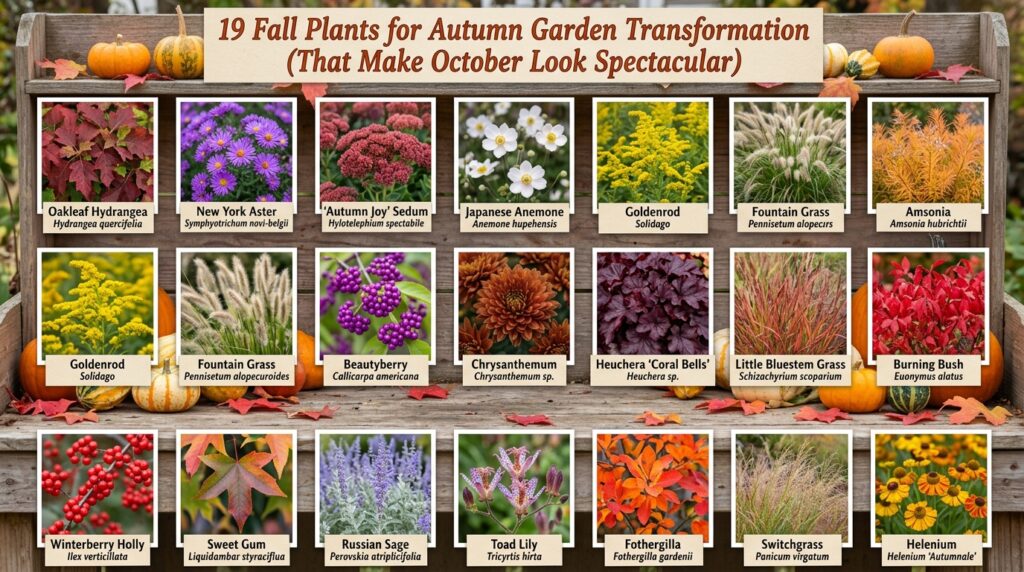
Is your garden peaking in July and then slowly giving up on life by September? You’re planting for summer and forgetting about the season that genuinely rivals it for beauty — and that’s the most fixable mistake in gardening. Fall plants for autumn garden transformation exist in stunning variety, and the right selection turns your outdoor space into a rich, layered, deeply atmospheric display of amber, burgundy, copper, and gold that lasts from September all the way through November. The secret is choosing plants that don’t just survive autumn but absolutely thrive in it — putting on their best performance precisely when everything else is winding down. Ready to find out?
At a Glance
- Fall plants for autumn garden displays work through four key qualities — vivid foliage color, late-season blooms, decorative seed heads, and bold berry production.
- The best autumn plants peak in September through November rather than fading with summer — timing your display for the whole season matters enormously.
- Layering heights — tall ornamental grasses at the back, mid-height flowering perennials in the middle, and low ground covers at the front — creates an autumn border with genuine depth and drama.
- Most high-performing autumn garden plants are also fully hardy perennials or shrubs that return and improve every year with minimal intervention.
- A well-planned autumn garden transformation requires planting in both spring and late summer — some stars need the whole growing season to hit their autumn peak.
1. Japanese Maple (Acer palmatum) — The Crown Jewel of Fall Color
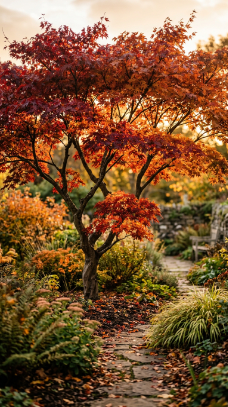
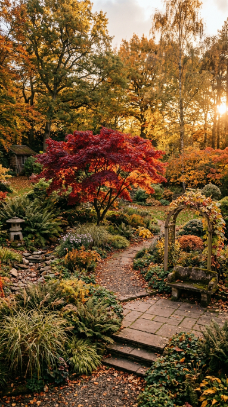
If you want one plant that single-handedly transforms a garden into an autumn spectacle, it’s the Japanese maple — and nothing else comes close. Acer palmatum varieties deliver fiery autumn foliage color in shades ranging from pure scarlet to deep burgundy to luminous orange-gold that genuinely stops people in their tracks in October and November.
‘Bloodgood’ turns a breathtaking scarlet-crimson, ‘Osakazuki’ produces what many consider the finest autumn color of any tree — pure flame orange-red — and ‘Sango-kaku’ (coral bark maple) combines golden autumn leaves with vivid coral-pink winter bark for a genuinely two-season spectacular. Every variety earns its space dramatically.
The secret to maximum autumn color impact is positioning — plant Japanese maples where late afternoon autumn sunlight can backlight the leaves from behind. That translucent quality of maple foliage in backlight is simply one of the most beautiful things in the garden world.
🌿 Pro Tip: Japanese maples planted in containers actually often develop more intense autumn color than garden-planted specimens — the slight root restriction and controlled watering of container growing stresses the plant just enough to trigger earlier and more vivid leaf color change. A large statement container on a sunny patio is ideal.
Explore autumn color trees in our year-round garden structure guide.
The RHS has a comprehensive Japanese maple variety and care guide with autumn color recommendations.
Plant a Japanese maple this autumn and create a garden moment you’ll photograph every October for the rest of your life!
2. Chrysanthemum — The Undisputed Queen of the Autumn Border
Chrysanthemums are the defining fall plants for autumn garden displays — full stop. Those bold, densely petaled blooms in burnt orange, deep burgundy, mustard yellow, copper, and russet red are autumn’s signature color palette made flower, and a well-planted chrysanthemum border in October is one of gardening’s great seasonal pleasures.
Here’s the deal: choose hardy garden mum varieties rather than florist mums for genuine garden performance. Varieties like ‘Clara Curtis’ (soft pink, incredibly vigorous), ‘Duchess of Edinburgh’ (deep red), and ‘Emperor of China’ (silvery pink that intensifies in cold) are reliably perennial and return bigger and better every year.
Deadhead religiously — removing every spent bloom every few days — and your chrysanthemums will produce wave after wave of new flowers from September through the first hard frosts of November. It’s the single most impactful maintenance task in the entire autumn garden.
| Chrysanthemum Type | Color Range | Height | Best Use |
| Hardy garden mum | Orange, burgundy, yellow | 40–60cm | Border, container |
| Spray chrysanthemum | Pink, white, bronze | 60–90cm | Back of border |
| Cushion mum | All autumn tones | 30–40cm | Front of border, containers |
| Korean hybrid | Pink, copper, red | 50–70cm | Naturalistic planting |
Discover chrysanthemum care tips in our fall mums care guide.
Gardeners’ World has a detailed hardy chrysanthemum growing guide with variety recommendations.
Plant hardy mums in bold drifts and create an autumn border that absolutely blazes with color!
3. Rudbeckia (Black-Eyed Susan) — Golden Sunshine Through Autumn Frosts
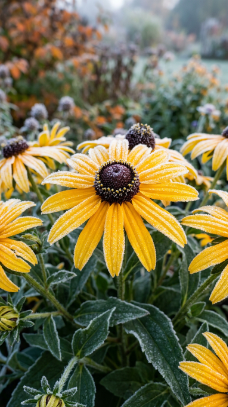
Rudbeckia fulgida ‘Goldsturm’ is one of the most reliable and joyful fall plants for autumn garden transformation — those vivid golden-yellow daisy flowers with dark chocolate-brown centers bloom prolifically from August through October, completely unfazed by autumn rain, wind, and light frosts.
Talk about a game-changer for the mid-autumn border! While other summer plants are collapsing and retreating, Goldsturm is hitting its absolute peak — a plant in full golden bloom in October, surrounded by changing leaves and autumn grasses, creates one of the most warmly beautiful garden combinations of the entire year.
The dark seed heads that follow flowering are equally valuable — leave every stem standing through winter and you have months of structural interest plus a constant stream of seed-eating bird visitors feeding on the dark seed cones.
🌿 Pro Tip: Mass-plant Rudbeckia in drifts of at least five or seven plants for maximum visual impact — a single plant is easily overlooked in a busy autumn border, but a generous golden drift creates a bold color statement that anchors the entire planting scheme.
Explore autumn border plant combinations in our winter border planting guide.
The RHS covers Rudbeckia fulgida varieties and care for garden borders.
Plant Rudbeckia in bold sweeps and your autumn garden will glow gold from August through November!
4. Miscanthus (Ornamental Grass) — Feathery Plumes and Autumn Movement
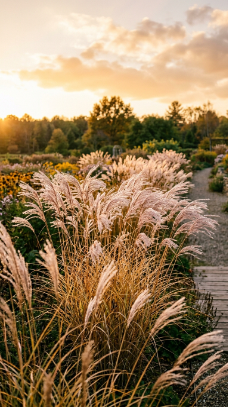
Miscanthus sinensis is the tall, architectural grass that every autumn garden needs — and if you’re not growing it, you’re missing one of the season’s most spectacular shows. Those tall arching stems carry silver-pink to copper-red feathery plumes that emerge in late summer and become increasingly beautiful through autumn as they catch low seasonal light and dance in every breeze.
Varieties like ‘Gracillimus’ (fine-leaved, silver plumes), ‘Malepartus’ (reddish plumes, spectacular autumn leaf color), and ‘Flamingo’ (pink-flushed plumes, graceful arching habit) all deliver outstanding autumn garden performance at different scales and styles.
Here’s the thing: Miscanthus is at its absolute best in autumn — the backlit plumes against a low October sun create a photography moment of such natural drama that it genuinely looks like a professional shoot. Position it where late afternoon light can work its magic.
Find ornamental grass combinations in our perennials for winter interest guide.
Gardeners’ World features a comprehensive Miscanthus variety and growing guide for garden borders.
Position Miscanthus where the autumn sun can backlight it and prepare to be genuinely stunned!
5. Sedum (Hylotelephium ‘Autumn Joy’) — Flat-Topped Color Through Season’s End
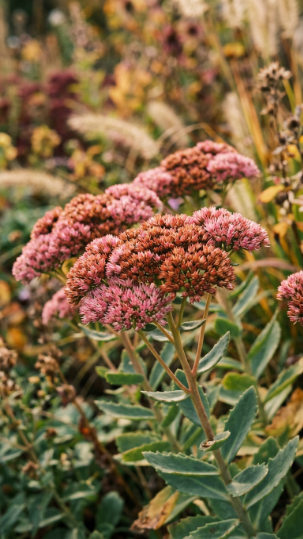
Sedum ‘Autumn Joy’ — now correctly named Hylotelephium ‘Herbstfreude’ — earns its place among the best fall plants for autumn garden transformation by delivering a seamless color transition from late summer through deep autumn that no other perennial quite matches. The flat-topped flower heads shift from dusty pink through rich copper, deep russet, and finally dark bronze as the season progresses — a slow-motion autumn color performance in a single plant.
The horizontal flat heads at mid-border height create a strong structural layer that contrasts beautifully with tall vertical grasses and round-headed mums. Mass-planted in groups of five or more, the repetition of those flat copper heads creates a bold visual rhythm across an autumn border.
Leave every stem standing through winter — the dried bronze seed heads are magnificent covered in frost and provide important food for seed-eating birds through the coldest months.
🌿 Pro Tip: Divide Sedum clumps every three to four years in spring to maintain vigor and prevent the center of the clump from dying out and opening up untidily — divided sections establish quickly and return to full flowering size within a single growing season.
Discover sedum combinations in our perennials for winter interest guide.
The RHS covers Hylotelephium (Sedum) growing and care in detailed guidance.
Plant ‘Autumn Joy’ in generous drifts and watch it carry your garden’s color story from August to December!
6. Heuchera — Rich Foliage Color That Peaks in Autumn Cool
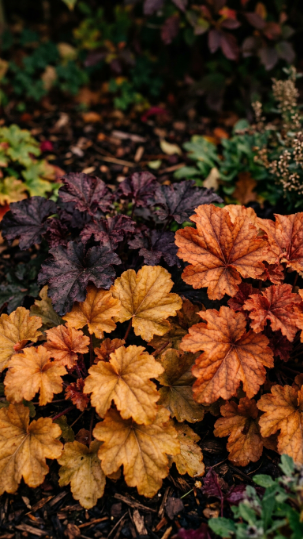
Heuchera is the fall plants for autumn garden secret that experienced gardeners reach for when they want rich, continuous color that performs brilliantly in the cooler temperatures and lower light of autumn. Those ruffled, deeply colored leaves in caramel, amber, deep copper, near-black burgundy, and wine red intensify beautifully as temperatures drop — the cooler the autumn, the more vivid the foliage.
The magic of heuchera is pairing contrasting varieties together — ‘Obsidian’ (near-black) beside ‘Caramel’ (warm amber) beside ‘Marmalade’ (deep copper-orange) creates a jewel-toned trio that reads like a curated autumn color palette in plant form. The ruffled textures catch and hold light in a way that makes close-up photography genuinely spectacular.
Pretty cool, right? Unlike many autumn plants that peak and then collapse, heuchera is evergreen — it looks great all winter and is already performing again by early spring, making it one of the highest-value plants in the entire autumn garden planting palette.
Explore heuchera combinations in our fall office plant styling guide.
Gardeners’ World has a beautiful Heuchera variety and growing guide for borders and containers.
Mix three contrasting heuchera varieties together and create autumn foliage art at ground level!
7. Dahlia — Jewel-Toned Late Blooms That Define Autumn Abundance
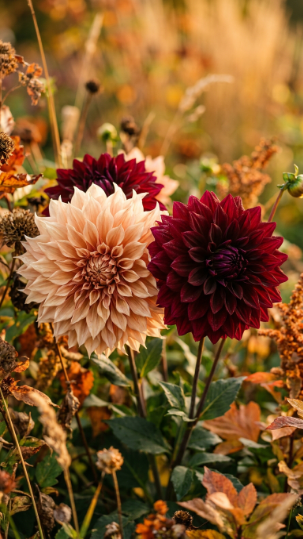
Dahlias are the autumn garden’s ultimate statement flower — those enormous, intricately structured dinner plate blooms in café au lait, deep burgundy, burnt copper, and blood orange are the most photographed flowers of the entire autumn season for very good reason. They’re extraordinary.
Here’s the deal: dahlias reach their absolute peak performance in September and October when cooler temperatures intensify the flower colors and lower light angles create that warm side-lighting that makes every bloom look like a painted portrait. The jewel tones of autumn dahlias in late September afternoon light are genuinely unlike any other flowering moment in the garden year.
Deadhead obsessively — every spent bloom removed at the stem base redirects energy into the next flower bud and extends the display by weeks. A well-maintained dahlia in a good position should be producing new blooms right up to the first hard frost in November.
Find dahlia care tips in our fall container garden guide.
The RHS has an excellent dahlia growing, lifting, and storage guide for garden borders.
Grow dahlias in the richest autumn tones you can find and experience the season at its absolute most beautiful!
8. Cotinus (Smokebush) — Purple-Black Foliage Turning Fiery in Autumn
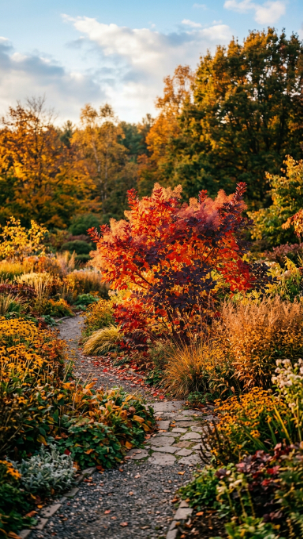
Cotinus coggygria ‘Royal Purple’ is a plant that earns its fall plants for autumn garden credentials twice over — first as a near-black summer foliage plant of extraordinary drama, and then again as one of the most spectacular autumn color shrubs in the entire garden. In October, those deep purple-black leaves transition to vivid scarlet, crimson, and orange, creating an autumn display of breathtaking intensity.
The combination of residual dark purple and flaming autumn red-orange on the same plant simultaneously — the color change progressing unevenly through the canopy — creates a natural abstract color painting effect that photographs magnificently in autumn light.
Talk about a game-changer! Smokebush delivers atmosphere and drama across six or more months — dark and mysterious through summer, spectacularly colorful in autumn, and boldly structural in winter. Very few shrubs compete with this level of seasonal contribution.
Discover smokebush combinations in our witchy garden ideas guide.
Gardeners’ World covers Cotinus coggygria autumn care and varieties in beautiful detail.
Plant smokebush and enjoy both its summer mystery and its autumn fire in a single spectacular shrub!
9. Echinacea (Coneflower) — Late Blooms Followed by Architectural Winter Seed Heads
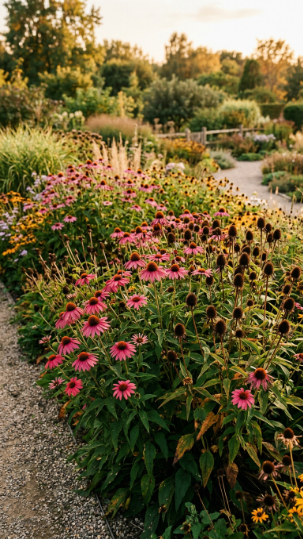
Echinacea is one of those outstanding fall plants for autumn garden displays that delivers a genuinely extended season of interest — still producing flowers in September while simultaneously forming those bold, spiky bronze seed heads that will carry the visual interest all the way through winter. It’s essentially two seasons of beauty in a single plant.
Echinacea purpurea varieties — ‘Magnus’ (deep rose-pink), ‘White Swan’ (pure white), ‘Green Jewel’ (lime green), and ‘Cheyenne Spirit’ (mixed warm tones) — all perform brilliantly through the autumn season, continuing to flower in mild autumns well into October.
Here’s the thing: don’t cut echinacea back after flowering — the transition from flower to seed head is seamless and beautiful, and those dark bronze cones provide months of structural interest and critical food for goldfinches and siskins through autumn and winter.
🌿 Pro Tip: Plant echinacea in groups of at least three to five for meaningful visual impact — a single plant disappears in a mixed autumn border, but a generous drift creates the bold color and structural statement that makes autumn borders genuinely memorable from a distance.
Explore echinacea combinations in our perennials for winter interest guide.
The RHS has a detailed Echinacea growing and variety guide for garden borders.
Plant echinacea for autumn blooms and winter architecture — one plant that genuinely does it all!
10. Pyracantha (Firethorn) — Blazing Berry Displays Through Autumn and Winter
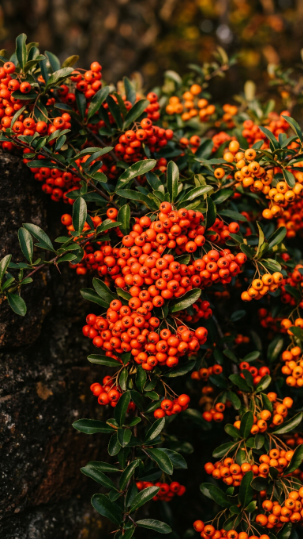
Pyracantha — firethorn — is the autumn garden plant that earns superlatives: the most vivid berry display of any hardy shrub, the most generous wildlife plant in the autumn garden, and one of the most impactful wall or fence plants available in any season. Those dense, blazing clusters of scarlet, orange, or yellow berries against deep glossy evergreen leaves are jaw-dropping in October and November.
Train pyracantha flat against a wall or fence for a space-efficient display that turns an entire vertical surface into a blazing autumn canvas. ‘Saphyr Orange’ produces vivid orange berries, ‘Soleil d’Or’ golden yellow, and ‘Red Column’ the most intense scarlet — plant two or three varieties together for a multi-colored berry display.
The wildlife value is extraordinary — blackbirds, redwings, and fieldfares descend on heavy berry crops in November and December, adding movement and sound to the autumn garden that no other plant quite delivers.
Find berry plant combinations in our winter garden ideas guide.
Gardeners’ World has a comprehensive Pyracantha growing and variety guide for garden walls and borders.
Train pyracantha against your sunniest wall and create an autumn berry display that blazes for months!
11. Helenium (Sneezeweed) — Warm Copper Daisies in Full Autumn Blaze
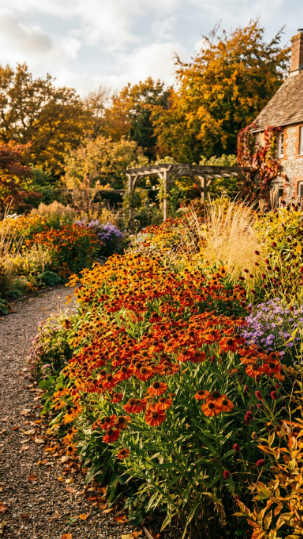
Helenium is one of the most rewarding fall plants for autumn garden transformation — those warm, rich copper, orange, and deep russet daisy flowers with dark central cones bloom prolifically from August through October in colors that feel like the essence of autumn distilled into flower form.
‘Moerheim Beauty’ produces deep copper-red flowers of extraordinary richness, ‘Sahin’s Early Flowerer’ starts earlier with orange-flame bi-colored petals, and ‘Rubinzwerg’ delivers deep ruby-red flowers on compact plants perfect for smaller autumn garden spaces.
Here’s the deal: helenium is a clump-forming perennial that gets better and more floriferous every year. Divide clumps every two to three years in spring to maintain vigor and you’ll have an increasingly generous autumn border plant that rewards minimal effort with spectacular seasonal performance.
🌿 Pro Tip: The “Chelsea Chop” technique — cutting helenium stems back by one third in late May — delays flowering by two to three weeks and creates stronger, less floppy plants that don’t need staking. In an autumn garden, this pushes the peak display from August into September and October, exactly where you want it.
Explore autumn daisy plant combinations in our winter flowering plant combinations guide.
The RHS covers Helenium varieties and cultivation with detailed border guidance.
Plant helenium in warm copper tones and your autumn border will glow like a banked fire!
12. Aster (Symphyotrichum) — Purple and Pink Stars for the Autumn Border
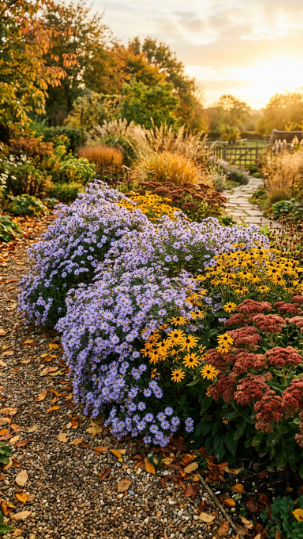
Asters (Symphyotrichum) are the fall plants for autumn garden displays that bring the cool purple, lavender, and pink tones that balance all that warm amber and russet of a typical autumn border — and without them, an autumn garden can feel one-dimensional in its warmth. Those masses of small daisy flowers covering the entire plant from September through November create a generosity of bloom that’s genuinely staggering.
Aster x frikartii ‘Mönch’ is the most acclaimed variety — long-blooming, mildew-resistant, and producing lavender-blue flowers of extraordinary abundance. ‘Little Carlow’ delivers deep violet-blue on compact plants, and Symphyotrichum novae-angliae ‘Andenken an Alma Pötschke’ blazes with hot cerise-pink flowers that create a stunning contrast against golden autumn grasses.
The colour contrast between purple-blue asters and golden rudbeckias or yellow chrysanthemums planted together is one of the most visually powerful combinations in the entire autumn garden palette.
Find aster combinations in our fall plants guide.
Gardeners’ World features a detailed Aster variety and care guide for autumn borders.
Plant purple asters beside golden rudbeckias and create the classic autumn border combination that never fails!
13. Viburnum (V. opulus and V. betulifolium) — Spectacular Autumn Berries and Foliage
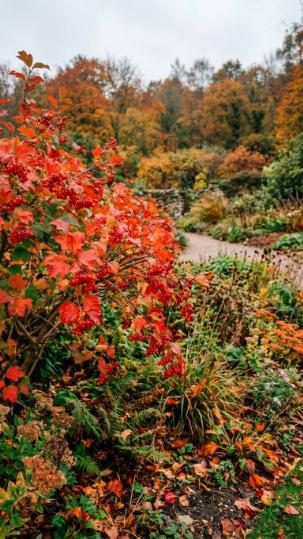
Viburnum opulus — guelder rose — is one of Britain and Europe’s most spectacular native shrubs for autumn garden transformation, producing two simultaneous autumn performances: large clusters of translucent red berries that glow jewel-like in autumn light, and brilliant scarlet-orange foliage that rivals Japanese maples in intensity. Both together in October create a display of genuine natural magnificence.
Viburnum betulifolium takes the berry display even further — this large shrub produces the most prolific berry clusters of any viburnum, each hanging branch completely smothered in red berries by late autumn in a display that has to be seen to be believed.
Here’s the thing: viburnums are fully hardy, wildlife-friendly, and surprisingly underplanted in autumn gardens — most gardeners reach for pyracantha for berries and Japanese maples for autumn foliage, missing a plant that delivers both simultaneously with great generosity.
🌿 Pro Tip: Plant two or three viburnum varieties together to maximize cross-pollination and berry production — a single specimen often sets a lighter berry crop than a group, and the varied forms and textures of multiple viburnums together create a richer, more naturalistic autumn planting.
Explore berry-producing shrubs in our winter garden ideas guide.
The RHS covers Viburnum varieties and autumn interest comprehensively.
Plant viburnum for berries and foliage together and experience one of autumn’s most generous double acts!
14. Pennisetum (Fountain Grass) — Soft Bottlebrush Plumes in Autumn Warmth
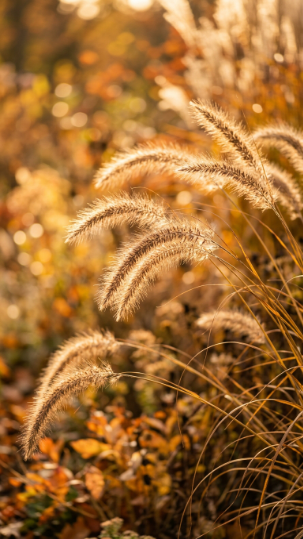
Pennisetum alopecuroides — fountain grass — is the mid-sized ornamental grass that brings exactly the soft, romantic, warm-toned texture that an autumn garden border needs between bolder flowering plants and larger architectural specimens. Those soft bottlebrush plumes in warm bronze and straw gold catch every autumn breeze and backlit afternoon sun with extraordinary grace.
‘Hameln’ stays compact at around 60–70cm — perfect for mid-border positioning where a full-sized Miscanthus would overwhelm. ‘Moudry’ produces near-black plumes that create dramatic contrast against golden autumn flowers, and ‘Karley Rose’ carries rose-pink plumes on vigorous, arching stems.
Pretty cool, right? The fountain grass habit — stems arching outward in all directions from a central clump — creates a natural, organic shape that never looks stiff or placed, always looking as if it’s always been exactly in that spot of the garden.
Find fountain grass combinations in our perennials for winter interest guide.
The RHS has a detailed Pennisetum growing and care guide for garden borders.
Mass-plant fountain grass in groups of three and watch it transform your autumn border with movement and warmth!
15. Callicarpa (Beautyberry) — The Most Surprising Berry Color in the Autumn Garden
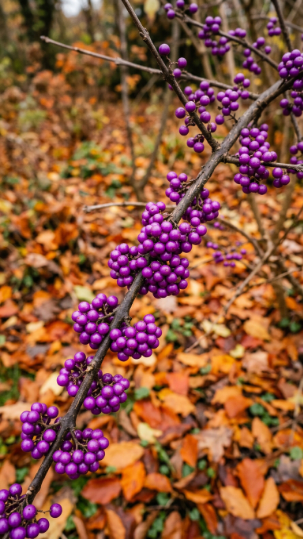
Here’s the fall plants for autumn garden idea that stops people cold — Callicarpa bodinieri ‘Profusion’ produces the most extraordinarily vivid violet-purple berries densely studded along bare arching branches from October through December, and the color is so unexpected and so intensely beautiful that most visitors have never seen anything like it before.
The jewel-bright violet-amethyst berry clusters against the warm tones of a typical autumn garden — fallen orange leaves, amber grasses, copper mums — create a color contrast of near-shocking intensity. It’s one of those plants that makes garden visitors reach immediately for their phone to photograph it.
It’s fully hardy, grows vigorously, and produces its best berry display when planted in groups where cross-pollination improves fruit set. A trio of beautyberry shrubs in an autumn border is a conversation-stopping combination that no other plant can replicate.
Explore unusual autumn plants in our winter flowering plant combinations guide.
Gardeners’ World covers Callicarpa growing and berry production in excellent detail.
Plant beautyberry and watch every autumn garden visitor stop to ask what on earth that magnificent purple-berried shrub is!
16. Anemone (Japanese Anemone) — Elegant Late-Season Flowers on Tall Wiry Stems
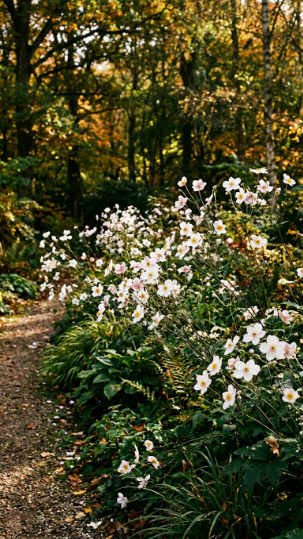
Japanese anemones (Anemone x hybrida) are one of the most elegant fall plants for autumn garden borders — those delicate, single flowers in pure white, soft pink, or deep rose on tall, wiry stems create an airy, graceful presence in September and October that contrasts beautifully with the heavier, bolder plants that dominate typical autumn displays.
‘Honorine Jobert’ produces pure white single flowers with golden stamens of classic, timeless beauty. ‘September Charm’ blooms in soft shell-pink. ‘Pamina’ delivers deep rose-pink semi-double flowers for more impact. All three start blooming in late August and continue through October.
Here’s the thing: Japanese anemones thrive in partial shade — they’re the perfect autumn garden plant for the spots under trees and against north-facing walls where most autumn plants struggle. Once established they spread reliably to fill a shaded border beautifully.
🌿 Pro Tip: Japanese anemones can be slow to establish in their first year — resist the temptation to move or divide them too early. By their second and third year they grow with increasing vigor, and by year three or four you’ll have a colony that self-maintains with very little intervention.
Explore shade-loving autumn plants in our winter border planting guide.
The RHS covers Japanese anemone varieties and care in excellent detail.
Plant Japanese anemones in your shaded spots and give every autumn corner an elegant late-season solution!
17. Cornus (Dogwood) — Fiery Autumn Foliage Then Blazing Winter Stems
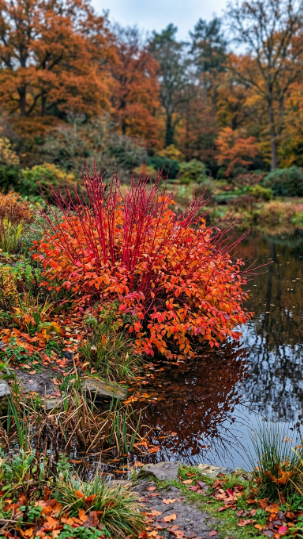
Cornus — dogwood — is one of those outstanding fall plants for autumn garden transformation that genuinely delivers across two complete seasons rather than one. In autumn, the foliage of many varieties turns vivid orange, scarlet, and crimson for a spectacular display. Then, as the leaves fall, the blazing red or yellow winter stems emerge in their full electric glory — and the garden gains a completely different but equally dramatic show.
Cornus alba ‘Sibirica’ produces the most vivid crimson-red stems of any variety, glowing like neon against winter skies. ‘Flaviramea’ delivers brilliant yellow-green stems for a lighter, equally electric effect. Both provide excellent autumn foliage before the stem show begins.
Talk about a game-changer — one plant, two complete seasons of spectacular color, requiring almost zero maintenance beyond an annual hard spring pruning to encourage the most vivid new stem growth.
Find dogwood combinations in our winter garden ideas guide.
The RHS has a comprehensive Cornus varieties and stem color guide for autumn and winter gardens.
Plant cornus for autumn fire and keep it for winter stems — the most generous two-season plant in the garden!
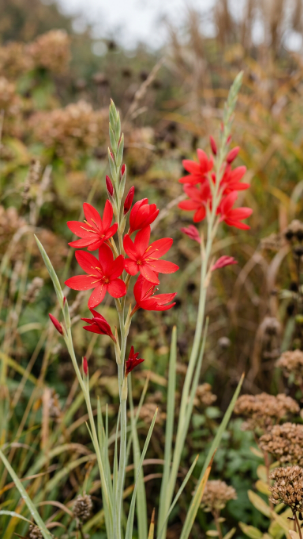
18. Schizostylis (Hesperantha) — Vivid Late Blooms When Almost Nothing Else Flowers
🖼️ IMAGE PROMPT: A close-up realistic image of Schizostylis coccinea (Hesperantha coccinea) with vivid scarlet-red star-shaped flowers on upright stems in a late autumn garden border. Soft overcast autumn light. Color palette: vivid scarlet red, pale green stem, muted autumn border background. Mood: vibrant and surprising. Photography style: macro. Background: blurred late autumn garden.
Here’s a fall plant for autumn garden transformation that most gardeners have never tried but will never stop growing once they do — Schizostylis coccinea (now Hesperantha coccinea) produces vivid, star-shaped flowers in scarlet, pink, or white from October through December, at a time when almost nothing else in the garden is still in bloom.
The late-season blooming window of Schizostylis is extraordinary — in mild autumns it continues flowering into December, producing fresh, vivid flowers long after frost has taken everything else. The upright sword-shaped leaves look good from spring through autumn, and the flowers arrive exactly when you need them most.
‘Major’ produces the deepest scarlet flowers, ‘Mrs Hegarty’ clear pink, and ‘Sunrise’ large salmon-pink flowers on vigorous stems. Plant in a sheltered, sunny position in moist but well-drained soil for the best late-season performance.
🌿 Pro Tip: Mulch Schizostylis crowns generously in late autumn with a thick layer of straw or bark chippings — the crowns are not reliably hardy in cold regions and a protective mulch makes the difference between a plant that returns reliably every spring and one that doesn’t survive its first hard winter.
Explore late-season autumn bloomers in our winter flowering plant combinations guide.
Gardeners’ World features a detailed Schizostylis growing and care guide for autumn borders.
Plant Schizostylis and extend your autumn garden’s flowering season deep into winter!
19. Fothergilla — The Underrated Autumn Foliage Shrub That Blazes Orange and Red
Close out this list of fall plants for autumn garden transformation with a shrub that genuinely rivals Japanese maples for autumn color brilliance but remains almost completely overlooked by most gardeners — Fothergilla gardenii and its larger cousin F. major produce some of the most multi-colored autumn foliage of any shrub, with individual plants displaying vivid orange, scarlet, yellow, and deep red simultaneously on the same branch.
The autumn color intensity of Fothergilla is frankly staggering — and it’s entirely consistent, delivering that spectacular multi-tone performance reliably every year without fail. Add the bonus of fragrant white bottlebrush flowers in spring and the plant earns its garden space in two seasons.
Here’s the deal: Fothergilla needs acid to neutral soil and performs best in a position with good sun for autumn color development — in the right spot it’s virtually maintenance-free and grows more spectacular every year as the shrub matures and the autumn display intensifies.
Explore autumn color shrubs in our year-round garden structure guide.
The RHS covers Fothergilla growing conditions and autumn performance in helpful detail.
Plant Fothergilla and discover the autumn color shrub that experienced gardeners rate as highly as Japanese maples but almost nobody else has heard of yet — your autumn garden will never look the same again!
Frequently Asked Questions
What are the best fall plants for autumn garden transformation for beginners?
Chrysanthemums, Rudbeckia ‘Goldsturm’, Sedum ‘Autumn Joy’, and ornamental grasses like Pennisetum ‘Hameln’ are the four best starting points for beginner autumn gardeners. All four are widely available, reliably hardy, low-maintenance, and deliver outstanding autumn color and interest with minimal specialist knowledge. Together they cover all the key autumn display elements — bold flowers, warm seed heads, flat structural interest, and graceful movement — creating a genuinely complete autumn border from just four plant types.
When should I start planting for an autumn garden transformation?
The best autumn garden transformations are planned and planted across two seasons — spring and late summer. Plant perennials like rudbeckia, echinacea, helenium, asters, and Japanese anemones in spring to establish before autumn performance. Plant chrysanthemums, sedums, and autumn-container displays in August and early September for immediate impact. Shrubs and trees — Japanese maples, smokebush, viburnum, and cornus — are best planted in early autumn to establish before winter.
Which fall plants for autumn garden displays work best in containers?
Chrysanthemums, Japanese maples, heuchera, dahlias, and ornamental grasses all perform brilliantly in containers for autumn garden transformation. Japanese maples in large pots actually often develop more intense autumn color than garden-planted specimens. For maximum autumn container impact, use the thriller-filler-spiller formula — a tall ornamental grass as the centerpiece thriller, chrysanthemums and heuchera as mid-height fillers, and trailing ivy or creeping wire vine as the spiller — in a warm terracotta or dark stoneware container.
How do I keep an autumn garden looking great from September through November?
Sequential planting and deadheading discipline are the two key strategies. Plant early bloomers like Helenium, Rudbeckia, and early chrysanthemums for September color; mid-season asters, dahlias, and Sedum ‘Autumn Joy’ carry October; and late performers like Schizostylis, late chrysanthemums, and berry-producing shrubs carry November. Deadhead chrysanthemums, dahlias, and heleniums every few days to extend flowering, and leave ornamental grasses and seed heads standing for structure and wildlife value through the whole season.
What fall plants for autumn garden interest also provide winter structure?
Miscanthus, Rudbeckia seed heads, Echinacea cones, Sedum dried heads, Cornus stems, and Pyracantha berries all transition seamlessly from autumn display plants into winter interest plants without any intervention. The strategy is simple — don’t cut them back in autumn. Leave ornamental grasses, seed heads, and berrying shrubs standing and your autumn garden transforms naturally into a winter garden without requiring any replanting or additional work, simply by allowing the seasonal transition to happen undisturbed.
A Few Final Thoughts
Transforming your garden with the right fall plants for autumn garden impact is one of the most genuinely rewarding seasonal gardening decisions you can make — because autumn, done well, rivals summer in beauty and exceeds it in atmosphere. From the fiery autumn foliage of Japanese maples and Fothergilla to the jewel-toned late blooms of dahlias and Schizostylis, from the architectural seed heads of Echinacea and Rudbeckia to the blazing berry displays of Pyracantha and Callicarpa, every plant in this list earns its space by delivering something genuinely spectacular precisely when the season demands it most. The secret to a truly great autumn garden transformation is layering these plants across heights, textures, and timing so that your display builds, evolves, and sustains itself from the first cool September morning through the last November frost. Start with three or four plants that excite you most, watch how they transform your space, and build from there season by season. Your most spectacular autumn garden is just a few plant choices away — now go make it happen!