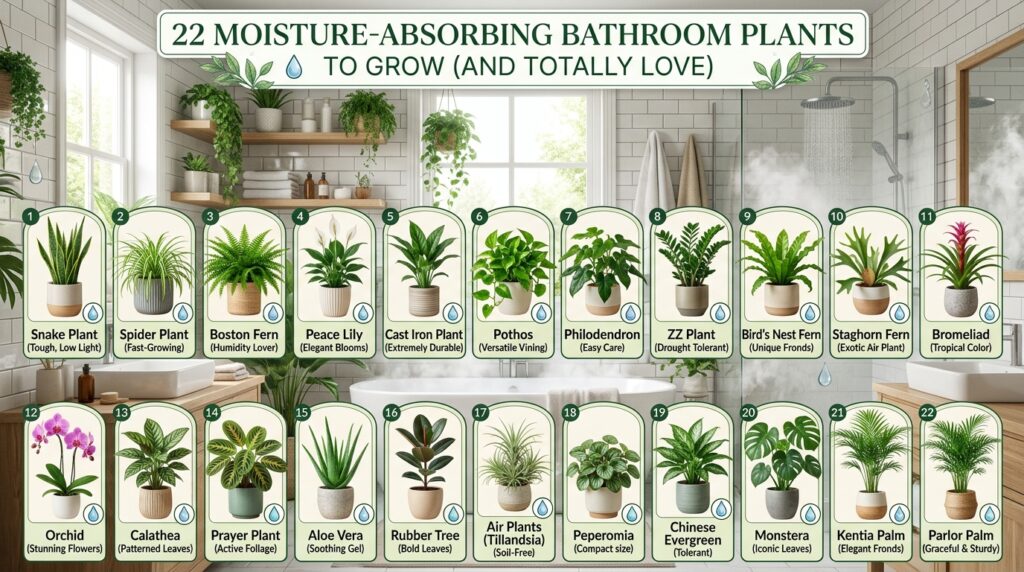
Your bathroom mirror fogs up every morning, the walls feel perpetually damp, and that musty smell just won’t quit no matter how many times you scrub the grout. Sound familiar? Here’s the thing: nature already built the perfect solution, and it fits beautifully on your windowsill. Certain plants are absolute champions at absorbing excess bathroom humidity — pulling moisture right out of the air through their leaves while simultaneously transforming your bathroom into a lush, spa-like sanctuary. The best part? Most of these moisture absorbing bathroom plants thrive in exactly the low-light, high-humidity conditions that kill other houseplants instantly. Ready to find out which ones belong in your bathroom right now? Let’s dive in!
At a Glance
- High-humidity bathrooms are actually ideal growing environments for tropical plants that struggle elsewhere in your home.
- Plants absorb moisture through their leaves via a process called transpiration — making them a natural, beautiful alternative to a dehumidifier.
- Most moisture absorbing bathroom plants tolerate low light, making them perfect for windowless or small-windowed bathrooms.
- Ferns, peace lilies, and Boston ivy are among the most effective at reducing humidity levels naturally.
- Even a single well-chosen bathroom plant can noticeably reduce condensation on mirrors, walls, and tiles over time.
1. Peace Lily — The Bathroom MVP
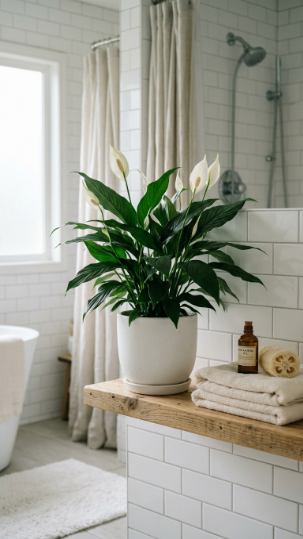
If there’s one plant that was practically designed for bathrooms, it’s the peace lily. Spathiphyllum is a triple threat — it absorbs excess moisture through its broad leaves, tolerates deep shade, and produces those gorgeous white blooms even in low-light conditions.
Peace lilies actively pull airborne moisture and toxins including formaldehyde, benzene, and ammonia through their leaf surfaces. NASA’s famous Clean Air Study rated them among the top air-purifying plants available, and bathrooms give them exactly the warm, humid conditions they naturally crave.
Water sparingly — your bathroom’s ambient humidity will do most of the work. Drooping leaves are the peace lily’s way of politely asking for a drink; they perk back up within hours of watering.
💡 Pro Tip: Place your peace lily in the corner furthest from the window — it actually prefers indirect or low light over bright sun, and will burn if placed in direct sunlight streaming through a bathroom window.
Learn more about peace lily bathroom plant care and check out the RHS peace lily growing guide.
Start here, and your bathroom plant journey begins with a win!
2. Boston Fern — The Humidity Hoover
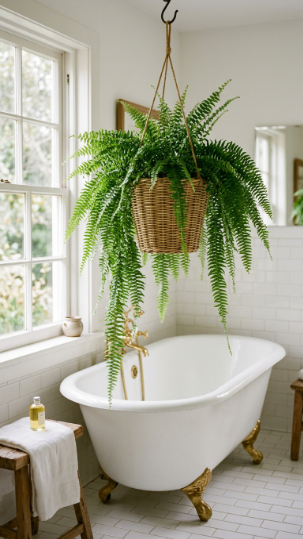
The Boston fern is arguably the most effective moisture absorber on this entire list. Its thousands of tiny leaflets create an enormous collective surface area for transpiration, pulling impressive quantities of bathroom humidity out of the air with every passing hour.
Nephrolepis exaltata loves exactly what your bathroom offers — warm temperatures, indirect light, and consistent humidity. In drier rooms, Boston ferns are notoriously fussy. In a steamy bathroom? They absolutely flourish, rewarding you with lush, cascading growth that looks genuinely spectacular.
Hang it from a ceiling hook above the bath or shower for maximum humidity absorption right where it matters most. The cascading fronds look stunning from below!
| Care Factor | Boston Fern Needs | Bathroom Provides |
| Humidity | 50–80% | ✅ Perfect |
| Light | Indirect/Low | ✅ Ideal |
| Temp | 60–75°F | ✅ Consistent |
| Watering | Moderate | ✅ Less needed |
Browse Boston fern bathroom hanging planter ideas and visit Gardeners’ World’s fern growing guide.
Hang one up and watch your bathroom humidity drop noticeably!
3. Spider Plant — The Unbreakable Air Cleaner
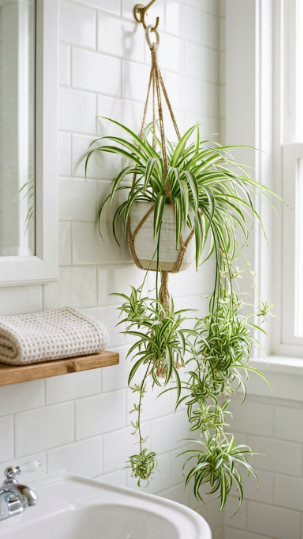
Here’s the deal: if you’ve ever killed every plant you’ve ever owned, the spider plant is your redemption arc. Chlorophytum comosum is practically indestructible, and its long, arching leaves are genuinely excellent at absorbing excess moisture and airborne pollutants from bathroom air.
Spider plants produce adorable little “spiderettes” — baby plants that dangle on long runners like a living mobile. Each spiderette is a free plant you can pot up and propagate, meaning one bathroom spider plant eventually becomes many. It’s the gift that keeps giving!
They tolerate low light, irregular watering, and temperature fluctuations without complaint. For a beginner’s first bathroom plant, nothing beats this one for forgiveness and reward.
💡 Pro Tip: Let your spider plant’s soil dry completely between waterings in the bathroom — the ambient humidity keeps the roots moist far longer than you’d expect, and overwatering is the one thing that will actually defeat this otherwise bulletproof plant.
Discover spider plant bathroom display ideas and read The Sill’s guide to spider plant care.
Pretty, practical, and basically impossible to kill — it’s a bathroom legend!
4. Orchid — Elegant Humidity Lover
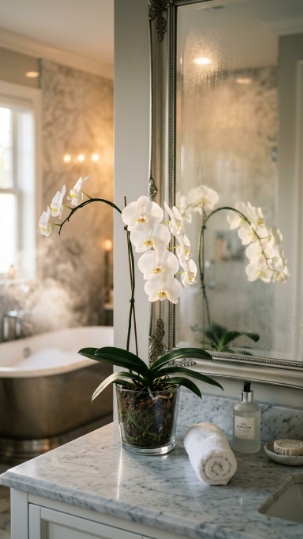
Orchids get a reputation for being difficult, but here’s the secret: Phalaenopsis orchids are actually perfectly suited to bathroom life. They’re epiphytic plants — meaning they naturally grow on tree bark in tropical rainforests, absorbing moisture directly from humid air through their thick aerial roots.
Your steamy bathroom mimics those rainforest conditions beautifully. Orchids absorb humidity through both their leaves and those fascinating aerial roots, and in return they reward you with spectacular, long-lasting blooms that look genuinely luxurious against a marble or tiled bathroom backdrop.
Water once a week by letting water run through the pot, then empty the drainage saucer — never let roots sit in standing water. Natural bathroom humidity handles everything else.
Browse orchid bathroom vanity display ideas and check out the RHS Phalaenopsis orchid care guide.
A touch of pure luxury that your bathroom humidity actually sustains!
5. Bamboo — Architectural Moisture Absorber
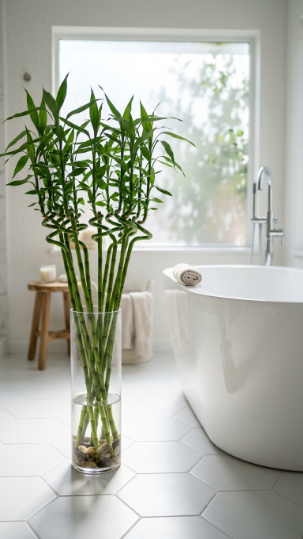
Lucky bamboo (Dracaena sanderiana) makes one of the most architecturally striking moisture absorbing bathroom plants you can grow. Tall, straight canes in a sleek glass vase beside a freestanding tub or in a bathroom corner create a genuinely zen, spa-like aesthetic that elevates the entire room.
Here’s the cool part: lucky bamboo can grow entirely in water — no soil required. Just keep the roots submerged in a couple of inches of filtered water and let bathroom steam do the rest. Change the water monthly to keep it fresh.
The vertical height lucky bamboo provides is fantastic for larger bathrooms where smaller plants get visually lost. A cluster of tall canes immediately draws the eye upward and makes the ceiling feel higher.
💡 Pro Tip: Use filtered or distilled water rather than tap water for lucky bamboo — the chlorine and fluoride in tap water causes leaf tips to brown over time. Collect water from your shower head and leave it overnight to dechlorinate as a free alternative.
Explore lucky bamboo bathroom display ideas and visit Gardeners’ World’s bamboo plant care guide.
Tall, serene, and endlessly elegant — bathroom goals right there!
6. Pothos — The Low-Light Trailblazer
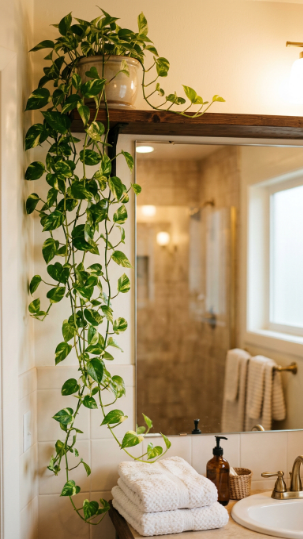
Pothos (Epipremnum aureum) is the plant that thrives where others quietly give up. Deep shade? Fine. Irregular watering? No problem. High bathroom humidity? Absolutely thriving. The cascading vines and heart-shaped variegated leaves make it one of the most visually satisfying plants for high shelves or mounted wall planters where it can trail freely downward.
The secret to pothos’ bathroom effectiveness is its large leaf surface area relative to its root system — those big, waxy leaves absorb ambient moisture continuously. In a steamy bathroom, pothos grows noticeably faster than in drier rooms of the house.
Train the vines along a tension rod or macramé hanger above the mirror or window for a lush, jungle-bathroom aesthetic that looks wildly expensive but costs almost nothing.
| Pothos Variety | Leaf Pattern | Light Need |
| Golden Pothos | Green & gold | Very low |
| Marble Queen | Green & white | Low–medium |
| Neon Pothos | Bright chartreuse | Low |
| Satin Pothos | Silver spots | Low–medium |
Discover pothos bathroom trailing display ideas and read The Sill’s pothos care guide.
Trail it, hang it, love it — pothos makes every bathroom better!
7. Aloe Vera — The Healing Humidity Handler
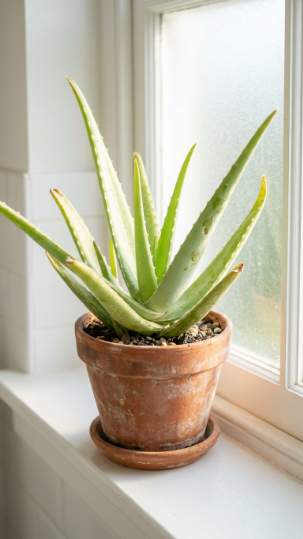
Most people think of aloe as a first-aid plant — and they’re right, it’s magnificent for that. But Aloe barbadensis is also a surprisingly effective moisture regulating bathroom plant, particularly for sunny or well-lit bathrooms where its love of bright light can be accommodated.
Aloe’s thick, fleshy leaves store and regulate moisture remarkably efficiently. In a humid bathroom, aloe actually requires even less watering than usual because it absorbs ambient humidity directly. Water once every 2–3 weeks and let the bathroom steam handle everything in between.
The bonus: a bathroom aloe is immediately useful. Snap a leaf after a hot shower for instant, fresh aloe gel to soothe your skin — the most convenient natural skincare product imaginable.
💡 Pro Tip: Never let aloe vera sit on a cold windowsill in winter — cold combined with bathroom moisture can cause root rot surprisingly quickly. Place a small cork trivet or felt pad under the pot to insulate the roots from cold tile or marble surfaces.
Browse aloe vera bathroom plant ideas and check out University of Minnesota Extension’s aloe vera care guide.
Beauty, healing, and humidity control — three wins in one pot!
8. English Ivy — The Mold-Fighting Climber
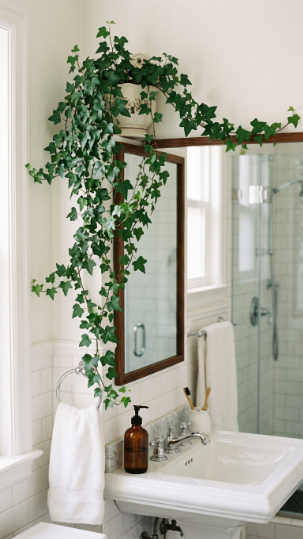
Here’s the thing: English ivy (Hedera helix) doesn’t just absorb bathroom moisture — research from the University of Georgia found it can reduce airborne mold particles by up to 60% in enclosed spaces. For a room that’s perpetually damp and mold-prone, that’s genuinely remarkable.
The classic lobed leaves of English ivy create a stunning trailing or climbing display — train it along a tension wire above the mirror for a dramatic botanical frame, or let it cascade from a high shelf in long romantic vines. It handles low light and high humidity with absolute ease.
Keep it trimmed to prevent vigorous overgrowth — ivy grows enthusiastically in humid conditions and will need shaping every few weeks to stay beautifully contained.
Explore English ivy bathroom display ideas and visit Gardeners’ World’s English ivy growing guide.
Gorgeous, effective, and genuinely mold-fighting — this one’s special!
9. Cast Iron Plant — The Truly Unbeatable
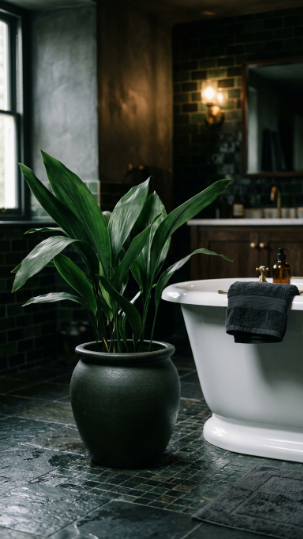
The name says it all. Aspidistra elatior — the cast iron plant — earned its common name by surviving conditions that would destroy any other houseplant. Near darkness? Fine. Irregular watering? Totally fine. Cold drafts, low humidity, high humidity, temperature swings? All fine. This plant simply does not quit.
For a dark, windowless bathroom where nothing else seems to survive, the cast iron plant is your absolute hero. Its broad, glossy leaves absorb available moisture from the air passively, and its deeply tropical origins mean it actually prefers the warmth and humidity of a bathroom environment.
The architectural upright leaves make a dramatic statement in floor-standing pots beside a bath or below a vanity. It’s genuinely impressive-looking despite requiring almost zero effort.
💡 Pro Tip: The cast iron plant grows very slowly — a mature specimen from a garden center is worth the investment over starting small, because you’ll be waiting years for a tiny plant to reach its full dramatic stature.
Discover cast iron plant bathroom display ideas and read the RHS Aspidistra growing guide.
The plant for the bathroom where nothing else dares to grow!
10. Bird’s Nest Fern — The Sculptural Statement
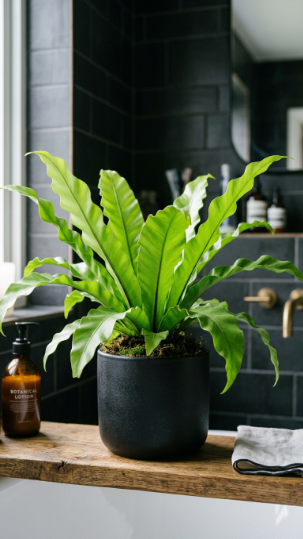
The bird’s nest fern (Asplenium nidus) is what happens when you take a classic moisture-absorbing fern and give it a serious design upgrade. Instead of delicate, feathery fronds, it produces wide, wavy, bright green leaves that look almost architectural — like a living sculpture rather than a typical houseplant.
These bold fronds make it one of the most visually striking moisture absorbing bathroom plants available. Place it on a shelf at eye level so the full undulating leaf pattern is visible, or in a matte black or deep ceramic pot for a modern contrast that looks genuinely considered.
The central cup-shaped rosette — the “nest” — collects water naturally, which is perfect in a bathroom setting where it catches condensation and humidity to keep the plant self-sustaining for longer periods between waterings.
Browse bird’s nest fern bathroom styling ideas and check out The Sill’s guide to ferns in bathrooms.
Sculptural, striking, and seriously good at its humidity-absorbing job!
11. Chinese Evergreen — The Colorful Workhorse
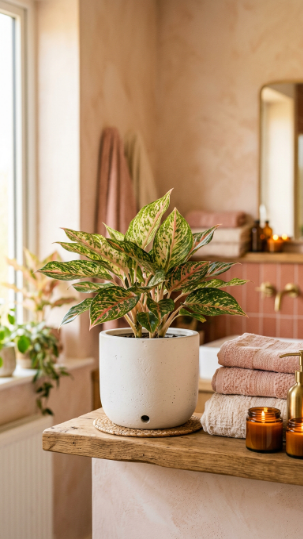
Aglaonema — the Chinese evergreen — is the moisture absorbing bathroom plant that also happens to look absolutely stunning. Available in varieties ranging from deep green to vivid pink, red, and silver, it offers far more visual interest than most bathroom-friendly plants while being equally forgiving and low-maintenance.
The beautiful variegated leaves absorb bathroom humidity effectively across their large surfaces, and the plant genuinely prefers the warm, moist air that most bathrooms provide consistently. In drier rooms of the house, Chinese evergreens need regular misting — in your bathroom, the steam from your shower does that job for free.
Choose a pink or red variety like ‘Siam Aurora’ or ‘Red Valentine’ for a pop of unexpected color that transforms a plain white bathroom into something genuinely beautiful.
💡 Pro Tip: Keep Chinese evergreens away from cold drafts near bathroom windows in winter — their tropical origins mean they’re sensitive to cold air below 55°F, and a cold draft can cause sudden, dramatic leaf drop that looks alarming but is entirely preventable.
Explore Chinese evergreen bathroom plant ideas and visit Gardeners’ World’s Aglaonema care guide.
Colorful, capable, and completely at home in your bathroom humidity!
12. Tillandsia — Air Plants for Zero-Soil Bathroom Displays
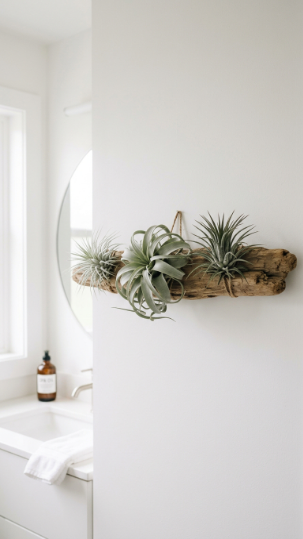
Air plants (Tillandsia) are the most extraordinary moisture absorbing bathroom plants on this list because they absorb humidity almost exclusively through their leaves — they don’t even need soil. Mount them on driftwood, display them in glass globes, or tuck them into decorative shells and they’ll drink the humidity right out of your bathroom air with zero potting mix required.
In a high-humidity bathroom, you can often skip dedicated misting entirely — the ambient steam from showers keeps tillandsia perfectly hydrated. This makes them the absolute lowest-maintenance option on the list, and one of the most visually creative for bathroom display styling.
Mount a driftwood arrangement with three to five different tillandsia varieties on your bathroom wall for a conversation-starting display that doubles as art.
| Tillandsia Variety | Shape | Size |
| T. ionantha | Compact rosette | 2–3 inches |
| T. xerographica | Wide silver spiral | 6–10 inches |
| T. caput-medusae | Twisting tentacles | 4–6 inches |
| T. bulbosa | Bulbous base | 4–5 inches |
Discover air plant bathroom display ideas and read The Sill’s tillandsia care guide.
No soil, no fuss, pure bathroom brilliance — these are genuinely amazing!
13. Eucalyptus — The Shower Aromatherapy Plant
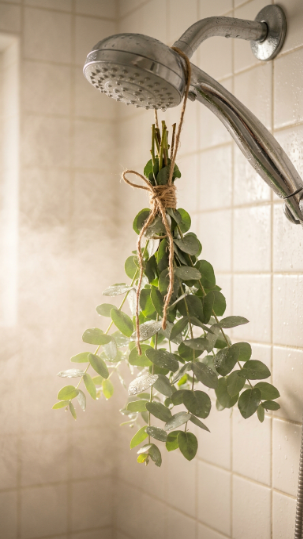
Here’s the most exciting entry on this entire list for aromatherapy lovers. Hanging a bundle of fresh eucalyptus stems from your shower head transforms your daily shower into a genuine spa experience — the steam activates the eucalyptus essential oils, filling your shower with that incredible clean, menthol fragrance.
Eucalyptus actively absorbs shower steam through its aromatic leaves, slowing humidity buildup while releasing beneficial compounds into the air that research suggests can help clear congestion and support respiratory health. It’s decorative, functional, and genuinely therapeutic.
Replace the bundle every 2–3 weeks as the fragrance fades, or move it to a pot to keep growing once cut stems dry out. Silver Dollar eucalyptus is the most popular variety for shower bundles thanks to its beautiful round leaves.
💡 Pro Tip: Lightly crush a few eucalyptus leaves before hanging — breaking the leaf surface releases more essential oils immediately and dramatically intensifies the aromatherapy effect from your very first shower.
Browse eucalyptus shower bundle bathroom ideas and check out Gardeners’ World’s eucalyptus growing guide.
Turn your morning shower into a five-star spa ritual — it’s that simple!
14. Monstera Deliciosa — The Statement Bathroom Plant
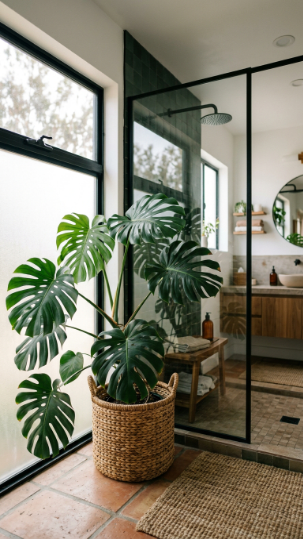
Monstera deliciosa — the iconic Swiss cheese plant — is the ultimate statement moisture absorbing bathroom plant for larger bathrooms with decent natural light. Those magnificent, dramatically split and fenestrated leaves create enormous surface areas for humidity absorption, making it genuinely one of the most effective large plants for bathroom moisture control.
Here’s the deal: monstera grows fast in bathroom conditions. The combination of warm temperatures, consistent humidity, and indirect light from frosted bathroom windows is essentially its ideal natural environment. You’ll notice new leaves unfurling more frequently than anywhere else in your home.
Place it beside a walk-in shower where it receives the most steam exposure — within a season you’ll have a bathroom plant so lush and tropical it genuinely looks like a resort lobby.
Discover monstera bathroom plant display ideas and visit The Sill’s monstera care guide.
Go big, go tropical, go monstera — your bathroom will thank you!
15. Begonia — Colorful Humidity Champion
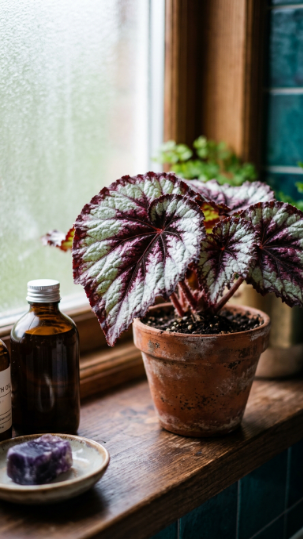
Rex begonias are the plants that make everyone who sees them say “wait — is that real?” Their leaves are almost impossibly beautiful, with swirling patterns of silver, burgundy, emerald, and rose that look more like abstract paintings than foliage. And they happen to love bathroom humidity.
These stunning leaves absorb ambient moisture from bathroom air continuously, and the consistent warmth and indirect light of a bathroom window is exactly what they need to display their most vibrant coloring. In dry air, rex begonia leaves brown at the edges — in a steamy bathroom, they stay lush and perfectly intact.
Keep them on a windowsill with bright indirect light — never direct sun, which washes out their spectacular color patterns. Rotate the pot quarter-turns weekly for even growth.
💡 Pro Tip: Never get water on rex begonia leaves — water droplets cause brown spotting on those beautiful patterned surfaces. Water directly at the base only, and let bathroom steam handle the foliar moisture entirely.
Browse rex begonia bathroom plant styling ideas and read the RHS begonia growing guide.
Jaw-droppingly beautiful and a humidity absorber — pure bathroom gold!
16. ZZ Plant — The Drought-and-Damp Survivor
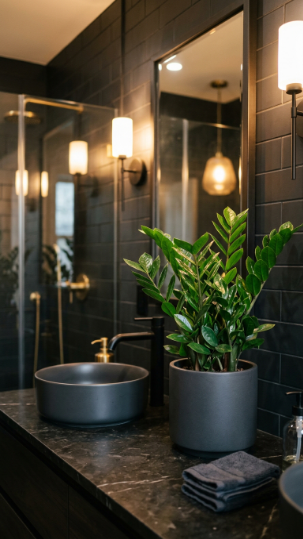
Zamioculcas zamiifolia — the ZZ plant — is practically mythological in its ability to survive neglect. Near darkness, irregular watering, dry air, humid air — the ZZ plant handles all of it. But here’s the thing that makes it exceptional for bathrooms: its thick, waxy leaves absorb and store moisture from the air, making high-humidity environments genuinely ideal for it.
The deep, high-gloss foliage looks extraordinarily elegant in modern bathrooms. Against matte charcoal or white fixtures, those lacquered-looking leaves create a visual impact completely disproportionate to the care they require.
ZZ plants grow slowly but steadily, adding new elegant arching stems throughout the year. Each new stem emerges bright lime green before maturing to that deep, dramatic gloss — a small daily reward for very little effort.
Explore ZZ plant bathroom display ideas and check out The Sill’s ZZ plant care guide.
Glossy, gorgeous, and genuinely impossible to kill — welcome to the ZZ fan club!
17. Nerve Plant — The Miniature Humidity Artist
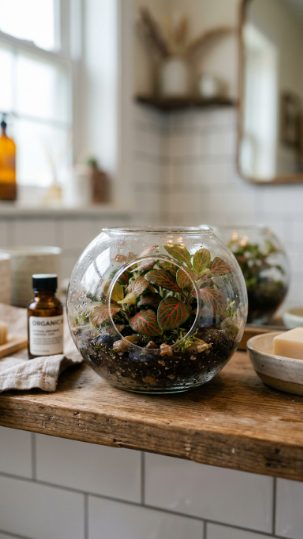
Fittonia — the nerve plant — is the miniature drama queen of bathroom plants, and we mean that as the highest possible compliment. Its intricate red, white, or pink veined leaves look like tiny stained glass windows, and it’s one of the most visually rewarding plants you can grow in a small bathroom space.
Nerve plants are famously dramatic about humidity — in dry air, they wilt spectacularly within hours (they recover just as quickly, but still). In a high-humidity bathroom, they’re in absolute heaven, producing lush, intensely colored foliage continuously without any fuss.
Display in a small glass terrarium on a bathroom shelf for a jewel-box effect that looks incredibly styled. A 6-inch terrarium with one red and one white Fittonia variety together is one of the most beautiful bathroom plant displays imaginable.
💡 Pro Tip: If your nerve plant wilts dramatically despite bathroom humidity, it’s almost always a soil moisture issue rather than an air humidity problem. Give it a thorough drink and it will stand back up within the hour — it’s theatrical, not dying.
Discover nerve plant terrarium bathroom ideas and visit Gardeners’ World’s Fittonia care guide.
Tiny in size, enormous in impact — nerve plants steal every bathroom show!
18. Calathea — The Living Work of Art
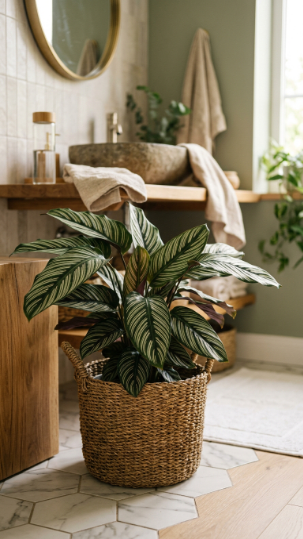
Calathea plants are what happens when nature decides to show off. The dramatically patterned leaves — pinstripes, feather patterns, peacock markings, bold color-blocked undersides — make every variety look like a hand-painted masterpiece. And they need bathroom humidity to truly thrive.
In dry air, calathea leaf edges brown and curl within days. In a humid bathroom, those gorgeous leaves stay perfectly flat, crisp-edged, and vibrantly colored — exactly as nature intended. Your bathroom essentially gives these demanding beauties the tropical rainforest canopy conditions they evolved for.
The variety Calathea ornata — with its white pinstripe pattern — is the most striking bathroom choice. Calathea zebrina with bold zebra stripes runs a very close second. Both are equally spectacular and equally grateful for bathroom humidity.
Browse calathea bathroom plant styling ideas and read The Sill’s calathea care guide.
Nature’s finest artwork — and your bathroom gives it exactly what it needs!
19. Croton — Bold Color in High Humidity
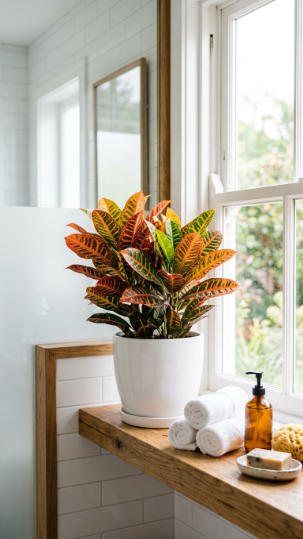
Croton (Codiaeum variegatum) is the loudest, boldest, most unapologetically tropical plant on this list — and it uses bathroom humidity to produce its most spectacular coloring. The vivid orange, red, yellow, and green leaves intensify in color with higher humidity and bright indirect light.
Here’s the thing: crotons are notoriously dramatic about their preferred conditions and will drop leaves if moved or if humidity drops suddenly. That makes bathrooms — with their stable warmth and consistent humidity — one of the best permanent positions in your entire home for a croton.
Give it the brightest bathroom window available and watch those colors intensify over the weeks and months. In ideal bathroom conditions, a croton becomes one of the most genuinely impressive houseplants you’ve ever grown.
💡 Pro Tip: Never move a happy croton once it’s settled into a bathroom spot it loves. These plants are famously sensitive to relocation — leaf drop follows almost every move. Find the right bathroom position first time and leave it there permanently.
Explore croton bathroom plant display ideas and check out Gardeners’ World’s croton growing guide.
Wildly colorful, humidity-loving, and totally unforgettable!
20. Snake Plant — The Nighttime Oxygen Booster
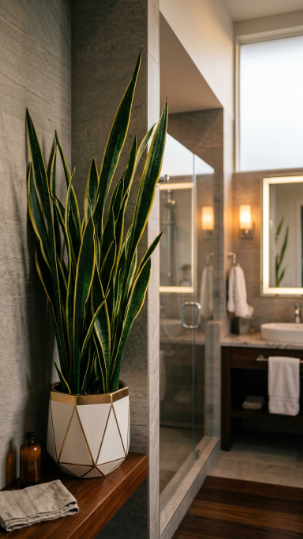
Sansevieria — the snake plant — is famous for being one of the only plants that releases oxygen at night through CAM photosynthesis, making it exceptional for bathrooms used primarily in the evening. While you soak in the bath, it’s quietly improving your bathroom air quality and absorbing excess moisture simultaneously.
The upright architectural form of snake plants makes them perfect statement plants for bathroom corners, where their vertical lines complement modern tile and fixture designs beautifully. They tolerate deep shade, irregular watering, and temperature fluctuations without a single complaint.
In high-humidity bathrooms, water even less than the already-infrequent standard — the ambient moisture significantly reduces how often snake plants need drinking. Overwatering is the one true enemy of this otherwise invincible plant.
Discover snake plant bathroom corner display ideas and visit The Sill’s snake plant care guide.
Night-shift oxygen production and humidity absorption — the ultimate bathroom multitasker!
21. Bromeliad — Tropical Color Without the Fuss
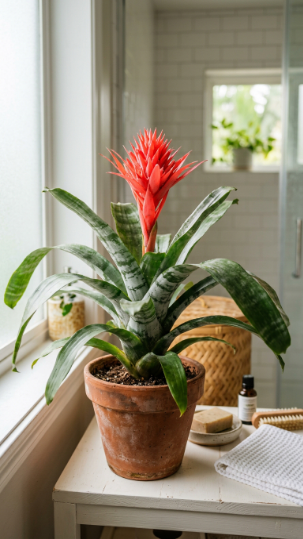
Bromeliads are one of the most underrated moisture absorbing bathroom plants — they’re absolutely stunning, remarkably easy to care for, and absorb bathroom humidity in a genuinely unique way. Like orchids and air plants, bromeliads are epiphytic — they’ve evolved to absorb moisture and nutrients from the air and water collected in their central cup, not primarily through their roots.
That central “tank” or cup formed by the rosette of leaves collects bathroom condensation and shower steam continuously, keeping the plant perfectly hydrated with minimal intervention. The vivid red, orange, and pink flower spikes that emerge from the central cup last for months — far longer than almost any other flowering houseplant.
After the main flower fades, the plant produces “pups” — baby bromeliads at the base that can be potted up separately. One bathroom bromeliad becomes a collection!
💡 Pro Tip: Keep the central cup of your bromeliad filled with an inch of water at all times — flush and refill it monthly to prevent stagnation. Use room-temperature water to avoid shocking the tropical roots.
Browse bromeliad bathroom plant display ideas and read the University of Florida Extension’s bromeliad care guide.
Long-blooming, humidity-loving, self-watering — bromeliads are secretly brilliant!
22. Staghorn Fern — The Mounted Bathroom Masterpiece
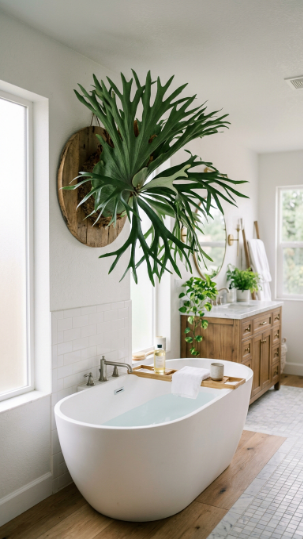
Save the most spectacular for last. The staghorn fern (Platycerium bifurcatum) mounted on a round wooden board and hung above a freestanding bath is the single most breathtaking bathroom plant display you can create. Those dramatic antler-shaped fronds spreading from a wall mount look like living sculpture — genuinely nothing else comes close for sheer visual impact.
Here’s the deal: staghorn ferns are epiphytes that absorb virtually all their moisture and nutrients through their fronds rather than roots. In a steamy bathroom, they’re in absolute paradise — the shower steam and bath condensation keep them perfectly hydrated with minimal intervention from you.
Mist the fronds directly every few days if your bathroom is less steamy, and soak the entire mount in water once a week by taking it down and submerging it in the bath for 20 minutes. It sounds dramatic but takes two minutes and keeps the plant absolutely thriving.
| Staghorn Feature | Detail |
| Mature spread | Up to 3 feet wide |
| Humidity need | 50–70% |
| Light need | Bright indirect |
| Watering method | Mist fronds + soak mount |
| Display style | Wall-mounted board |
Explore staghorn fern bathroom wall mount ideas and check out Gardeners’ World’s staghorn fern growing guide.
Mount it, admire it, and let your bathroom humidity do all the work — absolute perfection!
Frequently Asked Questions
Do moisture absorbing bathroom plants actually make a measurable difference to humidity levels?
Yes — though results vary by bathroom size and plant volume. A single peace lily or Boston fern in a small bathroom can noticeably reduce condensation on mirrors and walls over time. For maximum effect, use multiple plants together — three to five medium-sized moisture absorbing bathroom plants work significantly better than one large one. Research confirms that plants like English ivy can reduce airborne mold spores by up to 60% in enclosed spaces, which matters just as much as raw humidity reduction in a bathroom environment.
Which moisture absorbing bathroom plants work best in windowless bathrooms?
The best bathroom plants for windowless or very low-light spaces are the cast iron plant (Aspidistra), ZZ plant, pothos, snake plant, and peace lily. All four tolerate near-darkness remarkably well. If your windowless bathroom has even one weak artificial light source, pothos and peace lily will manage perfectly. For truly dark bathrooms, supplement with an inexpensive small LED grow light on a timer — even 8 hours of grow light per day makes a dramatic difference to plant health and humidity absorption effectiveness.
How often should I water bathroom plants given the high humidity?
Far less frequently than you’d expect! Bathroom humidity dramatically reduces how often plants need watering — most bathroom plants need watering 30–50% less often than the same plants in drier rooms. The golden rule is always to check soil moisture before watering: stick your finger an inch into the soil, and only water if it’s completely dry at that depth. Overwatering is the number one killer of bathroom plants, so when in doubt, wait another day.
Can I grow moisture absorbing plants in a bathroom with no natural light at all?
Absolutely, with the right plant choices and a little supplemental lighting assistance. Snake plants, ZZ plants, pothos, and cast iron plants are the most tolerant of complete natural light absence. Add a small clip-on full-spectrum LED grow light ($20–$40) set to run for 12–14 hours daily, and even a completely windowless bathroom can sustain a healthy collection of moisture absorbing plants. Tillandsia air plants are also surprisingly tolerant of artificial light if your grow light is positioned close enough.
Are moisture absorbing bathroom plants safe for homes with pets and children?
Some are, some aren’t — and it’s important to check before placing any plant within reach. Completely pet and child-safe options include spider plants, Boston ferns, bird’s nest ferns, tillandsia air plants, bromeliads, and staghorn ferns. Toxic varieties to keep out of reach include peace lily, pothos, philodendron, and English ivy — all of which cause digestive irritation if ingested. The ASPCA maintains a comprehensive, regularly updated toxic plant database at aspca.org/pet-care/animal-poison-control/toxic-and-non-toxic-plants that’s the most reliable resource for checking any specific plant’s safety.
A Few Final Thoughts
There you have it — 22 extraordinary moisture absorbing bathroom plants that transform your dampest, most humidity-challenged room into a lush, beautiful, spa-worthy sanctuary. Whether you go for the jaw-dropping drama of a mounted staghorn fern above your freestanding tub, the effortless elegance of a peace lily on a marble shelf, or the jewel-box perfection of a nerve plant terrarium on your windowsill, the magic is the same: you’re letting nature solve a genuine household problem while making your bathroom more beautiful than it’s ever been. The best moisture absorbing bathroom plants don’t just manage humidity — they turn a purely functional room into the most genuinely relaxing space in your entire home. Start with one plant, find its perfect spot, and watch your confidence grow alongside your collection. Before long, your bathroom will feel less like a utility room and more like a living, breathing botanical retreat. Your dream bathroom is closer than you think — now go make it happen!