
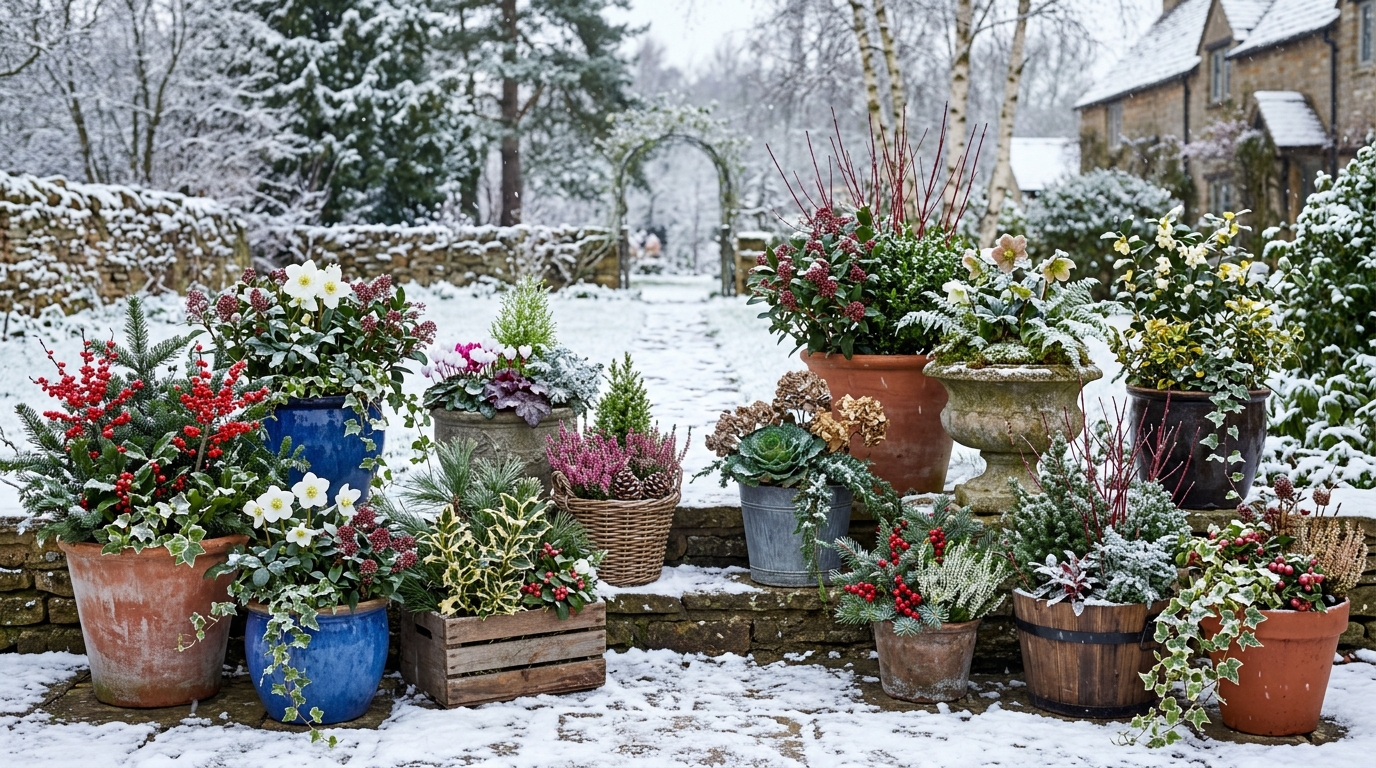
You’ve invested in beautiful pots, filled them with gorgeous plants, and then — crack. Your favorite terracotta planter shatters overnight because of a hard freeze, and you’re starting winter with a mess on your hands. Sound familiar? Choosing the right frost-proof winter container planters is honestly just as important as choosing the right plants, and most gardeners don’t figure that out until after their first expensive casualty. The good news is that once you know which materials, styles, and features to look for, your pots will last for decades through even the most brutal winters. Ready to find out? Let’s dive in!
At a Glance
- Frost-proof winter container planters are made from materials that won’t crack, shatter, or degrade when water inside the walls freezes and expands during a hard freeze.
- Fiberglass and high-quality resin planters are the most durable, lightweight, and weather-resistant options for year-round outdoor use in cold climates.
- Even containers labeled “frost resistant” are not the same as “frost proof” — always check the manufacturer’s cold rating before leaving pots outside through winter.
- Drainage is non-negotiable regardless of planter material — waterlogged soil that freezes solid is one of the leading causes of container damage and plant death in winter.
- Size matters enormously in winter: larger containers hold more soil volume, which insulates roots better and moderates temperature swings far more effectively than small pots.
1. Fiberglass Planters — The Undisputed Winter Champion
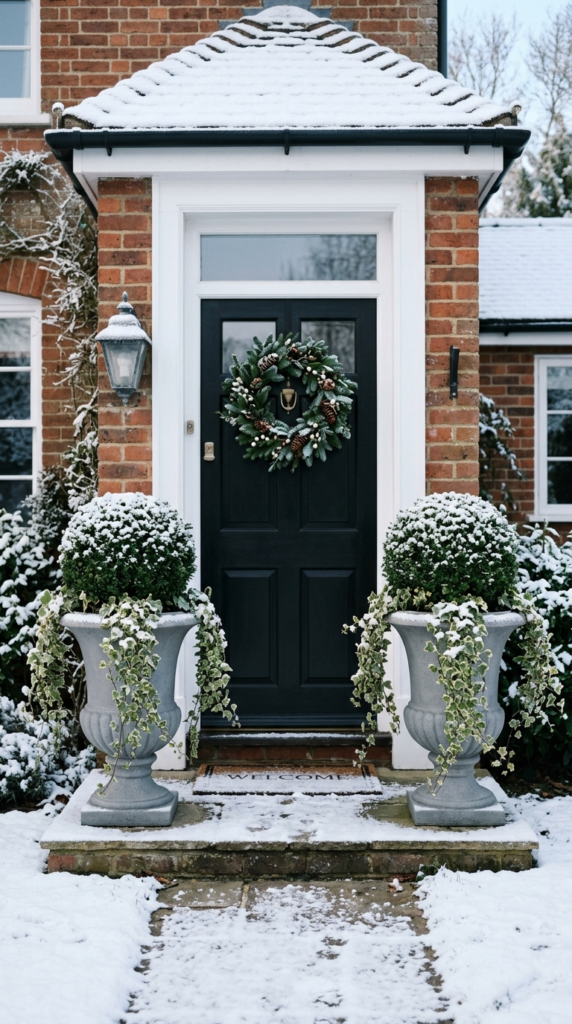
If there’s one material that wins the frost-proof container competition by a landslide, it’s fiberglass. These planters are genuinely indestructible through winter — and they look absolutely incredible doing it.
Here’s the deal: fiberglass doesn’t absorb water. Since there’s no moisture trapped in the walls, there’s nothing to freeze, expand, and crack. Your planter stays intact whether it’s 40°F or -20°F outside. That alone makes it a game-changer for cold-climate gardeners.
The secret is: High-quality fiberglass planters are indistinguishable from stone, lead, terracotta, or bronze at a glance — but they weigh a fraction of the real thing and survive decades of freezing winters without a single crack.
Beyond durability, fiberglass is incredibly versatile in terms of style. You can find it molded to mimic aged terracotta, rough-hewn stone, sleek modern concrete, or ornate classical urns. The aesthetic possibilities are genuinely endless, and the lightweight construction means you can move large statement planters by yourself without throwing your back out.
- Withstands temperatures down to -40°F in most quality brands
- Available in virtually every style, shape, and finish
- UV-resistant coatings prevent fading and chalking
- Typically comes with pre-drilled drainage holes
- Dramatically lighter than stone, concrete, or metal equivalents
Best fiberglass planters for year-round outdoor use Gardener’s Supply Company: Fiberglass Planter Guide
Invest in fiberglass once and you’ll never worry about a cracked pot again — it really is that good!
2. High-Fired Glazed Ceramic Planters
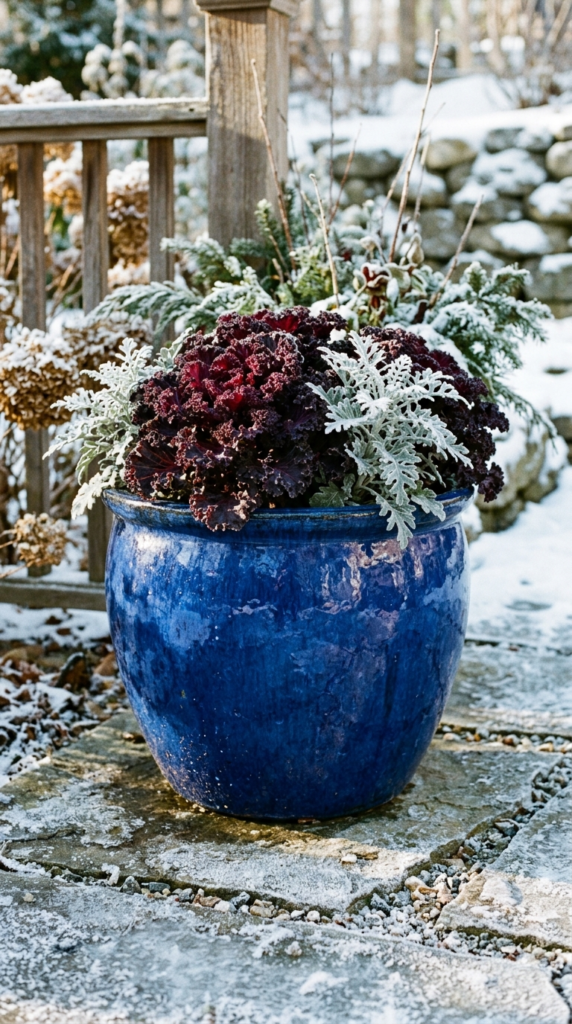
Not all ceramic planters are equal — and not all ceramics will survive winter. The key is choosing pots that have been fired at extremely high temperatures, which makes the clay dense, non-porous, and genuinely frost-proof.
Here’s the thing: standard terracotta and low-fired ceramics are porous, meaning they absorb water into their walls. When that water freezes, it expands and the pot explodes — sometimes spectacularly. High-fired stoneware and porcelain ceramics, by contrast, are so dense they barely absorb any moisture at all.
Look for ceramics specifically labeled “frost-proof” or rated to at least 20°F below the coldest temperature in your area. Many quality glazed pots from Asian manufacturers (particularly Korean and Vietnamese production) are high-fired and genuinely frost-proof — and they often come in absolutely stunning glazes and colors that look spectacular in winter garden settings.
Always check the bottom for drainage holes. If a beautiful pot you love doesn’t have one, you can drill through ceramic with a diamond-tipped drill bit — it’s easier than it sounds and absolutely worth doing!
How to choose frost-proof ceramic planters for winter Proven Winners: Container Selection for Cold Climates
Once you find a genuinely frost-proof glazed pot you love, it’ll be your favorite garden object for decades!
3. Resin and Polyresin Planters
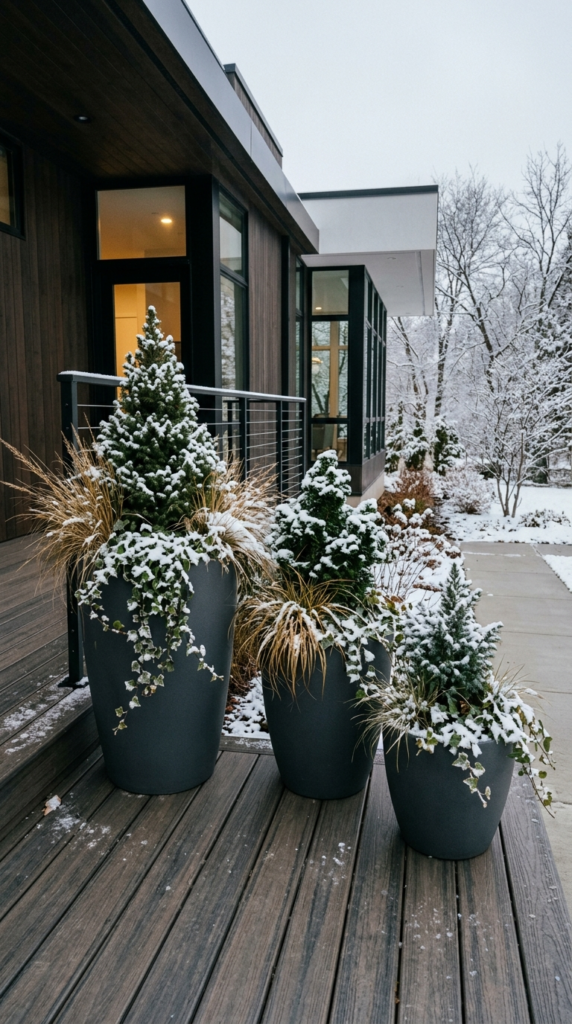
Resin planters are the unsung heroes of the frost-proof container world — incredibly durable, surprisingly beautiful, and wallet-friendly compared to fiberglass or cast stone. If you want reliable winter performance without spending a fortune, resin is your answer.
Polyresin (resin mixed with stone powder) is particularly impressive because it genuinely mimics the look and feel of real stone, concrete, or metal while weighing a fraction as much and costing significantly less. Run your hand across a high-quality polyresin pot and you’d swear you were touching textured concrete — but it’ll still be intact after a decade of hard winters.
The quality range in resin planters is wide, though, so it pays to be selective. Look for pots described as UV-stabilized (to prevent fading and brittleness in sunlight) and specifically rated for outdoor year-round use. Cheaper resin pots can become brittle and crack after a few seasons of UV exposure, so this distinction genuinely matters.
Quick tip: Give resin pots a light sanding with fine-grit sandpaper before painting if you ever want to refresh or change their color — they take spray paint beautifully and you can completely transform the look for next to nothing.
Resin vs. fiberglass planters: which is right for you? The Spruce: Best Outdoor Planters
Great looks, great durability, great price — resin planters deserve way more credit than they get!
4. Galvanized Metal Containers
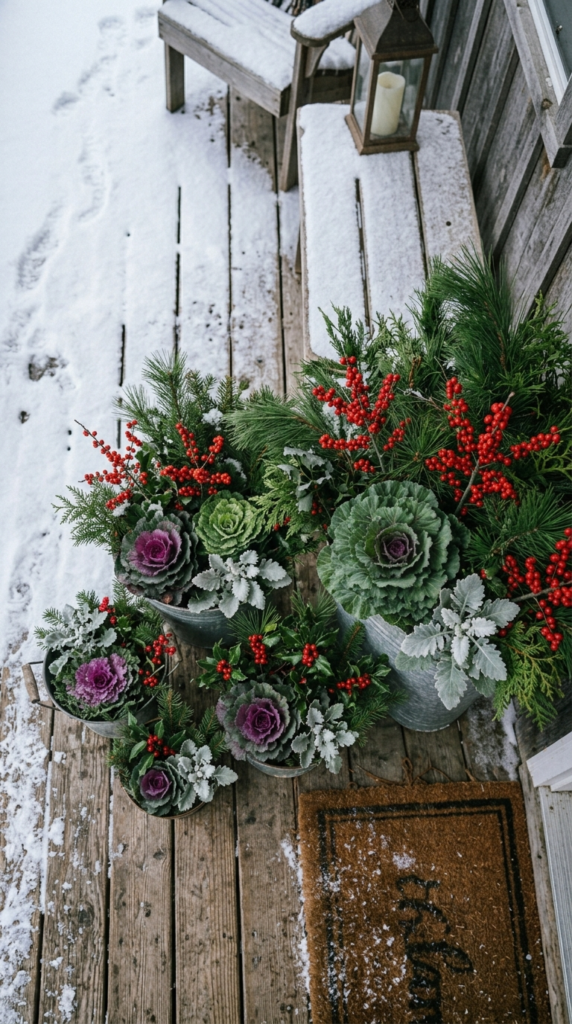
Galvanized metal containers are frost-proof, endlessly stylish, and ridiculously versatile — and they fit perfectly into everything from modern farmhouse aesthetics to industrial-contemporary porch designs. The zinc coating that gives galvanized metal its characteristic silver-gray finish also makes it completely impervious to freeze-thaw damage.
Unlike terracotta or ceramic, metal has no porosity whatsoever — there are no walls to absorb water, nothing to freeze, nothing to crack. A galvanized steel trough or bucket will look exactly the same after ten brutal winters as it did the day you bought it. Pretty cool, right?
The main thing to watch with metal containers is heat absorption — in summer, dark metal pots can get very hot and cook roots. In winter this isn’t an issue at all, which makes galvanized containers particularly well-suited to cold-season planting. The silvery finish also photographs beautifully in winter light, reflecting it in a way that makes your whole porch display glow.
Drill drainage holes before planting — most galvanized buckets and troughs don’t come with them pre-drilled, but a standard metal drill bit handles this easily. Line the bottom with a layer of gravel or pot shards to keep drainage holes from getting blocked.
Using galvanized metal containers in garden design Better Homes & Gardens: Metal Planter Ideas
Industrial-chic, frost-proof, and nearly indestructible — galvanized metal containers are a fantastic winter investment!
5. Hypertufa Planters — The Rustic DIY Option
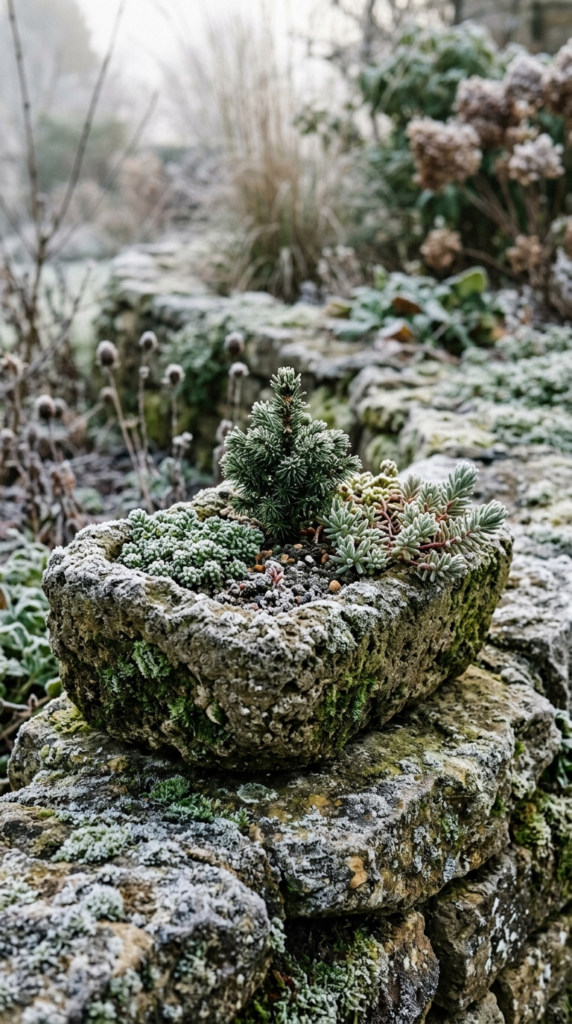
Hypertufa is what happens when you mix cement, peat moss, and perlite — and what you get is a lightweight, genuinely frost-proof planter with a beautiful aged stone look that costs almost nothing to make yourself. It’s one of the most rewarding DIY garden projects out there!
Here’s the deal: Hypertufa actually improves with age — it weathers, takes on moss and lichen, and develops a patina that makes it look like an antique stone trough that’s been in a garden for a century. You simply cannot fake that look with anything manufactured.
Because hypertufa contains no solid clay or ceramic, there’s no mechanism for freeze-thaw cracking. The slight porosity of the material actually helps by allowing moisture to escape rather than accumulate. These handcrafted troughs are genuinely cold-hardy to the most extreme temperatures — they’re essentially artificial stone.
The only real limitation is time: freshly made hypertufa needs to cure for at least four weeks before use, and it’s heavier than fiberglass or resin once made. But for the unique, organic, totally one-of-a-kind look? Completely worth it.
How to make your own hypertufa planters at home Fine Gardening: Making Hypertufa Containers
Make one hypertufa trough and you’ll be hooked — it’s genuinely one of gardening’s most satisfying projects!
6. Thick-Walled Cast Iron Urns
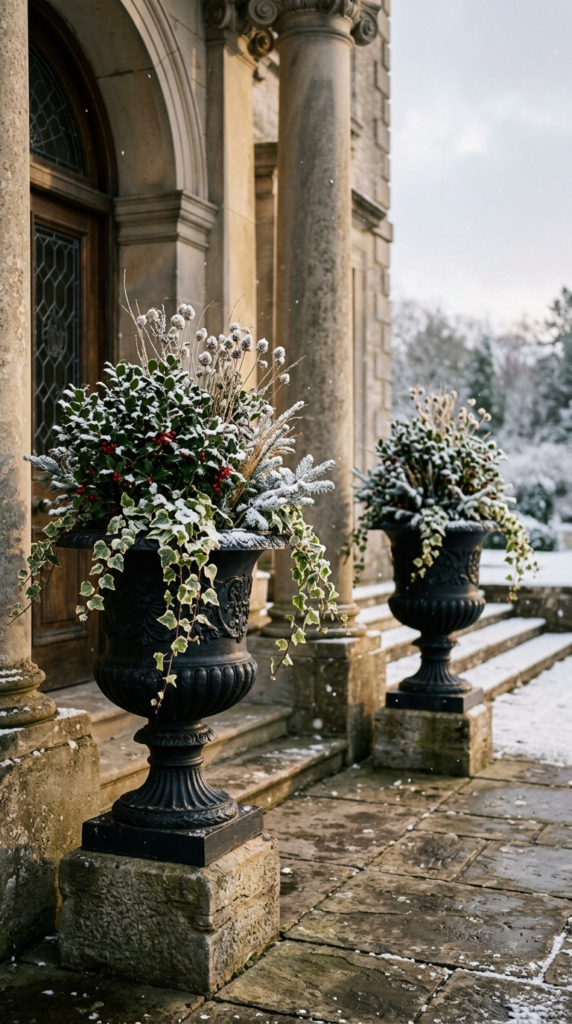
Cast iron is about as frost-proof as it gets — these are essentially permanent garden fixtures that will outlast everything else on your porch by generations. A cast iron urn from the Victorian era is just as solid and functional today as the day it was made, and yours will be too.
The incredible wall thickness of cast iron means there’s simply not enough moisture penetration to cause cracking, even in extreme cold. And the sheer visual weight and presence of a cast iron urn is unmatched — they project an authority and permanence that no other container material can replicate.
The trade-off is obvious: cast iron is genuinely, seriously heavy. Large urns can weigh 50–150 lbs empty, which means placing them is a two-person job and moving them seasonally is basically not an option. But if you’re creating a permanent feature on your porch or garden — which is exactly what a good container display should be — that’s not a problem at all.
Seal the inside of cast iron containers with bituminous paint or a rust-inhibiting sealant before planting to prevent rust stains from leaching into your soil and onto your porch surface. One application lasts years.
Classic cast iron and metal urns for formal garden spaces Garden Design Magazine: Classical Container Styles
Heavy, yes — but cast iron urns are literally forever, and that’s a beautiful thing!
7. Foam and EPS Frost-Proof Planters
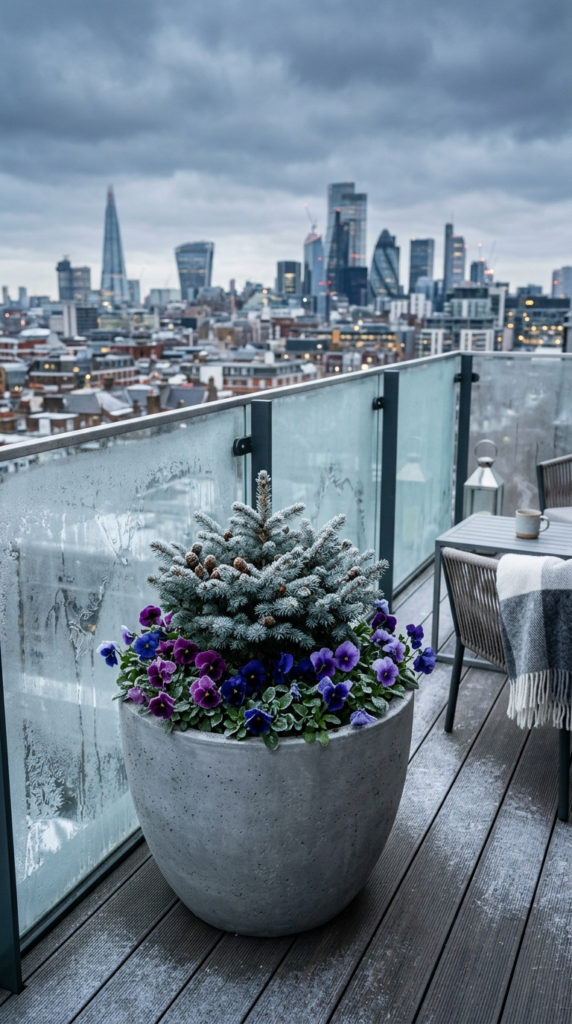
This one surprises most people — EPS foam planters (expanded polystyrene, basically the same material as packing foam but in a much denser, higher quality form) are genuinely excellent frost-proof containers and a total game-changer for balcony and rooftop gardeners.
Here’s why they’re so brilliant: EPS foam is a superb natural insulator. Not only does it not crack in frost (there’s nothing to absorb moisture), it actually protects plant roots from temperature extremes far better than metal, ceramic, or even fiberglass. Your roots stay more evenly tempered through freeze-thaw cycles, which means healthier plants.
Modern high-quality EPS planters are coated in realistic stone, wood, or concrete finishes that are genuinely indistinguishable from the real thing once they’re planted up and sitting on your porch. They’re also featherlight — perfect for balconies and rooftops with weight restrictions. A pot that looks like a 60-lb stone urn but actually weighs 4 lbs? That’s the magic of quality foam planters.
Pro tip: EPS foam planters have exceptional longevity indoors and in sheltered locations. In very exposed locations with intense UV, look for models with UV-protective outer coatings to maximize their lifespan.
Lightweight frost-proof planters for balconies and rooftops Balcony Garden Web: Best Lightweight Planters
If you’re gardening on a balcony or rooftop, EPS foam planters might literally be the best discovery you make this year!
8. Wooden Planter Boxes
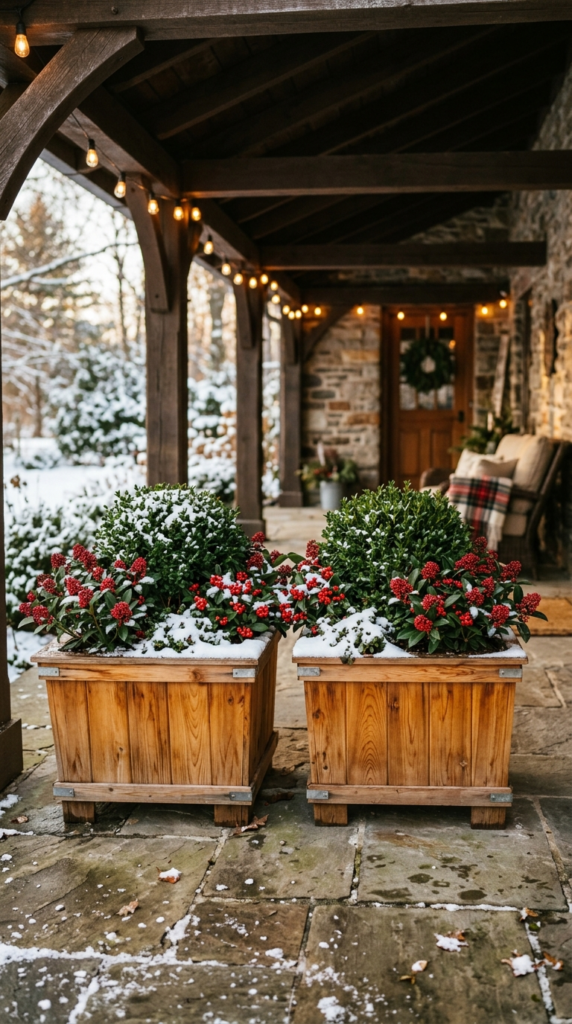
A well-built wooden planter box handles winter beautifully — and brings a warmth and natural beauty to your porch that no manufactured material can replicate. The key is choosing the right wood and building or buying with quality in mind.
Cedar, teak, and black locust are your gold-standard choices for outdoor winter planter boxes. These woods contain natural oils that resist moisture absorption, rot, and insect damage — meaning they stay solid through years of freeze-thaw cycles without warping, splitting, or deteriorating. Pressure-treated pine is also a good budget-friendly option if you use liners to prevent direct soil contact.
Wooden planters provide surprisingly good root insulation because wood is a natural thermal buffer — soil temperatures inside a thick cedar planter stay more stable than in metal or thin-walled ceramics. This is genuinely beneficial for cold-hardy perennials and evergreens overwintering in containers.
Line the inside of wooden planters with heavy-duty plastic sheeting (stapled to the interior walls) to prevent moisture from saturating the wood and dramatically extend the planter’s lifespan. Leave the bottom unlined for drainage.
Building your own cedar planter boxes for the porch University of Minnesota Extension: Outdoor Wood Structures
Beautiful, warm, and tough through winter — a quality wooden planter box is a genuinely timeless garden investment!
9. Concrete and Lightweight Concrete Planters
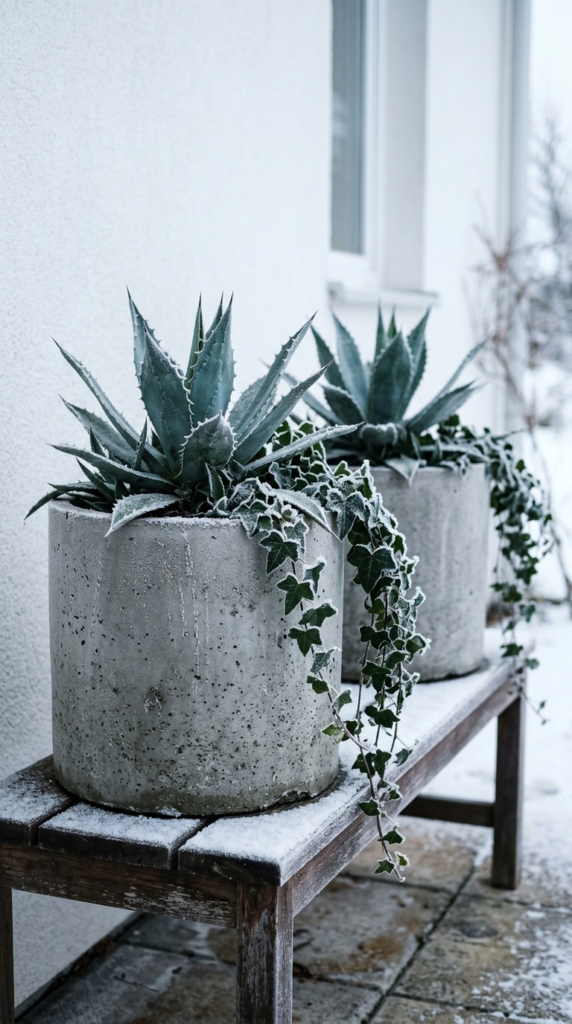
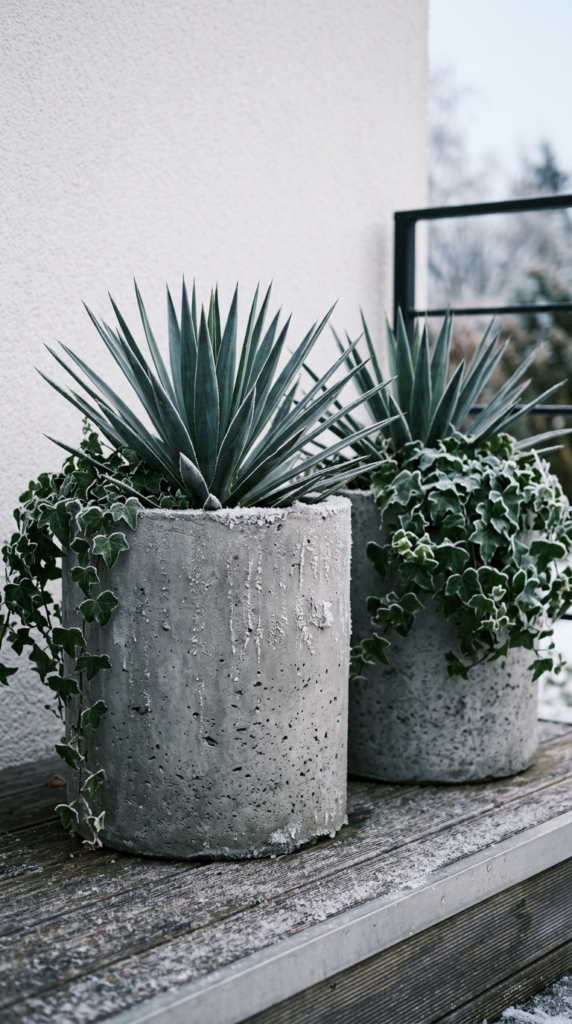
Raw concrete planters have become one of the most coveted looks in modern garden design — and the good news is that properly made concrete is genuinely frost-proof. That distinctive rough, gray surface with its beautiful imperfections? It will look even better after a few winters of weathering.
Standard concrete doesn’t crack from freezing because, like metal, its density prevents significant moisture absorption into the structure. The main consideration is weight — a large solid concrete planter is extremely heavy, so placement is essentially permanent once you’ve filled it with soil. Plan accordingly!
Lightweight concrete (also called GFRC — glass fiber reinforced concrete) is a newer option that solves the weight problem brilliantly. GFRC planters look identical to solid concrete but are hollow-cast, dramatically lighter, and equally frost-proof. They’re now widely available and have become a favorite of contemporary landscape designers for exactly these reasons.
For a truly budget-friendly approach, you can make your own simple concrete pots using a mold and basic concrete mix — there are thousands of tutorials online and it’s a genuinely satisfying project.
Concrete and GFRC planters: the modern garden trend Architectural Digest: Concrete Planters for Contemporary Gardens
Raw, real, and undeniably cool — concrete planters make a design statement that only gets better with age!
10. Woven Willow and Wicker with Liner
Here’s one that genuinely surprises people: woven willow, seagrass, and natural wicker planters — when properly lined — can absolutely work as outdoor winter containers. Willow in particular is used extensively in outdoor basketry precisely because it tolerates repeated wetting and drying, including freezing, remarkably well.
The liner is non-negotiable. A heavy-duty polythene or coco fiber liner inside the basket prevents the soil from direct contact with the wicker, which eliminates the main moisture and rot risk. It also means you can easily swap out plantings between seasons without disturbing the basket itself.
Willow and wicker containers bring an organic, artisan warmth to porch displays that manufactured containers simply can’t replicate. They look especially beautiful combined with rustic winter plantings like rosemary topiaries, evergreen ferns, ornamental cabbage, and sprigs of berried holly.
Keep wicker containers in a sheltered position — a covered porch rather than fully exposed — and they’ll last several seasons easily. Think of them as a medium-term investment rather than a permanent fixture.
Style tip: Stack two wicker baskets at slightly different heights on a corner of your porch, plant them with contrasting textures, and you’ve got an instantly cozy, magazine-worthy winter display for very little money.
Natural and wicker planters for cottage-style porch gardens BBC Gardeners’ World Magazine: Container Ideas
Earthy, warm, and completely charming — woven planters bring a coziness to winter porches that’s hard to beat!
11. Recycled Rubber Planters
Made from recycled tires and other vulcanized rubber products, rubber planters are among the most genuinely frost-proof containers available — and they have the added bonus of being an environmentally responsible choice. Rubber simply cannot crack from freezing. It flexes with temperature changes rather than shattering.
These planters are also extremely lightweight and flexible, which makes them practical for moving and storing and virtually indestructible in terms of physical damage. Drop one off a second-floor deck and it bounces. Try that with a ceramic pot!
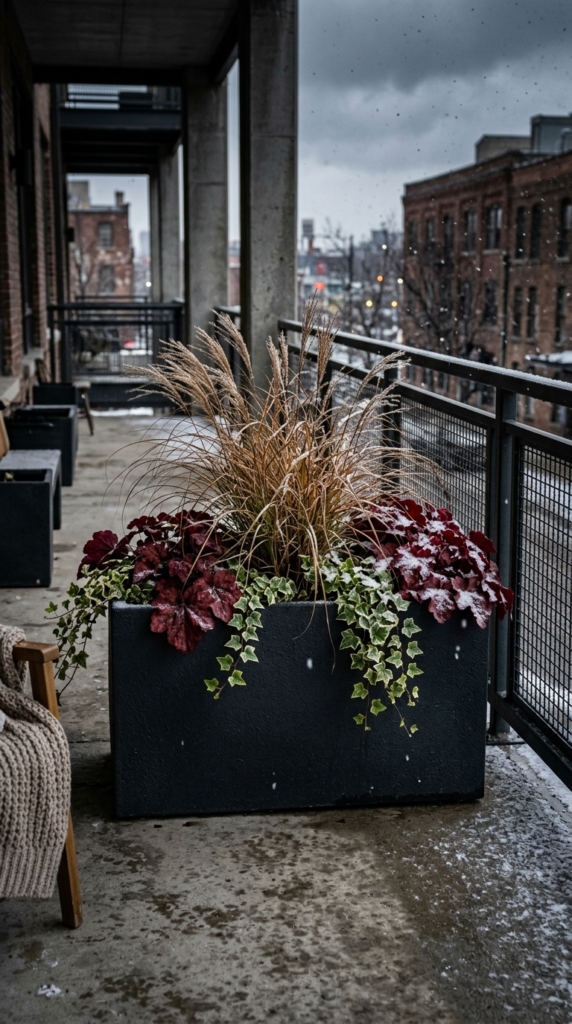
Modern recycled rubber planters have come a long way aesthetically — the best versions have realistic stone, slate, or concrete textures and are genuinely attractive in garden settings. They’re particularly popular in contemporary and industrial design schemes where a raw, matte, dark-toned container complements bold foliage plants and architectural evergreens.
The material is also naturally insulating, which means root temperatures stay more stable than in metal or thin ceramic containers — a real benefit for cold-climate winter container gardening.
Eco-friendly recycled rubber planters for outdoor use Earth911: Upcycled Garden Containers
Indestructible, eco-friendly, and surprisingly stylish — recycled rubber planters deserve a spot on your porch!
12. Reinforced Fabric Grow Bags
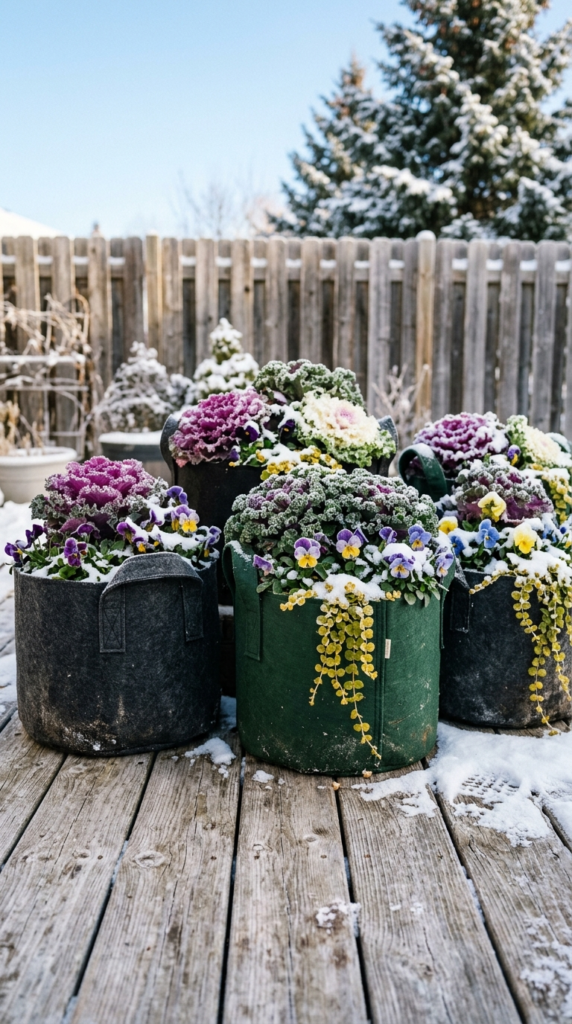
Fabric grow bags might not be the first thing you think of for winter container gardening — but hear this out, because they’re a genuinely clever option that solves several cold-weather problems at once. Thick felt or woven polypropylene grow bags are completely frost-proof because there’s no rigid material to crack.
Here’s the thing: Fabric grow bags actually provide air pruning of roots, which means plants develop a denser, healthier root system that handles cold stress better than roots grown in hard-sided containers.
The breathable fabric also prevents waterlogging — excess moisture escapes through the walls, reducing the freeze-saturated-soil problem that kills so many container plants in winter. This makes them particularly good for woody plants and perennials overwintering in containers that are vulnerable to root rot in wet, cold conditions.
Heavy-duty grow bags rated for outdoor year-round use are the ones to choose — look for bags with reinforced handles, UV-stabilized fabric, and a minimum thickness of around 5mm felt. Thinner bags degrade faster and don’t provide the same level of root insulation.
For aesthetics, fabric bags look best in grouped arrangements on a deck or patio rather than solo on a formal porch — they have a casual, productive-garden vibe that suits relaxed planting schemes perfectly.
Using fabric grow bags for year-round container gardening Penn State Extension: Container Gardening Basics
Practical, frost-proof, and great for plant health — fabric grow bags are a surprisingly brilliant winter container choice!
Frequently Asked Questions
What does “frost-proof” actually mean for a planter?
A truly frost-proof planter is made from a material that won’t crack, shatter, or structurally degrade when exposed to repeated freeze-thaw cycles. This is different from “frost resistant,” which simply means a container can handle occasional light frosts but may not survive prolonged hard freezes. The key mechanism is moisture absorption — materials that don’t absorb water into their walls (fiberglass, metal, rubber, resin) cannot crack from freezing water expansion, while porous materials like standard terracotta can. Always check a manufacturer’s specific cold rating rather than assuming any pot is frost-proof.
Can I make a non-frost-proof pot survive winter?
Yes — with some effort! The best strategies are to empty and store pots indoors before hard frosts arrive, elevate pots off cold ground on pot feet to improve drainage, wrap the outside of pots in bubble wrap or burlap to slow temperature changes, and ensure plants are never sitting in waterlogged soil going into winter. These measures help but aren’t foolproof — the safest approach for expensive or beloved pots is always bringing them inside.
Does pot size affect how frost-proof a container is in winter?
Enormously, yes. Larger containers are significantly more frost-tolerant than small ones regardless of material, because the greater soil volume insulates roots from temperature extremes and the larger wall thickness of big pots provides more structural integrity. A small 6-inch terracotta pot will crack at temperatures that a large 18-inch terracotta pot might survive. If you’re gardening in a cold climate, always size up when in doubt.
What should I put inside a frost-proof planter to protect plant roots in winter?
Start with a free-draining potting mix — never use heavy garden soil in containers. Add a thick layer of mulch (straw, bark chips, or even crumpled newspaper) on top of the soil surface to insulate roots from surface temperature swings. For extra cold protection in very exposed positions, you can wrap the outside of even a frost-proof pot with a layer of horticultural fleece or bubble wrap to moderate the temperature of the soil inside. The container being frost-proof protects itself — these extra measures protect the plants inside it.
Are frost-proof winter container planters more expensive than regular pots?
They can be, but not always — and the long-term value is dramatically better. A cheap terracotta pot that lasts one winter before cracking costs more over time than a quality fiberglass or resin planter that lasts twenty years. Recycled rubber grow bags and fabric bags are actually very affordable frost-proof options. Wooden planter boxes are moderate in cost but last many years with proper care. The most expensive options (cast iron, GFRC concrete, premium fiberglass) are genuinely lifetime investments that you’ll be passing down to the next generation of gardeners in your family.
A Few Final Thoughts
Choosing the right frost-proof winter container planters is one of the smartest investments you can make as a gardener — it saves you money in the long run, eliminates the heartbreak of finding shattered pots on a January morning, and means your outdoor space can look genuinely beautiful all year long. Whether you fall in love with the sleek elegance of fiberglass, the rustic charm of hypertufa, the organic warmth of cedar, or the ultra-practical toughness of recycled rubber, there’s a perfect frost-proof option for every style and every budget on this list. Remember: the container you choose is just as much a part of your garden design as the plants inside it — so choose one you actually love looking at. Your pots will outlast the harshest winters and keep your garden stunning for years to come. Now go make it happen!