
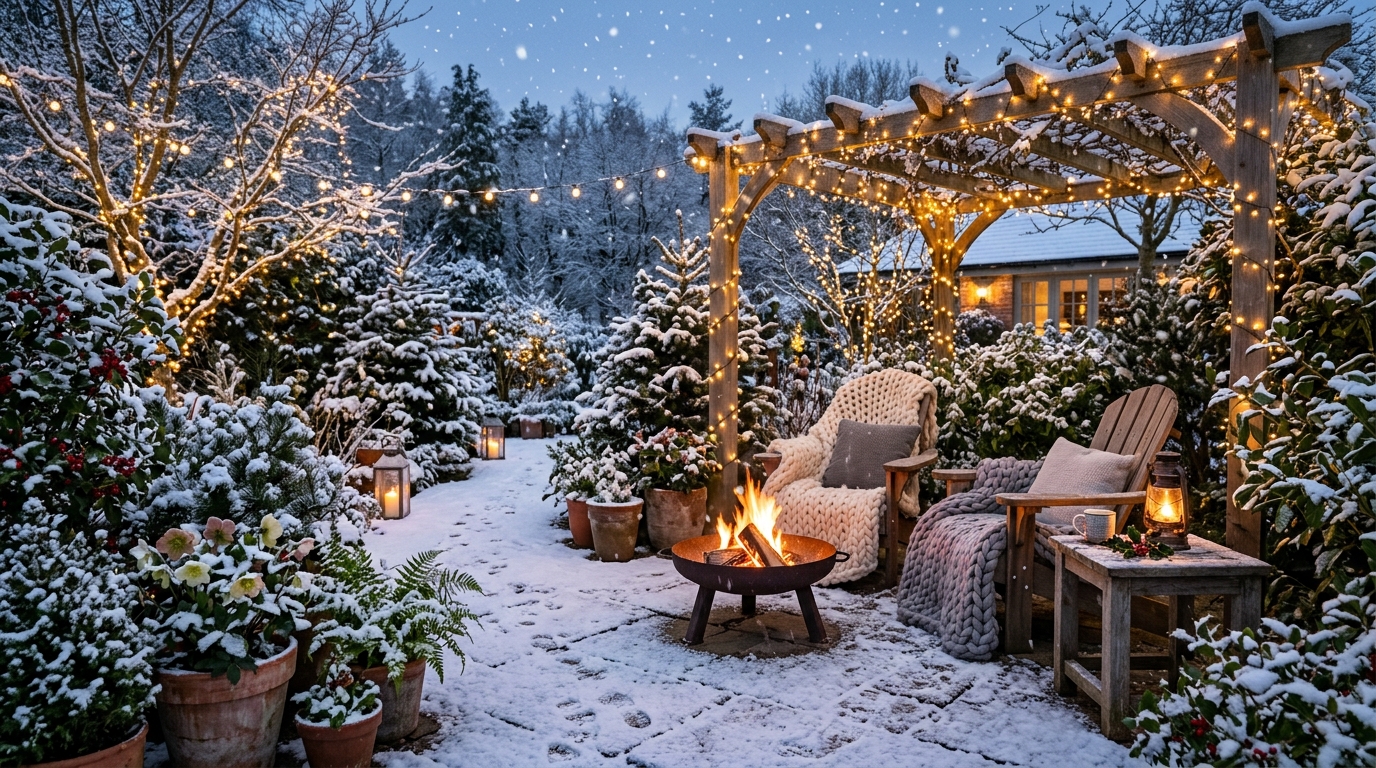
Just because the temperatures have dropped doesn’t mean your garden has to look sad, bare, and forgotten! Cozy winter garden decorating ideas can completely transform your outdoor space into a warm, inviting wonderland that you actually want to step outside and enjoy — even in the coldest months. From twinkling lights draped over evergreen shrubs to steaming bird baths surrounded by frosted containers, winter gardening is a whole vibe once you know what you’re doing. Ready to find out how to make your garden absolutely magical this winter? Let’s dive in!
At a Glance
- Fairy lights, lanterns, and candles are the fastest and most affordable way to make a winter garden feel instantly warm and magical after dark.
- Planting evergreen conifers and ornamental grasses in decorative containers gives your garden year-round structure and visual interest, even when everything else has died back.
- Winter-blooming plants like hellebores, cyclamen, and witch hazel can bring surprising pops of color to a winter garden without any special care.
- A fire pit or outdoor heater is the single biggest upgrade you can make to your patio for actually enjoying your garden throughout winter.
- Layering natural materials like pinecones, birch logs, berry-covered branches, and dried seed heads creates beautiful, free winter garden décor with almost zero budget.
1. String Fairy Lights Through Bare Trees and Shrubs
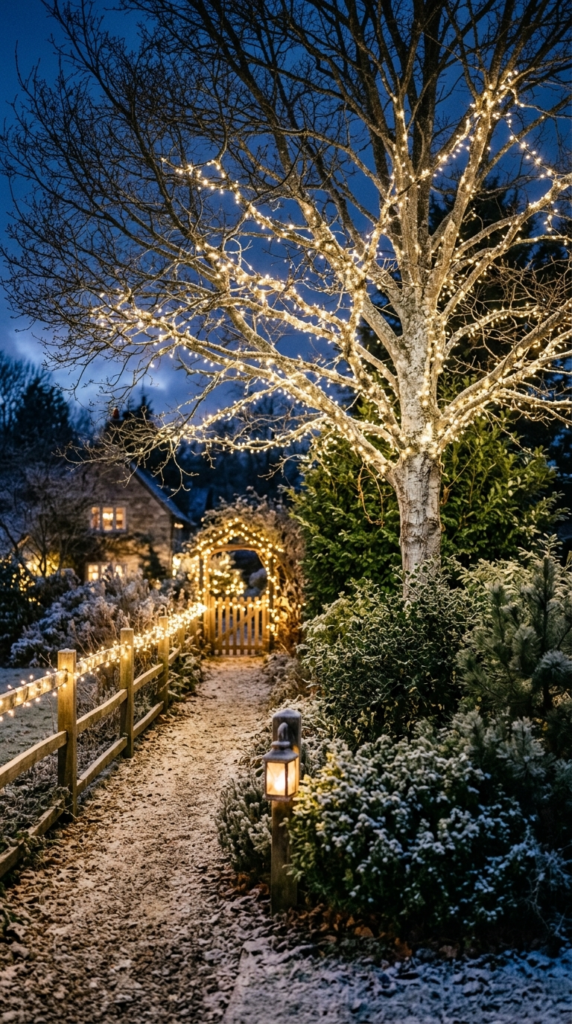
Here’s the deal: bare winter trees might look a little bleak during the day — but wrap them in warm fairy lights and they become the most magical thing in your whole neighborhood after dark. This is genuinely one of the easiest and most impactful cozy winter garden decorating ideas you can possibly try.
Use warm white LED fairy lights for a classic, romantic look, or go for amber Edison-style bulbs for a warmer, more rustic vibe. Solar-powered string lights are a brilliant choice for garden trees because you don’t have to worry about running cables — just make sure they get a few hours of pale winter daylight to charge.
Pro tip: Wrap lights spiraling upward around the main trunk first, then work outward along the major branches. This creates a far more natural, tree-lit look than just draping strings loosely from branch to branch.
Don’t stop at trees! Garden fences, hedges, pergolas, and archways all look spectacular draped in fairy lights during winter. A fully lit pergola over your patio turns outdoor dining in winter into a completely magical experience.
Explore our guide on outdoor garden lighting ideas for winter for more creative approaches.
For expert tips on safe outdoor lighting installation, check out This Old House’s outdoor lighting guide.
Light up your bare garden and watch it transform into something truly enchanting!
2. Create a Cozy Winter Container Display
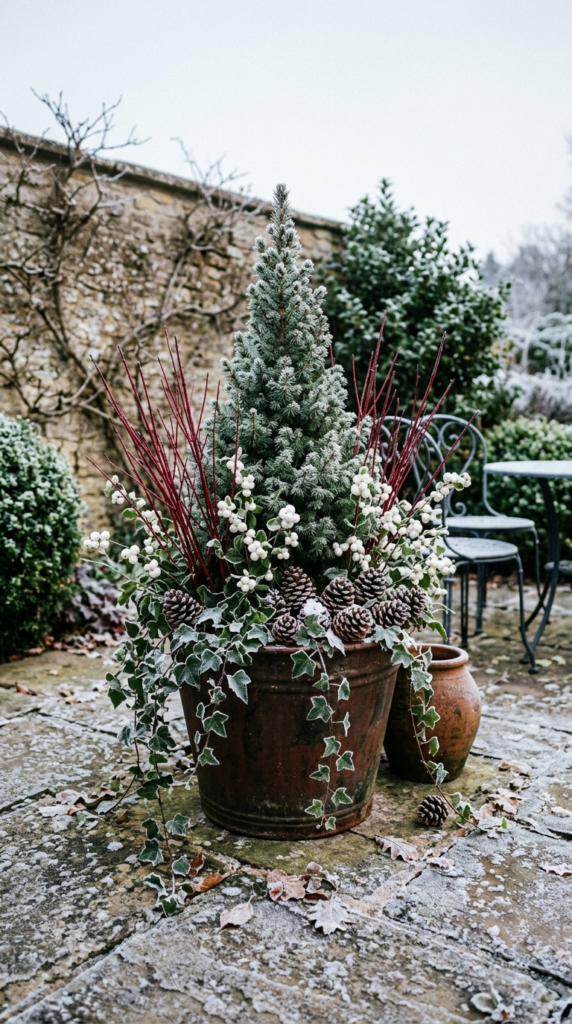
Winter container gardens are one of the most rewarding aspects of cold-season decorating — and they’re much simpler to put together than most people think! A well-designed winter container can look absolutely spectacular for 3–4 months with almost no maintenance.
The key to a stunning winter container display is the same thriller-filler-spiller principle that works in summer — just with cold-hardy plants. Use a dwarf conifer or ornamental grass as your thriller, fill in with winter berries, red dogwood stems, or evergreen sprigs, and let trailing ivy or periwinkle cascade over the edges.
- Best thriller plants: Dwarf Alberta spruce, ornamental kale, carex grass
- Best filler materials: Holly sprigs, red dogwood stems, snowberry branches
- Best spillers: Trailing ivy, creeping juniper, or periwinkle
- Bonus décor: Tuck in pinecones, frosted ornament balls, or birch twigs for extra texture
The secret is… choosing a container that is at minimum frost-resistant, not just frost-tolerant. Terracotta and ceramic can crack in freezing temperatures — look for fiberglass, resin, or glazed ceramic rated for cold climates.
Check out our complete winter container gardening guide for plant lists and design tips.
Your winter containers will be the talk of the street — promise!
3. Add a Fire Pit as a Garden Focal Point
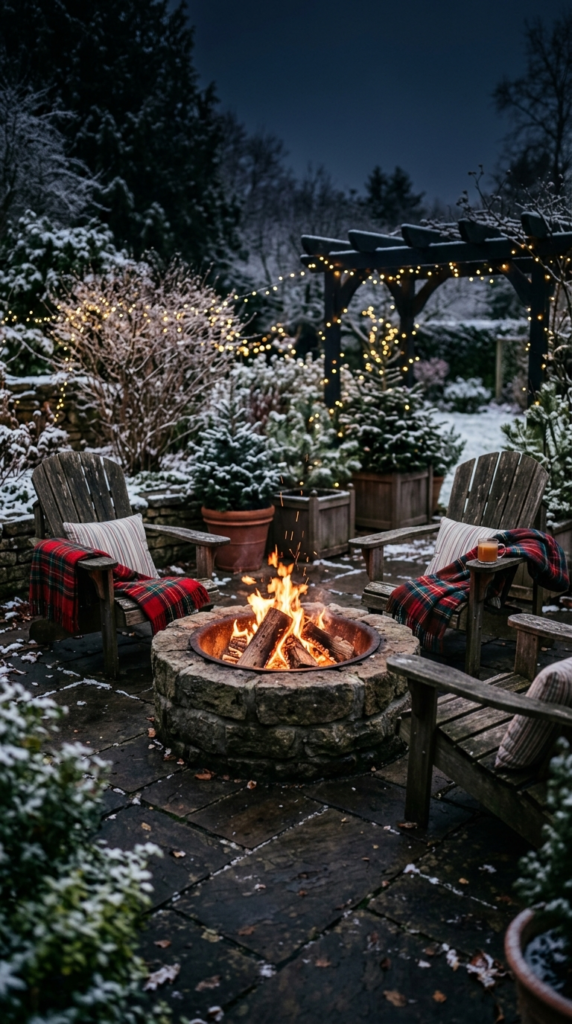
Nothing — absolutely nothing — makes a winter garden feel more inviting and cozy than a crackling fire pit. It’s the kind of upgrade that turns a frigid outdoor space into the place everyone actually wants to be in December and January!
A fire pit serves as both a functional heat source and an instant visual focal point for your garden layout. Position it centrally on your patio or at the end of a garden path, surround it with comfortable seating, and you’ve created an outdoor living room that works beautifully even in the depths of winter.
Portable propane fire pits are the most flexible option — no installation needed, and you can move them wherever suits the evening. Built-in stone or brick fire pits make a more permanent, architectural statement that adds real value to your garden.
Pretty cool, right? Even a modest fire pit surrounded by a few camp chairs and draped wool blankets creates an atmosphere that is cozy, romantic, and genuinely magical on a cold winter night.
Read our post on creating a cozy outdoor fire pit area for layout and safety tips.
A fire pit is the single best investment you’ll make in your winter garden — full stop!
4. Bring in Evergreen Structure with Potted Conifers
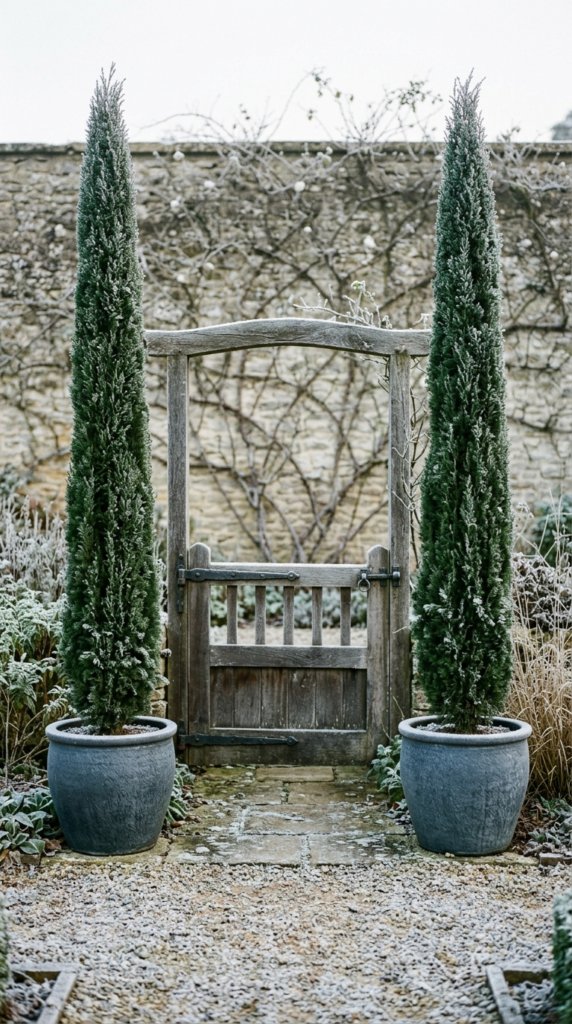
Here’s the thing: evergreen conifers are the backbone of any great cozy winter garden. When every deciduous plant has dropped its leaves and your beds look bare, a well-placed conifer gives your garden shape, color, and life exactly when it needs it most.
Dwarf conifers in decorative containers are incredibly versatile — you can move them around to fill gaps, use them to flank a doorway or gate, or group them with other winter containers for a lush, layered display. Varieties like Blue Star juniper, dwarf Alberta spruce, or Skyrocket juniper stay compact enough for containers while making a significant visual impact.
Pro tip: Position your tallest potted conifers at entry points — flanking your garden gate, front door, or patio steps — to create an instant sense of structure and welcome throughout the winter months.
Beyond containers, consider planting evergreen hedging, yew topiary, or box balls directly in your beds to provide permanent winter structure. These backbone plants make everything else you add — lights, containers, decorative elements — look ten times more intentional and polished.
Explore the best evergreen plants for winter garden structure for our top picks.
Evergreens are the gift that keeps your garden looking alive and beautiful all winter long!
5. Hang a Festive Winter Wreath on Garden Gates

Winter wreaths aren’t just for front doors — hanging one on your garden gate, fence, or a prominent tree creates a gorgeous decorative moment in your outdoor space that greets you every single time you step into the garden!
The best winter garden wreaths use natural, weather-resistant materials that look beautiful even in the cold and wet. Think mixed evergreen branches (pine, eucalyptus, juniper, and holly), dried orange slices, cinnamon sticks, pinecones, and berry-covered branches. These materials are either naturally waterproof or improve with weathering.
Make your own wreath using a wire frame from a craft store and foraged or purchased materials — it’s a surprisingly fun weekend project that costs far less than buying a ready-made one. Or invest in a high-quality artificial wreath with a natural-material look that you can reuse for years.
Swap out your wreath mid-season too — a fresh arrangement in late January with dried seedheads, birch bark, and white-berry branches gives your garden a whole new look without much effort.
Find our DIY winter wreath tutorial for the garden for step-by-step instructions.
A wreath on your garden gate says “this garden is loved” — even in the depths of winter!
6. Layer Outdoor Rugs and Throw Blankets on Your Patio
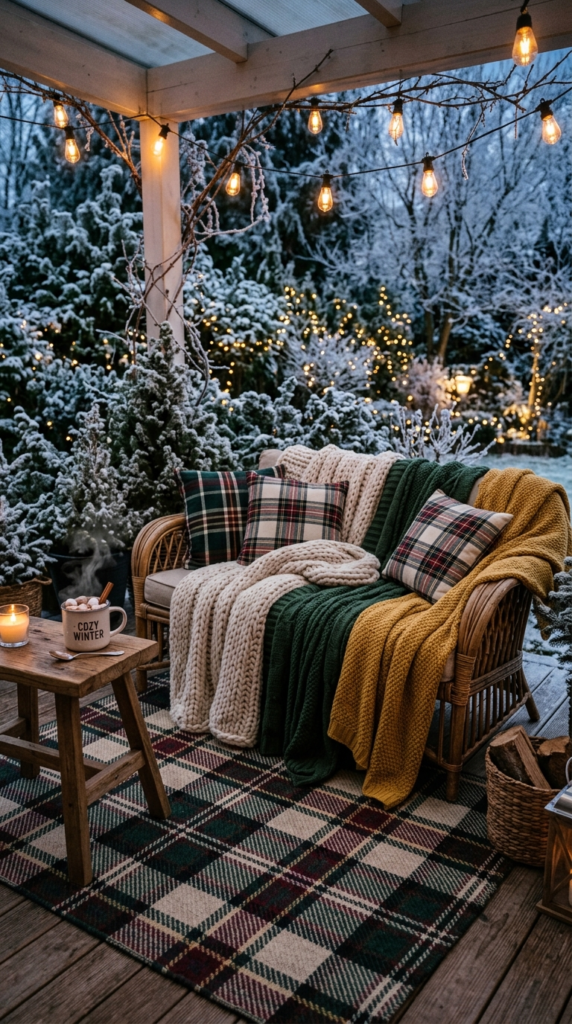
This is one of those cozy winter garden decorating ideas that people always overlook — and it makes such an enormous difference! Layering textiles on your outdoor patio furniture is the fastest way to make your garden feel like an extension of your warm, cozy living room.
Invest in weather-resistant outdoor rugs in rich winter colors — deep plaid, forest green, charcoal, or burgundy. These anchor your seating area visually and literally feel softer and warmer underfoot than cold stone or decking.
Stack up chunky knit or fleece throw blankets in a large wicker basket beside your seating area so they’re always on hand when guests arrive. Go for deep jewel tones and classic patterns — tartan, houndstooth, and chunky cable knit all look incredibly festive outdoors in winter.
Here’s the deal: Always bring cushions and delicate textiles inside when it rains or snows, but weather-resistant rugs and blanket storage baskets can live outside all winter with minimal fuss.
Check out how to style a cozy outdoor patio for winter for more layering ideas.
Add a few throws, a rug, and some cushions — and suddenly your winter garden becomes the coziest seat in the house!
7. Plant Winter-Blooming Flowers for Surprise Color
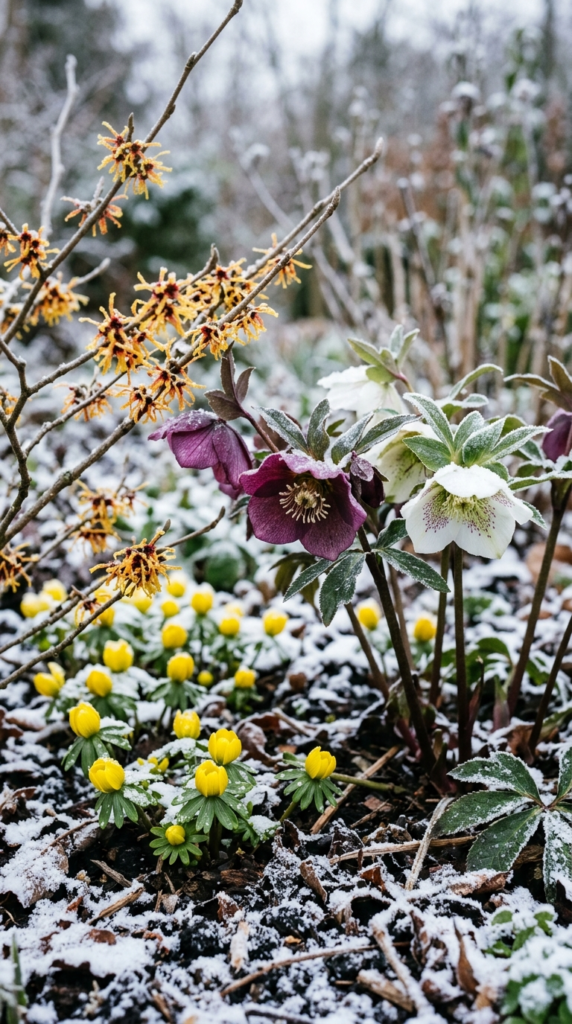
Who says a winter garden has to be colorless? With the right plant choices, you can have genuine blooms and color in your garden even in the coldest months of the year — and the surprise of seeing flowers in winter never gets old!
Hellebores (Christmas rose) are the undisputed stars of the winter garden, producing gorgeous nodding blooms in deep burgundy, plum, white, and blush pink from December through March. They’re completely hardy, incredibly long-lived, and multiply beautifully over the years.
Witch hazel (Hamamelis) blooms on bare stems from December to February with extraordinary spidery flowers in yellow, orange, and red that are also deliciously fragrant. Winter aconite and snowdrops push through frozen ground as early as January, delivering tiny but utterly joyful splashes of yellow and white.
| Plant | Bloom Time | Color | Height |
| Hellebore | Dec–Mar | Plum, white, pink | 12–18 in |
| Witch Hazel | Dec–Feb | Yellow, orange, red | 6–12 ft |
| Winter Aconite | Jan–Feb | Bright yellow | 3–4 in |
| Snowdrop | Jan–Mar | White | 4–6 in |
| Cyclamen coum | Nov–Feb | Pink, white | 4–6 in |
Visit the RHS guide to winter-flowering plants for a comprehensive plant list with care details.
Plant a few of these beauties this autumn and you’ll have winter color that genuinely stops you in your tracks!
8. Use Lanterns and Candles for Warm Atmospheric Glow
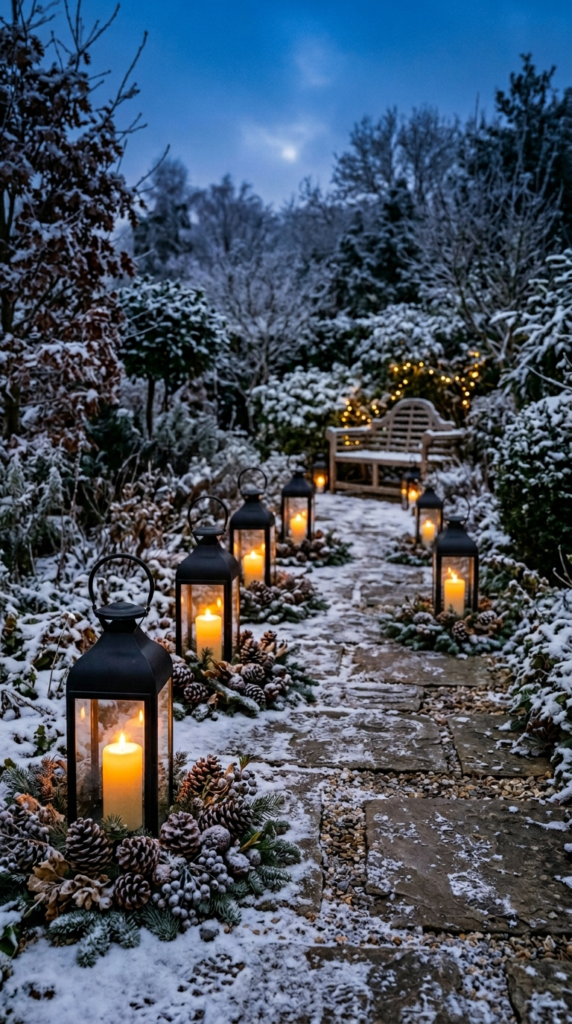
Lanterns and outdoor candles create an atmosphere in a winter garden that no electric light can quite replicate. That warm, flickering glow against cold, frosty air is pure magic — and it’s one of the most affordable cozy winter garden decorating ideas you can try.
Line your garden path with large pillar lanterns containing thick church candles or flameless LED candles for a safe, beautiful effect. Cluster groups of mixed-height lanterns on your patio beside seating or near a fire pit for a layered, atmospheric look.
Safety tip: Use flameless LED pillar candles in any lantern that might be left unattended or placed near flammable materials like dry leaves or wooden decking. They look almost identical to real candles and you can leave them on all night without worry.
For freestanding lanterns, choose heavy cast iron or powder-coated steel that can handle outdoor weather year-round. Add handfuls of dried pinecones, cranberries, or evergreen sprigs around the base of each lantern to tie them into the natural winter garden aesthetic.
Explore garden lantern styling ideas for winter on our site.
A row of glowing lanterns along your garden path is worth every penny — and every compliment you’ll receive!
9. Build a Cozy Winter Garden Seating Nook
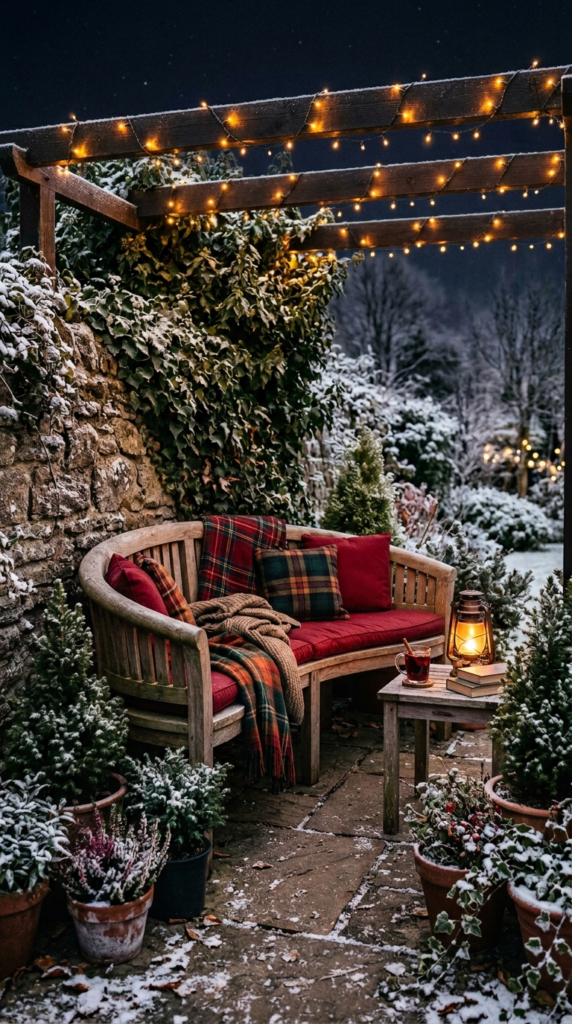
Creating a dedicated seating nook in your winter garden gives you a reason to actually go outside and enjoy your outdoor space even when it’s cold. And honestly? A well-designed garden nook in winter is one of the most soul-restoring places you can sit!
The key is making your seating feel sheltered and enclosed — not exposed to wind and open sky. A corner formed by two garden walls, a fence with a planted hedge, or a pergola with side panels all create that sheltered, nest-like feeling that makes outdoor winter sitting genuinely comfortable.
Layer up the comfort factor ruthlessly: thick outdoor cushions in weather-resistant fabric, stacked wool blankets in a nearby basket, an outdoor side table for hot drinks, and overhead fairy lights to create a ceiling of warmth above you.
Add potted evergreens on either side of your nook to frame and enclose the space further, and place a small lantern or outdoor heater nearby for warmth. Before you know it, you’ll be choosing your garden nook over the sofa on cold evenings!
Read our post on how to create a cozy garden seating nook for winter for design and furniture tips.
Your winter garden nook will become your absolute favorite spot in the whole house — we guarantee it!
10. Add Ornamental Grasses for Texture and Movement
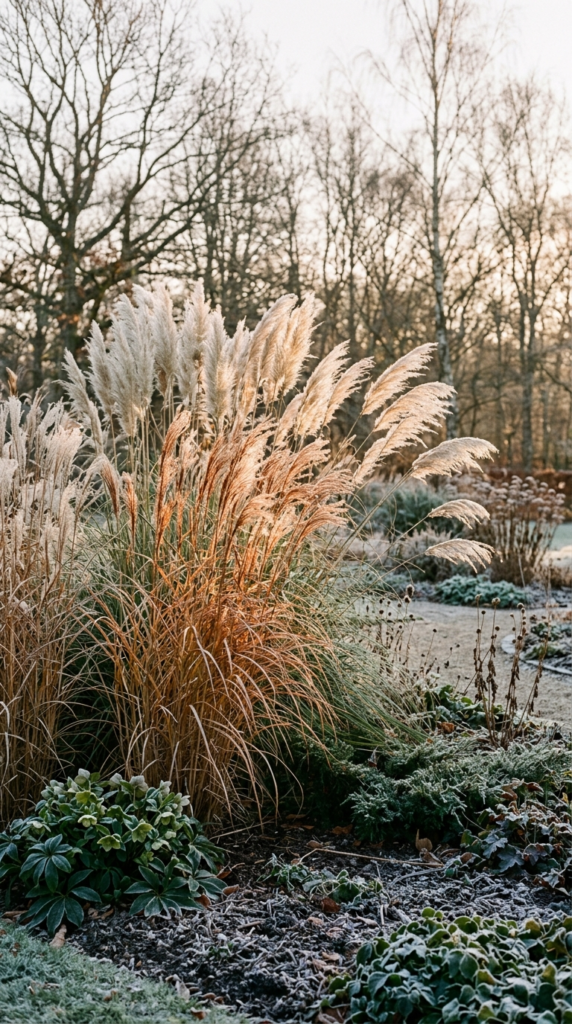
Ornamental grasses are one of the most underrated elements of a cozy winter garden — and once you see them backlit by low winter sunlight, with their feathery seed heads catching the frost, you’ll be completely obsessed!
The magic of grasses in winter is their movement and texture. While everything else in the garden is static and bare, grasses sway and rustle in the breeze, catching light and creating that essential sense of life and energy in a cold-season garden.
- Best ornamental grasses for winter interest: Miscanthus sinensis (silver and copper seed heads), Pennisetum (fountain grass), Pampas grass, Calamagrostis (feather reed grass), and Stipa tenuissima
- Leave them standing all winter — resist the urge to cut them back until late February or early March
- The dried seed heads also provide crucial food and shelter for garden birds throughout winter
The secret is… placing your grasses where they’ll be backlit by the low winter sun — typically facing south or west in the garden. That golden backlighting through feathery grass heads is one of the most breathtaking natural sights a winter garden can offer.
For more on ornamental grasses for winter garden interest, check our dedicated guide.
Plant a few ornamental grasses this autumn and your winter garden will have movement, texture, and magic all season long!
11. Create a Bird-Friendly Winter Garden Station
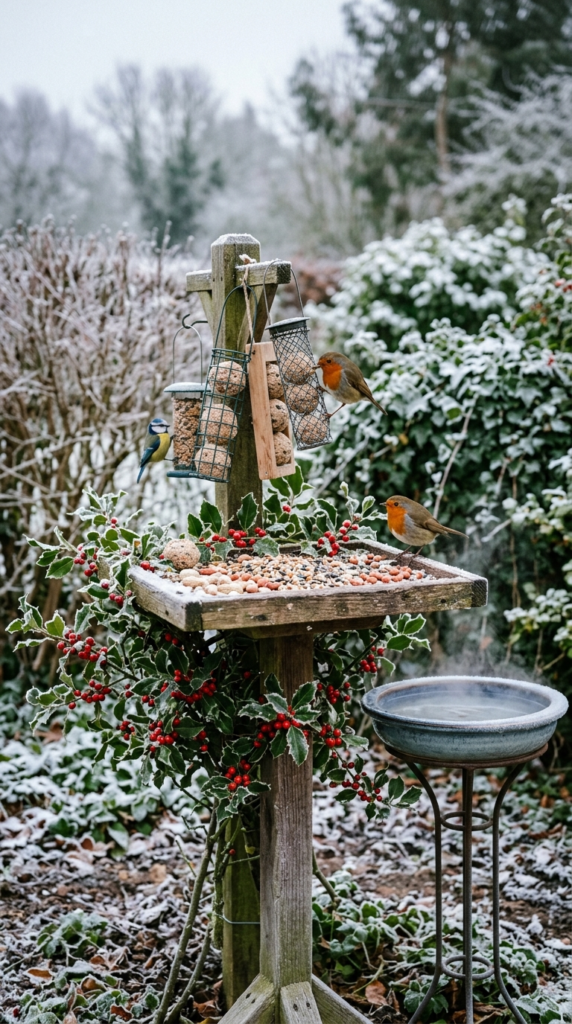
Talk about a game-changer — adding a bird feeding station to your winter garden doesn’t just help wildlife, it transforms your garden into a living, moving, endlessly entertaining spectacle all winter long!
Winter birds are desperate for reliable food sources when the ground is frozen and natural berries are depleted. A well-stocked feeding station with seed mixes, fat balls, and suet cakes will attract robins, blue tits, goldfinches, sparrows, and in lucky gardens, even woodpeckers and nuthatches.
Add a bird bath with a small heater element to prevent freezing — birds need unfrozen water even more urgently than food in the coldest weather. A steam-ing bird bath on a frosty morning is also one of the most beautiful sights in a winter garden!
Surround your feeding station with berry-producing shrubs — holly, cotoneaster, or pyracantha — for additional natural food sources and to make the whole area look like a designed garden feature rather than just a practical feeder.
Visit the RSPB’s guide to feeding garden birds in winter for expert guidance on what to feed and when.
Feed the birds this winter and your garden will reward you with the most wonderful free entertainment imaginable!
12. Use Pinecones and Natural Materials as Décor

One of the most beautiful aspects of cozy winter garden decorating is that nature literally provides most of your best décor for free! Pinecones, seed heads, berries, bark, branches, and mosses are all incredible natural materials that look stunning in garden displays.
Collect fallen pinecones after autumn storms and use them to fill decorative baskets, line garden paths, pack into lanterns as a base, or scatter artfully around container plants. A large galvanized tub filled to the brim with mixed-size pinecones is simple, natural, and completely gorgeous.
Dried seed heads from plants like alliums, teasels, honesty, and astilbe are beautiful winter garden structures that you should absolutely leave standing rather than cutting back. Frosted overnight, they become extraordinary sculptural elements.
Red rose hips, orange sea buckthorn berries, white snowberry clusters, and scarlet holly berries add vivid natural color to winter garden displays — and they’re completely free if you have the right plants already growing.
Check out how to use natural materials in winter garden décor for creative ideas.
The most beautiful winter garden décor is almost always the stuff nature provided for free!
13. Install a Garden Mirror for Depth and Light

Here’s a cozy winter garden decorating idea that most people don’t think of until they try it — and then absolutely swear by it! A well-placed garden mirror makes your outdoor space look dramatically larger, reflects precious winter light into dark corners, and creates the most beautiful illusions of depth in a cold-season garden.
Outdoor garden mirrors are specifically designed to handle rain, frost, and UV exposure — make sure any mirror you use outdoors is rated for exterior use, as indoor mirrors can shatter or delaminate in freezing temperatures.
Pro tip: Position your garden mirror to reflect a beautiful part of your garden — a lit tree, a colorful container display, or a long garden path. You get the visual payoff of that beautiful view twice, from two angles.
Mount your mirror on a garden wall, fence, or between two trained evergreen shrubs framing it like a picture. Add a cluster of potted plants in front of it to create the illusion of a whole garden disappearing into the distance beyond the mirror.
Explore how to use garden mirrors to transform small outdoor spaces on our site.
A single well-placed mirror can make your winter garden look twice the size — it’s genuinely astonishing!
14. Style Your Garden with Cozy Winter Planters
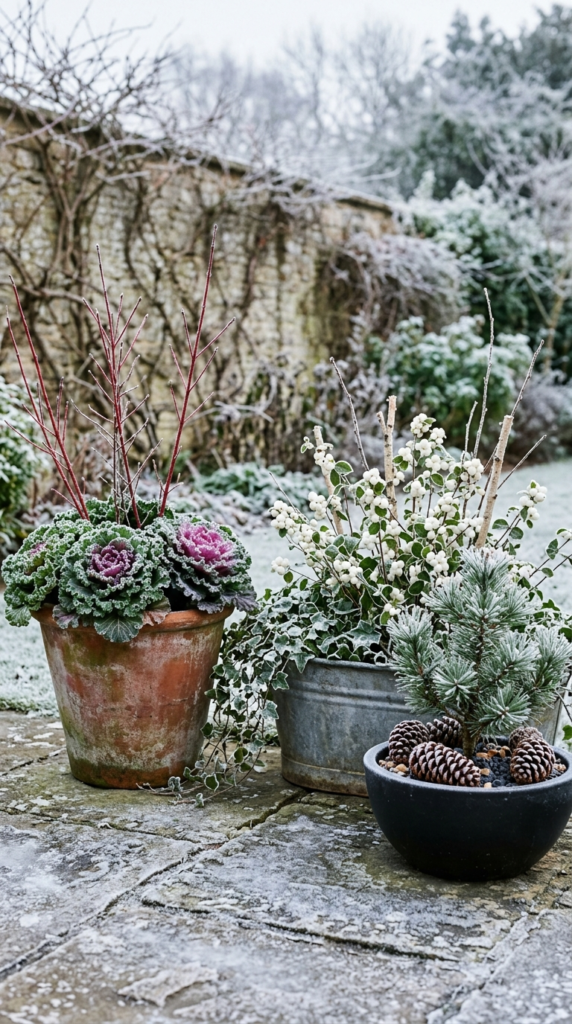
Winter planters are one of the most versatile cozy winter garden decorating ideas you can embrace — and they let you keep refreshing your garden’s look throughout the season. Unlike fixed beds, you can move them, rearrange them, and swap out elements as the season progresses.
Think beyond flowers and go for bold structural arrangements that hold up beautifully in cold weather. Ornamental kale (the purple and white cabbage-like variety) is absolutely stunning in winter pots and handles hard frost like a champion. Pair it with red dogwood stems, trailing ivy, and a few birch twigs for an arrangement that looks like it came from a designer plant nursery.
Don’t overlook galvanized metal containers for winter — they look incredible filled with a single ornamental grass, a cluster of white-berry branches, or a simple arrangement of pine sprigs and pinecones. That industrial-meets-natural contrast is endlessly chic.
Refresh your planters mid-winter by swapping in early spring bulbs like snowdrops or early crocus as they become available from January onward. Your winter containers can transition seamlessly from December all the way through to March with a few strategic swaps.
Read our ultimate guide to winter container planting for seasonal planting calendars.
Keep updating your winter planters and your garden will look fresh and beautiful every single month!
15. Add Sculptural Elements for Year-Round Structure
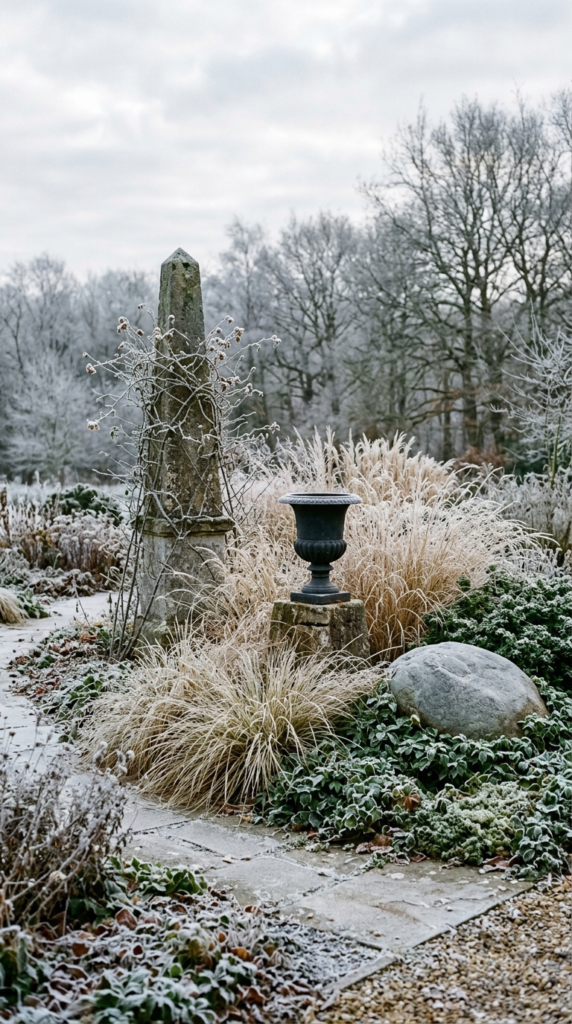
Here’s the thing that separates a truly beautiful winter garden from one that just looks abandoned: sculptural elements. When plants die back and color disappears, garden sculpture, obelisks, urns, and architectural features carry the entire visual interest of your outdoor space.
Stone, cast iron, and weathered metal are the best materials for winter garden sculpture because they look better with frost and moisture on them — that pale dusting of ice on a stone figure or the way rain darkens a metal obelisk are genuinely beautiful effects you only get in winter.
A stone or terracotta urn on a plinth, a rusted iron obelisk, a smooth river-stone arrangement, or even a beautifully shaped piece of driftwood all become focal points in the winter garden that draw the eye and create visual punctuation in the landscape.
Position your sculptural elements thoughtfully — at the end of a path, in the center of a bed, or as a flanking pair at a gate or entrance. Frame them with low evergreen groundcover to give them a planted base even in the coldest months.
See our post on using garden sculptures and structures for winter interest for styling inspiration.
Invest in one beautiful sculptural element for your garden and it will reward you with beauty in every single season — but especially winter!
Frequently Asked Questions
What are the best plants for a cozy winter garden?
The best plants for a cozy winter garden include evergreen structural plants like dwarf conifers, boxwood, and yew for year-round presence; winter-blooming flowers like hellebores, witch hazel, and snowdrops for seasonal color; ornamental grasses for texture and movement; and berry-producing shrubs like holly, cotoneaster, and pyracantha for vivid color and wildlife value. Combining structural evergreens with a few well-chosen seasonal bloomers gives you a winter garden that feels alive and full, rather than bare and dormant.
How do I make my garden look cozy in winter without spending much money?
The most affordable winter garden decorating ideas involve using what nature already provides — collected pinecones, dried seed heads left standing in beds, berry-covered branches, and foraged greenery can create beautiful displays for free. String fairy lights are inexpensive and transformative, especially after dark. Repurpose household items like old lanterns, galvanized buckets, or wooden crates as planters. Layering a few bargain-bin throw blankets on outdoor furniture and adding a single large candle instantly creates that cozy atmosphere without requiring any real investment.
How do I protect my garden containers and pots from frost damage?
To protect containers from frost cracking, choose frost-proof pots made from fiberglass, resin, or frost-rated glazed ceramic rather than standard terracotta. Bubble-wrap the outside of any existing pots you want to protect, securing it with garden twine. Move tender plants and their pots against a sheltered wall or under an overhang during the worst freezes. Raising pots off the ground on pot feet improves drainage and reduces frost contact from the ground up. For very cold climates, a simple cold frame or horticultural fleece wrap overnight can protect both pots and plants during extreme frost events.
What lighting works best for a winter garden?
Warm white LED fairy lights are the most universally flattering and versatile option for winter garden lighting — they make bare branches, frosted plants, and evergreen shrubs look utterly magical after dark. Solar-powered fairy lights are ideal for areas away from power sources, though they need some daylight hours to charge effectively. Lanterns with pillar candles or LED flameless candles add warm pooling light at ground level. Uplighting positioned at the base of a tree or sculptural element creates a dramatic spotlight effect. Always use lighting products rated for outdoor/exterior use and check connections are waterproof before the wet winter weather arrives.
When should I start decorating my garden for winter?
You can start thinking about winter garden decorating as early as late October or early November, when the last summer plants are being cleared and the garden’s bare bones become visible. This is the ideal time to plant evergreen structural plants, winter-blooming bulbs like snowdrops, and winter container displays. Add fairy lights and decorative elements in late November to enjoy them through the Christmas period and beyond. The best winter gardens are layered up gradually — a few elements added each week — rather than decorated all at once, so you can refine and adjust as the season progresses.
A Few Final Thoughts
Your garden doesn’t have to hibernate just because the temperatures have dropped — with the right cozy winter garden decorating ideas, it can become one of the most atmospheric and beautiful spaces you own from December right through to March. Whether you invest in a crackling fire pit and fairy-lit trees, fill decorative containers with evergreens and winter berries, or simply add a string of warm lights along your fence and a few lanterns on your path, the transformation is always worth the effort. Winter gardening rewards you with a kind of quiet, magical beauty that no other season can match. Your cozy winter garden is just a few ideas, a few plants, and a few weekend afternoons away from becoming your absolute favorite place to be. Now go make it happen!