
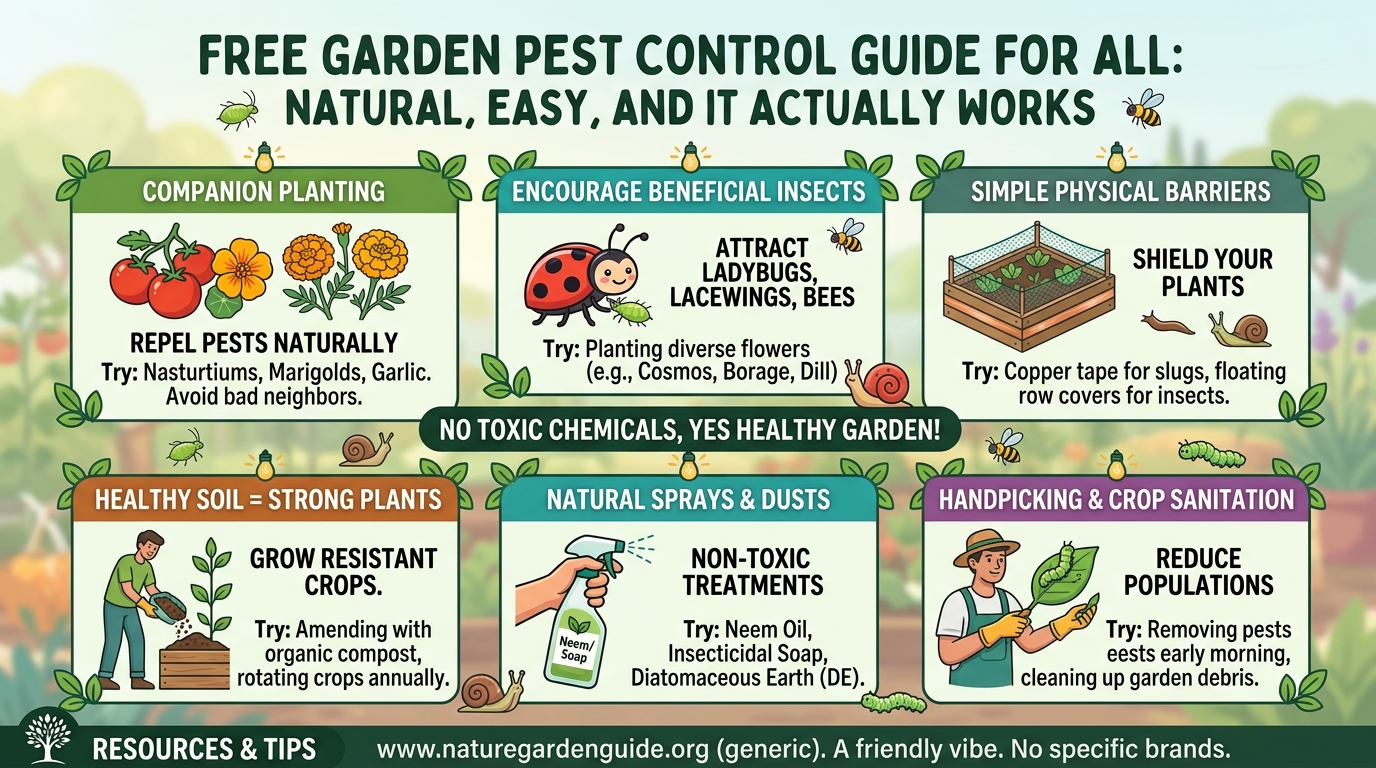
Tiny holes in your leaves, mysterious slime trails on your pots, and half-eaten tomatoes that were just fine yesterday — sound familiar? Garden pests are the uninvited guests that show up every single season, and if you’ve been spending money on expensive chemical sprays that barely work, this free garden pest control guide is about to change everything for you! The best part? The most effective pest control strategies cost next to nothing and use ingredients you already have at home. Ready to find out?
At a Glance
- You can eliminate most common garden pests using free and natural methods like homemade sprays, physical barriers, and companion planting without spending a single dollar.
- Identifying your pest correctly before treating is the single most important step — the wrong treatment wastes time and can actually harm your plants.
- Beneficial insects like ladybugs, lacewings, and parasitic wasps are your most powerful free allies, and you can attract them with the right plants.
- A healthy, well-fed plant with good soil is naturally more resistant to pest damage, making soil care your first line of defense.
- Prevention beats treatment every single time — setting up simple physical barriers and practicing good garden hygiene stops most pest problems before they even start.
Why a Free Garden Pest Control Guide Actually Makes Sense
Let’s be real — most of us have dropped serious cash on pest control products that promised the world and delivered very little. Shelves full of sprays, granules, and “miracle solutions” that cost a fortune and sometimes do more harm than good to your plants, your soil, and the beneficial bugs you actually want around.
Here’s the thing: chemical pesticides often kill indiscriminately. They wipe out the bad guys, sure, but they also take out the good ones — the bees, the ladybugs, the ground beetles quietly eating pest eggs in your soil at night. And in a small urban garden or container setup, that kind of collateral damage hits hard and fast.
The free and natural approach works with your garden’s ecosystem rather than against it. That means longer-lasting results, healthier soil, safer harvests, and zero impact on your wallet. Once you learn how to work these methods together, you’ll wonder why you ever bought a chemical spray at all.
💡 Pro Tip: Keep a simple garden journal to track where and when pests appear. Patterns emerge fast, and early detection is worth more than any spray on the market.
Explore our complete guide to building a pest-resistant container garden for an even deeper dive into prevention strategies.
You’ve totally got this — knowledge is honestly the most powerful pest control tool there is!
Identify Your Pest Before You Do Anything Else
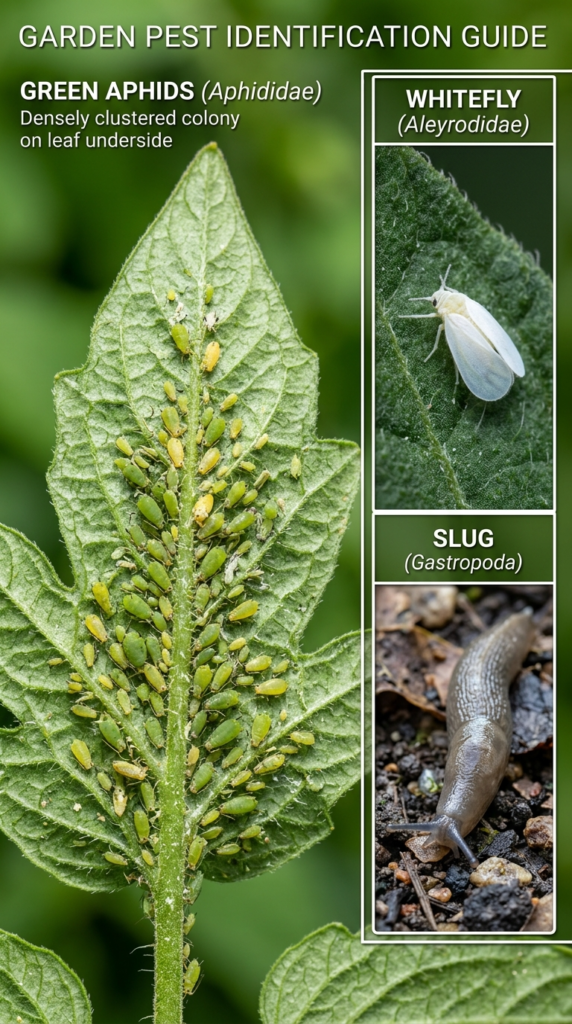
Stop right there before you reach for anything. Correct pest identification is Step Zero of any free garden pest control guide worth its salt — because treating for aphids when you actually have spider mites will get you absolutely nowhere.
Different pests respond to completely different treatments. A garlic spray that sends aphids packing does nothing to slugs. A copper tape barrier that stops snails cold won’t touch a whitefly infestation. Knowing exactly what you’re dealing with saves you time, effort, and the heartbreak of watching treatments fail.
Here’s a quick ID cheat sheet for the most common urban garden pests:
| Pest | Damage Signs | Where to Look |
| Aphids | Sticky residue, curled leaves | Undersides of leaves, new growth |
| Spider Mites | Fine webbing, yellow stippling | Leaf undersides, dry conditions |
| Whiteflies | Cloud of white insects when disturbed | Under leaves, warm humid areas |
| Slugs/Snails | Irregular holes, slime trails | Soil level, nighttime, wet weather |
| Fungus Gnats | Wilting seedlings, tiny flies | Soil surface, overwatered pots |
| Scale Insects | Brown bumps on stems | Woody stems, houseplant leaves |
| Caterpillars | Large ragged holes | Leaf surfaces, visible frass (droppings) |
The University of California’s Integrated Pest Management Program has an incredible free pest identification database — seriously bookmark it right now.
Once you know your enemy, everything else in this guide clicks into place beautifully!
Make a Free DIY Insecticidal Soap Spray
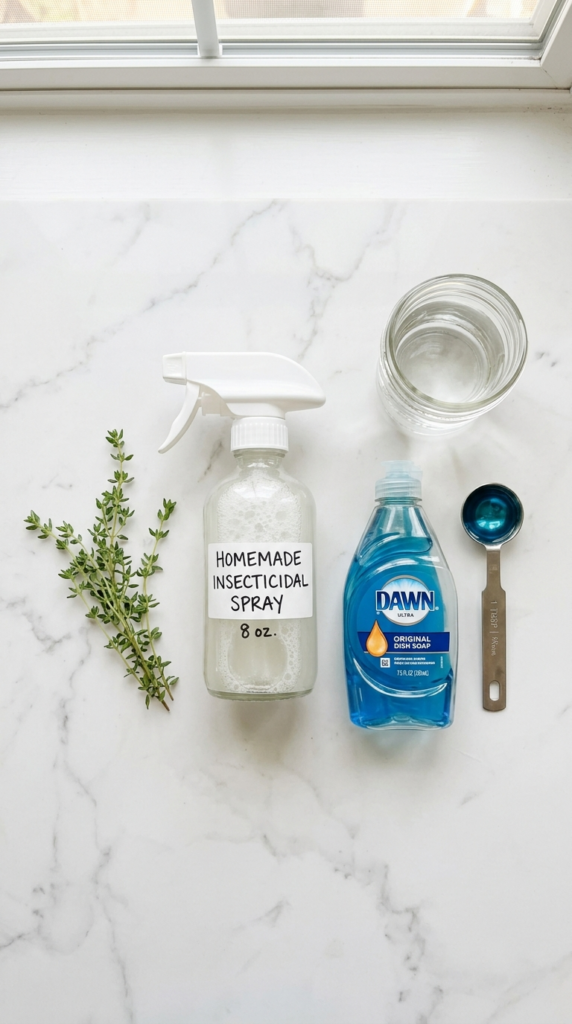
Here’s the deal: one of the most effective soft-bodied pest killers in existence costs about two cents to make and lives under your kitchen sink right now. Insecticidal soap spray is a cornerstone of any free garden pest control guide, and for good reason — it works incredibly well on aphids, mites, whiteflies, and mealybugs.
The soap works by breaking down the protective outer coating of soft-bodied insects, causing them to dehydrate and die within hours. And unlike chemical pesticides, it breaks down quickly and leaves no harmful residue on your food or in your soil.
How to make it:
- Mix 1–2 teaspoons of pure liquid dish soap (avoid antibacterial or heavily scented varieties) with 1 quart (about 1 liter) of water
- Pour into a clean spray bottle and shake gently
- Spray directly onto affected plants, focusing on leaf undersides where pests hide
- Apply in the morning or evening — never in harsh midday sun, which can cause leaf burn
- Repeat every 3–5 days until the infestation clears
💡 Pro Tip: Always test your DIY soap spray on a small section of the plant first and wait 24 hours before full application — some sensitive plants like ferns and succulents can react badly to even gentle soaps.
Check out our full roundup of homemade plant spray recipes for container gardens for more free DIY options.
Simple, free, and genuinely effective — this is where most pest problems end!
Use Garlic and Chili Spray for a Free Pest Repellent
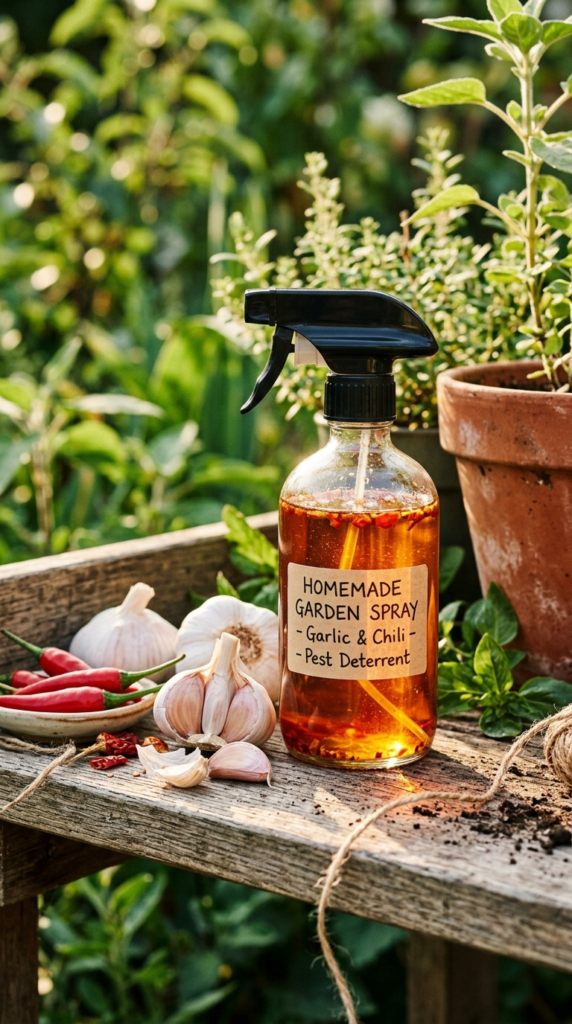
If the soap spray is your first line of attack, garlic and chili repellent spray is your equally powerful backup — and it’s made entirely from kitchen scraps that would otherwise go in the bin. This spray doesn’t kill pests directly; instead, it makes your plants taste and smell completely revolting to insects and even some larger pests like caterpillars and beetles.
The capsaicin in chili irritates insects’ sensory systems, and the sulfur compounds in garlic act as a powerful natural deterrent. Together, they create a smell and taste barrier that most pests simply refuse to cross.
How to make it:
- Blend 4–6 garlic cloves and 2–3 hot chili peppers with 2 cups of water
- Let steep overnight, then strain through a fine cloth or coffee filter
- Add a few drops of dish soap (helps it stick to leaves) and dilute with 1 liter of water
- Spray all over your plants, including stems and soil surface, once a week
Reapply after rain since water washes it away. It’s completely free, completely natural, and the smell disappears once it dries — your plants won’t smell like garlic bread, we promise!
Attract Beneficial Insects — Your Free Pest Control Army
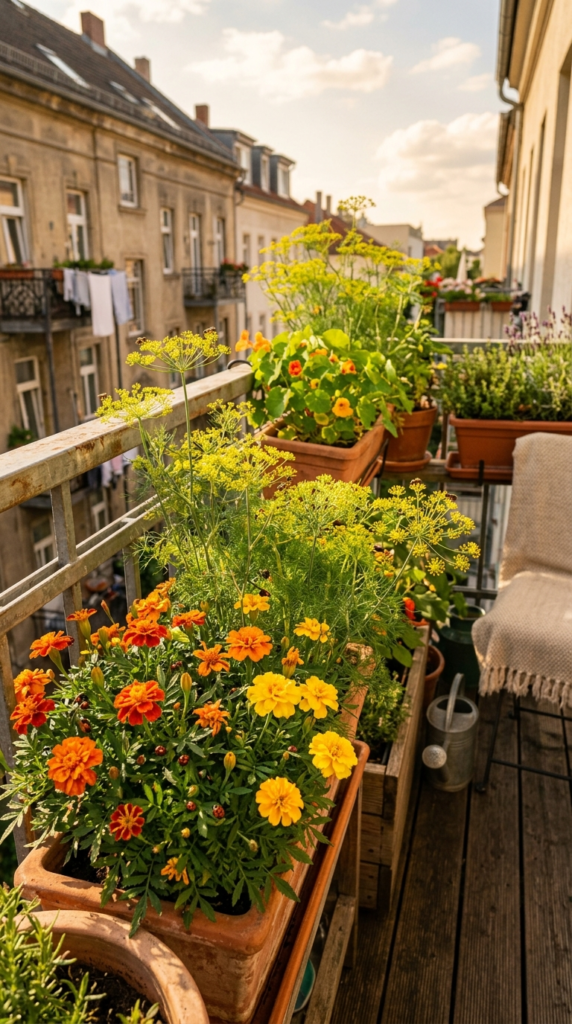
The secret is this: nature already has a free pest control system built in, and all you have to do is invite the right insects to your garden party. Beneficial insects are absolute predators when it comes to pest management — and they work 24/7 for free.
Ladybugs alone can eat up to 5,000 aphids in their lifetime. Lacewings devour pest eggs and larvae. Parasitic wasps lay their eggs inside caterpillars and aphids, controlling them from the inside out. Yes, it sounds dramatic, but this is nature’s brilliance at work!
To attract these beneficial allies to your urban garden, grow these plants:
- Dill and fennel — attract lacewings and parasitic wasps
- Marigolds — repel whiteflies and attract hoverflies (whose larvae eat aphids)
- Sweet alyssum — powerhouse hoverfly attractor
- Lavender — beloved by bees and repels moths and fleas
- Yarrow — attracts a huge variety of predatory insects
The more diverse your planting, the more beneficial insects you attract, and the more natural pest pressure you build into your garden ecosystem. Pretty cool, right?
Dive deeper into this topic with our article on companion plants that repel pests naturally for a full list of pest-fighting plant combinations.
Set Up Physical Barriers — Free or Nearly Free Protection
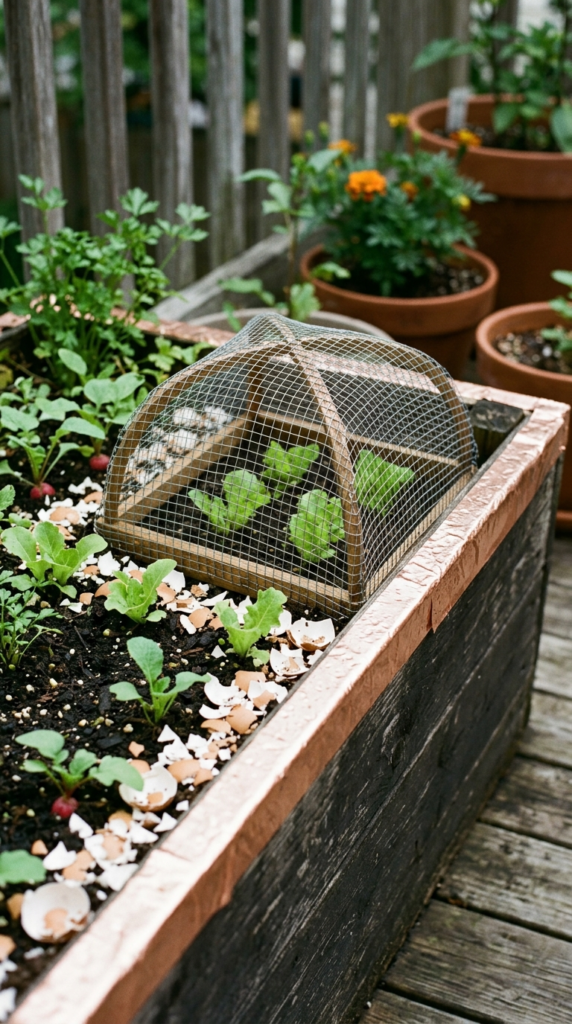
Sometimes the most effective free garden pest control is simply building a wall. Physical barriers stop pests from reaching your plants without any sprays, chemicals, or purchased products — just creativity and materials you likely already have.
Copper tape for slugs and snails is a classic for a reason — the copper reacts with their slime and gives them a mild electrical-type shock that sends them retreating immediately. You can often find scrap copper tape at hardware stores or repurpose old copper wire.
Here are more free and nearly-free physical barriers that actually work:
- Crushed eggshells around plant bases — the sharp edges deter slugs and snails beautifully
- Old pantyhose or mesh bags over ripening fruit and vegetables to block flying insects and moths
- Cardboard collars around seedling bases — push slightly into soil to block cutworm moths from laying eggs
- Row cover fabric made from old sheer curtains or lightweight fabric — keeps flying pests off entirely
- Sticky yellow traps made from yellow cardstock coated with petroleum jelly — catches whiteflies, fungus gnats, and aphids
💡 Pro Tip: For fungus gnat control in indoor container gardens, simply cover your soil surface with a layer of coarse sand or gravel — gnats can’t lay eggs through it, breaking their breeding cycle completely for free.
Simple, hands-on, and completely effective — physical barriers are an underrated superstar of natural pest control!
Use Companion Planting as a Free Pest Control Strategy
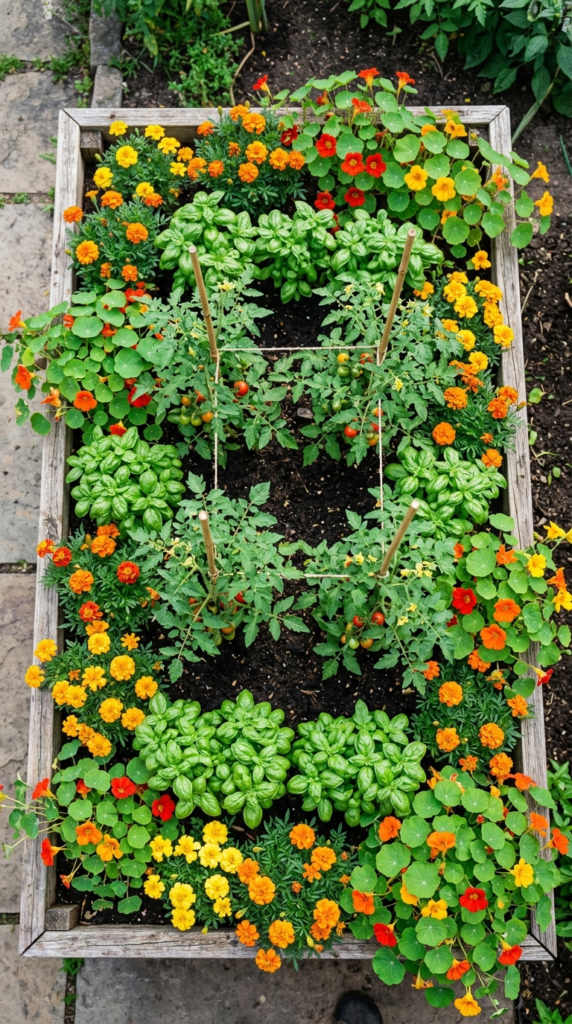
Companion planting is one of the oldest and most free pest control methods in existence, and it works remarkably well in small urban gardens and container setups. The basic idea is simple: certain plants naturally repel specific pests, attract pest predators, or confuse insects trying to find their host plant.
You’re essentially redesigning your garden so that pests get confused, repelled, or eaten before they ever become a problem. That’s what a truly integrated free garden pest control strategy looks like in practice!
Some classic combinations that work brilliantly:
- Nasturtiums near brassicas — they act as a trap crop, luring aphids away from your vegetables and onto themselves
- Basil near tomatoes — repels thrips and aphids while improving tomato flavor
- Mint in nearby pots (keep it contained — it spreads!) — repels ants, aphids, and flea beetles
- Chives near roses or carrots — deters aphids and carrot fly
- Petunias near beans and squash — repel squash bugs and bean beetles
The Royal Horticultural Society has excellent research-backed companion planting guidance that’s completely free to access.
Plant smart, and let your garden defend itself!
Neem Oil — The Almost-Free Natural Pesticide
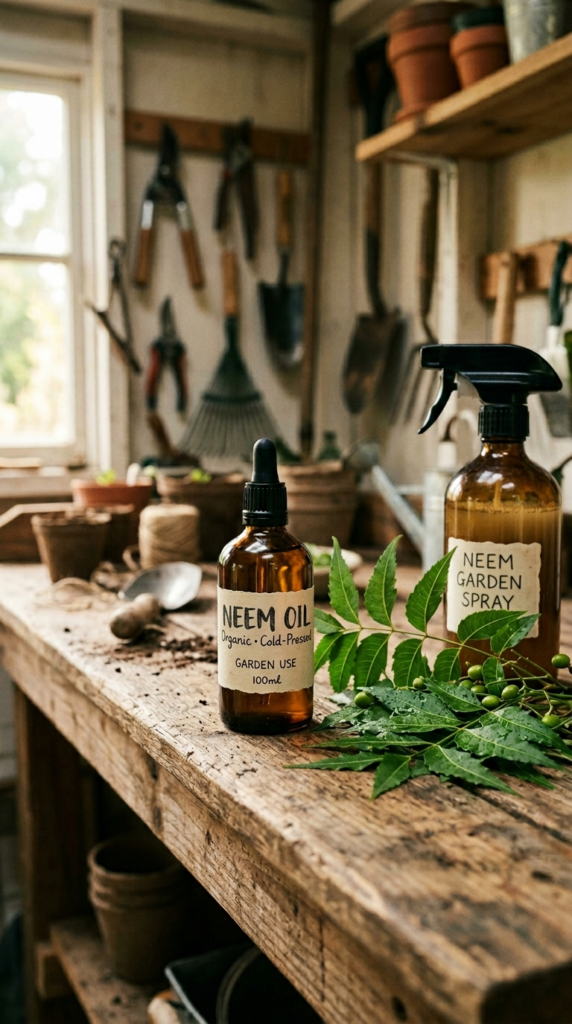
Okay, so neem oil isn’t technically free — but a single small bottle costs just a few dollars and lasts an entire season, making it firmly in the “nearly free” category for this free garden pest control guide. More importantly, it’s one of the most versatile, effective, and safe natural pest control substances available to home gardeners.
Neem oil is extracted from the neem tree and contains a compound called azadirachtin, which disrupts the life cycle of over 200 insect species without harming birds, bees, or earthworms when used correctly. It works as an insecticide, fungicide, and miticide all in one — seriously versatile.
How to use it:
- Mix 1–2 teaspoons of neem oil with 1 teaspoon of liquid dish soap (emulsifier) and 1 liter of water
- Shake well before each use as it separates quickly
- Spray thoroughly on all plant surfaces, especially leaf undersides, every 7–14 days
- Apply in the evening to avoid light-sensitive breakdown and to protect foraging bees
- Use consistently as a preventative, not just when problems appear
💡 Pro Tip: Neem oil is most effective as a preventative treatment applied before large-scale infestations develop. Once pest numbers are already high, use insecticidal soap to knock down the population first, then follow up with neem for long-term prevention.
Read our detailed breakdown of neem oil uses for urban container plants to get the absolute most out of this incredible natural product.
One small investment, season-long protection — totally worth it!
Practice Good Garden Hygiene as Free Pest Prevention
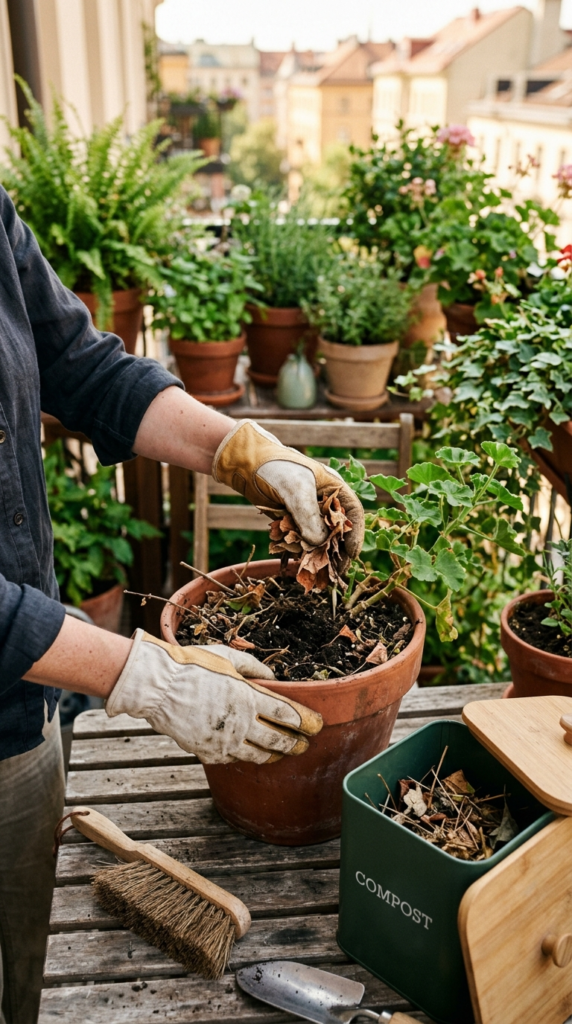
Here’s something nobody talks about enough: garden hygiene is completely free and it eliminates a massive percentage of pest problems before they even start. Most urban gardeners focus entirely on treatment while completely ignoring the prevention side of the equation.
Dead leaves, decaying plant material, and standing water are basically five-star hotels for pests. Fungus gnats breed in organic debris. Slugs hide under old pots and dead leaves during the day. Aphid eggs overwinter in plant debris waiting for spring. Remove the habitat, remove the pest.
Your free garden hygiene checklist:
- Remove dead leaves, fallen fruit, and decaying plant material immediately
- Empty any trays or saucers that collect standing water within 24 hours
- Clean your pots and tools with diluted white vinegar between uses and seasons
- Check the undersides of leaves every single week — early detection is prevention
- Rotate containers seasonally to prevent pest eggs from establishing in soil
- Keep soil surface clear of mulch immediately around stems (rot and pest habitat)
This stuff takes maybe 10 extra minutes per week but prevents hours of pest treatment down the line. Talk about a game-changer!
Deal with Specific Pests Using Free Garden Pest Control Methods
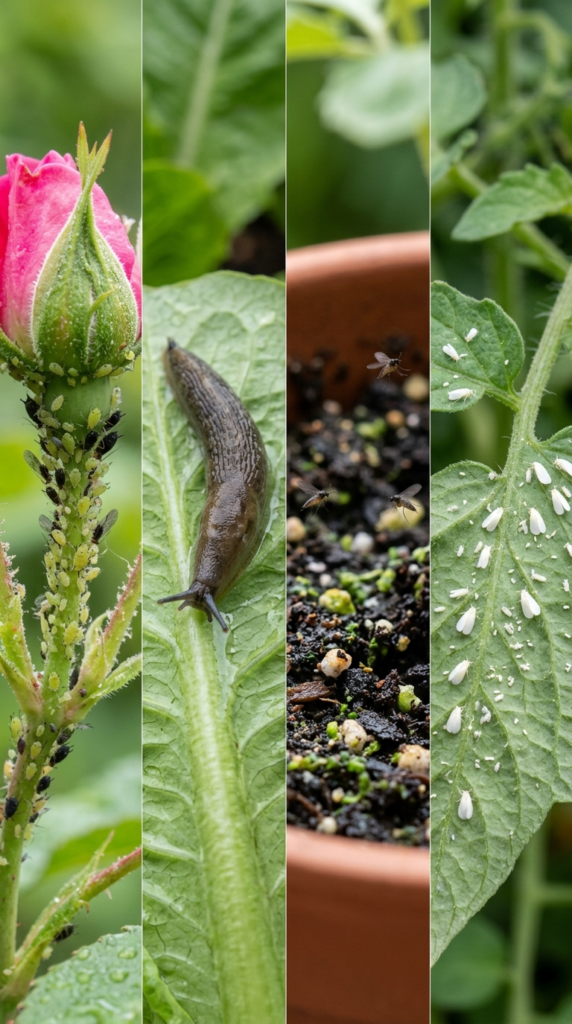
Let’s get specific! Here’s your quick free garden pest control treatment guide for the pests you’re most likely to encounter in an urban garden setting.
Aphids:
Blast them off with a strong jet of water first (free!), then apply DIY soap spray every 3 days. Plant nasturtiums nearby as a trap crop. Attract ladybugs with dill and fennel.
Slugs & Snails:
Go out at night with a flashlight and hand-pick them (free and oddly satisfying). Set up copper tape barriers, crushed eggshell rings, and a simple beer trap — a shallow dish of cheap beer sunk to soil level will trap and drown slugs overnight.
Fungus Gnats:
Let your soil dry out completely between waterings to break the breeding cycle. Cover soil with coarse sand. Set yellow sticky traps. Apply a hydrogen peroxide and water drench (1 part 3% H2O2 to 4 parts water) to kill larvae in soil.
Whiteflies:
Shake plants gently in the morning to disturb clouds of flies, then immediately spray undersides of leaves with soap spray. Yellow sticky traps are incredibly effective. Plant basil and marigolds nearby as repellents.
Spider Mites:
They hate humidity! Mist your plants regularly and they’ll struggle to establish. Wipe leaves with a damp cloth weekly. Apply soap spray to affected areas consistently.
Check out our detailed post on identifying and treating fungus gnats in indoor plants for one of the most common indoor garden pest problems in detail.
Frequently Asked Questions
Does a free garden pest control approach actually work as well as chemical pesticides?
For most common garden pests, absolutely yes — and in many cases it works better long-term. Natural and free pest control methods target specific pests without disrupting the beneficial insects that provide additional free pest management. Chemical pesticides can create resistance in pest populations over time, meaning you need stronger and stronger products. Natural methods, used consistently and preventatively, maintain a balanced ecosystem that keeps pest populations in check sustainably.
How often should I apply homemade pest control sprays?
As a general rule, apply DIY insecticidal soap spray or garlic-chili spray every 3–5 days during an active infestation, and every 7–10 days as a preventative measure. Always reapply after rainfall since water washes homemade sprays away quickly. Neem oil applications can be spaced to every 7–14 days once an infestation is under control. Consistency is far more important than intensity — light regular applications beat occasional heavy ones every time.
Are homemade pest sprays safe for edible plants like vegetables and herbs?
Yes! That’s one of the biggest advantages of the free garden pest control methods in this guide. Plain insecticidal soap, diluted neem oil, and garlic-chili spray all break down quickly and leave no harmful residue on edible plants when used correctly. However, always wash your harvested vegetables and herbs before eating, apply sprays in the evening before harvest days, and avoid spraying open flowers directly to protect pollinators. For neem oil specifically, avoid applying within 2–3 days of harvest.
How do I get rid of pests on indoor container plants without making my home smell bad?
Great news — most free indoor pest control methods are completely odor-free once applied. Insecticidal soap dries odorlessly within minutes. Neem oil has a mild earthy smell that fades quickly. The garlic-chili spray is the one to avoid indoors due to its strong scent — stick to soap spray and neem for houseplants and indoor container gardens. For indoor fungus gnats specifically, a coarse sand top dressing and consistent dry-down periods between waterings are your most effective and completely scent-free solutions.
What’s the single most effective free pest prevention step for a small balcony garden?
Honestly? Weekly inspection of every plant — checking both the tops and undersides of leaves, the soil surface, and the stems. Catching an aphid colony of 10 insects is a 30-second fix with a jet of water. Catching a colony of 10,000 insects is a multi-week battle. The entire philosophy of the best free garden pest control guide can be summed up in one idea: early detection makes almost every pest problem trivially easy to manage. Make leaf-checking part of your morning coffee routine and you’ll rarely have a serious infestation again.
A Few Final Thoughts
This free garden pest control guide exists to prove one simple truth: you don’t need to spend money to have a healthy, pest-resistant garden. By combining smart identification, DIY sprays from kitchen ingredients, physical barriers, companion planting strategies, and consistent garden hygiene, you’re building a multi-layered defense system that gets stronger and more effective with every season. The best part is that every single technique in this guide makes your garden more vibrant, more biodiverse, and more connected to the natural systems that keep plants healthy without any intervention at all. Start with just one or two methods today — maybe the soap spray and a few companion marigolds — and build from there. Your pest-free garden is absolutely within reach, and it costs nothing but a little time and enthusiasm. Now go make it happen! 🌿