
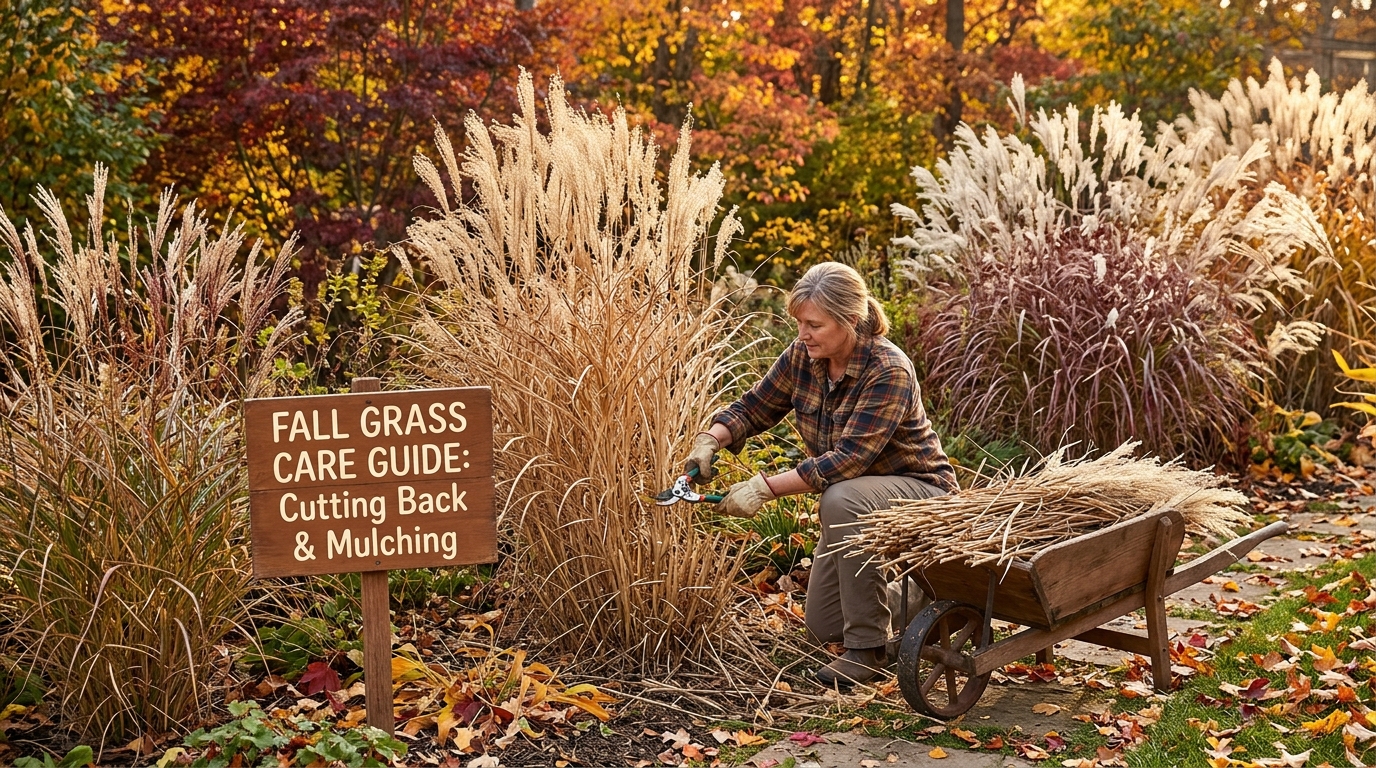
Ornamental grasses are the unsung heroes of the fall garden — swaying dramatically in the breeze, catching the golden light, and looking absolutely stunning when everything else is fading. But if you’ve ever wondered whether to cut them back, leave them alone, or do something in between, you’re definitely not alone! Getting your fall ornamental grass care right makes the difference between a thriving, spectacular display next year and a patchy, struggling clump that never quite recovers. Ready to find out exactly what to do? Let’s dive in!
At a Glance
- Most warm-season ornamental grasses should be left standing through fall and winter, with cutting back saved for late winter or early spring.
- Cool-season grasses can be lightly tidied in fall but generally bounce back best with minimal interference during this period.
- Fall is the ideal time to divide overgrown ornamental grass clumps — just do it early enough before the ground freezes hard.
- Skip the fall fertilizer entirely; feeding ornamental grasses in autumn encourages tender growth that won’t survive winter cold.
- Many ornamental grasses reach their absolute peak beauty in fall, with golden plumes, copper tones, and dramatic seed heads that serve as wildlife habitat all winter long.
Why Fall Ornamental Grass Care Actually Matters

Here’s the thing: what you do — or don’t do — to your ornamental grasses in fall sets the entire tone for next year’s performance. These plants are tougher than they look, but they’re not invincible.
Fall ornamental grass care is less about doing a ton of work and more about making smart, intentional decisions. Cut back at the wrong time, over-fertilize, or skip division on an overcrowded clump, and you’ll be scratching your head next summer wondering why your grasses look tired and thin.
The great news? Once you understand the basic principles, caring for ornamental grasses in autumn is genuinely one of the easier garden tasks on your fall to-do list. These plants are remarkably self-sufficient — they just need a little guidance from you.
💡 Pro Tip: Fall is also the time to appreciate your ornamental grasses, not just maintain them. Their seed heads provide critical food and shelter for birds and beneficial insects throughout the colder months.
Explore more about fall garden prep for low-maintenance plants on our site.
A little know-how goes a long way with these gorgeous plants!
Know Your Grass: Cool-Season vs. Warm-Season Types
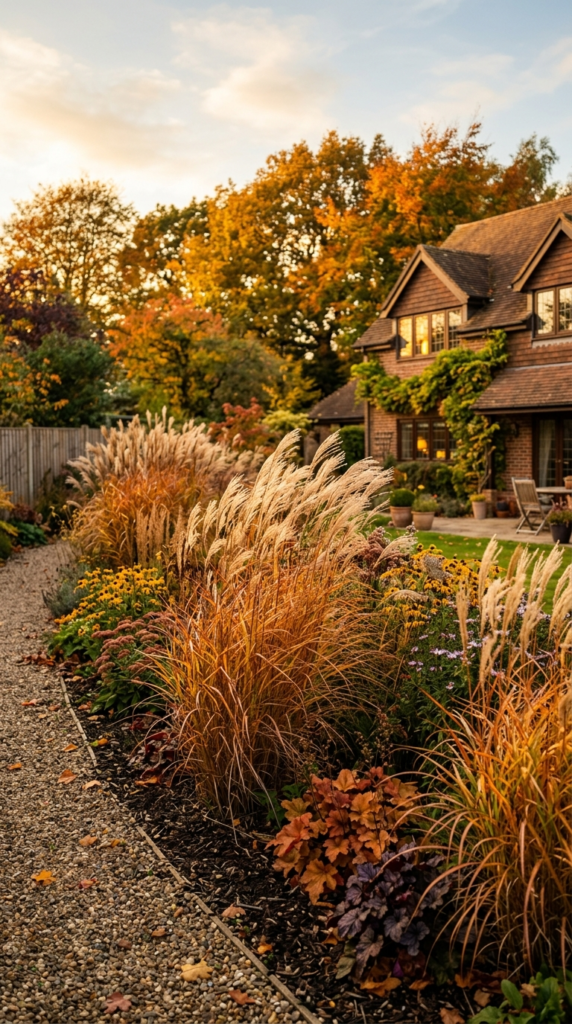
Before you do anything to your ornamental grasses this fall, you need to know which type you’re working with. This single piece of information changes everything about how you care for them.
Cool-season grasses — like blue fescue (Festuca glauca), feather reed grass (Calamagrostis), and tufted hair grass (Deschampsia) — do most of their growing in spring and fall when temperatures are mild. They can look a bit tired and burnt out by midsummer, then perk back up as temperatures drop.
Warm-season grasses — including miscanthus, switchgrass (Panicum), maiden grass, and fountain grass (Pennisetum) — grow vigorously through summer and hit their absolute visual peak in fall. These are the big, dramatic showstoppers with the feathery plumes and copper-toned foliage.
| Grass Type | Examples | Fall Appearance | Fall Action |
| Cool-Season | Blue fescue, Feather reed grass | May look tired | Light tidy-up only |
| Warm-Season | Miscanthus, Switchgrass, Fountain grass | Peak beauty! | Leave standing |
Check out the complete guide to identifying ornamental grass types for photos and detailed profiles.
Knowing your grass type is the foundation of every good care decision — you’ve totally got this!
Should You Cut Back Ornamental Grasses in Fall?
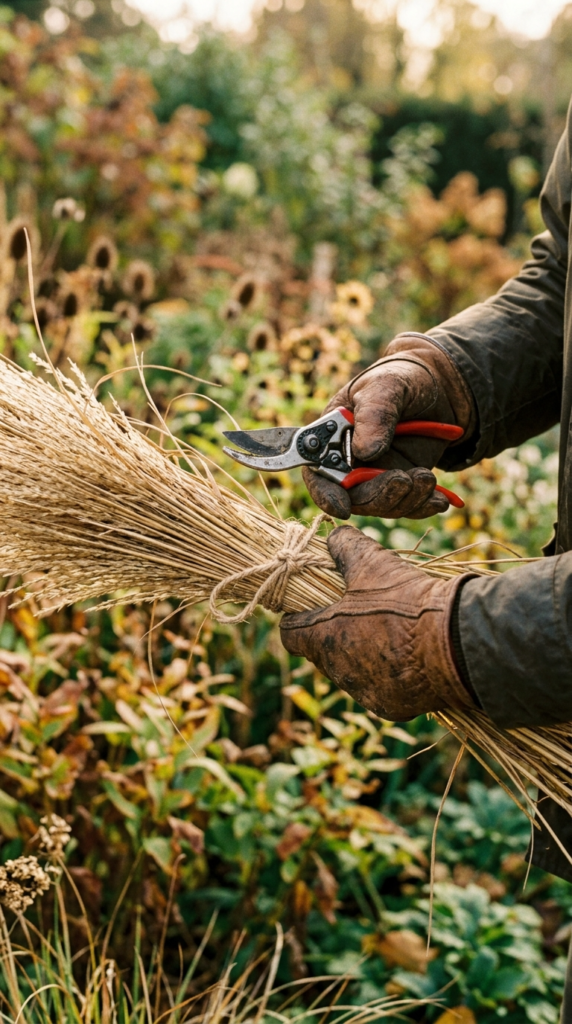
This is the question everyone asks, and the answer might surprise you: for most ornamental grasses, fall is NOT the right time to cut back. There, we said it!
Here’s the deal: warm-season grasses in particular are at their ornamental peak in fall, with gorgeous plumes and seed heads that add incredible texture and movement to the winter garden. Cutting them back now robs you of months of beauty and removes critical wildlife habitat.
Beyond aesthetics, leaving the foliage standing actually protects the crown of the plant from harsh winter temperatures. Those dried stems trap insulating air and prevent freeze-thaw damage at the root zone — nature’s own mulch system, basically.
- Warm-season grasses: Leave standing all winter; cut back in late February or early March
- Cool-season grasses: Can do a light tidy — remove only dead or damaged material in fall
- Annual ornamental grasses (like purple fountain grass in cold zones): Pull entirely after frost kills them
💡 Pro Tip: The rule of thumb from most horticulturalists is simple — if it’s still looking good, leave it alone. The Penn State Extension ornamental grass guide confirms that late winter cutback produces the healthiest results for most species.
Your future self will thank you for leaving those plumes standing all winter!
How to Divide Overgrown Ornamental Grasses in Fall
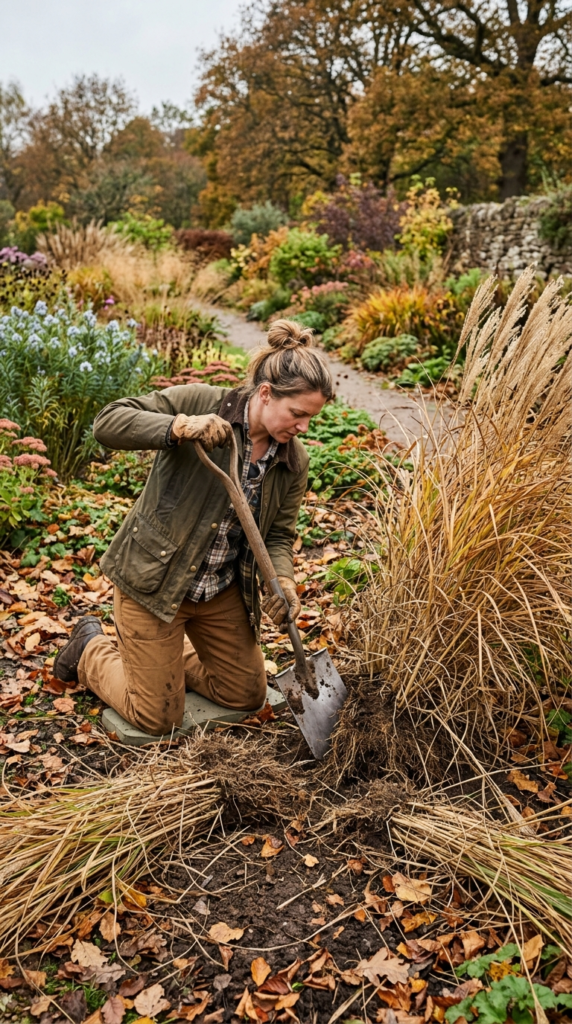
Got a clump that’s starting to look dead in the center or getting way too big for its spot? Fall — specifically early fall — is a great time to tackle division, as long as you act before the ground freezes.
Dividing ornamental grasses every 3–5 years keeps them vigorous, prevents that tell-tale dead center, and gives you free new plants to spread around your garden. Who doesn’t love that?
Here’s how to do it step by step:
- Cut the grass back to about 6–8 inches before dividing — it makes the whole process way easier
- Dig around the entire clump in a wide circle with a sharp spade, going down at least 12 inches
- Lever the clump out of the ground — this can take real effort on established plants!
- Split the clump into sections using a spade, axe, or even a reciprocating saw for large, tough clumps
- Replant divisions immediately at the same depth, water deeply, and mulch well before winter
The most important thing is timing — aim to divide at least 6 weeks before your first hard frost so the divisions have time to establish some roots before the ground freezes solid.
Learn more about dividing and transplanting perennial garden plants in fall.
Division sounds intimidating but it’s incredibly satisfying once you get going!
Fall Watering Tips for Ornamental Grasses
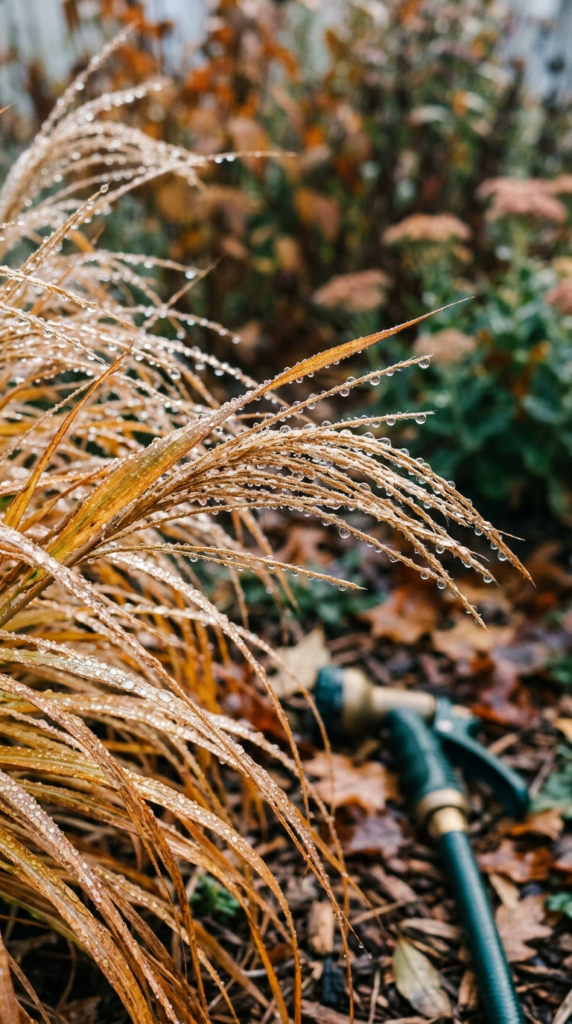
Here’s something a lot of gardeners get wrong in fall — they stop watering their ornamental grasses way too early. Just because the temperatures are dropping doesn’t mean your plants have stopped needing moisture!
Established ornamental grasses are drought-tolerant heroes during the growing season, but heading into winter with dry roots is a recipe for winter damage. Keep watering until the ground freezes, gradually tapering off as temperatures drop and growth slows.
A good general rule: water deeply once a week in early fall if rainfall is less than an inch, then scale back to every 10–14 days in late fall. The goal is moist but never waterlogged soil going into winter.
💡 Pro Tip: Newly planted or recently divided ornamental grasses need more consistent fall watering than established ones — don’t shortchange them on moisture during their first winter establishment period.
For container-grown ornamental grasses on balconies or patios, check our guide on watering container plants through fall and winter.
Keep those roots happy and hydrated right up until freeze-up!
Fertilizing in Fall: What You Should (and Shouldn’t) Do
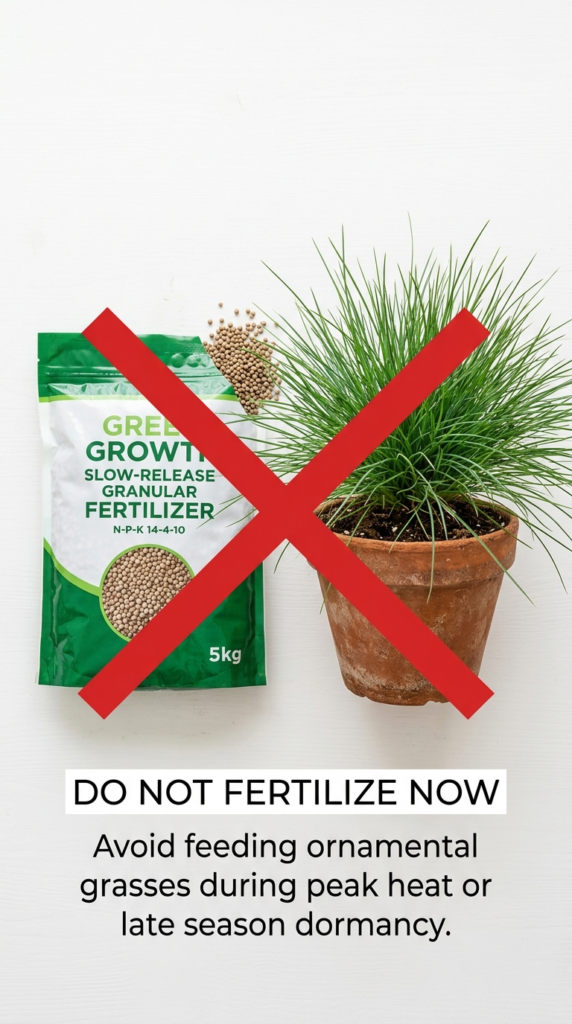
Let’s keep this one simple, because the answer really is straightforward: do not fertilize your ornamental grasses in fall. Full stop!
Applying fertilizer — especially nitrogen-rich formulas — in autumn pushes the plant to produce lush new tender growth right before winter hits. That soft, new growth has no time to harden off and will be the first thing killed by frost, which can actually damage the crown of the plant along with it.
Ornamental grasses are naturally light feeders anyway. Most established grasses growing in decent garden soil need fertilizing only once a year — in early spring, just as new growth begins to emerge.
- Spring: Apply a slow-release balanced granular fertilizer (like 10-10-10) once
- Summer: No additional feeding needed for most varieties
- Fall: Zero fertilizer — absolutely none
- Winter: Nothing — let the plant rest completely
If your grasses look pale or thin, the issue is more likely soil compaction, overcrowding, or insufficient light than a lack of nutrients. Fixing those underlying issues will do far more good than feeding.
See the right way to fertilize ornamental grasses for maximum growth for our complete feeding schedule.
Restraint with fertilizer in fall is genuinely one of the best things you can do for your grasses!
Winterizing Ornamental Grasses for Cold Climates
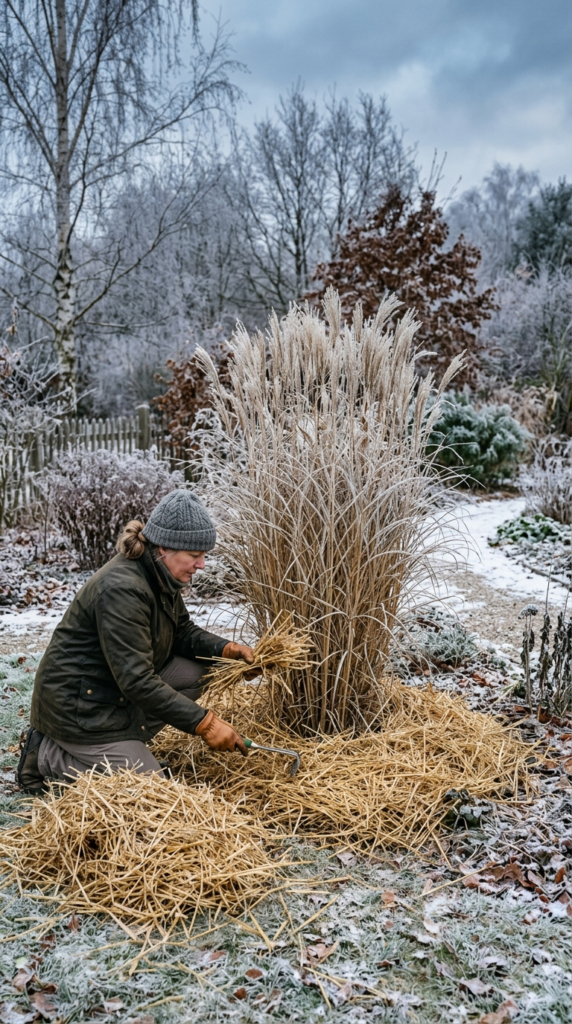
If you’re gardening in Zones 4 or colder, a little extra winter protection for your ornamental grasses can make a meaningful difference — especially for borderline-hardy varieties.
The most effective winterizing move is applying a generous layer of organic mulch around the base of each clump. A 3–4 inch layer of straw, shredded bark, or dried leaves insulates the crown from the worst freeze-thaw cycles that cause heaving and crown damage.
For grasses that are marginally hardy in your zone — like some miscanthus varieties or the stunning pampas grass (Cortaderia) — you can loosely tie the foliage together with twine. This holds the insulating dried stems upright over the crown and prevents them from splaying out and exposing the center to ice and wind.
💡 Pro Tip: Container ornamental grasses need the most winter protection of all. Move pots to a sheltered spot like an unheated garage or against a south-facing wall, and wrap the pot itself in burlap or bubble wrap to protect the roots from freeze damage.
The University of Minnesota Extension cold climate plant care guide has excellent zone-specific advice for overwintering borderline perennials.
A little winter prep now means zero winter losses — totally worth the effort!
Ornamental Grasses That Shine in Fall
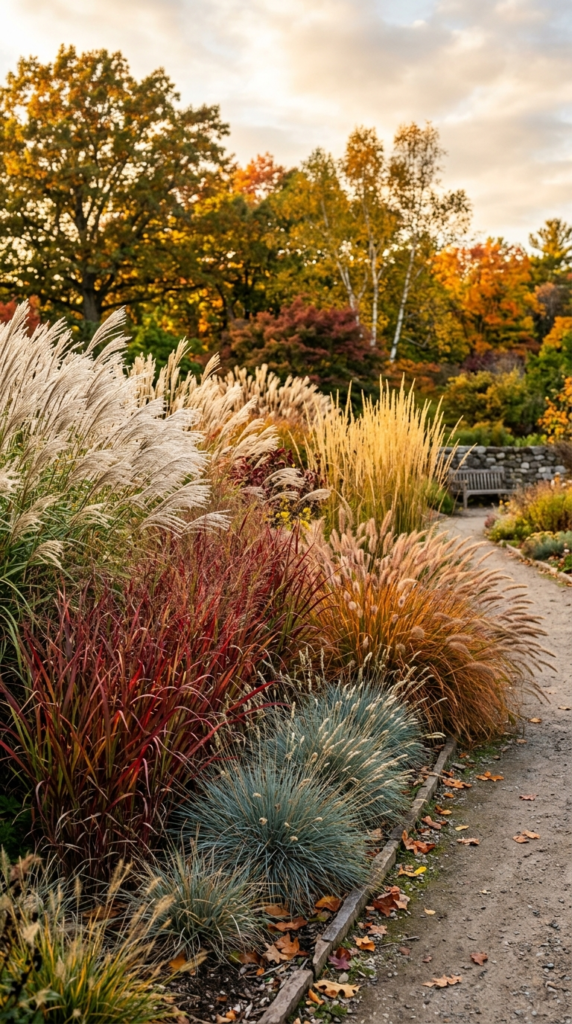
Part of great fall ornamental grass care is knowing which varieties to celebrate this time of year — and which might need a little more attention as temperatures drop.
These are the absolute standouts for fall garden impact:
- Miscanthus sinensis ‘Gracillimus’ (Maiden Grass) — Arching silvery plumes catch every ray of autumn light. Stunning.
- Panicum virgatum ‘Shenandoah’ (Red Switchgrass) — Turns a breathtaking scarlet-red in fall. Native and wildlife-friendly!
- Pennisetum alopecuroides (Fountain Grass) — Soft, bottlebrush plumes in shades of cream and burgundy. Peak beauty in September–October.
- Calamagrostis × acutiflora ‘Karl Foerster’ (Feather Reed Grass) — Upright, architectural golden stalks that look incredible against a grey winter sky.
- Miscanthus sinensis ‘Morning Light’ — Fine-textured, with a stunning silver sheen that practically glows in low autumn light.
Pretty cool, right? Each of these varieties offers something totally different in terms of height, texture, and color — mix them together for a four-season ornamental grass border that looks amazing even in January.
Check out our favorite ornamental grasses for small urban gardens for compact variety recommendations too!
These grasses will make your fall garden the envy of the entire neighborhood!
Common Fall Care Mistakes to Avoid
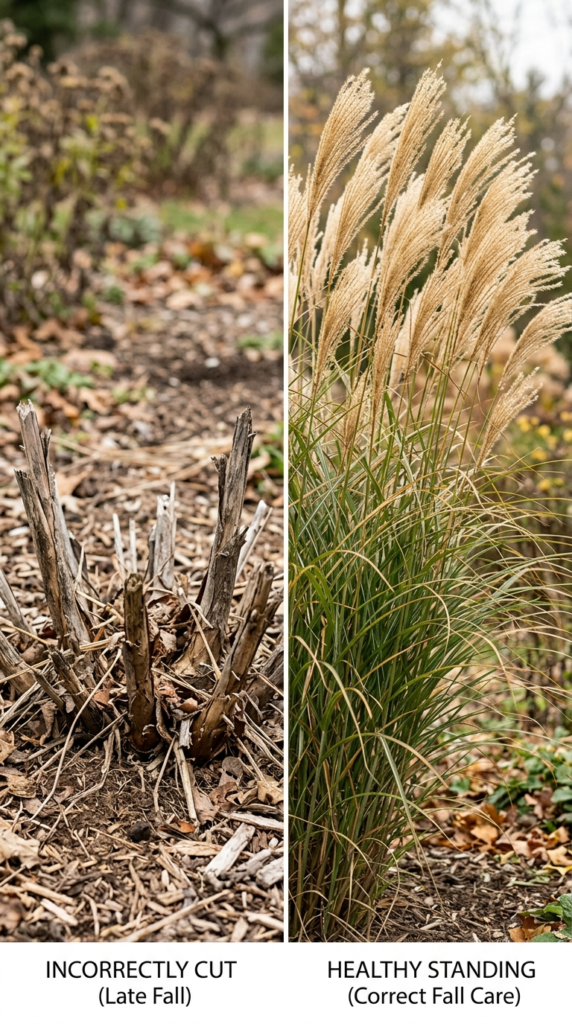
Even well-meaning gardeners make some classic fall ornamental grass care blunders. Let’s make sure you’re not one of them!
Mistake #1: Cutting everything back in fall. We’ve covered this, but it bears repeating — most grasses want to be left standing. Cutting back now exposes crowns to cold and removes insulating material.
Mistake #2: Dividing too late in the season. Division is great in early fall, but if you’re doing it less than 6 weeks before frost, you’re gambling with survival. When in doubt, wait until spring.
Mistake #3: Over-mulching the crown. Piling mulch directly on top of the grass crown — rather than around it — can trap moisture and cause rot. Keep mulch a few inches away from the center of the plant.
Mistake #4: Ignoring container grasses. Grasses in pots are far more vulnerable than those in the ground — the roots have no earth insulation. Move containers to shelter before hard freezes hit.
Mistake #5: Pulling out “dead” grasses too soon. Some grasses look completely dead in late fall and early spring but are just dormant. Always wait for signs of new growth before declaring a grass dead and pulling it out.
Avoid these pitfalls and you’re already ahead of most gardeners out there!
Using Ornamental Grass Plumes and Seed Heads Decoratively

Here’s one of the most delightful parts of fall ornamental grass care — harvesting those gorgeous plumes for indoor decorating! Talk about a game-changer for your fall home decor!
Cut plumes for arrangements just before they fully open — they’ll continue to open and fluff beautifully indoors without shattering and dropping fluff everywhere. Use sharp, clean scissors or garden shears and cut stems as long as possible for maximum versatility.
Dried ornamental grass plumes last for months in arrangements. They look stunning paired with dried hydrangea heads, eucalyptus, autumn berries, pumpkins, and seasonal flowers. You can even give them a light spray with hairspray to help the plumes hold their shape longer.
💡 Pro Tip: For extra staying power, hang cut plume stems upside down in a cool, dry, well-ventilated spot for a week before arranging. This helps them dry evenly and prevents drooping.
Explore more ideas at our fall dried flower and grass arrangement inspiration guide.
Your garden literally becomes your fall decor source — how great is that?!
Frequently Asked Questions
When should I cut back ornamental grasses in fall?
For most warm-season ornamental grasses, the answer is: don’t cut back in fall at all. Leave them standing through winter and cut back in late February or early March, just before new growth emerges. The exception is cool-season grasses, which can be lightly tidied in fall, and annual grasses, which should be removed after frost kills them.
Can I plant new ornamental grasses in fall?
Yes, early fall is actually a decent time to plant ornamental grasses — the cooler temperatures reduce transplant stress and there’s usually more rainfall to help with establishment. Aim to plant at least 6–8 weeks before your first expected hard frost to give roots time to settle in. Avoid planting in late fall when the ground is close to freezing.
Why does my ornamental grass have a dead center?
A dead or hollow center is the classic sign that your grass clump needs to be divided. Most ornamental grasses need division every 3–5 years as the outer edges continue growing while the center ages out. Early fall or early spring are the best times to dig, split, and replant — it will completely rejuvenate the plant.
Do ornamental grasses need mulch for winter?
In Zones 5 and warmer, most established ornamental grasses are hardy enough that mulching is optional. In Zones 4 and colder, a 3–4 inch layer of straw or shredded bark mulch around the base (not on top of the crown) provides valuable insulation and can make the difference between survival and winter kill — especially for borderline-hardy varieties.
Are ornamental grasses good for wildlife in fall and winter?
Absolutely — they’re fantastic! The seed heads provide food for birds like finches and sparrows through the winter months, while the dense dried stems offer shelter and overwintering habitat for beneficial insects. This is one of the best arguments for leaving your ornamental grasses standing all winter rather than cutting them back in fall.
A Few Final Thoughts
Fall ornamental grass care is refreshingly simple once you understand the core principle: these plants are at their most beautiful and most self-sufficient during autumn, and the best thing you can do is mostly let them be. Focus your energy on timely division of overcrowded clumps, smart watering right up until freeze-up, and protecting container grasses from the worst of winter’s cold. Skip the fall fertilizer, resist the urge to cut everything back, and instead take a moment to actually enjoy those spectacular golden plumes swaying in the crisp autumn breeze — you’ve earned it. With just a little thoughtful attention this season, your ornamental grasses will reward you with an even more jaw-dropping display next year. Now go make it happen!