
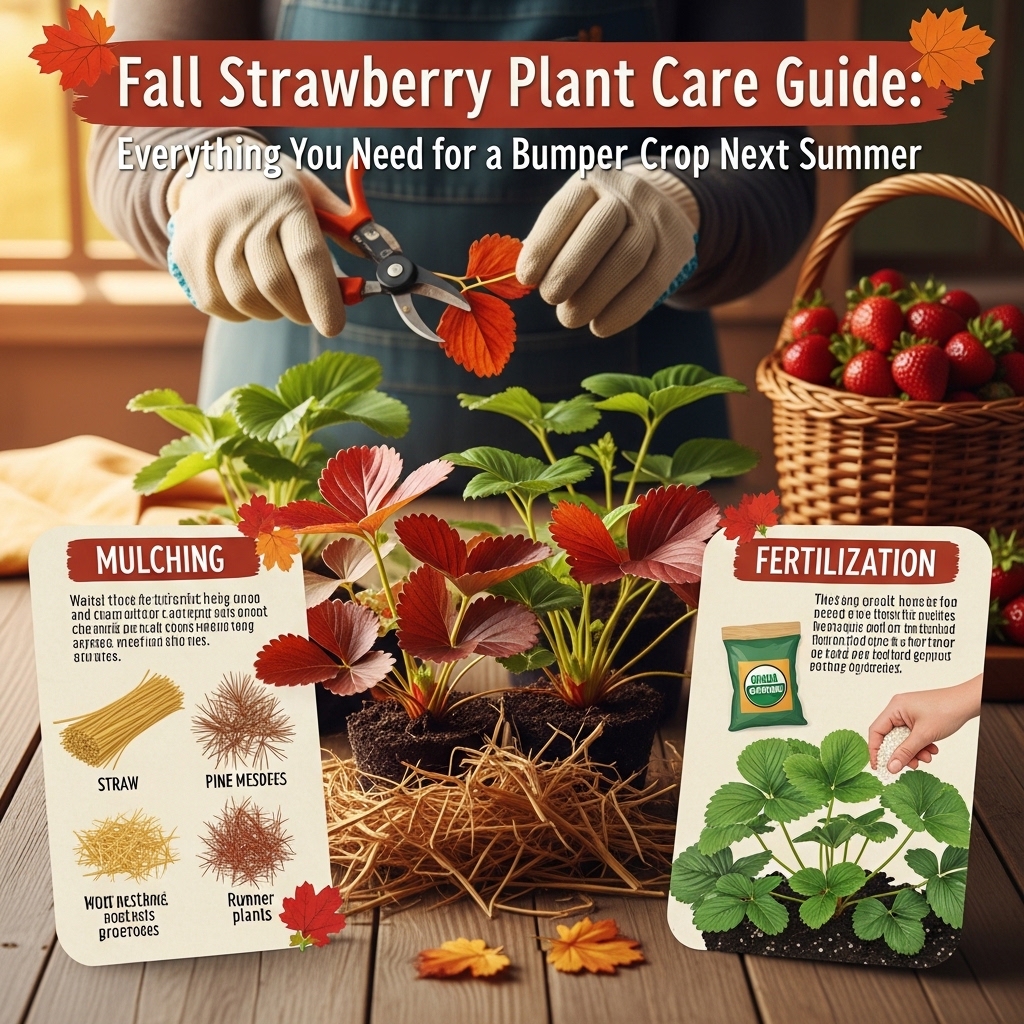
What you do with your strawberry plants this fall will literally make or break next summer’s harvest — and most people completely skip the most important steps! Fall strawberry plant care isn’t glamorous, but it is the secret weapon that separates gardeners who get a handful of berries from those who get bowls and bowls of them. The good news? It’s not complicated, and you don’t need much time or money to do it right. Ready to set your plants up for the best season of their lives? Let’s dive in!
At a Glance
- Cleaning up dead foliage and debris in fall eliminates overwintering pests and fungal diseases before they can damage next year’s crop.
- A low-nitrogen, phosphorus-rich fertilizer applied in early fall builds strong roots without triggering frost-vulnerable new growth.
- Mulching with 2–4 inches of straw after the first hard frost protects crowns from freeze-thaw cycles that kill strawberry plants outright.
- Runners left unmanaged in fall will drain energy from your main plants — either root them intentionally or remove them completely.
- Container strawberry plants need to be moved to a sheltered, cool spot in fall, as pots freeze through much faster than in-ground beds.
Why Fall Strawberry Plant Care Matters So Much
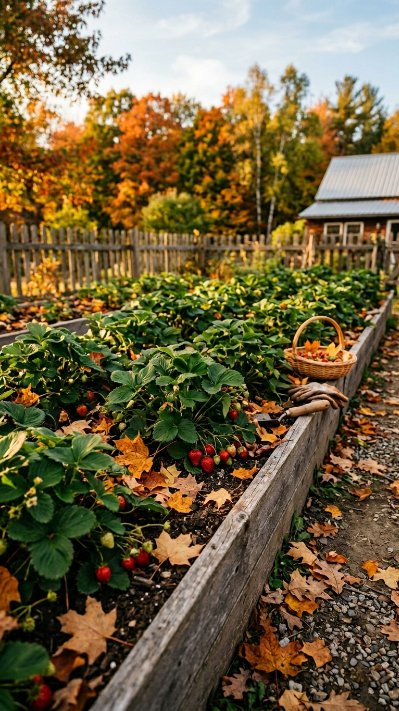
Here’s the deal: strawberry plants are perennials, which means the same plant that fruited for you this summer will (ideally!) fruit for you again next year — if you treat it right in fall. Skip fall care, and you’ll be starting from scratch or wondering why your harvest is disappointing.
The fall season is when strawberry plants shift their energy from producing fruit to building root mass and storing carbohydrates for winter survival and spring vigor. Everything you do now — or don’t do — directly influences how well that energy storage happens.
Frost, disease, and pest pressure can all devastate a strawberry bed over winter if you don’t take preventive steps in fall. The good news is that the work is manageable, the investment is low, and the payoff — a spectacular summer harvest — is enormous.
💡 Pro Tip: Mark your calendar for fall strawberry plant care tasks as soon as your last berries are harvested. The earlier you start, the more of the growing season’s residual warmth you can use to your plants’ advantage.
Learn how to plan a productive strawberry garden for all seasons to get the full year-round picture.
Understanding why fall care matters is the first step to actually following through — and now you know!
Clean Up Old Foliage and Debris
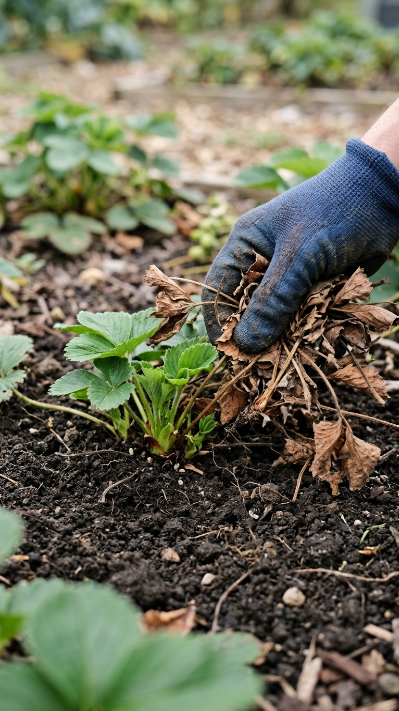
This is step one of fall strawberry plant care, and it’s more important than it looks. Dead leaves, old runners, and rotting fruit debris are hiding spots for fungal spores, pest eggs, and disease — all waiting to reinfect your plants the moment spring arrives.
Go through your entire bed and remove all dead, brown, or yellowing foliage. You can leave healthy green leaves in place — they’re still photosynthesizing and feeding the roots. Use clean scissors or snips rather than pulling, to avoid accidentally disturbing the crown.
Pick up any fallen or rotting fruit you find tucked in among the foliage. Those are prime disease incubators. Bag and dispose of all this material in the trash rather than the compost pile, especially if you had any disease issues during the season.
While you’re in there, check the crowns — the central growing point just above the soil. They should be firm and healthy-looking. Soft, dark, or mushy crowns are a sign of crown rot, which needs to be dealt with before winter sets in.
Explore our complete fall garden cleanup checklist for edible gardens to tackle your whole growing space systematically.
A clean bed going into winter is the foundation for everything else — start here!
Renovate Your Strawberry Bed
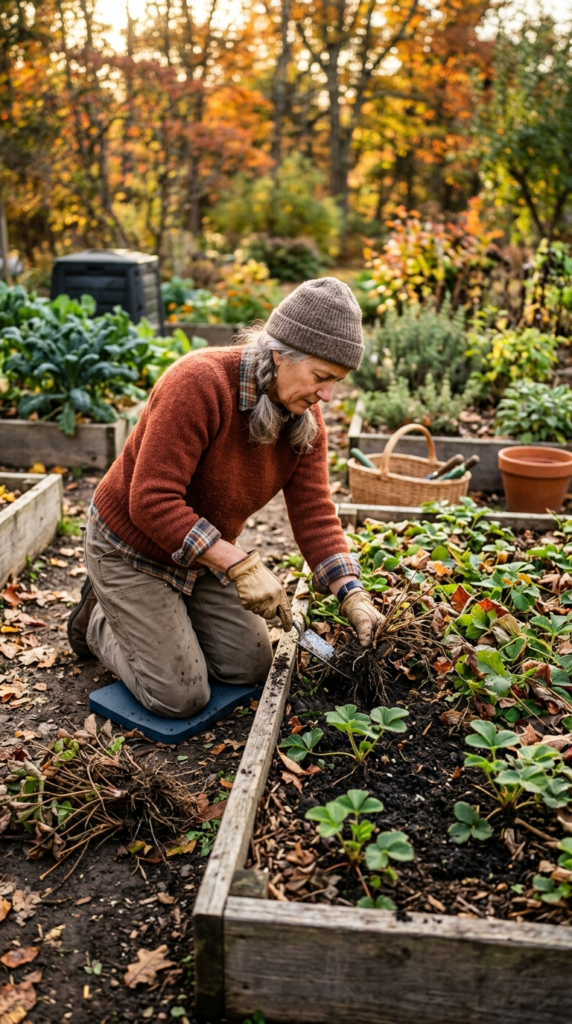
If your strawberry bed is more than 2–3 years old, fall is the time to think seriously about bed renovation. Strawberry plants are most productive in their first and second year — after that, production typically drops, disease builds up, and crowding becomes a real problem.
The process is more straightforward than it sounds. Remove the oldest, largest plants (which are actually the least productive) and keep the younger, smaller crowns that grew from runners this past season. These fresh plants will be your most vigorous producers next summer.
💡 Pro Tip: The best strawberry beds operate on a rolling renovation cycle — always removing the oldest plants and replacing them with rooted runners from the current season’s growth. Fall is the perfect time to execute this cycle.
After thinning, space remaining plants 12–18 inches apart to ensure good airflow, which dramatically reduces fungal disease pressure over the winter and into spring. Then amend the soil with compost before mulching for the season.
Visit Cornell University’s Cooperative Extension strawberry care guide for research-backed advice on renovation timing and techniques.
Renovate now and you’ll be amazed at how much more productive your revived bed becomes next year!
Fertilize for Root Strength, Not Top Growth
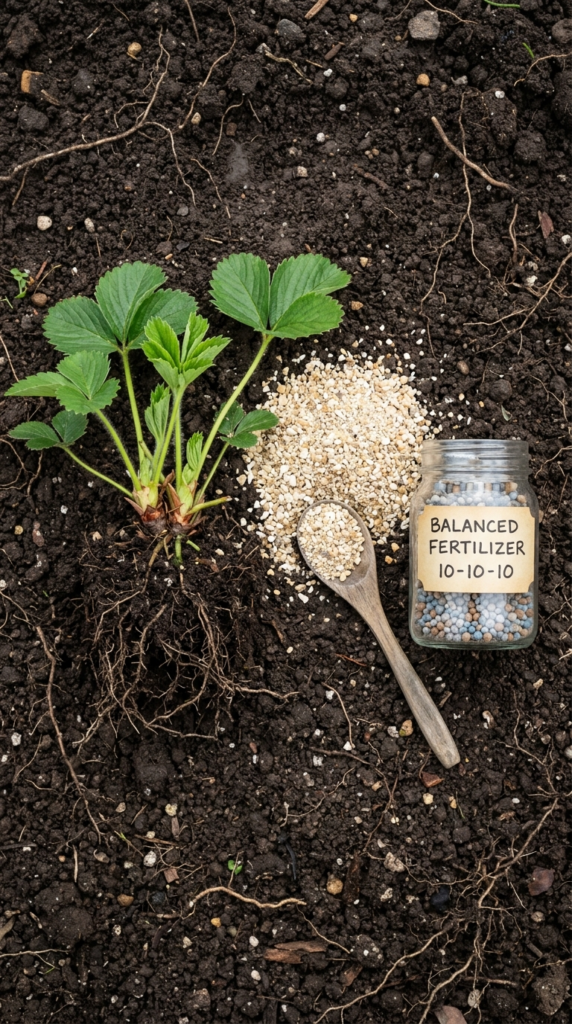
Fertilizing strawberries in fall is one of those things that gardeners either skip entirely or do completely wrong — and both are missed opportunities. The goal of fall fertilization is to feed the roots, not push leafy top growth that’ll just get killed by frost.
Apply a balanced or slightly phosphorus-heavy fertilizer — something like a 10-10-10 granular or bone meal — in early fall, at least 6 weeks before your expected first frost. This timing feeds root development during the plant’s natural energy storage period.
Avoid high-nitrogen fertilizers in fall at all costs. Nitrogen pushes leafy green growth, and any new soft growth produced close to frost will be killed, stressing the plant and wasting its stored energy on regrowth instead of root building.
- Early fall (6+ weeks before frost): Apply balanced 10-10-10 or bone meal ✅
- Mid-fall (2–4 weeks before frost): Skip fertilizing — too late ❌
- Late fall / after frost: No fertilizer needed — plant is going dormant ❌
- High nitrogen (like blood meal or lawn fertilizer): Never in fall ❌
Discover the best fertilizing schedule for strawberries year-round to keep your plants fed at exactly the right moments.
Feed smart this fall and your plants will have everything they need to explode with growth next spring!
Water Deeply Before the Ground Freezes
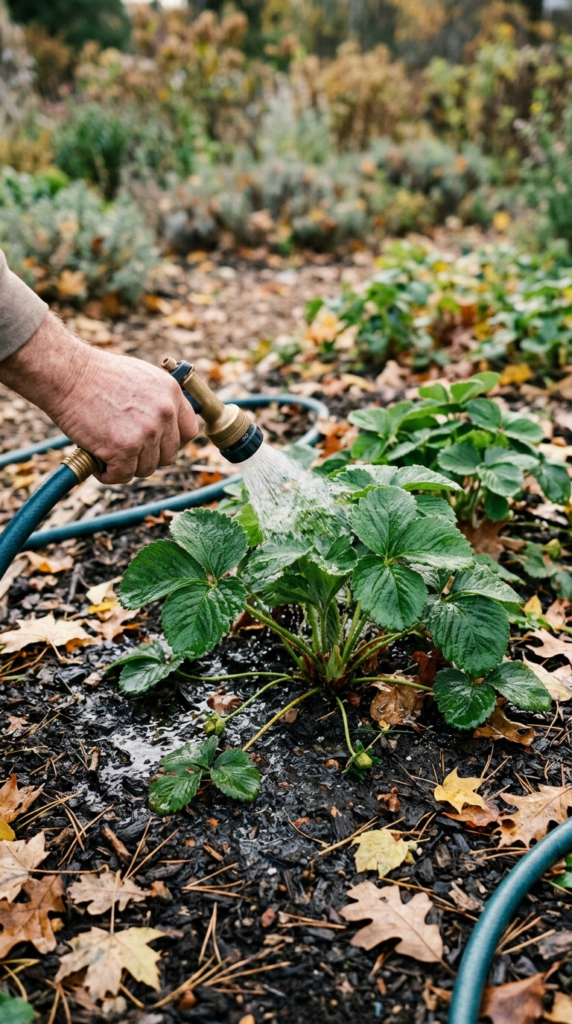
Deep watering before winter is one of the most underrated steps in fall strawberry plant care — and one of the easiest to forget once harvest season is over. Plants going into winter well-hydrated are significantly more cold-hardy than stressed, dry ones.
Before your ground freezes, give your strawberry bed a thorough deep soaking that penetrates 8–10 inches into the soil. This charges the root zone with moisture that sustains the plant through dormancy and helps it withstand temperature fluctuations.
In fall, water every 1–2 weeks if rainfall is insufficient, right up until the ground freezes. Don’t water after the soil has frozen — it won’t penetrate and can sit on the surface, potentially causing crown rot or ice damage.
💡 Pro Tip: After your final deep watering and before mulching, check that your soil has good drainage. Strawberry crowns sitting in waterlogged soil over winter are prone to crown rot — the number one winter killer of strawberry plants.
Read our guide to fall watering schedules for fruit plants and edible gardens to get the timing exactly right.
One good deep drink before the freeze goes further than you’d think — don’t skip it!
Mulch Your Strawberry Plants for Winter
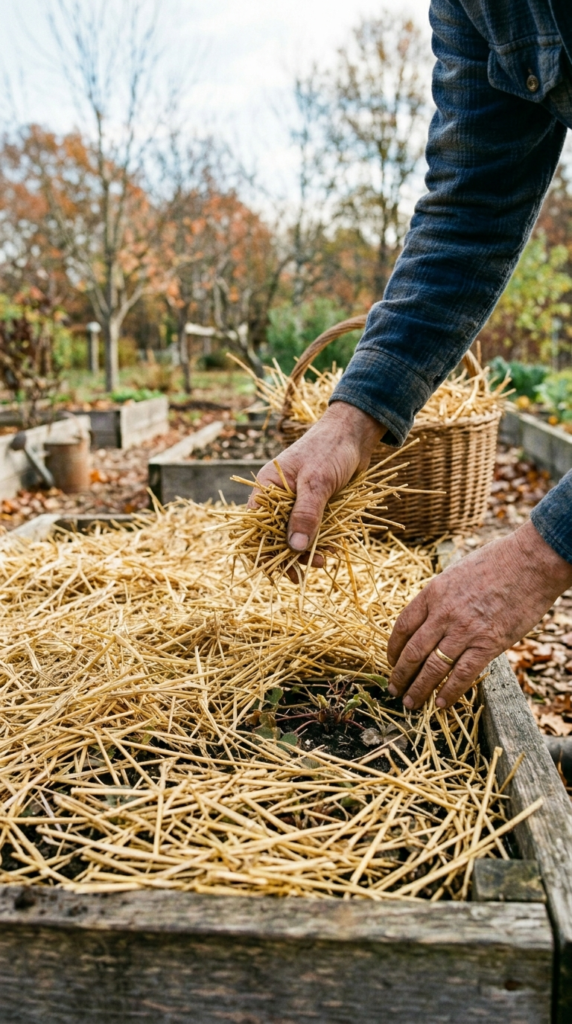
Honestly, winter mulching might be the single most critical step in this entire guide. Without proper mulch protection, freeze-thaw cycles can literally heave strawberry crowns right out of the soil — exposing them to fatal cold temperatures.
The best mulch for strawberries is loose, airy straw — not hay, which contains weed seeds. Apply 2–4 inches over the entire bed after the first hard frost, when the plants have naturally started to go dormant. Mulching too early can actually delay dormancy and increase disease.
💡 Pro Tip: Don’t bury the crowns completely with mulch in a way that traps moisture and warmth. You want the straw to insulate while still allowing some air circulation. In spring, pull the mulch back gradually as temperatures warm, rather than all at once.
In milder climates (zones 7–9), strawberries may stay semi-evergreen and need lighter mulch — just 1–2 inches is typically sufficient. In zones 4–6, don’t skimp: a full 3–4 inch straw blanket can genuinely be the difference between a thriving bed and a dead one.
Visit University of Minnesota Extension’s strawberry winter care page for zone-specific mulching recommendations.
Tuck those plants in properly and they’ll wake up in spring stronger than ever!
Runner Management in Fall
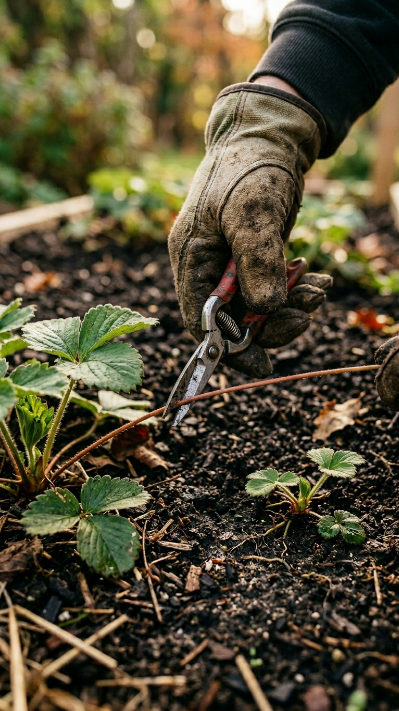
Strawberry runners — those long, trailing stems that produce baby plants — can be either your best asset or your biggest productivity drain, depending on how you manage them in fall. Uncontrolled runners steal energy from the parent plant that should be going toward root strengthening and carbohydrate storage for winter.
If you want to expand your bed, fall is actually a great time to intentionally root a limited number of runners. Pin promising runner plantlets to the soil with a U-shaped wire or a bent piece of wire, water them in, and let them establish before frost. Then cut the runner stem connecting them to the parent plant.
For runners you don’t want to keep, snip them off cleanly at the base. Every runner you remove redirects that plant’s energy back to the roots — which means better winter survival and more vigorous spring growth.
- Keep runners if: You want to expand your bed or replace older plants in your renovation cycle
- Remove runners if: Your bed is already at capacity, or plants are crowded
- How many to keep per plant: No more than 2–3 intentionally rooted runners per parent plant
- Best tool: Clean, sharp scissors or snips — dirty cuts spread disease
Learn how to root and transplant strawberry runners successfully for a step-by-step walkthrough.
Manage your runners with intention this fall and every plant in your bed will be stronger for it!
Potted and Container Strawberry Care in Fall

Container strawberry growers, listen up — fall strawberry plant care for pots is a little different, and getting it wrong is one of the quickest ways to lose your plants over winter. Pots freeze through much more rapidly and completely than in-ground beds, which means the roots have far less natural insulation.
Once temperatures start dropping consistently, move your containers against a sheltered wall — ideally on the south or west side of your home — to reduce wind exposure and take advantage of reflected warmth from the building. This alone can make a dramatic difference.
💡 Pro Tip: For extra protection, wrap the outside of your pots in burlap or bubble wrap and place them inside a larger container packed with straw for insulation. This mimics the insulating effect of in-ground soil and dramatically improves winter survival rates.
In climates with hard winters (zones 4–6), the most reliable approach for container strawberries is to overwinter them in an unheated garage or shed — somewhere that stays cool but doesn’t freeze hard. Check moisture monthly and water lightly if the soil gets completely dry.
Explore our complete guide to overwintering container plants on balconies and patios for a full protection strategy.
Your container strawberries can absolutely survive winter — they just need a little extra help from you!
Pest and Disease Control Before Winter
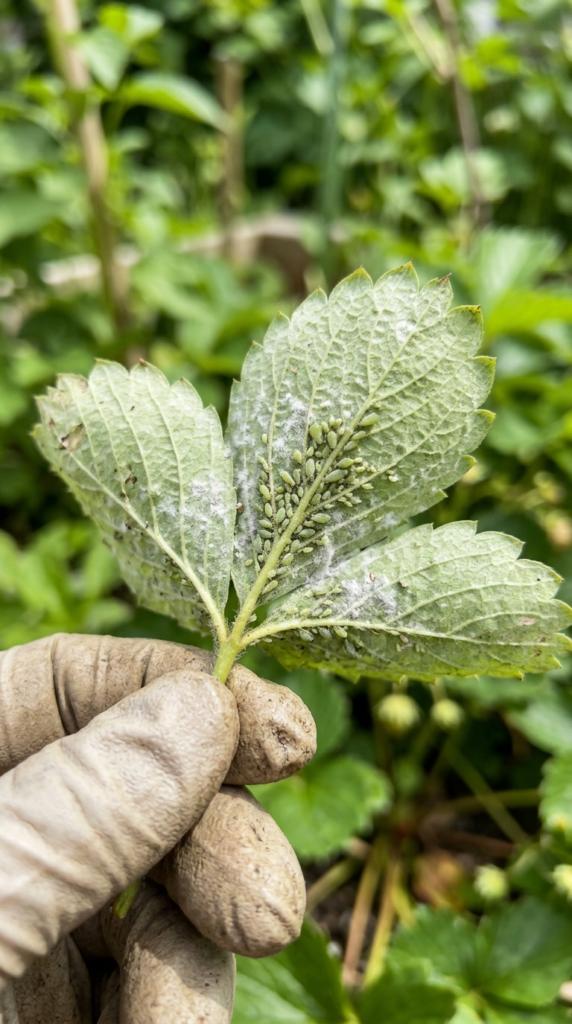
Fall is your last — and best — chance to deal with pest and disease issues before they overwinter in your bed and re-emerge with a vengeance next spring. A few proactive steps now can save an enormous amount of frustration in the growing season ahead.
The most common strawberry diseases to watch for include gray mold (Botrytis), powdery mildew, leaf spot, and red stele root rot. If you saw any of these during the season, remove and dispose of all affected plant material and apply a copper-based fungicide to the remaining plants and soil surface before mulching.
For pests, check crowns and soil for spider mites, aphids, and strawberry crown borers. A treatment with neem oil before the season ends can knock back mite and aphid populations significantly. For crown borers, physical removal and crop rotation (moving your bed location) are the most effective long-term strategies.
💡 Pro Tip: After cleanup and treatment, apply a thin layer of fresh compost over the bed before mulching. This introduces beneficial microbes that compete with and suppress soil-borne fungal pathogens over winter — a natural disease suppression strategy that really works.
Visit University of California IPM’s strawberry pest management guide for identification photos and treatment recommendations.
Handle pests and disease head-on this fall and greet spring with a clean, healthy bed!
Fall Strawberry Plant Care for New Plantings
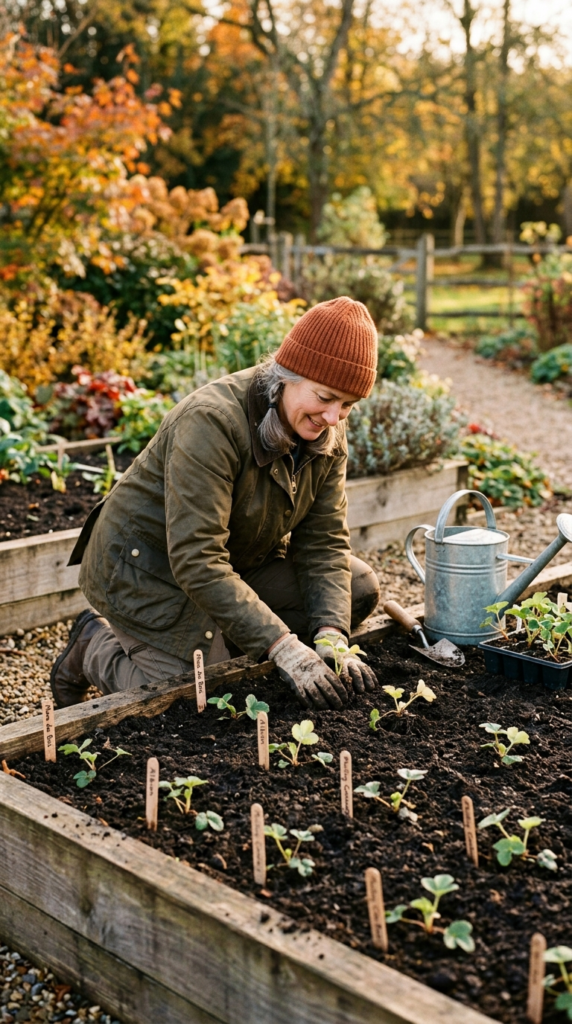
Did you just plant new strawberries this fall? Excellent timing! Fall planting gives strawberry plants time to establish roots before winter, setting them up for a productive first fruiting season next summer. But new plants need slightly different care than established ones.
Water newly planted strawberries consistently for the first 2–3 weeks after planting to help them establish. They don’t have the root depth yet to handle dry spells, so don’t let the soil dry out completely during this critical period.
Remove any flower buds that appear on newly planted strawberries in fall — as tempting as it is to let them fruit, allowing first-year plants to flower diverts energy from root establishment. A plant that builds a strong root system in its first season will produce dramatically more fruit in its second.
Mulch new fall plantings with 2–3 inches of straw as soon as overnight temperatures consistently drop below 40°F — new plants are more vulnerable to cold than established ones and need extra protection to make it through their first winter safely.
Read our beginner’s guide to planting strawberries in fall for maximum success to get every new planting detail right.
New plants need a little extra love in fall — give it to them and you’ll be rewarded enormously next summer!
Know Your Strawberry Type — It Changes Everything
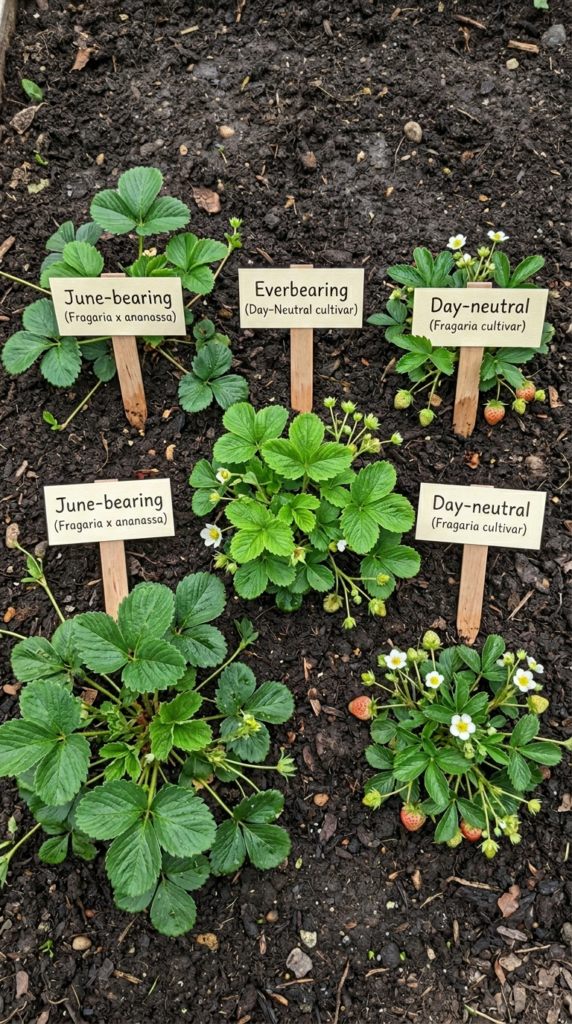
Here’s something that genuinely changes how you approach fall strawberry plant care: not all strawberries are the same, and your fall care routine should reflect the type you’re growing.
June-bearing strawberries produce one large crop in early summer and then spend the rest of the season building runners and storing energy. These are the most cold-hardy type and respond best to full bed renovation in fall. They need robust mulching and full renovation cycling.
Everbearing strawberries produce two main flushes — one in spring and one in fall — and continue fruiting on and off throughout the season. In fall, keep picking until frost hits, then clean up and mulch as you would with June-bearers. They typically produce fewer runners.
Day-neutral strawberries fruit continuously throughout the season regardless of day length. They’re often treated more like annuals, especially in extreme climates, and may be best replaced rather than overwintered in colder zones.
| Type | Fruiting Pattern | Runner Production | Fall Priority |
| June-bearing | One large summer crop | Heavy | Full renovation + mulching |
| Everbearing | Spring + fall flushes | Moderate | Clean up + mulch after last harvest |
| Day-neutral | Continuous | Light | Mulch or replace in cold zones |
Discover which strawberry variety is best for your garden and climate to make sure you’re growing the right type.
Knowing your variety means you can tailor every single care step for maximum results — pretty cool, right?
Frequently Asked Questions
When should I start fall strawberry plant care?
Begin fall strawberry plant care as soon as your final harvest is complete — typically late summer to early fall depending on your variety and climate. The earlier you start on cleanup, fertilizing, and runner management, the more residual warmth you can harness for root establishment. Mulching should wait until after the first hard frost.
Should I cut strawberry plants back in fall?
You should remove dead, brown, and diseased foliage but leave healthy green leaves intact — they’re still feeding the roots through photosynthesis. A common renovation technique for June-bearing beds is to mow them down to about 1 inch after harvest in late summer (not fall), then let them regrow before winter. If you missed that window, focus on cleanup and mulching rather than aggressive cutting.
How do I protect strawberry plants from winter frost?
The most effective protection is straw mulch applied 2–4 inches deep after the first hard frost. In very cold climates (zones 3–5), some gardeners add an additional layer of row cover fabric over the straw for extra insulation. The goal is to maintain a consistently cool temperature around the crown rather than prevent all cold — strawberries need a dormancy period to perform well next season.
Can strawberry plants survive winter in containers?
Yes, with the right protection! Container strawberries need more active help than in-ground plants because pots freeze through completely. Move them to a sheltered wall, wrap pots in burlap or bubble wrap, or overwinter them in an unheated garage or shed. Check moisture monthly and water lightly if the soil becomes completely dry. They’ll emerge ready to grow when you bring them back out in spring.
Do I need to replace my strawberry plants every year?
Most strawberry varieties are perennial and will produce for 3–5 years with proper care, including annual fall renovation. The key is cycling out the oldest, least productive plants each fall and replacing them with rooted runners from the current season’s growth. After about 4–5 years, starting a completely fresh bed in a new location is generally recommended to avoid disease and nutrient depletion buildup.
A Few Final Thoughts
Fall strawberry plant care is one of those investments that seems small in the moment but pays off in the most delicious way possible come summer. Every step — from cleaning up debris and renovating the bed, to mulching properly and managing runners — is working together to build the strongest, most productive plants you’ve ever grown. The work is genuinely manageable, and even doing just a few of these steps will make a noticeable difference in next year’s harvest. Whether you’re growing in a full garden bed, a raised planter, or a collection of balcony containers, your strawberries deserve this fall attention — and so do you. Invest a weekend afternoon in these tasks now, and by next July you’ll be picking handfuls of sweet, sun-warmed berries and wondering why you ever skipped fall care before. Now go make it happen!