
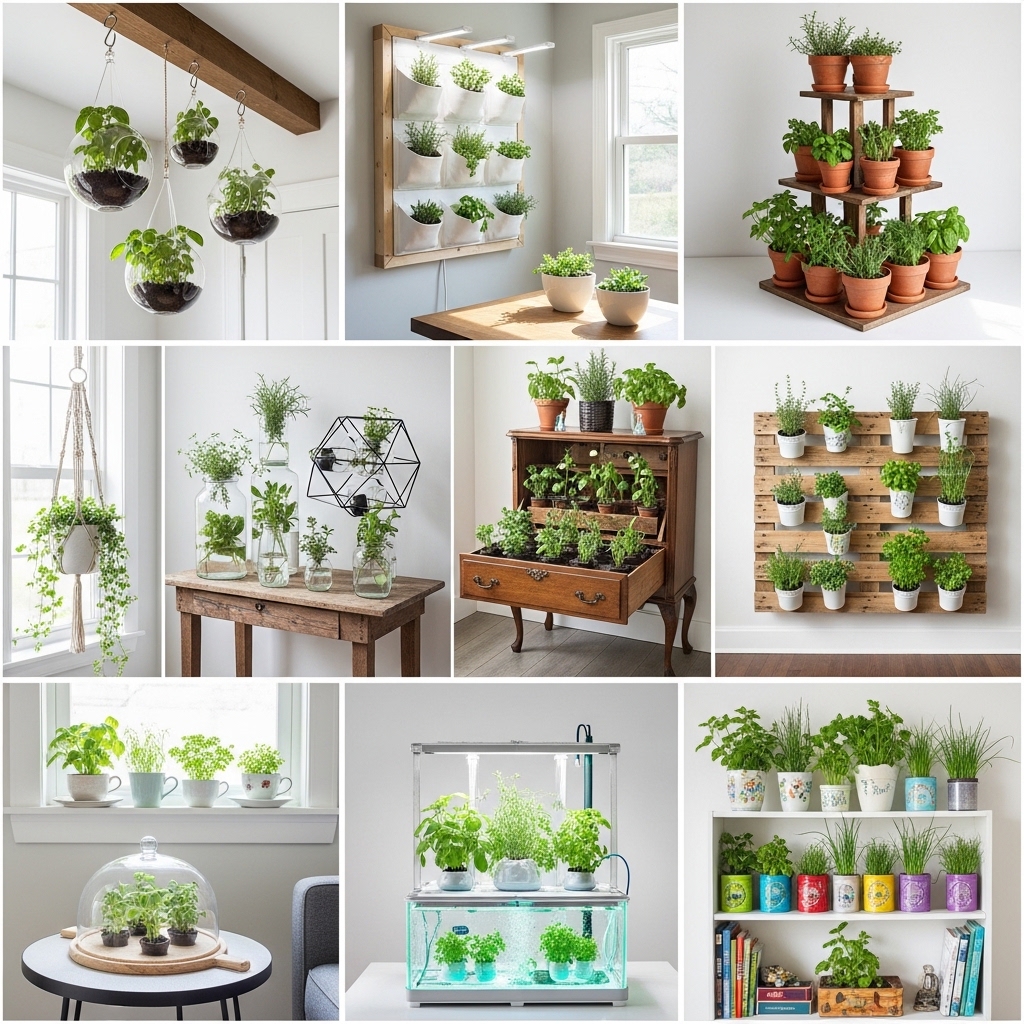
What if your herb garden was so beautiful that guests asked if it was intentional decor — and the answer was a proud, enthusiastic yes? Creative indoor herb garden displays are having a major moment right now, blurring the line between functional kitchen garden and genuine interior design statement in the most exciting way. The best part is that you don’t need a huge space, a big budget, or any special skills to pull these ideas off. Ready to grow something that’s both gorgeous and delicious? Let’s dive in!
At a Glance
- Creative indoor herb garden displays work best when they’re designed around your existing interior style — rustic, modern, boho, or minimalist — so the plants feel like intentional decor rather than an afterthought.
- Vertical displays like wall-mounted planters, hanging racks, and floating shelves are the smartest choice for small spaces because they grow up, not out.
- Matching your containers — or intentionally mismatching them in a curated way — is the single most impactful styling decision you can make for an herb display that looks designed rather than random.
- Any display that lacks adequate natural light can be elevated with an affordable LED grow light that keeps herbs thriving and lush year-round.
- Labeling herbs with beautiful tags, chalk pens, or engraved markers elevates any display from a collection of pots to a polished, magazine-worthy installation.
1. Floating Shelf Herb Gallery Wall
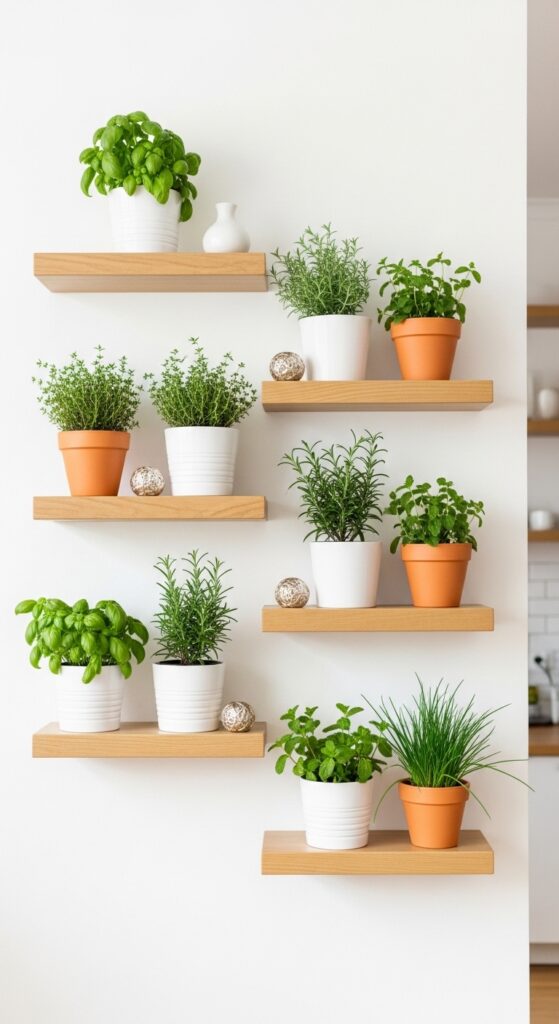
A floating shelf herb display is one of the most impactful things you can do to a blank kitchen or dining room wall — it’s functional, sculptural, and endlessly customizable. Staggering shelves at different heights rather than mounting them in a straight row creates genuine visual interest, like a gallery wall that happens to be edible.
The styling secret here is treating the shelves like a curated display, not just a storage solution. Alternate herbs with small decorative objects — a ceramic dish, a wooden cutting board leaned upright, a small framed botanical print — so the shelves tell a visual story with the plants as the stars.
💡 Pro Tip: Mount your highest shelf within 12 inches of a window frame if possible so the herbs near the top get the most light. As light decreases further from the window, place your most shade-tolerant herbs — mint, chives, parsley — on the lower shelves.
Use matching pot styles on each shelf for a cohesive look, or vary the containers by shelf — all terracotta on one, all white ceramic on another — for a more layered, intentional feel. Either approach looks stunning when done with purpose.
Explore our complete guide to styling floating shelves with indoor plants for tips on composition and plant selection.
Visit Apartment Therapy’s guide to plant shelf styling for beautiful real-home inspiration and layout ideas.
A well-styled floating herb shelf turns a blank wall into the most beautiful and useful corner of your home!
2. Apothecary Jar Herb Display
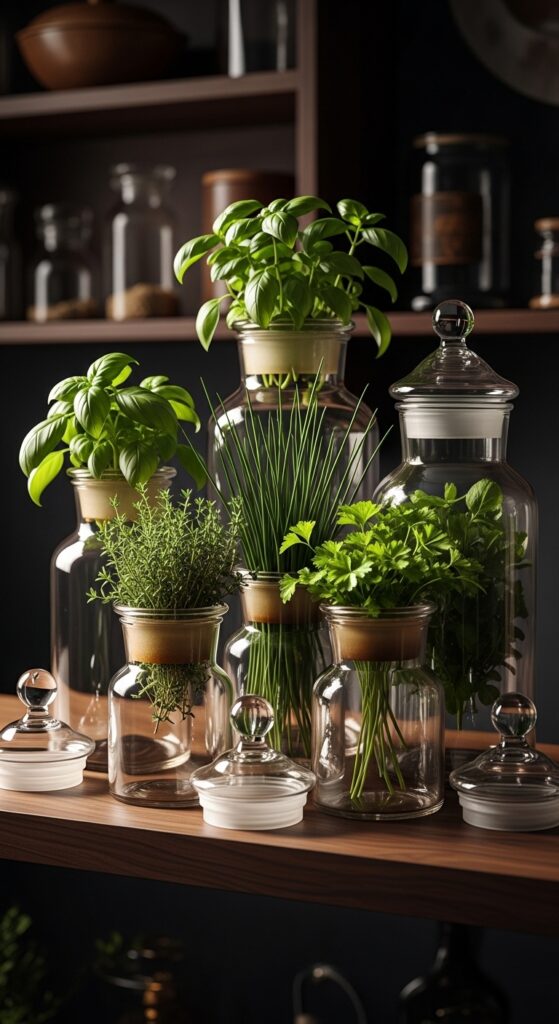
This is one of the most dramatically beautiful creative indoor herb garden displays you can build, with almost zero effort. Tall, wide-mouthed apothecary jars filled with lush growing herbs look like something out of a Victorian herbalist’s shop — and they are absolutely stunning grouped together on a dark wood shelf or marble countertop.
The key is choosing jars with wide openings — at least 3–4 inches in diameter — so herbs have room to grow and air can circulate around the foliage. Add a layer of decorative pebbles or activated charcoal at the bottom for drainage since glass containers lack drainage holes, then fill with quality potting mix.
Group jars of varying heights for the most impactful display — a tall jar of basil, a medium jar of mint, a shorter jar of thyme creates an organic, staggered silhouette that looks truly stunning. The transparent glass lets you see the roots and soil layers, adding another dimension of visual interest that opaque pots simply can’t match.
Finish the look with handwritten parchment labels tied around each jar with twine, or use gold paint pens to write herb names directly on the glass for an apothecary-style label that’s gorgeous and completely on theme.
Discover more glass container herb garden ideas for stylish indoor displays for inspired setups that balance beauty and function.
Apothecary jar herb displays are genuinely one of those ideas that looks like it took enormous effort but is actually incredibly simple to pull together!
3. Copper Pipe Hanging Herb Rack
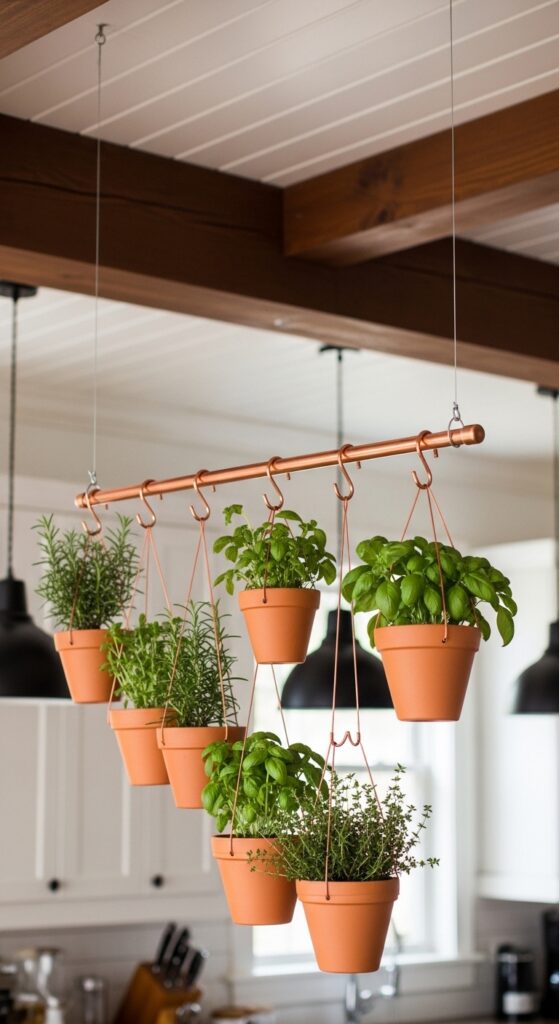
Few creative indoor herb garden displays are as visually striking as a copper pipe hanging herb rack — it’s industrial, warm, and completely unique. A single horizontal copper pipe suspended from the ceiling with leather cord or thin wire becomes an elegant herb display that earns compliments every single time.
Here’s the deal: this is a genuinely achievable DIY project that costs under $40 in materials and takes about an hour to put together. You need a length of 3/4-inch copper pipe (cut to width at any hardware store), ceiling hooks, hanging cord or chain, and simple S-hooks from which to hang your herb pots.
Use small terracotta pots with wire or rope hangers — these are available ready-made online, or you can make your own by wrapping wire around the rim of any pot. Hang herbs at slightly different heights by varying the length of each hook’s cord, creating a beautifully organic, flowing display rather than a rigid straight line.
💡 Pro Tip: Hang your copper pipe directly above a kitchen island or dining table where it gets the most ambient light and becomes a dramatic focal point of the room. It doubles as a conversation starter and a functional fresh herb station in one breathtaking installation.
Learn how to build a DIY hanging herb rack step by step with our complete materials list and instructions.
A copper pipe herb rack is genuinely one of the most impressive things you can add to a kitchen — and it’s so much easier to make than it looks!
4. Vintage Ladder Herb Stand
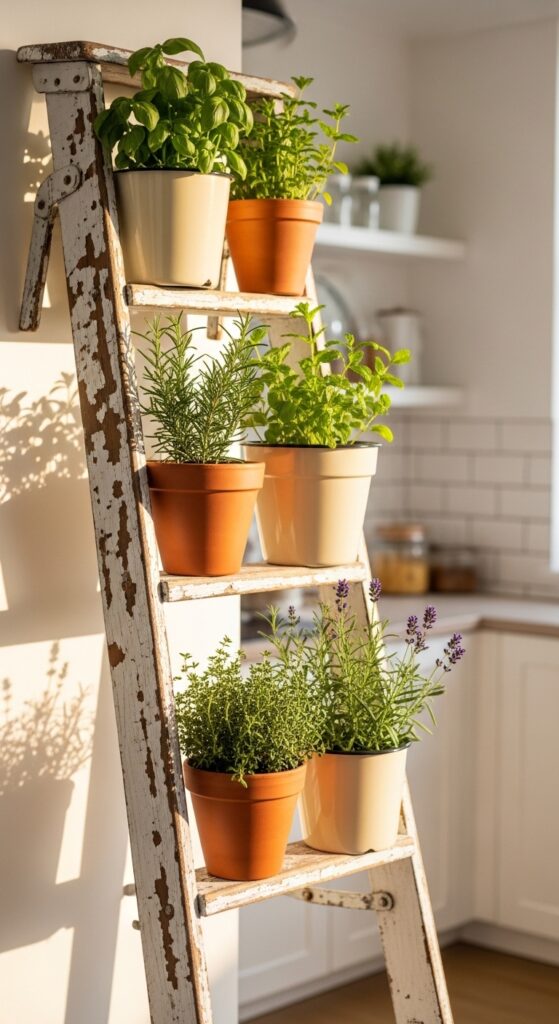
A vintage ladder repurposed as an herb stand is the farmhouse kitchen dream — and it’s one of the easiest, most budget-friendly creative indoor herb garden displays you can pull together in an afternoon. Lean it against any wall, add your herb pots to the rungs, and you instantly have a multi-tiered, character-filled display that looks completely intentional and effortlessly stylish.
Thrift stores and flea markets are goldmines for old wooden ladders. Look for ones with character — peeling paint, worn rungs, slightly uneven proportions — because all of that patina and imperfection is exactly what makes the display look authentic rather than manufactured. A fresh coat of white, sage green, or matte black paint on a plain ladder transforms it if you can’t find a vintage one.
Place sun-hungry herbs on upper rungs where light exposure is better, and shade-tolerant herbs on the lower steps closer to the floor. Style the negative space with a few small succulents, a ceramic bird, or a stacked collection of small garden books for a layered, personal feel.
Browse our collection of upcycled furniture indoor plant display ideas for more creative repurposing inspiration beyond the classic ladder.
A vintage ladder herb display is living proof that the most beautiful things in your home don’t have to cost a lot!
5. Geometric Terrarium Herb Display
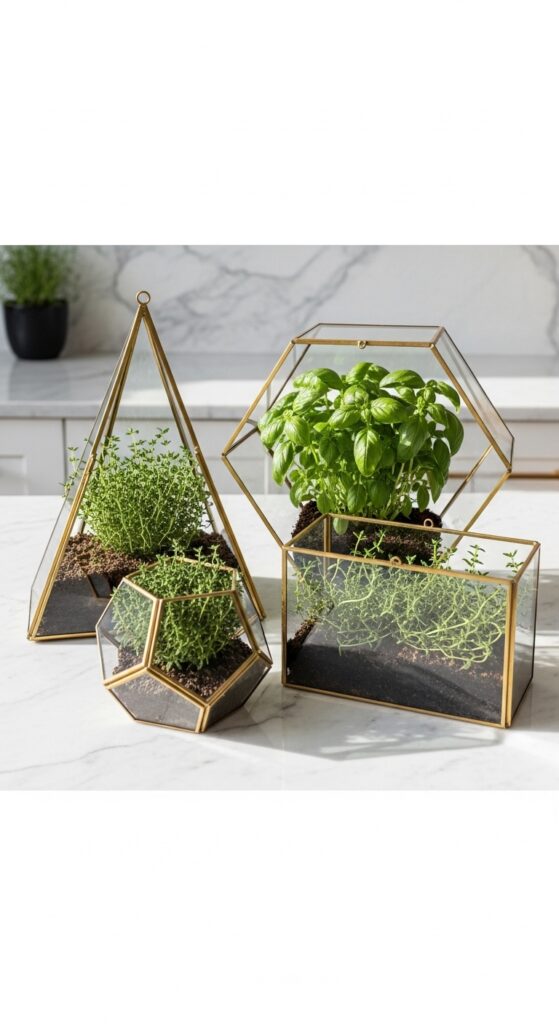
Geometric terrarium herb displays are where modern design meets living greenery in the most beautiful way possible. Open-frame brass or black geometric terrariums filled with compact herb plants look genuinely luxurious on a marble countertop or kitchen shelf — like something from a high-end home decor store, but completely functional.
The secret to making this work is choosing compact, slow-growing herb varieties that won’t outgrow their geometric homes too quickly. Dwarf basil, creeping thyme, compact oregano, and small chive clumps are all ideal candidates. Avoid vigorous growers like mint, which will outgrow a terrarium environment rapidly.
💡 Pro Tip: Because geometric terrariums typically lack drainage holes, layer the bottom with activated charcoal, then horticultural grit, then potting mix to create a drainage and filtration system that keeps roots healthy and prevents rot. This layering technique is the difference between herbs that thrive and herbs that slowly decline.
Group terrariums of different geometric shapes — a triangle, a pentagon, a cube — together for maximum visual impact. The repeated metallic frame finish (all brass or all matte black) unifies the grouping while the varying shapes create visual rhythm and movement across the display.
Visit The Sill’s guide to open terrarium care and planting for expert advice on building thriving open-frame terrarium plantings.
Explore our guide to choosing plants for open and closed terrariums to find the best species for each style.
Geometric terrarium herb displays are genuinely one of the most luxurious-looking setups you can create — and they’re completely achievable at home!
6. Painted Concrete Block Herb Planter Display
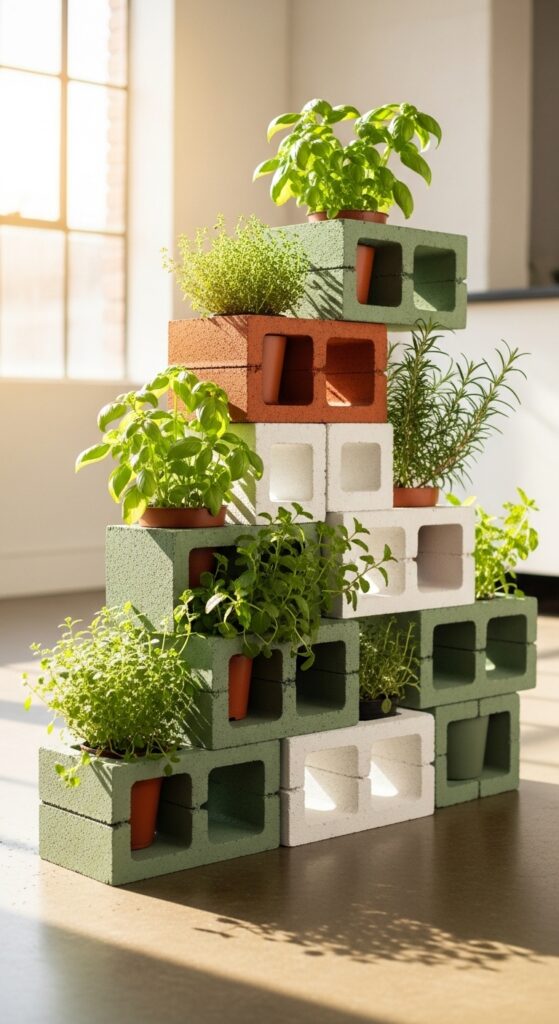
Here’s one of the most surprisingly chic creative indoor herb garden displays that nobody sees coming: painted concrete blocks. Stacked in a staggered, architectural pattern and painted in matte sage, white, or deep navy, concrete cinder blocks transform from a construction site staple into a genuinely beautiful and completely original herb display.
The hollow openings of cinder blocks are perfectly sized for small herb pots — a standard 4-inch pot slots right in. Stack blocks in a pyramid or staggered grid pattern to create built-in shelving that’s incredibly sturdy, costs almost nothing, and has an architectural quality that looks completely intentional.
Paint the blocks with exterior matte chalk paint in a palette that complements your kitchen or living space. A monochrome all-white stack is modern and clean; a combination of sage green and white is organic and warm; all-matte black is dramatic and editorial. Each interpretation looks completely different and totally intentional.
This display works beautifully on a large windowsill, a kitchen floor corner, or a balcony — anywhere you have a bit of vertical space and need a display that makes a real design statement without breaking the bank.
See more budget-friendly creative herb garden display ideas using everyday materials for inspired low-cost setups.
Painted concrete blocks are the most unexpectedly beautiful herb display idea on this entire list — and the most affordable!
7. Reclaimed Wood Pallet Herb Wall
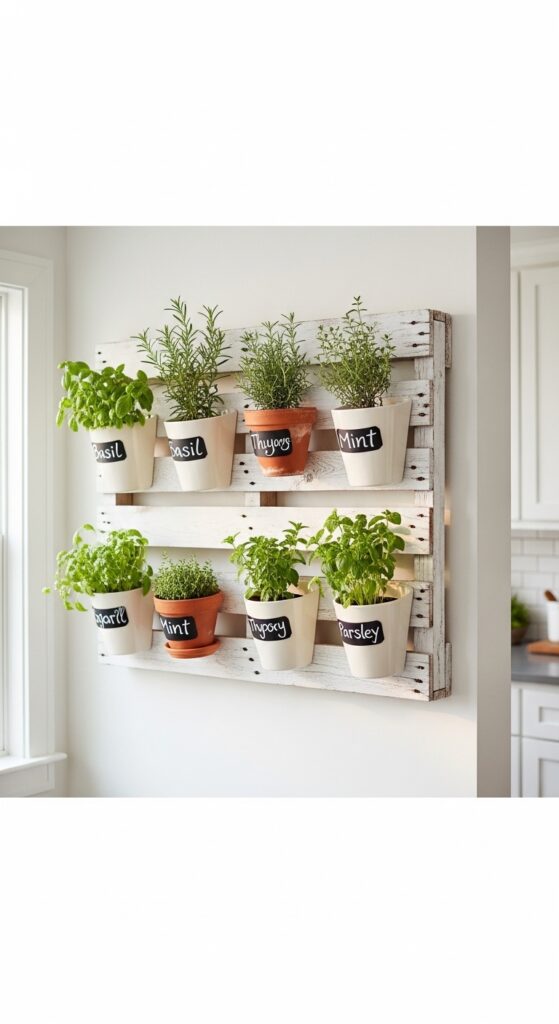
A wood pallet herb wall is one of those creative indoor herb garden displays that feels like a proper DIY achievement — because it is one — but is genuinely approachable for any skill level. Mount a reclaimed pallet horizontally on the wall, add planter pockets between the slats, and you have an instant living wall that’s full of personality.
You can find free or cheap reclaimed pallets from furniture stores, garden centers, hardware stores, and online classified sites — just make sure to choose heat-treated pallets (stamped “HT”) rather than chemically treated ones (stamped “MB”) since you’ll be growing edible herbs. A light sanding and a coat of paint transforms even the roughest pallet into something beautiful.
💡 Pro Tip: Staple landscape fabric or burlap behind the pallet slats before mounting it to the wall, then fill the fabric pockets with potting mix and plant herbs directly into them. This creates a true living wall rather than just a shelf for pots — and the result is breathtakingly full and lush.
Style the finished pallet with chalk pen labels written directly on the wood beside each herb, or add small metal botanical signs for a more polished finish. Either way, the combination of weathered wood, living greenery, and intentional labeling looks absolutely magazine-worthy.
Visit Gardeners’ World’s guide to building a pallet herb garden for a detailed step-by-step tutorial with photos.
Learn how to build and mount a DIY pallet herb wall for your kitchen or balcony with our complete guide.
A pallet herb wall is one of the most rewarding weekend DIY projects you’ll ever tackle — and the result lasts for years!
8. Stacked Crate Herb Tower
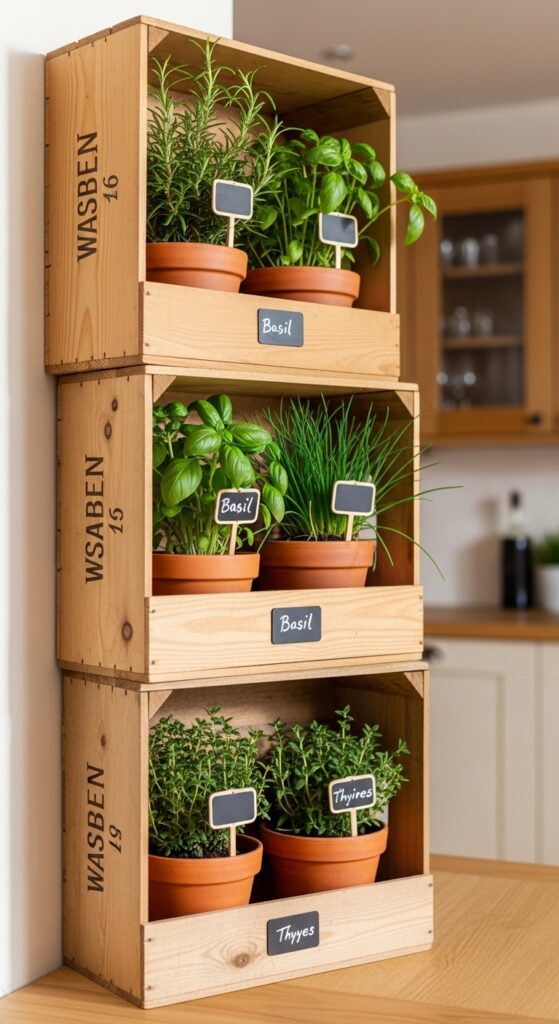
Stacked wooden crate herb towers are endlessly versatile, incredibly affordable, and look genuinely rustic-chic in any kitchen style. Wine crates, fruit crates, or simple pine display crates stacked and offset in a staggered arrangement create a multi-level herb display with real structural character.
The offset stacking — where each crate is shifted slightly to one side rather than stacked perfectly straight — is the key design move that transforms a simple pile of boxes into a sculptural, intentional display. It creates shadow play, visual rhythm, and an organic quality that feels considered rather than haphazard.
Fill each crate with two or three herb pots plus some styling elements — a small garden book, a folded hessian cloth, a ceramic herb label — to create vignettes within each level of the tower. The goal is for each crate to feel like its own little curated scene that contributes to the overall composition.
Wine crates in particular have beautiful natural branding and typography already printed on them, which adds authentic character and saves you the effort of labeling. Look for them at wine shops, liquor stores, and online — many places give them away free.
Discover more wooden crate indoor plant display ideas for your home for creative stacking and styling approaches.
Stack up a crate tower this weekend and watch your kitchen transform into something genuinely special!
9. Herb Garden Bookshelf Display
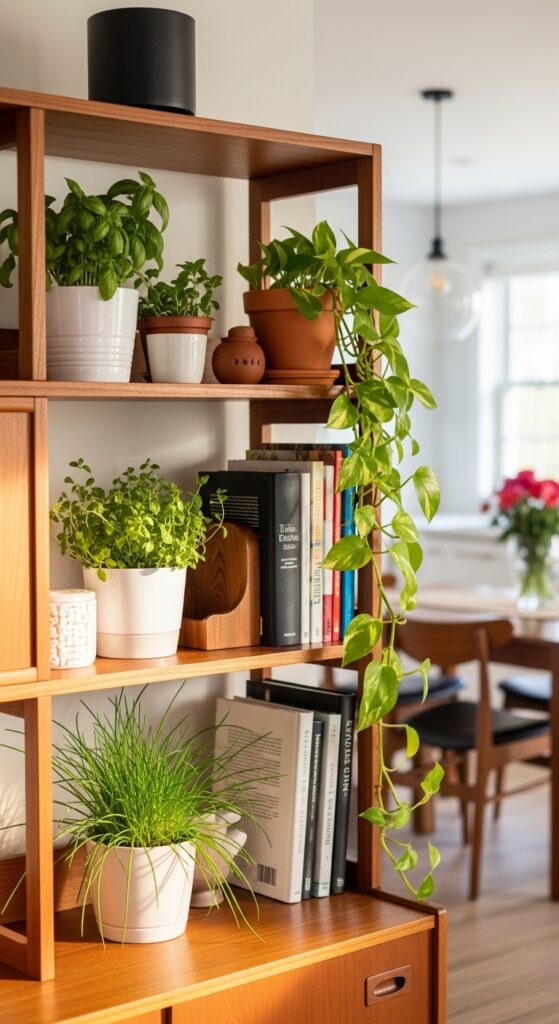
Here’s the thing: bookshelves don’t belong only in living rooms, and herbs don’t belong only in kitchens — and combining the two creates one of the most charming and personal creative indoor herb garden displays imaginable. A bookshelf in or near your kitchen, styled with herbs woven between cookbooks and decorative objects, looks completely intentional and deeply personal.
The trick is integration rather than segregation — don’t give herbs their own dedicated shelf and books their own separate shelves. Instead, weave herb pots among the books, creating a living, growing element that brings the shelf to life in a way static objects simply can’t.
💡 Pro Tip: Add a trailing plant like pothos or string of pearls alongside your herbs on upper shelves, letting the vines cascade down over the bookcase front. The trailing greenery ties all the shelves together visually and adds a lush, abundant quality that makes the whole display feel intentional and generous.
Position the bookshelf near your best natural light source, and supplement with a clip-on grow light attached to one of the shelves if light is limited. Bookshelves positioned near windows in open-plan kitchen-dining spaces often get excellent natural light — perfect for this display concept.
Visit Real Simple’s guide to styling bookshelves with plants for inspiring real-home examples and practical styling advice.
Get more ideas for integrating herbs and plants into living room and dining room displays beyond the kitchen.
A herb-filled bookshelf is one of the warmest, most personal displays you can create — and it makes cookbooks infinitely more tempting to use!
10. Colorful Mismatched Pot Collection
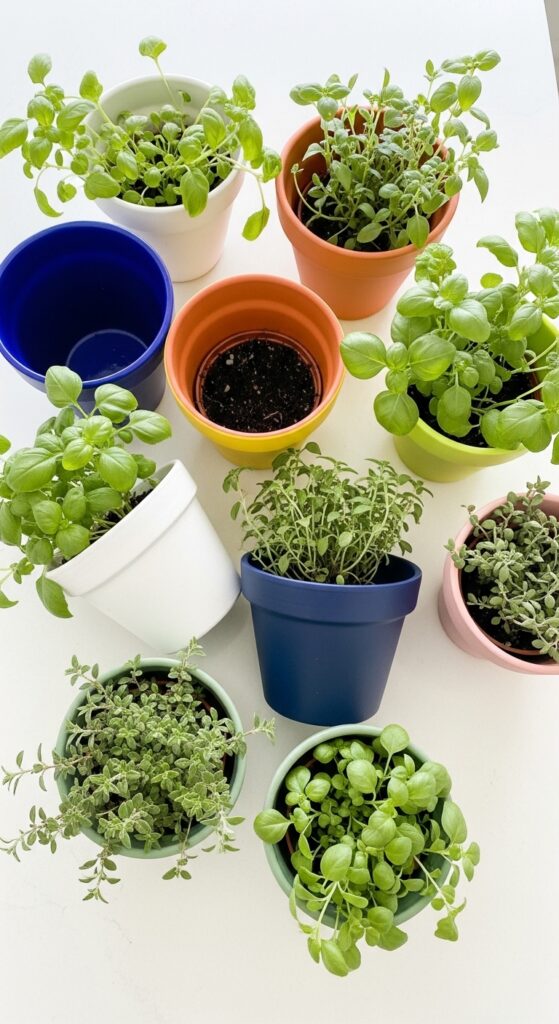
Who said your herb garden has to match? A carefully curated collection of colorful mismatched pots is one of the most joyful and personality-filled creative indoor herb garden displays you can put together — and it’s also one of the easiest, since you build it gradually over time.
Here’s the deal: “mismatched” doesn’t mean random. The secret is choosing pots that share a common design element — a consistent color palette (all earthy tones, all jewel tones, all pastels), a consistent material (all ceramic, all painted terracotta, all enamel), or a consistent size range. That single through-line is what makes a collection of different pots feel curated rather than chaotic.
Shop thrift stores, flea markets, pottery markets, and even supermarket discount aisles to build your collection over time. A $2 painted pot from a flea market beside a handmade artisan ceramic and a classic terracotta creates depth and character that a matching set from a garden center simply can’t replicate.
Arrange the collection in an organic, asymmetric cluster rather than a perfect straight line — varying heights with small plant risers or upturned pots underneath some of them — for a naturally abundant, garden-overflow aesthetic that feels lived-in and genuinely beautiful.
Browse our guide to choosing and mixing pots for stunning indoor herb garden aesthetics for a color and material pairing masterclass.
Your mismatched pot collection is a living expression of your personal style — and it gets better with every new addition!
11. Minimalist Monochrome Herb Tray Display
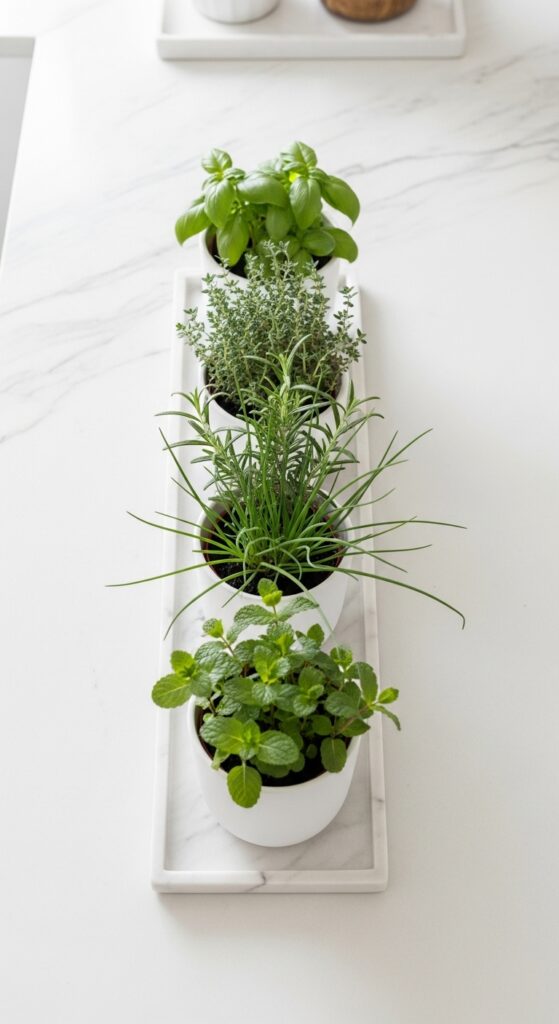
If maximalist mismatching isn’t your style, this is your dream creative indoor herb garden display: an achingly minimal, perfectly ordered collection of identical white pots on a white marble tray. The beauty is entirely in the contrast between the clean white everything and the vivid, living green of the herbs.
The tray is the essential element here — it contains the display, gives it defined edges, and makes the whole thing feel intentional and composed. A long white marble tray, a light oak wood board, or a white ceramic serving tray all work beautifully. Choose the tray before the pots and let it guide your container choices.
Use matching identical pots — same size, same finish, same color — for the most impact. Matte white is the classic choice, but all-black, all-concrete-grey, or all-sage-green each create a different minimalist aesthetic with equal impact. The sameness of the containers makes the living variation of the herbs themselves — different leaf shapes, textures, heights — all the more beautiful.
💡 Pro Tip: Engrave or emboss herb names directly into the rim or side of matching white pots using a stylus for the most elegant, minimal labeling solution. No tags, no chalk pens — just a subtle impressed letter that you notice only when you look closely. Quietly perfect!
Explore our guide to Japandi and minimalist plant display styling at home for more serene, beautifully restrained plant styling ideas.
A minimalist monochrome herb tray is proof that restraint is its own kind of beauty — and it’s the most serene herb display you can build!
12. Hanging Glass Globe Herb Display
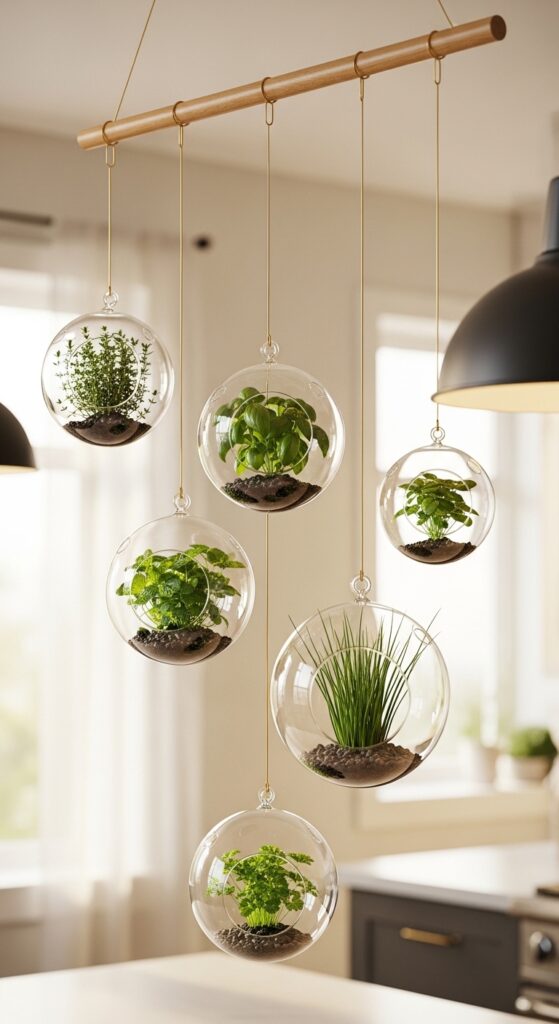
Hanging glass globe herb displays are simply breathtaking — there’s no other word for it. Spherical glass terrariums suspended at varying heights above a kitchen island or dining table with thin gold or brass wire create a floating garden effect that looks like living sculpture.
Use open-top glass globes (fully enclosed terrariums trap too much humidity for most herbs) in a range of sizes — small for compact herbs like thyme and dwarf basil, larger for mint and chives. Hang them from a horizontal wooden dowel mounted to the ceiling, or from individual ceiling hooks at staggered heights.
The varying heights are the crucial design element. Hang some globes low enough to nearly graze the island surface, others at eye level, and some higher up — the visual sweep from high to low creates movement and drama that a rigid, same-height row completely lacks.
Plant globes with compact, slow-growing herbs that suit the confined space: creeping thyme, dwarf basil, compact chives, and small parsley varieties are all perfect. Add a small layer of decorative moss around the base of each plant inside the globe for a finished, garden-quality look.
Visit Better Homes & Gardens’ guide to hanging terrarium displays for beautiful hanging globe design ideas and installation guidance.
Get our complete guide to planting and maintaining hanging globe herb terrariums for the full setup process.
Hanging glass globe herb displays are genuinely one of the most spectacular things you can add to a kitchen — pure living art!
13. Herb Garden Beneath a Grow Light Arch
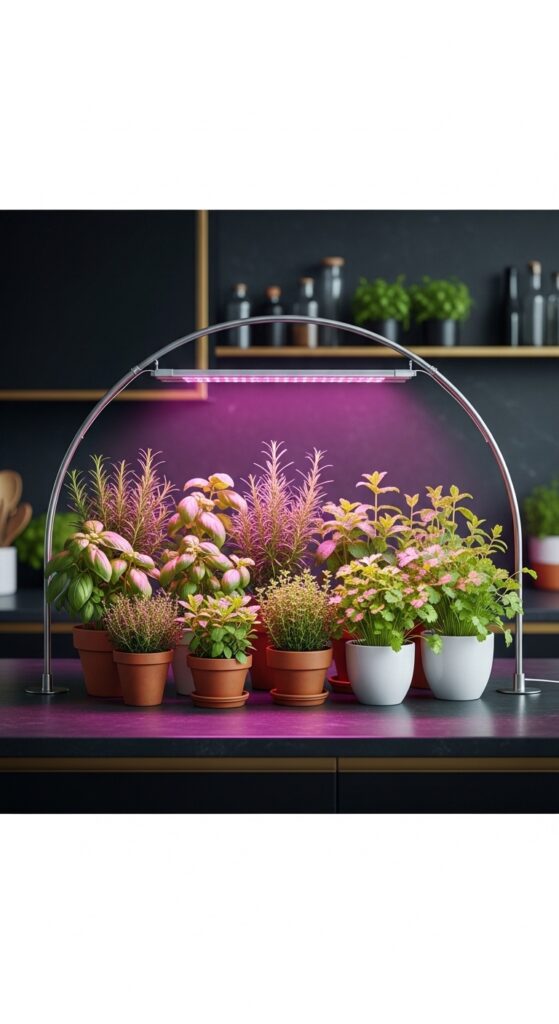
This is the most forward-thinking creative indoor herb garden display on this list — and it might just be the future of indoor kitchen gardening. A curved or arched grow light frame mounted above a countertop herb collection creates an enclosed, dedicated micro-garden zone that looks intentional, dramatic, and completely professional.
Arch-style grow light stands are increasingly available as complete units designed specifically for countertop herb and vegetable growing. They create a defined, architectural grow station that announces “this is a serious herb garden” — while fitting neatly on a kitchen counter without taking up any wall or ceiling space.
💡 Pro Tip: Set your grow light arch on a timer for 14–16 hours per day to maximize herb growth. This consistent light schedule — much longer than natural daylight in winter — keeps herbs growing vigorously year-round, completely independent of seasons, weather, or window orientation.
The warm pink-purple glow of full-spectrum LED grow lights creates a genuinely dramatic visual effect in a kitchen — especially beautiful in the evening when kitchen overhead lights are dimmed. Your herb collection becomes a glowing, living centerpiece that’s equal parts functional and spectacular.
Explore our complete grow light guide for indoor herb and vegetable gardens to choose the right light setup for your space and herbs.
A grow light arch is the ultimate commitment to year-round, high-performance indoor herb gardening — and it looks absolutely extraordinary while doing it!
Frequently Asked Questions
Which creative indoor herb garden displays work best for tiny apartments?
Vertical displays are your absolute best friends in a small space — wall-mounted planters, hanging herb racks, copper pipe displays, and magnetic fridge pots all grow upward rather than outward and use zero counter or floor space. The floating shelf gallery wall is particularly powerful in small apartments because it turns an otherwise blank wall into a functional, beautiful feature without reducing your usable living space at all.
How do I make a creative herb display work in a kitchen without much natural light?
The honest answer is: add a grow light and your options open up enormously. A simple clip-on LED grow light costs $15–25 and can be attached discreetly to almost any display — shelf edges, hanging rods, the underside of cabinet overhangs. Set it on a timer for 12–14 hours per day and your herbs will thrive regardless of how dim your kitchen is. The herb garden beneath a grow light arch is specifically designed for exactly this situation.
How do I keep my creative herb display looking lush and full rather than sparse and leggy?
Harvest frequently — this is the most important display maintenance tip of all. Snipping stems regularly, always cutting just above a leaf node, encourages herbs to branch and become bushier rather than growing long and leggy. Also, rotate pots a quarter turn every few days for even light exposure, and replace any declining plants promptly. A display is only as beautiful as its least-healthy plant, so don’t let one struggling pot drag the whole aesthetic down.
What’s the best way to label herbs beautifully in a creative display?
The labeling style should match your display’s overall aesthetic. For rustic and farmhouse displays, hand-lettered clay or wooden tags tied with twine are perfect. For minimalist and modern displays, engraved metal spike labels or chalk pen writing directly on pots look sleek and intentional. For apothecary and vintage displays, small parchment labels with calligraphy tied around pot necks look stunning. The key is consistency — one labeling style throughout the whole display unifies everything beautifully.
How often do I need to replace herbs in a creative indoor display?
It depends on the herb and how heavily you harvest, but most kitchen herbs grown indoors last 6–12 months before they become woody, leggy, or exhausted. Basil tends to be the shortest-lived — usually 3–6 months before it bolts and declines. Perennial herbs like rosemary, thyme, and mint can last for years with proper care and regular harvesting. The good news is that replacing one pot in a display is quick, inexpensive, and actually gives you an excuse to refresh the whole styling!
A Few Final Thoughts
Creative indoor herb garden displays are one of the most genuinely satisfying things you can add to your home — they sit at the perfect intersection of beauty, function, and living nature in a way that almost nothing else does. Whether you’re drawn to the dramatic elegance of hanging glass globes, the rustic charm of a pallet wall, or the serene perfection of a minimalist white tray display, there’s an idea on this list that’s exactly right for your space and your style. The most important thing is to just start — pick one display concept, gather your pots and herbs, and build something that makes you genuinely happy every time you walk past it. Fresh herbs and beautiful displays aren’t a luxury reserved for people with perfect kitchens or large budgets; they’re available to anyone willing to be a little creative with what they have. Your dream herb display is genuinely closer than you think — now go make it happen!