
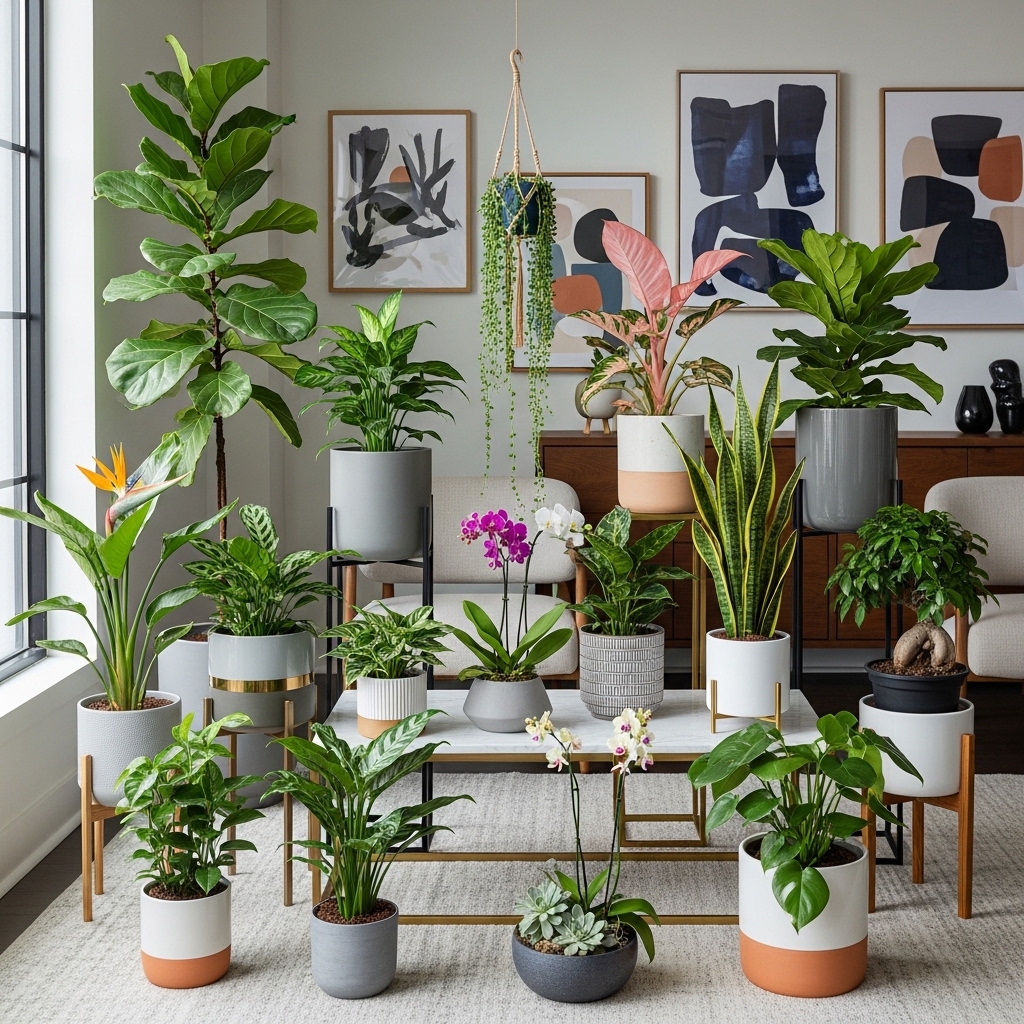
Tired of spending a fortune on home decor that just sits there looking pretty but doing nothing? Stylish houseplants for home decor give you living, breathing beauty that improves your air quality, boosts your mood, and transforms the entire feel of a room — often for less than the price of a throw pillow. The right plant in the right spot isn’t just decoration; it’s a design statement that evolves and grows more beautiful over time. Ready to discover which plants will make your home look like it was styled by a professional? Let’s dive in!
At a Glance
- The fiddle leaf fig, monstera, and bird of paradise are the three most impactful statement plants for living rooms, delivering designer-level visual drama with a single specimen.
- Pairing a stylish plant with the right pot — one that complements both the plant’s shape and your room’s color palette — is the single most powerful decor upgrade you can make.
- Grouping plants in odd numbers (three, five, or seven) at varying heights creates a lush, layered display that looks professionally styled rather than random.
- Low-light tolerant statement plants like the ZZ plant, snake plant, and pothos let you bring stylish greenery into darker rooms and hallways that other decorative plants couldn’t survive in.
- Trailing plants like string of pearls and pothos are extraordinarily versatile decor tools — use them on high shelves, in hanging planters, or cascading down a bookcase for maximum visual impact.
1. Fiddle Leaf Fig — The Interior Designer’s Favorite
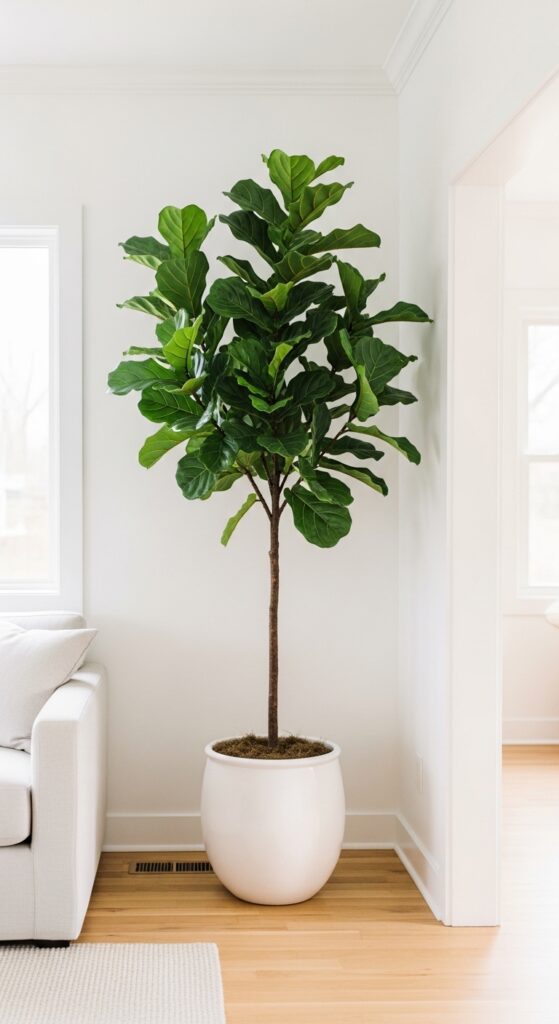
The fiddle leaf fig (Ficus lyrata) has been the undisputed darling of interior designers for over a decade — and one look at it tells you exactly why. Those enormous, glossy, violin-shaped leaves create a level of visual drama that very few plants can match.
A single large fiddle leaf in a statement pot commands an entire room. Position it in a bright corner near a window — ideally a south or east-facing one — and it becomes an instant focal point that ties together your whole design scheme. It works equally brilliantly in modern, Scandinavian, boho, and classic interior styles.
Here’s the thing: fiddle leaf figs have a reputation for being finicky, but most problems come from one of two things — moving them too often or overwatering. Find them a bright, stable spot, water only when the top inch of soil is dry, and they’ll reward you with steady, impressive growth.
💡 Pro Tip: Dust the large leaves with a damp cloth monthly to keep them glossy and photosynthesizing efficiently. Clean leaves are noticeably more lustrous — and a gleaming fiddle leaf fig is genuinely one of the most beautiful plants you can have in a home.
Explore our complete fiddle leaf fig care guide for beginners and beyond for troubleshooting, repotting, and styling tips.
Visit The Sill’s fiddle leaf fig care guide for detailed, expert advice on keeping this popular plant thriving.
A fiddle leaf fig in the right spot will make your living room look like a professional styled it — worth every bit of attention it needs!
2. Monstera Deliciosa — Tropical Drama at Its Best
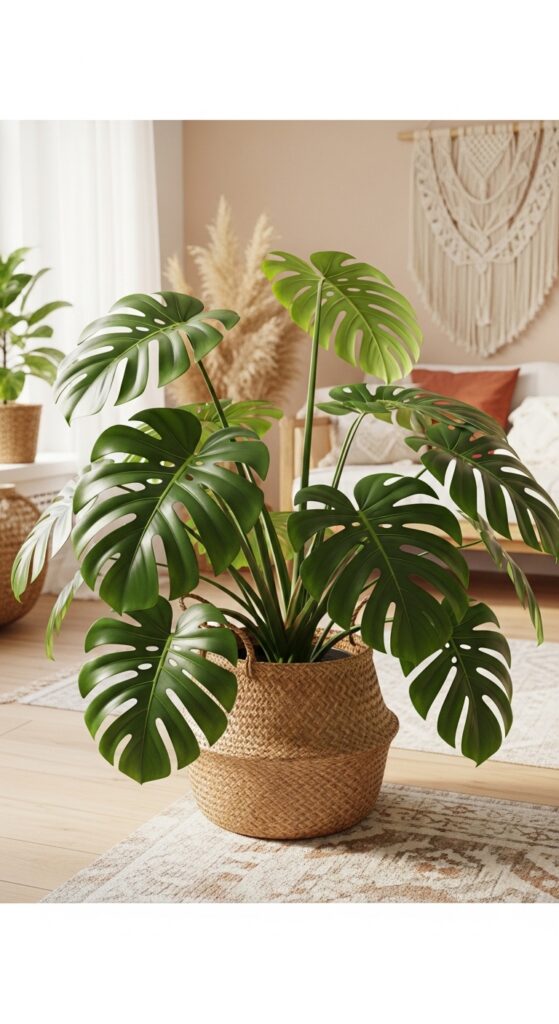
Few plants announce themselves with as much confidence as the monstera deliciosa — and that’s exactly why it’s become one of the most iconic stylish houseplants for home decor in the world. Those dramatic split and fenestrated leaves are genuinely unlike anything else in the plant kingdom.
Monstera is endlessly adaptable to different interior styles. In a boho space, it sits in a woven rattan basket and looks completely at home. In a modern minimalist room, it goes into a sleek black or concrete pot and becomes a bold graphic element. It’s that rare plant that genuinely works with almost any aesthetic.
It’s also wonderfully low-maintenance for such a visually spectacular plant. It tolerates a range of light conditions (bright indirect is ideal), prefers to dry out slightly between waterings, and grows steadily with a monthly fertilizer during the growing season. As it matures, the characteristic leaf splits and holes (fenestrations) become more dramatic — so it genuinely gets more beautiful over time.
- Light: Bright indirect; tolerates medium indirect
- Water: Every 1–2 weeks; let top 2 inches dry out
- Best pot style: Rattan, terracotta, concrete, or sleek ceramic
- Best room: Living room, dining room, bedroom, home office
- Growth pattern: Spreading, climbing; consider a moss pole for height
Learn how to care for and repot your monstera for bigger, more dramatic leaves with our step-by-step guide.
Your monstera will literally get more beautiful and dramatic every year — how great is that!
3. Bird of Paradise — Architectural Grandeur
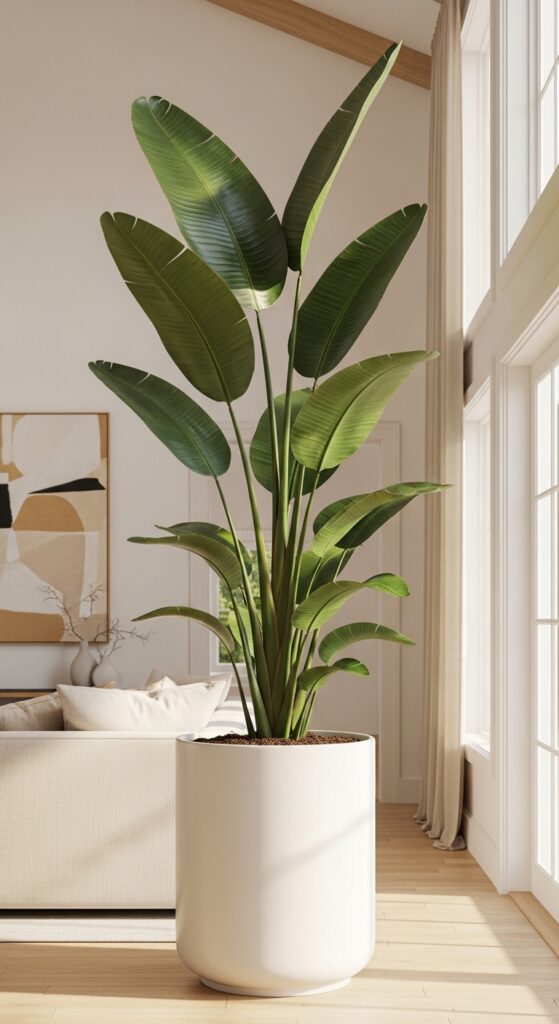
The bird of paradise (Strelitzia nicolai for the giant white-flowering variety, Strelitzia reginae for the classic orange) is the statement plant for rooms with high ceilings and good light. In the right spot, it grows into a truly magnificent architectural specimen that looks like it belongs in a five-star hotel lobby — in the best possible way.
Those enormous, paddle-shaped leaves fan out in a spectacular upright form that’s unlike any other houseplant. The sheer scale and drama of a mature bird of paradise in a large contemporary room is genuinely breathtaking — it fills vertical space in a way that makes even standard ceiling heights feel grander.
💡 Pro Tip: Bird of paradise loves direct sun — more than almost any other popular houseplant. Give it your brightest, sunniest spot and it will reward you with rapid growth and possibly even its spectacular orange or white flowers indoors. Insufficient light is the main reason this plant disappoints people, so don’t compromise on this one.
It’s also more low-maintenance than its grandeur implies. Water when the top 2–3 inches of soil dry out, fertilize monthly in spring and summer, and give it room to spread — crowded plants don’t develop that gorgeous open fan shape that makes them so visually spectacular.
Discover the best large statement plants for bright living rooms and sunrooms to find the ideal architectural specimen for your space.
Visit Bloomscape’s bird of paradise care guide for detailed growing advice from one of the leading online plant retailers.
A bird of paradise in a sunny living room is genuinely one of the most impressive things you can do to a room without hiring a decorator!
4. Olive Tree — Mediterranean Elegance Indoors
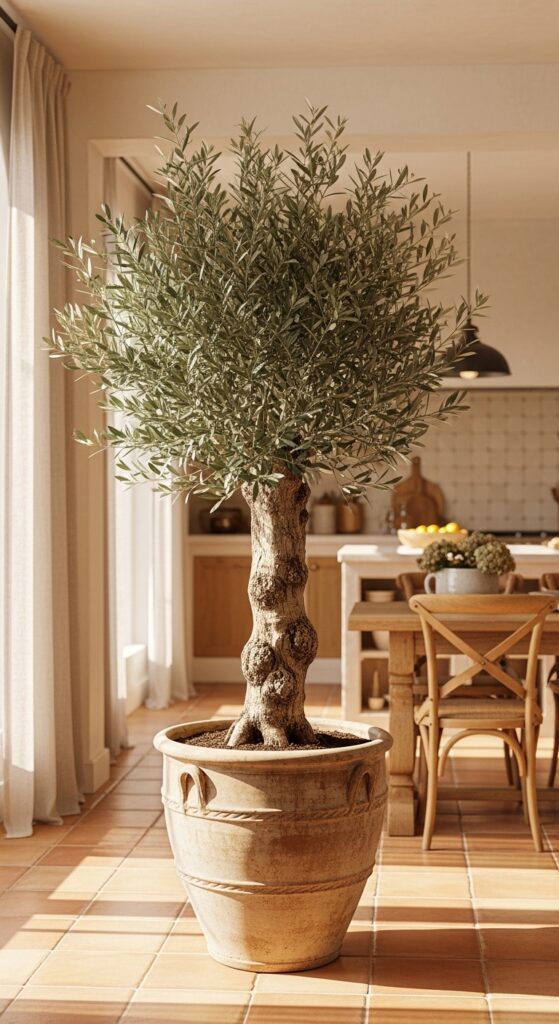
The indoor olive tree is the houseplant equivalent of a linen blazer — effortlessly elegant, incredibly versatile, and it makes everything around it look more sophisticated. The combination of the gnarled, characterful trunk and the delicate silver-green foliage creates a plant with genuine artistic beauty that works in almost every interior style.
Olive trees suit Mediterranean, Tuscan, modern farmhouse, and minimalist interior aesthetics with particular brilliance. In a white kitchen with terracotta tile, an olive tree in an aged pot is simply perfection. In a Scandinavian living room with clean lines and neutral tones, it adds warmth and organic texture that no other plant quite achieves.
They need maximum sun — a south-facing window or a spot near bright glass doors is essential for keeping an indoor olive tree healthy and shapely. In summer, moving them outside to a sunny patio or balcony for a few months genuinely transforms their vigor and appearance.
Water sparingly — olive trees evolved for hot, dry Mediterranean summers and prefer to dry out completely between waterings. Overwatering is the most common way people kill these otherwise tough and long-lived plants.
Read our complete guide to growing and styling olive trees indoors for care tips, pot choices, and interior styling ideas.
An indoor olive tree is the kind of plant that makes people immediately ask where you got it — and your answer will make them very jealous!
5. Pampas Grass — Boho Texture and Movement
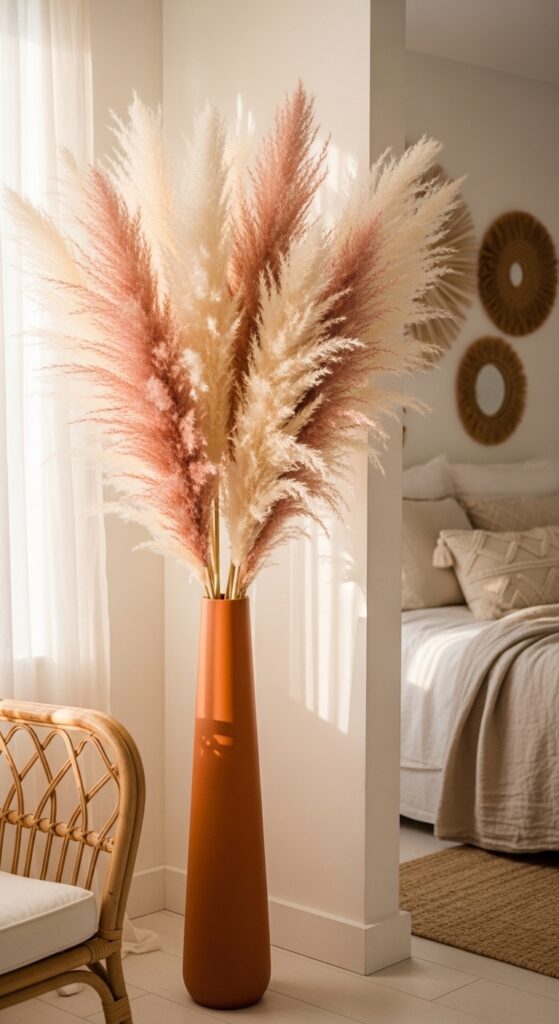
Here’s the deal: pampas grass is technically a dried botanical rather than a living houseplant — but its impact on a room’s decor is so significant that it absolutely earns its place on this list. A tall vase of pampas brings texture, movement, and effortless boho elegance to any interior.
The magnificent fluffy plumes in cream, blush, natural, or even dyed tones create a sculptural quality that no other plant or decor element quite replicates. A single large arrangement in the corner of a bedroom or living room instantly transforms the room’s atmosphere — softer, warmer, and more curated.
💡 Pro Tip: Spray dried pampas grass lightly with hairspray once arranged to prevent excessive shedding. This simple trick dramatically reduces the amount of fluff that drifts around your home while keeping the plumes looking full and beautiful for much longer.
The beauty of pampas for decor is its zero maintenance requirement after styling — no watering, no light requirements, no fertilizing. It simply looks gorgeous indefinitely. Refresh your arrangement every 1–2 years when plumes start to thin or lose their loftiness.
Explore our guide to decorating with dried botanicals and pampas grass at home for styling ideas across different room aesthetics.
Pampas grass in the right vase instantly makes a room feel styled, warm, and beautifully considered!
6. Rubber Plant — Bold Leaves, Minimal Fuss
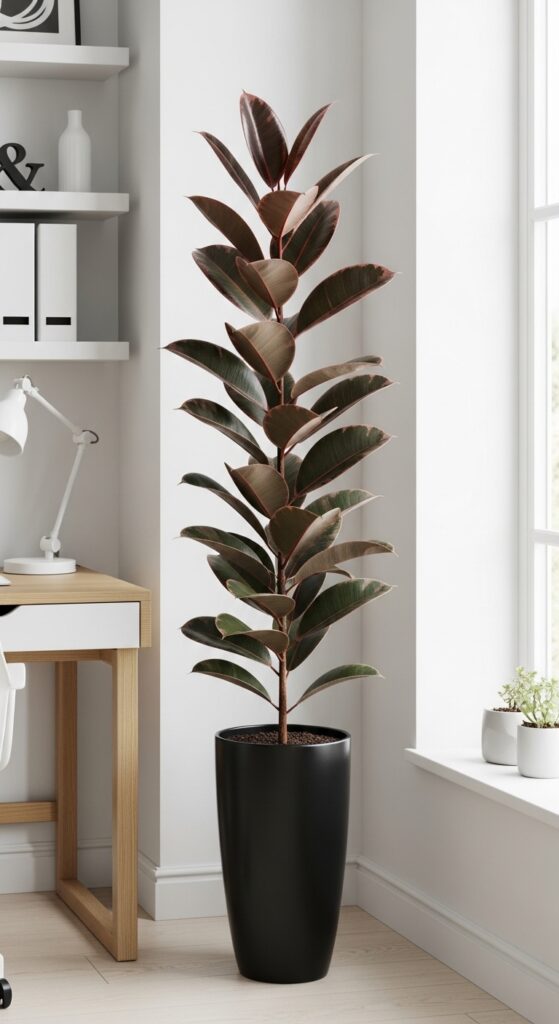
The rubber plant (Ficus elastica) in its dark burgundy varieties is one of the most underrated stylish houseplants for home decor — it delivers the same architectural drama as the fiddle leaf fig but with a more forgiving, easier-care personality. Those enormous, glossy, deep burgundy-to-black leaves are genuinely stunning in person.
The ‘Burgundy’ and ‘Abidjan’ varieties have leaves so dark they’re almost black in low light — an incredibly dramatic and sophisticated effect that works brilliantly in modern, editorial, and maximalist interior spaces. The ‘Ruby’ variety adds streaks of pink and cream for a more eclectic, colorful display.
Rubber plants are significantly easier than fiddle leaf figs — they tolerate lower light, handle occasional missed waterings gracefully, and are generally much less sensitive to being moved. Water when the top inch of soil is dry, wipe those gorgeous glossy leaves monthly, and this plant will grow into a genuinely impressive specimen.
Compare rubber plants and fiddle leaf figs for your home decor style to find out which statement plant suits your lifestyle and space best.
Visit Patch Plants’ rubber plant care guide for reliable, detailed growing advice on every rubber plant variety.
A dark burgundy rubber plant is one of those rare plants that looks more expensive than it actually is — pure decorating value!
7. Snake Plant — Sleek Architectural Lines
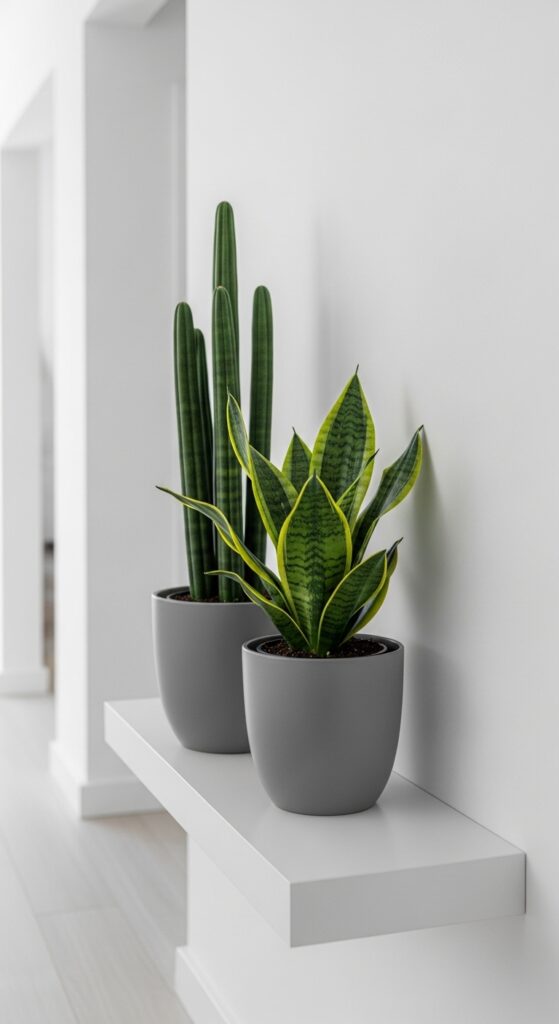
The snake plant is the plant that proves you don’t need direct sun or a dedicated care routine to have genuinely stylish greenery in your home. Its tall, rigid, architecturally perfect lines make it one of the most versatile decor plants on this list — equally at home in a minimalist hallway, a modern bedroom, or a corporate home office.
Here’s the thing: snake plants look like they should be difficult to grow — they’re so perfectly structured and dramatic that they seem almost too good to be real. But they’re actually one of the easiest plants you can own, surviving in low light, tolerating weeks without water, and maintaining their spectacular appearance in almost any indoor condition.
💡 Pro Tip: Use two snake plants of different heights side by side — one tall and narrow, one shorter and wide — in matching pots for an incredibly sophisticated, curated display. The height variation creates visual tension and interest that a single plant simply can’t achieve on its own.
The variety you choose changes the entire personality of the plant as a decor object. The classic Sansevieria trifasciata ‘Laurentii’ with yellow-edged leaves is warm and classic; the Sansevieria cylindrica (cylindrical snake plant) with its architectural round leaves is ultra-modern; the dwarf ‘Hahnii’ rosette varieties are perfect for shelves and smaller spaces.
Explore the best snake plant varieties for modern, minimalist home decor to find the perfect architectural form for your space.
A well-placed snake plant in a great pot makes a hallway or dark corner look designed rather than neglected — it’s genuinely that powerful!
8. Trailing Pothos — Effortless Lush Greenery
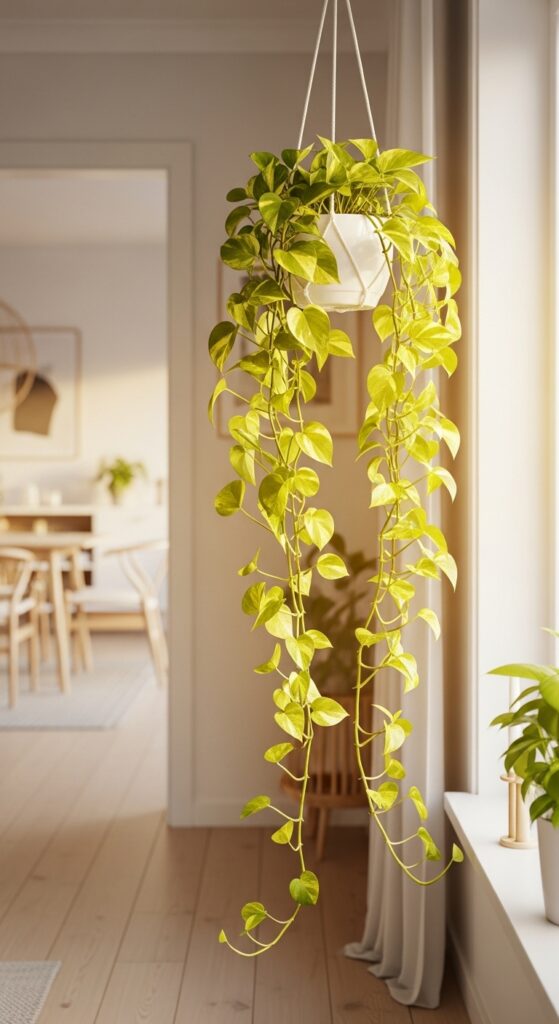
Trailing pothos is the decor secret that experienced plant stylists return to again and again — because nothing else creates that effortless, abundant cascade of greenery as easily or inexpensively. A single pothos in a hanging planter or on a high shelf, with vines allowed to trail freely, adds the kind of lush, layered greenery that makes a room feel genuinely alive.
The golden pothos variety (Epipremnum aureum) with its heart-shaped green-and-yellow variegated leaves is the classic choice — the yellow streaks catch light beautifully and warm up any room they’re in. The ‘Marble Queen’ variety with cream-and-green marbling has a more sophisticated, softer look, while the ‘Neon’ variety in lime green is electric and eye-catching.
Use pothos on high bookshelves, kitchen cabinets, or hanging planters to maximize the trailing effect. The longer the vines grow, the more dramatic and lush the display becomes — and they grow quickly. In a bright, warm room, pothos vines can extend 3–4 feet in a single growing season.
Discover the best hanging plants for living rooms and how to style them beautifully for a complete guide to suspended plant displays.
Pothos vines trailing from a high shelf are one of those simple, inexpensive additions that make an enormous difference to a room’s character!
9. ZZ Plant — Glossy, Dark, and Dramatic
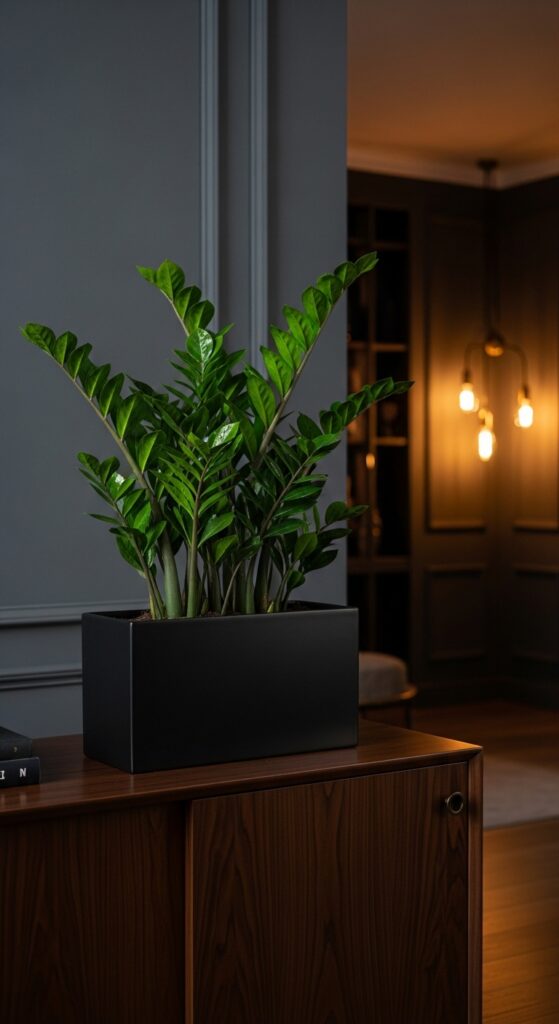
The ZZ plant (Zamioculcas zamiifolia) is the plant for people who want dark, glossy, dramatic houseplant decor without any significant maintenance commitment. Those shining, deep green waxy leaves catch light with an almost lacquered quality that looks genuinely luxurious — especially in low-light, moody interior settings where most other plants would decline.
It suits dark, dramatic interior schemes with particular brilliance. Against charcoal walls, in a darkly furnished study, or on a credenza in a warmly lit hallway, the ZZ plant’s glossy presence is genuinely striking. It’s one of the few plants that actually looks better in moody, lower-light settings rather than worse.
💡 Pro Tip: The ‘Raven’ ZZ plant variety takes the drama to another level entirely — its new growth emerges bright lime green and gradually deepens to a near black-purple as the leaves mature. It’s one of the most visually spectacular houseplants available and is still relatively rare, making it a genuine conversation piece in any home.
Water your ZZ plant every 3–4 weeks and genuinely forget about it between drinks. Its underground rhizomes store water like tiny reservoirs, making it one of the most drought-tolerant decorative plants you can own.
Discover more dark and dramatic houseplants for moody interior design schemes to build a sophisticated, high-contrast plant collection.
A ZZ plant in a sleek pot in a beautiful room is proof that low-maintenance and high-style are absolutely not mutually exclusive!
10. Calathea — Living Art With Painted Leaves
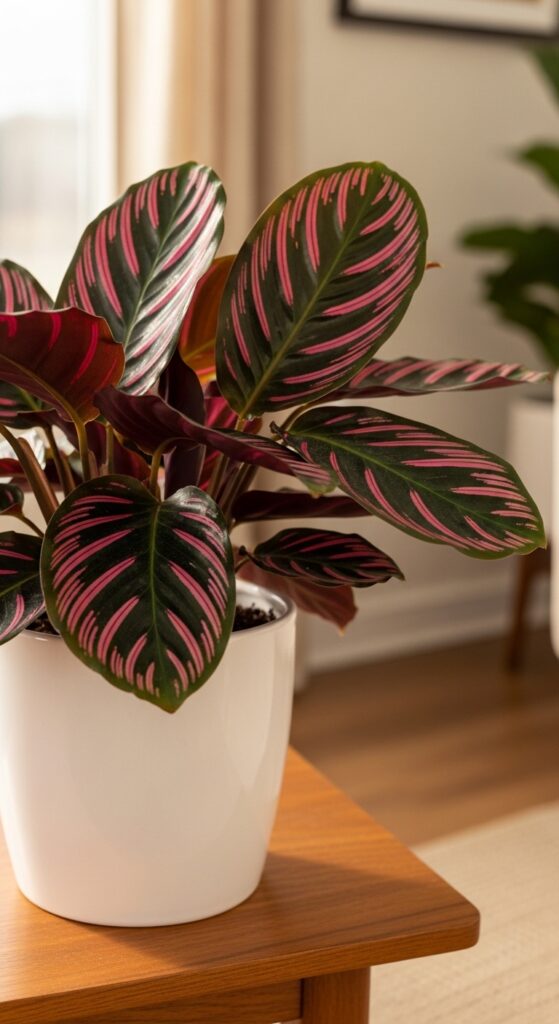
Calathea plants are the closest thing the plant world has to living, breathing artwork — and that’s not an exaggeration. The leaf patterns on varieties like Calathea ornata (pink pinstripes), Calathea medallion (circular medallion patterns), and Calathea warscewiczii (velvety jungle patterns) are so intricate and beautiful that they genuinely look hand-painted.
The pattern variety is extraordinary — you could collect ten different calathea varieties and have ten completely different decorative focal points, each with its own color story and visual personality. They suit botanical, maximalist, tropical, and warm modern interior styles with particular brilliance.
Calatheas have a well-deserved reputation for being somewhat higher-maintenance than other houseplants — they’re sensitive to fluoride in tap water (use filtered), prefer consistent moisture and humidity, and dislike cold drafts. But for gardeners who enjoy attentive plant care, the beauty they deliver is simply unmatched.
- Calathea ornata: Pink pinstripes on dark green — dramatic and elegant
- Calathea medallion: Circular rose-pattern markings — lush and full
- Calathea lancifolia (rattlesnake plant): Long spotted leaves — wild and graphic
- Calathea zebrina: Bold green zebra stripes — maximalist statement
- Calathea makoyana (peacock plant): Translucent pale green patterns — ethereal
Explore our complete calathea care guide for beginners for watering, humidity, and display tips that keep these beauties thriving.
Visit Houseplant411’s calathea care resource for detailed care guidance on every popular variety.
A beautiful calathea in a simple pot is genuinely one of the most stunning decorative objects you can put in a room — plant or otherwise!
11. String of Pearls — Sculptural Cascading Beauty
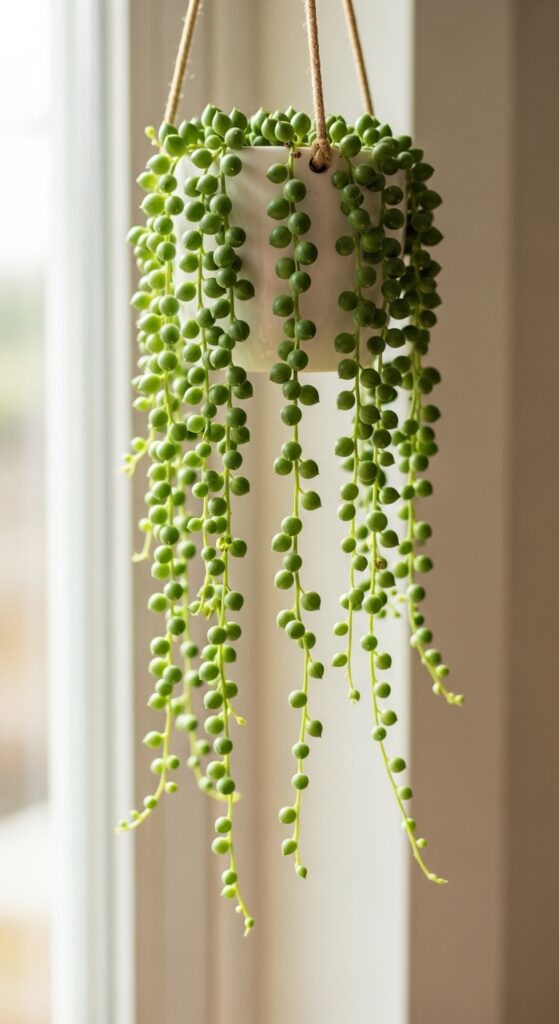
The string of pearls (Curio rowleyanus, formerly Senecio rowleyanus) is one of the most sculpturally unique plants you can display in a home — and its cascading strands of perfect spherical leaves make it an absolute showstopper in a hanging planter or elevated pot. It looks genuinely unlike any other plant, which makes it an instant conversation piece.
Each strand is made up of perfectly round, pea-sized bead leaves that store water like tiny green spheres. The cascading effect of long, bead-covered strands hanging from a shelf or hanging planter is simultaneously delicate and dramatic — one of those rare plants that looks impossibly perfect even on a bad day.
💡 Pro Tip: String of pearls needs excellent drainage and a bright sunny spot — it’s a succulent at heart and will rot quickly if overwatered or kept in poor light. Use a gritty, well-draining cactus mix and water only when the “pearls” start to look slightly less full and taut, which is the plant’s natural signal that it needs a drink.
Display it in a hanging planter near your brightest window, allowing strands to grow as long as possible before trimming. Trimmed strands can be propagated immediately by laying them on moist soil — new roots form within a week, giving you free plants to share or expand your collection.
Learn how to propagate and style string of pearls and other trailing succulents for display and care advice.
A thriving string of pearls in a beautiful hanging planter is genuinely one of the most photogenic plants you can own — your Instagram will thank you!
12. Peace Lily — Elegant Contrast and Clean Lines
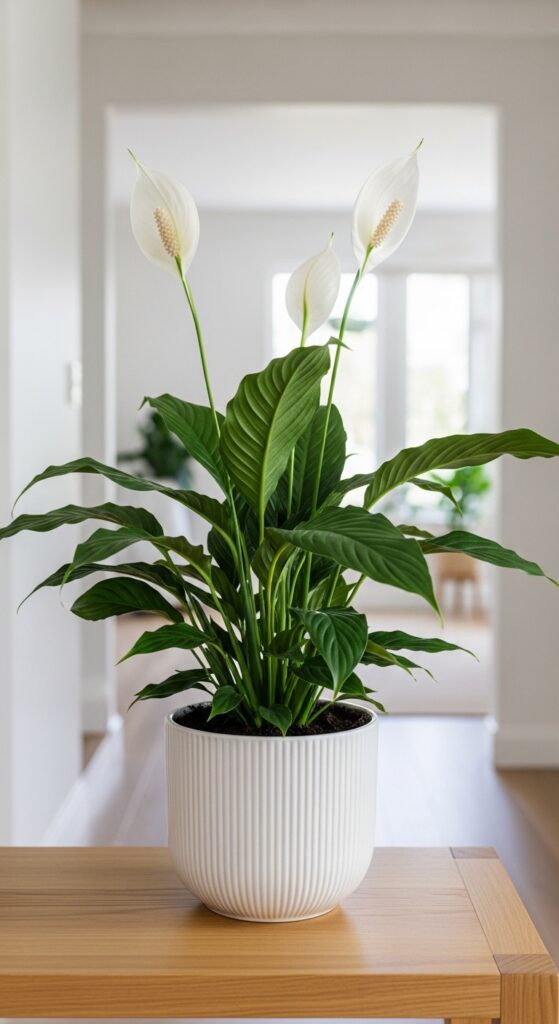
The peace lily is the elegant understated choice on this list — the plant equivalent of a classic white shirt. It doesn’t compete for attention with dramatic foliage or exotic leaf shapes; instead, it delivers quiet, graceful beauty through the contrast of its deep glossy green leaves and pure white blooms.
Those white spathes — which bloom in low light conditions that would prevent flowering in almost every other plant — appear periodically throughout the year and last for weeks. In a dark hallway, a dim entryway, or a north-facing living room, a peace lily provides both the greenery and the floral element that would otherwise require constant maintenance to achieve.
As a home decor plant, it works particularly beautifully in classic, French country, minimalist, and Japandi interior styles — anywhere that appreciates refined simplicity over loud visual drama. Pair it with a white ribbed ceramic pot and it looks like something from a luxury hotel lobby.
It’s also one of the most effective air-purifying plants available, filtering benzene, formaldehyde, and other VOCs from indoor air — a quiet, practical benefit that makes it as useful as it is beautiful.
Explore our guide to elegant, low-light houseplants for beautiful home decor for more plants that deliver refined beauty in challenging light conditions.
A peace lily is the kind of plant that makes every room it enters feel calmer, more considered, and more beautifully complete!
How to Style Houseplants for Maximum Decor Impact
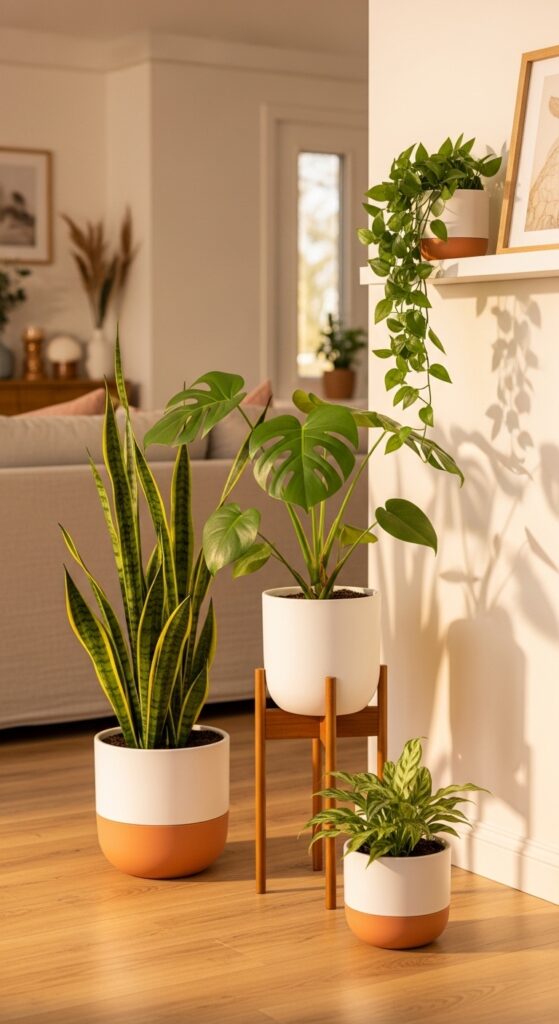
Getting beautiful plants is only half the equation — how you style them determines whether they look like a thoughtful design decision or a random collection of pots. A few key principles separate professional-looking plant styling from an afterthought.
The most important rule is the rule of threes: group plants in odd numbers at varying heights rather than in pairs or even rows. A tall floor plant, a medium plant on a stand, and a trailing plant on a shelf creates a triangular composition that draws the eye upward and feels naturally balanced without being rigid.
Pot cohesion is the second most impactful styling decision you can make. You don’t need matching pots, but you do need pots that share something — a material (all ceramic, all terracotta), a color family (all neutrals, all earthy tones), or a finish (all matte, all textured). One through-line unifies a diverse plant collection into a curated display rather than a random accumulation.
💡 Pro Tip: Plant stands are transformative decor tools — they elevate plants literally and figuratively, creating height variation, lifting roots above cold floors, and adding a sculptural element to your display. Even the most modest plant looks more considered and intentional when elevated on a beautiful stand.
Master the art of styling houseplants for home decor with our complete visual guide for composition, pot pairing, and room-by-room placement strategies.
Apply these three principles and your plant collection will look genuinely styled — not just collected!
Choosing the Right Pot for Stylish Houseplants
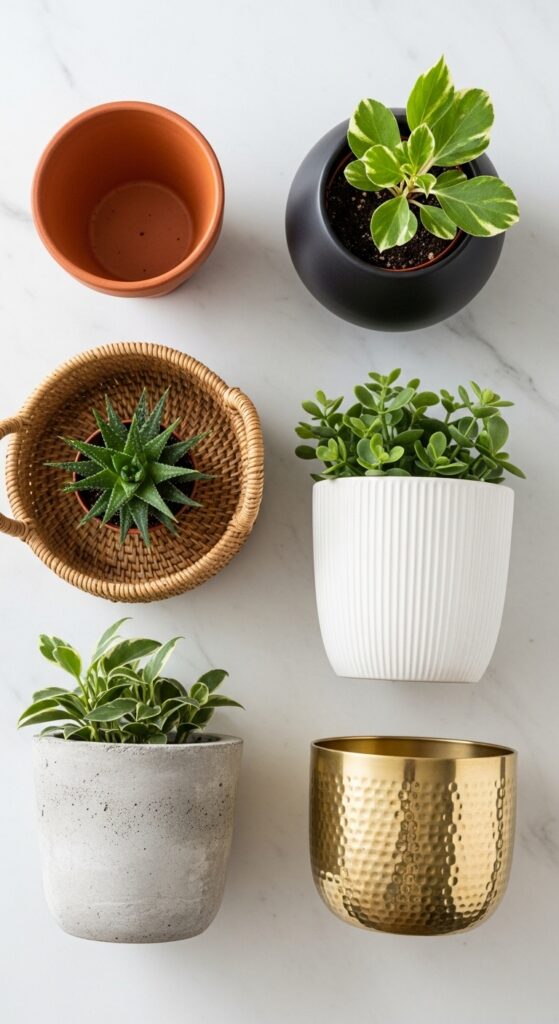
Here’s the thing that experienced plant stylists know and beginners often discover too late: the pot matters as much as the plant. A spectacular monstera in a cheap plastic nursery pot looks like an afterthought; the same plant in a beautiful rattan basket or a matte ceramic planter looks like a deliberate design decision.
Match your pot material to your interior style — terracotta and rattan for boho and Mediterranean spaces; matte black or concrete for modern and industrial rooms; white ribbed ceramic for Scandinavian and minimalist aesthetics; hammered brass or copper for maximalist and glam interiors. The right pot instantly elevates the plant and ties it into the room’s design language.
Size matters enormously too. The pot should be proportional to the plant — a large floor plant in a pot that’s too small looks unstable and unfinished. For tall, dramatic specimens like the bird of paradise or fiddle leaf fig, invest in a large, weighty planter that anchors the plant visually and provides genuine stability as it grows.
Always use drainage holes in actual planting pots, then slip them into decorative cache pots without drainage for the aesthetic look. This gives you the visual beauty of a seamless decorative pot with the practical drainage your plant needs to stay healthy.
Visit Architectural Digest’s guide to choosing plant pots for interior design for beautifully styled real-home examples and expert pot selection advice.
The right pot transforms a plant from a living thing into a genuine design object — never underestimate this choice!
Stylish Houseplants for Home Decor by Room
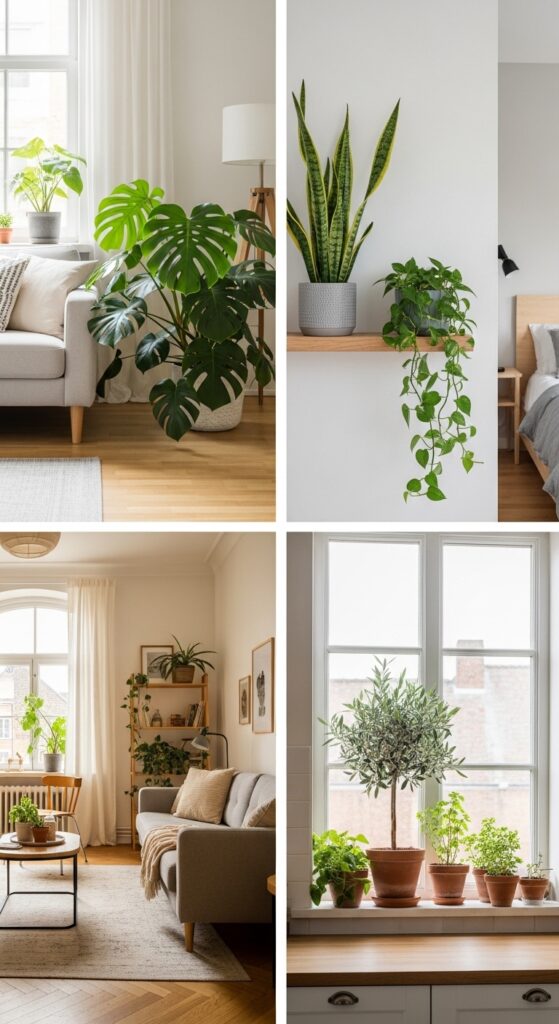
Matching the right stylish houseplants for home decor to the right room maximizes both the visual impact and the plant’s health. Light levels, humidity, and room function all influence which plants perform and look best in each space.
Living rooms are your showpiece space — this is where you bring out the drama. Fiddle leaf figs, monsteras, birds of paradise, and rubber plants all shine here. Go for scale, go for statement, and choose plants that become genuine focal points that anchor the room’s design.
Bedrooms benefit from calmer, more restful plant choices. Snake plants, peace lilies, and trailing pothos add greenery without overwhelming a space meant for relaxation. Calatheas work beautifully too — their leaf patterns add visual interest without visual chaos, and they naturally close their leaves at night in a beautiful, subtle movement.
Kitchens and dining areas call for smaller, functional, and cheerful plants — herb gardens on windowsills, small olive trees in terracotta, or a trailing pothos above the cabinets all work beautifully. Avoid overly large specimens that overwhelm a functional workspace.
Hallways and entryways are transformed by tall, narrow plants that make a strong first impression without taking floor space — snake plants, slim dracaenas, and a single dramatic peace lily all work brilliantly in these transitional spaces.
Explore our room-by-room guide to the best houseplants for every space in your home for specific plant recommendations tailored to light levels and room function.
Match your plants to your rooms thoughtfully and every corner of your home will feel intentionally, beautifully designed!
Frequently Asked Questions
What are the most stylish houseplants for home decor that are also easy to care for?
The best combination of style and easy care comes from the ZZ plant, snake plant, rubber plant, and monstera — all four deliver genuine designer-level visual impact while tolerating irregular watering, lower light levels, and the general imperfection of busy home life. The ZZ plant and snake plant in particular are almost impossible to kill, making them ideal for plant lovers who want beautiful greenery without a demanding care routine.
How do I choose plants that match my interior design style?
Match your plants to your existing aesthetic vocabulary: fiddle leaf figs, birds of paradise, and monsteras suit modern, contemporary, and boho spaces; olive trees and lavender suit Mediterranean and farmhouse interiors; calatheas and trailing plants suit tropical and maximalist rooms; snake plants, ZZ plants, and rubber plants suit minimalist and Scandinavian spaces. Your pot choice reinforces the connection — a plant in the wrong pot can feel jarring in an otherwise well-styled room.
How many plants should I have in a room for maximum decor impact?
There’s no fixed number, but odd numbers grouped at varying heights always look more intentional than even numbers in rows. Start with a statement floor plant, add a medium-height plant on a stand, and bring in a trailing plant on a shelf — that trio covers the visual field from floor to ceiling and creates a genuinely designed feel. From there, add more or fewer plants based on the room’s size and your personal preference.
What are the best stylish houseplants for home decor in low-light rooms?
Snake plants, ZZ plants, pothos, peace lilies, and cast iron plants are all capable of genuine decorative impact in low-light rooms. The ZZ plant’s glossy leaves look particularly dramatic in moody, dimly lit spaces, while the peace lily adds the rare bonus of white blooms without needing bright light. Avoid high-light statement plants like the bird of paradise and olive tree in these conditions — they’ll slowly decline and lose the beautiful form that makes them so decorative.
How do I stop my stylish houseplants from looking messy or neglected?
Regular maintenance is the key to decorative plants staying decorative. Wipe large leaves monthly to keep them clean and glossy, trim any dead or yellowing leaves promptly, dust trailing vines and small leaves with a soft brush, and repot when plants become visibly pot-bound. A plant that’s slightly root-bound, dusty, or carrying a few dead leaves stops looking like intentional decor and starts looking like neglect — five minutes of maintenance every couple of weeks makes an enormous difference to the overall impression.
A Few Final Thoughts
Stylish houseplants for home decor are one of the most genuinely rewarding investments you can make in your living space — they bring beauty, life, and a sense of calm that no piece of furniture or wall art can quite replicate. Whether you’re drawn to the architectural drama of a fiddle leaf fig, the tropical boldness of a monstera, the quiet elegance of a peace lily, or the sculptural perfection of a string of pearls, there’s a plant on this list that’s perfectly matched to your home and your lifestyle. Remember that the pot you choose and how you style your plants matters just as much as the plants themselves — a great specimen in a beautiful container, thoughtfully placed, is genuinely transformative. Start with one or two plants that excite you, learn what they need, build your confidence, and let your collection grow from there. Your home — and your mood — will be better for every living, breathing, beautiful plant you add to it. Your dream home decor is closer than you think — now go make it happen!