
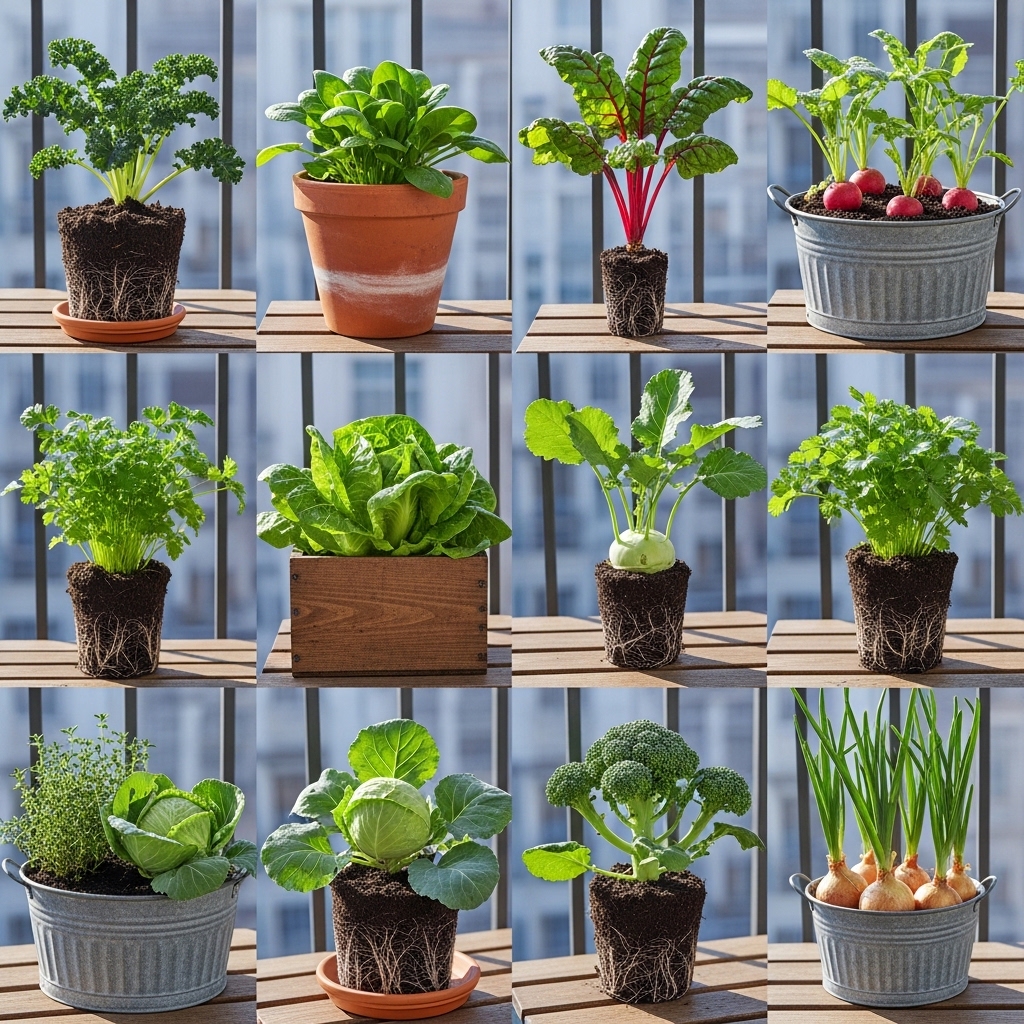
Think your growing season is over the moment temperatures drop? Absolutely not — and this article is about to change everything you thought you knew about cold weather vegetable gardening! Some of the most delicious, nutritious crops you’ll ever taste actually prefer the cold, developing sweeter flavors and more intense color after a frost. Whether you’ve got a balcony, a windowsill, or a tiny patio, winter growing is 100% possible and deeply rewarding. Ready to find out which vegetables thrive when it’s cold? Let’s dive in!
At a Glance
- Cold weather vegetables like kale, spinach, and Brussels sprouts actually improve in flavor after frost, making them some of the most rewarding crops you can grow in winter.
- Most cool-season crops thrive between 7°C and 18°C (45°F–65°F), meaning they perform best exactly when summer crops have long given up.
- You can grow the majority of these vegetables successfully in containers and balcony planters, making them perfect for urban gardeners with limited outdoor space.
- Starting seeds indoors in late summer and transplanting in early autumn gives you a head start on winter harvests that can last right through to early spring.
- A simple cold frame or cloche can extend your growing season by 6–8 weeks on either end, letting you harvest fresh vegetables even during hard freezes.
1. Kale — The Undisputed King of Cold
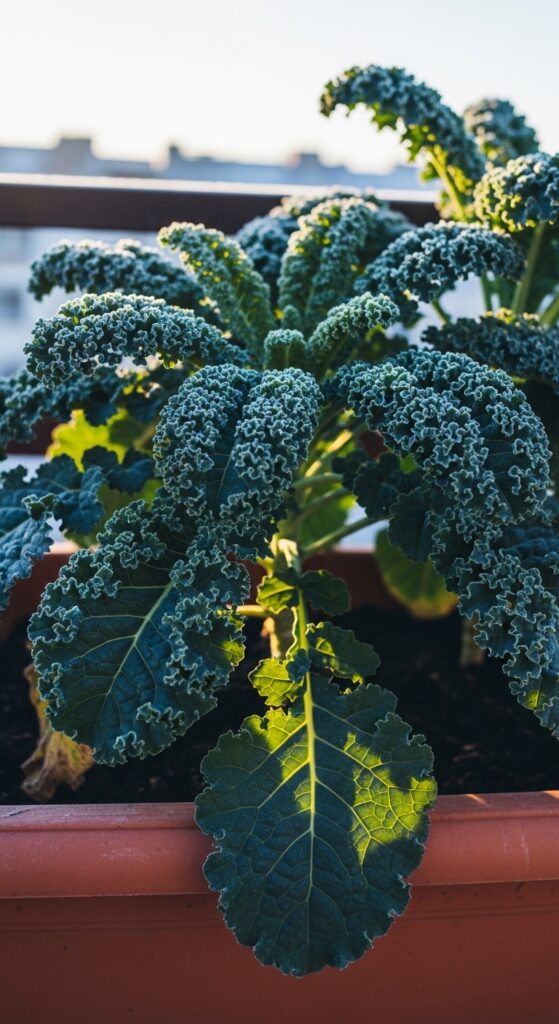
If you only grow one cold-weather vegetable this winter, make it kale. It is genuinely one of the toughest edible plants you can grow — it shrugs off frost, handles snow like a champ, and actually gets sweeter the colder it gets. The frost converts the starches in the leaves to sugar, and the flavor payoff is incredible.
Curly kale is the classic, but Cavolo Nero (Tuscan black kale) is a showstopper — those dark, almost black strap-like leaves are stunning in a container and deeply flavorful in the kitchen.
💡 Pro Tip: Harvest outer leaves first and leave the central growing point intact. Your kale plant will keep producing fresh leaves for months — one plant can feed you all winter long!
Kale grows beautifully in containers at least 30–40cm deep and wide. It’s genuinely unfussy about soil as long as drainage is decent. Harvest regularly to keep it productive and prevent it from bolting.
| Variety | Cold Hardiness | Flavor Profile | Container Size |
| Curly Kale ‘Dwarf Green’ | -15°C | Mild, slightly bitter | 30cm+ |
| Cavolo Nero | -10°C | Rich, nutty | 35cm+ |
| Red Russian Kale | -12°C | Sweet, tender | 30cm+ |
| Redbor Kale | -10°C | Mild, slightly peppery | 35cm+ |
Check out our kale container growing guide for beginners for everything you need to get started. For nutritional info and variety data, BBC Good Food’s vegetable growing guides are excellent.
Kale is cold-weather gardening on easy mode — start here and you will not be disappointed!
2. Spinach — Fast, Nutritious & Frost-Friendly
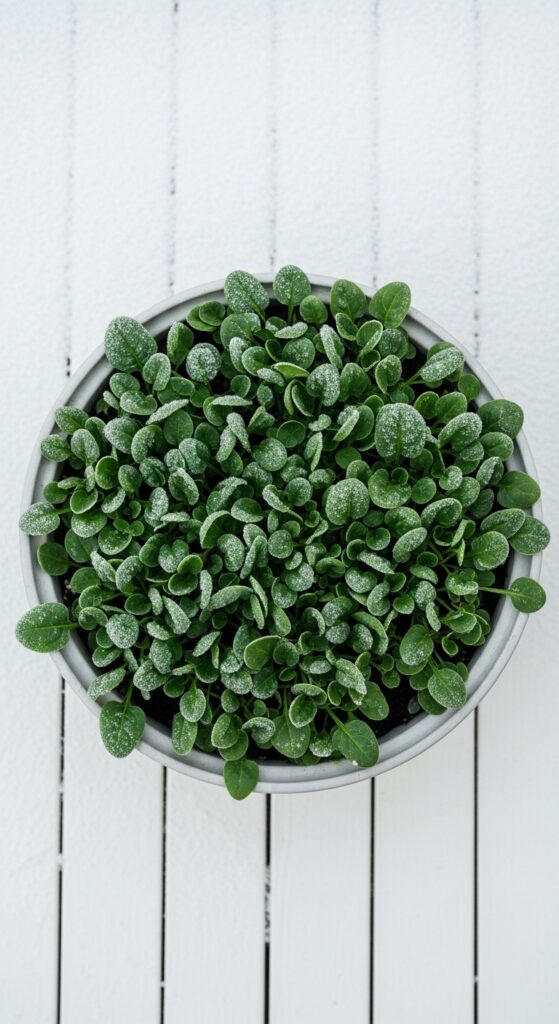
Here’s the deal: spinach is one of the fastest-growing cold-weather crops you can plant, going from seed to harvest in as little as 6 weeks in cool conditions. It thrives in the cool, moist weather of autumn and spring, and baby leaves can be harvested at just 3–4 weeks for salads.
The secret to winter spinach is sowing in succession — plant a small pot every 2–3 weeks from August through October and you’ll have a continuous harvest of fresh leaves right through the coldest months.
Spinach is wonderfully compact and suits wide, shallow containers — even a deep window box works perfectly. Use a rich, moisture-retentive compost and keep it consistently moist but never waterlogged.
💡 Pro Tip: If temperatures drop below -8°C, throw a sheet of horticultural fleece over your spinach overnight. It’ll be completely unharmed underneath and ready to harvest the next morning.
Browse our succession sowing guide for balcony vegetables to master the continuous harvest technique. The RHS has brilliant spinach growing advice at rhs.org.uk.
Fresh homegrown spinach in January? Totally achievable — and it tastes a million times better than shop-bought!
3. Swiss Chard — Color AND Flavor in One Pot
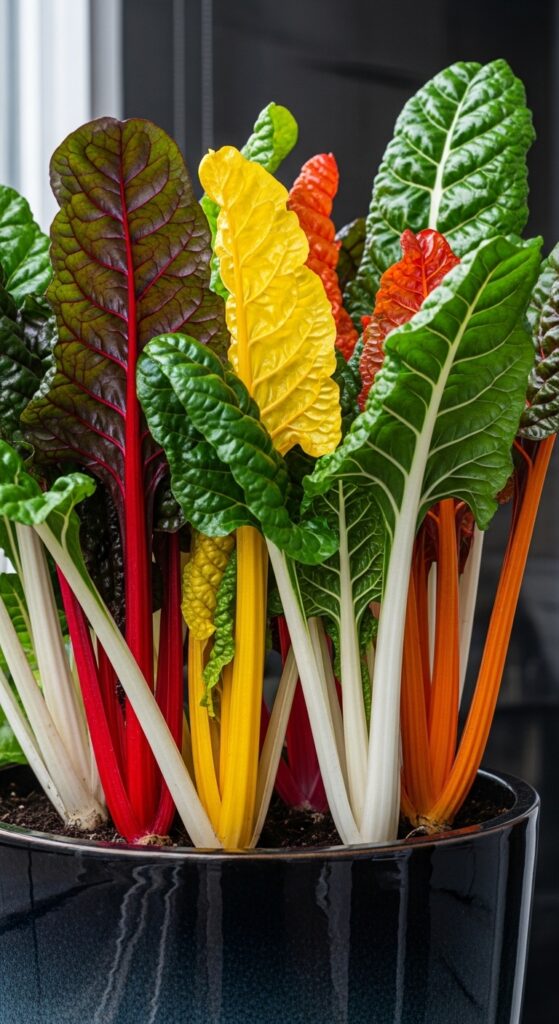
Rainbow Swiss chard is basically the supermodel of the cold-weather vegetable garden — those jewel-bright stems in red, yellow, orange, and white are genuinely ornamental enough to sit alongside your decorative winter plants. And it tastes amazing too!
Chard handles frosts down to around -6°C with no problem at all, and the leaves have a mild, slightly earthy flavor that works equally well raw in salads (when young) or sautéed with garlic and olive oil (when mature). Pretty cool, right?
It grows fast, it looks incredible, and a single large container (40cm+) can give you enough leaves for a family through the whole winter. Cut-and-come-again harvesting means you never strip the plant bare — just take what you need.
- Sow seeds August–September for autumn/winter harvest
- Water consistently — chard doesn’t like to dry out
- Harvest outer stems and the plant keeps producing
- Works beautifully as an edible ornamental in mixed containers
Read our edible ornamental container garden guide for genius ways to mix food plants with decorative ones.
Swiss chard is proof that your winter veggie patch can be just as beautiful as it is delicious!
4. Brussels Sprouts — Worth Every Bit of the Wait
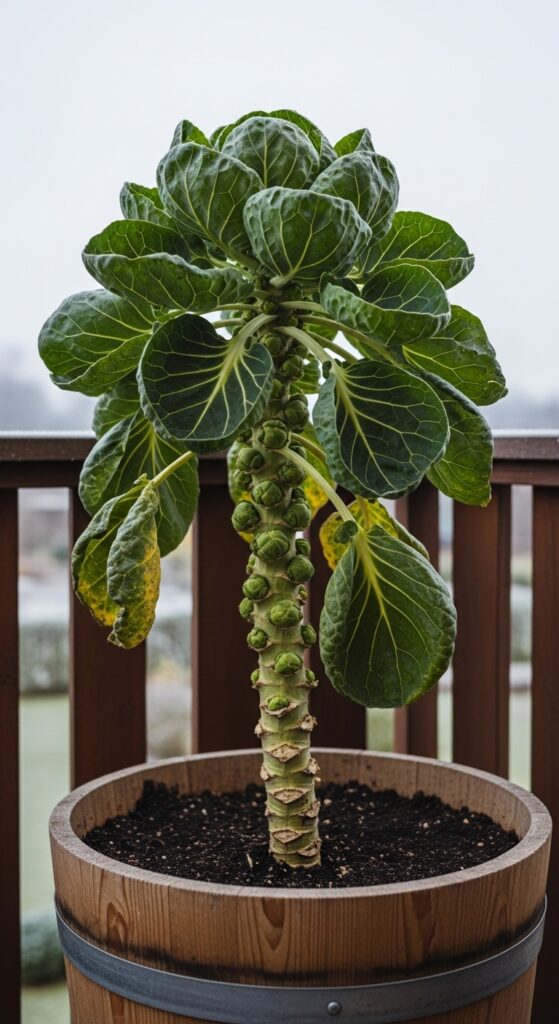
Here’s the thing: Brussels sprouts are the long-game vegetable. They take 4–5 months from planting to harvest, but when you pull those tight little globes off the stem on a cold December morning and roast them that evening, it is completely worth it.
The secret most people don’t know? Frost genuinely improves the flavor of Brussels sprouts — it breaks down the glucosinolates that cause bitterness and converts starches to sugars. So the harder the frost, the sweeter your sprouts. Don’t harvest them too early!
They need a deep, large container (minimum 40–50cm diameter and depth) and a really firm compost — Brussels sprouts need to be planted deeply and firmly to prevent them rocking in wind. Stake them on exposed balconies.
💡 Pro Tip: Remove the lower yellowing leaves as the season progresses — it improves air circulation and lets the developing sprouts get more light. And remove the growing tip in October to encourage all your sprouts to size up at the same time.
Explore our large vegetable container growing guide for the deep-pot setup that makes sprouts on a balcony totally viable.
Patient gardeners are rewarded with the best Brussels sprouts they’ve ever tasted — trust the process!
5. Winter Lettuce Varieties
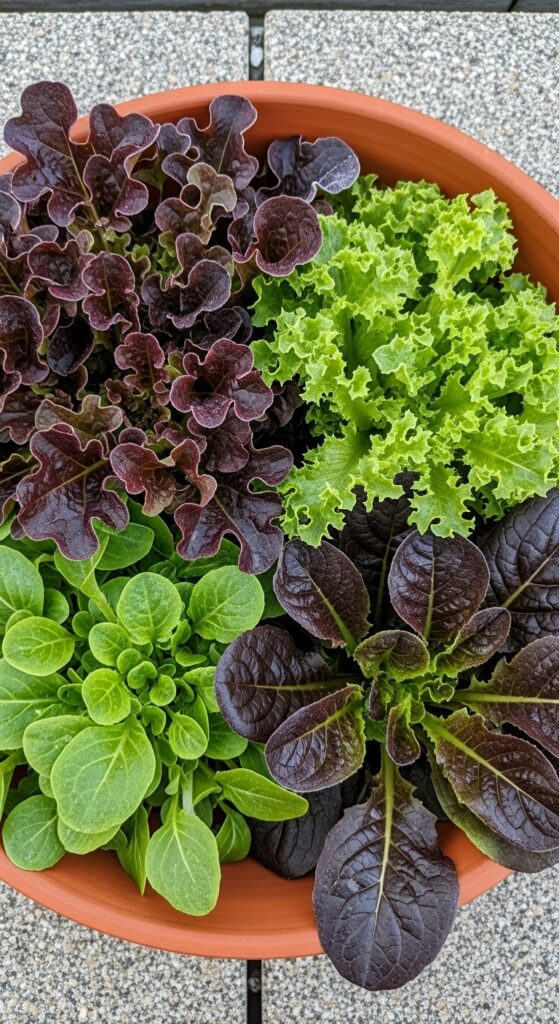
Not all lettuces are delicate summer princesses — winter-hardy lettuce varieties have been bred specifically to handle cold temperatures and short days, and they’re an absolute revelation if you’ve never grown them before.
Varieties like ‘Winter Density’, ‘Arctic King’, ‘Valdor’, and ‘Rouge d’Hiver’ (a stunning red romaine) are specifically designed for cold-season growing and can handle light frosts without any protection at all.
The secret is sowing in late August or early September so your plants are established before the coldest months hit. Once they’re in their containers and growing, they slow right down in winter — but that’s fine, because you harvest a few leaves at a time rather than whole heads.
Wide, shallow containers work brilliantly — a 30cm window box can hold 4–6 winter lettuce plants perfectly. Use a gritty, free-draining mix and give them as much winter sun as your balcony allows.
- Harvest outer leaves only to keep plants productive
- A cloche or cold frame extends the season significantly
- Mix red and green varieties for a beautiful edible display
- Avoid overwatering in cold weather — root rot is the main risk
Check out our winter salad leaves for containers guide for the full variety breakdown. Cornell Cooperative Extension has excellent cold-season vegetable resources at gardening.cals.cornell.edu.
Fresh homegrown winter salad is one of those small pleasures that makes the whole dark season feel more alive!
6. Pak Choi — Fast-Growing Asian Greens
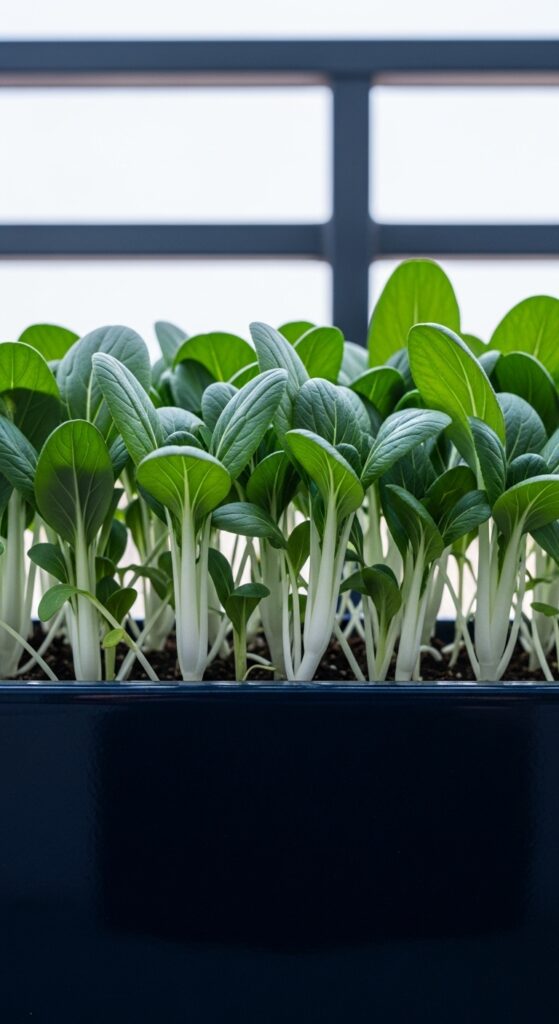
Pak choi (also spelled Bok Choy) is one of the most satisfying cold-weather vegetables you can grow because it goes from seed to harvest in just 4–6 weeks in cool conditions. It’s genuinely one of the quickest crops in the cool-season vegetable garden.
The crunchy white stems and glossy dark leaves are packed with nutrients, and the flavor is mild, slightly sweet, and incredibly versatile in the kitchen. Stir-fry it, steam it, add it raw to salads — it does it all.
💡 Pro Tip: Grow pak choi as a baby leaf crop rather than waiting for full-size heads — sow densely, harvest small leaves at 3–4 weeks, and the pot will regrow for multiple cuts. You’ll get far more from each planting this way.
Cold weather actually improves pak choi — it becomes sweeter and crisper in temperatures between 10–18°C. Just protect from hard frosts below -3°C with a layer of horticultural fleece.
Explore our Asian greens for container gardening guide for more fast-growing cool-season crops like this.
Pak choi is the cold-weather crop that rewards impatient gardeners — and there’s absolutely nothing wrong with that!
7. Carrots — Sweeter After Every Frost
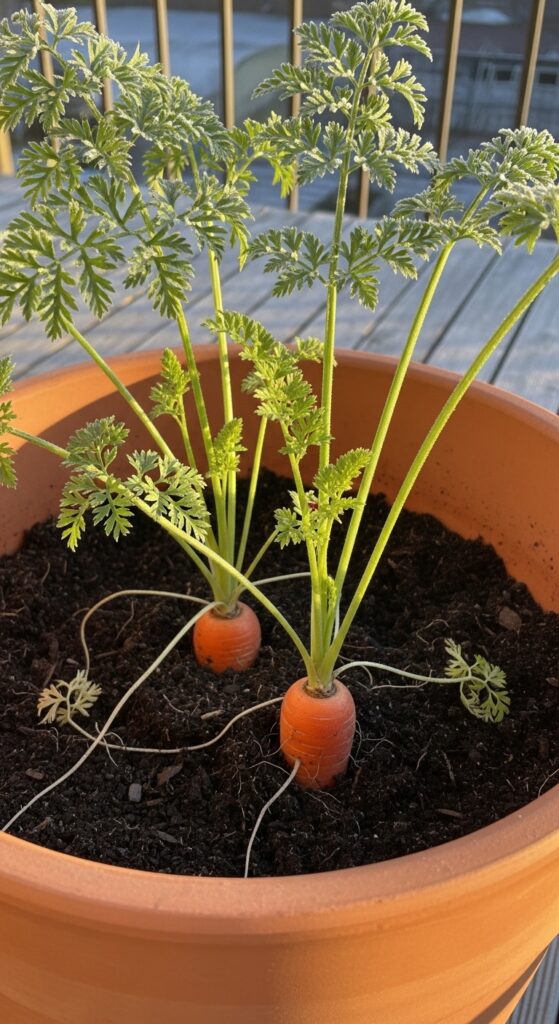
Talk about a game-changer — frost-sweetened carrots pulled from your own balcony pot in December are unlike anything you’ll find in a supermarket. The cold converts starches to sugars, giving you a sweetness and depth of flavor that genuinely surprises people who’ve only ever eaten shop-bought carrots.
The secret to growing carrots in containers is depth — you need at least 30cm deep pots for standard varieties, or choose round or short varieties like ‘Paris Market’, ‘Chantenay’, or ‘Parmex’ that are specifically bred for container growing.
Use a light, stone-free compost (carrots fork in rocky soil) and thin your seedlings to 5–7cm apart once they’re a few centimeters tall. Don’t skip the thinning — crowded carrots stay small and twisted.
| Variety | Root Length | Container Depth | Notes |
| ‘Paris Market Atlas’ | 5cm round | 20cm+ | Perfect for containers |
| ‘Chantenay Red Cored’ | 12cm | 25cm+ | Sweet, excellent flavor |
| ‘Autumn King 2’ | 20cm | 35cm+ | Full-size, slow to bolt |
| ‘Parmex’ | 4cm round | 20cm+ | Fast, sweet, kids love them |
Read our container carrot growing guide for the full technique. The Old Farmer’s Almanac has a brilliant carrot-growing resource at almanac.com.
Be patient, protect from the hardest freezes, and prepare for the sweetest carrot you’ve ever tasted!
8. Radishes — Harvest in Just 4 Weeks
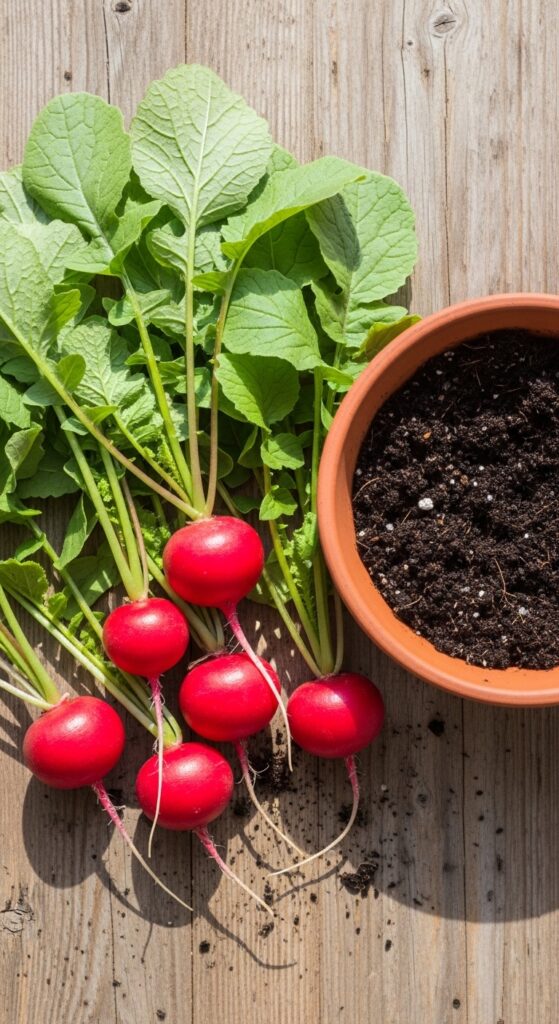
Here’s the deal: if you want the quickest win in cold-weather vegetable gardening, radishes are your answer. From seed to harvest in as little as 3–4 weeks, they’re the ultimate instant-gratification crop and perfect for filling gaps in containers between slower-growing vegetables.
Winter radishes like ‘Mooli’, ‘Black Spanish Round’, and ‘China Rose’ are a step up from quick summer types — they develop larger, spicier roots that store well in the ground and have an impressive cold hardiness down to -5°C.
The secret is sowing a small pot every 2 weeks for a continuous supply through autumn and into early winter. They’re so fast that even a terrible batch is quickly replaced!
💡 Pro Tip: Don’t leave radishes in the ground too long after they mature — they quickly become pithy and hollow. Check the roots at the recommended harvest date and pull them promptly.
Radishes are also fantastic companion plants — sow them around your slower brassicas to deter flea beetles and utilize otherwise empty compost space productively. Check our companion planting for container gardens guide for more clever combos.
Fast, fun, and foolproof — radishes are the perfect starter crop for brand new cold-weather gardeners!
9. Spring Onions — The Container Gardener’s Best Friend
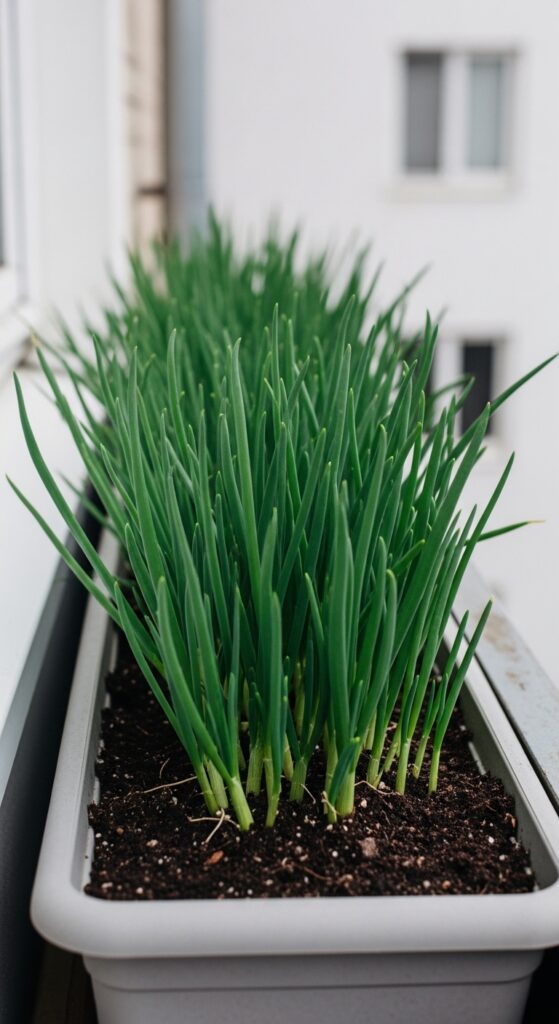
Spring onions (scallions) are the perfect balcony vegetable — they grow upright, need very little horizontal space, suit any container that’s at least 15cm deep, and provide a steady harvest of fresh green onions from October through early spring with virtually zero effort.
They’re cold-hardy down to around -6°C and recover from light freezes quickly. The green tops may die back in the hardest frosts but the bulb base usually survives and regrows once temperatures moderate.
Sow them densely — you can pack 30–40 seeds into a 30cm window box and thin to about 2–3cm apart. Harvest by pulling whole plants or simply snipping the green tops with scissors and letting them regrow.
The variety ‘White Lisbon’ is the classic, but ‘Guardsman’ is bred specifically for autumn and winter sowing and gives more reliable cold-weather performance. Either way, you’ll have fresh alliums on your balcony when the supermarkets are selling flavorless imported ones.
Browse our window box vegetables for small balconies for more high-yield compact crops.
Spring onions are the workhorse of the cold-weather container garden — always useful, always productive!
10. Mustard Greens — Bold Flavor, Bold Cold Tolerance
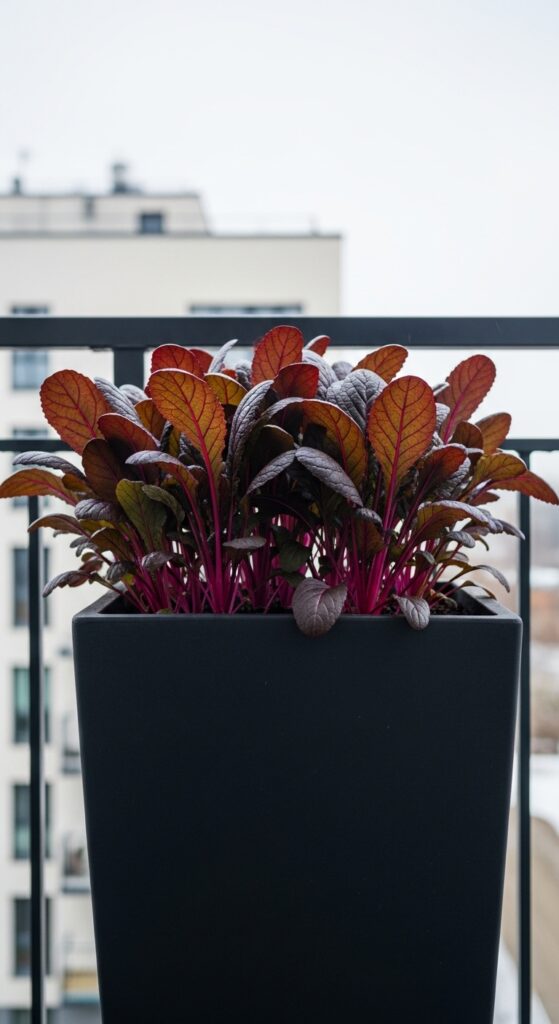
Mustard greens are one of the most underused cold-weather vegetables in urban gardening — and that is a genuine shame, because they are incredibly fast-growing, incredibly cold-hardy, and incredibly delicious. Time to fix that!
Red Giant mustard and Green Wave mustard are the standout varieties — both handle frosts down to around -8°C without flinching, and their flavor actually deepens and develops a wonderful warming pungency as temperatures drop.
💡 Pro Tip: Young mustard leaves (harvested at 10–15cm) are much milder and work beautifully in salads. Let them mature to full size for the bold, peppery punch that’s incredible in stir-fries, soups, and braised dishes.
They’re cut-and-come-again champions — harvest the outer leaves regularly and the plant will keep producing fresh growth all winter. Sow from August through October in containers at least 20cm deep.
Read our peppery salad greens container guide for more bold-flavored cool-season crops. The Rodale Institute has excellent resources on cold-hardy brassicas at rodaleinstitute.org.
If you’ve been ignoring mustard greens, now is absolutely the time to give them a chance — you will be genuinely impressed!
11. Leeks — Architectural, Hardy & Delicious
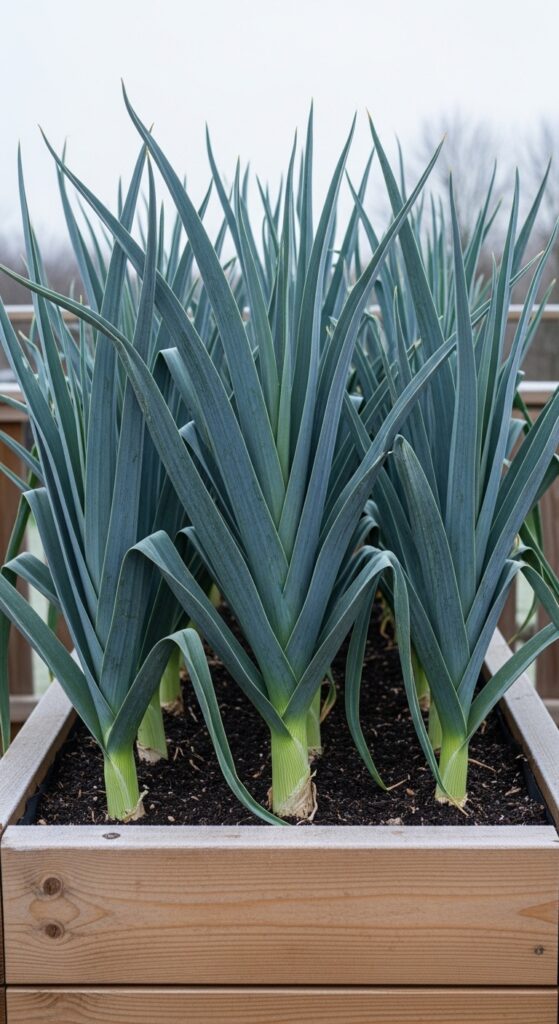
Leeks are a long-season crop that you plant in early summer and harvest right through winter — and they’re so frost-hardy (down to -12°C for most varieties) that you can leave them in their containers right through the harshest weather and harvest as needed. Talk about convenience!
The secret to leeks in containers is a deep pot — at least 35–40cm deep — and hilling up the compost around the stems as they grow to encourage the long white shanks that are the best eating part. The deeper you hill, the longer and more flavorful your harvest.
Varieties like ‘Musselburgh’, ‘Blue Solaise’ (stunning slate-blue foliage), and ‘Bandit’ are specifically winter-hardy and will see you through right to spring without any protection needed.
Their upright, architectural form is also genuinely ornamental — a pot of ‘Blue Solaise’ leeks looks stunning alongside your decorative winter containers. Functional and beautiful — that’s the dream!
Explore our growing leeks in containers guide for the full deep-pot technique that makes all the difference.
Leeks are the winter vegetable that keeps on giving — plant them once and harvest all season long!
12. Garlic — Plant in Autumn, Harvest in Summer
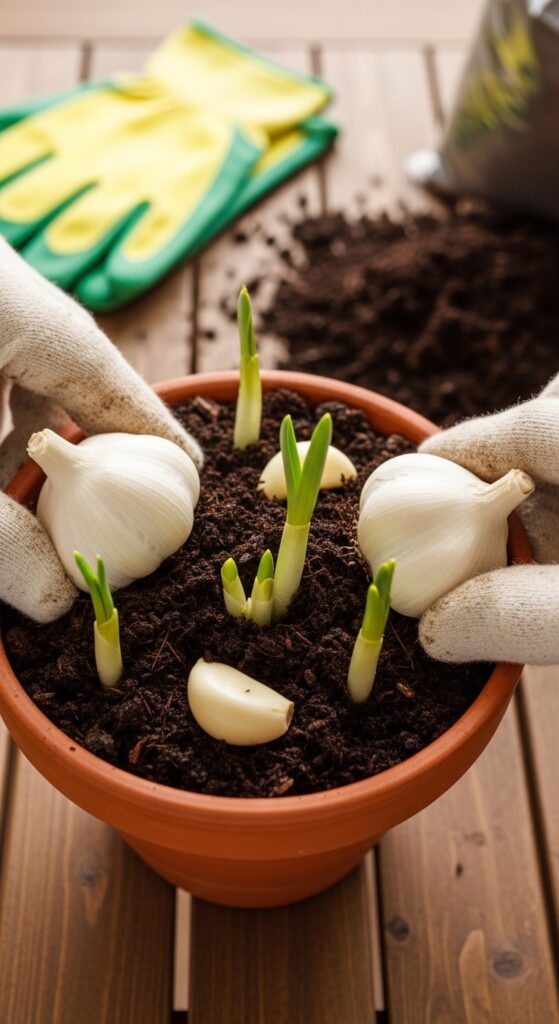
Here’s the thing: garlic is the ultimate delayed-gratification cold-weather crop. You plant the cloves in autumn, watch those first green shoots push up through winter (which is deeply satisfying), and harvest plump bulbs the following June or July. And home-grown garlic absolutely, categorically tastes better than supermarket garlic.
The secret is planting hardneck garlic varieties for containers — they tend to be smaller than softneck types, work well in pots, and have a more complex, nuanced flavor. Try ‘Lautrec Wight’, ‘Purple Wight’, or ‘Chesnok Wight’ for exceptional flavor.
💡 Pro Tip: Plant individual cloves with the pointed end upward, about 10–15cm apart and 5cm deep. One large pot can hold 8–10 cloves easily — enough to give you a decent summer harvest from a single container.
Garlic needs a cold spell to develop properly (vernalization), so don’t try to rush it or bring it indoors. The cold is the secret ingredient!
Check out our growing garlic in containers guide for planting schedules and variety comparisons.
Plant your garlic this autumn and look forward to the most satisfying harvest of next summer — future you will be so grateful!
13. Winter Peas — Yes, You Can!
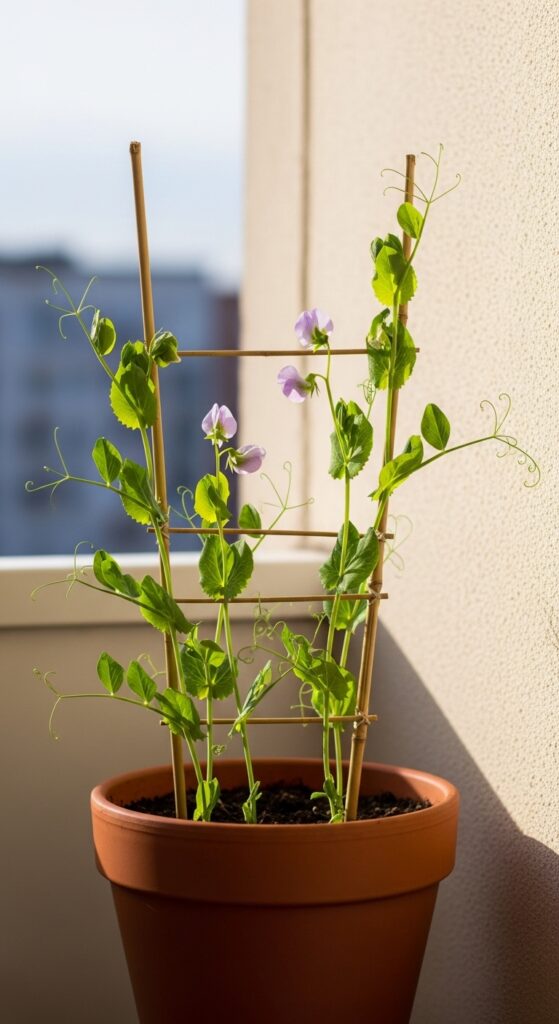
Yes, you absolutely can grow peas in winter — you just need to choose the right varieties! Autumn-sown varieties like ‘Feltham First’, ‘Douce Provence’, and ‘Meteor’ are specifically bred for overwintering and are far hardier than standard summer types.
Sow them in September or early October in tall containers (peas need depth for their root system), give them a small trellis or a few twiggy sticks to climb, and they’ll establish before the coldest weather hits. They’ll sit quietly through the harshest months and then absolutely surge in late winter as temperatures begin to rise.
The harvest in March–April from overwintered peas is earlier than anything you could achieve from a spring sowing — giving you fresh peas weeks ahead of schedule.
Pea shoots are also a wonderful cold-weather harvest — sow peas densely in a wide shallow pot, snip the tender growing tips at 10–15cm, and use them in salads, stir-fries, or as a beautiful garnish. They regrow quickly and keep producing through the coldest months.
Browse our growing peas on balconies with trellises guide for support structure ideas. The National Gardening Association has excellent pea-growing resources at garden.org.
Winter peas are the surprise hero of the cold-season garden — plant them and prepare to be genuinely delighted!
14. Celeriac — Underrated Cold-Weather Star
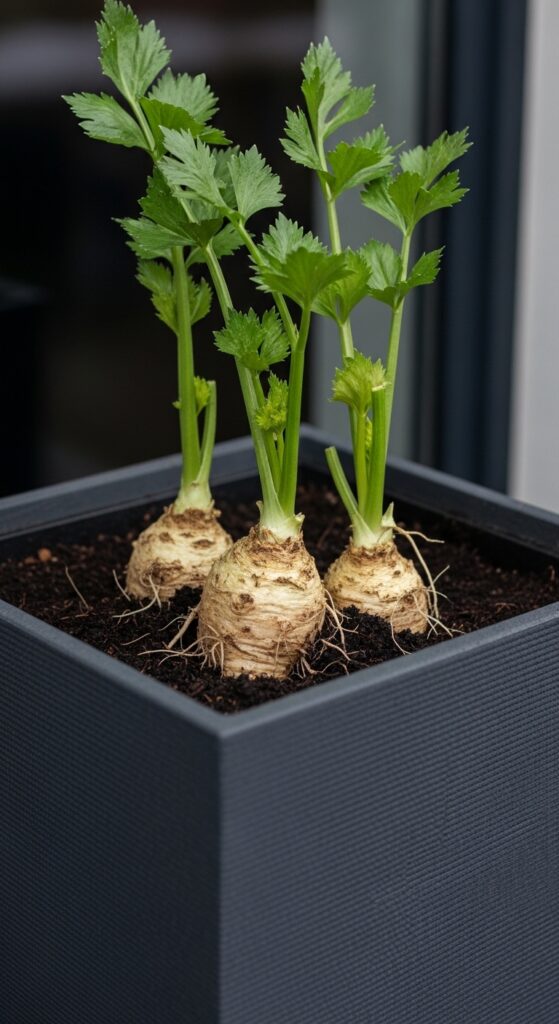
Celeriac is the slightly mysterious, deeply underrated root vegetable that experienced gardeners absolutely swear by. It tastes like a cross between celery and parsley — nutty, earthy, and extraordinary roasted — and it’s remarkably frost-hardy, sitting happily in containers through temperatures down to -8°C.
The secret is starting it early — celeriac needs a long growing season (around 6 months) so you should start seeds indoors in February or March and transplant into final containers in early summer for a winter harvest. It’s not a quick crop, but the reward is extraordinary.
💡 Pro Tip: As the root swells in autumn, remove the lower leaves and any side shoots from around the crown — this exposes the root to more light and encourages it to size up faster and develop better flavor.
It needs a large, deep container (minimum 40cm in all dimensions) and consistent moisture — celeriac hates drying out. Feed fortnightly with a balanced liquid fertilizer from midsummer onwards to support bulking up.
Find our unusual cold-weather vegetables for containers guide for more adventurous growing ideas.
Celeriac rewards patient growers with something truly special — it’s the gourmet cold-weather crop you’ll grow every single year once you try it!
15. Mâche (Corn Salad) — The Frostiest Salad Leaf of All
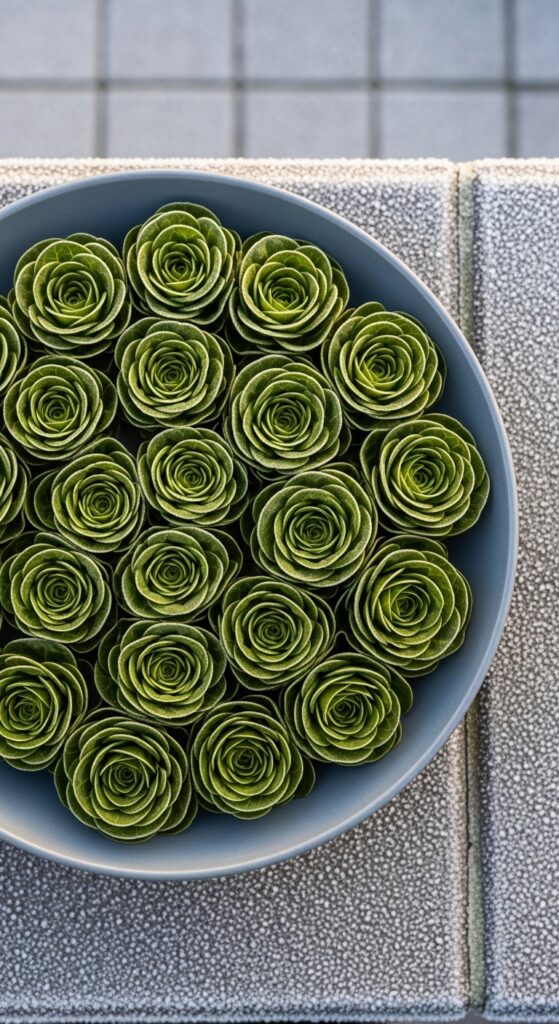
We’re ending on a secret weapon — Mâche, also known as corn salad or lamb’s lettuce, is one of the most cold-tolerant salad leaves in existence. It grows right through winter without any protection, handles hard freezes, and produces small, tender, nutty-flavored rosettes that are beautiful on the plate and in the container.
The secret is that mâche actually grows fastest in cool conditions — it bolts quickly in warmth, making it a terrible summer crop but a phenomenal cold-season one. Sow from August through October in wide, shallow containers and it’ll keep producing fresh leaves right through to spring.
Harvest the whole rosettes when they reach about 8–10cm across, or snip leaves as needed. Density planting works brilliantly here — pack the seeds in thickly and thin lightly to just a few centimeters apart.
It pairs beautifully with winter radishes, boiled beets, and a walnut vinaigrette — a classic French combination that uses only cold-weather crops and is absolutely stunning. Pretty cool, right?
- Frost-hardy to -15°C — genuinely the toughest salad leaf available
- Needs virtually no attention once established
- Slow-growing but completely reliable in cold conditions
- Beautiful rosette form makes it ornamentally attractive in containers
Check out our frost-hardy salad leaves growing guide for the full cold-season salad garden plan.
Mâche is the quiet, dependable star of the winter vegetable garden — give it a pot and it’ll feed you faithfully all season!
Frequently Asked Questions
What temperature is considered “cold weather” for vegetables?
Most cold-weather vegetables thrive in temperatures between 7°C and 18°C (45°F–65°F) — cooler than what summer crops like tomatoes and courgettes prefer. Light frosts (down to around -3°C to -5°C) are tolerated or even welcomed by the hardiest types like kale, mâche, and leeks. The key is matching your specific vegetable to the temperatures it can handle, and using fleece or cloches for the more delicate varieties when temperatures drop below their threshold.
Can I really grow cold weather vegetables in containers on a balcony?
Absolutely! The majority of cold-weather vegetables are well-suited to container growing, especially leafy crops, radishes, spring onions, and salad leaves. The main consideration is using deep enough containers for root crops (carrots, leeks, celeriac) and insulating pots in very hard freezes to protect roots. A south- or west-facing balcony will give the best results, but even a north-facing space can produce good harvests of shade-tolerant crops like spinach and mâche.
How do I protect my cold weather vegetable containers from hard frosts?
The most effective methods are covering plants with horticultural fleece overnight when heavy frosts are forecast, placing containers against a sheltered wall to buffer against wind chill, and wrapping the pots themselves in bubble wrap or hessian to insulate the root zone. A simple cold frame (even a DIY version using old windows over a wooden box) can extend your growing season significantly. Grouping pots together also creates a beneficial microclimate.
When should I start sowing cold weather vegetables?
Most cold-weather vegetables should be sown from late July through to October for an autumn and winter harvest. Starting too late means plants won’t be established before the coldest weather arrives; starting too early risks bolting in warm late-summer conditions. For garlic and overwintering peas, September–October is the ideal planting window. Succession sowing every 2–3 weeks ensures a continuous harvest rather than a glut followed by a gap.
Do cold weather vegetables need as much watering as summer crops?
Significantly less! In cool temperatures, soil dries out much more slowly and plants are growing at a slower rate. Most winter vegetables need watering only when the top few centimeters of compost feel dry — typically once or twice a week at most, and less during wet spells or freezing weather. The biggest risk in winter is overwatering leading to root rot, not underwatering. Always check soil moisture before watering rather than watering on a schedule.
A Few Final Thoughts
Cold weather vegetable gardening is one of the most rewarding things you can do as an urban grower — and now you’ve got 15 incredible crops to experiment with this season! The real joy of growing your own cold-weather vegetables is that flavor genuinely improves with the cold in so many of these crops, giving you a quality of fresh produce that no supermarket can match. Whether you start with dead-easy kale and spinach or dive straight into celeriac and overwintering peas, every single plant on this list is achievable in containers on an urban balcony with the right approach. Cold-season growing is where the real magic happens for year-round gardeners — so don’t let the temperature drop stop you from growing. Now go make it happen! 🥬