
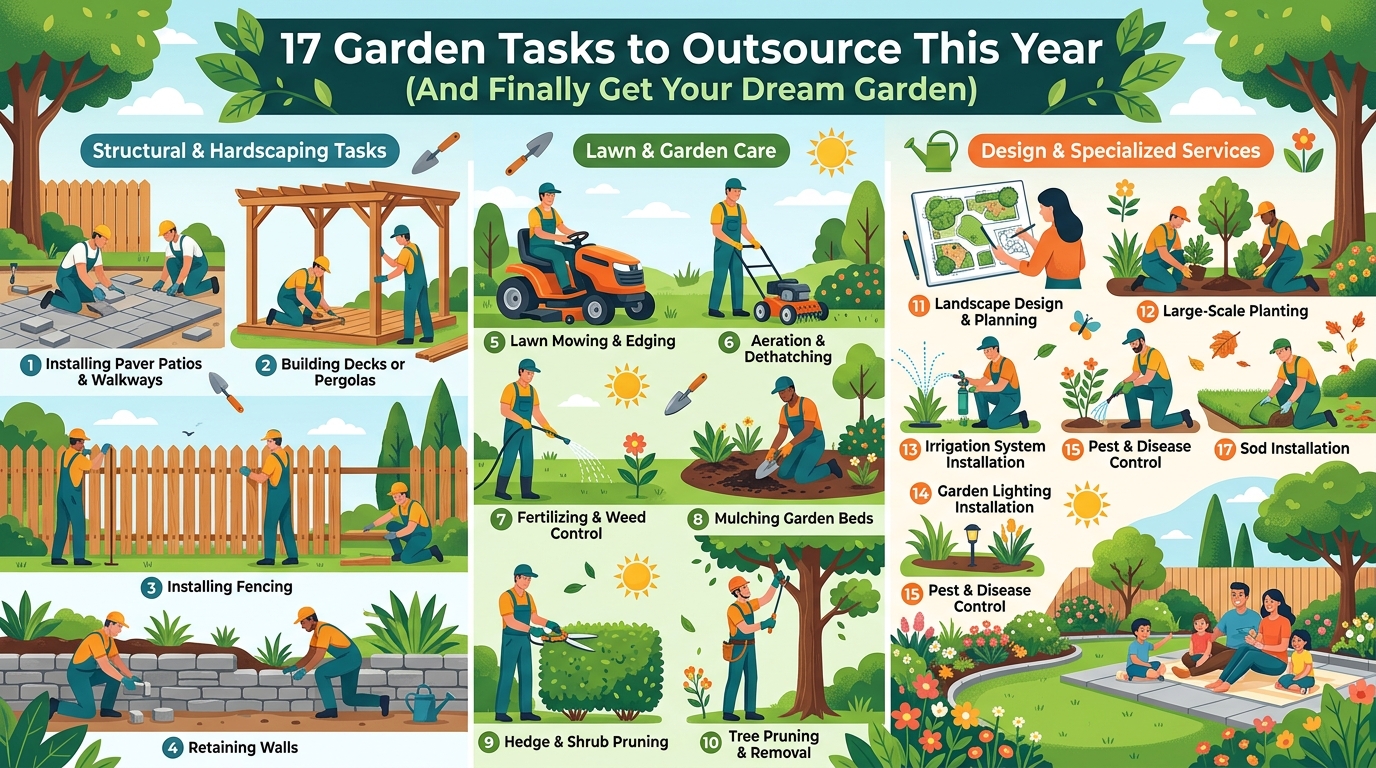
Be honest — how long has that overgrown hedge been silently judging you every time you walk past it? How many weekends have you planned to sort out the patio, fix the irrigation, or finally tackle that tree that’s getting way too big, only to run out of time, energy, or the right equipment? Here’s the truth: outsourcing garden tasks isn’t admitting defeat — it’s one of the smartest, most liberating decisions a busy gardener can make. Getting the right professional in for the right job saves you time, money, and the very real risk of injuring yourself with equipment you’ve only used twice. Ready to reclaim your weekends AND get a better-looking garden? Let’s dive in!
At a Glance
- Outsourcing garden tasks strategically — focusing professionals on the high-skill, high-risk, or time-intensive jobs — frees you up to focus on the parts of gardening you actually enjoy.
- Tasks involving power tools, working at height, chemicals, or heavy machinery are the clearest candidates for professional outsourcing on both safety and quality grounds.
- One-off outsourcing for big seasonal jobs like hedge cutting, lawn scarification, and tree surgery is often far more cost-effective than buying and storing specialist equipment you’ll only use once a year.
- Hiring professionals for design, soil assessment, and irrigation installation at the start of a garden project saves significantly more money in the long run than fixing DIY mistakes later.
- Even small gardens and urban balcony spaces benefit from occasional professional input — a one-time consultation with a garden designer or horticulturalist can transform how you use and enjoy your space for years.
1. Tree Surgery & Crown Reduction
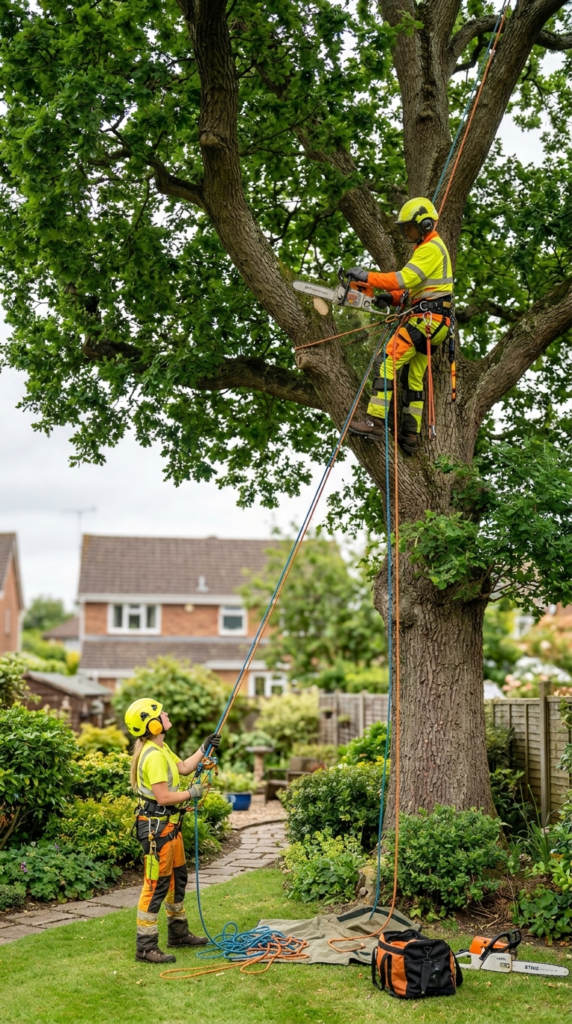
Let’s start with the one that absolutely, unambiguously, should never be a DIY job — tree surgery. Working at height with a chainsaw in a tree is one of the most dangerous activities a homeowner can undertake, and every year people are seriously injured attempting what looks like a straightforward trim from the ground.
A qualified arborist (look for ISA Certified or NPTC-qualified in the UK) doesn’t just cut branches — they assess the whole tree’s structural health, identify disease or decay that isn’t visible from the ground, understand how the tree will respond to different pruning approaches, and execute the work with rigging equipment that means heavy branches don’t simply crash onto your fence, greenhouse, or head.
Crown reduction (reducing the overall size of the canopy), crown lifting (removing lower branches for clearance), deadwooding (removing dead or dying branches that are a falling hazard), and felling are all tasks where the cost of a professional is genuinely nothing compared to the cost of getting it wrong.
💡 Pro Tip: Get three quotes from qualified arborists and ask each one for their assessment of the tree’s health as well as the cost of the work. An arborist who takes time to explain what they’re seeing in the tree’s structure and why they’re recommending a particular approach is almost always worth paying slightly more for than the cheapest quote that comes with no explanation at all.
- Always check for Tree Preservation Orders (TPOs) before any tree work — your local council can confirm if your tree is protected
- Ask for proof of public liability insurance before any arborist starts work
- Never let anyone work in your trees without proper safety equipment and qualifications
- The best time for most deciduous tree work is late autumn to early spring when the tree is dormant
Check out our when to call an arborist — the complete homeowner guide for what to expect and how to find qualified professionals. The Arboricultural Association has a brilliant find-a-professional service at trees.org.uk.
Tree surgery is the one garden task where outsourcing isn’t just smart — it’s the only genuinely responsible choice!
2. Lawn Scarification & Aeration
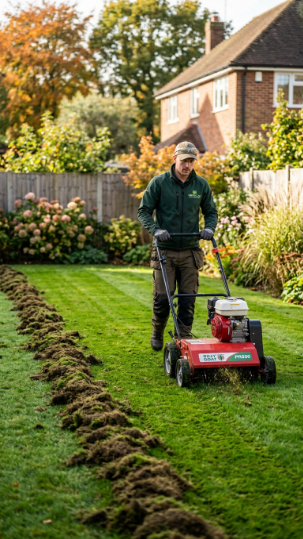
Here’s the deal: scarification and aeration are the two lawn tasks that make the single biggest difference to long-term lawn health — and they’re also the two tasks most homeowners never do at all, because the equipment required is expensive to buy, heavy to handle, and awkward to store between annual uses.
Lawn scarification (removing the layer of dead grass, moss, and organic debris — called thatch — that accumulates between the grass plants) is genuinely hard work even with a machine. A professional-grade petrol scarifier removes thatch far more effectively than the electric or manual versions available to hire, and a lawn care professional will set the blade depth correctly for your specific grass type and thatch thickness rather than guessing.
Hollow-tine aeration — where a machine pulls small plugs of soil from the lawn to relieve compaction and improve drainage — requires specialist equipment that’s genuinely not worth buying for a single annual use. Combined with a top dressing of sharp sand and compost worked into the aeration holes, this treatment transforms a compacted, puddle-prone lawn more effectively than any other single intervention.
💡 Pro Tip: Book your lawn scarification and aeration for early to mid-autumn (September–October in the UK) — the soil is still warm enough for the grass to recover quickly before winter, and the treatment gives the lawn the best possible platform for strong spring growth. Spring treatment is second-best; summer treatment in dry conditions can stress the lawn badly.
Read our professional lawn care treatments — what they are and when to book for a full seasonal lawn treatment calendar.
Your lawn will look better the spring after a professional scarification and aeration than it has in years — this is the outsourcing investment that pays back visually almost immediately!
3. Hedge Cutting for Large or Tall Hedges
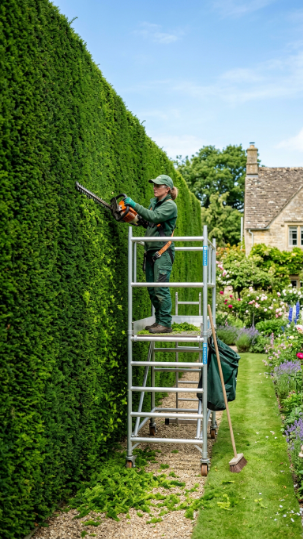
A well-clipped hedge is one of the most beautiful things in any garden — and a badly clipped hedge with wonky lines, scalped patches, and uneven faces is one of the most frustrating. For large, tall, or formal hedges, outsourcing to a professional hedge cutter is absolutely worth it on both quality and safety grounds.
The safety argument is straightforward: cutting a tall hedge from a ladder with powered hedge trimmers is a genuine fall risk, particularly on sloping ground. Professional hedge cutters use platform towers or scaffold boards that give stable, level working positions along the full length of the hedge — they cut straighter lines, work faster, and don’t risk their necks doing it.
The quality argument is equally compelling: an experienced hedge cutter understands how to angle the hedge faces correctly (wider at the base, slightly narrower at the top — the classic ‘A’ profile that keeps the base in light and prevents die-back at the bottom), how to set a true horizontal line along the top, and how hard to cut different species without triggering browning or die-back.
For formal box, yew, hornbeam, beech, or Leylandii hedges above approximately 1.5m height, or any length of hedge over about 15–20 meters, professional cutting almost always produces a better result than DIY — and the time saving is enormous.
| Hedge Type | Cutting Frequency | DIY Feasible? | Best Time to Cut |
| Box (Buxus) | 2–3x per year | Under 1m, yes | May, August |
| Yew (Taxus) | Once per year | Under 1.5m, yes | August–September |
| Hornbeam/Beech | Once per year | Under 1.5m, yes | August |
| Leylandii | 2–3x per year | Under 2m, yes | April, August |
| Privet | 3x per year | Any height, yes | June, August, October |
Explore our hiring a hedge cutting professional — what to expect and what to pay for pricing guidance and how to brief a contractor.
A professionally cut hedge transforms the whole character of a garden — crisp, precise green architecture that makes everything inside the garden look more beautiful and more intentional!
4. Garden Design Consultation

Here’s the thing: a one-off garden design consultation is one of the most underused and highest-value professional garden services available — and it doesn’t have to cost a fortune or commit you to a full design commission. Even a two-hour visit from a qualified garden designer can completely transform how you see, use, and develop your outdoor space.
A good garden designer brings spatial awareness, plant knowledge, and aesthetic judgment that most homeowners simply haven’t had the opportunity to develop. They can look at a garden you’ve been staring at for years and immediately identify why it doesn’t feel right — proportion problems, circulation issues, the wrong plants in the wrong places, opportunities you’ve been walking past without seeing.
For urban gardens, balconies, and small outdoor spaces, a design consultation is particularly valuable — small spaces have less margin for error than large gardens, and getting the layout, scale, and plant selection right from the start makes an enormous difference to what’s achievable.
💡 Pro Tip: Before your consultation, write down every frustration you have with your current garden — what doesn’t work, what you don’t use, what you wish were different, and what you absolutely love and want to keep. A designer can only work with the brief you give them, and the more specifically you can articulate what’s wrong and what you want, the more useful their advice will be.
- Ask for a designer who specialises in your garden type and size — a specialist in large country gardens isn’t necessarily the best choice for a city courtyard
- Society of Garden Designers membership (SGD) is a good quality indicator in the UK
- Many designers offer paid consultation services separately from full design commissions
- Ask specifically for plant recommendations suited to your soil, aspect, and maintenance level
Read our how to get the most from a garden design consultation for preparation tips and the right questions to ask. The Society of Garden Designers has a find-a-designer tool at sgd.org.uk.
One great design consultation can save you years of expensive trial and error — it’s the professional investment that keeps paying back every single season!
5. Irrigation System Installation
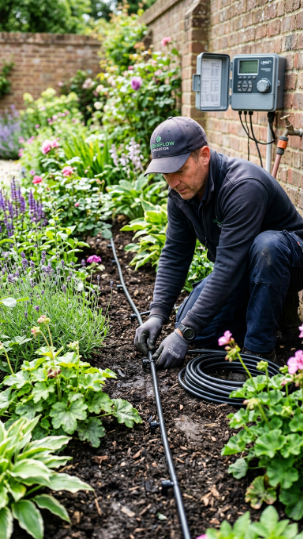
Drip irrigation is the single most effective tool for reducing watering time, preventing plant loss during holidays, and improving plant health — and it’s also the garden installation that most people attempt as a DIY project and regret almost immediately. Getting irrigation right requires understanding water pressure, flow rates, emitter spacing, and zone planning that a professional installer gets right first time.
A professionally designed and installed drip irrigation or micro-spray system with a smart timer that adjusts watering based on weather conditions can reduce your garden’s water consumption by 50–70% compared to overhead sprinkler or hand watering, while simultaneously improving plant health by delivering water directly to the root zone rather than the foliage.
For container gardens, balconies, and raised beds, a professional irrigation installer can design a completely custom system that waters each individual pot at the right rate for its specific plant — your moisture-loving ferns getting more than your drought-tolerant succulents, all on the same timer.
The time saving from a well-installed irrigation system is life-changing for busy gardeners — particularly over the summer when hand-watering a large garden or a collection of balcony containers can take 30–45 minutes every single day.
Explore our professional garden irrigation installation — what’s involved and what it costs for system types, typical pricing, and how to brief an installer.
An irrigation system installed properly is one of those garden investments that pays back in saved time, saved plants, and saved water every single year — get a professional to do it right!
6. Soil Testing & Remediation
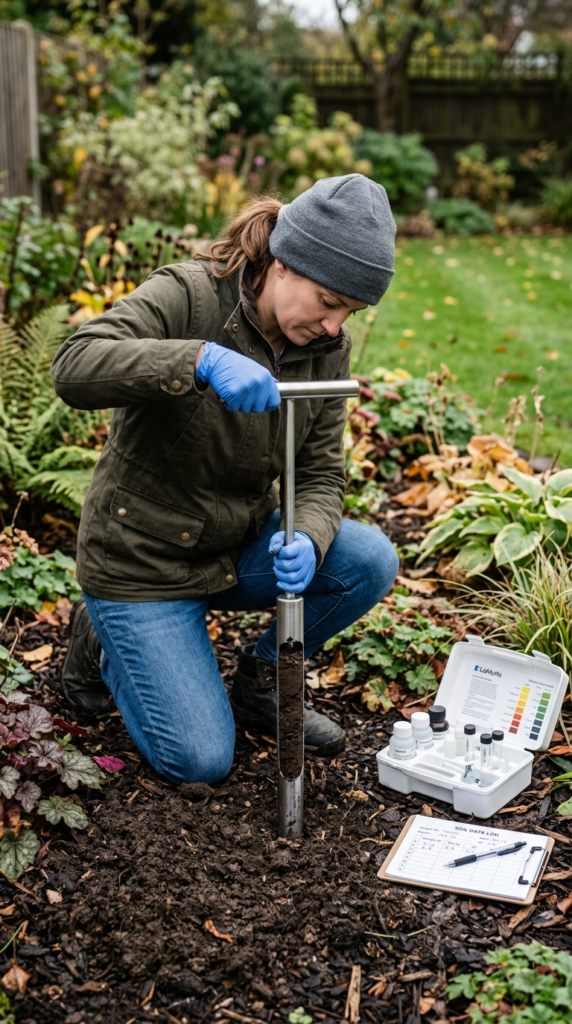
Here’s the deal: if you’ve ever wondered why certain plants keep struggling despite your best efforts, why your lawn goes yellow every summer, or why nothing seems to thrive in a particular border — a professional soil test is almost certainly the answer you’ve been looking for, and it costs far less than the replacement plants you keep buying.
A comprehensive professional soil analysis goes far beyond the basic pH test you can do at home — it measures nitrogen, phosphorus, potassium, magnesium, and trace elements, gives you a detailed picture of your soil’s texture and organic matter content, and comes with specific remediation recommendations for your exact growing goals.
Soil remediation — the process of improving deficient or problematic soil through targeted amendments, organic matter addition, pH adjustment, or drainage improvement — is a job that benefits enormously from professional assessment. Adding the wrong amendment in the wrong quantity can make soil problems worse rather than better, and a professional analysis takes the guesswork out entirely.
💡 Pro Tip: Have your soil tested before starting any new garden project, border redesign, or lawn renovation — understanding exactly what you’re working with means you spend your planting budget on plants that will actually thrive in your specific soil conditions rather than plants that struggle from day one.
Read our professional soil testing for home gardens — how it works and what it reveals for what to expect and how to find a reputable testing service.
Soil testing is the foundation of everything else in your garden — get it done once and every planting decision you make thereafter becomes dramatically more informed and more successful!
7. Hard Landscaping & Paving Installation
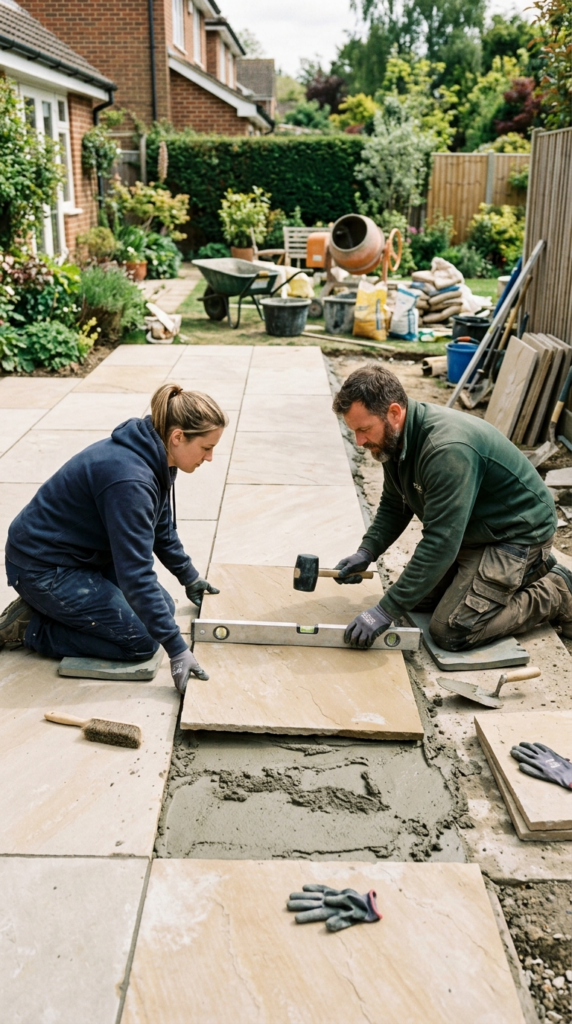
Hard landscaping — paving, patios, paths, steps, retaining walls, and decking installation — is the area where DIY most frequently produces expensive problems that professional rectification later costs far more to fix than the original professional installation would have. Poorly laid paving sinks and becomes uneven. Incorrectly prepared sub-bases lead to frost heave and cracking. Retaining walls without proper engineering fail dangerously.
A professional hard landscaper brings the groundwork knowledge, tools, and experience to prepare sub-bases correctly (the unsexy, invisible work that determines whether your patio still looks good in ten years), set falls correctly for drainage, cut stone accurately, and bed and joint materials to a standard that lasts.
For large format stone paving in particular — those beautiful big slabs of porcelain, sandstone, or limestone — the skill required to bed them flat and level without lippage (the trip-hazard step between adjacent slabs) is significant and not reliably achievable with basic DIY experience.
Decking installation on a balcony or raised structure also genuinely benefits from professional installation — the structural fixings, joist spacing, and ventilation requirements that prevent premature deck rot are not intuitive and getting them wrong shortens the lifespan of an expensive material significantly.
| Landscaping Task | DIY Risk Level | Most Common DIY Failure |
| Patio laying | High | Poor sub-base, sinking, lippage |
| Path construction | Medium | Inadequate falls, flooding |
| Steps construction | High | Incorrect rise/run, instability |
| Retaining walls | Very high | Structural failure, subsidence |
| Decking installation | Medium-high | Joist rot, structural flex |
| Raised bed construction | Low | Minimal risk — good DIY job |
Explore our hiring a hard landscaper — how to find good ones and avoid expensive mistakes for vetting advice, contract tips, and red flags to watch for.
Get your hard landscaping done professionally and it becomes the permanent, beautiful foundation your whole garden design builds on — for decades!
8. Fence Installation & Repair
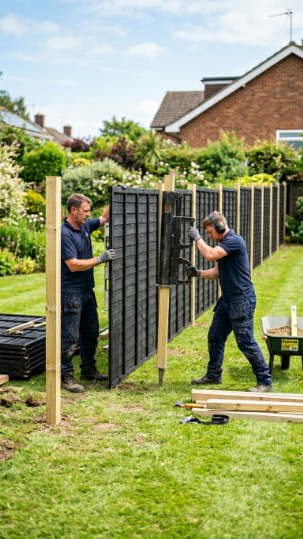
A leaning, rotting, or storm-damaged fence is one of those garden tasks that sits on the to-do list for months (sometimes years) because it seems like a big, complicated job — and for good reason. Proper fence installation involves setting posts at the correct depth and in concrete, ensuring consistent panel heights on sloping ground, and using the right fixing method for the fence type and post material.
Concrete spurs (reinforcing deteriorating timber posts at ground level) are particularly fiddly and benefit from professional execution — the spur needs to be correctly positioned and packed firmly in concrete or the fence remains unstable regardless of the repair.
The boundary and planning considerations around fencing are also worth professional attention — a qualified fencer will advise on permitted development heights (1m adjacent to a highway, 2m elsewhere in most UK situations), party boundary etiquette, and the correct orientation of panels relative to your boundary line. Getting these wrong can lead to expensive disputes and forced removal.
💡 Pro Tip: When briefing a fence installer, always ask them to use pressure-treated timber throughout — posts, gravel boards, and capping rails as well as panels — and specify concrete or composite posts rather than timber posts for maximum longevity. The additional cost of properly treated or concrete posts is minimal compared to the cost of replacing posts that rot at the ground line five years later.
Read our hiring a professional fence installer — what to ask and what to pay for specification guidance and red flags in quotes.
A properly installed fence is invisible infrastructure — you stop thinking about it because it just works, year after year, storm after storm!
9. Stump Grinding & Removal
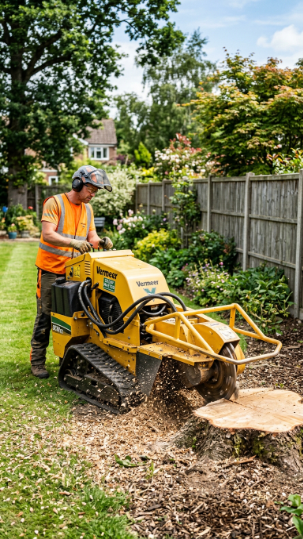
That tree stump left behind after a felling job is one of the most persistent and annoying garden obstacles imaginable — too hard to dig out by hand, too large to rot quickly enough to be useful, and the perfect home for honey fungus that can spread to the roots of surrounding plants. Stump grinding is the efficient, professional solution and it’s a job that simply cannot be done without specialist equipment.
A stump grinder — a machine with a rotating cutting wheel that reduces the stump to woodchip below ground level in minutes — is not practical to own for a single use. Hire machines exist but are heavy, difficult to maneuver, and have a genuine injury risk for untrained operators. A professional stump grinding company completes the average garden stump in 20–40 minutes and leaves you with a pile of chips you can use as mulch and a level surface ready for replanting.
The depth of grinding matters — simply grinding to ground level leaves a large root mass that will continue to attempt to regrow from lateral roots for years. A professional will grind 15–20cm below surface level to prevent regrowth and remove enough root material that replanting the area becomes practical.
Explore our stump grinding — what’s involved, what it costs, and how to find a professional for everything you need to book this job confidently.
Stump grinding turns a garden obstacle that’s been annoying you for years into solved problem in under an hour — few outsourced garden jobs deliver such instant, satisfying results!
10. Lawn Turfing or Seeding on Large Areas
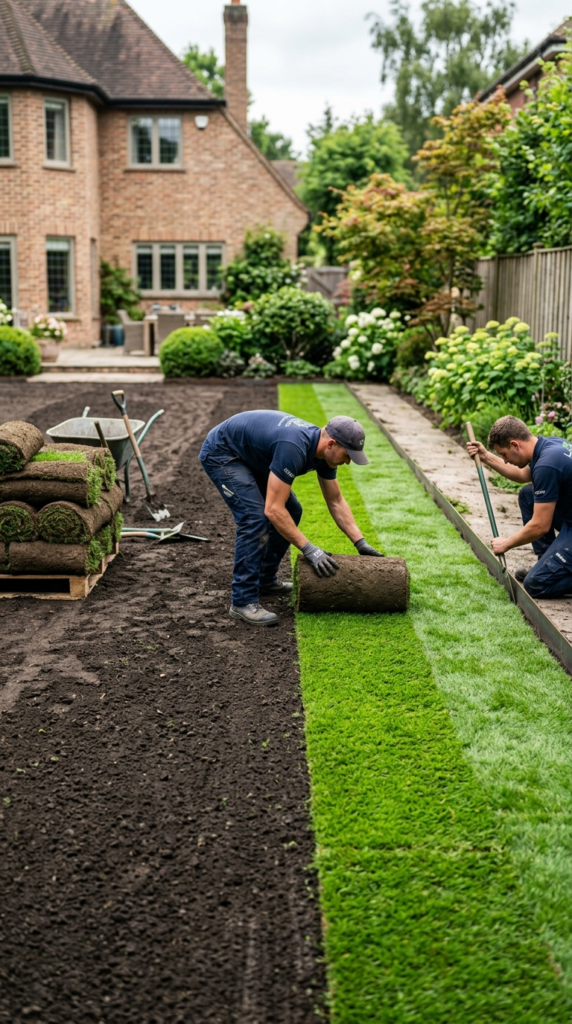
Here’s the deal: a badly prepared and laid lawn looks terrible, establishes poorly, and costs far more to rectify than the original professional laying would have. The preparation is everything — level ground, correct sub-base consolidation, quality topsoil depth — and it’s the preparation work that most DIY lawn projects skip or rush.
For areas over approximately 50 square meters, professional turfing or seeding makes both practical and economic sense. Professional landscapers have the plate compactors and laser levels to prepare a genuinely flat surface (achieving a truly level lawn by eye with a rake is far harder than it looks), and they source turf direct from turf farms at a significantly lower cost per roll than garden center pricing.
Turf variety selection is also an area where professional advice pays off — choosing the right turf mix for your usage level (heavy family use versus decorative), your soil type, and your aspect (sun versus shade) makes a significant difference to how well the lawn establishes and how it performs long-term.
💡 Pro Tip: If you’re having a lawn professionally laid, ask your landscaper to include a 10% turf surplus in the order — turf cut to fit curves and edges always generates offcuts, and having surplus turf available for repairs in the critical first establishment season (when gaps and failure spots occasionally appear) is enormously useful.
Check out our professional lawn installation — turfing versus seeding, costs and what to expect for the full briefing guide.
A professionally prepared and laid lawn is one of those foundation investments that everything else in your garden frames — get it right from the start!
11. Pest & Disease Treatment
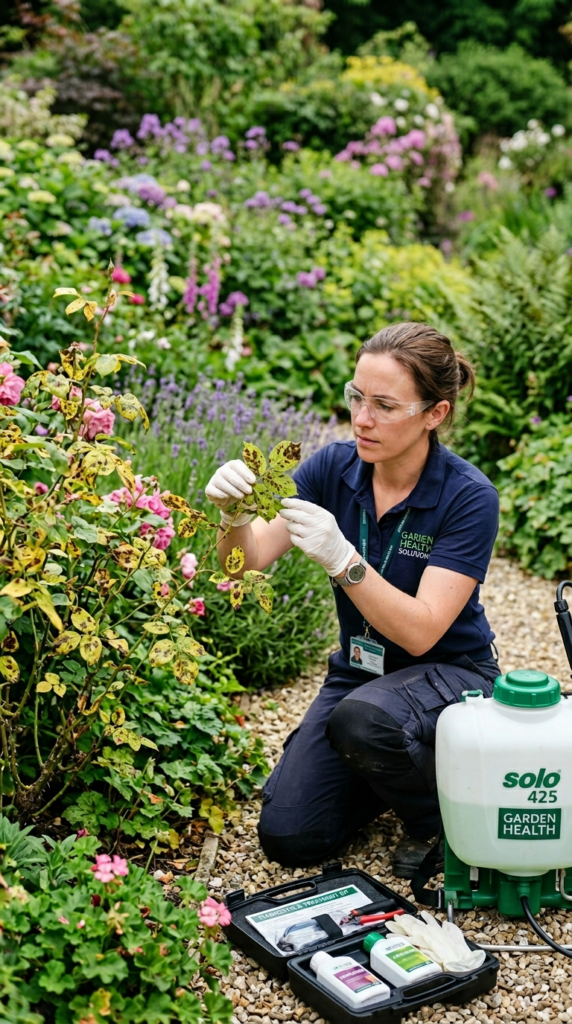
Serious pest and disease problems in the garden — box tree caterpillar, vine weevil infestation, honey fungus, Phytophthora root rot, severe scale insect or mealy bug populations — often need professional diagnosis and treatment to be properly resolved. The wrong treatment applied to the wrong problem wastes money, delays resolution, and can damage the surrounding garden.
A professional horticulturalist or garden health specialist brings diagnostic knowledge that allows them to correctly identify the problem first — many disease symptoms look similar to each other and to nutrient deficiencies, and treating a nutrient deficiency with fungicide (or vice versa) solves nothing. Correct identification is the foundation of effective treatment.
For pest problems involving notifiable pests (like certain invasive plant pathogens), there may also be legal requirements around treatment and disposal that a professional will navigate correctly and that DIY treatment risks violating.
Commercial-grade treatments available to professionals are often significantly more effective than consumer products — particularly for persistent or established infestations — and a professional application ensures correct concentration, coverage, and safety precautions that consumer application frequently misses.
Read our when to call a garden pest and disease professional for a guide to which problems are DIY-manageable and which need specialist attention.
The right professional treatment on the right problem, early in an infestation, saves plants, money, and months of frustration — don’t let problems escalate before asking for help!
12. Greenhouse or Polytunnel Erection
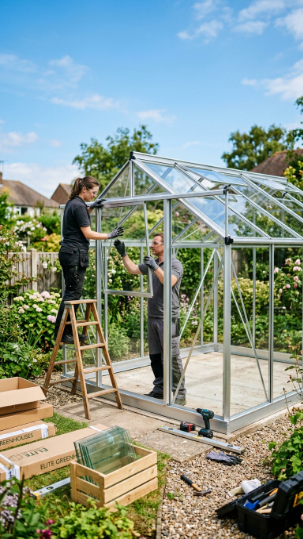
Greenhouse and polytunnel assembly sits in that frustrating middle ground of garden tasks — not quite as dangerous as tree surgery, but enormously time-consuming, surprisingly complex, and frequently producing results (draughty, improperly glazed, structurally wobbly greenhouses) that undermine the whole investment in the structure.
Most greenhouse manufacturers and specialist retailers offer professional assembly services as an add-on to purchase — and for structures over approximately 6×8 feet, this service is almost always worth taking. Getting the base perfectly level (non-negotiable for a greenhouse frame to sit and seal correctly), assembling the frame squarely, and fitting glass or polycarbonate panels without gaps or cracked panes all require patience, care, and ideally a second pair of hands.
💡 Pro Tip: Before your greenhouse assembly team arrives, ensure the base is completely level and fully prepared — most assembly issues stem from a base that isn’t quite right rather than from the structure itself. A concrete or paving slab base, properly leveled, gives the best long-term foundation for a greenhouse and prevents the frame warping as the ground settles beneath it.
For polytunnels, professional installation is particularly valuable — tensioning the polythene cover correctly (neither too loose nor too tight) requires experience and specific technique, and an incorrectly tensioned cover tears in wind and degrades rapidly from UV.
Explore our greenhouse assembly — DIY versus professional installation guide for a task breakdown and cost comparison.
A properly assembled greenhouse opens up a whole new world of growing — get the assembly right and it’ll serve you brilliantly for decades!
13. Moss & Algae Treatment on Paving and Decking
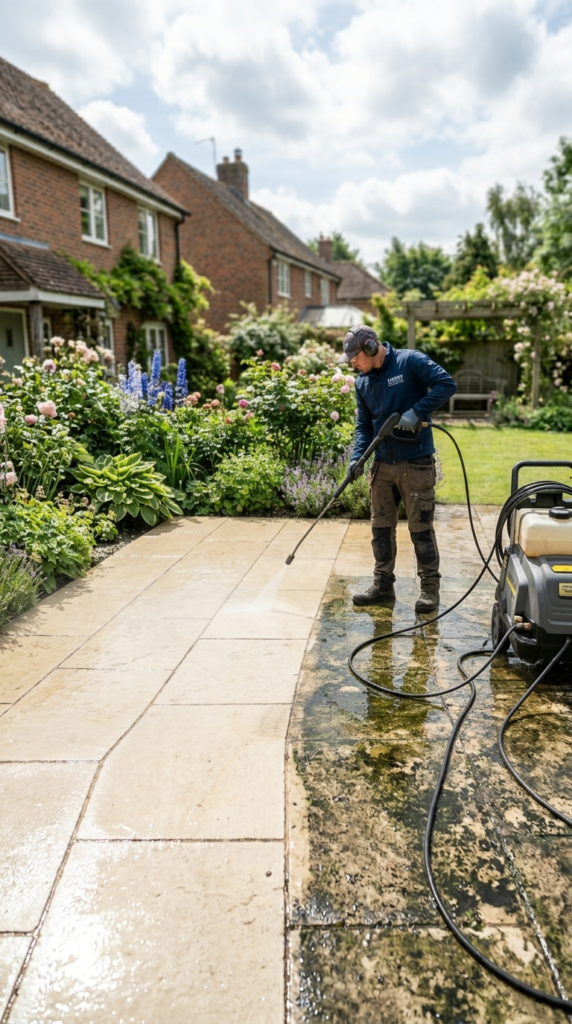
Slippery, green, algae-covered paving or decking is both an aesthetic problem and a genuine slip-hazard — and pressure washing it yourself with a domestic machine is one of those jobs that takes three times longer than expected, produces inconsistent results, and leaves you soaking wet. Professional treatment produces a dramatically better result in a fraction of the time.
Professional paving and decking treatment involves hot water pressure washing (far more effective than cold water domestic machines for killing algae and moss rather than simply redistributing it), followed by application of professional-grade biocidal treatments that prevent algae and moss re-establishment for 12–24 months rather than the 4–6 weeks typical of consumer products.
Natural stone paving in particular benefits from professional treatment — incorrect pressure washing technique (wrong angle, wrong pressure, too close) can damage the surface of sandstone, limestone, and slate permanently, while a professional uses the correct settings for each material type.
Decking treatment should also include inspection of the decking boards for rot, loose fixings, and structural issues — a professional will flag any safety concerns while cleaning, giving you the opportunity to address them before they become serious problems.
Read our professional paving and decking treatment — what to expect and how to book for seasonal timing advice and what a professional treatment includes.
A professionally cleaned and treated patio or deck instantly transforms how your whole garden looks — it’s one of the most dramatic single-day makeover results available for any outdoor space!
14. Planting Design for Borders & Beds
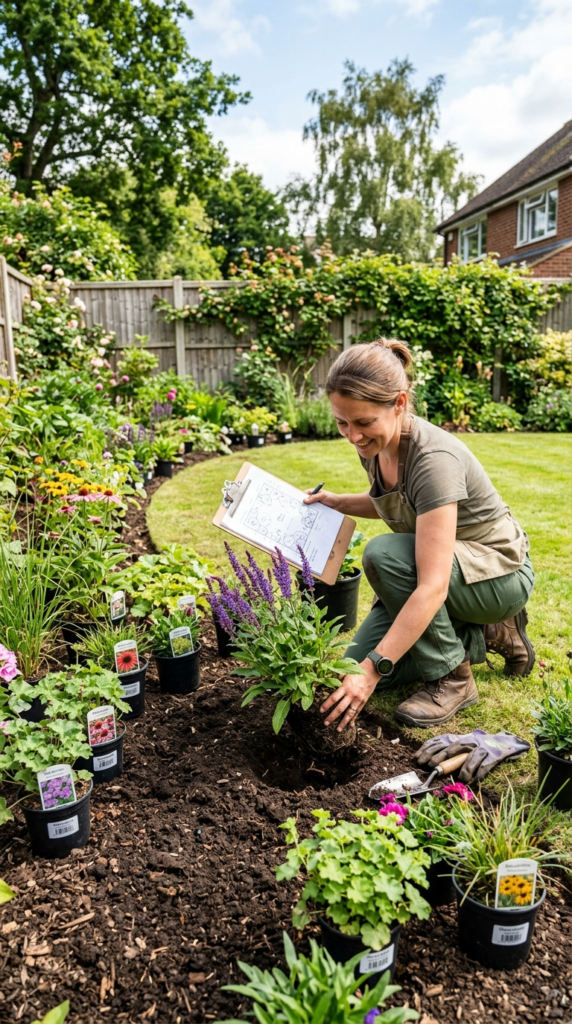
Here’s the thing: planting design — the art of choosing the right combination of plants for a specific border in terms of height, color, season, soil preference, and maintenance level — is a genuinely skilled professional discipline that takes years of plant knowledge to execute confidently. Outsourcing it for one key border can teach you more about good planting than ten years of trial and error on your own.
A professional planting designer creates combinations that deliver year-round interest through careful succession planning — spring bulbs followed by early perennials followed by summer peak followed by autumn seedheads and berries — that most amateur planting misses because we naturally plant for the current moment rather than the whole calendar.
The soil preparation and planting execution is just as important as the plant selection — a professional planter will assess your soil, amend it correctly for the plants chosen, plant at the correct depth and spacing, and establish a weed-suppressing mulch that gives the new planting the best possible start.
💡 Pro Tip: Ask your planting designer to provide a seasonal interest calendar alongside the planting plan — a simple chart showing what’s contributing color, interest, or fragrance in each month. It’s an incredibly useful reference for understanding how the border is designed to work throughout the year and for making any future additions that fit the scheme.
Explore our hiring a professional planting designer for your garden borders for what to brief and what to expect.
One professionally designed border shows you what’s possible and raises your whole garden’s ambition — it’s the investment that changes how you think about your entire outdoor space!
15. Water Feature Installation & Maintenance
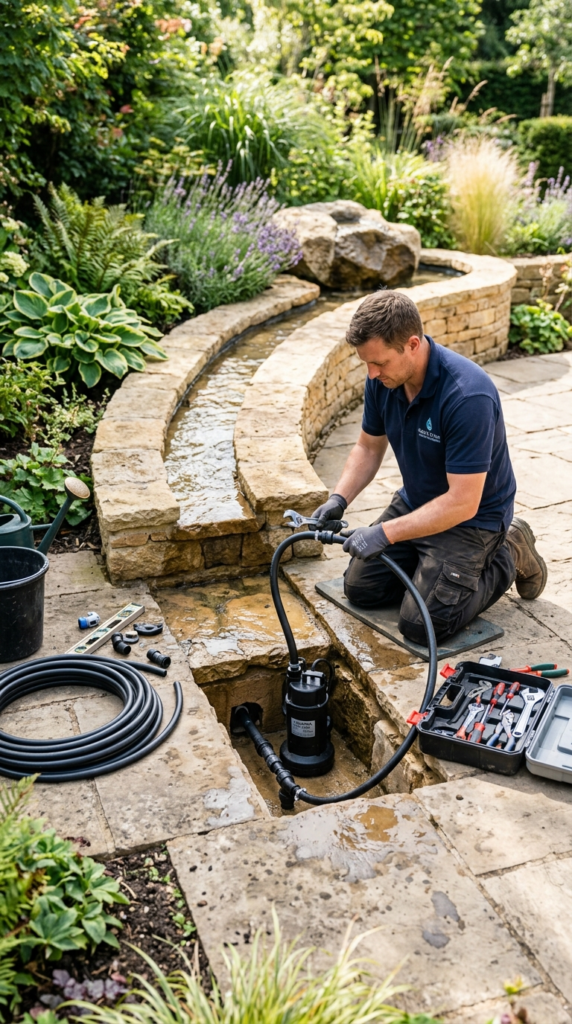
Water features — whether a wall-mounted fountain, a garden rill, a wildlife pond, or a millstone bubble fountain — add more to a garden’s atmosphere than almost any other single element. They also, when self-installed with insufficient plumbing or electrical knowledge, leak, fail, go green, and become expensive maintenance headaches. Professional installation prevents all of this.
The electrical element of water feature installation is the clearest case for professional involvement — outdoor electrical installations near water must comply with specific safety regulations (Part P of the Building Regulations in the UK), must use correctly rated outdoor waterproof sockets and switches, and must be protected by an RCD (Residual Current Device). DIY electrical work near water is a genuine electrocution risk and insurance may not cover damage or injury from unpermitted electrical installation.
Pond installation at any meaningful scale involves liner sizing, edging detail, planting shelf construction, filtration system design, and wildlife access — all areas where professional experience produces dramatically better functional and aesthetic results than first-time DIY attempts.
Ongoing maintenance of water features — cleaning filters, treating algae, checking pumps, dividing aquatic plants — is a service many garden maintenance companies offer on a monthly or quarterly basis, keeping your water feature looking beautiful without requiring you to remember to do it.
Read our professional water feature installation — types, costs and what’s involved for a full guide to each water feature type. The Royal Horticultural Society has excellent pond and water feature guidance at rhs.org.uk.
A professionally installed water feature that works perfectly and looks beautiful is one of the greatest joys a garden can offer — get it right from the start and enjoy it for years!
16. Garden Clearance & Waste Removal
Garden clearance — tackling years of accumulated overgrowth, clearing an inherited jungle, removing a mountain of green waste after a big pruning session, or preparing a blank-canvas garden for a new design — is physically exhausting, time-consuming, and generates more green waste than most households can process through their own composting or council collections.
A professional garden clearance team typically brings 2–3 people with the right tools — petrol strimmers, professional loppers and pruning saws, powerful shredders, and a van or trailer for waste removal — and clears in half a day what would take a single homeowner an entire weekend of back-breaking work.
The waste disposal element alone often justifies professional clearance — disposing of large quantities of green waste legitimately requires either multiple council tip runs (time and fuel), expensive skip hire, or green waste bag collections. A clearance company handles all of this as part of the job.
💡 Pro Tip: Before booking a garden clearance, walk the garden carefully and mark anything you want kept — with flags, stakes, or bright ribbon. It sounds obvious but clearance teams work fast and it’s easy for a wanted plant to be removed along with the unwanted overgrowth, particularly in an established garden where desirable plants are growing among weeds. Be explicit about what stays and photograph it from multiple angles before the team arrives.
Explore our booking professional garden clearance — what to expect and how to prepare for a checklist of what to do before the team arrives.
A professional garden clearance transforms an overwhelming jungle into a blank canvas of possibility in a single day — sometimes you just need the clean slate to start the garden you’ve always wanted!
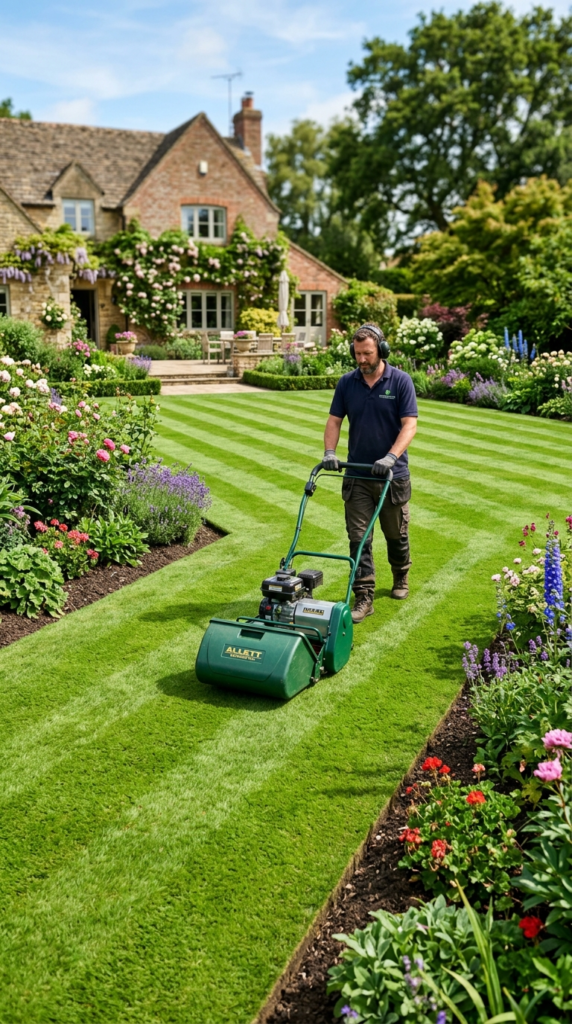
17. Regular Lawn Mowing & Garden Maintenance
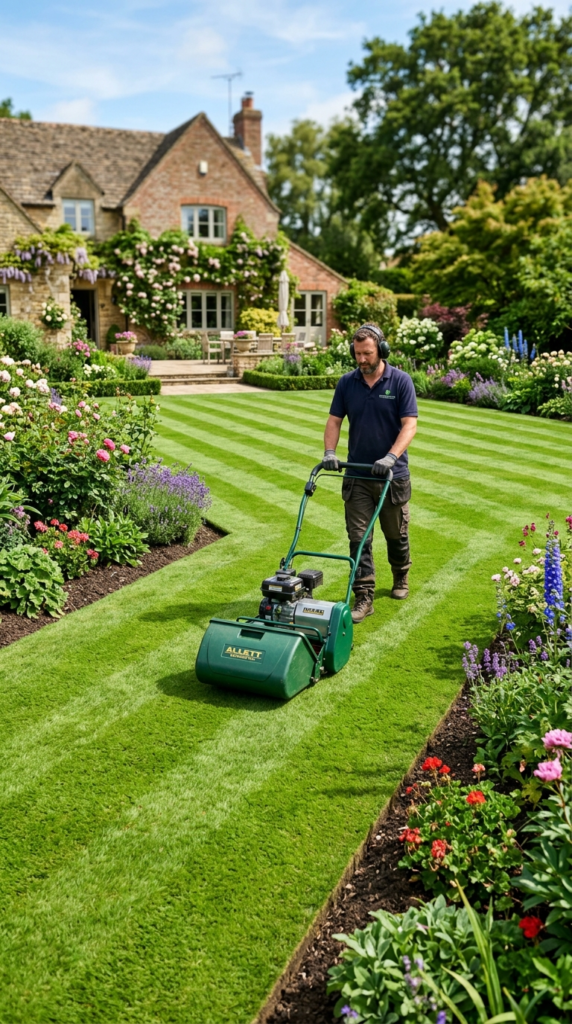
We’re finishing with the most straightforward but genuinely most liberating outsourced garden task of all — regular professional garden maintenance. Not the exciting one-off projects, but the steady, weekly or fortnightly drumbeat of lawn mowing, edging, weeding, deadheading, and tidying that keeps a garden looking beautiful and that — if we’re completely honest — most of us struggle to keep on top of consistently.
The cumulative time cost of regular garden maintenance is enormous for busy people — a medium-sized garden typically requires 2–4 hours of maintenance per week in the growing season to look genuinely good. That’s 50–100 hours of your summer. Outsourcing regular maintenance reclaims all of that time and typically produces a better-maintained garden than sporadic catch-up sessions allow.
A good regular gardener doesn’t just mow and edge — they notice developing problems (a pest infestation beginning, a plant that needs repotting, a border that needs thinning) early enough that small interventions prevent large problems, and they bring plant knowledge that means your garden is being actively tended rather than just mechanically tidied.
Finding the right regular gardener is a relationship, not just a transaction — the best outcomes come from someone who understands your taste, your maintenance priorities, and your garden’s specific character over time. Interview candidates thoughtfully, ask to see other gardens they maintain, and invest in finding the right fit rather than simply the cheapest quote.
| Task | Weekly Time Required | Professional Benefit |
| Lawn mowing & edging | 45–90 mins | Consistent quality, correct height |
| Border weeding | 60–120 mins | Early intervention, plant knowledge |
| Deadheading & tidying | 30–60 mins | Extended flowering, disease prevention |
| Watering & feeding | 30–60 mins | Correct rates, nothing missed |
| Seasonal planting | Occasional | Right plant, right place, right time |
Read our how to find and work with a great regular gardener for interview questions, fair pricing, and how to build a productive long-term working relationship.
A great regular gardener is one of life’s genuine luxuries — and unlike most luxuries, this one makes everything else in your life slightly better by giving you your weekends back!
Frequently Asked Questions
How do I find a reliable, qualified garden professional?
Personal recommendation from neighbours, friends, or local gardening groups is by far the most reliable route. Beyond that, professional body membership is a strong quality indicator — look for ISA or Arboricultural Association membership for tree work, British Association of Landscape Industries (BALI) for landscaping, and Society of Garden Designers (SGD) for design work. Always ask for references from recent clients and, for any job involving electrical work or structural elements, verify public liability insurance before work begins. Getting three quotes for any significant job gives you a useful benchmark for price and approach.
How much should I expect to pay for outsourced garden tasks?
Pricing varies significantly by region, with London and the South East typically 30–50% higher than the rest of the UK. As a rough guide: tree surgery from £200–£1,500+ depending on tree size and work required; professional hedge cutting from £80–£300+ depending on hedge length and height; garden clearance from £200–£600 for a typical job; regular lawn mowing and maintenance from £25–£60 per hour or £80–£200 per visit depending on garden size. Always get itemised quotes rather than single lump-sum figures so you understand exactly what’s included.
Is it worth outsourcing garden tasks for a small urban garden or balcony?
Absolutely — often more so than for larger gardens, because small spaces have less margin for error and a single professional intervention (a design consultation, a professional planting scheme, a properly installed irrigation system) can transform the entire space dramatically. For balconies specifically, professional advice on weight limits, container selection, irrigation, and plant choice can make the difference between a display that thrives year-round and one that struggles constantly.
What garden tasks should I definitely keep doing myself rather than outsourcing?
Regular watering, deadheading, light weeding, and harvesting edible plants are all tasks where your personal attention and daily connection with your garden are genuinely valuable — these are the tasks that keep you in touch with how your plants are doing and that provide the satisfaction of direct engagement with growing things. Basic seasonal tasks like planting bulbs, sowing seeds, potting on seedlings, and harvesting vegetables are also deeply rewarding DIY activities that don’t require specialist equipment or skills. Outsource the heavy, risky, or highly technical — keep the tactile, personal, and satisfying for yourself.
How do I make sure outsourced work is done to a good standard?
Agree the full scope of work in writing before any job begins, including what is included, what isn’t, how waste will be disposed of, and what the finished result should look like. Ask for a clear timeline and payment schedule. Be present at the start of any significant job to walk the site together and confirm expectations. Take photographs before work begins as a reference point. For larger jobs, include a snagging period (typically one week after completion) during which any issues will be rectified at no additional cost. Don’t pay the final balance until you’re satisfied with the result.
A Few Final Thoughts
Outsourcing garden tasks isn’t about giving up on your garden — it’s about being genuinely strategic with your time, your budget, and your energy so that you can focus on the parts of gardening that bring you joy and leave the dangerous, technical, or time-consuming jobs to people who do them brilliantly every single day. Whether you start by booking an arborist for that tree that’s been worrying you, investing in a design consultation that finally unlocks your garden’s potential, or simply finding a great regular gardener who gives you your weekends back, every outsourced task is a gift of time and quality that pays back far beyond its cost. The best garden you’ve ever had might be just one well-chosen professional phone call away. Now go make it happen! 🌿