
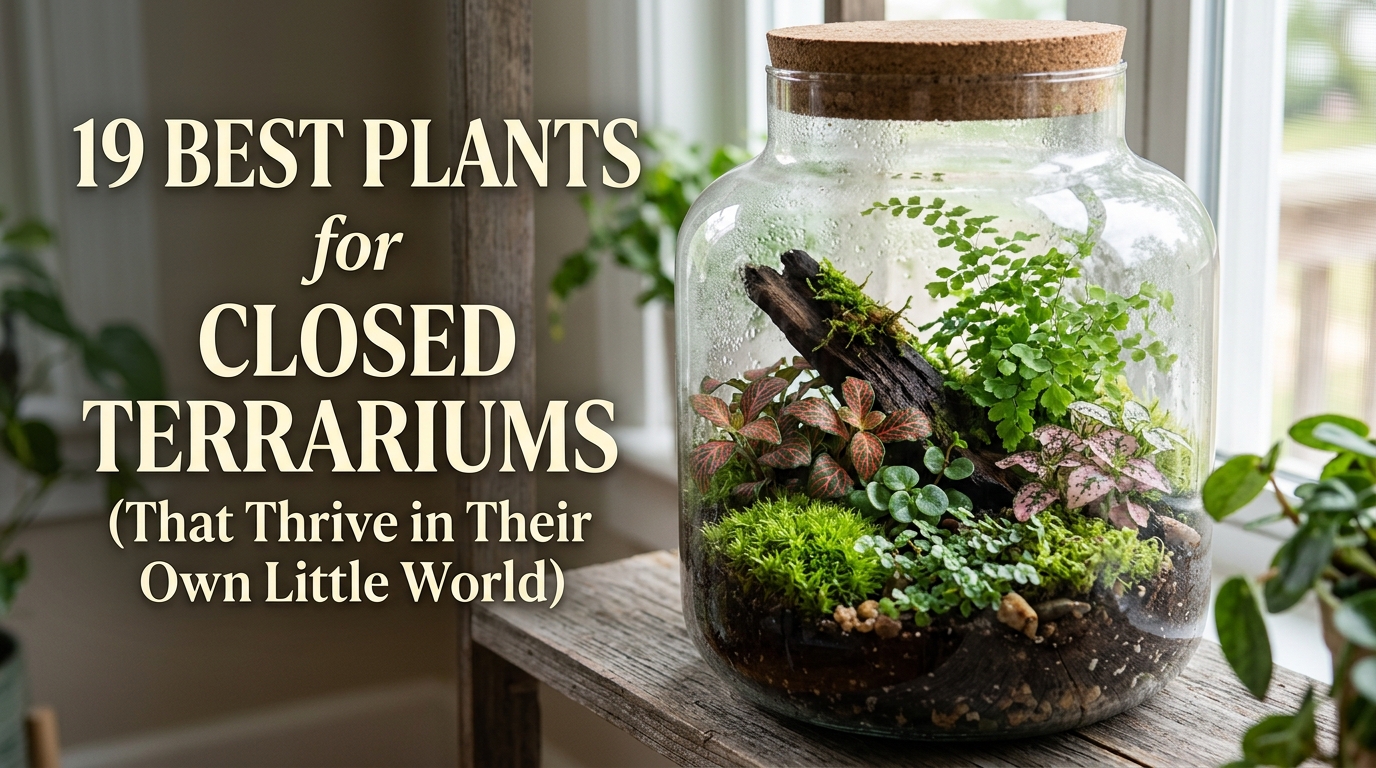
Ever set up a terrarium, watched it fog up within a day, and wondered if you’d accidentally built a tiny swamp? You’re not alone — and the secret isn’t a fancier container. It’s choosing the right plants. The best plants for closed terrariums love humidity, low light, and cozy quarters — and when you get the match right, these little glass worlds practically take care of themselves. Ready to find out which plants make the cut?
At a Glance
- Closed terrariums create a self-sustaining ecosystem — humidity, condensation, and recycled moisture do the heavy lifting for you.
- Most winning plants are tropical, moisture-loving, and slow-growing so they won’t outgrow the glass in two weeks.
- Avoid succulents and cacti — they’ll rot fast in high-humidity environments.
- Miniature ferns, mosses, and tiny tropical plants are your best bets for lush, long-lasting displays.
- You only need basic potting mix, activated charcoal, and the right plant combo to get started.
1. Nerve Plant (Fittonia) — The Showstopper No One Expects
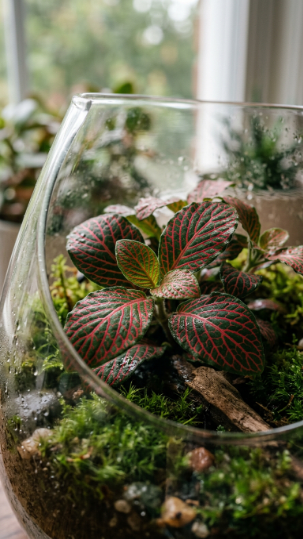
Meet the drama queen of the terrarium world — and we mean that in the best way possible.
Fittonia (nerve plant) has intricately veined leaves in red, pink, white, or silver that look almost hand-painted. It stays compact, loves humidity, and practically begs to be enclosed in glass. The high-moisture environment of a closed terrarium is exactly what this tropical beauty craves.
🌿 Pro Tip: If your Fittonia starts to wilt, don’t panic — it’s just thirsty. It bounces back dramatically fast once moisture levels rise again.
You’ll find this one at most garden centers, and it’s affordable too. Check out our guide to terrarium layering basics for the perfect setup.
For care deep-dives, The Sill’s Fittonia guide is a great resource.
Go ahead and grab a couple — it pairs beautifully with moss!
2. Cushion Moss — The Green Carpet Your Terrarium Needs
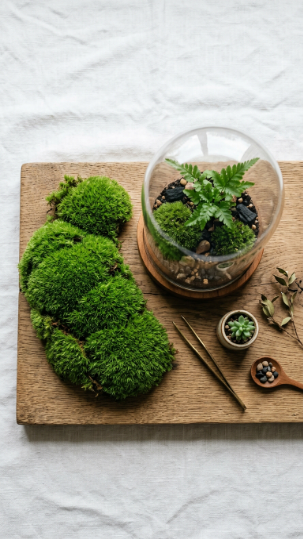
Cushion moss is the foundation layer every closed terrarium deserves. It covers bare soil beautifully, retains moisture, and adds instant “enchanted forest” vibes to your build.
It’s one of the most low-maintenance terrarium plants out there — no fussing, no fertilizing, just consistent humidity and indirect light. It also acts as a natural humidity regulator inside the glass.
Grab a few varieties and mix textures for a more dynamic, naturalistic look. See how to combine it with other plants in our beginner terrarium plant guide.
The Royal Horticultural Society has a solid breakdown of moss types for indoor gardening worth bookmarking.
You’ve totally got this — moss is basically terrarium-proof!
3. Miniature Peperomia — Big Personality, Tiny Footprint
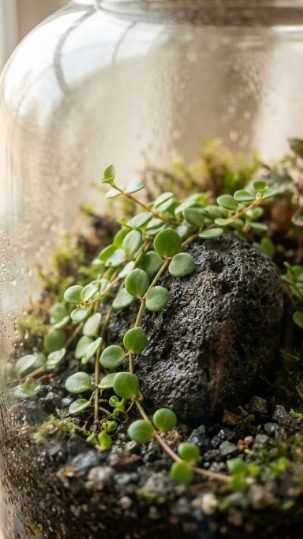
Here’s the deal: not all Peperomias are terrarium-friendly, but the miniature varieties are perfect. Look for Peperomia rotundifolia (trailing jade) or Peperomia prostrata (string of turtles) — both stay tiny and love the humid microclimate inside closed glass.
Peperomia prostrata in particular has the most adorable circular patterned leaves that look like little turtle shells. It’s a crowd-pleaser every single time.
- Best miniature varieties: Trailing Jade, String of Turtles, Teardrop Peperomia
- Light needs: Low to medium indirect light
- Growth rate: Slow — perfect for enclosed spaces
Link up your setup with tips from our small-space plant pairing ideas.
Gardeners’ World covers Peperomia care essentials in excellent detail.
Tiny but mighty — this one never disappoints!
4. Baby Tears (Soleirolia soleirolii) — The Living Green Fog
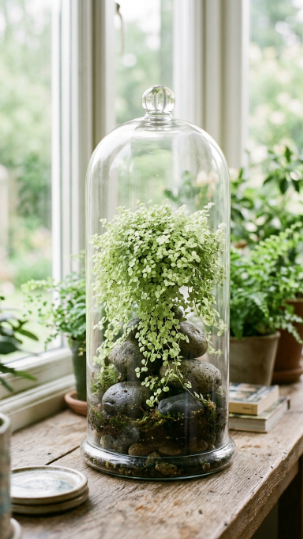
If you want your terrarium to look like a fairytale miniature garden, Baby Tears is your plant. Its tiny, densely packed leaves form a lush ground cover that spills over rocks and roots like a living green fog.
It grows fast in humidity — so give it room and trim it back occasionally to keep things tidy. The self-sustaining moisture cycle of a closed terrarium suits it perfectly.
🌿 Pro Tip: Baby Tears can get aggressive — pair it with larger-leafed plants like Fittonia so it doesn’t crowd everything out.
Learn more about managing fast growers in our post on terrarium plant maintenance tips.
University of Florida IFAS has a great resource on Soleirolia care for humid environments.
Once it fills in, the effect is absolutely magical!
5. Mini Ferns — Classic, Lush, and Always Reliable
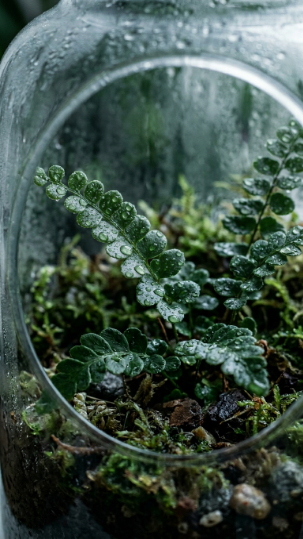
You can’t talk about best plants for closed terrariums without putting ferns front and center. Button ferns, lemon button ferns, and maidenhair ferns are all stellar choices for enclosed glass environments.
Here’s the thing: ferns evolved in humid forest floors — so a sealed terrarium isn’t stressful for them, it’s basically home. Keep them in low to medium indirect light and let the moisture cycle do its thing.
| Fern Type | Size | Light Needs | Humidity |
| Button Fern | Small | Low–Medium | High |
| Lemon Button Fern | Small | Low | High |
| Maidenhair Fern | Medium | Medium | Very High |
| Asparagus Fern | Medium | Medium | High |
Dive deeper with our fern terrarium setup guide.
The RHS offers detailed fern growing advice for indoor gardeners.
Pick your favorite variety and watch it thrive!
6. Polka Dot Plant (Hypoestes phyllostachya) — Speckled and Spectacular
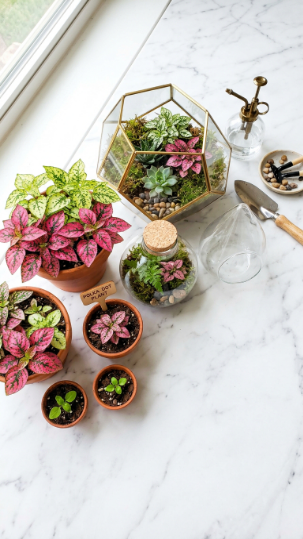
Polka dot plant brings bold color splashes — pink, red, or white speckles on bright green leaves — that make your terrarium look like a living piece of art. It’s petite, moisture-loving, and a total visual statement.
The key is keeping it in indirect light so the colors stay vivid. Direct sun washes the speckles out, and too little light makes it leggy. Inside a closed terrarium with good ambient light, it hits its sweet spot.
Explore color-pairing ideas in our colorful terrarium plant combinations post.
Gardeners’ World has a lovely Hypoestes growing guide to reference.
Pair it with dark green moss for maximum contrast — chef’s kiss.
7. Creeping Fig (Ficus pumila) — The Tiny Climber With Big Ambitions
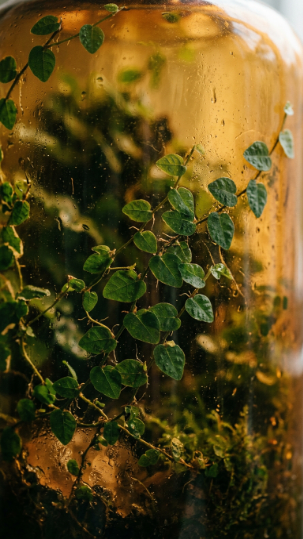
Creeping fig is the plant that turns your terrarium into a living diorama. Its tiny heart-shaped leaves cling to surfaces — glass walls included — creating a wild, overgrown aesthetic that looks stunning.
It loves high humidity and will happily trail, climb, and fill in gaps. Just trim it back before it stages a complete takeover. This one pairs especially well with miniature figurines for a storybook miniature garden effect.
🌿 Pro Tip: Creeping fig attaches to glass with tiny rootlets — you can gently redirect growth with tweezers during early stages.
See how to style climbing plants in our vertical terrarium design ideas.
Missouri Botanical Garden covers Ficus pumila in detail if you want to go deeper.
It’s slow to start but absolutely stunning once established!
8. Spooky Halloween Fairy Garden Terrarium With Sundew (Drosera)
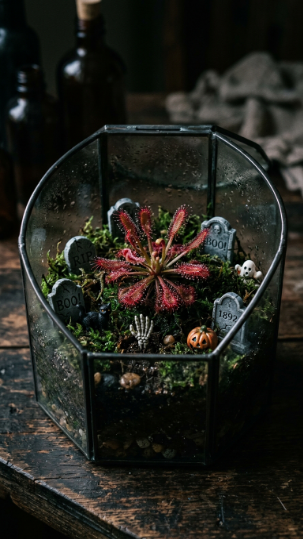
Want to build the ultimate Halloween fairy garden in a bottle? Enter the Sundew — a carnivorous plant with sparkling, sticky tentacles that looks like it belongs in a witch’s garden.
Drosera species are surprisingly well-suited to closed terrariums as long as you use distilled water and a nutrient-poor growing medium like sphagnum moss. Add tiny plastic skulls, miniature gravestones, and black gravel for instant spooky decor.
Pretty cool, right? It actually catches and digests tiny insects — the kids will love watching this one.
Pair it with our Halloween fairy garden setup ideas for the full effect.
The International Carnivorous Plant Society has excellent Sundew care resources.
Build this one in October and you’ve got the ultimate seasonal centerpiece!
9. Maidenhair Fern — Delicate, Dramatic, and Worth the Effort
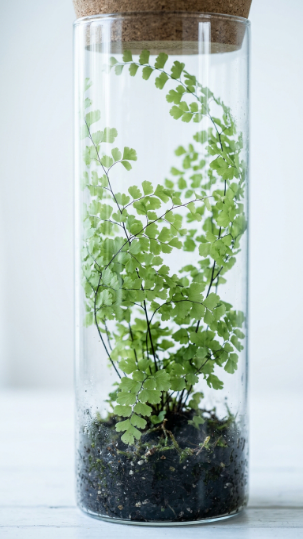
Maidenhair fern has a reputation for being difficult — but here’s the deal: it’s only difficult outside of a terrarium. Sealed glass environments give it exactly the humidity and consistency it needs to thrive.
The delicate, fan-shaped fronds on dark wiry stems create a uniquely airy look that no other terrarium plant quite matches. It’s the prima donna that rewards you when you get the setup right.
Pair with cushion moss and Baby Tears for a textural masterpiece. Find the perfect combinations in our fern terrarium setup guide.
Gardeners’ World covers maidenhair fern care beautifully.
This one’s absolutely worth it — the results are breathtaking!
10. Miniature Orchid (Lepanthes or Stelis) — Tiny Blooms, Big Drama
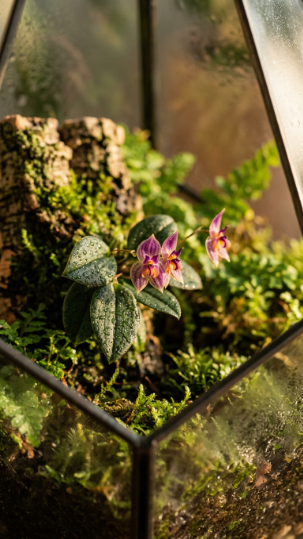
Talk about a game-changer! Miniature orchids are a terrarium secret weapon — most people don’t even know they exist. Lepanthes and Stelis species stay tiny, bloom repeatedly, and absolutely adore the high-humidity closed terrarium environment.
Unlike their large tropical cousins, these micro-orchids are designed for compact enclosed spaces and deliver stunning, jewel-like blooms that’ll have guests asking what plant wizardry you’ve been up to.
Explore more rare picks in our exotic terrarium plant guide.
The American Orchid Society has a dedicated miniature orchid resource page.
If you want to wow people, this is your plant!
11. Pilea (Pilea glauca ‘Aquamarine’) — Silvery-Blue and Stunning
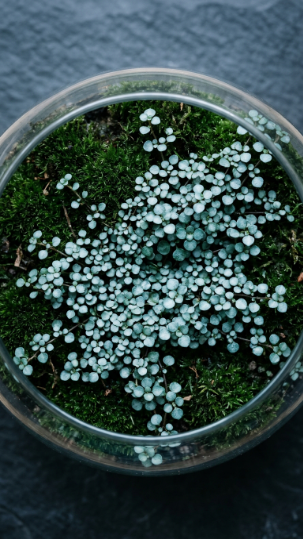
Pilea glauca is one of those terrarium plants that makes people stop and stare. The tiny silvery-blue leaves cascade beautifully, creating an almost metallic ground cover that contrasts stunningly with green moss.
It thrives in high humidity, grows slowly, and stays low — making it one of the most well-behaved terrarium plants you can choose. No pruning drama, no aggressive takeovers.
🌿 Pro Tip: The more humidity, the more silver the leaves look — your closed terrarium will bring out its best coloring.
Get inspired by our silver and blue plant terrarium ideas.
The Sill features a gorgeous Pilea care overview worth reading.
Silver never looked so alive!
12. Spike Moss (Selaginella) — Prehistoric Vibes in a Bottle
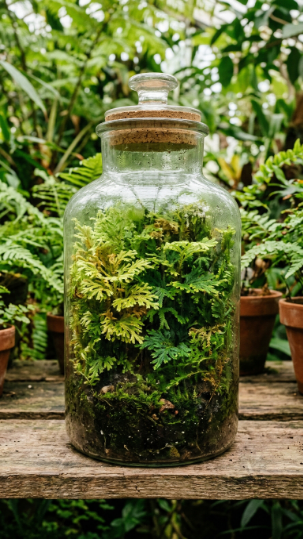
Selaginella — also known as spike moss or peacock moss — is one of the oldest plant families on Earth. It looks otherworldly, scales beautifully in a miniature garden setting, and handles moisture-rich enclosed environments like a champ.
The iridescent blue-green shimmer of Selaginella uncinata (rainbow moss) is next-level gorgeous. It’s low-growing, spreads evenly, and adds serious texture depth.
Discover layering techniques in our terrarium layering basics guide.
Missouri Botanical Garden details Selaginella for indoor gardens.
Ancient, beautiful, and totally terrarium-ready!
13. Halloween Fairy Garden Terrarium Using Venus Flytrap (Dionaea muscipula)
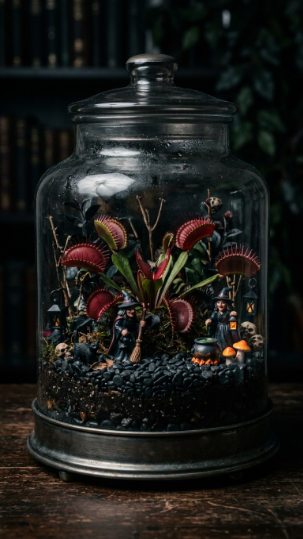
Here’s the ultimate Halloween fairy garden plant — the Venus flytrap. Pair it with a tiny witch figurine, black sand substrate, and a fog machine effect (a few drops of water on dry ice?) and you’ve built something truly spectacular.
Dionaea muscipula can work in a closed terrarium as long as you maintain high humidity and use only distilled water — no tap water, ever. The dramatic snapping traps add incredible visual interest to any spooky decor setup.
- Use only distilled or rainwater
- Plant in pure sphagnum moss or peat/sand mix
- Keep in bright indirect light even inside glass
- Add tiny Halloween accessories for seasonal container garden magic
Check out our full Halloween fairy garden setup ideas post.
The International Carnivorous Plant Society covers Venus flytrap care comprehensively.
It’s dramatic, it’s alive, and it snaps — what more could you want?
14. Strawberry Begonia (Saxifraga stolonifera) — Runners and All
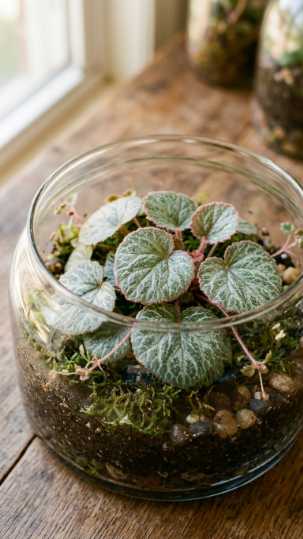
Strawberry Begonia isn’t actually a begonia — it’s a Saxifraga, and it’s fabulous. The round, silvery-veined leaves sit low and wide, while long runners dangle down like a living mobile inside taller terrariums.
It loves consistent humidity and lower light, making it a natural fit for sealed containers. The textured leaf surface catches condensation droplets that glitter like dew in morning light.
Explore trailing plant options in our hanging and trailing terrarium plants guide.
Gardeners’ World features a helpful Saxifraga stolonifera care profile.
Surprisingly underrated — and completely charming!
15. Cryptanthus (Earth Stars) — The Bromeliad That Belongs Underground
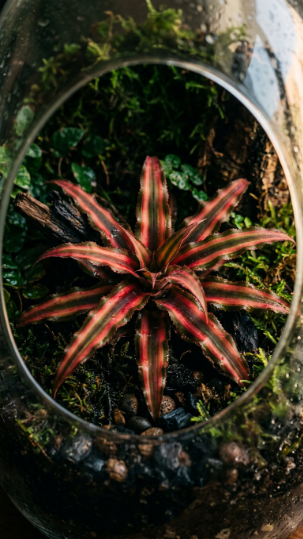
Cryptanthus — or earth stars — are the terrestrial bromeliads that look like they grew in a fantasy forest floor. Their star-shaped rosettes come in stunning striped, banded, or solid varieties, and they stay low and compact.
Here’s the thing: most bromeliads need bright light, but Cryptanthus tolerates lower light beautifully while still putting on a color show inside a closed terrarium. It’s also incredibly humidity-tolerant, which makes it a natural choice.
🌿 Pro Tip: Cryptanthus absorbs moisture through its leaves — not just its roots — so the humid air in your terrarium does double duty.
Find pairing ideas in our colorful terrarium plant combinations post.
University of Florida IFAS has a solid Cryptanthus care page.
Star-shaped and stunning — they’re a total conversation starter!
16. Club Moss (Lycopodium) — Miniature Evergreen Forest in a Jar
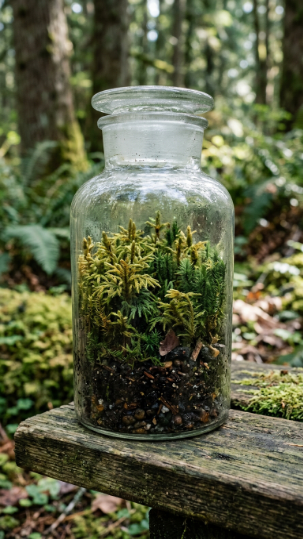
Club moss looks like a forest floor from millions of years ago — and that’s exactly the vibe it brings to a terrarium. The upright, feathery stems resemble tiny evergreen trees and create a storybook miniature garden landscape instantly.
It loves consistent moisture and low to medium light, making it perfectly adapted to closed glass environments. Pair it with rocks and tiny figurines for a full woodland scene.
Create a whole forest scene using tips from our miniature garden terrarium ideas.
Missouri Botanical Garden covers Lycopodium growing conditions in helpful detail.
This one makes your terrarium look like a Tolkien set — in the best way!
17. Miniature African Violet (Saintpaulia miniatures) — Blooms in a Bottle
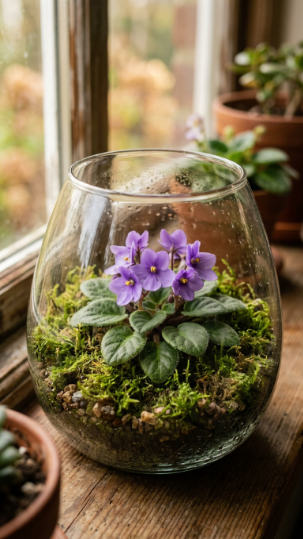
Who says closed terrariums can’t flower? Miniature African Violets prove that wrong — and they do it in style. These compact bloomers produce a steady supply of purple, pink, or white flowers and stay petite enough for even small enclosures.
The secret is high ambient humidity combined with bright indirect light — exactly what a well-placed closed terrarium delivers. Avoid water on the leaves, but the humid air? They absolutely thrive in it.
Check humidity management tips in our terrarium plant maintenance tips guide.
The African Violet Society of America has a brilliant miniature variety resource.
Blooms in a bottle — doesn’t get better than that!
18. Halloween Fairy Garden With Pitcher Plant (Nepenthes small varieties)
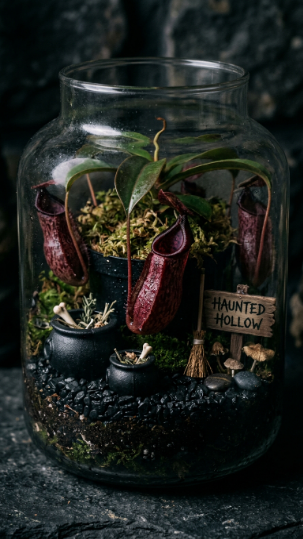
If you want to take your Halloween fairy garden to the next level, add a small Nepenthes pitcher plant. Those alien-looking pitchers filled with digestive fluid? Pure gothic magic. Pair with miniature cauldrons and dark pebbles for a certified witch’s garden aesthetic.
Smaller Nepenthes varieties like N. ventricosa or N. gracilis can work in high-humidity closed terrariums with proper airflow — just crack the lid occasionally so they don’t drown in stagnant air.
- Use sphagnum moss as your base substrate
- Keep temperatures between 65–85°F
- Position pitchers near ambient light sources, not direct sun
- Add seasonal spooky decor accents for a full Halloween build
Explore full carnivorous terrarium builds in our Halloween fairy garden setup post.
International Carnivorous Plant Society covers Nepenthes care for beginners.
Gothic, gorgeous, and genuinely alive — this one’s unforgettable!
19. Dwarf Mondo Grass (Ophiopogon japonicus ‘Nanus’) — Tiny Turf, Big Impact
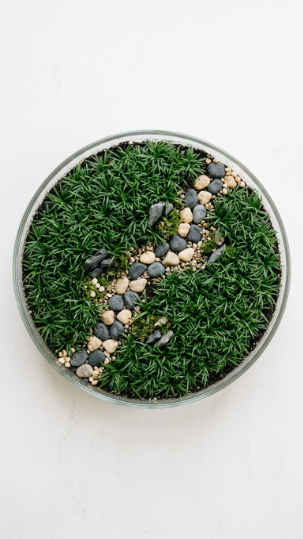
Close out your best plants for closed terrariums shortlist with Dwarf Mondo Grass — the ultimate miniature garden lawn substitute. It forms neat, dark green tufts that look like a perfectly manicured mini lawn, and it handles enclosed humid conditions with zero drama.
Pair it with small decorative stones and tiny figurines for a Japanese zen garden aesthetic, or use it as a border plant around larger specimens. It’s incredibly versatile and near-impossible to kill inside a terrarium.
🌿 Pro Tip: Dwarf Mondo Grass is slower growing than regular varieties — perfect for a terrarium where you don’t want to prune constantly.
Explore zen-style builds in our miniature garden terrarium ideas post.
Gardeners’ World features a helpful Mondo Grass care profile.
Minimal, architectural, and stunning — the perfect finishing touch!
Frequently Asked Questions
What are the best plants for closed terrariums for beginners?
Start with Fittonia, cushion moss, and Baby Tears — all three are forgiving, widely available, and thrive in high-humidity sealed environments. They’re slow-growing enough that you won’t need to prune constantly, and they fill in beautifully together. Grab a round glass bowl, layer your substrate, and you’re ready to go.
Can succulents go in a closed terrarium?
No — succulents are desert plants that need dry conditions and excellent airflow. Closed terrariums are far too humid for succulents and cacti, and they’ll develop root rot quickly. Stick to tropical, moisture-loving plants for sealed glass builds and save succulents for open containers.
How often do you need to water a closed terrarium?
Barely at all! The whole point of a closed terrarium is that it creates its own water cycle — moisture evaporates, condenses on the glass, and drips back down. You may need to add a small amount of water every 2–4 weeks, or less. If you see heavy condensation constantly, crack the lid briefly to let some moisture escape.
Can I build a Halloween fairy garden in a closed terrarium?
Absolutely — and it’s incredibly fun! Use carnivorous plants like Sundews, Venus flytraps, or small Nepenthes as your anchor plants, then layer in black gravel, dark moss, tiny witch figurines, and miniature gravestones. Keep the lighting low and dramatic for maximum spooky effect. It doubles as the most unique seasonal container garden decor piece on your shelf.
How do I stop mold from growing in my closed terrarium?
Mold usually appears when there’s too much moisture and not enough airflow. Add a layer of activated charcoal beneath your soil mix — it filters the air and inhibits mold growth naturally. Avoid overwatering at setup, and if you spot white fuzzy mold early, crack the lid for a day or two and remove affected plant matter promptly.
A Few Final Thoughts
Building a terrarium with the best plants for closed terrariums is one of the most rewarding things you can do as an indoor gardener — it’s low-maintenance, endlessly creative, and genuinely beautiful. Whether you’re layering lush tropical plants for a rainforest vibe, assembling a spooky Halloween fairy garden with carnivorous drama, or crafting a serene miniature garden with moss and stones, the right plant selection makes all the difference. The plants in this list are proven performers — they love humidity, they stay compact, and they reward you with a thriving little ecosystem that practically runs itself. Start with two or three favorites, get comfortable with the self-sustaining terrarium cycle, and expand from there. Your dream glass garden is closer than you think — now go make it happen!