
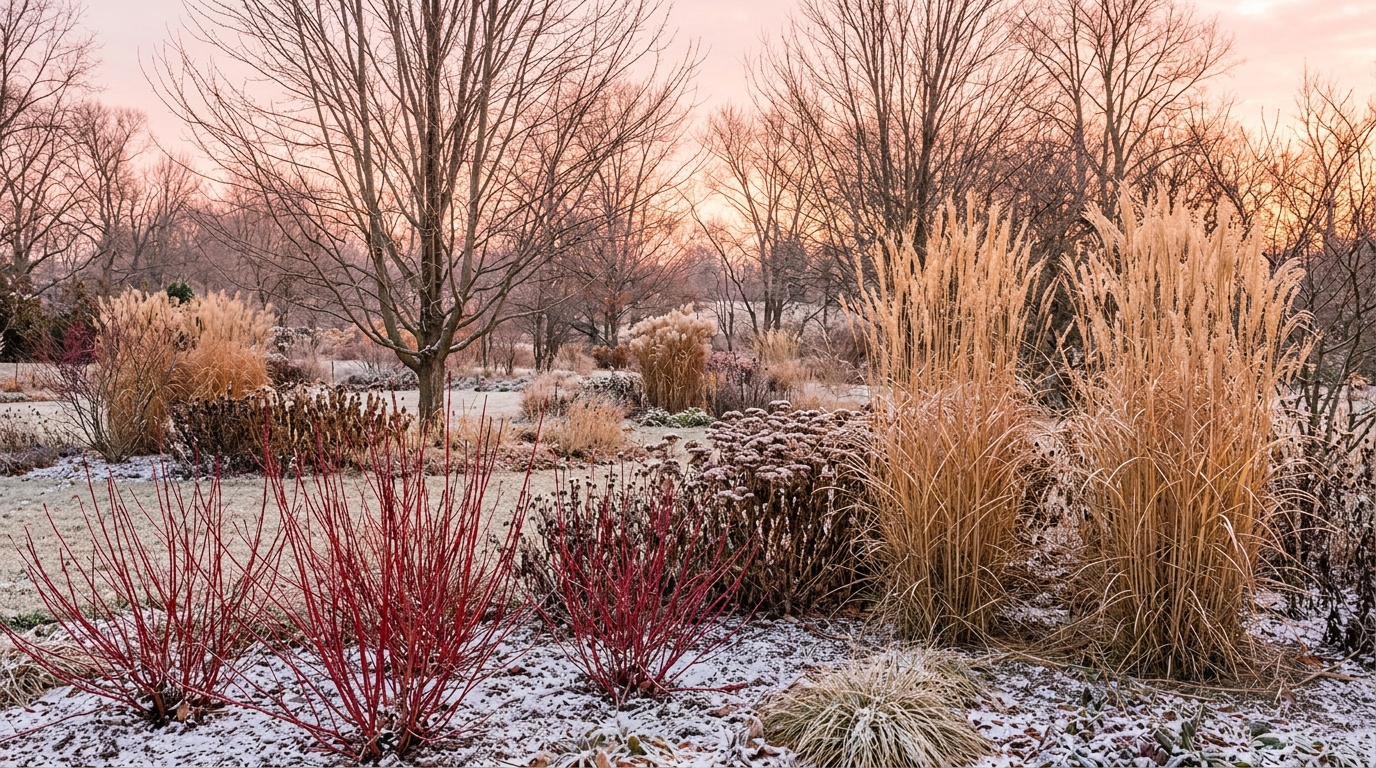
Does your garden go completely dead and depressing the moment November hits? You’re not imagining it — most gardens are designed for summer and completely abandoned to fate in winter. But here’s the exciting truth: perennials for winter garden interest exist in glorious variety, and the right ones turn your yard into a structured, textured, genuinely beautiful space even in the coldest months. The secret is choosing plants that earn their keep through bark, seed heads, evergreen foliage, or brave late-season blooms — not just summer flowers. Ready to find out?
At a Glance
- Perennials for winter garden interest work through four key qualities — evergreen foliage, decorative seed heads, colorful stems, and late or early blooms.
- The best winter perennials do double or triple duty — looking great in summer AND delivering structure or color through winter.
- You don’t need to cut everything back in autumn — leaving seed heads and stems standing is both beautiful and wildlife-friendly.
- Layering heights and textures — tall grasses behind low evergreen ground covers — creates a winter border with genuine depth.
- Most winter-interest perennials are low-maintenance and fully hardy, requiring minimal intervention once established.
1. Helleborus (Lenten Rose) — The Crown Jewel of Winter Perennials
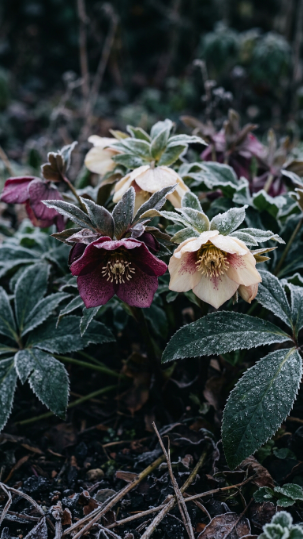
If there’s one perennial that defines winter garden interest, it’s the hellebore — full stop. It blooms from January through March in shades of deep plum, dusty rose, slate grey, near-black, and pure white, and it’s completely unbothered by frost, snow, or freezing rain.
Helleborus orientalis and its hybrids are the most widely available and reliable — look for named varieties like ‘Anna’s Red’, ‘Ice Breaker’, or the stunning double-flowered forms for maximum impact. The evergreen foliage looks handsome all year, and the nodding late-winter blooms feel like a genuine gift after months of bare borders.
Position them where you can get close — along a path, at the base of steps, or in a raised bed — because the flowers face downward and deserve to be seen properly.
🌿 Pro Tip: Remove old tatty hellebore leaves in late November before flowering begins — it clears the stage for new blooms and dramatically improves the display without harming the plant at all.
Explore winter-flowering perennial combinations in our winter flowering plant combinations guide.
The RHS has a comprehensive hellebore growing and variety guide worth bookmarking.
Plant a clump this autumn and they’ll reward you with winter blooms for decades!
2. Echinacea (Coneflower) — Architectural Seed Heads All Winter Long
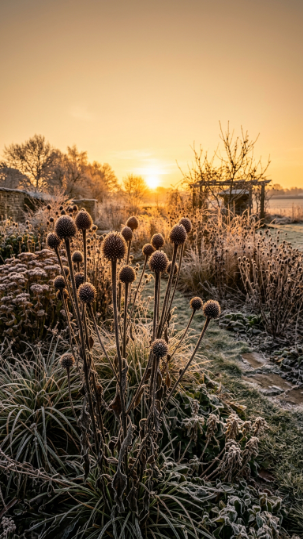
Here’s the deal: Echinacea isn’t just a summer superstar — it’s one of the best perennials for winter garden interest because of what it leaves behind. Those bold, spiky seed heads persist through frost and snow, catching low winter light and feeding goldfinches and siskins through the coldest months.
The dark bronze cone centers look almost sculptural against a white frost or grey winter sky — especially when backlit by low January sunshine. Leave every single stem standing until late February and you’ll have a border that looks intentionally designed rather than accidentally neglected.
They’re also completely low-maintenance hardy perennials — just cut back to the base in late winter and they’ll return stronger every year.
| Echinacea Variety | Flower Color | Seed Head Quality | Height |
| E. purpurea | Purple-pink | Excellent | 60–90cm |
| ‘Magnus’ | Deep rose | Very good | 75cm |
| ‘White Swan’ | Pure white | Good | 60cm |
| ‘Green Jewel’ | Lime green | Excellent | 55cm |
Discover seed head plant combinations in our year-round garden structure guide.
Gardeners’ World features a detailed echinacea growing and care guide.
Leave those seed heads standing — your garden and the birds will both thank you!
3. Miscanthus (Ornamental Grass) — Movement and Feathery Winter Magic
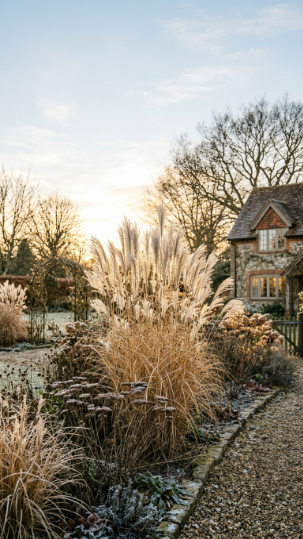
Miscanthus sinensis is the undisputed champion of winter garden grasses — and if you don’t already have one, this is your sign to plant it immediately. The tall arching stems and feathery silver plumes hold their structure through frost, snow, and wind, creating movement and height in a border that would otherwise be completely flat.
The secret is positioning — plant Miscanthus where low winter sunlight can backlight those plumes in the afternoon. The effect is genuinely breathtaking and changes through the day as the light moves. Varieties like ‘Gracillimus’, ‘Silberfeder’, and ‘Malepartus’ all perform brilliantly.
Ornamental grasses are also one of the most wildlife-friendly choices you can make — birds use the stems for shelter and the seed heads for food well into February.
🌿 Pro Tip: Don’t cut Miscanthus back until late February or early March — the dead stems actually protect the crown from hard frosts, and the winter display is worth preserving for as long as possible.
Explore grass combinations in our winter border planting guide.
The RHS covers ornamental grass varieties for winter interest with detailed growing advice.
Position it right and Miscanthus will steal the show every single winter afternoon!
4. Rudbeckia (Black-Eyed Susan) — Bold Seed Heads That Glow in Frost
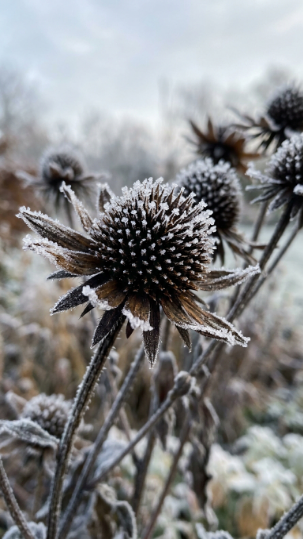
Rudbeckia fulgida ‘Goldsturm’ is famous for its late-summer golden flowers — but its real winter secret is those bold dark bronze seed heads that persist through the coldest months and look absolutely stunning covered in frost crystals.
Each seed head is a perfect dome of tightly packed seeds that birds work through systematically all winter. The upright stems hold their form even in heavy snow, giving your border vertical structure at a time when most plants have completely collapsed.
Here’s the thing: Rudbeckia is one of the easiest perennials for winter garden interest you can grow — it spreads gently to fill a border, asks for almost nothing, and delivers reliable beauty from July all the way through February.
Leave every stem standing and pair it with Miscanthus or Pennisetum grasses for a naturalistic winter planting combination that looks like it belongs in a Dutch wave garden.
Discover naturalistic planting combinations in our year-round garden structure guide.
Gardeners’ World has a lovely Rudbeckia growing guide with variety recommendations.
Frosted Rudbeckia seed heads in January morning light are genuinely one of gardening’s great pleasures!
5. Bergenia (Elephant’s Ears) — Dramatic Foliage That Turns Burgundy in Cold
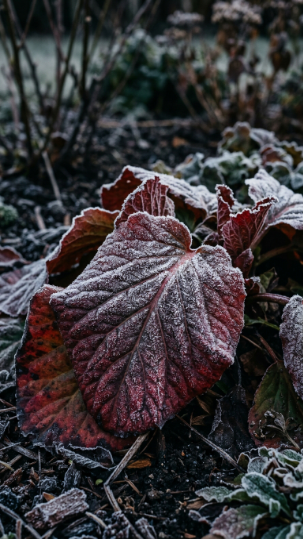
Bergenia — affectionately known as elephant’s ears — is one of those unassuming workhorses that genuinely earns its place in a winter garden. The large, leathery leaves turn spectacular shades of deep burgundy, bronze, and wine-red in response to cold temperatures, and they hold that color all winter long.
It’s fully evergreen, completely ground-covering, and absolutely frost-hardy — which makes it one of the most reliable low-growing perennials for winter garden interest in any climate. Varieties like ‘Bressingham Ruby’ and ‘Wintermärchen’ give the most intense winter leaf color.
Pretty cool, right? It also produces cheerful pink or white flowers in early spring, so the season of interest stretches from October right through to April — nearly half the year from a single plant.
🌿 Pro Tip: The colder the winter, the more intense Bergenia’s leaf coloring becomes — a hard frost genuinely improves the display, turning green leaves a rich burgundy almost overnight.
Find ground-cover perennial ideas in our winter border planting guide.
The RHS features a detailed Bergenia variety and care guide.
Plant it at the front of a border and enjoy that stunning winter leaf color for months!
6. Pennisetum (Fountain Grass) — Soft Bottlebrush Plumes Through Winter
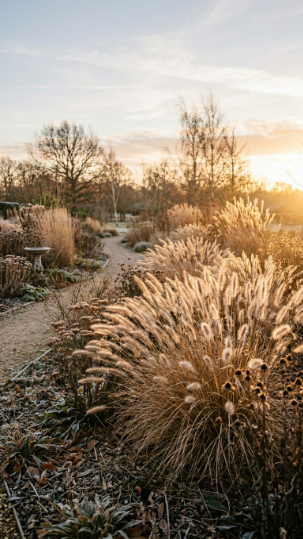
Pennisetum alopecuroides — fountain grass — is the slightly softer, more romantic cousin of Miscanthus, and it’s one of the most beautiful perennials for winter garden interest you can plant in a mid-border position. Those soft bottlebrush plumes in warm bronze and straw gold catch every breath of wind and every ray of low winter light.
Varieties like ‘Hameln’ stay compact enough for smaller borders while still delivering that signature arching fountain shape that makes fountain grass so visually satisfying. ‘Moudry’ produces near-black plumes that look absolutely extraordinary backlit against a pale winter sky.
The secret to getting the most from fountain grass in winter is mass planting — three or five plants grouped together create a cloud of movement that a single specimen simply can’t match.
Pair it with Echinacea seed heads and Bergenia ground cover in our winter border planting guide.
Gardeners’ World covers Pennisetum varieties and winter interest in helpful detail.
Group three together and watch them dance in every winter breeze!
7. Stipa (Feather Grass) — The Most Ethereal Winter Grass You Can Grow
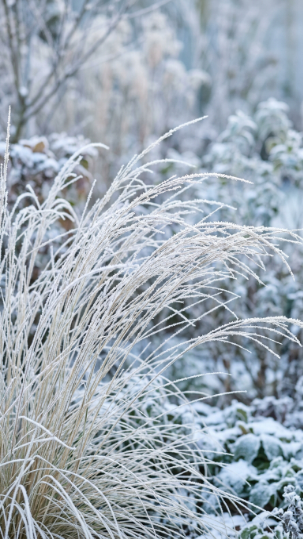
Stipa tenuissima — Mexican feather grass — is the most delicate and ethereal of all the winter interest grasses. Its fine, hair-like foliage moves in the lightest breeze and turns a luminous silvery blonde as winter progresses, catching frost and morning light in a way that looks almost supernatural.
Here’s the deal: Stipa is semi-evergreen, meaning it holds a good portion of its foliage through winter and creates soft texture at the front of a border where larger grasses would overwhelm. It’s the perfect contrast plant — place it against bold-leafed Bergenia or upright Echinacea seed heads for a stunning textural combination.
Mass-plant it in sweeping drifts for a naturalistic meadow effect that looks extraordinary covered in winter frost.
🌿 Pro Tip: Comb out dead material from Stipa clumps with your fingers in early spring rather than cutting — it refreshes the plant while preserving the living green base that’s already shooting.
Explore grass and perennial combinations in our winter border planting guide.
The RHS has excellent Stipa growing and care guidance for garden borders.
Plant it where morning light catches it and prepare to be completely enchanted!
8. Sedum (now Hylotelephium) — Flat-Topped Seed Heads and Fleshy Winter Structure
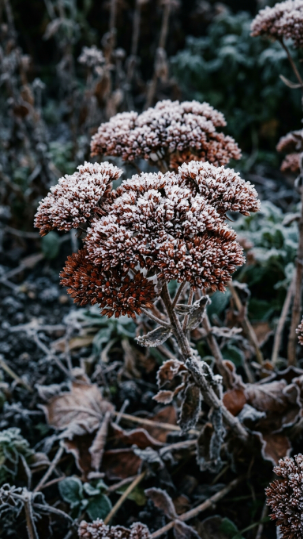
Sedum ‘Autumn Joy’ (now correctly called Hylotelephium) is a three-season plant that earns its space in any border — but its winter identity as a structural seed head plant is genuinely underappreciated. Those flat-topped flower heads turn from dusty pink to deep russet-copper as they dry, and they stand rigid through wind, frost, and snow all winter.
The upright stems and architectural flat heads create a strong horizontal layer in a mixed winter border — plant them in groups of five or more for a bold, repetitive structure that looks designed rather than accidental.
Talk about a game-changer for low-maintenance perennials for winter garden interest — Sedum does everything: summer flowers, autumn color change, winter structure, and early spring rosettes all in one plant.
Pair it with ornamental grasses in our year-round garden structure guide.
Gardeners’ World features a brilliant Sedum and Hylotelephium growing guide.
Leave those seed heads all winter — they’re one of the garden’s hidden gems in January!
9. Iris foetidissima (Stinking Iris) — Brilliant Orange Seeds All Winter
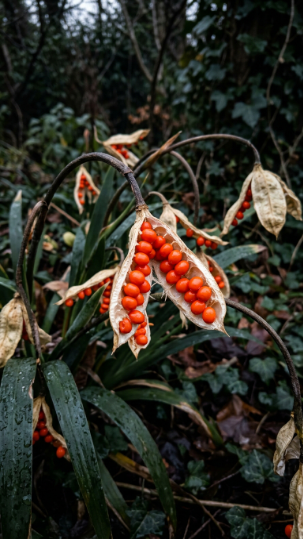
Here’s a perennial for winter garden interest that most gardeners walk right past in summer but absolutely love once they discover it — Iris foetidissima, the stinking iris. Don’t let the name put you off: the leaves only smell when crushed, and the vivid orange-red seeds that burst from split pods in autumn and hold on all winter are genuinely spectacular.
It’s one of the few plants that thrives in deep dry shade — under trees, against north-facing walls, in those difficult spots where almost nothing else wants to grow. The evergreen strap-shaped leaves look tidy all year, and from October through February those flaming orange seeds are a brilliant surprise in a dark corner.
Wildlife loves it too — birds eventually take the seeds, but they persist for weeks giving you plenty of enjoyment first.
🌿 Pro Tip: Don’t deadhead Iris foetidissima after flowering — the whole point is to let the pods dry and split to reveal those brilliant orange seeds. Patience is the entire strategy here.
Discover shade-loving winter plants in our winter border planting guide.
The RHS covers Iris foetidissima care for difficult spots in great detail.
Tuck it into your darkest corner and prepare to be delighted all winter!
10. Carex (Sedge) — Evergreen Texture in Every Winter Border
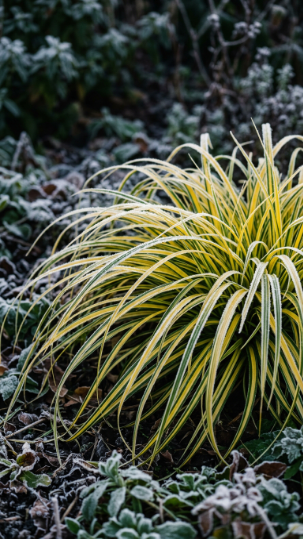
Carex — sedge — is the unsung hero of winter garden design. While flashier plants get all the attention, these reliable evergreen grasses hold their color, texture, and form through every cold month with absolute reliability.
Carex oshimensis ‘Evergold’ is the standout variety — bright gold and cream striped arching leaves that genuinely glow on dark winter days. Carex testacea turns warm amber-orange in cold weather. Carex comans ‘Bronze’ holds rich brown tones all winter long. Every one of them is a structural evergreen plant that requires almost zero maintenance.
Here’s the thing: Carex fills the mid and front border roles that winter gardens desperately need — low, spreading, reliably evergreen, and visually interesting even on the most miserable January day.
Explore evergreen ground-layer plants in our winter border planting guide.
Gardeners’ World has a detailed Carex variety guide for garden borders.
Plant a sweep of ‘Evergold’ and your winter border will glow whatever the weather!
11. Phormium (New Zealand Flax) — Bold Architectural Spikes Year-Round
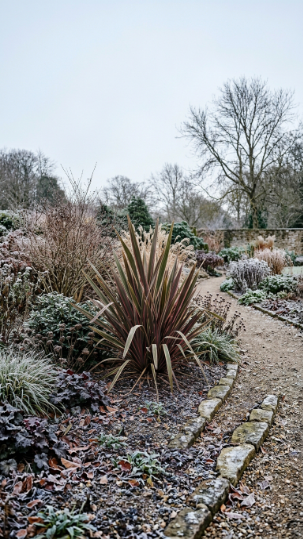
Phormium tenax — New Zealand flax — is the architectural statement plant that keeps giving through every season. Those bold, sword-shaped leaves in burgundy, bronze, green, or striped varieties stand completely upright through wind, frost, and rain, creating a dramatic focal point in a winter border that needs no help from flowers.
It’s fully evergreen and virtually indestructible in mild to moderate climates — just remove the occasional dead leaf at the base and it grows more spectacular every year. Varieties like ‘Platt’s Black’, ‘Sundowner’, and ‘Yellow Wave’ all deliver outstanding year-round architectural presence.
Plant one as a centerpiece in a large container or as a border anchor and build your winter planting scheme outward from it — it’s that commanding.
🌿 Pro Tip: In colder regions, wrap Phormium crowns loosely with horticultural fleece in severe winters — just the crown, not the leaves — to protect the growing point without affecting the striking upright silhouette.
Find architectural plant display ideas in our statement houseplant display guide.
The RHS covers Phormium care and cold hardiness in excellent detail.
One bold Phormium transforms an entire winter border instantly!
12. Euphorbia (Spurge) — Lime Green Bracts That Light Up Winter Borders
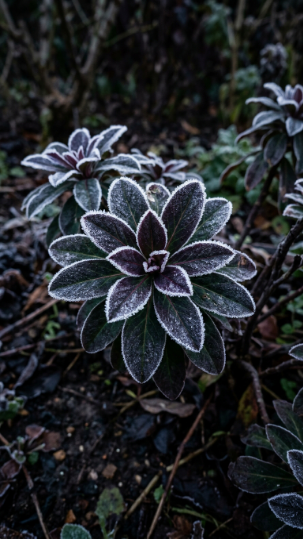
Euphorbia is one of those genera that rewards gardeners who look past the obvious choices — and for perennials for winter garden interest, it absolutely delivers. Euphorbia amygdaloides ‘Purpurea’ produces deep purple-green evergreen foliage that darkens dramatically in cold weather, looking rich and deliberate all winter.
Euphorbia characias subsp. wulfenii goes one better — its structural blue-green rosettes are architectural all winter and then erupt into massive lime-green flower heads in late winter and spring that last for months. It’s basically a two-season spectacular in one plant.
Here’s the deal: Euphorbia brings lime-green and structural interest to winter borders that few other perennials can match at that time of year — pair with dark Bergenia and Carex ‘Evergold’ for a winter combination that genuinely sings.
Explore bold perennial combinations in our winter flowering plant combinations guide.
Gardeners’ World covers Euphorbia varieties for year-round interest brilliantly.
Add a Euphorbia and suddenly your winter border has real drama!
13. Penstemon — Semi-Evergreen Color Right Through Mild Winters
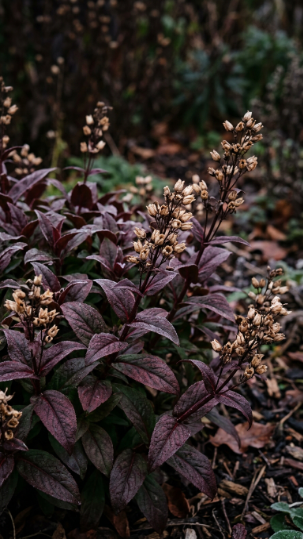
Penstemon is a borderline semi-evergreen perennial that surprises most gardeners with how much winter garden interest it delivers — especially in milder climates. In a sheltered spot, varieties like ‘Husker Red’ hold their deep burgundy-red foliage all winter, while old flower stems persist with delicate dried seed structures.
The reddish winter foliage of ‘Husker Red’ is genuinely stunning — it’s specifically bred for foliage color rather than just flowers, making it one of the most valuable dual-season perennials for a winter border.
Pretty cool, right? In colder regions, don’t cut Penstemon back in autumn — the old stems protect the crown through hard freezes, and leaving the plant intact is both the wisest care decision and the best winter look simultaneously.
Find semi-evergreen perennial ideas in our year-round garden structure guide.
The RHS features a detailed Penstemon growing and overwinter guide.
Leave it alone all winter and it repays you with beautiful foliage color and protected crown growth!
14. Achillea (Yarrow) — Flat Seed Plates That Catch Frost Beautifully
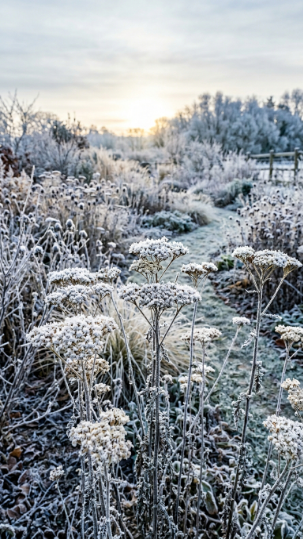
Achillea millefolium — common yarrow — is another brilliant perennial for winter garden interest that gardeners routinely cut back too early. Leave those flat-topped flower heads to dry on the plant and they transform into perfect frost-catching platforms — each one a miniature tray of ice crystals that catches winter light magnificently.
The dried seed plates persist through wind and rain, holding their flat horizontal form even in quite severe weather. Mass-planted yarrow creates a sea of horizontal platforms at mid-border height that looks extraordinary on a frosty January morning.
It’s also a magnet for seed-eating birds — goldfinches and sparrows work over yarrow seed heads methodically through winter, adding movement and life to your garden on the quietest days.
🌿 Pro Tip: Mix several yarrow color varieties — cream, soft yellow, dusty rose — for a naturalistic drift where the dried heads create subtle tonal variety even in their winter monochrome state.
Discover more seed head plants in our winter border planting guide.
Gardeners’ World has a solid Achillea growing guide with variety recommendations.
Leave every stem standing and let the frost do the styling for you!
15. Agapanthus — Dramatic Drumstick Seed Heads Through Winter
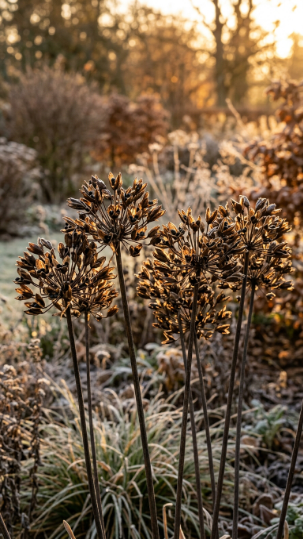
Here’s a perennial for winter garden interest that genuinely surprises people — Agapanthus is famous for its blue summer flowers, but its winter seed heads are equally beautiful and almost nobody talks about them. The tall stems hold dramatic drumstick seed heads that split open in autumn to reveal jet-black seeds in a starburst pattern that persists beautifully through winter.
Leave every spent flower stem standing — those sculptural drumstick heads backlit by low winter afternoon sun are genuinely one of the most striking things in a winter border. They pair brilliantly with ornamental grasses and evergreen sedges for a layered structural winter planting.
In colder regions, give Agapanthus a dry mulch over the crown in late autumn to protect the fleshy roots — then leave the stems completely intact for the full winter display.
Explore bold structural plants in our year-round garden structure guide.
The RHS covers Agapanthus winter protection and care in thorough detail.
Those jet-black seed heads in winter light are genuinely jaw-dropping — don’t cut them down!
16. Kniphofia (Red Hot Poker) — Spiky Evergreen Architecture All Year
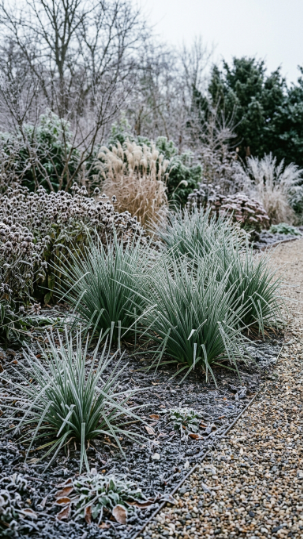
Kniphofia — red hot poker — is almost always talked about for its dramatic summer torches of red and orange flowers. But here’s the thing: as a structural evergreen perennial for winter garden interest, its bold spiky grass-like foliage clumps hold their form and presence through the entire cold season.
The architectural quality of a mature Kniphofia clump — those radiating, arching, grey-green leaves — creates a structural anchor in a winter border that reads clearly even from a distance on the greyest day. Varieties like ‘Tawny King’ and ‘Percy’s Pride’ have particularly impressive evergreen foliage architecture.
Tie the leaves loosely into a bundle in hard-freeze regions to protect the crown — it actually enhances the architectural silhouette while keeping the growing point safe.
Find architectural evergreen perennials in our winter border planting guide.
Gardeners’ World features a beautiful Kniphofia growing and variety guide.
Bold, structural, and unfazed by cold — Kniphofia holds your winter border together!
17. Crocosmia — Arching Bronze Seed Sprays That Last All Winter
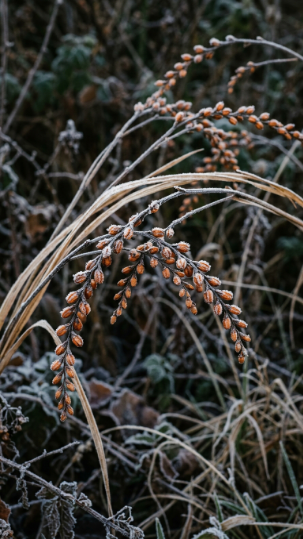
Crocosmia — best known for its fiery summer flowers — leaves behind one of the most delicately beautiful winter seed displays of any perennial. The arching stems hold strings of small orange-bronze bead-like seeds that look like tiny handmade jewelry strung on wire, persisting through autumn and well into winter.
Leave every spent flower stem completely intact after summer — the seeds and the arching architectural stem structure remain visually interesting long after the flowers are gone. Covered in morning frost, the bead-like seed pods are genuinely extraordinary up close.
Pretty cool, right? Crocosmia ‘Lucifer’ is the classic choice but any variety delivers good winter seed interest — and the bold sword-shaped foliage also persists well into the season in milder climates.
🌿 Pro Tip: Don’t divide or disturb Crocosmia clumps in autumn — wait until spring when new growth appears. Autumn division leaves the crown vulnerable to winter cold just when it needs stability most.
Discover more seed structure perennials in our year-round garden structure guide.
The RHS has a thorough Crocosmia growing and winter care guide.
Those beaded seed sprays on frosty mornings are one of winter’s genuine garden treasures!
18. Festuca glauca (Blue Fescue) — Silver-Blue Mounds Through Every Winter Month
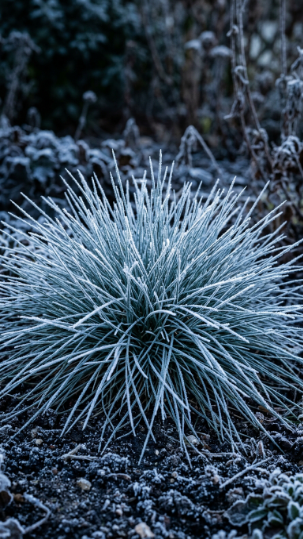
Close out this list of perennials for winter garden interest with one of the most reliably beautiful — Festuca glauca, blue fescue. Those dense, needle-fine mounds of intense silver-blue foliage hold their color and form through every cold month with absolutely zero drama, asking nothing and giving consistently beautiful structure.
‘Elijah Blue’ is the standout cultivar — the most vivid silver-blue of any compact grass, forming perfect dome-shaped clumps that look almost artificial in their tidiness. Edge a winter path with five or seven plants alternating with Bergenia and you’ve created a winter border combination that looks genuinely designed.
Here’s the deal: Festuca glauca is evergreen, drought-tolerant, compact, and fully hardy — it’s basically the easiest possible introduction to growing grasses for winter garden interest, with a payoff that dramatically exceeds the effort.
Find blue-toned winter plant combinations in our winter border planting guide.
Gardeners’ World features a detailed Festuca glauca growing guide for borders and containers.
Plant a drift of blue fescue this autumn and enjoy that silver-blue glow all winter long!
Frequently Asked Questions
What are the best perennials for winter garden interest for beginners?
Hellebores, Bergenia, and Carex ‘Evergold’ are the three best starting points for beginners — all are fully hardy, widely available, low-maintenance, and deliver reliable winter interest with minimal intervention. Hellebores give you actual flowers in the depths of winter, Bergenia provides bold evergreen ground cover that turns burgundy in the cold, and Carex keeps a bright gold-green presence in borders through every cold month. Start with these three and build from there.
Should I cut back perennials in autumn or leave them for winter interest?
For the best winter garden interest, resist the urge to cut everything back in autumn. Seed heads of echinacea, rudbeckia, achillea, sedum, and agapanthus are all beautiful through winter and provide critical food for seed-eating birds. Leave ornamental grasses completely intact until late February — the dead stems protect crowns from frost and the displays are genuinely stunning. Only remove dead or diseased material; let everything else stand until late winter.
Which perennials for winter garden interest work best in shade?
Hellebores, Iris foetidissima, Bergenia, and Carex are all outstanding choices for shaded winter gardens. Iris foetidissima is particularly impressive — it’s one of the few plants that genuinely thrives in deep dry shade under trees and delivers those spectacular orange seeds all winter. Hellebores perform beautifully in dappled shade and will naturalize under deciduous trees to create a carpet of winter blooms in one of the most challenging growing spots.
How do I create a winter border using perennials for winter garden interest?
Layer by height and function — tall grasses like Miscanthus at the back, mid-height seed head perennials like Echinacea and Rudbeckia in the middle, and low evergreen ground covers like Bergenia, Carex, and Festuca at the front. Add one or two architectural statement plants like Phormium or Kniphofia as focal anchors and position a winter-flowering hellebore along a path where you can appreciate it up close. The key principle is mixing texture types — fine grasses with bold leaves, upright seed heads with spreading ground covers.
When is the best time to plant perennials for winter garden interest?
Early autumn — September and October — is ideal for planting most winter-interest perennials. This gives them six to eight weeks to establish roots before the ground freezes, ensuring they perform well in their first winter. Spring planting works too, but autumn-planted perennials generally establish more strongly and deliver better first-winter displays. Ornamental grasses are best planted in spring rather than autumn in colder regions, as they establish better with warmer soil temperatures behind them.
A Few Final Thoughts
A beautiful winter garden isn’t a matter of luck or climate — it’s a matter of choosing the right perennials for winter garden interest and then, crucially, having the confidence to leave them standing rather than cutting everything back in October. The plants in this list — from the brave winter blooms of hellebores to the frosted seed heads of echinacea and rudbeckia, from the dancing plumes of Miscanthus to the glowing silver-blue mounds of Festuca — all prove that the cold season can be every bit as beautiful as summer if you plan for it deliberately. Start with three or four favorites, see how they transform your winter garden, and build your collection from there. Every single one of these perennials pays back your investment in space and attention with months of genuine beauty, wildlife value, and that deeply satisfying feeling of a garden that works year-round. Your most beautiful winter border is just a few autumn planting sessions away — now go make it happen!