

Your windowsill is one of the most underused canvases in your entire home — a sun-drenched strip of real estate that practically begs for something beautiful. Whether yours stretches across a kitchen, a bedroom nook, or a narrow bathroom ledge, there are 21 nature inspired DIY windowsill decor ideas waiting to transform it into a living, breathing focal point. The best part? Most of these projects cost under $10 and take less than an afternoon. Ready? Let’s explore all 21 of them.
Why Nature Inspired DIY Windowsill Decor Is Worth Your Time
There’s something quietly powerful about bringing natural elements to a windowsill. Unlike a shelf or a side table, a windowsill exists at the precise intersection of indoors and outdoors — it catches morning light, frames a sky view, and naturally complements anything botanical or earthy you place on it. In practice, even a single well-styled windowsill can anchor the mood of an entire room.
The cost barrier is almost nonexistent. Foraged pinecones, a handful of air plants, a recycled jam jar, or a bundle of dried lavender can all become stunning decor with nothing more than a little intention. Gardeners consistently find that nature-themed windowsill projects are among the most rewarding DIY efforts because the materials are accessible, the results are immediate, and the look evolves naturally over time.
One lesser-known fact: windowsills running east or west actually provide better growing conditions for most herbs and trailing plants than south-facing ones during summer, because they avoid the scorching midday heat. This opens up DIY windowsill gardening to rooms that many people assume are “not bright enough.”
This approach is ideal for apartment dwellers, renters who can’t install shelving, and anyone who wants to add personality to their home without a large budget or permanent changes.
At a Glance
- A single glass terrarium filled with moss and river stones can bring the look of an entire forest floor to a three-inch windowsill ledge.
- Propagating succulents in mismatched vintage teacups is a beginner-friendly project that costs virtually nothing and multiplies your plant collection for free.
- Dried botanicals — lavender bundles, pressed fern fronds, eucalyptus stems — last months on a windowsill and require zero watering.
- Air plants (Tillandsia) styled on driftwood or in sea urchin shells are one of the most dramatic nature-inspired displays you can create in under 10 minutes.
- A windowsill herb garden in terracotta pots isn’t just decor — it gives you fresh basil, thyme, and mint within arm’s reach while cooking.
1. Moss and River Stone Terrariums
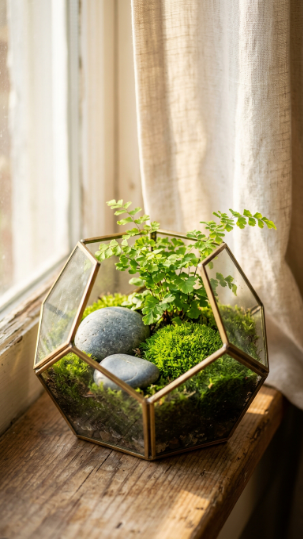
Moss terrariums bring the feeling of a forest floor to even the tiniest windowsill — and they genuinely thrive in the indirect light most windowsills offer.
For this project, you’ll need a small open glass vessel (geometric terrariums work beautifully), cushion moss or sheet moss from a craft store or foraged sustainably, a handful of river pebbles for drainage, and horticultural charcoal to keep the environment fresh. The glass concentrates ambient humidity, which moss loves.
Layer your base: first a thin layer of pebbles, then a pinch of activated charcoal, then a shallow bed of potting soil or pure sphagnum. Press your moss firmly on top — it should feel dense and slightly damp. Tuck in a river stone or two for visual contrast. Mist lightly every 3–4 days; never let it sit in standing water.
The expert trick here is to avoid direct sun. Moss bleaches and dries out in strong sunlight. A north-facing or east-facing windowsill with bright indirect light is genuinely ideal — this is one of the few decor ideas that prefers a low-light window.
💡 Pro Tip: If your moss starts turning pale yellow, move it 6–8 inches back from the glass. The heat concentrated by the window pane is usually the culprit, not lack of light.
Learn more about creating DIY moss terrariums for your windowsill and explore moss care guidance from the RHS.
A well-made moss terrarium can last for years with almost zero effort — it’s one of the most rewarding starter projects you can try.
2. Vintage Teacup Succulent Garden
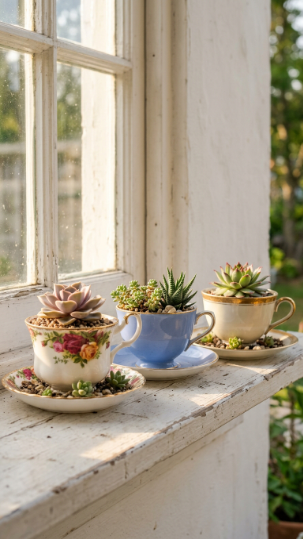
Teacup succulents are genuinely one of the most charming and cost-free nature inspired DIY windowsill decor ideas — especially if you haunt thrift stores or charity shops.
Source mismatched vintage teacups from charity shops or use ones you already own. Because teacups have no drainage holes, you’ll need to use a gritty succulent mix (50% perlite, 50% cactus compost) and add a layer of activated charcoal at the base to prevent rot. Choose compact, slow-growing succulents: Haworthia fasciata (zebra plant), Echeveria ‘Perle von Nürnberg’, or Crassula ovata (jade plant) in miniature form are all excellent.
Water very sparingly — roughly every 10–14 days — by adding just a tablespoon of water directed at the soil, never onto the leaves. Allow the soil to dry completely between waterings. In winter, reduce to once a month.
The pro insight: place a thin layer of decorative gravel on top of the soil. This prevents the soil from splashing onto the delicate cup interior when you water, keeps the display looking tidy, and adds to the aesthetic.
Best varieties for teacup planting:
- Haworthia fasciata — tolerates lower light beautifully
- Echeveria ‘Lola’ — stunning rosette shape
- Sedum rubrotinctum — develops red leaf tips in bright sun
- Aloe ‘Christmas Carol’ — compact and architectural
Discover more succulent container ideas for small spaces and read The Sill’s beginner guide to succulent care.
These teacup gardens make exceptional gifts and look even better when displayed in a cluster of three or five.
3. Air Plant and Driftwood Display
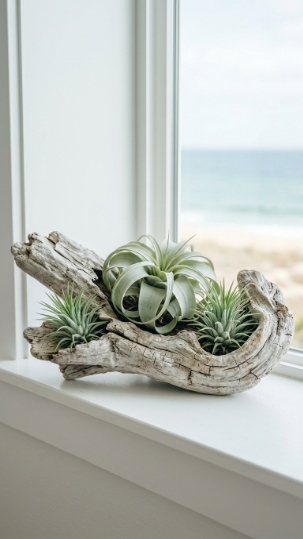
Air plants need no soil, no pot, and almost no maintenance — which makes them perfect for creating sculptural, nature-inspired displays on any windowsill.
Source a piece of driftwood from a beach, a craft store, or online. Rinse it thoroughly and allow it to dry completely before using it indoors. Choose three to five Tillandsia species of varying sizes: T. ionantha (small, turns red when blooming), T. xerographica (large, silvery rosette), and T. caput-medusae (curling, tentacle-like leaves) create beautiful contrast together.
Simply rest or wedge the air plants into natural crevices in the wood — no glue or wire needed unless the piece is displayed vertically. Mist the plants two to three times a week in summer, or soak them in room-temperature water for 20 minutes once a week, then turn them upside down to drain completely before returning to the wood.
💡 Pro Tip: Never let water pool in the base of a Tillandsia — this causes crown rot within days. After soaking, always shake gently and place upside-down for at least an hour before returning to your display.
Browse air plant display ideas for windowsills and shelves and read more about Tillandsia care on Missouri Botanical Garden’s plant database.
Driftwood and air plants together create a display that looks genuinely artful with almost no effort.
4. Dried Lavender Bundle Window Arrangement
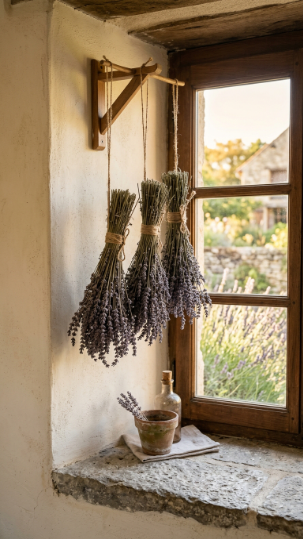
Dried lavender on a windowsill gives you visual texture, a subtle fragrance, and a rustic botanical aesthetic that genuinely improves with age.
Harvest Lavandula angustifolia (English lavender) just as the buds begin to open for the best fragrance retention. Gather stems into bundles of 10–15, secure tightly with natural jute twine about 1cm from the base, and hang upside down in a dry, airy spot for 2–3 weeks before displaying. If you’re buying dried lavender, look for full, dark-purple stems rather than pale, bleached ones — those have little remaining fragrance.
Display the bundles on a small wooden rod, a hook screwed into the window frame, or simply lean them upright in a tall glass vase. Group bundles in odd numbers (three or five) for better visual balance. Refresh the fragrance by gently rubbing the dried buds between your fingers to release essential oils.
The common mistake: displaying dried lavender in direct strong sun. UV light bleaches the purple quickly. A bright but slightly shaded south-facing sill, or a well-lit east-facing window, preserves colour for months longer.
Learn how to dry and display lavender and other botanicals at home and explore lavender growing and harvesting advice from Gardeners’ World.
Few things are as effortlessly beautiful — or as effective at making a room smell wonderful — as a generous bundle of dried lavender.
5. Propagation Station with Glass Bud Vases
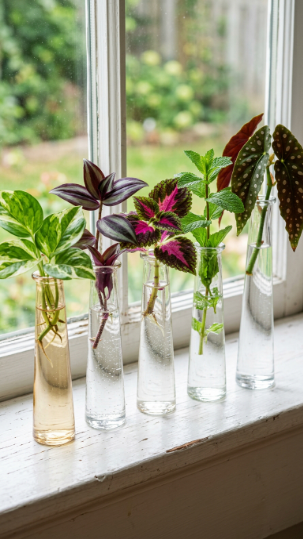
A windowsill propagation station is both a nature-inspired decor idea and a genuinely productive gardening project — watching roots develop in clear glass is endlessly satisfying.
Gather a collection of slim glass bud vases or upcycled glass bottles in varying heights. Take cuttings 10–15cm long from healthy plant stems, removing all leaves except the top two or three. Good beginner propagation candidates: Epipremnum aureum (golden pothos), Tradescantia zebrina (wandering dude), Impatiens stem cuttings, and fresh culinary mint from the supermarket.
Fill each vase with room-temperature water (cold tap water can shock tender cuttings), place the cut end in the water, and position in bright indirect light. Change the water every 5–7 days to prevent bacterial build-up. Roots typically appear within 2–4 weeks on pothos and tradescantia; woody herbs take slightly longer.
💡 Pro Tip: Add a single drop of liquid seaweed fertilizer to the water every two weeks — it contains natural rooting hormones that speed root development noticeably compared to plain water.
Discover how to set up a windowsill propagation station and read propagation techniques from Penn State Extension.
There’s something deeply satisfying about multiplying your plant collection for free, right on your windowsill.
6. Miniature Herb Garden in Terracotta Pots
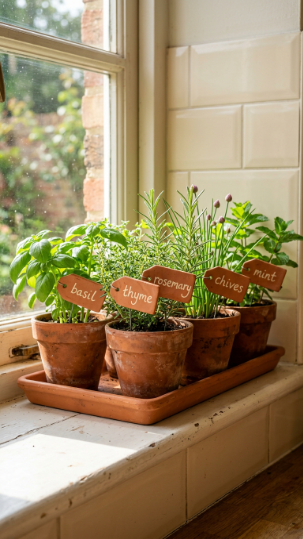
A kitchen herb garden on your windowsill is the most functional nature inspired DIY windowsill decor idea — it looks beautiful and you’ll use it every single day.
Choose a south or west-facing kitchen windowsill that receives at least 4–6 hours of direct sunlight. Use 10cm terracotta pots (not plastic — terracotta regulates moisture far better for herbs) with drainage holes, filled with a free-draining multipurpose compost mixed with 20% perlite. Start with easy herbs: basil (Ocimum basilicum), thyme (Thymus vulgaris), chives (Allium schoenoprasum), and flat-leaf parsley.
Water when the top centimetre of soil feels dry — typically every 2–3 days in summer, every 5–7 days in winter. Feed with a diluted liquid seaweed fertilizer every 2–3 weeks during the growing season. Snip herbs regularly from the top to encourage bushy growth; never remove more than one-third of the plant at one time.
The most common beginner mistake with windowsill herbs: overwatering basil. Basil wants warmth and moderate moisture — sitting in wet soil for more than 24 hours causes root rot and the characteristic sudden collapse of the whole plant.
Best herbs for windowsill growing:
- Thyme — thrives in dry conditions, full sun
- Chives — tolerates partial shade, regrows quickly after cutting
- Mint — grows vigorously (keep in its own pot)
- Basil — needs warmth above 15°C / 59°F consistently
Read more about growing a windowsill herb garden from seed and seedlings and find detailed herb growing guides at The Old Farmer’s Almanac.
Fresh herbs on your windowsill bridge the gap between garden and kitchen in the most practical, beautiful way.
7. Pressed Botanical Print Frames
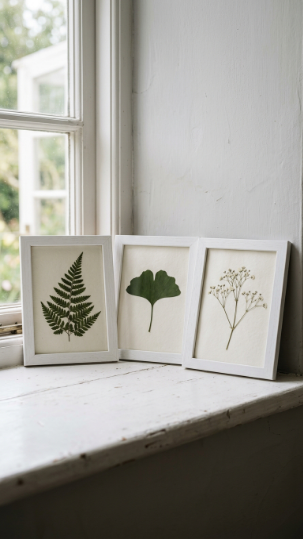
Pressed botanicals turned into framed art are one of the most elegant and virtually free nature inspired DIY windowsill decor ideas — and they pair beautifully with live plants.
Collect plant material at its peak: fern fronds, single rose petals, ginkgo leaves, cow parsley, and herb sprigs all press beautifully. Place them between two sheets of blotting paper, then press between the pages of a heavy book with additional weight on top. Leave undisturbed for 2–3 weeks. The drier and flatter the original specimen, the better the result.
Once fully dried and pressed, arrange on acid-free white card inside simple clip frames (available for £1–£2 at discount stores). A single large fern frond centred on a small frame makes a striking minimal statement; a cluster of three or five frames in varying sizes creates a botanical gallery display on the windowsill itself.
💡 Pro Tip: Spray the finished pressed botanical lightly with matte fixative spray before framing — it prevents fragile specimens from crumbling when the frame is occasionally moved, and subtly deepens the colour.
Explore DIY pressed botanical art and windowsill display ideas and find plant pressing techniques at Gardeners’ World.
Pressed botanicals are a reminder that nature’s beauty is worth preserving — and displaying.
8. Trailing Pothos in Woven Hanging Planters
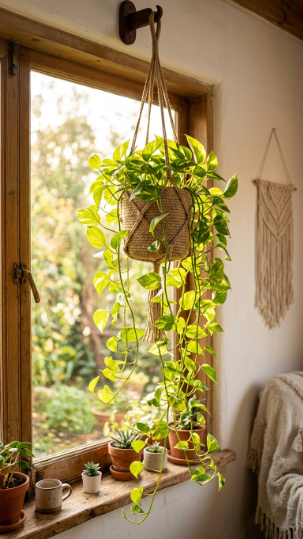
A trailing pothos cascading from a hanging planter in front of a window creates a living green curtain — one of the most dramatic nature-inspired DIY transformations for any windowsill area.
Epipremnum aureum (golden pothos) is the ideal candidate: it tolerates low to moderate light, grows rapidly, and its variegated yellow-green leaves look stunning backlit by a window. Weave or purchase a small jute or cotton macramé hanging planter, ensuring the pot has drainage. Use a standard indoor potting mix; pothos is not fussy about soil.
Position the hanger on a ceiling hook above the window or from a tension curtain rod. Water when the top 2–3cm of soil feels dry — typically every 7–10 days in good light. Mist the leaves occasionally to raise local humidity and wipe with a damp cloth to keep them glossy.
The secret to long, dramatic cascading vines: don’t trim your pothos. Many beginners keep cutting to “tidy” it, but the long trailing stems are exactly the effect you’re cultivating. Only remove yellowing or damaged leaves.
Learn about hanging planter ideas for windowsills and plant displays and explore pothos care at Missouri Botanical Garden.
Few plants create as much visual impact for as little effort as a well-grown trailing pothos.
9. Seasonal Bulb Forcing Display
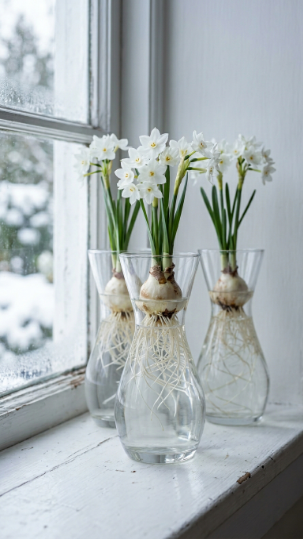
Forced bulbs in glass vases are one of the most theatrical nature inspired DIY windowsill decor ideas — watching roots grow through clear glass and blooms emerge indoors in winter is genuinely magical.
Paperwhite narcissus (Narcissus papyraceus) and hyacinths are the easiest to force. For glass vase forcing, choose a dedicated forcing vase shaped to hold the bulb above water, or use any vase where you can elevate the bulb with pebbles so its base just touches the waterline without submerging. Fill with room-temperature water to just below the bulb’s base.
Place in a cool (10–15°C / 50–59°F), bright location initially to encourage root growth before shoots emerge — roughly 2–4 weeks. Once shoots are 5–7cm tall, move to a warmer, sunnier windowsill. Paperwhites bloom in 4–6 weeks from planting; hyacinths take 8–12 weeks.
Change the water every 5–7 days and top up as needed. The visible root system growing through clear glass is a genuinely beautiful part of the display — it’s living art.
💡 Pro Tip: Add a teaspoon of vodka or isopropyl alcohol per cup of water when paperwhite shoots reach 5cm — it limits excessive stem elongation, keeping plants compact and less prone to flopping.
Discover more seasonal bulb forcing and windowsill display ideas and read paperwhite growing guidance from BHG.
Forcing bulbs indoors is one of those projects that feels like a small miracle every single time.
10. Reclaimed Wood Windowsill Planter Box
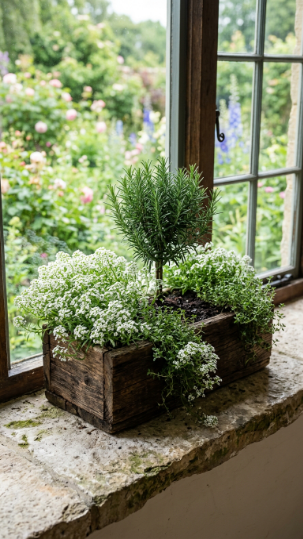
A handmade reclaimed wood planter box is the most satisfying and customisable nature inspired DIY windowsill decor project — sized exactly to fit your specific sill.
Source reclaimed pallet wood or old floorboards, cut to the length of your windowsill and assembled into a simple rectangular box with a basic woodworking saw and screws. Line the inside with landscape fabric before adding soil to prevent rot while allowing drainage. Drill 3–5 drainage holes in the base at 15cm intervals.
For a mixed planting, try a “thriller, filler, spiller” approach: a small rosemary standard or upright lavender as the focal point, compact bushy herbs (thyme, marjoram) as filler, and a trailing plant (sweet alyssum or creeping thyme) to spill over the front edge. Use a free-draining herb compost.
The pro insight: seal the inside of the wood with raw linseed oil before planting — this dramatically extends the box’s life without using synthetic chemicals, and the oil is completely safe for edible herbs.
Read about building DIY planter boxes for windowsills and balconies and find inspiration for window box planting at RHS.
Building your own planter box means it fits perfectly, costs a fraction of store-bought, and has a story behind it.
11. Cactus and Desert Stone Tableau
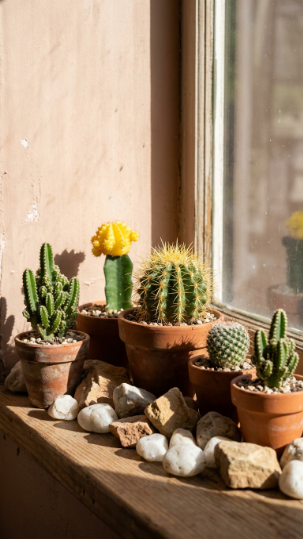
A curated cactus and stone tableau brings genuine desert landscape energy to a windowsill — and cacti are among the most forgiving plants a beginner can grow.
Gather 3–5 small cacti in compatible colours and textures: Echinocactus grusonii (golden barrel), Gymnocalycium mihanovichii (moon cactus), and Cereus peruvianus (fairy castle cactus) create excellent contrast. Plant into individual terracotta pots using a specialist cactus compost mixed with 30% coarse sand or perlite for maximum drainage.
Arrange the pots in a large terracotta tray and fill the gaps between pots with decorative stones: rough sandstone chunks, smooth white quartz, and scattered aquarium gravel all work beautifully. This creates the visual effect of a single unified desert landscape.
Cacti require a south-facing windowsill with 6+ hours of direct sun. Water sparingly: once every 2–3 weeks in summer, once a month or less in winter. The biggest mistake beginners make is watering on a calendar schedule — always check the soil first. It must be completely dry before you add any water.
Beginner vs. Advanced cactus tableau:
- Beginner: Three cacti, terracotta tray, coarse sand topping, river pebbles
- Advanced: Sloped sand landscape with varying grain textures, carved stone pieces, integrated LED grow light for winter
Explore cactus windowsill garden design and care and read cactus care guidance from University of Florida Extension.
A desert tableau on a sunny windowsill rewards your neglect generously — the less you interfere, the better it looks.
12. Upcycled Tin Can Herb Planters
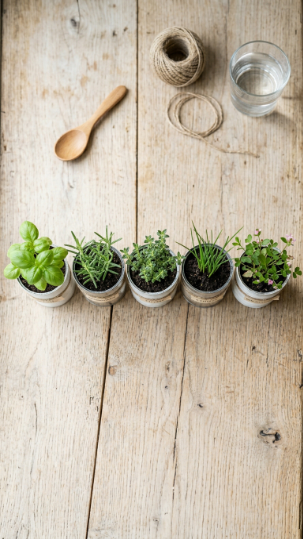
Upcycled tin can planters are proof that the most charming nature inspired DIY windowsill decor ideas cost absolutely nothing — except a little creativity.
Collect tin cans of varying sizes — tomato cans, baked bean tins, coffee cans all work. Use a hammer and nail to punch 4–5 drainage holes in the base of each can. To prevent rust from staining your windowsill, paint the cans with a coat of chalk paint in white, sage green, or terracotta, or simply leave the raw metal for an industrial look. Line each with a small circle of landscape fabric before adding compost.
Plant with compact herbs (thyme, chives, basil) or small wildflower seedlings. Group in odd-numbered clusters — three or five — at varying heights by placing shorter cans on a small wooden block or book for elevation.
💡 Pro Tip: Press a rustic label into the wet chalk paint (a toothpick works perfectly) before it dries to create custom plant labels built directly into the can — far more charming than sticky labels.
Find more upcycled container planting ideas for windowsills and explore creative container gardening ideas at BHG.
The beauty of tin can planters is that every single one is different — and none of them cost you a penny.
13. Fern Frond Display in Dark Glass Vases
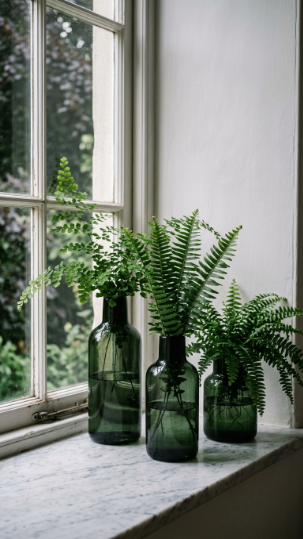
Fresh or faux fern fronds arranged in dark glass vases create one of the most moody, sophisticated nature inspired windowsill displays — requiring virtually no botanical knowledge.
Nephrolepis exaltata (Boston fern) fronds, Adiantum raddianum (maidenhair fern) stems, and garden sword fern fronds all last 5–10 days in water as cut arrangements. If you have a fern in your garden or a houseplant that needs thinning, simply snip mature fronds at the base, clean the ends at a 45° angle, and arrange immediately in cool water.
Choose vessels with intention: dark green, black, or amber glass amplifies the lush botanical feel rather than competing with it. Three vases at different heights — 20cm, 30cm, and 40cm — creates visual rhythm. Add a few fronds of eucalyptus or a single stem of dark-leaved Cotinus for depth.
Change the water every 2–3 days and re-trim the stem ends each time to extend the life of the arrangement. If using faux ferns, dust them weekly — accumulated dust dramatically reduces the visual impact of any faux botanical display.
What works vs. what to avoid:
- Works: Maidenhair, Boston, sword fern, asparagus fern sprigs
- Avoid: Holly fern (toxic to pets), bracken (stains water brown quickly)
Browse fern display and arrangement ideas for indoor spaces and read about fern care from Missouri Botanical Garden.
Dark glass and fresh ferns together create a display that looks like it belongs in a high-end botanical shop.
14. Windowsill Wildflower Seed Pot Collection
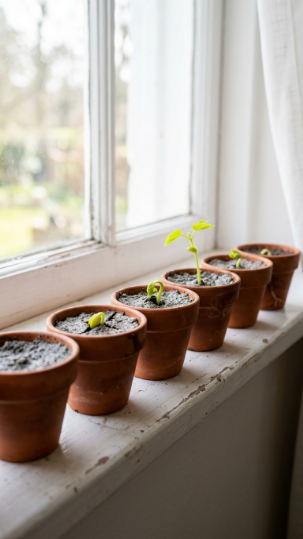
Watching wildflower seeds germinate on your windowsill is one of the most quietly joyful nature inspired DIY projects — a daily reminder that something is growing.
Fill small 7–9cm terracotta pots with a fine seed compost (not standard potting compost — it’s too coarse for small seeds). Sow wildflower seeds thinly on the surface: cornflowers (Centaurea cyanus), California poppies (Eschscholzia californica), and pot marigolds (Calendula officinalis) are all excellent windowsill starters. Cover with a fine layer of vermiculite — just 2–3mm, as many wildflower seeds need light to germinate.
Mist the surface gently with a spray bottle rather than watering from above. Keep the compost consistently moist but not wet. Place in a bright south or west-facing windowsill at 18–22°C. Most wildflower seeds germinate within 7–21 days.
Label each pot with a small stake as you sow — it seems obvious in the moment but seedlings become confusingly similar before the first true leaves appear.
💡 Pro Tip: Sow seeds in small batches every 2 weeks (“succession sowing”) for a continuous display of germinating seedlings throughout spring — rather than one large flush that all grows up and moves outside simultaneously.
Learn more about growing wildflowers from seed on a windowsill and read sowing wildflower seeds with guidance from the RHS.
There is no simpler or more hopeful nature-inspired project than a row of seed pots waiting to wake up.
15. Air-Purifying Snake Plant Arrangement
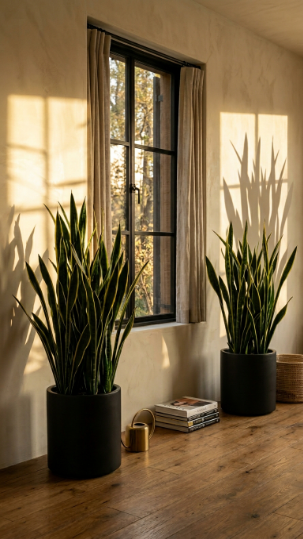
Snake plants are among the most architectural and air-purifying nature inspired additions to a windowsill — and they belong on every low-maintenance plant parent’s shortlist.
Sansevieria trifasciata (now reclassified as Dracaena trifasciata) tolerates an astonishing range of light conditions, from low indirect light to bright direct sun. Its upright, sculptural leaves cast striking geometric shadows on walls in afternoon light — making it as much a light-play installation as a plant. Choose matte black, slate, or concrete pots to maximise the visual contrast against the leaves’ gold margins.
Water very sparingly: every 14–21 days in summer, every 4–6 weeks in winter. Root rot from overwatering is by far the most common cause of snake plant death. Use a free-draining cactus or succulent compost mix rather than standard houseplant compost.
This plant was studied by NASA for its ability to filter certain volatile organic compounds from indoor air — though real-world impact depends on the number of plants relative to room volume.
💡 Pro Tip: Wipe snake plant leaves with a damp cloth every 3–4 weeks. Dust on the wide, flat leaves significantly reduces photosynthesis efficiency and dulls the dramatic gloss that makes this plant so striking.
Find snake plant care guides and windowsill styling ideas and read Dracaena care notes from Gardeners’ World.
A pair of well-grown snake plants flanking a window transforms a domestic room into something genuinely striking.
16. Seasonal Eucalyptus and Branch Display
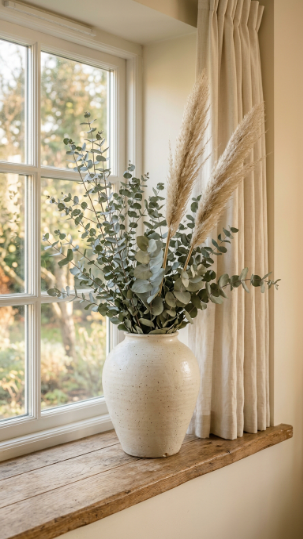
A tall statement vase of dried eucalyptus and branches brings the scale and drama of the outdoors inside, creating one of the most effortlessly beautiful nature inspired DIY windowsill displays.
Source Eucalyptus cinerea (silver dollar eucalyptus) or E. gunnii (gum tree) from florists, wholesale flower markets, or garden centres in late summer. Dried pampas grass (Cortaderia selloana) plumes add texture and height. For a longer-lasting display, hang eucalyptus upside down in a warm dry room for 2–3 weeks before arranging — it retains both shape and scent far longer once dried.
Arrange in a tall ceramic or stoneware vase that doesn’t need water — dried stems hold their shape indefinitely without it. Place the tallest branches at the back, softer or drooping stems at the front, and pampas stems off-centre for asymmetric interest.
Refresh the fragrance every few months by misting lightly with eucalyptus essential oil diluted in water. The display needs virtually no maintenance otherwise — just occasional gentle dusting with a soft brush.
Explore dried botanical display ideas for windowsills and interiors and read about eucalyptus growing and harvesting on Almanac.com.
Dried eucalyptus and branch displays prove that nature inspired decor doesn’t have to be alive to be extraordinary.
17. Windowsill Bonsai Display
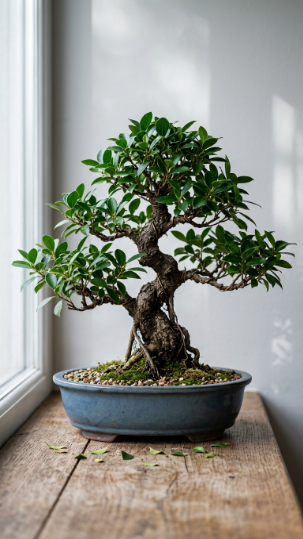
A bonsai on a windowsill is the most meditative of all nature inspired DIY windowsill decor ideas — a living sculpture that rewards attention and patience in equal measure.
For windowsill growing, choose indoor bonsai species: Ficus retusa (Chinese banyan), Portulacaria afra (elephant bush), or Crassula ovata grown in bonsai style are all forgiving and suitable for beginners. Place on a south or west-facing windowsill with 4–6 hours of bright light daily; inadequate light is the primary reason most indoor bonsai decline.
Use a specialist bonsai compost (akadama mixed with pumice and fine grit) rather than standard potting compost — bonsai roots require the superior drainage and aeration that only a mineral substrate provides. Water when the topsoil just begins to feel dry, which is typically every 1–3 days in summer and every 4–7 days in winter, depending on pot size and room temperature.
Pinch new shoots back to 2 leaves once they produce 4–6 new leaves — this is the fundamental technique that maintains the miniature scale and dense branching that makes bonsai so visually captivating.
Learn about beginner bonsai care and windowsill display tips and read bonsai care fundamentals from BHG.
A bonsai doesn’t just decorate your windowsill — it teaches you to slow down and observe.
18. Crystal and Succulent Rock Garden Display
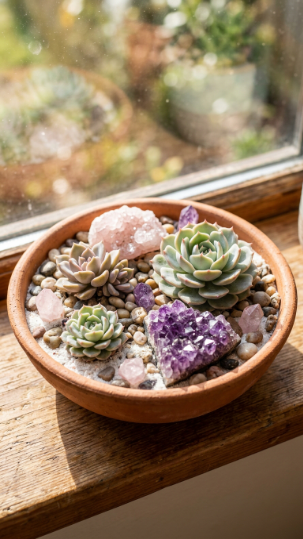
Combining crystals and succulents in a shallow bowl creates one of the most visually arresting nature inspired DIY windowsill displays — it merges geology and botany in a genuinely beautiful way.
Source a wide, shallow terracotta bowl or dish at least 20cm across and 7–8cm deep, with drainage holes drilled at the base. Fill with a succulent and cactus compost mixed 50/50 with coarse horticultural sand. Plant 3–5 compact echeveria rosettes (Echeveria elegans, E. ‘Perle von Nürnberg’) with space between each.
Place raw crystals and mineral specimens — rose quartz, amethyst clusters, clear quartz points, or smooth tumblestones — in the gaps between plants. Use a layer of white quartz sand or fine aquarium gravel as a top dressing to unify the elements.
This display needs a south-facing windowsill with 4–6 hours of direct sun. Water once every 14–21 days, directed at the base of each succulent — never onto the crystal specimens, as standing water can degrade some mineral surfaces over time.
💡 Pro Tip: Rotate the bowl a quarter-turn every 2 weeks so each side of the echeveria receives equal sun, preventing the one-sided lean that develops when succulents always grow toward a single light source.
Find crystal and succulent display styling ideas for windowsills and explore echeveria care from Missouri Botanical Garden.
There is something deeply satisfying about combining two kinds of natural beauty — mineralogy and botany — in a single small display.
19. Woodland Fairy Garden in a Shallow Trough
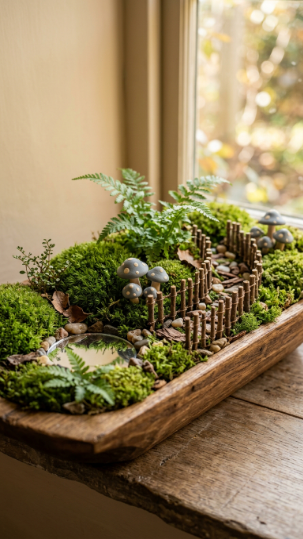
wsill containing miniature woodland scene elements — cushion moss, a tiny fern, miniature mushroom ornaments, a small mirror pond, and twigs arranged as a tiny fence. Lighting: warm soft indoor morning light. Color palette: forest green, warm oak, cool grey mushroom. Mood: whimsical, enchanted, detailed. Photography style: eye-level lifestyle close-up. Background: soft blurred warm beige. Style tags: photorealistic, 8K, botanical photography, magazine quality, no people.
A miniature woodland fairy garden in a shallow trough is the most immersive and playful nature inspired DIY windowsill project — and one of the most popular with both children and adults.
Source a shallow wooden trough, stone tray, or large terracotta saucer at least 30cm long. Line with landscape fabric and fill with a mix of potting compost and fine bark chippings. Plant cushion moss as your “lawn,” a miniature fern (Asplenium trichomanes is perfect) as a tree, and small mind-your-own-business (Soleirolia soleirolii) as creeping groundcover.
Add miniature accessories: a small circular mirror becomes a pond, twigs pressed into the soil form a tiny fence, and small decorative mushroom ornaments can be found inexpensively at craft stores. A piece of smooth slate becomes a stepping stone. The trick is to keep the scale consistent — everything should feel proportionally matched.
Place on a north or east-facing windowsill with bright indirect light. Mist with a spray bottle every 2–3 days to maintain the humidity that moss and miniature ferns require.
Explore miniature fairy garden and trough display ideas for windowsills and find container woodland garden inspiration at RHS.
A woodland fairy garden on your windowsill invites people to look twice — and then look closer.
20. Kokedama — Japanese Moss Ball Display
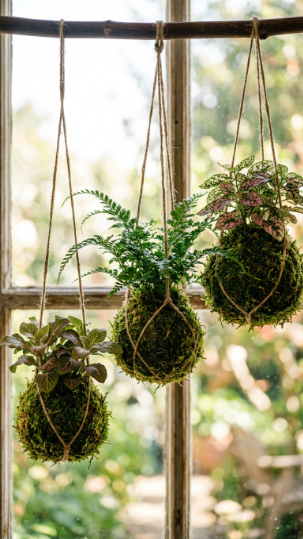
Kokedama — the Japanese art of growing plants in a moss-wrapped soil ball — is one of the most uniquely beautiful and conversation-starting nature inspired DIY windowsill decor ideas.
To make a kokedama, mix equal parts akadama clay (available online or at specialist garden centres) and peat-free compost, adding just enough water to form a firm, mouldable ball. Remove your chosen plant from its pot, shake off loose soil, and press the root ball into the centre of the compost mixture. Shape the mixture around the roots firmly. Wrap the entire ball tightly in sheet moss (flat side out), securing with multiple rounds of jute twine until the ball holds its shape independently.
Suspend on jute twine from a ceiling hook above the windowsill, or display on small ceramic saucers directly on the sill. Water by submerging the entire moss ball in a bowl of room-temperature water for 10–15 minutes every 7–10 days, then squeeze gently and allow to drain before returning to display.
Best plants for kokedama: Fittonia albivenis (nerve plant), Nephrolepis exaltata (Boston fern), Hypoestes phyllostachya (polka dot plant), and compact Tradescantia varieties.
Learn how to make your own kokedama moss ball step by step and find kokedama plant care guidance at Gardeners’ World.
Kokedama bridges fine craft and botanical care in a way that almost no other windowsill project does.
21. Sunrise Citrus and Herb Windowsill Arrangement
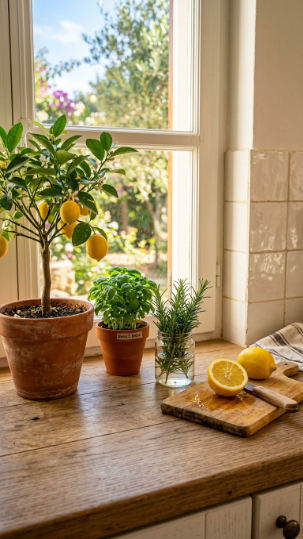
A citrus and herb arrangement on a sunny kitchen windowsill is one of the most vibrant and genuinely multi-sensory nature inspired DIY windowsill decor ideas — combining sight, fragrance, and flavour in one small space.
A miniature Citrus × limon (dwarf lemon) or Citrus microcarpa (calamondin orange) in a terracotta pot makes a stunning anchor for this display. These compact trees reach 40–60cm in pots, produce fragrant flowers and miniature fruit, and genuinely thrive on a bright south-facing kitchen windowsill with 6+ hours of direct sun. Pair with potted basil and a small glass jar of fresh rosemary or thyme cuttings in water.
Dwarf citrus require consistently moist compost (not wet), fed with a citrus-specific liquid fertiliser every two weeks in spring and summer. They need humidity — mist daily or place on a pebble tray with water, ensuring the pot base sits above the waterline. Temperature consistency matters: they dislike cold draughts from an open window in winter below 10°C / 50°F.
The citrus tree will flower before fruiting — the scent of citrus blossom indoors is one of the most extraordinary experiences in windowsill gardening, completely disproportionate to the size of the plant.
💡 Pro Tip: When repotting citrus, choose a pot only one size larger than the current one. Too much soil volume stays wet too long and encourages root rot rather than the tight root system that promotes fruit production.
Explore growing citrus trees in pots and windowsill kitchen gardens and read dwarf citrus growing guidance from Gardeners’ World.
A miniature lemon tree in bloom on your kitchen windowsill is nature inspired decor at its most joyful and generous.
Getting Started With Nature Inspired DIY Windowsill Decor
The easiest place to start is a single air plant (Tillandsia ionantha) on a piece of driftwood. You can source both for under £5 combined, they require no soil, no pot, and no drainage tray — and the result looks genuinely considered from day one. This gives you a quick win and the momentum to try more.
The most common mistake beginners make is overcomplicating things before they’ve established a feel for what their specific windowsill offers. Light conditions vary enormously from window to window; a south-facing kitchen sill can support a citrus tree, while a north-facing bedroom ledge is perfect for moss terrariums and fern displays. Spend a few days observing how much sun your chosen windowsill receives before committing to any plant.
When it comes to your first purchase, keep it focused: one small plant, one terracotta pot with drainage, and a small bag of the right compost for that plant type. Avoid buying five things at once — it leads to information overload and more plants struggling than thriving.
Realistically, you’ll see your windowsill transformation within a single afternoon for decor-focused projects (dried botanicals, crystal displays, pressed art), or within 2–4 weeks for living plant displays once they settle into their new environment. Either way, the results come faster than most people expect.
Frequently Asked Questions
What are the best plants for a north-facing windowsill?
North-facing windowsills receive little or no direct sun, but bright indirect light throughout the day makes them suitable for a surprising range of plants. Cushion moss and sheet moss thrive here, as do Asplenium ferns, Fittonia albivenis (nerve plant), and Epipremnum (pothos). Avoid succulents, cacti, herbs, and citrus on north-facing windows — these all require direct sunlight to thrive and will decline quickly without it.
How often should I water windowsill herbs?
Most windowsill herbs need watering every 2–3 days in summer when growing in small terracotta pots in full sun. The best practice is to press your finger 1–2cm into the compost — if it feels dry at that depth, water thoroughly until it drains from the base. Basil prefers consistently moist compost; thyme and rosemary prefer to dry out slightly between waterings. In winter, reduce frequency by about half.
Can I create nature inspired DIY windowsill decor ideas on a renter’s budget?
Absolutely. The most effective windowsill decor projects cost almost nothing: upcycled tin can planters, propagation stations using jam jars, foraged driftwood air plant displays, pressed botanical frames from leaves collected on a walk, and moss terrariums assembled from garden moss and charity shop glass vessels. The only costs are often a small bag of compost and a few inexpensive plants.
Why are my windowsill succulents growing tall and leggy?
Leggy, stretched succulents (a condition called etiolation) is caused by insufficient light. Succulents stretch toward the light source when they don’t receive enough, producing weak, elongated stems with widely spaced leaves. The solution is to move them to a south-facing windowsill with at least 4–6 hours of direct sun daily. You can also trim the leggy stem and propagate the healthy rosette as a new cutting, starting fresh in better light conditions.
How do I maintain a dried botanical windowsill display?
Dried botanicals require very little maintenance. Dust them gently every 2–3 weeks using a soft paintbrush or a very low setting on a hair dryer to prevent build-up that dulls their appearance. Keep them away from direct strong sunlight, which bleaches colours quickly over weeks. Avoid placing them near steam sources like a kettle — excess humidity rehydrates dried stems and causes mould. Refresh fragrant dried plants like lavender by gently crushing a few flowers to release the essential oils.
A Few Final Thoughts
Your windowsill has been quietly waiting for this. With 21 nature inspired DIY windowsill decor ideas now at your fingertips, you have everything you need to turn a bare ledge into a living, breathing corner of beauty — no matter how much space or budget you’re working with. The truth is that even one small change — a single air plant on driftwood, a terracotta pot of fresh thyme, a vase of dried eucalyptus — can genuinely shift the whole feeling of a room. Nature inspired windowsill decor isn’t about achieving perfection; it’s about bringing something real and living into your daily view. Start with the idea that excited you most when you read it. One seed, one pot, one sunny windowsill — your nature inspired transformation begins today.