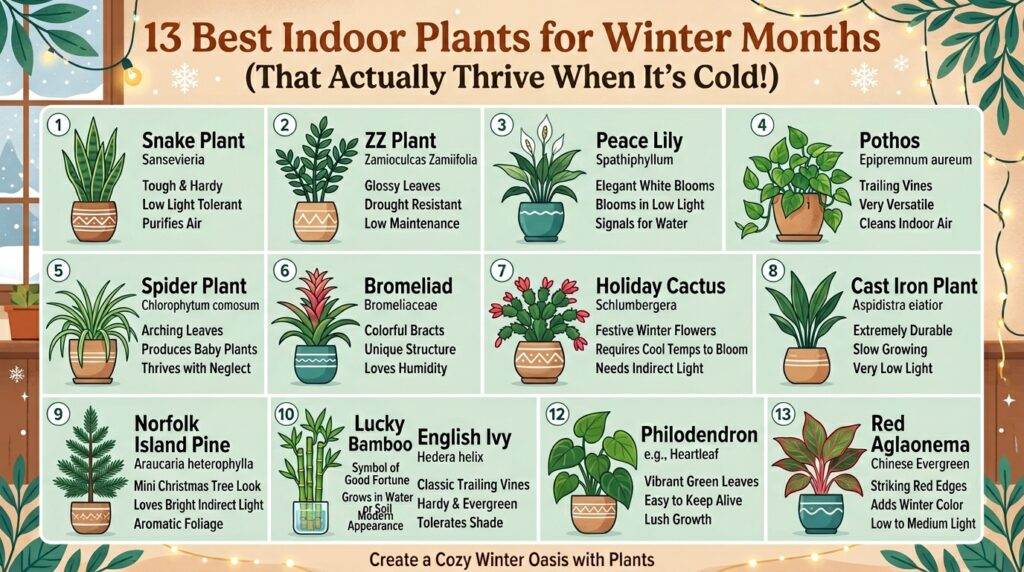
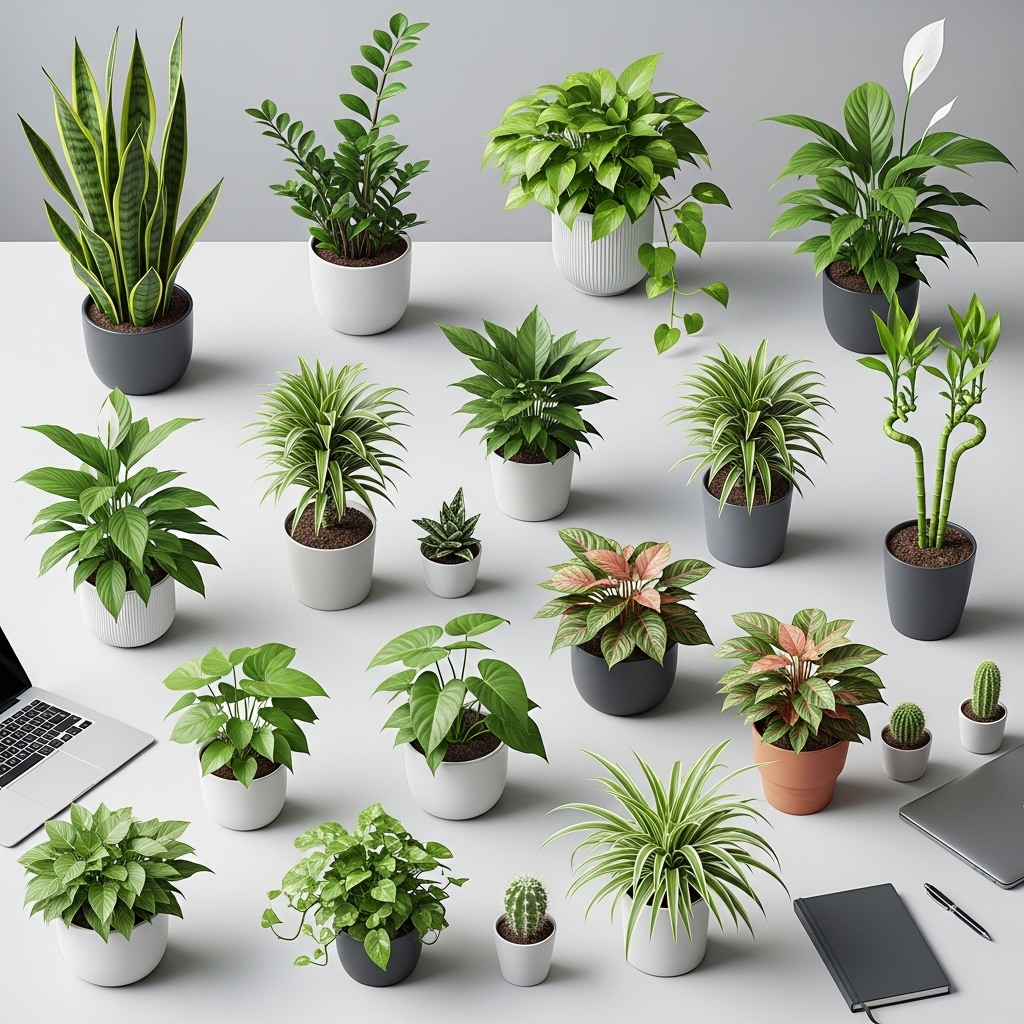
Working in a windowless office doesn’t mean you have to stare at bare walls and fluorescent lights all day — you can absolutely have living, thriving plants in there! The best office plants with no windows are tougher and more adaptable than you’d ever imagine, and adding even one or two of them will transform your workspace from dreary to genuinely energizing. Plants have been shown to reduce stress, boost focus, and improve air quality — all things a windowless office desperately needs. Ready to turn your lightless cubicle into a little urban jungle? Let’s dive in!
At a Glance
- ZZ plants, pothos, and snake plants are the three most reliably low-light tolerant office plants you can buy, and all three handle occasional missed waterings without complaint.
- Fluorescent office lighting provides enough light energy for many low-light plants to survive and even grow slowly, especially when lights are on for 8+ hours a day.
- Adding a small, inexpensive LED grow light to your desk will expand your plant options enormously and keep even moderate-light plants thriving in a windowless space.
- Peace lilies are one of the few low-light plants that will actually bloom in office conditions, adding a beautiful white flower to your workspace.
- Overwatering — not lack of light — is the number one killer of office plants, so always check soil moisture before reaching for the watering can.
Can Plants Really Survive With No Windows?
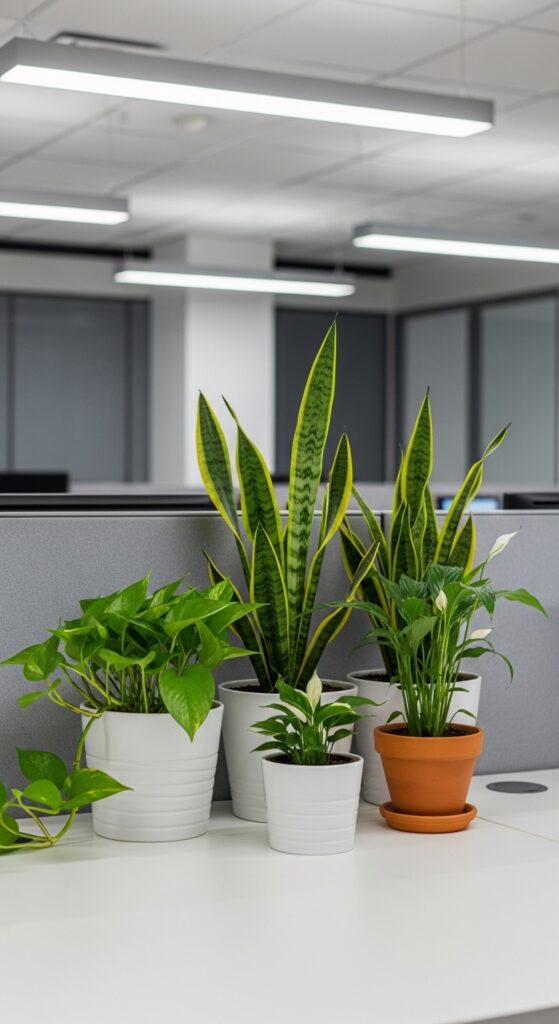
Short answer: yes, absolutely — with the right plant choices. Here’s the deal: low-light plants evolved on the shaded forest floor, where they learned to survive with a fraction of the sunlight that other plants need. Your windowless office actually isn’t that far off from their natural habitat!
The key is understanding that “no windows” doesn’t mean “no light.” Fluorescent overhead lighting and LED office fixtures emit light on the spectrum that plants can use for photosynthesis, just at lower intensities than sunlight. Plants that are adapted to low-light conditions can absolutely make do with this — and many will grow steadily under it.
That said, you do need to choose carefully. A sun-loving succulent or fiddle leaf fig will slowly decline without natural light. But the plants on this list? They’re practically made for the conditions you’re working in.
💡 Pro Tip: The longer your office lights are on each day, the better your plants will do. If your lights run 8–10 hours daily, that consistent exposure adds up and supports healthy, slow growth even without a single ray of sunlight.
Explore our complete guide to the best low-light indoor plants for any space for even more species ideas.
Visit the University of Vermont Extension’s indoor plant care resources for research-backed guidance on growing plants in artificial light.
The right plant in the right spot will genuinely thrive — and your office is the right spot for these ones!
1. Pothos — The Unkillable Classic
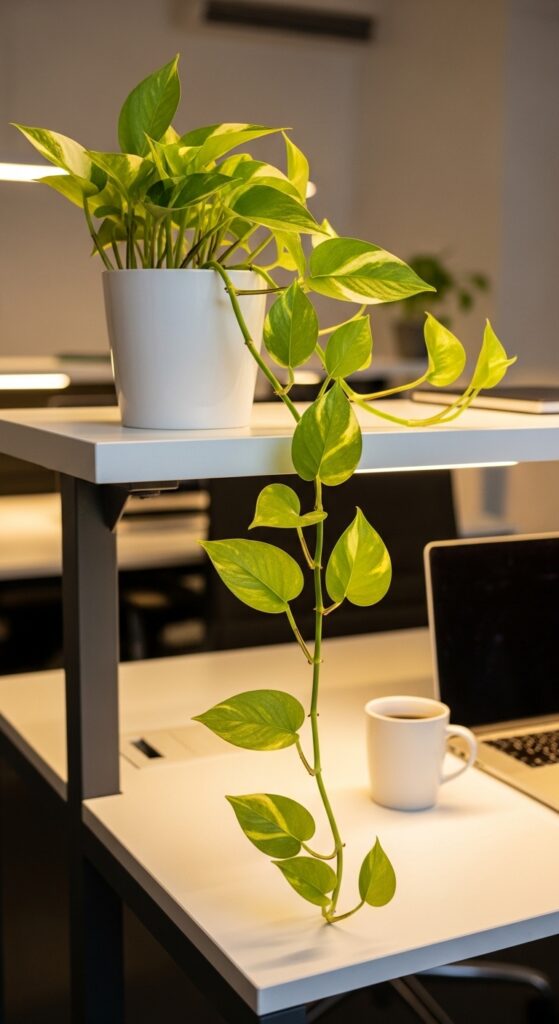
If you’re new to office plants — or you’ve killed every plant you’ve ever owned — start with a pothos. This vine is the gold standard of low-light, low-maintenance indoor plants, and it’s nearly impossible to kill under office conditions.
Pothos (Epipremnum aureum) tolerates low light, irregular watering, dry office air, and temperature fluctuations like a true champion. It’ll slow its growth in low light, but it won’t give up on you. The trailing vines look gorgeous cascading from a shelf, hanging planter, or over the edge of a desk — adding instant life to an otherwise grey space.
Water it when the top inch or two of soil feels dry — roughly every 1–2 weeks in a cool office. The most common mistake people make is overwatering, which causes yellowing leaves and root rot far more often than low light ever does.
- Light needs: Very low to moderate artificial light
- Watering: Every 1–2 weeks; let soil partially dry out
- Growth habit: Trailing vines, can grow several feet long
- Best for: Shelves, desk edges, hanging planters
- Bonus: One of NASA’s top air-purifying plants
See our guide to growing and propagating pothos in indoor spaces for propagation tips that’ll multiply your plant for free.
Pothos is the plant that proves anyone can have a green office — you’ve totally got this!
2. ZZ Plant — Built for Neglect
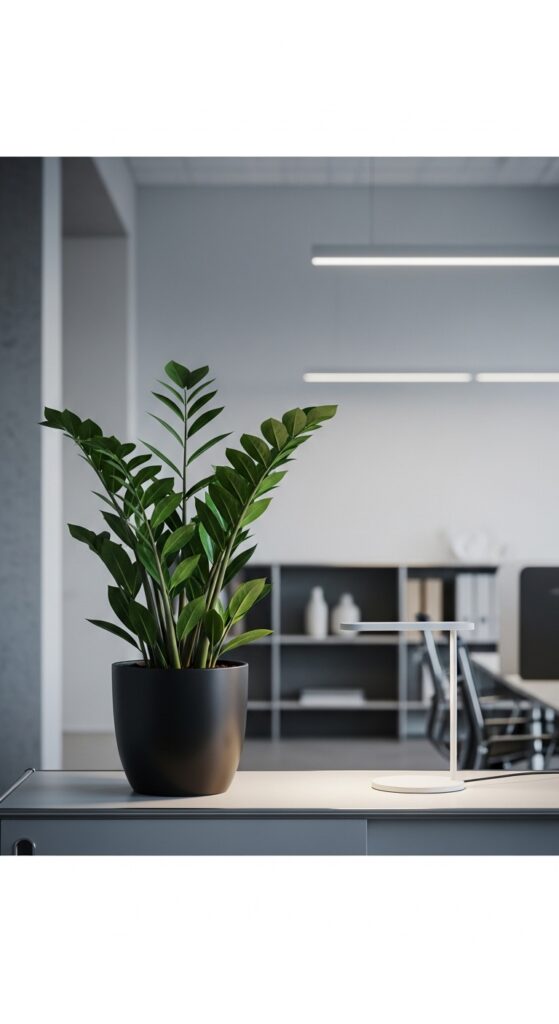
The ZZ plant (Zamioculcas zamiifolia) is basically the plant world’s answer to the question “what thrives on complete neglect?” It stores water in its thick rhizomes underground, meaning it can go weeks without watering and still look polished and perfect.
In a windowless office, ZZ plants are exceptional performers. Their glossy, deep green leaves reflect light beautifully, making the plant look lush and vibrant even under fluorescent tubes. They grow slowly, stay compact, and almost never need repotting — perfect for a set-it-and-forget-it office plant.
💡 Pro Tip: ZZ plants are mildly toxic to pets and humans if ingested, so keep them out of reach of curious colleagues’ kids or office pets. Wash your hands after handling them — it’s a simple precaution that makes them completely safe to have around.
Water your ZZ plant just once every 2–4 weeks in office conditions, and make sure the pot has drainage. These plants hate sitting in wet soil — when in doubt, wait another week before watering.
Discover more drought-tolerant indoor plants perfect for busy people to build a truly low-maintenance plant collection.
The ZZ plant practically takes care of itself — which makes it absolutely perfect for a busy workday!
3. Snake Plant — The Air-Cleaning Champion
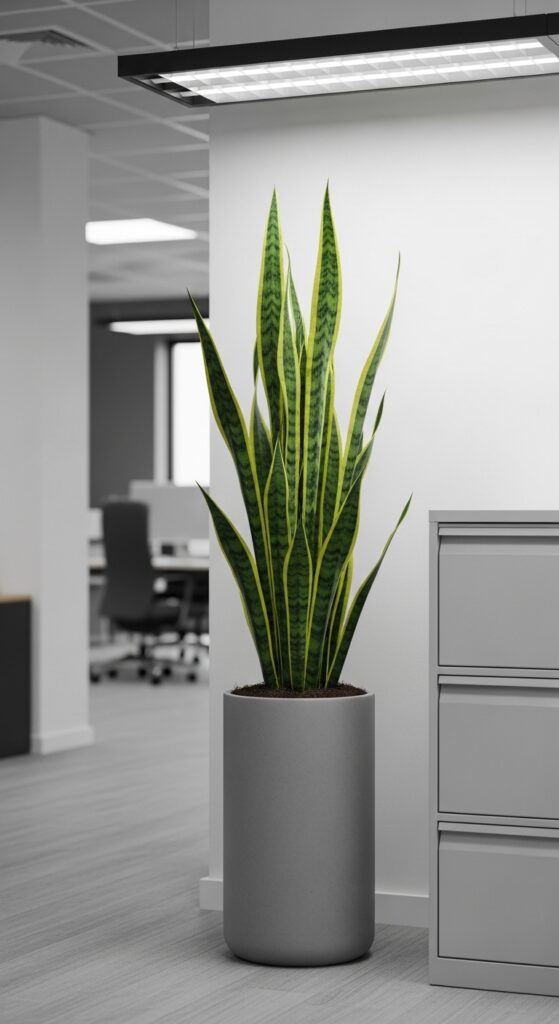
The snake plant (Sansevieria trifasciata, now reclassified as Dracaena trifasciata) is one of the most recommended office plants with no windows for good reason — it combines dramatic good looks with genuine toughness. Those tall, architectural leaves make an instant style statement in even the dullest office corner.
Snake plants are famous for their air-purifying properties. NASA’s Clean Air Study found them effective at filtering formaldehyde, benzene, and other VOCs (volatile organic compounds) from indoor air — toxins that are commonly found in office furniture, carpeting, and building materials. Your lungs will appreciate it!
They’re also one of the few plants that continue performing CAM photosynthesis — absorbing CO₂ and releasing oxygen at night rather than during the day. For an office environment, that means you’re getting air quality benefits around the clock.
Water snake plants very sparingly — every 3–6 weeks in low light conditions. They store water in their thick leaves, and overwatering is the only reliable way to kill one. When in doubt, always wait longer.
Visit NASA’s Clean Air Study summary on The Sill for the full list of air-purifying indoor plants that work in office conditions.
A snake plant in the corner of your office is genuinely one of the best investments you can make in your daily work environment!
4. Peace Lily — Blooms Without Sunlight
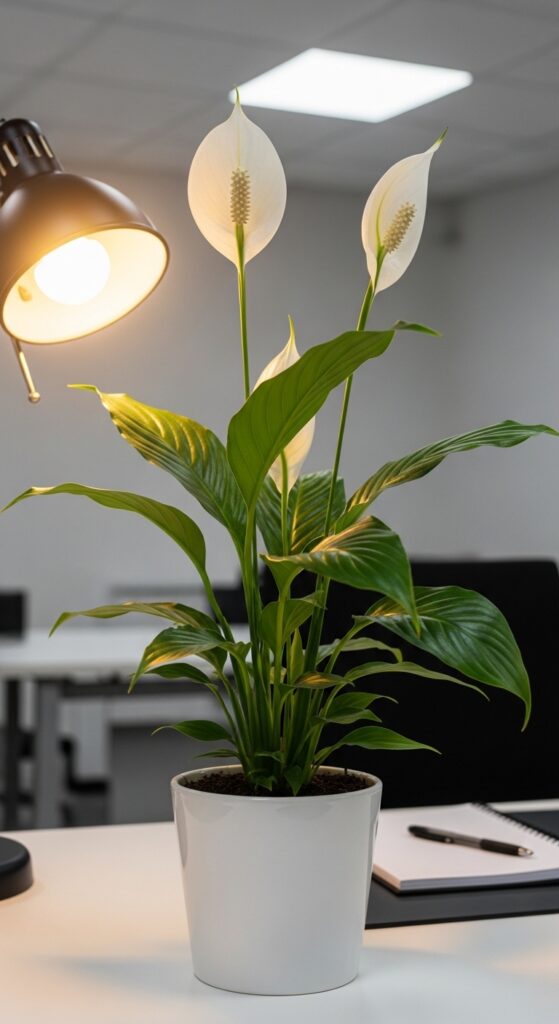
Here’s something that’ll genuinely surprise you: the peace lily (Spathiphyllum) will actually bloom in a windowless office. That’s incredibly rare in the low-light plant world — most plants refuse to flower without direct sun — but peace lilies are spectacularly different.
Those elegant white spathes (the sail-like blooms) appear periodically throughout the year and last for weeks. They’re one of the most beautiful sights you can have on an office desk, and they arrive with essentially zero effort on your part beyond basic watering.
💡 Pro Tip: Peace lilies are one of the most reliable overwatering indicators in the plant world — they droop dramatically when thirsty, then perk back up within hours of watering. Use this as your watering signal instead of a schedule. It’s almost like having a plant that tells you exactly what it needs!
Peace lilies prefer consistently moist (not wet) soil and will suffer in very dry office air. A light misting of the leaves once a week or a small pebble tray with water beneath the pot helps maintain the humidity levels these plants appreciate.
Learn how to care for and rebloom peace lilies indoors year-round to keep those gorgeous white flowers coming.
A blooming peace lily on your desk will make your office the envy of every colleague — absolutely worth it!
5. Cast Iron Plant — Lives Up to Its Name
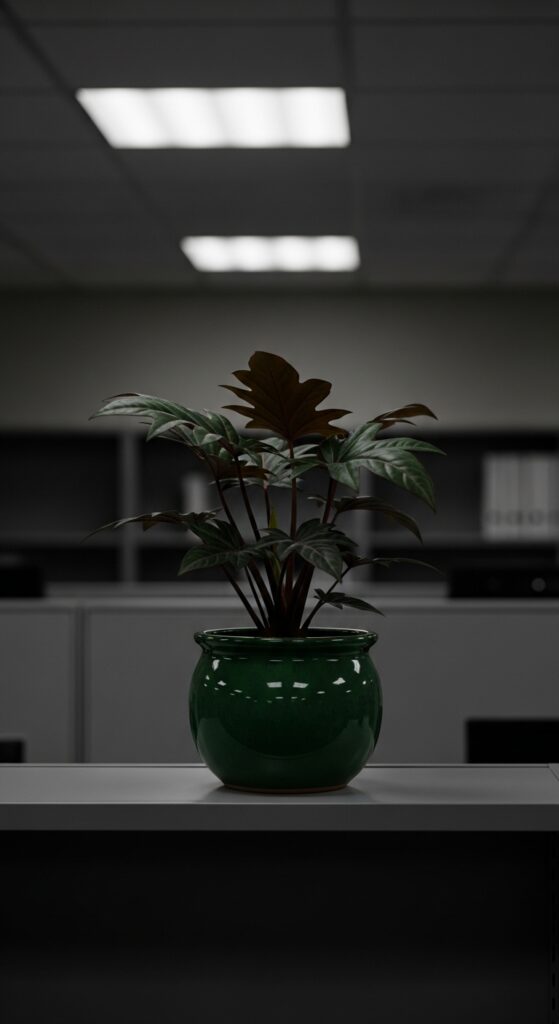
The name says it all: the cast iron plant (Aspidistra elatior) is one of the toughest, most indestructible plants on the planet. It was a Victorian parlor staple precisely because it survived gas lamp lighting and coal dust — your fluorescent office is practically paradise by comparison!
Cast iron plants grow slowly and steadily, producing broad, deep glossy green leaves that look elegant in any office setting. They handle low light, low humidity, temperature swings, irregular watering, and general neglect with the same stoic grace. They literally don’t care — and that’s exactly what makes them perfect.
Water every 2–3 weeks, let the soil dry out significantly between drinks, and never let them sit in standing water. Other than that, just admire them. There’s genuinely very little else you need to do.
Find more ultra-tough low-maintenance plants for challenging indoor environments if you’re building a collection that can handle any conditions.
If you’ve struggled to keep plants alive before, the cast iron plant will finally change your track record!
6. Chinese Evergreen — Bold Color in Low Light
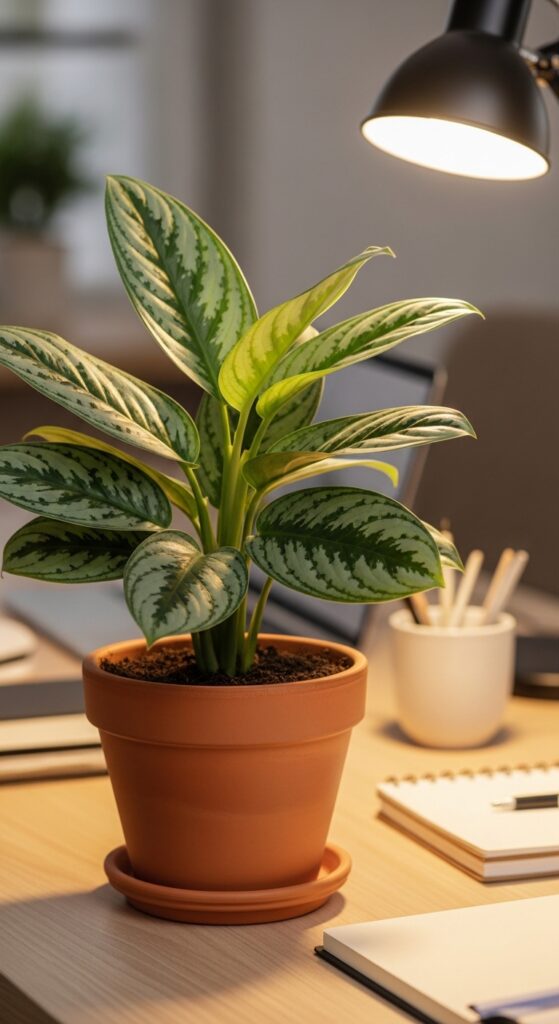
Want a plant that actually looks interesting and colorful in a windowless office? Chinese evergreen (Aglaonema) is your answer. These beauties come in an incredible range of leaf patterns — silver, green, deep red, and pink — and the lower-light varieties are among the most colorful plants that genuinely thrive without windows.
Here’s the one rule: darker-leafed varieties (silver and green) tolerate low light best. The brightly colored red and pink cultivars need a bit more light to maintain their color. For a truly windowless space, stick with the silver-green varieties like ‘Silver Bay’ or ‘Maria’ — they look stunning under fluorescent light.
💡 Pro Tip: Chinese evergreens are toxic to cats and dogs, so if your office occasionally hosts pet visitors, choose a different plant or place this one well out of reach.
Water when the top 1–2 inches of soil are dry, and wipe the broad leaves down monthly with a damp cloth to remove dust — clean leaves photosynthesize more efficiently, which matters extra in low light.
Visit the Missouri Botanical Garden’s Aglaonema plant profile for detailed species and cultivar information.
Chinese evergreens bring genuine color and personality to even the most corporate of office spaces!
7. Dracaena — Tall, Dramatic, and Easy
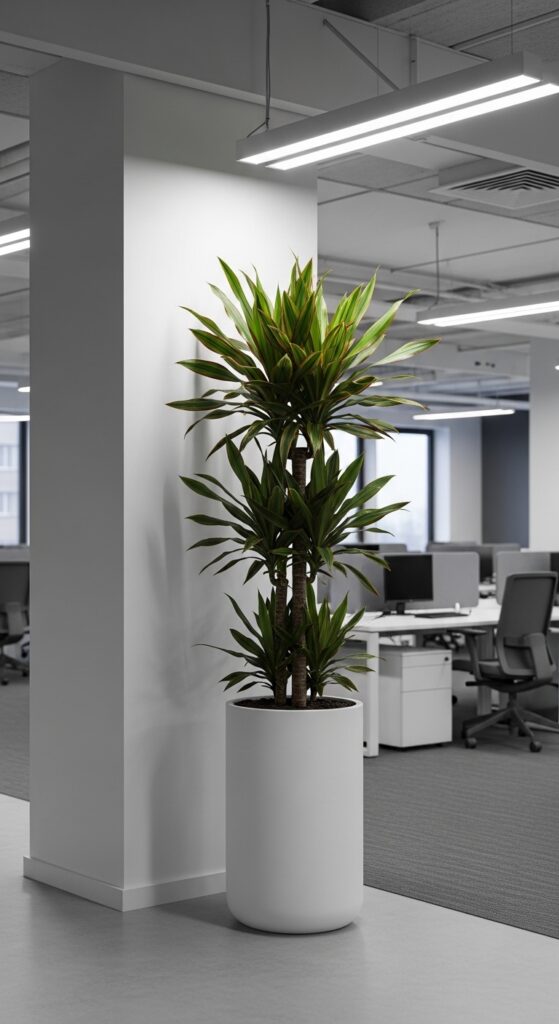
If you want a plant that makes a real visual statement in a windowless office — something tall and dramatic that fills a corner — dracaena is exactly what you need. These architectural plants can grow several feet tall and look like they belong in a designer office lobby.
Dracaena marginata (dragon tree), Dracaena fragrans (corn plant), and Dracaena ‘Janet Craig’ are all excellent low-light performers. They have long, strap-like leaves that add texture and height to an office environment without requiring much care at all.
Water dracaenas sparingly — every 2–3 weeks — and use filtered or distilled water if possible. Dracaenas are sensitive to fluoride in tap water, which causes brown leaf tips. If you notice this, switch your water source and trim the brown tips with clean scissors at an angle.
- Dracaena marginata: Thin red-edged leaves, very dramatic, tolerates deep shade
- Dracaena fragrans: Broad corn-plant-style leaves, handles fluorescent light beautifully
- Dracaena ‘Janet Craig’: Bold, wide dark green leaves, one of the most low-light tolerant options
Explore our guide to tall indoor plants for office and home spaces to find the perfect statement plant for your space.
A tall dracaena transforms a boring office corner into something genuinely worth looking at!
8. Spider Plant — Fast-Growing and Forgiving
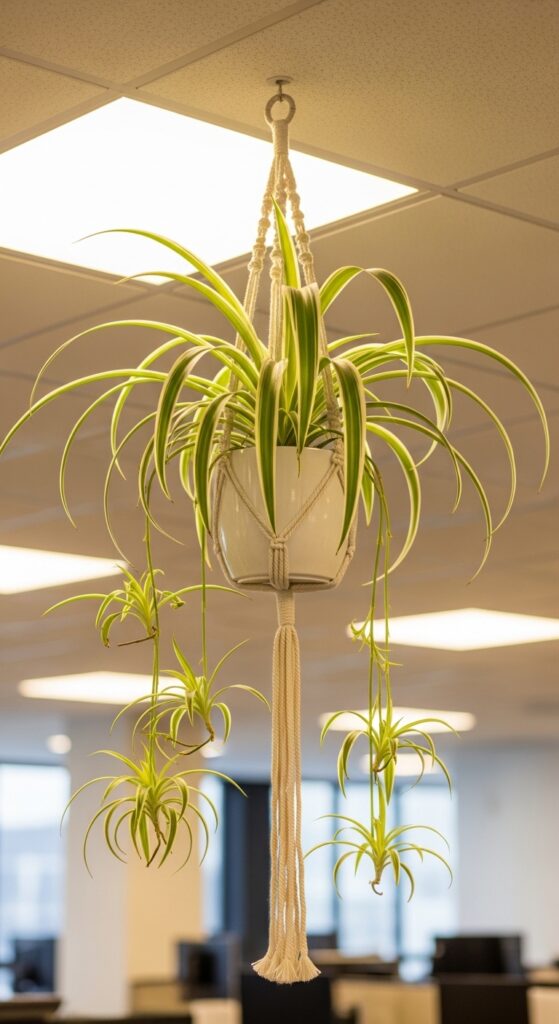
Spider plants (Chlorophytum comosum) are one of the fastest-growing options on this list, which makes them enormously satisfying for office gardeners who want to see real progress. They produce cascading baby plantlets on long runners that dangle beautifully from hanging pots or high shelves.
In a windowless office, spider plants prefer a spot directly under fluorescent lights for maximum benefit. They’ll grow slowly but steadily, and those charming variegated green-and-white leaves look fresh and lively even under artificial light.
💡 Pro Tip: Those dangling spider babies are incredibly easy to propagate — just snip them off and place them in water or moist potting mix. Within a few weeks, you’ll have new plants to share with colleagues or expand your own collection. Free plants forever!
Water spider plants when the top inch of soil is dry — they like slightly more consistent moisture than ZZ plants or snake plants, but they’ll forgive you if you miss a week. Brown leaf tips usually signal dry air or fluoride in tap water rather than a serious problem.
Learn how to propagate spider plants and create an endless supply of free plants for the full step-by-step process.
Spider plants grow fast, propagate easily, and make your office feel genuinely alive — pretty cool, right?
9. Lucky Bamboo — Tiny Footprint, Big Personality
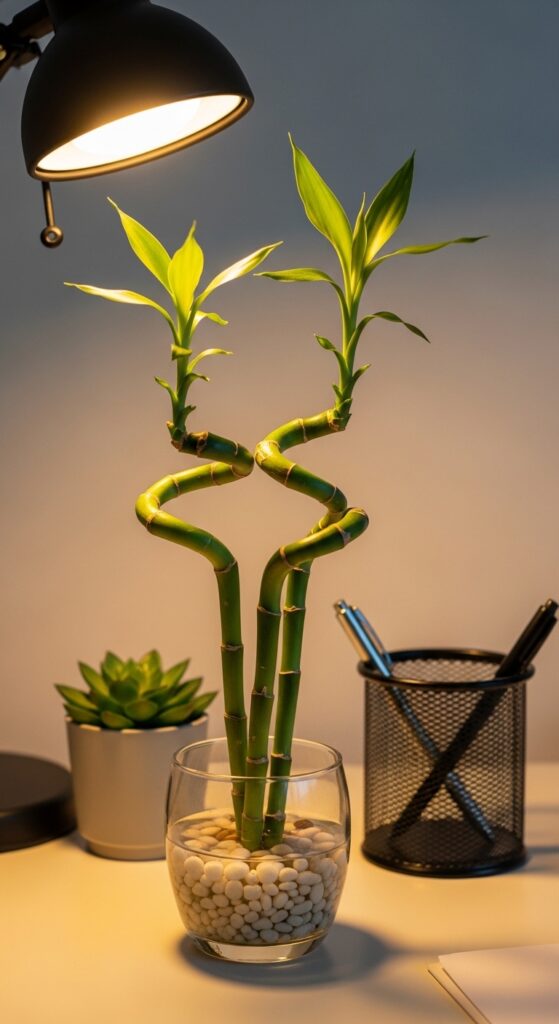
Lucky bamboo (Dracaena sanderiana — yes, it’s actually a dracaena!) is the perfect plant for the office worker with a small desk and a big desire for some greenery. It grows in water alone, takes up almost no space, and genuinely thrives under typical fluorescent office lighting.
The curled, braided, and spiral arrangements you see in shops aren’t just decorative — they’re fully functional living plants that will grow happily in a vase of water on your desk for years. Change the water every 1–2 weeks with filtered or distilled water and add a few drops of liquid fertilizer monthly to keep them growing steadily.
Lucky bamboo is associated with good fortune and positive energy in feng shui traditions, which makes it a popular and thoughtful desk gift for colleagues too. Talk about a game-changer for that bleak office corner!
Discover the best small desk plants for compact office and cubicle spaces to maximize greenery in minimal space.
Lucky bamboo proves you don’t need a big space or a window to bring beautiful, living greenery to your work life!
10. Philodendron — Lush and Low-Maintenance
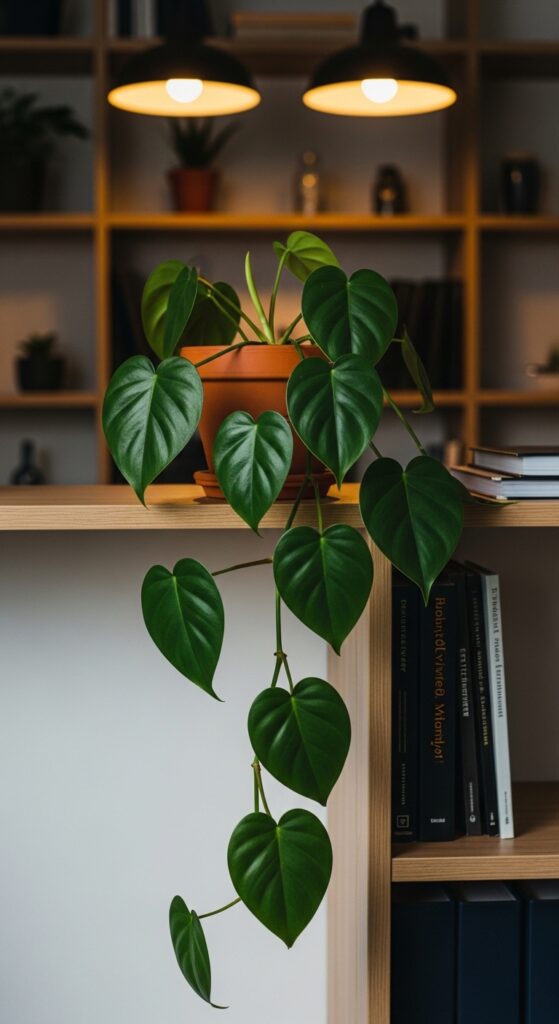
If pothos is the classic low-light vine, philodendron is its slightly more sophisticated cousin — and it’s just as tough. The heartleaf philodendron (Philodendron hederaceum) in particular is a spectacular performer in low-light environments, producing large, heart-shaped deep green leaves that trail beautifully from shelves or climb a small moss pole.
Philodendrons are genuinely enthusiastic growers even under fluorescent lighting, which makes them one of the most rewarding office plants with no windows on this list. You’ll actually see them putting out new leaves regularly, which makes the whole plant-keeping experience much more satisfying.
💡 Pro Tip: Philodendrons are excellent air quality improvers — they absorb formaldehyde and other VOCs from office air, making your work environment genuinely healthier. A win for your workspace and your wellbeing!
Water when the top inch of soil is dry, and give the leaves an occasional wipe with a damp cloth to keep them dust-free and photosynthesizing at maximum efficiency. They’ll reward you with lush, consistent growth that makes your office feel like a totally different place.
Visit the Royal Horticultural Society’s philodendron care guide for detailed cultivation advice from one of the world’s leading plant authorities.
A trailing philodendron on your office shelf is one of those small additions that makes a genuinely huge difference to your daily environment!
How to Use Grow Lights to Help Your Office Plants Thrive
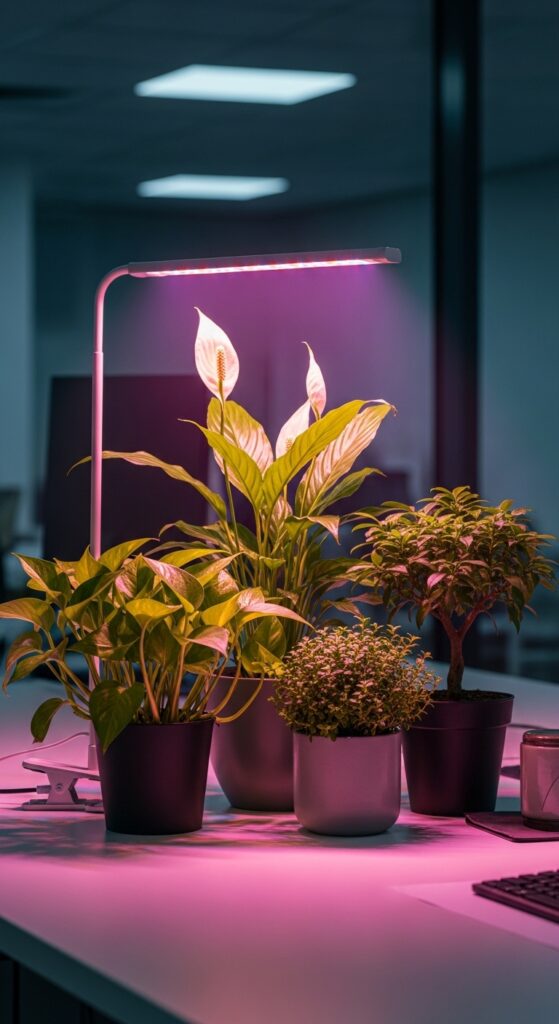
Here’s the thing: even the toughest low-light plants will grow faster, look healthier, and stay more vibrant if you supplement with a grow light. And modern LED grow lights are cheap, energy-efficient, and small enough to clip right onto your desk without taking up any meaningful space.
You don’t need anything elaborate. A simple full-spectrum LED clip-on grow light running 10–12 hours a day will dramatically expand your plant options and keep even moderate-light plants thriving in a windowless space. Many are USB-powered and nearly silent — perfect for an office setting.
Position the light 6–12 inches above your plants for best results. Too close and you can bleach leaves; too far and the light intensity drops too much to be useful. Most affordable grow lights come with a timer function — set it and completely forget it.
- Budget pick: Simple clip-on LED grow light (~$15–25) — perfect for 1–3 desk plants
- Mid-range: Full-spectrum LED bar light (~$30–50) — great for a shelf of plants
- Best coverage: Hanging panel LED grow light (~$50–100) — ideal for a dedicated plant corner
Explore our complete guide to choosing and using grow lights for indoor plants to find the right setup for your office.
Adding a grow light is genuinely one of the biggest game-changers you can make for your windowless office plant collection!
Best Office Plants With No Windows: Care Tips That Apply to All
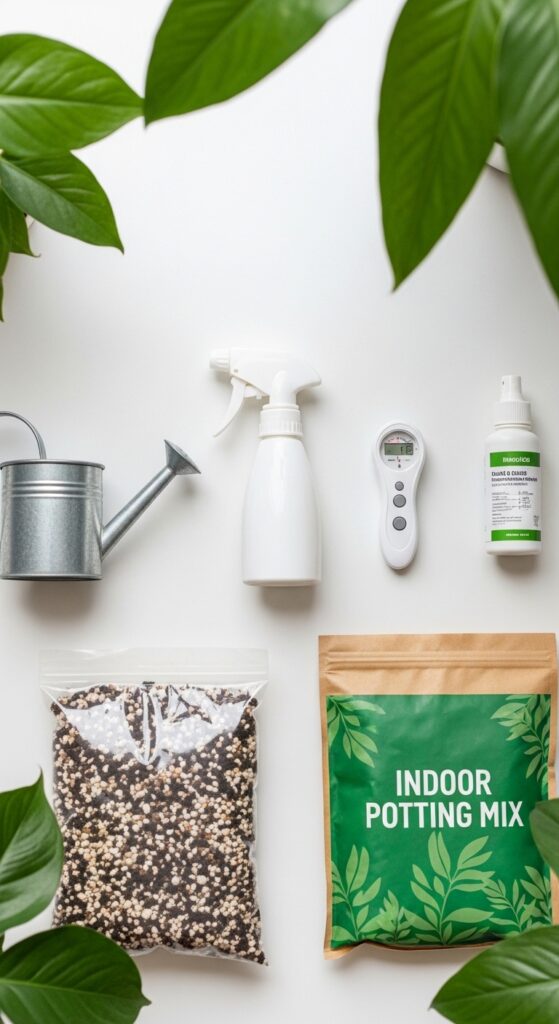
No matter which plants you choose from this list, a few universal care principles will make the difference between plants that merely survive and plants that genuinely thrive in your windowless office.
Don’t overwater — this applies to every single plant on this list without exception. In low-light conditions, plants use water much more slowly than they would in bright light. What would be a perfect watering schedule in a sunny window becomes overwatering in a dark office. Always check the soil before watering.
Invest in a moisture meter — they cost around $10 and take all the guesswork out of watering. Just stick it in the soil and read the dial. It’s the single most useful tool for keeping office plants alive, especially for beginners.
Dust your plants’ leaves monthly with a soft damp cloth. Dusty leaves block light absorption, and in a low-light environment that’s a penalty your plants can’t afford. Clean leaves photosynthesize more efficiently — it makes a real, measurable difference.
💡 Pro Tip: Feed your office plants with a balanced liquid fertilizer at half strength, once a month during spring and summer. In fall and winter, skip fertilizing entirely — low-light plants grow slowly and don’t need extra nutrients when they’re not actively pushing new growth.
Browse our complete beginner’s guide to indoor plant care for new plant parents to build confident, reliable plant care habits.
Master these basics and every plant on this list will reward you with steady, healthy, beautiful growth!
Frequently Asked Questions
What are the best office plants with no windows for absolute beginners?
The top three picks for complete beginners are the ZZ plant, pothos, and snake plant — in that order. All three tolerate irregular watering, low light, dry office air, and occasional neglect without dying on you. Start with one of these, build your confidence, and expand your collection from there. You really can’t go wrong with any of them.
How do I know if my office plant is getting enough light?
Watch for these signals: slow or stopped growth, leggy stretched stems reaching toward any light source, pale or yellowing leaves, and leaf drop are all signs a plant needs more light. If you see these, move the plant closer to whatever light source is available, or add a small LED grow light above it. Most low-light plants will recover quickly once their light situation improves.
Do office plants with no windows need fertilizer?
Yes, but very sparingly. Low-light plants grow slowly and don’t burn through nutrients quickly, so they need far less feeding than plants in bright light. A balanced liquid fertilizer at half the recommended strength, applied once a month during spring and summer, is plenty. Stop fertilizing entirely in fall and winter when growth naturally slows further. Over-fertilizing in low light can actually damage roots.
Are there any office plants with no windows that are safe for pets?
Absolutely! Spider plants, cast iron plants, and Boston ferns are all non-toxic to cats and dogs and do well in low-light office conditions. If pet safety is a priority, avoid pothos, ZZ plants, philodendrons, peace lilies, and Chinese evergreens, as these are toxic to pets if ingested. Always check the ASPCA’s toxic plant database when choosing plants for a pet-friendly environment.
How often should I water plants in a windowless office?
Much less frequently than you might think! In low-light conditions, most office plants need watering only every 1–3 weeks, depending on the species, pot size, and office temperature. The golden rule is to always check the soil before watering — if the top inch or two is still moist, wait. More office plants die from overwatering than from any other single cause, so when in doubt, hold off for a few more days.
A Few Final Thoughts
A windowless office is not a plantless office — not anymore! The best office plants with no windows are proof that with the right species and a few simple care habits, you can have a genuinely green, living, breathing workspace no matter what your light situation looks like. Whether you start with one indestructible ZZ plant on your desk or go all-in with a full shelf of pothos, philodendrons, and a grow light, the difference to your mood, focus, and daily wellbeing will be real and immediate. Plants make workplaces feel more human, more calming, and more creative — and every person deserves that, window or no window. Pick your favorites from this list, grab a pot and some potting mix, and transform that grey cubicle into something you actually enjoy spending time in. Your dream workspace is closer than you think!