Imagine walking into a room and being stopped dead in your tracks by a breathtaking wall of lush, thriving plants cascading across beautiful built-in shelves — and realizing it’s YOUR home. If your plant collection has outgrown every windowsill, side table, and floor corner you own, built-in shelving for plant displays is the upgrade that changes everything. It’s functional, it’s jaw-droppingly beautiful, and it adds genuine value to your home while giving every single plant the spotlight it deserves. Ready to find out how to make it happen? Let’s dive in!
At a Glance
- Built-in shelving for plant displays transforms unused vertical wall space into a functional, stunning living feature that frees up floor space and dramatically elevates your interior design.
- Light planning comes first — always map your room’s natural light zones before deciding shelf placement, since the wrong location will lead to struggling plants regardless of how beautiful the shelving looks.
- Waterproof shelf surfaces are non-negotiable for plant displays — untreated wood warps and stains quickly from drainage and humidity, so always seal, tile, or line your shelves before placing plants.
- Incorporating LED grow lights under shelf lips allows you to place built-in plant shelves anywhere in your home, completely independent of window proximity.
- The most visually impactful plant shelf displays combine plants of varying heights, textures, and pot styles — mix trailing plants at edges, mid-height bushy plants in the center, and tall architectural plants as anchors.
Why Built-In Shelving for Plant Displays Is a Total Game-Changer
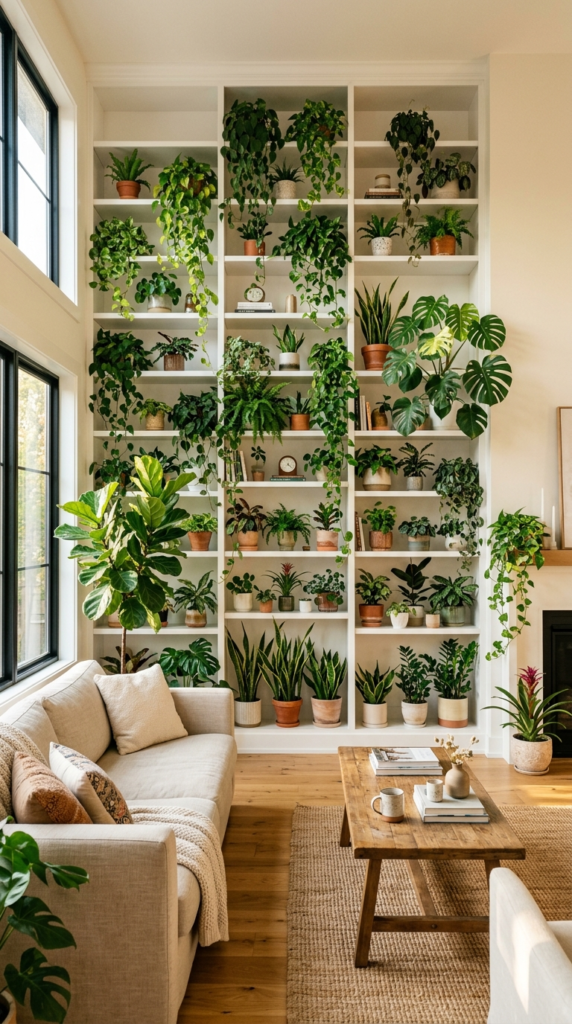
Here’s the deal: freestanding plant stands and scattered pots around the floor are charming, but they’ll never create the kind of visual impact that a dedicated built-in plant display wall achieves. This is the difference between a plant collection and a genuine interior design statement.
Built-in shelving does something no other plant display solution can — it integrates your plants permanently and purposefully into the architecture of your home. The plants become part of the room, not just objects sitting in it. That shift in perception is genuinely transformative for how a space feels.
Beyond aesthetics, the practical benefits are enormous:
- Maximizes vertical space — the most underused real estate in any home
- Keeps floor space clear in small apartments and urban homes where every square foot matters
- Creates a microclimate of elevated humidity as multiple plants transpire together — better for the plants AND your indoor air quality
- Adds genuine resale value to your home as a built-in architectural feature
- Provides a dedicated, organized system that makes plant care easier than hunting pots scattered around multiple rooms
💡 Pro Tip: Even a single alcove or recessed wall niche converted into a built-in plant display creates a focal point that anchors an entire room’s design. You don’t need a full wall to make a massive impact — sometimes a single well-lit shelf alcove is all it takes!
The design world has firmly embraced the “living wall” aesthetic as one of the defining interior trends of the decade — and built-in plant shelving is the most accessible, practical, and reversible way to achieve that look in a real home.
According to Architectural Digest, built-in plant displays consistently rank among the most sought-after home features in contemporary interior design — blending biophilic design principles with practical living.
Check out our full guide to indoor plant display ideas for every room for more inspiration before you start planning.
Once you experience the impact of built-in plant shelving, you’ll wonder how you ever lived without it!
Plan Your Built-In Shelving Layout Around Light First
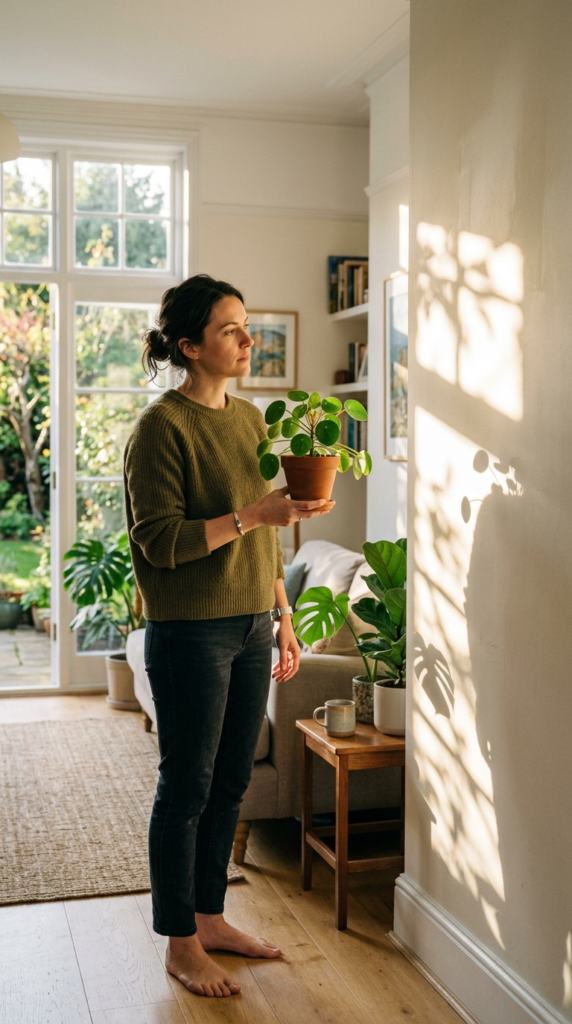
Before you pick a single shelf bracket or buy a single board, you need to do one critical thing: map every light zone in your room across the full day. This single planning step determines whether your built-in plant shelves become a thriving green paradise or an expensive display of struggling, yellowing disappointment.
Stand in your chosen room at morning, midday, and late afternoon. Note exactly where direct sunlight falls, where bright indirect light reaches, and where the room falls into genuine low-light shadow. The distance from your windows matters enormously — light intensity drops off dramatically even just a few feet from a window.
Here’s a quick light zone guide for shelf placement:
| Distance from Window | Light Level | Best Plant Types |
| 0–2 feet | Bright direct/indirect | Succulents, cacti, herbs, citrus |
| 2–5 feet | Bright indirect | Monstera, pothos, ferns, orchids |
| 5–8 feet | Medium indirect | Snake plants, ZZ plants, peace lily |
| 8+ feet | Low light | Pothos, cast iron plant, Chinese evergreen |
Seasonal light shift is something almost everyone forgets to account for. A wall that gets beautiful afternoon light in summer may be in deep shadow by December as the sun’s angle drops. Plan your shelf placement for your worst-case light season, not your best.
💡 Pro Tip: Use a free light meter app on your smartphone — several excellent ones exist — to get actual foot-candle readings at different points along your planned shelf wall at different times of day. This takes the guesswork completely out of plant placement decisions!
If your dream shelf location genuinely doesn’t have adequate natural light — don’t panic. The next section on grow light integration solves this completely and opens up literally any wall in your home as a viable plant display location.
Learn more about measuring and improving indoor light for houseplants before finalizing your shelf placement.
According to The Royal Horticultural Society, light is consistently the number one factor determining houseplant health indoors — get this right first and everything else falls into place.
Plan light first and your plant shelves will thrive from day one!
Choose the Right Materials for Plant-Friendly Shelving
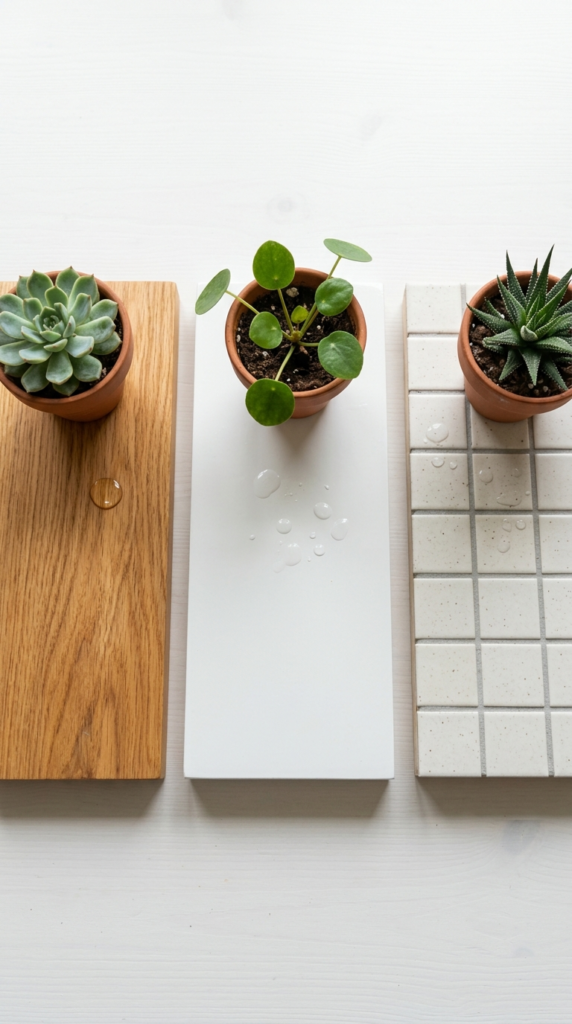
Here’s the thing: not all shelving materials are created equal when plants are involved. Moisture, humidity, and the occasional watering overflow will absolutely destroy the wrong shelf material over time — and nothing ruins a beautiful built-in display faster than warped, stained, or moldy shelving.
Your best material options for plant-display shelving:
Solid hardwood (sealed): The most beautiful and durable option. Hardwoods like oak, maple, and walnut handle moisture beautifully when properly sealed with a waterproof polyurethane or epoxy finish. More expensive, but they last decades and look better with age.
MDF with moisture-resistant paint or laminate: The most budget-friendly built-in option. Standard MDF will swell and disintegrate with moisture exposure, but moisture-resistant MDF (look for green-core MDF at hardware stores) primed and painted with semi-gloss or gloss paint is highly water-resistant and easy to wipe clean.
Tile-topped shelves: Absolutely waterproof, incredibly practical, and stunning in the right aesthetic. Tiling the top surface of wooden shelf boards creates a completely impervious surface — perfect for plant displays where drainage overflow is inevitable. Grout lines need sealing but the result is essentially indestructible.
Metal shelving (powder-coated): Industrial and modern, powder-coated steel or aluminum shelving is completely moisture-proof and very strong. The cold, hard surface suits certain aesthetics beautifully and is particularly popular in contemporary urban interiors.
What to absolutely avoid:
- Untreated pine or softwood — swells, stains, and molds rapidly with any moisture exposure
- Particleboard — disintegrates almost immediately when wet
- Unsealed MDF — same problem as particleboard, avoid entirely for plant shelves
- Porous natural stone without sealing — beautiful but stains easily from soil and water
See our guide to waterproofing indoor plant shelves and surfaces for sealing techniques and product recommendations.
According to This Old House, moisture-resistant MDF and sealed hardwood are the two most recommended materials for built-in shelving in humid environments like bathrooms and plant-heavy rooms.
Choose the right material from the start and your beautiful shelves stay beautiful for years!
Built-In Shelving Styles That Work Best for Plants
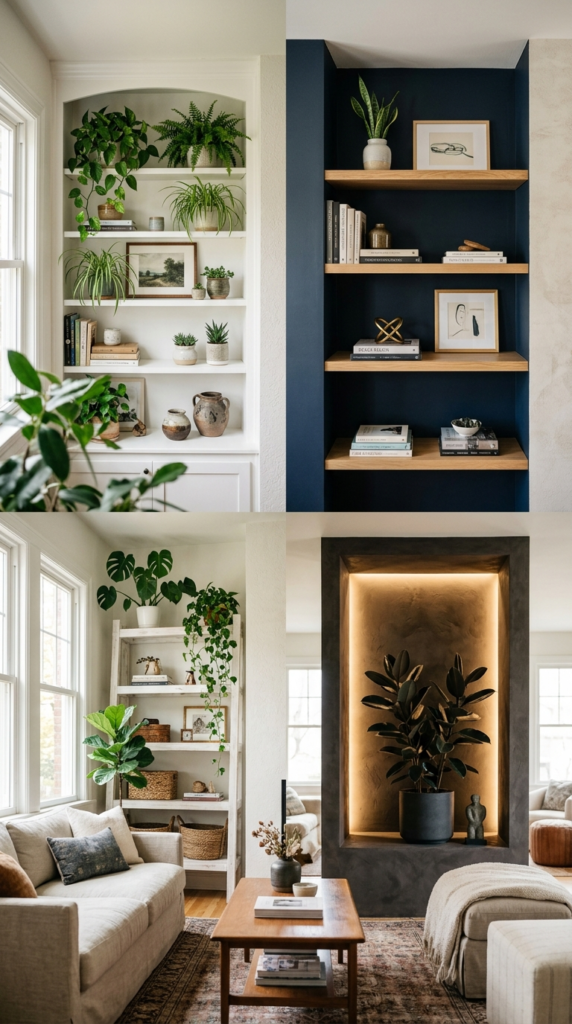
Not all built-in shelving styles suit plant displays equally — some create genuinely spectacular plant showcases while others make maintenance unnecessarily difficult. Here are the styles that work best, and exactly why each one earns its place.
Floating wall shelves (open bracket style) The most popular choice for plant displays and for excellent reason. Floating shelves with no visible support brackets create a clean, modern look where plants appear to hover against the wall. The open design allows for excellent air circulation around plants — critical for preventing fungal issues — and makes watering access easy from all angles.
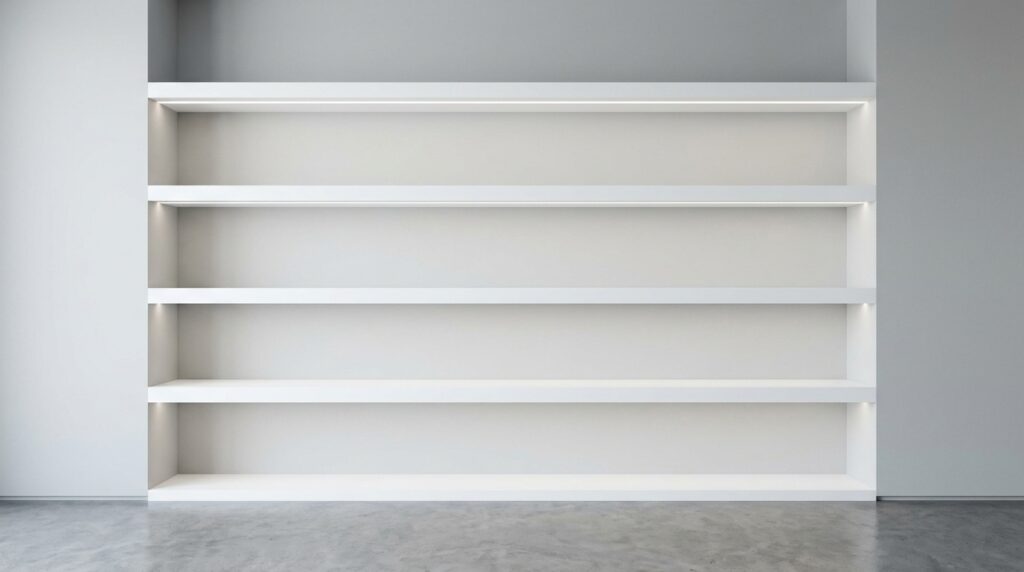
Full alcove or recessed shelving If you have a wall alcove, chimney breast recess, or any natural niche — this is prime plant display real estate. Built-in shelving within an existing recess feels architecturally intentional and custom, creates a natural spotlight effect for plants, and protects the wall behind from moisture exposure far better than open-wall shelving.
Floor-to-ceiling shelving units The most dramatic and impactful option. Full-height built-in shelving running from floor to ceiling creates an instant feature wall and allows you to create a genuine gradient of plant types — sun-lovers near grow lights at the top, shade-tolerant beauties at the bottom. The visual scale is unmatched by any other approach.
Corner built-ins Corners are almost always wasted space in a room — a custom corner shelf unit transforms them into a plant-packed focal point. Triangular or L-shaped corner shelving maximizes a space most people ignore and creates a beautiful wraparound green effect.
💡 Pro Tip: Whatever style you choose, always include at least one deeper shelf (12–14 inches rather than standard 8–10 inches) specifically for your larger, more architectural plants. A single large monstera or fiddle leaf fig needs real shelf depth to sit securely and look properly showcased.
Browse our guide to built-in shelving styles for indoor plant collections for design photos and detailed measurements for each style.
The right shelving style turns a wall into a conversation piece every single time!
How to Build Simple DIY Built-In Plant Shelves
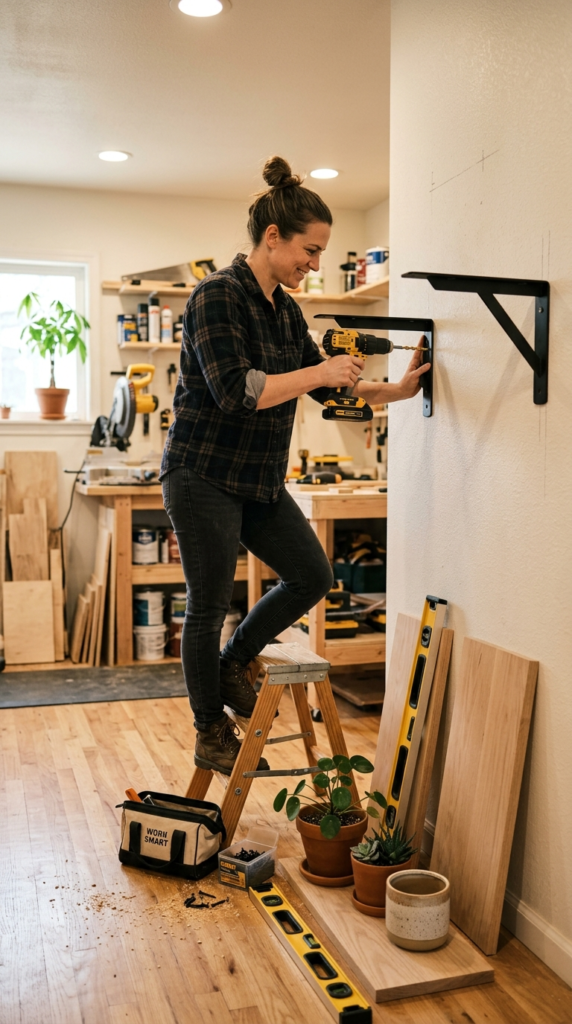
Here’s the good news: you don’t need to be a master carpenter or spend thousands on a custom joiner to get beautiful built-in plant shelving. A few tools, a weekend, and a clear plan are genuinely all it takes for a stunning result that looks custom and intentional.
What you need for a basic floating shelf build:
- Moisture-resistant MDF or hardwood boards (cut to size at the hardware store — free at most stores)
- Heavy-duty floating shelf brackets — rated for at least 50 lbs per shelf (plants are heavier than you think!)
- Stud finder ($15 at any hardware store)
- Drill and screwdriver
- Spirit level
- Sandpaper and waterproof paint or sealant
- Wall anchors for any brackets not hitting studs
Your step-by-step build process:
- Mark your shelf positions on the wall using a pencil and level — measure carefully, accounting for plant heights between shelves (minimum 12 inches for small plants, 18–24 inches for medium to large)
- Locate wall studs with your stud finder and mark them — always anchor at least one bracket point per shelf into a stud for structural security
- Install brackets using long screws directly into studs, supplemented by heavy-duty wall anchors between studs
- Sand and seal your shelf boards before installation — it’s far easier to finish them on a workbench than mounted on a wall
- Set boards onto brackets and secure from underneath — most floating shelf systems use pre-drilled holes through the bracket into the board underside
- Check level one final time and make any adjustments before loading with plants
💡 Pro Tip: Always overestimate your weight load when choosing brackets — a shelf that looks empty can hold 40–60 lbs of plants, pots, and soil surprisingly quickly. Go one bracket strength rating above what you think you need. Falling shelves are no fun for you OR your plants!
The total materials cost for a basic three-shelf floating system using moisture-resistant MDF and quality brackets typically runs $60–$120 depending on shelf length — a fraction of custom joinery costs.
Find our complete DIY floating shelf installation guide for beginners with a full tools list and measurement templates.
A weekend of DIY effort and you’ll have built-in shelving that looks like it came with the house!
Incorporate Grow Lights Into Your Built-In Shelving
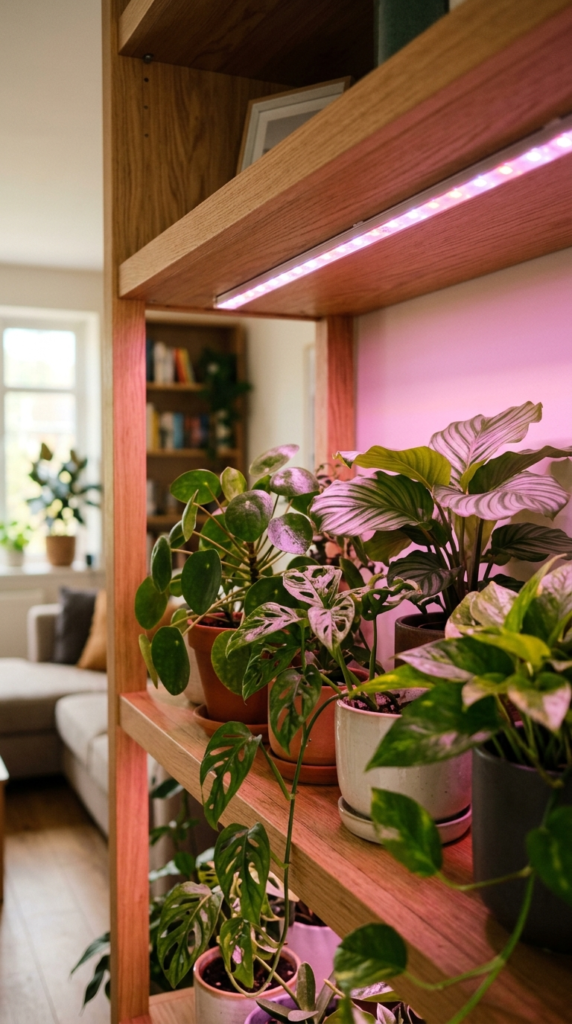
Talk about a game-changer — integrating grow lights directly into your built-in shelving is the single upgrade that transforms a beautiful but limiting plant display into a thriving, plant-anywhere system completely independent of your windows. No south-facing wall? No problem. Dark hallway? Absolutely no problem.
The technique is simple and the results are spectacular: LED grow light strips are mounted to the underside lip of each shelf, pointing downward onto the plants on the shelf below. The lights are hidden from direct view, creating a clean look from the front while delivering exactly the light spectrum your plants need to thrive.
Choosing the right grow lights for built-in shelving:
| Light Type | Cost | Coverage | Best For |
| LED strip grow lights | $15–$40/shelf | Wide, even | Most houseplants |
| Full-spectrum LED bars | $25–$60/shelf | Targeted, intense | Tropical plants, herbs |
| Smart LED strips | $30–$80/shelf | Adjustable spectrum | Mixed plant collections |
| T5 fluorescent tubes | $20–$50/shelf | Even, cool | Seedlings, ferns, orchids |
For built-in shelving, LED strip grow lights are the overwhelming winner — they’re slim (often less than half an inch thick), run cool, consume minimal electricity, and mount with simple adhesive backing directly to the shelf underside. Installation takes about fifteen minutes per shelf.
Set your grow lights on a timer — 12–16 hours of light per day for most tropical houseplants, 10–12 hours for cacti and succulents. Smart outlet timers cost as little as $10 and automate the entire process so you never think about it again.
💡 Pro Tip: Choose grow lights with a full-spectrum output (5000–6500K color temperature) rather than the intense pink-purple grow lights — full spectrum produces a much more natural-looking light that doesn’t create that jarring neon glow in your living room while still delivering everything your plants need!
See our complete guide to choosing and installing grow lights for indoor plant shelves for wiring tips and product recommendations.
According to Michigan State University Extension, full-spectrum LED lighting at appropriate intensities produces plant growth and health outcomes comparable to natural sunlight for most common houseplant species.
With grow lights built in, literally any wall in your home becomes fair game for a stunning plant display!
Style Your Plant Display Shelves Like a Pro
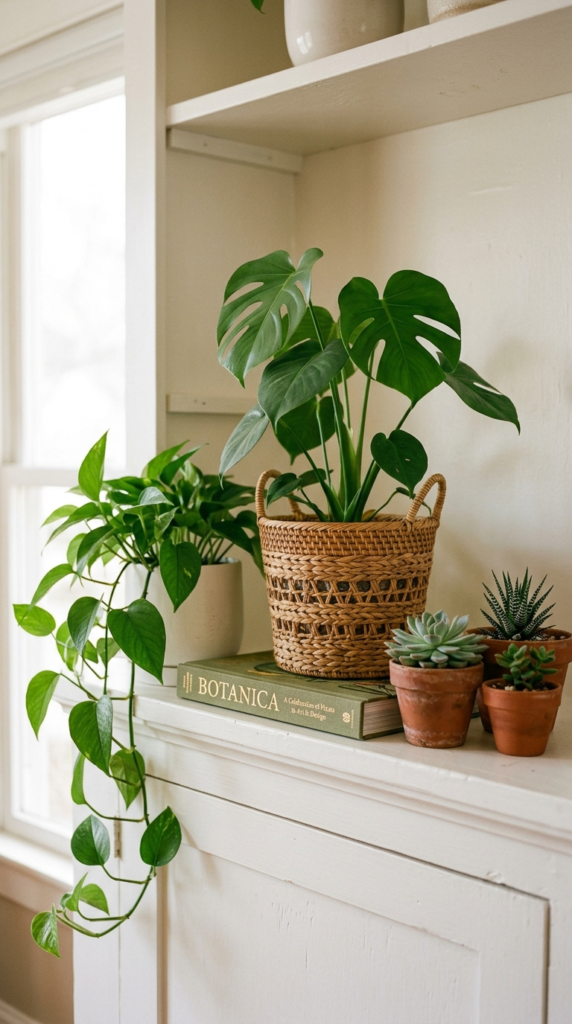
Having great shelving and great plants is only half the equation — how you arrange and style your plant display is what separates a shelf that looks like a nursery holding area from one that looks like it belongs in an interior design magazine. The good news? The styling rules are simple once you know them.
The fundamental styling rule: vary everything.
Every shelf should have variation in height, variation in texture, and variation in pot style. A shelf of all same-height plants in matching pots looks flat and commercial. Mix trailing plants whose foliage spills over the shelf edge with upright architectural plants and low bushy mounds — instantly, the shelf has depth and movement.
The rule of odds: Group plants in threes or fives rather than pairs or even numbers. Odd-numbered groupings look more natural and dynamic than symmetrical pairs — this is a fundamental principle of both interior design and garden design that works equally well on shelves.
Use height boosters: Not every pot needs to sit flat on the shelf surface. Place some pots on small books, wooden blocks, or decorative risers to create varying heights within a single shelf level. This creates visual layers and lets smaller plants be seen above their neighbors.
Mix pot styles intentionally:
- Terracotta for a warm, natural, organic feel
- White ceramic for clean, modern, minimalist displays
- Woven rattan or seagrass baskets for texture and warmth
- Glazed colorful pots as accent pieces — use sparingly as focal points
💡 Pro Tip: The “thriller, filler, spiller” rule works on shelves exactly as it does in garden beds — one tall dramatic plant (thriller), one bushy mid-height plant (filler), and one trailing plant whose foliage drapes over the shelf edge (spiller). Apply this trio formula to each shelf section and the result always looks intentional and professional!
Add non-plant objects sparingly — a single stack of beautiful books, a small sculpture, or a decorative candle holder gives the eye a rest between plant groupings and prevents the display from feeling overwhelming.
Explore our full guide to styling indoor plant shelves like an interior designer for room-by-room inspiration photos.
Great styling takes five extra minutes and makes your plant shelves look like a professional designed them — absolutely worth the effort!
The Best Plants for Built-In Shelf Displays
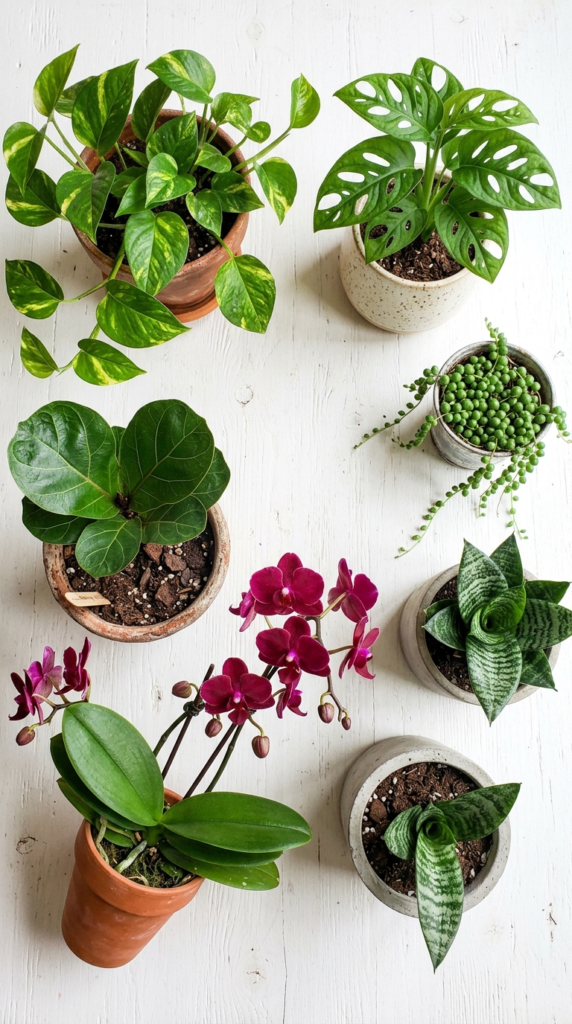
Not every plant is a shelf star — some are too large, too demanding, or too structurally awkward to look great in a built-in display. These are the tried and tested shelf performers that consistently deliver the most visual impact with the least fuss.
The trailing shelf heroes (your “spillers”):
- Pothos (Epipremnum aureum) — The ultimate shelf plant. Trails beautifully, tolerates low light, propagates endlessly for free, virtually indestructible
- String of pearls (Senecio rowleyanus) — Dramatic cascading bead-like foliage that photographs beautifully and thrives with neglect
- Heartleaf philodendron — Similar trailing habit to pothos, slightly more refined appearance, equally easy
- Tradescantia (Spiderwort) — Fast-growing, purple and green trailing foliage, stunning against light-colored shelving
The architectural mid-height “fillers”:
- Monstera deliciosa — The iconic split-leaf statement plant, perfect for deeper shelves
- Peace lily (Spathiphyllum) — Glossy leaves, white flowers, thrives in medium to low light
- Rubber plant (Ficus elastica) — Bold burgundy or dark green leaves, strong upright form
- Chinese evergreen (Aglaonema) — Incredible foliage variety, very tolerant of indoor conditions
The compact “thriller” accent plants:
- Snake plant (Sansevieria) — Architectural, vertical, nearly indestructible
- Moth orchid (Phalaenopsis) — Elegant blooms that last months, ideal for adding color without bulk
- Aloe vera — Sculptural, useful, and thrives in bright shelf positions
- Haworthia — Tiny, architectural, perfect for small shelf sections
Browse our complete guide to the best plants for indoor shelf displays organized by light requirement and trailing vs. upright habit.
According to the American Society for Horticultural Science, pothos and snake plants consistently outperform all other species in low-to-medium indoor light trials — making them the most reliable choices for built-in shelf displays away from windows.
Fill your shelves with these proven performers and they’ll look incredible with minimal effort!
Manage Watering and Drainage on Built-In Shelves
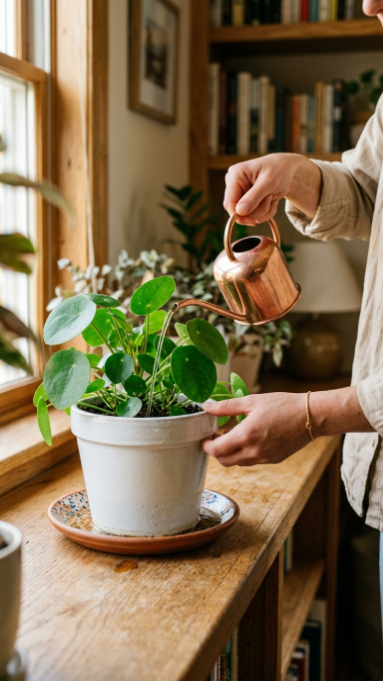
Let’s be completely real about the biggest practical challenge of built-in plant shelving: water management. Plants need water, water drips, and built-in wooden shelving is your home — not a greenhouse with a floor drain. Getting this right from the start protects your beautiful shelves and your walls from the long-term damage that careless watering causes.
The non-negotiable rule: every single pot needs a saucer or drip tray. No exceptions. Ever. This is not optional on built-in shelving — it’s the line between a stunning plant display and a warped, stained, moldy shelf disaster.
Your best watering management strategies for built-in shelves:
Self-watering pots are genuinely the best long-term solution for built-in shelving. They have a built-in water reservoir in the base that plants draw from as needed — virtually eliminating overflow risk and reducing watering frequency dramatically. The investment in self-watering pots pays back in eliminated damage and reduced maintenance immediately.
Bottom watering technique works beautifully on built-in shelves: take each pot down to a sink or bathtub, allow it to absorb water from below for 30 minutes, let it drain completely, then return it to the shelf. No drips, no spillage, no saucer overflow. It takes a few extra minutes but completely eliminates moisture risk on your shelving.
Cachepots (decorative outer pots) with the plant in a plain nursery pot inside are another elegant solution — the decorative outer pot catches any drainage from the inner nursery pot, acting as a built-in saucer while maintaining a clean aesthetic.
💡 Pro Tip: Group your higher-water-need plants together on one or two dedicated shelves and your drought-tolerant succulents and cacti on others. This lets you water efficiently by shelf section rather than hunting individual pots across the entire display — saving significant time and reducing the risk of overwatering the wrong plants!
Find our guide to watering indoor plants on shelves and in tight spaces for tools and techniques that make shelf watering genuinely effortless.
Handle drainage smartly from day one and your beautiful shelves stay beautiful indefinitely!
Built-In Plant Shelving for Small Spaces and Apartments
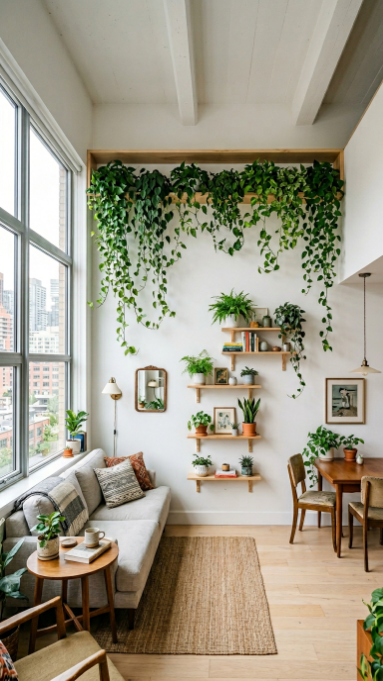
Living in a small apartment doesn’t mean surrendering your plant ambitions — it means getting smarter and more creative with vertical space. Some of the most spectacular built-in plant shelf setups exist in tiny urban apartments where floor space is precious and every square foot matters enormously.
The small-space built-in shelf golden rule: go UP, not out. Floor space is your most valuable real estate in a small home — vertical wall space above eye level is almost always completely wasted. A series of narrow floating shelves running from mid-wall to ceiling height can hold a spectacular plant collection while consuming zero floor space.
Smart small-space shelf strategies:
The perimeter shelf — a single continuous shelf running at picture-rail height (around 7 feet) around the full perimeter of a room creates extraordinary planting space while staying completely out of the way of daily life. Trail pothos, philodendrons, and tradescantia from it and the entire room gets wrapped in living greenery.
Window-flanking shelves — narrow shelves installed on either side of a window, in the zone of bright indirect light, are some of the most plant-productive locations in any small space. The window provides light, the flanking position keeps shelves out of traffic flow, and the visual effect frames the window beautifully.
Above-door shelving — the space above door frames is universally ignored and almost always wasted. A single shelf above each door in a hallway or living space provides excellent trailing plant space and adds greenery to transitional spaces that rarely get any attention.
Apartment-dwellers should specifically consider renter-friendly installation methods — heavy-duty removable adhesive hooks and strips now support surprising weight loads and leave walls undamaged. For heavier shelves, floor-to-ceiling tension poles with attached shelves create a freestanding built-in look with zero wall damage and full portability.
See our dedicated guide to built-in plant shelving ideas for small apartments for renter-friendly installation options and space-maximizing layouts.
According to Apartment Therapy, vertical plant displays using wall shelving consistently rank as the most effective way to incorporate significant plant collections into small urban living spaces without sacrificing functionality.
Small space? No problem — vertical shelving turns any apartment into a lush urban jungle!
Frequently Asked Questions
How much weight can built-in plant shelves safely hold?
The weight capacity of your shelves depends entirely on your bracket strength and wall anchor quality — not the shelf material itself. Standard heavy-duty floating shelf brackets rated for 50 lbs per bracket, anchored directly into wall studs, can safely support considerable plant loads. Always calculate your total plant weight including pots, soil, and drainage saucers — a large monstera in a ceramic pot can easily weigh 15–25 lbs alone. For heavy plant collections, use three brackets per shelf rather than two, and always anchor at least one bracket directly into a wall stud.
What’s the best way to protect built-in shelves from water damage?
The most effective protection combines multiple layers: seal or paint your shelf surfaces with at least two coats of waterproof polyurethane, semi-gloss paint, or epoxy before installing; use saucers or drip trays under every single pot without exception; and consider using self-watering pots for plants that need frequent watering. Wipe up any water spills or saucer overflow immediately rather than letting them sit. For very plant-heavy shelves, consider gluing a strip of waterproof vinyl tile to the shelf surface for complete impermeable protection.
Can I install built-in plant shelves in a bathroom or high-humidity room?
Absolutely — and bathrooms are actually wonderful locations for many tropical houseplants that love humidity! The key is using moisture-resistant materials throughout: green-core moisture-resistant MDF or solid hardwood sealed with epoxy, stainless steel or powder-coated brackets, and waterproof paint or tile surfaces. Ensure adequate ventilation in the room — a bathroom with no exhaust fan will develop mold issues regardless of shelf material. Ferns, orchids, pothos, peace lilies, and most tropical plants genuinely thrive in bathroom humidity conditions.
How do I handle built-in plant shelves if I’m renting and can’t drill into walls?
Renters have more options than most people realize. Floor-to-ceiling tension pole shelf systems create a completely freestanding built-in appearance with zero wall damage and are freely portable when you move. For lighter plant loads, heavy-duty removable adhesive shelving systems (like those from Command or similar brands) now support 15–25 lbs per shelf when installed correctly on smooth painted walls. Built-in-style freestanding bookcases secured to the wall with a single furniture strap (many landlords permit this as a safety measure) can also create a convincing built-in plant display aesthetic.
How far apart should shelves be spaced for plant displays?
Shelf spacing should be determined by your tallest plant in each zone, with extra clearance for comfortable watering access. A practical guide: 10–12 inches between shelves for small succulents, trailing plants, and compact plants; 16–18 inches for medium houseplants like pothos, peace lilies, and small ferns; 24 inches or more for large tropical plants like monstera, rubber plants, and fiddle leaf figs. Always add at least 3–4 inches of clearance above your tallest plant on each shelf — plants grow, and a cramped plant grows poorly and is difficult to tend.
A Few Final Thoughts
Built-in shelving for plant displays is one of those home upgrades that delivers on every level — it’s beautiful, practical, deeply personal, and genuinely transformative for how a space feels to live in. Whether you’re building a full floor-to-ceiling feature wall or simply adding a few well-placed floating shelves flanking a window, the principle is the same: give your plants a permanent, intentional, beautifully designed home and they’ll reward you with a living display that grows more spectacular every single season. Start with your light assessment, choose moisture-resistant materials, plan your plant mix thoughtfully, and don’t be afraid to dive into the DIY — the result is absolutely worth every effort. Your walls are waiting, your plants are ready, and honestly? Your dream plant display is a whole lot closer than you think. Now go make it happen!