
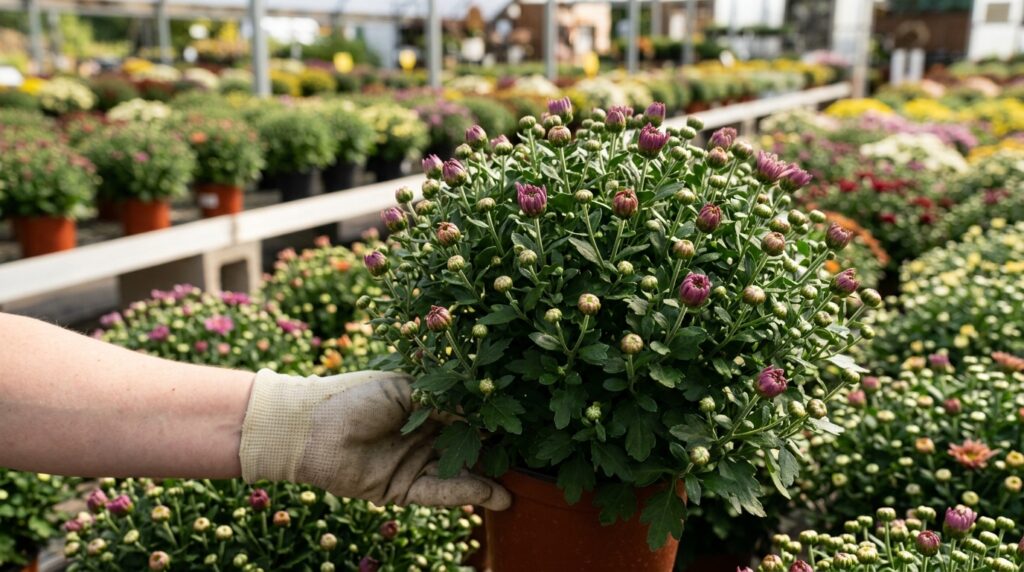
You bought the most gorgeous pot of fall mums, arranged them perfectly on your front steps — and two weeks later they’re a crispy, brown, sad little disaster. Sound familiar? Fall mums are one of the most popular autumn plants on the planet, but most people accidentally kill them within weeks simply because nobody told them the rules. Here’s the exciting news: keeping mums looking great all season long is genuinely easy once you know what they actually need. Let’s dive in!
At a Glance
- Watering correctly is the single biggest factor in mum longevity — too little and they crisp up, too much and the roots rot in days.
- Deadheading spent blooms regularly keeps new flowers coming and prevents that “one-week wonder” look.
- Mums bought in tight bud rather than full bloom will last significantly longer — always buy early in the season.
- Container mums and garden-planted mums have different care needs — knowing which you have changes everything.
- With the right care, fall mums can bloom for six to eight weeks — sometimes longer in mild climates.
Why Mums Die Early — And How to Avoid It

Most mums die early for one of three reasons — and none of them are your fault until you know better. Overwatering, root-bound stress, and buying plants in full bloom are the three killers that take out most fall mums before their time.
Here’s the thing: grocery store and big-box mums are grown fast and hard in small containers to look spectacular at point of sale. By the time you buy them, the roots are often completely pot-bound, the soil dries out in hours, and the plant has already burned through most of its flowering energy just sitting on a display shelf.
The good news? Every single one of these problems is fixable. Repotting into fresh soil, consistent watering, and buying in bud are the three moves that change everything.
🌿 Pro Tip: Stick your finger two inches into the soil before watering. If it’s still damp, wait. If it’s dry, water deeply until it drains from the bottom. This simple check prevents both overwatering and underwatering — the two most common mum killers.
Learn more about seasonal container plant care in our fall container garden guide.
The University of Minnesota Extension has an excellent chrysanthemum care resource with detailed growing guidance.
Know why they fail and you’re already halfway to keeping them thriving!
Always Buy Mums in Bud, Not Full Bloom

This is the single most important mum buying tip most people never hear — and it makes a dramatic difference to how long your display lasts. A mum in tight bud has its entire flowering season ahead of it. A mum in full open bloom at the garden center? It’s already peaked.
When you’re shopping, look for plants where the majority of buds are still closed with just a hint of color showing. Those tightly closed buds represent weeks of blooming potential that open blooms simply don’t have anymore. Yes, the fully open ones look more immediately gorgeous on the shelf — that’s exactly why stores display them that way.
Buy the boring-looking tight bud plants every single time. Within a week they’ll be as beautiful as the open ones, and they’ll keep going weeks longer.
- ✅ Buy: Mostly closed buds, firm stems, healthy dark green foliage
- ✅ Buy: Plants with no yellowing leaves at the base
- ✅ Buy: Compact, bushy shape with lots of bud sites
- ❌ Avoid: Fully open blooms at point of purchase
- ❌ Avoid: Yellowing lower leaves — sign of overwatering stress
- ❌ Avoid: Leggy, tall plants that haven’t been pinched
Explore seasonal buying tips in our fall container garden guide.
Gardeners’ World covers choosing the best chrysanthemums for garden and container displays.
Shop smart at the start and your mums will reward you for weeks!
Water Mums Deeply and Consistently — Not Casually

Watering is where most mum care goes wrong — and it goes wrong in both directions. Mums hate sitting in soggy soil and they equally hate drying out completely between waterings. The sweet spot is consistently moist but never waterlogged — and achieving that requires a little attention rather than a casual daily splash.
Water at the base of the plant, not over the flowers. Wet petals and leaves invite botrytis (grey mold) which can devastate a mum display in days, especially in cool damp autumn weather. A long-spout watering can directed at the soil line is ideal.
Here’s the deal: container mums dry out significantly faster than garden-planted ones — especially in terracotta pots on sunny steps or in windy spots. In warm autumn weather, that can mean daily deep watering. Check the soil every single day until you know your specific plant’s rhythm.
🌿 Pro Tip: Water in the morning rather than evening — it gives any accidental splash on leaves time to dry before cooler night temperatures arrive, dramatically reducing disease risk through your entire blooming season.
Get watering schedules right with our container plant watering guide.
The RHS covers watering container plants correctly with seasonal adjustment advice.
Get the watering right and you’ve solved the biggest mum challenge there is!
Deadhead Spent Blooms Every Few Days

Deadheading — removing spent, browning blooms — is the maintenance task that keeps your mums looking fresh and encourages continuous new flower production. It takes about three minutes every few days and makes an enormous difference to how long your display looks great.
Pinch or snip spent flowers right at the base of the individual flower stem where it meets the main branch — don’t just pull the petals off. Removing the whole spent bloom prevents the plant from putting energy into seed production and redirects it into opening the next wave of buds instead.
Pretty cool, right? Such a tiny task with such a big payoff. Once you get into the habit of a quick deadhead every time you walk past your mums, you’ll extend their peak display period by weeks.
| Deadheading Frequency | Result |
| Every 2–3 days | Maximum continuous bloom, freshest appearance |
| Once a week | Good results, occasional browning visible |
| Never | Rapid decline after first flush, sparse reblooming |
| Over-removal of buds | Reduces total flower count — only remove spent blooms |
Learn more about seasonal plant maintenance in our fall container garden guide.
Gardeners’ World explains deadheading techniques for container plants in detail.
Three minutes every few days — that’s all it takes to keep your mums looking stunning!
Choose the Right Spot — Sun and Shelter Matter Hugely

Location has a bigger impact on mum longevity than most people realize. Mums want at least six hours of direct sunlight per day — put them in shade and blooms fade faster, stems stretch, and the whole plant weakens. A sunny south or west-facing porch, step, or patio spot is ideal.
Equally important is shelter from wind. Autumn winds batter open blooms, cause rapid moisture loss from containers, and can knock tall plants over repeatedly — each fall breaks stems and damages root systems. A sheltered spot against a wall or fence extends bloom life significantly compared to an exposed open position.
The secret is thinking about microclimate — that warm, sheltered, sunny corner near your front door isn’t just convenient, it’s genuinely the best possible environment for autumn container mums to thrive in.
🌿 Pro Tip: If a hard frost is forecast overnight, move potted mums onto a covered porch or into an unheated garage for the night — then return them to their sunny spot in the morning. A few degrees of frost protection can add weeks to your display.
Find the perfect positioning guide in our fall container garden guide.
University of Illinois Extension covers chrysanthemum light and placement requirements in excellent detail.
Find that sunny sheltered spot and your mums will absolutely thrive all autumn!
Repot Root-Bound Mums for Dramatically Better Performance

Here’s a game-changer move that most mum buyers never do — repot your nursery mums into a larger container with fresh potting mix as soon as you get them home. That small, hard, compacted nursery pot is one of the main reasons store-bought mums underperform.
When you slide a mum out of its nursery pot and see a solid mass of circling roots with almost no visible soil, you’re looking at a severely root-bound plant that can barely absorb water or nutrients. Move it into a pot one to two sizes larger, loosen the root ball gently, and fill around it with quality multipurpose potting mix mixed with perlite for drainage.
The improvement in plant performance after repotting is often dramatic and immediate — you’ll notice stronger growth, better water retention, and significantly more bud development within a week or two.
Explore container potting techniques in our container plant watering guide.
The Sill covers repotting techniques and timing for container plants.
Spend ten minutes repotting at the start and your mums will reward you all season!
Feed Your Mums — But Know When to Stop
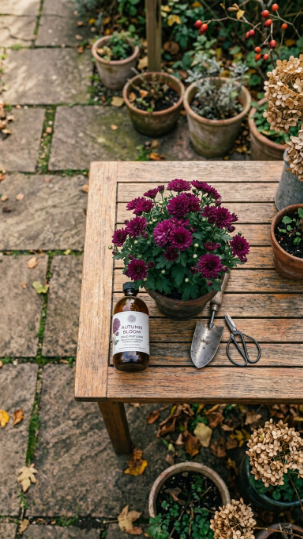
Fertilizing fall mums is a topic that divides gardeners — and the truth is that timing matters as much as whether you feed at all. Mums that are still in bud when you buy them benefit from one or two applications of a liquid bloom fertilizer (high in phosphorus and potassium) to support those buds opening fully.
However, once your mums are in full open bloom, stop feeding entirely. Fertilizing a fully blooming mum pushes the plant toward producing more foliage and new growth rather than sustaining existing flowers — and it can actually shorten the current bloom display rather than extend it.
Here’s the thing: most store-bought mums have been heavily fertilized during production already. If you buy in bud, one application of bloom fertilizer when you get home is usually plenty for the entire season.
🌿 Pro Tip: Use a fertilizer with an NPK ratio like 10-52-10 or similar high-phosphorus formulation for mums in bud — phosphorus specifically supports flower development and helps buds open fully and vibrantly.
Get fertilizing schedules right with our fall container garden guide.
Gardeners’ World explains feeding flowering container plants through the seasons.
One well-timed feed makes all the difference — more isn’t better with mums!
Plant Mums in the Garden for Perennial Returns

Here’s something most people don’t realize — fall mums can be perennial plants that come back year after year if you plant them in the ground rather than treating them as disposable containers. The key is planting them early enough in autumn to establish roots before the ground freezes.
Choose hardy chrysanthemum varieties (look for “garden mum” or “hardy mum” on the label rather than “florist mum”), plant in well-drained soil in a sunny spot, and give them a good drink to settle in. Mulch the crown with a few inches of straw or bark after the first hard frost to protect the root system through winter.
Come spring, cut back the dead top growth, and your mums will reshoot from the base and bloom again the following autumn — bigger and bushier than the year before. Talk about a game-changer for your autumn garden budget!
Explore perennial autumn plants in our year-round garden structure guide.
The RHS covers chrysanthemum overwintering and perennial care in excellent detail.
Plant them in the ground this autumn and enjoy free mums for years to come!
Protect Mums From Frost to Extend the Display
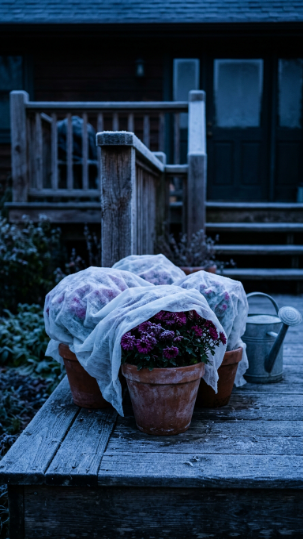
A surprise early frost is the most common sudden ending to a fall mum display — and with just a little forward planning, you can protect your plants and add weeks to their season. Horticultural fleece draped loosely over pots on forecast frost nights is the simplest and most effective solution.
For potted mums, moving them onto a covered porch, under an eave, or into an unheated garage or greenhouse on the coldest nights provides meaningful protection without much effort. Even a degree or two of frost protection makes a real difference to how long open blooms survive.
You’ve totally got this — frost protection for mums doesn’t require complicated equipment or permanent structures. A piece of fleece, a weather app, and the habit of checking the forecast each evening is genuinely all you need to keep your display looking beautiful well into November.
- Light frost (28–32°F / -2–0°C): Cover with fleece overnight, remove in morning
- Moderate frost (23–28°F / -5–-2°C): Move pots indoors overnight
- Hard frost (below 23°F / -5°C): Potted mums won’t survive unprotected outdoors
Find seasonal plant protection tips in our winter container garden guide.
University of Minnesota Extension covers frost protection for autumn container plants with temperature guidance.
Check the forecast tonight — a two-minute fleece job can save your whole display!
Frequently Asked Questions
How long do fall mums typically last?
With proper care — consistent watering, deadheading, good sun, and frost protection — fall mums can last six to eight weeks and sometimes longer in mild autumn climates. The single biggest factor is when you buy them: plants purchased in tight bud in early September can bloom right through to November, while fully open plants bought in October may only last two to three weeks regardless of how well you care for them.
Why are my mums turning brown so fast?
Brown mums are almost always caused by one of three things — inconsistent watering (letting them dry out completely between waterings), overwatering in poorly draining containers, or buying plants that were already past peak bloom. Check the soil moisture daily, ensure your container drains freely, remove all brown blooms promptly, and move the plant to a sunnier spot if it’s been in shade. In most cases, a combination of these fixes dramatically improves the situation within days.
Can I save my fall mums and replant them next year?
Yes — hardy garden mum varieties can absolutely overwinter and return the following year if planted in the ground before the first hard frost. After blooming finishes, cut stems back to a few inches above soil level, mulch the crown generously with straw or bark, and leave them in place. In spring, remove the mulch, and new shoots will emerge from the base. Florist mums in pots are generally not reliably hardy and are better treated as annuals.
Should I water mums every day?
It depends entirely on your conditions — container size, pot material, weather, and sun exposure all affect how fast your mums dry out. In warm sunny autumn weather, daily watering of container mums is completely normal and often necessary. In cool cloudy weather, every two to three days may be enough. The only reliable method is the finger test — push two fingers into the soil and water deeply when the top inch or two is dry. Never water on a fixed schedule without checking soil moisture first.
Why won’t my mums bloom again after the first flush?
Deadheading is the key to continuous blooming — if spent flowers aren’t removed promptly, the plant shifts energy toward seed production and stops pushing new buds open. Remove every spent bloom right at its stem base every two to three days. Also check that your plant is getting at least six hours of direct sun — shaded mums produce significantly fewer blooms after the first flush. A single application of bloom fertilizer while buds are still forming can also encourage a stronger second wave of flowering.
A Few Final Thoughts
Keeping fall mums looking great all season long is genuinely one of the most rewarding and straightforward things you can do in your autumn garden — once you know what these plants actually need. Buy in bud, water deeply and consistently, deadhead every few days, find that sunny sheltered spot, and protect from hard frosts, and your mums will absolutely deliver the long, glorious autumn display they’re capable of. The difference between mums that last three weeks and mums that bloom for two months isn’t luck or variety — it’s consistent, simple care applied from day one. Whether you’re styling a front porch, filling a container garden, or planting hardy varieties permanently in a border, these plants have enormous potential that most people never fully unlock. Start with one or two of these tips on your very next pot of mums and you’ll immediately see the difference. Your most beautiful autumn display is absolutely within reach — now go make it happen!