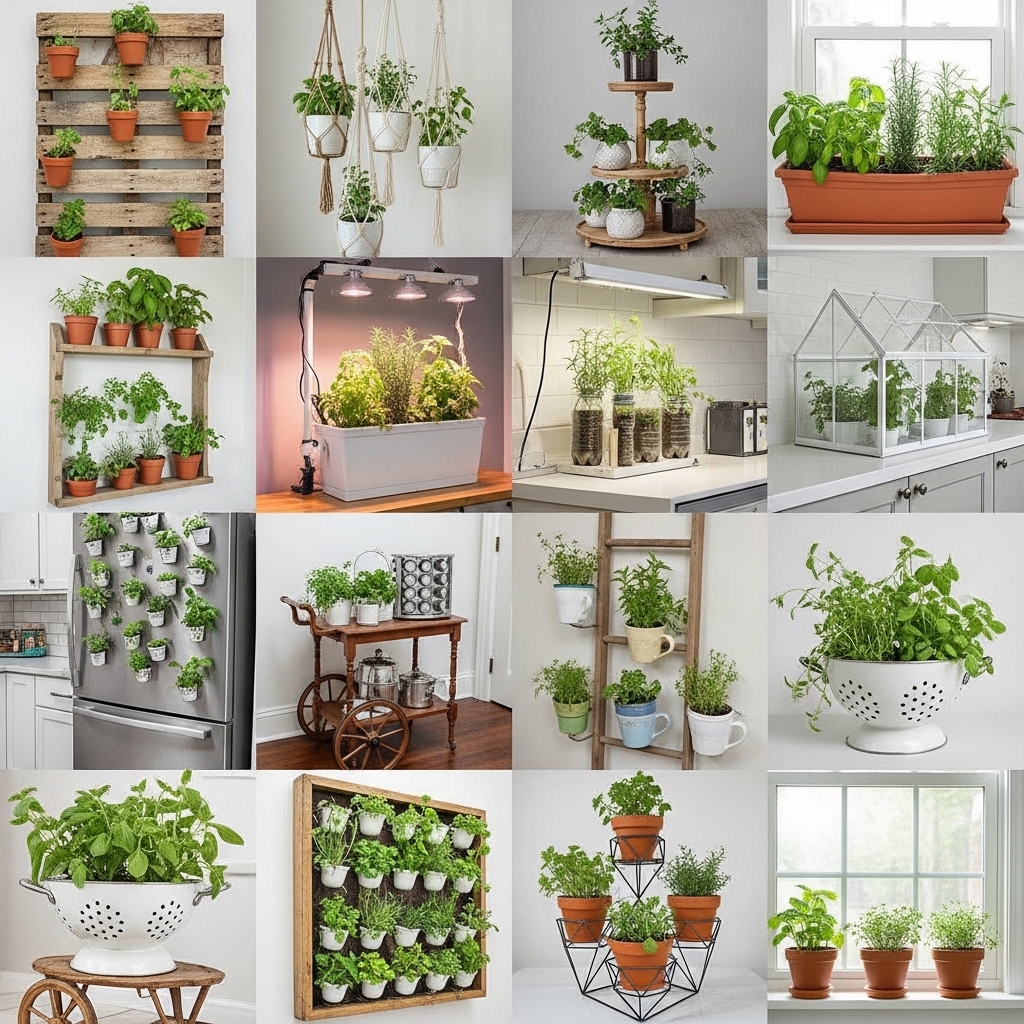
Imagine snipping fresh basil, rosemary, or mint right from your own kitchen counter while dinner is on the stove — no grocery store run, no wilted herb bundles, no waste! Indoor herb garden ideas for kitchen spaces have exploded in popularity, and for very good reason: fresh herbs make everything taste better, they look absolutely gorgeous as living decor, and growing them yourself is easier and cheaper than you’d ever expect. Whether you have a sprawling farmhouse kitchen or a tiny apartment galley, there’s a setup on this list that’s perfectly sized for your space. Ready to transform your kitchen into a fragrant, functional herb haven? Let’s dive in!
At a Glance
- Most kitchen herbs need at least 6 hours of bright light daily — a south- or west-facing windowsill is ideal, but a grow light works perfectly when natural light is limited.
- Overwatering is the number one killer of indoor kitchen herbs, so always use pots with drainage holes and let the soil partially dry between waterings.
- Basil, mint, chives, parsley, and thyme are the five easiest and most useful herbs to start with in any kitchen herb garden setup.
- Hydroponic herb garden kits are a game-changing option for low-maintenance, year-round growing without any soil mess on your countertop.
- Harvesting herbs regularly — snipping stems frequently rather than stripping leaves — actually encourages bushier, more productive growth and keeps your plants looking great.
1. Classic Windowsill Herb Garden

The windowsill herb garden is the original kitchen herb setup — and it’s a classic for a very good reason. A sunny south- or west-facing windowsill is honestly one of the best spots in your entire home for growing herbs, putting fresh flavors within arm’s reach while you cook.
The key to making a windowsill herb garden work is choosing the right window. You need at least 6 hours of direct or bright indirect sunlight daily. South-facing windows are ideal; east-facing works for herbs that prefer cooler, less intense light like mint, parsley, and chives.
Use individual small pots for each herb rather than one large planter — this lets you customize watering for each plant’s needs, since rosemary likes to dry out between waterings while basil prefers more consistent moisture. Terra cotta pots are especially great here because they’re porous and help prevent overwatering naturally.
💡 Pro Tip: Rotate your pots a quarter turn every few days so all sides of the plant get even light exposure. Without rotating, herbs grow lopsided toward the window — and nobody wants a crooked basil plant!
- Best herbs for sunny south windowsills: Basil, rosemary, thyme, oregano, sage
- Best herbs for east-facing or shadier windowsills: Mint, parsley, chives, cilantro
Explore our complete guide to growing herbs on a kitchen windowsill for a full species-by-species care breakdown.
Visit the University of Minnesota Extension’s herb gardening indoors guide for research-backed advice on windowsill herb success.
A sunny windowsill + the right herbs = one of the most rewarding things you’ll ever add to your kitchen!
2. Magnetic Herb Pots on the Fridge
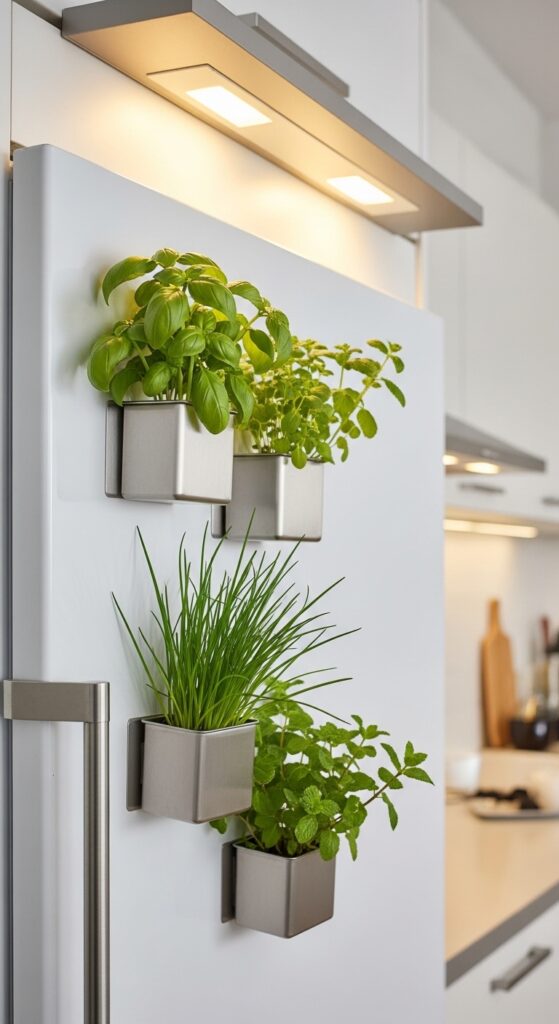
This is one of those indoor herb garden ideas for kitchen spaces that makes people do a double-take — in the best possible way. Magnetic herb planters attach directly to the side of your refrigerator, turning completely unused vertical space into a productive little herb garden.
The fridge side is one of the most clever spots in the kitchen because it’s always visible, easily accessible, and doesn’t sacrifice a single inch of precious counter or windowsill space. It’s a dream solution for tiny apartment kitchens where every surface is already spoken for.
You can buy purpose-made magnetic herb planter sets online or at home goods stores, usually in brushed steel or matte black for a sleek modern look. Alternatively, repurpose strong magnetic containers — chalk-painted magnetic tins look absolutely adorable and very custom.
Light is the main challenge with this setup. Position your fridge where it gets reasonable ambient kitchen light, or supplement with a small clip-on LED grow light positioned above the magnetic planters to keep your herbs growing vigorously.
Discover more vertical herb garden ideas for small kitchens and apartments to maximize every inch of your space.
This idea genuinely makes every guest who visits your kitchen stop and say “wait, that’s incredible” — totally worth it!
3. Tiered Plant Stand Herb Tower

Here’s the deal: a tiered plant stand is one of the smartest investments you can make for a kitchen herb garden because it lets you grow 6, 9, even 12 different herbs while occupying the floor space of a single pot. Talk about a game-changer for small kitchens!
A slim two- or three-tier stand placed beside your best window creates a dedicated herb garden corner that looks like something out of a design magazine. Position sun-loving herbs like basil, rosemary, and thyme on the top tier closest to the light, and more shade-tolerant herbs like mint, parsley, and chives on lower tiers.
Mix and match pot styles for an intentional eclectic look — terracotta alongside white ceramic, with a couple of patterned pots thrown in — or keep everything matching for a clean, modern aesthetic. Either way, the layered green display is genuinely beautiful as kitchen decor on its own.
💡 Pro Tip: Put wheels or casters on the bottom of your plant stand so you can easily roll the whole collection toward the window during the day and tuck it back against the wall when you need cooking space. Genius and practical!
Browse our favorite plant stand styles for indoor herb and plant collections to find the perfect fit for your kitchen.
A tiered herb stand turns a single window into a full herb garden — and it looks absolutely stunning doing it!
4. Hanging Herb Garden From the Ceiling
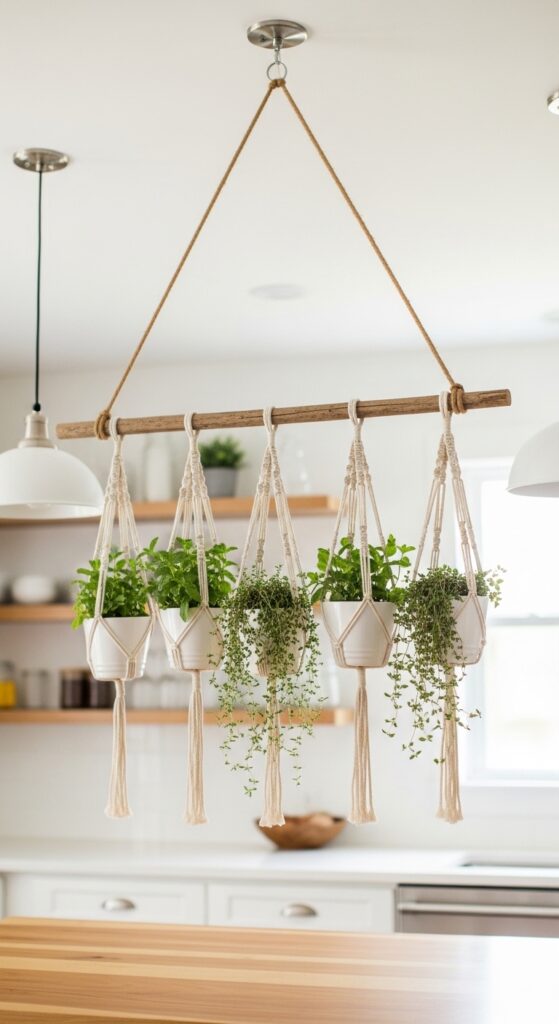
Look up — there’s growing space above your kitchen that you’ve probably never thought to use! Hanging herb gardens suspended from the ceiling or mounted beneath upper cabinets are one of the most visually dramatic indoor herb garden ideas for kitchen spaces, and they free up 100% of your counter and windowsill real estate.
The simplest version is a wooden dowel or copper pipe hung from ceiling hooks with macramé or leather cord, from which small pots hang at varying heights. It looks absolutely stunning above a kitchen island or dining table — like living art that you can also cook with.
For a more structured approach, mounted ceiling-hung planters are available in tiered metal designs that hold multiple pots and hang from a single ceiling hook. These are especially popular in modern farmhouse and industrial kitchen styles.
The key consideration is light access — ceiling-hung planters away from windows will need a grow light to keep herbs thriving. A small spotlight-style grow bulb installed in a standard ceiling socket above the hanging garden works beautifully and keeps the aesthetic clean.
Visit Gardenista’s guide to hanging kitchen herb gardens for beautiful, inspiring design ideas and DIY tutorials.
Hanging herb gardens are pure kitchen magic — functional, fragrant, and absolutely breathtaking!
5. Wall-Mounted Herb Planter Display
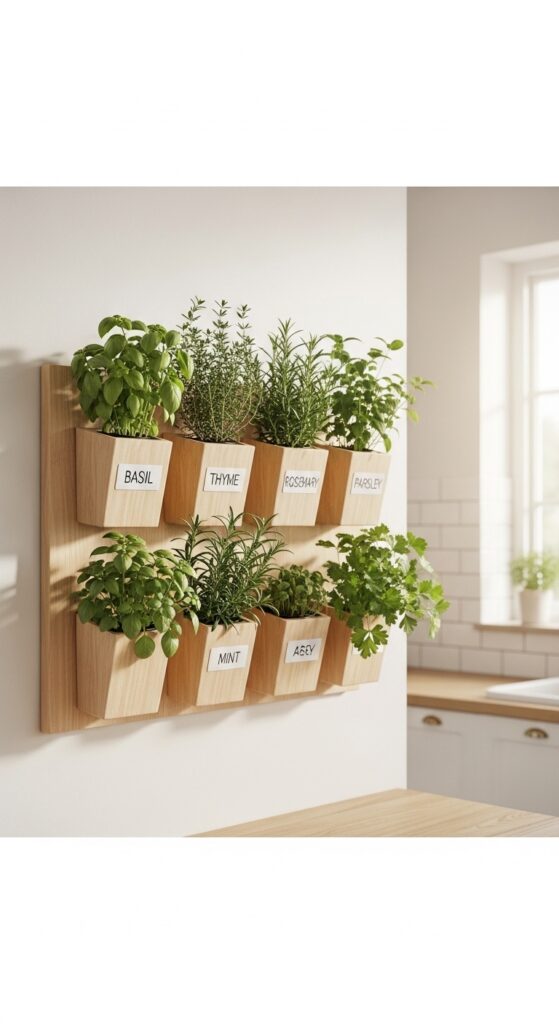
A wall-mounted herb planter turns a blank kitchen wall into a living, fragrant feature wall — and it’s one of those ideas that looks like it came straight from a Pinterest board but is actually completely achievable on any budget.
You can go the DIY route with a piece of reclaimed wood, some cup hooks, and simple tin planters — the rustic result looks incredible against subway tile or whitewashed walls. Or choose from the wide range of ready-made vertical herb planter systems that mount with just a few screws and look sleek and intentional right out of the box.
💡 Pro Tip: Before mounting, make sure your wall location gets adequate light — or plan for a full-spectrum LED strip light installed just above the planter display to supplement whatever natural light is available. This keeps your herbs lush and growing rather than slowly declining in a dim corner.
Label each planter with chalk, painted wooden tags, or custom metal labels for a polished, cohesive look. The combination of living greenery, beautiful containers, and organized labeling is genuinely one of the most impactful kitchen decor moves you can make.
Learn how to build a DIY wall-mounted herb planter for your kitchen with our step-by-step guide.
A wall herb garden transforms a bare kitchen wall into the most beautiful and useful surface in your home!
6. Mason Jar Herb Garden on a Tray
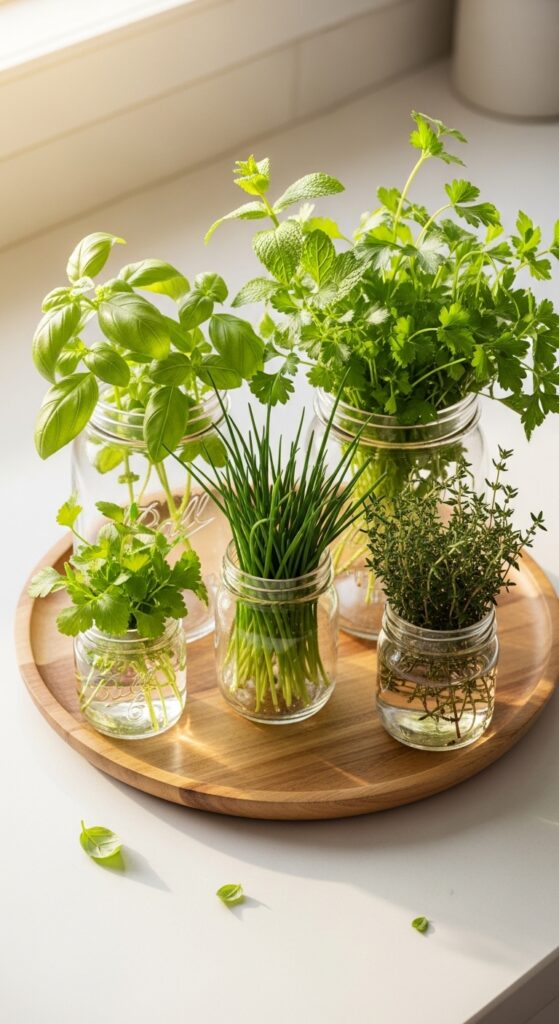
Mason jar herb gardens are the definition of budget-friendly kitchen charm. They cost almost nothing to put together, look absolutely adorable, and move around easily as a contained unit on a wooden tray or cutting board.
The tray is key — it corrals all your jars into one organized, portable herb station that you can slide to the window during the day, move to the counter while cooking, and carry to the table if you’re using fresh herbs as a dinner party centerpiece. Function meets serious style!
The main thing to get right with mason jars is drainage. Glass jars have no drainage holes, so you need to add a layer of small rocks or pebbles at the bottom of each jar before adding potting mix. This creates a reservoir that keeps water away from the roots. Check moisture carefully and water sparingly — the glass lets you see when water is pooling at the bottom.
Choose jar sizes thoughtfully: wide-mouth quart jars work best for bushy herbs like basil and parsley, while smaller pint jars are perfect for compact herbs like thyme and chives. Mix sizes on your tray for a beautifully layered, varied display.
Discover more DIY herb garden container ideas using everyday household items for creative and budget-friendly setups.
Mason jar herb gardens are proof that beautiful and functional doesn’t have to cost a thing!
7. Over-the-Sink Herb Shelf
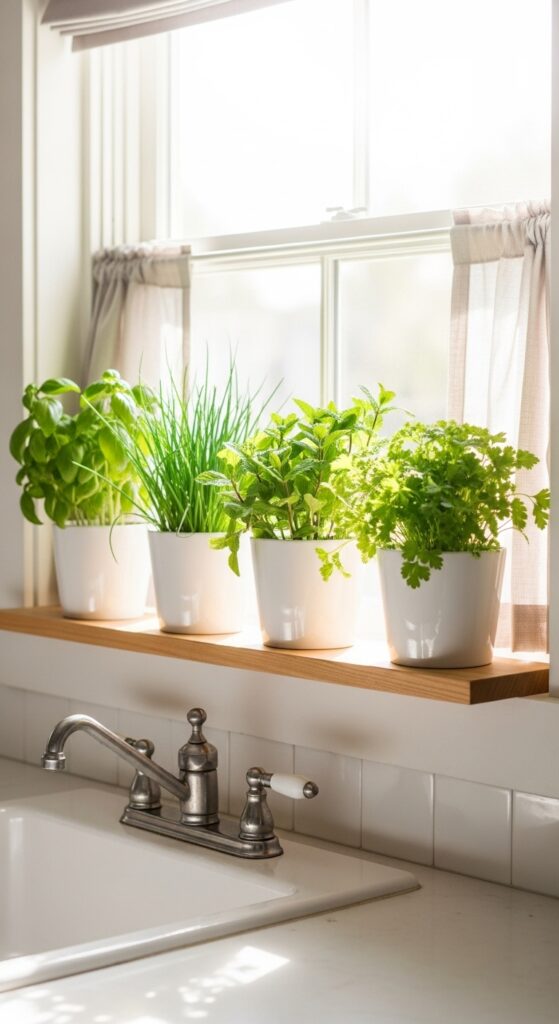
If your kitchen has a window above the sink — and so many do — you are sitting on prime herb-growing real estate that most people waste completely. A slim shelf mounted just below or alongside that window gives you the brightest, most naturally lit spot in the kitchen for your herb garden.
The over-the-sink position is pure genius because it’s the most-used spot in any kitchen — you’re there washing vegetables, filling pots, rinsing dishes dozens of times a day. Having fresh herbs within arm’s reach in that exact moment is the ultimate in kitchen convenience.
💡 Pro Tip: Choose a waterproof or sealed shelf for over-the-sink installation, and use drip trays under each pot to protect the wood from watering spills. A little prep work here saves a lot of maintenance headaches later.
Keep herbs in this spot that you reach for constantly while cooking — basil, mint, chives, and parsley are all perfect candidates. They’re high-use herbs that you’ll be grateful to have immediately available every single time you cook.
Visit Better Homes & Gardens’ guide to kitchen herb gardening for beautiful over-the-sink and windowsill setup inspiration.
That neglected window above your sink is about to become your favorite spot in the entire kitchen!
8. Repurposed Colander or Vintage Container Garden
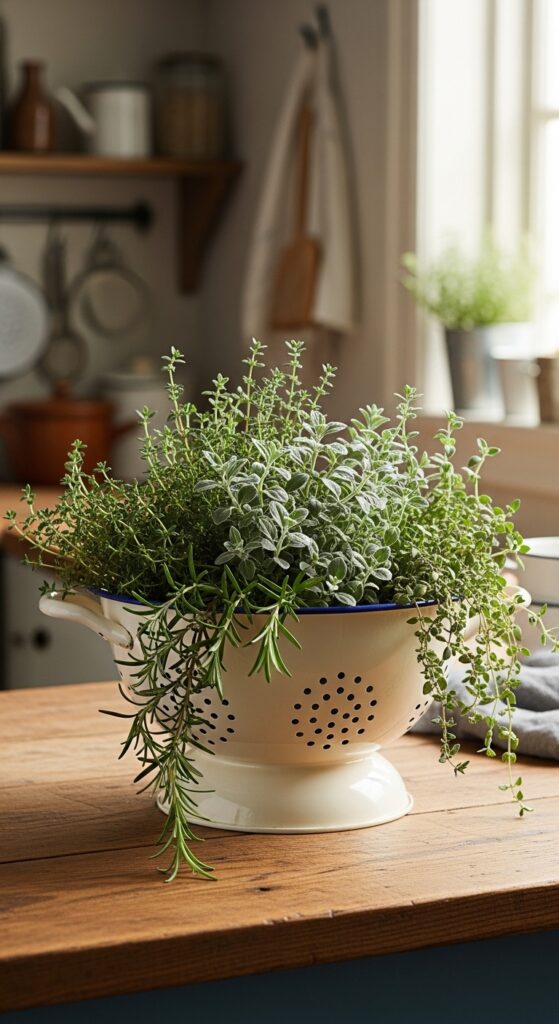
Here’s one of the most creative indoor herb garden ideas for kitchen lovers with a flair for the unique: repurpose vintage kitchen items as herb planters! Old colanders, enamel pots, wooden crates, vintage tea tins, and bread boxes all make absolutely charming and character-filled herb planters.
The colander is particularly brilliant as a herb planter because it already has drainage holes — no modification needed! Line it with coco coir liner or a coffee filter to hold the potting mix in while still allowing excess water to drain freely, then plant directly into it.
Vintage enamel pots, bread tins, and wooden crates need a few drainage holes drilled in the bottom — a simple five-minute job with a basic drill. The upcycled, one-of-a-kind look you get from these repurposed containers is impossible to replicate with store-bought pots, and it adds enormous personality to your kitchen.
This approach is also completely budget-friendly — raid thrift stores, flea markets, and your own kitchen cupboards for forgotten items that could become your most beautiful herb planters. A $2 thrift store colander filled with fresh herbs is genuinely stunning.
Get inspired by our collection of creative upcycled container garden ideas for more unconventional planting vessels.
Repurposing vintage kitchen items as herb planters is the most personal and creative herb garden you can build!
9. Herb Garden in a Kitchen Island Cart
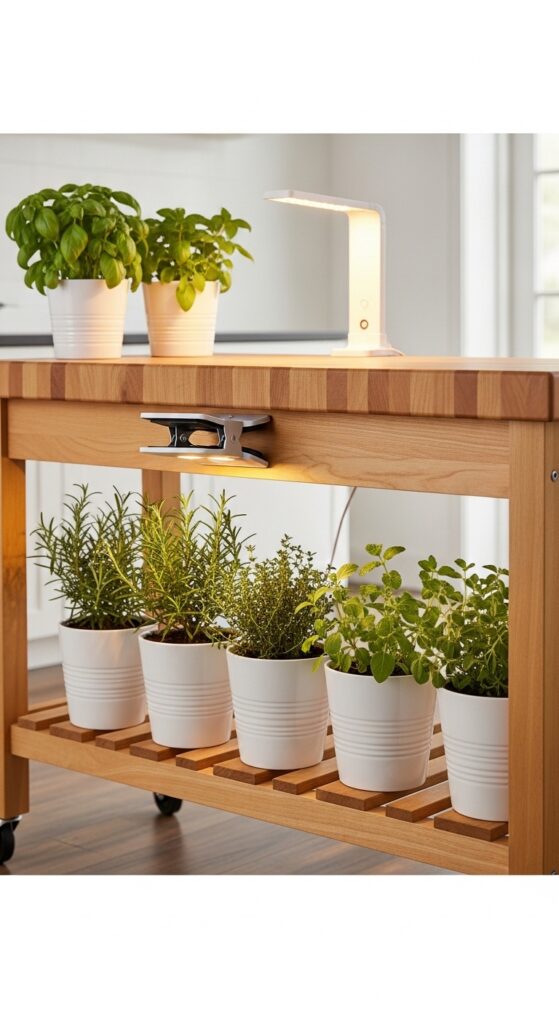
A kitchen island cart with open shelving is one of the most underutilized herb garden opportunities in the home kitchen. That lower shelf — typically used for random storage — is perfectly sized for a row of herb pots and positions your garden right at the center of your cooking action.
The island location means your herb garden is genuinely portable — you can wheel the whole cart to your sunniest window during the day and bring it back to your prep area while you cook. This flexibility solves the “not enough window light” problem elegantly and without any permanent installation.
💡 Pro Tip: Attach a small LED grow light bar to the underside of the island’s top surface, pointing down at your herb shelf. This creates a dedicated grow station that works beautifully day and night, keeping your herbs thriving even in a kitchen with limited natural light.
Choose a cart with a butcher block or sealed wood top so you can use the upper surface as an actual prep station — snipping herbs directly onto the cutting surface below your cooking ingredients. It’s a seamlessly integrated kitchen and garden experience that feels genuinely luxurious.
Explore our guide to using kitchen carts and islands for indoor container gardens for more layout and lighting ideas.
A kitchen island herb garden is the most functional, cook-friendly herb setup you can build!
10. Hydroponic Herb Garden Kit
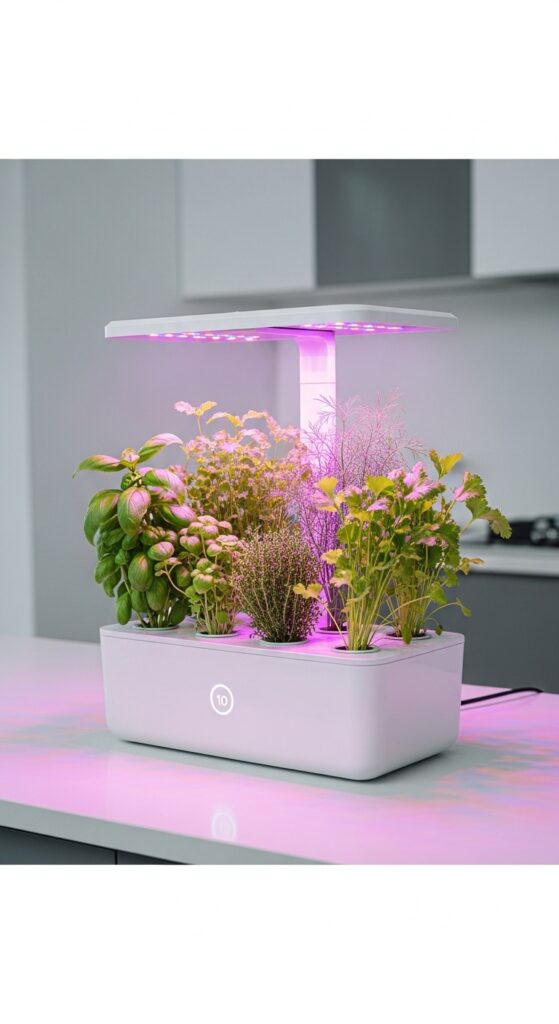
If you want fresh herbs year-round with almost zero effort, a hydroponic herb garden kit is genuinely one of the best investments you can make for your kitchen. These countertop systems grow herbs in water with built-in full-spectrum LED grow lights — no soil, no mess, no guessing about watering or light.
Brands like AeroGarden, Click & Grow, and Gardyn have made hydroponic kitchen gardening completely beginner-proof. You fill the reservoir with water, drop in the seed pods, plug it in, and set the timer. The built-in lights run automatically on a schedule, the system tells you when to add water, and herbs grow at two to three times the speed of soil-grown plants.
The results are extraordinary. In a matter of weeks, you have lush, full, harvestable herbs growing right on your countertop regardless of the season, your window situation, or your level of gardening experience. Basil, cilantro, parsley, mint, dill, thyme — all growing simultaneously in a unit the size of a coffee maker.
The ongoing cost is mostly replacement seed pods, which run $5–10 for a set. Compared to buying weekly herb bundles at the grocery store, most hydroponic garden owners find the system pays for itself within a few months.
Visit AeroGarden’s official herb growing guide for tips on getting the most out of your hydroponic system.
Explore our complete review of the best hydroponic herb garden kits for kitchens to find the right model for your budget and space.
Hydroponic herb kits are the future of kitchen herb gardening — and the future is delicious!
11. Chalkboard-Labeled Terracotta Herb Collection
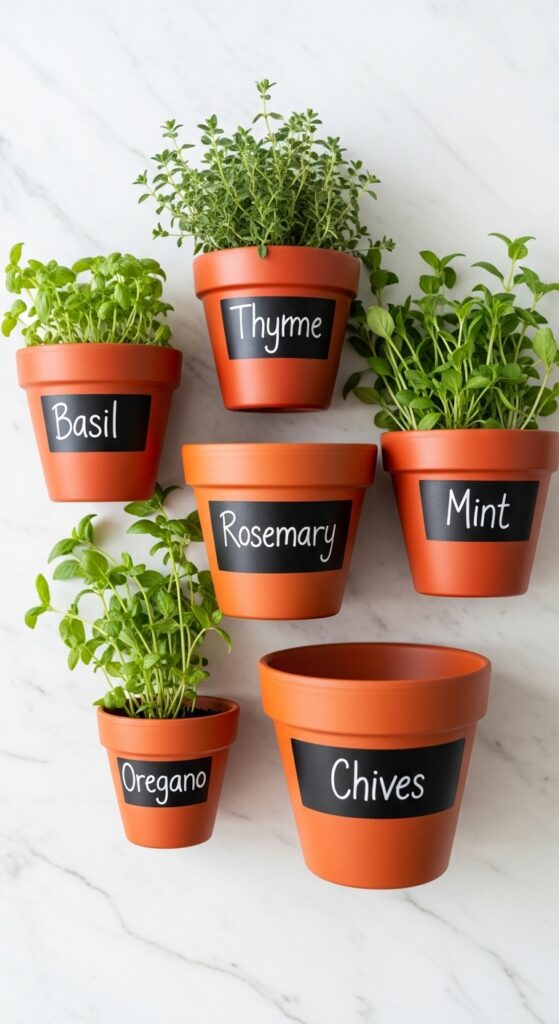
Sometimes the most classic approach is the most beautiful — and nothing says kitchen herb garden quite like a collection of terracotta pots with hand-lettered chalkboard labels. It’s an idea that’s been around for years and simply never goes out of style because it looks genuinely perfect in almost every kitchen aesthetic.
The chalkboard label technique is incredibly simple: paint a wide band around each pot with chalkboard paint, let it cure for 24 hours, then write each herb name with chalk or a chalk pen. The result is charming, customizable (just wipe and rewrite when you swap plants), and looks like something from a boutique garden shop.
💡 Pro Tip: Use chalk pens rather than regular chalk for the labels — they write more crisply, don’t smudge when you brush against them, and last much longer before needing a touch-up. A small pack of white and colored chalk pens costs just a few dollars.
Group your terracotta collection on a wooden serving tray, marble slab, or slate board to create a cohesive, contained herb garden vignette on your counter. Add varying pot heights with small plant risers or upturned pots underneath some of them for a beautifully layered display.
See our full guide to decorating herb pots and planters for kitchen display for more creative labeling and styling ideas.
Terracotta and chalkboard is a combination so timeless and beautiful that it genuinely makes your kitchen feel like a different place!
The Best Herbs to Grow in Your Kitchen Indoor Herb Garden
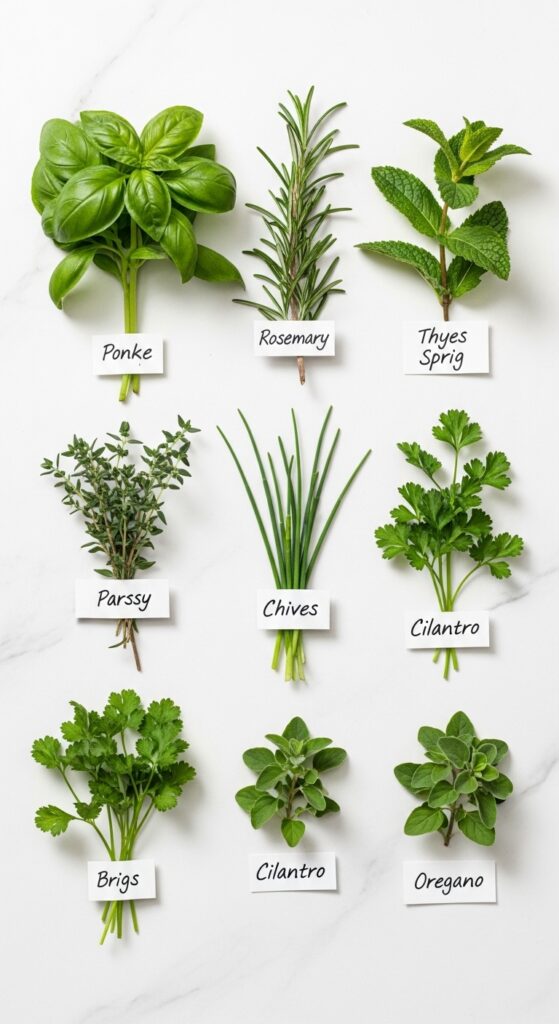
Choosing the right herbs for your kitchen garden setup makes all the difference between a thriving, useful collection and a struggling, frustrating one. Here’s the thing: not every herb is equally suited to indoor kitchen life, so starting with the most reliable varieties sets you up for immediate success.
Basil is the undisputed king of the kitchen herb garden — it grows fast, it’s used constantly in cooking, and it thrives in warm, sunny kitchen conditions. Grow it in your sunniest spot and harvest regularly to keep it producing.
Mint is almost too easy — it grows vigorously in partial shade and moderate light, making it perfect for lower-light kitchen setups. Always grow it in its own pot though, since it’s famously aggressive and will crowd out everything around it if given the chance.
Chives and parsley are both tolerant of less intense light than Mediterranean herbs, making them great choices for east-facing windows or spots a bit further from the window. Both are endlessly useful in the kitchen and regrow reliably after harvesting.
| Herb | Light Needs | Water Needs | Best Kitchen Use |
| Basil | High (6+ hrs) | Moderate, consistent | Pasta, pesto, salads |
| Mint | Low to moderate | Moist, consistent | Drinks, desserts, sauces |
| Rosemary | High (6+ hrs) | Low, let dry out | Roasting, bread, oils |
| Thyme | High (6+ hrs) | Low, let dry out | Soups, meat, vegetables |
| Chives | Low to moderate | Moderate | Eggs, salads, garnish |
| Parsley | Moderate | Moderate | Salads, garnish, sauces |
| Cilantro | Moderate | Moderate, cool | Mexican, Asian cuisine |
| Oregano | High (6+ hrs) | Low | Pizza, pasta, grilling |
Visit Bonnie Plants’ herb growing guide for detailed variety-specific growing advice from one of the most trusted herb producers in the country.
Discover which herbs grow best together in shared kitchen containers to build the most productive combinations.
Start with two or three of these and build from there — your kitchen herb confidence will grow just as fast as the plants!
Indoor Herb Garden Ideas for Kitchen: Care Tips for Success
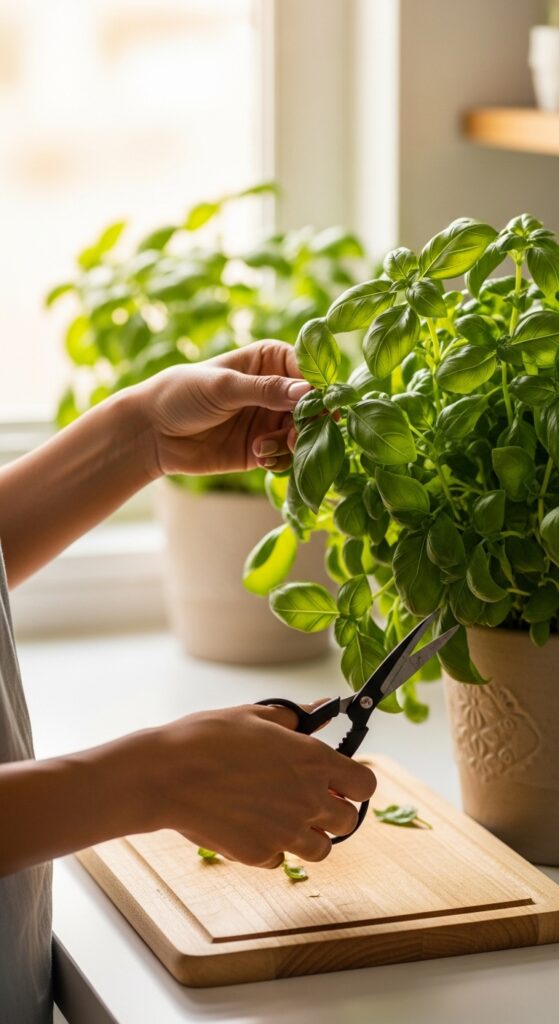
No matter which of these indoor herb garden ideas for kitchen spaces you choose, a few universal care habits will determine whether your herbs thrive or quietly decline. These are the things that really matter.
Light is non-negotiable — most culinary herbs evolved in sunny Mediterranean climates and genuinely need 6+ hours of bright light daily. If your kitchen doesn’t have adequate natural light, a grow light is not optional, it’s essential. The good news is that modern LED grow lights are inexpensive, effective, and don’t look out of place in a modern kitchen.
Harvest frequently and correctly — this is the tip most beginner herb gardeners miss completely. Snipping stems regularly (always cutting just above a leaf node) encourages the plant to branch and become bushier. Neglecting to harvest actually causes herbs to bolt, flower, and decline in flavor. The more you use them, the better they grow — pretty cool, right?
💡 Pro Tip: Feed your kitchen herbs with a balanced liquid fertilizer at half strength every two to three weeks during the growing season. Herbs grown in pots exhaust the nutrients in their potting mix quickly, and a little feeding keeps them lush, productive, and deeply flavorful.
Never let water sit in saucers under herb pots for more than a day — standing water breeds root rot, which is silent and fast and absolutely devastating for kitchen herbs. Always empty saucers after watering, and make sure every container has a drainage hole.
Read our complete herb care troubleshooting guide for indoor kitchen gardens to diagnose and fix any problems that come up.
Master these care basics and your kitchen herb garden will be lush, productive, and beautiful all year long!
Frequently Asked Questions
What are the easiest indoor herb garden ideas for kitchen beginners?
The easiest starting point is a simple windowsill setup with three to four pots of the most forgiving herbs: mint, chives, parsley, and basil. These four herbs cover an enormous range of cooking uses, tolerate typical kitchen conditions well, and are incredibly rewarding for beginners. A mason jar collection on a tray or a small tiered stand near your best window are both equally beginner-friendly options that require minimal setup and maintenance.
How much light does an indoor kitchen herb garden need?
Most culinary herbs need at least 6 hours of bright light daily — south- or west-facing windows are ideal. If your kitchen doesn’t get adequate natural light, a full-spectrum LED grow light running 10–12 hours per day will keep herbs thriving beautifully. Mint, parsley, chives, and cilantro are the most tolerant of lower light levels and are good choices if your kitchen is on the dimmer side.
Can I grow herbs indoors year-round in my kitchen?
Absolutely! That’s actually one of the biggest advantages of indoor kitchen herb gardening — you’re not dependent on outdoor seasons. With adequate light (natural or supplemented with a grow light), consistent warmth, and proper watering, you can harvest fresh herbs from your kitchen 365 days a year. Hydroponic herb garden kits are especially excellent for year-round growing since they provide everything the herbs need regardless of the season.
Why are my kitchen herbs dying so quickly?
The most common culprits are overwatering and insufficient light — and these two problems account for the vast majority of indoor herb failures. Always check that soil is partially dry before watering again, make sure pots have drainage holes, and honestly assess whether your herbs are getting enough light. Supermarket herb plants in particular are often sold stressed and root-bound — repotting them immediately into fresh potting mix with proper drainage dramatically improves their survival rate.
How do I harvest kitchen herbs without killing the plant?
The key is to never harvest more than one-third of the plant at once, and always cut stems just above a leaf node (the point where leaves branch from the stem). This encourages the plant to produce two new stems where you cut, making it bushier and more productive over time. For basil specifically, always pinch off flower buds as soon as they appear — once basil flowers, the leaves lose flavor and the plant declines rapidly.
A Few Final Thoughts
There has never been a better time to build your own indoor herb garden ideas for kitchen reality — the options are endless, the investment is minimal, and the payoff (fresh herbs at your fingertips every single day) is genuinely life-changing for anyone who loves to cook. Whether you go for a sleek hydroponic countertop system, a charming mason jar tray collection, or a dramatic ceiling-hung display, the best herb garden is simply the one that fits your space, your style, and your cooking habits. Start small if you need to — even one pot of basil on a sunny windowsill is a kitchen herb garden, and it’s a starting point that could grow into something wonderful. Fresh herbs make every meal taste better, they make your kitchen smell incredible, and they bring a little piece of living nature into the heart of your home. Now go make it happen!