
You’ve got a shady spot in your garden and honestly? It feels like a losing battle — nothing seems to thrive, weeds take over the moment you turn your back, and keeping it looking decent feels like a part-time job. But here’s the exciting truth: a shady garden can actually be one of the LOWEST maintenance spaces you own, if you plant and design it correctly! The secret is working with the shade instead of fighting it, choosing plants that genuinely love low light, and setting up smart systems that do the work for you. Ready to transform your shadiest corner into a hands-off haven? Let’s dive in!
At a Glance
- Identifying whether you have full shade, partial shade, or dappled light is the single most important step before choosing any plants — the wrong call leads to constant replacements and wasted money.
- Dense ground covers like sweet woodruff, pachysandra, and epimedium are your greatest allies in a low-maintenance shade garden — once established, they choke out weeds permanently.
- A 3-inch layer of mulch applied once a year is the highest-return, lowest-effort maintenance task you can do in a shady garden, dramatically reducing weeding and watering time.
- Shade-tolerant shrubs like oakleaf hydrangea, leucothoe, and Japanese forest grass act as permanent anchors that need virtually no attention after their first establishment year.
- Adopting a naturalistic design aesthetic — where leaves are left to decompose and plants are allowed to self-seed — eliminates most seasonal cleanup and actually improves soil health over time.
Understand Your Shade Before You Plant a Thing
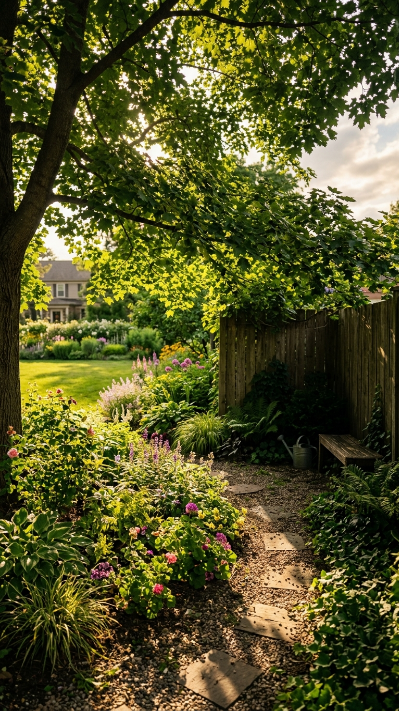
Before you buy a single plant or spread a single shovelful of mulch, you need to know exactly what kind of shade you’re actually dealing with. Planting the wrong plant in the wrong shade type is the number one reason shady gardens become high-maintenance nightmares of constant replacement and disappointment.
There are four distinct shade types, and they’re genuinely different growing environments:
| Shade Type | Light Conditions | Best For |
| Dappled shade | Shifting light through leaf canopy | Widest plant selection |
| Partial shade | 2–4 hours of direct sun daily | Most shade perennials |
| Full shade | Less than 2 hours direct sun | Ferns, hostas, mosses |
| Deep shade | Near zero direct sun | Mosses, ivy, pachysandra only |
Here’s the deal: dappled shade under deciduous trees is actually the most plant-friendly shade type — it shifts through the day and delivers more usable light than it appears to. Deep shade under dense evergreens or north-facing walls is genuinely challenging and requires the most specific plant choices.
Observe your shady spot at three different times of day — morning, midday, and late afternoon — across several days. Note where light actually hits, for how long, and how it shifts seasonally. This one free observation exercise saves you from years of failed plantings.
💡 Pro Tip: Don’t forget that deciduous tree shade changes dramatically between seasons — a spot that’s deeply shaded in July might receive excellent spring sunlight before the tree leafs out, which is perfect for early spring bulbs and ephemerals that don’t need summer sun!
The University of Maryland Extension has an excellent free resource on evaluating garden light conditions that’s worth bookmarking before you start planning.
Check out our guide to understanding light conditions for urban gardens for a deeper dive.
Know your shade type first and every other decision becomes dramatically easier!
Choose the Right Ground Covers to Crowd Out Weeds Forever
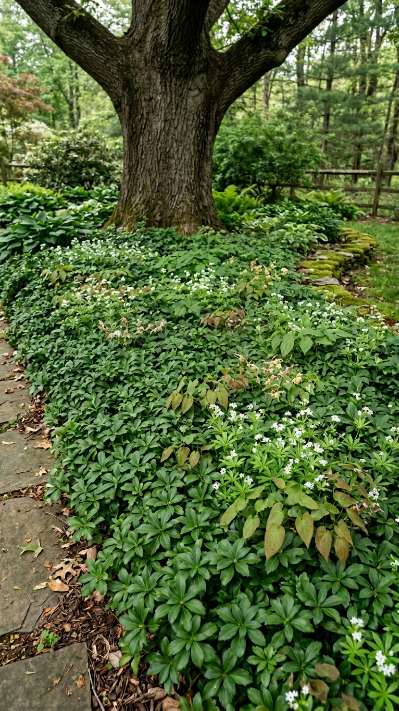
This is genuinely the most powerful thing you can do to minimize shade garden maintenance forever: get the right ground covers established and let them do the weeding for you. A dense mat of shade-loving ground cover is nature’s own weed suppression system — and once it knits together, you’re essentially done.
The best low-maintenance shade ground covers are plants that spread reliably, stay attractive year-round, and outcompete weeds without becoming invasive thugs themselves:
- Epimedium (Barrenwort) — Absolute superstar. Drought-tolerant once established, deer-resistant, semi-evergreen, spreads steadily. Virtually zero maintenance after year two.
- Sweet woodruff — Delicate appearance, surprisingly tough performer. Spreads into a fragrant carpet, produces tiny white spring flowers, dies back in winter.
- Pachysandra — The classic choice for deep shade. Evergreen, dense, and completely reliable. Plant it once and forget it.
- Ajuga (Bugleweed) — Fast-spreading with attractive bronze or purple foliage and blue spring flower spikes. Excellent for problem areas.
- Wild ginger (Asarum) — Gorgeous glossy leaves, very slow-spreading but incredibly long-lived and completely hands-off once established.
💡 Pro Tip: Plant ground covers closer than the label suggests — spacing them at 6–8 inches rather than 12 inches means faster coverage and fewer weeds getting a foothold in those first critical months!
The trick with ground covers is front-loading your effort. Prepare the soil well, plant densely, mulch between plants initially, and weed consistently for the first single season. After that? You’re basically just watching them fill in.
Explore our full guide to shade ground covers for low-maintenance gardens for variety-by-variety comparisons.
Establish the right ground cover once and you’ve essentially eliminated weeding in that zone — permanently!
Pick Low-Maintenance Shade Perennials That Come Back Every Year
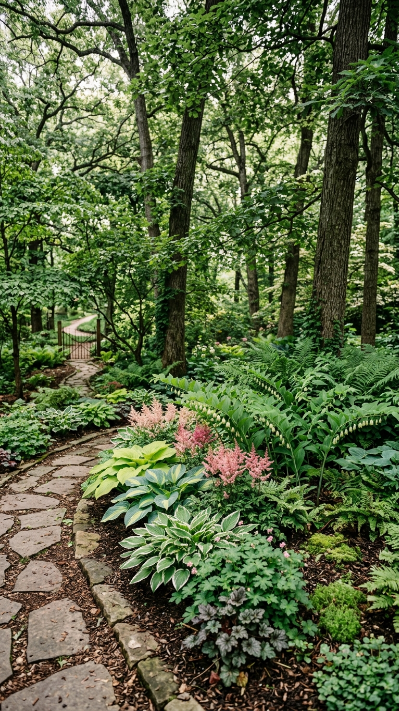
Here’s the thing about shade perennials — the right ones are some of the most genuinely low-effort plants in the entire gardening world. They come back year after year, they rarely need dividing more than once every several years, and many actually thrive on neglect. Choose wisely here and your maintenance calendar practically empties out.
Your highest-value, lowest-maintenance shade perennials:
- Hostas — The undisputed kings of shade. Enormous variety of sizes and colors, virtually pest-free (except slugs), need dividing only every 4–5 years. Plant large varieties for maximum weed-suppression from their own footprint.
- Astilbe — Feathery plumes of pink, red, or white in summer, attractive seed heads through fall and winter. Divide every 3–4 years. Thrives in moist shade.
- Solomon’s seal (Polygonatum) — Architectural, elegant arching stems. Spreads slowly by rhizome to form beautiful colonies. Zero pest problems. Virtually zero maintenance.
- Bleeding heart (Dicentra) — Romantic heart-shaped flowers in spring, foliage dies back by midsummer (letting other plants fill the space naturally).
- Lungwort (Pulmonaria) — Early spring flowers in pink and blue, attractive spotted foliage all season. Spreads gently, completely trouble-free.
- Hellebores — Evergreen, deer-resistant, drought-tolerant once established, self-seeds gently to fill gaps. Blooms in late winter when nothing else does. Absolute garden royalty.
The magic formula for a low-maintenance shade perennial border is combining plants of different heights — tall architectural plants like Solomon’s seal at the back, mid-height hostas and astilbe in the middle, and low ground-covering perennials like epimedium and lungwort at the front. The plants themselves crowd out weeds, and the layering looks intentional and beautiful year-round.
According to Fine Gardening, hellebores and epimedium consistently rank among the top ten lowest-maintenance perennials for shaded landscapes in North America — plant them and genuinely walk away.
Browse our guide to the best perennials for shady urban gardens for a full regional planting guide.
The right shade perennials reward you with beauty every year with almost zero effort — that’s the dream!
Use Mulch Heavily to Cut Maintenance in Half
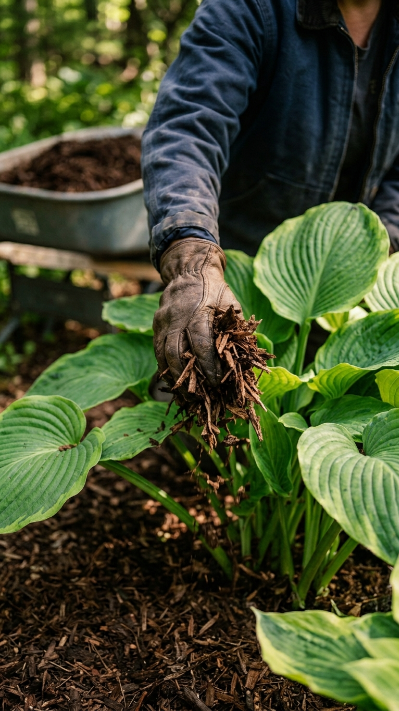
If there’s one single task that pays back more maintenance time than anything else in a shade garden, it’s applying generous mulch every single year. This is not optional — it’s the foundation of the entire low-maintenance approach.
A 3-inch layer of organic mulch in your shade garden does an astonishing amount of heavy lifting:
- Suppresses weed germination by blocking light to soil surface (eliminating up to 80% of weeding)
- Retains soil moisture so watering frequency drops dramatically
- Moderates soil temperature, protecting roots in both summer heat and winter cold
- Breaks down slowly to continuously improve soil structure and fertility — free fertilizing on autopilot
- Makes the garden look neat and intentional even when plants are dormant
The best mulch for shade gardens is shredded wood chip or bark mulch — it breaks down at the ideal rate, stays in place on sloped areas, and has a natural appearance that suits woodland-style plantings beautifully.
💡 Pro Tip: Apply mulch in mid to late spring after the soil has warmed — this locks in moisture for summer. Pull mulch a few inches back from plant crowns and tree trunks to prevent rot. That’s literally the entire technique!
Remember the free mulch sources we covered in our rain garden article — ChipDrop, arborist companies, and municipal programs all apply equally here. A free truckload of wood chips mulched into your shade garden twice a year costs you nothing but an hour of spreading.
Find free mulch sources for urban shade gardens near you with our sourcing guide.
One annual mulching session is genuinely all it takes to keep a shade garden looking polished and weed-free all season!
Design for Simplicity: Fewer Plant Varieties, More Impact
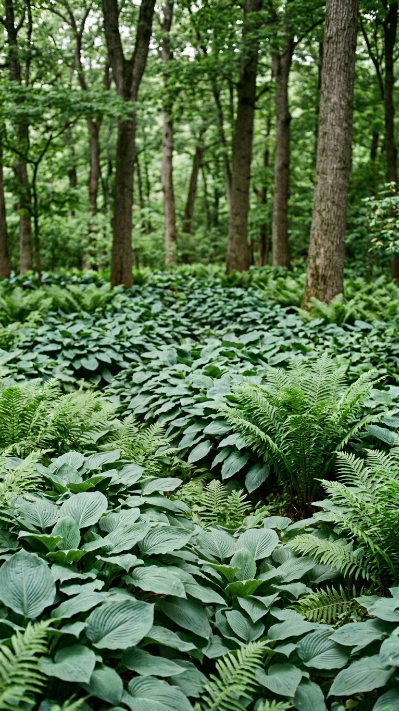
Here’s something the design world knows that most home gardeners don’t: simplicity looks more intentional and requires far less work than a complicated mix of many different plants. Fighting the urge to collect every interesting shade plant you find is one of the most powerful maintenance-reducing decisions you can make.
The concept of mass planting — using large drifts of the same plant repeated across a garden bed — is both the highest-impact design technique AND the lowest-maintenance approach simultaneously. A sweeping drift of thirty hostas reads as sophisticated and deliberate. Thirty different plants in the same space reads as chaotic and requires thirty different care approaches.
Design principles for a low-maintenance shade garden layout:
- Use 3–5 plant species maximum for a cohesive, manageable planting
- Plant in odd-numbered groups of 5, 7, or 9 for a natural, flowing look
- Repeat the same plants in multiple areas of the bed to create visual rhythm
- Choose plants with different textures and heights so variety comes from form, not species count
- Leave deliberate open mulched spaces — not every inch needs to be planted
💡 Pro Tip: The “thriller, filler, spiller” concept works beautifully in shade beds — one tall architectural plant (thriller), one mid-height spreader (filler), one low ground-hugging plant (spiller). Three species, total coverage, complete look. Done!
Simpler planting also means simpler seasonal care — you’re learning the needs of three plants deeply rather than managing the quirks of thirty. You get better at caring for what you have, and the garden rewards you with consistent performance.
Explore our guide to simple planting design for urban gardens for more layout inspiration.
Less truly is more in shade garden design — simplify your plant palette and watch maintenance evaporate!
Tackle Shade Garden Weeds Once and Win Long-Term
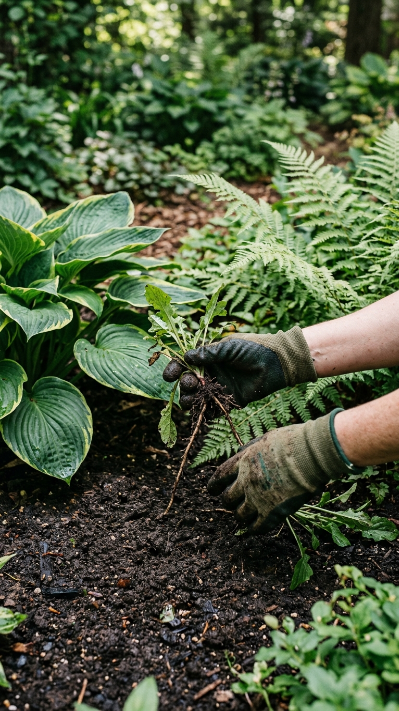
The biggest mistake people make with shade garden weeds is playing perpetual catch-up — pulling a few here and there without ever actually getting ahead. Here’s the truth: one serious, thorough initial weeding session combined with smart follow-up completely changes your long-term maintenance burden.
The goal is a concept called weed prevention, not weed management. You’re trying to eliminate the weed seed bank in your soil before it germinates, rather than pulling up established weeds all season long.
Your one-time deep-clean weed strategy:
- Weed thoroughly in early spring before your shade plants emerge — this is your easiest window, the soil is moist, and weeds are small
- Apply corn gluten meal as a natural pre-emergent (it inhibits weed seed germination without harming established plants)
- Apply your 3-inch mulch layer immediately after weeding — this is critical, don’t wait
- Spot-weed within the first 4 weeks before any escapees set seed — this takes 20 minutes maximum if you mulched properly
- From that point, your established ground covers and perennials take over suppression duty naturally
Shade gardens actually have a natural advantage over sunny gardens: fewer weed seeds germinate in low-light conditions. Capitalize on this by getting a dense plant canopy established as fast as possible — the plants themselves become your weed prevention system.
The Penn State Extension offers an excellent guide on organic weed prevention techniques that pairs perfectly with shade garden management.
See our article on organic weed control in garden beds for a complete prevention strategy.
Win the weed battle once at the start of the season and you’re essentially done — the garden handles the rest itself!
Set Up Low-Effort Watering for Shady Spaces
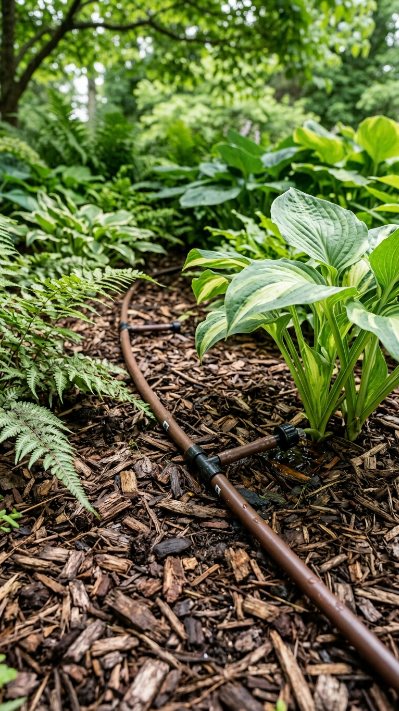
Here’s the good news about watering shade gardens: they need significantly less water than sunny beds. Reduced evaporation, cooler soil temperatures, and tree root competition (which actually trains your plants to develop drought resilience) all mean less watering duty for you.
That said, newly planted shade gardens and beds under thirsty tree canopies can dry out faster than you’d expect — trees are incredible water competitors. Setting up a simple low-effort watering system from the start saves you from hauling hoses all season.
Your lowest-maintenance watering options, ranked:
| System | Setup Cost | Ongoing Effort | Best For |
| Drip irrigation + timer | $30–$80 | Nearly zero | Established beds |
| Soaker hose + timer | $20–$50 | Nearly zero | Long narrow beds |
| Deep watering monthly | $0 | Minimal | Established native plants |
| Hand watering | $0 | High | Small new plantings only |
A basic soaker hose snaked through your shade bed and connected to a $15 timer from a hardware store is genuinely all you need for a stress-free watering setup. Set it, mostly forget it, adjust seasonally.
💡 Pro Tip: Water shade gardens deeply but infrequently — once or twice a week for 30–45 minutes at the soaker — rather than light daily watering. Deep watering drives roots downward, building drought resilience and reducing long-term watering needs dramatically.
Once your shade perennials and ground covers are fully established (typically after their second full season), many will need supplemental watering only during extended droughts. That’s the real payoff for patient, smart establishment care.
Find our full guide to low-effort garden irrigation systems for setup tips and product recommendations.
Smart watering setup in year one means barely thinking about watering by year three — absolutely worth the small upfront effort!
Use Shade-Tolerant Shrubs as Low-Maintenance Anchors
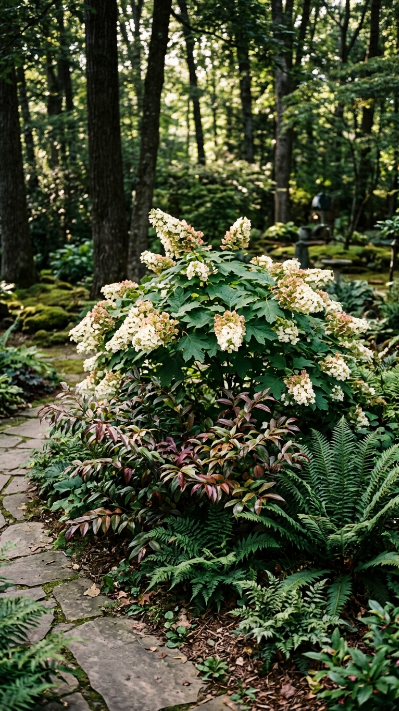
Talk about a game-changer — shade-tolerant shrubs are the single best structural investment you can make in a low-maintenance shade garden. Once established, they provide year-round presence, require minimal pruning, and anchor the entire planting design so that even when perennials die back, the garden still looks complete and intentional.
The best low-maintenance shrubs for shade:
- Oakleaf hydrangea (Hydrangea quercifolia) — Native to the US, spectacularly beautiful white blooms that age to parchment, extraordinary fall color, exfoliating bark for winter interest. Needs virtually no pruning.
- Leucothoe (Leucothoe fontanesiana) — Gracefully arching evergreen shrub with burgundy winter color. Deer-resistant, completely trouble-free.
- Mountain laurel (Kalmia latifolia) — Stunning evergreen with intricate spring flowers. Incredibly long-lived and maintenance-free once happy.
- Serviceberry (Amelanchier) — Multi-season interest: spring flowers, edible summer berries, brilliant fall color. Grows as a large shrub or small tree.
- Sweetshrub (Calycanthus) — Fragrant burgundy flowers, reliable shade performance, spreads slowly into attractive colonies.
Shrubs provide structure through every season — even in winter when perennials have disappeared, your shade garden still has presence and form. That visual consistency makes the entire space look maintained even when you’ve done absolutely nothing.
Plant shrubs first, build your perennial planting around them, and you’ve established a garden that has a permanent backbone requiring almost no seasonal intervention.
According to The American Horticultural Society, woody shrubs in shade gardens reduce overall maintenance needs by providing permanent competition against weeds and eliminating the need for annual replanting in those zones.
Explore our guide to shade shrubs for urban gardens for a full variety breakdown by size and region.
Plant one great shade shrub and you’ve anchored a whole section of garden for the next twenty years!
Work With Tree Roots Instead of Against Them
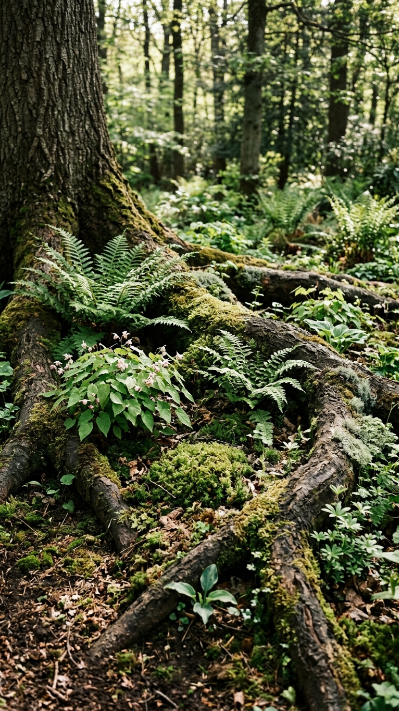
Fighting tree roots in a shaded garden bed is one of gardening’s most exhausting and ultimately futile battles. Digging deeply, adding thick soil layers over roots, or trying to grow heavy root-ball plants between surface roots leads to constant plant failures, root damage, and frustration.
Here’s the deal: tree roots are not your enemy — they just require a completely different approach. The trick is choosing plants with shallow, fibrous root systems that happily coexist with tree roots rather than competing against them.
Best plants for growing with tree roots:
- Mosses — The ultimate tree-root companion. No root competition whatsoever, spreads beautifully, requires zero maintenance
- Epimedium — Remarkably tolerant of dry, root-filled soil. One of the very few plants that genuinely thrives in these conditions
- Ferns (especially native wood ferns) — Fibrous, shallow roots slot between tree roots beautifully
- Lily of the valley — Spreads by shallow rhizome through root-filled soil with zero struggle
- Creeping Jenny — Roots at the surface, utterly unbothered by tree root competition
💡 Pro Tip: Instead of adding thick layers of soil over tree roots (which can actually suffocate and damage trees), add only a thin 1–2 inch topdressing of compost and let plants self-establish at grade. Work with the existing soil level, not against it.
For the area directly at the base of tree trunks where literally nothing grows well — embrace moss or decorative gravel rather than fighting it. A circle of moss at the base of a beautiful tree is far more elegant than a ring of struggling struggling annuals!
See our article on planting under trees without damaging roots for safe techniques and plant recommendations.
Stop fighting tree roots and start working with them — your plants will thrive and your frustration will disappear!
Embrace a Naturalistic Style to Make Maintenance Optional
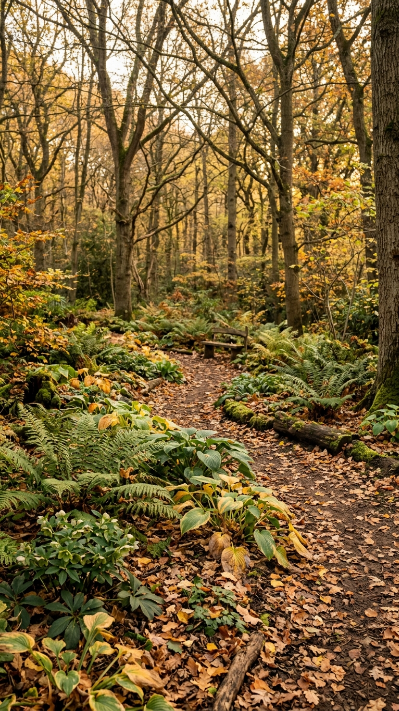
The final and most liberating shift you can make in a shade garden is an aesthetic one: give yourself permission to embrace the naturalistic, woodland-floor look rather than the manicured, tidy look. This single mindset change eliminates more maintenance tasks than any technique or product ever could.
In a naturalistic shade garden:
- Fallen leaves stay where they land between plants — they insulate roots, feed soil organisms, and decompose into free fertilizer
- Plants are allowed to self-seed gently into gaps — filling spaces for free and creating that effortlessly established look
- Seed heads and dried stems stand through winter, feeding birds and housing beneficial insects
- The garden evolves and fills in over time rather than requiring constant replanting and refreshing
This approach is also called “managed wildness” — and it’s genuinely one of the most sophisticated looks in contemporary garden design. Think of any great woodland garden at a botanic garden and you’ll recognize this aesthetic immediately.
The practical maintenance reality of a naturalistic shade garden by year three:
- Spring: One gentle cleanup pass, remove any truly dead material, freshen mulch where needed
- Summer: Occasional spot-weeding (20–30 minutes maximum per visit)
- Fall: Leave everything standing — this IS the maintenance decision
- Winter: Nothing. Literally nothing.
According to renowned garden designer Piet Oudolf, the naturalistic approach doesn’t mean neglect — it means designing systems where natural processes do the maintenance work that gardeners would otherwise have to do manually.
Explore our guide to naturalistic planting design for urban spaces for design inspiration.
When you stop trying to make your shade garden look like a formal bedding scheme and let it become the woodland it wants to be — maintenance practically disappears!
Frequently Asked Questions
What are the lowest-maintenance plants for a full shade garden?
For true full shade (less than 2 hours of direct sun), your best low-maintenance choices are hostas, ferns, epimedium, pachysandra, hellebores, and Solomon’s seal. Of these, epimedium and hellebores are arguably the most hands-off — both are deer-resistant, drought-tolerant once established, and essentially permanent once planted. Avoid trying to grow most flowering perennials in full shade; stick to foliage-focused plants for reliable, no-fuss results.
How do I stop weeds from taking over my shady garden bed?
The most effective strategy is a combination of dense planting, heavy mulching, and one thorough initial weed clearance. Get all existing weeds out in early spring, apply 3 inches of mulch immediately, then plant ground covers densely enough that they’ll knit together within one season. Once epimedium, sweet woodruff, or pachysandra forms a dense mat, weed seeds simply can’t germinate beneath it. The first season requires vigilance; after that, the plants handle it themselves.
Can I minimize watering in a shade garden under trees?
Yes — once established, most shade-tolerant perennials and ground covers need minimal supplemental watering in shaded areas. The exception is gardens directly under large, thirsty trees like maples and beeches, which can rob soil moisture aggressively. In these spots, choose the most drought-tolerant shade plants (epimedium, wild ginger, pachysandra) and water deeply once a week during dry spells. A soaker hose on a timer handles this with zero ongoing effort.
Should I remove fallen leaves from my shade garden?
For a low-maintenance shade garden, the honest answer is mostly no. Fallen leaves between established plants act as natural mulch, feed soil organisms, insulate roots, and decompose into free organic matter. The only exception is very thick, wet leaf mats directly on top of small plants, which can smother them — gently scatter those rather than removing them entirely. Embracing leaf litter is one of the biggest maintenance-reducing decisions you can make in a shade garden.
Why do my shade garden plants keep dying even though I water them regularly?
The most common culprit is actually overwatering combined with poor drainage — shade gardens stay moist longer than sunny ones, and many shade plants will rot in consistently wet soil. Check that your soil drains within 24–48 hours after watering. The second most common issue is using the wrong plant for the specific shade type — a “partial shade” plant placed in deep shade will slowly fail no matter how well you care for it. Always match the plant to the exact light conditions you actually have, not the ones you wish you had.
A Few Final Thoughts
A shady garden doesn’t have to be a source of frustration — with the right approach, it becomes one of the most serene, effortlessly beautiful spaces on your entire property. The key to minimizing shade garden maintenance isn’t working harder; it’s making smarter choices at the beginning: the right plants, the right design simplicity, and the right naturalistic mindset that lets the garden evolve on its own terms. Front-load your effort in the first season with great ground cover establishment, generous mulching, and thorough initial weeding — and the garden genuinely begins to take care of itself from year two onward. Your shady corner is not a problem to solve; it’s a tranquil woodland haven just waiting to happen. Now go make it happen!