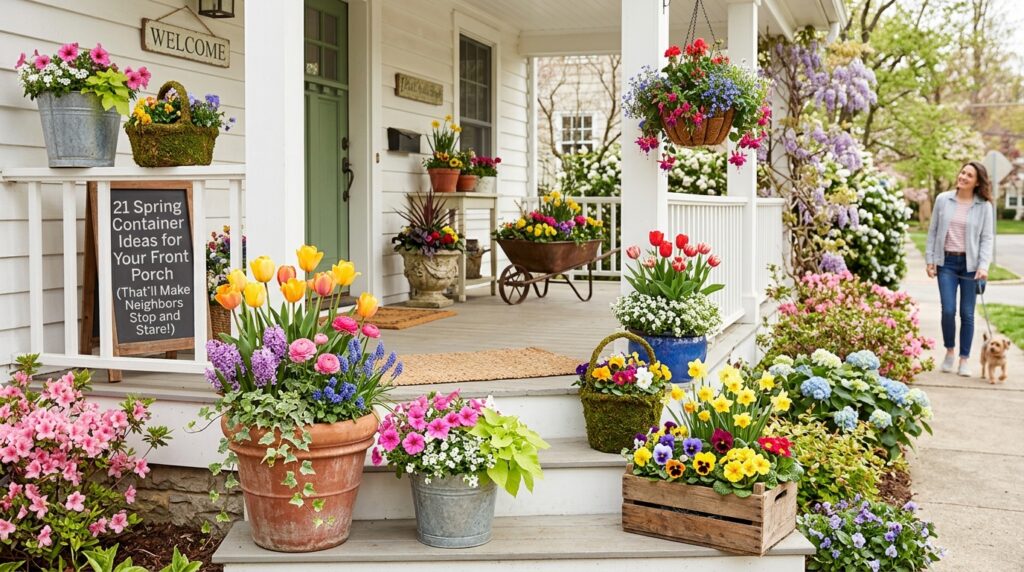
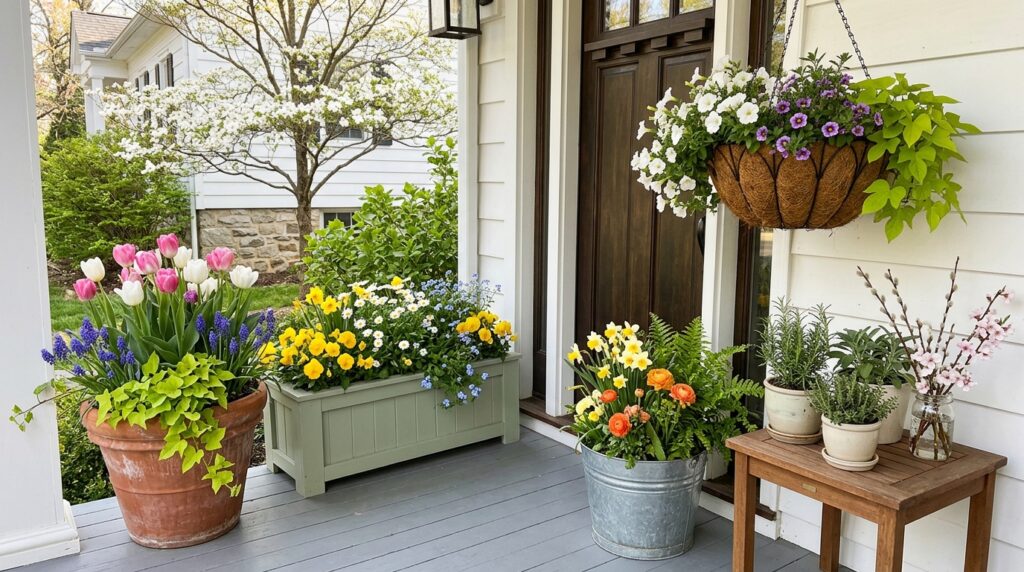
Your front porch is the very first thing guests — and neighbors — see when they pull up to your home, so why not make it absolutely jaw-dropping this spring? If you’ve been staring at a sad, bare entryway and wondering how to bring it to life without a massive landscaping budget, spring container gardening is your answer. With the right pots, the right plants, and a little creativity, you can transform any front porch into a lush, welcoming showstopper in a single weekend. Ready to dive in?
- At a Glance
- Choose the Right Containers for Your Porch Style
- Pick a Color Palette That Pops
- Layer Your Plants for Maximum Impact
- The Best Thriller Plants for Front Porch Containers
- Filler Plants That Make Your Containers Look Lush
- Spiller Plants to Cascade Over the Edge
- Best Spring Flowers for Front Porch Containers
- Greenery and Foliage Combos That Steal the Show
- Dealing with Shade on Your Porch
- Watering and Feeding Your Spring Containers
- Arrangement Tips to Create a Cohesive Porch Look
- Budget-Friendly Container Ideas That Still Look Amazing
- Frequently Asked Questions
- When should I start planting spring containers for my front porch?
- How many plants do I need for a typical front porch container?
- What potting mix is best for front porch containers?
- How do I keep my spring containers looking good through the whole season?
- Can I use spring container arrangements on a small apartment balcony or stoop?
- A Few Final Thoughts
At a Glance
- Spring container gardening is one of the fastest and most affordable ways to boost your home’s curb appeal without major landscaping work.
- Using the “thriller, filler, spiller” method guarantees full, professionally styled containers every single time.
- Matching your pot style and color palette to your home’s exterior creates a polished, cohesive look that feels intentional.
- Shade-tolerant plants like impatiens and ferns make it easy to create beautiful containers even on north-facing or covered porches.
- Regular watering and a slow-release fertilizer are the two biggest secrets to keeping your front porch containers looking gorgeous all season long.
Choose the Right Containers for Your Porch Style
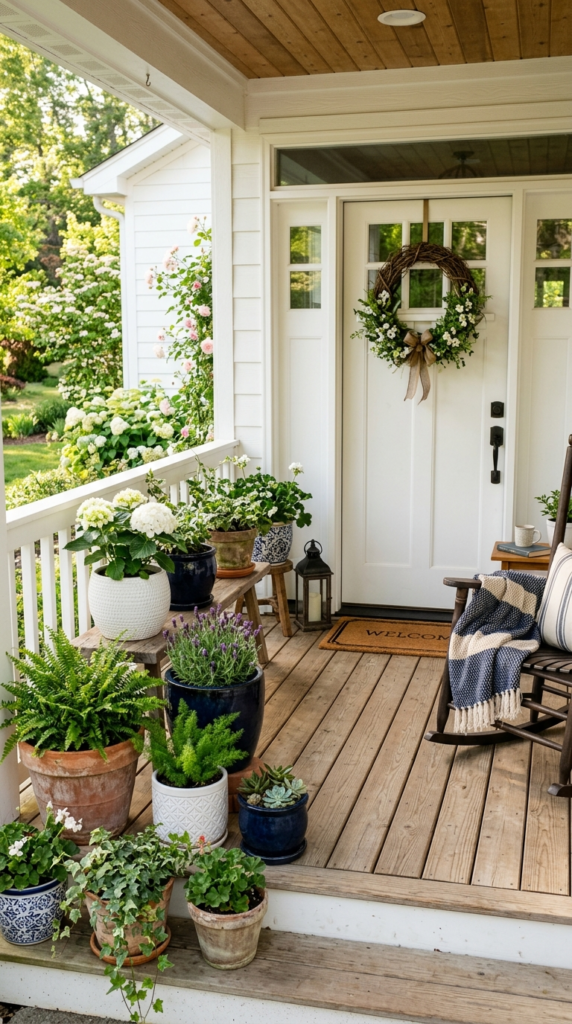
Here’s the deal: the containers you choose set the entire tone for your porch. Get this right and everything else falls into place beautifully.
Think about the style of your home first. A farmhouse or cottage-style home looks incredible with terracotta, galvanized metal, or weathered wood planters. A modern home? Sleek concrete, matte black, or geometric ceramic pots are chef’s kiss.
Don’t be afraid to mix materials — but keep a consistent color story running through them. For example, try pairing a large terracotta pot with a smaller galvanized bucket and a woven basket liner. The variety in texture adds visual depth while the earthy tones keep everything feeling unified.
Pro tip: Always make sure your containers have drainage holes. Without them, roots rot fast — and your whole beautiful arrangement goes downhill quickly.
Container size matters more than most people realize. Bigger pots hold moisture longer, allow roots to spread, and create a bolder visual statement. For a front porch, aim for at least one pot that’s 14–18 inches in diameter as your anchor piece.
Check out more ideas on choosing the right planter for your space and explore container recommendations from the experts at The American Horticultural Society.
You’ve totally got this with the right containers as your foundation!
Pick a Color Palette That Pops
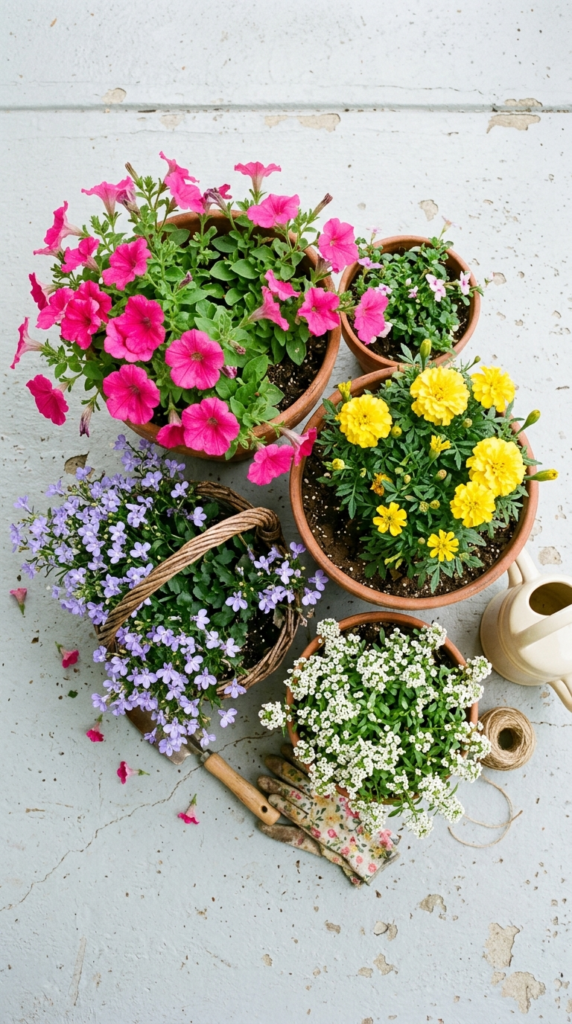
Nothing ties a porch together like a intentional color palette. Without one, even the most lush containers can look chaotic and busy.
The simplest approach? Pick two main flower colors and one neutral foliage color. Think hot pink and white blooms with silvery dusty miller, or deep purple and yellow with green sweet potato vine. This three-element formula works every single time.
| Palette Name | Main Colors | Accent Foliage |
| Coastal Spring | Soft blue, white, pale yellow | Silver dusty miller |
| Bold & Bright | Hot pink, lime green | Deep burgundy coleus |
| Cottage Garden | Lavender, blush pink | Soft green fern |
| Monochrome Chic | All white blooms | Variegated ivy |
| Sunny Farmhouse | Buttery yellow, orange | Dark green spike |
Coordinate with your front door color too! If you have a red door, lean into whites and soft pinks rather than competing reds. A navy door? Pop it with bright yellows and oranges. The front porch should feel like a whole picture, not just a collection of random plants.
Explore more spring color combination ideas for containers to find your perfect match.
Your porch is about to look like it belongs on a magazine cover!
Layer Your Plants for Maximum Impact
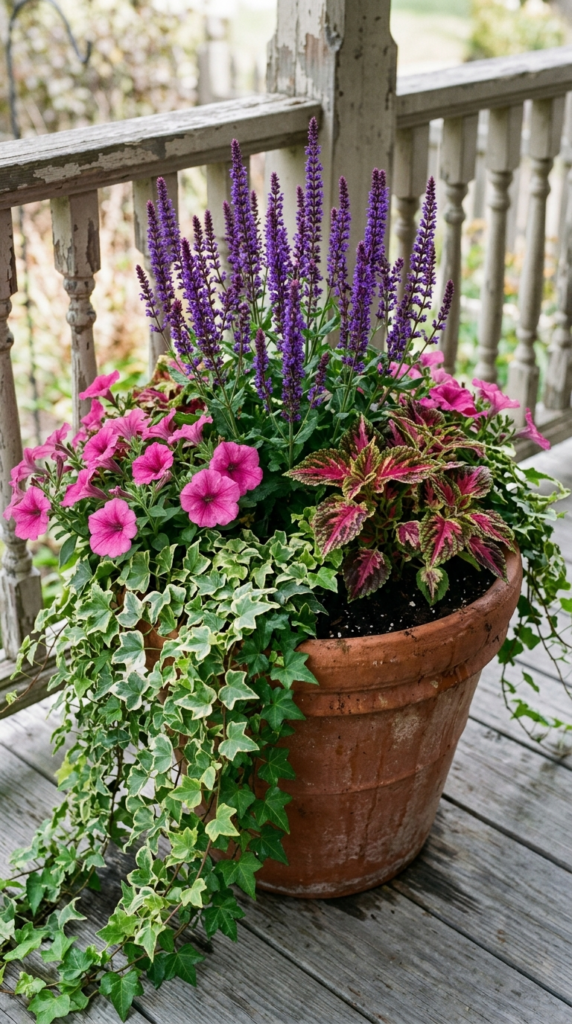
Here’s the thing: the reason some porch containers look flat and boring while others look like they belong in a garden show is almost entirely about layering.
The classic formula is Thriller + Filler + Spiller:
- Thriller = a tall, dramatic plant that creates height
- Filler = medium-sized bushy plants that pack in color
- Spiller = trailing plants that cascade over the edge
This simple trio instantly makes your containers look full, professional, and intentional. No more sad little single-plant pots!
The secret is scale. Your thriller should be roughly 1.5–2x the height of the container. Your fillers should be similar in height to the pot’s rim. And your spiller should flow downward at least 6–8 inches for maximum drama.
Plant in a triangle formation inside the pot — one thriller in the back-center, two to three fillers in a cluster, and spiller plants tucked near the front edges. This ensures you get gorgeous fullness from every angle.
Learn more about the thriller filler spiller method for beginners and take your containers to the next level!
The Best Thriller Plants for Front Porch Containers
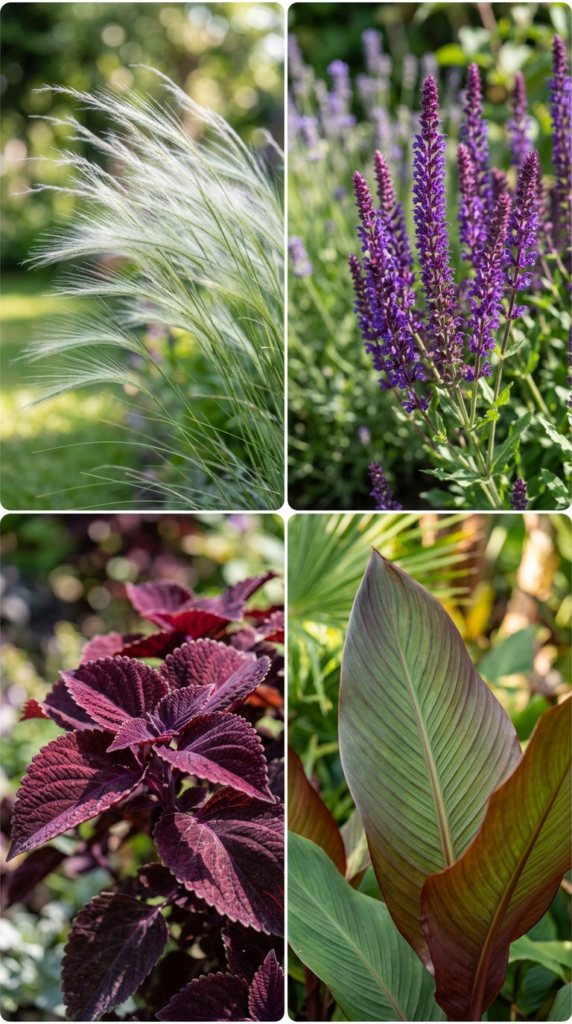
The thriller plant is the star of your container — it’s the tall, dramatic focal point that draws the eye immediately. Choose wisely and your whole arrangement comes to life!
Here are the best thriller options for spring front porch containers:
- Ornamental grasses (like purple fountain grass) — add incredible texture and movement
- Salvia — tall spikes of purple or red blooms that butterflies absolutely love
- Canna lily — tropical-looking, bold leaves that scream drama and confidence
- Dark coleus (tall varieties like ‘Kong’ series) — stunning foliage in deep purples and reds
- Snapdragons — classic spring thrillers with vertical spikes in every color imaginable
- Dracaena spike — the evergreen, architectural stand-by that anchors any combo
The beauty of thriller plants is that even one well-chosen tall plant makes an ordinary container look deliberate and designed.
For the most current variety picks and availability, check the University of Illinois Extension’s spring planting guide.
Your thriller sets the stage — now let’s fill it in beautifully!
Filler Plants That Make Your Containers Look Lush
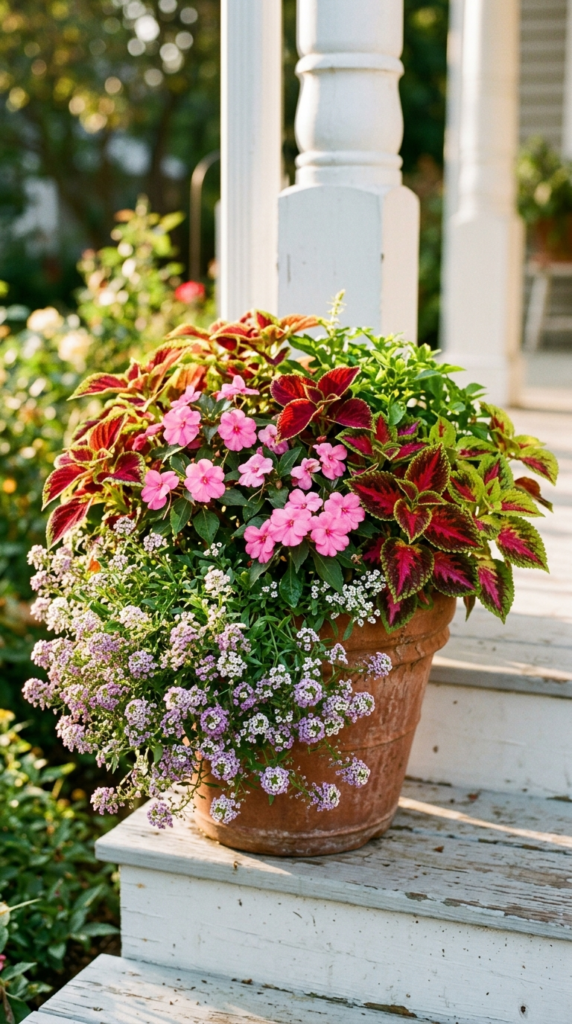
Filler plants are the supporting cast — and honestly, they do a lot of the heavy lifting when it comes to making your containers look generous and full. Don’t skimp here!
The best fillers for spring porch containers include:
- Coleus — available in literally hundreds of color combos, thrives in both sun and shade
- Impatiens — non-stop blooms, great for shadier spots
- Begonias — tough, colorful, and incredibly long-blooming
- Petunias — sun lovers that absolutely explode with color all season
- Dusty miller — silvery foliage that makes every other color pop beside it
- Alyssum — tiny white or purple flowers with a sweet honey scent
Here’s a pro move: combine at least one foliage filler (like coleus or dusty miller) with one flower filler (like petunias or begonias). The contrast in texture and color keeps things interesting from April through June.
The key is choosing fillers that will grow to roughly the same height as the rim of your container — too tall and they compete with your thriller, too short and they get lost.
Browse more filler plant combinations for spring containers to mix and match!
Spiller Plants to Cascade Over the Edge
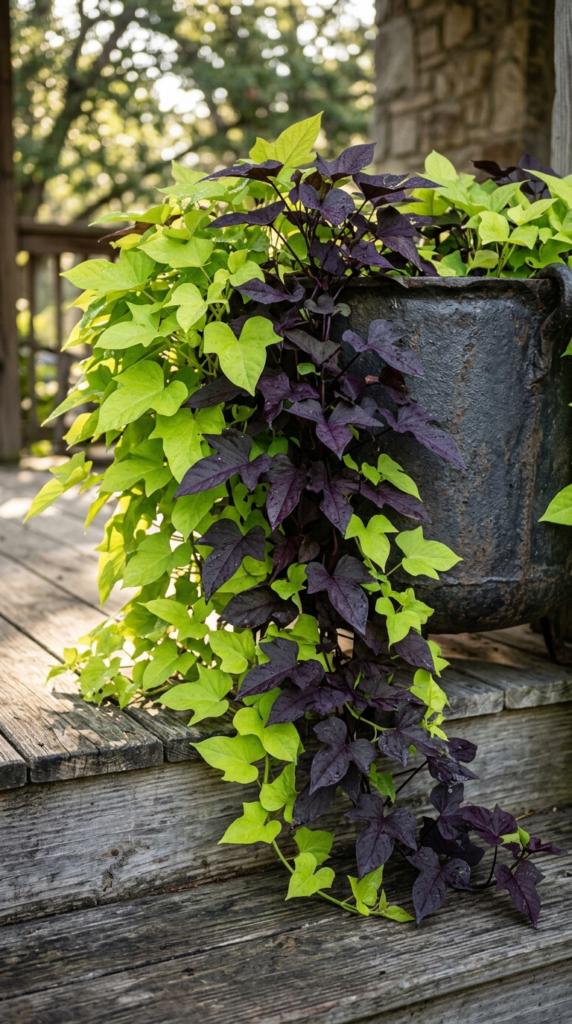
Spiller plants are the finishing touch that makes your container go from “nice” to “wow.” They add movement, soften the hard edges of pots, and create that lush, overflowing look that everyone stops to admire.
Top spiller picks for spring porch containers:
- Sweet potato vine — fast-growing, comes in chartreuse, purple, and bronze — a total game-changer!
- Trailing lobelia — tiny but mighty, cascades in brilliant blue or purple waves
- Creeping Jenny — golden-yellow foliage that loves moisture and adds warmth
- Bacopa — covered in tiny star-shaped flowers, incredibly delicate-looking
- Trailing verbena — colorful flowers on long trailing stems, sun-loving
- Ivy — a classic for a reason; adds an elegant, cottage-garden feel
Talk about a game-changer! Sweet potato vine alone can transform even the most boring container — it grows fast, fills gaps, and creates that magazine-worthy overflow that looks like you really know what you’re doing.
Try combining chartreuse sweet potato vine with deep purple petunias for one of the most striking spring color combos you’ll ever see.
You’ll love how a good spiller finishes off every arrangement!
Best Spring Flowers for Front Porch Containers
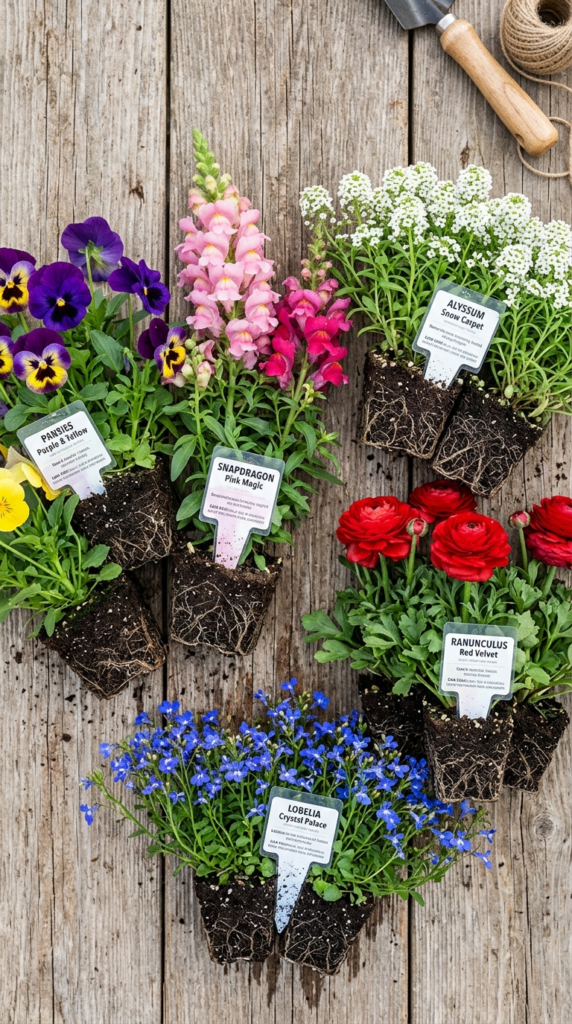
Pretty cool, right? Spring gives us an incredible lineup of cold-tolerant flowers that look spectacular in containers — and many of them can handle a light frost, which means you can get your porch looking great earlier than you think!
The top spring flowers for front porch containers include:
- Pansies — incredibly frost-hardy, cheerful, and one of the first flowers you can plant in early spring
- Snapdragons — vertical spikes of flowers that love cool weather and add real height
- Ranunculus — lush, layered blooms that look almost too beautiful to be real
- Dianthus — spicy-sweet fragrance and long-lasting blooms in pinks and reds
- Calibrachoa (Million Bells) — tiny petunia-like flowers that absolutely smother themselves in blooms
- Violas — like pansies but smaller and even more cold-tolerant
Here’s the deal: many spring flowers actually prefer cooler temperatures. Pansies and snapdragons perform their best when daytime temps are between 45–65°F — making them perfect for that early spring window before summer heat sets in.
If you plant these beauties in late March or early April, you’ll get a full two to three months of stunning color before the heat requires a summer swap-out.
Explore how to transition spring containers to summer blooms when the time comes!
Greenery and Foliage Combos That Steal the Show
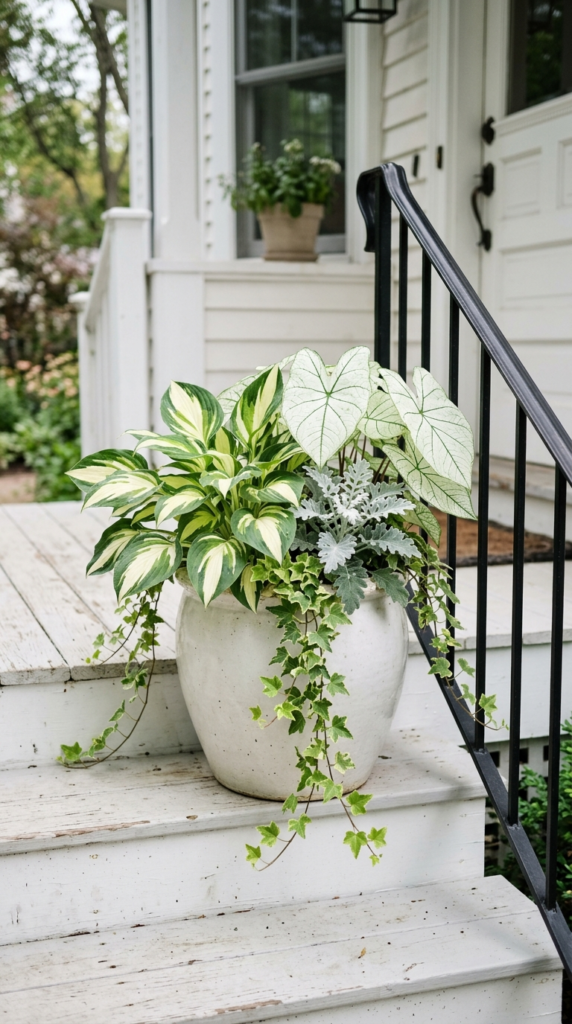
Who says a front porch container needs to be all about flowers? Foliage-forward arrangements are having a major moment right now — and they’re incredibly easy to maintain while looking sophisticated and lush all season.
Some knockout foliage combos to try:
- Caladium + fern + trailing ivy — a classic shaded porch winner with white, green, and deep emerald tones
- Purple coleus + chartreuse sweet potato vine + silver dusty miller — high-contrast and stunning in the sun
- Hosta + coral bells + creeping Jenny — textural heaven in a shady spot
- Variegated snake plant + trailing pothos + black mondo grass — a modern, graphic look for contemporary homes
Foliage plants are honestly much more forgiving than flowers — they don’t drop petals, they don’t go in and out of bloom, and they tend to hold their good looks through heat and humidity far better.
The secret is playing with contrast in leaf shape and color. Pair large, broad leaves with fine, feathery textures. Combine dark with light. Mix matte with glossy. That’s how you create a container that truly looks like art.
Discover more foliage-only container ideas for porches for a low-maintenance but gorgeous look!
Dealing with Shade on Your Porch
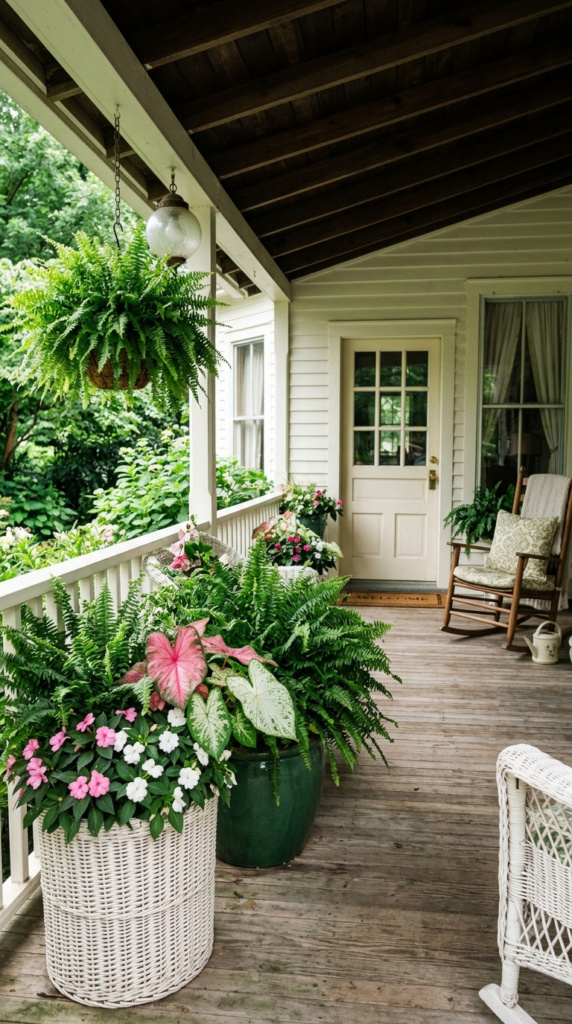
Got a covered or north-facing porch? Don’t stress — a shaded front porch can actually be one of the most lush and beautiful spaces in your whole yard with the right plants!
The key is knowing which plants genuinely love low light, not just “tolerate” it. Here’s your go-to shade lineup:
- Impatiens — the MVP of shade containers, blooms non-stop in almost zero sun
- Caladiums — giant, colorful leaves that absolutely glow in the shade
- Ferns — lush, feathery, and impossibly beautiful; Boston ferns are classic porch plants
- Hostas — bold, architectural foliage that comes in dozens of color variations
- Begonias (wax or tuberous) — shade-tolerant, long-blooming, and incredibly versatile
- Torenia (wishbone flower) — a hidden gem that flowers prolifically even in full shade
Here’s the thing: “shade” doesn’t always mean dark. Most covered porches get bright indirect light, which is actually perfect for a whole range of beautiful plants. The trick is to water more carefully — shaded containers dry out more slowly, so overwatering is a common mistake.
Pair a caladium thriller with impatiens fillers and trailing begonias for a shaded porch combo that honestly looks like something out of a Southern Living spread.
You’ll be amazed what’s possible even without direct sunlight!
Watering and Feeding Your Spring Containers
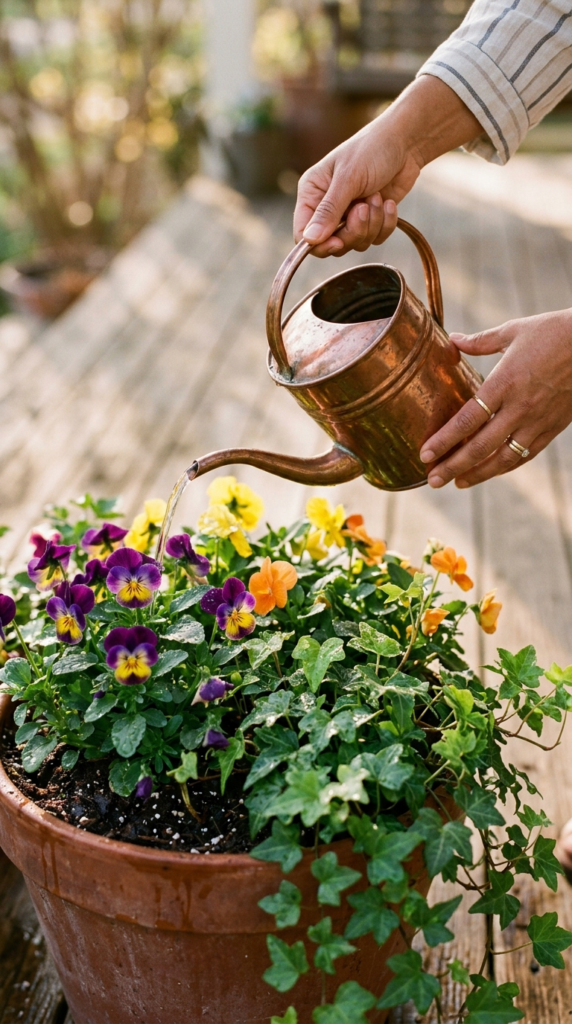
Here’s a truth nobody tells you when you start container gardening: watering is the number one skill that separates thriving containers from struggling ones. Get this right and everything else is easy.
Spring container plants generally need watering when the top inch of soil feels dry. In cool early spring weather, this might be every 2–3 days. As temperatures climb in late spring, you might need to water daily.
Tips to water like a pro:
- Water deeply until it drains from the bottom — shallow watering encourages shallow roots
- Water in the morning so foliage dries before nightfall (prevents fungal issues)
- Use a moisture meter if you’re unsure — they’re inexpensive and incredibly helpful
For feeding, slow-release granular fertilizer mixed into the potting mix at planting time is your best friend. It provides steady nutrition for 3–6 months with zero effort.
Add a liquid fertilizer boost every 2–3 weeks once plants are actively growing — a balanced 10-10-10 fertilizer or a bloom-boosting formula works brilliantly for flowering containers.
The secret is consistency. Miss a watering here or there and your plants will forgive you. Miss a week in July heat and they may not recover. Build a simple routine and stick to it!
Get more detailed watering guidance at The Royal Horticultural Society’s container care page.
Healthy plants are just a consistent routine away — you’ve got this!
Arrangement Tips to Create a Cohesive Porch Look
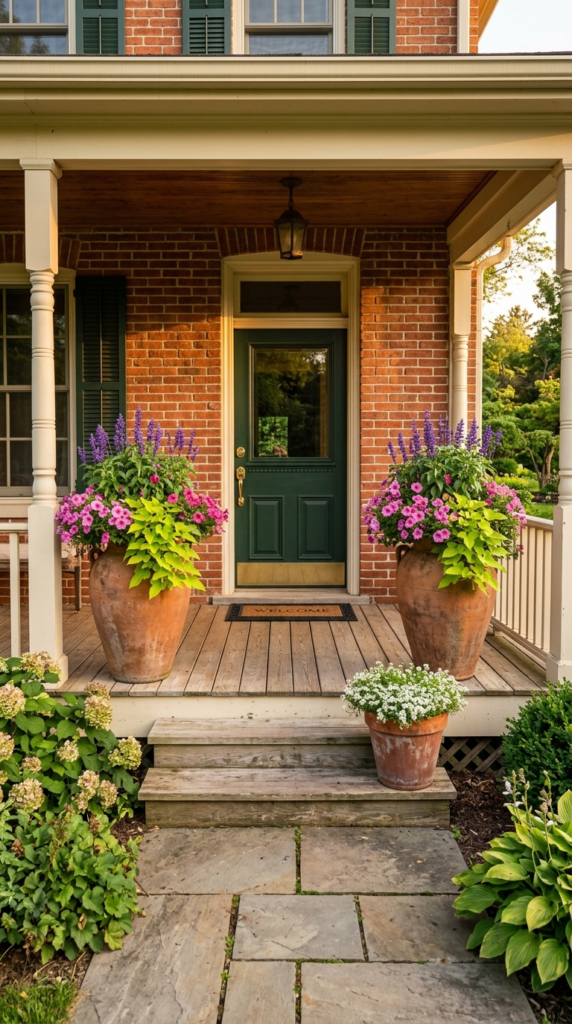
Arranging your containers as a cohesive collection — not just random individual pots — is what takes your porch from “I planted some flowers” to “did a designer do this?!”
Here are the golden rules of porch container arrangement:
- Use odd numbers — groups of 3 or 5 containers always look more natural than even numbers
- Vary the heights — use pot stands, upturned pots, or different-sized containers to create levels
- Flank the door — two matching large containers flanking your front door creates instant symmetry and formality
- Create a journey — lead guests toward the door with containers on each porch step, decreasing in size as they go up
- Repeat colors — use at least one plant color that appears in multiple containers to tie everything together
Talk about a game-changer! Simply placing one container directly on the porch and a second one on a step below it immediately creates the layered, “styled” look you see in beautiful home magazines.
Pro tip: Repeat your thriller plant or a specific flower color across at least two containers. This visual thread makes the whole arrangement feel planned and intentional rather than random.
Check out more porch container arrangement ideas and layouts to plan your perfect setup!
Budget-Friendly Container Ideas That Still Look Amazing
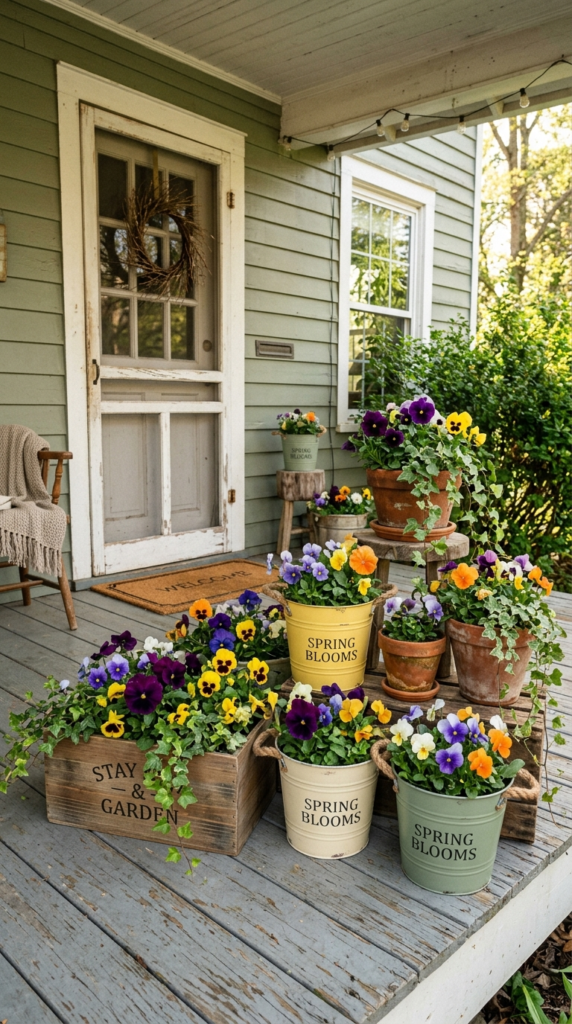
Here’s the deal: you absolutely do not need to spend a fortune to have a jaw-dropping front porch this spring. Budget container gardening is a legit art form and it can look every bit as beautiful as a designer setup.
Smart budget moves for spring porch containers:
- Buy plants in 4-inch pots instead of 1-gallon containers — they’re significantly cheaper and fill in fast
- Use galvanized buckets, wooden crates, or colanders from thrift stores as unexpected and charming planters
- Propagate your own spillers — sweet potato vine and pothos root incredibly easily in a glass of water
- Shop end-of-season sales at your local nursery — you can often grab healthy plants at 50% off
- Grow from seed — pansies, alyssum, and snapdragons are all easy from seed if you start 8–10 weeks before your last frost
Terracotta pots are consistently the best value in the container world. They’re inexpensive, they look gorgeous, they improve with age, and plants genuinely love them because terracotta is porous and breathes well.
A single large thrifted galvanized tub planted with a mix of colorful pansies and trailing ivy can look absolutely stunning — and the whole thing might cost you under $20!
Explore more budget container gardening tips and hacks to make your dollar stretch beautifully.
Beautiful porches don’t require big budgets — just big creativity!
Frequently Asked Questions
When should I start planting spring containers for my front porch?
You can start planting cool-season spring containers 4–6 weeks before your last expected frost date. Pansies, snapdragons, and violas can handle light frosts down to about 28°F, so don’t be afraid to get them out early. For frost-tender plants like sweet potato vine and impatiens, wait until nighttime temperatures are consistently above 50°F.
How many plants do I need for a typical front porch container?
For a 12–14 inch container, plan on 1 thriller, 3–5 fillers, and 2–3 spillers. For larger 16–20 inch pots, you can add an extra filler or two. Planting closer than you think you should is actually fine for containers — they look full immediately and the plants adapt well to shared space.
What potting mix is best for front porch containers?
Always use a high-quality potting mix specifically labeled for containers — never use garden soil, which compacts quickly and doesn’t drain well. Look for mixes that include perlite for drainage and some moisture-retaining material. Adding slow-release fertilizer granules at planting time gives your containers a major head start.
How do I keep my spring containers looking good through the whole season?
The two biggest keys are deadheading (snipping off spent blooms to encourage new ones) and consistent fertilizing. Once plants start to get leggy in late spring, don’t be afraid to cut them back by a third — they’ll bounce back fuller and bushier within a couple of weeks. Also, refresh containers with summer-loving plants as temperatures consistently rise above 75°F.
Can I use spring container arrangements on a small apartment balcony or stoop?
Absolutely! You don’t need a sprawling front porch to create a beautiful spring container garden. Even a single well-planted large container flanking a doorway makes a huge visual impact. On a small stoop, try a tiered plant stand with 3–4 small pots arranged vertically to maximize space while creating that lush, layered look.
A Few Final Thoughts
Your front porch has so much potential, and spring container gardening is genuinely one of the most satisfying ways to unlock it. With the right plant combinations, a cohesive color palette, and a little attention to watering and feeding, you can create a welcoming entryway that makes you smile every single time you pull into the driveway. The thriller, filler, spiller method is your secret weapon — master that one formula and your containers will always look professional and full. Don’t overthink the budget either; some of the most beautiful front porch container gardens are built from thrifted pots and bargain-bin seedlings. Start with what you have, have fun with it, and let your porch personality shine through. Now go make it happen!