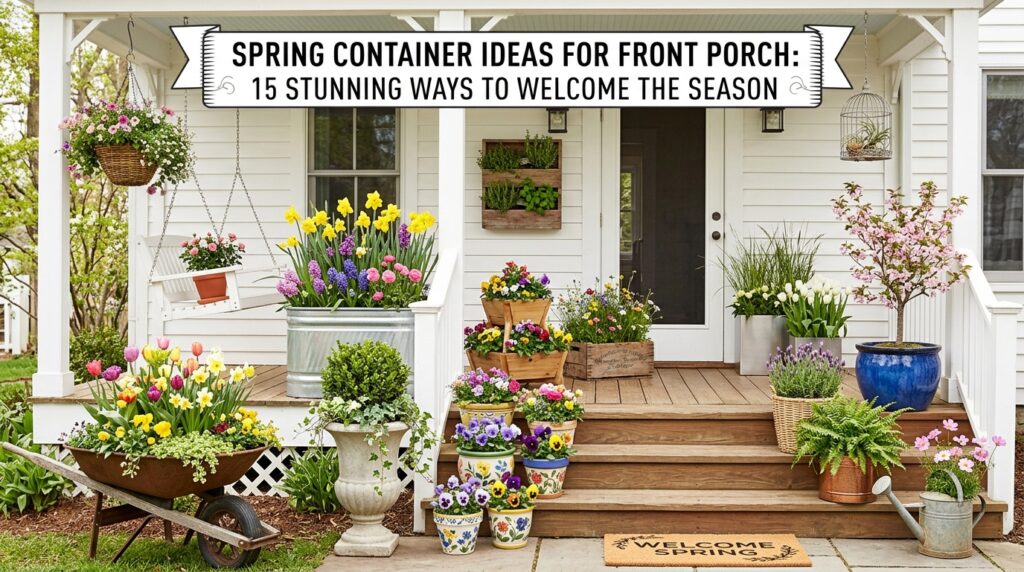
Is your front porch looking a little blah after a long winter? Spring is the perfect time to transform that entrance into something that stops neighbors in their tracks! With the right spring container ideas for your front porch, you can create a gorgeous, welcoming display without spending a fortune or having a huge yard. Ready to dive in?
- At a Glance
- 1. Go Classic with Tulips and Pansies
- 2. Try a Thriller-Filler-Spiller Combo
- 3. Add Drama with Tall Ornamental Grasses
- 4. Mix Edibles and Ornamentals
- 5. Create a Pastel Color Story
- 6. Go Bold with Vibrant Contrast Colors
- 7. Use Tiered Container Arrangements
- 8. Try a Monochromatic White and Green Theme
- 9. Add Fragrance with Herbs and Blooms
- 10. Repurpose Unexpected Containers
- 11. Feature a Focal Point Statement Pot
- 12. Embrace Trailing Vines for Vertical Drama
- Frequently Asked Questions
- A Few Final Thoughts
At a Glance
- Mixing “thriller, filler, and spiller” plants in a single pot is the fastest way to create a professional-looking spring container for your front porch.
- Pairing edible herbs with ornamental flowers gives you beauty and a functional harvest right outside your front door.
- Choosing containers in varying heights and sizes adds visual depth that makes even a small porch look intentional and designed.
- Spring-blooming bulbs like tulips and daffodils can be planted in fall or purchased pre-grown for instant color impact.
- Consistent watering and a slow-release fertilizer at planting time will keep your porch containers looking lush all season long.
1. Go Classic with Tulips and Pansies
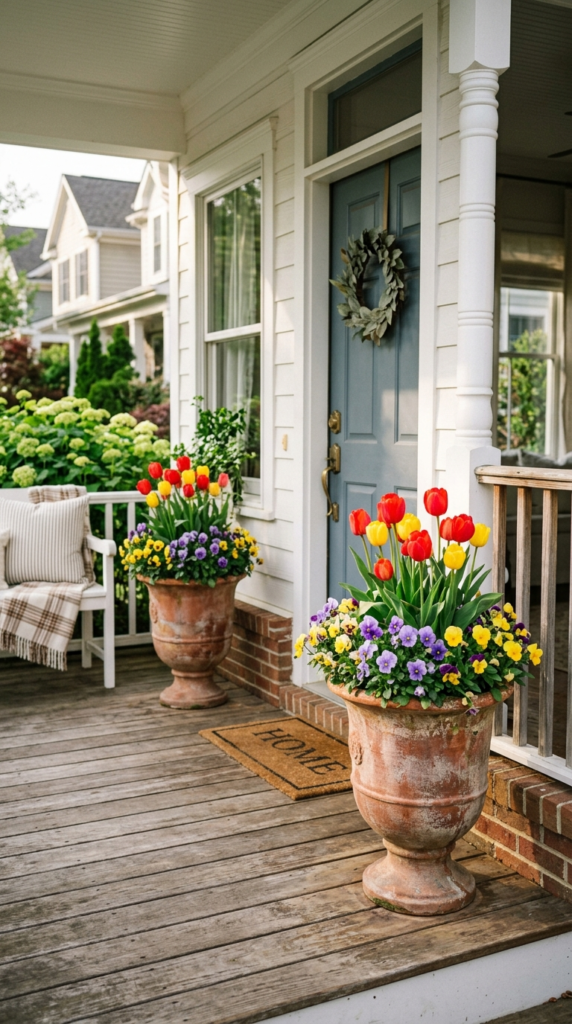
You really can’t go wrong with this combo — it’s a spring classic for a reason! Tulips and pansies are practically made for each other, and they thrive together in containers.
Pansies are cold-tolerant and bloom early, so they’ll fill in beautifully while your tulips are still working their way up. By the time the tulips pop open, you’ve got a full, layered look without doing much extra work.
💡 Pro Tip: Plant tulip bulbs beneath a layer of pansy transplants in the same pot in fall. Come spring, the tulips will push right through — it’s like a built-in surprise!
When choosing container size, go bigger than you think you need. Tulips need depth, so aim for at least 12 inches of soil. A wide, squat pot actually works better than a tall narrow one for this pairing.
For colors, try a purple-and-yellow pansy mix with red tulips for high contrast, or go soft with white tulips and lavender pansies for an elegant, romantic feel.
Check out our guide on how to plant tulip bulbs in containers for step-by-step instructions. For more on pansy care, the University of Minnesota Extension is a fantastic resource.
You’ve totally got this — and it’ll look amazing!
2. Try a Thriller-Filler-Spiller Combo
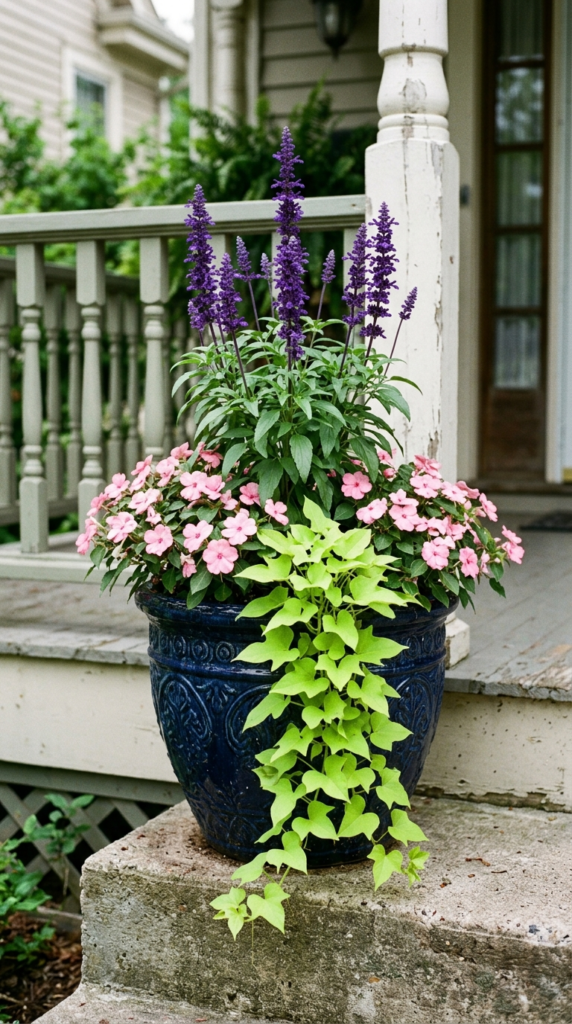
Here’s the deal: the thriller-filler-spiller method is hands-down the best way to design a container that looks like a professional planted it. One tall dramatic plant, one mounding filler, one trailing spiller — done!
The “thriller” creates height and a focal point. Think ornamental grasses, spiky dracaena, salvia, or even a small boxwood ball. It’s your showstopper.
Your “filler” is anything mounding and full — impatiens, petunias, snapdragons, or calibrachoa. These plants bulk up the middle and hide any gaps.
Then the “spiller” trails over the edge and softens the container. Sweet potato vine, bacopa, lobelia, and creeping Jenny are all perfect choices for spring.
| Role | Spring Plant Options |
| Thriller | Salvia, Ornamental Grass, Snapdragon |
| Filler | Pansy, Petunia, Calibrachoa |
| Spiller | Sweet Potato Vine, Lobelia, Creeping Jenny |
Learn more about this design method at The Old Farmer’s Almanac. And see our post on the best spiller plants for containers for more ideas.
Once you nail this formula, every container you make will look stunning!
3. Add Drama with Tall Ornamental Grasses
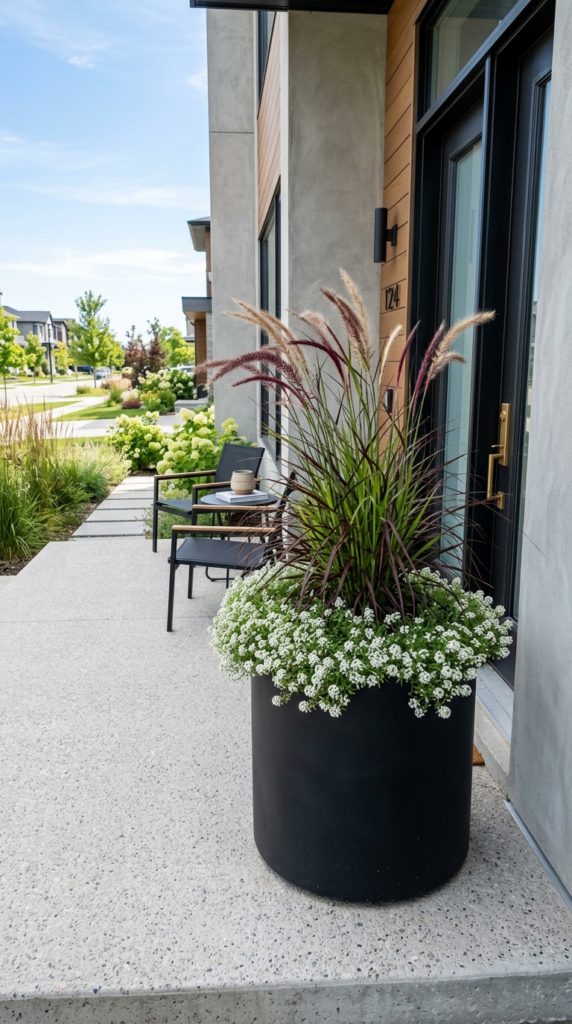
If you want your spring porch containers to have that “wow, who did your landscaping?” vibe, add some height with ornamental grasses. They sway in the breeze and add incredible texture.
Japanese forest grass (Hakonechloa) is gorgeous in shaded porches — it glows golden-green and cascades beautifully. For sunnier spots, try Blue Oat Grass for a cool, silvery-blue statement.
Pair grasses with low, colorful annuals at the base and you’ve instantly got a layered, designed look. The contrast between the fine grass texture and the soft blooms below is just chef’s kiss.
Explore our guide to ornamental grasses in pots for the best varieties. The American Horticultural Society also has excellent plant guides.
Grasses are low-fuss and high-impact — you’ll love them!
4. Mix Edibles and Ornamentals
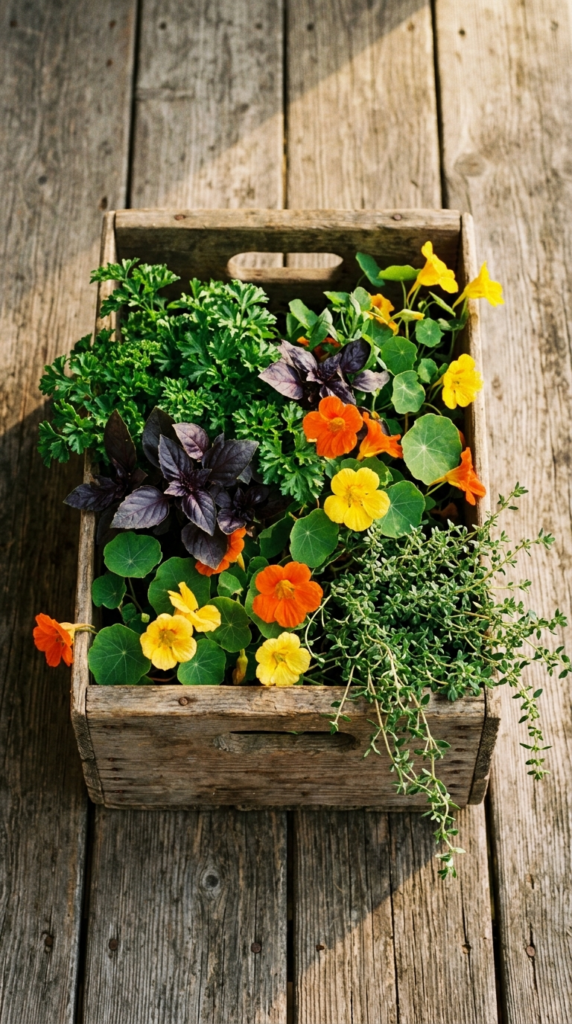
Who says your porch containers have to be just pretty? Mix in some edible herbs and veggies and you’ve got beauty and function in one pot. Talk about a game-changer!
Nasturtiums are an absolute must for this approach — their flowers are edible, they bloom prolifically, and they trail elegantly over the sides of containers. Plant them with curly parsley, chives, or lemon thyme for a charming, cottage-y vibe.
💡 Pro Tip: Purple basil isn’t just tasty — it’s stunning. Its deep wine-colored leaves look gorgeous against green herbs and bright flowers, making it one of the best ornamental edibles for spring porch containers.
Lettuces with frilly, colorful leaves like ‘Flashy Trout’s Back’ or ‘Red Sails’ also pull double duty as ornamental fillers. You’ll be snipping salad greens while your neighbors wonder what your secret is!
Explore edible container garden recipes for more combos. For food safety in edible container gardens, check out Cornell Cooperative Extension.
Fresh, beautiful, and delicious — what more could you want?
5. Create a Pastel Color Story
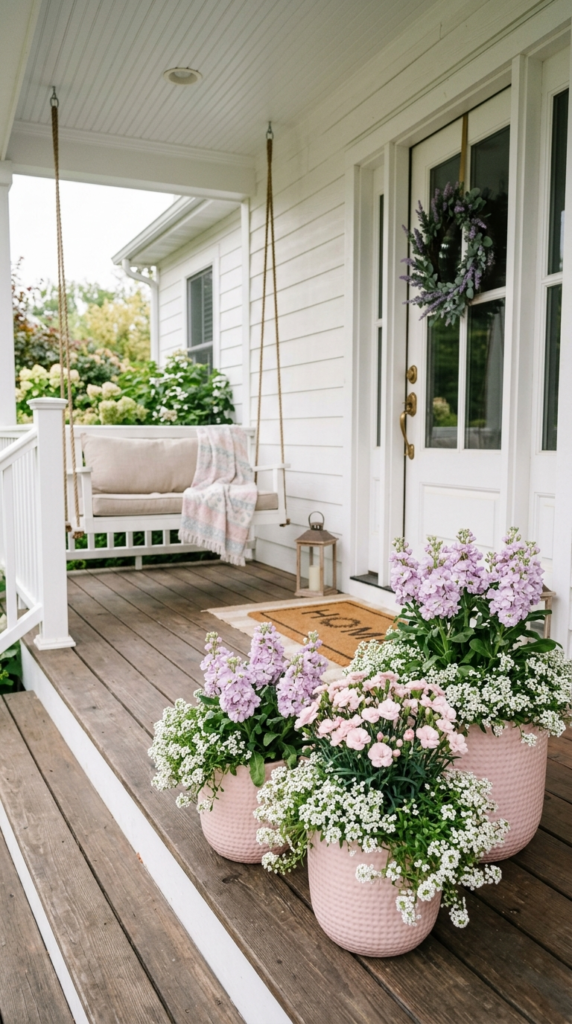
Spring basically invented the pastel palette, and your front porch container garden can lean all the way into it. Think blush, lavender, soft yellow, and white — it’s romantic and effortlessly fresh.
Stock flowers are one of the most underused spring plants, and that’s a shame. They smell incredible and come in gorgeous pastel shades. Combine them with dianthus, white alyssum, and soft pink calibrachoa for a dreamy, coordinated look.
The secret is to stay within a 3-color palette and repeat it across multiple pots. Matching or complementary containers in white, cream, or muted tones pull everything together.
Check out our spring pastel container planting ideas for more inspo.
This look is so soft and stunning it might actually stop traffic!
6. Go Bold with Vibrant Contrast Colors
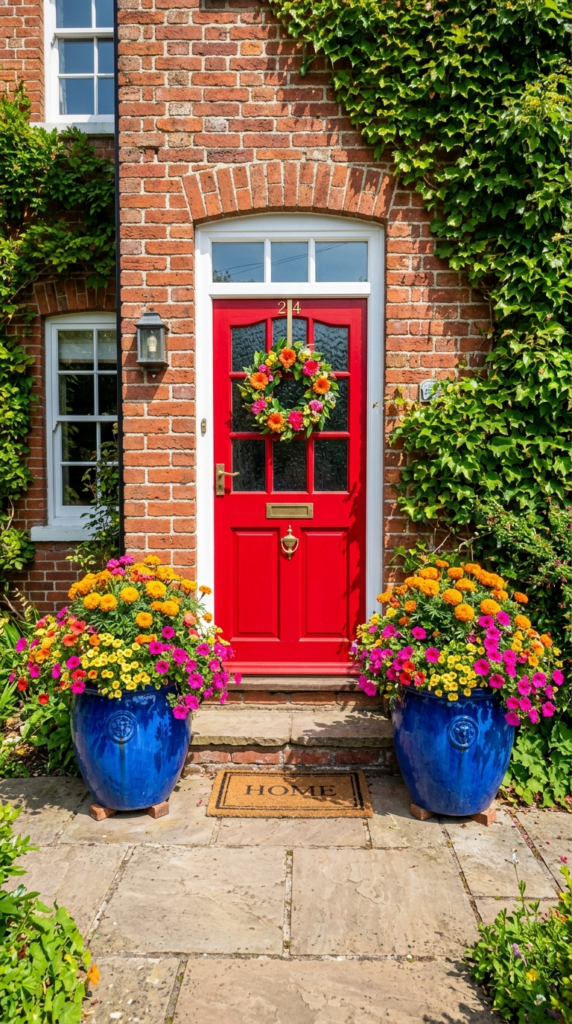
Not a pastels person? Totally valid! Bold, contrasting color combinations make a front porch look festive, confident, and full of personality.
Try orange and cobalt blue — a classic complementary pairing that pops like crazy. Plant orange marigolds or calendula in cobalt blue glazed pots for an almost Mediterranean feel.
Or go with hot pink petunias + lime green sweet potato vine in a charcoal pot. The contrast is electric and incredibly eye-catching from the street.
💡 Pro Tip: When going bold with colors, keep your container material neutral — matte black, charcoal gray, or stone finishes let the plants do the talking without visual overwhelm.
See our roundup of bold color combos for container gardens and get inspired. Better Homes & Gardens also has excellent seasonal color guides.
Be bold, be bright, be you!
7. Use Tiered Container Arrangements
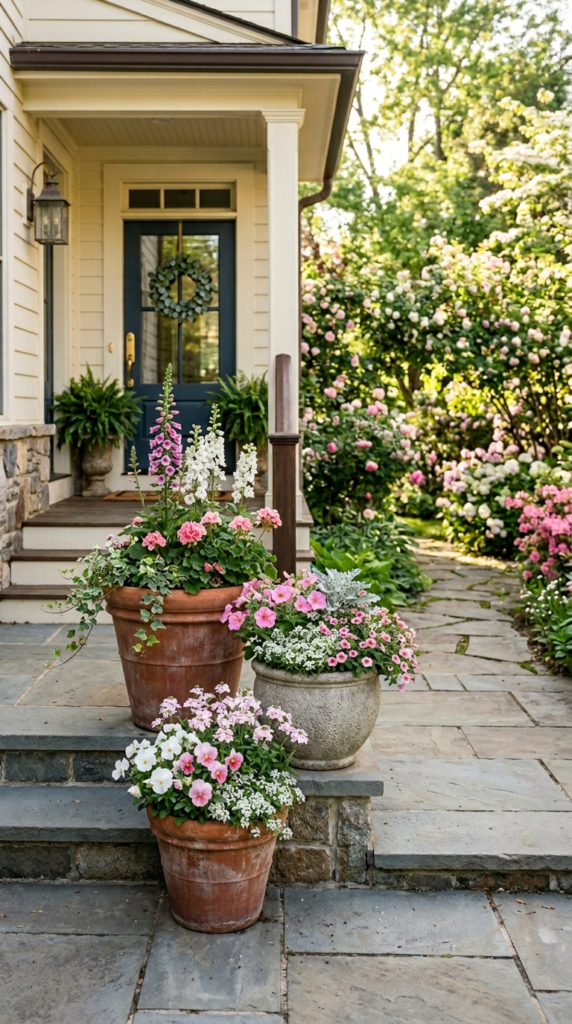
Here’s the thing: even the most beautiful single pot can look lonely on a porch. Grouping containers in varying heights creates instant visual depth and makes your entrance look intentional.
The classic approach is a trio arrangement — one tall pot, one medium, one small — staggered like steps. Fill each with plants that share a color story but vary in texture and form.
You can use pot risers, upturned pots, or even a wooden crate to lift shorter containers. Visual layering works the same way in containers as it does in landscape design — it tricks the eye into seeing more.
| Pot Size | Role | Plant Suggestion |
| Large (18″+) | Anchor/backdrop | Ornamental grass, tall salvia |
| Medium (12–16″) | Mid-layer | Petunias, snapdragons |
| Small (6–10″) | Front accent | Pansies, alyssum, succulents |
Get the full scoop in our container arrangement ideas for porches.
Layering is literally the easiest way to look like a pro — trust the process!
8. Try a Monochromatic White and Green Theme
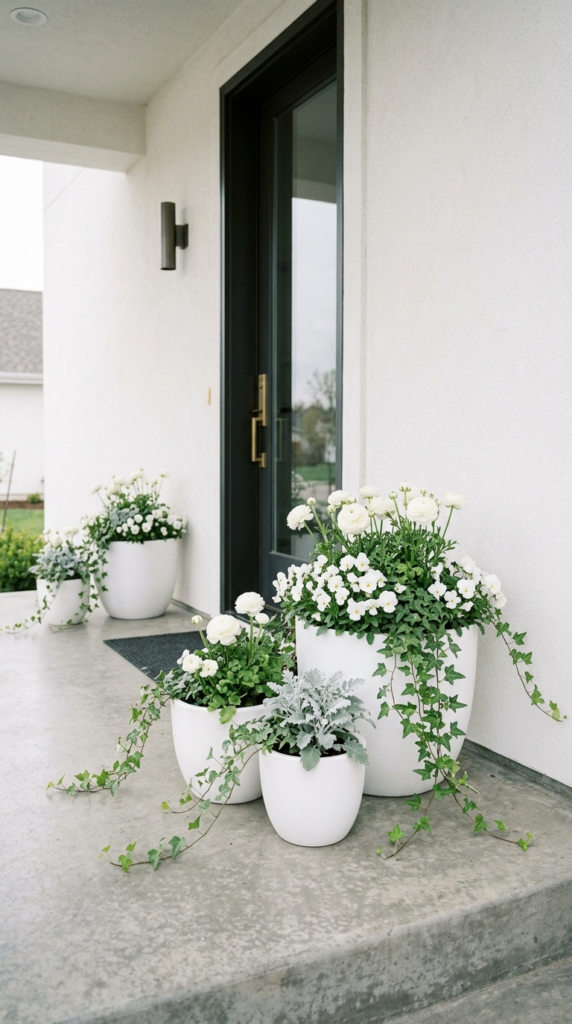
Sometimes less really is more. A white and green monochromatic theme feels clean, sophisticated, and timeless — and it works with literally any house color or architectural style.
Combine white ranunculus, white violas, white alyssum, and silver dusty miller for a cool, frosted spring look. Tuck in some trailing ivy or creeping Jenny for the green element.
This palette also photographs beautifully (hello, curb appeal!) and feels effortlessly elegant without trying too hard. It’s the gardening equivalent of a crisp white shirt.
Browse our white garden container ideas for more inspiration.
Simple, stunning, and always in style!
9. Add Fragrance with Herbs and Blooms
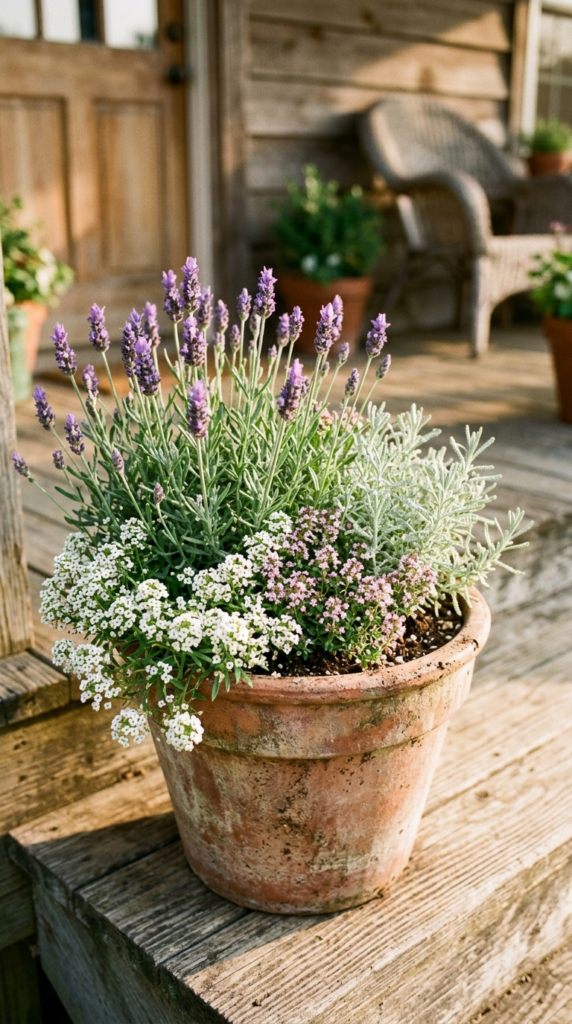
Your front porch spring containers don’t just have to look good — they can smell incredible too! Fragrant plants make arriving home an experience, not just an arrival.
Lavender is the obvious star, but don’t overlook sweet alyssum (honey-scented and totally charming), flowering thyme, or heliotrope with its vanilla-like fragrance. Mix these in a pot near your door and every time the breeze picks up, you’ll smile.
💡 Pro Tip: Place fragrant containers right next to where people pause — beside the door, near steps, or along the path. You want people to brush against the plants as they walk by!
Try pairing lavender with low-growing alyssum and a trailing rosemary for a fully aromatic container that also looks gorgeous. Bonus: most of these are drought-tolerant once established.
See our guide on fragrant plants for container gardens and the National Garden Bureau’s plant guides for more fragrant picks.
Your porch will smell as good as it looks!
10. Repurpose Unexpected Containers
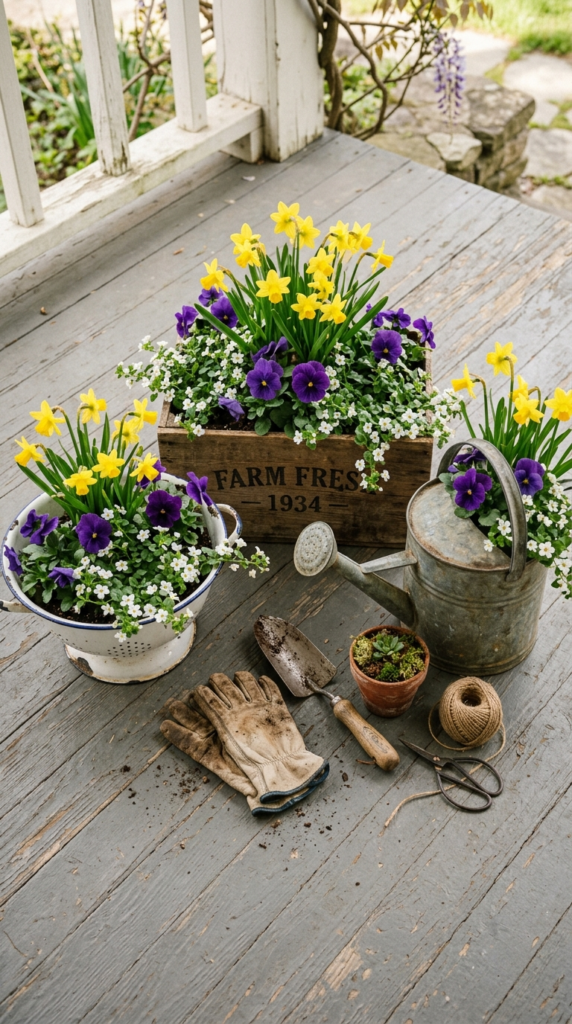
Who says you need to buy fancy pots? Some of the most charming spring container ideas for front porches use objects you already own — or can snag for next to nothing at a thrift store!
Galvanized watering cans, old wooden crates, vintage colanders, enamel buckets — all of these make fantastic planters. Just drill a few drainage holes in the bottom and you’re good to go.
Pretty cool, right? The mix of quirky containers adds personality and tells a story about who lives there. It’s way more interesting than a row of matching plastic pots.
Browse our creative DIY container ideas for more repurposing inspiration.
Your unique style is exactly what your porch needs!
11. Feature a Focal Point Statement Pot
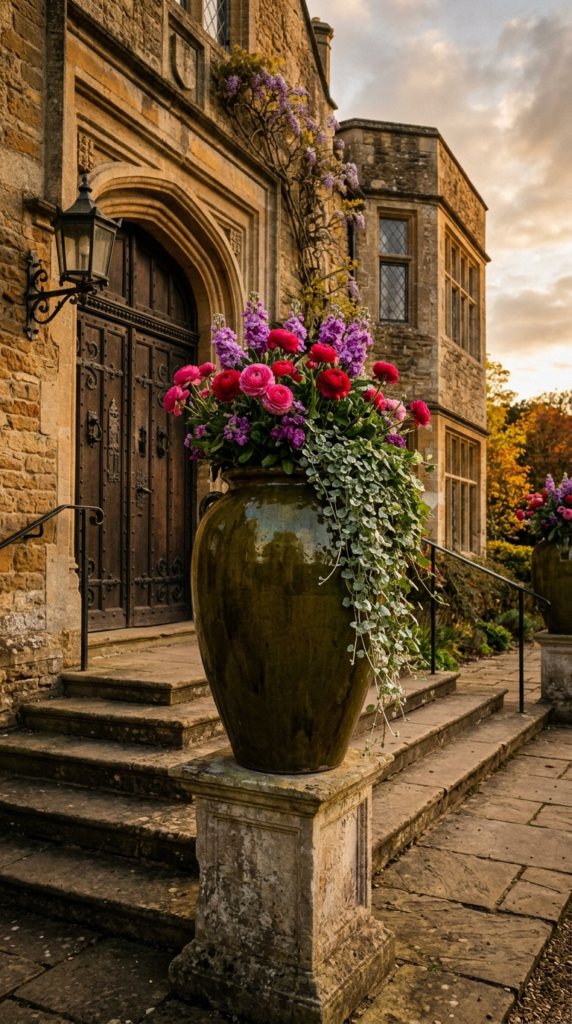
Sometimes you want one showstopping statement piece instead of a collection of smaller pots. A single oversized, dramatic container can be more impactful than anything else.
Choose a large, high-quality pot — a tall urn, an oversized glazed ceramic, or even a big wooden half-barrel. This is your anchor piece, your crown jewel. Go big or go home!
Fill it to overflowing with a mix of heights and textures: a tall spiky element, mounding blooms, and a cascading trailer. Make it lush. Don’t be shy with the plants.
💡 Pro Tip: Elevating your statement pot on a plinth, pedestal, or even just a couple of bricks lifts it visually and makes it feel even more intentional and architectural.
See container gardening ideas for statement planters for size and style tips.
One perfect pot can absolutely transform your whole porch — go for it!
12. Embrace Trailing Vines for Vertical Drama
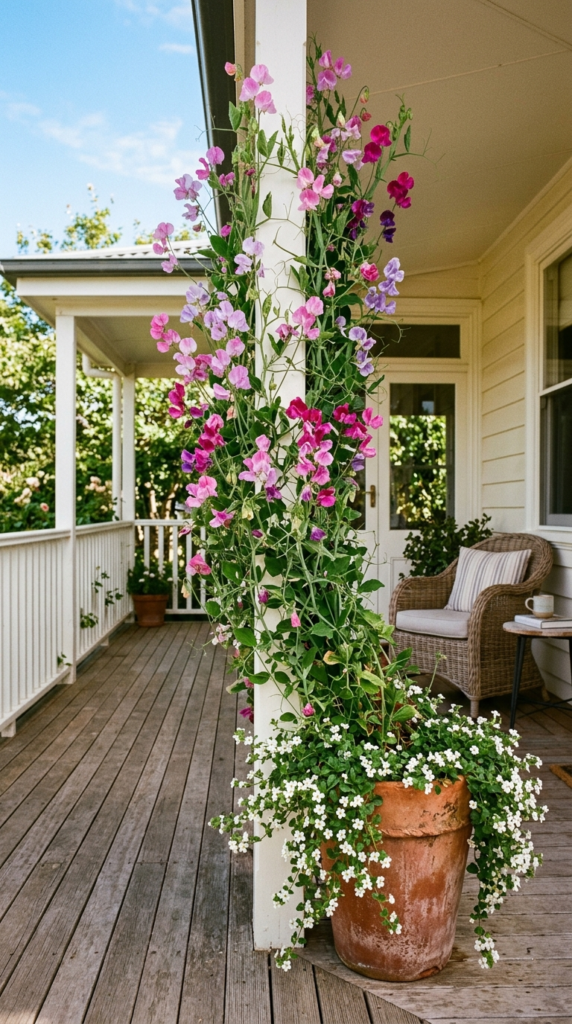
Don’t forget to look up! Trailing and climbing vines grown in containers can take your porch vertical, adding drama and lush greenery that makes the whole space feel like a secret garden.
Sweet peas are the ultimate spring climbing plant — gorgeous, fragrant, and fast-growing. Plant them in a deep pot at the base of a porch column or trellis and watch them take off. Morning glories, black-eyed Susan vine, and climbing nasturtiums work beautifully too.
Even non-climbing trailers like English ivy, bacopa, or string of pearls spilling from hanging containers or elevated pots add that lush, overgrown look that feels so romantic in spring.
Check our guide on climbing plants for porch containers and visit Fine Gardening for detailed growing guides on sweet peas.
Go vertical and watch your porch come absolutely alive!
Frequently Asked Questions
What are the best flowers for spring container gardens on a front porch?
Pansies, tulips, snapdragons, calibrachoa, dianthus, and sweet alyssum are all excellent choices. They’re cold-tolerant, colorful, and widely available at garden centers from late winter through spring. Mixing a few varieties gives you the best visual impact.
How often should I water my spring porch containers?
Most spring containers need watering every 1–2 days, especially once temperatures warm up. Stick your finger about an inch into the soil — if it’s dry, water thoroughly until it drains from the bottom. Adding a slow-release fertilizer at planting time reduces how much extra feeding you’ll need to do.
Can I use spring container ideas for a shaded front porch?
Absolutely! For shaded porches, reach for impatiens, begonias, ferns, coleus, and astilbe. Japanese forest grass is also stunning in shade and adds amazing texture. Many herbs like mint and parsley also do well in partial shade.
What size containers work best for a front porch?
For the most impactful look, go bigger than you think you need. A 16–20 inch pot as your main feature with one or two 10–12 inch accent pots creates a nice arrangement. Larger containers also retain moisture better and give plant roots more room to thrive.
How do I keep my spring porch containers looking good all season?
Deadhead spent blooms regularly to encourage reblooming, fertilize every 2–3 weeks with a balanced liquid fertilizer, and replace any plants that fade as the season warms. By late spring you can start swapping cool-season plants like pansies for warm-season annuals like petunias and marigolds.
A Few Final Thoughts
Spring container ideas for your front porch are really about one thing: creating a space that makes you (and everyone who visits) smile. Whether you go bold and dramatic with jewel-tone colors and statement pots, or soft and romantic with pastels and fragrant herbs, there’s no wrong way to do this. The key is to have fun with it, experiment, and not stress about perfection. Your front porch is your canvas, and spring is the very best time to paint it with flowers. Now go make it happen!