Did you know your home could be filled with gorgeous, fragrant blooms even in the middle of January? Most people think flowering is a spring and summer thing — but with the right winter flowering houseplants, your indoor space can be just as colorful and alive as any summer garden! The trick isn’t luck — it’s knowing exactly what each plant needs to keep those blooms coming through the coldest, darkest months. Ready to find out?
At a Glance
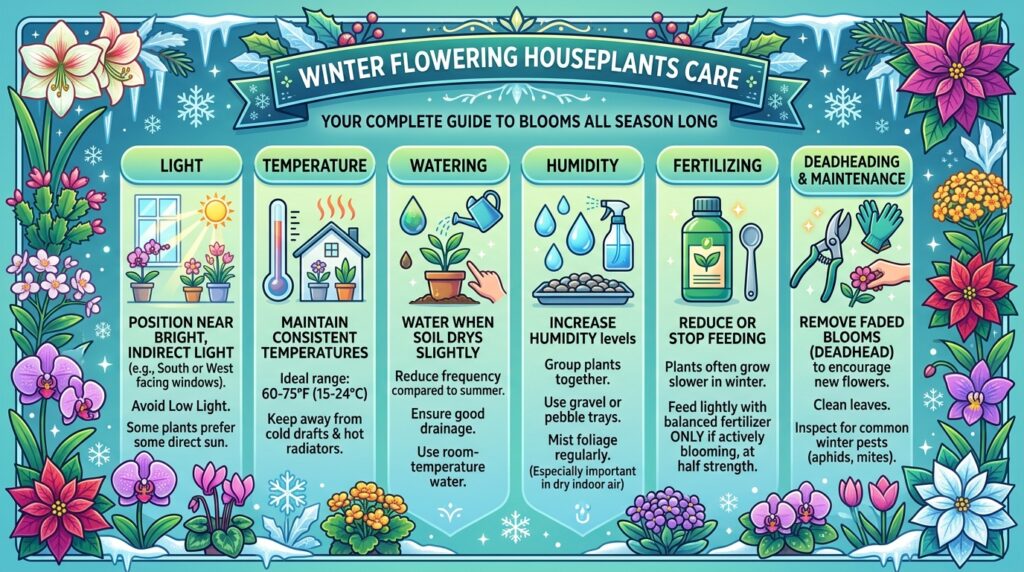
- Winter flowering houseplants have specific light, temperature, and humidity needs that differ from their summer care — adjusting your routine seasonally is the key to keeping blooms going strong.
- Most winter-blooming plants prefer cooler room temperatures than you might expect — keeping them away from radiators and heating vents significantly extends bloom time.
- Watering frequency should be reduced in winter for most flowering houseplants, but the soil should never be allowed to completely dry out, since active blooming requires consistent moisture.
- High-phosphorus fertilizer applied in late fall encourages bud set and extended blooming in plants like African violets, anthuriums, and kalanchoe through winter.
- Deadheading — removing spent flowers promptly — is one of the single most effective things you can do to keep winter flowering plants producing new blooms continuously.
1. Understanding Why Winter Flowering Houseplants Behave Differently
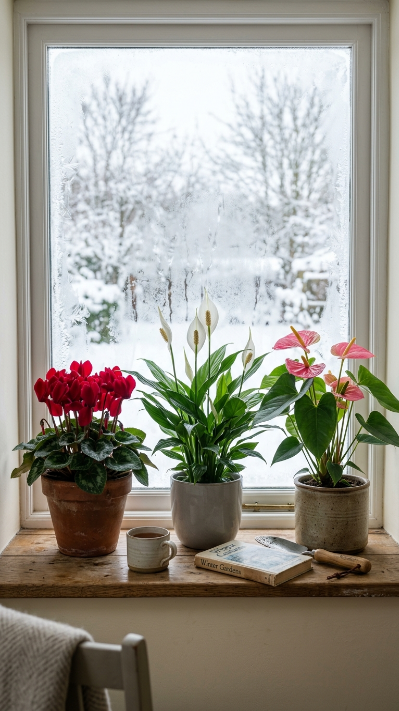
Here’s the thing most plant lovers miss: winter flowering houseplants aren’t just regular plants with flowers — they have fundamentally different seasonal rhythms that require a whole different approach to care. Understanding this is the game-changer that separates thriving winter bloomers from disappointing ones!
Many winter-blooming plants evolved in climates where the colder, shorter days of winter are actually their cue to flower. Cyclamen, Christmas cactus, and paperwhite narcissus are all triggered by exactly the conditions your house experiences in winter — cool temperatures, long nights, and lower light intensity.
This means that the instinct to “help” these plants by placing them in warm sunny spots or bumping up watering and feeding is often exactly backwards. The secret is working with each plant’s natural biology rather than against it.
Tropical winter bloomers like anthurium and African violets have different needs — they flower in winter because your consistently warm, sheltered home mimics their tropical origin all year round. For these, the challenge is compensating for reduced light and dry heating-season air, not mimicking cool seasons.
Knowing which category your plant falls into before you start adjusting its care is the most important first step of all!
Learn more at our guide to understanding houseplant seasonal cycles and care. The Royal Horticultural Society also has excellent plant-specific guidance.
Once you understand the why, the care becomes so much more intuitive!
2. Light Requirements for Winter Flowering Houseplants
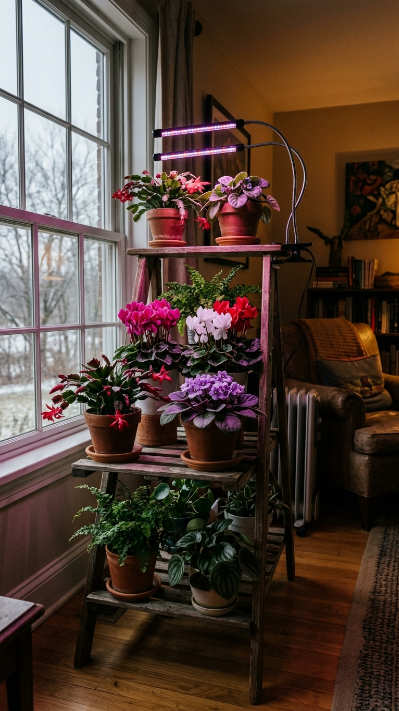
Low winter light is the single biggest challenge for flowering houseplants indoors — and it’s the number one reason plants stop blooming despite otherwise good care. The days get short, the sun angle drops, and even a south-facing window delivers a fraction of summer’s light intensity.
For tropical winter bloomers like anthuriums, African violets, and kalanchoe, the solution is straightforward: move plants closer to your brightest window — ideally south or east facing — and supplement with a full-spectrum LED grow light for 12–14 hours per day. This one change transforms winter blooming results dramatically.
💡 Grow lights don’t need to be expensive to be effective. A simple clip-on or standing LED grow light in the 5000–6500K color spectrum costs as little as $20–30 and can make a staggering difference to flowering houseplants through winter’s darkest weeks.
For cool-season bloomers like cyclamen, the light equation is different — they actually prefer the softer, indirect light of a bright windowsill in winter rather than intense supplemental lighting. Bright but diffused natural light is their sweet spot.
A helpful guideline:
| Plant Type | Ideal Winter Light | Grow Light Needed? |
| Anthurium | Bright indirect, 6+ hours | Yes, if window light is limited |
| African Violet | Bright indirect, 12–14 hrs | Highly recommended |
| Cyclamen | Bright indirect natural light | Usually not necessary |
| Christmas Cactus | Bright indirect, shorter days | No — long nights trigger blooms |
| Kalanchoe | Bright direct or indirect | Yes, in low-light rooms |
Check out our complete guide to using grow lights for winter flowering houseplants.
Getting the light right is truly half the battle — you’ve totally got this!
3. Watering Winter Flowering Plants Without Overwatering
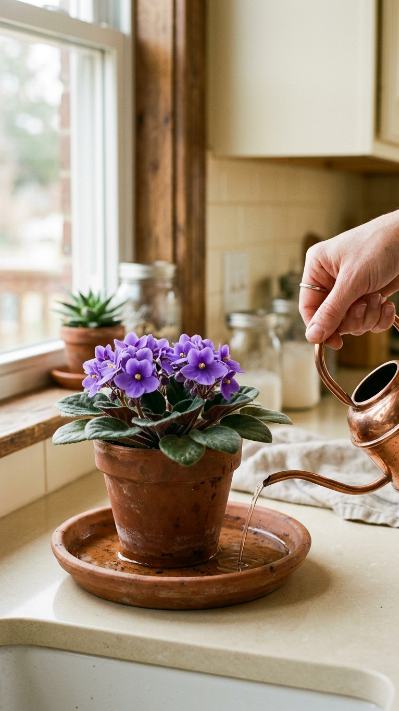
Watering is where most people accidentally sabotage their winter flowering houseplants — and the mistake is almost always too much, not too little. Here’s the deal: flowering takes energy, but soggy soil in cold months is a death sentence for most blooming plants.
The general rule for winter watering is to water less frequently but water thoroughly when you do. Rather than a little water every few days, allow the soil to partially dry between waterings and then water until it drains completely from the bottom. This encourages healthy deep root growth and prevents the stagnant wet soil that causes root rot in cool indoor temperatures.
Actively blooming plants do need more consistent moisture than fully dormant ones — the key is finding the sweet spot between “moist” and “wet.” For most flowering houseplants, the top half inch to inch of soil should be the trigger: when it feels dry to the touch, water; if it’s still damp, wait.
💡 Empty saucers promptly after watering — letting pots sit in standing water is the fastest route to root rot in winter. Blooming plants have enough stress adapting to lower light without adding soggy feet to the mix.
Water temperature matters more in winter than most people realize. Cold tap water can shock tropical plants and sometimes causes brown spotting on leaves (especially African violets). Always use room-temperature water — just leaving a watering can filled and sitting out overnight does the trick.
Explore our post on watering houseplants in winter — the complete guide.
Thoughtful watering is the quiet secret to spectacular winter blooms!
4. Humidity and Temperature — The Hidden Keys to Winter Blooms
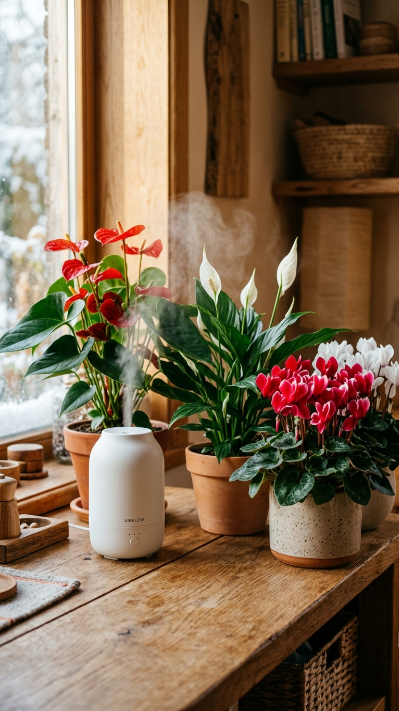
Heating systems are quietly making your home miserable for flowering houseplants — and most plant lovers have no idea! Forced-air heating and radiators drop indoor humidity to levels comparable to desert conditions, stressing tropical plants and shortening bloom times dramatically.
Ideal humidity for most winter flowering houseplants sits between 40–60%. Most heated homes in winter drop to 20–30% — way too dry for tropical bloomers like anthuriums, African violets, and peace lilies. A small ultrasonic humidifier near your plants is one of the most impactful things you can add to your winter plant care setup.
If a humidifier isn’t an option, grouping plants together helps create a shared microclimate with slightly higher humidity. A pebble tray with water under the pot also raises humidity around the plant as the water slowly evaporates — just make sure the pot sits above the waterline, not in it.
Temperature is equally important — and the right temperature varies wildly by plant:
- Cyclamen: prefers 50–65°F (10–18°C) — cooler rooms are ideal!
- Anthurium: prefers 65–80°F (18–27°C) — keep warm and away from drafts
- African Violet: prefers 65–75°F (18–24°C) — consistent warmth, no cold windows
- Christmas Cactus: needs 45–55°F (7–13°C) nights in fall to set buds, then warmer to bloom
- Kalanchoe: prefers 60–85°F (15–29°C) — adaptable but hates freezing drafts
Cold drafts from windows are as damaging as dry heat — keep tropical bloomers a few inches back from the glass on cold winter nights.
See our guide on controlling humidity and temperature for indoor plants in winter. The University of Vermont Extension has great resources on houseplant environmental needs.
Nailing temperature and humidity is the upgrade that transforms your winter blooming game!
5. Winter Flowering Houseplants Care for Cyclamen
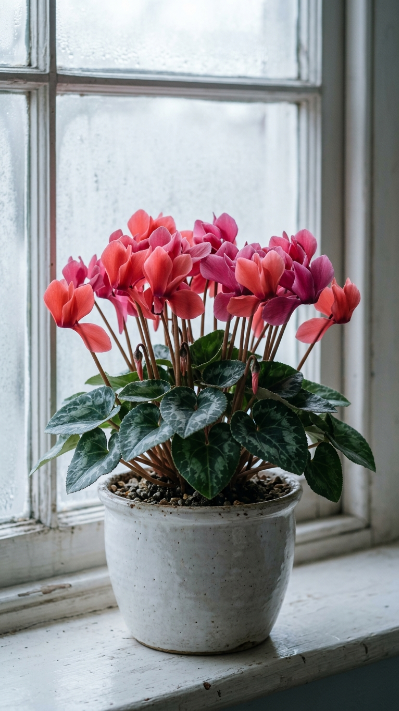
Cyclamen is arguably the star of winter flowering houseplants — those intricate, swept-back blooms in coral, pink, red, white, and magenta are absolutely breathtaking, and a healthy cyclamen can bloom for three to four months straight through the heart of winter!
The most important thing to understand about cyclamen care in winter is that they are cool-season plants that actively prefer temperatures most people would find chilly. Keep your cyclamen in a room that stays 50–65°F (10–18°C) — a cool bedroom, an unheated sunroom, or a bright but chilly entryway is perfect.
💡 Always water cyclamen from below. Fill the saucer with water and let the plant drink for 20–30 minutes, then discard any remaining water. Water on the leaves, crown, or tuber causes the rot that kills cyclamen quickly — bottom watering completely eliminates this risk.
Deadhead cyclamen by grasping the spent flower stem at its base and giving it a firm twist-and-pull (not a cut) — this removes the entire stem cleanly without leaving a rotting stub. Do this every few days to keep new buds coming continuously.
When your cyclamen finishes blooming, let it go dormant in a cool, dry spot rather than throwing it out. Store the pot on its side in a cool location from May to August, then repot into fresh soil in late summer. With this treatment, your cyclamen can rebloom for years!
Browse our complete cyclamen care guide for winter blooming and beyond.
Three to four months of extraordinary blooms — cyclamen is completely worth the extra attention!
6. Caring for Christmas Cactus Through the Bloom Season
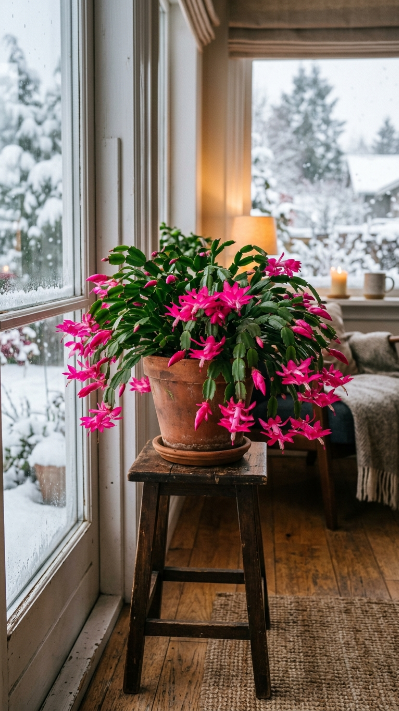
Christmas cactus is one of the most rewarding winter flowering houseplants to care for because once you understand its simple trigger system, you can reliably produce gorgeous blooms every single year — for decades!
The key to Christmas cactus blooming is the combination of cool temperatures and long uninterrupted nights in fall. Starting about six weeks before you want blooms, keep your plant in a space that stays around 50–55°F (10–13°C) at night and give it 12–14 hours of complete darkness. These two signals together tell the plant it’s time to set buds.
Once buds appear, you can move it back to a warmer spot for display — but keep it away from radiators and heating vents, which cause bud drop. Consistent conditions are key during bud development; moving the plant around or letting it dry out too much can cause buds to abort.
Watering during bloom season is more generous than in summer — Christmas cactus is actively growing and blooming and needs consistent moisture. Water when the top inch of soil is dry, and never let it sit in water.
After blooming ends, ease off on watering and give the plant a rest period before the next fall trigger cycle. With proper care, Christmas cactus plants can live 20–30 years and become treasured family heirlooms — take good care of yours!
Read our full post on how to get Christmas cactus to rebloom every year.
Decades of holiday blooms from one plant — the investment absolutely pays off!
7. Anthurium Care in Winter — Keeping Those Waxy Blooms Coming
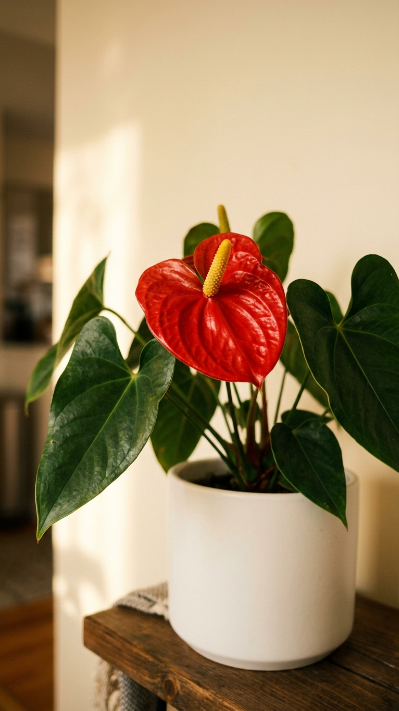
Anthurium blooms are something else — those glossy, lacquered spathes look almost too perfect to be real, and the good news is that with the right winter care, they just keep producing new ones month after month. This plant truly earns its place in your collection!
The biggest winter challenge for anthurium is dry heating-season air. Anthuriums are tropical plants that love humidity, and the 20–30% humidity typical of heated winter homes stresses them significantly — causing brown leaf tips, shorter bloom times, and slower growth.
💡 Place your anthurium on a pebble tray filled with water, or run a humidifier nearby. Aim for 50–60% humidity around the plant. This single change can extend individual bloom longevity from a few weeks to two months or more.
Light is the other winter challenge — anthuriums need bright indirect light to keep producing blooms. If your winter light is limited, supplementing with a grow light for 12–14 hours daily makes an enormous difference. Position it within 12–18 inches of the plant for best results.
Water anthuriums when the top inch of soil feels dry — don’t let them dry out completely, but don’t let them sit in soggy soil either. Use room-temperature filtered water if possible; anthuriums can be sensitive to the fluoride and chlorine in tap water, which sometimes causes leaf browning.
Explore our care guide at anthurium houseplant care for all seasons.
Consistent care pays off with month after month of those stunning waxy blooms!
8. African Violet Care — Year-Round Blooming Through Winter
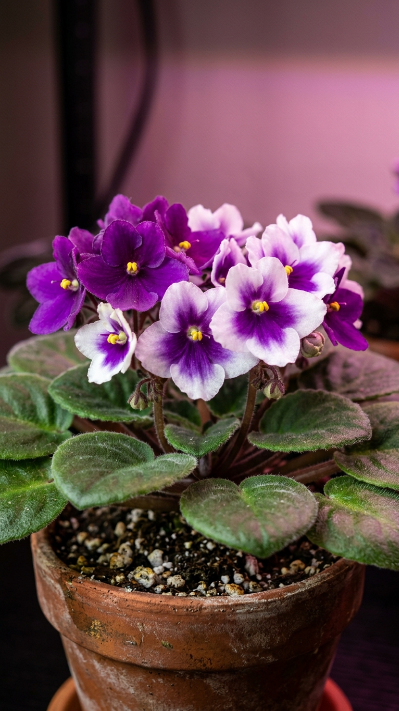
African violets (Saintpaulia) are one of the only houseplants that can bloom essentially year-round — including straight through winter — making them absolute legends in the world of winter flowering houseplant care. The trick is giving them consistent, specific conditions they adore!
Here’s the deal: African violets are remarkably consistent performers when their few non-negotiable needs are met. They need bright indirect light for 12–14 hours (a grow light works fantastically here), consistent warmth between 65–75°F (18–24°C), and bottom-watering with room-temperature water. Meet those needs and they bloom almost continuously.
Never get water on African violet leaves — the fuzzy leaves are prone to spotting and rot when water sits on them in cool conditions. Always water from below by filling the saucer and allowing the pot to absorb upward, then discarding remaining water after 30 minutes.
Feeding African violets with a dedicated high-phosphorus African violet fertilizer (look for formulas like 7-9-5 or similar with higher middle number) every two to four weeks encourages continuous bud production even through winter.
Repot your African violet when it becomes root-bound or when the neck gets long — this happens about every 12–18 months. Repotting into fresh African violet mix with excellent drainage restores vigor and stimulates a fresh flush of blooms.
- Light: 12–14 hours bright indirect or grow light
- Watering: bottom-water when top of soil feels dry
- Temperature: 65–75°F, no cold drafts
- Fertilizer: high-phosphorus formula every 2–4 weeks
- Humidity: 50–60% preferred
Find our complete African violet care guide for year-round blooming. For authoritative African violet resources, the African Violet Society of America is the definitive source.
Consistent conditions equal continuous blooms — African violets really do deliver!
9. Kalanchoe Care for Extended Winter Flowering
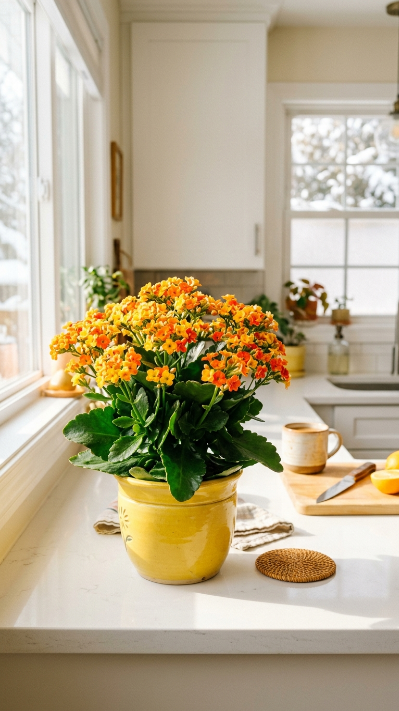
Kalanchoe is the cheerful overachiever of winter flowering houseplants — those clusters of tiny bright blooms in red, orange, yellow, pink, or coral last for weeks and weeks, and the plant itself is wonderfully unfussy about care. Talk about a game-changer for winter color!
Kalanchoe blossfeldiana is the most common variety and the one you’ll find at grocery stores and garden centers throughout winter. It’s a succulent, which means it stores water in its thick leaves and handles some neglect gracefully — but it blooms so enthusiastically that it actually benefits from more water during its active flowering period.
💡 After the first flush of blooms fades, you can trigger a second round! Move the plant to a dark room for 14 hours per night for 6 weeks — this darkness triggers new bud set. Then bring it back to bright light and watch the second wave of blooms develop. Pretty cool, right?
Keep kalanchoe in your brightest window in winter — ideally south-facing — for the longest, most vibrant blooms. In low-light rooms, a grow light keeps it performing well. Unlike cyclamen, kalanchoe appreciates warmth and does perfectly well in normal room temperatures of 60–85°F (15–29°C).
Deadhead kalanchoe by snipping individual spent flower clusters at the base of each stem — this keeps the plant looking tidy and encourages the next wave of buds to develop from lower on the stem.
Browse our guide to kalanchoe care and reblooming techniques.
Weeks of color with almost zero drama — kalanchoe is a winter must-have!
10. Fertilizing Winter Flowering Houseplants the Right Way
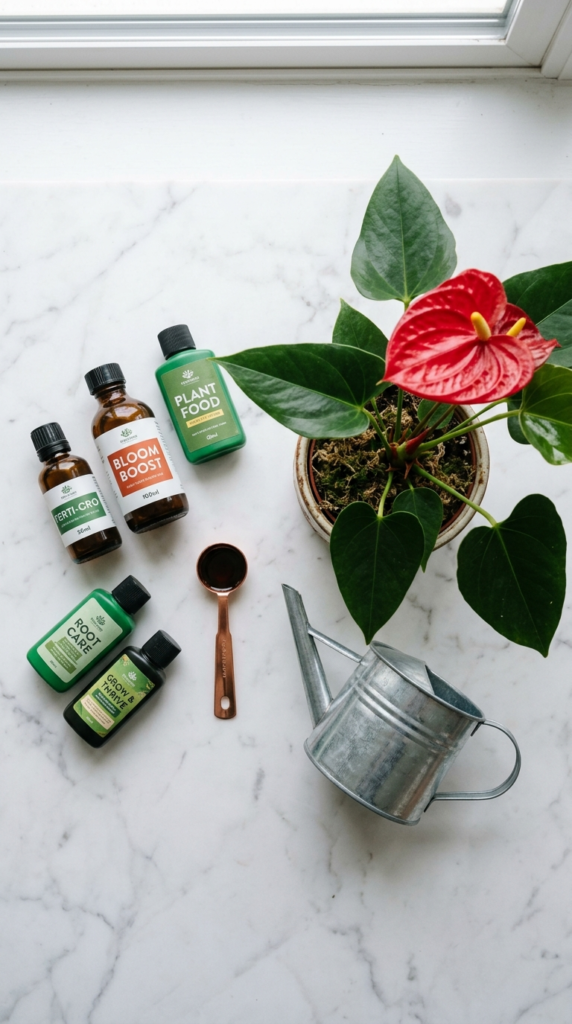
Fertilizing winter flowering houseplants is where a lot of well-meaning gardeners go wrong in two very different directions — either they stop fertilizing everything in winter (which starves actively blooming plants), or they fertilize the same as summer (which overwhelms roots in slower-growth conditions). Here’s what actually works!
The general rule: actively blooming plants need fertilizer; dormant or resting plants don’t. If your plant is currently in bloom or actively setting buds, it needs nutritional support. If it’s in a post-bloom rest period, hold off until new growth signals it’s ready to feed again.
For flowering plants in active winter bloom, a high-phosphorus fertilizer (the middle number in the N-P-K ratio) is your best friend. Phosphorus is the nutrient most directly linked to flower production — look for formulations like 10-30-20 or dedicated bloom booster fertilizers.
Dilute to half the recommended strength in winter — plants absorb nutrients more slowly in lower light and cooler temperatures, and full-strength fertilizer can build up in the soil and damage roots. Half-strength, applied consistently, is far more effective than occasional full doses.
- African violets: dedicated AV fertilizer, every 2–4 weeks while blooming
- Anthurium: balanced or high-phosphorus, monthly while blooming
- Christmas cactus: balanced fertilizer monthly during growth; none during bud/bloom
- Cyclamen: light low-nitrogen fertilizer monthly while blooming
- Kalanchoe: balanced fertilizer every 2–4 weeks while blooming; none during dark-period treatment
Read our full guide to fertilizing flowering houseplants in winter.
Feed the bloomers, rest the sleepers — it’s really that simple!
11. Deadheading and Grooming to Maximize Winter Blooms
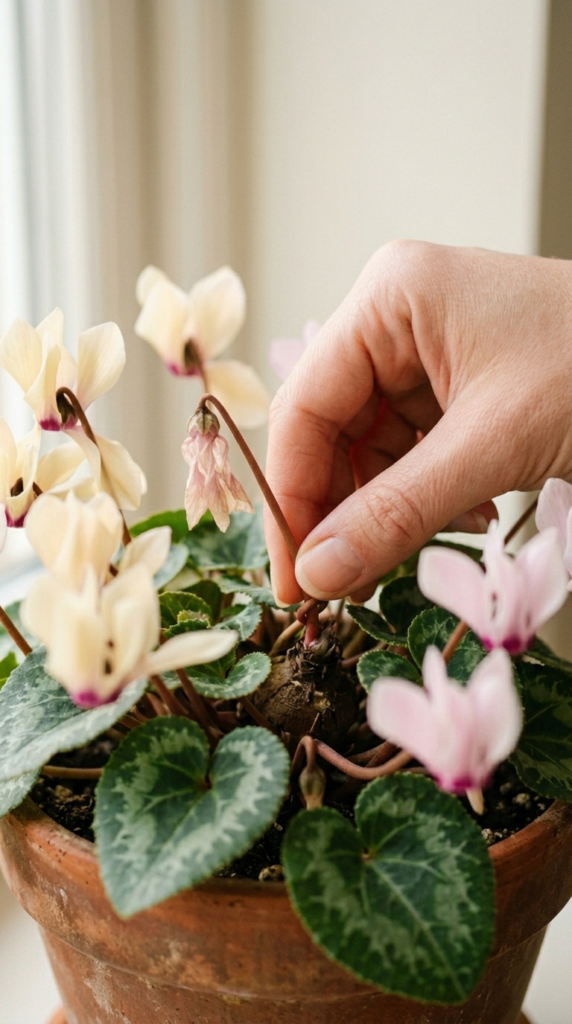
Deadheading is one of the most powerful and underused tools in winter flowering houseplant care — and it takes less than five minutes per plant per week! Removing spent blooms promptly redirects the plant’s energy from seed production into making new buds.
Here’s the thing: a plant that’s producing seeds is a plant that’s deciding it’s done flowering. Removing flowers as soon as they fade interrupts this signal and keeps the plant in continuous production mode. For some plants like kalanchoe and African violets, regular deadheading alone can double your bloom time.
Technique matters — each plant has its preferred deadheading method:
- Cyclamen: Twist and pull the entire stem from the base — never cut
- African Violet: Pinch the spent flower stem at its junction with the main stem
- Kalanchoe: Snip entire spent flower clusters at the base with clean scissors
- Christmas Cactus: Let spent flowers drop naturally; remove any remaining stem pieces
- Anthurium: Cut the spent spathe stem at the base with clean, sharp scissors
Clean, sharp tools are non-negotiable for good plant grooming — dirty or dull blades spread disease between plants. Wipe your scissors or snips with rubbing alcohol between plants as a simple sterilization step.
While you’re deadheading, take the opportunity to remove any yellowing or damaged leaves and wipe dust from foliage with a damp cloth. Clean leaves photosynthesize more efficiently — every little bit of light matters in winter!
See our full guide to deadheading and grooming flowering houseplants.
Five minutes of grooming per week, weeks more blooms per plant — absolutely worth it!
12. Common Problems with Winter Flowering Houseplants (and How to Fix Them)
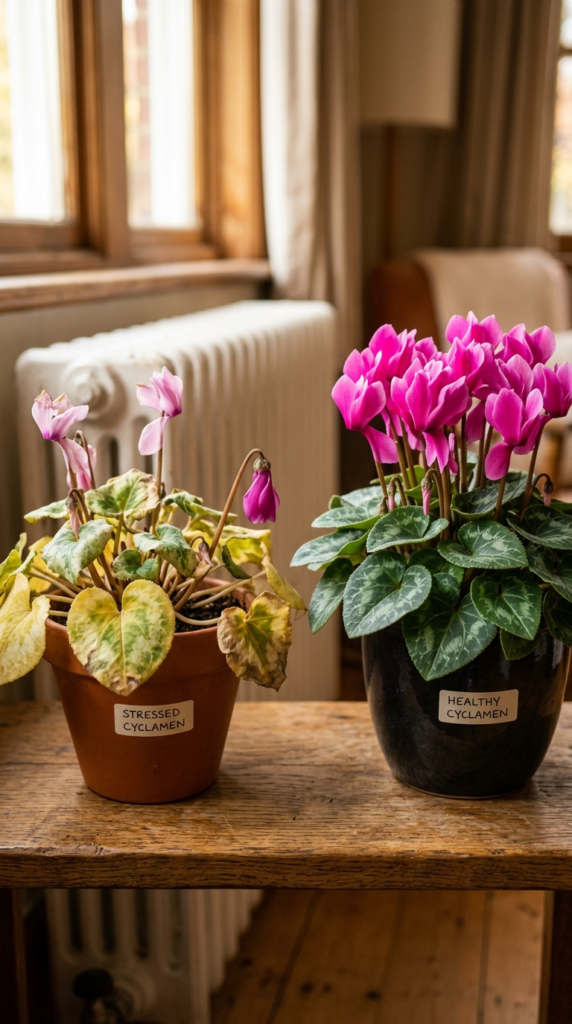
Even with the best care, winter flowering houseplants can run into trouble — and knowing how to diagnose problems quickly is what separates plants that bounce back from ones that don’t. Here’s what to watch for and exactly what to do!
Bud drop — buds forming but falling off before opening — is one of the most frustrating winter plant problems. The usual culprits are low humidity, temperature fluctuations, being moved during bud development, or inconsistent watering. Fix: increase humidity, find a stable location away from drafts and vents, and water consistently.
Yellowing leaves can signal overwatering (the most common cause in winter), root rot, or cold damage from sitting against a cold window. Check the roots — healthy roots are white and firm, while rotting roots are brown and mushy. If rot is present, repot immediately into fresh dry soil and water sparingly going forward.
💡 Leggy, stretched growth with sparse blooms almost always signals insufficient light — the plant is literally reaching toward what little light is available. Supplement with a grow light immediately and rotate the plant regularly to keep growth even.
Gray mold (Botrytis) appears as fuzzy grey patches on flowers or leaves, usually in cool, damp conditions with poor air circulation. Remove affected parts immediately, improve air circulation, and avoid misting in cool weather. This is most common on cyclamen and begonias in winter.
Pest problems — spider mites thrive in dry, heated winter air. Watch for fine webbing on foliage and treat immediately with neem oil or insecticidal soap spray. Fungus gnats signal overwatering; let soil dry more between waterings and use sticky yellow traps to catch adults.
Explore our post on diagnosing and fixing common winter houseplant problems. For pest identification, Penn State Extension has an excellent comprehensive guide.
Catch problems early and your winter bloomers will bounce back beautifully!
Frequently Asked Questions
Why are my winter flowering houseplants dropping buds before they open?
Bud drop in winter flowering houseplants is almost always caused by environmental stress during the vulnerable bud development phase. The most common causes are dry air from heating systems (increase humidity immediately), temperature fluctuations from drafts or heating vents (find a stable spot), moving the plant after buds have set (keep it in one place during bud development), or allowing the soil to dry out completely between waterings. Anthurium and Christmas cactus are especially prone to bud drop when conditions shift suddenly.
Should I fertilize my winter flowering houseplants?
Yes — but only if they’re actively blooming or setting buds! Actively blooming winter plants benefit from a high-phosphorus fertilizer applied at half strength every two to four weeks. Plants that have finished blooming and are in a rest period should receive no fertilizer until they show signs of new growth in spring. Over-fertilizing resting plants in winter can damage roots, so when in doubt, wait.
How do I extend the blooming period of my winter flowering houseplants?
The best strategies for extending bloom time include: keeping plants in cool locations (especially for cyclamen, which hates warmth), maintaining 50–60% humidity to prevent flower stress, deadheading spent blooms promptly and consistently, avoiding sudden changes in temperature or light, and ensuring consistent but moderate watering. For kalanchoe and African violets, a high-phosphorus fertilizer regimen also significantly extends flowering duration.
My winter flowering houseplant finished blooming. Should I throw it away?
Absolutely not! Most winter flowering houseplants can rebloom with the right care after their bloom cycle ends. Cyclamen goes dormant in summer and can be coaxed back into bloom in fall; Christmas cactus needs a cool, dark trigger period in fall; kalanchoe needs a 6-week dark period; and African violets will bloom again once rested and fed. The only exception is paperwhite narcissus, which cannot rebloom indoors — but the bulbs can be planted outdoors in mild climates.
What is the easiest winter flowering houseplant for beginners?
Kalanchoe wins the beginner-friendly award for winter flowering houseplants hands down. It tolerates a range of light conditions, handles occasional missed waterings like a champ (it’s a succulent!), blooms for weeks without much fuss, and is widely available and inexpensive. African violets are a close second — once you nail the bottom-watering and grow light routine, they’re remarkably consistent bloomers for beginners who can commit to a regular care schedule.
A Few Final Thoughts
Winter flowering houseplant care is one of the most rewarding skills a plant lover can develop — because there is genuinely nothing like having a home full of color and blooms when the world outside is cold and grey. Understanding each plant’s specific needs — whether it craves cool temperatures like cyclamen or warm humidity like anthurium — is what transforms your results from disappointing to absolutely spectacular. Consistent, attentive seasonal care doesn’t have to be complicated; small adjustments to light, watering, humidity, and feeding make an enormous cumulative difference through the cold months. Start with one or two plants from this guide, learn their rhythms, and let your confidence grow from there. Your winter blooming indoor garden is so much closer than you think — now go make it happen!