
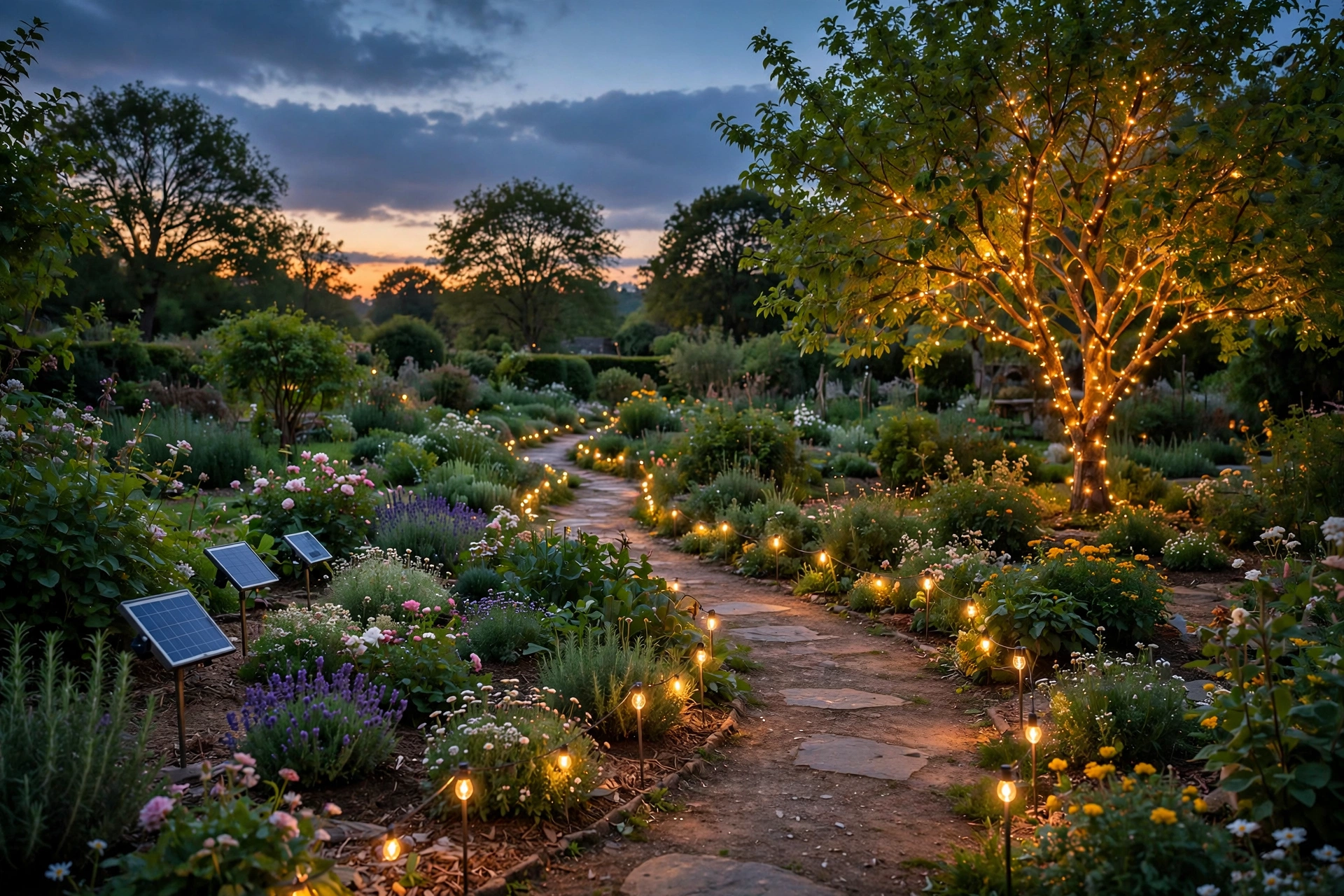
Solar fairy lights are the easiest upgrade a garden can get. No trenching for cables, no electrician, no addition to the power bill. You stake a small panel in the sun, and every evening your garden lights itself. But not all solar lights are equal. Some fade by midnight, some barely survive a season, and some are genuinely wonderful.
This guide rounds up the 10 best solar fairy lights for garden use, organized by where they shine brightest. For each pick you will find what to look for, the specs that matter, and a realistic sense of what you will pay. Prices shift by season, but the features worth paying for do not.
1. Best overall: classic warm-white globe string lights
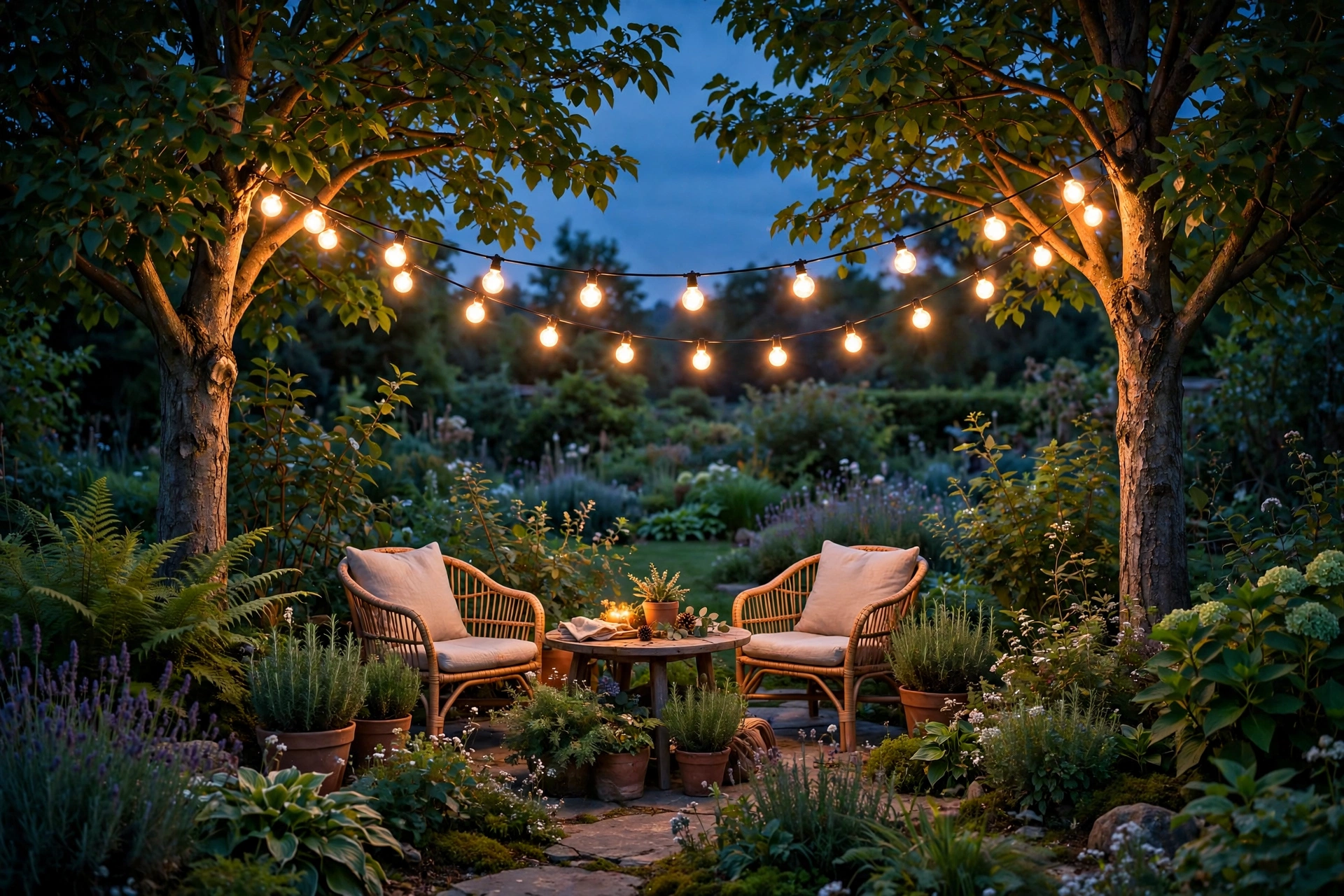
The workhorse of garden lighting. Look for a 30 to 40-foot strand with 100 LEDs, a separate solar panel on a ground stake (separate panels charge far better than panels built into the strand), and at least 8 lighting modes with a memory function so it returns to your favorite setting. Expect 8 to 10 hours of runtime after a full sunny day. Typical price: 15 to 25 dollars. Hang them over seating areas, along fences, or between trees.
2. Best for pathways: solar stake fairy lights
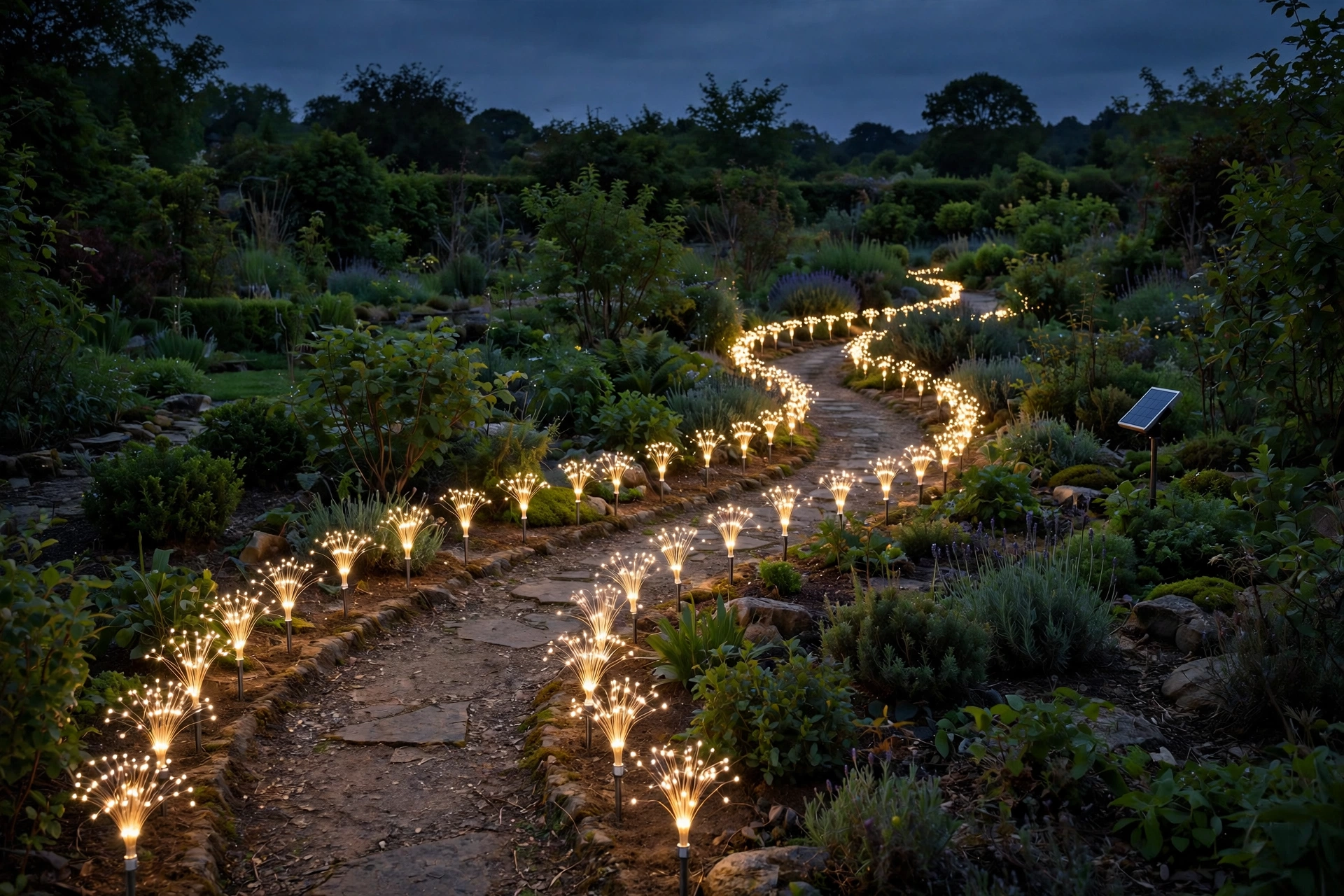
These combine a string of mini LEDs with ground stakes so you can outline a path in minutes. The best versions have 6 to 8 individual light heads on one panel, each head holding a cluster of LEDs on a flexible copper wire you can shape. Push the stakes 6 to 8 feet apart and bend each cluster into a loose puff. Look for an IP65 waterproof rating and a panel that tilts, so you can angle it at the sun even when the lights face the path. Typical price: 12 to 20 dollars per set.
3. Best for wrapping trees: extra-long copper-wire fairy lights
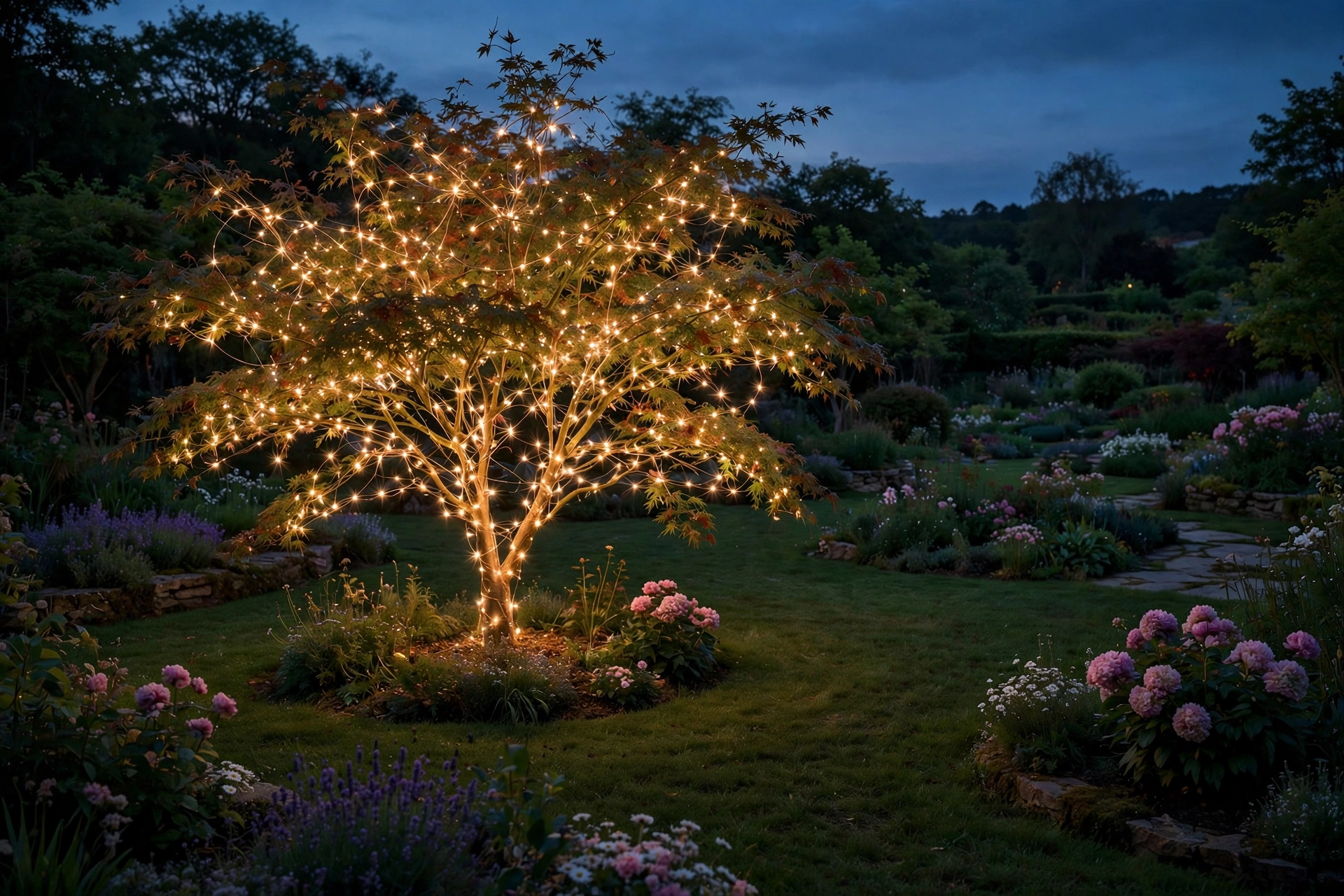
Wrapping a tree eats up length fast, so buy long. The sweet spot is a 100-foot strand with 300 LEDs on thin copper wire, powered by a single solar panel. Copper wire is nearly invisible by day and easy to weave through branches. Check that the wire is actually copper-colored coated wire rather than stiff green wire, which is harder to shape and more visible. One 300-LED strand wraps a 6-foot ornamental tree generously. Typical price: 12 to 18 dollars.
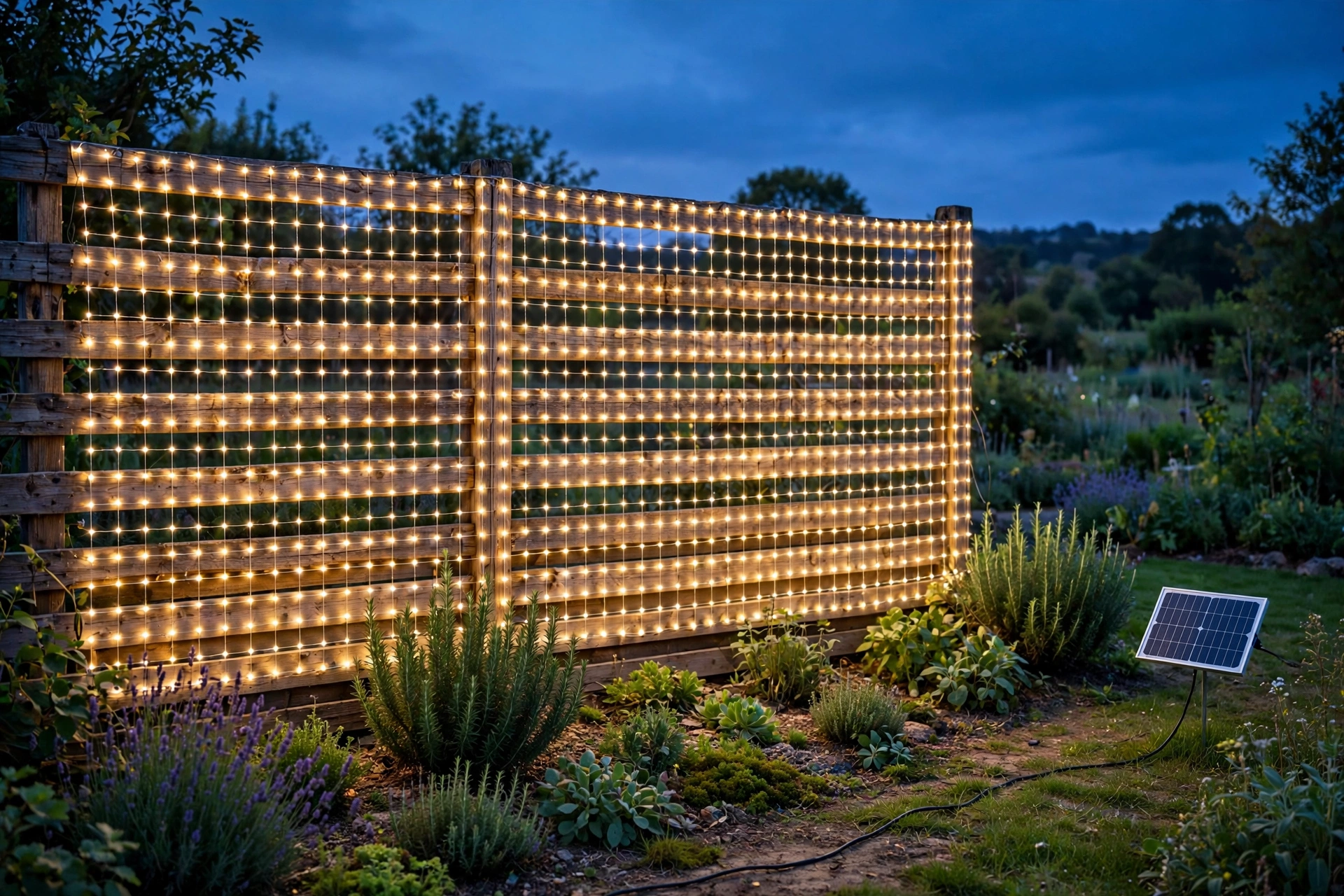
4. Best for fences and walls: solar net lights
Net lights are a grid of LEDs on a mesh you drape over a fence panel, trellis, or hedge, and they give the most even coverage per dollar of any option here. A 10-by-6-foot net usually carries around 200 LEDs. Look for a net with the solar panel on a long lead (10 feet or more) so the panel can sit in the sun while the net covers a shaded fence. Memory function matters here too, since reprogramming 8 modes through a fence is nobody’s idea of fun. Typical price: 18 to 28 dollars.
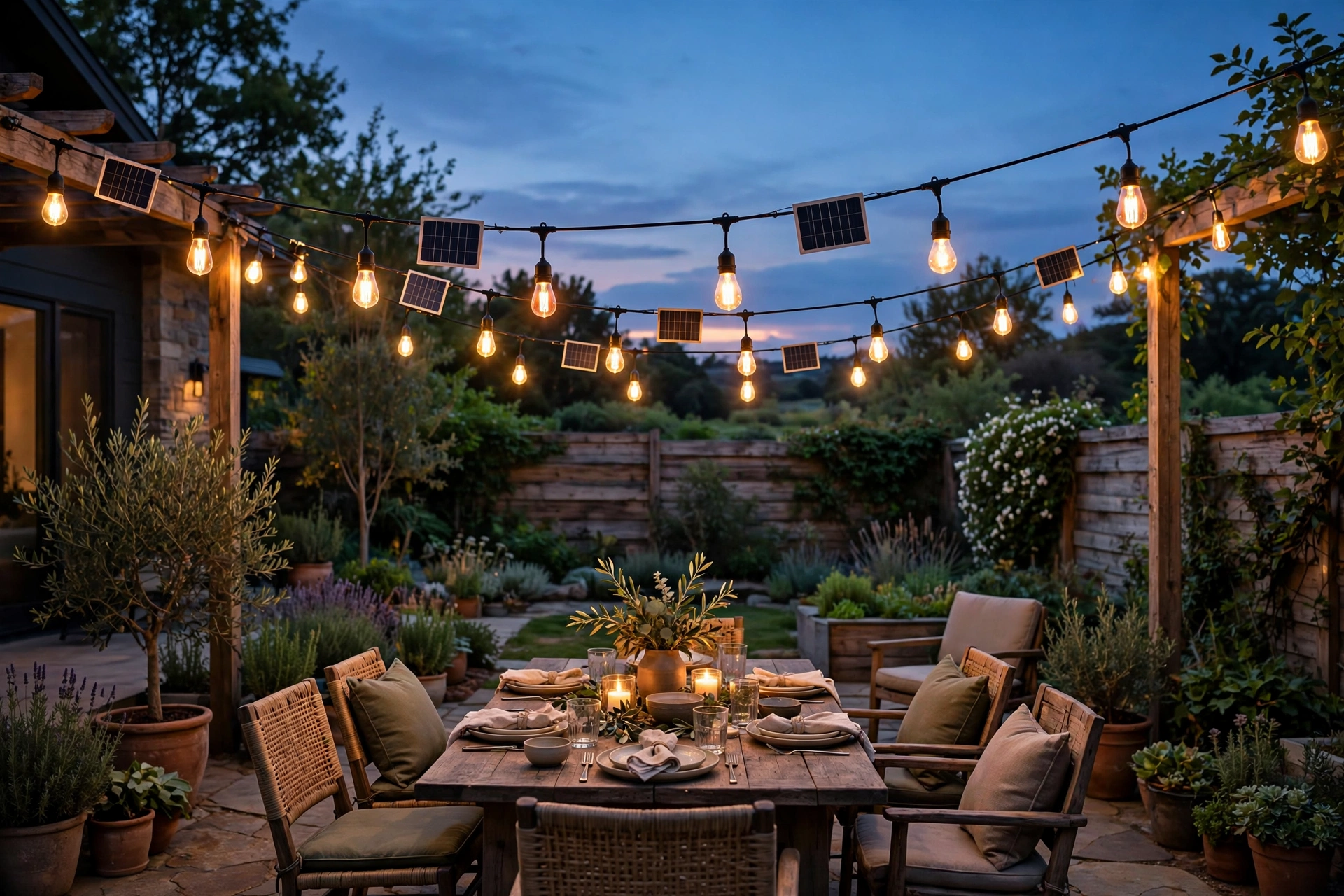
5. Best for patios: solar Edison-style string lights
Edison bulbs bring vintage cafe charm, and solar versions finally look the part. The bulbs are plastic rather than glass, with a warm filament-style LED inside. Look for 25-foot strands with 12 to 15 bulbs, a separate stake panel, and shatterproof bulbs if they will hang low over a table. They draw more power than mini LEDs, so expect 6 to 8 hours of runtime rather than 10, and give the panel the sunniest spot you have. Typical price: 20 to 35 dollars.
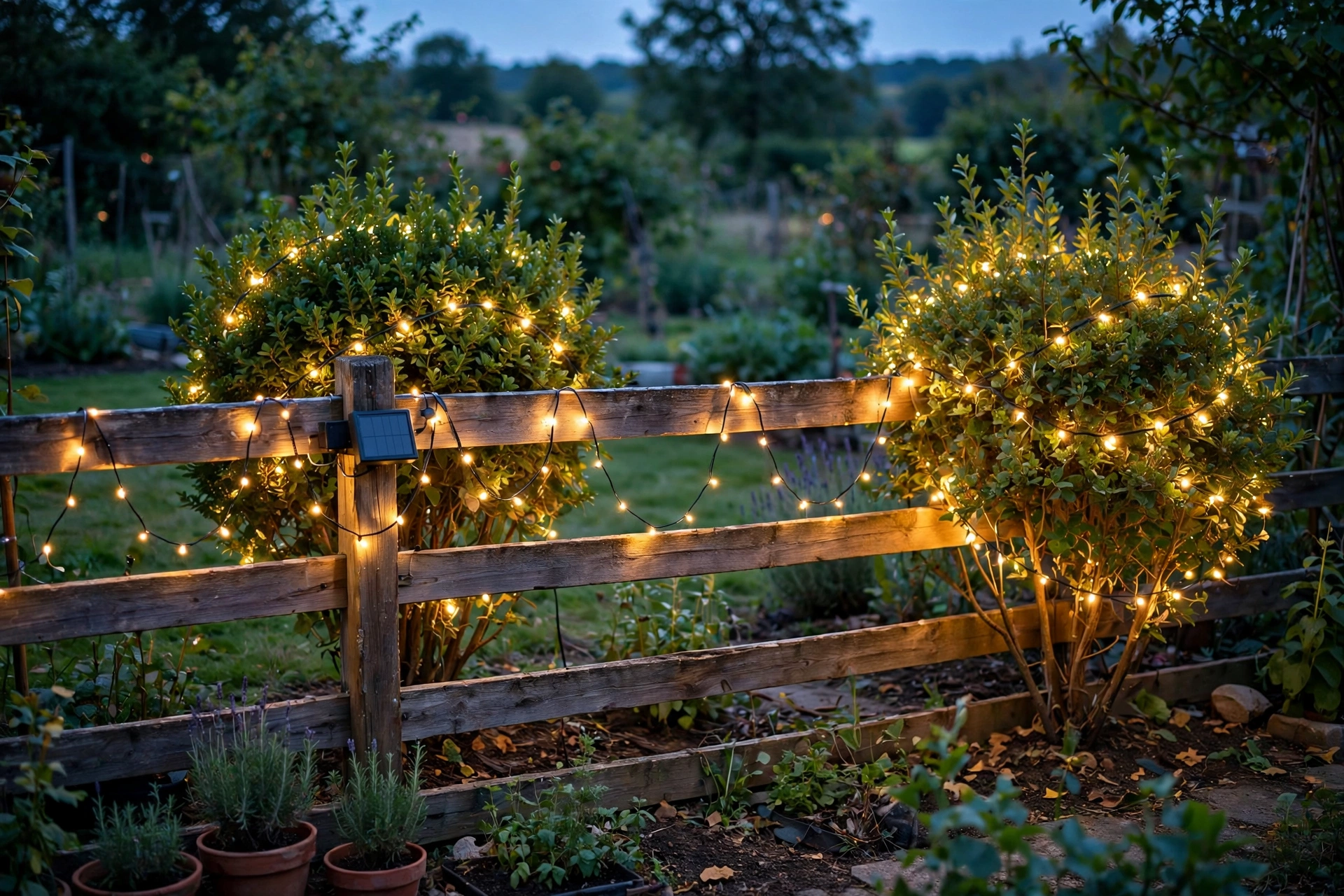
6. Best budget pick: two-pack mini string lights
If you just want to try solar lights without committing, the two-packs of 33-foot, 100-LED mini strands are the way in. They are the same basic technology as the premium picks, just shorter leads and simpler panels. Buy them to test which spots in your garden get enough sun before investing in longer strands. Two 33-foot strands cover a surprising amount of fence or two medium shrubs. Typical price: 10 to 15 dollars for the pair, often less in multipacks.
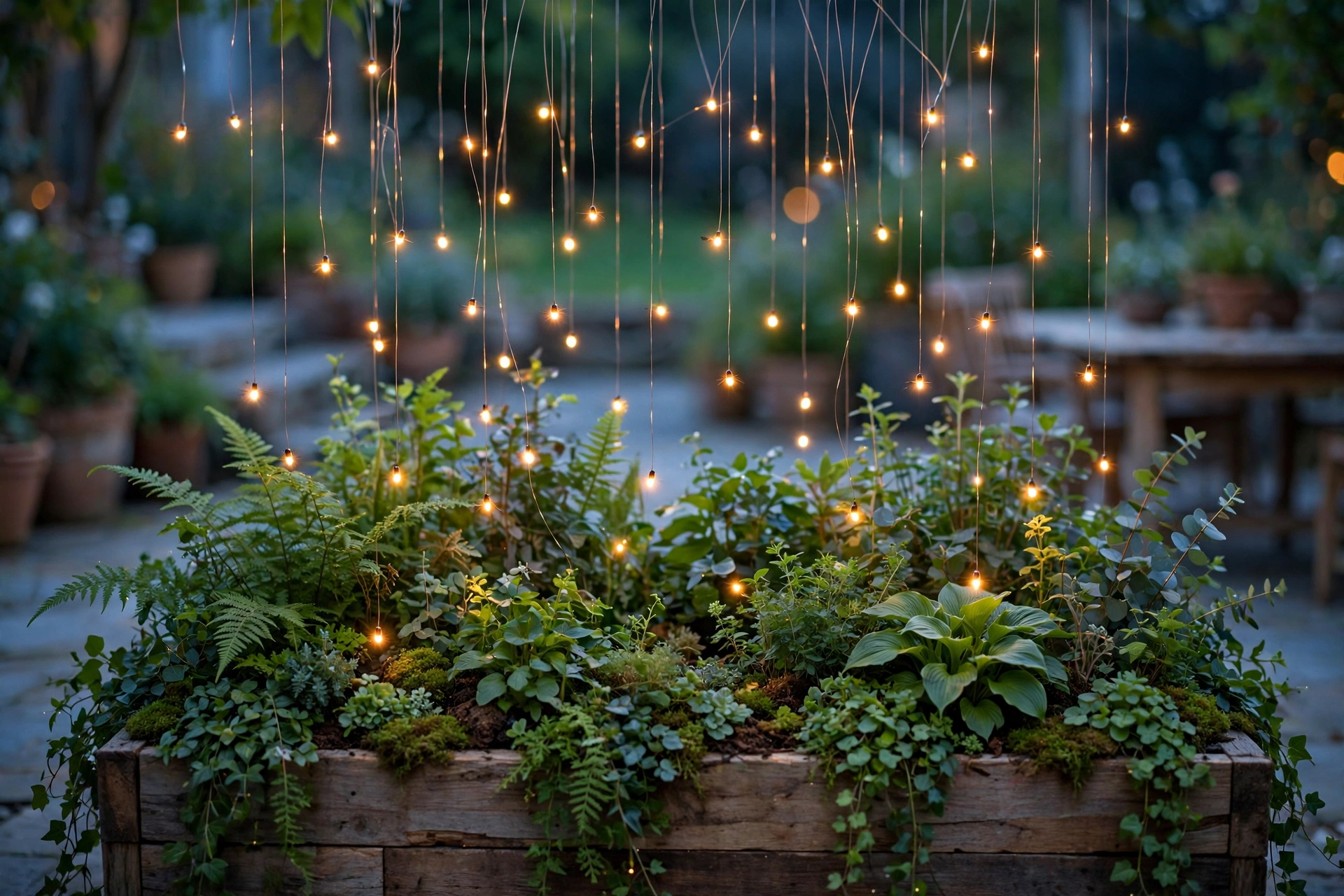
7. Best for planters and tabletops: solar firefly lights
These are the enchanting ones: a small solar panel on a stake with a spray of ultra-thin wires, each tipped with a single LED, that sway in the breeze like fireflies. Stick the stake in a large planter and the lights hover above the foliage. They look best in groups of three. Look for versions with a dusk-to-dawn sensor rather than a fixed 6-hour timer, since fireflies should be out all night. Typical price: 10 to 16 dollars each, with discounts for sets of four.
8. Best for cold climates: low-temperature rated solar strings
Standard solar lights dim fast when temperatures drop, because the rechargeable batteries inside lose capacity in the cold. If your garden lights need to work through fall and a mild winter, look for strands that explicitly advertise operation down to around -4°F (-20°C) and use lithium iron phosphate batteries, which handle cold far better than the usual nickel-metal hydride cells. They cost a few dollars more and are worth every cent north of zone 6. Typical price: 18 to 30 dollars.
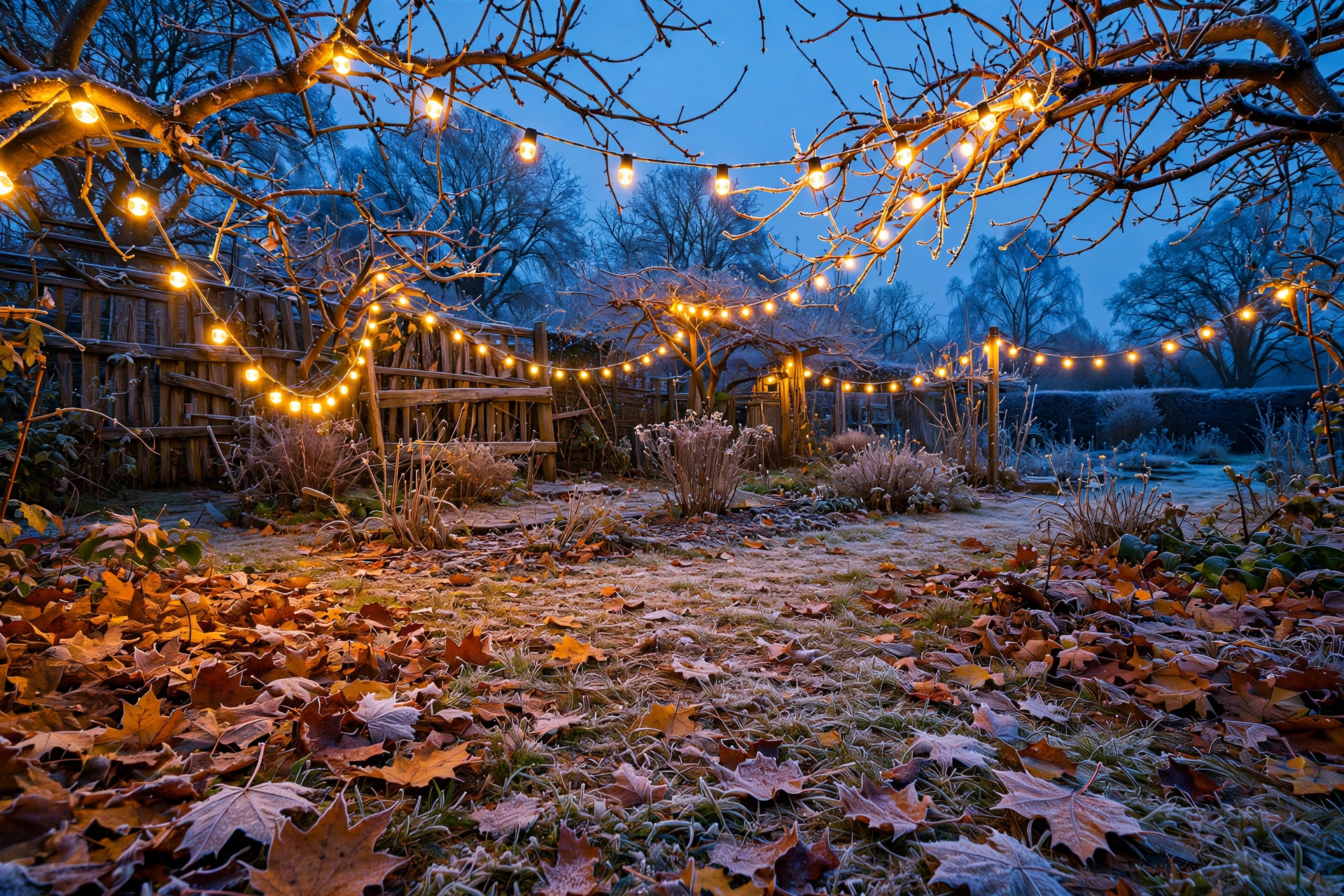
9. Best with a remote: solar lights with timer and dimming modes
Once you have lived with solar lights for a season, the remote becomes the feature you did not know you needed. These strands add a small remote control with on/off, 4-to-8-hour timers, brightness levels, and mode selection, so you can adjust everything from the porch instead of hunting for the tiny button on the back of the panel. This is the pick for hard-to-reach spots like high tree branches or the far fence. Make sure the remote uses radio frequency rather than infrared if the panel will be hidden behind foliage. Typical price: 20 to 32 dollars.
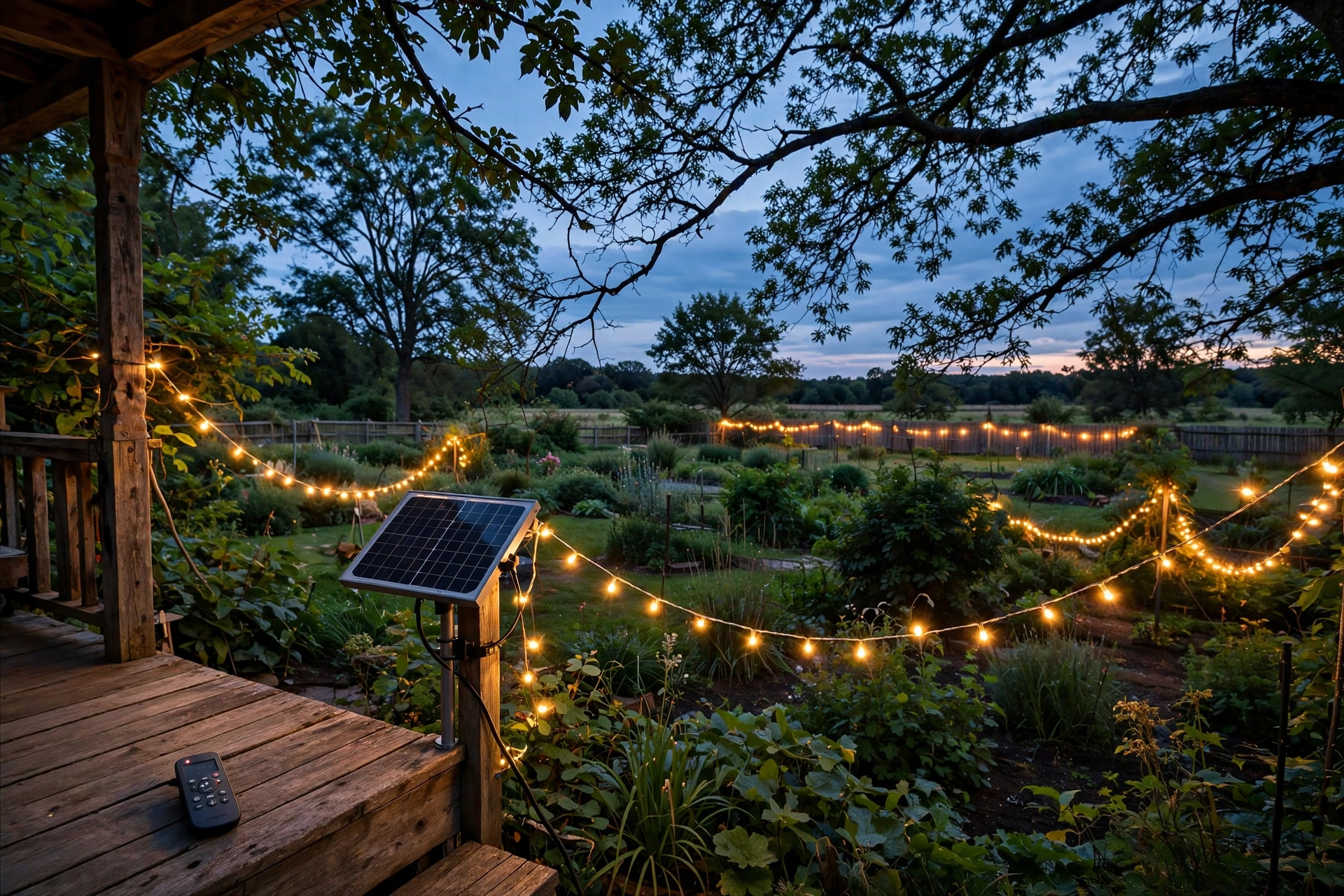
10. Best decorative: shaped solar fairy lights
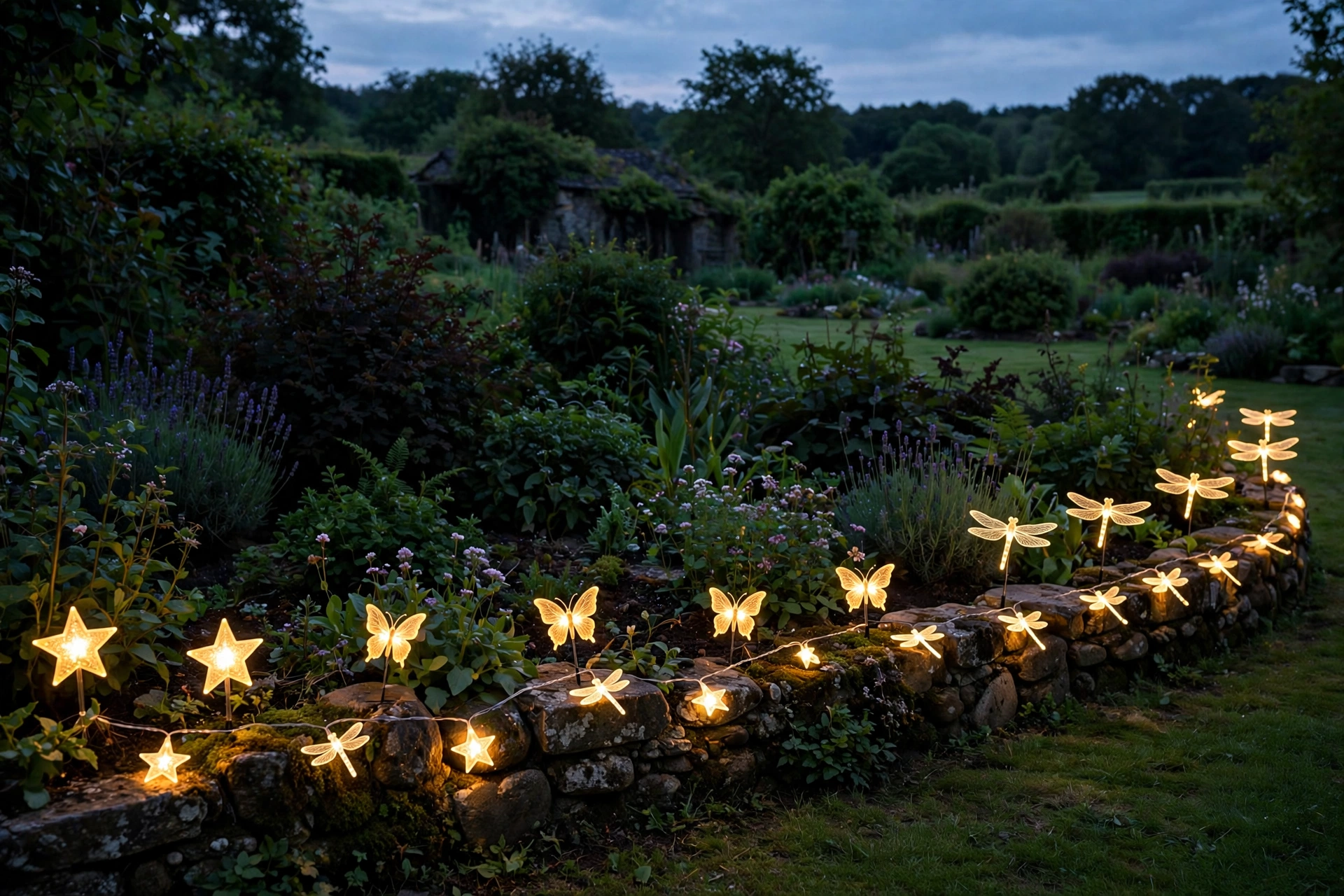
Stars, butterflies, dragonflies, hummingbirds, mason-jar pendants: shaped solar lights turn a garden bed into a storybook scene. The shapes are small plastic or metal shells around a single LED, strung 6 to 12 inches apart on a 15 to 20-foot strand. They read best against dark foliage or along a low border where the shapes are visible. Buy one motif and repeat it rather than mixing five shapes, which looks cluttered. Quality varies wildly here, so favor listings with an IP65 rating and real customer photos. Typical price: 12 to 22 dollars.
Quick Buying & Safety Tips
- Choose LED over incandescent. Every solar light worth buying is LED, which sips power and stays cool. If you somehow find an incandescent solar light, skip it.
- Demand a separate solar panel. Strands with the panel built into the first few feet of lights almost always underperform, because the lights rarely sit in full sun. A panel on its own stake with a long lead is the single best predictor of all-night runtime.
- Check the waterproof rating. IP44 handles rain; IP65 handles rain plus dust and hose spray. For anything staying out all season, IP65 is worth seeking out.
- Count the LEDs, not the feet. Two 33-foot strands can carry 50 or 200 LEDs. More LEDs per foot means a fuller, more expensive look. For a lush effect, aim for at least 3 LEDs per foot.
- Mind the battery. Most solar lights use rechargeable AA batteries inside the panel housing. After two or three seasons they hold less charge; replacing them with fresh rechargeable AAs often revives a “dead” strand for another year or two.
- Place panels in true direct sun. Six hours of direct sun is the baseline for a full night of light. Dappled shade under a tree will give you a few hours at best. Walk your garden at noon and note the sunniest spots before you buy.
- Do not overload a single panel. If a strand lets you connect extensions, respect the limit in the manual. Overloading one small panel just means every light goes dim by 10 p.m.
FAQs
How long do solar fairy lights last each night?
After a full day of direct sun, a good strand runs 8 to 10 hours, easily covering dusk to dawn in summer. On cloudy days expect 4 to 6 hours. Short winter days plus long nights are the hardest combination; that is when a bigger panel earns its keep.
Do solar fairy lights work in winter?
They work, but shorter days and weaker sun mean shorter runtimes. Cold-rated strands with lithium batteries perform noticeably better. Brushing snow off the panel after a storm makes a bigger difference than most people expect.
Can I leave solar fairy lights outside all year?
Yes, if they are rated IP44 or better. The LEDs and wiring handle weather fine; the weak point is the rechargeable battery, which degrades faster with extreme heat and deep cold. Replacing the batteries every couple of years keeps them going.
Why did my solar lights stop working after one season?
Nine times out of ten it is either dead rechargeable batteries or a film of dirt on the panel. Clean the panel with a damp cloth and swap in fresh rechargeable AAs before you throw the strand away.
Final Thoughts
The best solar fairy lights for your garden are the ones matched to the spot: long copper wire for trees, stakes for paths, nets for fences, and a separate panel everywhere. Buy for the place, not the price tag, and give every panel real sun. Do that, and your garden will light itself every evening without you lifting a finger or paying a cent for the electricity.