
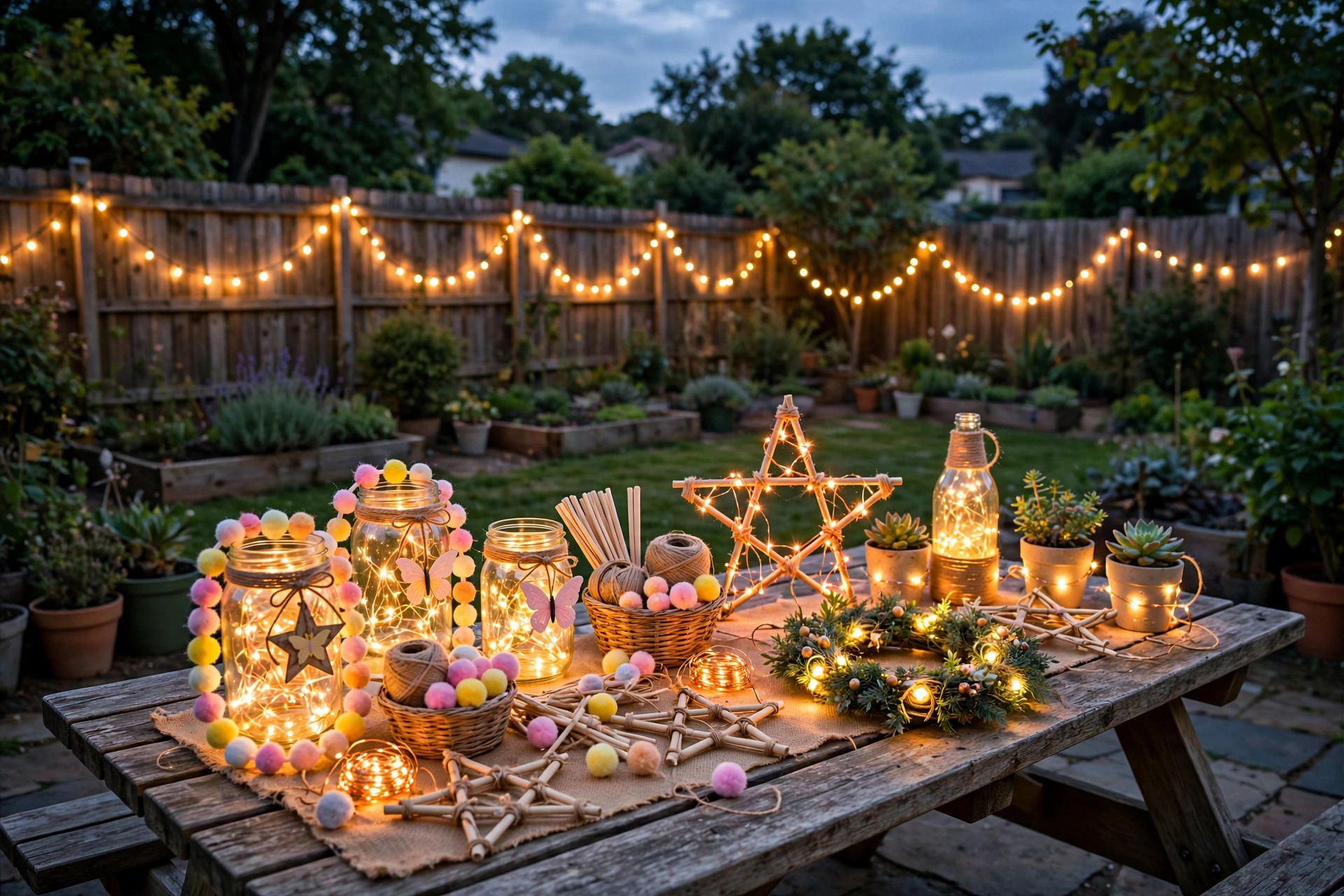
Some of the prettiest backyard lighting costs less than a pizza. Dollar store fairy lights — those little battery-operated strands on thin copper wire — are the ultimate budget craft supply. They bend, they tuck, they coil into anything, and at a dollar or two a strand, you can experiment freely without worrying about wasting money.
The trick is giving cheap lights an expensive-looking home. A bare strand draped over a bush looks like exactly what it is. That same strand coiled inside a mason jar, or woven through a hula hoop, looks like something from a boutique garden shop. These 10 hacks are all about the container, the arrangement, and the placement — the three things that turn dollar store lights into backyard magic.
1. Mason Jar Firefly Lanterns
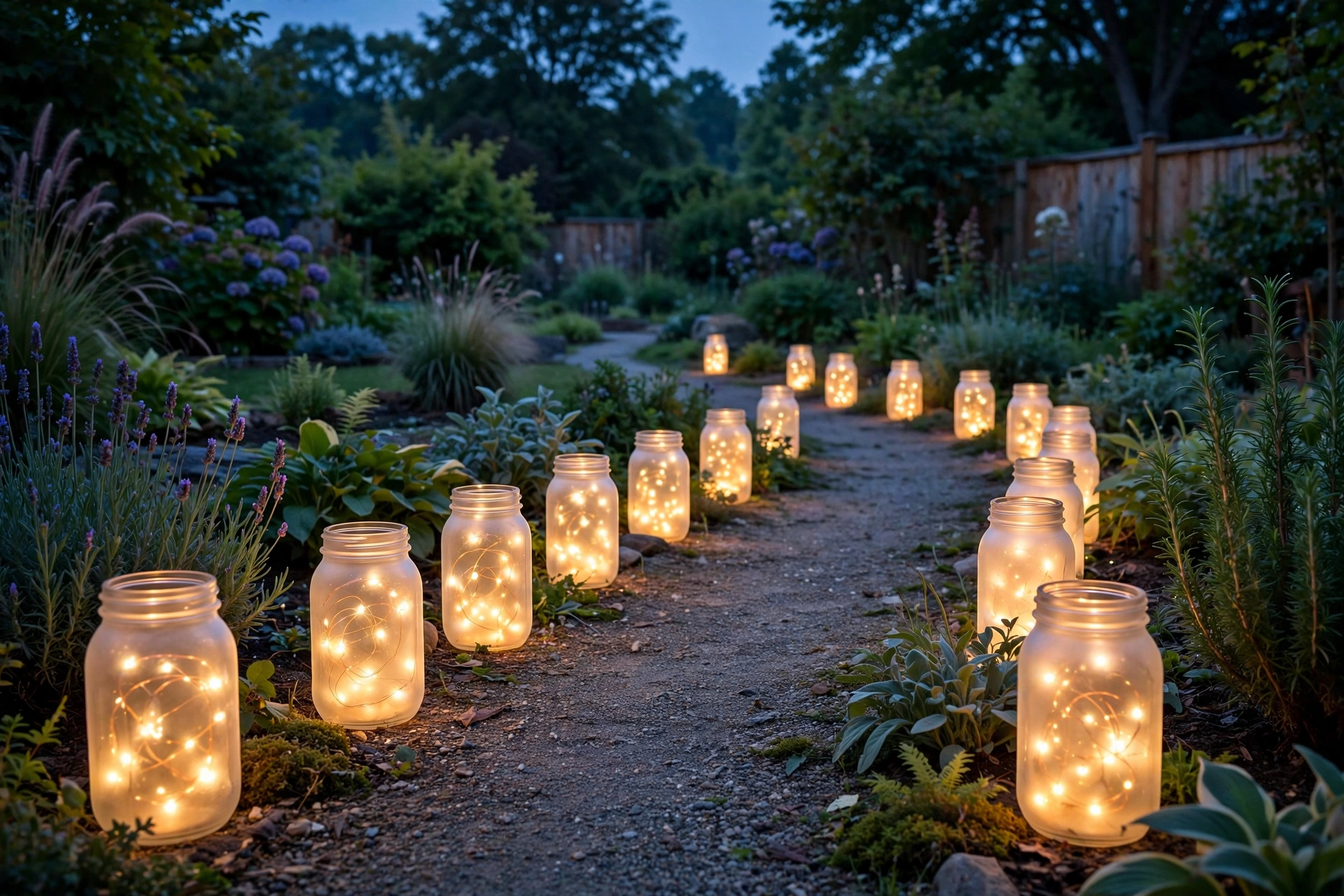
Coil one fairy strand into each mason jar, tuck the tiny battery pack under the lid or tape it beneath the jar, and set them along pathways, steps, or the dinner table. Frosted or sea-glass spray paint on the outside of the jar diffuses the light beautifully. Line a whole walkway for the price of a fancy coffee.
2. Hula-Hoop Light Chandelier
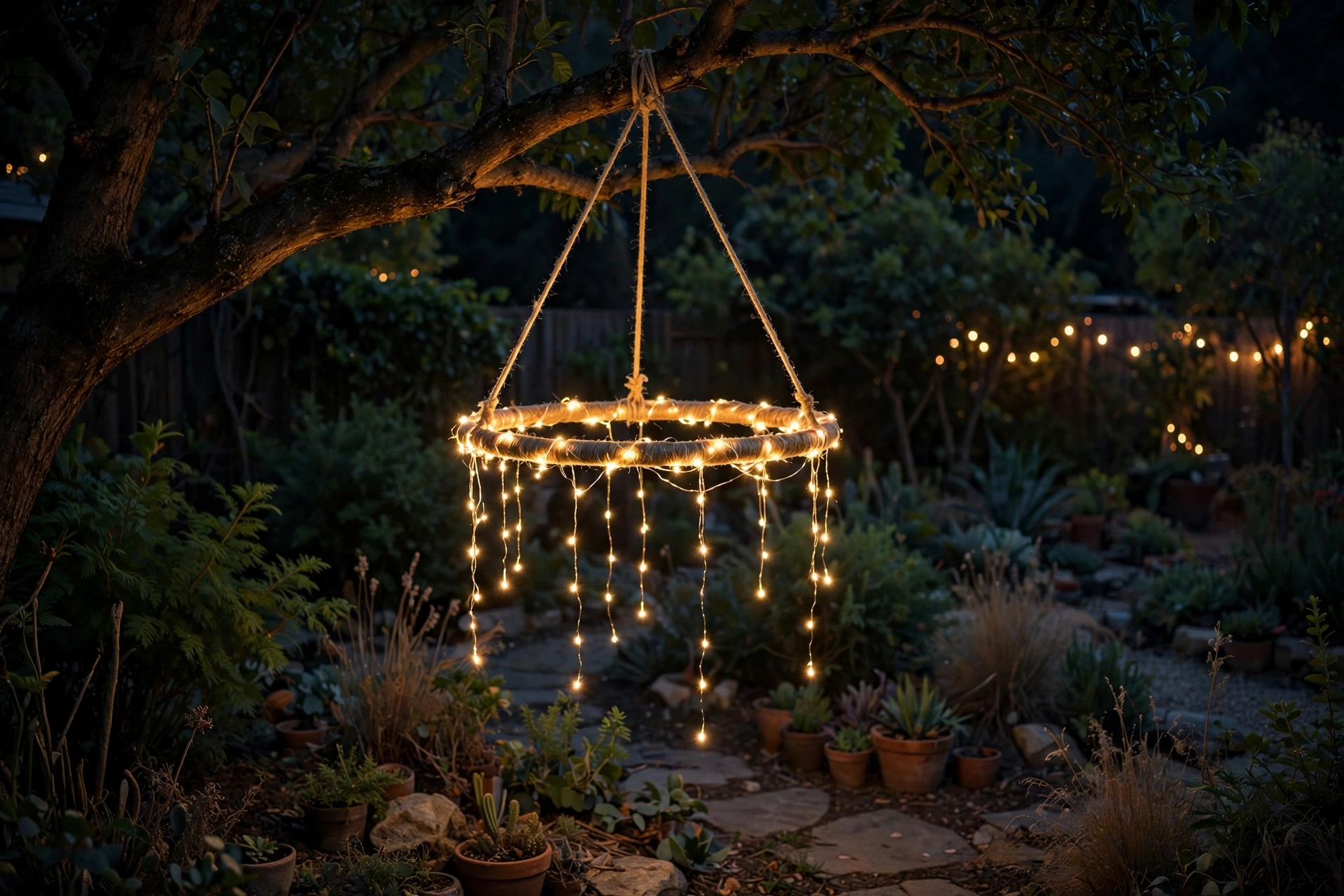
Wrap several fairy strands around a hula hoop, then hang the hoop horizontally from a tree branch or pergola beam with three lengths of twine. Let a few strands dangle below the hoop at different lengths. It reads as a boho chandelier and costs almost nothing. Spray-paint the hoop first if the neon plastic bothers you.
3. Punched Tin Can Lanterns
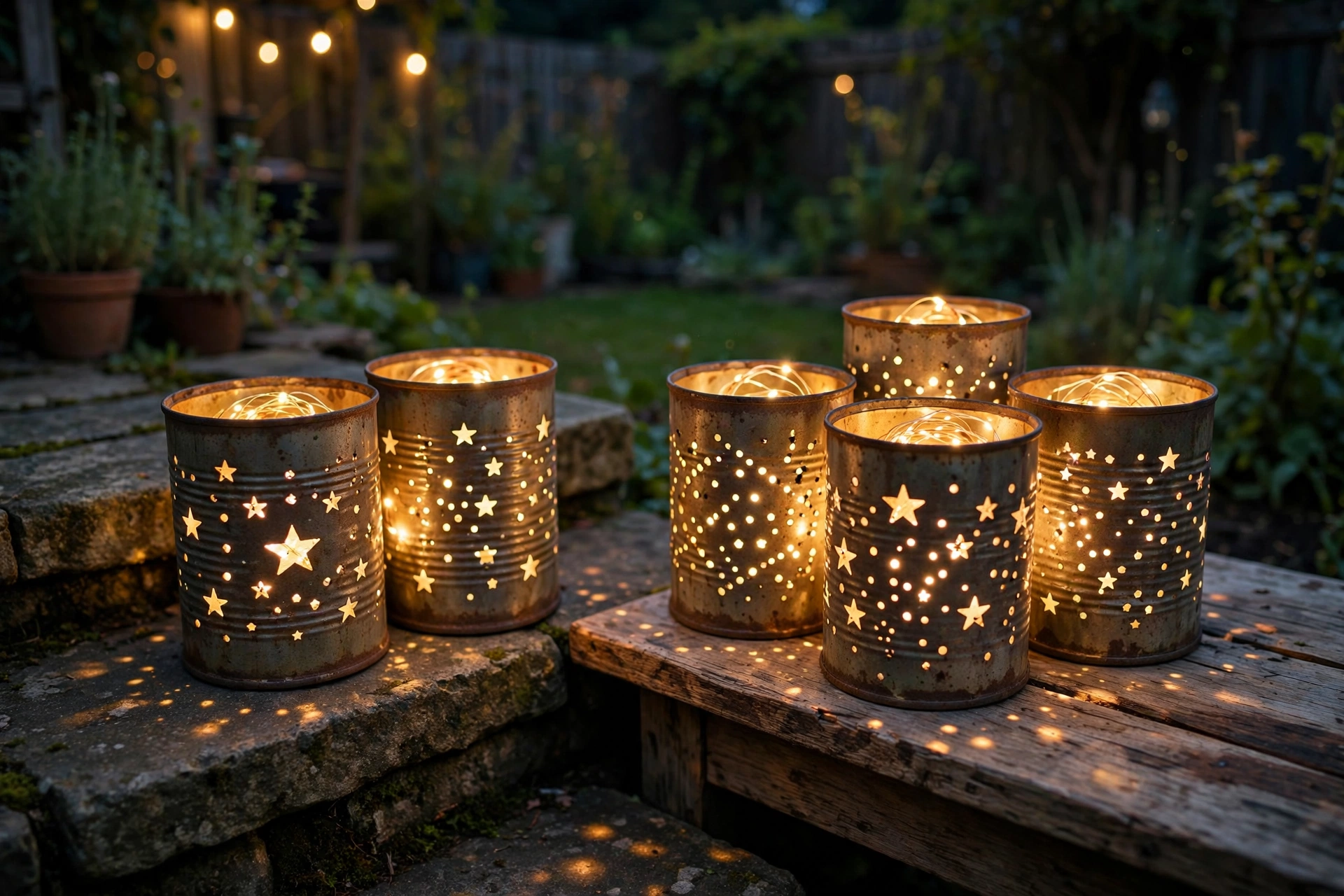
Fill empty tin cans with water and freeze them, then punch patterns of holes with a hammer and nail — the ice keeps the can from denting. Drop a coiled fairy strand inside each can. The light shines through the holes in starry patterns. Group them in odd numbers on tables and steps.
4. Bottle Glow Vases
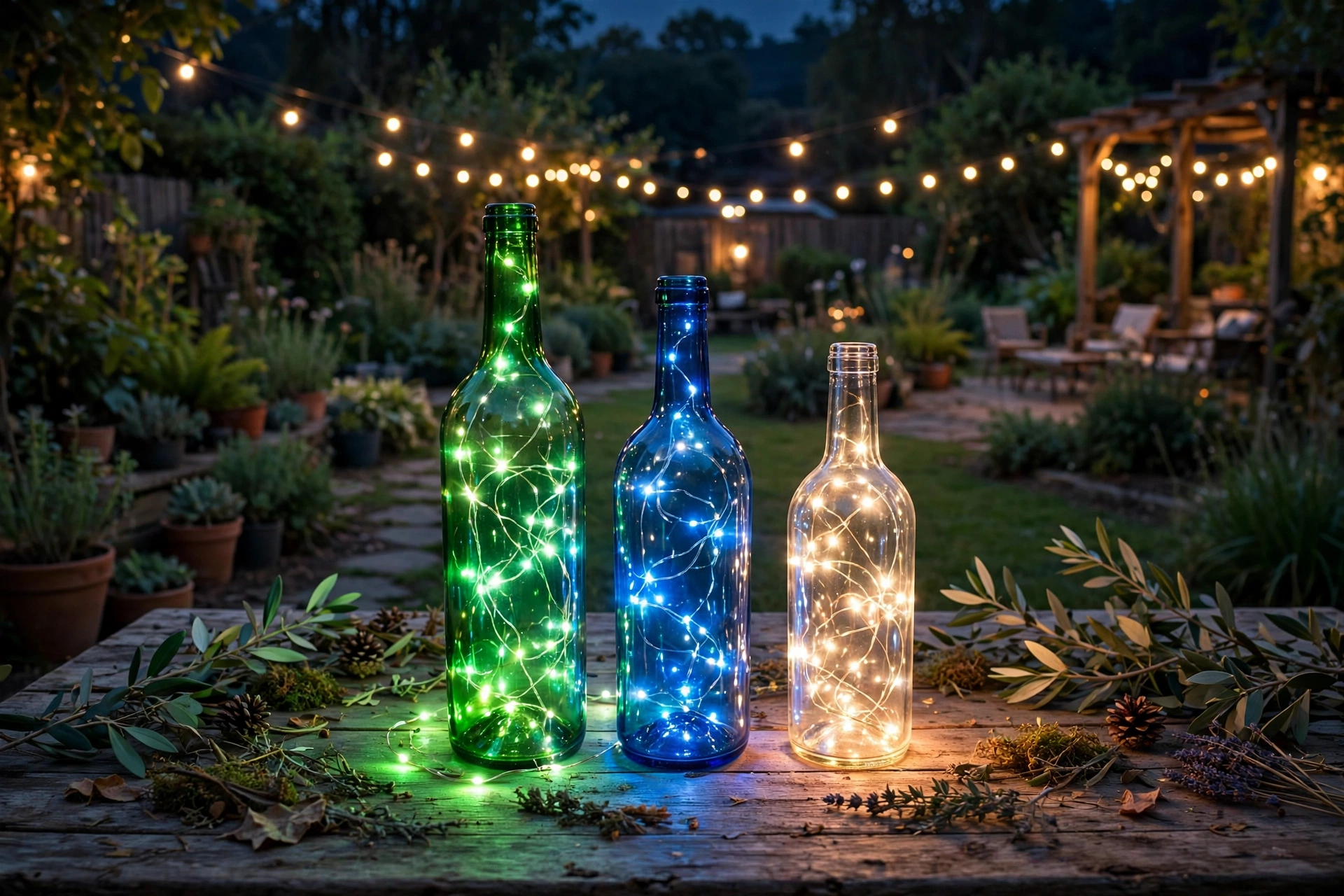
Thread a fairy strand down into an empty wine or glass bottle so the lights fill it from the inside. The colored glass tints the glow: green bottles give an emerald light, blue bottles a cool lagoon tone. Cluster three bottles of different heights as a table centerpiece that needs no outlet.
5. Shower-Curtain-Ring Light Curtain
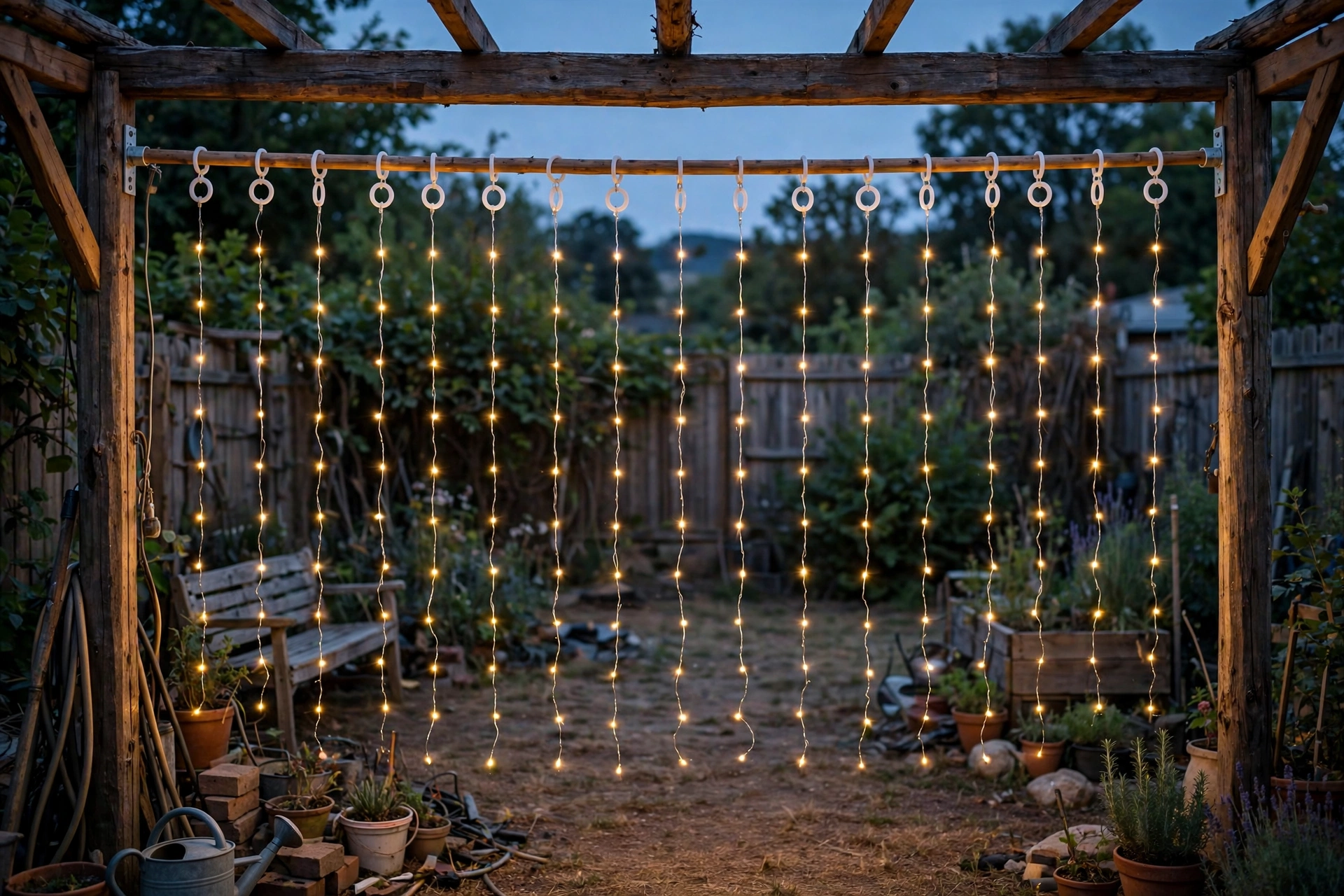
Clip fairy strands to a tension rod or a length of dowel using shower curtain rings, spacing the strands a few inches apart to make a light curtain. Hang it in a doorway, over a pergola opening, or against a fence. The rings let you slide strands to adjust the fullness, and the whole thing comes down in seconds.
6. Embroidery Hoop Starburst
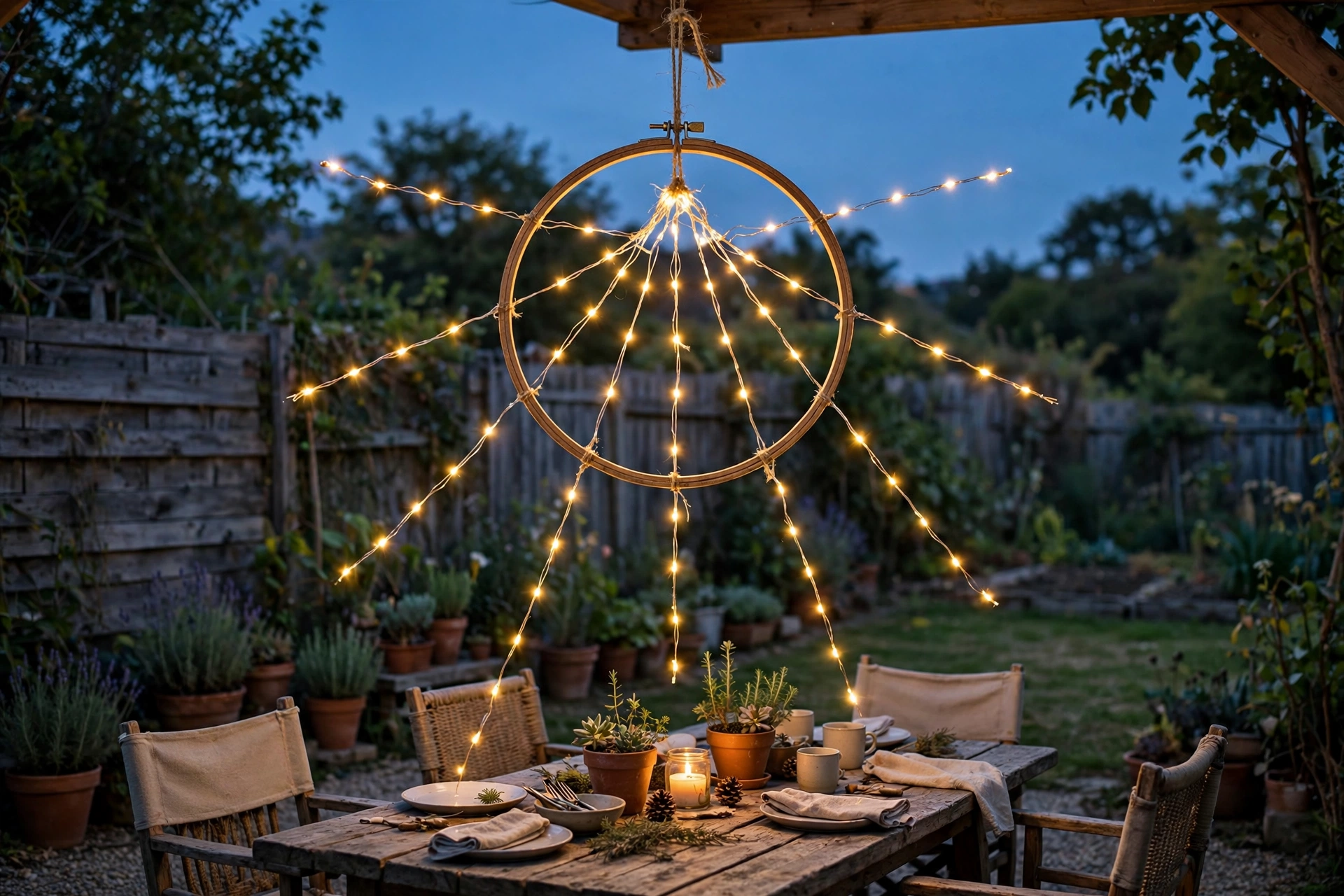
Attach eight to ten short fairy strands to the center of a large embroidery hoop so they radiate outward, then hang the hoop flat like a starburst or vertically like a sun. Tighten the hoop screw to grip the wires. It makes a striking piece over an outdoor dining table.
7. Plastic Bowl Pendant Shades
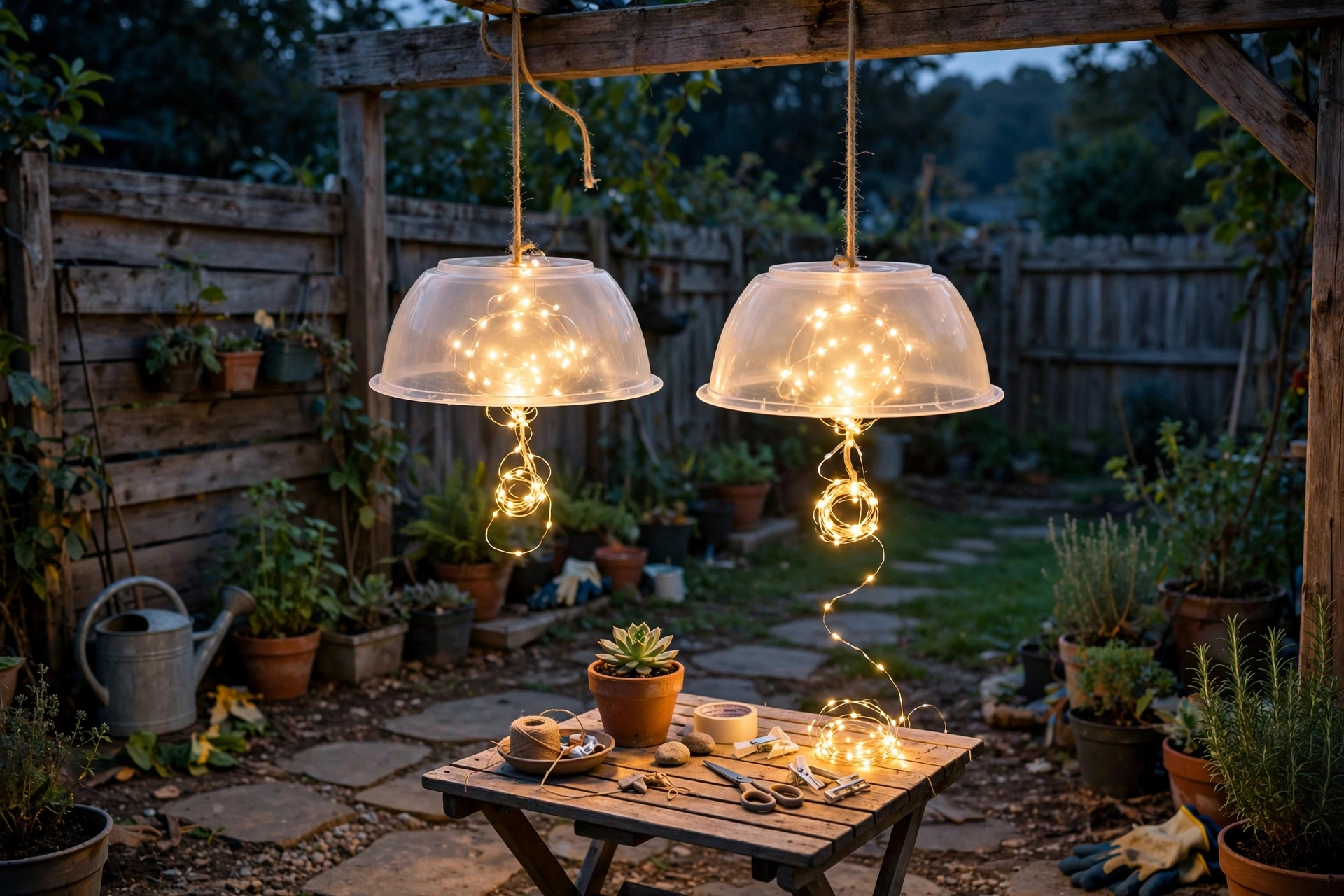
Poke a small hole in the bottom of a dollar store plastic bowl, thread a fairy strand through so the bulk of the lights hang below the bowl, and hang the bowl upside-down as a pendant shade. The bowl bounces light downward onto tables. Choose translucent or frosted bowls, not opaque ones.
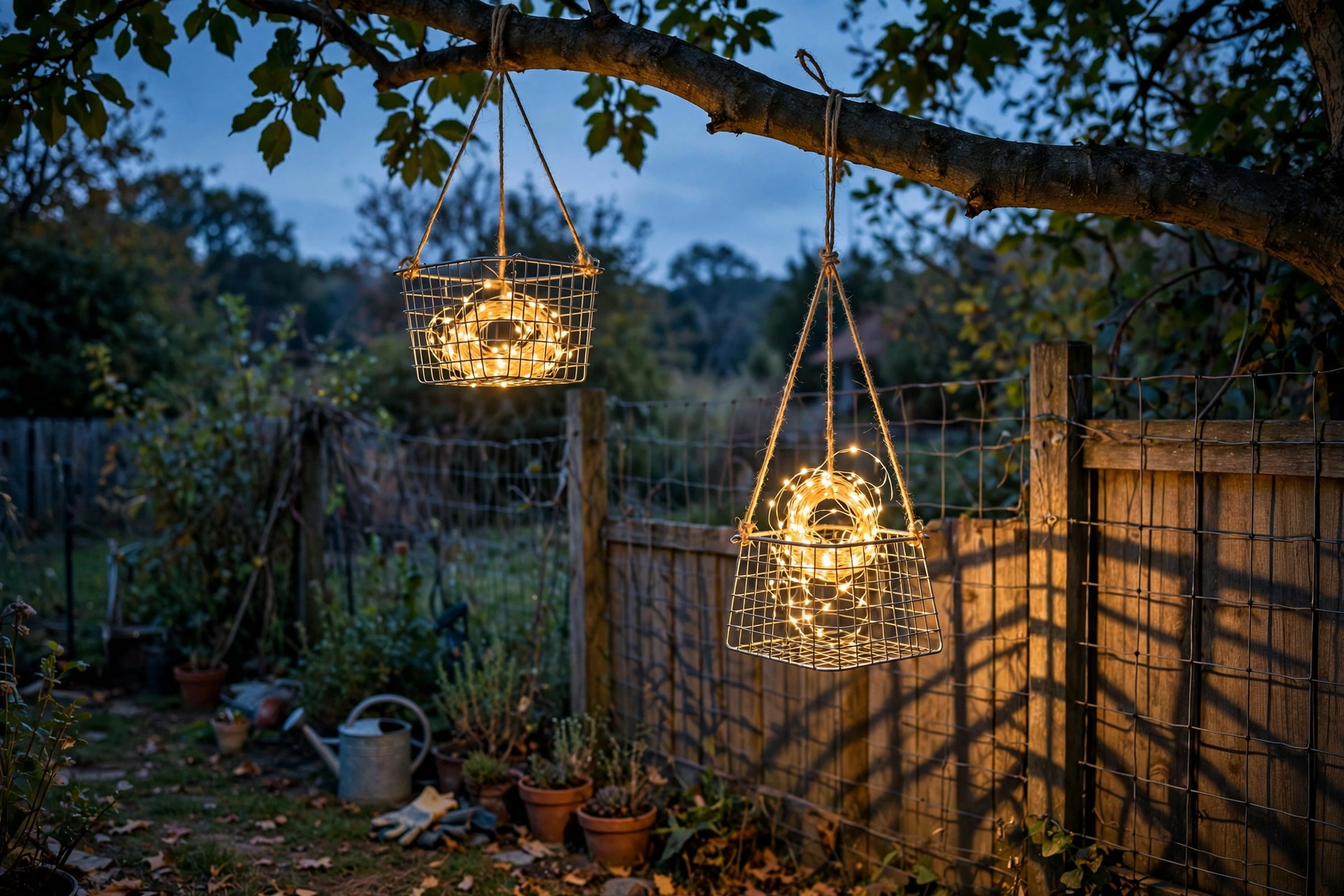
8. Wire Basket Cage Lights
Turn a wire storage basket upside down over a coiled fairy strand to make an industrial-style cage pendant. Hang two or three at different heights from a branch or beam with twine. The wire grid creates fantastic shadow patterns on nearby surfaces.
9. Paper Lantern Globe Covers
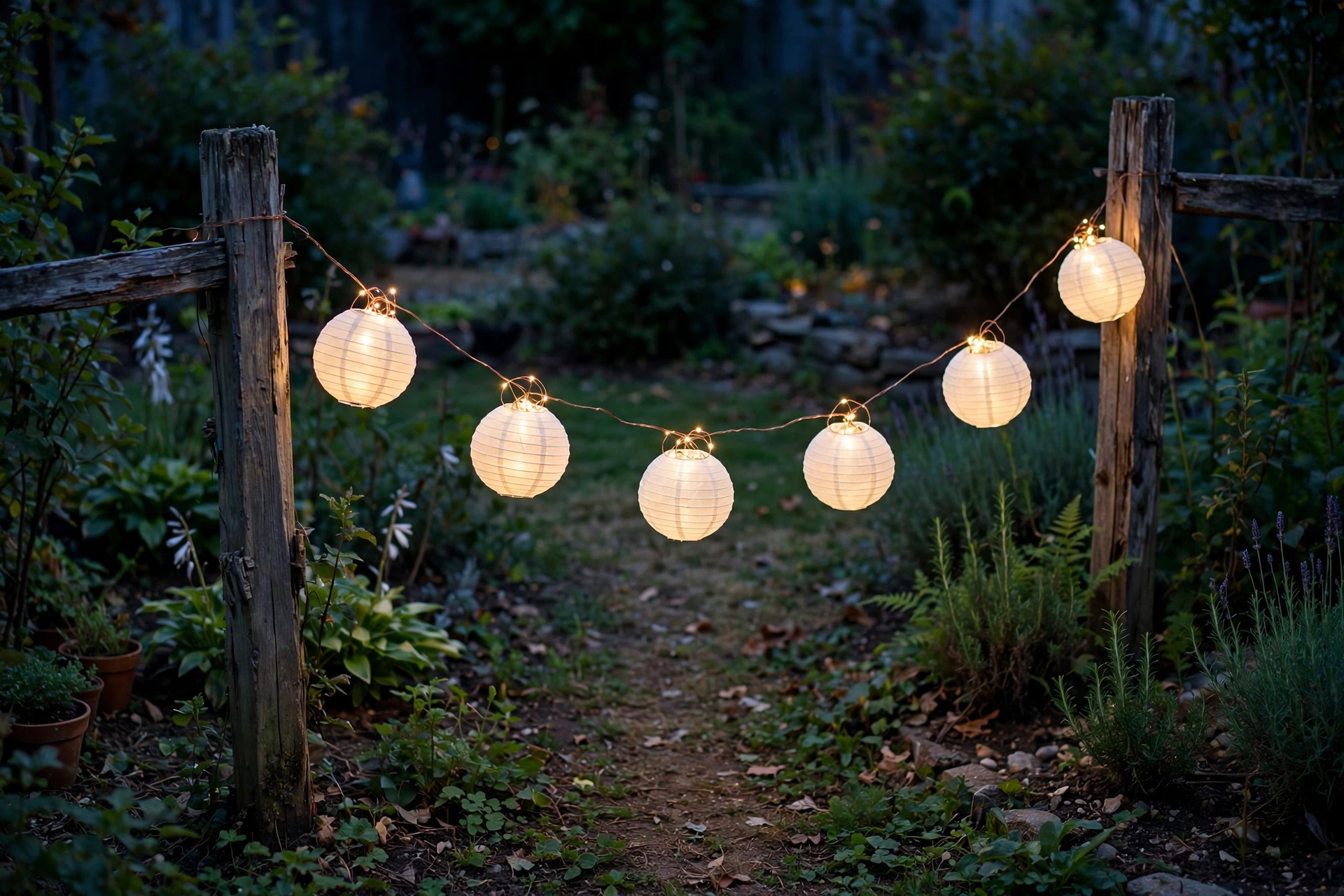
Slip round paper lanterns (often a dollar or two each) over sections of a fairy strand, spacing them evenly. The paper turns each cluster of tiny bulbs into a soft glowing globe. Use only LED fairy lights, which stay cool — never pair paper with anything that generates heat.
10. Solar Stake and Jar Path Markers
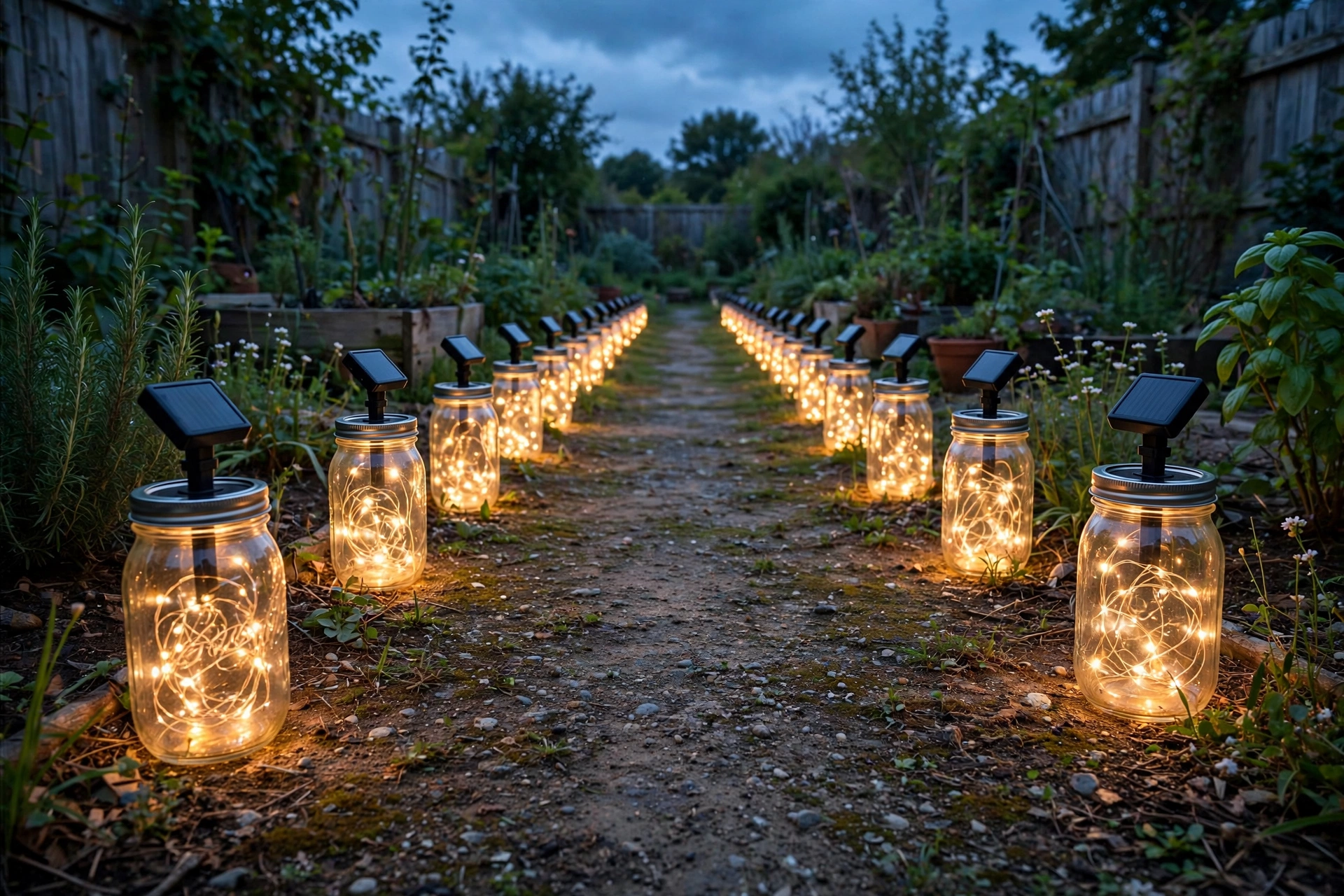
Buy the cheapest solar path stakes, pop the little solar top off, and drop it into the lid of a mason jar with a fairy strand coiled inside. You now have a solar mason jar lantern for a couple of dollars. Line the garden path with them; they charge by day and glow all evening with zero batteries to replace.
Quick Buying & Safety Tips
- Check the battery type before you buy. Most dollar store strands use button cells or AAAs. Rechargeable batteries pay for themselves within weeks if you run these lights nightly.
- Look for a timer mode. Many cheap strands have a tiny button cycling through steady, flash, and timer modes. The 6-hours-on, 18-hours-off timer mode is gold: set it once and the lights run themselves.
- Keep battery packs dry. The strands are usually water-resistant, but the battery boxes are not. Tuck packs under jar lids, inside zip bags, or under covered spots, and bring them in during heavy storms.
- LEDs only near anything flammable. Fairy lights are LEDs and run cool, which is why the paper, plastic, and fabric hacks in this list are safe. Never substitute old incandescent mini-lights into these projects.
- Buy more than you think you need. At this price, grab double. Strands are short, projects always need one more, and matching sets disappear from shelves fast.
- Reinforce flimsy wire. The copper wire kinks if you look at it wrong. Coil and uncoil gently, and once a strand is placed in its jar or hoop, leave it there for the season.
- Plan the battery budget. Ten strands running nightly on disposable batteries adds up. A bulk pack of rechargeables plus one charger is the real dollar store power move.
Frequently Asked Questions
Are dollar store fairy lights safe outdoors?
The LED strands themselves are low-voltage and generally fine in normal weather, but the battery packs are the weak point — they are not waterproof. Keep battery boxes sheltered and bring the lights in during severe storms. For permanent year-round installations, invest in proper outdoor-rated strands instead.
How long do dollar store fairy light batteries last?
On the built-in timer mode (usually 6 hours on per night), a set of fresh alkaline batteries lasts roughly one to two weeks. Rechargeable batteries last a similar time per charge but can be reused hundreds of times, which changes the economics completely.
Can I make dollar store fairy lights solar powered?
Yes, with the jar-lid trick in idea 10: mount a cheap solar stake top into a jar lid so it charges the strand’s area by day. Alternatively, buy solar fairy strands outright — they cost a few dollars more than battery ones but eliminate batteries forever.
Will cheap fairy lights survive rain?
Light rain, yes; downpours, maybe not. The thin wire and tiny LEDs handle moisture surprisingly well, but wind-whipped rain drives water into connections and battery boxes. Treat them as seasonal decor: glorious all summer, stored away for winter.
The Real Hack
The real hack was never the lights. It is the permission to play. When each strand costs less than a greeting card, you stop worrying about getting it perfect and start trying things — and trying things is how backyards end up magical. Grab a handful of strands this week, pick the hack that made you smile, and see what happens after dark.