
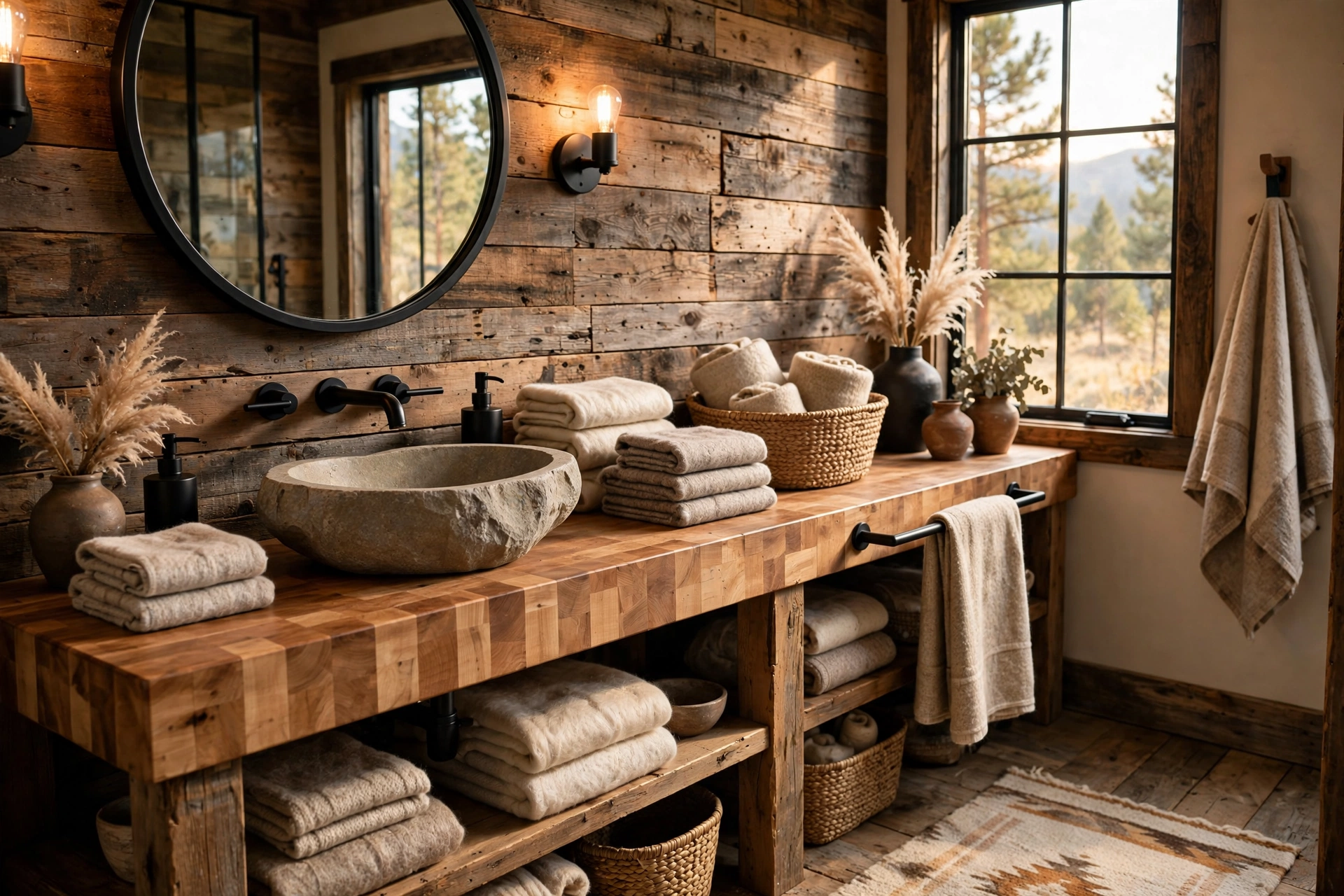
A western bathroom built on natural textures feels like a well-worn saddle: rugged, honest, and comfortable in a way that never tries too hard. Wood with visible grain, stone with rough edges, leather that creases, wool that pills — these materials age gracefully and ask for nothing. These western bathroom ideas show you how to layer warm natural textures into a bathroom that’s equal parts ranch house and retreat.
Start with the biggest surfaces — floor, walls, vanity — and let texture lead. Color stays in the background: warm neutrals, saddle browns, stone grays.
1. Clad one wall in reclaimed barn wood
A single wall of genuine reclaimed boards — nail holes, saw marks, and all — gives the room instant history. Source from a local reclaimed dealer and ask for interior-grade stock that’s already kiln-dried. Seal every board front and back with matte polyurethane rated for bathrooms, and keep it on a wall away from direct shower spray.
2. Choose a stone vessel sink
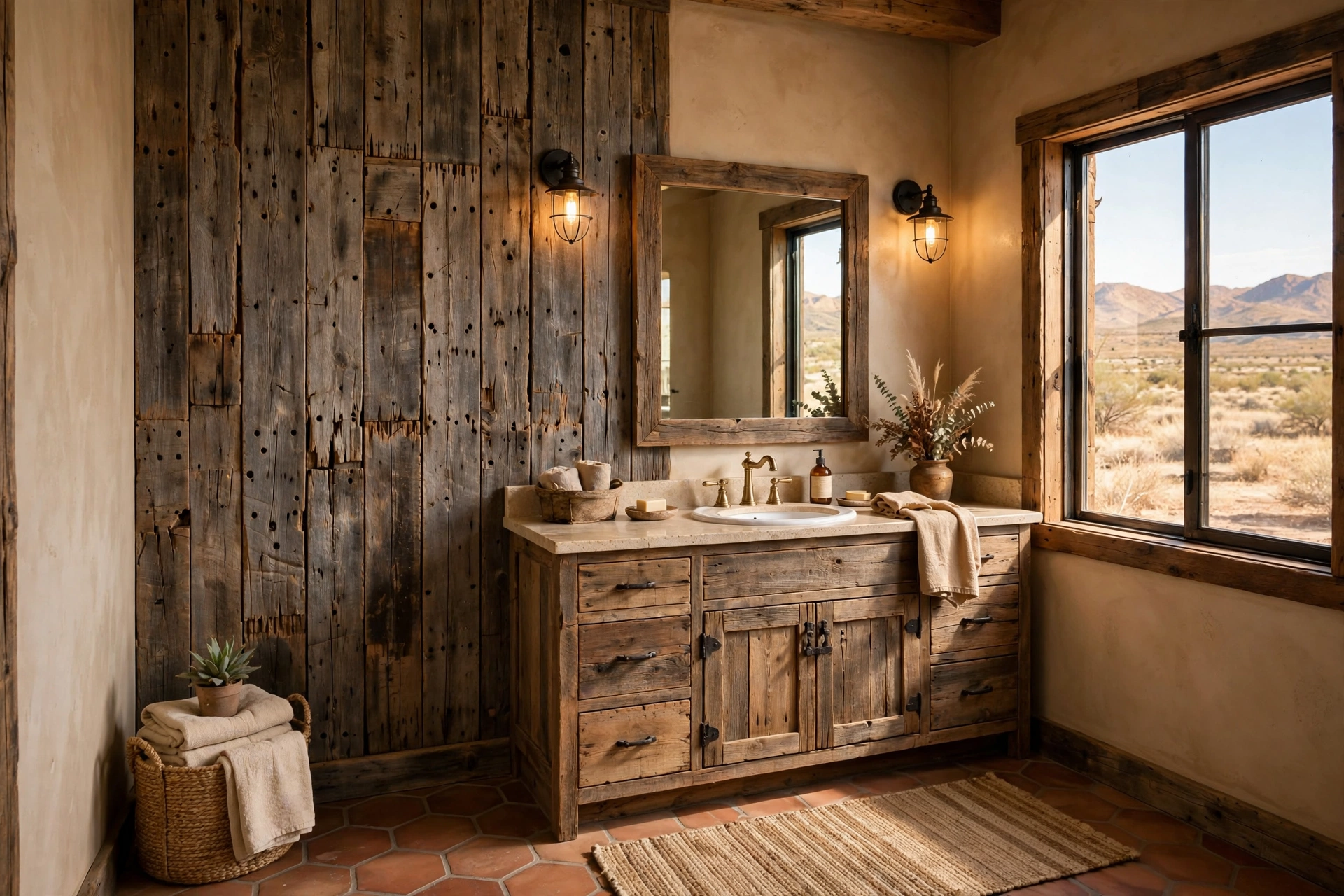
A sink carved from travertine, marble, or river stone is a functional sculpture. Each one is unique, with veining and texture no factory can replicate. They’re heavy, so confirm your vanity can carry the weight, and seal natural stone annually to prevent staining.
3. Lay wood-look plank tile on the floor
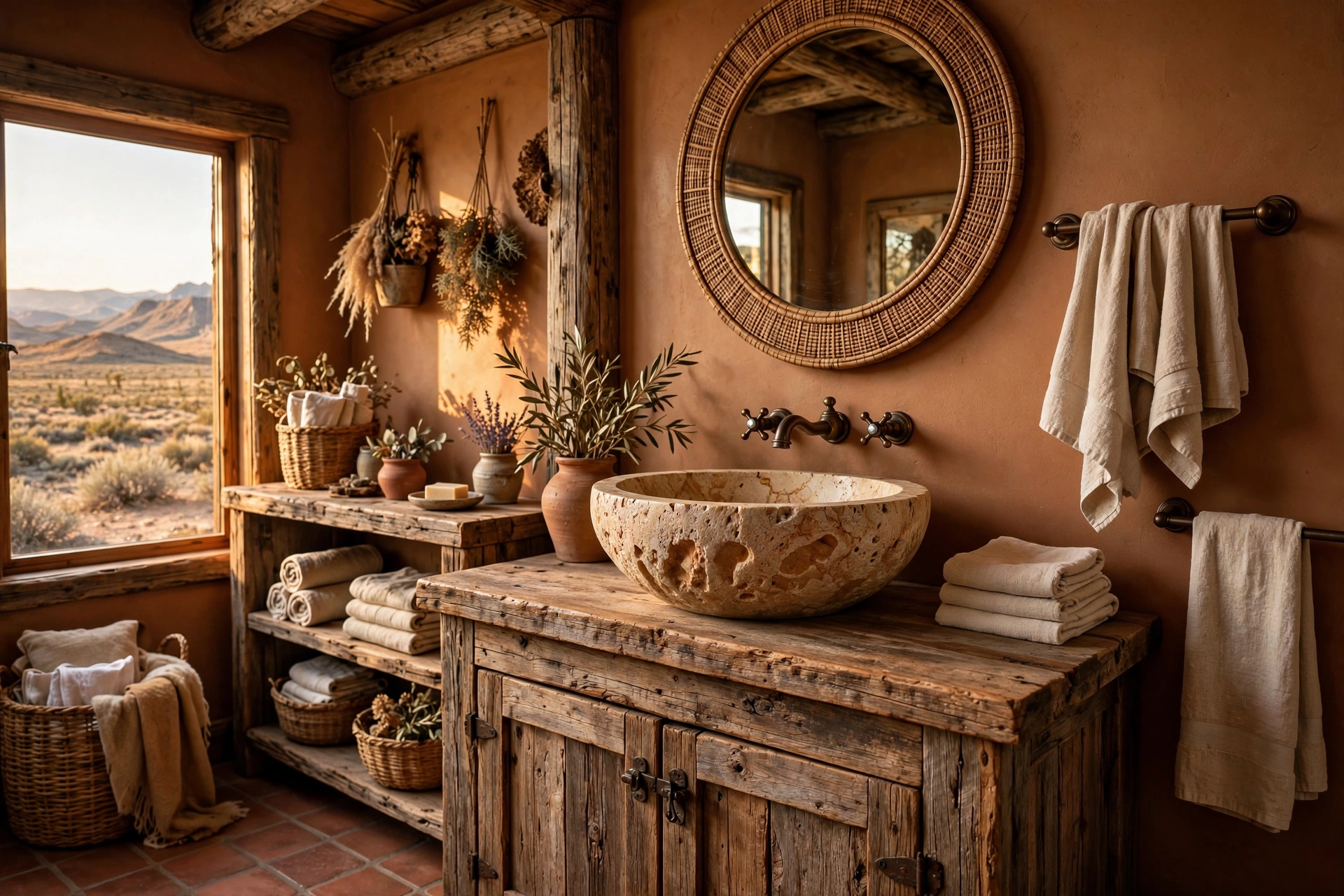
Real wood and standing water are enemies, but wood-look porcelain plank tile gives you the grain without the worry. Choose long planks with strong color variation and a matte finish, and run them in a staggered pattern. It reads as a ranch-house wood floor and mops up like tile.
4. Top the vanity with butcher block
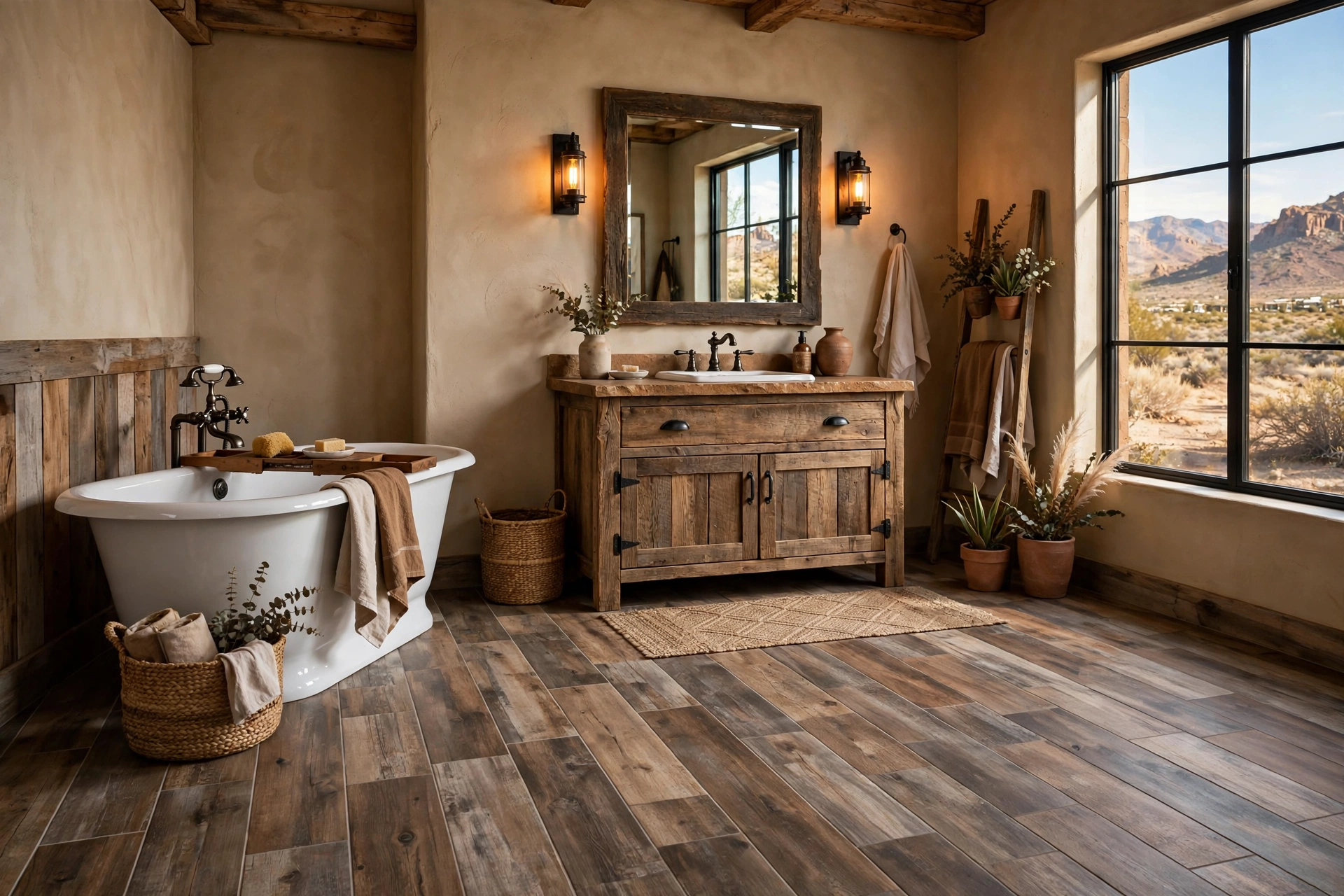
A thick butcher-block counter brings warmth that stone can’t match. Maple, walnut, or acacia all work; oil finishes look most natural but need re-oiling, while marine varnish is nearly maintenance-free. Wipe up standing water promptly and the top will serve for decades.
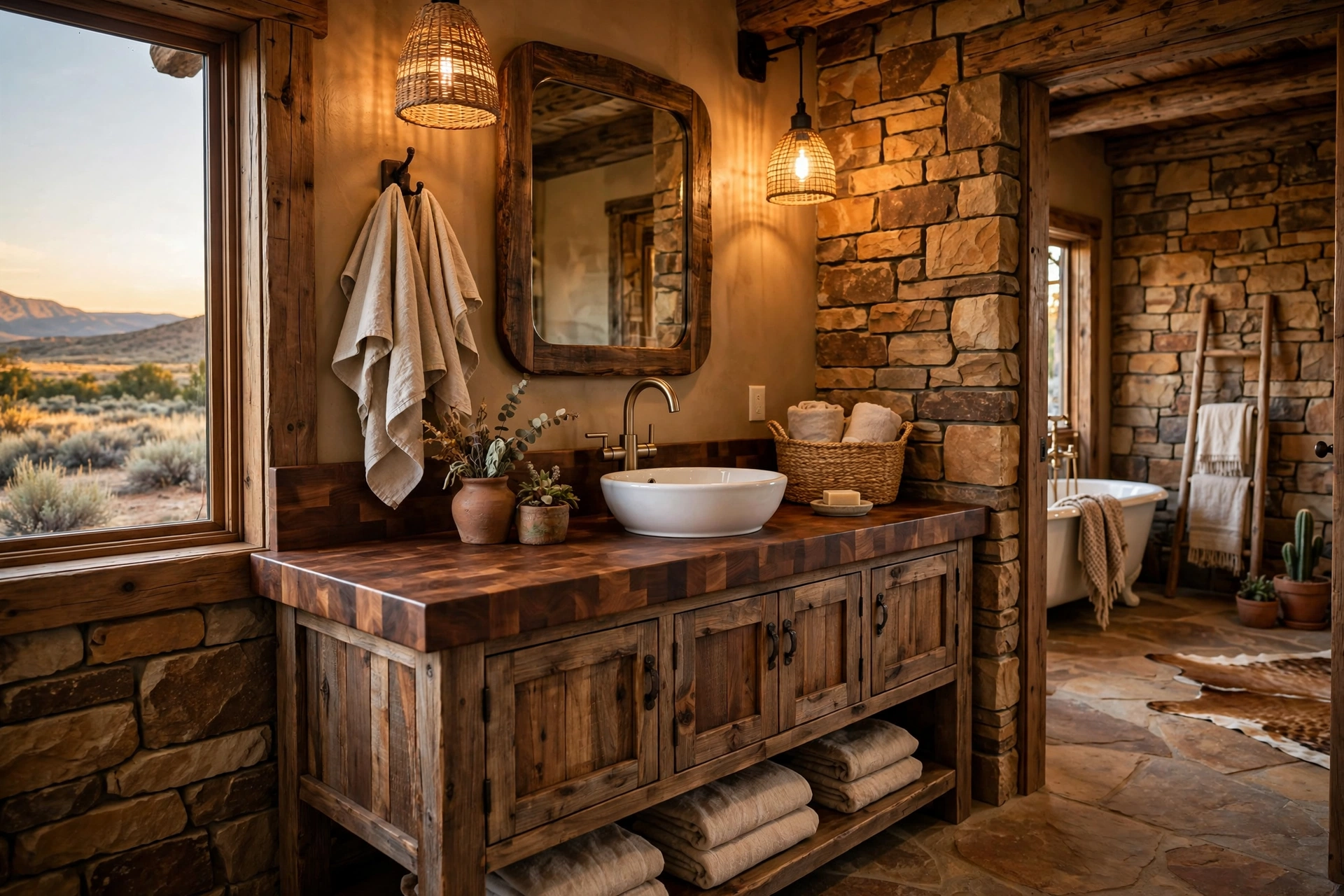
5. Hang a mirror framed in rough-hewn timber
A chunky timber frame — bark edge optional — turns a simple mirror into a statement. Keep the profile slim enough that it doesn’t overwhelm a small vanity, and mount it with French cleats so the weight distributes safely. The contrast of rough wood against a clean mirror is the whole trick.
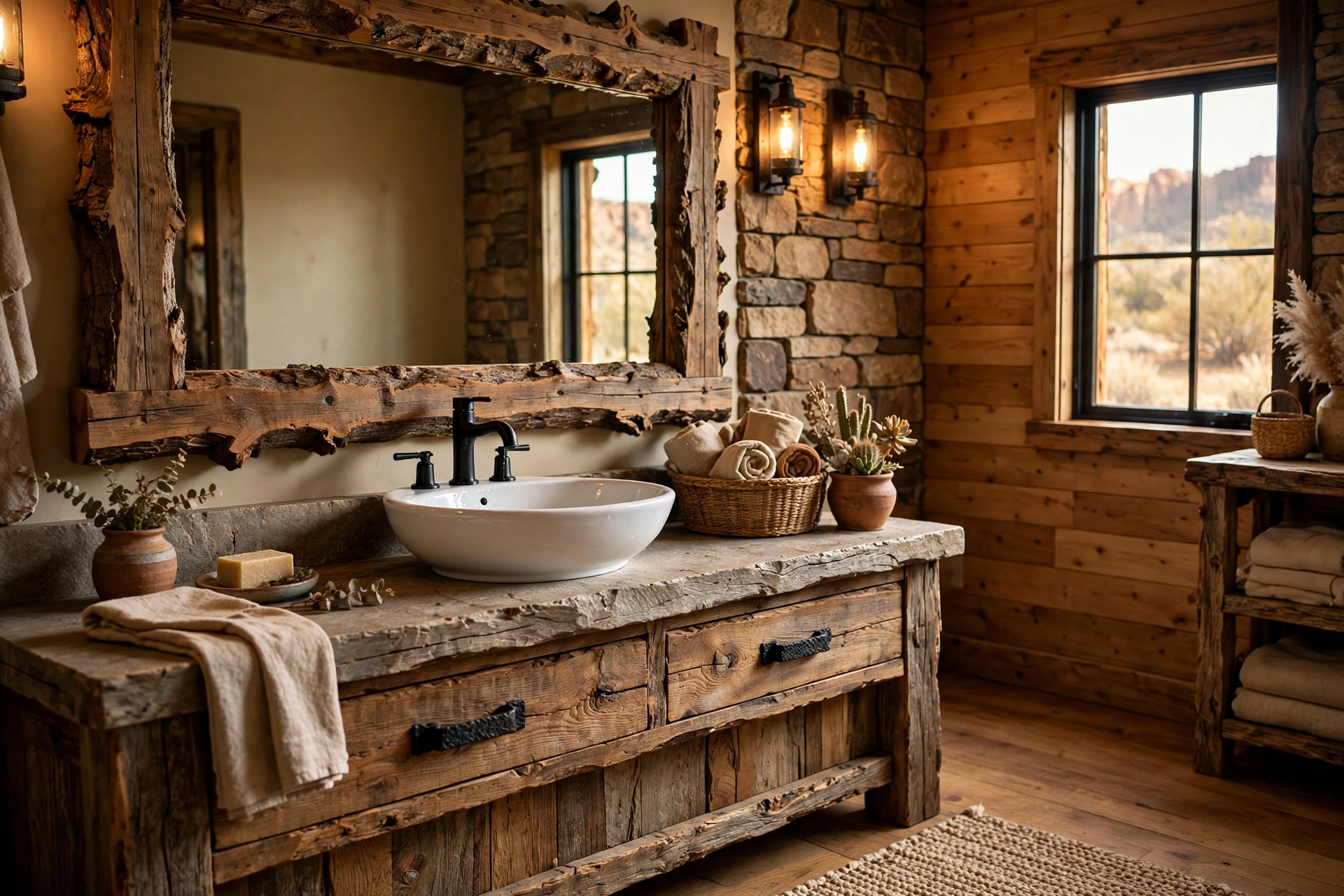
6. Use saddle leather for pulls and accents
Leather drawer pulls — simple loops of saddle leather on brass posts — soften a vanity and age beautifully. They cost little, install with a single screw each, and develop a rich patina from daily touch. Echo the leather in a small tray or a wrapped towel ring for cohesion.
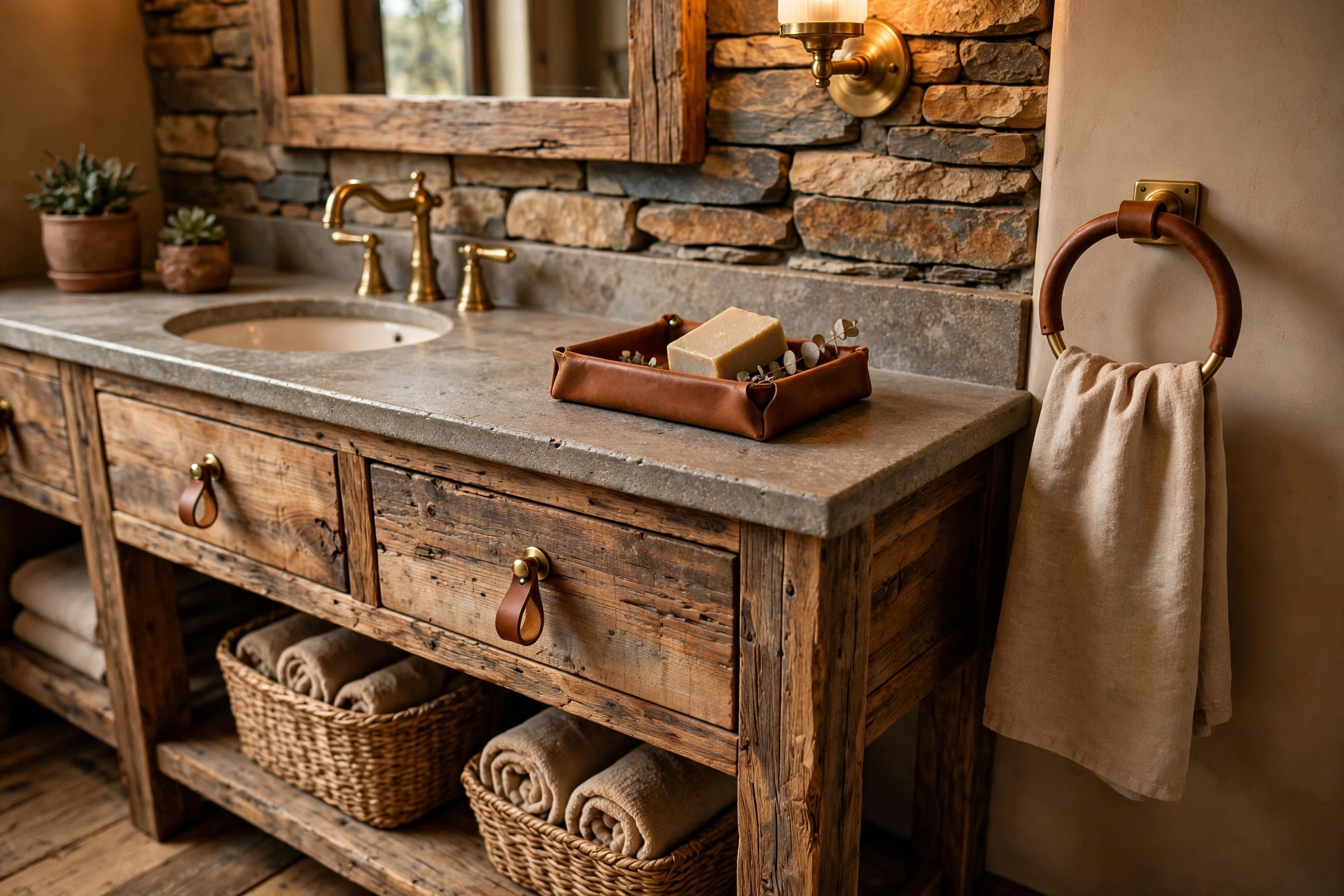
7. Add a wool or hide rug
A flat-weave wool rug in natural tones, or a small ethically sourced hide, warms up cold tile and adds the western note underfoot. Choose low-pile weaves that dry quickly, keep them out of the splash zone, and shake them out weekly. Natural fibers and bathroom humidity coexist fine with good ventilation.
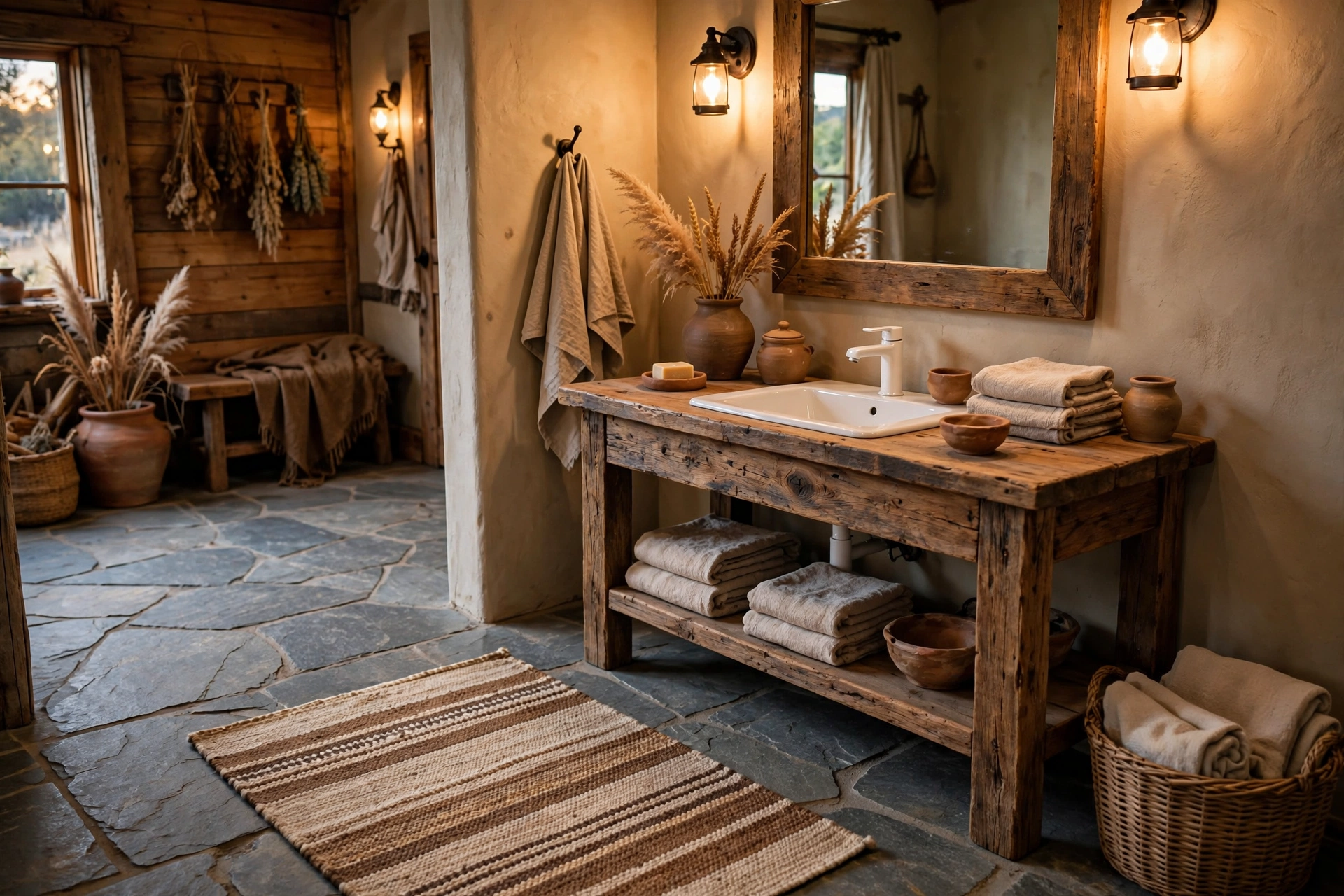
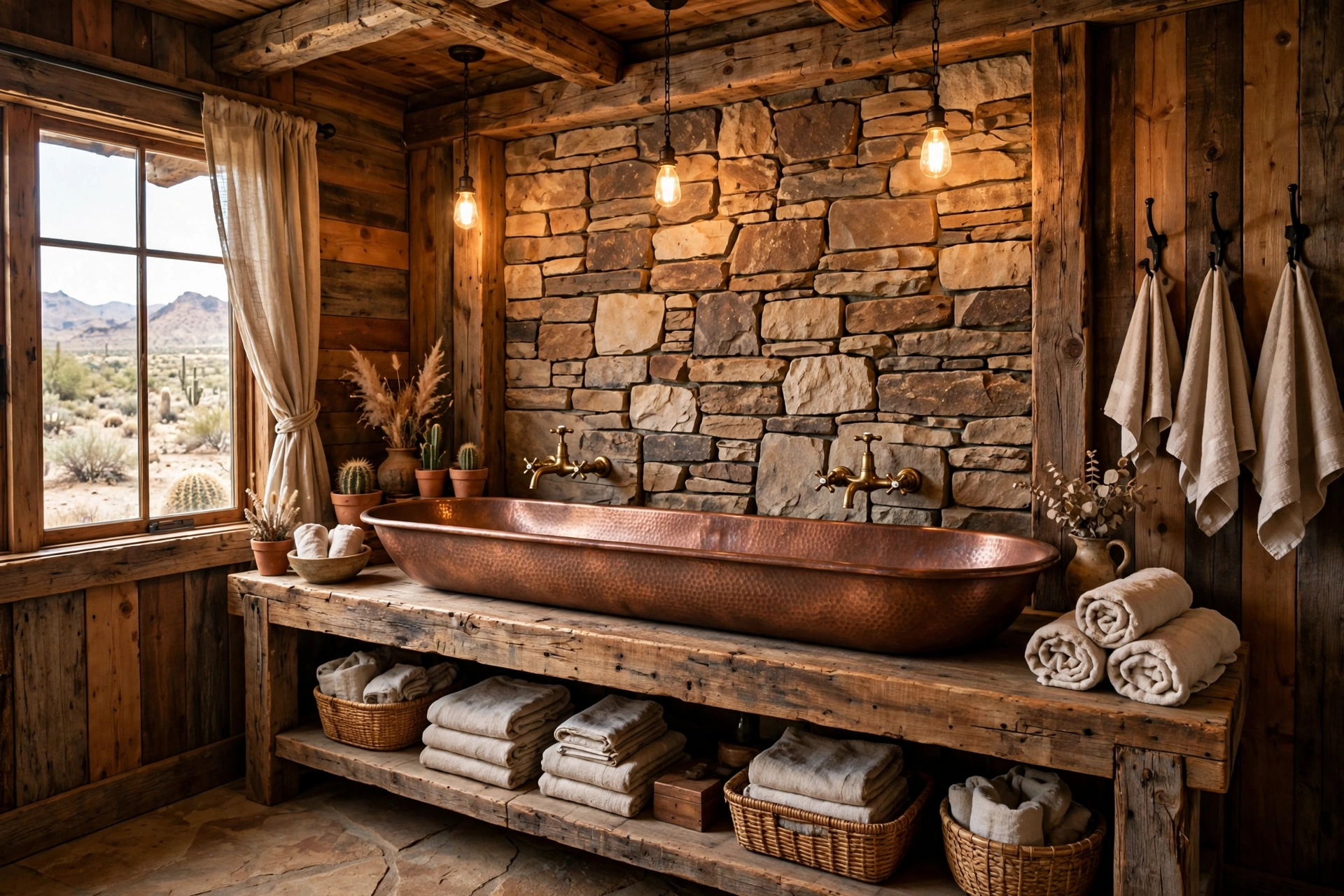
8. Install a trough-style sink for shared baths
A long trough sink — copper, stone, or even a repurposed galvanized feed trough sealed for indoor use — suits kids’ baths and guest suites with western flair. One wide trough with two faucets serves two people and becomes the room’s conversation piece. Make sure the drain and overflow are properly fitted by a plumber.
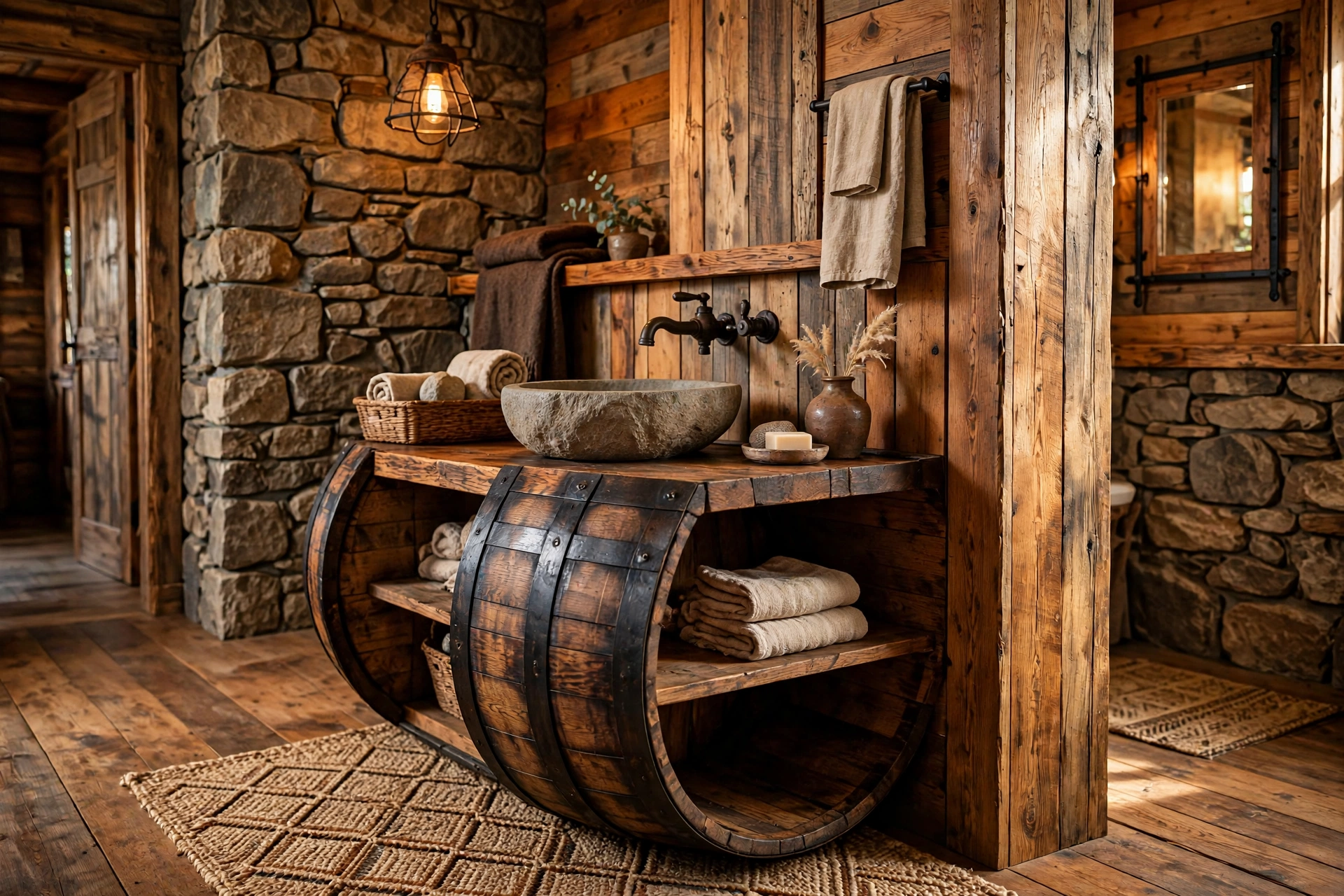
9. Bring in a whiskey-barrel vanity
A half whiskey barrel converted to a vanity base is peak western character. The charred oak staves and iron hoops need no decoration. Top it with a round stone or copper vessel sink, seal the wood thoroughly, and plumb it like any pedestal — the barrel hides everything.
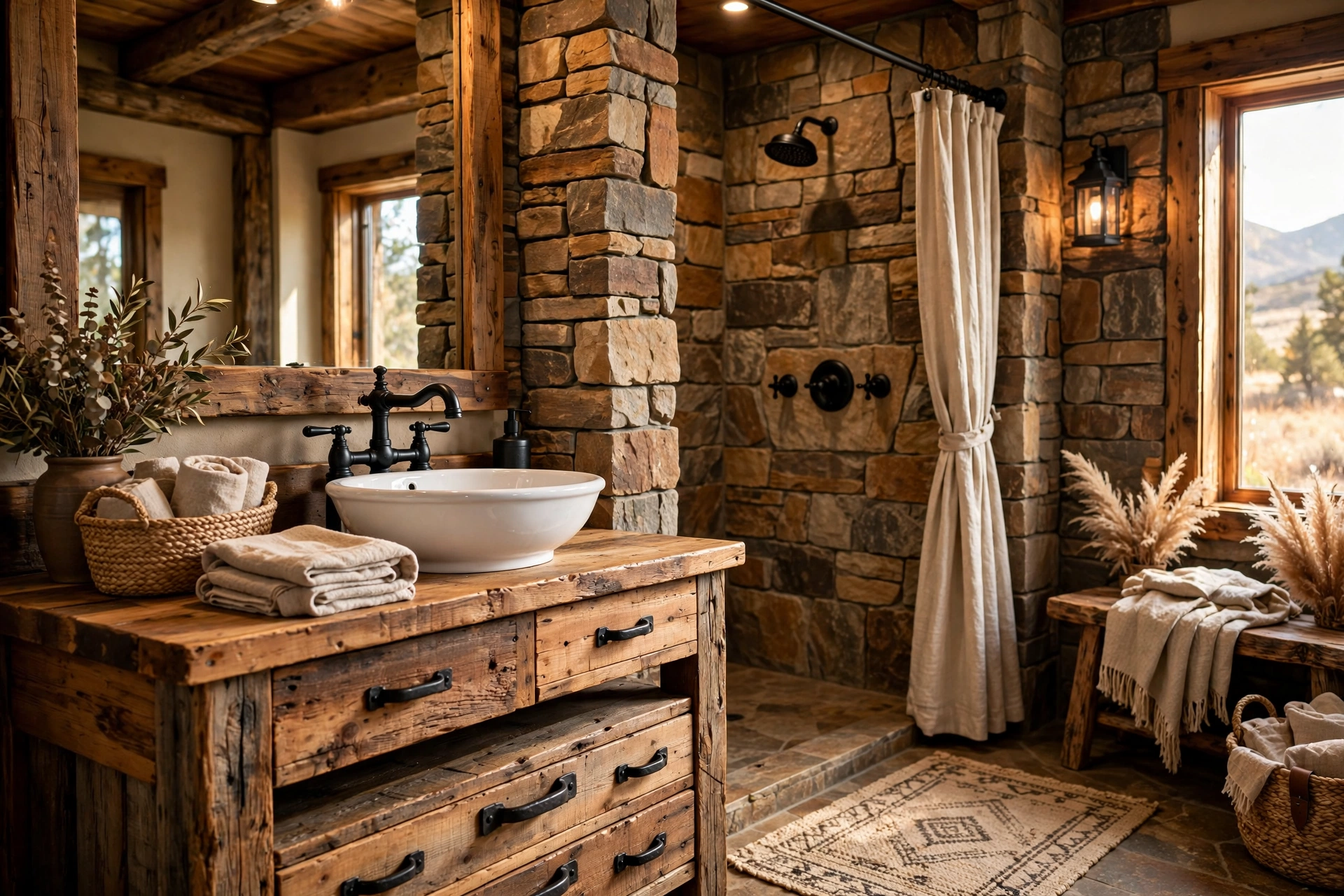
10. Choose matte black fixtures with weight
Heavy-feeling matte black faucets and shower trim ground all the natural texture. Look for solid brass bodies underneath the finish — they last decades longer than zinc. The dark metal reads as forged iron against wood and stone, which is exactly the western hardware story.
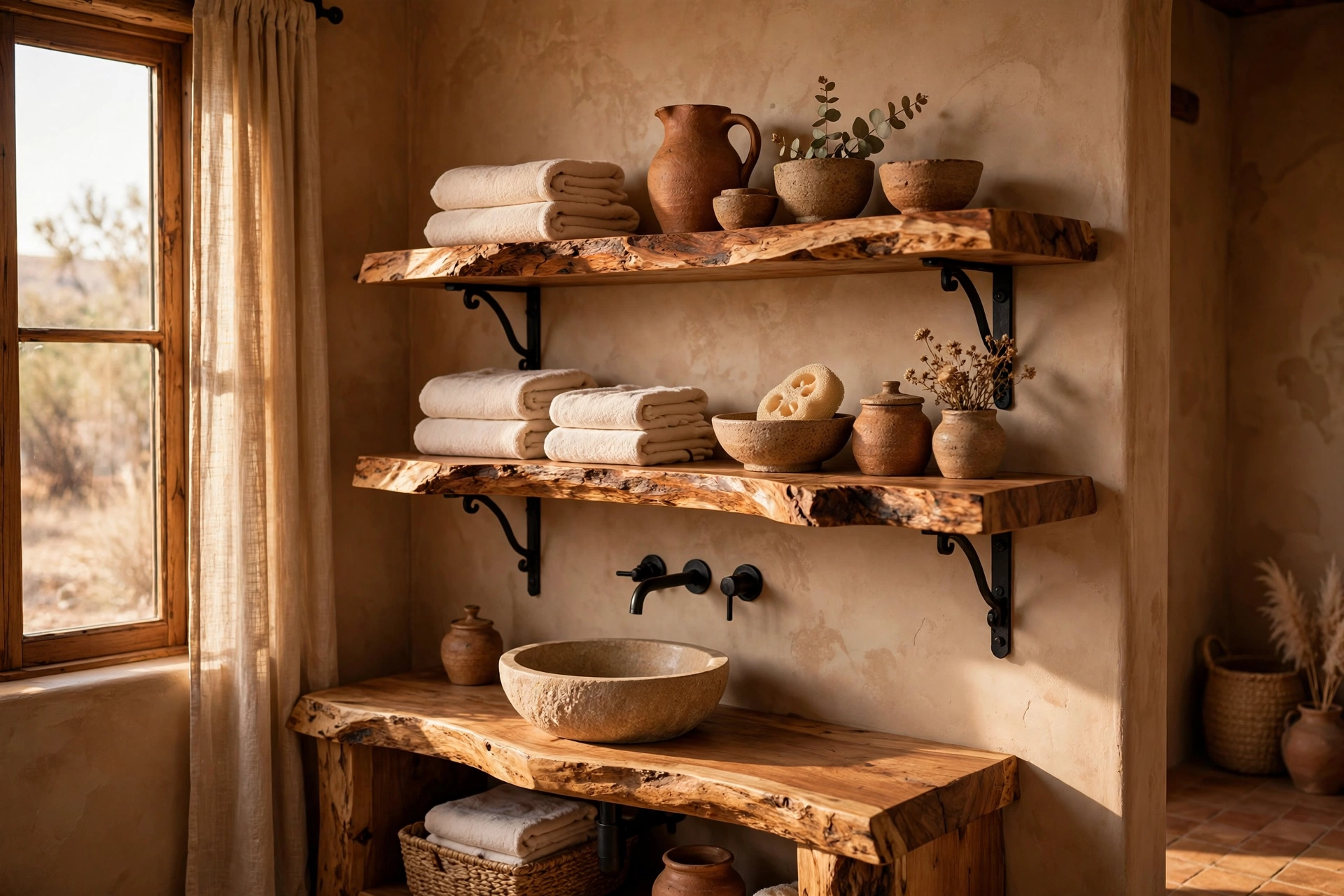
11. Stack firewood-style shelving from live-edge slabs
Two or three live-edge slabs on black iron brackets make shelves with genuine presence. The organic edges catch light and shadow in a way straight boards never do. Sand the live edge smooth enough to avoid splinters, seal well, and style with folded towels and stoneware.
12. Tile the shower in natural stone mosaic
Pebble or split-face stone mosaic on the shower floor or one accent wall brings the outdoors in. The texture underfoot feels incredible and the installation hides imperfect cuts. Use a high-quality sealer and reapply yearly — natural stone in a wet zone demands it.
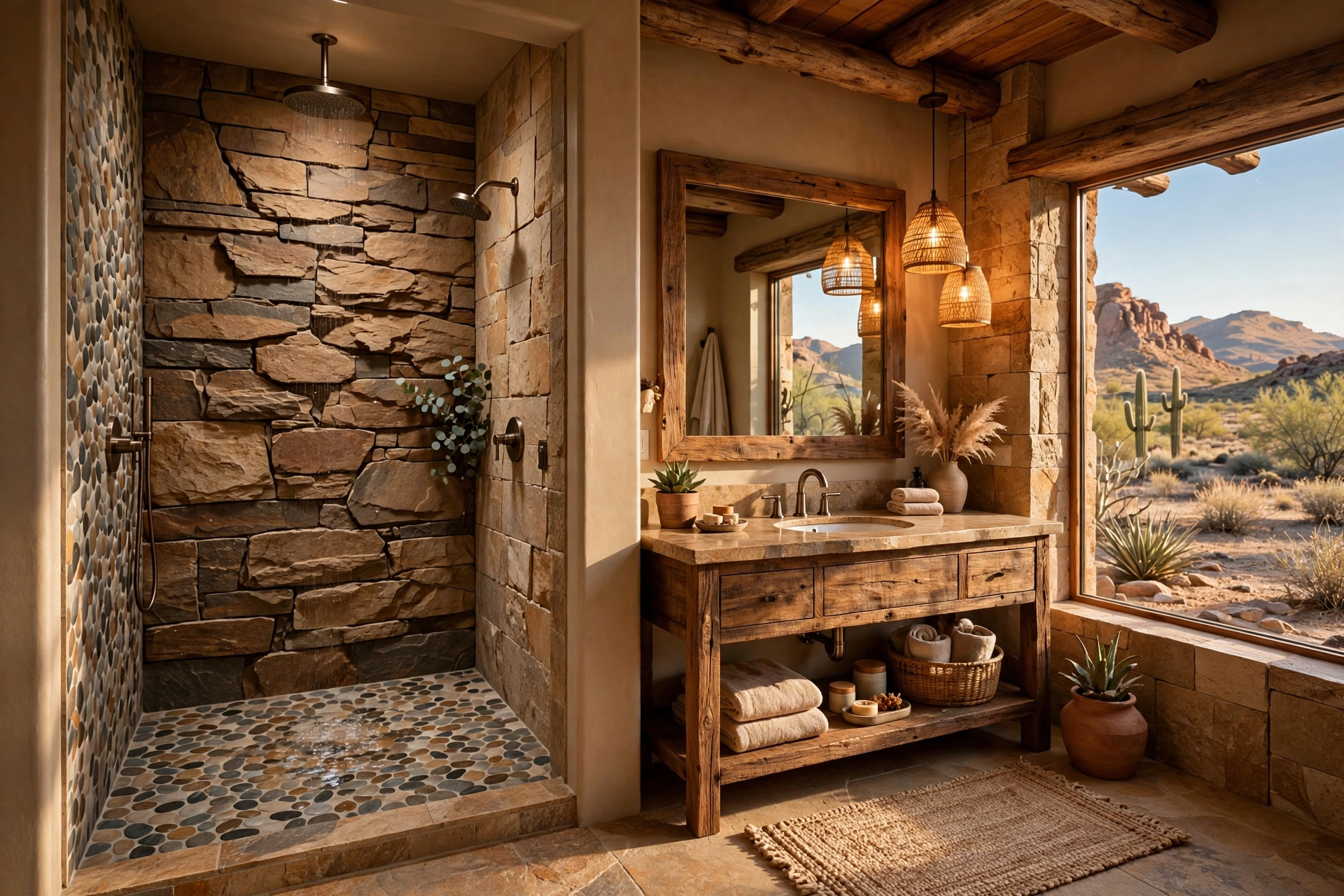
13. Hang Edison pendants on leather or rope cords
Pendant lights hung from wrapped leather or thick rope cords instead of plain wire add craft to the ceiling plane. Two pendants flanking the mirror at eye level give the best light. Choose LED Edison bulbs for the look without the heat, and keep cords away from water sources.
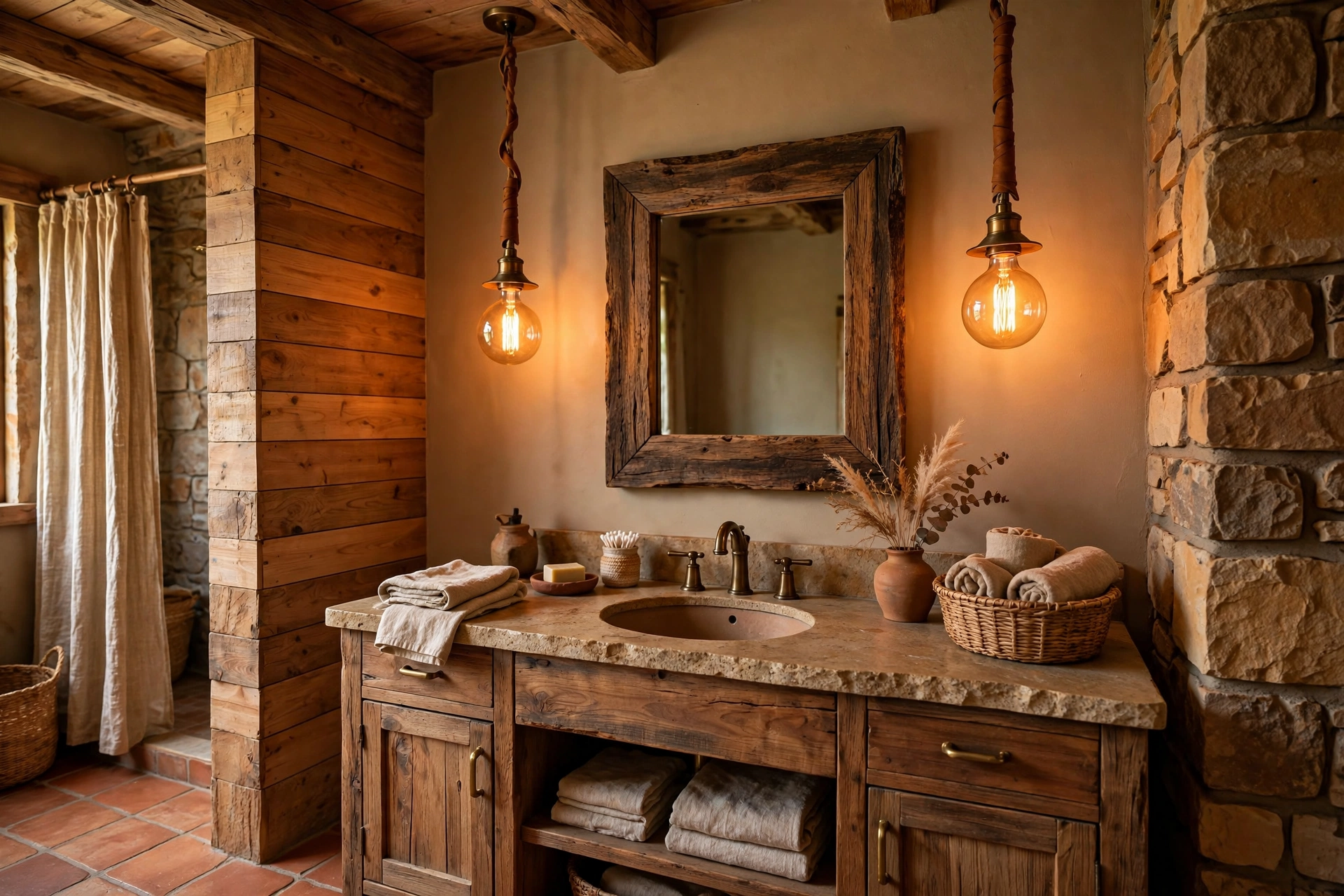
14. Add a cowhide bench or stool
A small bench upholstered in cowhide — or a wood stool draped with a hide throw — gives you a perch and a texture statement in one. Real hide is surprisingly durable in bathrooms if kept dry; position it away from the shower and it will last years.
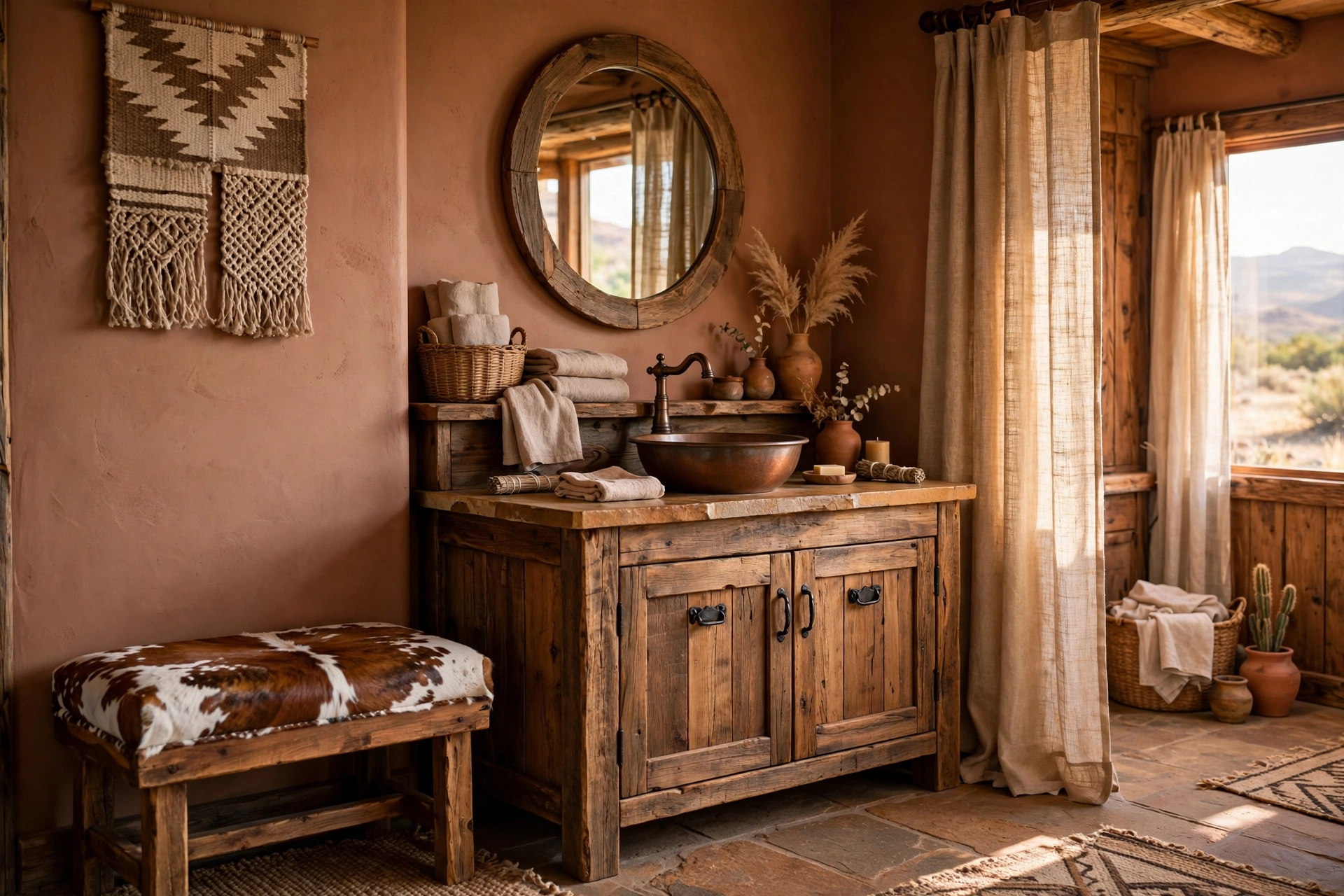
15. Use open stone-and-wood shelving in the shower
A recessed shower niche lined in the same stone as the walls, with a thick wood-look shelf, keeps bottles organized without plastic caddies. If a full niche renovation isn’t possible, a teak shower bench with a lower shelf does the same job freestanding.
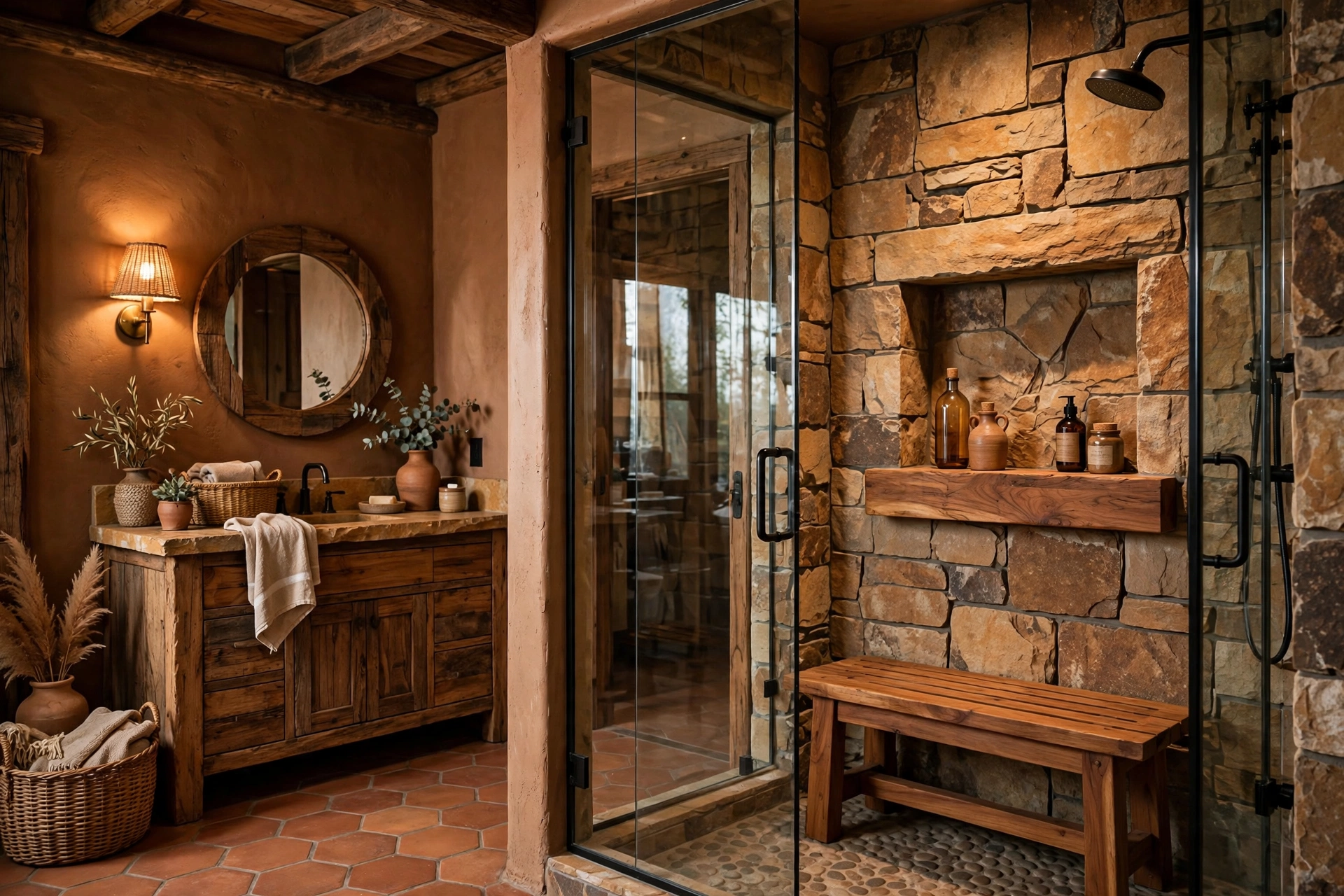
16. Frame the window with rough cedar trim
Swapping slick painted trim for rough-sawn cedar around the window adds texture at eye level for very little money. Cedar naturally resists moisture, which makes it one of the few woods genuinely suited to bathroom trim. Leave it natural or oil it lightly — paint would defeat the purpose.
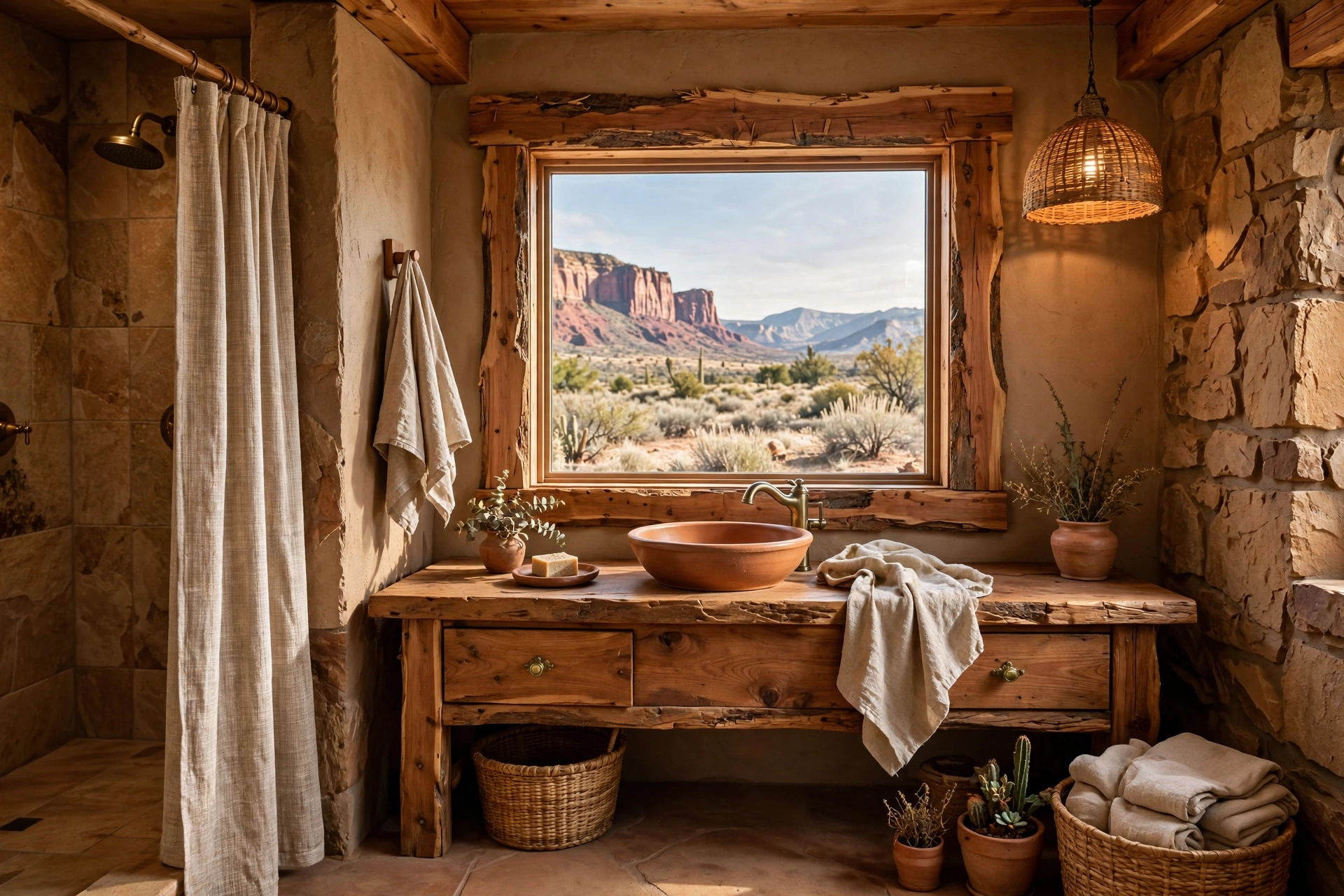
17. Choose a deep soaker tub in matte finishes
A deep freestanding soaker tub in matte white or matte stone composite suits the natural-material palette better than glossy acrylic. The soft finish absorbs light instead of reflecting it, which keeps the room calm. Pair with a floor-mounted filler in matte black for the full effect.
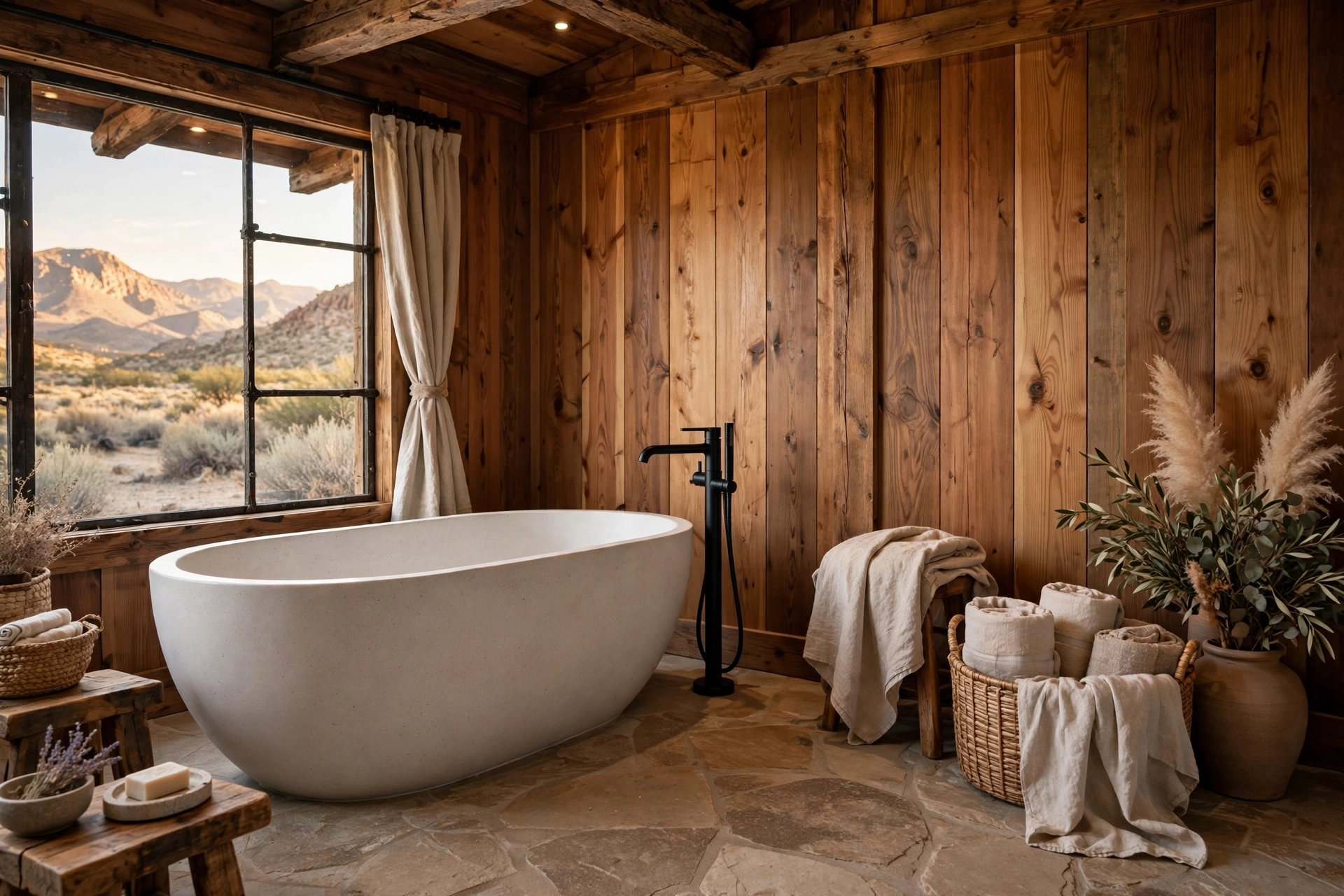
18. Weave in wool textiles: towels and curtains
Thick wool-blend or heavy cotton towels in oatmeal, rust, and charcoal add the soft texture hard surfaces need. A shower curtain in a natural weave — not shiny vinyl — completes the textile story. Wash new wool-blend textiles separately the first time; natural fibers shed initially.
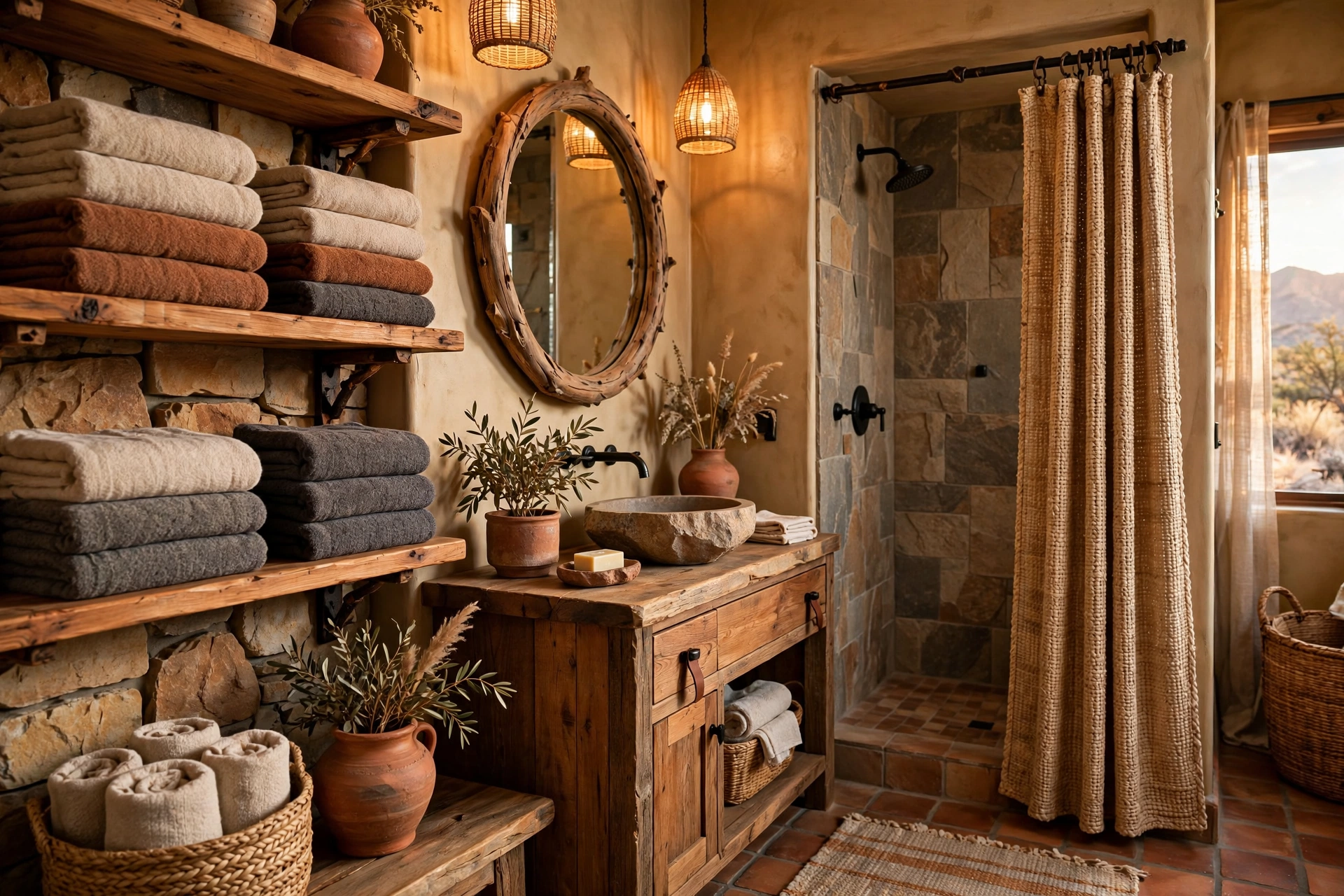
19. Display antler sheds and found wood
A naturally shed antler on the wall or a beautiful piece of driftwood on a shelf brings the landscape inside with zero cost. Use only naturally shed antlers, mount them securely with proper hardware, and keep found wood sealed if it’s anywhere near moisture.
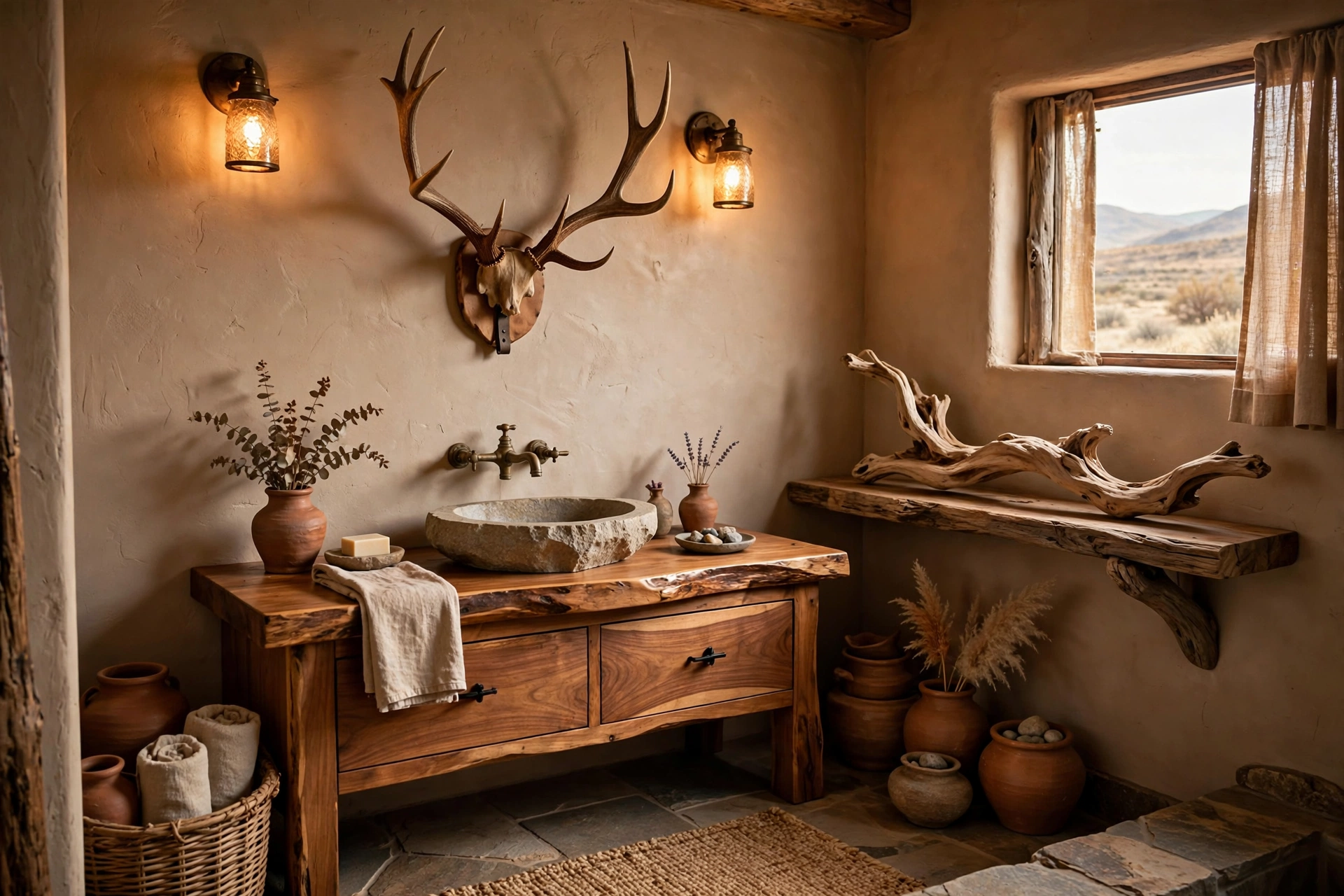
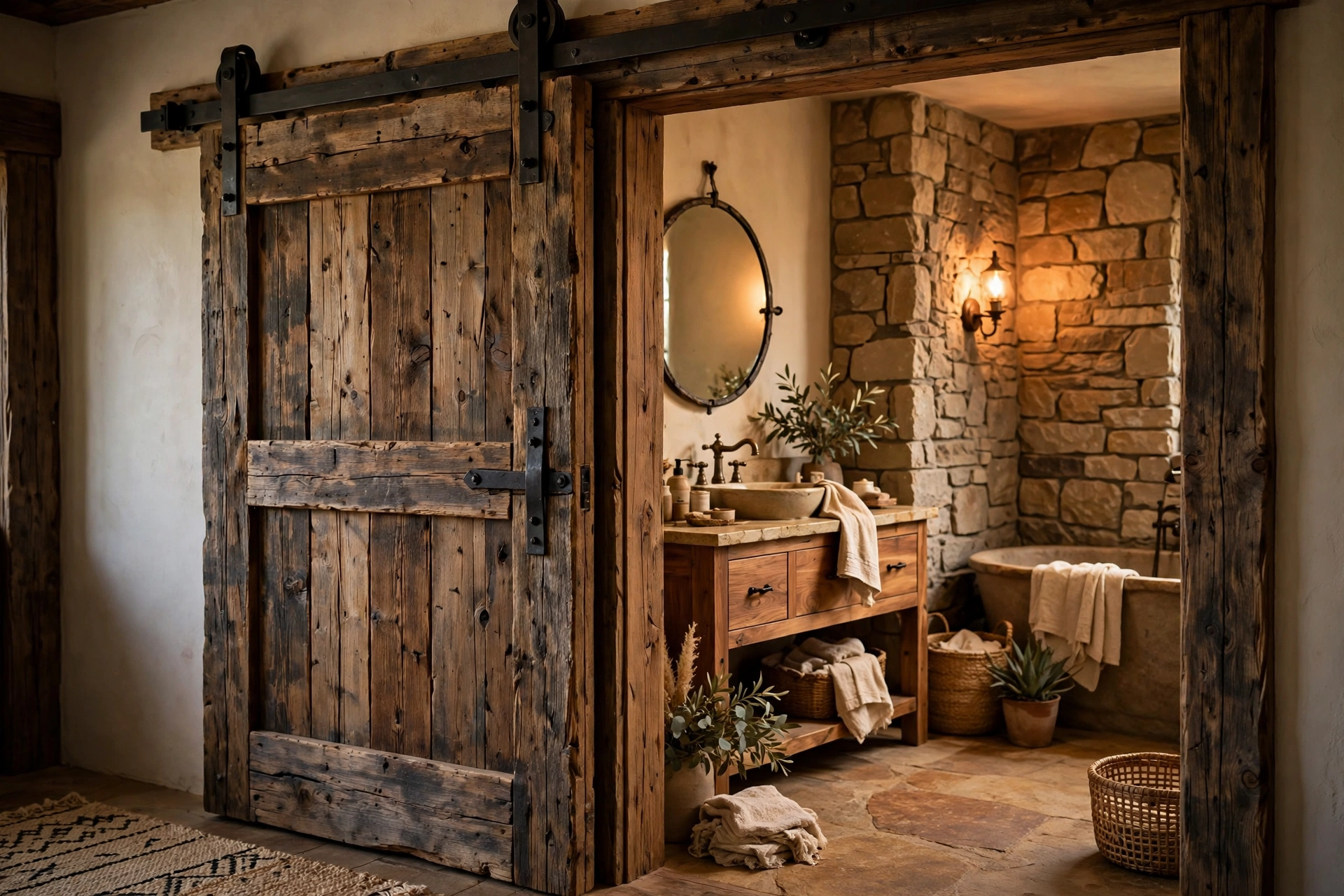
20. Install a sliding door on iron rail hardware
A thick wood door sliding on exposed black iron rail hardware saves space and delivers the ranch-house moment. The rail becomes a design feature, so choose one with substantial rollers and a soft-close mechanism. This works for both bathroom entries and linen closets.
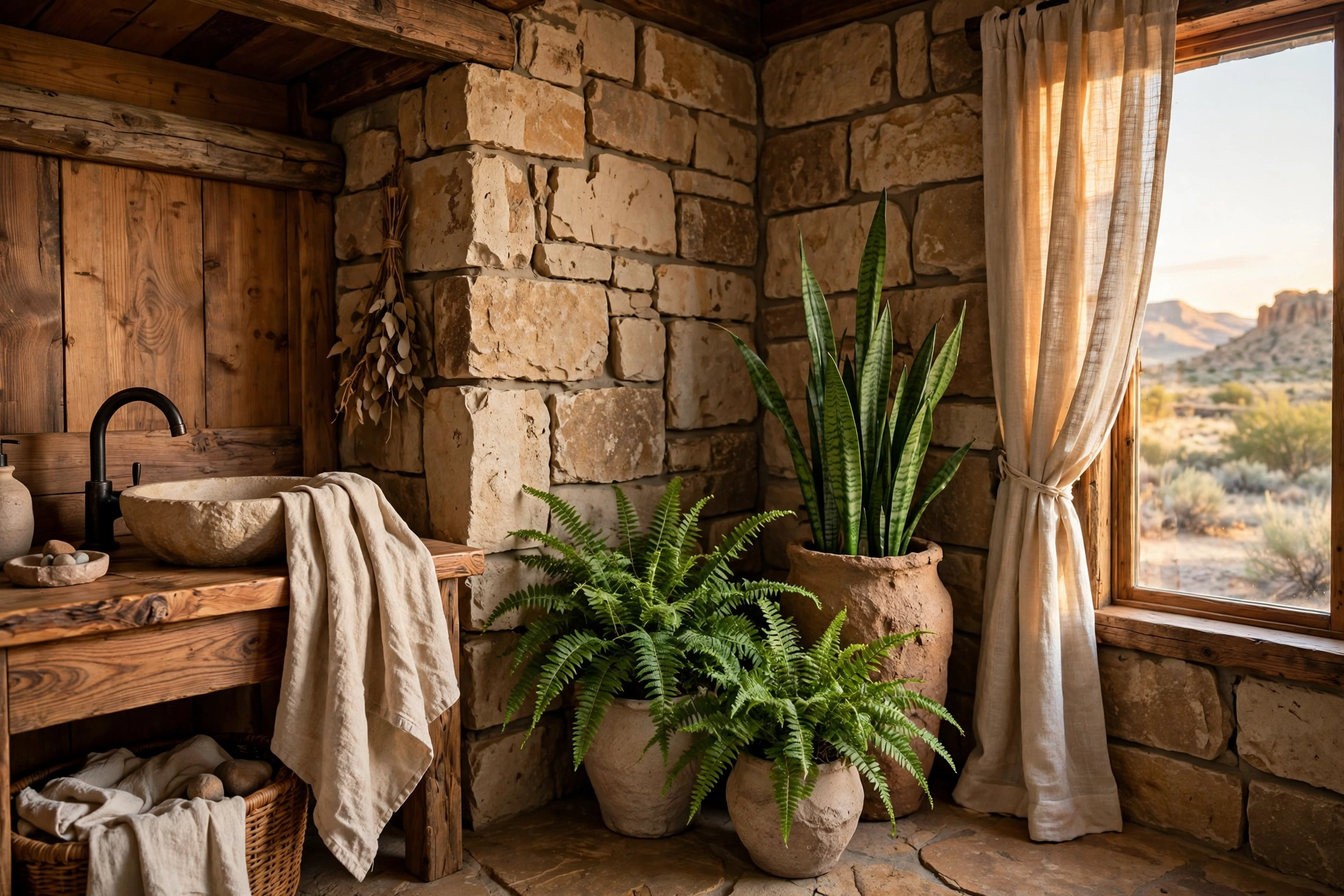
21. Add potted greenery in stone and clay pots
Plants soften all that rugged texture. A tall snake plant in a rough clay pot, or ferns in handmade stoneware, bring life to corners. Natural-material pots — clay, stone, unglazed ceramic — keep the material story consistent; avoid glossy plastic at all costs.
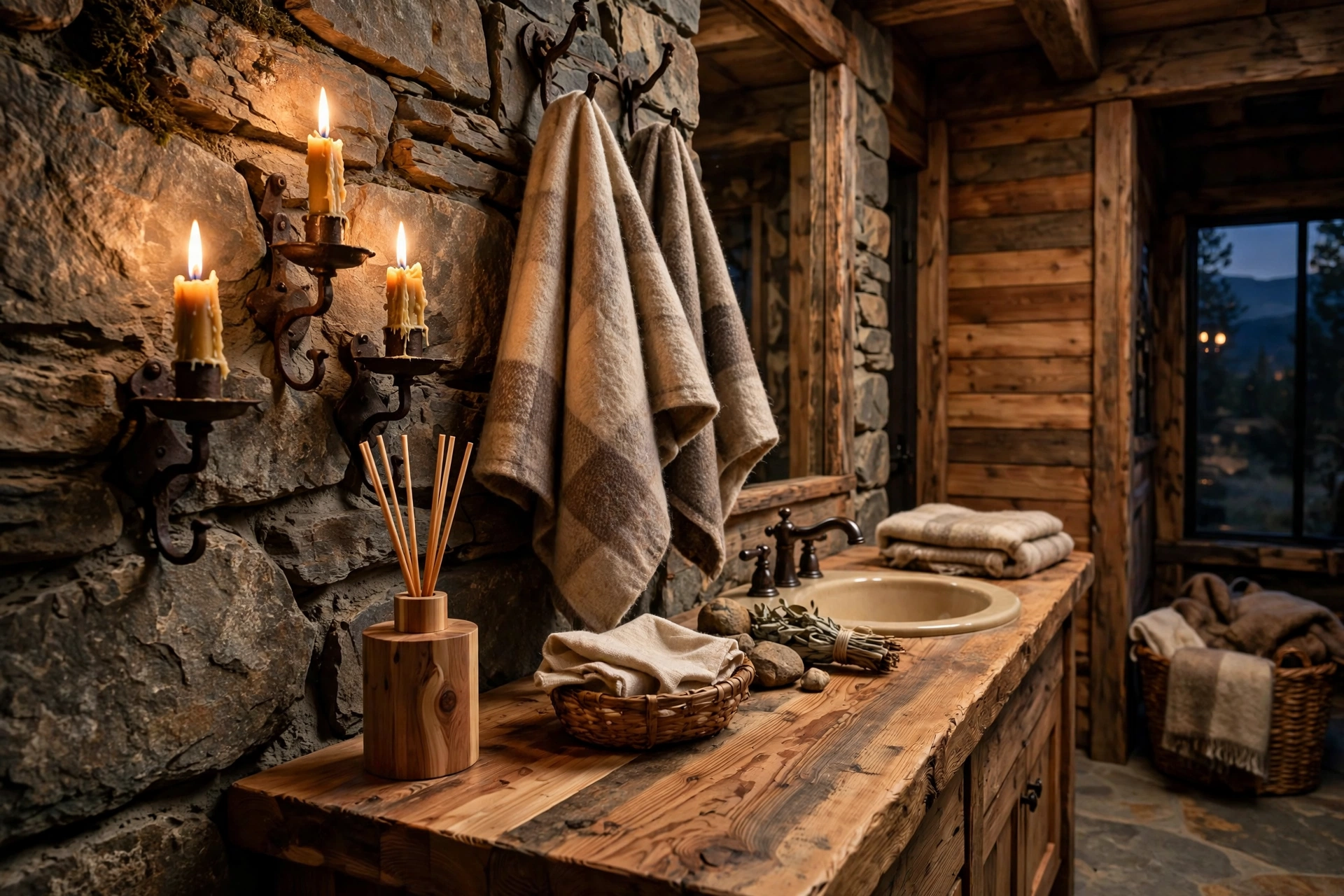
22. Finish with beeswax candles and cedar scent
The final layer is atmosphere: beeswax candles in iron holders, a cedarwood diffuser, folded wool throws on a hook. Natural scent and flickering light make texture-rich rooms feel finished. Keep candles away from towels and never leave them burning unattended.
Quick Styling Tips
- Color palette: Warm white, saddle brown, stone gray, and blackened bronze. Let the materials provide the interest and keep colors quiet.
- Texture is the pattern: In this style you don’t need wallpaper or busy prints — grain, weave, and rough stone are decoration enough.
- Lighting: Warm 2700K bulbs with dimmers. Natural materials look best in warm light; cool light makes wood look flat and gray.
- Bathroom plants: Snake plants, ZZ plants, and pothos handle humidity and low light. Display them in clay or stone pots to match the material palette.
- Budget sourcing: Reclaimed lumber dealers sell shorts and offcuts cheaply — perfect for shelves, mirror frames, and accent walls. Salvage yards are goldmines for troughs and barrels.
- Seal for the wet zone: Every natural material near water needs protection: marine varnish for wood, penetrating sealer for stone, ventilation for textiles.
- One rough, one smooth: Balance each rugged texture with something refined — a rough wood wall with a sleek stone sink — so the room feels designed, not unfinished.
Frequently Asked Questions
Won’t all that wood get damaged in a bathroom?
Not if you choose and seal correctly. Cedar and teak resist moisture naturally; everything else gets marine-grade sealer on all six sides. The real key is ventilation — run the exhaust fan during and 20 minutes after every shower.
How do I keep a texture-heavy bathroom from feeling dark?
Keep the two biggest surfaces light: a pale floor and warm-white walls or ceiling. Texture reads through light and shadow, so it actually shows better in a bright room than a dark one.
What’s the best budget entry point?
A wood-look plank tile floor or a butcher-block vanity top gives you the biggest texture impact per dollar. Both are weekend-scale projects with transformative results.
Can I mix western textures with modern fixtures?
Absolutely — that’s the sweet spot. A sleek matte-black faucet against reclaimed wood, or a minimalist mirror in a timber frame, keeps the room current while the textures provide the soul.
A western bathroom built on natural textures only gets better with time. Wood deepens, leather softens, stone settles into itself. Choose honest materials, protect them well, and you’ll have a bathroom with the kind of character that can’t be bought — only built, one texture at a time.