
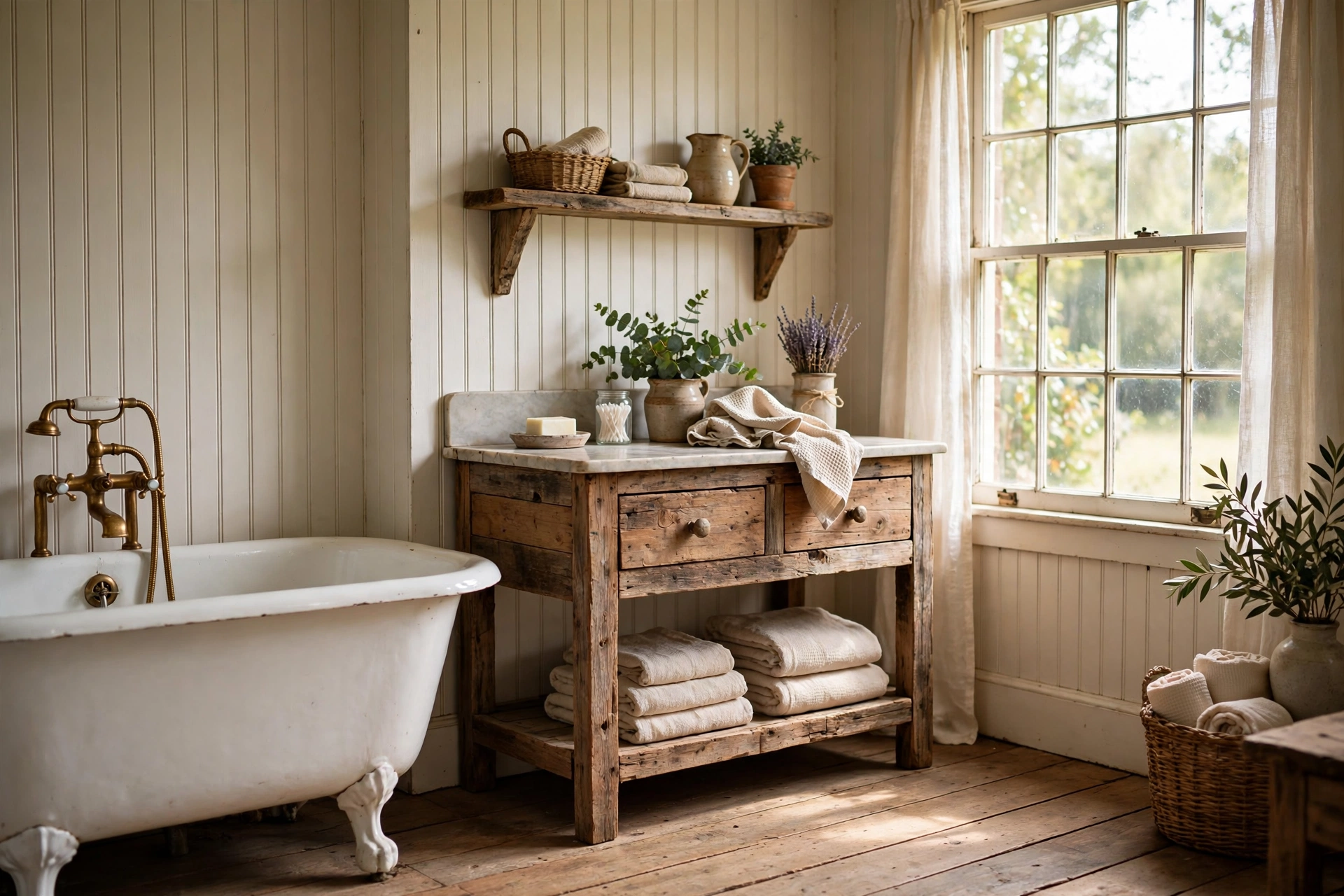
A vintage farmhouse bathroom is the one room where “old” is a compliment. Chippy paint, worn wood, a faucet that looks like it has stories to tell — these details give a bathroom the kind of character a brand-new renovation never can. The good news is you don’t need a 100-year-old house to get the look. Most of these vintage farmhouse bathroom ideas are weekend projects built around salvage finds, paint, and texture.
The trick is balance. One or two genuinely old pieces — a mirror, a vanity, a light fixture — do more work than a room full of reproduction “farmhouse style” accessories. Start with an anchor piece, then layer in texture around it. Here are twenty ideas to build a bathroom with real rustic character.
1. Set a clawfoot tub as the centerpiece
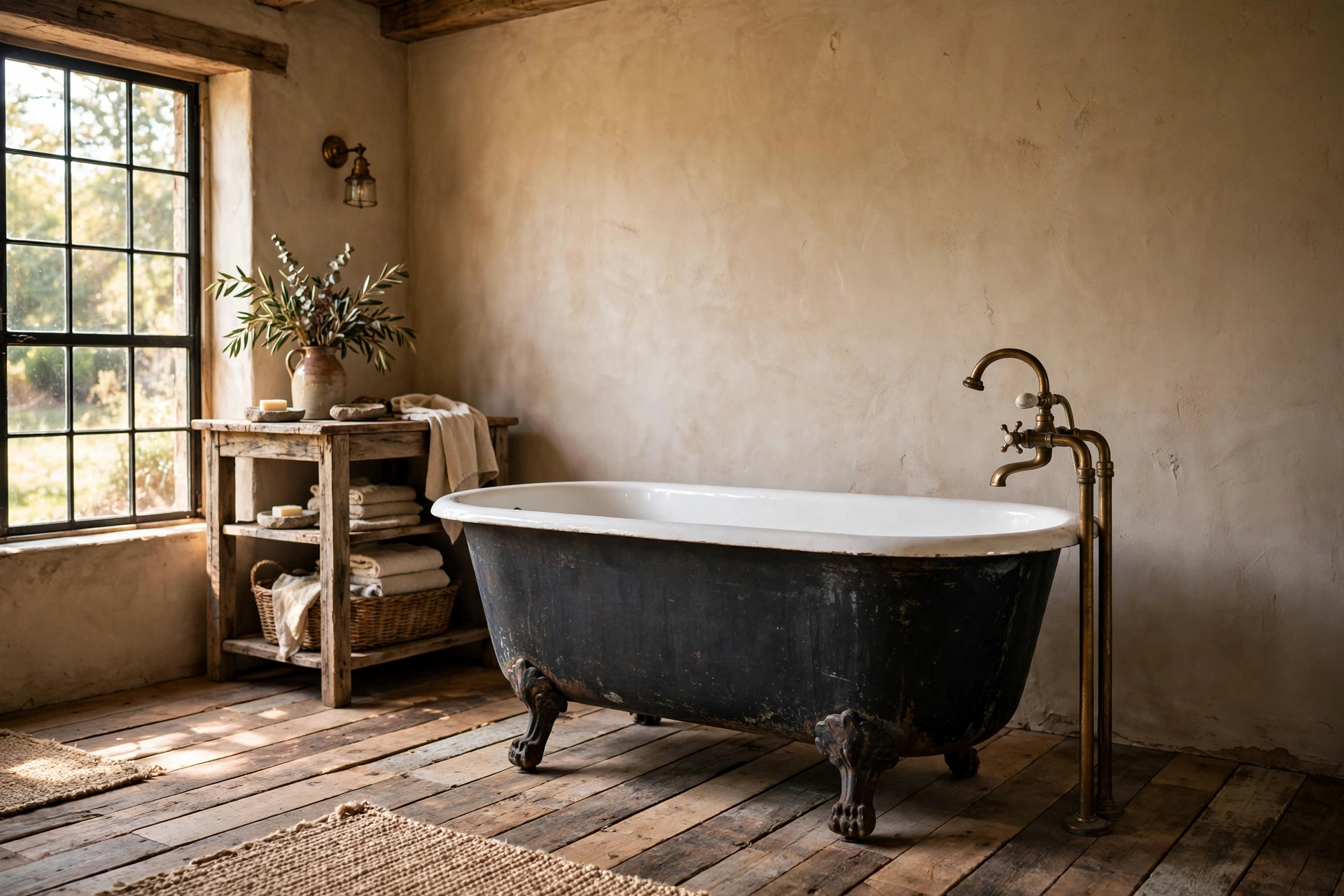
Nothing says vintage farmhouse like a clawfoot tub, and you don’t need original porcelain to pull it off. Salvage yards and online marketplaces regularly list cast-iron tubs for a few hundred dollars; a professional refinish runs about the same and gives you a like-new interior with a weathered-looking exterior. Paint the outside matte black, deep green, or leave the original patina. Pair it with a freestanding filler in aged brass and the whole room orbits around it.
2. Build a vanity from a reclaimed dresser
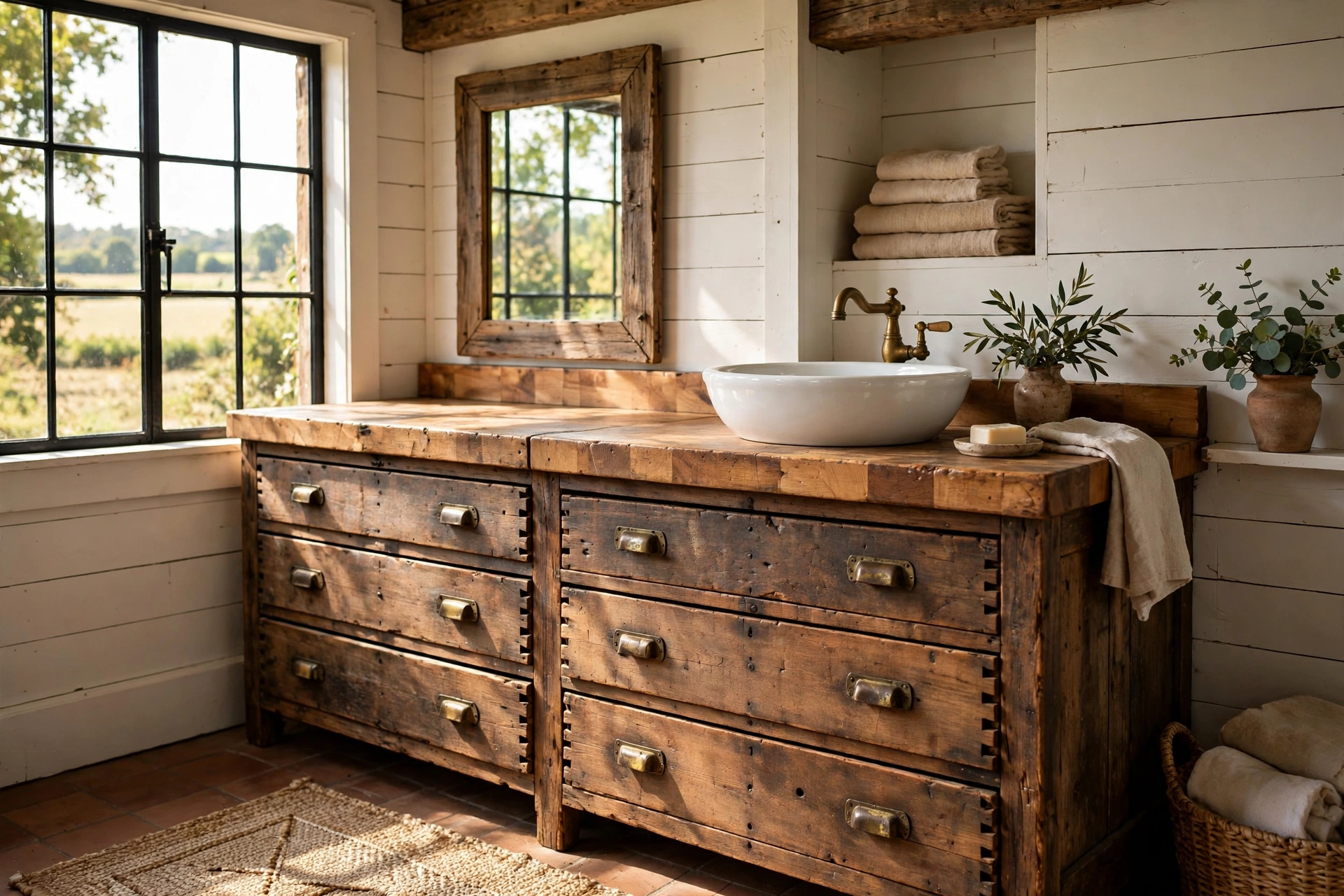
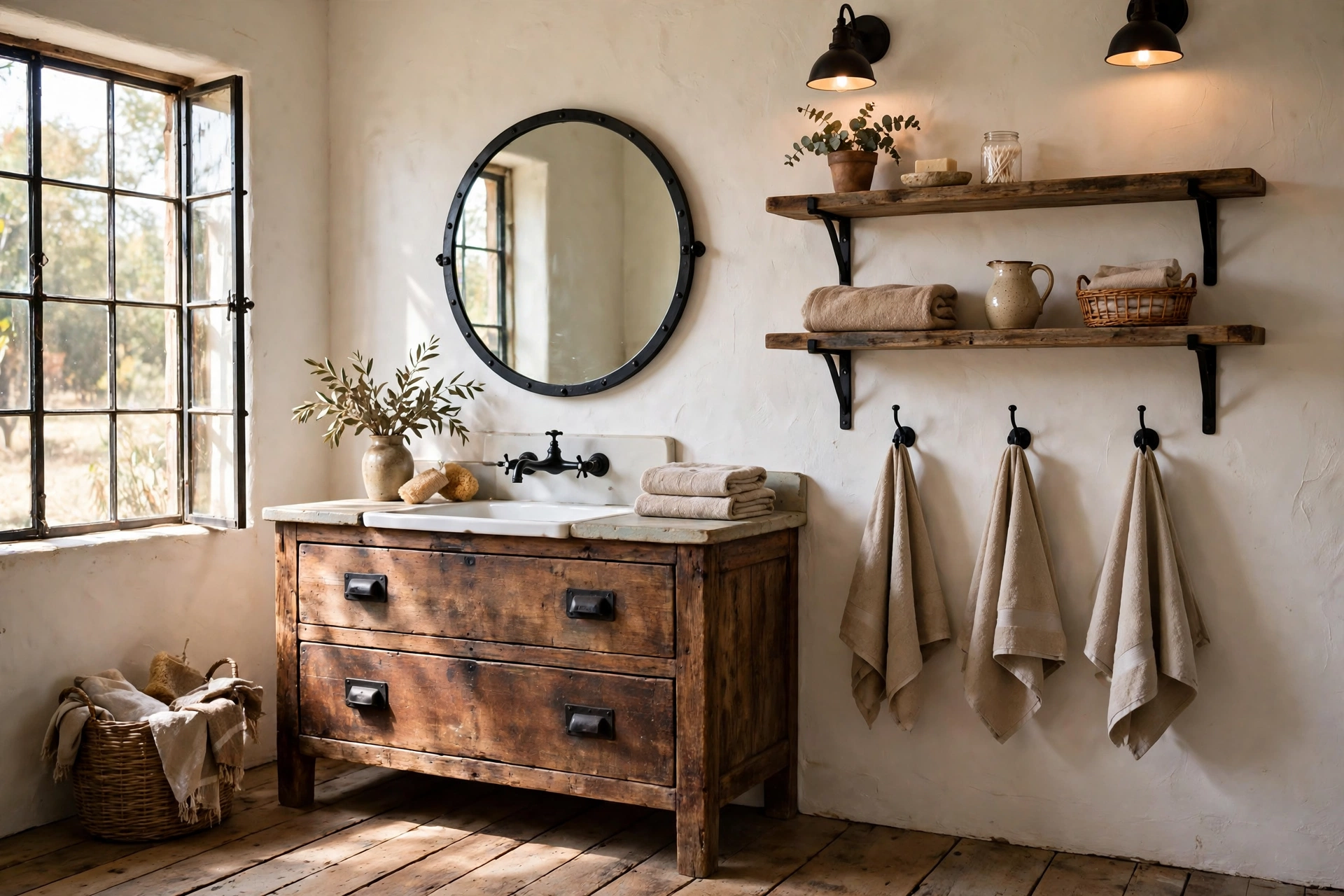
An old dresser makes a better vanity than most store-bought cabinets: real wood, real dovetail drawers, and proportions no flat-pack can match. Cut the top drawers down to clear the plumbing, seal every surface with marine-grade polyurethane, and drop in a vessel or undermount sink. Top it with a butcher-block or honed marble remnant from a stone yard for a fraction of custom-counter cost.
3. Hang a round mirror with a distressed wood frame
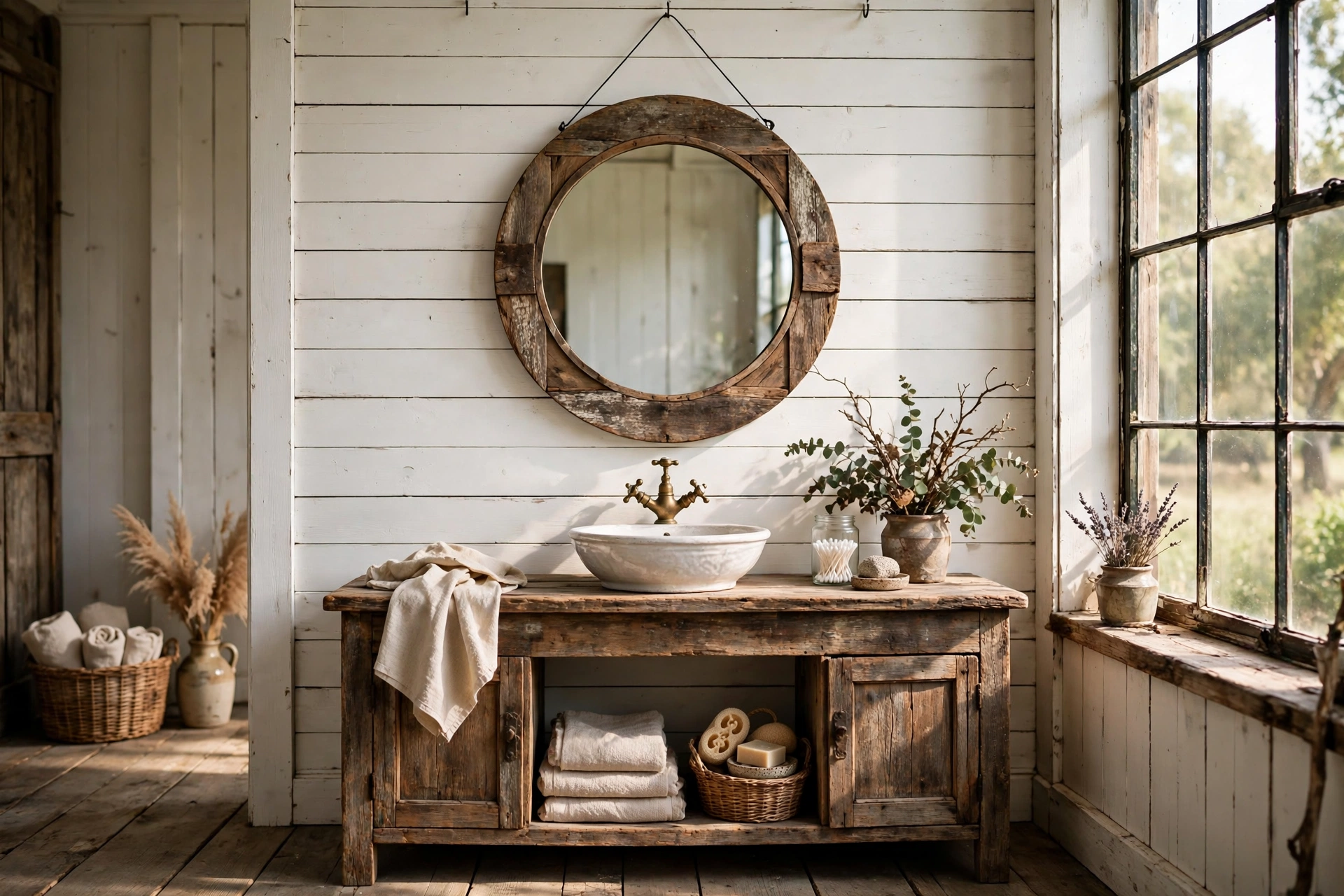
A big round mirror softens all the hard lines in a bathroom and bounces light around small spaces. Look for one framed in reclaimed barn wood or weathered oak at flea markets; if the frame is too perfect, distress it yourself with a wire brush, dark wax, and a light sanding on the edges. Hang it on a simple picture wire so it floats slightly off the wall.
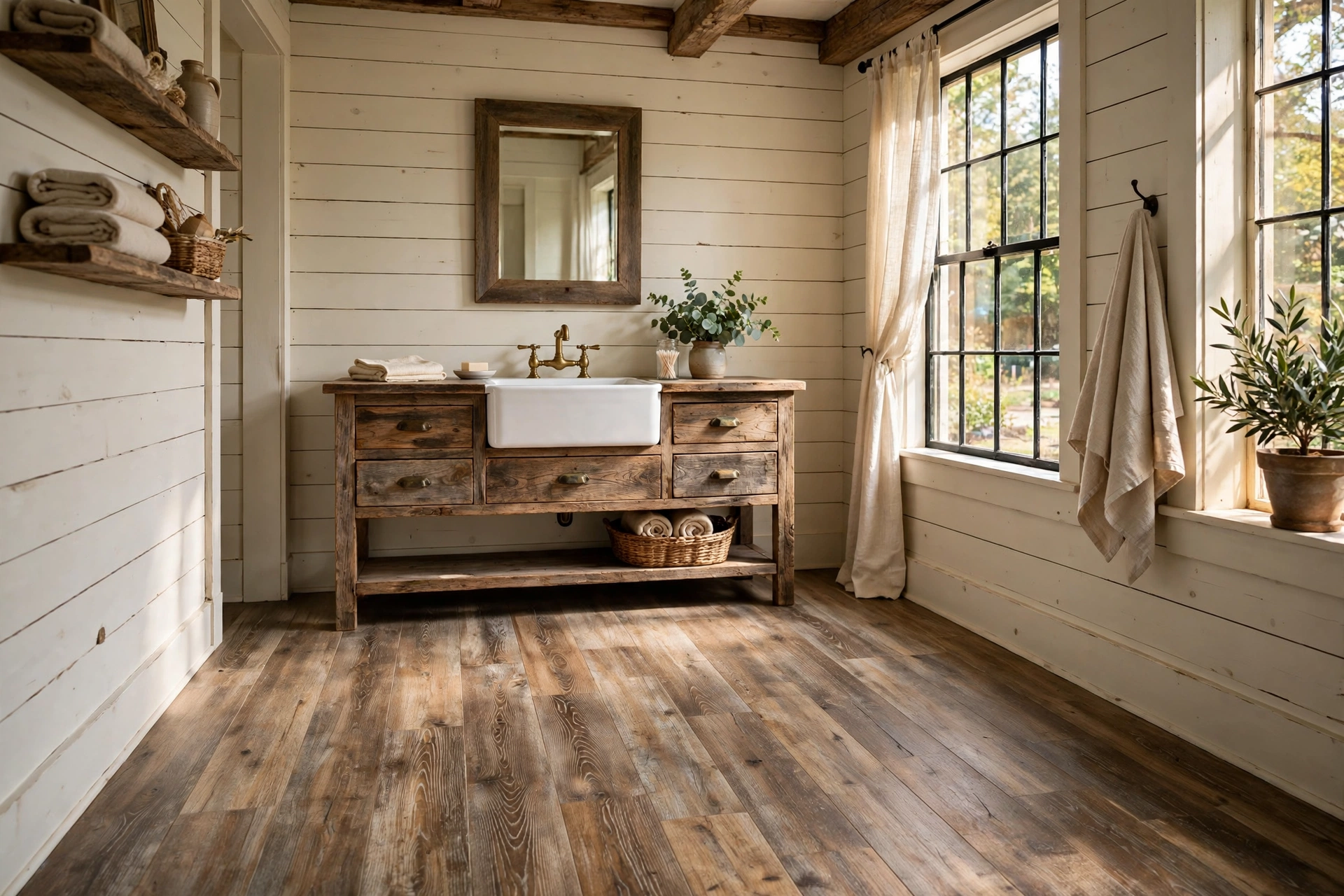
4. Lay a wood-look floor over tired tile
Ripping out old tile is expensive and dusty, but luxury vinyl plank in a weathered oak or reclaimed pine finish goes straight over most existing floors. Choose a wide plank with visible grain variation and run it lengthwise to stretch a narrow bathroom. It’s waterproof, warm underfoot, and costs a fraction of real reclaimed wood.
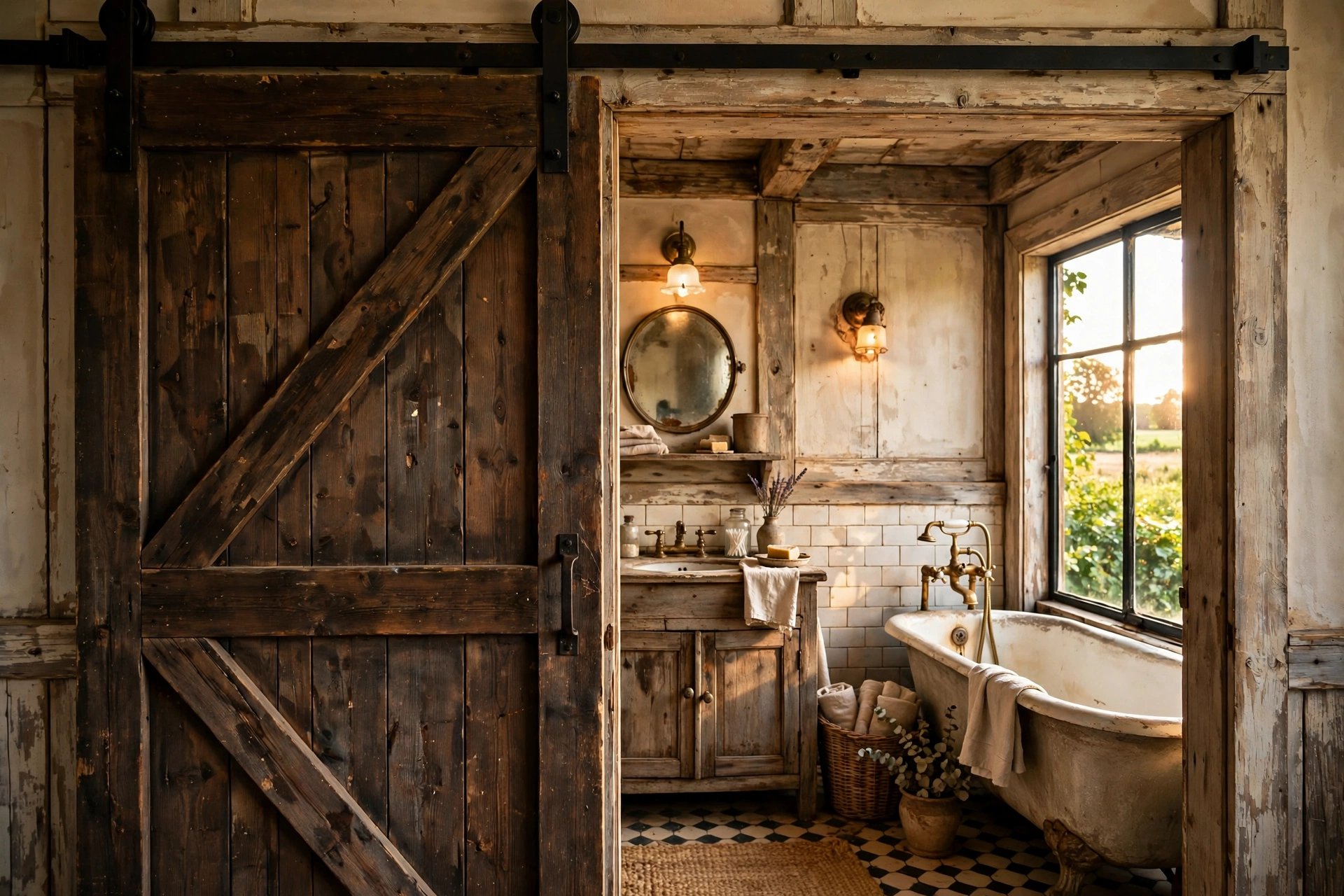
5. Install a sliding barn door
A sliding barn door saves swing space in tight bathrooms and delivers instant farmhouse credibility. Kits with the rail hardware run under $150; the door itself can be a salvage find or a simple Z-brace build from pine boards. Finish it with a dark stain and black iron hardware, and add a soft-close mechanism so it doesn’t slam at midnight.
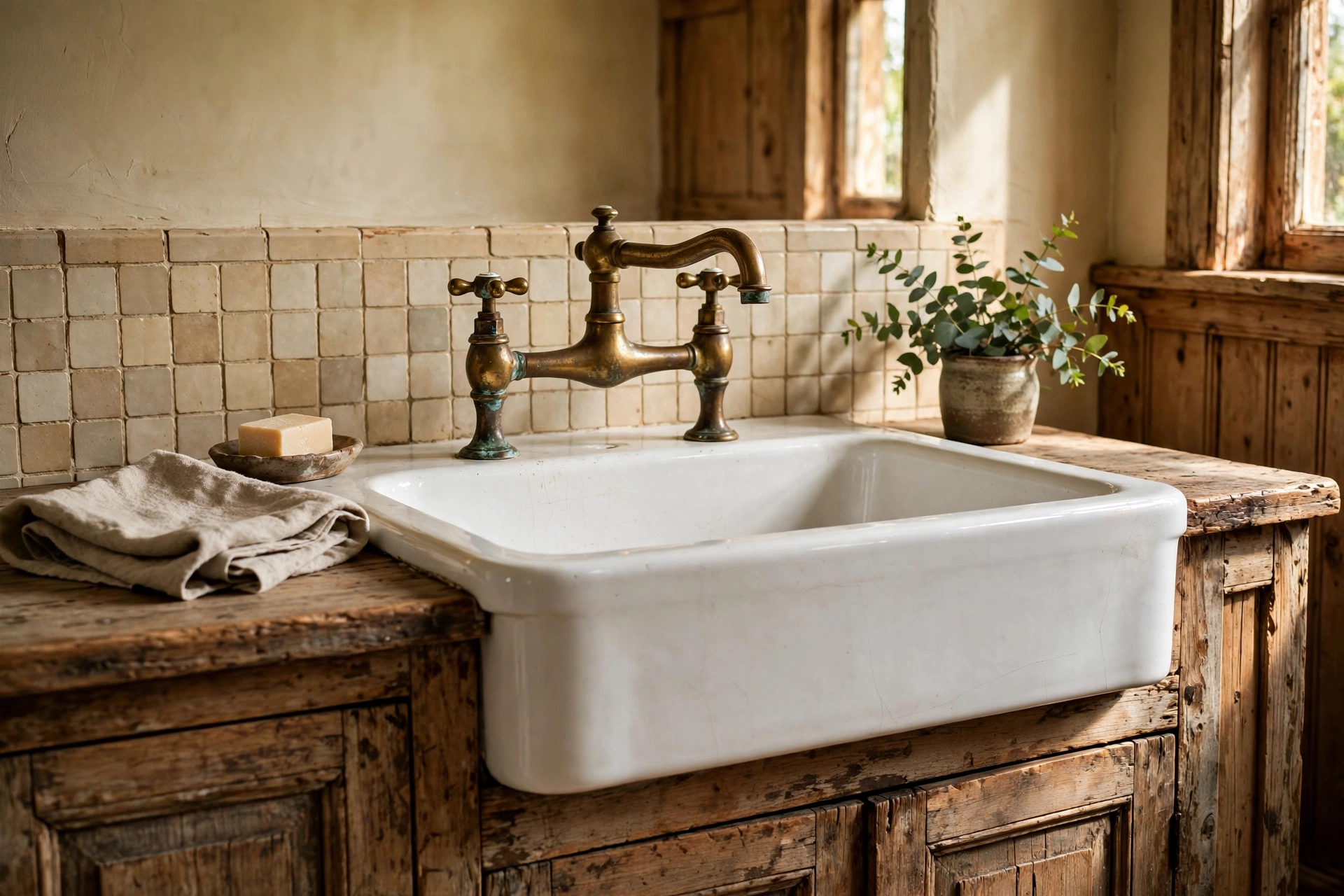
6. Choose oil-rubbed bronze or aged brass faucets
Faucet finish is the jewelry of the bathroom. Oil-rubbed bronze reads warm and old-world; aged or unlacquered brass develops a living patina that gets better every year. Bridge-style faucets with cross handles lean especially vintage. If new fixtures aren’t in the budget, spray-paint existing chrome ones with a metallic bronze paint made for metal — properly primed, it holds up for years.
7. Add beadboard or shiplap to the lower walls
Wainscoting is the fastest way to age a plain drywall bathroom. Beadboard panels or individual shiplap boards on the lower third of the walls, painted creamy white or sage, read instantly farmhouse. Cap it with a simple chair rail and caulk every seam before painting so moisture can’t creep behind the boards.
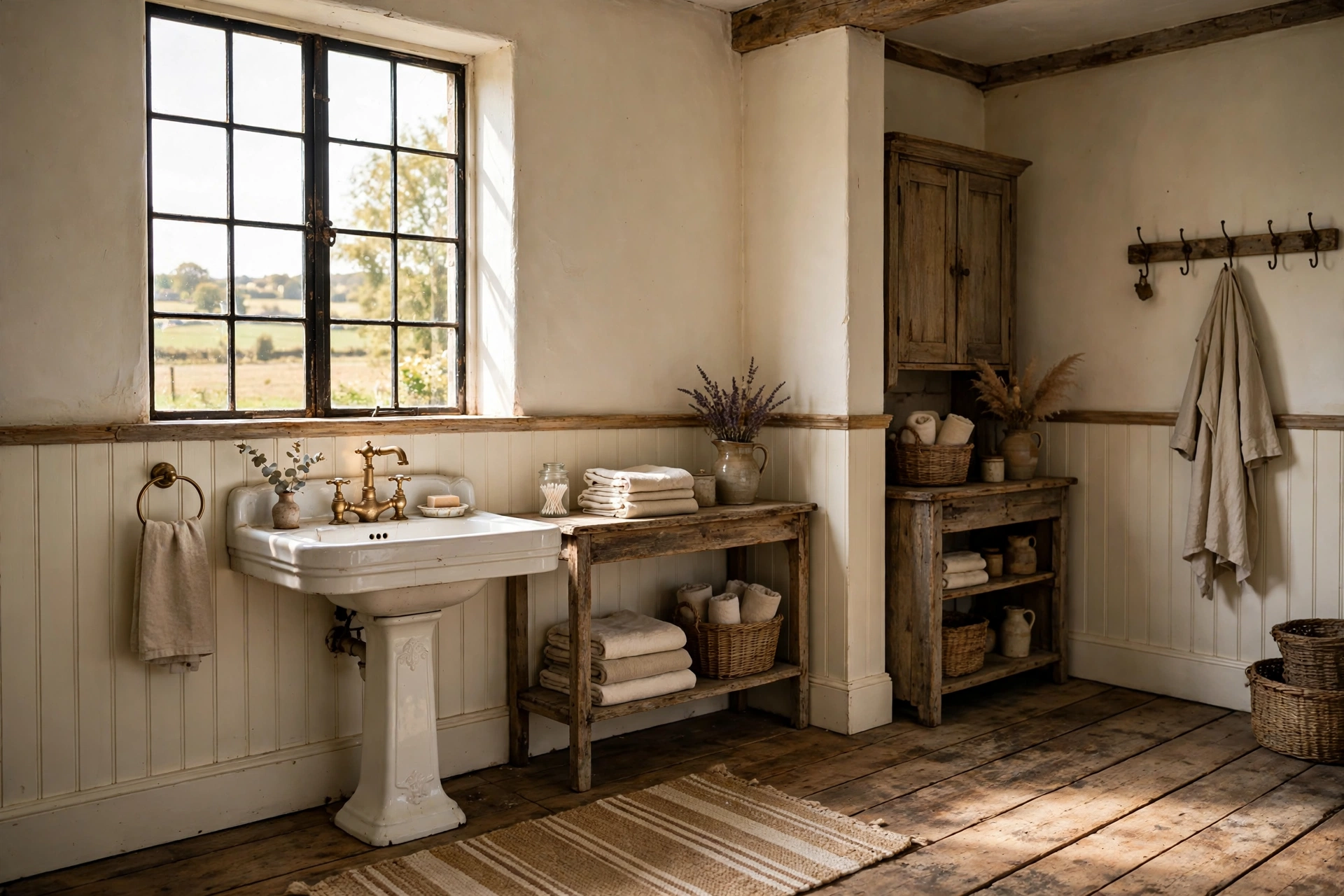
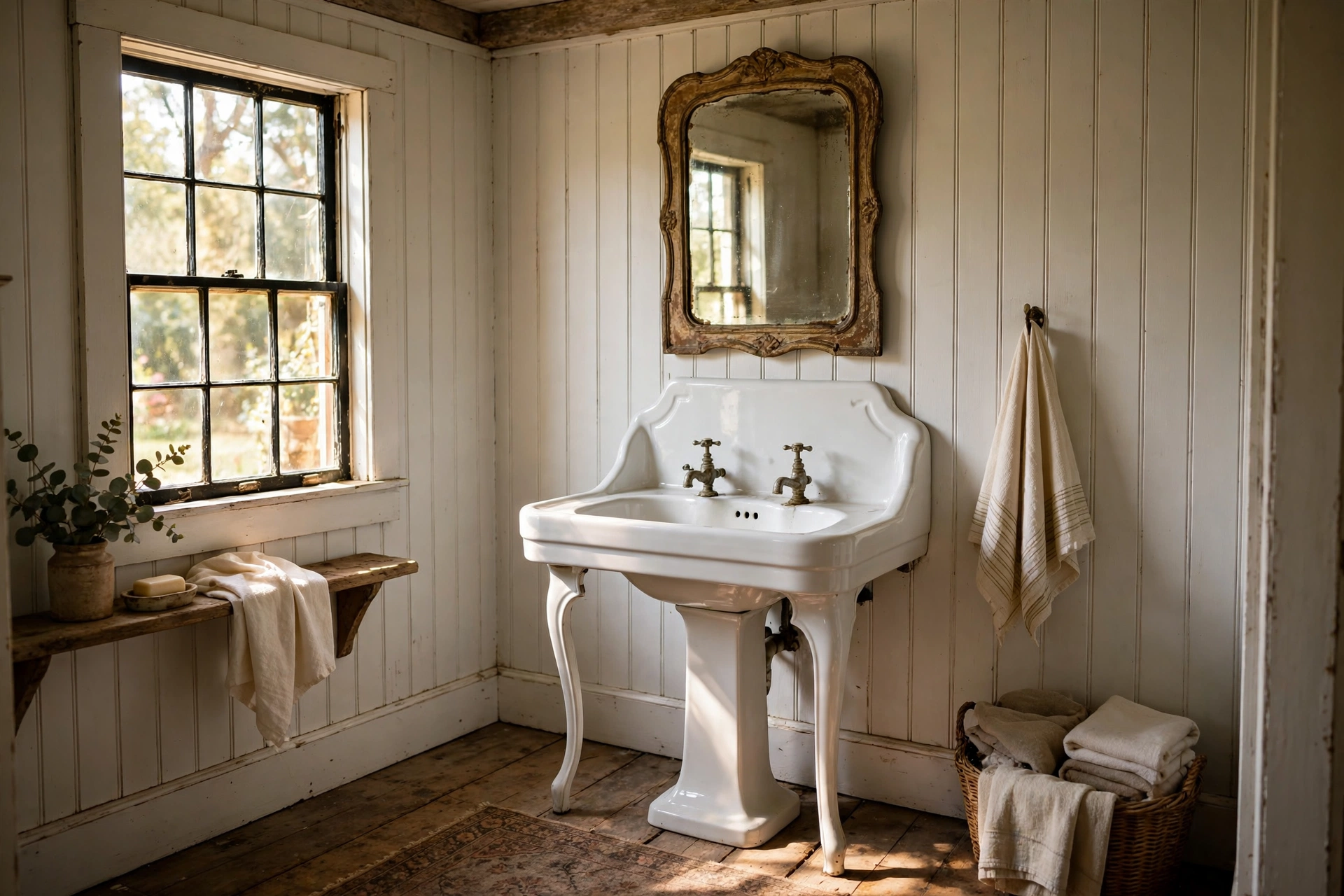
8. Source a vintage-style pedestal sink
For powder rooms and tiny baths, a pedestal sink with curved lines and a high backsplash looks straight out of 1920. Reproduction models are widely available, but original porcelain sinks show up at architectural salvage shops for surprisingly little. Check for hairline cracks and make sure the wall-mounting bracket is included before you buy.
9. Light the room with Edison-bulb sconces
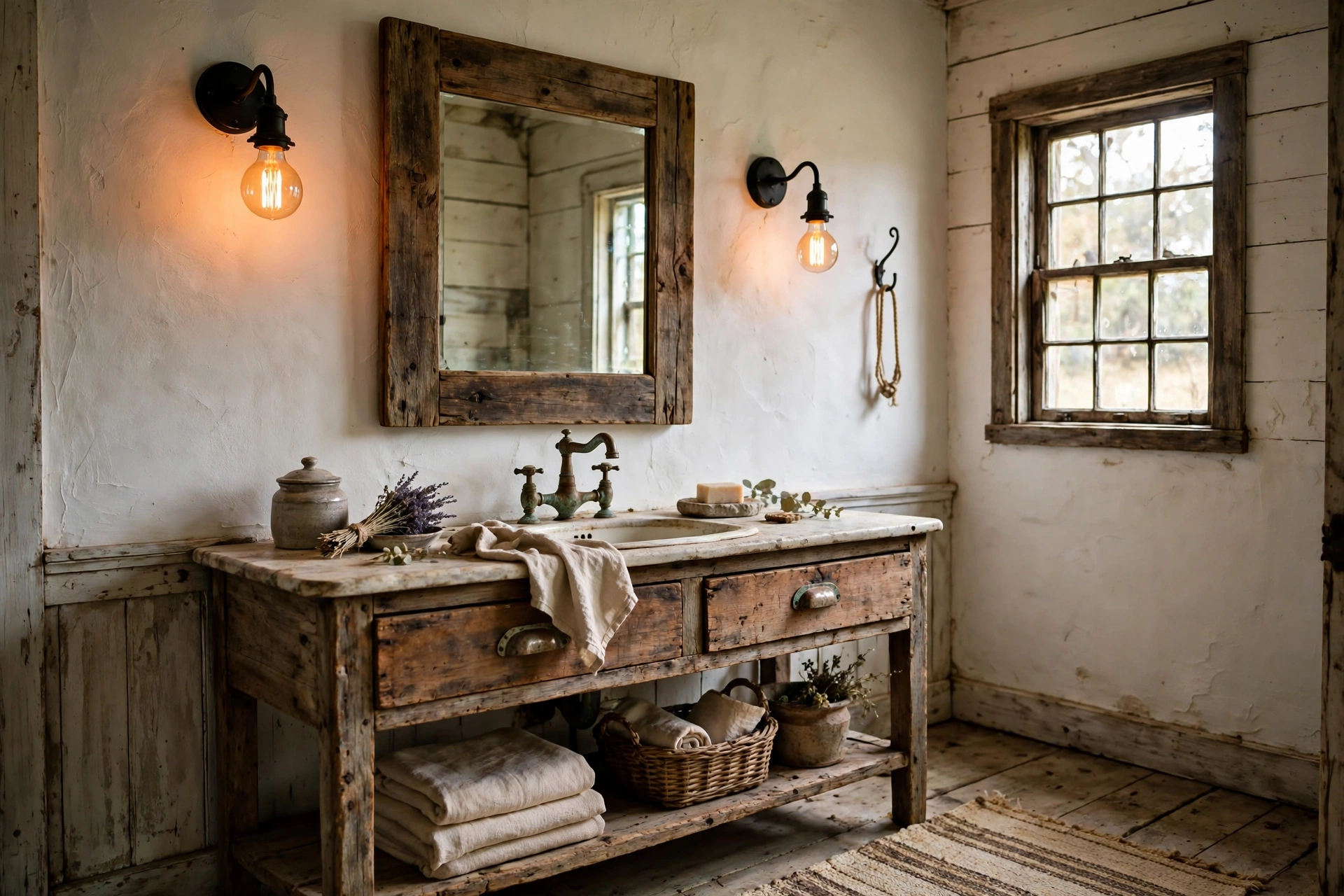
Exposed-filament Edison bulbs in simple black or bronze sconces flanking the mirror give warm, flattering light and unmistakable vintage mood. Choose dimmable LED Edison bulbs to keep the look without the heat or the electric bill. Two sconces at eye level beat one overhead fixture every time.
10. Dress the window with a simple linen cafe curtain
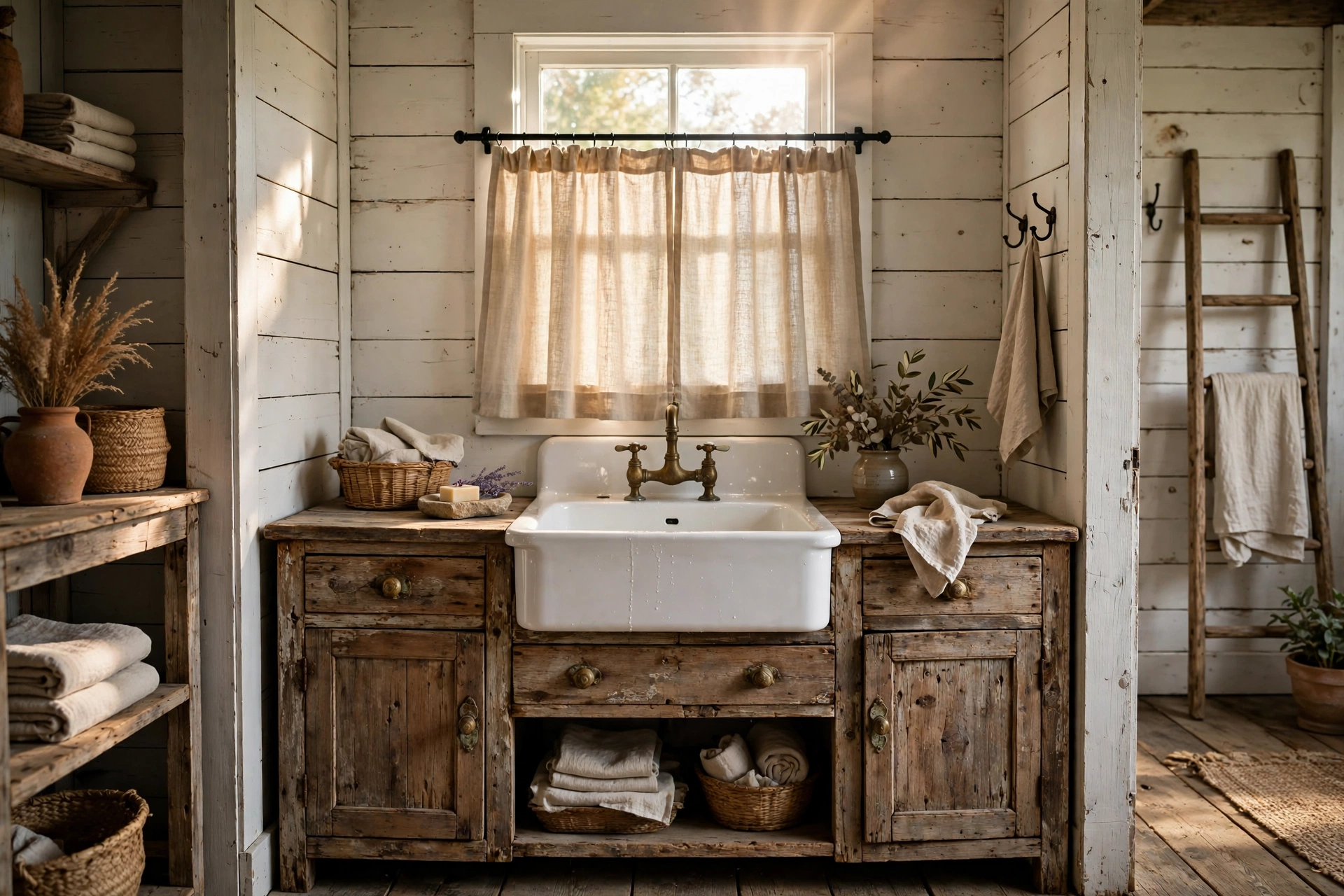
Heavy blinds fight the farmhouse look. A half-length linen cafe curtain on a black tension rod gives privacy while letting daylight pour in above it. Natural or oatmeal linen wrinkles beautifully and costs little by the yard. Hem it yourself or use iron-on tape — no sewing machine required.
11. Display folded towels on open wood shelving
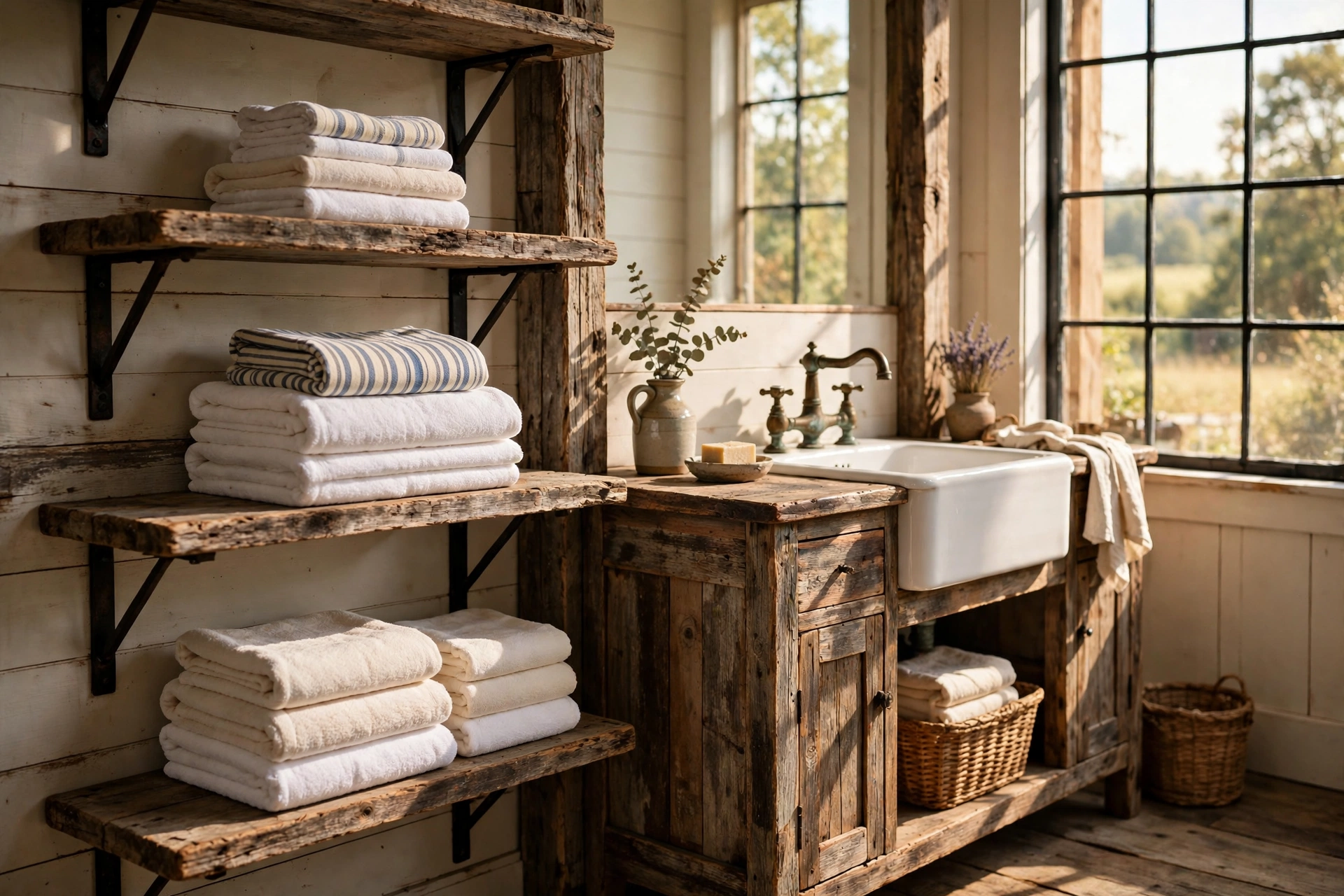
Open shelves made from reclaimed boards and black iron brackets turn everyday towels into decor. Stack white or cream towels with one folded accent in ticking stripe or faded chambray. Keep the styling loose — farmhouse is about lived-in, not staged. Seal the shelf boards well since they’ll catch splashes.
12. Bring in a galvanized metal tub as a planter or hamper
A small galvanized wash tub does triple duty: laundry hamper, rolled-towel holder, or planter for a big fern. The zinc finish is naturally rustic and shrugs off bathroom humidity. Drill drainage holes if you’re planting in it, and line the bottom with gravel so roots don’t sit in water.
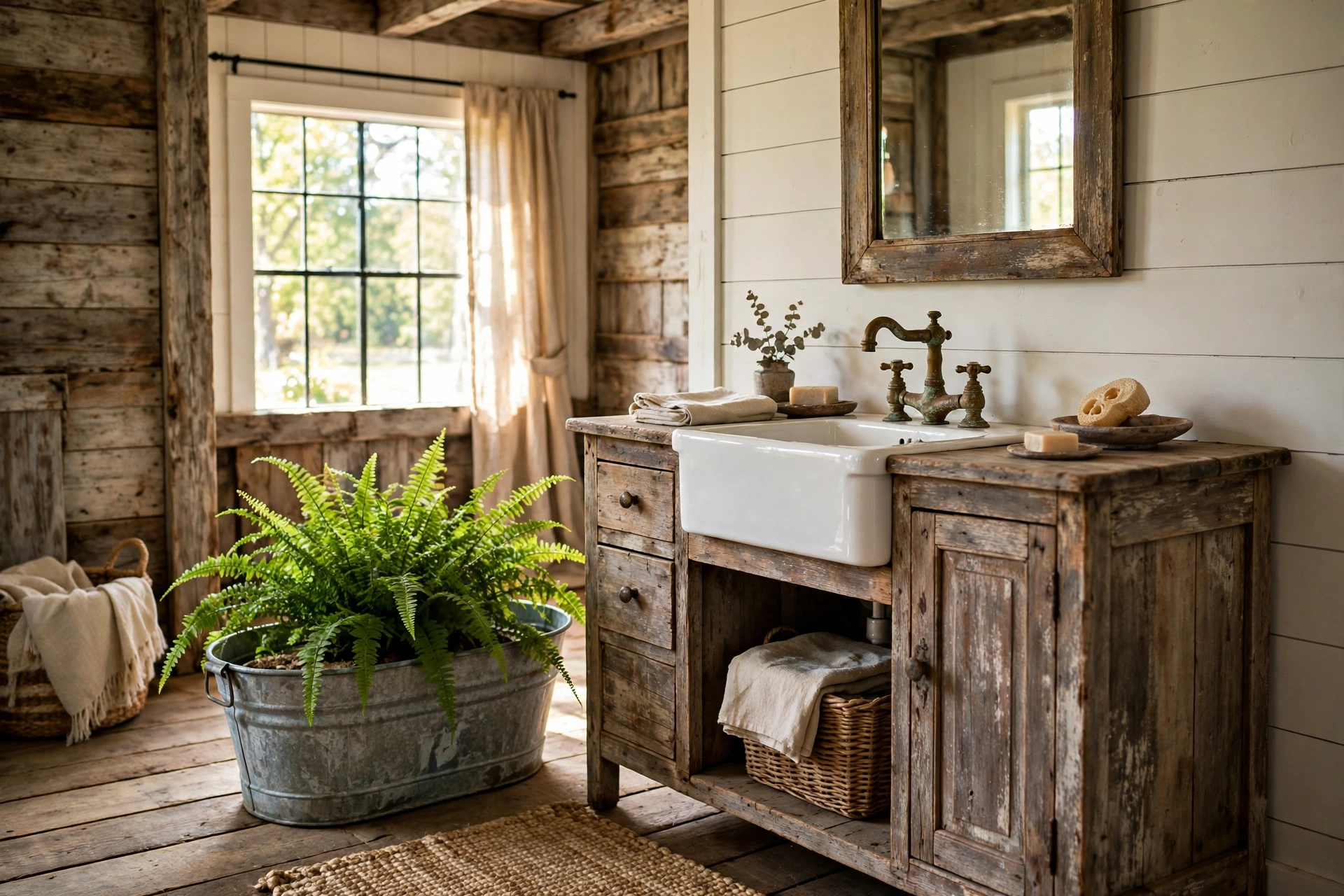
13. Paint the vanity a moody vintage color
If new furniture isn’t in the cards, paint transforms what you have. Deep forest green, inky navy, or charcoal with a matte finish reads vintage against brass hardware and white walls. Use a bonding primer on laminate or previously painted pieces, then two coats of cabinet-grade enamel. Swap the knobs for cup pulls or wooden knobs to finish the transformation.
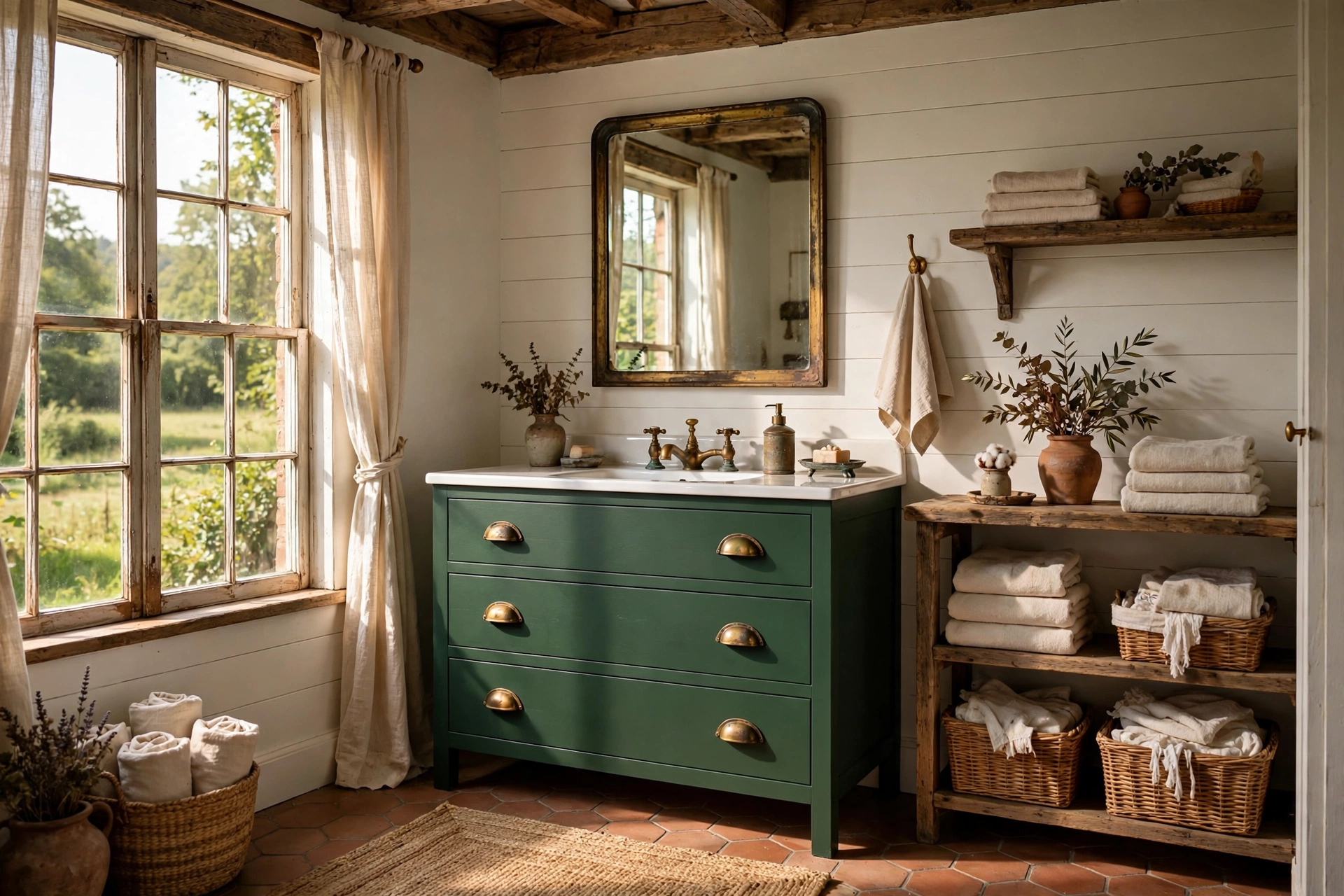
14. Frame the space with a reclaimed wood accent wall
One wall of horizontal reclaimed planks behind the vanity or tub creates a focal point with genuine age. Source boards from a local reclaimed-lumber dealer — many sell “shorts” cheaply that are perfect for a single wall. Stagger the seams, leave small gaps for character, and seal with a clear matte finish rated for humid rooms.
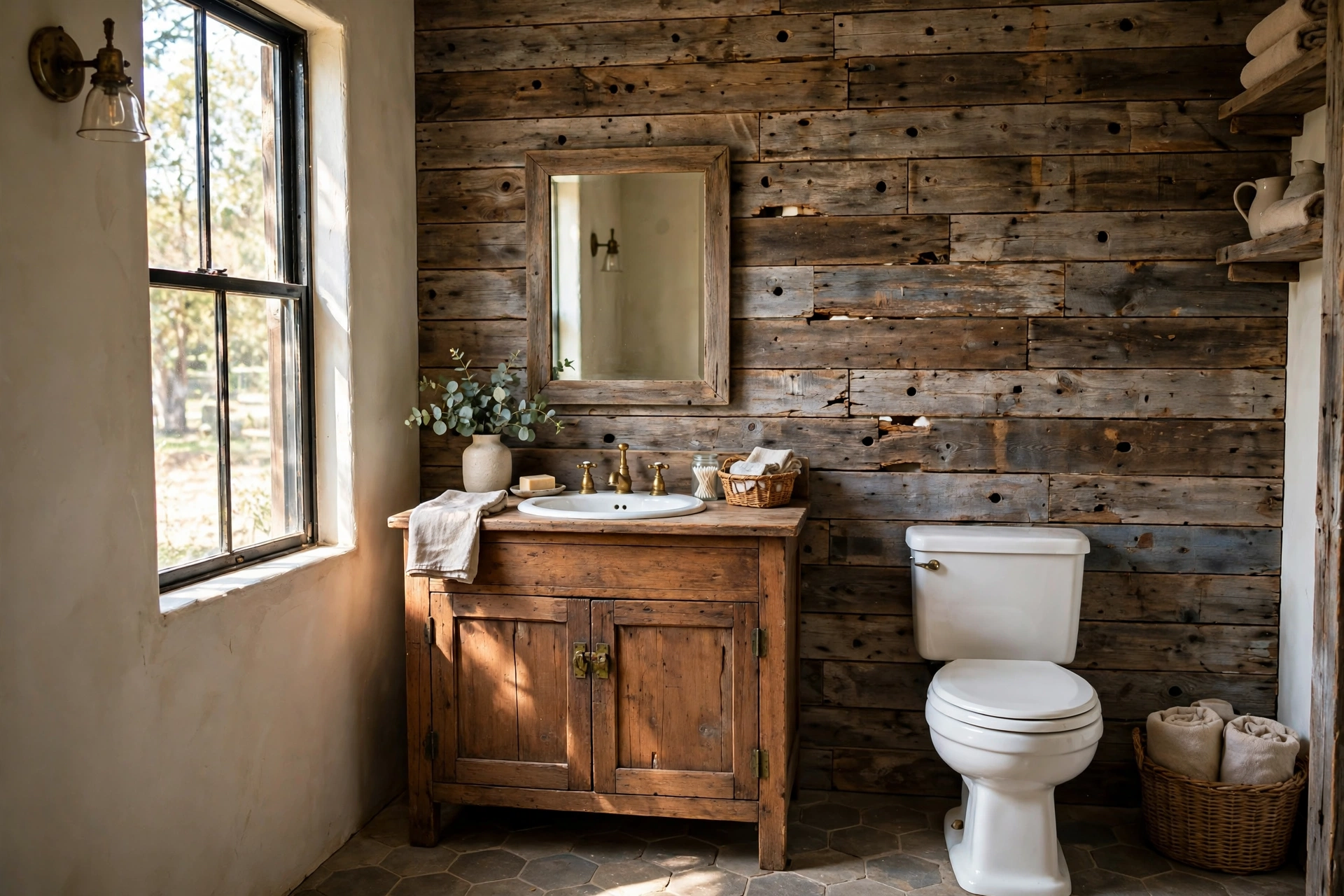
15. Use mason jars and crocks for storage
Vintage storage is the easiest win in this style. Wide-mouth mason jars hold cotton balls, bath salts, and brushes; a big stoneware crock corrals toilet paper or rolled washcloths. Hit thrift stores for blue-tinted antique jars — they’re inexpensive and the color is gorgeous against white tile.
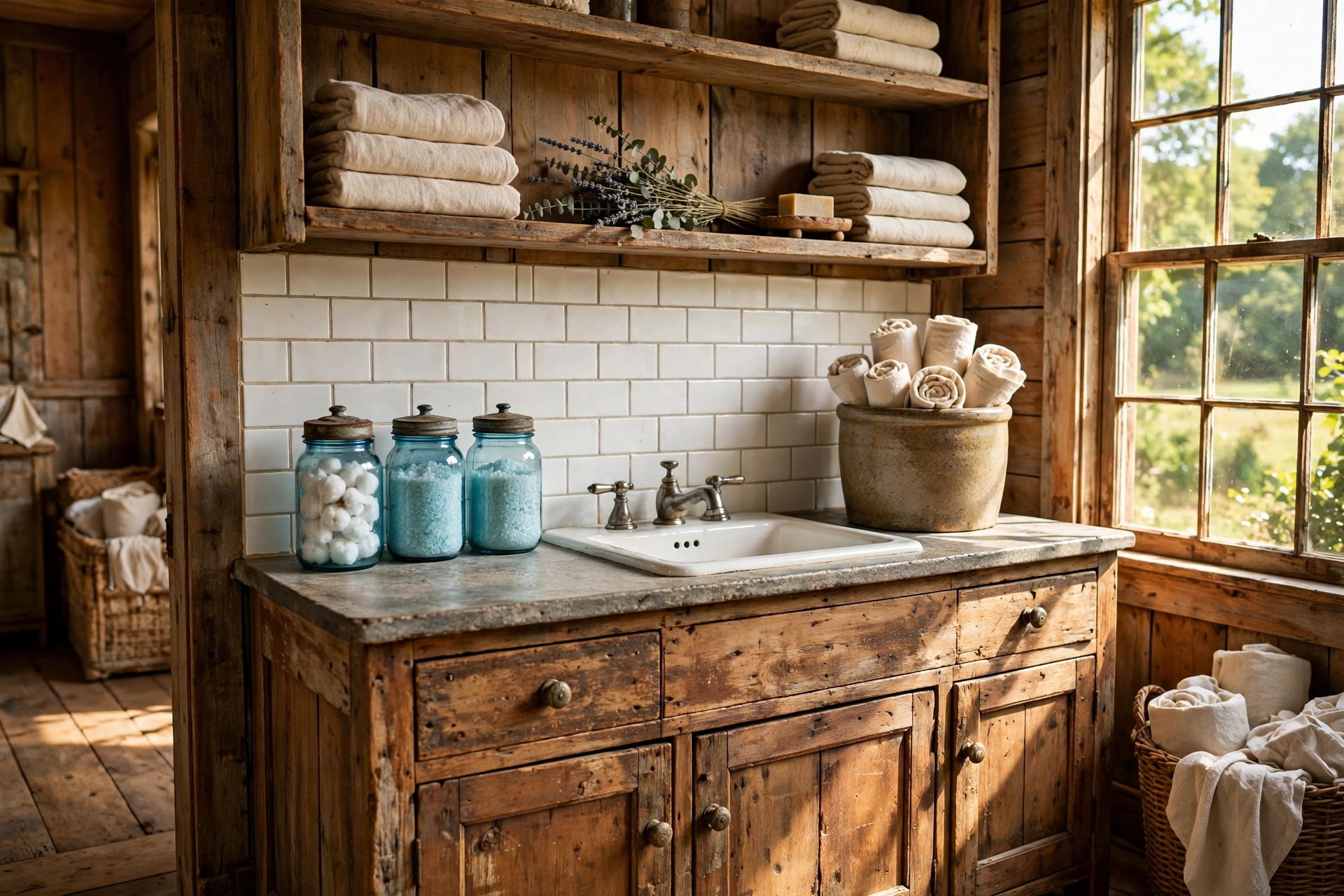
16. Lay down a faded vintage-style rug
A soft rug makes a cold bathroom floor welcoming, and a faded Persian or kilim-style runner adds pattern without shouting. Choose a low-pile, washable rug in muted reds, creams, and browns — it hides wear and ties the whole palette together. Make sure it has a non-slip pad underneath.
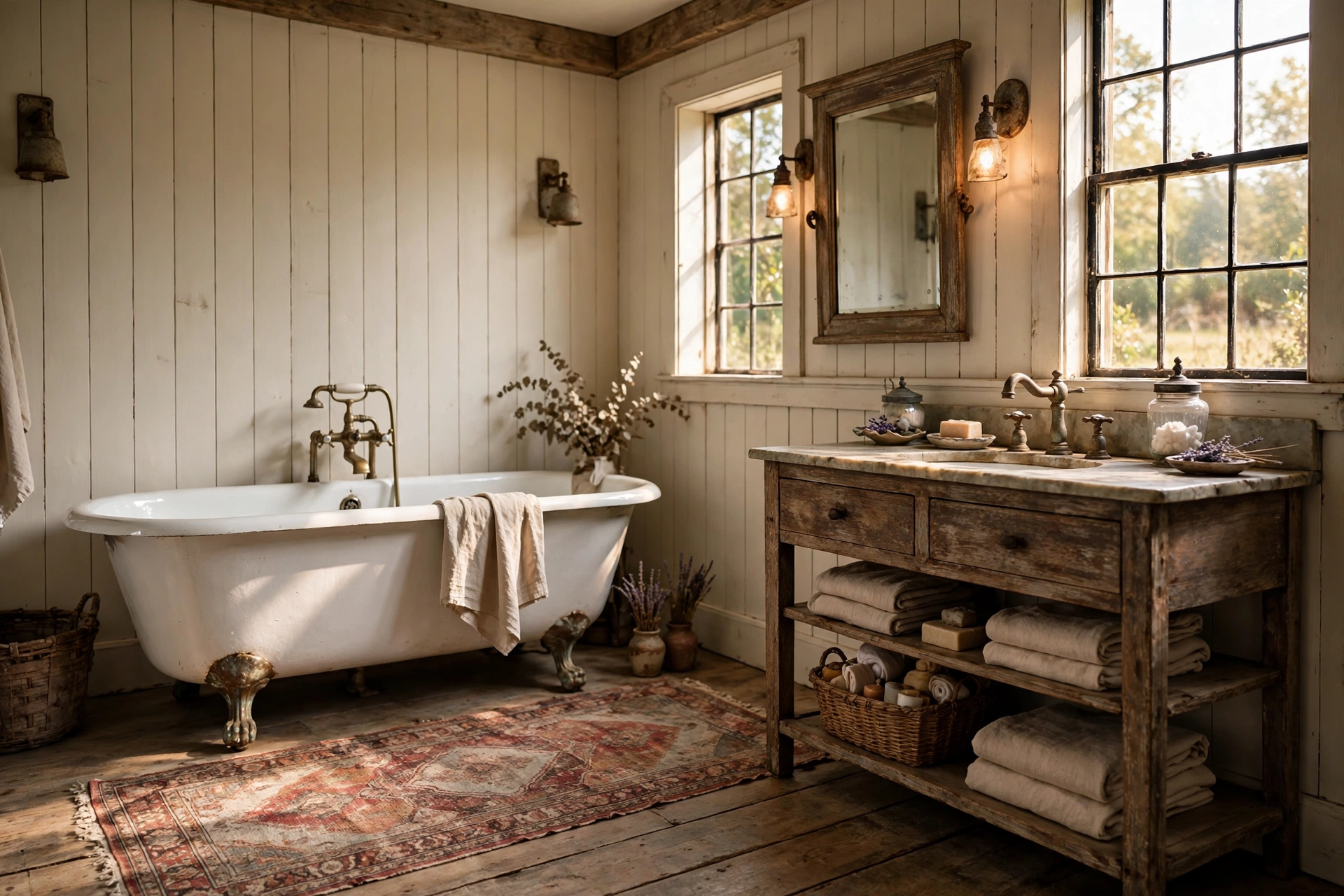
17. Hang a ladder-style towel rack
A leaning wooden ladder against the wall holds towels, a hanging plant, and a small wreath without a single screw hole. Sand it smooth, stain it weathered gray or whitewash it, and make sure the feet have rubber caps so it doesn’t slide on tile. This is a renter-friendly showpiece.
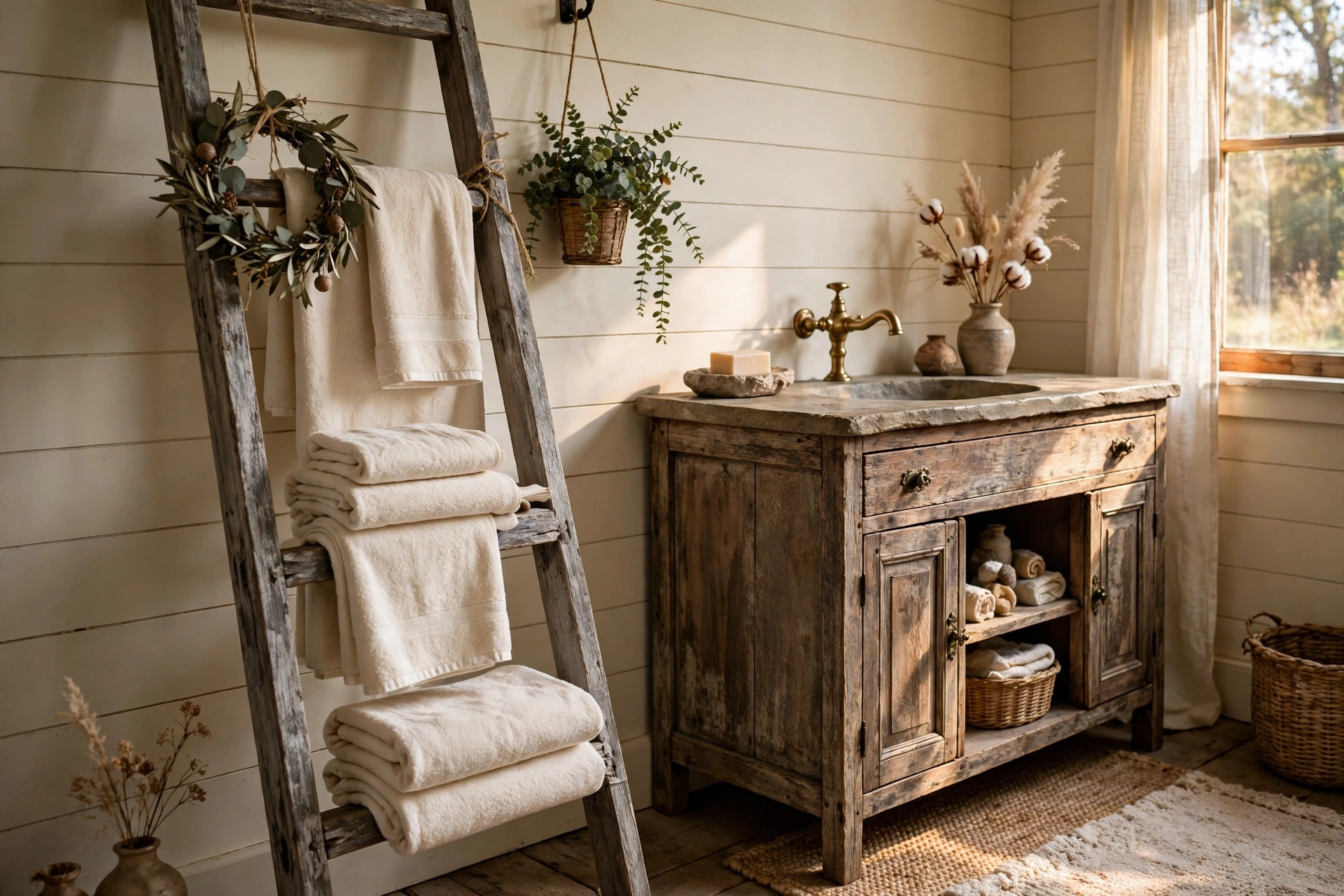
18. Add a small stool or bench in aged wood
A chunky wood stool next to the tub holds a book, a candle, and a folded towel — and looks like it was always there. Old milking stools and small benches are thrift-store staples; a quick sanding and a coat of clear wax is usually all they need. Avoid anything wobbly: test it with your full weight before it goes near water.
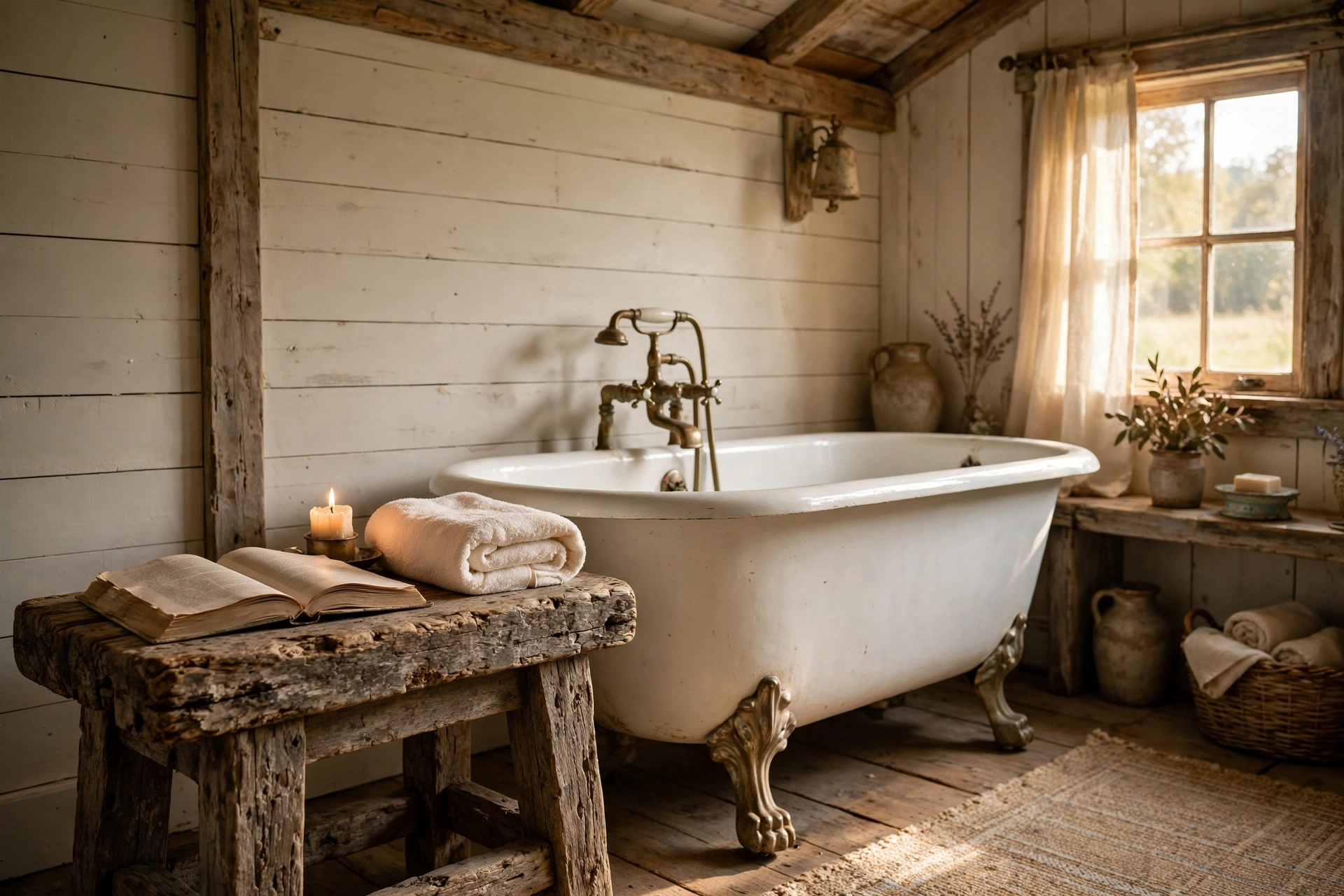
19. Style with dried botanicals, not fresh flowers
Dried lavender bundles, wheat stalks, or eucalyptus in a stoneware pitcher last for months and suit the vintage mood better than fresh bouquets. Hang the bundles upside down for a week to dry them fully, then arrange loosely. Keep them away from direct shower spray and they’ll hold their shape all season.
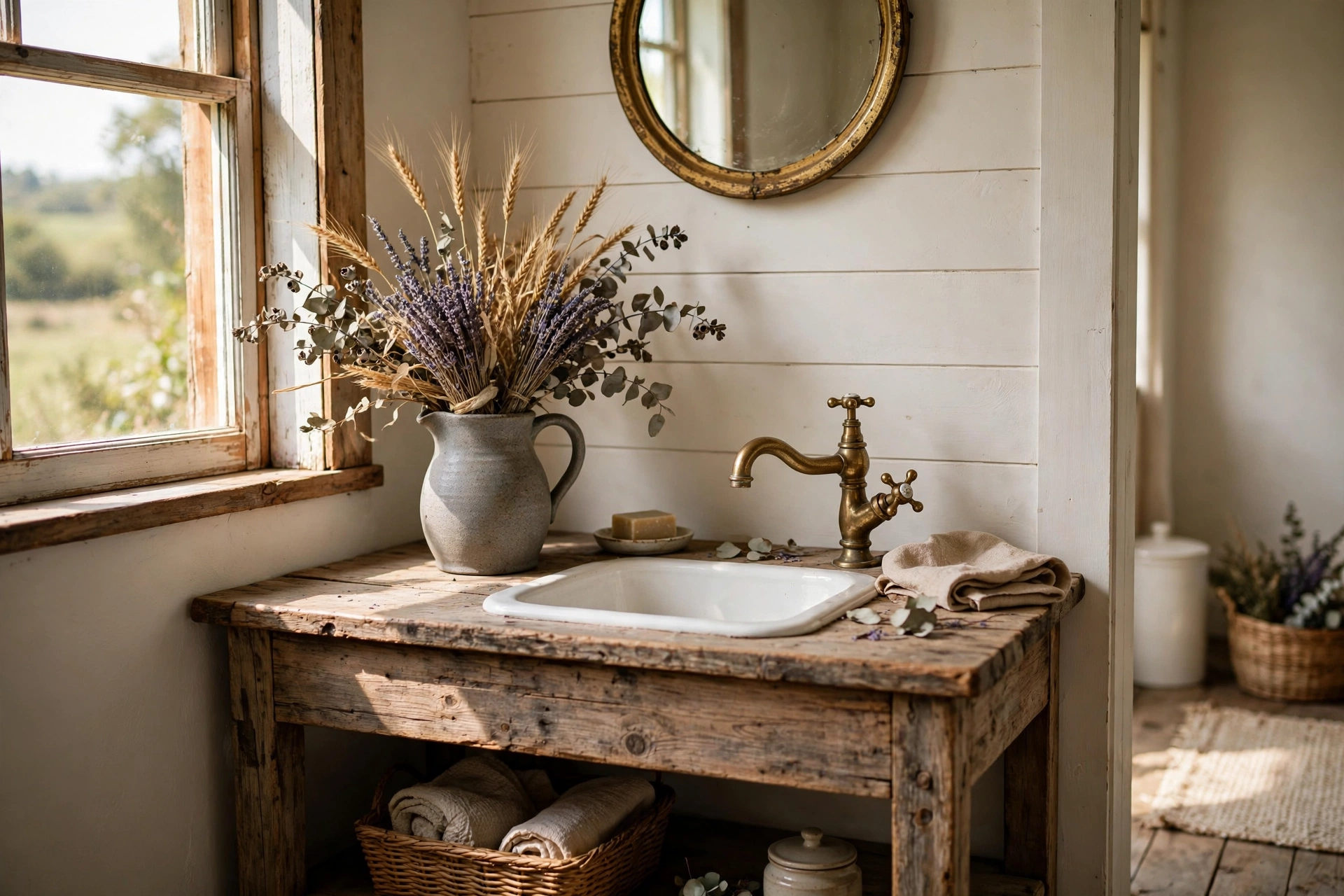
20. Finish with black iron details throughout
Cohesion comes from repetition. Echo black iron in the mirror frame, shelf brackets, towel hooks, cabinet pulls, and the barn door rail. Buying them all in the same finish — matte black is the most forgiving — makes mixed vintage pieces feel like a collected set rather than a jumble.
Quick Styling Tips
- Color palette: Start with warm white walls, then layer in sage green, charcoal, aged brass, and natural wood. Keep it to four tones so the room feels collected, not busy.
- Mix textures, not eras: Weathered wood, galvanized metal, nubby linen, and aged brass all belong to the same story. Mixing too many decades at once is what makes a room feel like a theme park.
- Lighting matters most: Warm bulbs (2700K) flatter both skin and wood. Put dimmers on every fixture so the room can shift from morning bright to evening soak.
- Bathroom-friendly plants: Ferns, pothos, and spider plants love humidity and soften hard surfaces. Hang one in a corner or perch it on open shelving.
- Source vintage first: Check salvage yards, estate sales, and flea markets before buying new. You’ll spend less and get pieces with genuine patina no factory can fake.
- Seal everything: Bathrooms are wet rooms. Polyurethane on wood, silicone on seams, and mildew-resistant paint keep vintage pieces beautiful for years.
- One statement, many supporters: Let one hero piece (the tub, the vanity, the door) lead, and keep everything else quieter so the room has a clear focal point.
Frequently Asked Questions
How do I keep a vintage farmhouse bathroom from looking dated instead of charming?
Dated comes from too many competing “old” things and poor lighting. Keep the layout clean, use warm modern lighting, and limit true antiques to two or three anchor pieces — the rest can be new pieces in vintage finishes.
Can I do this style in a rental?
Absolutely. Lean on the no-drill ideas: a leaning ladder rack, freestanding shelves, a shower curtain in ticking stripe, new cabinet hardware (save the originals), and peel-and-stick shiplap-look wallpaper on one wall.
What’s the cheapest way to start?
Paint and hardware. A moody paint color on the vanity plus aged-brass knobs and a new mirror can transform the room for under $150, and everything else can layer in over time.
How do I protect reclaimed wood in a steamy bathroom?
Seal every surface — including the backs and undersides — with at least three coats of marine-grade polyurethane or spar varnish, and run the exhaust fan during and after every shower. Ventilation matters more than any finish.
A vintage farmhouse bathroom isn’t bought in a weekend — it’s collected. Start with the piece that speaks to you, whether that’s a clawfoot tub or a $20 crock, and let the room grow around it. Character is the one thing you can’t order online, but you can absolutely build it one thoughtful layer at a time.