
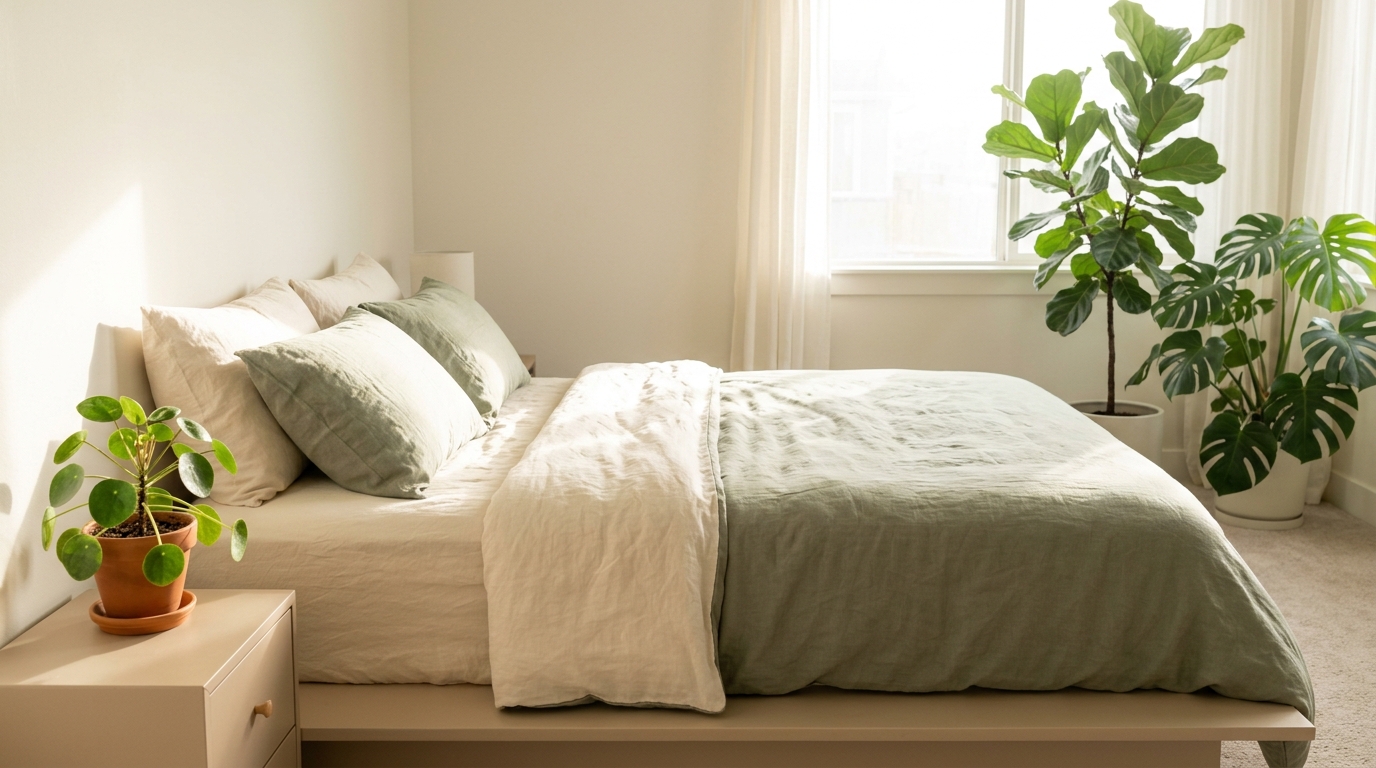
Your sleeping space should be more than just a place to rest. It serves as a personal sanctuary where you recharge after a long day. By adding natural elements, you can easily transform your room into a serene bedroom oasis that promotes deep peace.
Modern interior design increasingly favors the use of greenery to soften sharp lines. Bringing nature indoors is a simple way to improve air quality while boosting your mood. Many homeowners are now discovering that Plant Decor Ideas for Cozy and Relaxing Bedrooms offer the perfect balance of style and comfort.

Whether you have a small nook or a spacious suite, adding life to your environment creates a calming atmosphere. This guide will help you select the right greenery to match your unique aesthetic. Let us explore how to curate a space that feels both vibrant and restful.
Key Takeaways
- Greenery helps turn a standard room into a peaceful retreat.
- Natural elements improve indoor air quality and mental well-being.
- Choosing the right species ensures your space remains low-maintenance.
- Strategic placement maximizes the visual impact of your botanical additions.
- Small changes in foliage can significantly enhance your sleep environment.
The Psychological Benefits of Biophilic Bedroom Design
Biophilic design is more than just a trend; it is a fundamental shift in how we interact with our living spaces. By integrating natural elements into your private sanctuary, you create a relaxing home environment that supports both physical and mental restoration. This design philosophy recognizes that humans have an innate need to connect with the natural world.
Connecting with Nature for Better Sleep
The presence of plants in the bedroom does more than improve air quality; it helps regulate your internal clock. Exposure to natural textures and organic shapes can lower your heart rate, making it easier to drift into a deep, restorative sleep. Nature acts as a silent partner in your nightly routine, signaling to your brain that it is time to unwind.
The best remedy for those who are afraid, lonely or unhappy is to go outside, somewhere where they can be quiet, alone with the heavens, nature and God.
Anne Frank
When you prioritize a biophilic bedroom design, you are investing in your long-term health. Consider these primary benefits of incorporating nature into your sleep space:
- Improved air quality through natural filtration.
- Enhanced mood stability upon waking.
- A deeper sense of security and comfort.
Reducing Stress Through Indoor Greenery
Scientific studies consistently show that indoor greenery for stress relief is highly effective. The simple act of caring for a plant can ground you after a hectic day, shifting your focus away from digital screens and toward something living and tactile. This practice helps lower cortisol levels, which are often responsible for feelings of anxiety and restlessness.
By surrounding yourself with lush foliage, you transform your bedroom into a peaceful retreat. This intentional choice helps you maintain a calm and focused mindset throughout the day. Ultimately, your bedroom becomes a functional tool for mental health, proving that beauty and wellness go hand in hand.
Essential Plant Decor Ideas for Cozy and Relaxing Bedrooms
Elevating your sleep environment starts with mastering the art of layering plants and selecting the right accents. By focusing on Plant Decor Ideas for Cozy and Relaxing Bedrooms, you can transform a standard room into a personal sanctuary. A well-designed space balances natural textures with intentional placement to foster a sense of calm.
Creating Layers with Foliage Heights
Adding depth to your bedroom is best achieved by varying the height of your greenery. You should place taller floor plants in empty corners to draw the eye upward, creating a sense of architectural interest. Smaller, trailing plants can then be placed on shelves or nightstands to fill the mid-level gaps.
This layering technique prevents the room from feeling cluttered while ensuring every corner feels intentional. By mixing broad-leafed plants with delicate ferns, you create a rich, multi-dimensional look that feels professionally curated. Strategic height variation is the secret to making a small bedroom feel like a lush, private garden.
Choosing Calming Color Palettes for Pots and Planters
The containers you choose are just as important as the plants themselves. Opting for sustainable bedroom decor often means selecting natural materials like terracotta, ceramic, or woven seagrass. These textures add warmth and ground the space, helping you maintain a tranquil atmosphere throughout the night.
When selecting colors, stick to a palette that complements your existing bedding and wall paint. Soft neutrals, muted greens, and earthy tones work best to keep the visual noise to a minimum. A cohesive color scheme ensures that your plants feel like a natural extension of your furniture rather than an afterthought.
| Material Type | Aesthetic Impact | Best Use Case |
|---|---|---|
| Terracotta | Rustic and Warm | Boho or Minimalist styles |
| Matte Ceramic | Modern and Sleek | Contemporary bedroom decor |
| Woven Seagrass | Textured and Organic | Adding softness to corners |
| Recycled Metal | Industrial and Bold | Statement floor displays |
Selecting the Best Low-Light Plants for Your Sanctuary
Transforming a dim bedroom into a vibrant sanctuary is easier than you might think with the right plant choices. Many bedrooms lack abundant natural light, making it essential to select resilient plant varieties that thrive in shadow. By choosing the right species, you can enjoy a lush environment without worrying about constant sun exposure.
Snake Plants for Air Purification and Minimalist Style
The Snake Plant is a top choice for those seeking air-purifying bedroom plants that require very little attention. These hardy plants are famous for their ability to convert carbon dioxide into oxygen at night, which helps improve your sleep quality. Their tall, architectural leaves provide a clean look that fits perfectly with a modern, uncluttered design.
ZZ Plants for Low-Maintenance Elegance
If you have a busy schedule, the ZZ plant is your best companion for minimalist plant decor. This plant features waxy, deep green leaves that reflect light, adding a touch of sophistication to any dark corner. It is incredibly drought-tolerant, meaning it will remain healthy even if you occasionally forget to water it.
Pothos Vines for Softening Hard Edges
Pothos vines are excellent low-light bedroom plants that bring a sense of movement to your space. Their long, trailing stems are perfect for placing on high shelves or in hanging baskets. You can use these vines to soften the sharp, rigid lines of modern furniture, creating a more cozy and inviting atmosphere in your bedroom.
Maximizing Small Spaces with Vertical Plant Displays
Living in a compact apartment often feels like a puzzle where every square inch counts. Fortunately, vertical plant displays offer a clever way to maximize your limited floor space while adding natural beauty to your bedroom. By drawing the eye upward, you create a lush, layered look that makes your sanctuary feel much larger than it actually is.

Installing Floating Shelves for Trailing Plants
Floating shelves are a fantastic solution for showcasing trailing varieties like Pothos or Philodendron. When installing these, always use a stud finder to ensure your brackets are anchored securely into the wall. This simple step prevents accidents and keeps your greenery safe and stable.
Position your shelves at varying heights to create a dynamic visual flow. This arrangement allows the vines to cascade gracefully, turning your wall into a living piece of art.
Utilizing Macramé Hangers for Ceiling Interest
If you prefer to keep your surfaces clear, macramé hangers are the perfect alternative. These stylish holders add a touch of bohemian charm while utilizing unused ceiling space. Always use heavy-duty ceiling hooks designed for the weight of your specific pot and soil moisture.
Hanging plants near a window ensures they receive the light they need to thrive. This method is particularly effective for small bedrooms where floor space is at a premium.
Wall-Mounted Planters for Space-Saving Greenery
Wall-mounted planters act as modern, space-saving accents that bring life to bare walls. These fixtures come in various materials, from sleek metal to rustic ceramic, allowing you to match your existing decor. Proper installation is key; ensure you use the correct wall anchors for your specific wall type, such as drywall or masonry.
By incorporating these vertical plant displays, you can turn even the smallest bedroom into a vibrant, plant-filled retreat. The following table compares these popular methods to help you choose the best fit for your home.
| Display Method | Best For | Installation Difficulty | Space Saved |
|---|---|---|---|
| Floating Shelves | Trailing Plants | Moderate | High |
| Macramé Hangers | Hanging Varieties | Low | Very High |
| Wall Planters | Small Succulents | Moderate | High |
Styling Your Nightstand with Petite Botanical Accents
Small bedroom plant styling is an art form that turns a simple nightstand into a refreshing focal point. By selecting the right greenery, you can create a balanced, clutter-free arrangement that complements your lamp and favorite books. These tiny additions bring a sense of calm to your morning routine.
Choosing Succulents for Compact Surfaces
Succulents are the ultimate choice for bedside tables due to their compact size and minimal care requirements. These hardy plants thrive in bright, indirect light and only need occasional watering. Their unique geometric shapes add a modern touch to any bedroom decor.
Incorporating Air Plants in Decorative Glass Orbs
If you prefer a clean, minimalist look, air plants are a fantastic solution. Placing them inside delicate glass orbs allows you to display them without taking up valuable surface space. You can hang these orbs or set them directly on a coaster for a whimsical, floating effect.
“Bringing a small piece of the natural world into your personal sanctuary can significantly shift the energy of your morning.”
— Interior Design Daily
The Charm of Small Ferns in Ceramic Pots
For those who love organic texture, small ferns are an excellent addition to your nightstand. When housed in a beautiful ceramic pot, they provide a lush, soft contrast to hard surfaces like wood or metal. These plants enjoy a bit of humidity, making them perfect for a cozy, lived-in bedroom atmosphere.
| Plant Type | Light Needs | Watering Frequency | Best Feature |
|---|---|---|---|
| Succulents | Bright Indirect | Every 2-3 Weeks | Drought Tolerant |
| Air Plants | Bright Indirect | Mist Weekly | No Soil Needed |
| Small Ferns | Low to Medium | Keep Moist | Lush Texture |
Mastering small bedroom plant styling is all about finding the right balance between your functional items and your living decor. Keep your arrangement simple to ensure your nightstand remains a peaceful retreat rather than a cluttered surface.
Creating a Statement Corner with Large Floor Plants
Elevate your interior style by incorporating large floor plants for bedrooms that command attention. These botanical giants act as living sculptures, anchoring your space and providing a sense of luxury that smaller decor simply cannot match.
When you choose the right greenery, you transform a forgotten corner into a breathtaking focal point. The key is to balance scale with your existing furniture to ensure the room feels curated rather than cluttered.

Fiddle Leaf Figs as Architectural Focal Points
The Fiddle Leaf Fig is a classic choice for those who appreciate clean, structural lines. Its broad, violin-shaped leaves create a bold silhouette that works perfectly in modern or minimalist settings.
Because these plants grow vertically, they are ideal for filling empty corners without taking up too much floor space. Proper placement near a window allows the plant to thrive while serving as a stunning piece of natural art.
Monstera Deliciosa for a Tropical Retreat Vibe
If you prefer a lush, relaxed atmosphere, the Monstera Deliciosa is an excellent addition. Its iconic split leaves bring an immediate sense of tropical elegance to your sanctuary.
“Nature does not hurry, yet everything is accomplished.”
Lao Tzu
These plants spread outward, making them perfect for softening the sharp edges of a bedroom dresser or a bedside chair. They offer a softer, more organic aesthetic compared to more rigid varieties.
Bird of Paradise for Height and Drama
For those seeking true drama, the Bird of Paradise is unmatched in its ability to add height. Its large, paddle-shaped leaves reach toward the ceiling, drawing the eye upward and making your bedroom feel more spacious.
Using large floor plants for bedrooms like this one creates a sense of grandeur. Place it in a corner with plenty of indirect light to watch it become the true centerpiece of your home.
Integrating Lighting to Highlight Your Bedroom Plants
Achieving the perfect balance of light ensures your botanical collection thrives while creating a serene atmosphere. Mastering a few simple bedroom plant lighting tips will help you maintain a lush, healthy sanctuary regardless of your room’s natural exposure. Proper illumination serves both the biological needs of your plants and the aesthetic mood of your personal space.
Using Grow Lights for Darker Bedroom Corners
When your favorite plant sits in a dim corner, it may struggle to produce new growth. Supplemental LED grow lights are an excellent solution for these low-light areas. These modern bulbs mimic the full spectrum of the sun, allowing your greenery to photosynthesize effectively even in the absence of direct window light.
Positioning Plants Near Natural Light Sources
The most effective way to support plant health is by utilizing the natural light already present in your home. Placing your pots near windows allows them to capture essential energy throughout the day. Be mindful of the intensity, as some species prefer soft, filtered light while others thrive in the bright, indirect rays found near a sheer curtain.
Adding Fairy Lights for a Magical Evening Glow
Beyond health, lighting is a powerful tool for setting a cozy, relaxing mood at night. Incorporating delicate fairy lights around your planters creates a magical, warm glow that highlights the unique textures of your leaves. This simple addition transforms your bedroom into a dreamy retreat after the sun goes down.
| Lighting Type | Primary Benefit | Best For |
|---|---|---|
| LED Grow Lights | Consistent Photosynthesis | Dark corners and winter months |
| Natural Window Light | Energy Efficiency | Sun-loving tropical varieties |
| Fairy Lights | Ambiance and Decor | Evening relaxation and aesthetics |
Maintaining Plant Health in a Bedroom Environment
A thriving indoor garden starts with understanding the unique needs of your greenery. By following a reliable bedroom plant care guide, you can ensure your botanical companions remain healthy and vibrant throughout the year. Consistent attention is the secret to a lush, relaxing sanctuary.
Understanding Humidity Needs for Tropical Varieties
Many popular indoor plants, such as Monsteras or ferns, originate from humid tropical climates. Because bedroom air can become quite dry, especially during winter months, these plants often require extra moisture to thrive. Proper humidity levels prevent brown, crispy leaf edges and encourage lush growth.
- Group plants together to create a microclimate with higher humidity.
- Use a small humidifier near your plant collection during dry seasons.
- Mist leaves occasionally, though this is less effective than a humidifier.
Establishing a Consistent Watering Routine
Overwatering is a common mistake that can lead to root rot and plant decline. Instead of sticking to a rigid calendar, check the soil moisture before adding more water. Most plants prefer to have the top inch of soil dry out completely before their next drink.
Using a consistent watering routine helps your plants adapt to their environment. If you struggle to remember, consider setting a weekly reminder on your phone to check the soil. This simple habit is a cornerstone of any effective bedroom plant care guide.
Managing Dust on Leaves for Optimal Photosynthesis
Dust can accumulate on broad leaves, acting as a barrier that blocks essential sunlight. When leaves are covered in a layer of grime, the plant cannot perform photosynthesis efficiently. Regular cleaning keeps your plants looking fresh and helps them breathe better.
To clean your plants, gently wipe each leaf with a damp, soft cloth. This process not only improves the plant’s health but also allows you to inspect for pests. Keeping your greenery clean is a vital part of your ongoing bedroom plant care guide to ensure long-lasting beauty.
Safety Considerations for Pets and Children
Creating a serene sanctuary requires balancing your love for nature with the safety of your curious pets and children. When you introduce greenery into your sleeping space, you must prioritize the well-being of every family member. By selecting the right pet-safe bedroom plants and using smart design, you can enjoy a lush environment without any unnecessary stress.
Identifying Non-Toxic Plant Varieties
The first step in building a secure indoor garden is choosing species that pose no threat if nibbled. Many popular houseplants are toxic, so it is vital to verify the botanical name before bringing a new plant home. Always check reputable databases to ensure your choices are truly non-toxic for cats, dogs, and toddlers.
Several beautiful options thrive in bedroom conditions while remaining completely harmless. For instance, the Spider Plant and Boston Fern are excellent, air-purifying choices that add texture to your room. These pet-safe bedroom plants provide a vibrant look without the risk of poisoning.
Strategic Placement to Prevent Accidental Ingestion
Even with non-toxic varieties, it is wise to keep your plants out of reach to prevent messy accidents. Placing your greenery in areas that are difficult for pets or children to access is a simple yet effective strategy. Consider using high shelves or corners that are naturally blocked by furniture to keep your botanical collection secure.
You should also observe your pet’s behavior to see if they show interest in your plants. If a cat or dog seems overly curious, move the plant to a more secluded spot immediately. Consistency is key when training pets to respect your indoor garden boundaries.
Using Elevated Stands for Added Security
Utilizing vertical space is one of the best ways to protect your plants and your home. Elevated plant stands or wall-mounted brackets lift your greenery off the floor, making them inaccessible to curious paws. This approach not only adds a stylish architectural element to your bedroom but also ensures your plants remain undisturbed.
The following table highlights some of the most popular and safe options for your home:
| Plant Name | Light Requirement | Safety Status |
|---|---|---|
| Spider Plant | Indirect Light | Non-Toxic |
| Boston Fern | Moderate Humidity | Non-Toxic |
| Calathea | Low to Medium | Non-Toxic |
| Parlor Palm | Low Light | Non-Toxic |
Conclusion
Bringing greenery into your sleeping space marks the start of a meaningful lifestyle shift. You possess the power to turn any room into a serene bedroom oasis with just a few thoughtful additions. Each leaf and stem contributes to a healthier atmosphere that supports your daily rest.
Building a relaxing home environment requires patience and a gentle touch. You might begin with a single hardy plant from a local nursery like The Sill or Bloomscape. Observe how your mood lifts as you nurture these living pieces of art.
Share your progress with friends or family members who appreciate the beauty of indoor gardening. Your unique arrangement serves as a testament to your personal style and dedication to wellness. Enjoy the quiet peace that comes from living alongside nature every single day.
FAQ
What are the best low-light plants for a bedroom with minimal windows?
If your sanctuary doesn’t get much sun, the Snake Plant and ZZ Plant are your best friends. These resilient species are famous for their ability to thrive in dimmer conditions while maintaining a minimalist style. Another great option is the Pothos vine, which you can drape over an IKEA bookshelf to soften hard edges and improve air quality.
How does biophilic design actually help me sleep better?
A: Biophilic design is all about our innate connection to nature. By bringing greenery into your bedroom, you can effectively lower cortisol levels and reduce heart rate. This creates a serene oasis that promotes relaxation, making it much easier for your brain to transition into a deep, restorative sleep mode.
How can I decorate with plants if I have a very small bedroom?
The key is to maximize vertical space. Instead of using floor area, try installing floating shelves for trailing vines or using macramé hangers from Anthropologie to suspend plants from the ceiling. Wall-mounted planters are another excellent space-saving solution that turns your greenery into living wall art without cluttering your surfaces.
Which large plants are best for creating a dramatic focal point?
For a bold “statement corner,” the Fiddle Leaf Fig is an iconic architectural focal point. If you prefer a tropical retreat vibe, the Monstera Deliciosa offers lush, wide leaves that fill space beautifully. For added height and drama, the Bird of Paradise is a stunning choice that can make any bedroom feel like a luxury hotel suite.
Are there specific plants that are safe for my pets and children?
Yes, safety is a top priority! You should look for non-toxic plant varieties such as Spider Plants, Boston Ferns, or Parlor Palms. To be extra cautious, use elevated stands from West Elm or hanging planters to keep your greenery safely out of reach of curious paws or wandering hands.
How do I keep my bedroom plants healthy during the dry winter months?
Tropical varieties often struggle with dry indoor air, so managing humidity needs is essential. You might consider a small Honeywell humidifier or grouping plants together to create a microclimate. Also, be sure to wipe dust off the leaves regularly; clean leaves allow for better photosynthesis, keeping your plants vibrant and growing.
What are some easy ways to style a nightstand with greenery?
Keep it simple with petite botanical accents that don’t overwhelm your bedside. A small succulent in a terracotta pot or an air plant nestled in a decorative glass orb adds a lovely organic texture. Small ferns in ceramic pots also provide a soft, lush look that pairs perfectly with a Target table lamp and your favorite books.
Can I use artificial light if my bedroom is too dark for plants to grow?
Absolutely! You can integrate grow lights from brands like Soltech, which offer stylish fixtures that look like regular decor. Additionally, adding fairy lights to your plant display can create a magical evening glow, highlighting your botanical collection and enhancing the overall cozy ambiance of your room at night.