
Small apartments have a way of testing your creativity — every square foot has to work double duty, and clutter can turn even a well-loved space into something stressful fast. The truth is that clever storage and thoughtful decor aren’t opposites; the best small-space solutions look intentional while quietly hiding everything you don’t want on display. From vertical shelving tricks to multi-purpose furniture and plant-filled corners that make a room feel bigger instead of smaller, there’s a lot of ground to cover. Ready? Let’s explore all 25 of them.
Why Storage & Decor Ideas for Small Apartments Are Worth Your Time
Small-space living rewards resourcefulness in a way larger homes never demand. In practice, every storage solution you choose also becomes a decor decision — a woven basket or a leaning shelf does double duty as both function and style, which means small apartments often end up more curated than sprawling ones by necessity.
The financial upside is real too: most of these ideas cost far less than built-in storage or custom furniture, and nearly all of them are fully portable, which matters enormously if you’re renting and expect to move again.
A lesser-known fact many people overlook: vertical space above eye level is almost always underused in small apartments, yet it’s often the easiest storage to add since it doesn’t compete with your limited floor space at all.
This approach is ideal for studio and one-bedroom renters, first-apartment movers, and anyone trying to make 400–700 square feet feel calm rather than cramped.
At a Glance
- A tension rod bookshelf tucked into an alcove can add real storage without a single tool.
- Over-the-door organizers turn wasted door space into a home for shoes, cleaning supplies, or plant tools.
- A storage ottoman doubles as seating, a coffee table, and a hidden blanket bin all at once.
- Vertical wall grids let you rearrange hooks and shelves as your needs change month to month.
- A rolling cart tucked into a narrow gap can become surprisingly serious extra storage.
Storage Ottoman Coffee Table
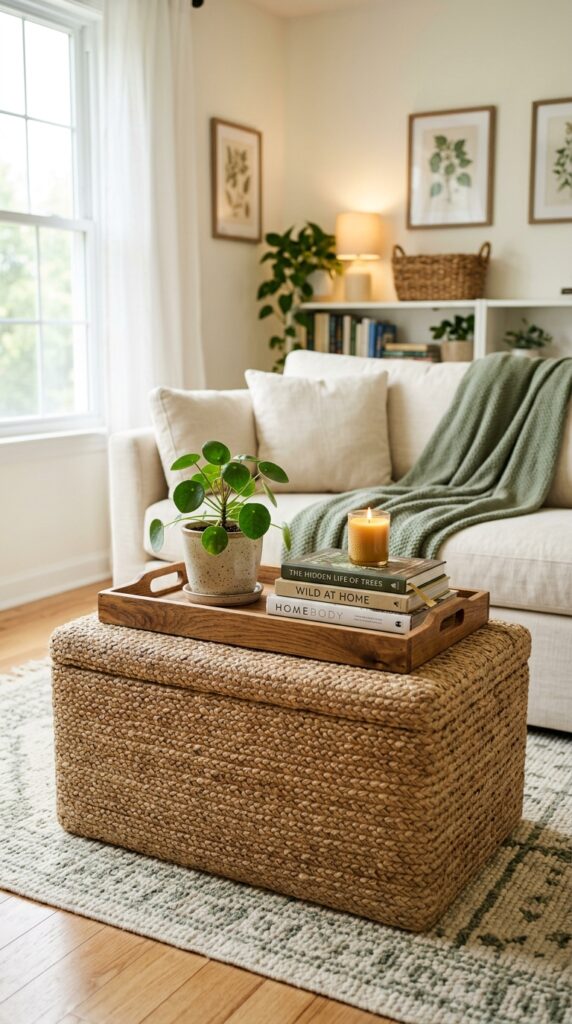
A storage ottoman quietly solves three problems at once — seating, surface space, and hidden storage — which makes it one of the highest-value pieces you can own in a small apartment.
Choose an ottoman with a removable lid and enough interior depth for blankets, extra linens, or off-season clothes. Top it with a large wooden tray so you still get a flat surface for drinks, books, or a small potted plant.
Keep the tray light enough to lift off easily, since you’ll be accessing the ottoman’s interior often. The common mistake is overstuffing it until the lid won’t sit flush — leave a little breathing room so it closes properly.
Best small items for the tray: a compact succulent, a candle, a stack of two or three books.
See our multi-purpose furniture styling guide and BHG’s guide to small-space furniture.
This one piece can replace an entire coffee table and a dresser drawer.
Over-the-Door Shoe and Tool Organizer
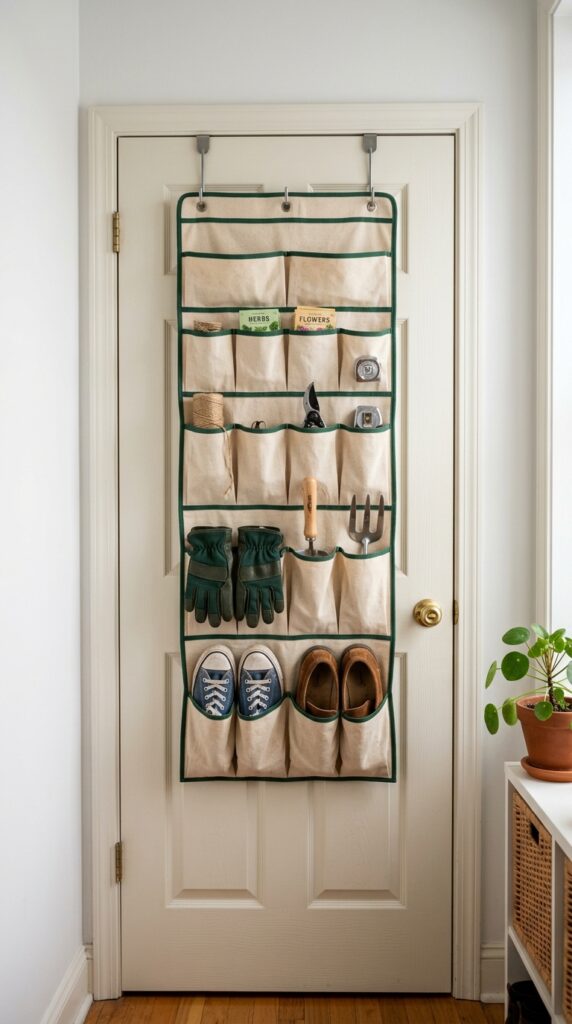
An over-the-door pocket organizer turns a completely unused surface into serious storage without a single nail or drill.
Choose a sturdy canvas or clear vinyl organizer that hooks directly over a standard door, and use the pockets for shoes, cleaning supplies, or small plant-care tools like pruning shears and misting bottles. This works on any interior door, including closets, pantries, or even a bathroom door if you’re short on cabinet space.
Sort items by weight, keeping heavier objects in the top pockets so the organizer doesn’t sag or pull the door hinges over time. The pro insight: label pockets if you’re storing similar-looking items, since digging through a dozen unlabeled pockets defeats the purpose.
💡 Pro Tip: Choose an organizer with reinforced grommet hooks rather than plain fabric loops — they hold their shape far longer and won’t stretch out under regular use.
Read our small apartment organization guide and The Sill’s guide to plant tool storage.
It’s one of the fastest wins on this entire list.
Tension Rod Alcove Bookshelf
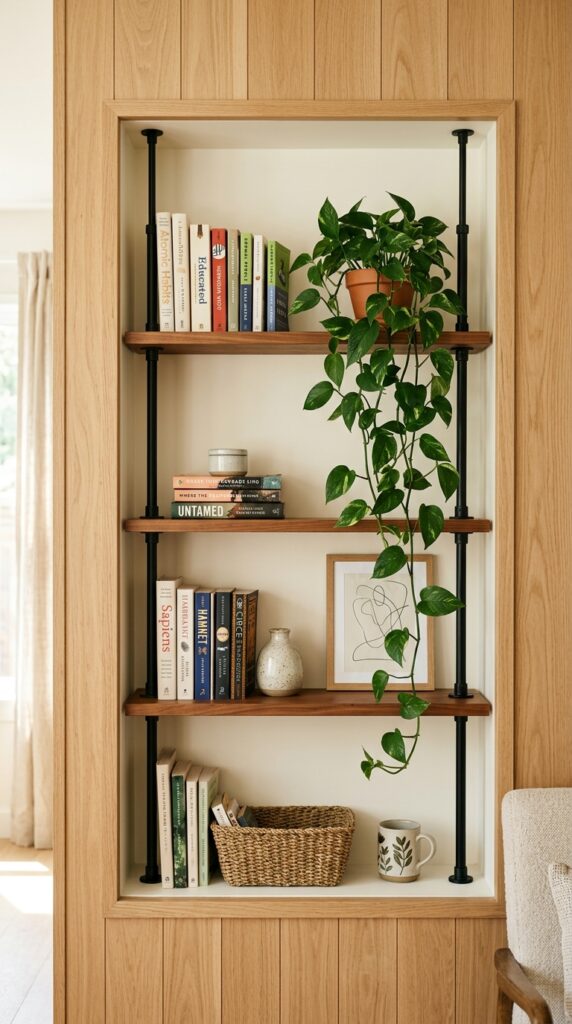
A tension rod system fitted into a wall alcove or narrow nook can support real shelving weight without a single screw going into drywall.
Measure your alcove’s width precisely, then use adjustable tension shelving designed for this purpose — most systems support several books plus a small plant per shelf. This only works in alcoves under about 40 inches wide, since wider spans risk the shelf bowing under weight.
Load shelves evenly rather than stacking everything on one side, and recheck the tension every couple of months since temperature shifts can loosen the fit slightly. The pro insight: a small trailing pothos on the top shelf softens the otherwise boxy look of stacked books.
What works vs. what to avoid: Paperback books and lightweight decor work well; avoid stacking heavy hardcovers on a single shelf, which stresses the tension points unevenly.
See our alcove shelving ideas guide and Gardeners’ World’s tips on shelf plant styling.
An awkward nook becomes genuinely useful storage in under an hour.
Under-Bed Rolling Storage Bins
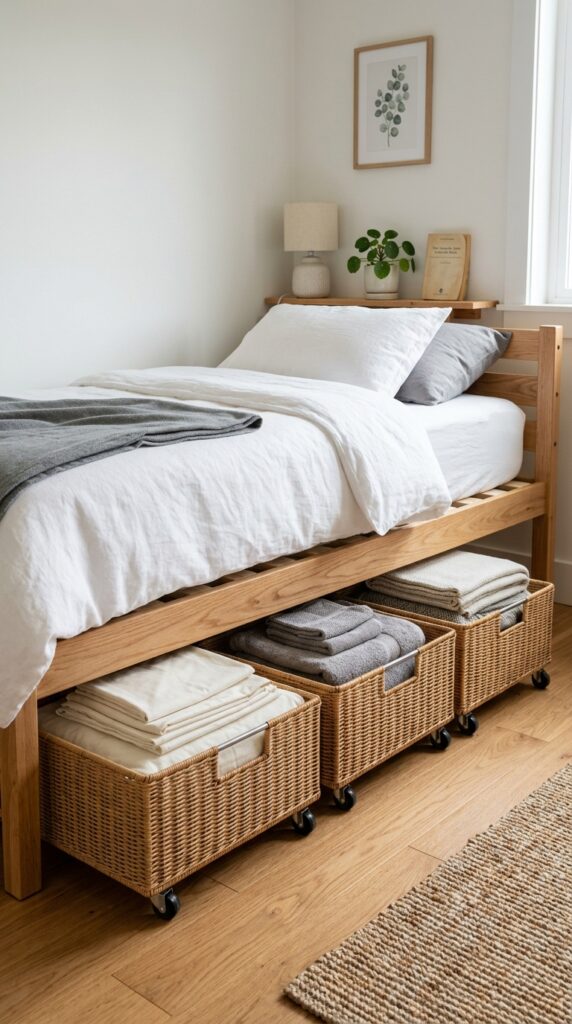
The space under your bed is some of the most overlooked square footage in a small apartment, and rolling bins make it genuinely accessible.
Measure your bed’s clearance height before buying, since standard bed frames vary widely — most rolling under-bed bins need at least 6–7 inches of clearance to fit and slide freely. Use them for off-season clothing, extra bedding, or bulky items you only need occasionally.
Choose bins with lids to keep dust out, and label the short ends so you can identify contents without pulling every bin out. The common mistake is buying bins too tall for your specific bed frame — always measure first, since returns on bulky storage items are often a hassle.
Best items for under-bed storage: off-season clothing, extra linens, gift wrap, seasonal decor.
Check out our under-bed storage solutions guide and BHG’s guide to small bedroom organization.
It’s the storage equivalent of finding a room you didn’t know you had.
Command Hook Command Center
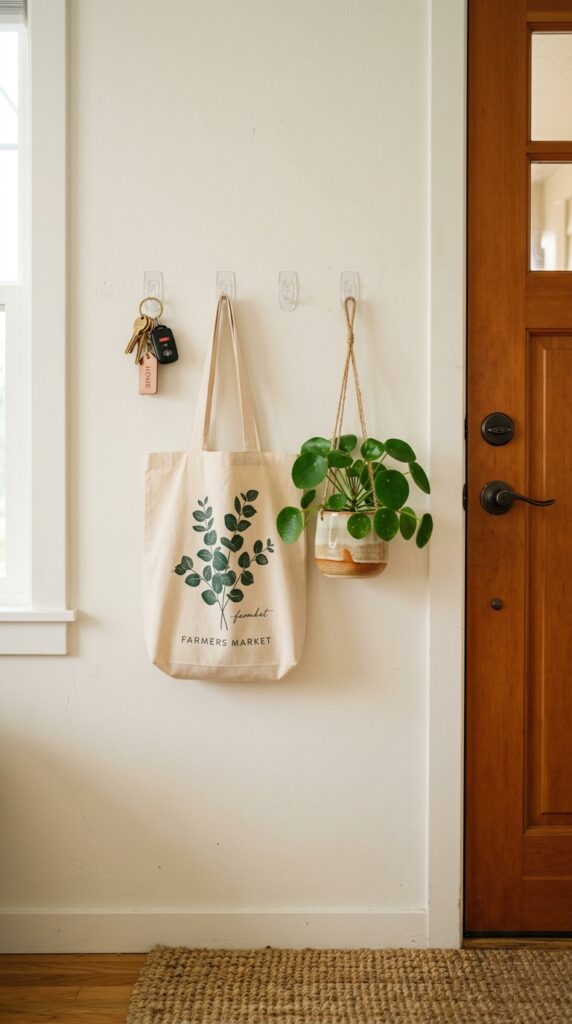
A small cluster of Command hooks near your front door creates an instant, damage-free command center for keys, bags, and even a little greenery.
Use a mix of small and heavy-duty hooks rated for the specific items you’re hanging — small hooks for keys, larger 5-lb-rated hooks for tote bags or a light jacket. Clean the wall with rubbing alcohol before applying any hook, since this single step determines whether the adhesive actually holds.
Arrange hooks at slightly staggered heights rather than a straight row, which reads as more intentional and gives you room to add a small hanging planter like a pothos for a softer, less utilitarian feel. Let each hook cure for a full hour before hanging anything.
Best varieties for the hanging planter: pothos, string of pearls, small succulent.
See our entryway organization guide and the RHS guide to small hanging planters.
It turns the chaos of “where are my keys” into a five-second habit.
Vertical Wall Grid Organizer
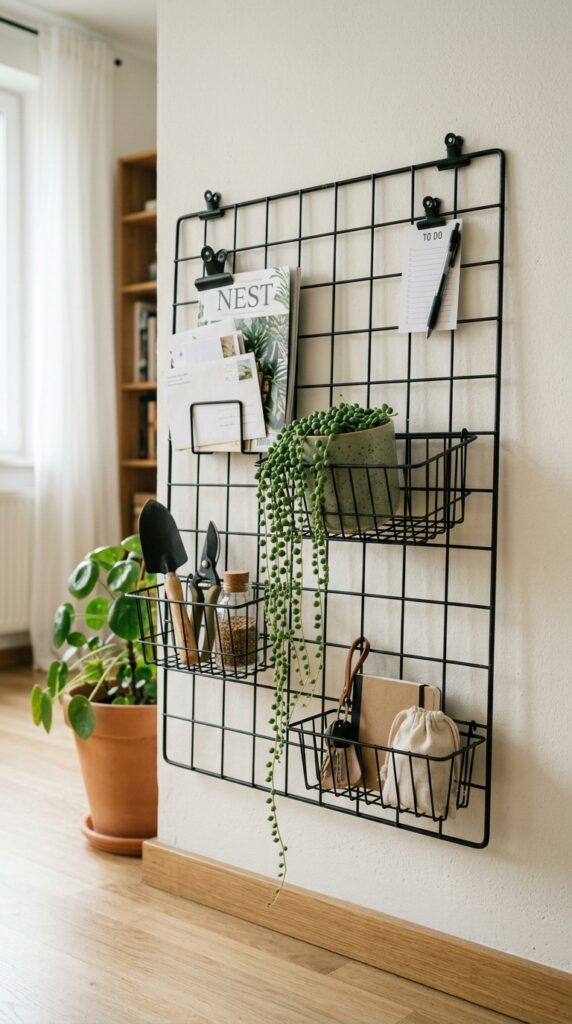
A freestanding wire grid panel, leaned against a wall or propped on a shelf, gives you a fully reconfigurable storage system without any wall mounting.
Choose a grid panel with a stable base or leaning frame, then add clip-on baskets, hooks, and small shelves as needed for mail, keys, plant tools, or small decor. This system’s biggest advantage is flexibility — you can move every component around in minutes as your storage needs change.
Keep heavier items on lower clips to prevent the panel from tipping, and use the top section for lightweight decorative touches like a small trailing succulent in a clip-on planter. The pro insight: these grids work especially well in narrow hallways where a full shelf wouldn’t fit.
Comparison — beginner vs. advanced version: Beginners can start with three or four basic clips; advanced organizers can add a full mix of baskets, hooks, and a mini planter shelf.
Read our vertical grid organization guide and BHG’s guide to modular small-space storage.
It’s one of the few systems that grows and shrinks with your actual needs.
Rolling Bar Cart Multi-Use Storage
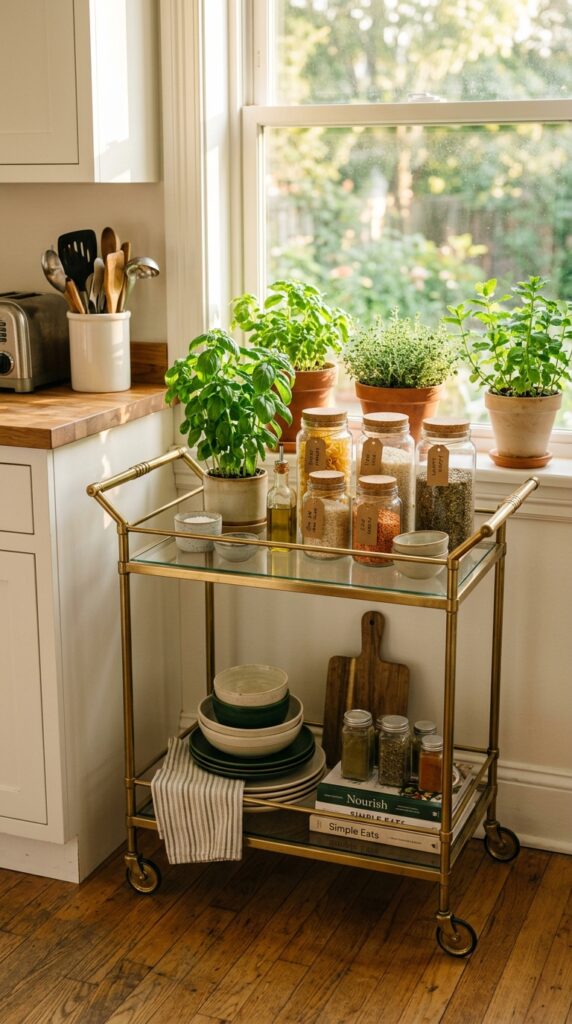
A rolling bar cart isn’t just for drinks — in a small kitchen or living room, it becomes genuinely useful mobile storage that can be wheeled wherever you need it most.
Pick a two- or three-tier cart with locking wheels, and use it for overflow pantry items, extra dishware, or a small collection of potted herbs that need to chase sunlight throughout the day. This works especially well in kitchens with limited counter or cabinet space.
Group similar items on each tier so you’re not hunting across all three levels for one thing, and keep the bottom tier for your heaviest items to maintain stability. The common mistake is overloading the top tier, which can make the cart top-heavy and prone to tipping when rolled.
For more ideas, see our mobile plant cart setup guide and Almanac’s guide to growing herbs indoors.
Mobility is the real superpower of this piece in a tight kitchen.
Floating Ledge Bookshelf and Plant Combo
🖼️ IMAGE PROMPT: A flat-lay style photograph of a slim wooden picture ledge mounted with heavy-duty adhesive strips, holding a few books and a small succulent in a mini pot. Lighting: natural morning light. Color palette: warm oak, sage green, cream white. Mood: clean and minimal. Photography style: eye-level lifestyle. Background: simple white wall. Style tags: photorealistic, 8K, botanical photography, magazine quality, no people.
A slim floating ledge mounted with heavy-duty adhesive strips gives you a narrow but genuinely useful shelf without a single drilled hole.
Use a ledge under 3 feet long, adhesive strips rated for at least 10 lbs combined, and keep the load light — a few paperbacks and one small succulent in a plastic pot. Clean and dry the wall thoroughly before applying, since leftover dust or humidity is the top reason these strips fail.
Press firmly along the full strip and wait a full hour before adding weight, loading gradually to test the bond. The pro insight: stack books flat rather than upright if you’re close to the shelf’s weight limit, since flat stacking distributes weight more evenly.
💡 Pro Tip: Position the ledge somewhere with at least a few hours of indirect light if you’re adding a plant — deep interior walls will cause even hardy succulents to stretch and thin out.
See our succulent shelf styling ideas and extension.psu.edu’s succulent light requirements guide.
This narrow ledge adds real function in a spot most people leave empty.
Nesting Tables for Flexible Surface Space
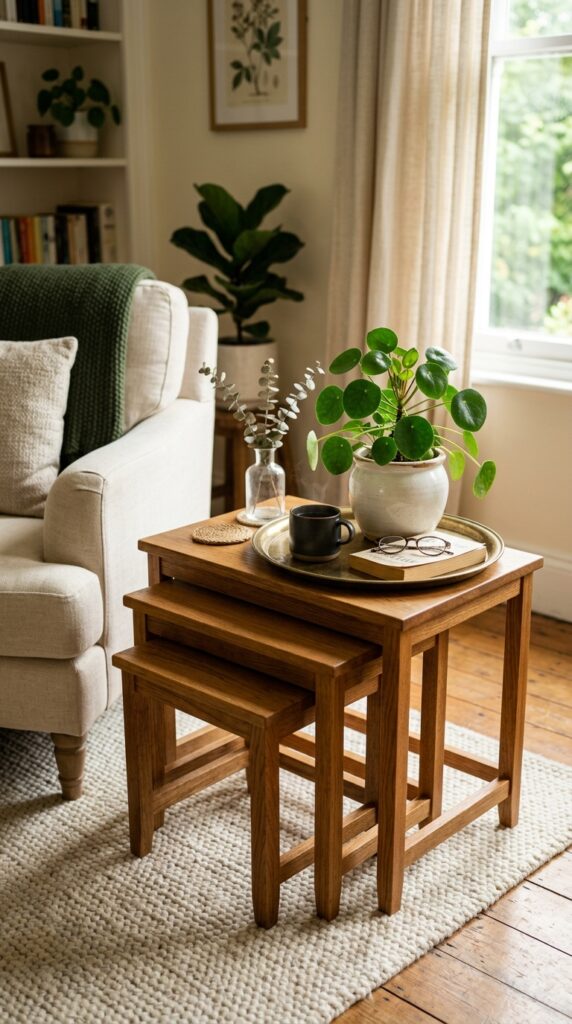
A set of nesting tables gives you three surfaces that store as one, which is exactly the kind of flexible furniture a small apartment needs.
Choose a set of three tables in graduated sizes that stack neatly under one another when not in use, and pull them apart for extra surface space during gatherings or when you need a spot for a laptop and a drink at once. Top the largest table with a small tray holding a compact plant like a haworthia succulent.
Keep the smallest table light enough to move one-handed, since its main job is portability. The common mistake is buying a bulky nesting set that doesn’t actually tuck away flush — measure the stacked footprint before purchasing to confirm it fits your space.
Best varieties for the tray plant: haworthia succulent, small pothos, mini peperomia.
See our flexible small-space furniture guide and BHG’s guide to small-space furniture.
Three tables that store as one is exactly the kind of math a small apartment needs.
Woven Basket Wall Storage
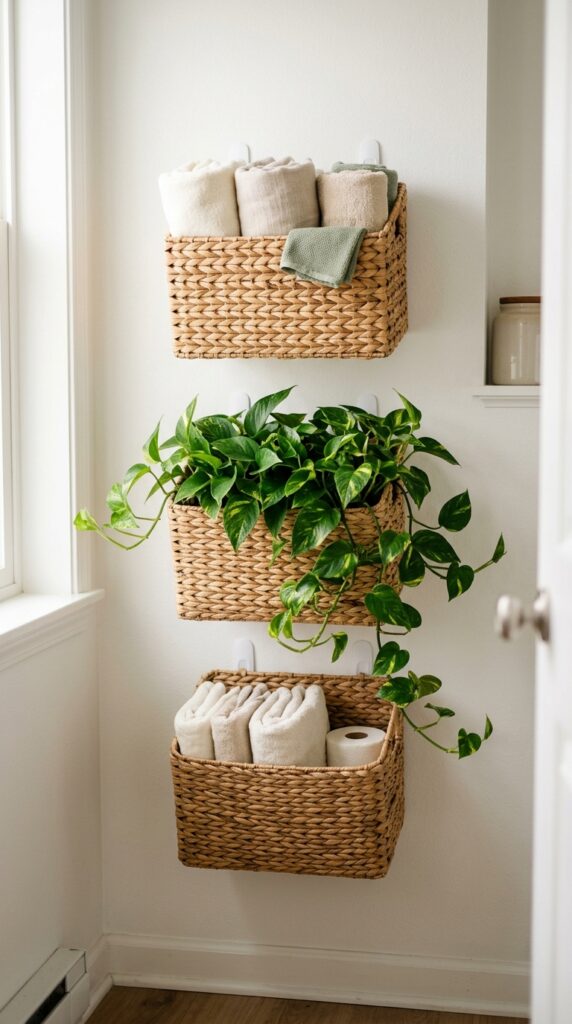
Wall-mounted woven baskets add textured storage and decor in one move, using adhesive hardware instead of anything drilled into the wall.
Choose lightweight wicker or rattan baskets and heavy-duty adhesive hooks or strips rated to match each basket’s loaded weight. Fill them with rolled towels, extra linens, or lightweight everyday items rather than anything too heavy, since adhesive limits are lower than a drilled anchor’s.
Arrange baskets in a cluster of varying sizes for visual interest, and tuck a small trailing pothos into one for a softer, greener touch among the woven texture. The pro insight: test the adhesive with a lighter load first before committing your heaviest basket to the display.
What works vs. what to avoid: Small, light items work well; avoid using these for anything genuinely heavy like books, which exceed most adhesive weight ratings quickly.
Read our woven basket storage styling guide and Gardeners’ World’s tips on trailing houseplants.
It’s storage that looks intentional even when it’s hiding clutter.
Freestanding Pegboard Kitchen Organizer
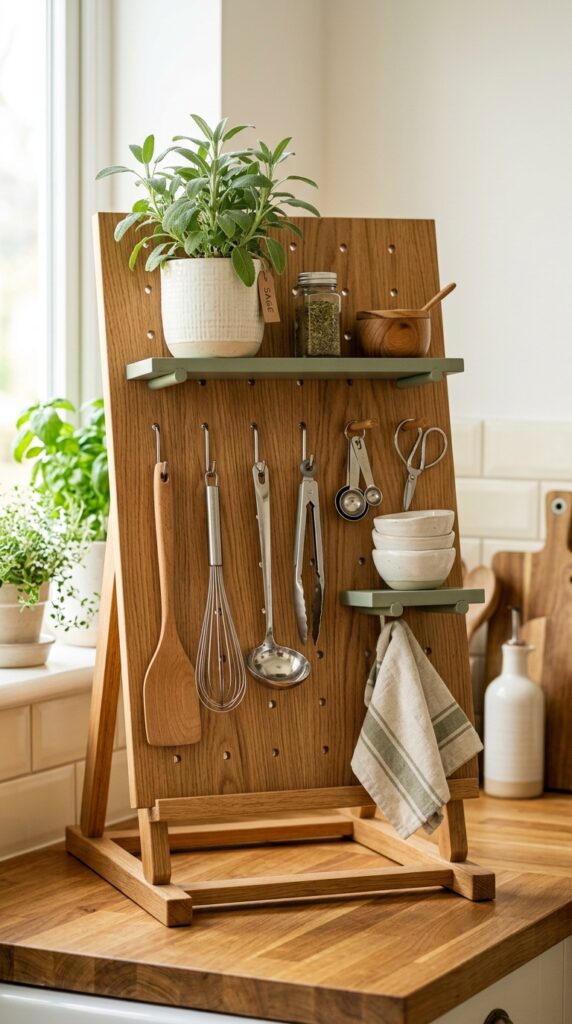
A freestanding pegboard on its own frame brings all the flexibility of a mounted kitchen pegboard without touching a single kitchen wall or tile.
Fit the board with hooks for utensils, small shelf pegs for spices, and space for a potted herb like basil or thyme near the top where it gets the most light. Position the frame near a window if possible, since the herb component depends on at least a few hours of bright light daily.
Rearrange pegs as your kitchen needs shift — this is one of the few storage systems you can fully redesign in minutes without buying anything new. The pro insight: keep the heaviest cookware on the lowest pegs so the frame doesn’t feel unstable.
Comparison — beginner vs. advanced: Beginners can start with a few hooks and one herb pot; advanced organizers can add small shelves and a full working herb row.
See our freestanding pegboard plant wall guide and Almanac’s guide to growing herbs indoors.
It brings real kitchen organization to apartments with zero wall space to spare.
Leaning Ladder Shelf for Linens and Plants
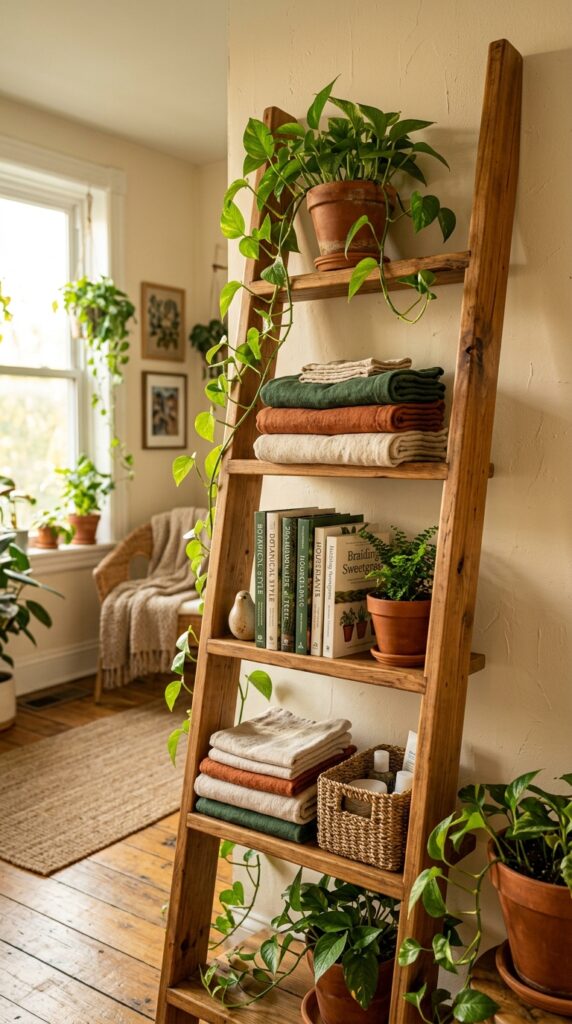
A leaning ladder shelf rests against the wall under its own weight, giving you five tiers of mixed storage and display without a single anchor point.
Look for a solid wood ladder with at least four rungs, and alternate function across tiers — folded towels or linens on some rungs, books and a trailing pothos on others. Place it where the plant tier gets at least moderate indirect light, since a fully shaded ladder will limit which plants can survive there.
Keep your heaviest folded items on the lower rungs for stability, and rotate the pothos occasionally so growth doesn’t lean permanently toward whatever light source is nearest. The common mistake is loading the top rung too heavily, which risks tipping a narrow-based ladder.
Best varieties for this approach: pothos, snake plant, small ZZ plant.
See our plant ladder shelf styling guide and Gardeners’ World’s tips on indoor plant stands.
It’s storage and greenery sharing the same small footprint.
Suction Cup Window Storage Shelf
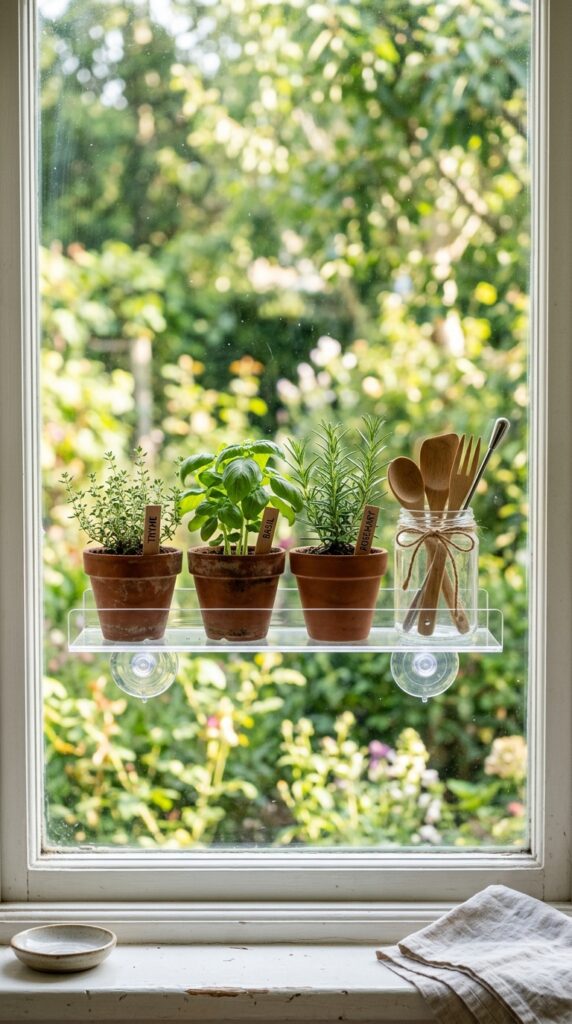
A small glass shelf mounted with heavy-duty suction cups turns unused window space into a genuinely useful storage and plant display spot.
Choose suction cups rated for at least a few pounds of combined weight, and keep the load light — a couple of small herb pots and a lightweight jar of utensils works well. This only functions on smooth, clean glass; textured or older single-pane windows may not hold suction reliably.
Test the suction grip weekly at first, since humidity and temperature swings near a kitchen window can weaken the seal faster than in a drier room. The pro insight: reapply suction cups after any deep window cleaning, since cleaning solutions can leave a residue that prevents a strong seal.
💡 Pro Tip: Choose herbs like chives or thyme for this spot — their compact root systems tolerate small pots far better than sprawling herbs like mint.
Read our windowsill storage and herb guide and The Sill’s guide to small tabletop plants.
It’s a clever way to reclaim space that most apartments waste entirely.
Freestanding Coat Rack Multi-Hook Storage
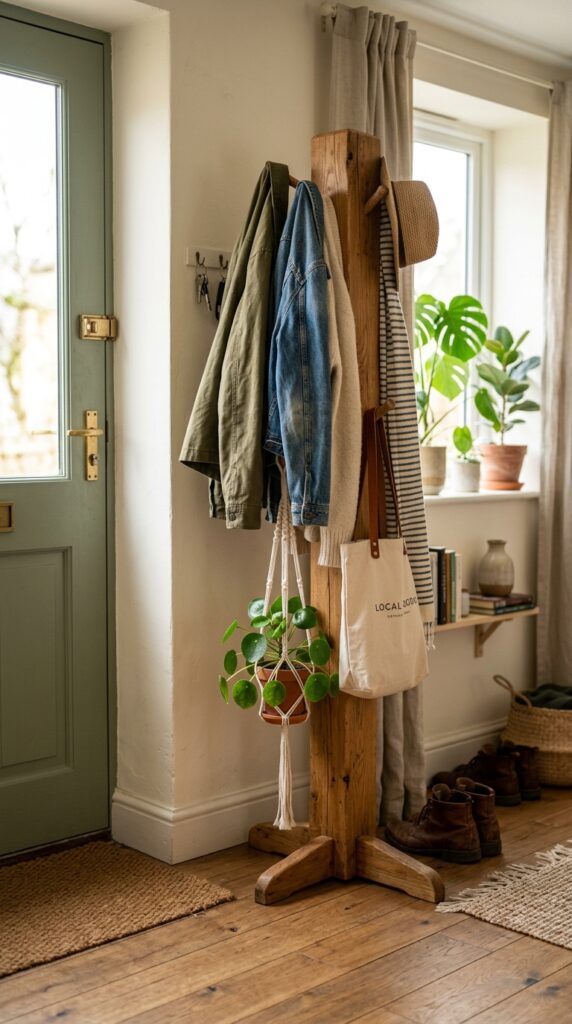
A tall freestanding coat rack does far more than hold coats — with several hook arms and a sturdy base, it becomes flexible storage for bags, scarves, and even a hanging plant.
Choose a rack with a wide, weighted base for stability, and distribute weight evenly across hooks rather than clustering everything on one side. Reserve one hook for a lightweight hanging planter, like string of pearls or pothos, to soften the otherwise purely functional look.
Position the rack near your entryway or a bright corner so the plant hook gets adequate light. The pro insight: a rack with a cast iron or heavily weighted base handles a fuller hook load far more safely than a lightweight metal frame.
Best varieties for the hanging planter: string of pearls, pothos, trailing succulent.
See our creative hanging planter stand ideas and Missouri Botanical Garden’s guide to hanging houseplants.
One piece of furniture, several storage jobs solved.
Mason Jar Wall-Mounted Pantry Storage
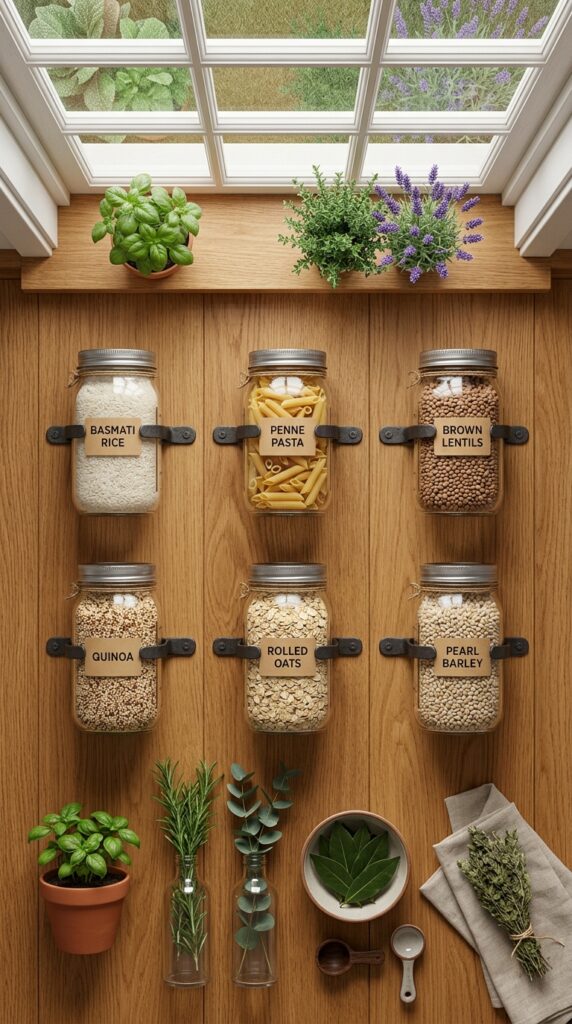
Mason jars mounted in adhesive metal brackets create visible, space-saving pantry storage for small kitchens with limited cabinet room.
Use wide-mouth mason jars and brackets rated for glass jar weight, applying them to a clean, dry section of wall or the inside of a cabinet door. Fill jars with dry goods like rice, pasta, oats, or beans that you use often enough to justify the visible display.
Label each jar clearly, since identical-looking dry goods are easy to mix up once transferred out of their original packaging. The common mistake is mounting brackets before confirming the wall surface can support glass jar weight — always test with an empty jar first before filling.
What works vs. what to avoid: Dry, shelf-stable goods work well; avoid anything that needs refrigeration or airtight sealing beyond a standard jar lid.
Read our small kitchen pantry storage guide and BHG’s guide to small kitchen organization.
It’s storage that doubles as genuinely nice-looking kitchen decor.
Bed Riser Under-Bed Vertical Space
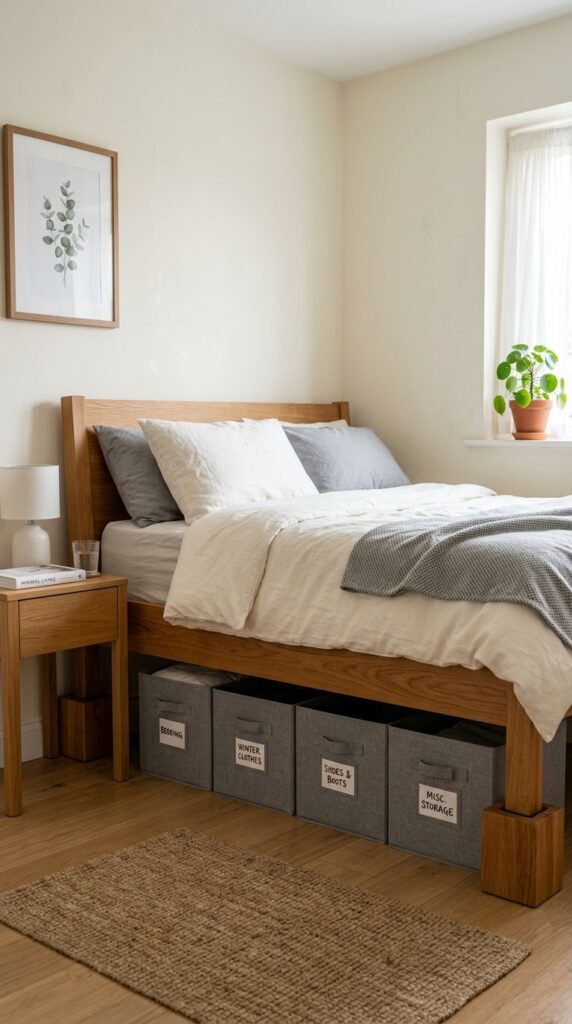
Simple bed risers raise your entire bed frame a few inches, instantly creating enough clearance to fit much larger storage boxes underneath.
Choose sturdy wooden or heavy-duty plastic risers rated for your bed frame’s total weight, typically adding 3–6 inches of extra clearance. This single change can turn a bed with almost no usable space beneath it into a spot for several large labeled bins.
Measure your new clearance after installing risers before buying storage boxes, since even a small miscalculation means bins that don’t slide in properly. The pro insight: keep frequently used items in bins nearest the accessible side of the bed, saving the far corners for things you rarely need.
Best items for riser-enabled storage: seasonal clothing, extra bedding, luggage, out-of-season decor.
See our under-bed storage solutions guide and BHG’s guide to small bedroom organization.
A few inches of lift can unlock a genuinely surprising amount of storage.
Curtain-Concealed Open Shelving
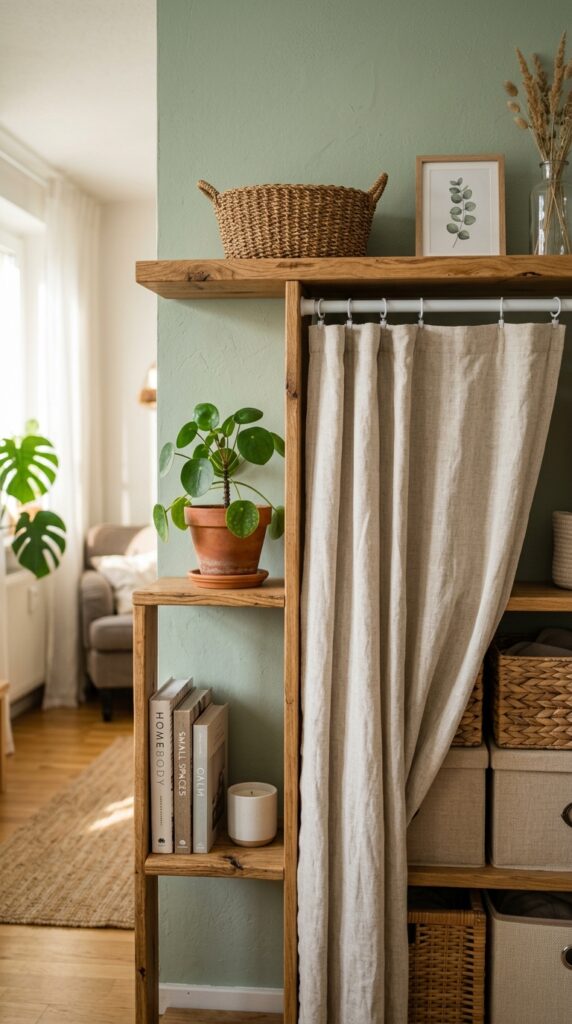
A simple curtain hung on a tension rod in front of open shelving lets you store visually busy items out of sight without installing an actual cabinet door.
Mount a tension rod just in front of your open shelf unit, and hang a lightweight curtain panel that slides open and closed easily. Use the concealed shelves for less attractive storage — cleaning supplies, extra electronics, miscellaneous bins — while keeping a small potted plant or a few books visible on an uncovered top shelf.
Choose a curtain fabric that matches your room’s palette so the covered section reads as an intentional design choice rather than a hidden mess. The common mistake is choosing a curtain too short to fully conceal the shelving, which defeats the purpose entirely — measure the shelf height first.
Check out our concealed storage styling guide and BHG’s guide to small-space storage solutions.
It’s one of the simplest ways to hide clutter without buying a single cabinet.
Wall-Mounted Fold-Down Desk
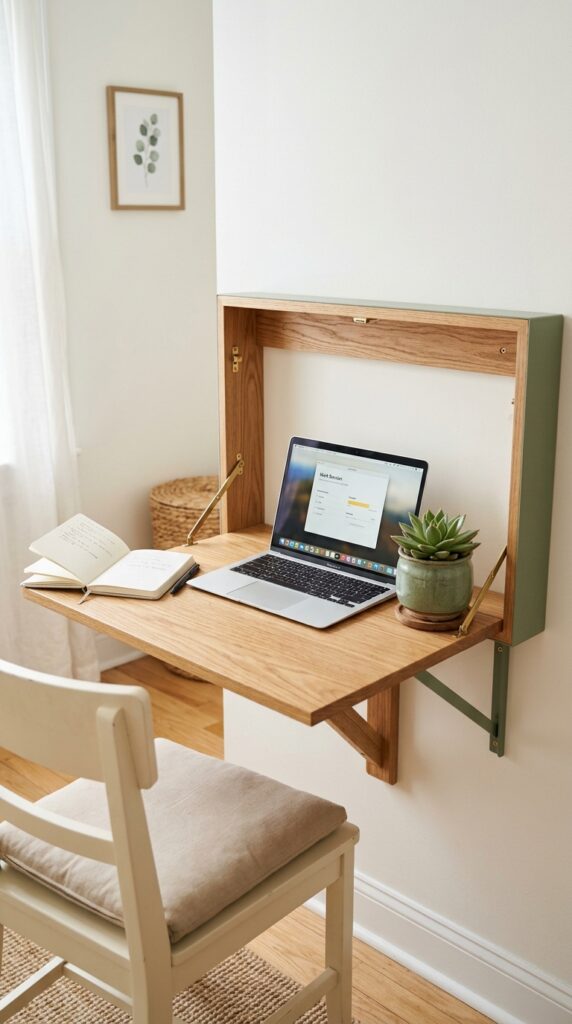
A fold-down desk mounted with heavy-duty hardware gives you a full workspace that disappears flat against the wall the moment you’re done using it.
Look for a model specifically designed for damage-free or minimal-hardware mounting, and reserve a spot near natural light for both productivity and a small desk plant like a succulent or pothos cutting in water. Keep the desk’s contents minimal when folded away, since anything left on the surface will fall when it collapses.
Test the folding mechanism a few times before relying on it daily, and keep the hinge area free of dust to prevent sticking over time. The pro insight: a small trailing plant on the desk’s edge softens what can otherwise feel like a purely utilitarian setup.
Best varieties for the desk plant: pothos cutting in water, small succulent, mini peperomia.
Read our small apartment workspace guide and The Sill’s guide to desk-friendly houseplants.
It solves the classic small-apartment problem of needing a desk you don’t have room for.
Hanging Shoe Organizer Repurposed for Craft Supplies
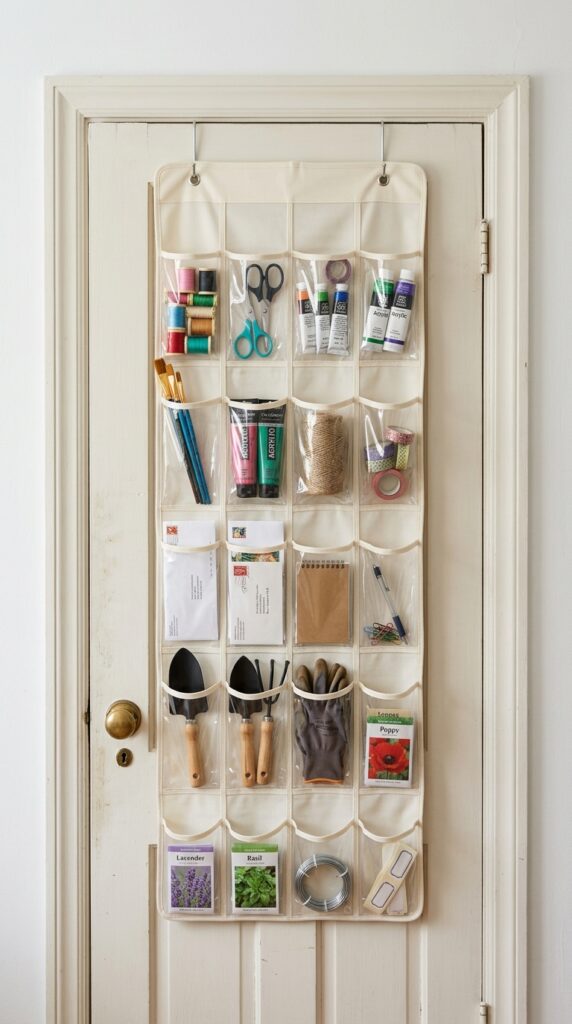
A clear-pocket shoe organizer, hung inside a closet door, works just as well for craft supplies, mail, or small gardening tools as it does for shoes.
Choose an organizer with clear vinyl pockets so contents are visible without digging, and sort items by category into individual pockets — pens in one, seed packets in another, mail in a third. This makes the most of closet door space that would otherwise sit completely empty.
Keep heavier items toward the top of the door where the hooks bear weight most securely, and lighter paper goods lower down. The common mistake is overstuffing individual pockets until the fabric stretches — spread items across more pockets rather than cramming too much into one.
Best varieties for a plant-focused pocket set: seed packets, small pruning shears, plant tags, twine.
See our small apartment organization guide and Almanac’s guide to organizing gardening supplies.
Repurposing this one item can single-handedly declutter an entire closet door.
Floating Corner Shelves for Plants and Decor
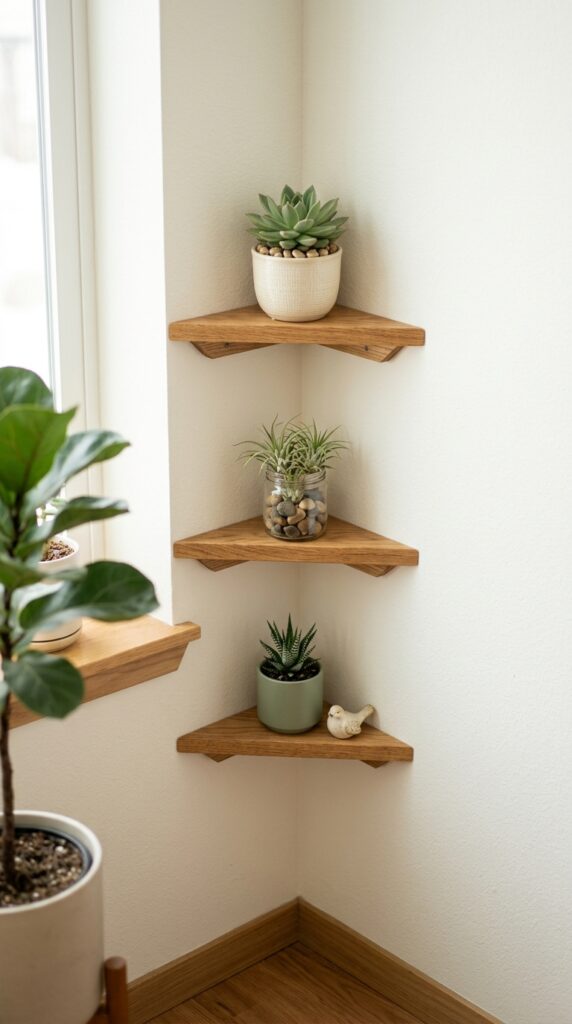
Small triangular corner shelves fit into space most furniture can’t reach, using the actual corner of a room as prime real estate.
Use lightweight wooden corner shelves and adhesive strips or hooks rated for the shelf’s total loaded weight, and keep each shelf’s load light — one succulent or a small decorative object per shelf works best. Stack two or three shelves vertically in the same corner for a mini display column.
Space shelves close enough together that the column reads as one cohesive feature rather than scattered individual pieces. The pro insight: corners near a window make the best spot for any plant-topped shelf, since corner light is often dimmer than open wall space.
What works vs. what to avoid: Small succulents and lightweight objects work well; avoid heavier ceramic planters, which exceed most corner shelf weight ratings.
See our corner shelf plant styling guide and extension.psu.edu’s succulent light requirements guide.
Corners are some of the most overlooked real estate in a small apartment.
Behind-the-Door Broom and Cleaning Storage
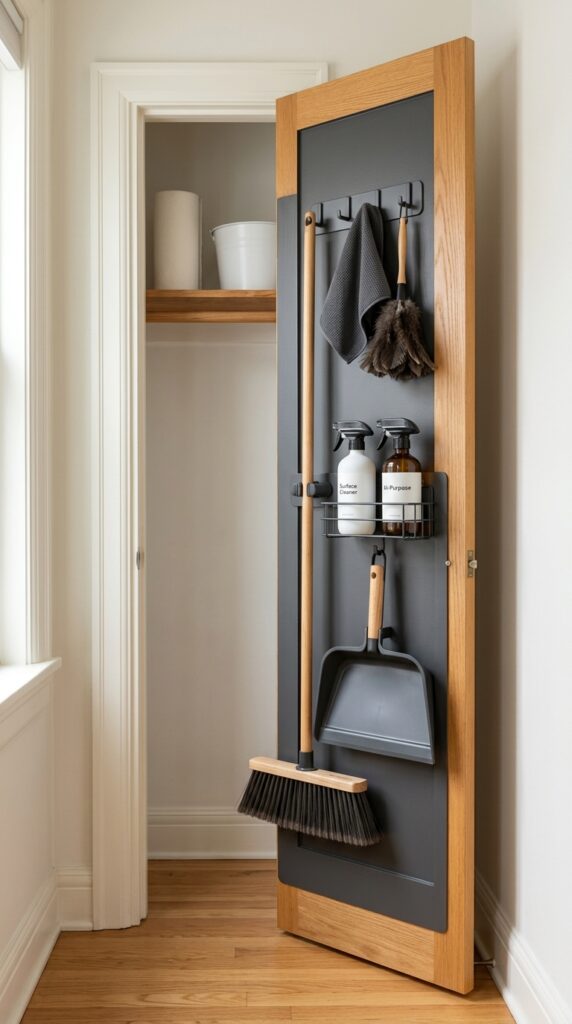
The strip of wall behind a closet or pantry door is almost always empty, and a slim adhesive-mounted rack can turn it into dedicated cleaning supply storage.
Choose a narrow rack with spring clips or hooks, rated for holding a broom, mop, and dustpan combined, and mount it low enough that the door still closes without hitting the handles. This works in any apartment with a standard hinged door and at least a few inches of clearance behind it.
Measure the door’s swing clearance carefully before mounting, since even an inch of miscalculation means the door won’t close fully. The common mistake is mounting the rack too high, which leaves long-handled tools dragging on the floor and defeats the tidy effect.
Best items for this rack: broom, mop, dustpan, small hand tools.
Read our small apartment cleaning storage guide and BHG’s guide to small-space organization.
It’s storage for the items nobody wants visible, tucked exactly where nobody looks.
Trunk-Style Bench with Hidden Storage
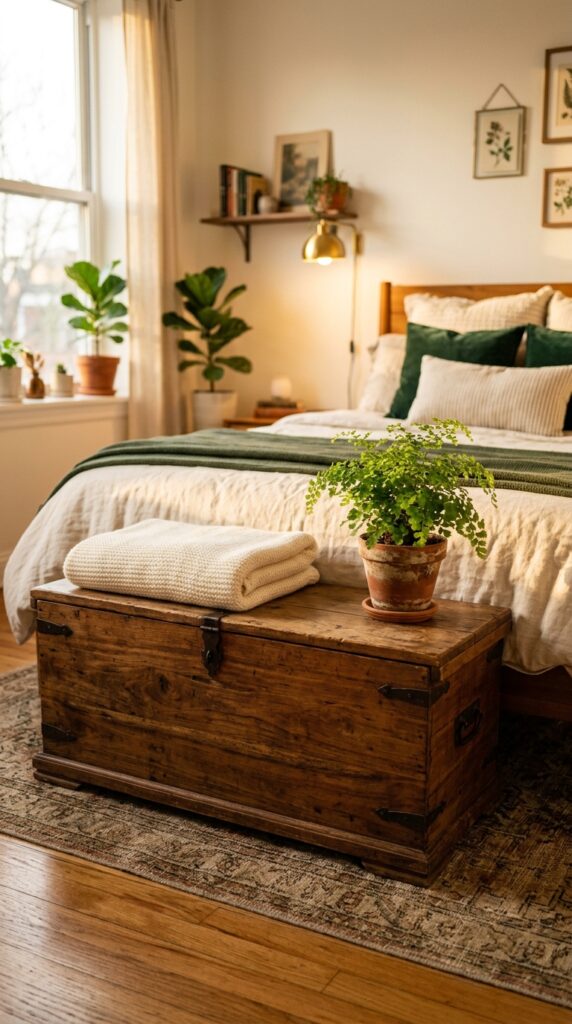
A trunk-style storage bench at the foot of a bed gives you seating, a landing spot for clothes, and a hidden compartment all in one compact footprint.
Choose a bench with a sturdy hinged lid and enough interior depth for extra bedding or seasonal items, and top it with a folded throw blanket and a small low-light plant like a fern to soften the look. Position it where there’s still walking clearance around the bed, since these benches can be bulky in a genuinely tight bedroom.
Keep the interior organized with a couple of soft fabric bins rather than loose items, which makes retrieving anything from the bottom far easier. The pro insight: choose a bench with a lid that stays propped open on its own, since one that slams shut makes loading and unloading frustrating.
Best varieties for the bench-top plant: Boston fern, ZZ plant, small pothos.
See our bedroom storage furniture guide and extension.ufl.edu’s guide to low-light houseplants.
It’s proof that seating and storage don’t have to be separate purchases.
Magnetic Spice and Tool Strip
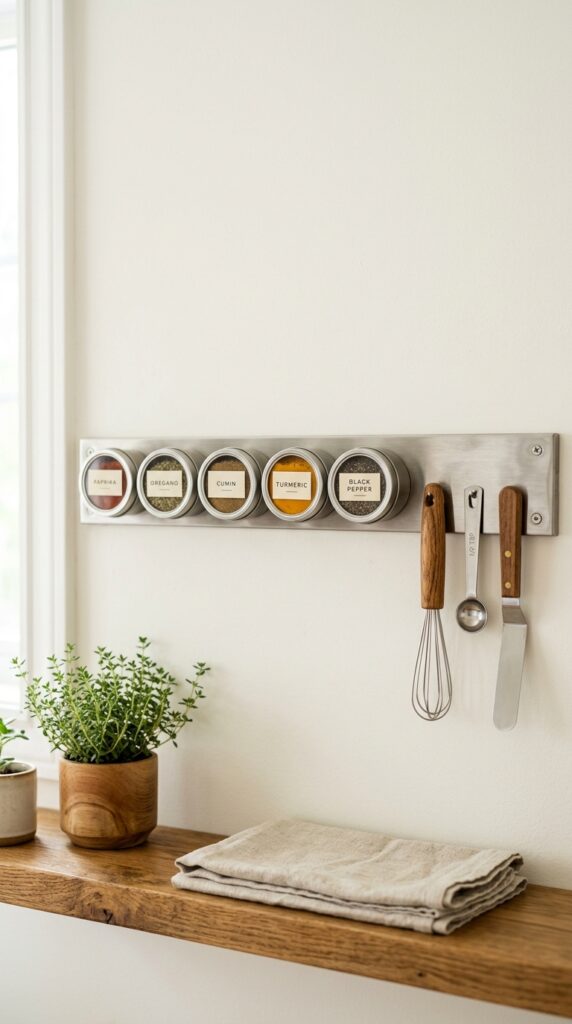
A magnetic strip mounted with adhesive backing gives you visible, grab-and-go storage for metal spice tins, small tools, or even garden markers.
Choose a strip rated for the combined weight of your items, and use metal spice tins specifically designed to stick to magnetic strips rather than trying to modify standard glass jars. This works especially well in kitchens with very limited cabinet or drawer space.
Mount the strip at a height where you can read labels easily without straining, and space items with a small gap between each so they don’t collide when you reach for one. The common mistake is overloading a light-duty strip meant for a handful of spices with heavier metal tools, which can cause items to slide or fall.
💡 Pro Tip: Group spices by how often you use them, keeping your most-reached-for options at eye level and rarely used ones toward the edges.
Read our small kitchen storage hacks guide and BHG’s guide to small kitchen organization.
It’s a small strip that solves a surprisingly large amount of counter clutter.
Repurposed Ladder Towel and Plant Rack
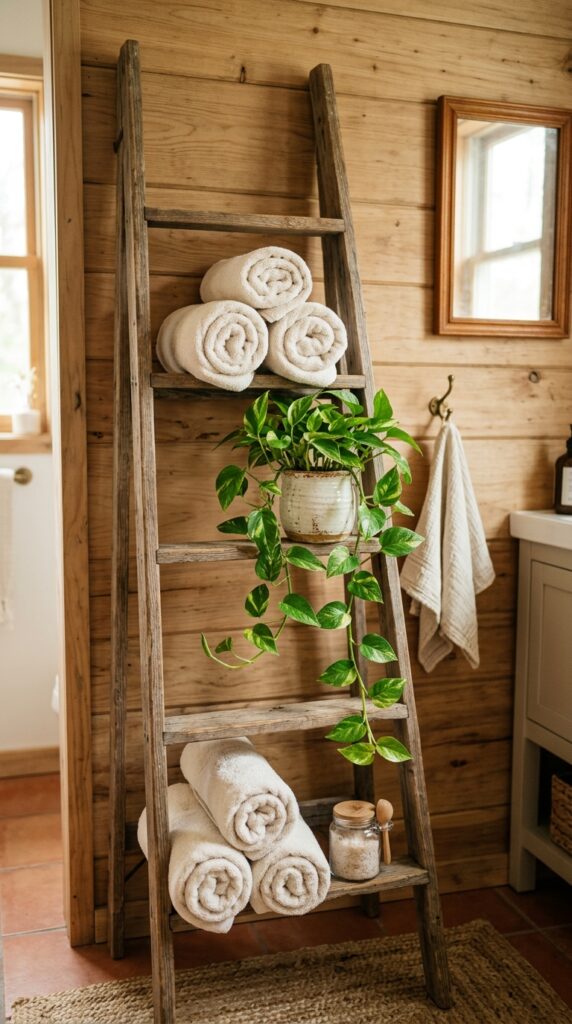
A simple wooden ladder, leaned against a bathroom or hallway wall, becomes an effective towel rack with room to spare for a small trailing plant.
Choose a narrow, lightweight ladder that leans securely at a stable angle, and drape rolled towels over alternating rungs while reserving one rung for a small hanging planter. This only works if the bathroom gets at least some ambient light — deep, windowless bathrooms will struggle to keep even a hardy pothos alive long term.
Check the ladder’s footing periodically, especially on tile or hardwood, since these surfaces offer less grip than carpet and the ladder can shift over time. The pro insight: rubber caps on the ladder’s feet significantly reduce slipping and protect flooring from scuff marks.
Best varieties for the plant rung: pothos, English ivy, small ZZ plant.
See our best plants for humid bathrooms guide and The Sill’s guide to humidity-loving houseplants.
It’s an unexpected repurpose that solves towel storage and adds real texture at once.
Floating Drawer Unit Under a Console Table
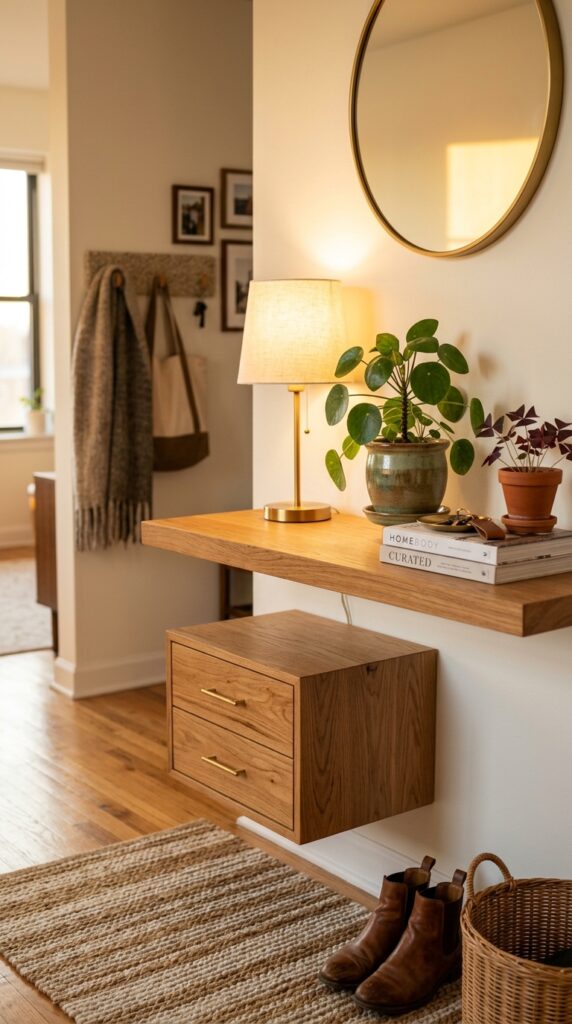
A small floating drawer unit installed beneath an existing console table adds concealed storage without taking up any additional floor space.
Choose a slim drawer unit designed for wall-mounting with adhesive or minimal hardware, positioned directly under your console table so it reads as part of the furniture rather than an obvious add-on. Use the drawers for mail, keys, or small everyday items, keeping the console’s visible top surface for a lamp and a small potted plant.
Measure the clearance between your console table’s legs carefully before buying, since drawer units come in varied widths and depths. The common mistake is choosing a unit too deep for the available space, which either won’t fit or will stick out awkwardly past the table’s edge.
Best varieties for the console-top plant: pothos, snake plant, small succulent.
Read our console table plant styling guide and BHG’s guide to entryway organization.
It’s hidden storage that makes an entryway feel finished instead of cluttered.
Getting Started With Storage & Decor for Small Apartments
The easiest first step is tackling one high-traffic problem area — your entryway or the space under your bed — rather than trying to reorganize the entire apartment at once. Starting with the spot that bothers you most gives you a fast, visible win that builds momentum for the rest.
The most common mistake beginners make is buying storage furniture before measuring their actual space, which leads to bins that don’t fit under the bed or ladders that block a doorway. Always measure twice, whether it’s bed clearance, alcove width, or door swing space.
For your first purchase, get one set of under-bed rolling bins or one over-the-door organizer, plus a single low-maintenance plant like a pothos to soften the functional feel of new storage. You’ll see a real difference in how the space feels within a single weekend, and within a few weeks the new habits — like actually using the bins instead of piling clothes on a chair — will start to stick.
Frequently Asked Questions
What’s the best way to add storage to a small apartment without drilling into walls?
Adhesive-backed hooks, strips, and ledges rated for your item’s actual weight are the most reliable damage-free options, provided you clean the wall with rubbing alcohol first and let the adhesive cure for a full hour before loading. Freestanding pieces like leaning ladders and rolling carts are also excellent since they rely on their own footprint rather than any wall attachment.
How can I make small apartment storage look intentional instead of cluttered?
Grouping items by category and color, using matching baskets or bins, and mixing in one or two plants like a trailing pothos or a small succulent all help storage read as styled decor rather than overflow. Keeping visible surfaces slightly under-filled, rather than packed, also makes a noticeable difference in how organized a space feels.
Is under-bed storage actually worth the effort in a small apartment?
Yes — under-bed space is one of the largest unused areas in most small bedrooms, and rolling bins or risers can add several cubic feet of storage without touching your closet at all. Just measure your bed’s clearance first, since standard frames vary and most rolling bins need at least 6–7 inches to fit properly.
What plants tolerate low light for a small apartment with few windows?
Pothos, snake plants, and ZZ plants are the most forgiving options for apartments getting fewer than 3–4 hours of daily brightness, since all three tolerate low to medium indirect light without significant leaf loss. Even in these conditions, keep them away from fully windowless interior rooms, where growth will eventually stall entirely.
How often should I reorganize small apartment storage to keep it working?
A light seasonal check every few months is usually enough to catch bins that have become overstuffed or shelves that have drifted into clutter, rather than a full overhaul. Small, frequent adjustments — like rotating out-of-season clothing between under-bed bins and closet space — keep the system working without ever requiring a total reset.
A Few Final Thoughts
None of these 25 storage and decor ideas for small apartments require permanent changes, a big budget, or a landlord’s permission. From an over-the-door organizer that solves a cluttered closet in minutes to a leaning ladder shelf that mixes linens with a trailing pothos, the common thread is choosing pieces that do double duty — storage that looks good, and decor that actually earns its space. Even one small change, tackled this weekend, can make your whole apartment feel more like a home you chose rather than a space you’re just getting through. Your small apartment storage and decor journey is closer than you think — now go make it happen!