
SEO Title Tag: 16 Stunning Large Potted Plants for Your Home (48 characters)
Meta Description: Discover 16 large potted plants that transform empty corners into lush focal points, with care tips for every light level. Find your fit. (152 characters)
URL Slug: /large-potted-plants-for-home/
Suggested Featured Image Alt Text: Collection of large potted plants including fiddle leaf fig and palm in bright living room
Every home has that one empty corner that photographs flat no matter how you rearrange the furniture around it — a tall plant is almost always the fix, and most people reach for the wrong one first. I’ve killed two fiddle leaf figs and one majesty palm before I understood that “large” doesn’t mean “easy,” and the size of a plant tells you almost nothing about how forgiving it will be. This list covers 16 large potted plants that actually deliver on scale, from deep-shade survivors to statement pieces that need real sun to perform. Each one comes with the specific light, watering, and sizing details that decide whether it thrives or sulks in your particular room. Ready? Let’s explore all 16 of them.
Quick Answer: For low light, go with a snake plant or ZZ plant substitute like a large Dracaena marginata; for bright, sunny rooms, a fiddle leaf fig or bird of paradise makes the biggest visual impact. If you have pets, skip anything in the Ficus or Dracaena family and choose a parlor palm, areca palm, or bird’s nest fern instead.
Why Large Potted Plants Are Worth Your Time
A single large plant does more for a room than five small ones scattered around it — it gives the eye one clear place to land, and it fills vertical space that furniture never touches. In practice, one 6-foot plant in a good pot reads as intentional design, while a cluster of small pots often reads as clutter no matter how carefully arranged.
The practical benefits go beyond looks. Larger plants process more air per square foot of leaf surface, several tolerate genuine neglect once established, and many — like snake plants and ZZ-adjacent Dracaenas — survive missed watering weeks that would kill a smaller specimen. The lesser-known fact most people miss: a plant’s mature size on the tag is usually its outdoor, in-ground potential, not what it will realistically reach in a container indoors, so don’t rule out a “6-foot” plant for a modest room.
This approach is ideal for anyone with a tall, empty corner, a stairwell landing, or a bare spot beside a sofa — and for renters who want serious visual impact without permanent changes to a space.
At a Glance
- Fiddle leaf figs deliver the most dramatic silhouette but demand consistent bright light and zero fussing once positioned.
- Snake plants and Dracaenas survive low light and irregular watering better than almost anything else on this list.
- Palms like the majesty and kentia bring texture without the leaf-drop drama of finicky Ficus varieties.
- Pet owners should default to areca palms, parlor palms, or bird’s nest ferns, all non-toxic to cats and dogs.
- Most plants here need repotting into a container 2-4 inches wider only once every 2-3 years, not annually.
16 Large Potted Plants Compared
| Plant | Light Needs | Mature Indoor Size | Difficulty | Pet-Safe? |
| Fiddle Leaf Fig | Bright indirect | 6-8 ft | Difficult | No |
| Bird of Paradise | Full sun | 5-7 ft | Moderate | No |
| Rubber Plant | Bright indirect | 6-8 ft | Easy | No |
| Monstera Deliciosa | Bright indirect | 6-8 ft | Easy | No |
| Majesty Palm | Bright indirect | 5-7 ft | Moderate | Yes |
| Norfolk Island Pine | Bright indirect | 4-6 ft | Moderate | Yes |
| Snake Plant (large) | Low to bright | 3-4 ft | Very easy | No |
| Dracaena Marginata | Medium to bright | 5-6 ft | Easy | No |
| Areca Palm | Bright indirect | 6-7 ft | Moderate | Yes |
| Philodendron Selloum | Medium to bright | 4-5 ft | Easy | No |
| Bamboo Palm | Low to medium | 5-6 ft | Easy | Yes |
| Weeping Fig | Bright indirect | 6-8 ft | Difficult | No |
| Bird’s Nest Fern | Medium, indirect | 2-3 ft | Moderate | Yes |
| Philodendron Bipinnatifidum | Medium to bright | 4-6 ft | Easy | No |
| Kentia Palm | Low to bright | 6-8 ft | Easy | Yes |
| Corn Plant | Medium indirect | 5-6 ft | Easy | No |
1. Fiddle Leaf Fig for a Dramatic Focal Point
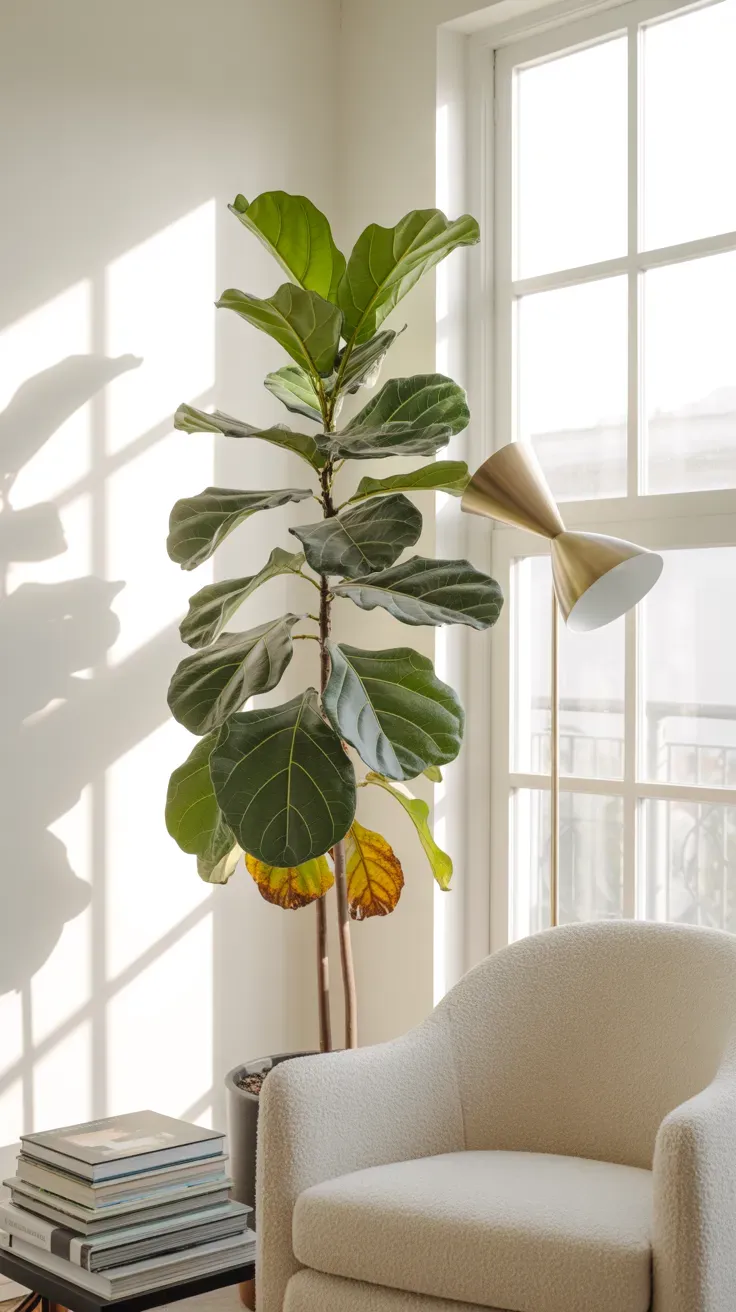
Fiddle leaf figs (Ficus lyrata) earn their reputation both ways — nothing else gives a room this much sculptural presence, and few plants punish inconsistency as fast.
They need bright indirect light for 6+ hours a day, ideally within a few feet of an east or south-facing window, and they hate being moved once settled — rotating the pot slightly every couple of weeks for even growth is fine, but relocating the whole plant to a new room often triggers leaf drop within days. Water when the top 2 inches of soil dry out, roughly once a week, using a pot with real drainage holes; standing water is the fastest way to lose one.
The mistake I made twice was watering on a fixed schedule instead of checking the soil — fiddle leafs in a warm, dry apartment dry out faster in winter with the heat running than people expect.
Pro Tip: Wipe the large leaves with a damp cloth monthly — dust buildup blocks light absorption and makes the plant more vulnerable to spider mites.
Give it a stable, bright spot and this plant becomes the piece every visitor asks about.
Internal link: fiddle leaf fig care and common problems External link: The Sill’s detailed fiddle leaf fig troubleshooting guide
2. Bird of Paradise for Tropical Height
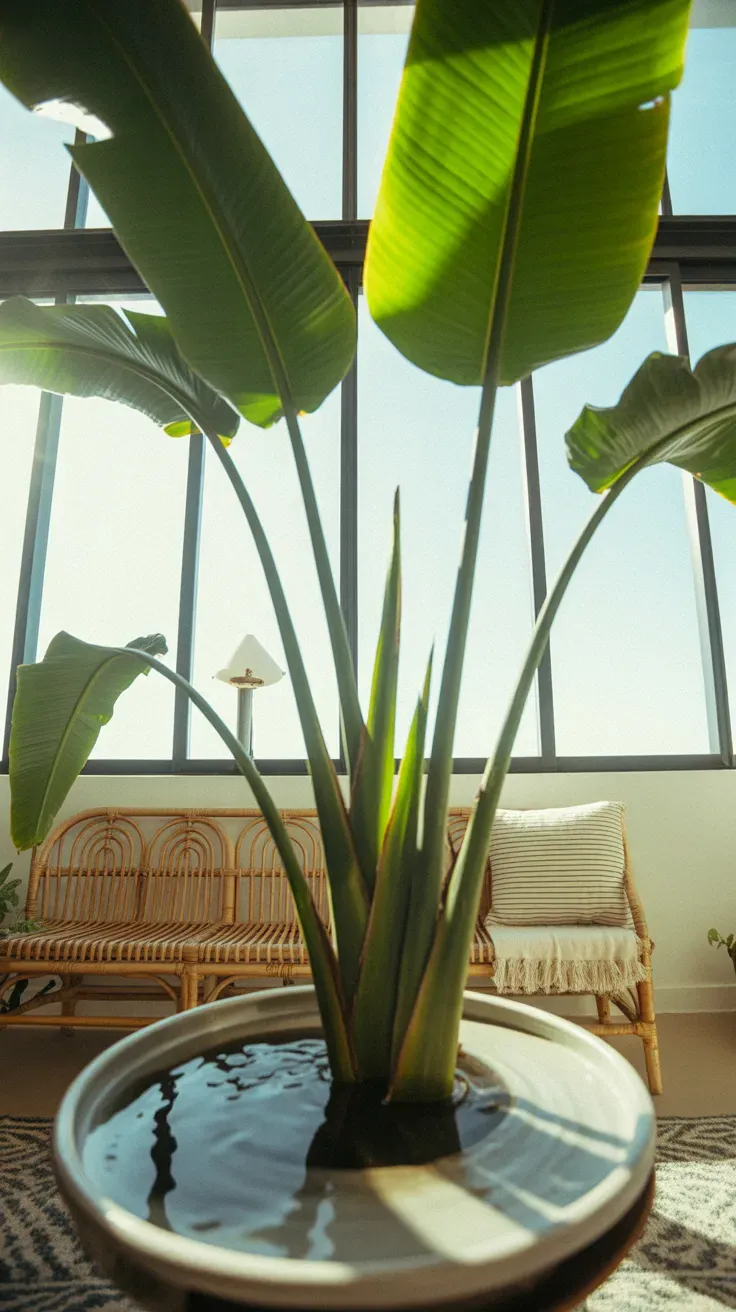
Bird of paradise (Strelitzia nicolai) is the closest thing to a small tree you can grow in a pot, and it rewards genuinely sunny rooms more than almost anything else on this list.
It needs 4+ hours of direct sun daily to thrive indoors — a south or west-facing window is non-negotiable, and in lower light it survives but stays stunted and rarely produces its dramatic split leaves. Water when the top 2-3 inches of soil are dry, typically every 7-10 days, and feed monthly with a balanced liquid fertilizer during spring and summer growth. Expect indoor bloom only in exceptional light conditions; most indoor specimens are grown for foliage alone.
What works vs. what to avoid:
- Works: south-facing window, terracotta pot for extra drainage, monthly feeding in growing season
- Avoid: north-facing rooms, letting the pot sit in standing water, expecting indoor flowers without near-greenhouse light
This plant makes a genuine statement, but only if your room can back up the light requirement.
Internal link: choosing sun-loving statement plants for bright rooms External link: Missouri Botanical Garden’s Strelitzia nicolai plant profile
3. Rubber Plant for Forgiving Glossy Foliage
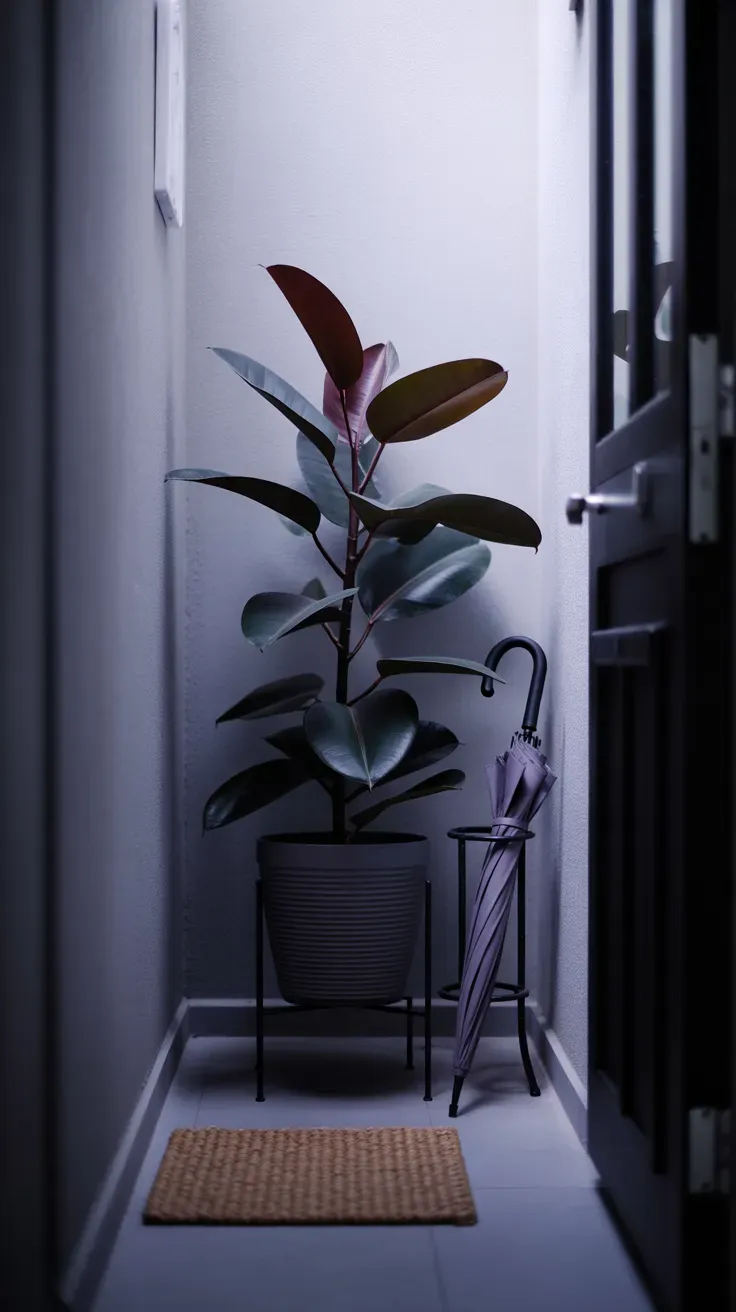
Rubber plants (Ficus elastica) give you the bold, glossy-leaf look of a fiddle leaf fig with considerably more patience for mistakes.
They tolerate medium to bright indirect light, adapt well to average home humidity, and only need watering every 7-10 days once the top inch of soil dries. Burgundy varieties like ‘Tineke’ or ‘Ruby’ add color variation without sacrificing the plant’s toughness — in my experience, a rubber plant survived a full month of erratic watering during a move that would have finished off my fiddle leaf fig. Wipe leaves occasionally to keep them glossy and light-absorbent, and stake the main stem while young if you want a straighter, more architectural form.
Pro Tip: If lower leaves start yellowing and dropping, it’s almost always overwatering, not underwatering — rubber plants show drought stress through drooping, not yellowing.
For a nearly foolproof large plant with real visual weight, this is where I’d point most beginners.
Internal link: rubber plant varieties and care differences External link: Gardeners’ World’s guide to growing Ficus elastica indoors
4. Monstera Deliciosa for Bold Split Leaves
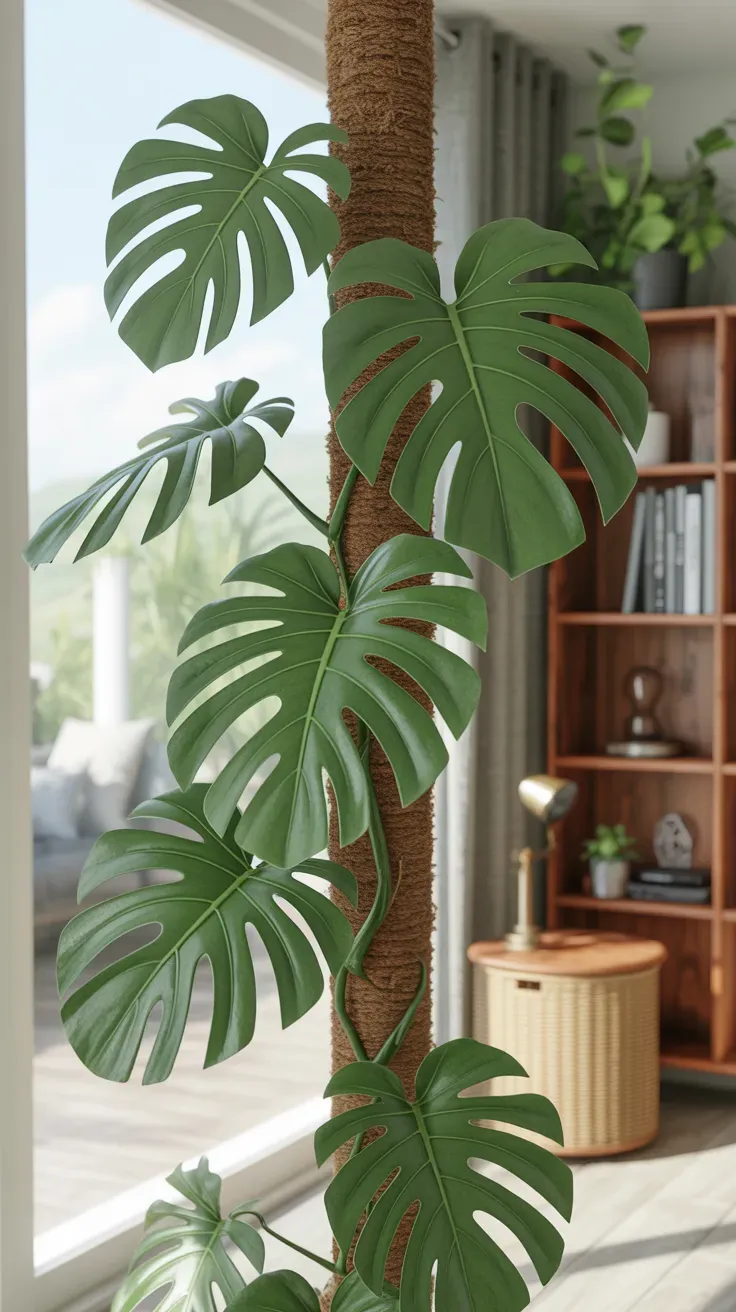
A mature monstera deliciosa with full fenestrations makes an enormous visual impact for relatively little daily effort once it’s established on a support.
It wants bright indirect light — direct sun scorches the leaves, but too little light means new leaves emerge without the characteristic splits people grow it for. Water every 7-9 days, letting the top 2 inches dry between waterings, and provide a moss pole or trellis by the time the plant reaches 2 feet tall, since climbing support is what encourages larger, more fenestrated leaves rather than small juvenile ones. A healthy monstera can add a new leaf every 4-6 weeks during spring and summer.
The pro insight: aerial roots aren’t a problem to trim away — guide them into the soil or onto the moss pole, where they actually help the plant absorb moisture and nutrients.
Internal link: training monstera deliciosa on a moss pole External link: BHG’s guide to monstera light and humidity needs
Let it climb properly and a monstera becomes one of the most photogenic plants in the room.
5. Majesty Palm for Soft Tropical Texture
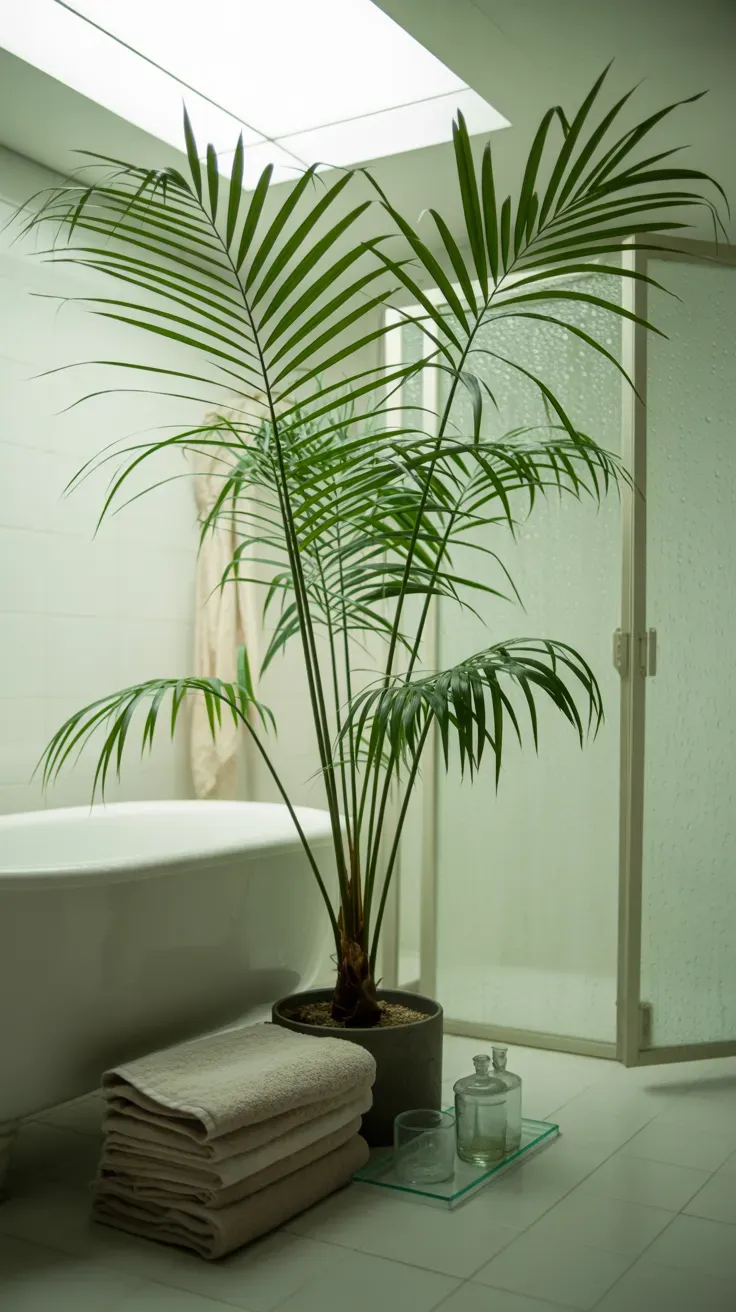
Majesty palms (Ravenea rivularis) bring a soft, feathery texture that balances out the bolder broad-leaf plants on this list, and they’re genuinely non-toxic if you have curious pets.
They need bright indirect light and, critically, humidity above 50% — dry indoor air is the number one reason majesty palms brown at the tips within their first month home. Water consistently to keep soil evenly moist (never soggy), and place a humidity tray beneath the pot or run a humidifier nearby if your home runs dry, especially in winter with heating on. Expect some frond browning regardless; trimming the brown tips with clean scissors keeps the plant looking sharp without harming growth.
Pro Tip: Bathrooms with a bright window are an underrated spot for majesty palms — the ambient humidity from showers does more for this plant than any amount of misting.
Get the humidity right and this palm rewards you with fuller, greener fronds within a season.
Internal link: best humid-room plants for bathrooms and kitchens External link: University of Florida Extension’s palm humidity requirements
6. Norfolk Island Pine for a Living Holiday Tree
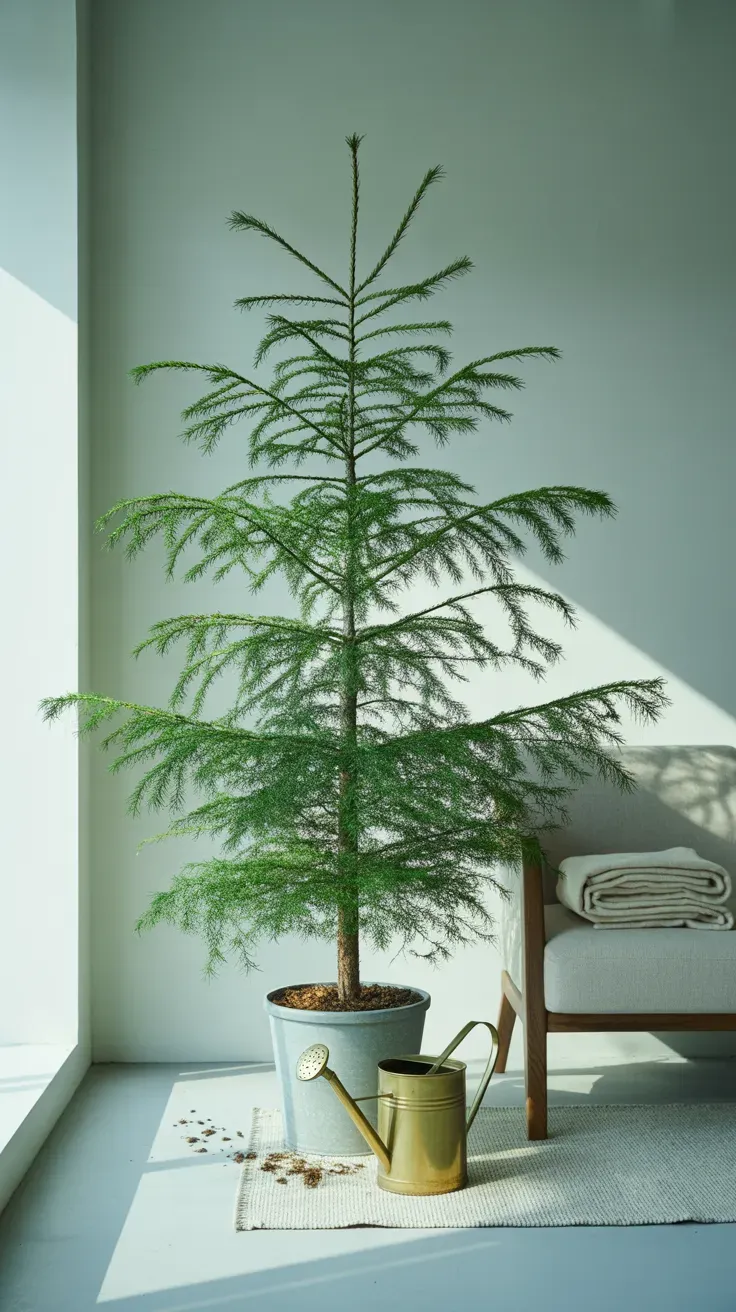
Norfolk Island pines (Araucaria heterophylla) have a naturally symmetrical, tiered branch structure that makes them popular as living holiday trees, but they hold their shape and appeal year-round.
They need bright indirect light and consistent moisture — let the top inch of soil dry between waterings, but don’t let the pot dry out completely, since Norfolk pines drop branches (not just needles) when stressed by drought, and lost branches don’t regrow. Average room temperatures between 65-75°F suit them well, but keep them away from cold drafts near doors or single-pane windows in winter. Growth is slow, typically 6-12 inches a year, which makes it a low-maintenance long-term investment rather than a fast-filling plant.
This plant is ideal for anyone wanting year-round structure without pruning or shaping work.
Internal link: slow-growing plants for low-maintenance homes External link: Almanac’s Norfolk Island pine care overview
Give it steady light and even watering, and a Norfolk pine can outlast most furniture in the room.
7. Large Snake Plant for Near-Indestructible Height
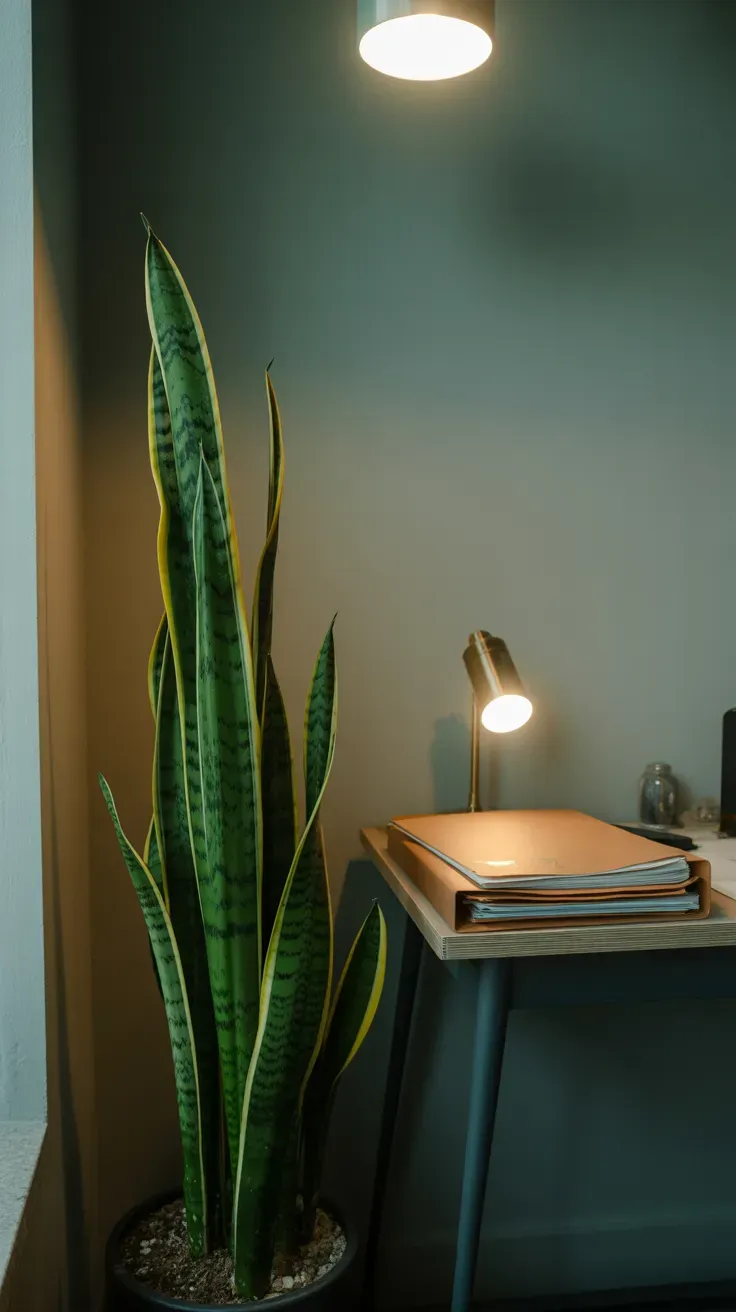
A large snake plant (Sansevieria trifasciata ‘Laurentii’) is the plant to choose when you want height and drama without the maintenance anxiety that comes with most of this list.
It tolerates low light down to a north-facing window with no direct sun at all, and it actively prefers being underwatered — water only every 3-4 weeks, letting the soil dry out completely between waterings, since overwatering (not neglect) is what kills snake plants. A well-established clump can reach 3-4 feet tall indoors over several years, and it multiplies via rhizomes, so a single pot slowly becomes fuller without repotting.
The one real limitation: it’s mildly toxic to cats and dogs if chewed, so keep it out of reach in pet households or choose a non-toxic alternative from further down this list.
Internal link: low-light plants that survive neglect External link: RHS care sheet for Sansevieria (Dracaena trifasciata)
For dark corners and inconsistent care schedules, this is the plant that simply won’t quit.
8. Dracaena Marginata for Sculptural Lines
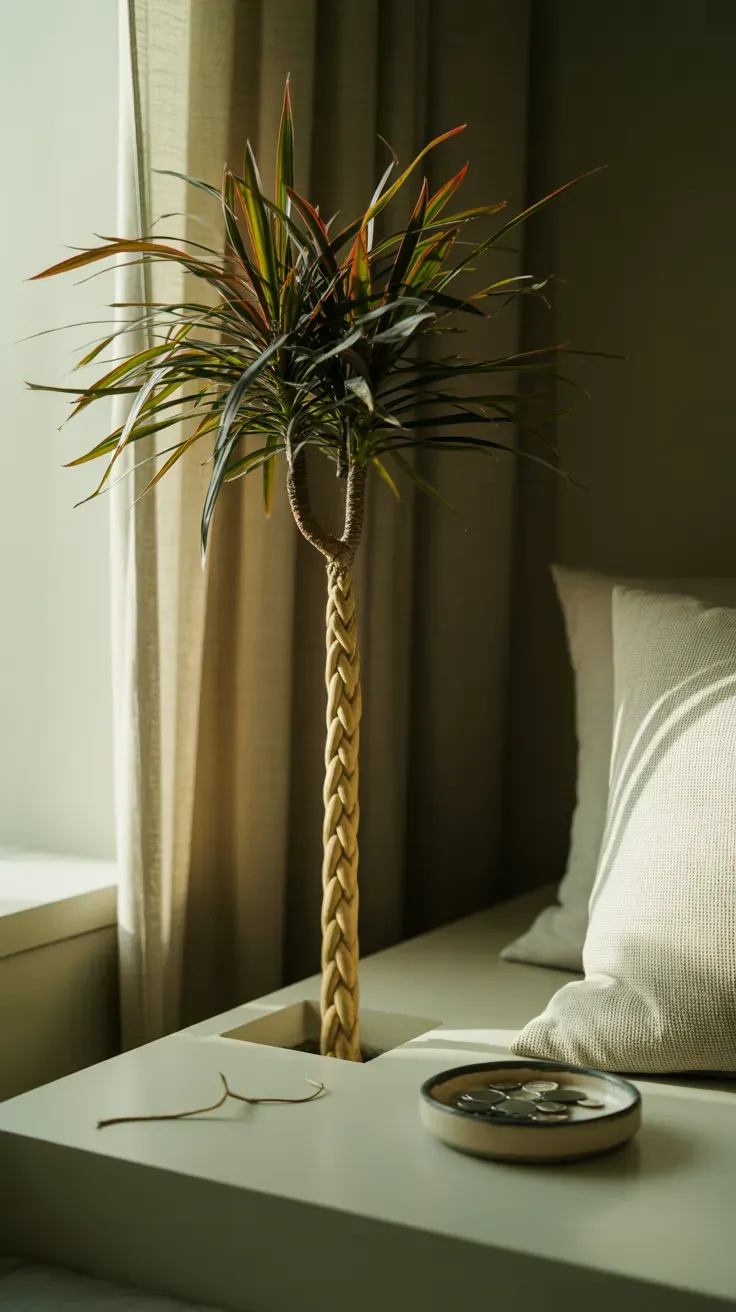
Dracaena marginata’s thin, arching leaves and often-braided woody stems give it a sculptural quality that broad-leaf plants can’t match, and it handles medium light better than most tall plants on this list.
It adapts to medium to bright indirect light and needs watering only every 10-14 days, when the top 2-3 inches of soil are dry — this plant is notably sensitive to fluoride and chlorine in tap water, so brown leaf tips are often a water quality issue rather than a watering frequency one. Switching to filtered or distilled water solves this in most cases within a few new growth cycles.
Pro Tip: If you see brown, crispy tips despite correct watering, let tap water sit out uncovered for 24 hours before using it — this lets much of the chlorine dissipate.
Its slow growth (about 6 inches a year) and tolerance for missed waterings make it a reliable long-term choice for busy households.
Internal link: why dracaena leaf tips turn brown and how to fix it External link: SF Gate Home Guide on watering sensitivities in Dracaena species
9. Areca Palm for a Pet-Friendly Statement
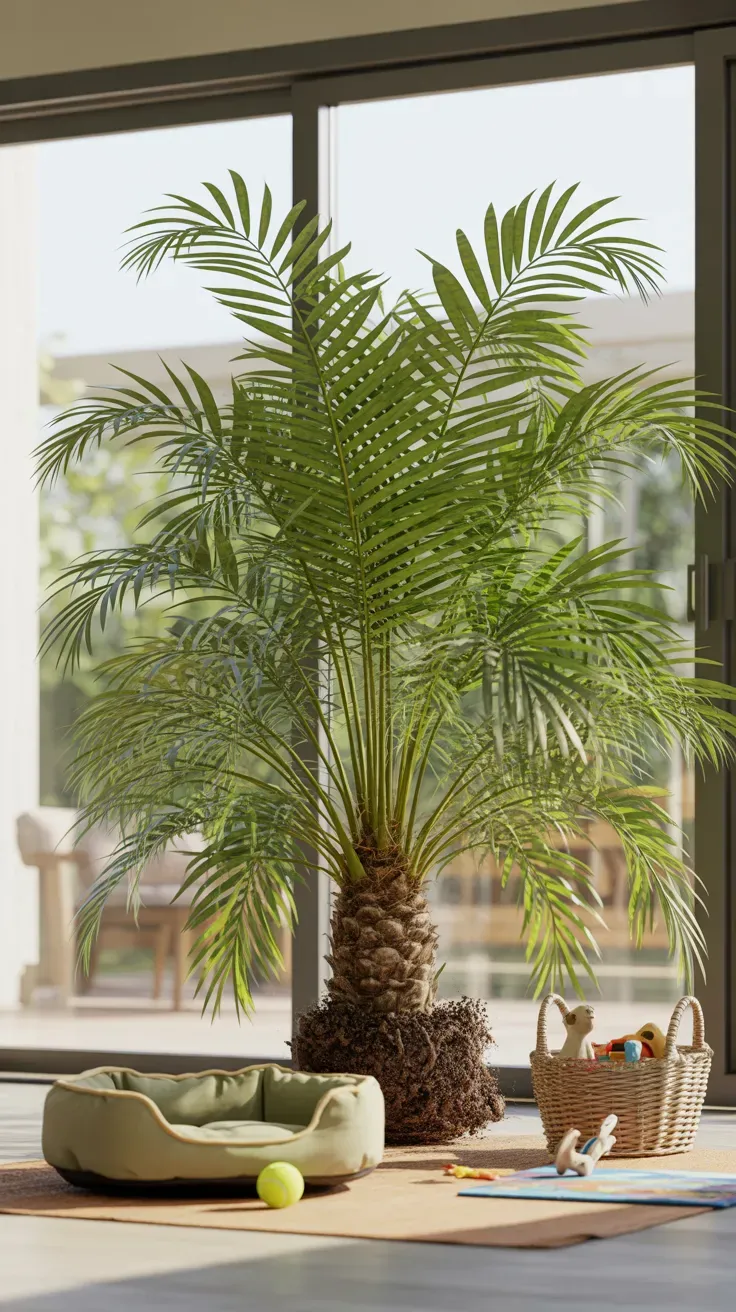
Areca palms (Dypsis lutescens) are one of the few large plants that are both genuinely non-toxic and visually full from multiple stems, making them a top pick for households with cats or dogs.
They need bright indirect light — direct sun scorches the fronds, but too little light causes sparse, leggy growth. Water when the top inch of soil dries, roughly weekly, and mist occasionally or place near a humidity tray, since areca palms are prone to spider mites in dry indoor air, especially during winter heating season. A mature areca can reach 6-7 feet indoors with multiple clustered stems, giving it noticeably more visual fullness per square foot than single-stem palms.
Best for busy or beginner vs. more advanced options:
- Beginner-friendly: consistent watering schedule, tolerates average room humidity with occasional misting
- More advanced: benefits from monthly leaf inspection for spider mites, appreciates a spring repot every 2 years
Internal link: best non-toxic large plants for homes with pets External link: ASPCA-referenced pet safety notes via Missouri Botanical Garden’s Dypsis lutescens profile
If pet safety is your top priority, an areca palm gives you scale without the worry.
10. Philodendron Selloum for Bold Tropical Foliage
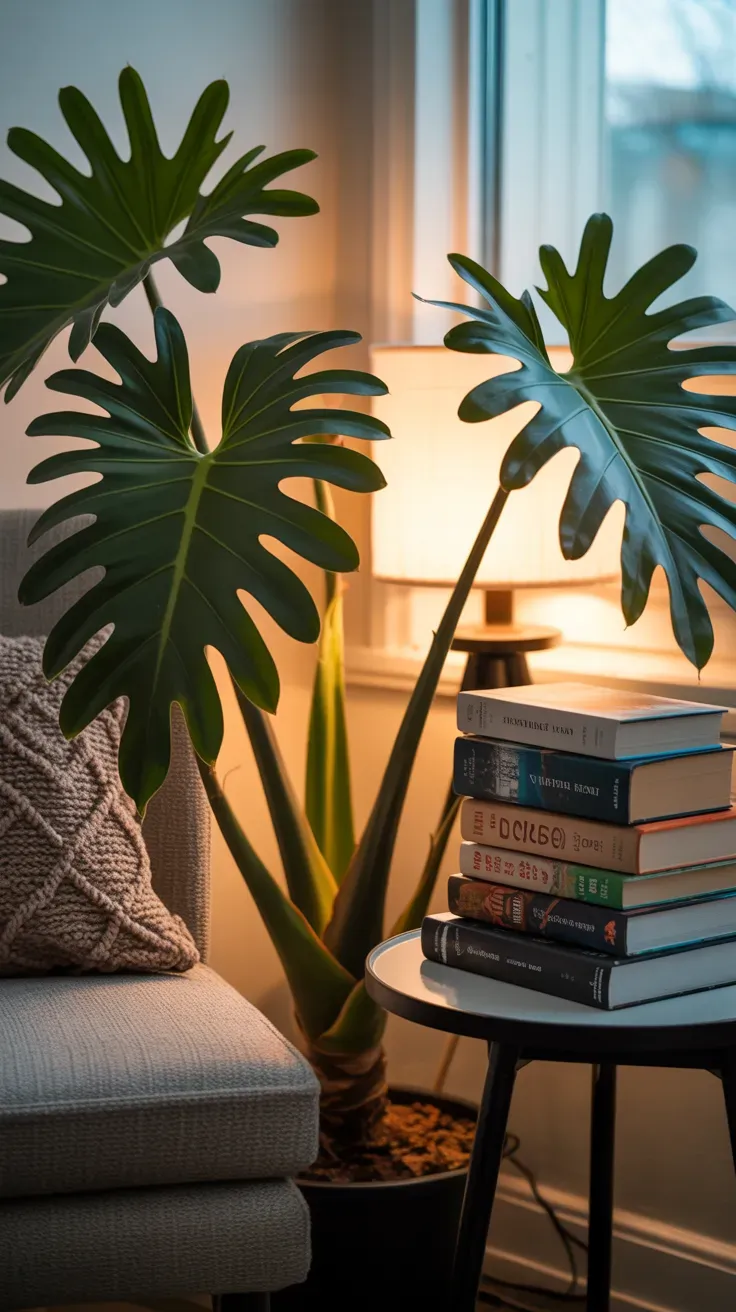
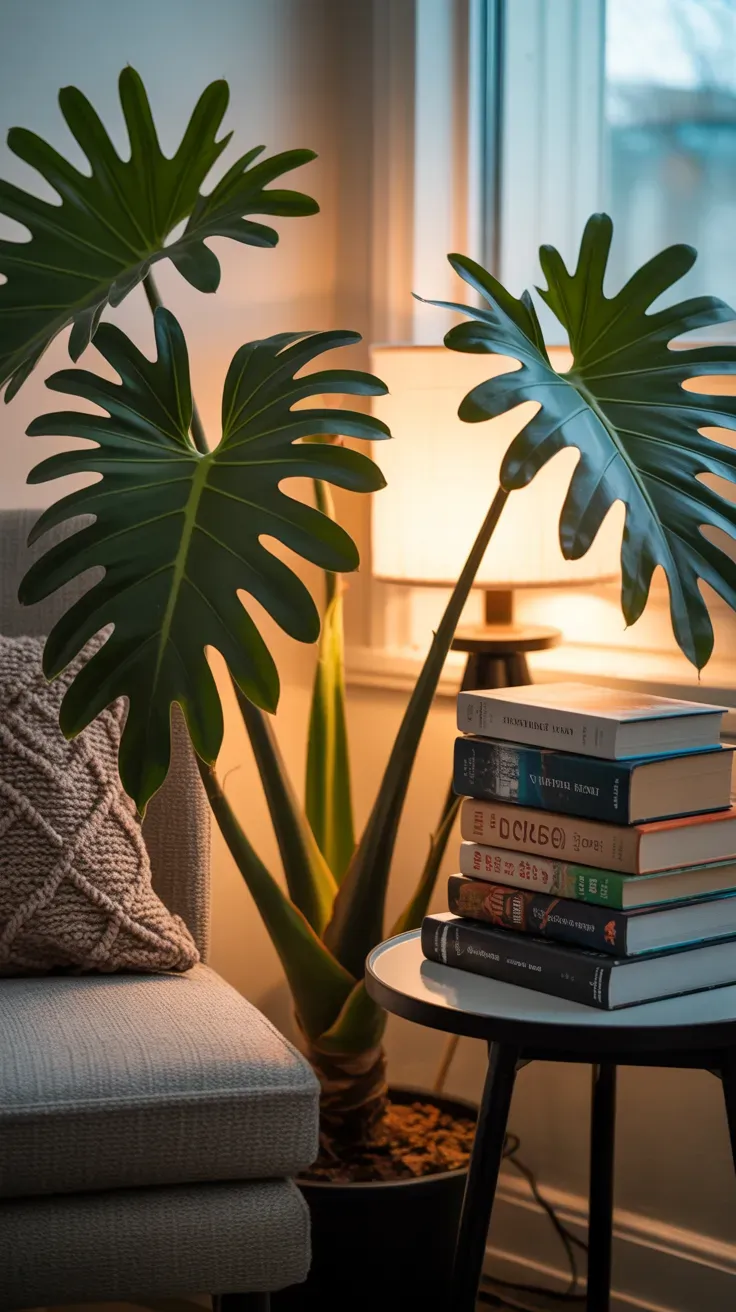
Philodendron selloum (also sold as Philodendron bipinnatifidum in some nurseries, though the two are closely related and often confused) produces enormous, deeply lobed leaves that give a jungle feel without needing a trellis or climbing support.
It tolerates medium to bright indirect light better than most large-leafed tropicals, and it’s genuinely forgiving of inconsistent watering — water when the top 2 inches of soil are dry, typically every 8-10 days. This plant spreads wide as much as it grows tall, often reaching 4-5 feet in both directions, so give it real floor space rather than tucking it into a narrow corner.
The mistake to avoid: cramming it next to furniture where its leaves get bent or broken — this plant needs a genuinely open 3-foot radius to look its best and avoid physical damage that won’t repair itself.
Internal link: self-supporting large-leaf tropical plants External link: University of Florida Extension’s philodendron selloum growing notes
Given room to spread, this philodendron becomes one of the fullest, most textural plants on this list.
11. Bamboo Palm for Low-Light Corners
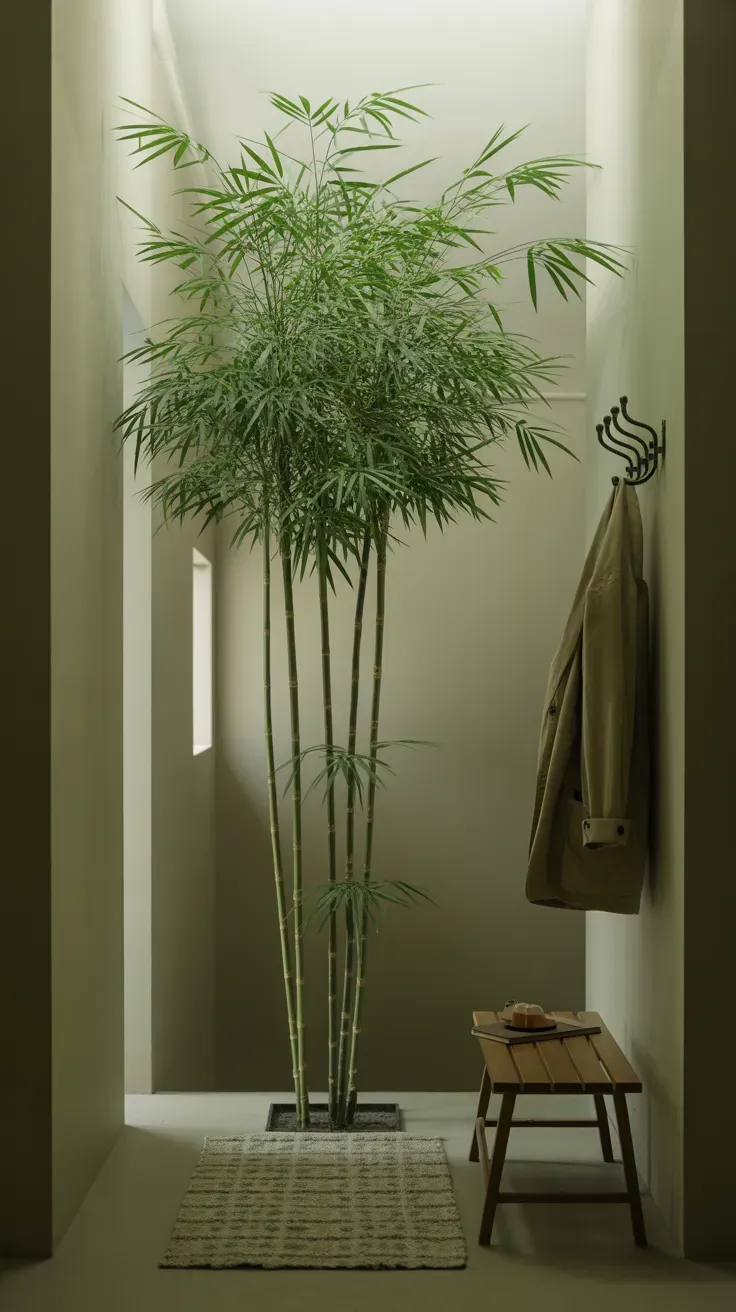
Bamboo palms (Chamaedorea seifrizii) are one of the very few large plants that genuinely tolerate low light, which makes them ideal for stairwells, hallways, and north-facing rooms where most tall plants struggle.
They handle low to medium indirect light and prefer evenly moist (not soggy) soil, watered roughly every 7-10 days. Unlike the areca palm, bamboo palms tolerate lower humidity reasonably well, though they still appreciate an occasional misting in very dry climates. Growth is moderate, reaching 5-6 feet over a few years, with multiple slender canes that create a naturally layered, screen-like effect useful for softening a hard corner.
Pro Tip: Rotate the pot a quarter turn every month in low-light spots — even shade-tolerant palms lean toward whatever ambient light exists, and rotation keeps growth even on all sides.
It’s also non-toxic to cats and dogs, making it a safe choice for the darker corners of a pet-friendly home.
Internal link: best plants for low-light hallways and stairwells External link: Gardeners’ World’s guide to indoor palm care
12. Weeping Fig for Classic Elegance
Weeping figs (Ficus benjamina) have been a formal interior staple for decades, and a well-maintained specimen with a braided trunk brings genuine elegance that newer trend plants don’t quite replicate.
They need bright indirect light and are notoriously sensitive to change — moving the pot, drafts from an opening door, or even a change in season can trigger sudden leaf drop, though the plant typically recovers within a month once conditions stabilize. Water when the top 1-2 inches of soil dry, roughly every 7 days, and avoid moving the plant once you’ve found a spot it likes.
What works vs. what to avoid:
- Works: a consistent spot away from doors and vents, steady watering schedule, bright but indirect light
- Avoid: frequent relocation, cold drafts in winter, sudden light changes after purchase
Internal link: managing leaf drop in sensitive indoor trees External link: Penn State Extension’s notes on Ficus benjamina environmental sensitivity
Find it a permanent home early, and a weeping fig rewards patience with genuine architectural elegance.
13. Bird’s Nest Fern for Lush Rosette Texture
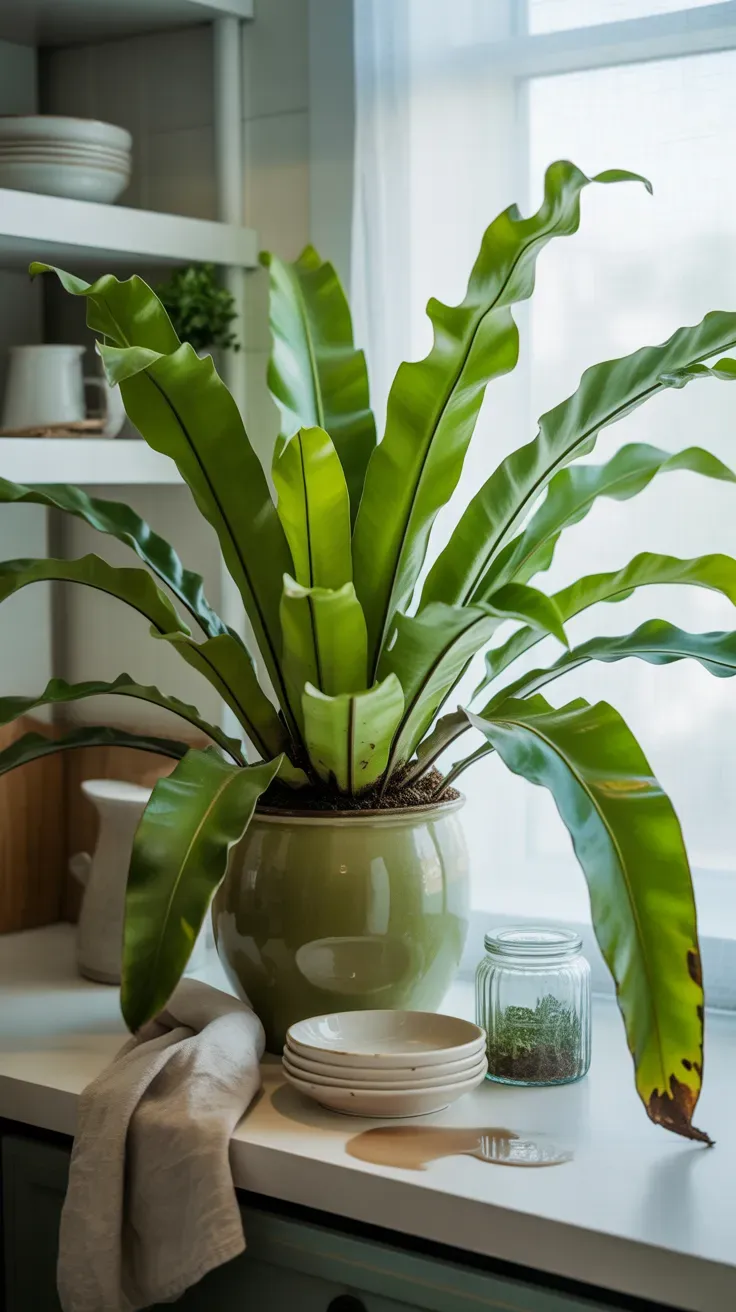
A large bird’s nest fern (Asplenium nidus) brings a completely different texture to this list — wide, ruffled, undivided fronds instead of the feathery or split leaves most large plants offer.
It needs medium, indirect light and consistently moist soil with genuinely high humidity, ideally 50%+, which makes bathrooms and kitchens better spots than dry living rooms. Water when the top inch of soil feels dry, generally every 5-7 days, and never let water sit in the central “nest” of the plant for extended periods, since that encourages rot at the crown. A mature specimen tops out smaller than most on this list, around 2-3 feet, but its wide, dense form fills a shelf or plant stand impressively.
The trust-building limitation here: this fern genuinely struggles below 50% humidity and in rooms below 60°F, so it’s not the right choice for a drafty entryway or a dry, air-conditioned office.
Internal link: ferns that tolerate average home humidity External link: Missouri Botanical Garden’s Asplenium nidus growing profile
14. Philodendron Bipinnatifidum for Deeply Cut Leaves
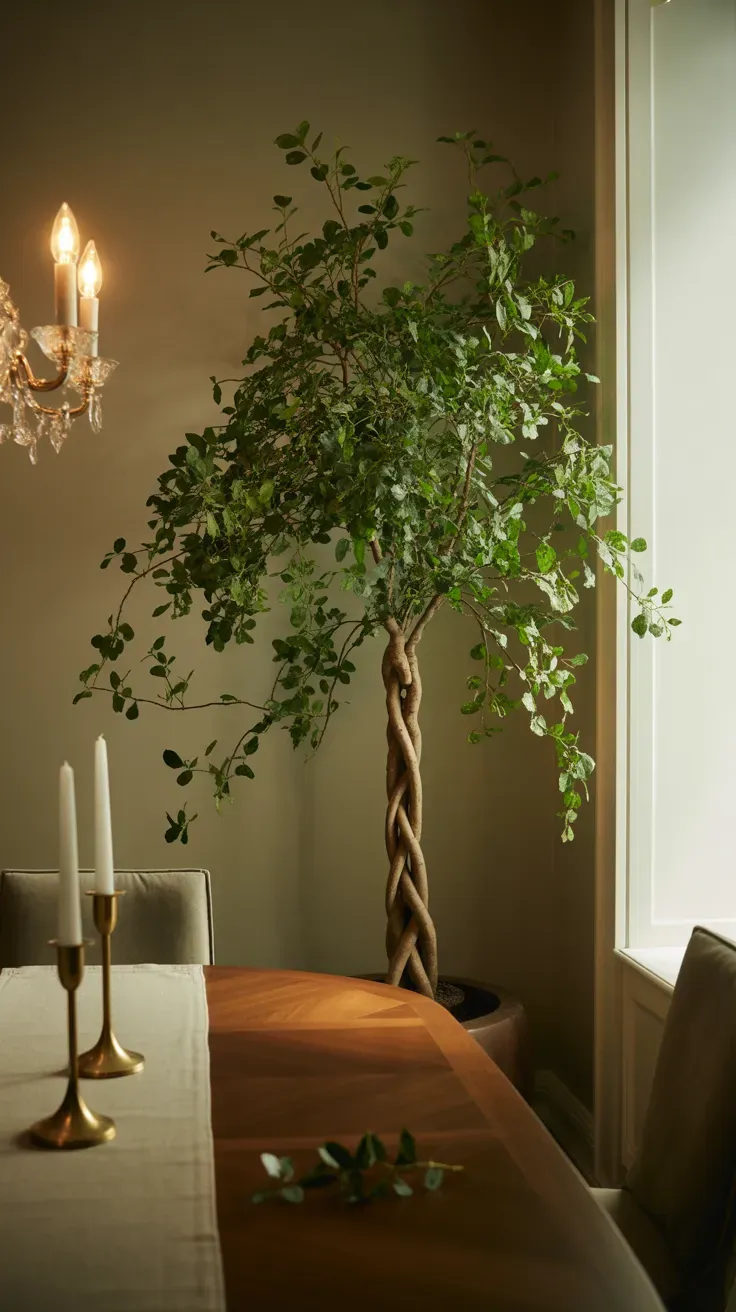
While closely related to the selloum variety covered earlier, true Philodendron bipinnatifidum specimens sold in nurseries often feature even more finely dissected, feathery leaf edges, giving a noticeably different visual texture worth distinguishing on its own.
It shares similar care needs — medium to bright indirect light and watering every 8-10 days when the top 2 inches of soil dry — but tends to stay slightly more compact indoors, typically 4-6 feet, making it a better fit for medium-sized rooms than the wider-spreading selloum. Feed monthly during spring and summer with a balanced liquid fertilizer diluted to half strength to support its dense leaf production.
Pro Tip: New leaves emerge tightly rolled and pale green before unfurling and darkening over about a week — resist the urge to unroll them manually, which can tear the delicate new growth.
This plant’s textural leaves make it an excellent contrast piece next to broad, solid-leaf plants like a rubber plant or monstera.
Internal link: pairing textures when grouping large plants together External link: Almanac’s philodendron growing and feeding schedule
15. Kentia Palm for Elegant, Low-Fuss Height
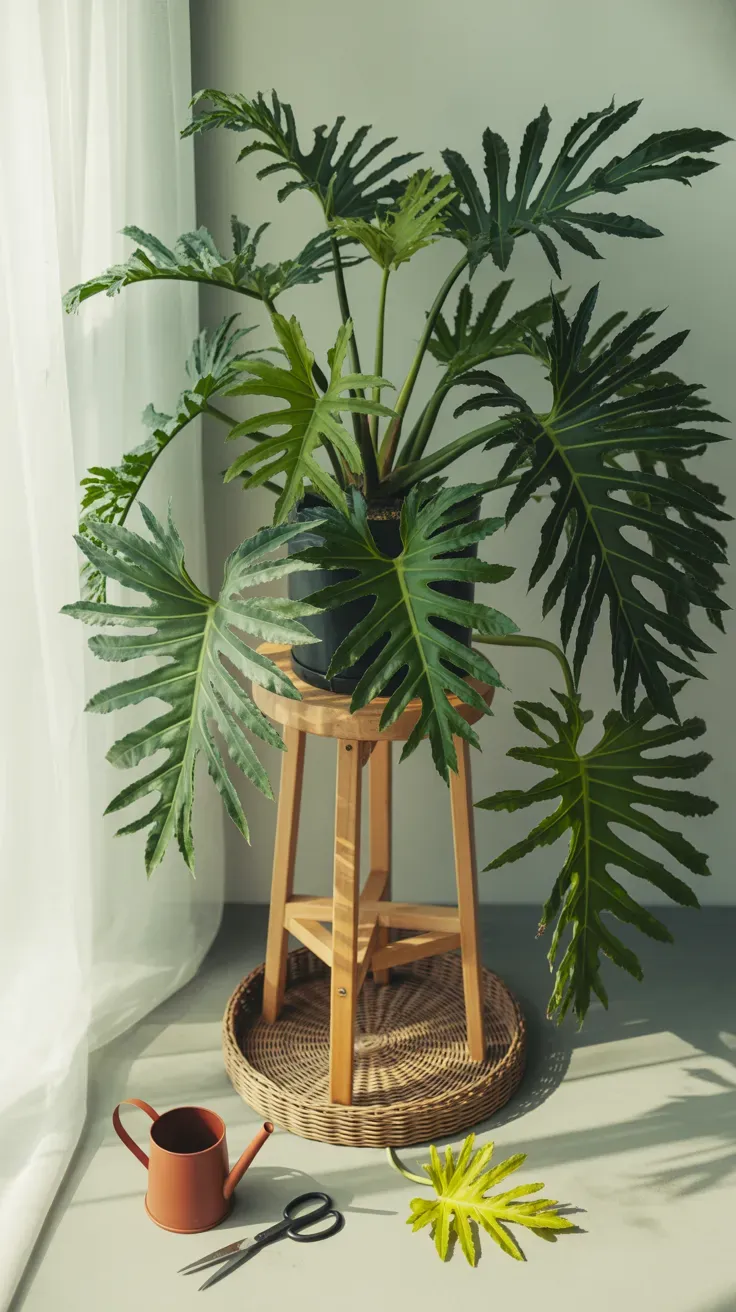
Kentia palms (Howea forsteriana) have a long history as the palm of choice for elegant hotel lobbies, largely because they tolerate lower light than most palms while still reaching genuinely impressive indoor heights of 6-8 feet.
They adapt to low to bright indirect light, which gives more placement flexibility than the majesty or areca palm, and they’re notably slow-growing, adding only about 6-10 inches a year, so a mature specimen represents real investment and shouldn’t be treated as disposable. Water when the top 2 inches of soil dry, roughly every 7-10 days, and avoid overwatering, which causes root rot faster in kentia palms than underwatering ever will.
They’re also completely non-toxic to cats and dogs, and their slow growth rate means minimal repotting — often just once every 3-4 years.
Internal link: slow-growing palms for long-term indoor investment External link: RHS growing guide for Howea forsteriana
For a refined, low-drama entryway statement, a kentia palm rarely disappoints.
16. Corn Plant for Budget-Friendly Impact
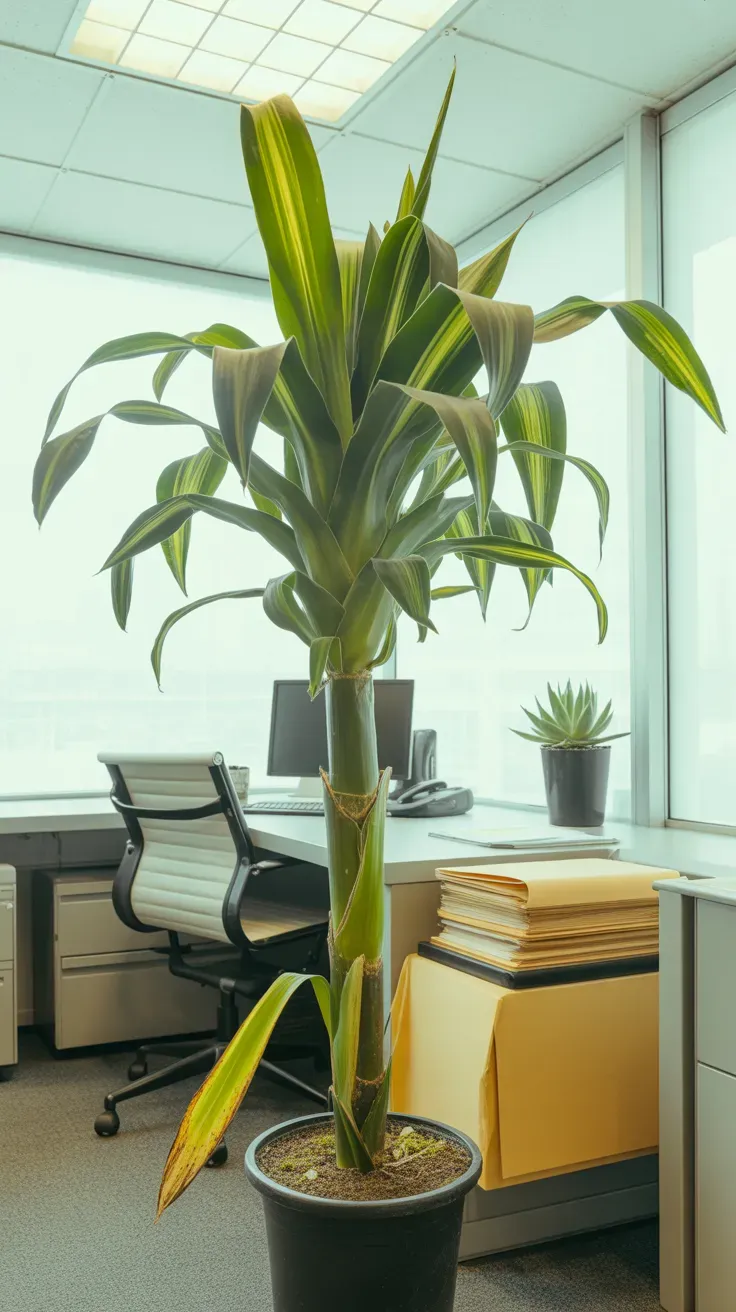
Corn plants (Dracaena fragrans ‘Massangeana’) are among the most budget-friendly large plants available, often costing $30-50 for a 4-foot specimen compared to $80-150 for a comparably sized fiddle leaf fig or bird of paradise.
They tolerate medium indirect light, making them well-suited to office corners and rooms without strong natural light, and need watering only every 10-14 days once the top 2-3 inches of soil dry. Like the dracaena marginata covered earlier, corn plants are sensitive to fluoride in tap water, so use filtered water if you notice recurring brown tips despite otherwise correct care. Growth is moderate, reaching 5-6 feet over several years, with older canes sometimes losing lower leaves naturally as the plant matures — this is normal aging, not a sign of poor health.
This is the plant I’d recommend to anyone testing whether they can keep a large plant alive at all before investing in something pricier.
Internal link: budget-friendly large plants that still make an impact External link: Extension.psu.edu’s Dracaena fragrans care sheet
For low cost and genuine visual payoff, a corn plant is hard to beat as a starting point.
Getting Started With Large Potted Plants
The easiest first step is picking one plant based on your actual light conditions, not the plant you saw on social media — walk your space at different times of day and note where real, unobstructed sun lands before choosing. The most common beginner mistake is buying a bright-light plant like a fiddle leaf fig or bird of paradise for a room that only gets filtered, indirect light; the plant will survive for months before slowly declining, which makes the light problem hard to diagnose.
For your first purchase, get one plant suited to your actual light level (a snake plant or kentia palm for lower light, a rubber plant for medium-bright rooms), one pot with real drainage holes sized just 2 inches larger than the current nursery pot, and a simple moisture meter or your own finger to check soil dryness before watering.
Realistically, expect a short adjustment period of 2-4 weeks after bringing a plant home, during which some leaf drop or yellowing is normal as it acclimates. Real, visible new growth typically shows up within 6-8 weeks in the right conditions.
Frequently Asked Questions
What is the easiest large potted plant to keep alive indoors?
A large snake plant or kentia palm are the easiest options, since both tolerate low light and irregular watering without significant decline. Snake plants specifically only need watering every 3-4 weeks and can survive weeks of neglect once established.
What large potted plants are safe for cats and dogs?
Areca palms, kentia palms, bamboo palms, parlor palms, and bird’s nest ferns are all non-toxic to cats and dogs. Avoid snake plants, dracaenas, philodendrons, and Ficus varieties like the fiddle leaf fig and rubber plant if pets tend to chew on foliage.
How often should I water a large potted plant?
Most large potted plants need watering every 7-14 days, checking the top 2 inches of soil for dryness before watering rather than following a fixed calendar schedule. Drought-tolerant options like snake plants can go 3-4 weeks between waterings, while moisture-loving ferns need checking closer to every 5-7 days.
What size pot does a large indoor plant need?
Choose a pot only 2-4 inches wider in diameter than the plant’s current nursery pot, since oversized pots hold excess moisture that can cause root rot. Most large plants only need repotting into the next size up every 2-3 years as growth slows with maturity.
Which large potted plants survive in low light rooms?
Snake plants, kentia palms, and bamboo palms all tolerate low to medium indirect light better than most large plants, including rooms with only a north-facing window. Avoid sun-loving options like bird of paradise or fiddle leaf figs in these conditions, since they’ll survive but stay visibly stunted.
A Few Final Thoughts
Any one of these 16 large potted plants can turn a flat, forgettable corner into the part of the room people actually notice first. The real trick isn’t picking the most dramatic option on the list — it’s matching the plant’s actual light requirements to the room you have, not the room you wish you had. Start with one plant suited to your space, give it a few weeks to settle in without moving it around, and resist the urge to overwater out of anxiety during that adjustment period. A single well-placed large plant does more for a room’s warmth and scale than most furniture purchases, and once you see it working in one corner, finding room for a second becomes a lot more tempting.