
If your garden has ever produced more zucchini than you know what to do with, you already understand the late-summer panic of a countertop buried in squash. Dehydrating zucchini into candy sounds unlikely until you actually try it — soaked in pineapple juice and dried low and slow, the mild squash takes on a genuinely convincing chewy, tropical-candy texture. It’s one of the few zucchini recipes that doesn’t taste like zucchini at all, which makes it a surprisingly good way to win over picky eaters. No canning equipment, no special skills, just a dehydrator (or a low oven) and a little patience. Here’s exactly how it’s done.
Quick Answer: To make pineapple zucchini candy, peel and slice zucchini into thin strips, soak them in pineapple juice for at least 4 hours (or overnight for best flavor absorption), then dehydrate at 135°F (57°C) for 8–12 hours until chewy but pliable. Stored in an airtight container, it keeps for up to 2 months at room temperature.
Why Dehydrating Zucchini Into Candy Is Worth Your Time
Every zucchini plant eventually outpaces what a household can eat fresh, and this recipe solves that problem in a way that doesn’t involve another loaf of zucchini bread. Turning surplus squash into a shelf-stable, portable snack means nothing from an overproductive garden goes to waste.
What makes this genuinely rewarding is the transformation itself — zucchini has almost no flavor of its own, so it acts like a blank canvas that fully absorbs the pineapple juice it’s soaked in. In practice, most people who taste it blind guess it’s dried mango or pineapple, not squash.
A lesser-known fact: zucchini’s high water content, usually the reason it’s tricky to work with in baking, is actually what makes it ideal for dehydrating. It shrinks dramatically and takes on a genuinely chewy, candy-like texture that firmer vegetables don’t achieve.
This is ideal for home gardeners with a summer squash surplus, parents looking for a lower-sugar snack alternative, or anyone with a dehydrator sitting mostly unused in a cupboard.
At a Glance
| Detail | Info |
| Prep Time | 15 minutes |
| Soak Time | 4–12 hours |
| Dehydrating Time | 8–12 hours |
| Shelf Life | Up to 2 months, airtight |
| Tools Needed | Dehydrator or oven, mandoline |
Step 1: Slice and Prep Your Zucchini
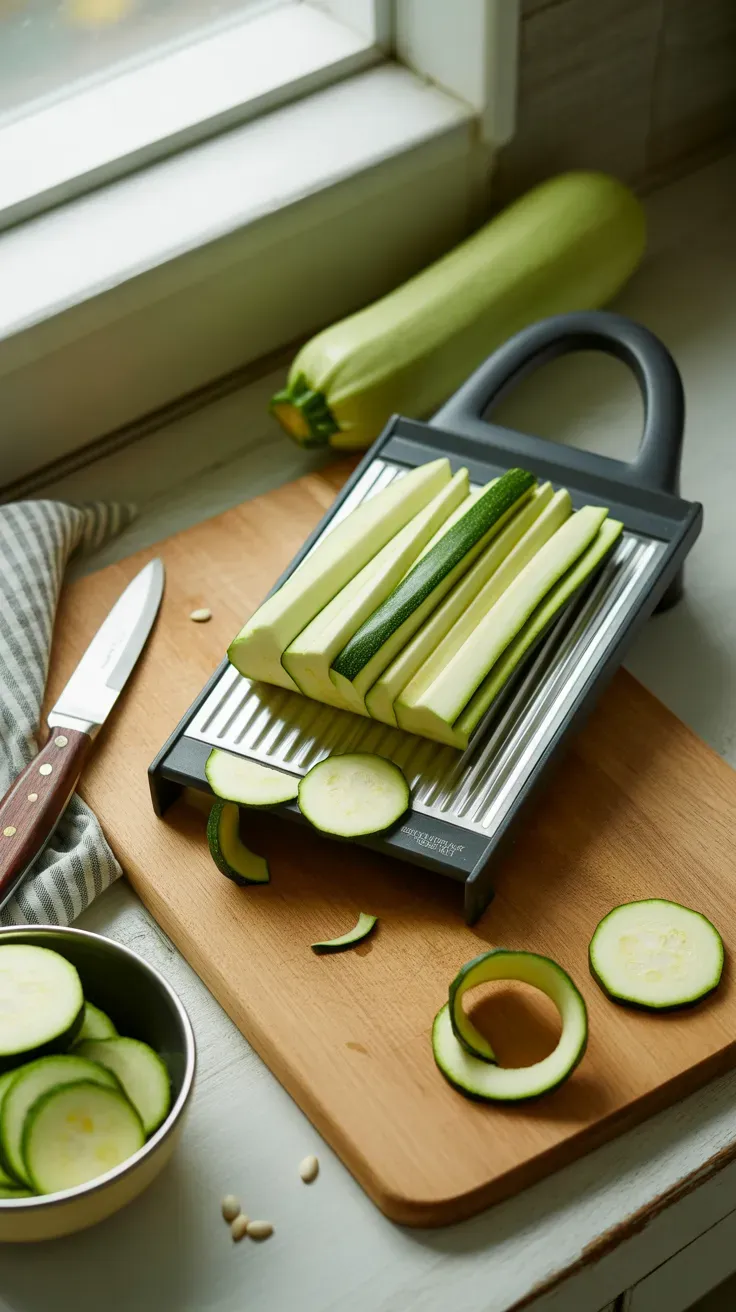
Thin, even slices are the single biggest factor in how well this recipe turns out, since uneven pieces dry at wildly different rates.
Peel the zucchini first — the skin doesn’t dehydrate well and turns tough and chewy in an unpleasant way, unlike the flesh. Slice lengthwise into strips about ⅛ inch thick using a mandoline for consistency, since knife-cut strips almost always come out uneven and lead to some pieces drying hours before others.
Pro Tip: Salt the sliced strips lightly and let them sit for 15 minutes before soaking — this draws out excess water and helps the pineapple juice absorb faster and more evenly in the next step.
More prep techniques for garden surplus are on Greenbotanicalgarden.com, and general dehydrating prep guidance comes from University of Florida IFAS Extension. Getting this step right sets up everything else.
Step 2: Soak the Strips in Pineapple Juice
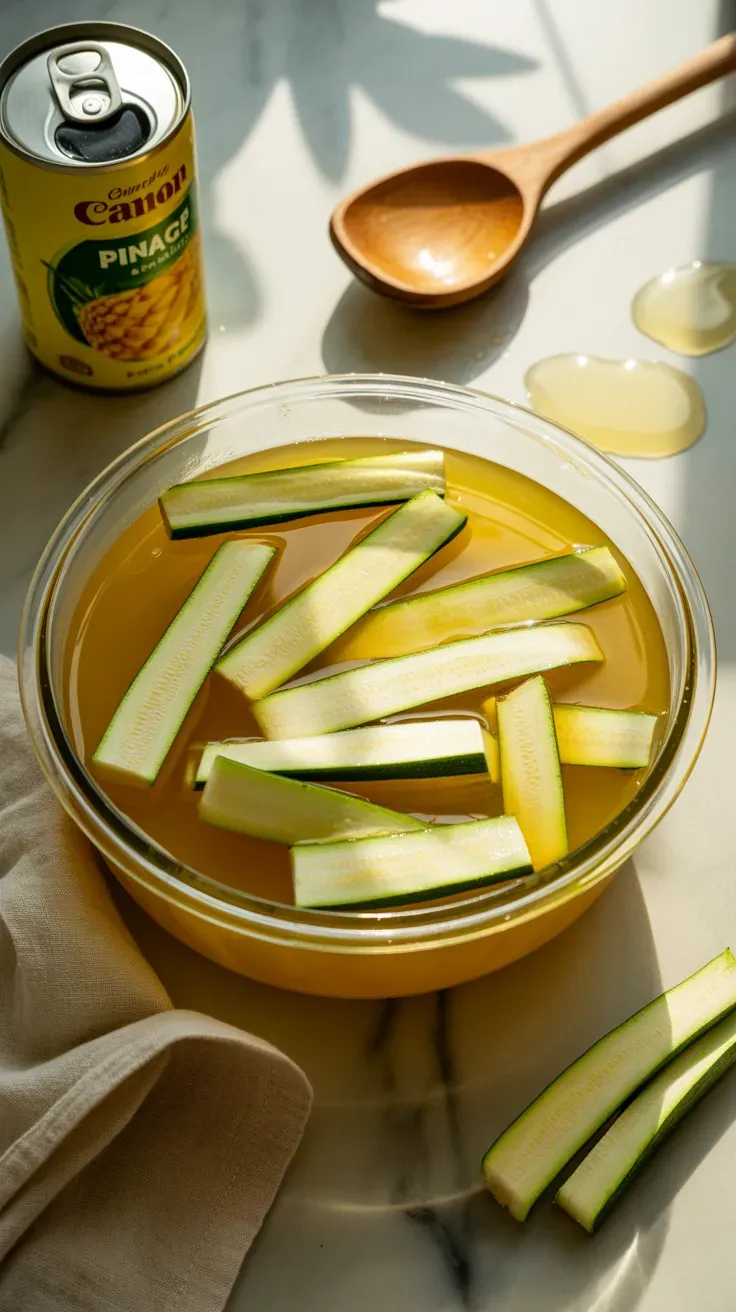
This is where zucchini stops tasting like zucchini — the soak is what actually gives the finished candy its pineapple flavor and faint golden color.
Submerge the sliced strips fully in 100% pineapple juice (not juice from concentrate with added sugar, which throws off the texture) and refrigerate for at least 4 hours, though soaking overnight produces noticeably better flavor penetration. Stir once partway through so strips near the top absorb juice evenly too.
- Minimum soak: 4 hours, milder flavor
- Overnight soak: 8–12 hours, stronger pineapple flavor
- Extended soak: beyond 24 hours risks mushy texture
Browse more fruit-juice infusion ideas on Greenbotanicalgarden.com, and food-safety soaking notes come from BHG Gardening. Don’t rush this step — it’s doing most of the flavor work.
Step 3: Dehydrate Low and Slow
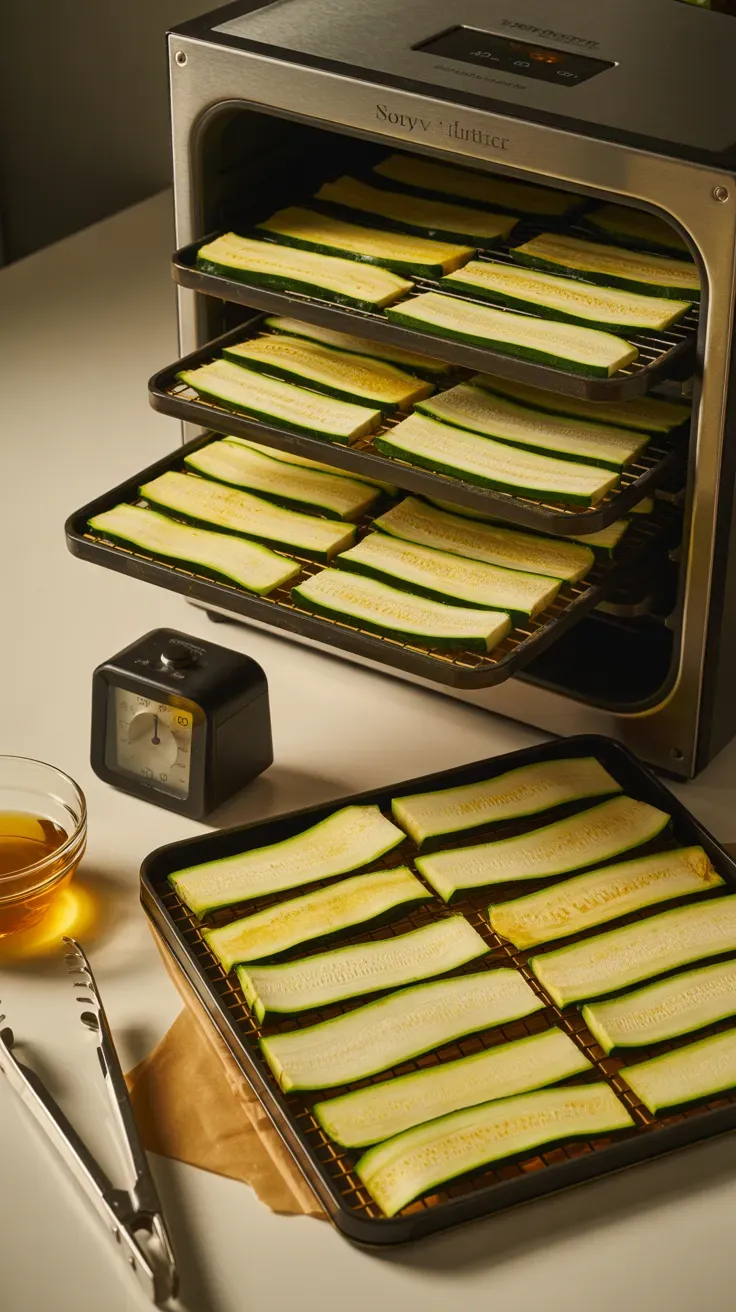
Low, steady heat is what turns watery zucchini strips into something with real chew, rather than something brittle or leathery.
Drain the strips and pat them lightly (don’t fully dry them off — a little residual juice helps caramelize the surface), then arrange in a single layer on dehydrator trays without overlapping. Dehydrate at 135°F (57°C) for 8–12 hours, checking at the 8-hour mark; strips are done when they’re chewy and pliable, not crackly or brittle like a chip.
Pro Tip: Rotate trays halfway through drying, even in a dehydrator with a built-in fan — the strips nearest the heating element consistently finish an hour or two faster than the top trays.
More dehydrating time and temperature guidance is on Greenbotanicalgarden.com; oven-drying alternatives come from Almanac. This step takes patience, but it’s mostly hands-off.
Step 4: Store It So It Actually Lasts
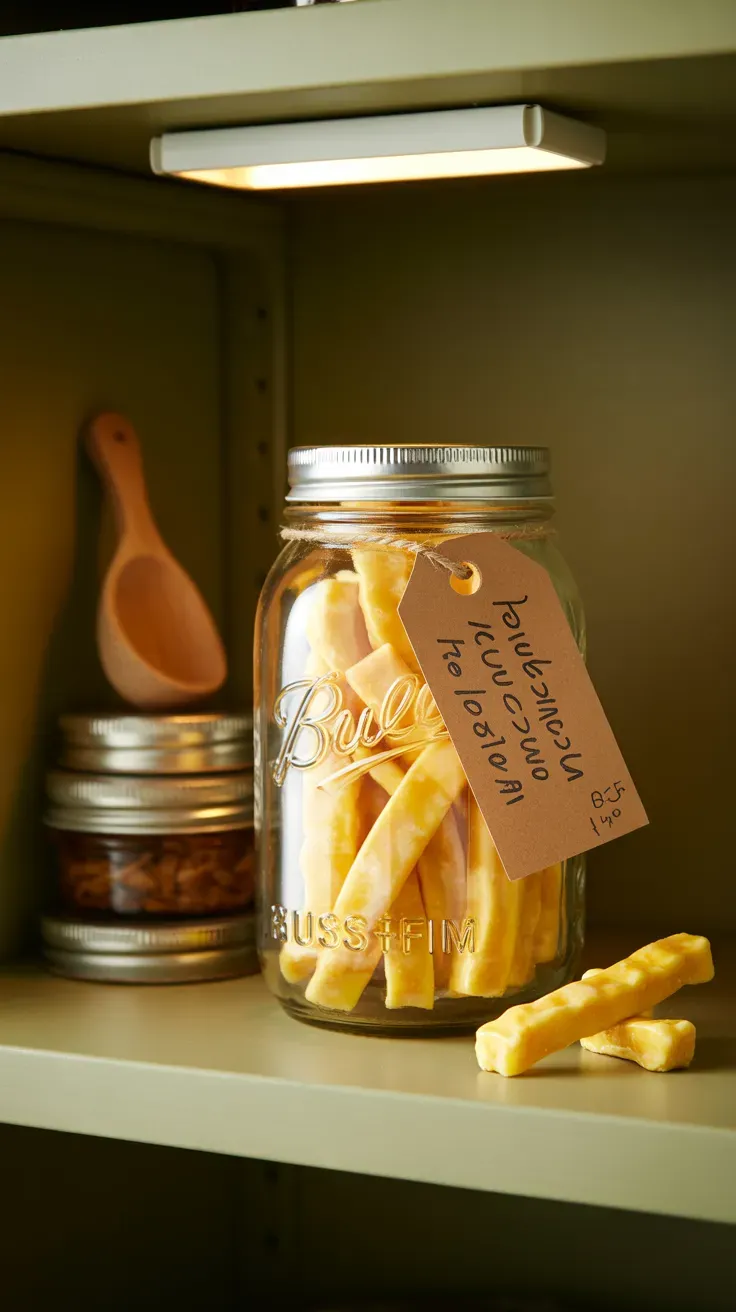
Properly dried zucchini candy is genuinely shelf-stable, but only if it’s fully dehydrated first — any lingering moisture invites mold within days.
Let the strips cool completely to room temperature before storing, since sealing them warm traps condensation inside the container. Store in an airtight glass jar or resealable bag in a cool, dark pantry, where it keeps well for up to 2 months; refrigerated, it can last closer to 4 months.
- Pantry storage: up to 2 months, check for stickiness weekly
- Refrigerated: up to 4 months, best for humid climates
- Freezer: up to 6 months in a sealed freezer bag
Find more shelf-stable snack storage tips on Greenbotanicalgarden.com; food storage safety notes come from University of Florida IFAS Extension. Properly stored, one batch stretches into weeks of snacking.
Getting Started With Dehydrating Zucchini
The easiest first step is starting with a small test batch, just one or two zucchini, rather than committing your whole garden surplus to a recipe you haven’t tried yet. That way you can dial in your dehydrator’s actual timing before scaling up.
The most common beginner mistake is slicing strips unevenly, which leaves some pieces perfectly chewy while others are still damp or already brittle by the same checkpoint. A mandoline solves this almost entirely.
To get started, pick up a bottle of 100% pineapple juice and, if you don’t already own one, a basic dehydrator — a low oven with the door cracked works in a pinch too. Realistically, expect your first finished batch within 24 hours from slicing to storage, most of it unattended soak and dry time.
Frequently Asked Questions
Can you dehydrate zucchini without a dehydrator?
Yes, an oven set to its lowest temperature (ideally 170°F/76°C or lower) with the door propped open works, though it takes closer to 6–8 hours and requires more monitoring. A dehydrator gives more even, consistent results since it maintains a steady low temperature.
How do you know when zucchini candy is fully dried?
Fully dried zucchini candy should feel chewy and pliable, similar to a dried mango slice, with no wet or sticky spots when pressed. If it feels tacky or damp anywhere, it needs several more hours of drying time before storage.
Does pineapple zucchini candy actually taste like zucchini?
No, once soaked and dehydrated, it tastes almost entirely like pineapple with a chewy, dried-fruit texture. Zucchini has very little flavor of its own, so it mostly absorbs whatever it’s soaked in.
How long does dehydrated zucchini candy last?
Stored in an airtight container in a cool pantry, it lasts up to 2 months, or up to 4 months refrigerated. Watch for any stickiness or off smell, which signals it wasn’t fully dried before storage.
Can you use other juices instead of pineapple?
Yes, mango, orange, or apple juice all work with the same soaking and drying method, though pineapple gives the most convincingly candy-like flavor. Avoid juices with added sugar, which can make the strips overly sticky and slower to dry.
A Few Final Thoughts
Dehydrating zucchini into pineapple candy is one of those recipes that sounds like a stretch until you actually taste the result — genuinely chewy, sweet, and convincingly tropical. It’s a smart way to use up a garden surplus that would otherwise go soft in the crisper drawer or get tossed altogether. The process takes patience more than skill, and once you’ve dialed in your dehydrator’s timing, it becomes one of those recipes you’ll make on repeat every zucchini season. If your garden has handed you more squash than you can eat fresh, this simple swap turns that surplus into something worth reaching for. Slice up a batch this week and see how far one pineapple-soaked zucchini goes.