
Most garden beds hit a wall in late June — the spring bulbs are done, the early perennials have gone leggy, and suddenly you’re staring at a patch of green with nothing happening in it. The fix isn’t more plants, it’s the right plants, ones that either rebloom repeatedly or hand off color to each other in a relay that runs from April through the first frost. I redesigned my own border around this exact problem four years ago, swapping short-season bloomers for long-flowering perennials, and the difference by August was dramatic. This list covers 23 perennials that bloom spring to fall, each with the specific light, soil, and deadheading details that determine whether you get six weeks of flowers or six months. Ready? Let’s explore all 23 of them.
Quick Answer: For the longest continuous bloom, coneflower, salvia, and catmint flower from late spring straight through fall with regular deadheading. For shade gardens, astilbe and bleeding heart offer strong spring-to-summer color, while heuchera contributes season-long foliage interest between blooms.
Why Perennials That Bloom Spring to Fall Are Worth Your Time
A border built around long-blooming perennials solves the “gap” problem that plagues most gardens — the awkward stretch between spring bulbs fading and summer bloomers taking over. In practice, picking even five or six of these plants and staggering them by peak bloom time keeps a bed visually active for six to seven months instead of six weeks.
The practical benefits extend past aesthetics. Many long bloomers, like coneflower and salvia, are also excellent pollinator plants, feeding bees and butterflies across a much longer window than a single-flush bloomer ever could. The lesser-known fact most gardeners miss: deadheading isn’t optional cosmetic maintenance for most of these plants — it’s the actual mechanism that triggers reblooming, since spent flowers signal the plant to stop producing more.
This approach is ideal for anyone tired of a border that peaks once and goes quiet, and especially useful for gardeners who want fewer but more strategic plant purchases rather than constantly replacing short-season annuals.
At a Glance
- Coneflower and black-eyed Susan bloom from June through October with minimal deadheading required.
- Catmint and salvia rebloom repeatedly when cut back hard after the first flush fades.
- Astilbe and bleeding heart bring reliable color to shaded beds where sun-loving perennials fail.
- Several options here, like daylilies, offer individual varieties timed for early, mid, or late season bloom.
- Deadheading adds 4-8 extra weeks of flowering to most plants on this list.
23 Long-Blooming Perennials Compared
| Plant | Light Needs | Bloom Window | Mature Height | Difficulty |
| Purple Coneflower | Full sun | Jun-Oct | 2-4 ft | Easy |
| Salvia ‘May Night’ | Full sun | May-Sep | 18-24 in | Easy |
| Catmint ‘Walker’s Low’ | Full sun | May-Oct | 2-3 ft | Easy |
| Black-Eyed Susan | Full sun | Jun-Oct | 2-3 ft | Easy |
| Shasta Daisy | Full sun | Jun-Sep | 2-3 ft | Easy |
| Blanket Flower | Full sun | Jun-Oct | 1-2 ft | Easy |
| Daylily | Full sun | Jun-Aug | 1-4 ft | Easy |
| Yarrow | Full sun | Jun-Sep | 2-3 ft | Easy |
| Astilbe | Part shade | Jun-Jul | 1-3 ft | Moderate |
| Bleeding Heart | Part shade | Apr-Jun | 1-2 ft | Moderate |
| Heuchera | Part shade | May-Jul | 8-18 in | Easy |
| Bee Balm | Full sun | Jun-Sep | 2-4 ft | Moderate |
| Russian Sage | Full sun | Jul-Sep | 3-4 ft | Easy |
| Phlox Paniculata | Full sun | Jul-Sep | 2-4 ft | Moderate |
| Sedum ‘Autumn Joy’ | Full sun | Aug-Oct | 1-2 ft | Easy |
| Lavender | Full sun | Jun-Aug | 1-2 ft | Moderate |
| Peony | Full sun | May-Jun | 2-3 ft | Moderate |
| Hardy Geranium | Part sun | May-Sep | 1-2 ft | Easy |
| Veronica ‘Royal Candles’ | Full sun | Jun-Aug | 1-2 ft | Easy |
| Gaura | Full sun | Jun-Oct | 2-3 ft | Moderate |
| Anemone (Japanese) | Part shade | Aug-Oct | 2-4 ft | Moderate |
| Aster | Full sun | Aug-Oct | 2-4 ft | Easy |
| Threadleaf Coreopsis | Full sun | Jun-Sep | 1-2 ft | Easy |
1. Purple Coneflower for Nonstop Summer-to-Fall Color
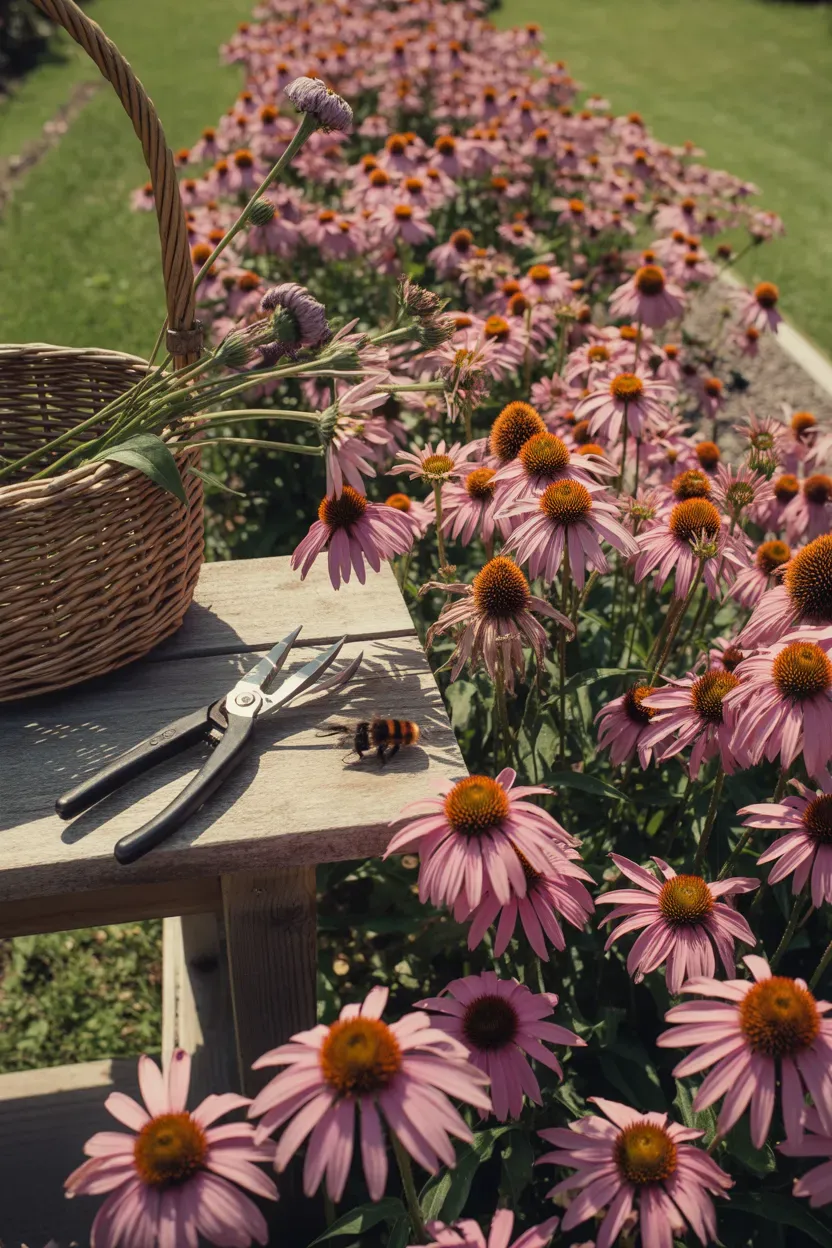
Purple coneflower (Echinacea purpurea) is one of the most reliable long bloomers available, flowering from June straight through October with only occasional deadheading.
It needs full sun and tolerates average, well-drained soil, including genuine drought once established — this isn’t a plant that needs coddling. Deadhead the first flush of spent blooms in July to trigger a strong second wave, though many gardeners leave some blooms standing into fall since the seed heads feed goldfinches through winter.
Pro Tip: Skip deadheading entirely on a few stems each season and let them go to seed — coneflower self-seeds readily, and volunteer seedlings often fill gaps in the border for free.
Internal link: pollinator-friendly perennials for full-sun borders External link: Missouri Botanical Garden’s Echinacea purpurea profile
Few perennials deliver this much bloom for this little maintenance.
2. Salvia ‘May Night’ for Deep Purple Spikes That Rebloom
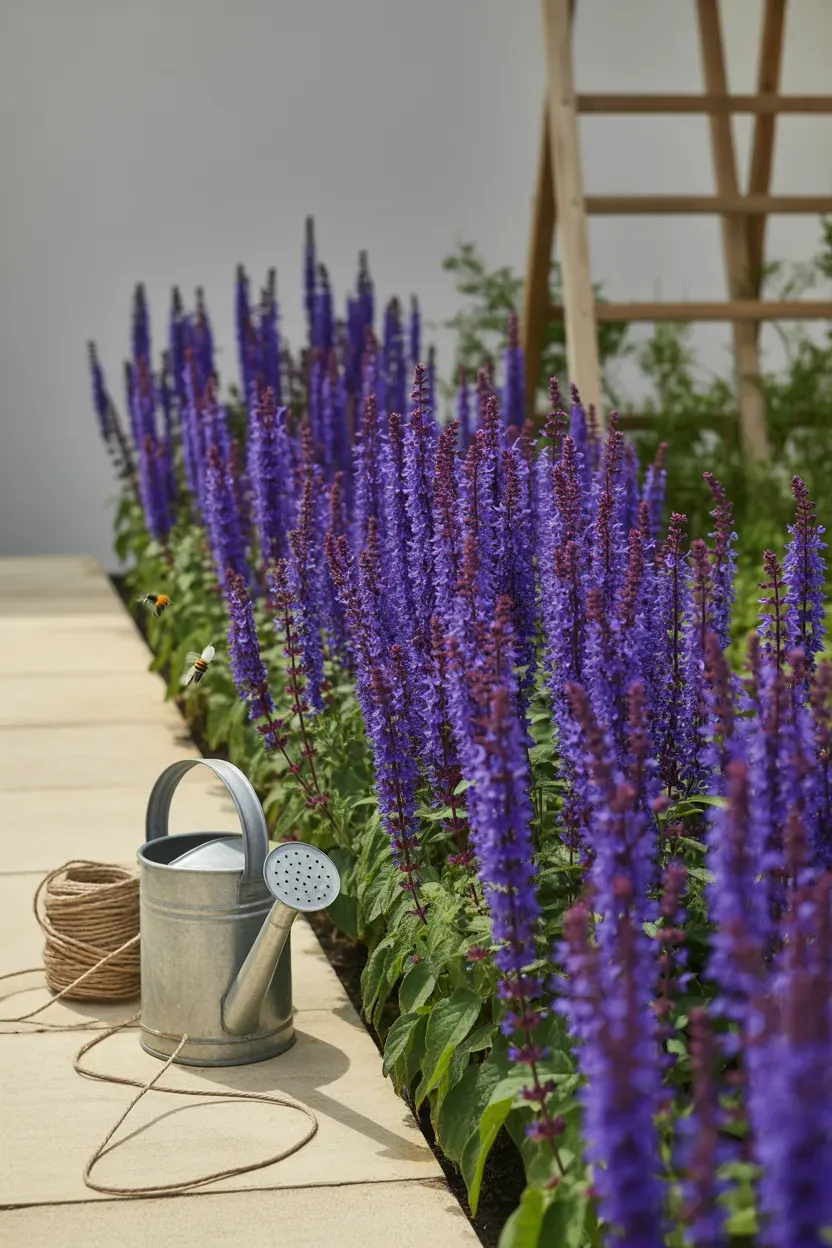
Salvia ‘May Night’ produces its first flush of deep purple flower spikes in May, and shearing the plant back by a third after that first bloom fades triggers a genuine second and often third flowering through September.
It needs full sun and well-drained soil, and it’s notably drought-tolerant once established in its second year. Skipping the post-bloom shearing is the single biggest mistake gardeners make with this plant — without it, salvia flowers once and then sits as green foliage for the rest of summer.
Internal link: perennials that rebloom after cutting back External link: Gardeners’ World’s guide to growing salvias
Shear it hard and this salvia keeps working through the whole season.
3. Catmint ‘Walker’s Low’ for Season-Long Lavender Haze
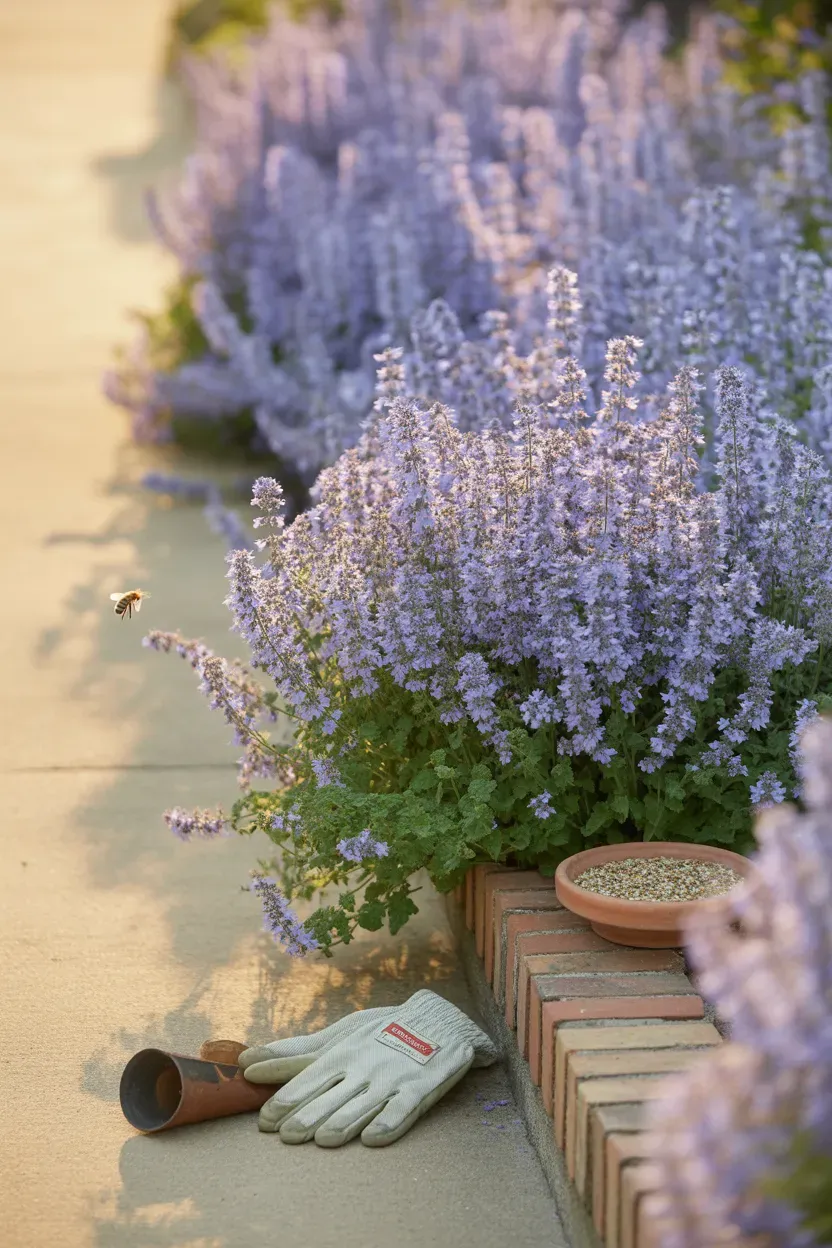
Catmint ‘Walker’s Low’ blooms nearly continuously from May through October, and unlike true catnip, it stays a manageable, non-invasive mound rather than sprawling aggressively.
It thrives in full sun and lean, well-drained soil, actually blooming less vigorously in overly rich soil. Shear the entire plant back by half in midsummer when flowering slows; it rebounds with fresh growth and a strong second bloom within 2-3 weeks. It tolerates genuine drought and poor soil better than almost any perennial on this list.
What works vs. what to avoid:
- Works: lean soil, full sun, a hard midsummer shearing
- Avoid: rich fertilized beds, part shade, skipping the summer cutback
Internal link: drought-tolerant perennials for lean soil External link: RHS growing guide for Nepeta racemosa
4. Black-Eyed Susan for Cheerful Late-Summer Gold
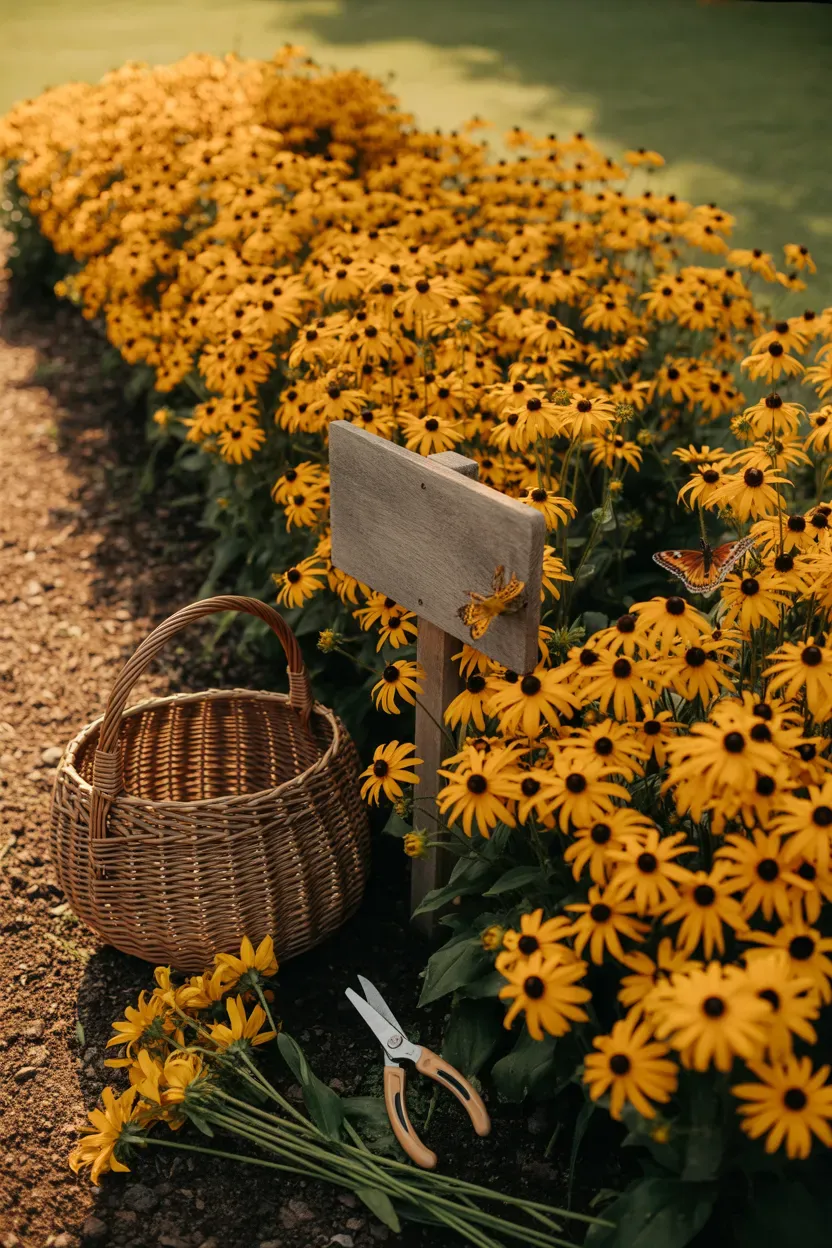
Black-eyed Susan (Rudbeckia fulgida) is one of the toughest long bloomers available, flowering from June through the first hard frost with essentially no fussing required.
It needs full sun and tolerates average to poor soil, including clay that would struggle with other perennials on this list. Divide clumps every 3-4 years in spring to keep them vigorous; left undivided too long, the centers can thin out similarly to other spreading perennials. It self-seeds readily, so expect volunteer plants nearby within a couple of seasons.
Pro Tip: Leave the seed heads standing through winter instead of cutting back in fall — goldfinches feed on them heavily, and the structure adds winter interest to an otherwise bare bed.
Internal link: low-maintenance perennials for beginner gardeners External link: Almanac’s Rudbeckia growing guide
5. Shasta Daisy for Crisp White Summer Structure
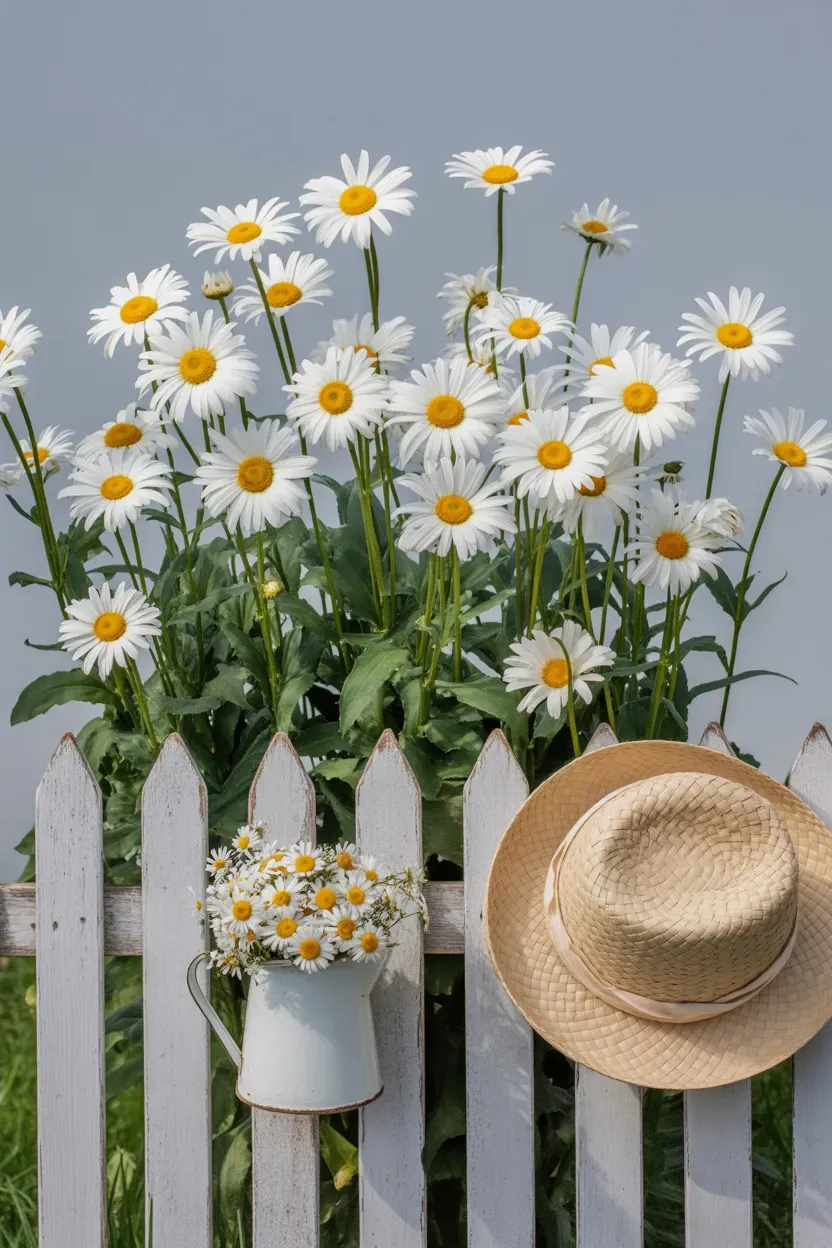
Shasta daisy (Leucanthemum x superbum) brings classic white daisy blooms from June through September, giving a border visual structure that pairs well against the warmer tones of coneflower and black-eyed Susan.
It needs full sun and well-drained soil; it struggles and often rots in heavy, wet clay over winter. Deadhead spent blooms weekly to extend flowering, and divide clumps every 2-3 years, since Shasta daisies decline noticeably in vigor if left crowded too long.
Internal link: white-flowering perennials for cottage garden design External link: BHG’s Shasta daisy care and growing tips
Give it well-drained soil and this daisy anchors a border beautifully all summer.
6. Blanket Flower for Fiery Drought-Tough Color
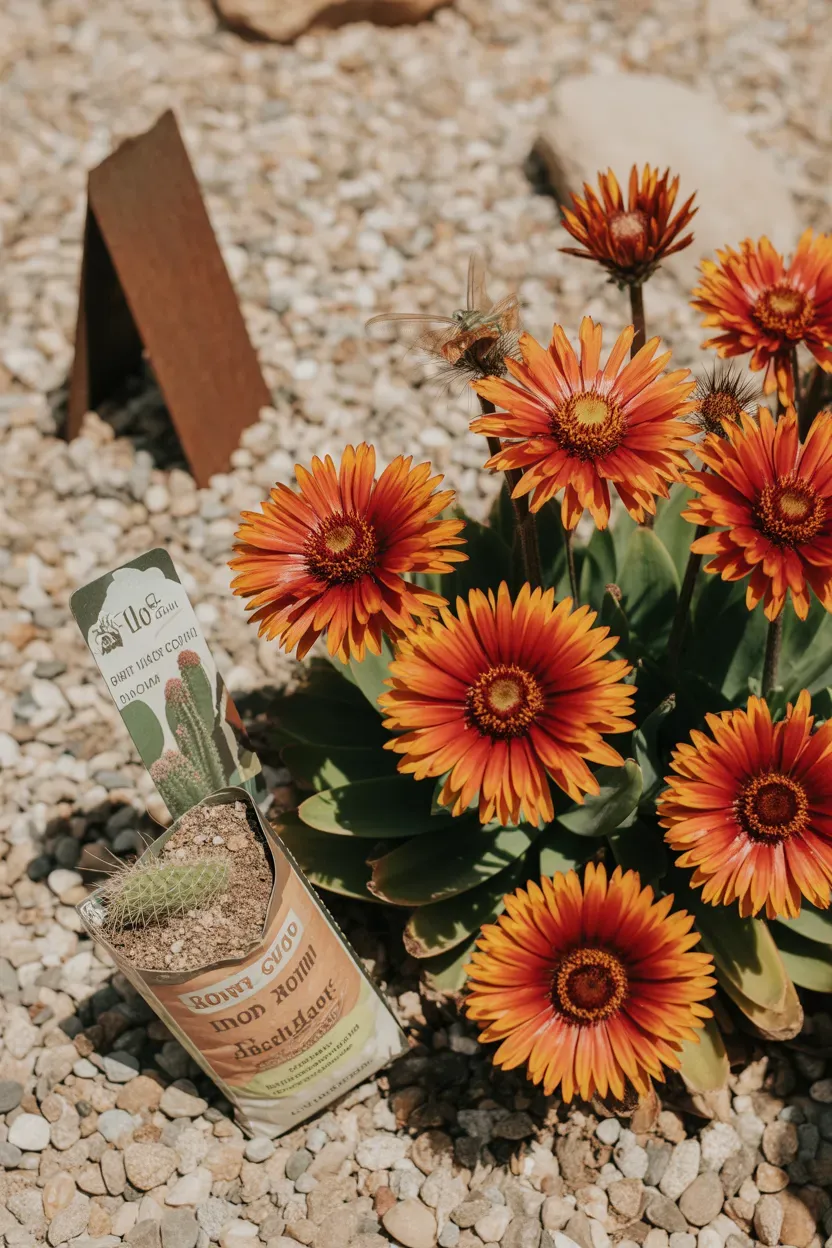
Blanket flower (Gaillardia x grandiflora) produces fiery red-and-orange blooms from June through October and handles genuine heat and drought better than almost any other long bloomer here.
It needs full sun and sharply drained soil — it’s notably short-lived in heavy, wet clay and often acts as a short-lived perennial (2-3 years) even in ideal conditions, so let it self-seed to maintain the patch. Deadhead regularly to keep blooms coming; skipping this cuts the flowering window roughly in half.
Internal link: heat-tolerant perennials for hot, dry climates External link: University of Florida Extension’s Gaillardia growing notes
7. Daylily for Reliable Mid-Summer Abundance
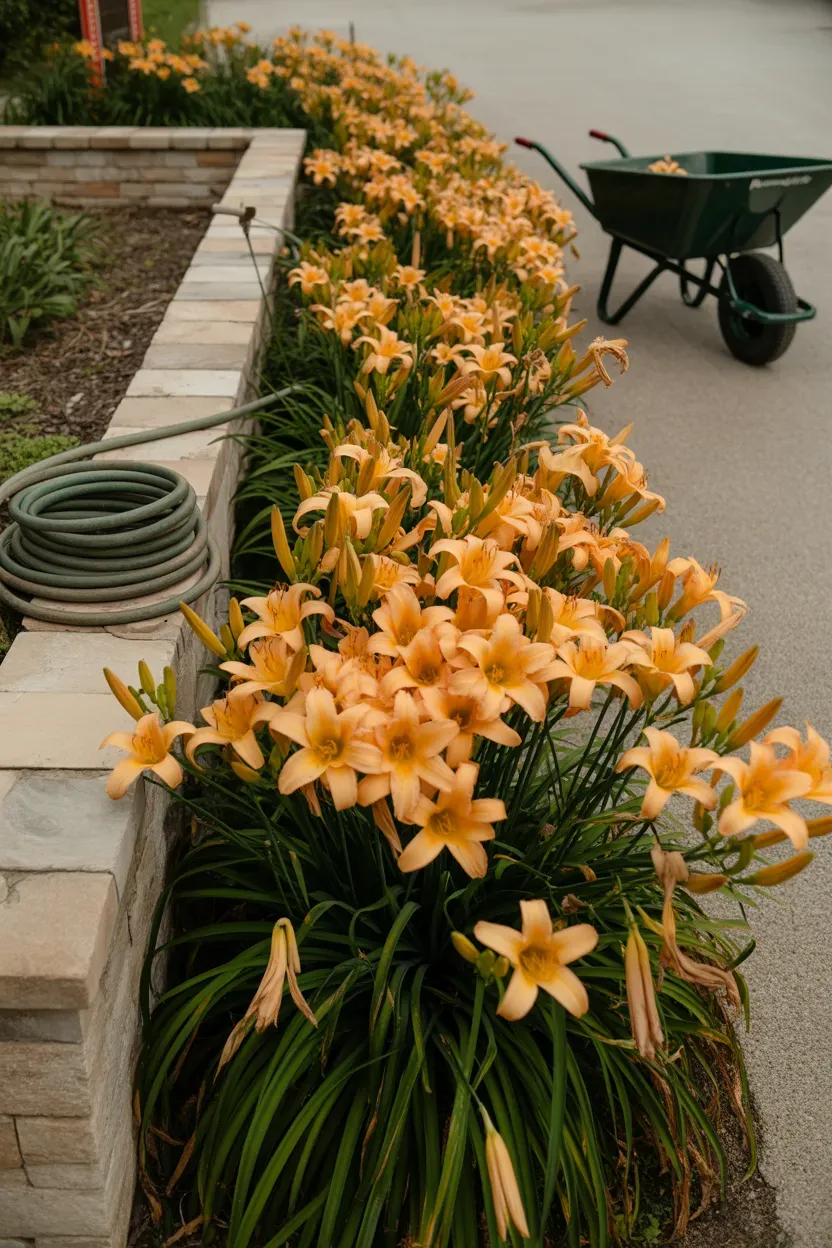
Each daylily (Hemerocallis) flower lasts only a single day, but a mature clump produces so many buds that bloom continues for 4-6 weeks per variety, and mixing early, mid, and late cultivars extends color from June into August.
It tolerates full sun to light shade and nearly any soil type, including heavy clay that defeats many perennials on this list. Divide overcrowded clumps every 3-4 years in spring or fall; a single division can cost as little as $8-15 at most nurseries, making this one of the most budget-friendly perennials here.
Pro Tip: Snap off spent blooms daily rather than waiting to deadhead in batches — daylilies redirect energy to new buds faster with daily removal, and it takes seconds per plant.
Internal link: daylily varieties for continuous summer bloom External link: Missouri Botanical Garden’s Hemerocallis growing guide
8. Yarrow for Flat-Topped Blooms That Attract Beneficial Insects
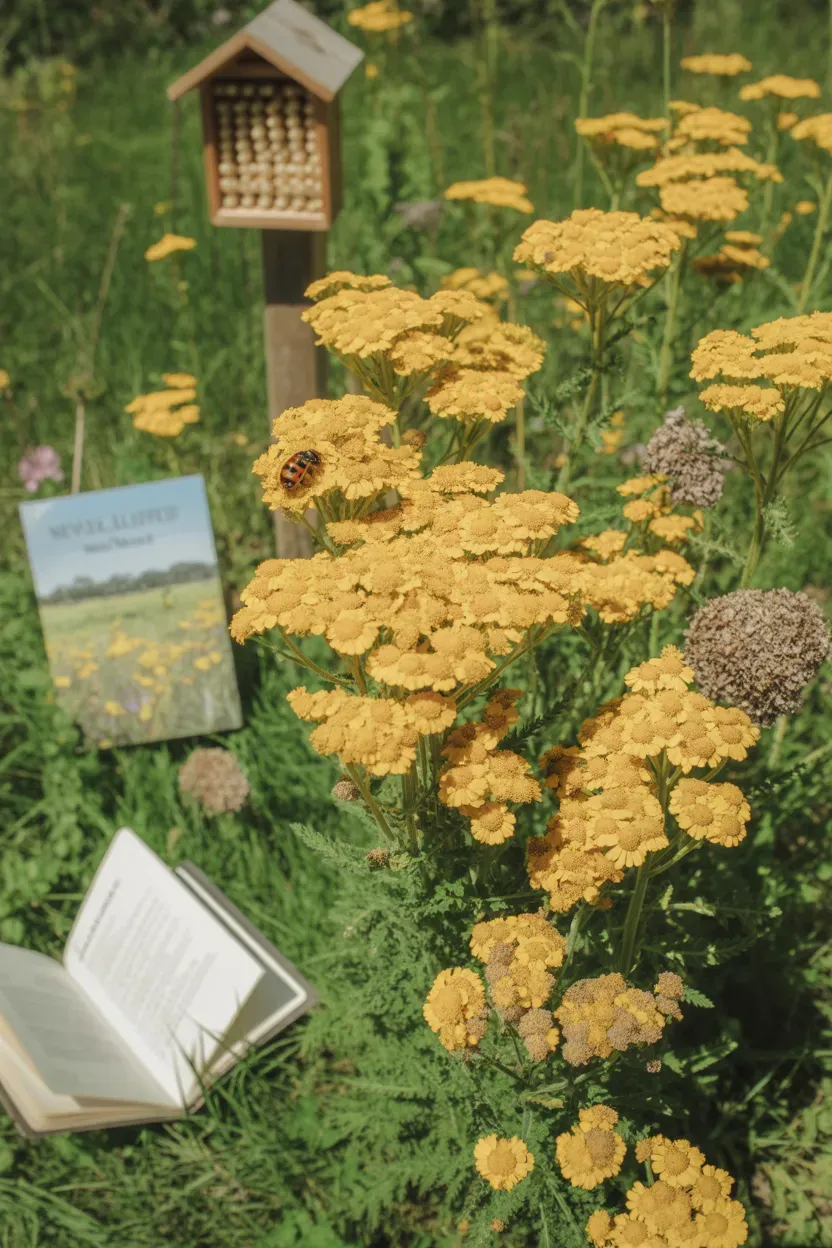
Yarrow (Achillea millefolium) produces flat-topped flower clusters from June through September that serve as a landing pad for beneficial insects like ladybugs and parasitic wasps, making it a strong pest-management companion plant.
It needs full sun and tolerates poor, dry soil exceptionally well — overly rich soil actually causes floppy, weak stems that need staking. Cut back hard after the first bloom flush fades to encourage a second round of flowering into early fall.
Internal link: companion plants that attract beneficial garden insects External link: Penn State Extension’s yarrow growing and use notes
Plant it where soil is leanest, and yarrow rewards you with the least effort of anything on this list.
9. Astilbe for Feathery Shade-Garden Plumes
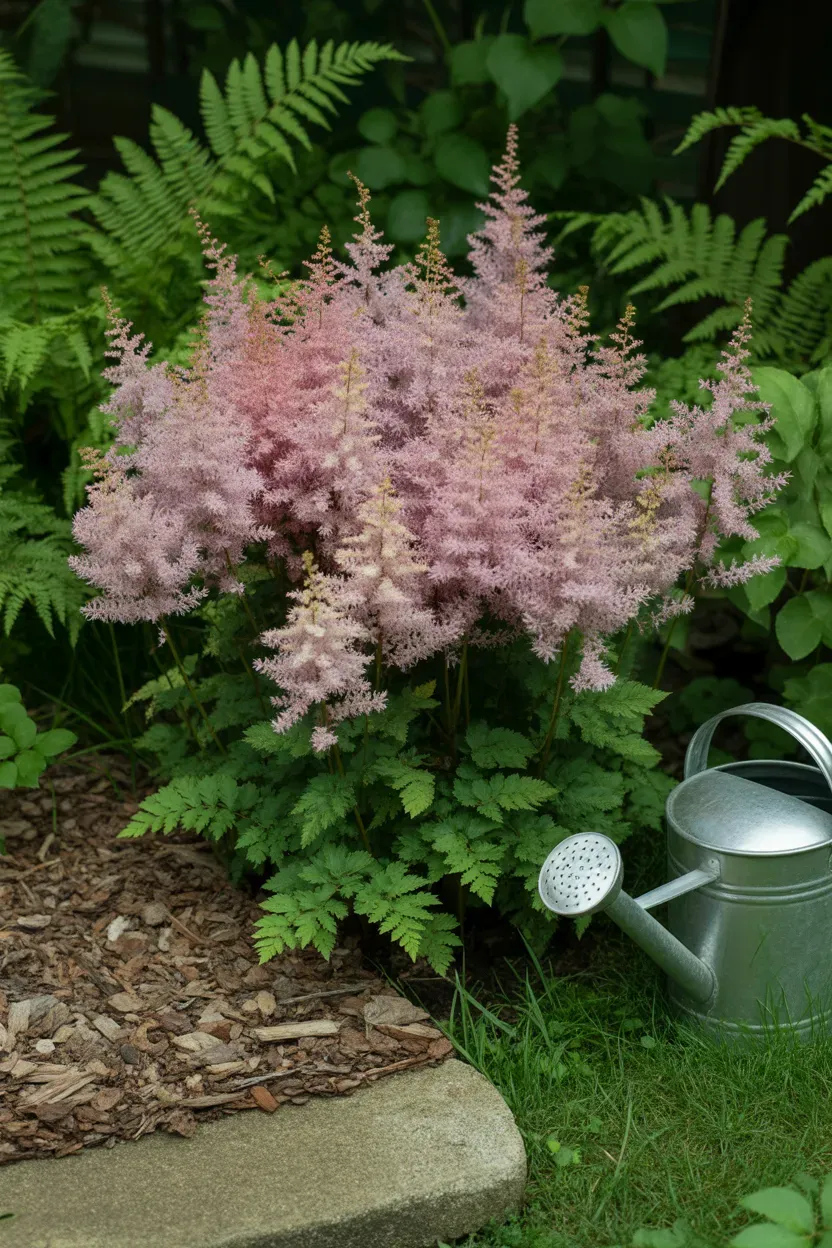
Astilbe brings feathery plumes of pink, red, or white to shaded beds in June and July, filling a color gap that most sun-loving long bloomers can’t reach.
It needs part to full shade and, critically, consistently moist soil — this is not a drought-tolerant plant, and it wilts noticeably within a day or two of dry soil in hot weather. Water deeply twice weekly during summer unless rainfall is substantial, and mulch to retain moisture. Divide clumps every 3-4 years in early spring as they lose vigor.
The limitation worth stating plainly: astilbe struggles badly in dry shade under mature trees, where lamium or wild ginger would be a better fit.
Internal link: shade perennials that need consistent moisture External link: Gardeners’ World’s astilbe growing guide
10. Bleeding Heart for Romantic Spring Charm
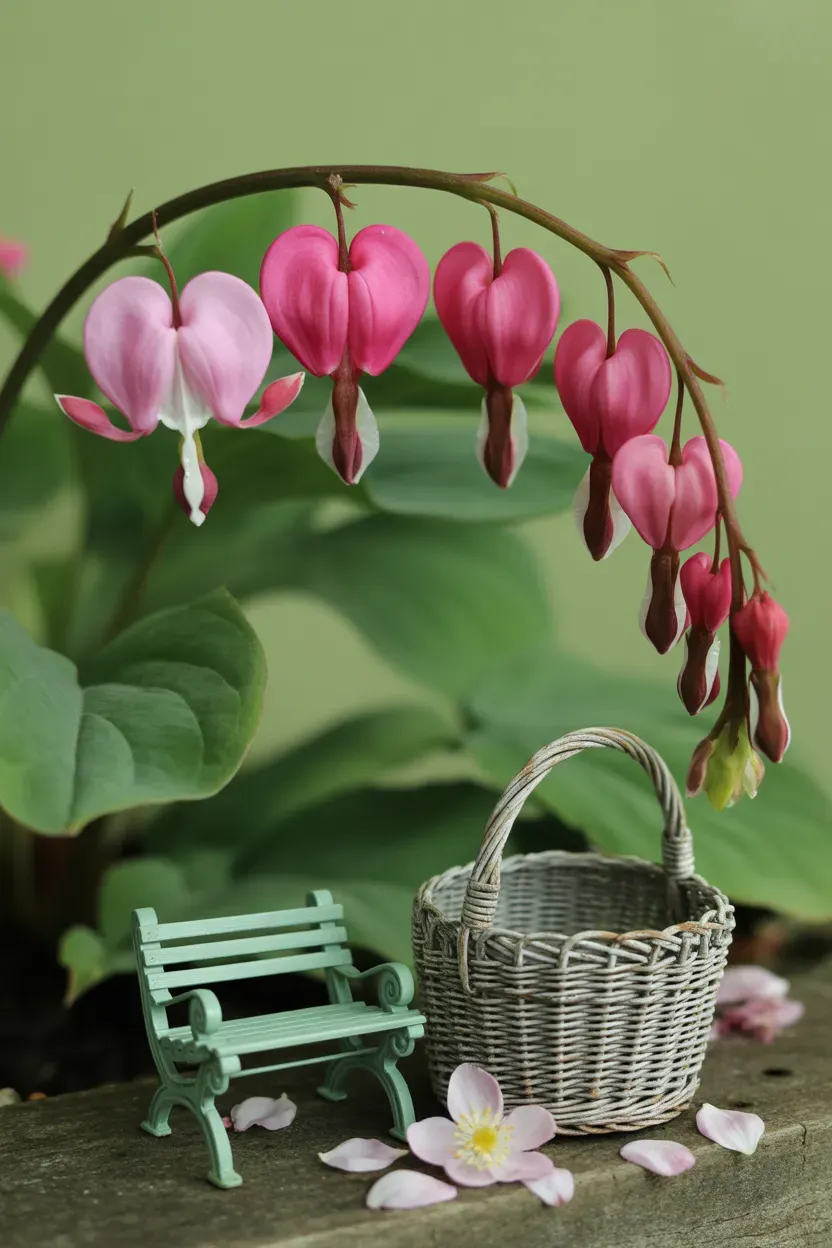
Bleeding heart (Lamprocapnos spectabilis) produces its signature heart-shaped pink blooms from April through June, then goes dormant in summer heat — an important trait to plan around rather than a flaw.
It needs part shade and rich, moisture-retentive soil, and it genuinely dies back to the ground once temperatures rise in July, leaving a gap that needs a summer-blooming companion planted nearby to fill visually. Interplant with hostas or astilbe so something fills the space once bleeding heart disappears.
Pro Tip: Mark the spot with a small stake when it goes dormant — it’s easy to accidentally dig into the dormant root system while planting something else nearby in midsummer.
Internal link: spring-blooming perennials that go dormant in summer External link: Missouri Botanical Garden’s Lamprocapnos spectabilis profile
11. Heuchera for Foliage Color Between Bloom Cycles
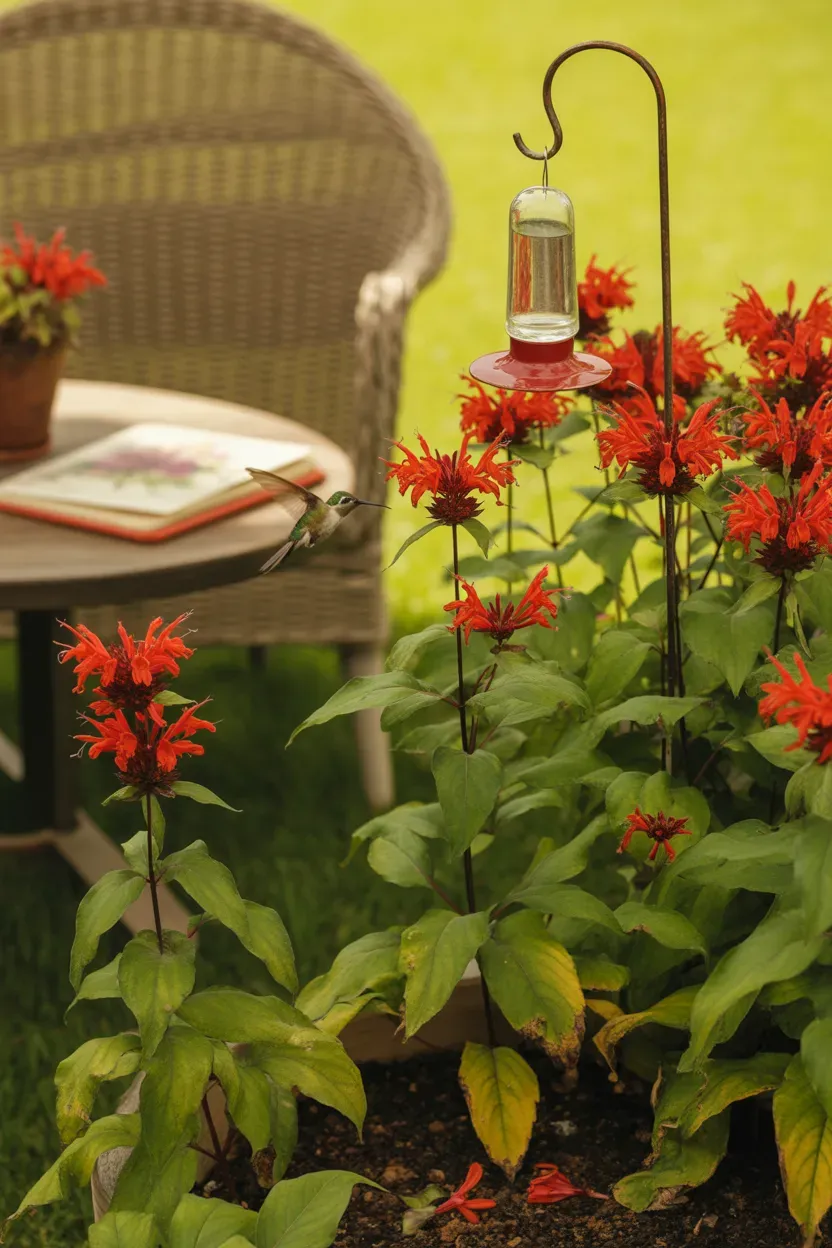
Heuchera (coral bells) technically blooms with small, airy flower spikes from May to July, but its real long-season value is the colorful foliage — burgundy, lime, caramel, or near-black depending on variety — that holds color from spring through fall regardless of bloom status.
It needs part shade and well-drained soil, and it’s notably shallow-rooted, which means it can heave out of the ground during winter freeze-thaw cycles in colder climates; mulch helps prevent this. Divide every 3-4 years when the woody crown starts pushing above soil level.
Internal link: foliage-focused perennials for season-long color External link: Almanac’s heuchera growing and dividing guide
Pair its foliage with true long bloomers and the color never actually stops.
12. Bee Balm for Hummingbird-Magnet Summer Color
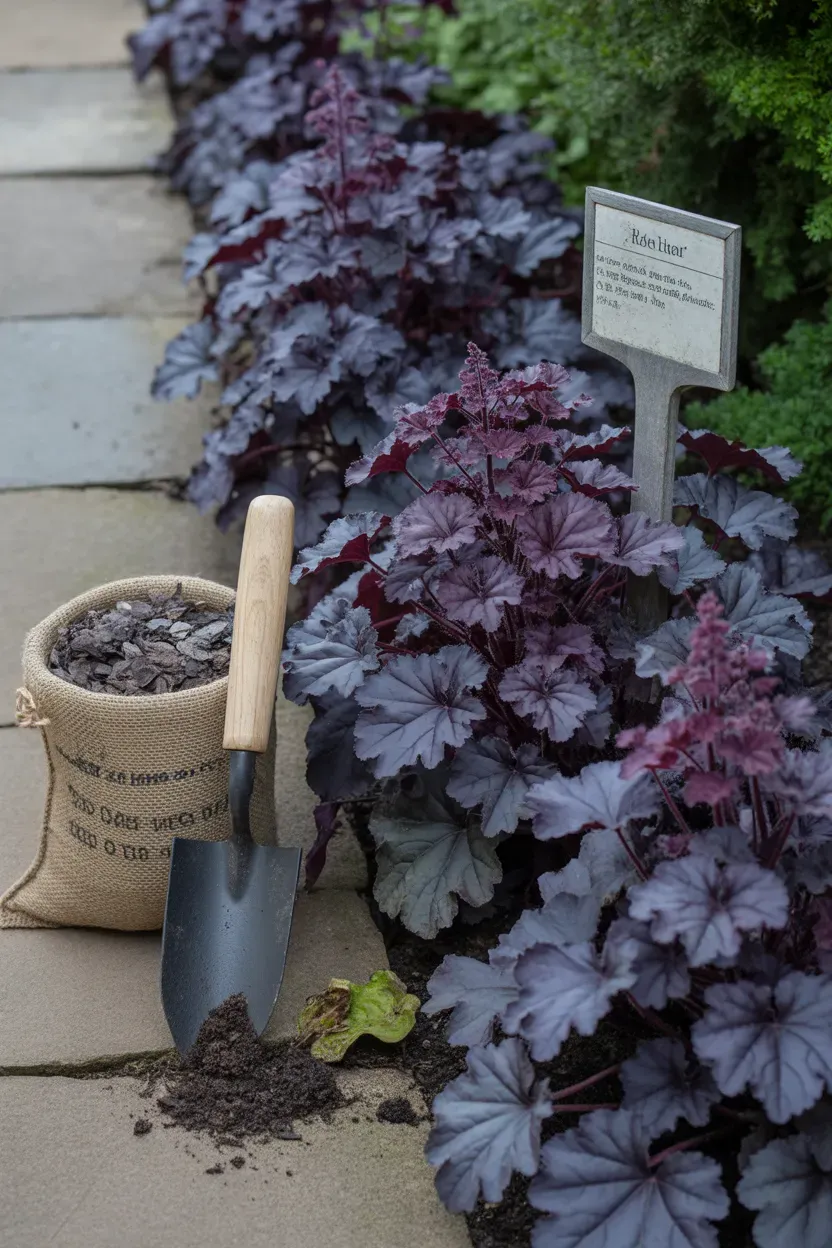
Bee balm (Monarda didyma) blooms from June through September and draws hummingbirds more reliably than nearly any other perennial on this list, though it does require attention to spacing to avoid the powdery mildew it’s notorious for.
It needs full sun and space plants 18-24 inches apart for airflow — crowding is the number one cause of the mildew that plagues this plant. Deadhead spent blooms to extend flowering, and divide clumps every 2-3 years as the center tends to die out with age.
What works vs. what to avoid:
- Works: full sun, generous spacing, mildew-resistant varieties like ‘Jacob Cline’
- Avoid: crowded planting, overhead evening watering, deep shade
Internal link: avoiding common bee balm growing mistakes External link: RHS growing guide for Monarda
13. Russian Sage for Airy Silver-Blue Late-Summer Haze
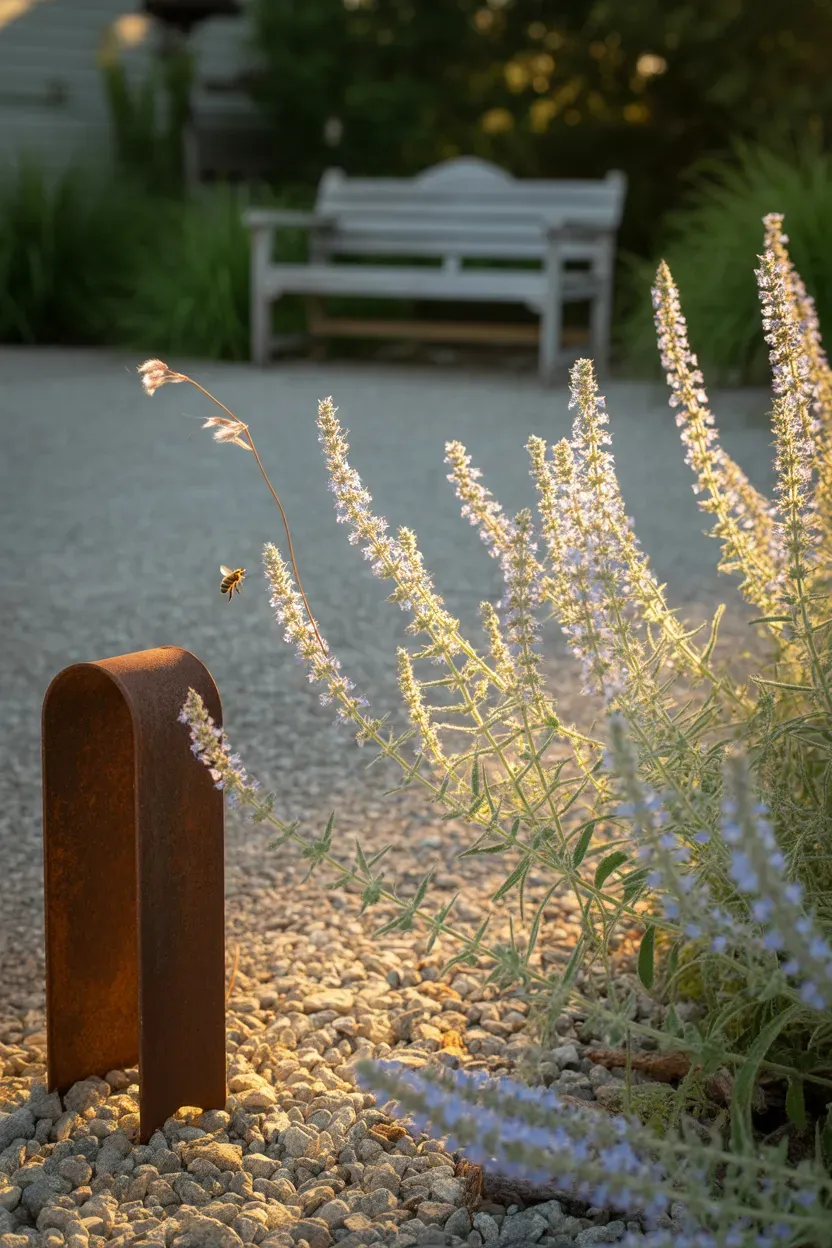
Russian sage (Perovskia atriplicifolia) fills the late-summer gap with airy silver-blue spikes from July through September, and its fine, almost see-through texture makes an excellent contrast against bolder-leafed neighbors.
It needs full sun and thrives in lean, well-drained soil, tolerating drought and poor soil better than almost anything else on this list. Cut the entire plant back to about 6 inches in early spring, not fall — the woody stems provide some winter protection for the crown in colder climates.
Pro Tip: Resist fertilizing Russian sage — rich soil produces floppy, weak stems that need staking, while lean soil keeps growth upright and self-supporting.
Internal link: silver-foliage perennials for drought-tolerant borders External link: SF Gate Home Guide’s Russian sage growing tips
14. Garden Phlox for Fragrant Mid-Summer Clusters
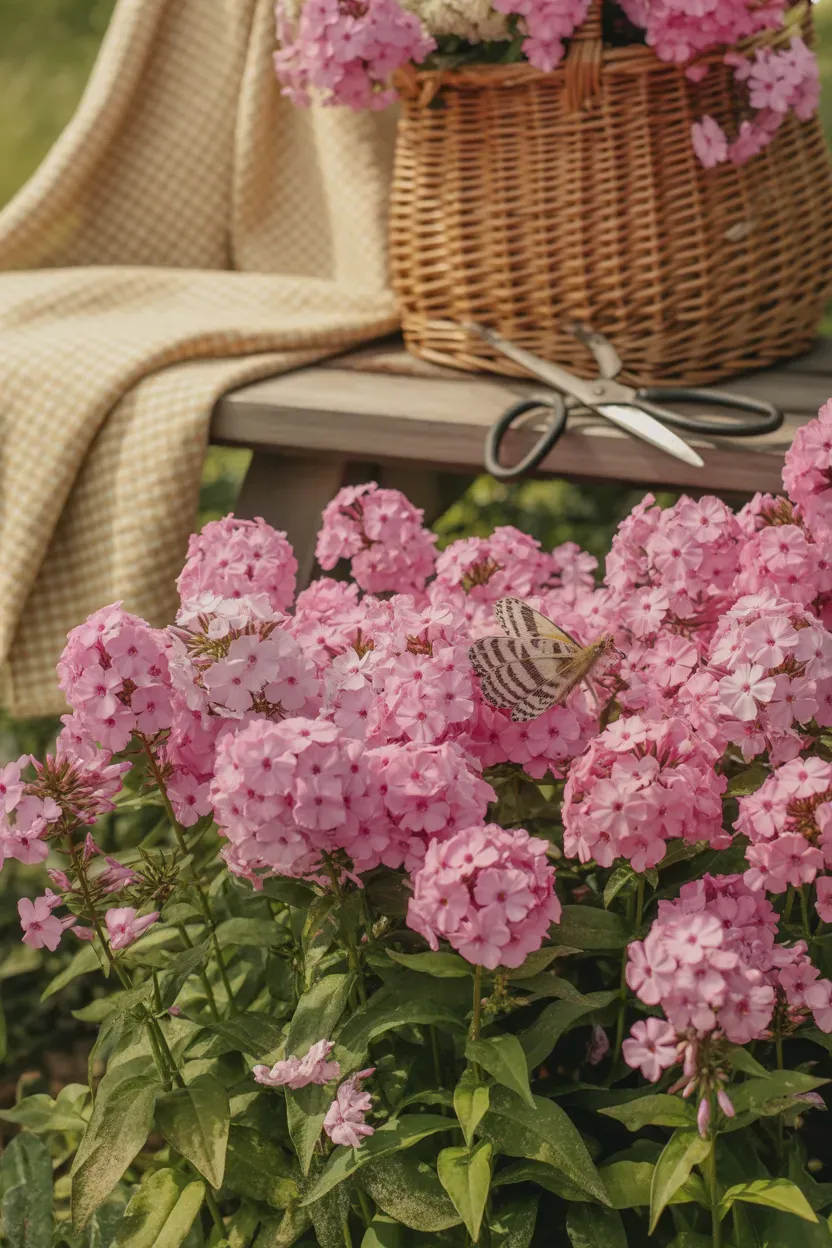
Garden phlox (Phlox paniculata) produces large, fragrant flower clusters from July through September and remains one of the most reliably scented perennials for a cutting garden.
It needs full sun and consistently moist, well-drained soil, spacing plants 18-24 inches apart for airflow, since phlox is prone to the same powdery mildew issue as bee balm when crowded. Choose mildew-resistant cultivars like ‘David’ if your climate runs humid, and deadhead spent clusters to extend bloom into early fall.
Internal link: fragrant perennials for cutting gardens External link: University of Florida Extension’s Phlox paniculata disease resistance notes
Give it airflow and full sun, and phlox becomes one of the most fragrant additions to any border.
15. Sedum ‘Autumn Joy’ for Reliable Late-Season Structure
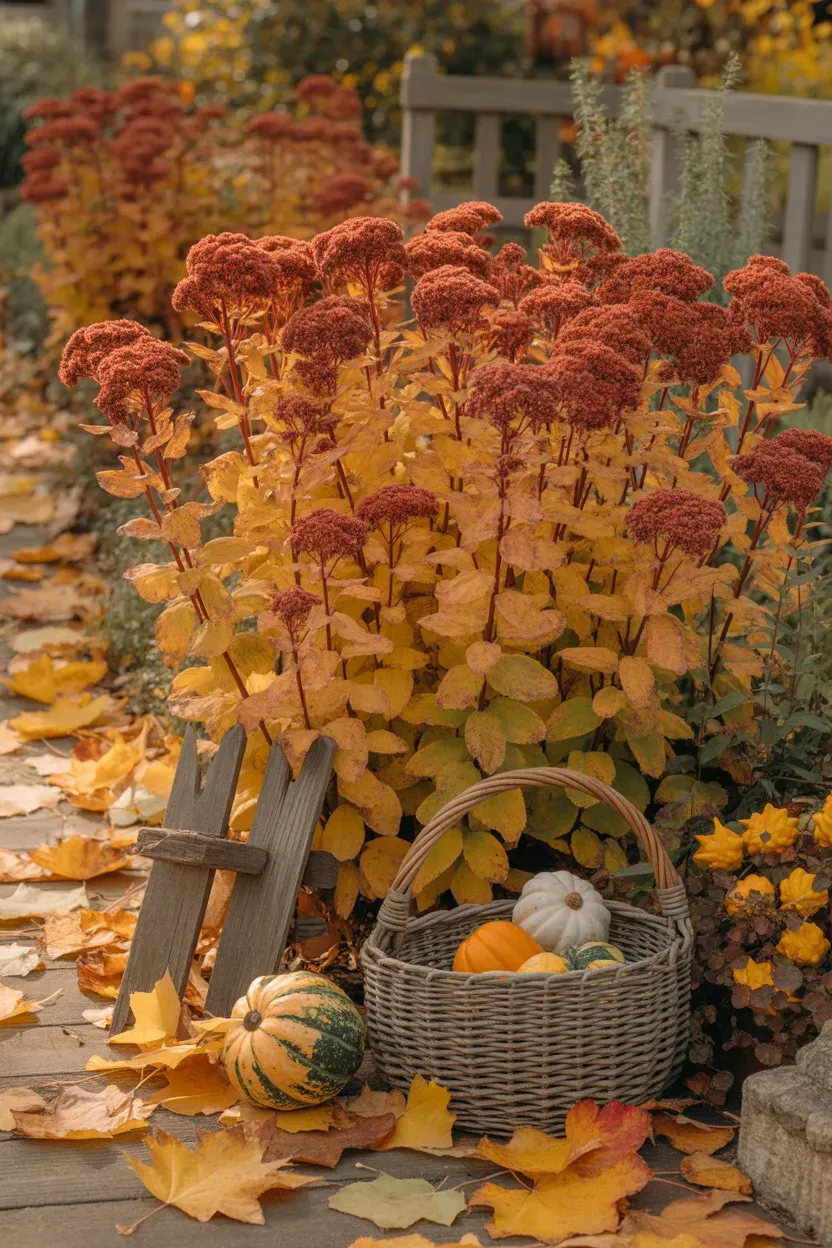
Sedum ‘Autumn Joy’ is the perennial equivalent of a season finale — it blooms from August into October just as most of the border is winding down, transitioning from pale pink to deep rust as it matures.
It needs full sun and well-drained soil, tolerating drought exceptionally well once established. Leave the dried flower heads standing through winter for structural interest and to feed birds; cutting back in fall removes one of the few plants that still looks intentional in a January garden.
Internal link: perennials that provide winter garden structure External link: Almanac’s growing guide for Sedum ‘Autumn Joy’
16. Lavender for Fragrant Silver Mounds
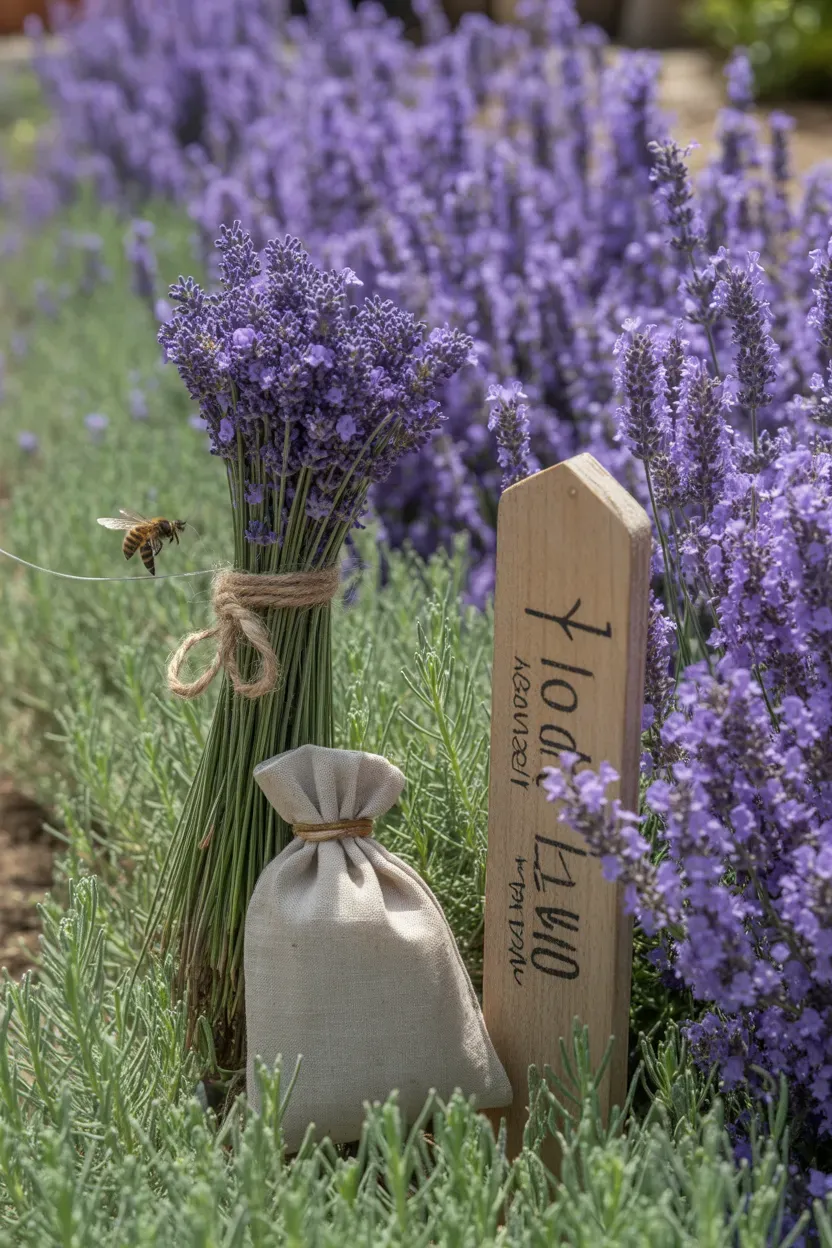
Lavender blooms from June through August and, beyond its visual appeal, doubles as a genuinely useful cut-and-dried herb for sachets and cooking.
It needs full sun and, above all, sharp drainage — lavender’s most common failure point by far is wet feet in winter, not cold itself. Choose English lavender (Lavandula angustifolia) for the best cold hardiness if you’re in a colder climate; it struggles below 10°F without protection, while French and Spanish types are more tender still.
Pro Tip: Never mulch lavender with bark or wood chips right against the crown — it traps moisture against the base and causes rot; use gravel mulch instead.
Internal link: growing lavender in different climate zones External link: Gardeners’ World’s lavender growing and pruning guide
17. Peony for Show-Stopping Late-Spring Blooms
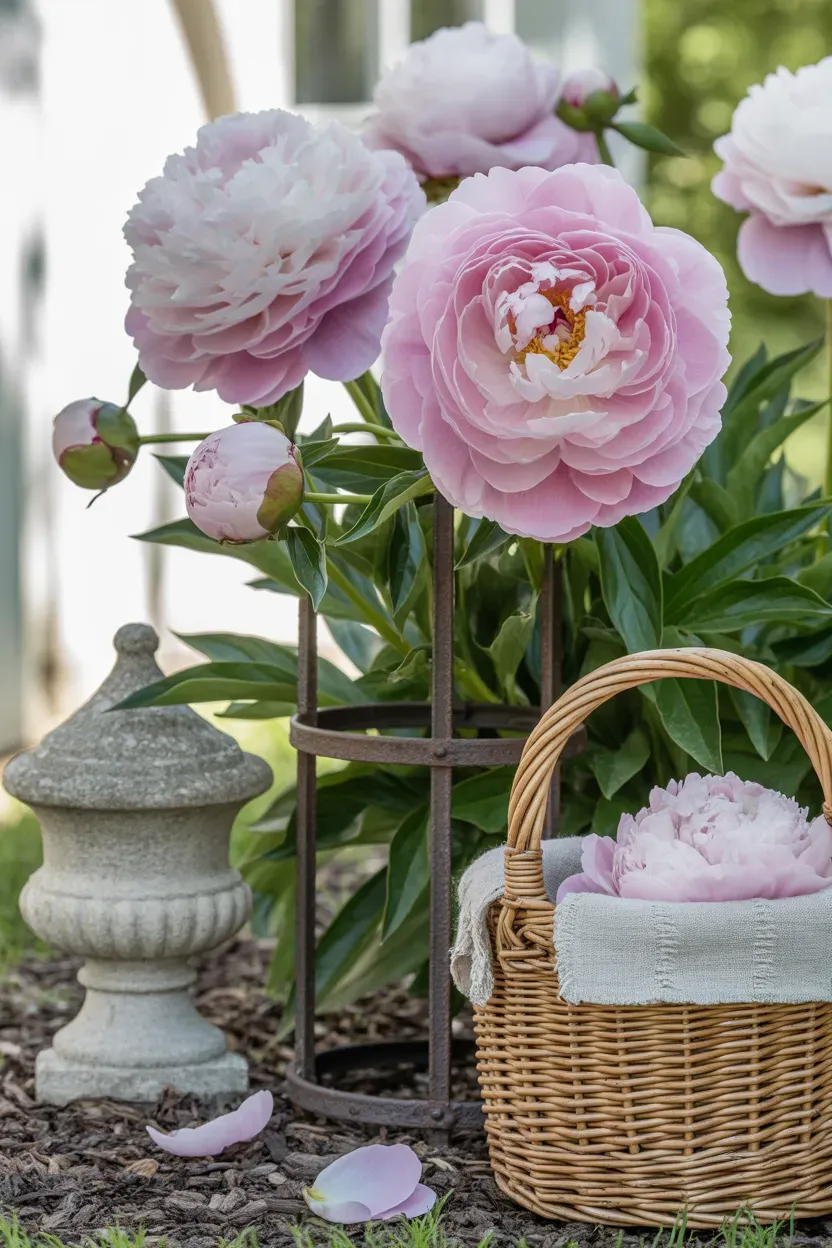
Peonies produce an intensely showy but relatively brief bloom window, typically 2-3 weeks in May or June, so pair them with later bloomers to keep the bed active once the show ends.
They need full sun (6+ hours) and well-drained soil, and they’re famously long-lived — a well-planted peony can outlive the gardener who planted it, sometimes flowering for 50+ years with minimal care. Plant the crown no more than 2 inches below soil level; planting too deep is the most common reason peonies fail to bloom.
Internal link: long-lived perennials that improve with age External link: Missouri Botanical Garden’s peony planting depth guidance
Plant one correctly and you’re investing in decades of spring color, not just this season’s.
18. Hardy Geranium for Low, Long-Blooming Groundcover Color
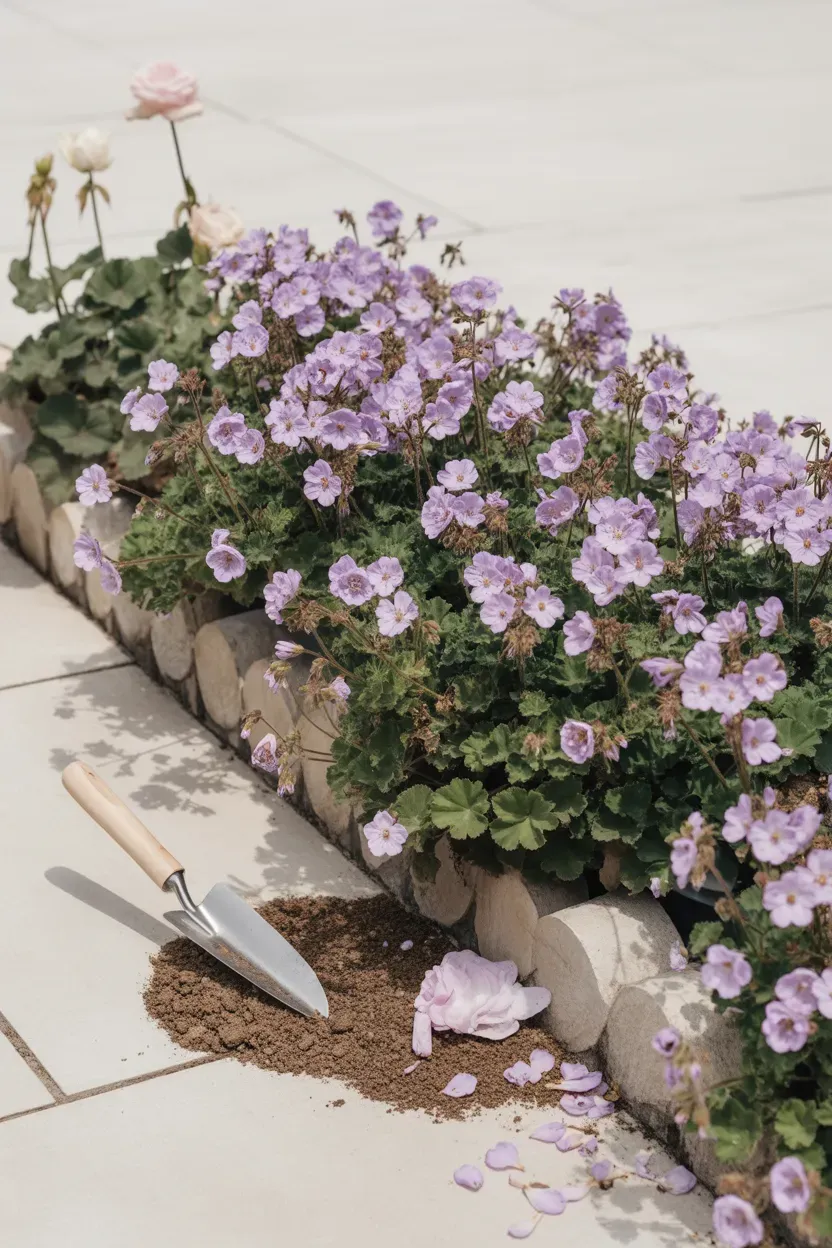
Hardy geranium (not to be confused with annual pelargoniums) blooms from May through September in mild climates, functioning as a low, mounding filler that softens the front edge of a border.
It tolerates full sun to part shade and average soil, and it’s notably tidy compared to many long bloomers — no deadheading required for continuous flowering, since spent blooms are largely self-cleaning. Shear the whole plant back by half in midsummer if it starts looking tired; it rebounds with fresh foliage and renewed bloom within 2-3 weeks.
Internal link: no-deadhead perennials for low-maintenance borders External link: RHS growing guide for hardy geraniums
19. Veronica ‘Royal Candles’ for Upright Blue Spikes
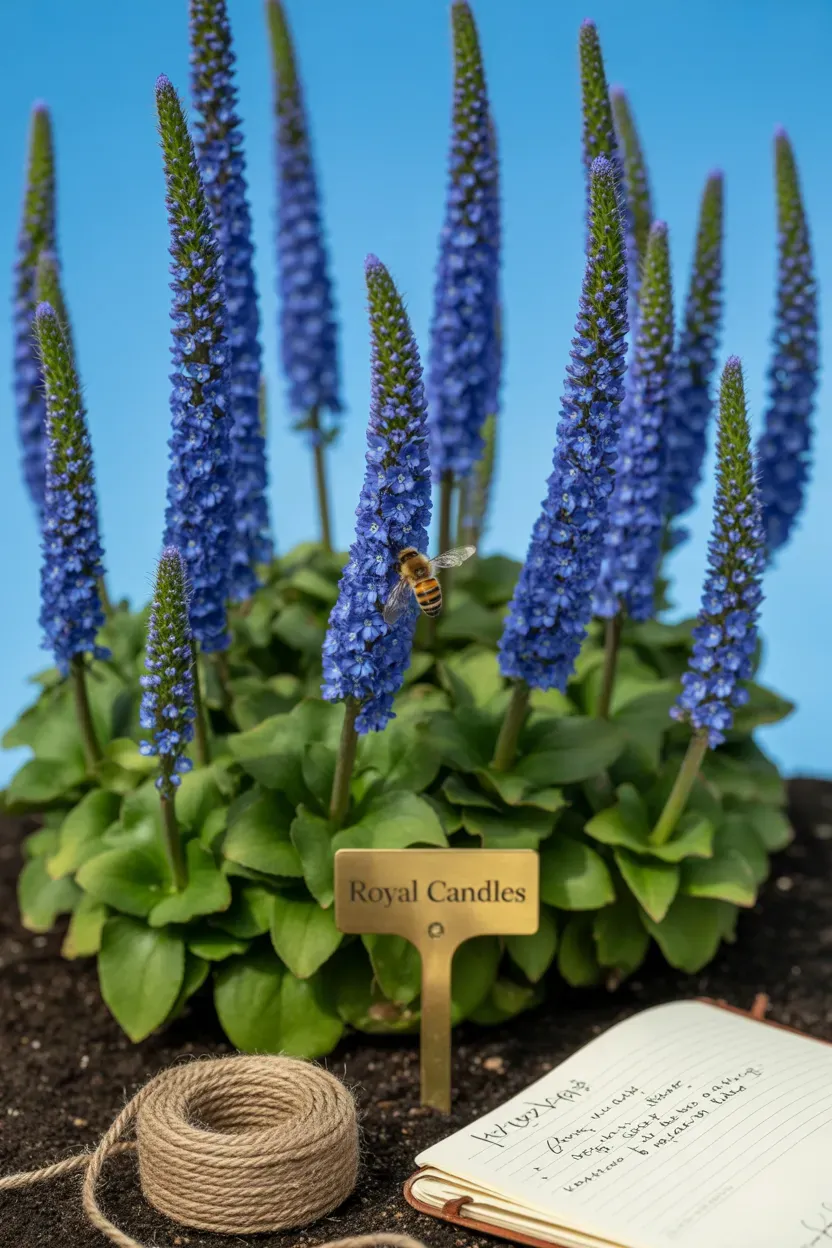
Veronica ‘Royal Candles’ produces genuinely upright, true-blue flower spikes from June through August, a color that’s surprisingly hard to find among long-blooming perennials and useful for breaking up the pinks and purples common on this list.
It needs full sun to light shade and well-drained soil, and deadheading spent spikes down to the next set of leaves consistently extends bloom by 3-4 weeks. It’s also notably compact and self-supporting, rarely needing staking even in windy spots.
Internal link: true-blue flowering perennials for color variety External link: BHG’s Veronica growing and care guide
Add it for the color alone — true blue is rare enough to be worth the space.
20. Gaura for Delicate, Airy Butterfly-Like Blooms
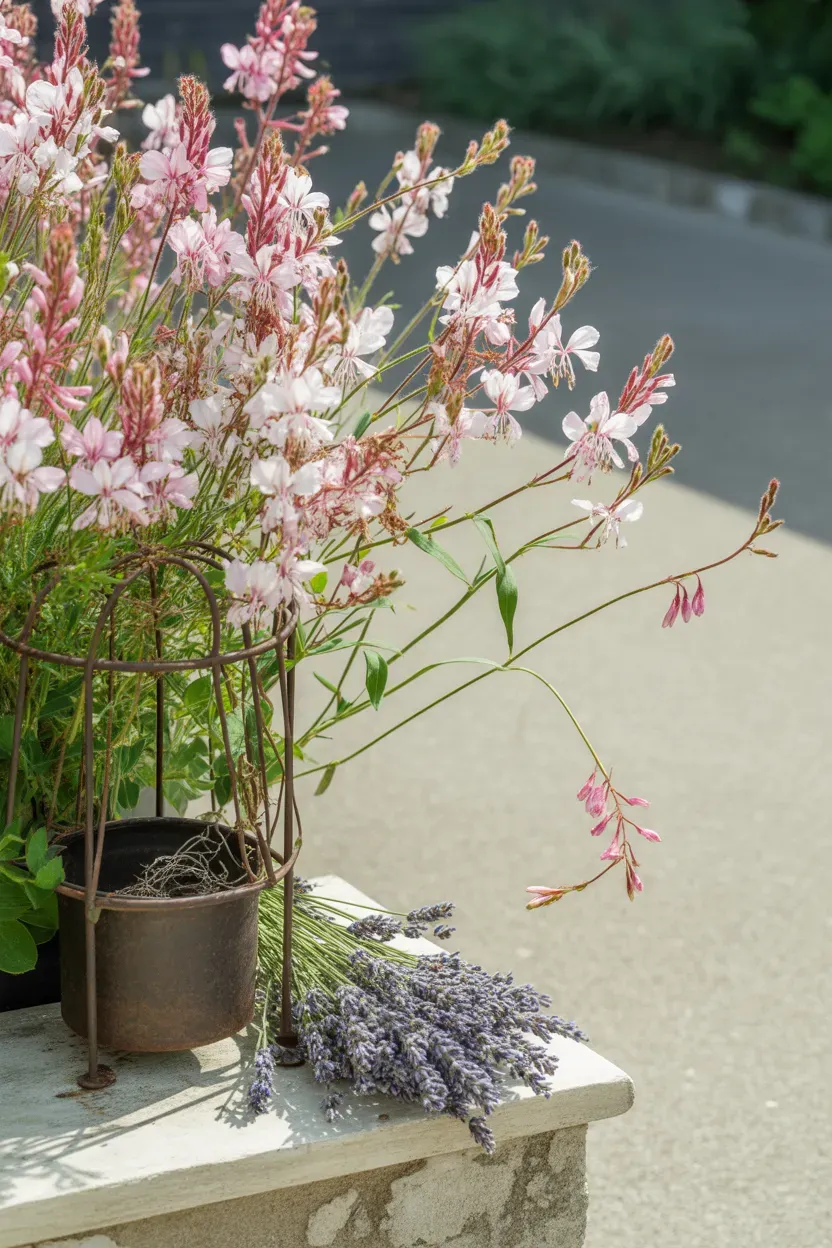
Gaura lindheimeri produces small, butterfly-shaped flowers on wiry stems from June through October, adding movement and airiness to a border that heavier-bloomed plants like peonies and phlox can’t provide.
It needs full sun and well-drained soil, tolerating heat and drought impressively well once established, though it can be short-lived (3-4 years) in climates with wet winters. Its long taproot makes it resent transplanting, so choose its spot carefully and avoid dividing it later.
Pro Tip: Plant gaura toward the back or middle of a border where its airy stems can sway above shorter neighbors without getting visually lost.
Internal link: airy, movement-adding perennials for dynamic borders External link: University of Florida Extension’s Gaura growing notes
21. Japanese Anemone for Elegant Fall Color
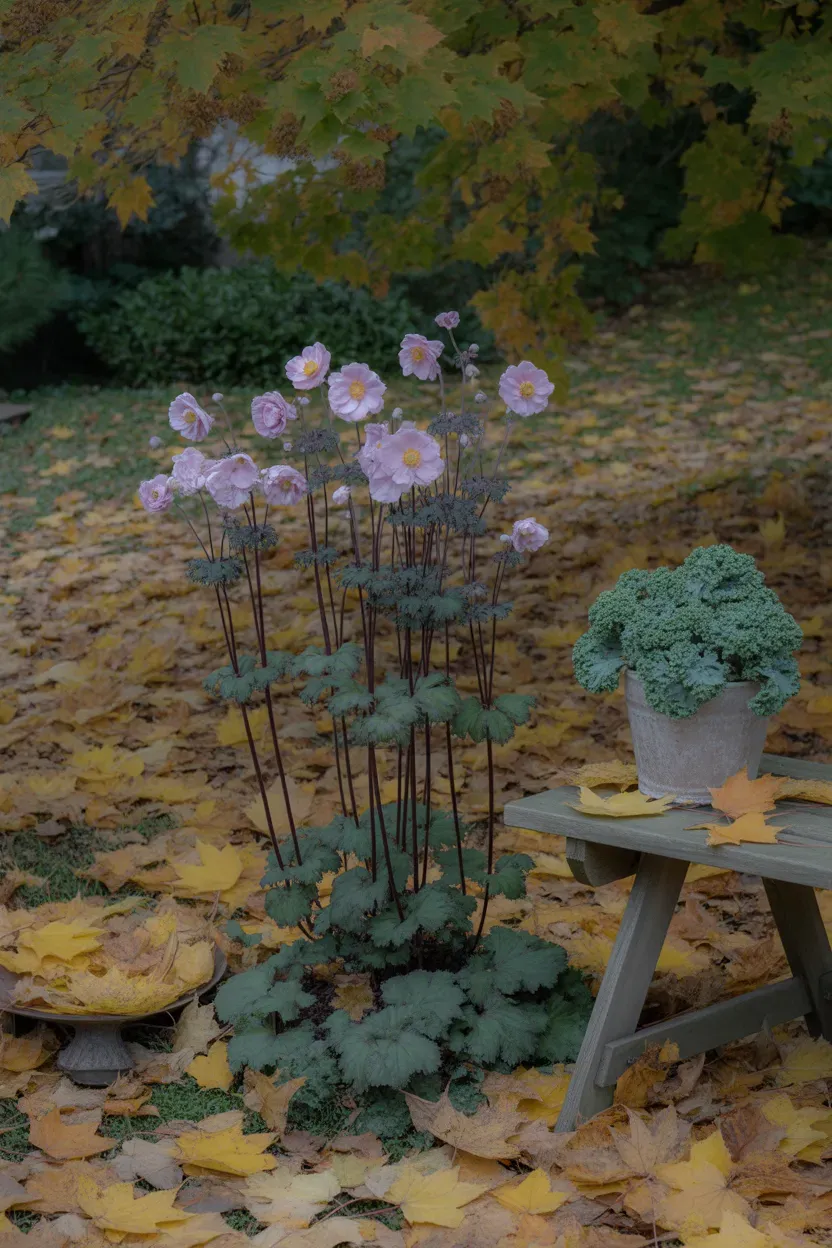
Japanese anemone (Anemone x hybrida) is one of the few perennials that saves its best show for August through October, filling the fall gap with elegant pink or white blooms on tall, wiry stems.
It tolerates part shade and needs consistently moist, rich soil; once established, it spreads via rhizomes fast enough to be considered assertive, so give it room or plan to divide it every few years. It can take a full season or two to establish before flowering heavily, so patience in year one pays off by year two or three.
Internal link: fall-blooming perennials for late-season color External link: Missouri Botanical Garden’s Anemone x hybrida profile
Give it a season to settle in, and Japanese anemone becomes one of the best fall performers in the whole border.
22. Aster for the Season’s True Grand Finale
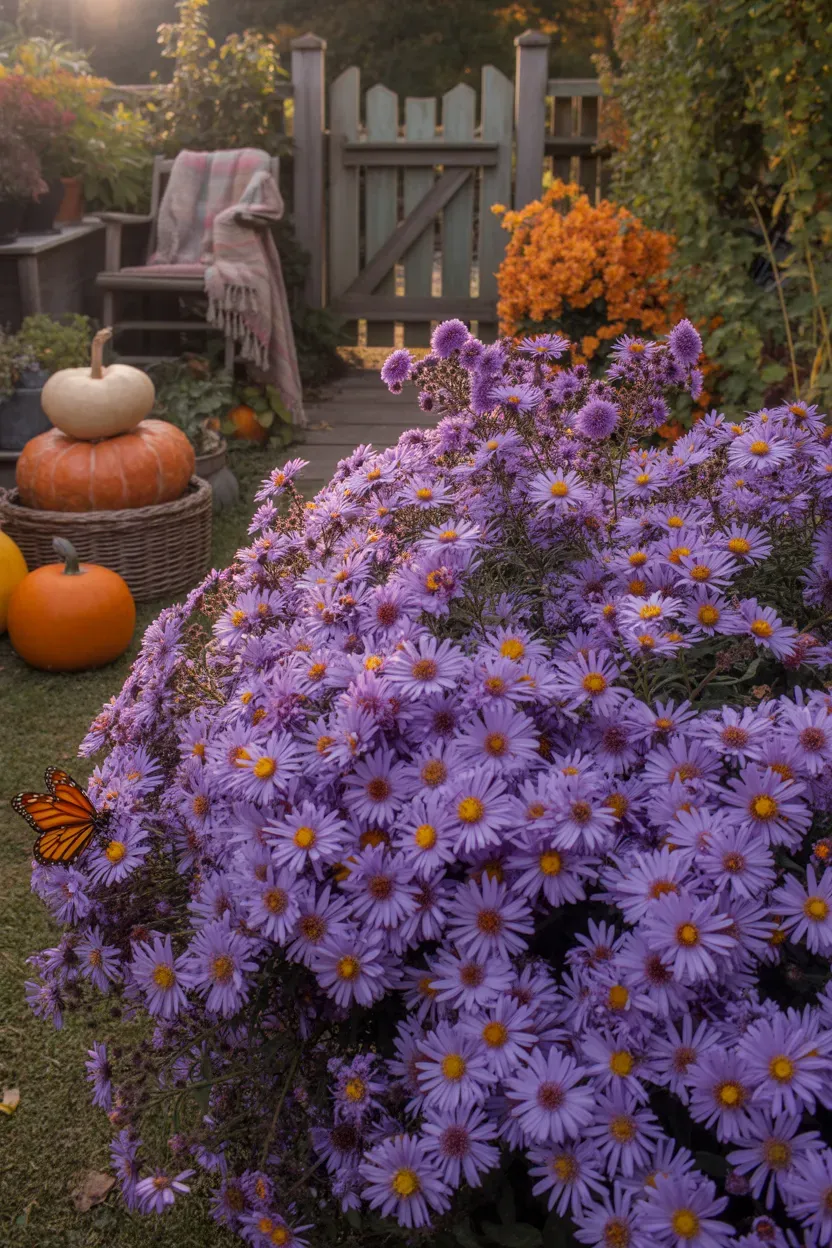
Aster is genuinely the last major bloom of the season, flowering from August through October and often surviving light frost that ends most other perennials’ show.
It needs full sun and average, well-drained soil, and pinching back the stems by a few inches in early summer (before July 4th, as a rule of thumb) produces bushier growth and more flowers rather than tall, floppy stems that need staking. It’s also one of the most valuable late-season nectar sources for migrating monarch butterflies.
Internal link: late-season nectar plants for migrating monarchs External link: Almanac’s aster growing and pinching guide
Plant asters and your border’s final act rivals anything that came before it.
23. Threadleaf Coreopsis for Fine-Textured Golden Abundance
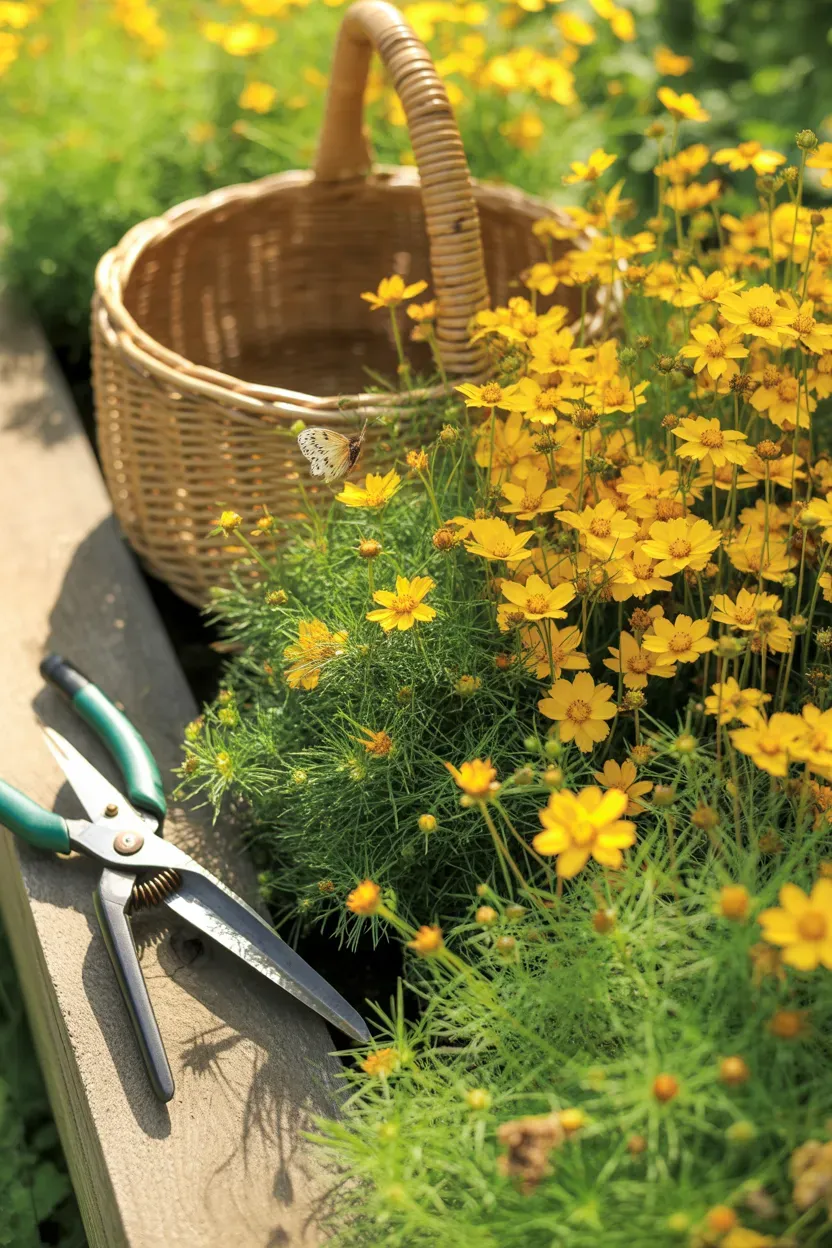
Threadleaf coreopsis (Coreopsis verticillata) produces a dense cover of small golden flowers from June through September, and its fine, feathery foliage gives it a texture unlike anything else on this list.
It needs full sun and tolerates poor, dry soil impressively well, similar to yarrow and Russian sage. Shearing lightly after the first bloom flush encourages continued flowering, and it rarely needs division, often thriving undisturbed for 4-5 years or more.
Internal link: fine-textured perennials for contrast planting External link: SF Gate Home Guide’s coreopsis growing tips
For low-effort gold that lasts all summer, threadleaf coreopsis is one of the easiest picks on this list.
Getting Started With Perennials That Bloom Spring to Fall
The easiest first step is choosing three or four plants with staggered bloom times rather than everything that flowers at once — mix an early bloomer like salvia, a midsummer one like coneflower, and a fall performer like aster. The most common beginner mistake is skipping deadheading and assuming the plant tag’s bloom window is guaranteed; most of these perennials need that maintenance step to actually rebloom.
For your first purchase, get one reliable full-sun bloomer like coneflower or catmint, one container or bed spot with genuinely well-drained soil, and a pair of bypass pruners for deadheading and cutting back.
Realistically, expect modest first-year bloom as roots establish, with most perennials hitting their full flowering potential by year two or three. Divide crowded clumps starting around year three or four to keep the display strong for years beyond that.
Frequently Asked Questions
What perennials bloom the longest, spring through fall?
Coneflower, catmint, and gaura are among the longest bloomers, flowering from late spring into October with regular deadheading. Coneflower in particular needs almost no fussing beyond removing spent blooms every few weeks to maintain flowering through the whole window.
Do I need to deadhead perennials to keep them blooming?
Yes, most long-blooming perennials on this list rebloom specifically because deadheading removes the signal to stop producing flowers and set seed. Weekly deadheading with clean bypass pruners typically adds 4-8 extra weeks of bloom compared to leaving spent flowers in place.
What perennials bloom well in shade from spring to fall?
Astilbe, heuchera, and Japanese anemone all perform well in part shade, though their peak bloom windows differ across the season. Astilbe needs consistently moist soil to avoid wilting, so it’s best avoided in dry shade under mature trees.
How do I plan a perennial border for continuous bloom?
Choose at least one plant with peak bloom in spring, one in summer, and one in fall, then layer in reliable rebloomers like salvia or coneflower to fill any remaining gaps. Spacing plants 18-24 inches apart also matters, since crowding reduces airflow and increases disease risk in humid climates.
Which long-blooming perennials are the easiest for beginners?
Black-eyed Susan, catmint, and threadleaf coreopsis are among the most forgiving, tolerating poor soil, drought, and inconsistent deadheading better than most. All three need full sun and well-drained soil but otherwise ask very little in return for months of bloom.
A Few Final Thoughts
Any handful of these 23 perennials that bloom spring to fall can turn a border that peaks once into one that stays genuinely interesting for most of the year. The real trick isn’t cramming in every plant on this list — it’s choosing a few with staggered bloom windows so something is always taking the stage as another fades. Commit to regular deadheading on the plants that reward it, and you’ll often add a full extra month or two of color for a few minutes of weekly effort. Start with three or four picks that suit your actual light conditions, give them a full season to establish, and you’ll likely find yourself planning where the next round goes before this one even finishes blooming.