
A bare staircase is one of the most overlooked spaces in the whole yard, and it’s also one of the cheapest to transform — you just need the right container-to-plant ratio and a plan for how light hits each step throughout the day. I turned my own front steps into a plant-lined entrance for under $80 two summers ago using mostly thrifted pots and cuttings from neighbors, and it’s still the thing guests comment on first. This list covers 25 budget staircase garden ideas that look far more expensive than they cost, each with the specific container, plant, and placement details that make the difference between looking cluttered and looking curated. Ready? Let’s explore all 25 of them.
Quick Answer: For sunny staircases, terracotta pots with trailing petunias or sweet potato vine deliver the most impact per dollar. For shaded stairwells, ferns and hostas in mismatched thrifted containers create a lush look without direct sun. On a tight budget, stick to one repeated pot style and vary only the plants for a cohesive, expensive-looking result.
Why Budget Staircase Gardens Are Worth Your Time
A staircase is one of the few spots in a yard where plants get seen from multiple angles and heights at once, which means even a modest container arrangement reads as intentional design rather than an afterthought. In practice, three or four well-placed pots on a run of steps create more visual impact than a full flower bed costing five times as much.
The practical payoff goes beyond curb appeal. Container plantings on stairs are easy to swap seasonally, require no digging or bed prep, and can be moved indoors before frost if you choose the right pots. The lesser-known fact most people miss: repetition, not variety, is what makes a budget arrangement look expensive — five matching terracotta pots with different plants photograph far better than five mismatched pots with the same plant.
This approach is ideal for renters who can’t plant in the ground, anyone with a front-entrance staircase that feels stark, and gardeners working with a genuinely tight budget who still want a designed, cohesive look.
At a Glance
- Matching pot shapes with varied plant heights create the most photograph-ready staircase look.
- Trailing plants like sweet potato vine or ivy soften hard step edges for under $10 a start.
- Thrifted and repurposed containers cut costs by 50-70% compared to new nursery pots.
- Shaded stairwells succeed with ferns, hostas, and heuchera instead of sun-loving annuals.
- Alternating plant heights every other step creates rhythm without needing more pots.
25 Budget Staircase Garden Ideas Compared
| Idea | Light Needs | Est. Cost | Difficulty | Best For |
| Terracotta Trio | Full sun | $25-35 | Easy | Sunny entries |
| Thrifted Tin Buckets | Full sun | $15-25 | Easy | Rustic look |
| Trailing Sweet Potato Vine | Full sun | $10-15 | Easy | Edge softening |
| Fern-Filled Shade Steps | Shade | $20-30 | Easy | Shaded stairwells |
| Herb Step Garden | Full sun | $20-30 | Moderate | Kitchen entries |
| Mismatched Vintage Pots | Any | $10-40 | Easy | Eclectic style |
| Single-Color Petunia Run | Full sun | $20-30 | Easy | Cohesive color |
| Hanging Basket Overflow | Full sun | $25-35 | Moderate | Vertical interest |
| Succulent Step Trays | Full sun | $15-25 | Easy | Drought-prone areas |
| Repurposed Crate Planters | Any | $10-20 | Moderate | DIY-friendly |
| Ivy-Draped Urns | Part shade | $20-30 | Easy | Classic elegance |
| Alternating Height Pairs | Any | $30-40 | Moderate | Rhythm and flow |
| Painted Cinder Block Steps | Full sun | $15-25 | Moderate | Modern minimal |
| Hosta Shade Border | Shade | $20-30 | Easy | Deep shade |
| Coleus Color Pop | Part shade | $15-20 | Easy | Foliage color |
| Rosemary Topiary Pair | Full sun | $30-40 | Moderate | Formal entries |
| Galvanized Watering Can Planters | Full sun | $15-25 | Easy | Farmhouse style |
| Moss-Covered Pot Upgrade | Any | $5-10 | Easy | Aged, expensive look |
| Wine Crate Tiered Planting | Any | $10-20 | Moderate | Rustic tiers |
| Single Statement Urn | Any | $25-40 | Easy | Minimalist entries |
| Basket-Lined Steps | Part shade | $15-25 | Easy | Cottage style |
| Solar-Lit Plant Steps | Any | $20-30 | Moderate | Evening ambiance |
| Heuchera Color Contrast | Shade | $20-30 | Easy | Foliage variety |
| Grasses in Concrete Planters | Full sun | $25-35 | Easy | Modern texture |
| Seasonal Bulb Rotation | Full sun | $10-20 | Moderate | Year-round refresh |
1. Terracotta Trio for an Instantly Cohesive Look
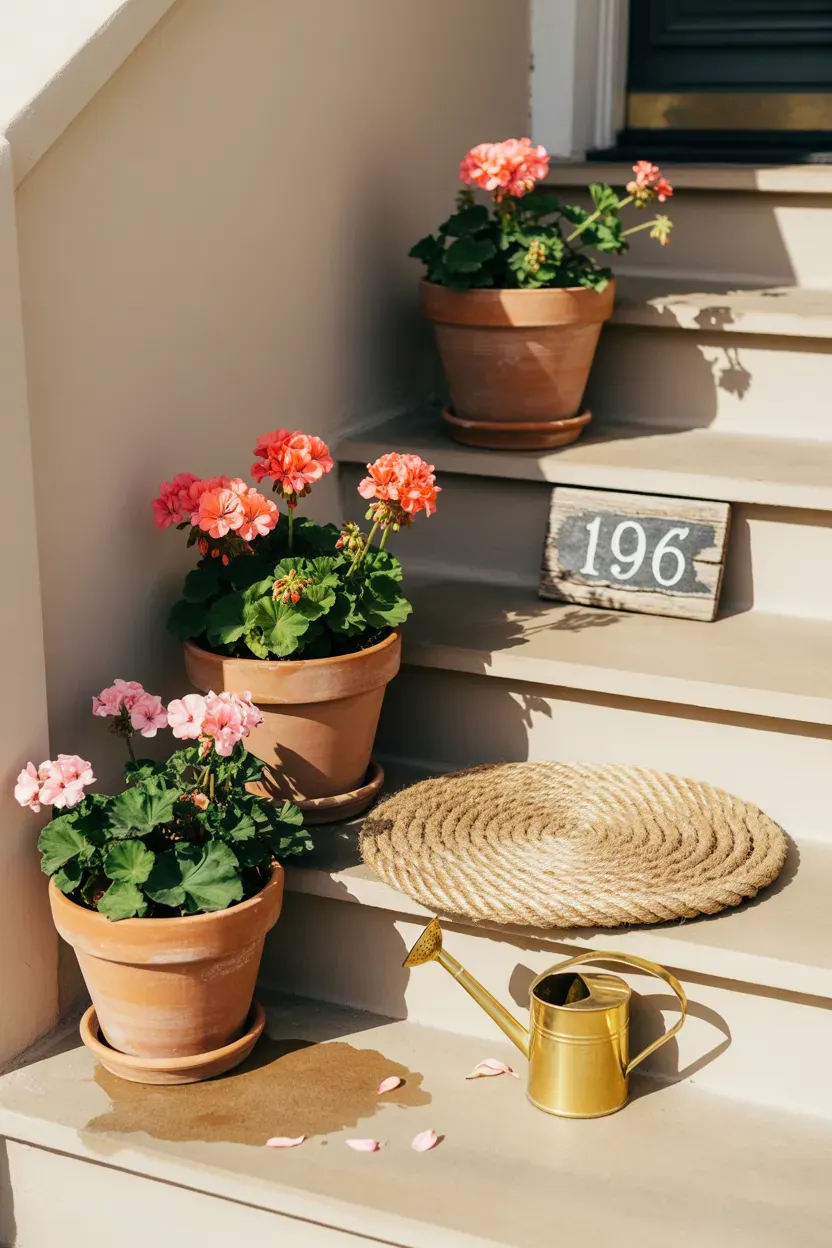
Three identical terracotta pots, one per step, is the single fastest way to make a staircase look designed rather than decorated as an afterthought.
Buy the plainest unglazed terracotta pots you can find, roughly 10-12 inches wide, and fill them with the same plant variety in different colors — geraniums or petunias both work well in full sun. Water every 2-3 days in summer heat since terracotta dries out faster than plastic or glazed pots. The consistency of pot shape does the visual work, so resist mixing in a different container style even if it’s tempting.
Pro Tip: Buy unglazed terracotta and let it weather naturally outdoors for a season — the aged, mineral-streaked look costs nothing and reads as far more expensive than a fresh, uniform glaze.
Internal link: choosing the right pot material for outdoor containers External link: RHS guide to terracotta pot care and drainage
This is the cheapest, highest-impact idea on the whole list.
2. Thrifted Tin Buckets for Rustic Charm
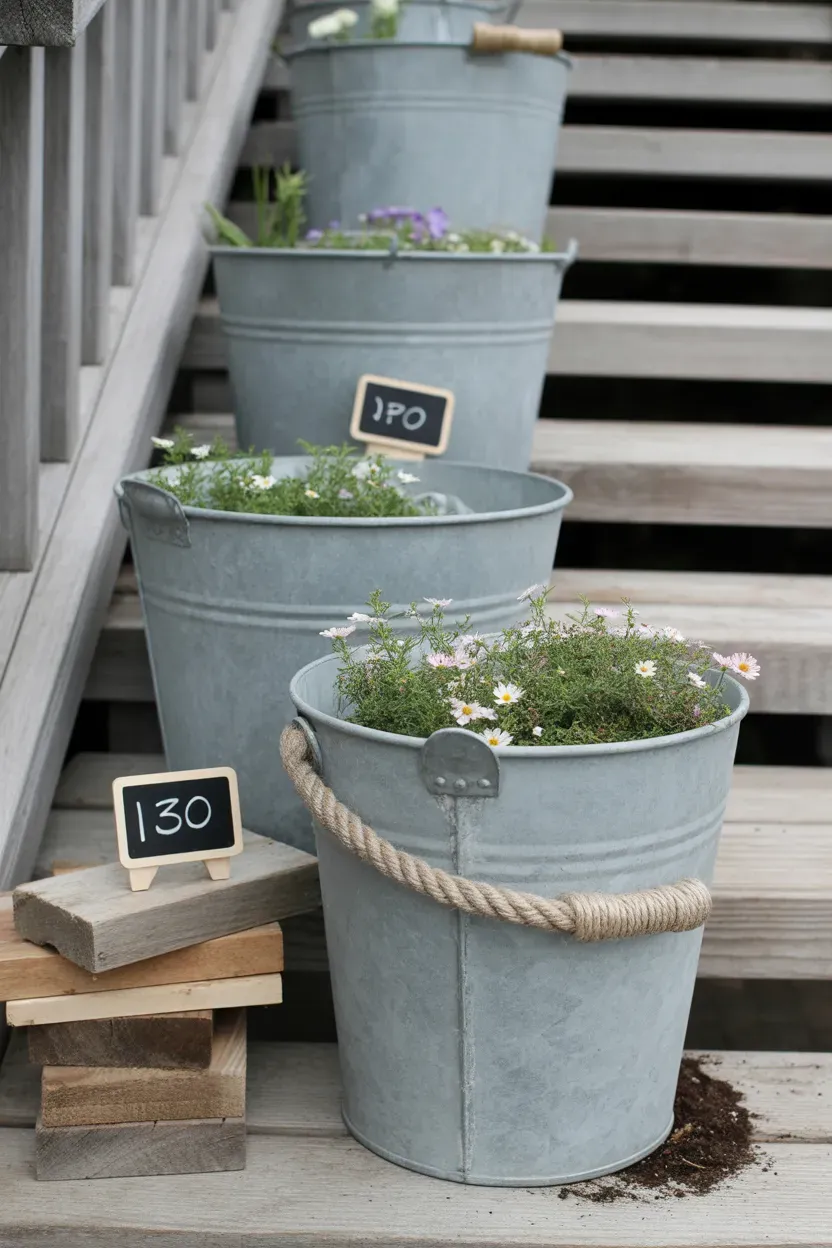
Secondhand tin buckets, the kind found at flea markets and thrift stores for a few dollars each, bring genuine rustic character that new galvanized planters can’t quite replicate.
Drill 3-4 drainage holes in the bottom of each bucket before planting, since most lack them entirely. Fill with a lightweight potting mix and cottage-style flowers like cosmos or zinnias for a relaxed, informal look. Buckets rust naturally over time, which only adds to the charm rather than detracting from it.
Internal link: repurposing found containers for garden use External link: Gardeners’ World’s guide to drilling drainage into repurposed containers
Total cost usually stays under $25 for a full staircase run.
3. Trailing Sweet Potato Vine for Softening Hard Edges
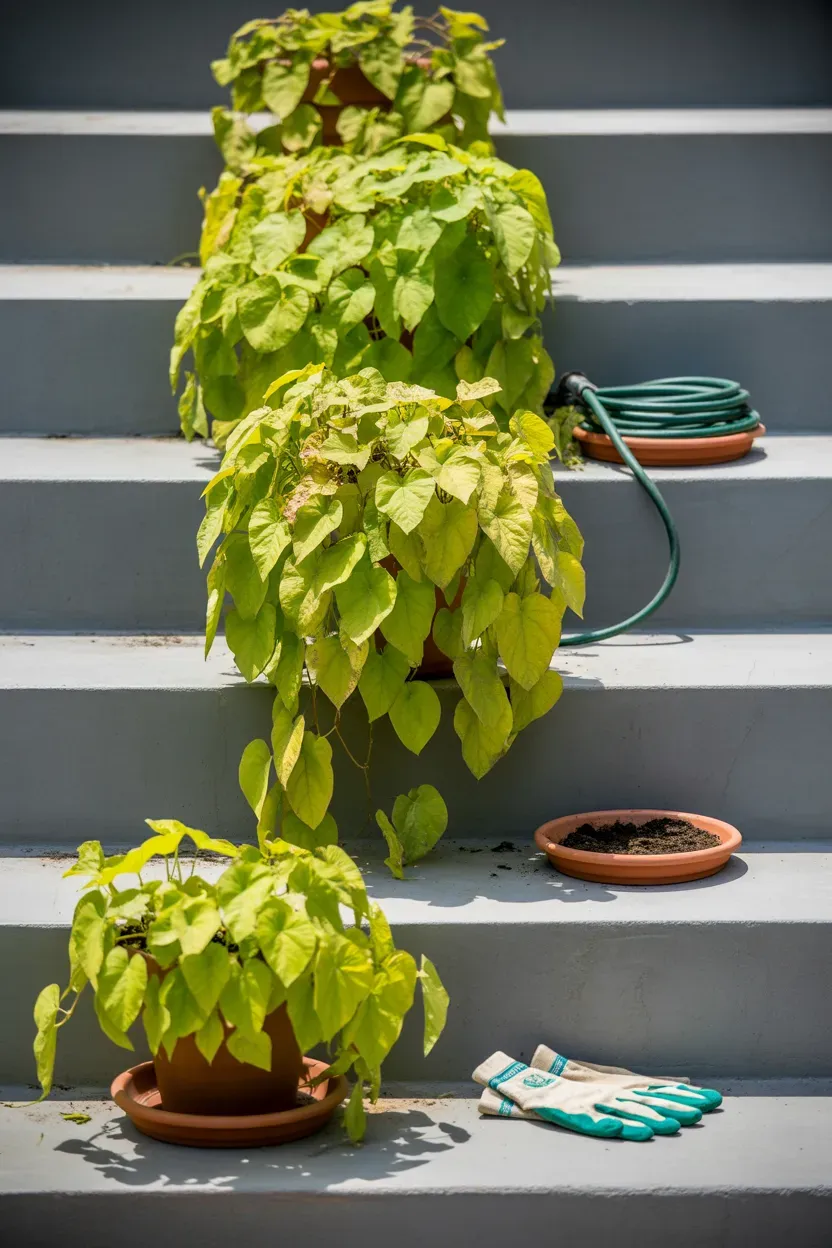
Sweet potato vine (Ipomoea batatas) grows fast enough to soften hard concrete or wooden step edges within a single season, and a single $4-6 nursery start fills a 12-inch pot by midsummer.
It needs full sun to part shade and consistent watering, roughly every 2-3 days in hot weather since it’s a vigorous grower with high water needs. Pinch back growing tips occasionally to encourage bushier, fuller trailing rather than a few long, sparse vines. Chartreuse and deep purple varieties both trail equally well and pair nicely with upright flowering plants in neighboring pots.
Internal link: fast-growing trailing plants for container edges External link: University of Florida Extension’s sweet potato vine growing notes
4. Fern-Filled Shade Steps for a Lush, Cool Entrance
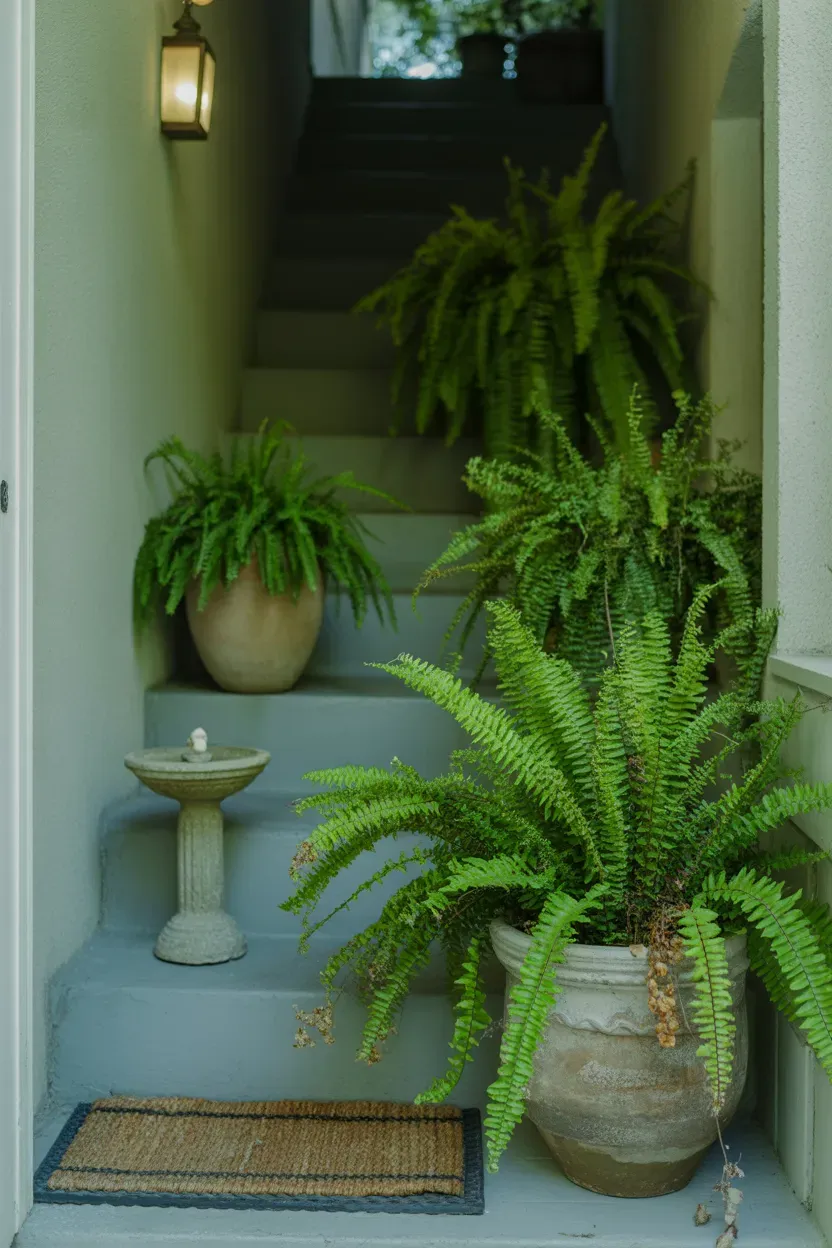
Ferns solve the problem most flowering plants can’t — a genuinely shaded staircase — and Boston fern starts cost as little as $8-12 each while filling a pot within one growing season.
They need indirect light and consistently moist soil, watering every 2-3 days in warm weather since ferns dry out and brown quickly in containers. Group 3-5 pots of varying sizes rather than a single uniform row; the layered height creates the lush, jungly look shaded entrances benefit from most.
Pro Tip: Mist ferns lightly on hot, dry days in addition to regular watering — container-grown ferns lose humidity fast, and misting prevents the crispy frond edges that plague most shaded staircase ferns by August.
Internal link: best plants for shaded outdoor stairwells External link: Missouri Botanical Garden’s Boston fern growing profile
5. Herb Step Garden for a Kitchen-Door Entrance
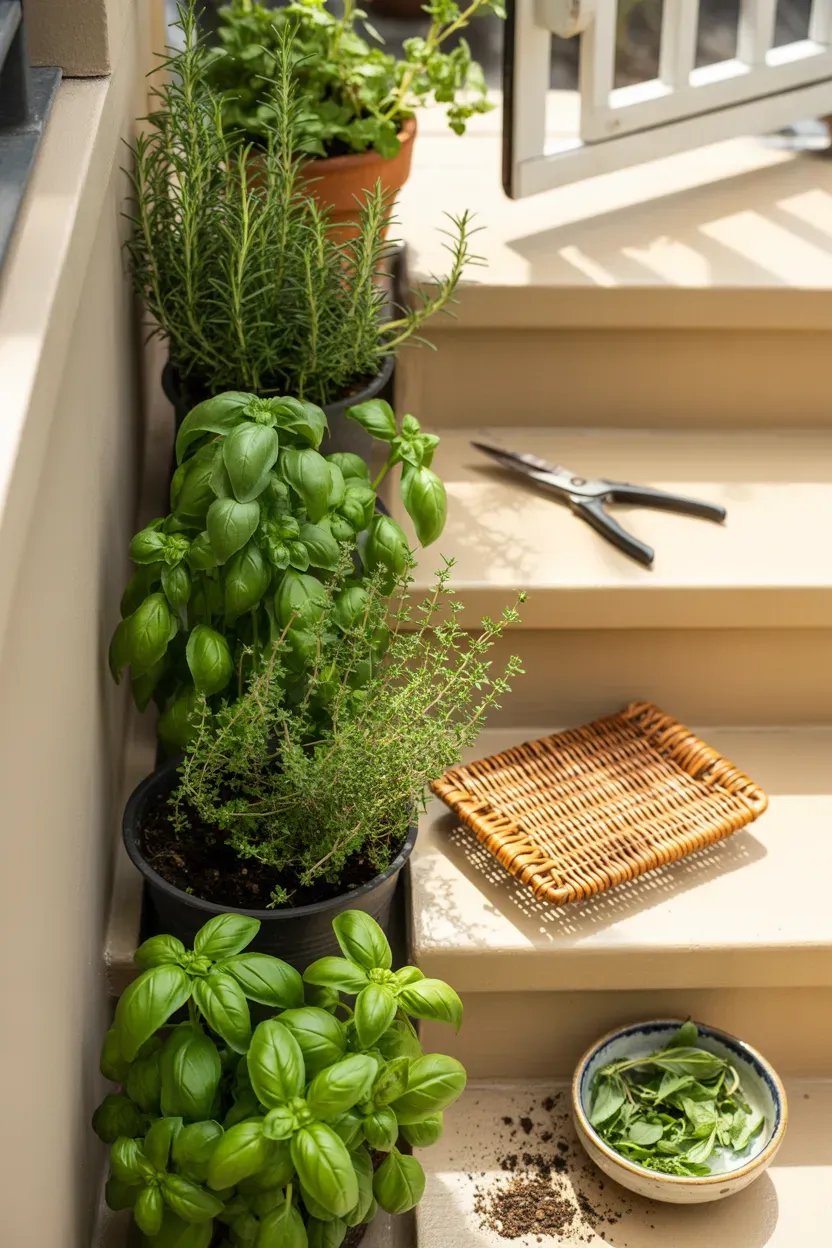
Planting herbs on the steps nearest your kitchen door means fresh basil or rosemary is always within arm’s reach, and herb starts are among the cheapest plants available at most nurseries, often $3-5 each.
They need full sun and well-drained soil; basil in particular needs watering almost daily in peak summer heat, while rosemary and thyme prefer to dry out between waterings. Group Mediterranean herbs (rosemary, thyme, oregano) together since they share the same lean-soil, low-water preferences, and keep basil separate since its needs differ significantly.
Internal link: container herb gardens for small spaces External link: Almanac’s guide to growing herbs in containers
6. Mismatched Vintage Pots for Eclectic Character
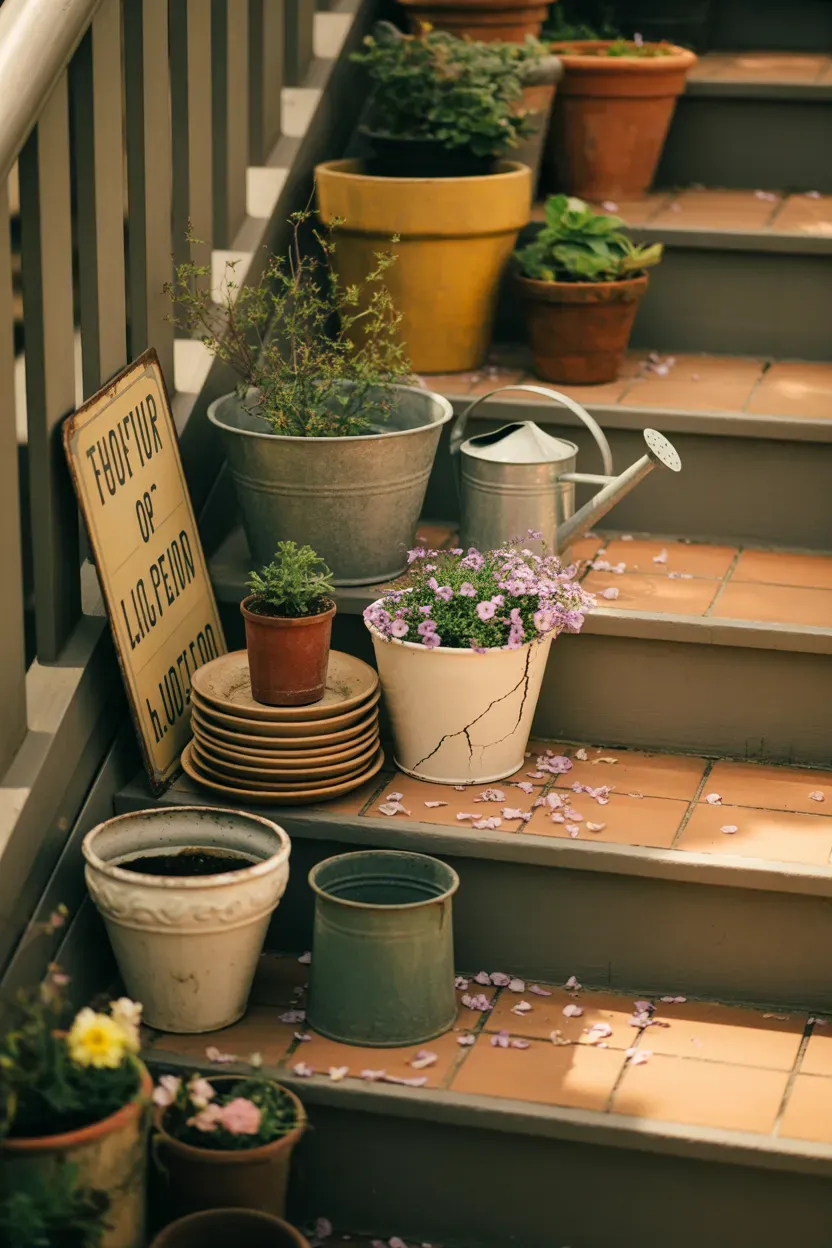
Mismatched vintage pots work when done deliberately — the trick is unifying them through a single consistent element, usually one repeated flower color across all the different containers.
Source pots from estate sales, thrift stores, or family hand-me-downs; prices typically run $2-15 per piece depending on material and condition. Pick one flower color (all pink, all white, or all purple) to plant across every mismatched container so the eye reads the collection as intentional rather than random. Chipped or slightly cracked pots add character here rather than detracting from the look.
What works vs. what to avoid:
- Works: one consistent flower color, varied pot heights and materials
- Avoid: mixing multiple flower colors with multiple pot styles at once
Internal link: building a cohesive look with mismatched containers External link: BHG’s guide to styling eclectic container gardens
7. Single-Color Petunia Run for Maximum Impact Per Dollar
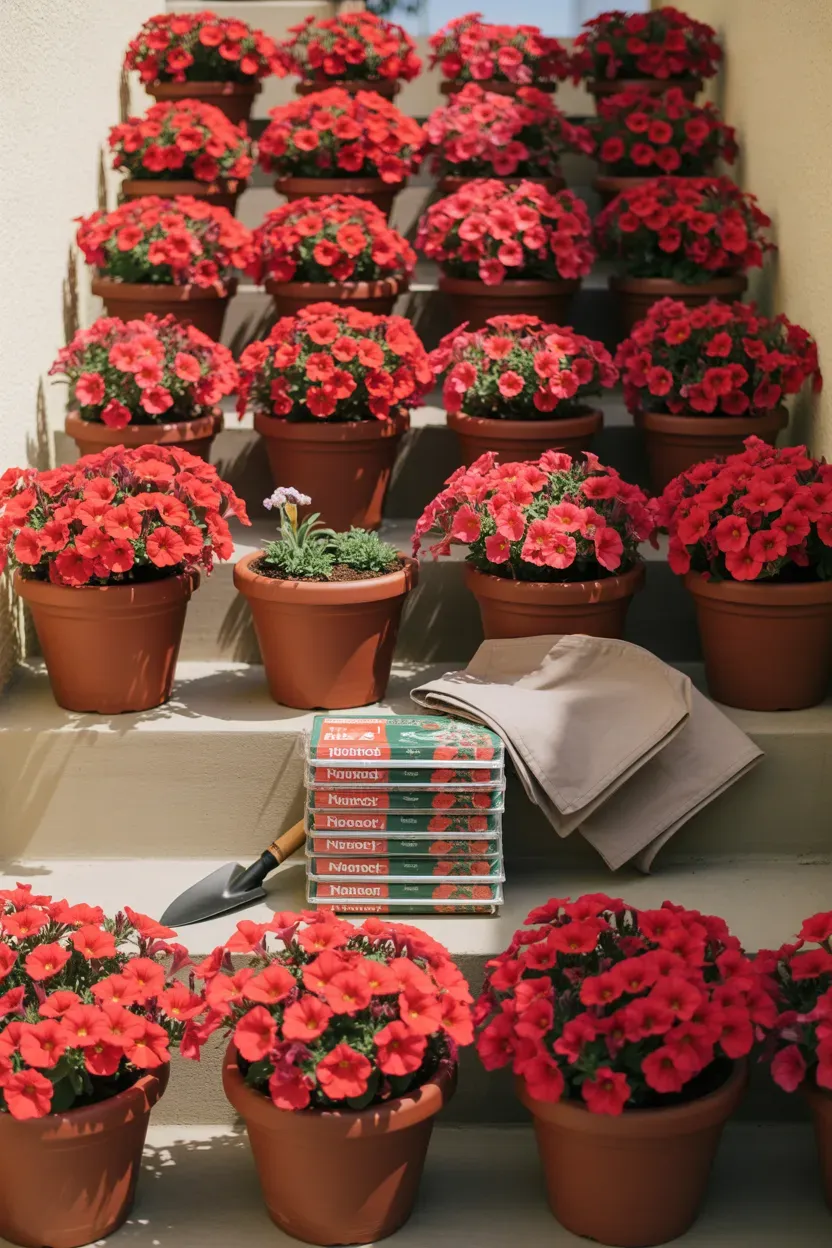
A single flower color repeated in every pot down a staircase reads as far more expensive and intentional than a rainbow mix, and petunias deliver the most bloom volume per dollar of nearly any annual available.
They need full sun and regular watering, roughly daily in hot climates since petunias in containers dry out fast. Deadhead spent blooms weekly, or choose a self-cleaning variety like Wave petunias to skip that step entirely. A six-pack of petunias costs $4-6 and fills a 10-inch pot completely by midsummer.
Internal link: self-cleaning annuals that skip the deadheading step External link: Penn State Extension’s petunia container growing guide
Pick one color and commit — the restraint is what makes it look designed.
8. Hanging Basket Overflow for Vertical Drama
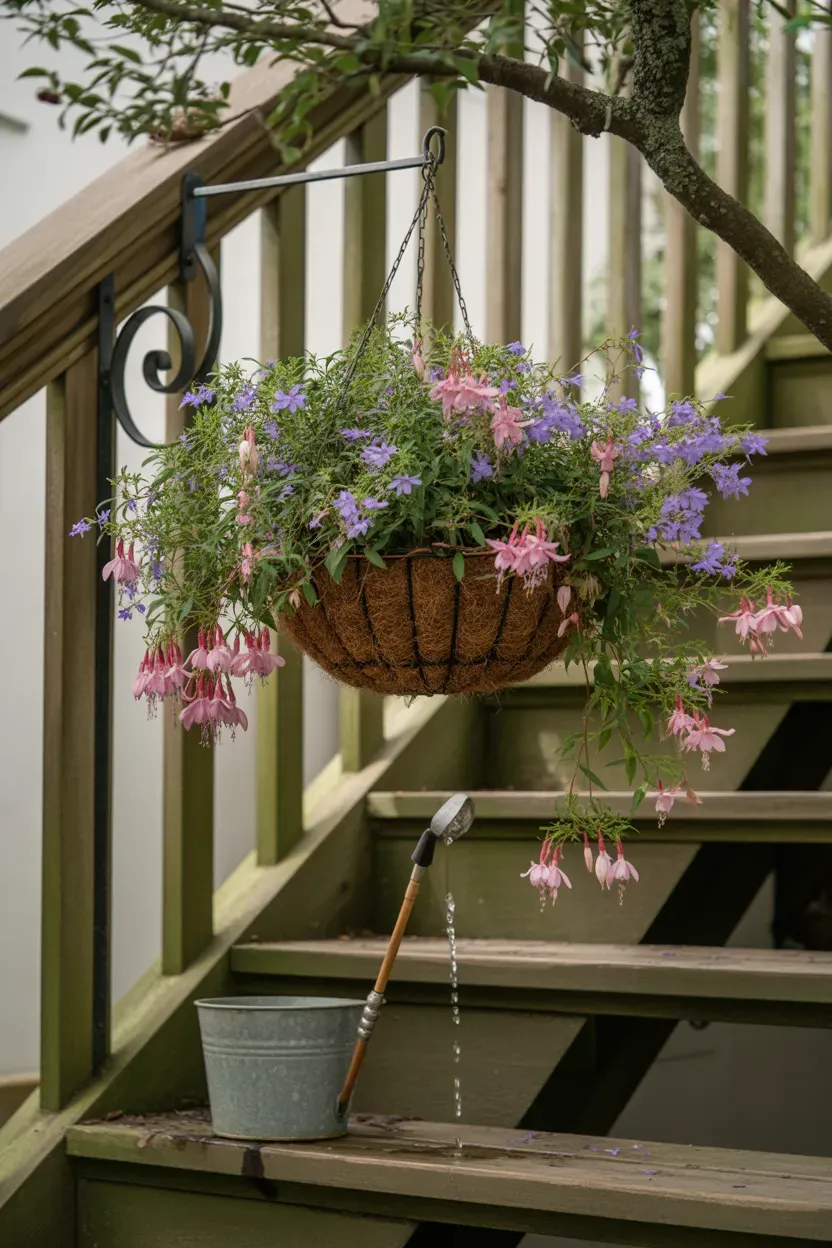
Hanging baskets add height and drama without taking up any step space at all, using the vertical real estate of a railing or overhang that ground-level pots can’t reach.
They need bright light matched to the plant (fuchsia and lobelia prefer part shade, while calibrachoa needs full sun) and daily watering in summer, since hanging baskets dry out faster than any other container style due to increased air exposure. Budget baskets from big-box stores run $12-20 pre-planted, or build your own from a $4 coco-liner basket for less.
Pro Tip: Water hanging baskets until liquid runs freely from the drainage holes, then water again 10 minutes later — the first watering often just runs down the sides of dry-packed soil without actually soaking the root ball.
Internal link: hanging basket care for maximum bloom External link: RHS guide to hanging basket watering and feeding
9. Succulent Step Trays for Drought-Prone Staircases
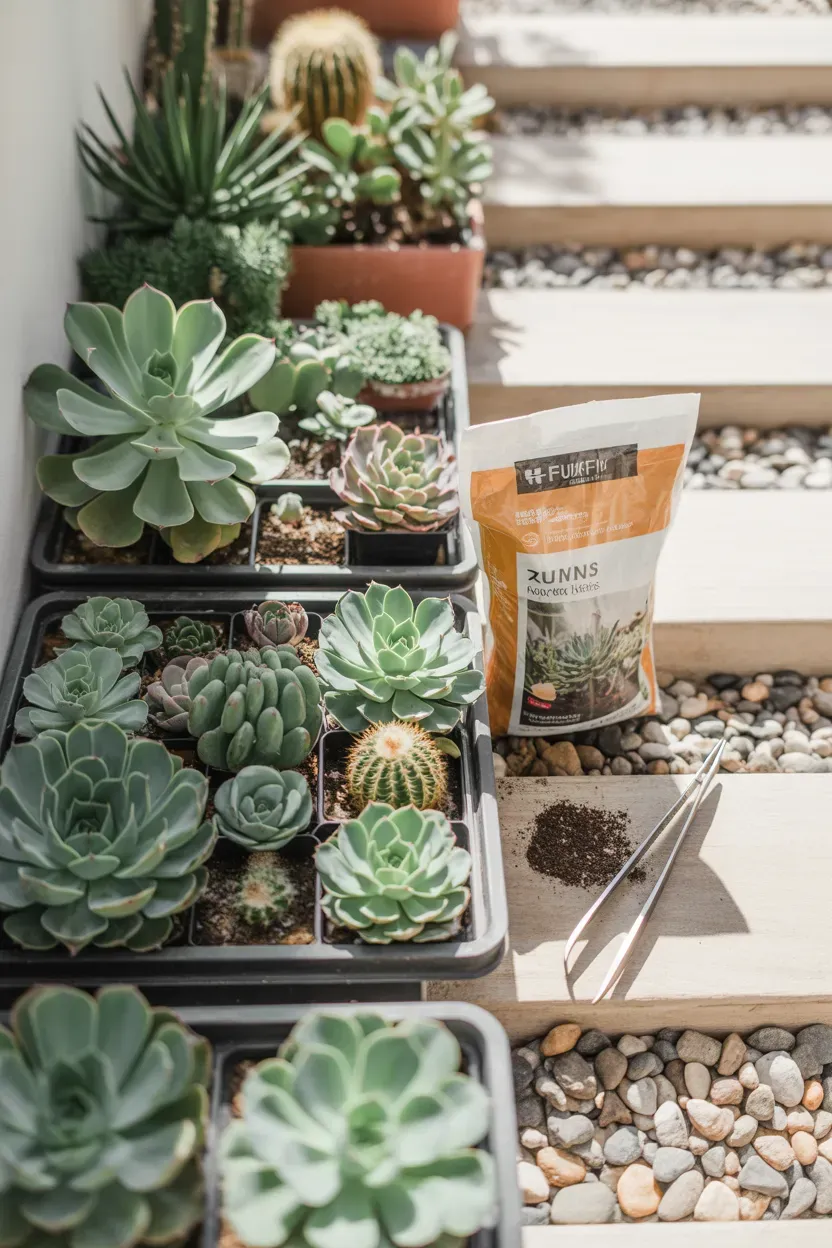
Succulent trays solve the problem of a staircase that gets baked in full sun with no shade relief, since most succulents thrive in exactly those harsh conditions that kill flowering annuals.
They need full sun and fast-draining cactus soil, watering only every 10-14 days even in summer heat, since overwatering is the single biggest killer of container succulents. Individual succulent cuttings cost as little as $2-4 each at most nurseries, and a shallow tray of 6-8 varieties runs $15-25 total.
Internal link: drought-tolerant container plants for hot staircases External link: SF Gate Home Guide’s guide to succulent container care
For a staircase that bakes in afternoon sun, succulents are the lowest-maintenance option on this whole list.
10. Repurposed Crate Planters for DIY Character
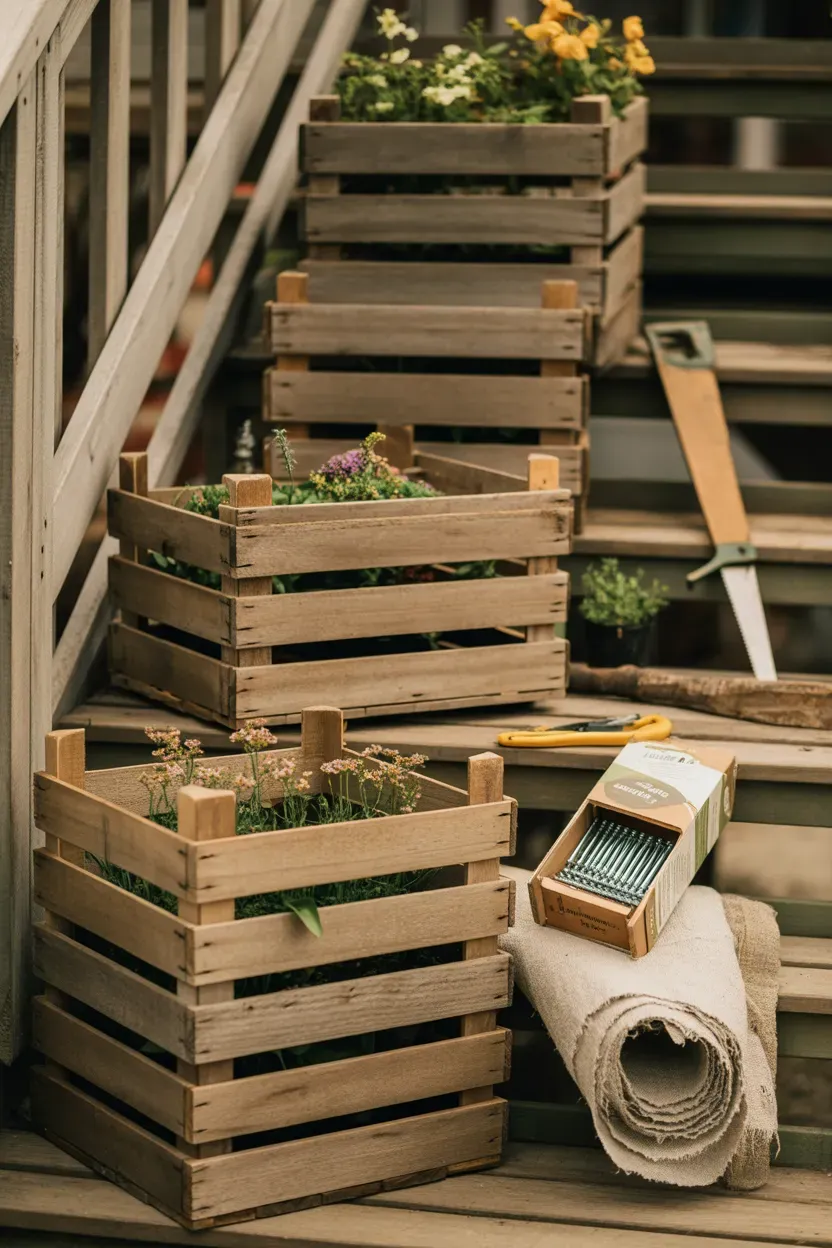
Old produce crates, often free or under $5 from grocery stores or farmers markets, make sturdy, characterful planters with almost no cost beyond a liner and soil.
Line the inside with landscape fabric or a heavy-duty trash bag with drainage holes poked through before adding soil, since raw wood crates will otherwise rot within a season or two of consistent watering. Stack two crates for height variation on wider steps, or use single crates in a straight run for a simpler look.
Internal link: budget DIY planters made from reclaimed materials External link: Gardeners’ World’s guide to lining wooden planters
11. Ivy-Draped Urns for Classic, Understated Elegance
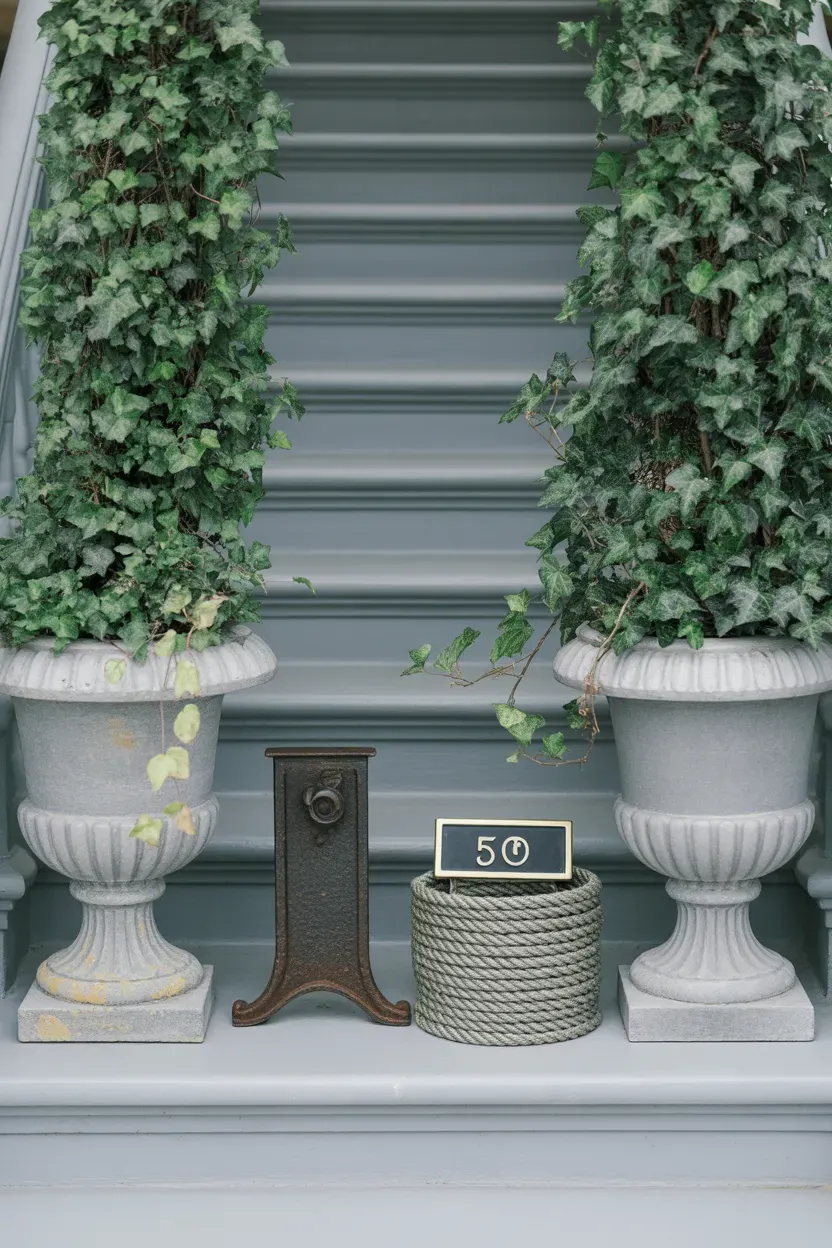
A pair of urns draped with trailing ivy at the base of a staircase creates a formal, established look that belies how inexpensively it can be assembled.
Choose lightweight resin urns styled to look like stone or concrete, widely available for $20-30 each, and plant with English ivy, which trails aggressively and fills an urn within one growing season from a $6-8 starter plant. It tolerates part shade to part sun and needs watering only every 4-5 days once established.
Internal link: formal entrance container design ideas External link: Missouri Botanical Garden’s English ivy growing profile
Two matching urns do more for an entrance’s presence than a dozen small pots scattered around.
12. Alternating Height Pairs for Visual Rhythm
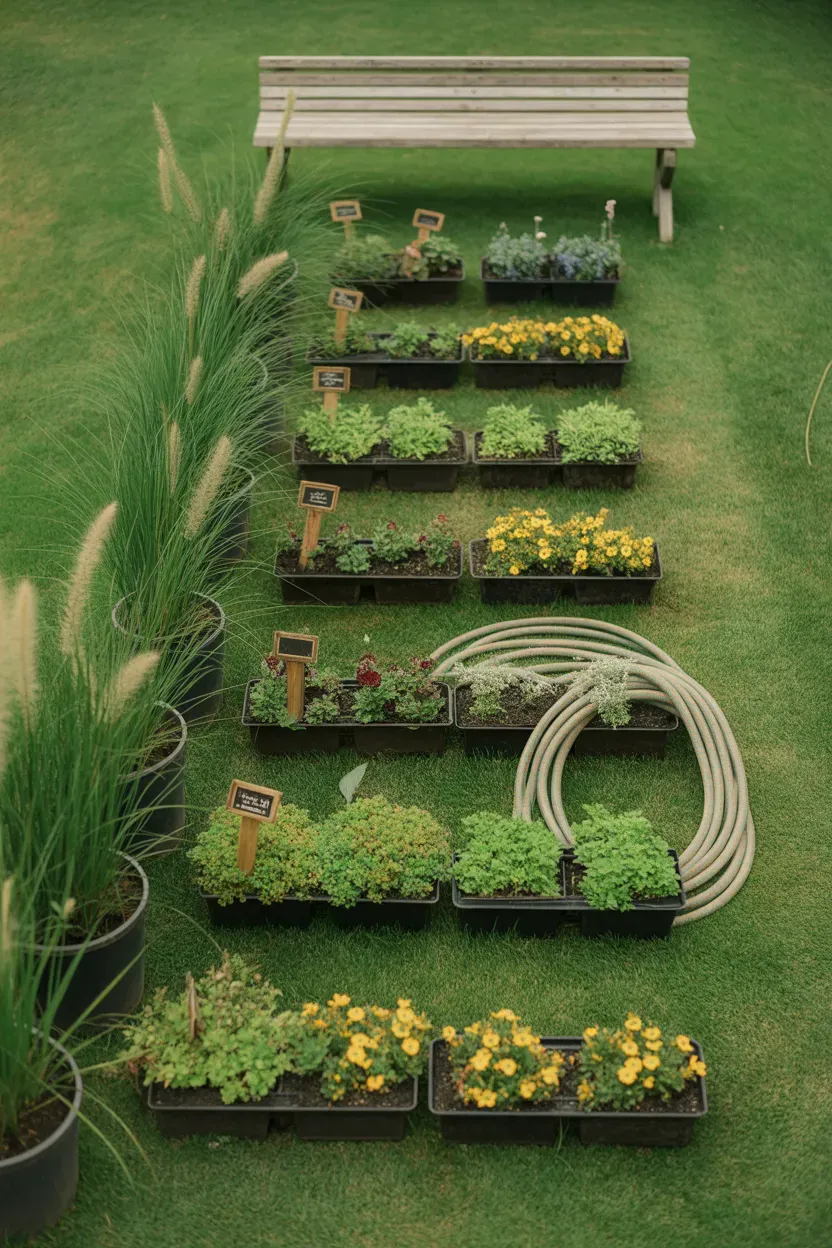
Alternating a tall plant with a short one on every other step creates a visual rhythm that a flat row of same-height pots can’t achieve, and it’s a purely arrangement-based trick that costs nothing extra to implement.
Pair a tall plant like ornamental grass or a dracaena spike with a low, mounding annual like alyssum or petunia, repeating the pattern down the full staircase. This works in both sun and shade as long as you match plant pairs to the light each step actually receives, since steps at the top and bottom of a staircase often get meaningfully different light exposure.
Pro Tip: Walk your staircase at three different times of day before buying plants — shade at the top from an overhang doesn’t always match the sun exposure at the bottom, and mismatched light is the top reason budget staircase gardens fail within a month.
Internal link: reading light patterns for staggered container plantings External link: Almanac’s guide to layering plant heights in containers
13. Painted Cinder Block Steps for Modern Minimalism
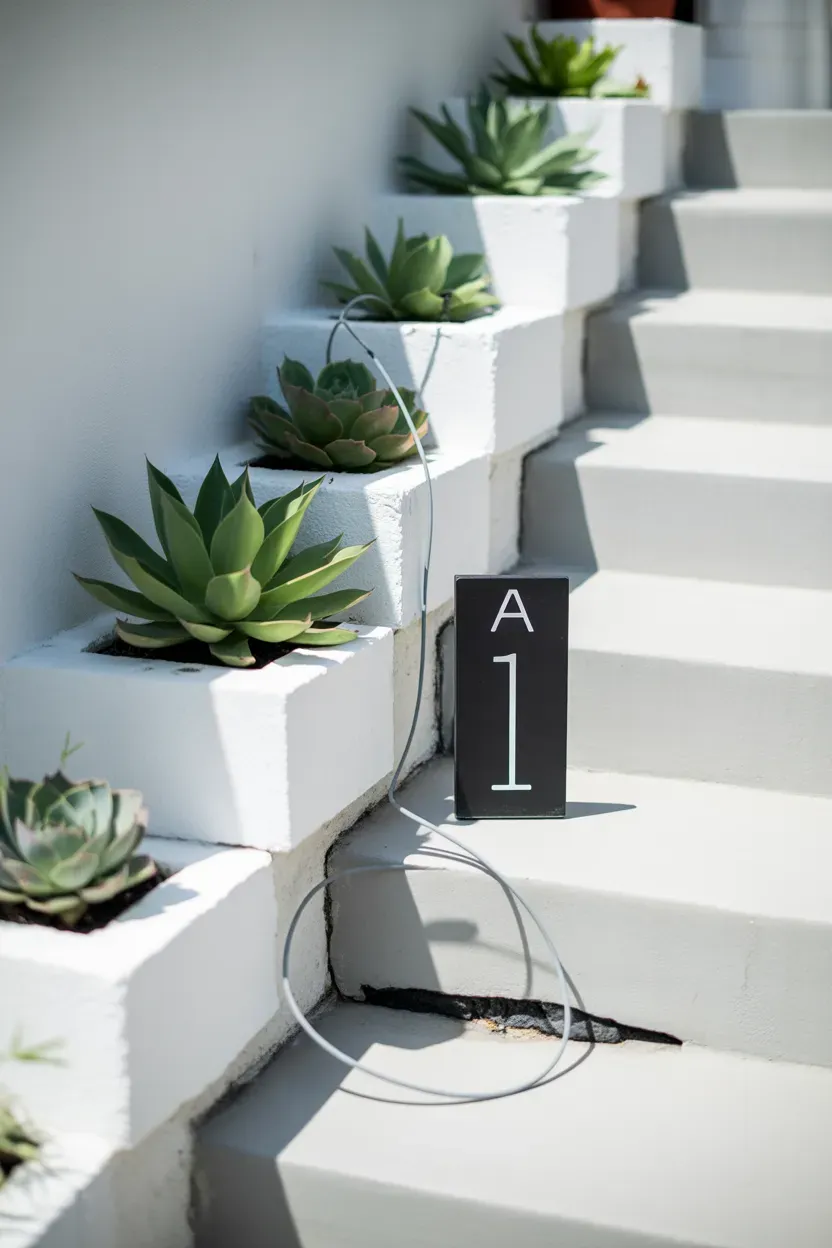
Cinder blocks, often available free or under $2 each from construction sites or hardware store scrap bins, make surprisingly striking modern planters once painted a single clean color.
Paint with exterior-grade masonry paint (a $15 quart covers many blocks), then fill the block cavities directly with soil and small succulents or trailing sedum. This works best for a genuinely modern, minimal aesthetic rather than a cottage or rustic look, and it costs a fraction of matching architectural planters sold at garden centers.
Internal link: modern minimalist container garden design External link: BHG’s guide to painting and prepping masonry for planters
14. Hosta Shade Border for Deep-Shade Steps
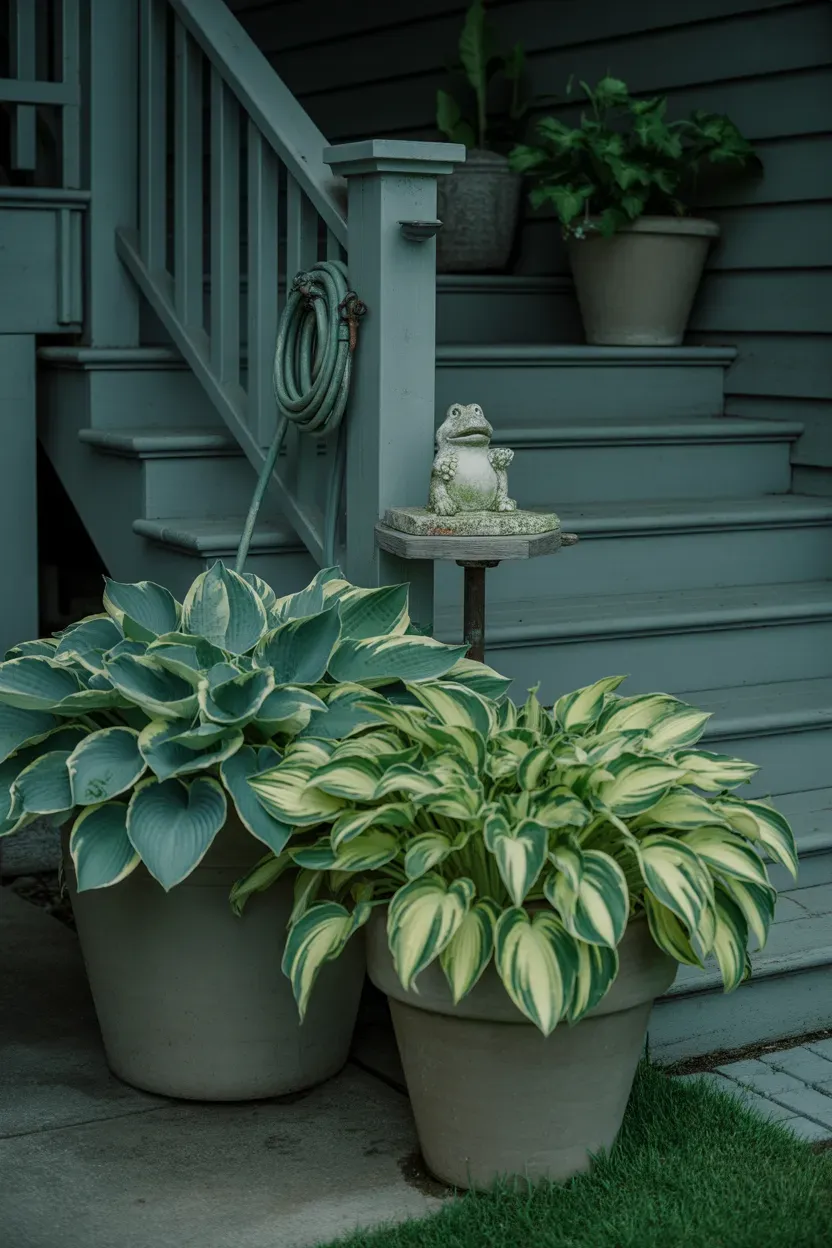
Hostas thrive in exactly the deep-shade conditions that make most staircase plantings fail, and a single large hosta division from a neighbor or plant swap often costs nothing at all.
They need part to full shade and consistently moist, rich soil, watering every 3-4 days in summer unless rainfall is substantial. Choose one or two large statement hostas rather than several small ones for a staircase, since their broad leaves fill visual space efficiently without needing multiple pots.
Internal link: free and low-cost plants from division and swaps External link: University of Florida Extension’s hosta growing notes for shaded containers
15. Coleus Color Pop for Foliage Without Flowers
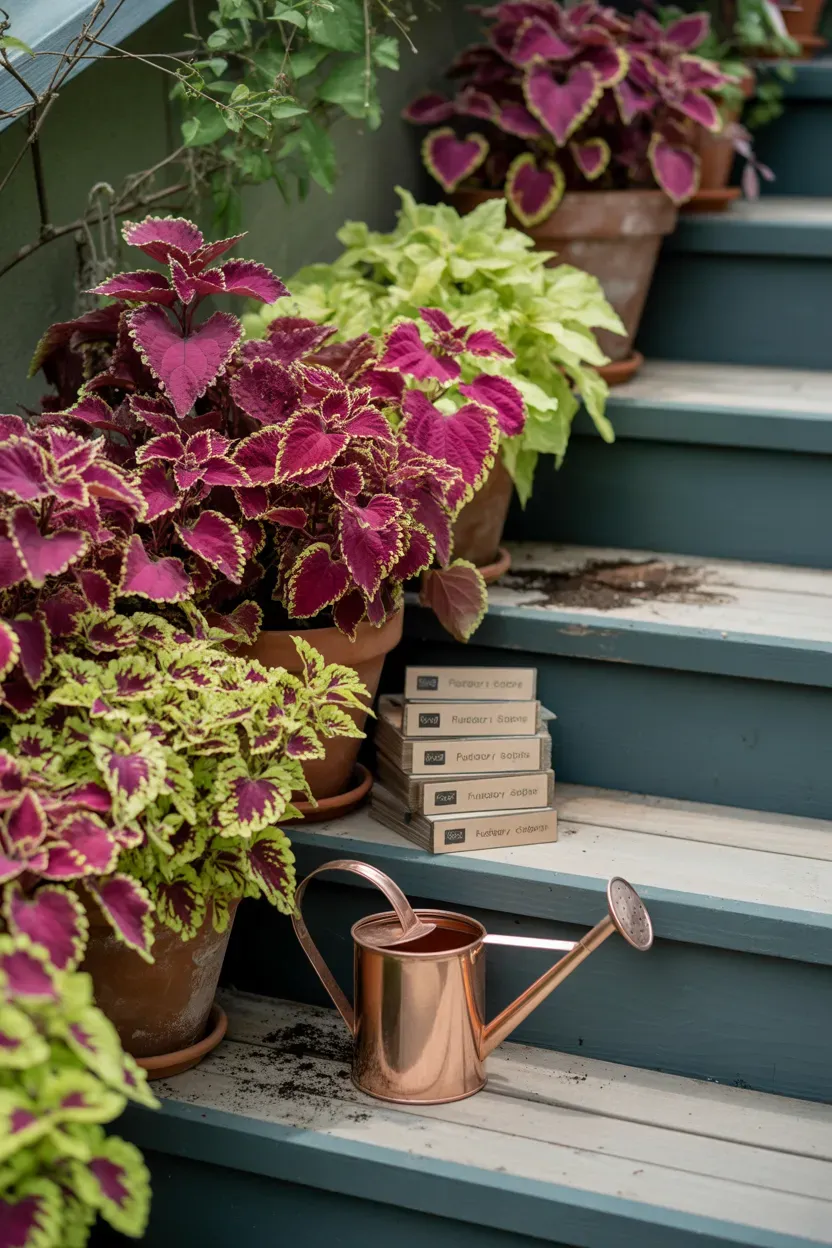
Coleus delivers more color per dollar than almost any flowering annual, since its foliage alone (no bloom required) comes in patterns and colors that rival flowers, and a $4-5 nursery start fills a pot within weeks.
It needs part shade to part sun, with some newer sun-tolerant varieties handling more direct light than older cultivars. Pinch off any flower spikes that form, since blooming redirects the plant’s energy away from the colorful foliage that’s the actual reason to grow it.
Internal link: foliage plants that outperform flowers for color External link: Gardeners’ World’s coleus growing and pinching guide
16. Rosemary Topiary Pair for Formal Front-Door Impact
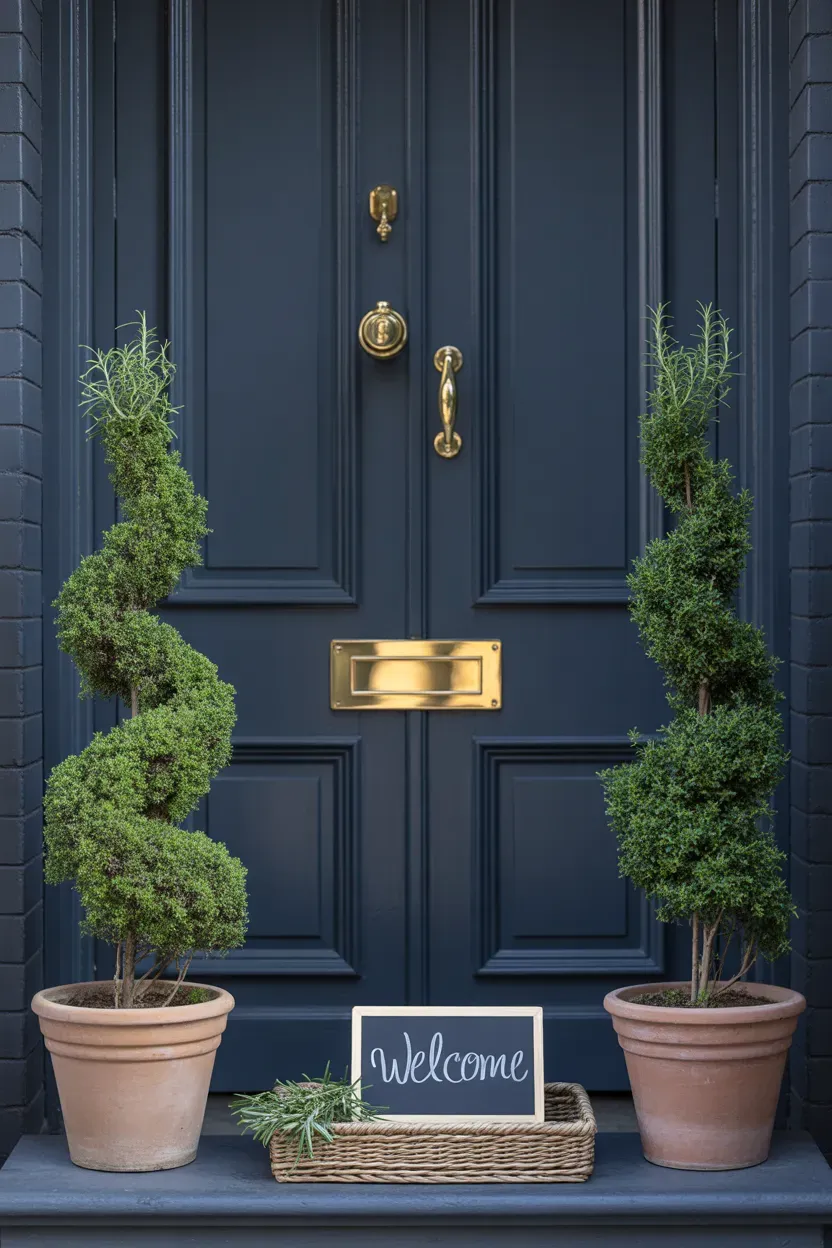
A matching pair of rosemary topiaries at a front door reads as high-end landscaping, but starter rosemary plants shaped with basic pruning cost a fraction of pre-trained nursery topiaries.
Buy two similarly sized rosemary starts (around $8-12 each) and prune lightly every 2-3 weeks to encourage a rounded or spiral form; full topiary shape takes about one full growing season to develop. It needs full sun and excellent drainage, and it’s notably drought-tolerant once established, needing water only every 7-10 days.
Pro Tip: Bring rosemary topiaries indoors to a bright window before the first frost in cold climates — they’re not reliably hardy below 20°F, and a well-shaped topiary is worth protecting through winter rather than replacing each spring.
Internal link: shaping herbs into topiary forms External link: RHS guide to pruning and training rosemary
17. Galvanized Watering Can Planters for Farmhouse Style
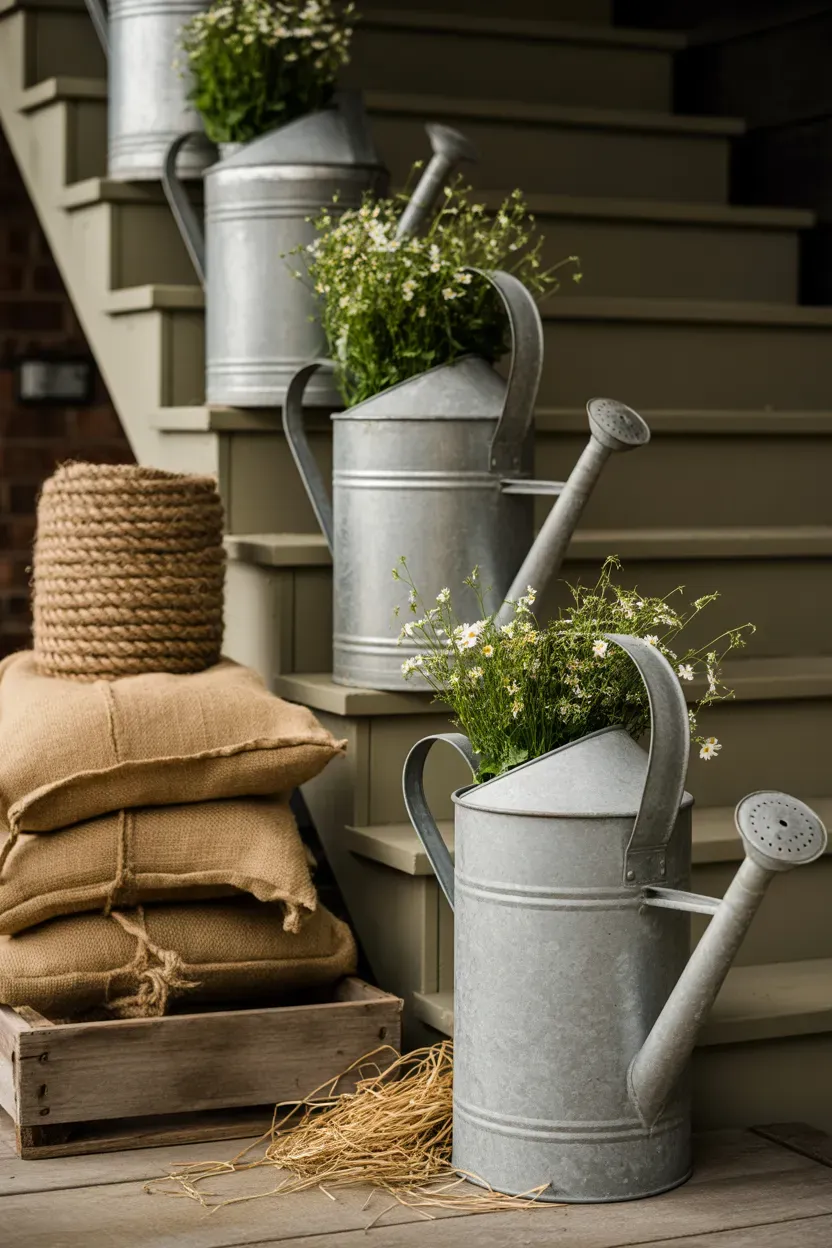
Old or decorative galvanized watering cans, whether genuinely vintage or new farmhouse-style versions from a home store, make charming planters that lean into the farmhouse aesthetic without looking staged.
Drill drainage holes in the bottom if using an actual functional can, then plant with wildflower mixes or trailing nasturtium for an informal, cottage-adjacent look. Nasturtium seeds cost just a few dollars per packet and germinate quickly, filling a can within 4-6 weeks in full sun.
Internal link: farmhouse-style container garden ideas External link: Almanac’s nasturtium growing guide for containers
18. Moss-Covered Pot Upgrade for an Instantly Aged Look
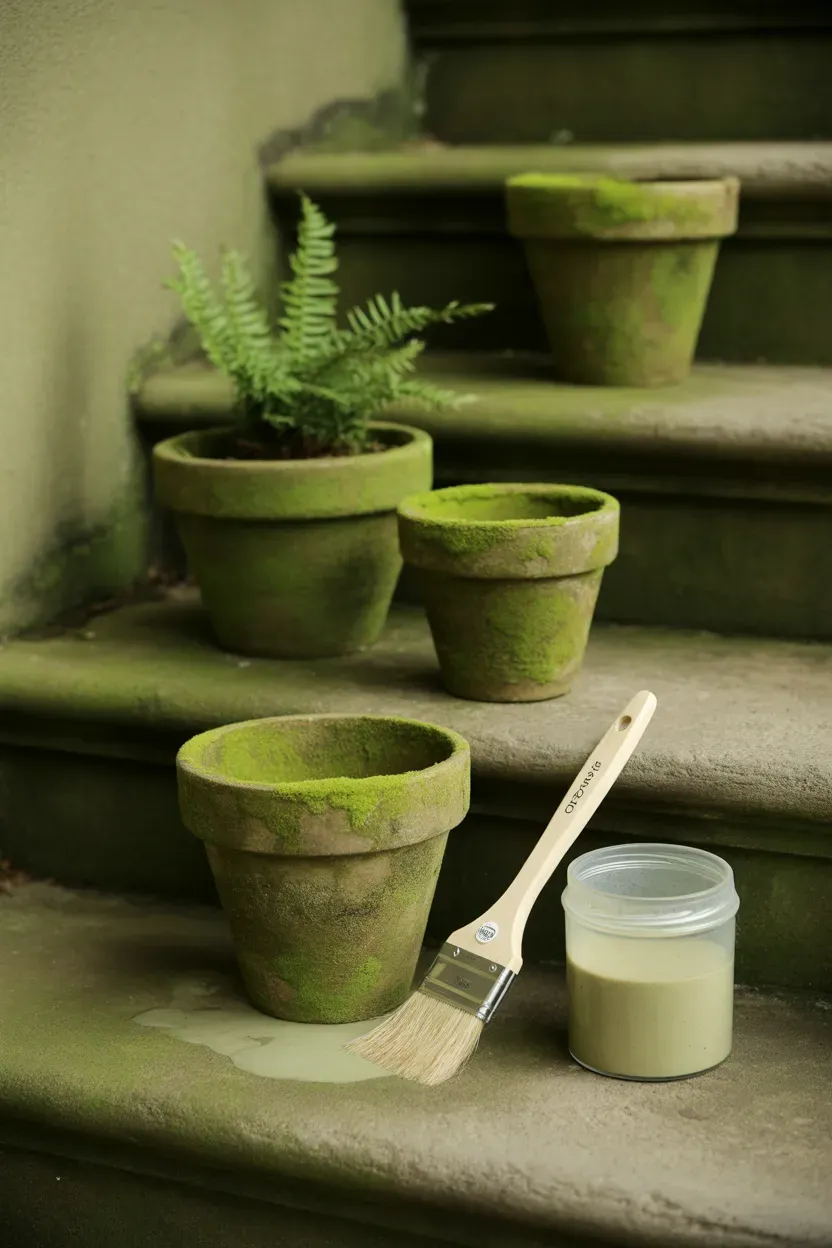
New terracotta pots look obviously new, but a simple buttermilk-and-moss slurry applied to the outside ages them convincingly within a few weeks for less than $5 in ingredients.
Blend live moss with buttermilk or plain yogurt, brush the mixture onto clean terracotta, and keep the pots in a shaded, humid spot; moss growth typically becomes visible within 2-3 weeks and fills in more over the following month. This works especially well paired with shade plants like ferns, since the moss itself needs similar humid, low-light conditions to establish.
Internal link: aging new pots to look expensive and established External link: SF Gate Home Guide’s DIY moss pot aging tutorial
This is the cheapest single upgrade on the entire list, and it makes everything else look older and more established too.
19. Wine Crate Tiered Planting for Rustic Layers
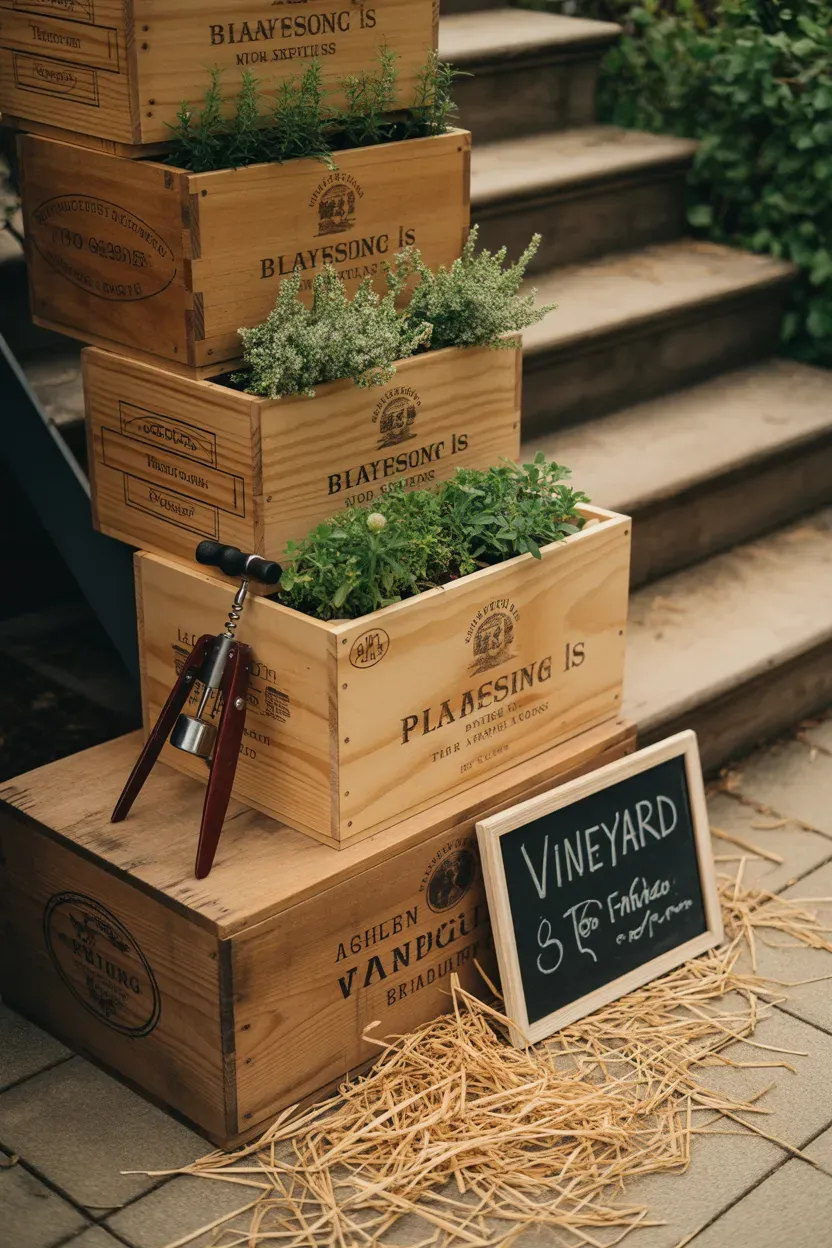
Wine crates, often free from local wine shops or liquor stores that would otherwise discard them, stack naturally into tiered displays that add height variation without buying additional stands or risers.
Line each crate with landscape fabric before adding soil to prevent rot, and stagger 2-3 crates at different heights using bricks or scrap wood as risers underneath. Fill with a mix of trailing and upright plants so the tiered structure reads clearly rather than looking like a flat row.
Internal link: tiered container displays for small spaces External link: BHG’s guide to building tiered plant displays
20. Single Statement Urn for Understated Minimalism
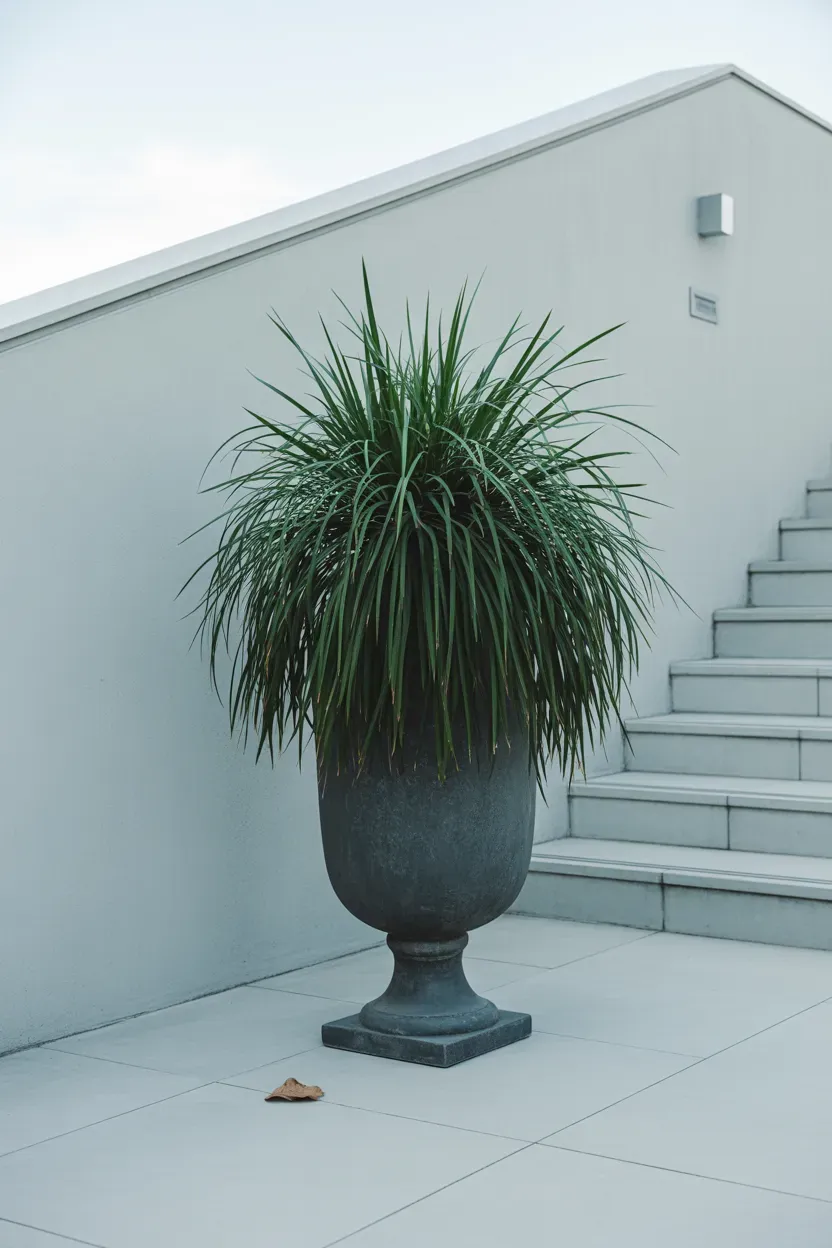
Sometimes the most expensive-looking choice is restraint — one large, well-chosen urn with a single dramatic plant can outperform a dozen small pots, especially on a modern or minimalist staircase.
Invest your full budget into one quality urn ($25-40) and one architectural plant like a dracaena spike or small ornamental grass rather than spreading the same money across many small containers. This works best when the surrounding architecture is already clean and uncluttered, letting the single planting read as a deliberate design choice.
Internal link: minimalist single-plant entrance design External link: Gardeners’ World’s guide to choosing statement container plants
21. Basket-Lined Steps for Soft Cottage Texture
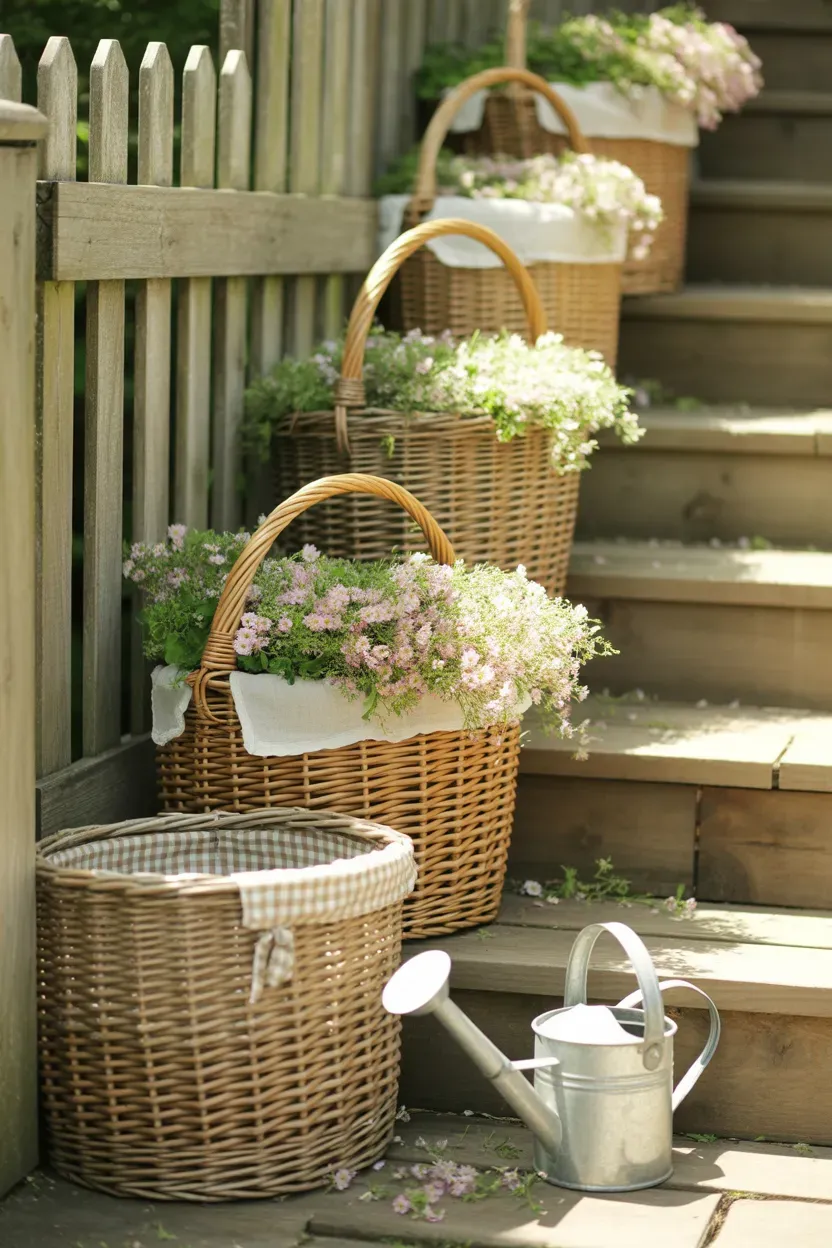
Thrifted wicker baskets lined with plastic sheeting make soft, textural planters that pair naturally with a cottage-style staircase and cost next to nothing if sourced secondhand.
Line each basket thoroughly with a heavy plastic liner (an old shopping bag works) before adding soil, since baskets left unlined will rot within a season of regular watering. Fill with cascading flowers like lobelia or trailing verbena for the softest, most textural look.
Internal link: cottage-style container garden inspiration External link: University of Florida Extension’s lobelia container growing notes
22. Solar-Lit Plant Steps for Evening Ambiance
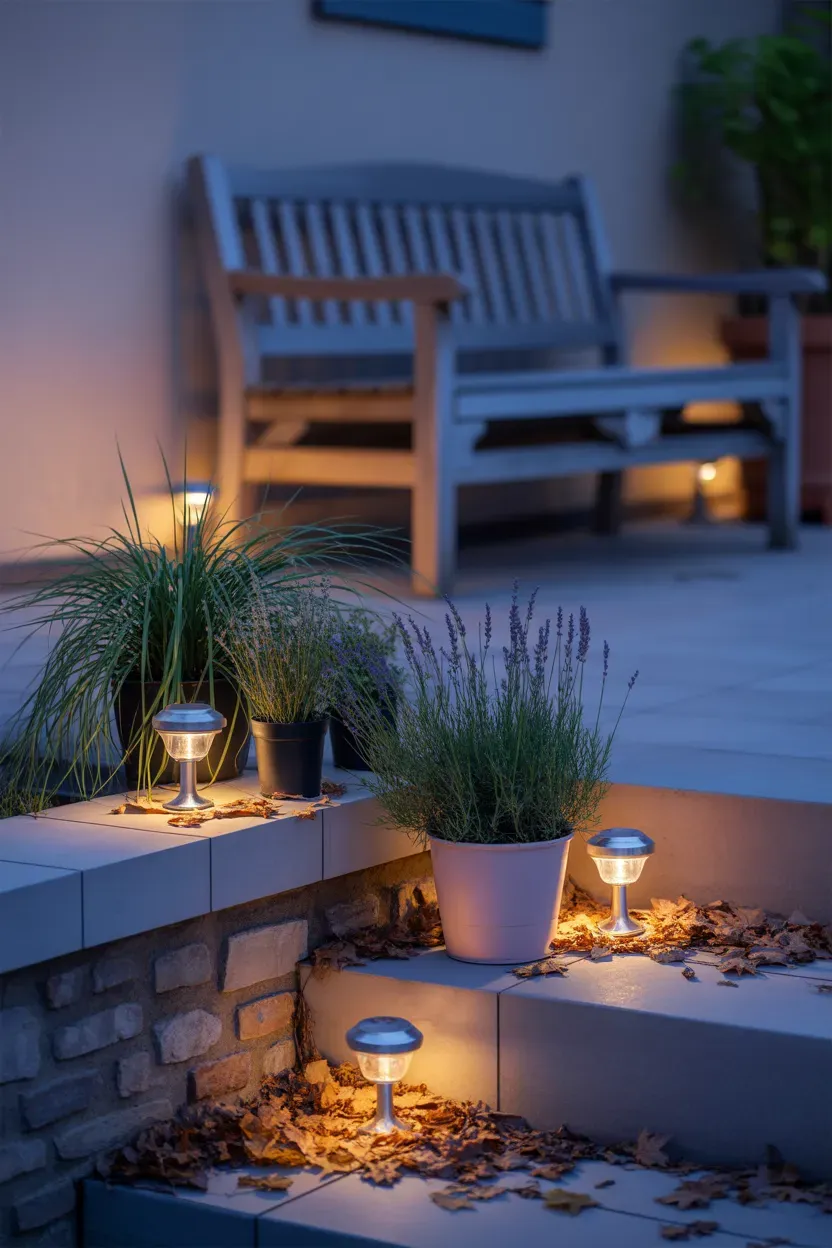
Tucking a few $3-5 solar path lights among staircase pots extends the display’s appeal into evening hours without any wiring, electrician, or ongoing electricity cost.
Place lights at the base of two or three pots rather than every single one, since too many creates a cluttered runway effect instead of soft, ambient glow. Choose warm-white LED solar lights over cool blue-white for a more inviting look, and clean the solar panels monthly, since dust buildup significantly reduces charge and evening brightness.
Pro Tip: Position solar lights where they get 6+ hours of direct sun during the day — tucked under overhanging foliage, they’ll barely glow by evening regardless of how new the light is.
Internal link: solar lighting for garden containers and pathways External link: BHG’s guide to placing solar garden lights effectively
23. Heuchera Color Contrast for Shaded Foliage Interest
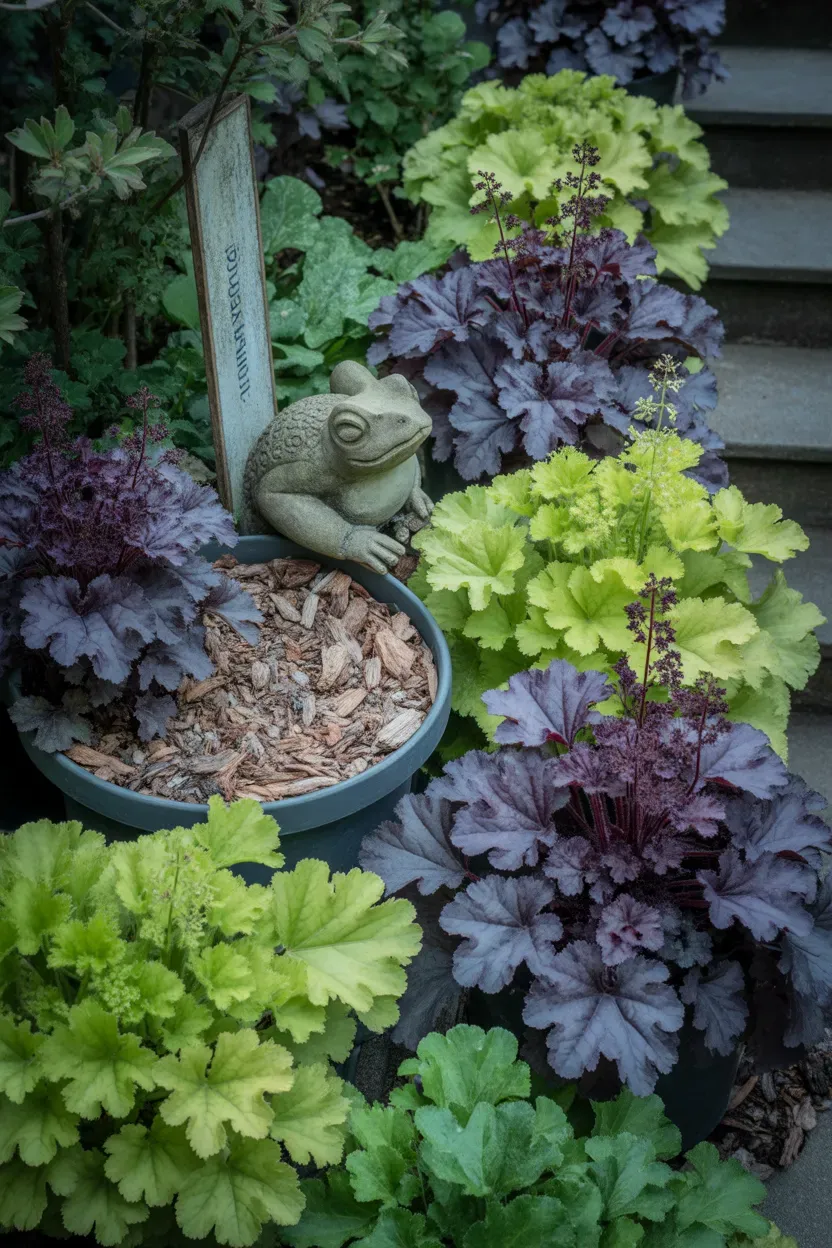
Heuchera brings genuine color to a shaded staircase without needing flowers at all, and alternating a deep purple variety with a lime-green one down the steps creates striking contrast for the cost of two plant varieties.
It needs part shade and well-drained soil, watering every 4-5 days and avoiding overly soggy pots, since heuchera is prone to crown rot in waterlogged containers. A single 4-inch pot costs $5-8 and fills out to a full container specimen within one growing season.
Internal link: colorful foliage plants for shaded containers External link: Missouri Botanical Garden’s heuchera container growing profile
24. Grasses in Concrete Planters for Modern Texture
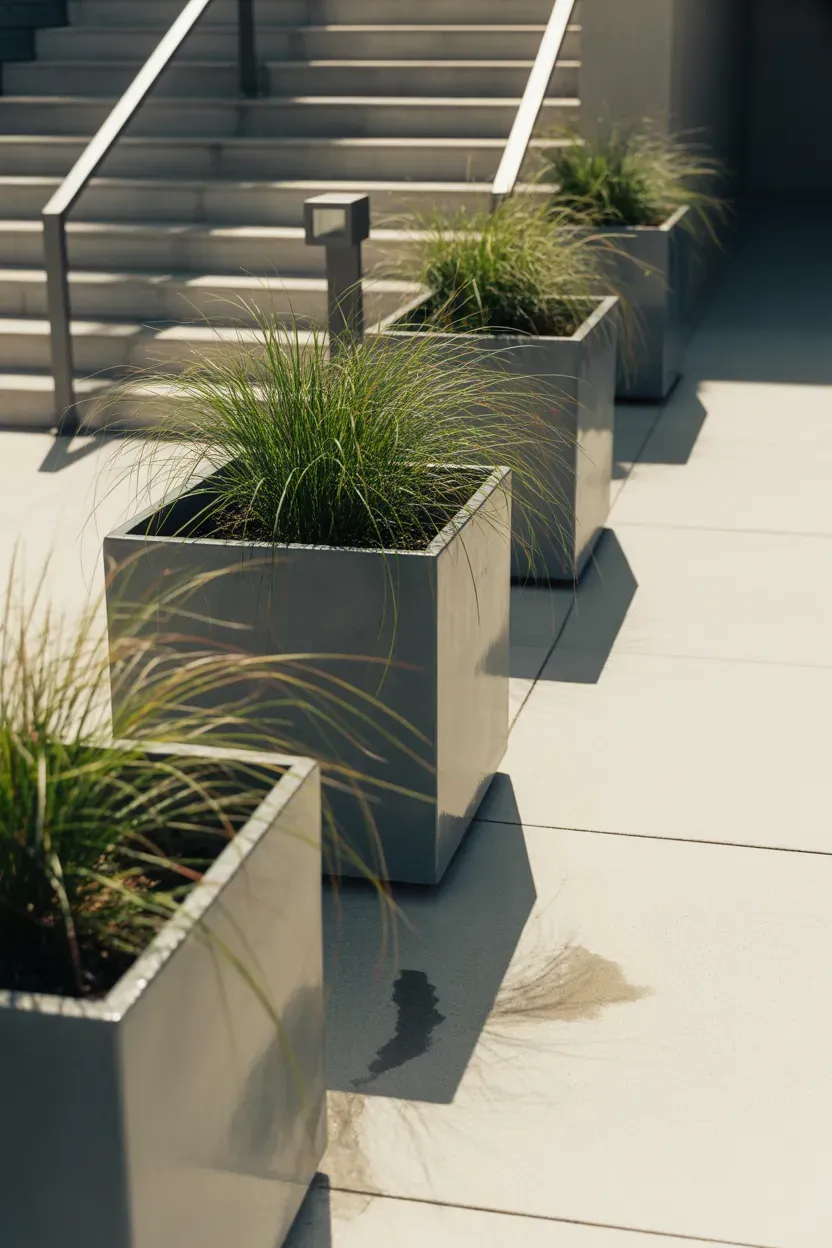
Ornamental grasses in simple concrete or concrete-look planters bring movement and texture to a modern staircase without the maintenance flowering plants demand.
They need full sun and tolerate drought well once established, needing water only every 7-10 days. Concrete planters cost more upfront ($20-30 each) than plastic, but their weight prevents tipping in wind, an underrated practical benefit for elevated or exposed staircases. Grasses like blue fescue or dwarf pampas add year-round structure even after flowering plants have finished for the season.
Internal link: ornamental grasses for modern container design External link: RHS growing guide for ornamental grasses in pots
25. Seasonal Bulb Rotation for a Staircase That Changes Year-Round
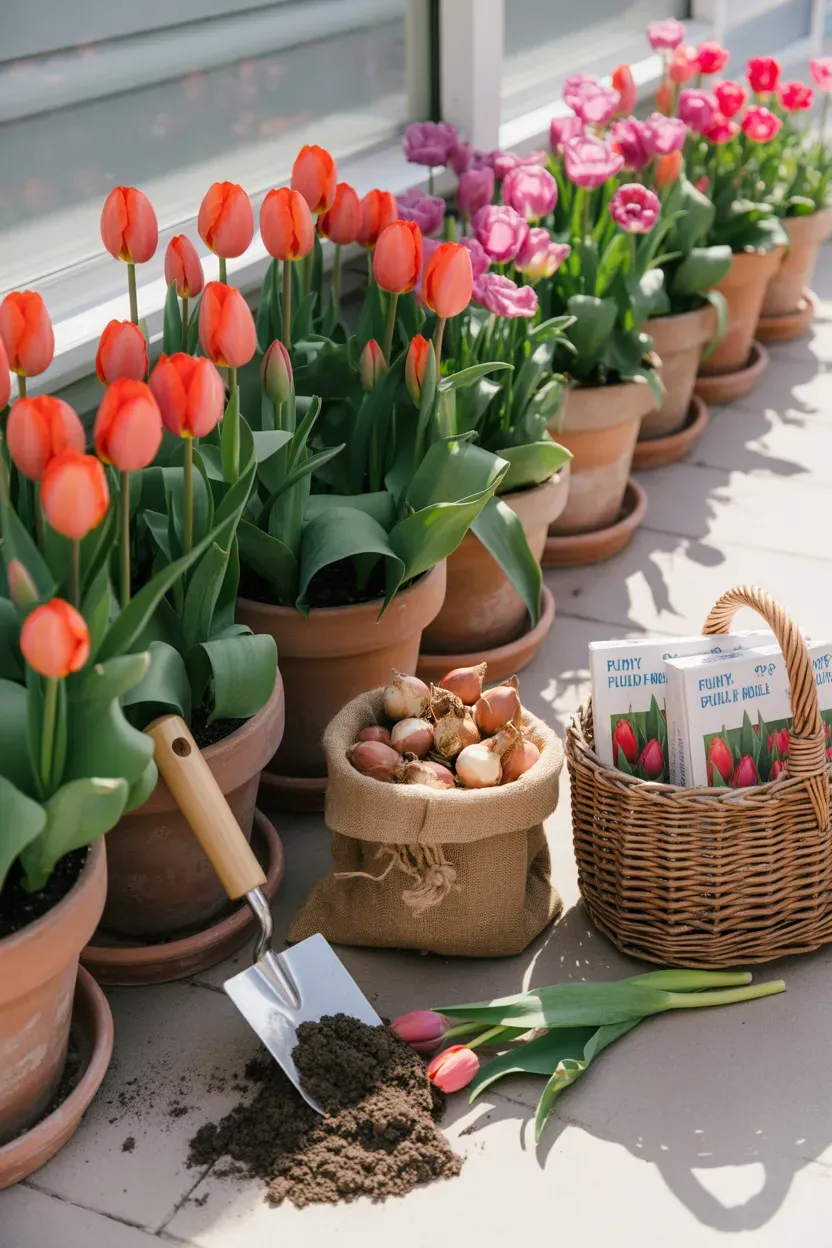
Rather than buying new annuals every season, planting bulbs in the same set of pots and swapping them as each season shifts keeps a staircase looking fresh year-round for a fraction of constant annual replacement costs.
Plant tulip or daffodil bulbs in fall for spring bloom, then follow with summer annuals once the bulb foliage yellows and can be removed, and finish with mums or ornamental kale for fall. A bag of 10-15 bulbs costs $8-12 and provides a full season of color from a single purchase, making this the most cost-efficient long-term idea on the list.
Internal link: planning a year-round seasonal container rotation External link: Almanac’s guide to planting fall bulbs for spring bloom
Plan the rotation once and your staircase genuinely never looks the same twice.
Getting Started With Budget Staircase Gardens
The easiest first step is choosing one repeated pot style for two or three steps rather than trying to fill the whole staircase at once — a small, cohesive start looks more finished than a large, mismatched one. The most common beginner mistake is buying a variety of plant types and pot styles all at once, which creates visual clutter instead of the curated look most people are after.
For your first purchase, get three matching pots in whatever material fits your budget, one bag of quality potting mix, and one plant variety repeated across all three pots to start.
Realistically, expect flowering annuals to fill out and look full within 4-6 weeks of planting, while trailing plants like ivy or sweet potato vine take a full season to reach their most dramatic cascading effect.
Frequently Asked Questions
How much does it cost to decorate a staircase with plants?
A basic three-to-five pot staircase display typically costs $25-50 using budget pots and annual plants, or under $20 using thrifted containers and cuttings from friends. Costs rise to $80-150 for a more elaborate setup with larger urns, perennials, or hanging baskets included.
What plants work best on a shaded staircase?
Ferns, hostas, and heuchera all thrive in part to full shade and don’t require the direct sun most flowering annuals need. Water these more consistently than sun-loving plants, since shaded containers still dry out, just more slowly, roughly every 4-5 days versus daily in full sun.
How do I keep staircase container plants from looking cluttered?
Repeat one pot style and limit yourself to one or two plant colors across the whole staircase rather than mixing multiple pot shapes and plant varieties. A single 10-12 inch pot per step, evenly spaced, keeps the display looking curated rather than crowded.
What is the cheapest way to add plants to outdoor steps?
Thrifted containers, free crate or bucket repurposing, and plant divisions or cuttings from neighbors bring total cost under $20-30 for a full staircase. Herb starts and annual six-packs, typically $3-6 each, stretch a small budget further than pre-grown perennials or nursery topiaries.
How often should I water potted plants on a staircase?
Most flowering annuals in containers need watering every 2-3 days in summer heat, while succulents and drought-tolerant herbs like rosemary only need water every 7-10 days. Terracotta pots dry out noticeably faster than plastic or glazed ceramic, so adjust frequency based on container material as much as plant type.
A Few Final Thoughts
Any combination of these 25 budget staircase garden ideas proves that an expensive-looking entrance has more to do with consistent design choices than actual spending. Repetition, restraint, and matching your plant picks to the real light conditions on your steps will outperform an expensive, mismatched haul every time. Start small with three or four matching containers, commit to one plant color or style, and let it fill out over a few weeks before deciding whether to expand. A staircase that once felt like an afterthought can become the most photographed corner of your home for less than the cost of a single dinner out.