
Most staircase planting advice defaults to cottage-style clutter — mismatched pots, cascading blooms, a dozen colors competing for attention — which is exactly wrong for a home with clean architectural lines. I redesigned my own concrete entry steps two years ago using nothing but matte black planters and three repeated plant species, and the restraint is what actually reads as high-end. This list covers 28 modern staircase garden ideas built specifically for sleek, minimal spaces, each with the container material, plant choice, and spacing details that keep a modern look from tipping into either sterile or cluttered. Ready? Let’s explore all 28 of them.
Quick Answer: For a genuinely minimal look, stick to one container material (concrete, matte black, or raw metal) and one or two plant species repeated down the full staircase. Architectural plants like sansevieria, boxwood, and ornamental grasses hold their structure without needing frequent shaping, which matters most for a clean modern result.
Why Modern Staircase Gardens Are Worth Your Time
A modern staircase garden works on restraint rather than abundance — the goal is a considered, editorial look rather than a full, overflowing one, which actually means less plant material and fewer container styles than a traditional approach. In practice, three matching planters with structural plants often look more expensive and intentional than ten mismatched pots crammed with blooms.
The practical upside is real maintenance savings. Architectural plants chosen for structure over flower volume typically need less frequent watering and deadheading, and a single repeated container style is far easier to source replacements for than an eclectic mix. The lesser-known fact most people miss: negative space matters as much as the plants themselves in modern design — leaving a step or two intentionally empty often reads as more sophisticated than filling every available surface.
This approach is ideal for owners of contemporary or mid-century homes, anyone drawn to a monochrome or neutral palette, and gardeners who’d rather maintain three excellent containers than a dozen mediocre ones.
At a Glance
- Concrete and matte black planters photograph the cleanest against most modern home exteriors.
- Sansevieria and boxwood hold structural shape year-round without frequent trimming or shaping.
- Repeating one container style down the full staircase reads as more designed than variety.
- Ornamental grasses add movement and texture without breaking a minimal color palette.
- Leaving occasional empty steps between plantings creates intentional visual rhythm.
28 Modern Staircase Garden Ideas Compared
| Idea | Light Needs | Container Style | Difficulty | Maintenance |
| Matte Black Cylinder Planters | Full sun | Metal/resin | Easy | Low |
| Concrete Cube Planters | Any | Concrete | Easy | Low |
| Sansevieria Sculptural Rows | Low to bright | Any minimal | Very easy | Very low |
| Boxwood Ball Topiaries | Full sun | Concrete/resin | Moderate | Moderate |
| Single-Species Grass Run | Full sun | Metal | Easy | Low |
| White Fiberglass Planters | Any | Fiberglass | Easy | Low |
| Monochrome Succulent Trays | Full sun | Concrete | Easy | Very low |
| Corten Steel Planters | Any | Corten steel | Easy | Low |
| Geometric Terrazzo Pots | Part shade | Terrazzo | Easy | Low |
| Bamboo Privacy Screen Planters | Full sun | Wood/metal | Moderate | Moderate |
| Minimalist Zen Gravel Beds | Any | Stone/concrete | Moderate | Low |
| Vertical Living Wall Panel | Part shade | Modular frame | Advanced | Moderate |
| Olive Tree Statement Pots | Full sun | Concrete | Moderate | Moderate |
| Single Fiddle Leaf Fig Feature | Bright indirect | Ceramic | Easy | Moderate |
| Charcoal Gray Rectangular Troughs | Any | Fiberglass | Easy | Low |
| Agave Architectural Accent | Full sun | Concrete | Easy | Very low |
| Repeating Boxwood Cubes | Full sun | Metal | Moderate | Moderate |
| Slate Gray Pebble Planters | Any | Concrete | Easy | Low |
| Minimalist Bonsai Display | Part shade | Ceramic | Advanced | High |
| Tall Cylinder Bamboo Grove | Part sun | Fiberglass | Moderate | Moderate |
| Monochrome White Orchid Row | Bright indirect | Ceramic | Moderate | Moderate |
| Raw Steel Trough Planters | Any | Raw steel | Easy | Low |
| Dwarf Mondo Grass Border | Shade | Concrete | Easy | Low |
| Architectural Yucca Statement | Full sun | Concrete | Easy | Very low |
| Floating Shelf Planters | Any | Wood/metal | Advanced | Low |
| Single-Tone Lavender Repetition | Full sun | Concrete | Easy | Moderate |
| Minimalist Water Feature Planter | Any | Stone/concrete | Advanced | Moderate |
| Geometric Cactus Garden | Full sun | Concrete | Easy | Very low |
1. Matte Black Cylinder Planters for Sharp Contrast
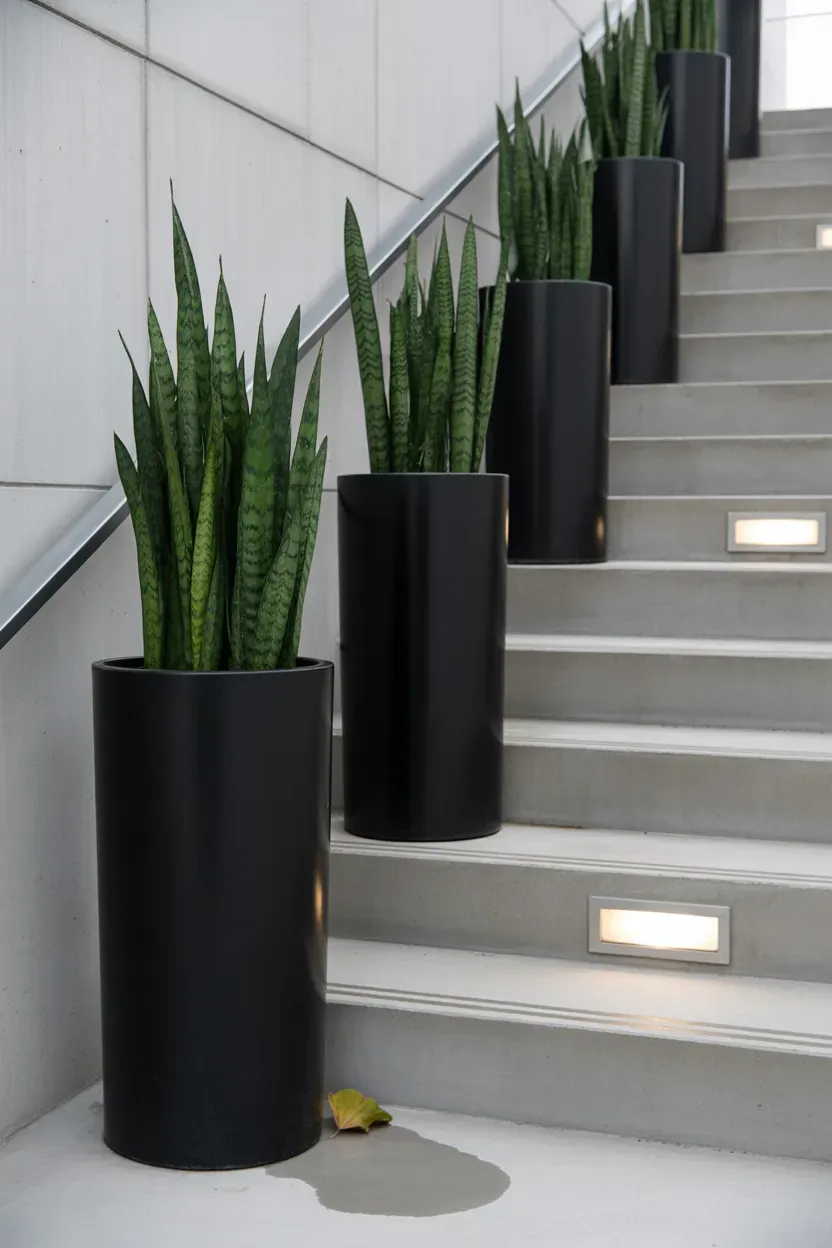
Matte black cylinder planters create the strongest visual contrast against light concrete or pale stone steps, making this one of the most reliably striking choices for a modern entrance.
Choose resin or powder-coated metal cylinders, roughly 12-14 inches tall, and plant with a single upright species like sansevieria or a small ornamental grass. Water sansevieria only every 3-4 weeks since matte black containers absorb heat and can dry soil faster than lighter colors. Repeat the same cylinder and plant combination on every other step for the cleanest rhythm.
Pro Tip: Choose matte over glossy black finishes — glossy surfaces show water spots and dust far more visibly, undermining the clean look within days of the first rain.
Internal link: choosing container finishes for modern outdoor design External link: RHS guide to container material and heat retention
2. Concrete Cube Planters for Architectural Weight
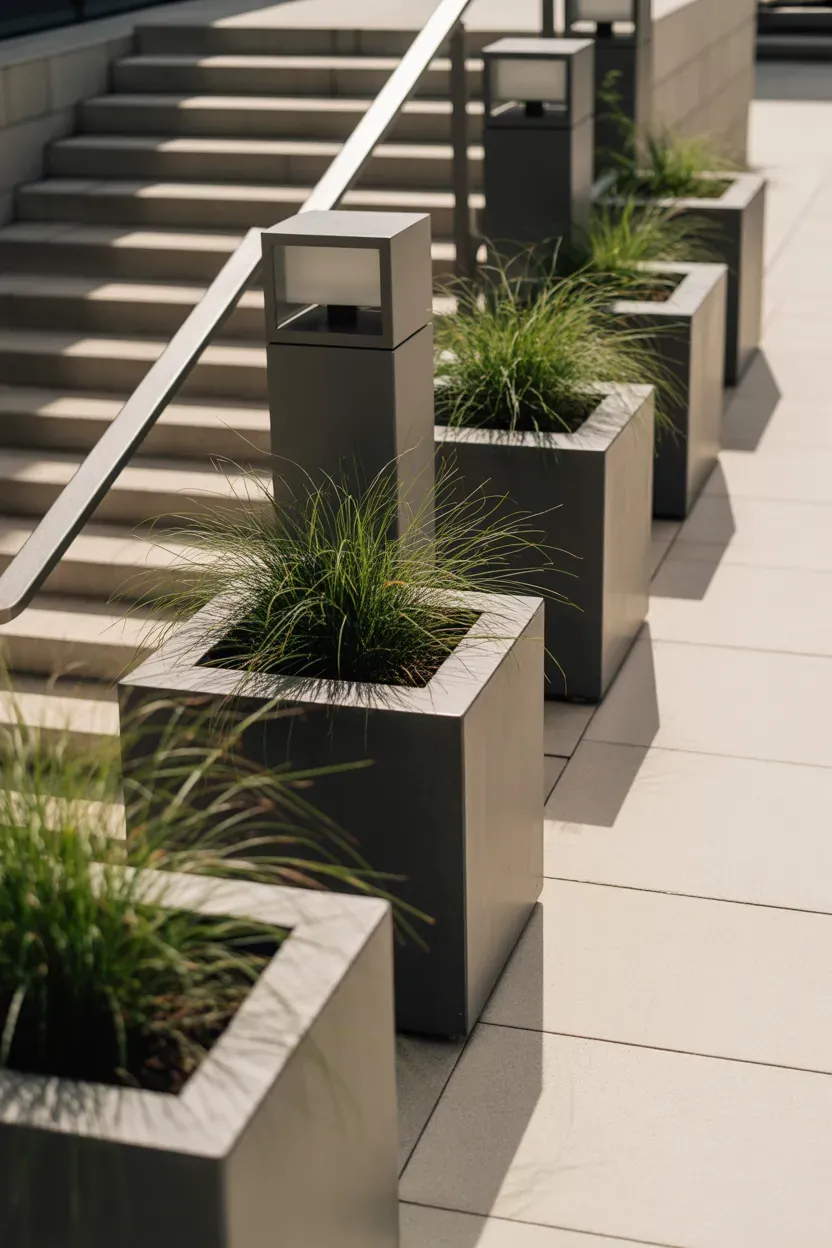
Solid concrete cubes bring genuine architectural weight to a staircase, their heaviness preventing tipping in wind and their raw material pairing naturally with contemporary home exteriors.
Choose cubes around 14-16 inches per side and plant with drought-tolerant grasses like blue fescue, which tolerate full sun and need water only every 7-10 days once established. Concrete’s porous surface will develop a subtle weathered patina over a year or two, which most modern design actually welcomes rather than resists.
What works vs. what to avoid:
- Works: unsealed concrete for natural patina, drought-tolerant grasses
- Avoid: sealing the concrete (prevents the desirable aging effect), moisture-loving plants that need frequent watering
Internal link: concrete container gardening for modern exteriors External link: Gardeners’ World’s guide to ornamental grasses in containers
3. Sansevieria Sculptural Rows for Near-Zero Maintenance
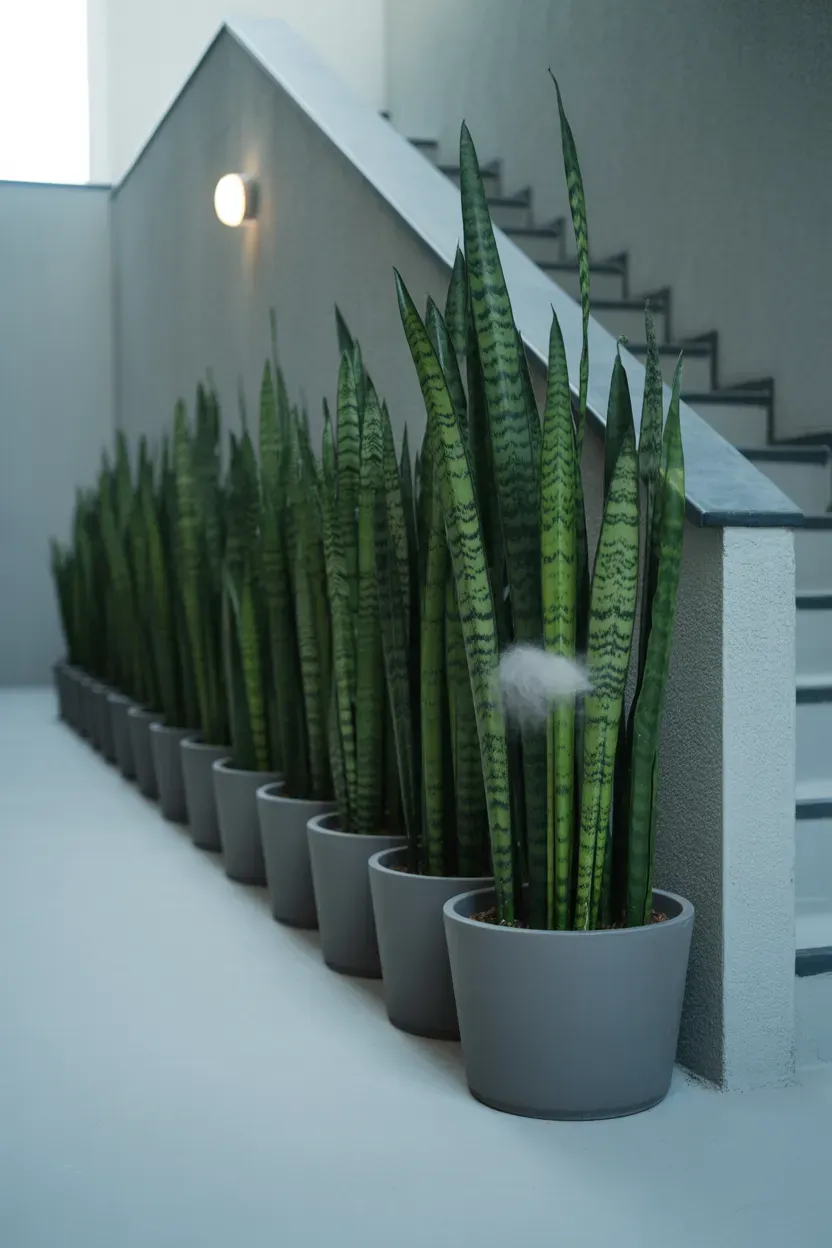
Sansevieria’s rigid, upright leaves function almost like sculpture, and its tolerance for low light and infrequent watering makes it the lowest-maintenance option on this entire list.
It tolerates low to bright indirect light and needs watering only every 3-4 weeks, making it ideal for staircases that get inconsistent attention. Choose narrow, tall varieties like ‘Bantel’s Sensation’ for the most sculptural vertical line, and space pots evenly for a repeated, rhythmic look down the full staircase.
Internal link: low-maintenance architectural plants for modern spaces External link: RHS care sheet for Sansevieria (Dracaena trifasciata)
For a staircase that needs to look sharp with almost no upkeep, this is the plant to build around.
4. Boxwood Ball Topiaries for Formal Modern Structure
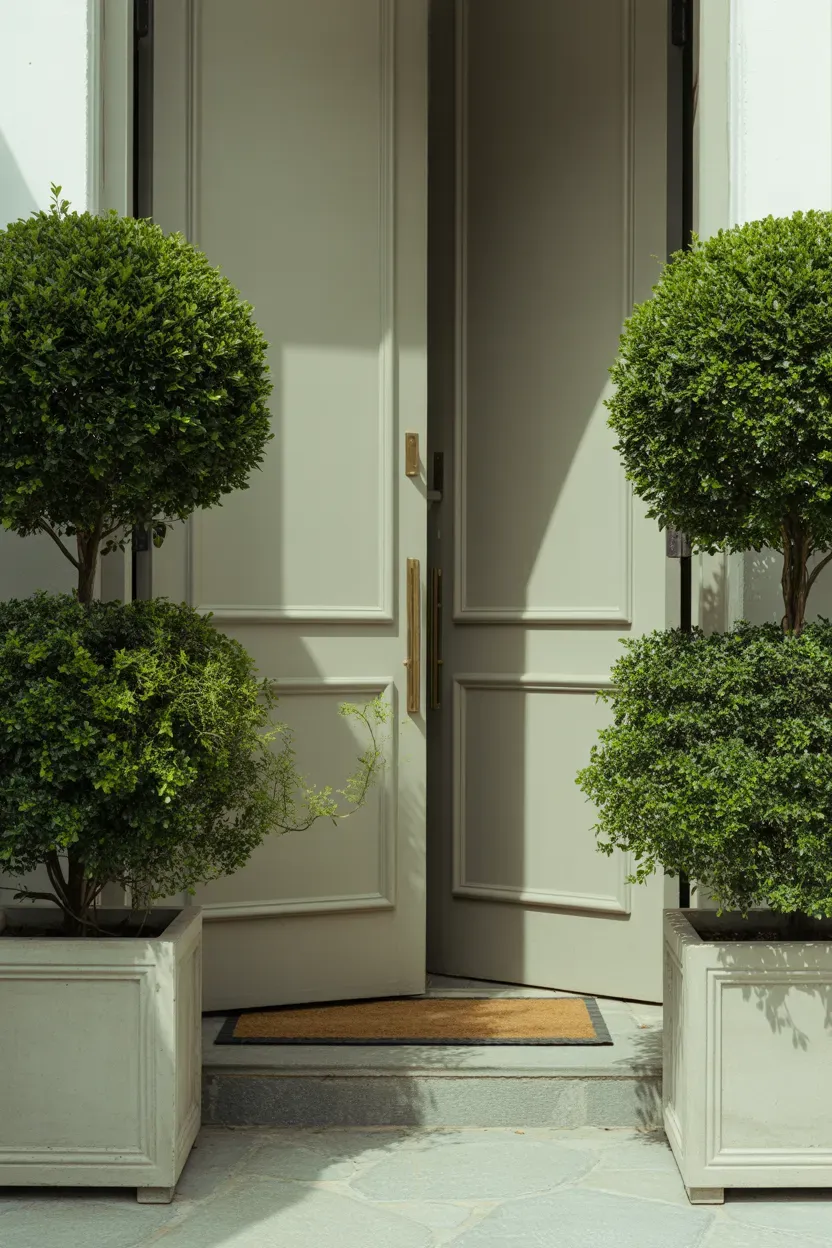
Clipped boxwood balls bring a formal, tailored structure that works even in a strictly modern context, since their geometric roundness reads as sculptural rather than traditional when paired with clean concrete containers.
They need full sun to part shade and consistent trimming every 4-6 weeks during the growing season to maintain their crisp round shape. Water deeply once weekly, and feed lightly in spring with a balanced slow-release fertilizer. Boxwood is notably slow-growing, so a pre-shaped nursery specimen is worth the higher upfront cost over training one from scratch.
Pro Tip: Trim boxwood in the early morning or evening rather than midday heat — freshly cut foliage scorches faster in direct sun, leaving brown-tipped edges that undermine the crisp look for weeks.
Internal link: shaping and maintaining topiary plants External link: Missouri Botanical Garden’s boxwood growing and pruning profile
5. Single-Species Grass Run for Movement Without Clutter
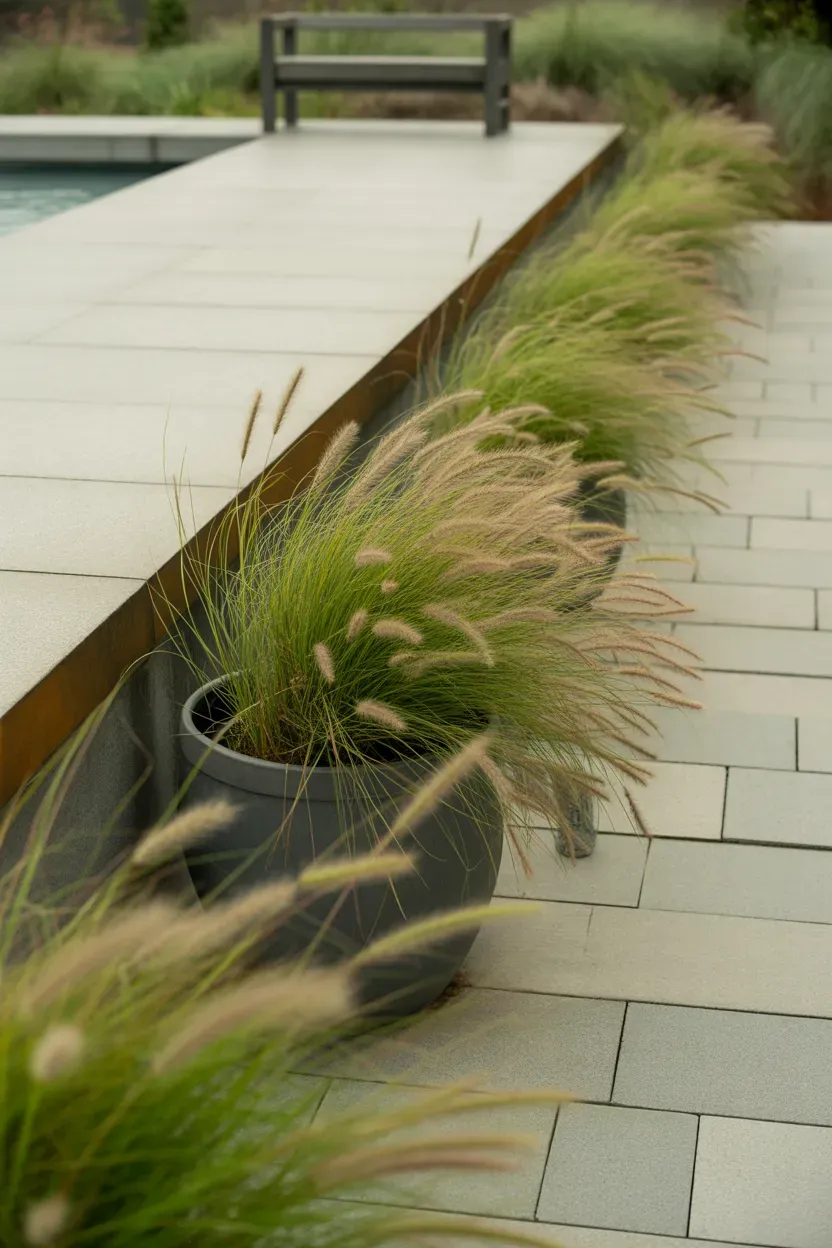
Repeating a single grass variety down every step introduces movement and texture without breaking a restrained modern palette, since the plant itself does the visual work rather than color variety.
Choose Mexican feather grass or blue fescue, both full-sun, drought-tolerant options that need water only every 7-10 days once established. Plant the exact same variety and container in every position; the repetition, combined with the grass’s natural wind movement, is what reads as considered design rather than a static row of identical objects.
Internal link: ornamental grasses for repeated modern plantings External link: University of Florida Extension’s Mexican feather grass growing notes
6. White Fiberglass Planters for Bright, Airy Contrast
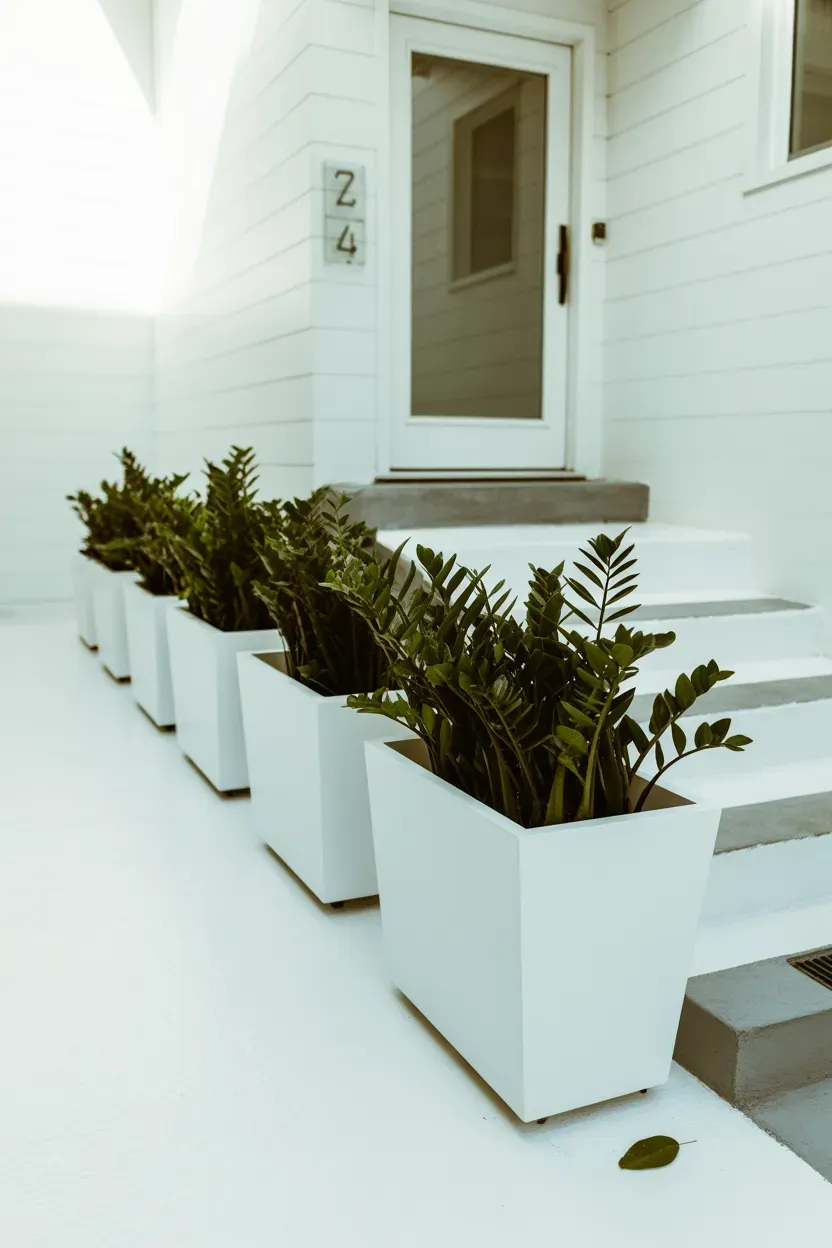
White fiberglass planters are considerably lighter than concrete, making them a practical choice for elevated staircases or landings where weight limits matter, while still delivering a clean, bright aesthetic.
Fill with dark green foliage plants like ZZ plant for strong color contrast against the white container; ZZ plant tolerates low to bright indirect light and needs watering only every 2-3 weeks, making it well suited to a partially covered staircase. Fiberglass resists cracking in freeze-thaw cycles better than ceramic, an underrated advantage in colder climates.
Internal link: lightweight container options for elevated spaces External link: BHG’s guide to ZZ plant care in containers
7. Monochrome Succulent Trays for Textural Minimalism
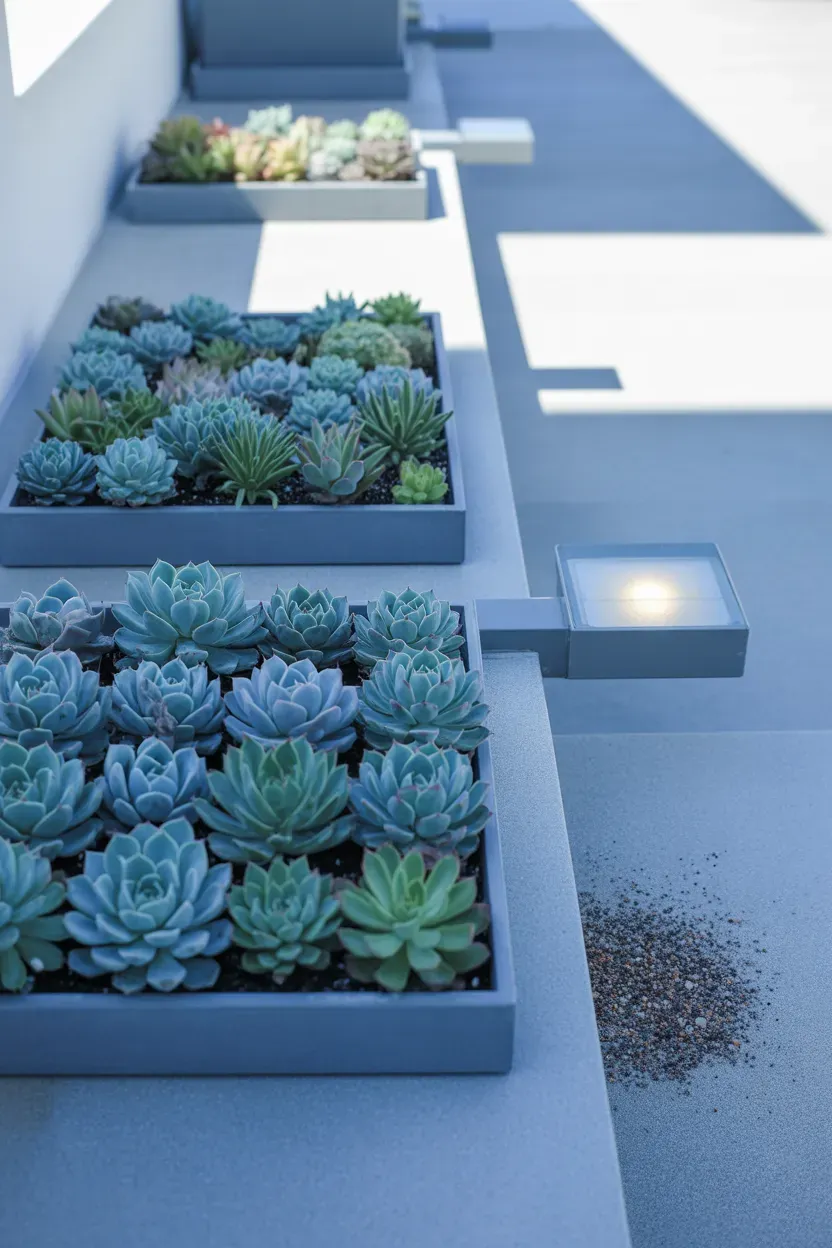
Sticking to a single color family — blue-green echeveria, gray-blue sedum, silvery agave — across a shallow tray planting keeps succulent texture interesting without introducing the visual noise of mixed colors.
They need full sun and fast-draining cactus soil, watering only every 10-14 days even in summer heat. Choose shallow, wide concrete or steel trays rather than deep pots, since most succulents have shallow root systems and a low profile suits the modern aesthetic better than a tall container.
Pro Tip: Top-dress the soil with matching gray gravel rather than bark mulch — it keeps the monochrome palette consistent and reduces splashback that stains the container’s clean surface during watering.
Internal link: monochrome succulent garden design for modern spaces External link: SF Gate Home Guide’s guide to succulent container care
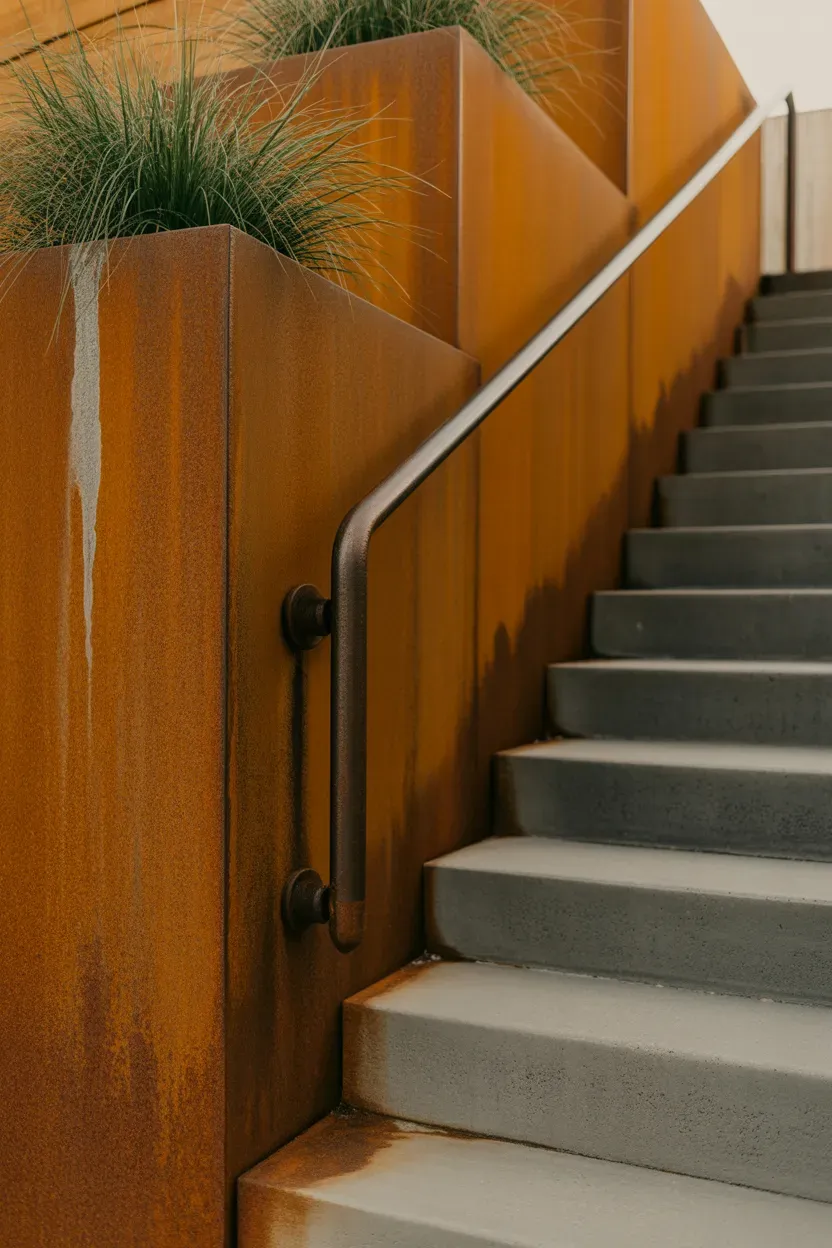
8. Corten Steel Planters for Warm Industrial Texture
Corten steel develops a stable, rust-colored patina within its first year outdoors, adding warmth to an otherwise cool, gray-and-green modern palette without any maintenance required to achieve the look.
Choose pre-weathered or new corten planters (new steel rusts naturally over 6-12 months outdoors) and plant with drought-tolerant grasses or succulents that won’t need frequent watering, since the steel heats up considerably in direct summer sun. Unlike raw steel, corten’s rust layer actually protects the metal beneath from further corrosion once fully developed.
Internal link: corten steel and metal planters for industrial garden style External link: Almanac’s guide to metal planter material comparisons
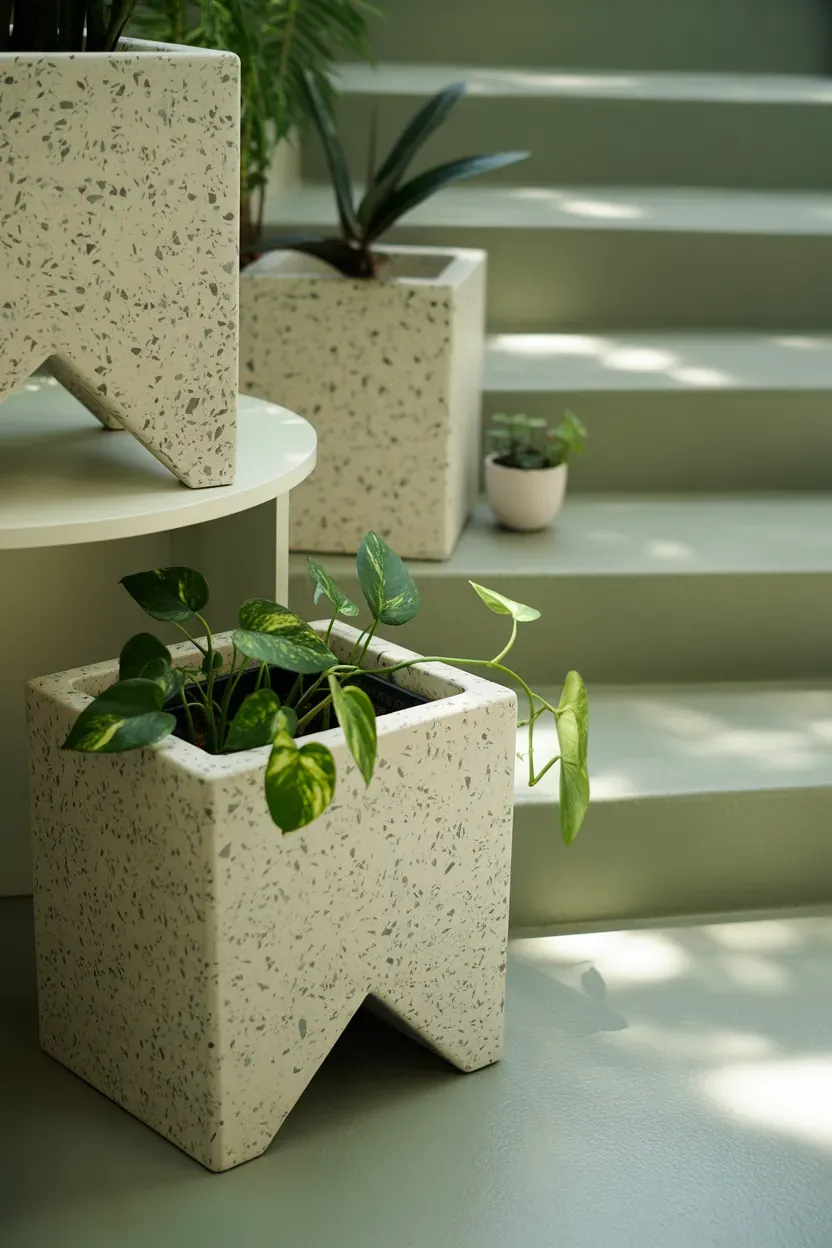
9. Geometric Terrazzo Pots for a Playful Modern Accent
Terrazzo’s speckled, flecked surface adds visual interest to a minimal palette without introducing bold color, making it a way to bring personality into a modern design without breaking the restrained aesthetic.
Choose terrazzo pots for part-shade spots and pair with trailing pothos, which tolerates medium light and needs watering only every 7-9 days. Keep the terrazzo pattern as the only “busy” element in the arrangement — pair it with a single simple plant rather than multiple varieties competing for attention.
Internal link: terrazzo and patterned containers for modern accents External link: Gardeners’ World’s pothos care guide for containers
10. Bamboo Privacy Screen Planters for Vertical Enclosure
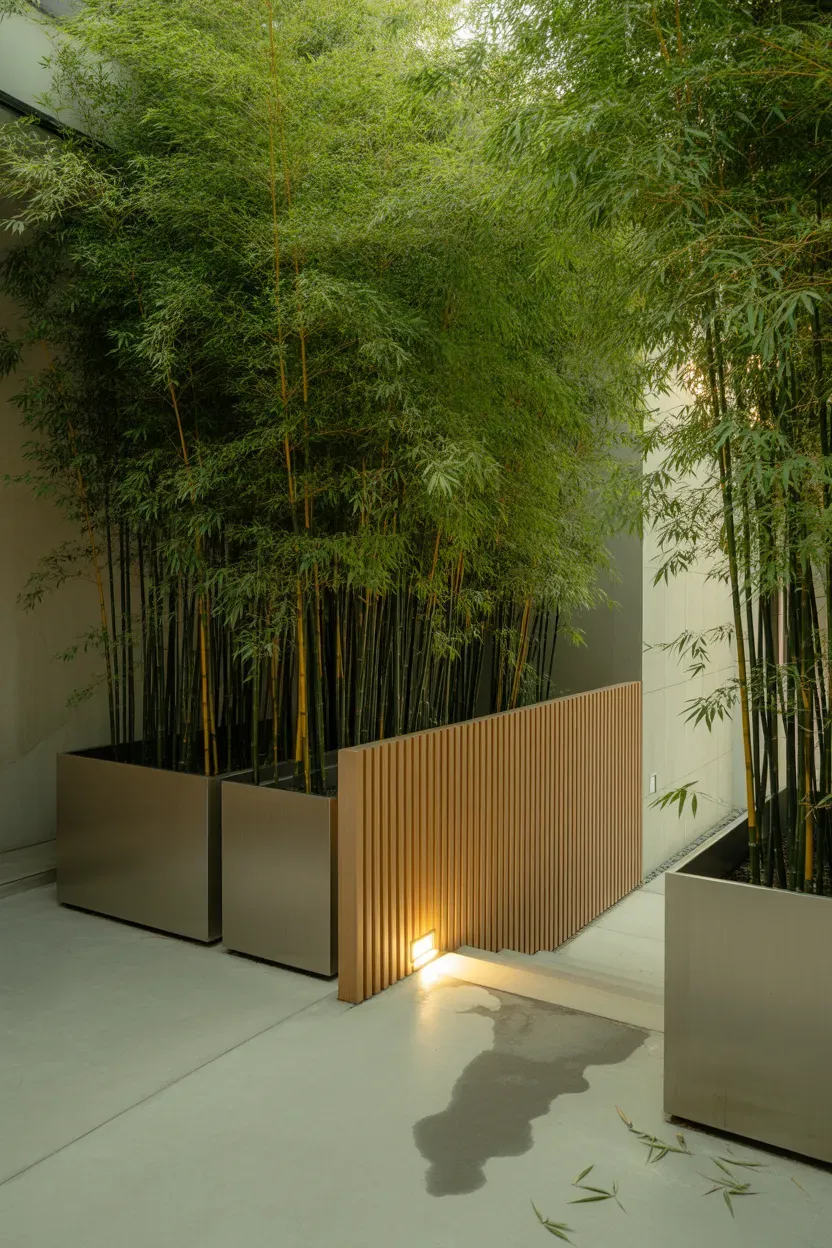
Clumping bamboo planted in tall matching containers alongside a staircase creates natural privacy screening while staying within a clean, structured modern aesthetic, unlike a traditional hedge.
Choose a genuinely clumping variety like Fargesia rather than running bamboo, which will escape any container and spread aggressively. It needs full sun to part shade and consistent moisture, watering every 4-5 days in summer heat since container-grown bamboo dries out faster than in-ground plantings.
The limitation worth stating plainly: bamboo in containers needs repotting into a larger size every 2-3 years as its root mass fills the space, and skipping this stunts growth noticeably.
Internal link: clumping bamboo varieties safe for container growing External link: University of Florida Extension’s clumping bamboo growing notes
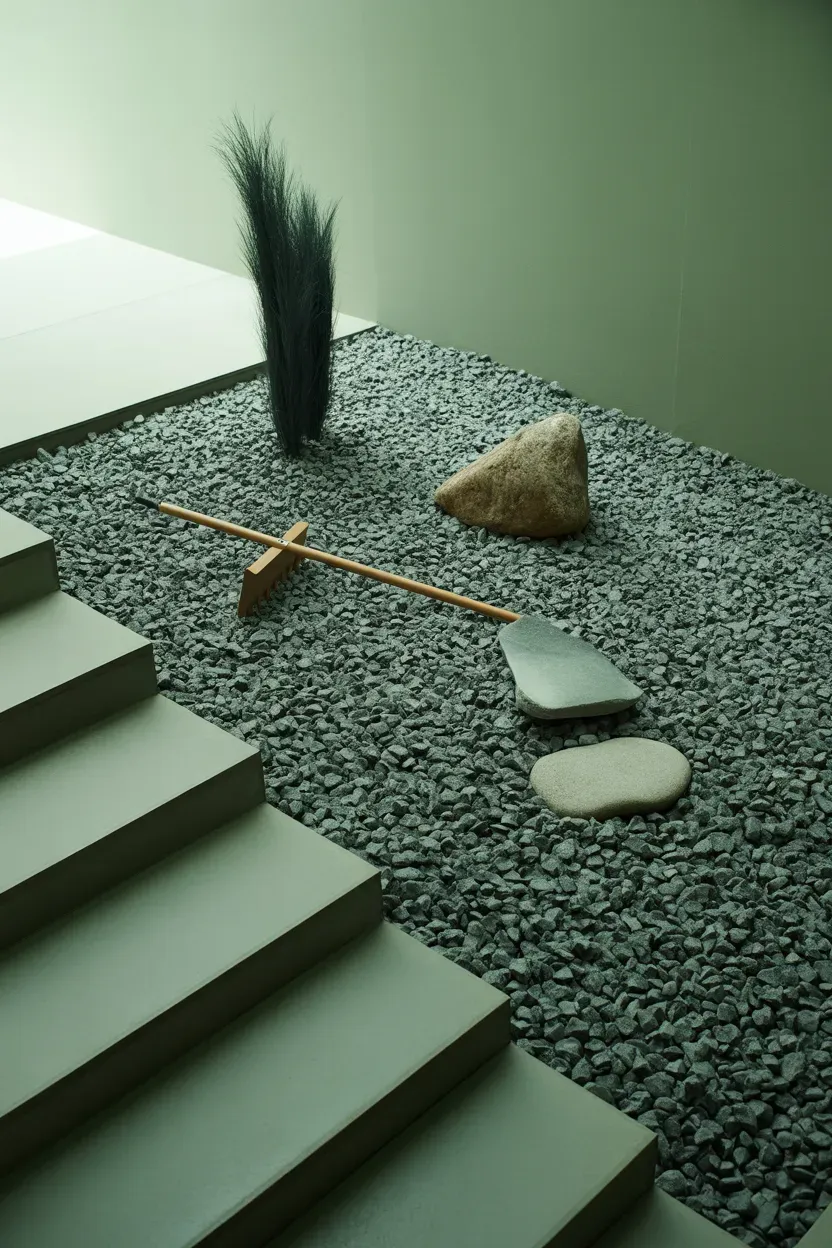
11. Minimalist Zen Gravel Beds for a Contemplative Entrance
A raked gravel bed with a single sculptural plant borrows directly from Japanese garden design, and its stark simplicity reads as intentional restraint rather than an unfinished space.
Use gray or white decorative gravel over landscape fabric, and choose one specimen plant, like a dwarf black pine or a single large boulder, as the sole focal point. Rake the gravel into simple linear patterns weekly to maintain the clean, considered look — this maintenance step is part of the design tradition, not optional upkeep.
Internal link: Japanese-inspired minimalist garden design principles External link: RHS guide to gravel garden design and maintenance
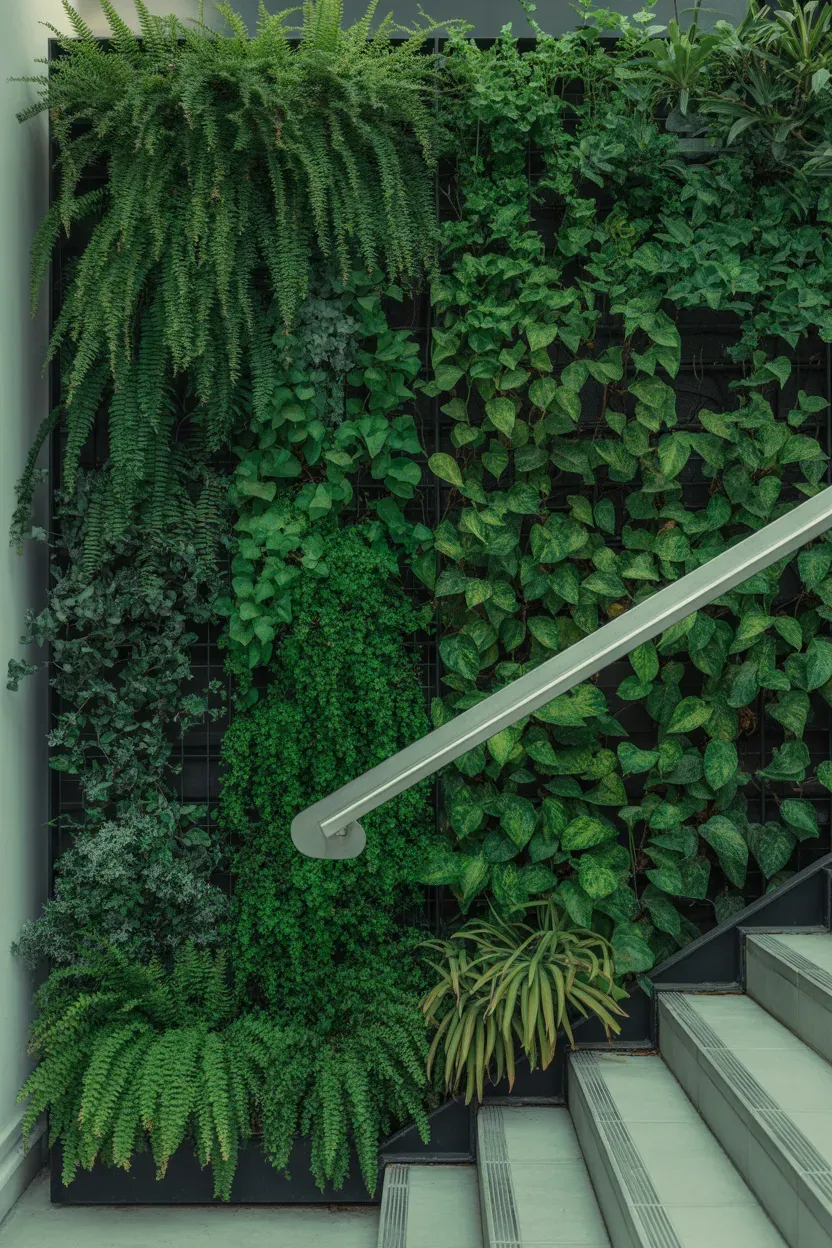
12. Vertical Living Wall Panel for a Dense Green Statement
A modular living wall panel turns a bare vertical surface beside a staircase into the boldest single feature on this list, delivering dramatic green density in a footprint that takes up no step space at all.
You’ll need a pre-built modular panel system with an integrated or add-on drip irrigation line, since hand-watering a vertical wall evenly is impractical. It needs part shade to bright indirect light depending on plant selection, and the irrigation should run briefly every 1-2 days to keep the shallow root pockets from drying out.
Pro Tip: Start with a smaller panel section (2×2 feet) before committing to a full wall — living walls have a real learning curve for irrigation timing, and a failed small panel is far less costly to redo than a failed large one.
Internal link: planning a modular living wall installation External link: BHG’s overview of vertical garden systems
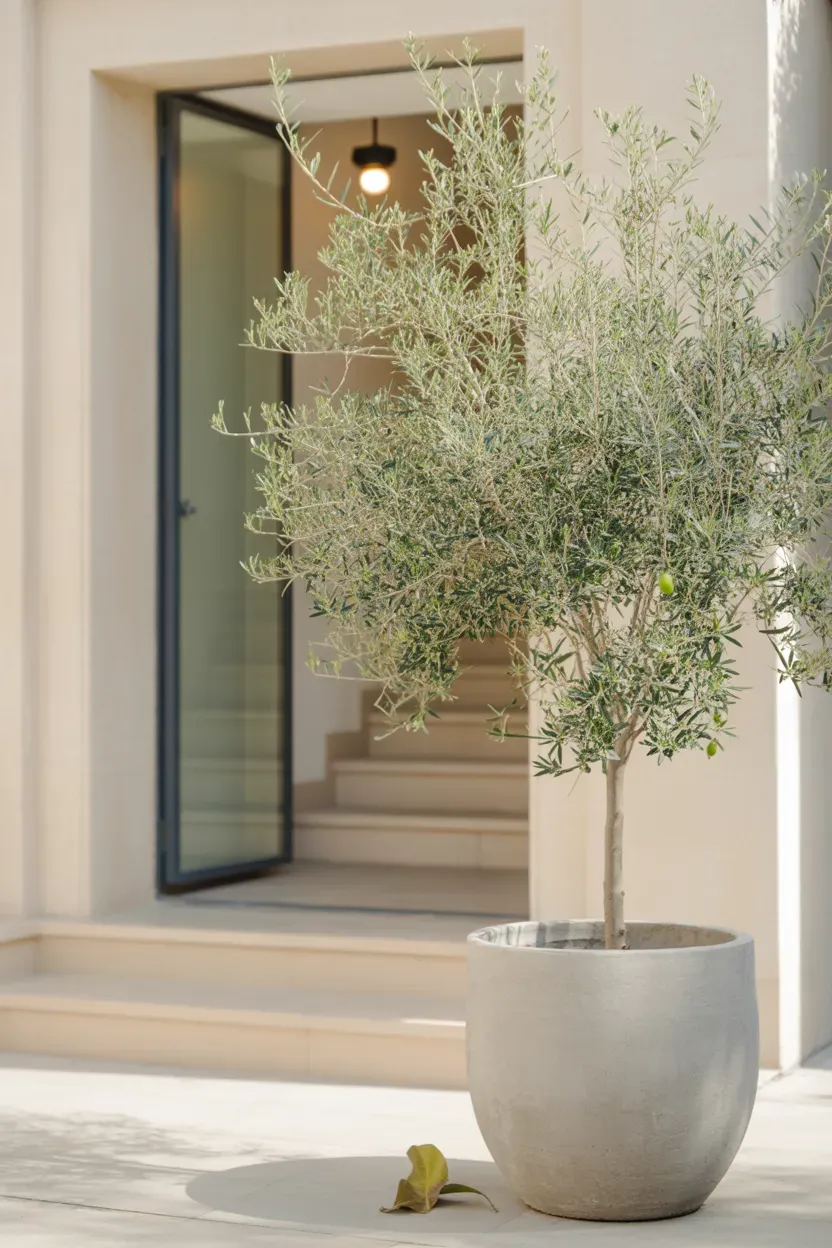
13. Olive Tree Statement Pots for Mediterranean-Modern Elegance
A single potted olive tree brings Mediterranean elegance to a modern entrance, its silvery, fine-textured foliage offering a softer alternative to strictly architectural plants like sansevieria or agave.
It needs full sun (6+ hours) and sharply drained soil in a large pot (24+ inches wide for a mature tree), watering deeply but infrequently, roughly every 10-14 days once established. In climates below 15°F, olive trees need winter protection or should be brought into an unheated garage, since they’re not reliably cold-hardy outdoors.
Internal link: growing Mediterranean trees in large containers External link: Missouri Botanical Garden’s olive tree container growing profile
One well-placed olive tree can carry an entire entrance on its own.
14. Single Fiddle Leaf Fig Feature for a Bold Sculptural Anchor
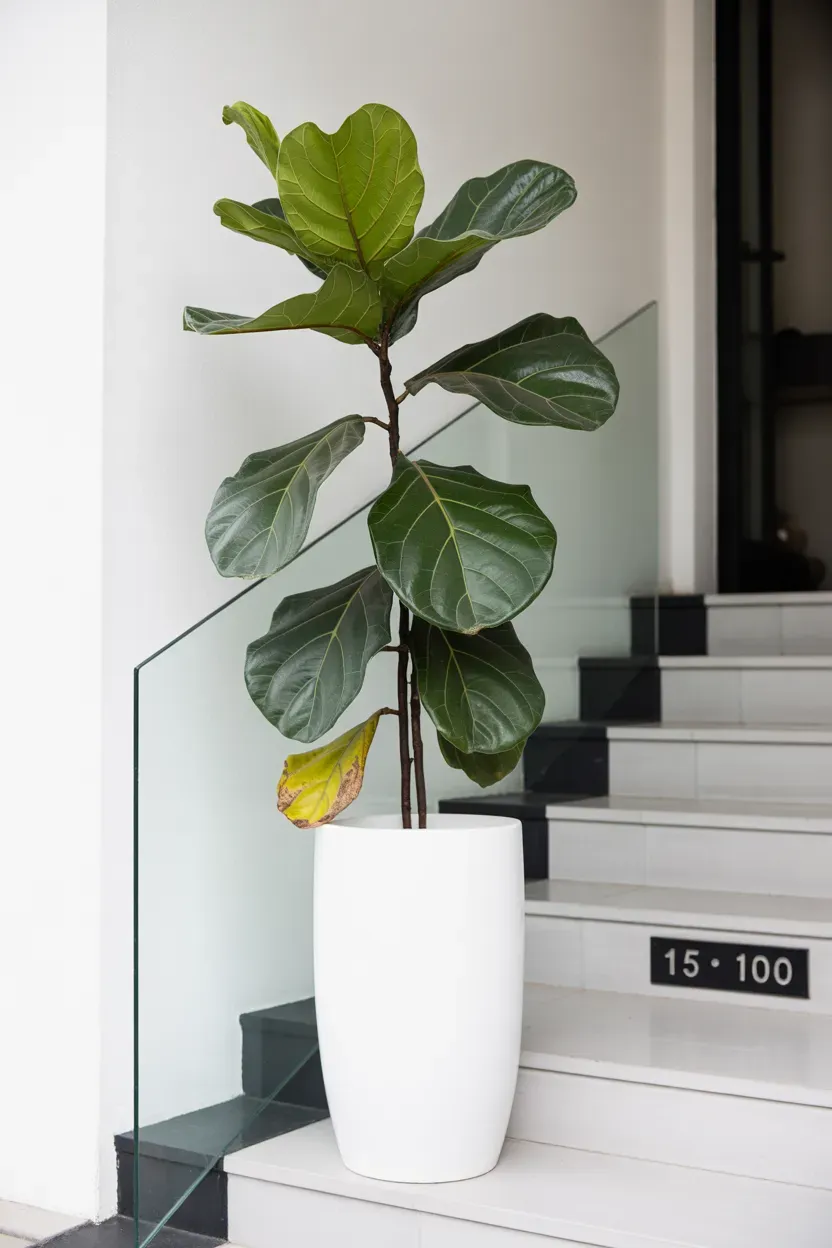
One well-placed fiddle leaf fig does more for a modern entrance than a full row of smaller plants, its bold, sculptural leaves reading as a single deliberate statement rather than a collection.
It needs bright indirect light for 6+ hours daily and dislikes being moved once positioned; water when the top 2 inches of soil dry, roughly weekly. Choose a covered or partially sheltered staircase spot if possible, since direct exposure to wind and full outdoor sun can stress this plant more than it would tolerate as a houseplant.
Internal link: fiddle leaf fig care and common problems External link: The Sill’s detailed fiddle leaf fig troubleshooting guide
15. Charcoal Gray Rectangular Troughs for Understated Cohesion
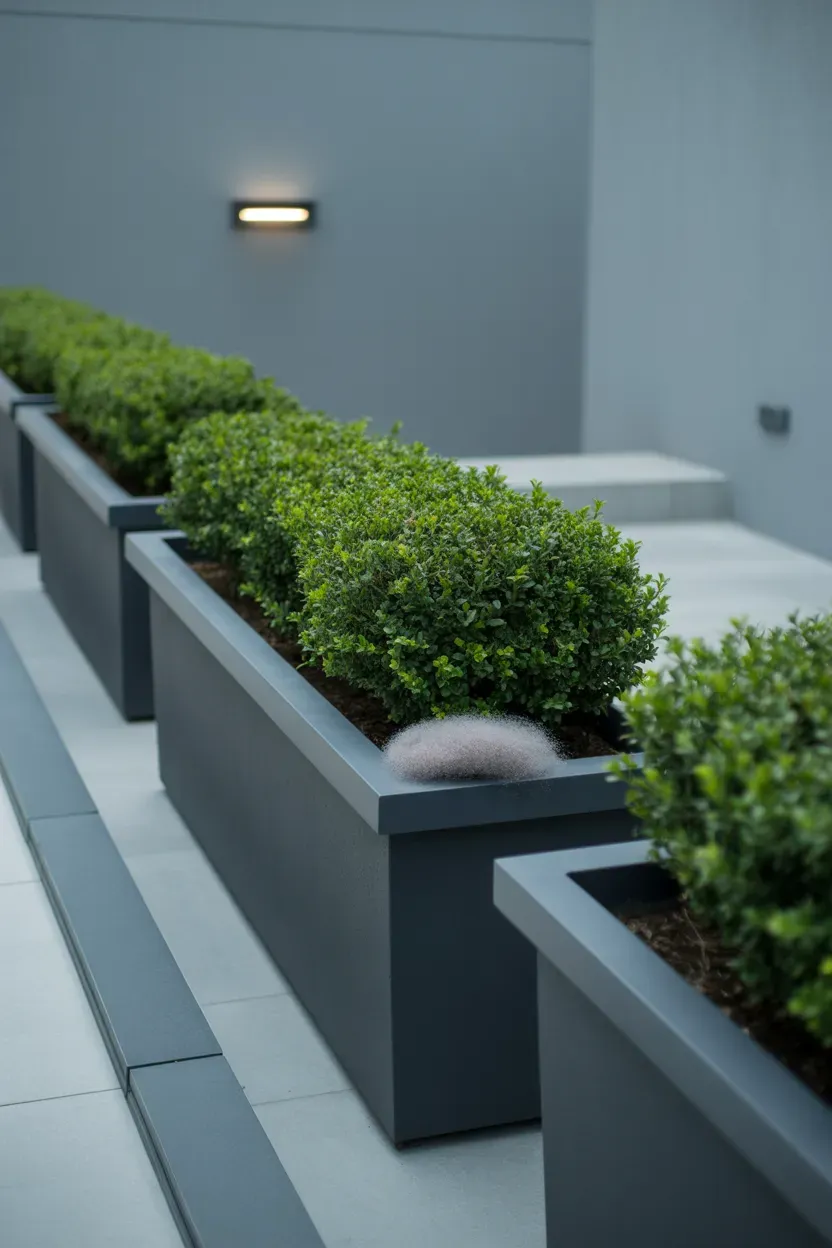
Long, low rectangular troughs in charcoal gray create a continuous line down a staircase rather than a series of separate objects, which reads as more architecturally integrated than individual round pots.
Fill with a low, dense hedge like dwarf boxwood, trimmed flat to follow the trough’s straight lines. It needs full sun to part shade and trimming every 6-8 weeks to maintain the crisp linear edge that makes this idea work. Fiberglass troughs stay considerably lighter than an equivalent concrete version, useful for elevated decks or landings.
Internal link: trough planters for linear modern garden design External link: RHS guide to dwarf boxwood hedging and trimming
16. Agave Architectural Accent for Bold Desert-Modern Style
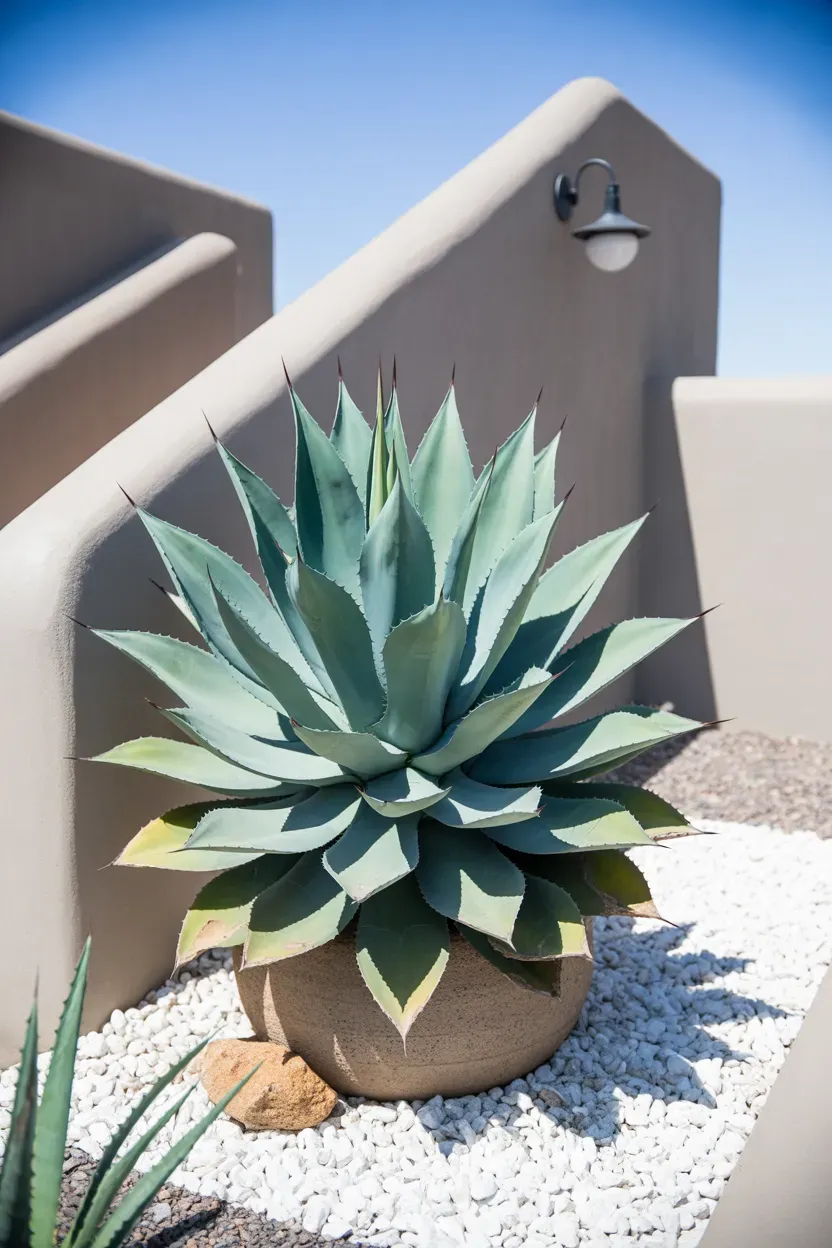
Blue agave’s perfectly symmetrical, spiked rosette form makes it one of the most visually striking single-plant statements available, and it needs almost nothing once established beyond occasional water.
It needs full sun and sharply drained soil, watering only every 2-3 weeks even in summer heat. Position it carefully away from foot traffic paths, since the sharp leaf tips can genuinely injure anyone brushing past too closely on a narrow staircase.
The trust-building limitation here: agave is not a plant for households with young children or pets that might wander close to the sharp spines, so consider a spineless variety or alternative if that’s a concern.
Internal link: architectural succulents for bold single-plant statements External link: University of Florida Extension’s agave growing and safety notes
17. Repeating Boxwood Cubes for Geometric Precision
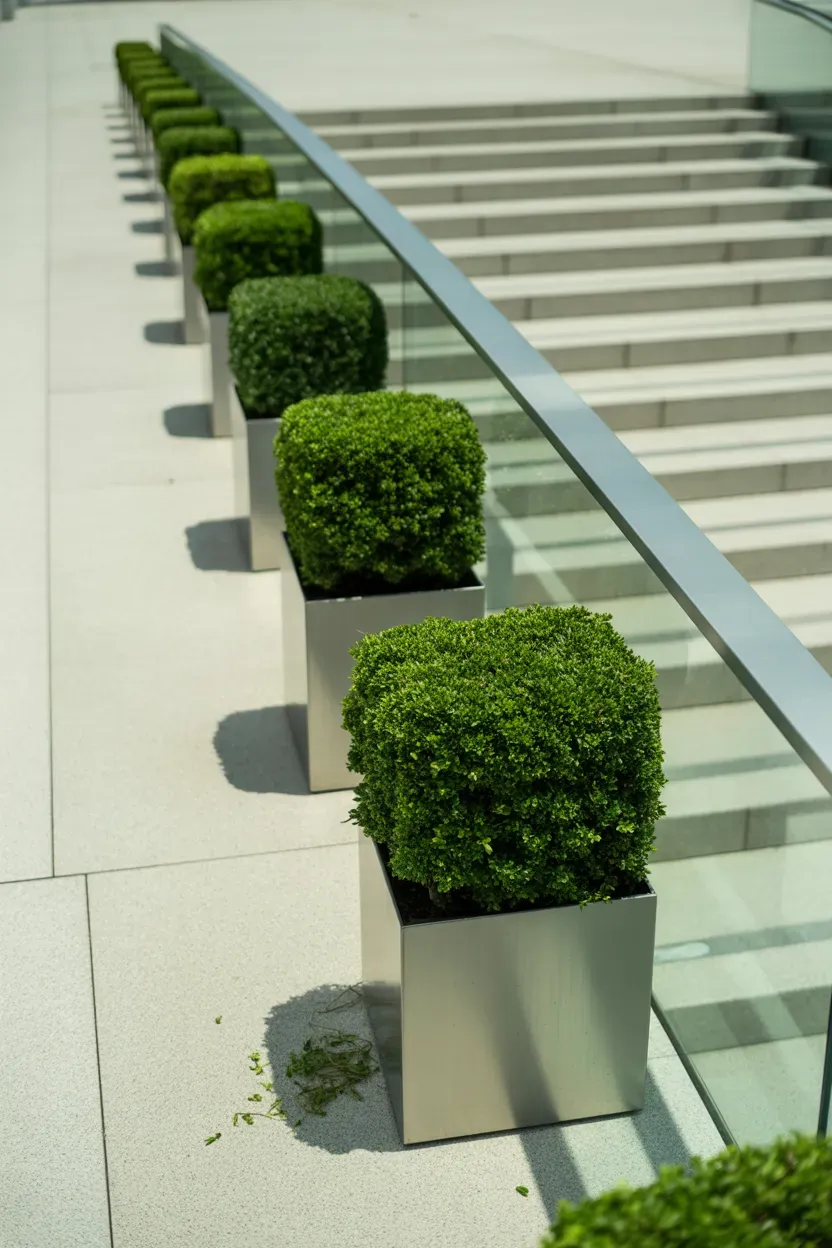
Square-clipped boxwood cubes, repeated identically down every step, create a geometric precision that round or organic plant shapes can’t match, making this one of the most formally “designed” ideas on the list.
They need full sun to part shade and trimming every 4-6 weeks with a hedge trimmer or shears to maintain crisp 90-degree edges. Consistency matters most here — uneven trimming between cubes undermines the entire effect, so trim all cubes in the same session using a guide frame if precision matters to you.
Internal link: precision hedge trimming techniques for geometric shapes External link: Gardeners’ World’s guide to shaping boxwood into geometric forms
18. Slate Gray Pebble Planters for Textural Ground Cover
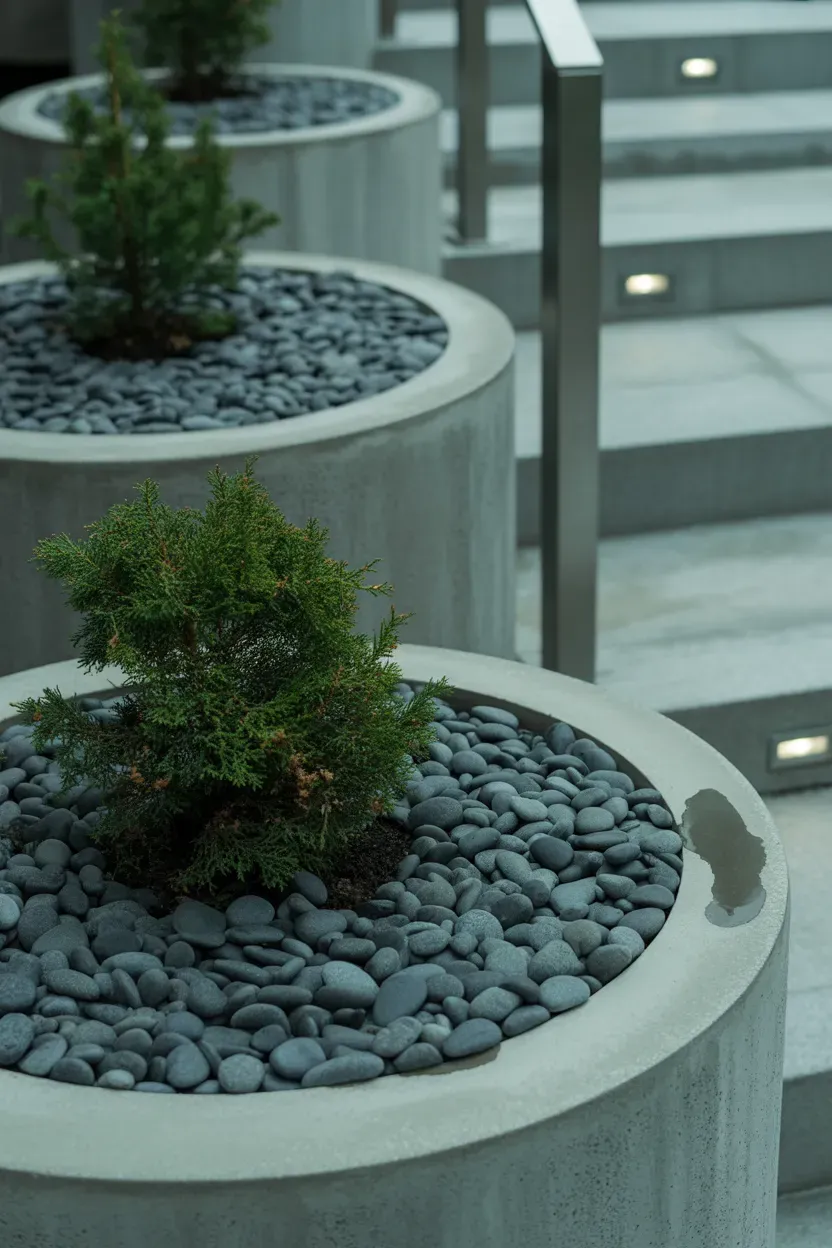
A pebble top-dressing over concrete planters adds textural interest and functionally suppresses weeds and retains soil moisture, all while keeping the palette strictly monochrome.
Choose small dwarf conifers, which tolerate full sun to part shade and need minimal pruning, just an annual shape check each spring. Top-dress with slate gray pebbles matched to the container color for a cohesive, unified look, and rinse the pebbles occasionally to keep them free of dust buildup that dulls their color over time.
Internal link: pebble mulch and top-dressing for modern containers External link: Almanac’s guide to dwarf conifer container care
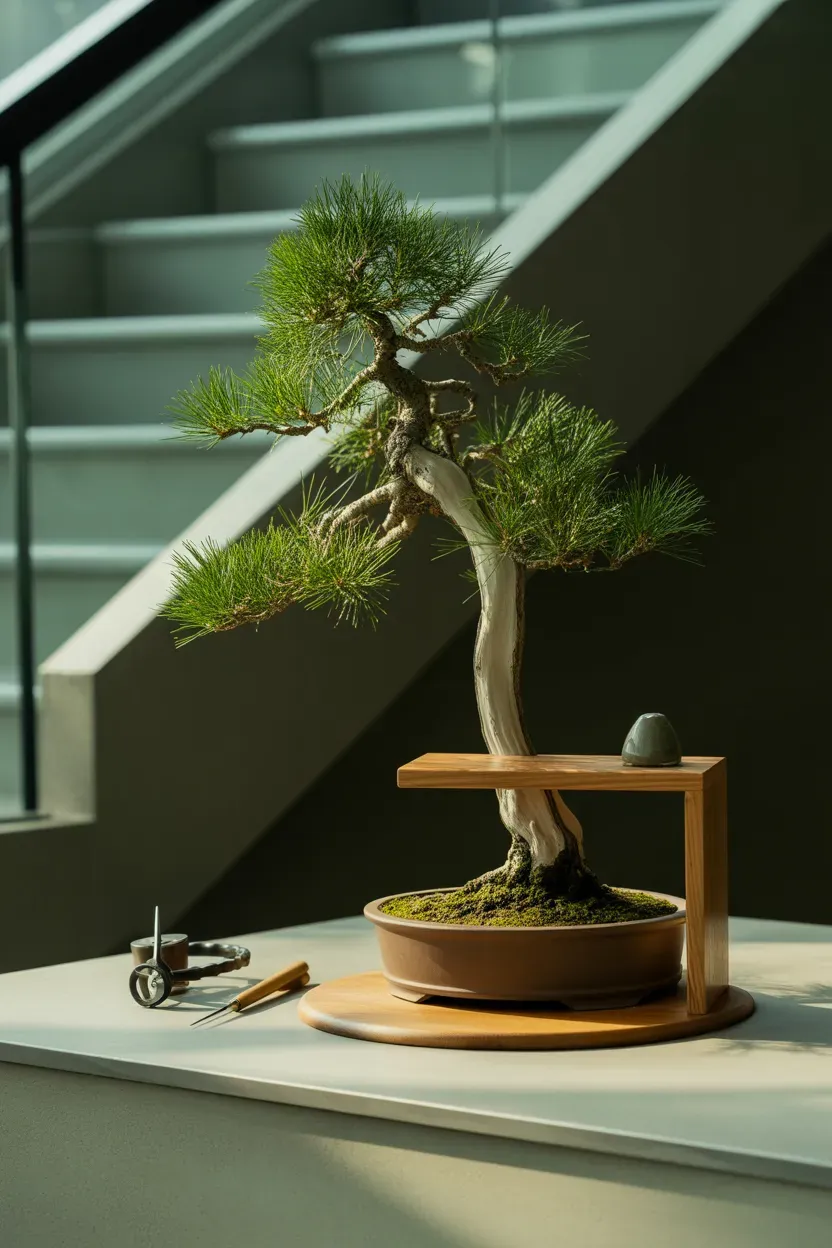
19. Minimalist Bonsai Display for a Contemplative Focal Point
A single, well-maintained bonsai brings genuine artistic focal interest to a modern entrance, though it demands more consistent care than nearly anything else on this list.
It needs bright indirect to partial direct light depending on species, and watering needs vary daily based on soil dryness rather than a fixed schedule — bonsai pots are shallow and dry out fast. Wiring and pruning to maintain shape happens 2-3 times yearly, and this is genuinely not a beginner-friendly, low-maintenance choice despite its minimal visual footprint.
Pro Tip: Start with a hardy, forgiving species like juniper rather than a more finicky tropical variety if this is your first bonsai — juniper tolerates missed watering and pruning mistakes far better while you learn.
Internal link: beginner bonsai species for outdoor display External link: BHG’s introductory guide to bonsai care
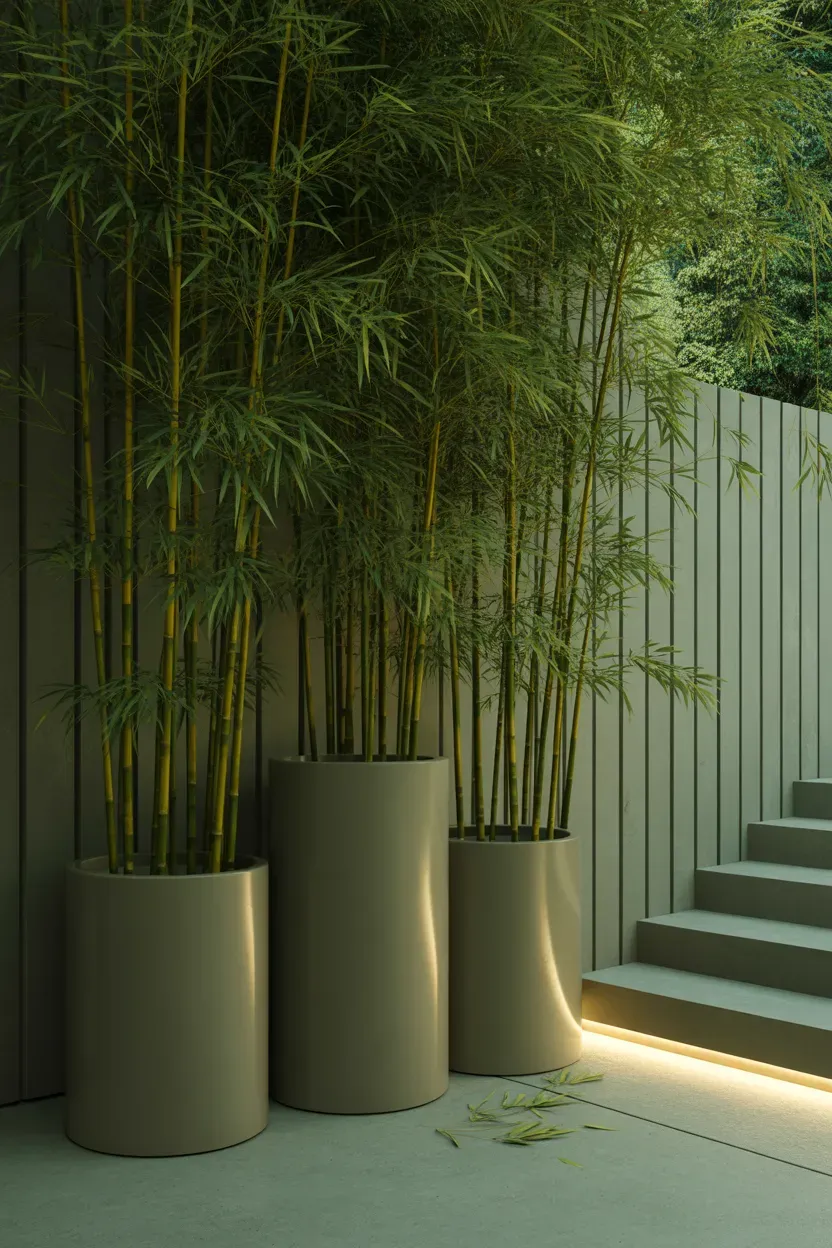
20. Tall Cylinder Bamboo Grove for Vertical Screening
Grouping three tall cylinder planters of clumping bamboo together, rather than spacing them individually down the staircase, creates a denser grove effect that provides genuine screening in one concentrated spot.
It needs part sun to full sun and consistent moisture, watering every 4-5 days in summer since container bamboo dries faster than ground-planted specimens. Cluster the three cylinders at slightly varied heights (18, 24, and 30 inches) rather than uniform height for a more naturalistic grove silhouette despite the strict container repetition.
Internal link: clustering containers for grove-style plantings External link: University of Florida Extension’s bamboo screening recommendations
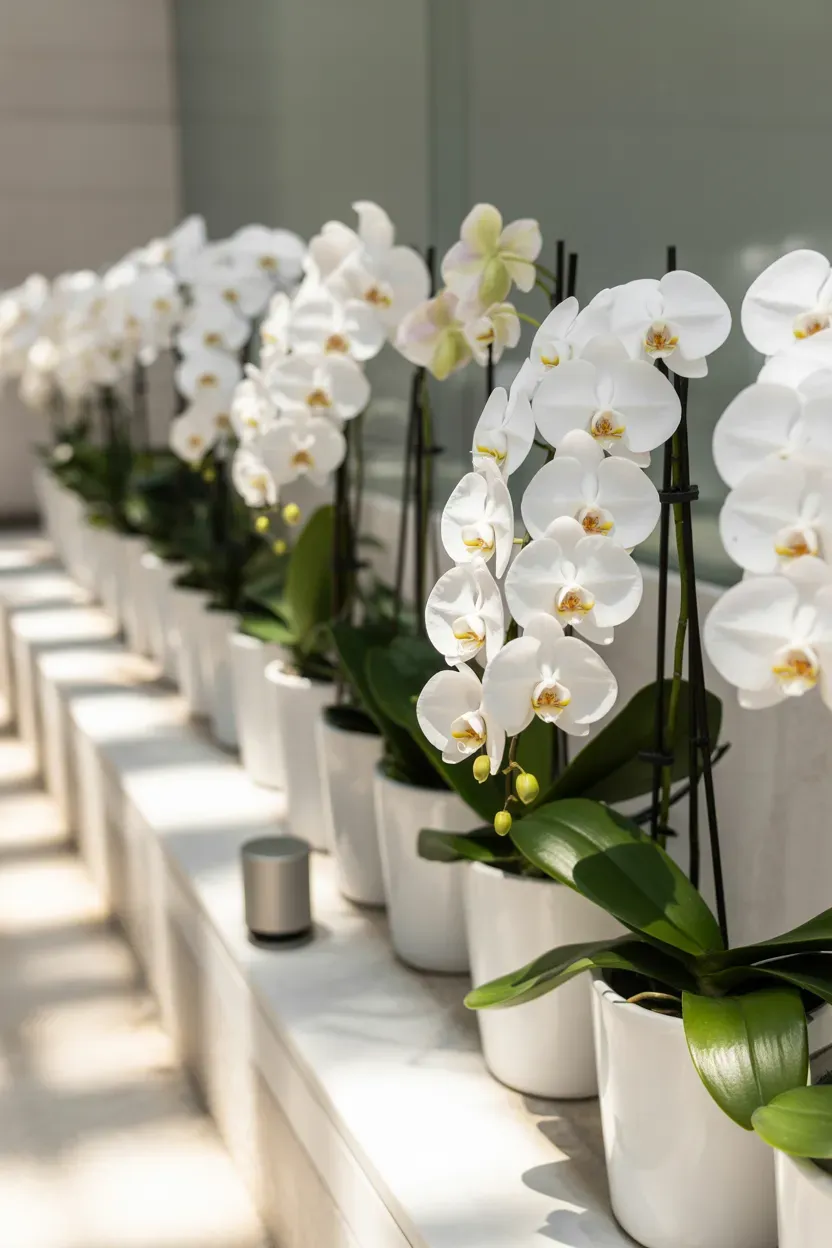
21. Monochrome White Orchid Row for Refined Elegance
White orchids in matching narrow ceramic pots bring a genuinely refined, almost gallery-like elegance to a covered or sheltered modern staircase, though they need protection from harsh outdoor conditions.
They need bright indirect light — never direct sun, which scorches the leaves — and watering once weekly by soaking the roots briefly rather than a light surface watering. This idea works best for a covered entrance or landing rather than a fully exposed outdoor staircase, since orchids are sensitive to temperature swings and rain exposure.
Internal link: orchid care for covered outdoor and entrance spaces External link: RHS growing guide for Phalaenopsis orchids
For a sheltered modern entrance, nothing else on this list reads quite as elegant.
22. Raw Steel Trough Planters for Unfinished Industrial Edge
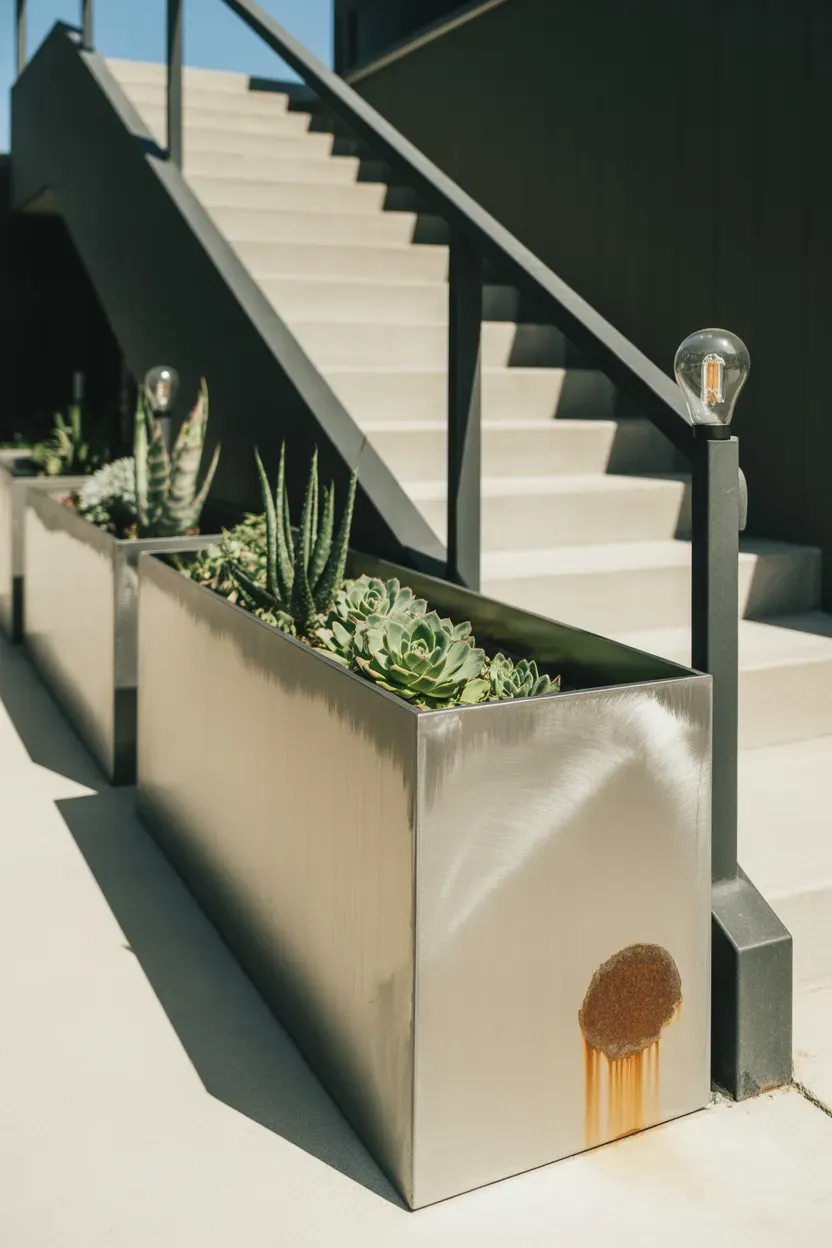
Unfinished raw steel troughs, left unsealed, develop a natural surface patina over time that many modern and industrial-style homes specifically seek out rather than avoid.
Fill with structural succulents like echeveria or aloe, which tolerate full sun and need water only every 10-14 days. Understand upfront that raw steel will develop rust spots and streaking within months — this is the intended aesthetic, not a defect, but it’s worth confirming that look genuinely fits your design before committing.
Internal link: raw and unfinished metal materials in modern garden design External link: SF Gate Home Guide’s guide to raw steel planter aging
23. Dwarf Mondo Grass Border for Fine Shaded Texture
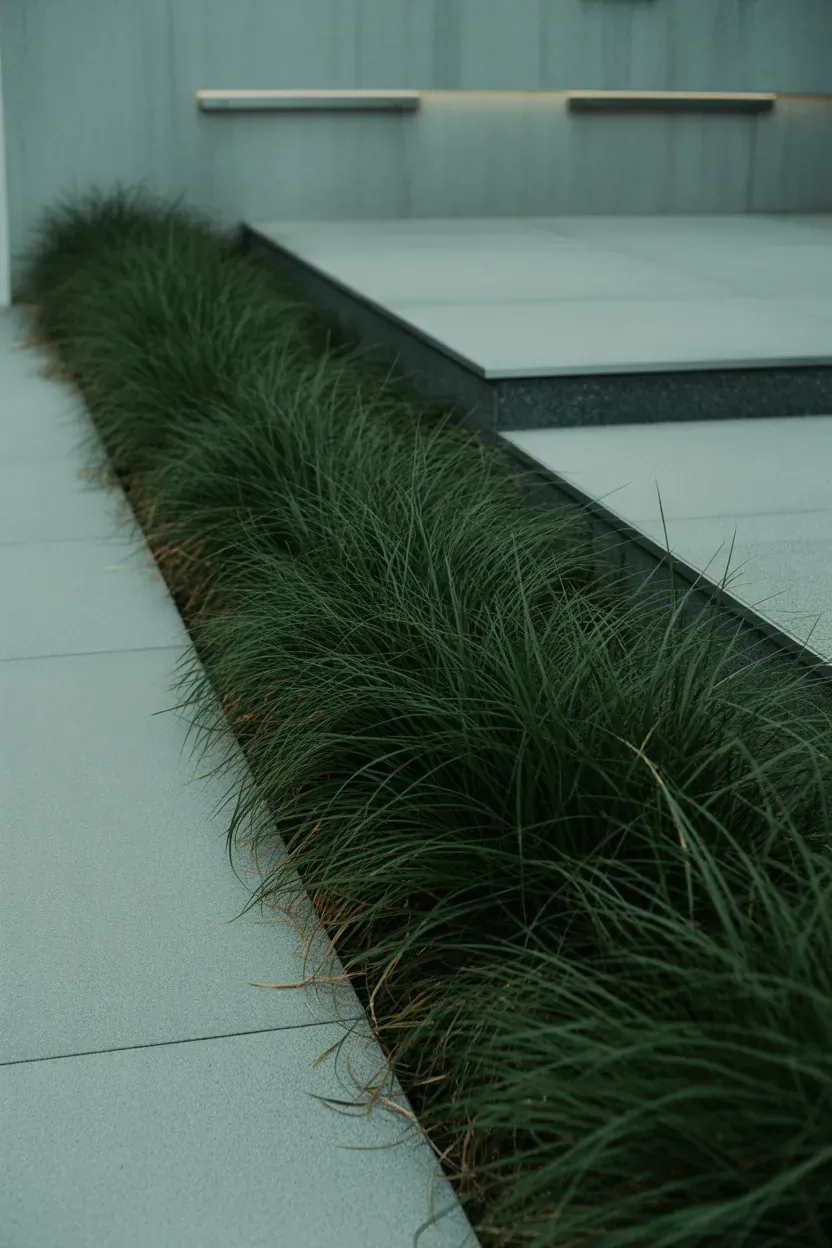
Dwarf mondo grass forms a tight, fine-textured green border along a shaded staircase edge, functioning almost like living trim between hardscape and planting without competing visually with anything else.
It tolerates part to full shade and average soil, growing slowly (2-3 years to full density) but requiring almost no maintenance once established. Plant directly along the step edges rather than in individual pots for a seamless, built-in look rather than a collection of separate containers.
Internal link: grass-like ground covers for shaded modern edges External link: University of Florida Extension’s Ophiopogon growing notes
24. Architectural Yucca Statement for Bold Vertical Drama
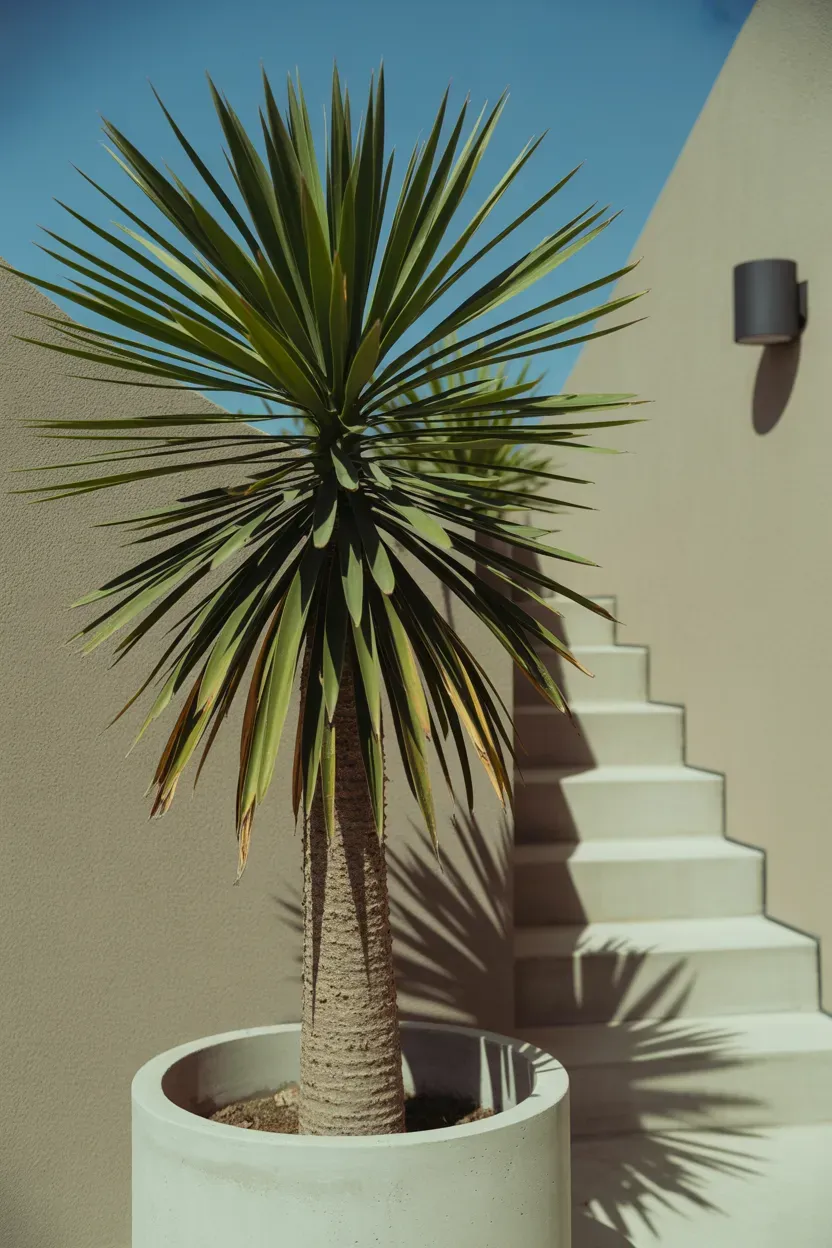
Yucca’s stiff, sword-like leaves create bold vertical drama that photographs dramatically against a plain wall or minimal facade, and it thrives on genuine neglect better than almost any statement plant available.
It needs full sun and sharply drained soil, watering only every 2-3 weeks and tolerating drought exceptionally well once established. Like agave, its leaf tips are sharp enough to cause injury, so position it away from the direct walking path on narrow staircases.
Internal link: bold architectural plants for statement container plantings External link: Missouri Botanical Garden’s yucca growing profile
25. Floating Shelf Planters for a Suspended, Weightless Look
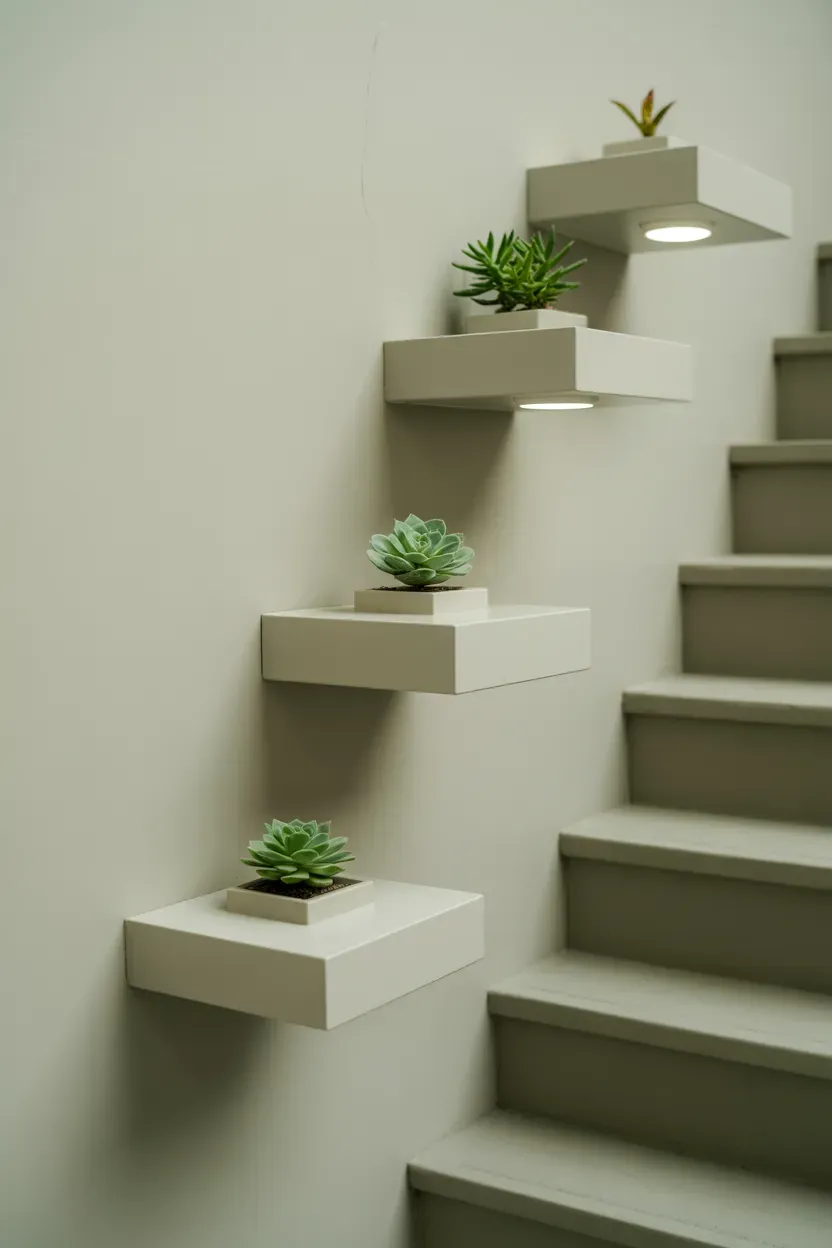
Floating shelves with hidden brackets create planters that appear to hover against a wall, adding vertical greenery without any visible support structure interrupting the clean lines.
Use a concealed floating shelf bracket system rated for the combined weight of pot, soil, and plant, typically 15-20 pounds per shelf. Fill with small, shallow-rooted succulents that won’t outgrow the compact shelf depth quickly, and secure firmly into wall studs given the cantilevered weight.
Pro Tip: Choose shelves rated for at least double your actual planted weight — cantilevered floating brackets lose holding strength faster than standard wall shelving, and this is the one detail that genuinely matters for safety here.
Internal link: floating shelf installation for vertical plant display External link: BHG’s guide to wall-mounted floating shelf weight ratings
26. Single-Tone Lavender Repetition for Restrained Fragrance
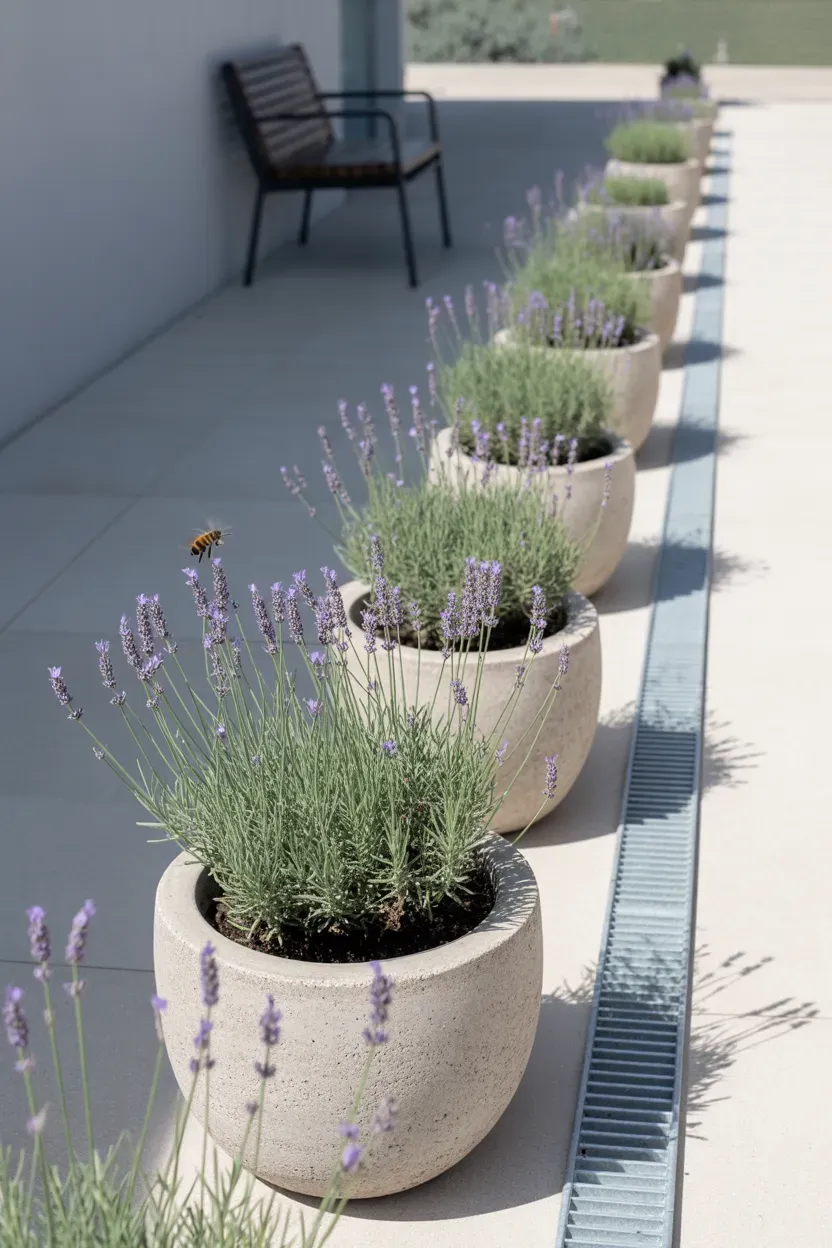
Lavender’s silvery foliage and restrained purple bloom color fit naturally into a modern gray-and-green palette, and repeating the same variety in matching pots keeps its cottage-garden associations from overwhelming the minimal aesthetic.
It needs full sun and sharp drainage above all — wet feet in winter is by far its most common failure point. Choose English lavender for the best cold hardiness, and deadhead lightly after the June-August bloom to maintain a tidy, uniform silhouette across all repeated pots.
Internal link: growing lavender in different climate zones External link: Gardeners’ World’s lavender growing and pruning guide
27. Minimalist Water Feature Planter for Sensory Layering
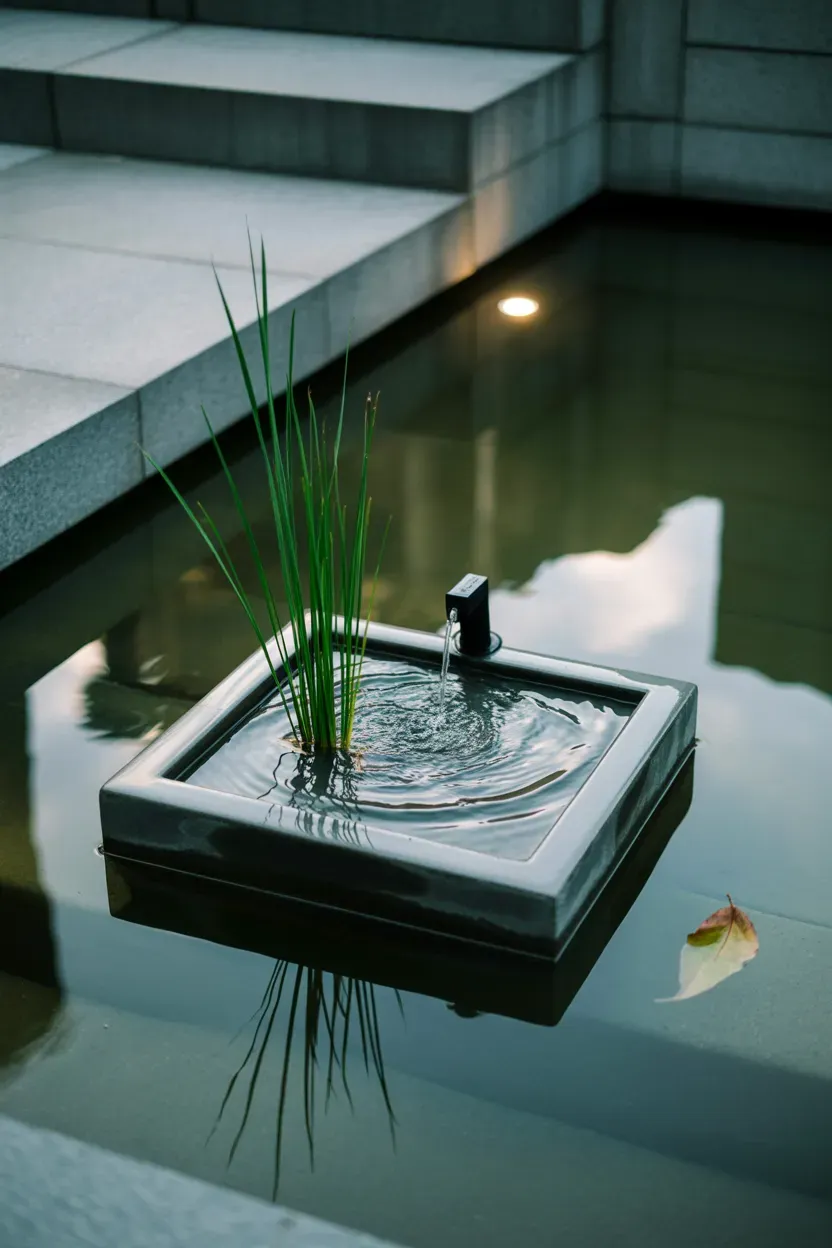
A small concrete water feature planter adds sound and movement to a modern staircase, layering a sensory element that static plantings alone can’t provide.
You need a compact recirculating pump system and a single water-tolerant plant like dwarf papyrus or a small reed, which needs full sun to part shade and constantly wet “feet,” unlike nearly everything else on this list. Clean the pump filter monthly to prevent algae buildup, which is the most common maintenance issue with small water features.
Internal link: small water features for modern garden design External link: Almanac’s guide to container water garden basics
The gentle sound alone makes this one of the more memorable additions on the whole list.
28. Geometric Cactus Garden for Structural Desert Minimalism
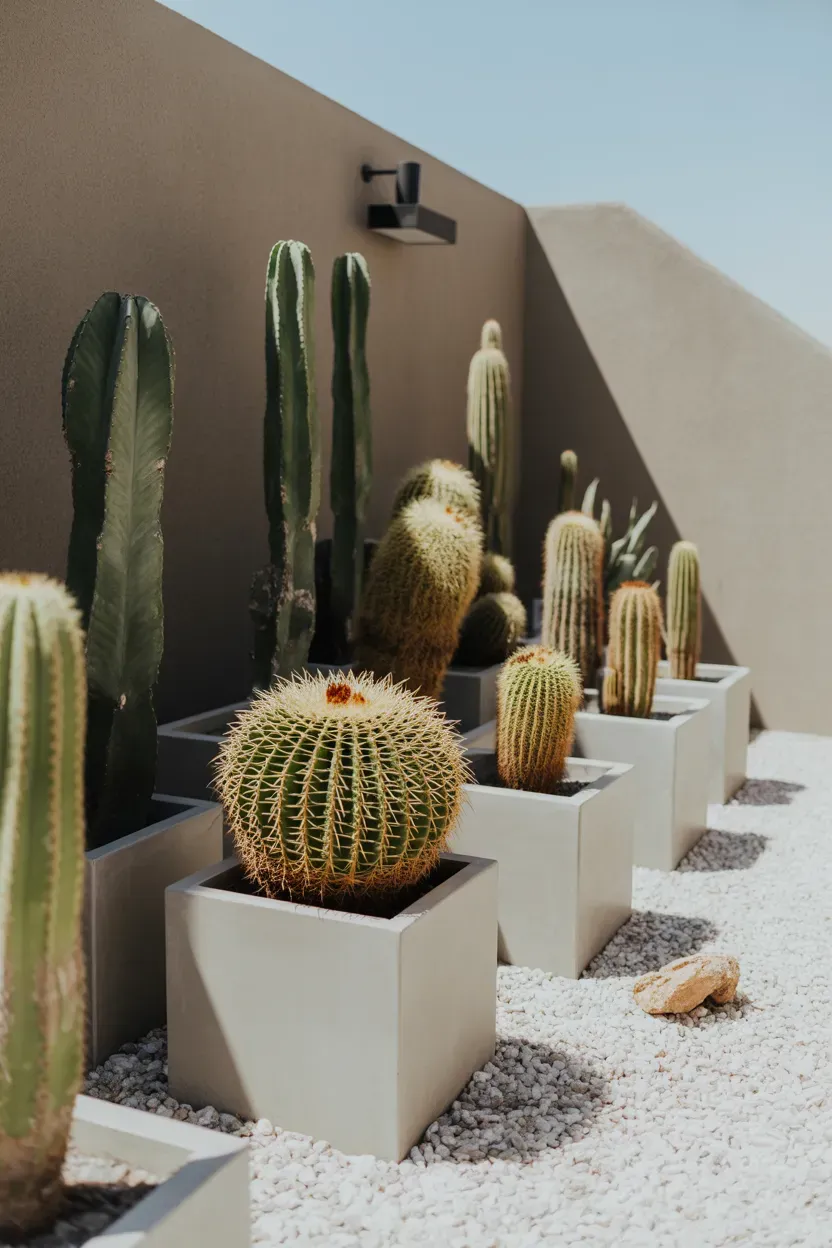
A collection of geometric cacti — columnar, barrel, and paddle varieties — brings genuine sculptural variety while staying within a strict, unified material and color palette, closing out this list with one of its boldest structural options.
They need full sun and extremely well-drained cactus soil, watering as infrequently as every 3-4 weeks even in peak summer. Vary the cactus shapes (tall columnar, round barrel, flat paddle) across matching concrete planters for visual variety that still reads as curated rather than random, since the consistent container and color palette unifies the different forms.
Internal link: building a cactus garden with varied structural forms External link: University of Florida Extension’s cactus container growing guide
Close out your staircase with this and the transformation from bare steps to designed entrance is complete.
Getting Started With Modern Staircase Gardens
The easiest first step is choosing one container material and one primary plant species before buying anything else — a modern look depends entirely on restraint, and mixing materials early undermines the whole effect. The most common beginner mistake is treating this like a traditional container garden and adding variety for its own sake; resist the urge to introduce a second color or container style until the first arrangement feels genuinely too sparse.
For your first purchase, get two or three matching concrete or matte black planters, one architectural plant like sansevieria or dwarf boxwood repeated across all of them, and a bag of appropriate soil (cactus mix for succulents, standard potting soil for everything else).
Realistically, expect the arrangement to look intentional from day one, since modern design relies on structure rather than fullness; most architectural plants reach their mature, settled look within one growing season.
Frequently Asked Questions
What plants work best for a modern minimalist staircase garden?
Sansevieria, boxwood, agave, and ornamental grasses all hold structural shape with minimal care, making them the most reliable choices for a modern look. Avoid plants with irregular, sprawling growth habits, since they undermine the clean lines a modern staircase garden depends on.
What container material looks most modern for outdoor stairs?
Concrete, matte black resin, and corten steel are the three most common modern container materials, each offering a different texture within a still-restrained palette. Avoid glossy or brightly colored ceramic, which tends to read as decorative rather than architectural.
How many plants should I use for a minimalist staircase look?
Fewer plants than you’d expect — often just one or two repeated species across three to five matching containers achieves a more designed look than a variety of different plants. Leaving occasional empty steps between plantings is a deliberate part of modern design, not a gap to fill.
Do modern staircase gardens require more or less maintenance?
Generally less, since architectural plants like sansevieria, agave, and ornamental grasses are chosen specifically for their tolerance of infrequent watering and minimal shaping. Exceptions include topiary and bonsai, which need consistent trimming to maintain their structured look.
Can I create a modern staircase garden on a budget?
Yes, concrete cube planters and cinder block-style builds cost significantly less than designer resin or corten steel options while achieving a similar clean aesthetic. Repeating a single low-cost plant like sansevieria or dwarf mondo grass across matching budget containers still delivers the cohesive, restrained look modern design depends on.
A Few Final Thoughts
Any combination of these 28 modern staircase garden ideas proves that a sleek, minimal entrance comes down to restraint and repetition rather than an abundance of plants or containers. Choosing one material, one or two plant species, and committing to that consistency across every step is what separates a genuinely modern look from a cluttered one. Give yourself permission to leave a step or two intentionally empty — that negative space does real design work rather than signaling something’s missing. Start with two or three matching planters and one structural plant, and you’ll likely find the restrained approach reads as more considered than anything a fuller planting scheme could achieve.