
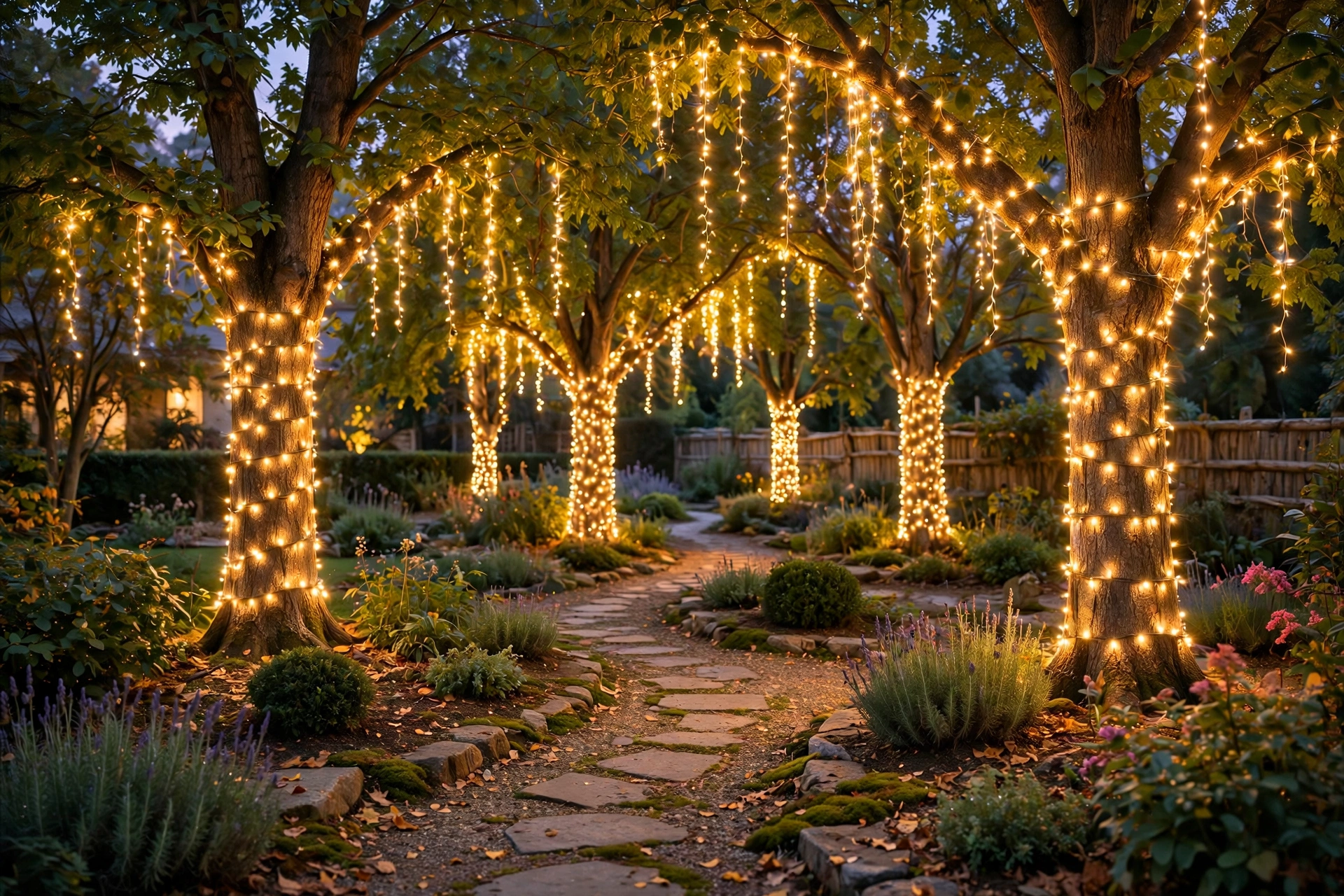
There is something about a tree wrapped in fairy lights that stops people mid-step. It turns an ordinary trunk into a sculpture and an ordinary yard into somewhere worth lingering. Tree wrapped fairy lights are also one of the most forgiving outdoor projects: no posts to set, no fences needed, just the trees you already have and a few strands of lights.
The key is wrapping in a way that looks intentional and keeps the tree healthy. Every idea below includes tree-safe methods — what to tie, what never to nail, and how to size your strands so you buy exactly what you need.
1. The Classic Spiral Trunk
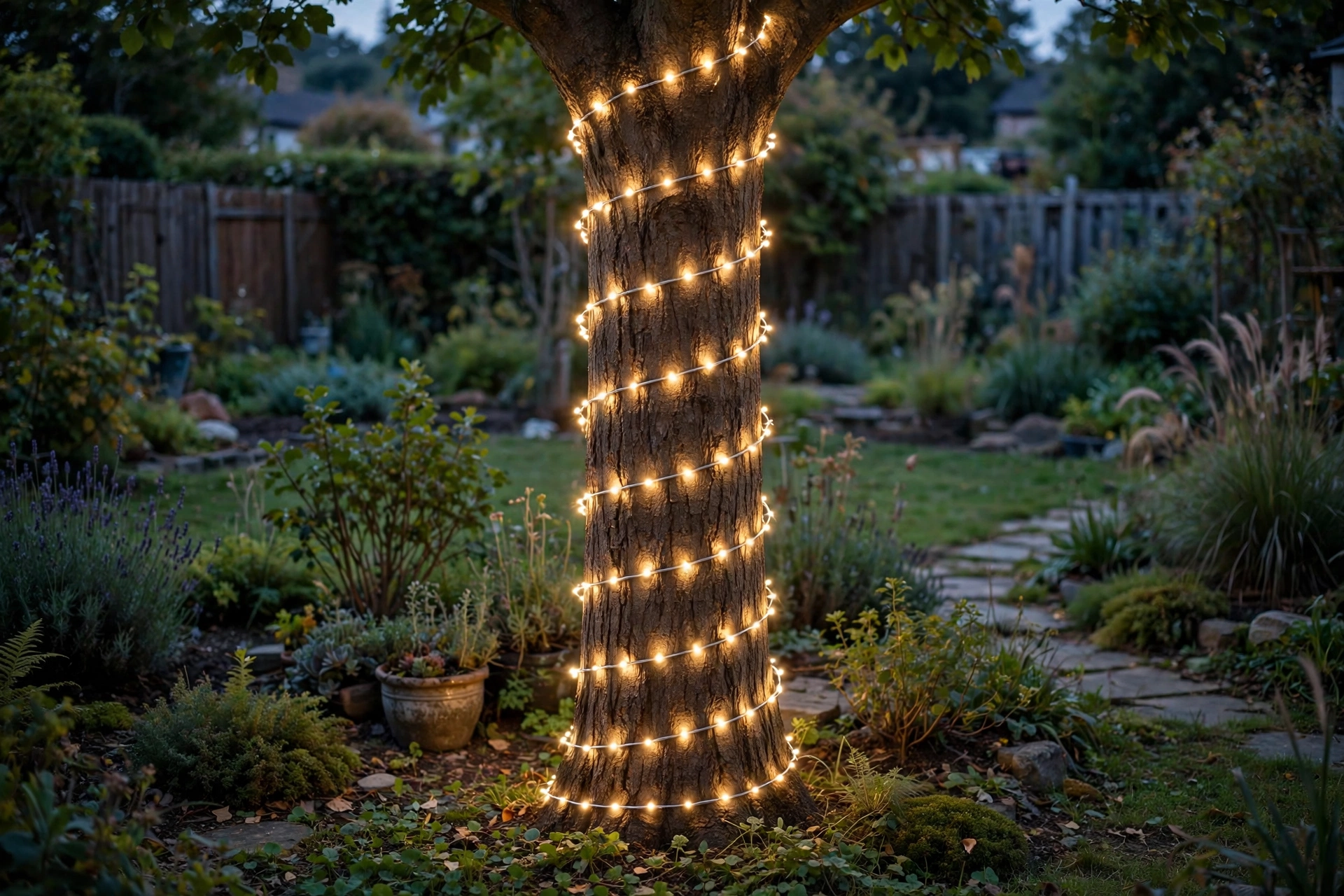
Wrap the trunk in a neat upward spiral, spacing each loop 4 to 6 inches apart. Start at the base, plug in or stake the strand’s start, and walk around the tree feeding the wire upward in an even helix. For a 12-inch-diameter trunk, one 66-foot strand covers about 8 feet of trunk height. Use warm white micro fairy lights for a delicate look, and secure the top with a loose loop of garden twine rather than a nail or staple so the bark stays undamaged.
2. Trunk Plus First Branches
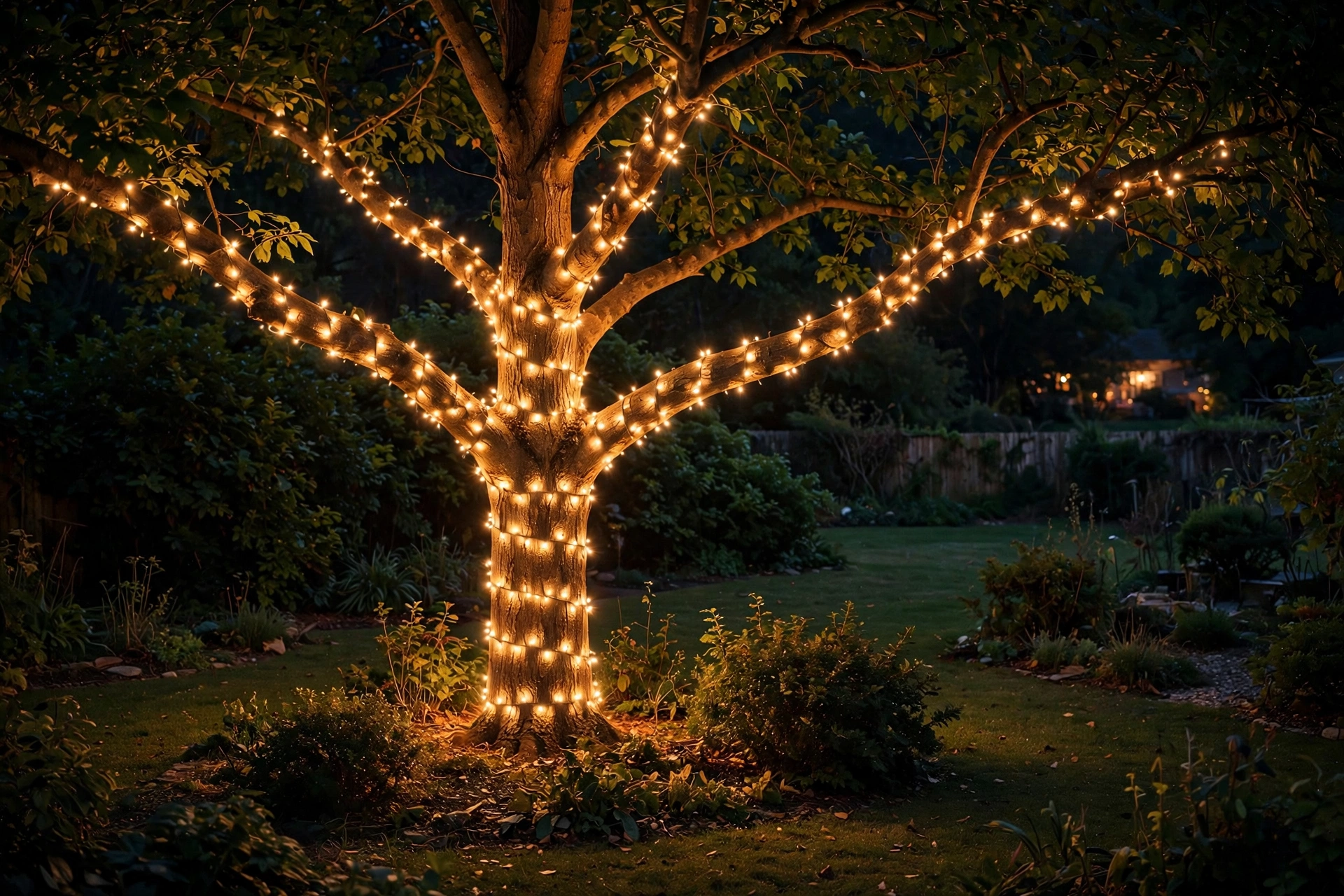
Continue the spiral past the trunk onto the lowest two or three branches. Once you reach the first fork, split the strand — or start a second one — and wrap each major limb outward for 3 to 4 feet, spacing loops a little wider on branches than on the trunk. This makes the whole lower tree glow instead of just the pole of the trunk, and it looks spectacular on open-grown trees with wide branch angles. Keep wraps loose enough to slide a finger under the wire so growing branches are never girdled.
3. The Full Canopy Toss
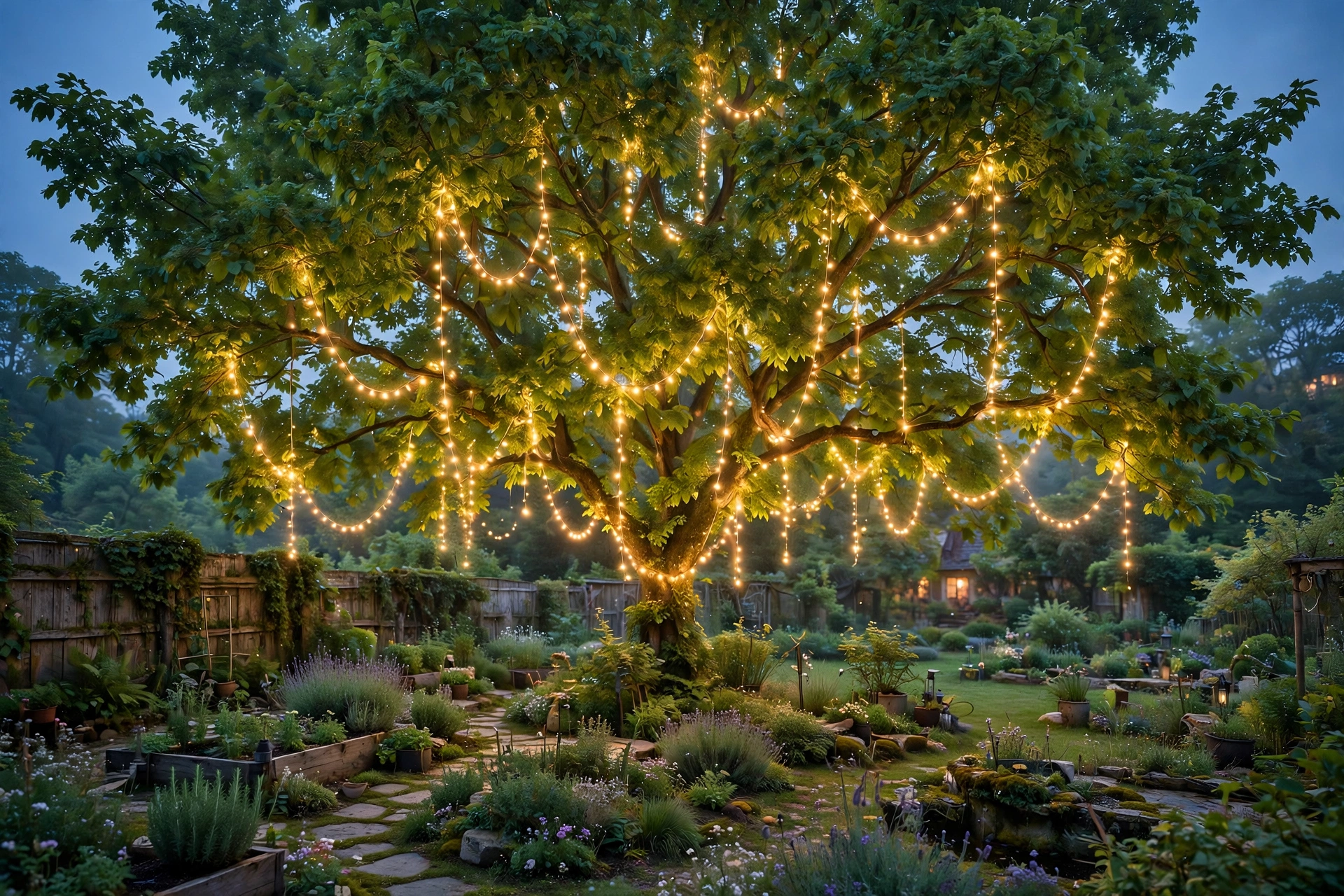
Toss lightweight strands over the outer canopy so light drips through the leaves. Stand back and throw (gently) a coiled strand over a sturdy mid-canopy limb, then pull one end down so the strand drapes through the foliage like a glowing vine. Repeat with 4 to 6 strands around the tree for a full chandelier effect. This works best on dense trees like maples or oaks in leaf, and the leaves diffuse the light into a soft green-gold glow. Only use limbs you have checked for strength — dead wood and light strands are a bad combination.
4. The Net Light Shortcut
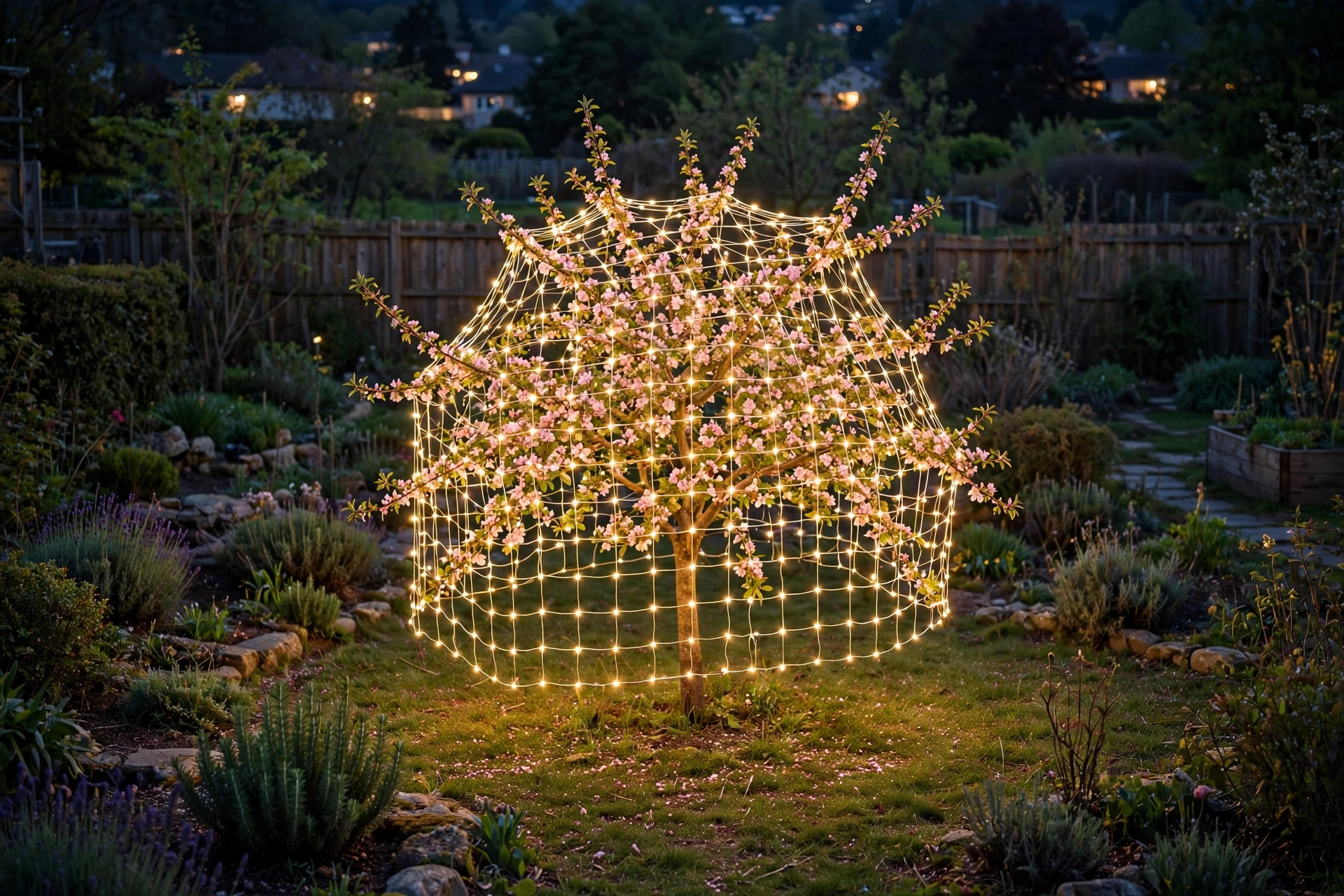
Drape trunk-and-shrub net lights over small ornamental trees for instant, even coverage. Net lights, sold for bushes, unfold into a grid that you simply throw over a small tree and let settle — every intersection glows, so coverage is perfectly even with zero wrapping skill. One 4-by-6-foot net covers a young dogwood or Japanese maple beautifully. Stake the net’s bottom corners so wind cannot lift it, and choose nets with brown or green wire so the grid disappears against the bark by day.
5. The Statement Specimen Tree
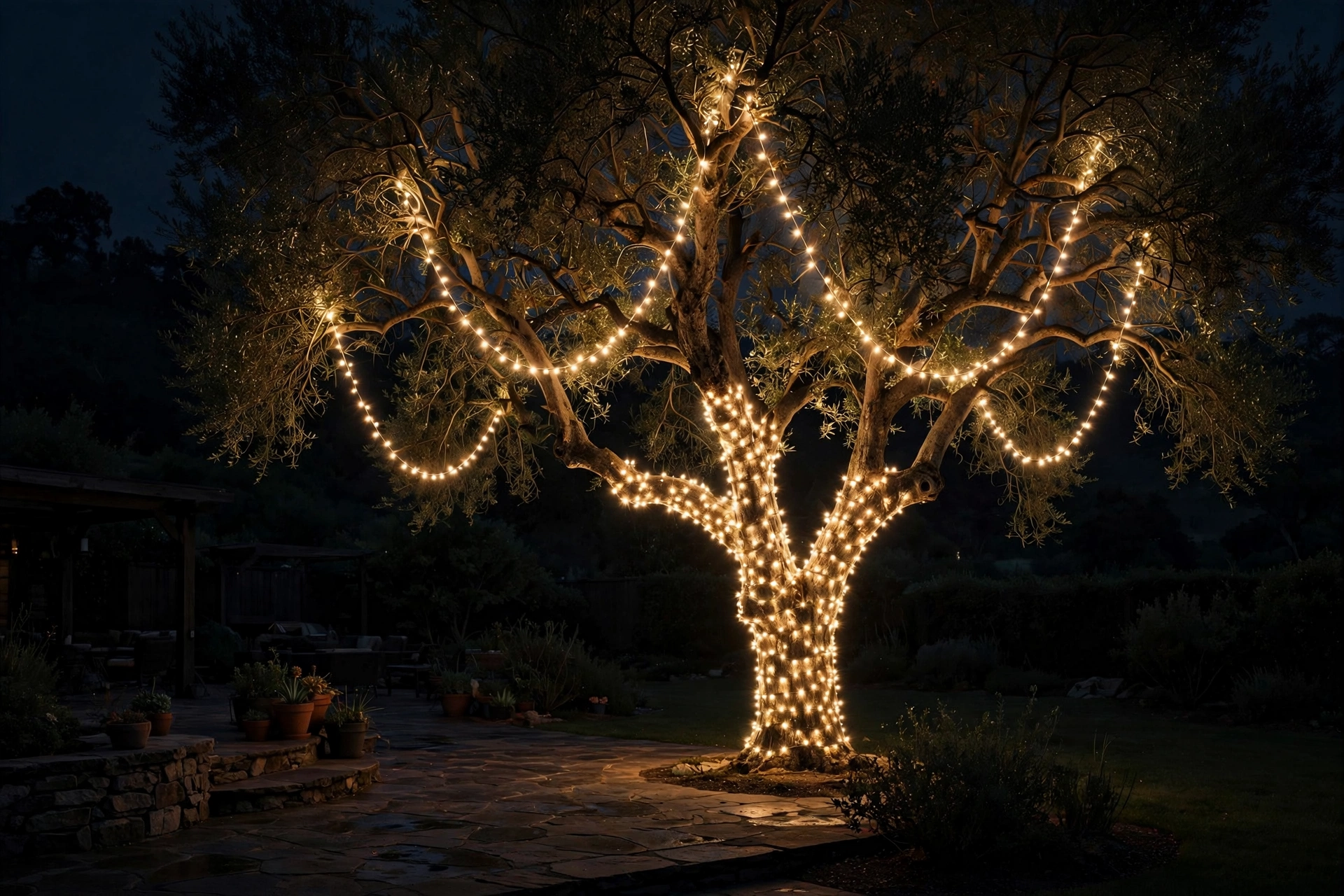
Pick one hero tree and light it dramatically while leaving the rest of the yard dark. Wrap the trunk densely (2-inch spacing) and toss three or four strands into the canopy of a single beautiful tree near the patio or front window. One brilliantly lit tree reads as intentional design; a dozen dimly lit trees read as clutter. This is the highest-impact, lowest-cost approach on the list — often just two or three strands total.
6. The Grove Walk
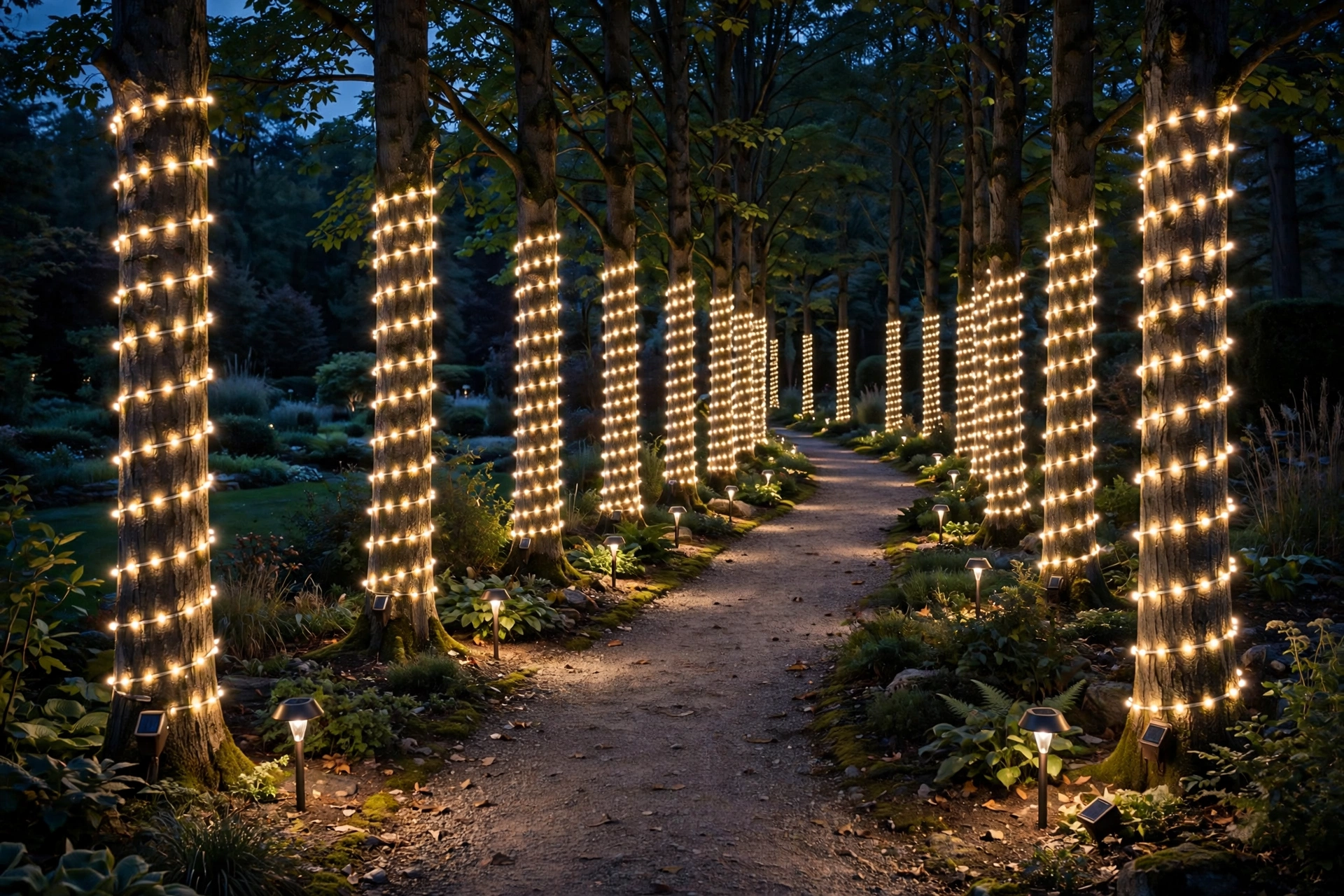
Line a path with a series of wrapped trees so the walk itself becomes the feature. Wrap the trunks of every tree along a garden path with the same warm white lights at the same spacing, and add a low solar path light at each tree’s base. Walking the path feels like moving through a lit colonnade. Buy all strands from the same product line so the color temperature matches — mixed warm and cool whites along one path look accidental.
7. Up-Lighting Plus Wrap Combo
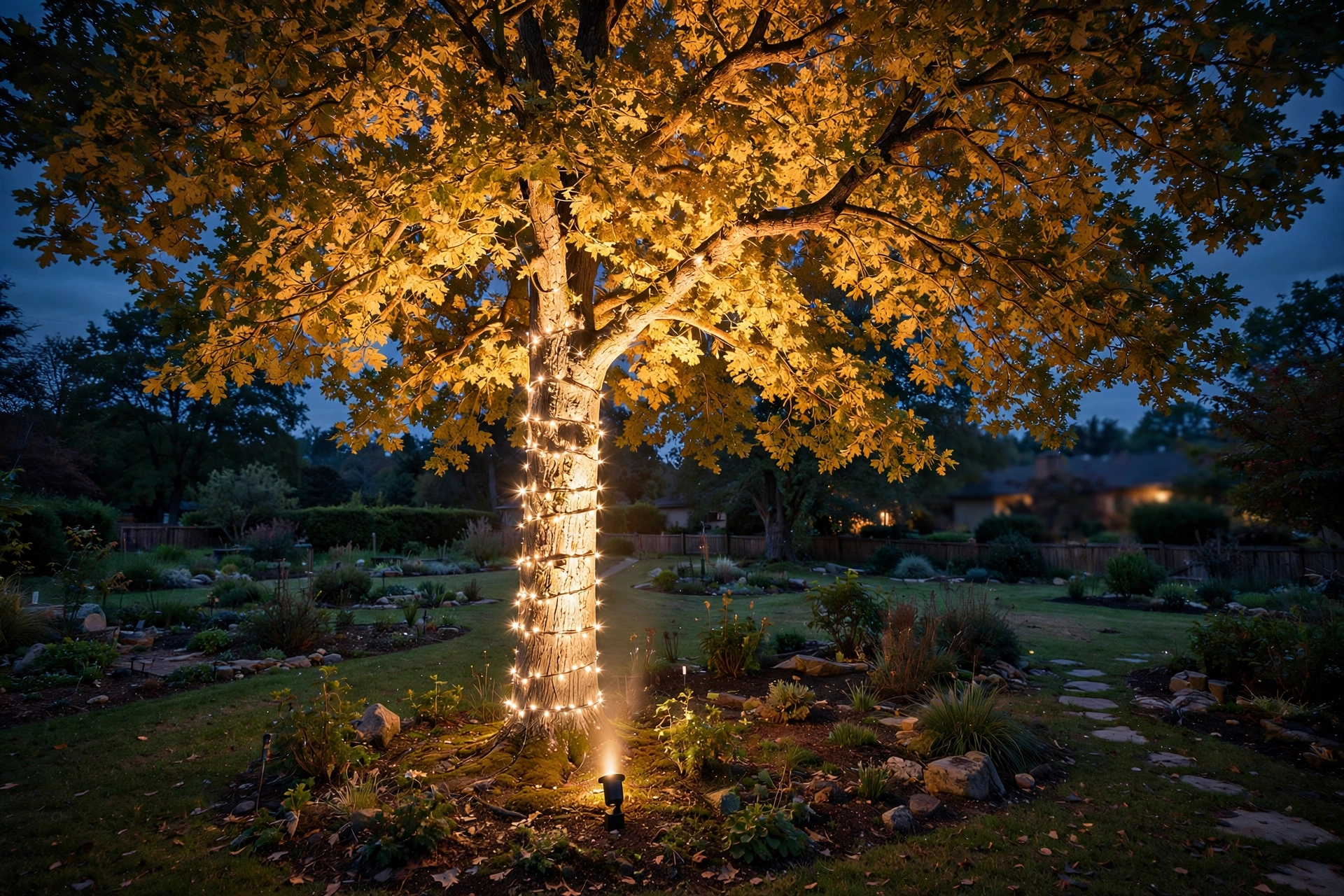
Pair a wrapped trunk with a ground spotlight aimed up into the canopy. Wrap the trunk as usual, then set a solar or low-voltage spotlight at the base angled up through the branches. The wrap gives sparkle at eye level while the uplight paints the canopy in a wash of light. The combination makes even a modest tree look grand. Aim the spotlight to graze the bark rather than blast straight up, which avoids lighting the neighbor’s bedroom window.
8. The Orchard Row
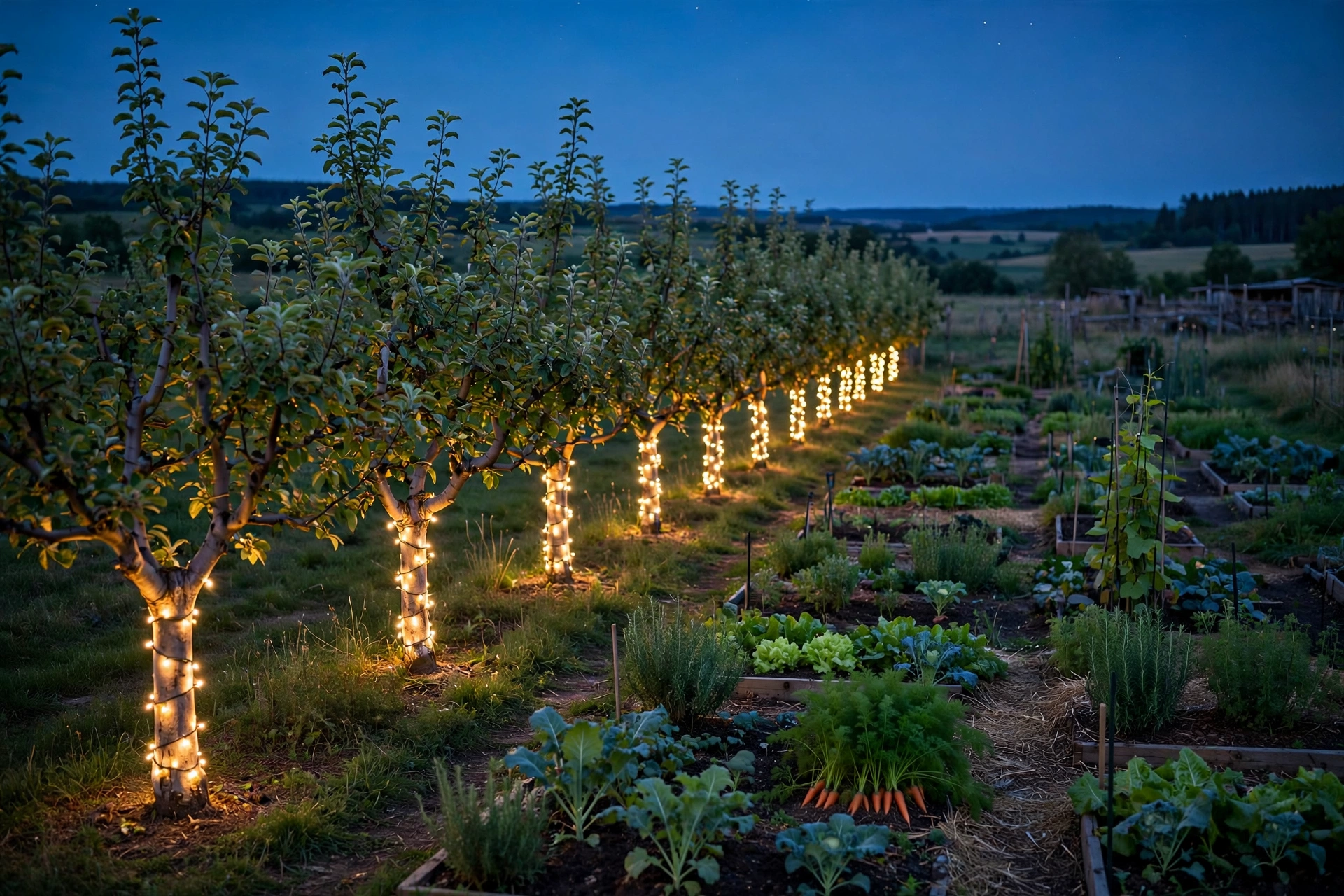
Wrap fruit trees in a row with simple trunk spirals for a working-garden glow. Fruit trees have the perfect form for this — short trunks, open centers — and a row of lit trunks along the vegetable garden or orchard looks both charming and practical, extending your harvesting hours into the evening. Use solar fairy lights here so there are no cords to snag the mower, and wrap only in the growing season, removing strands before winter pruning.
9. The Fairy-Tale Weeping Tree
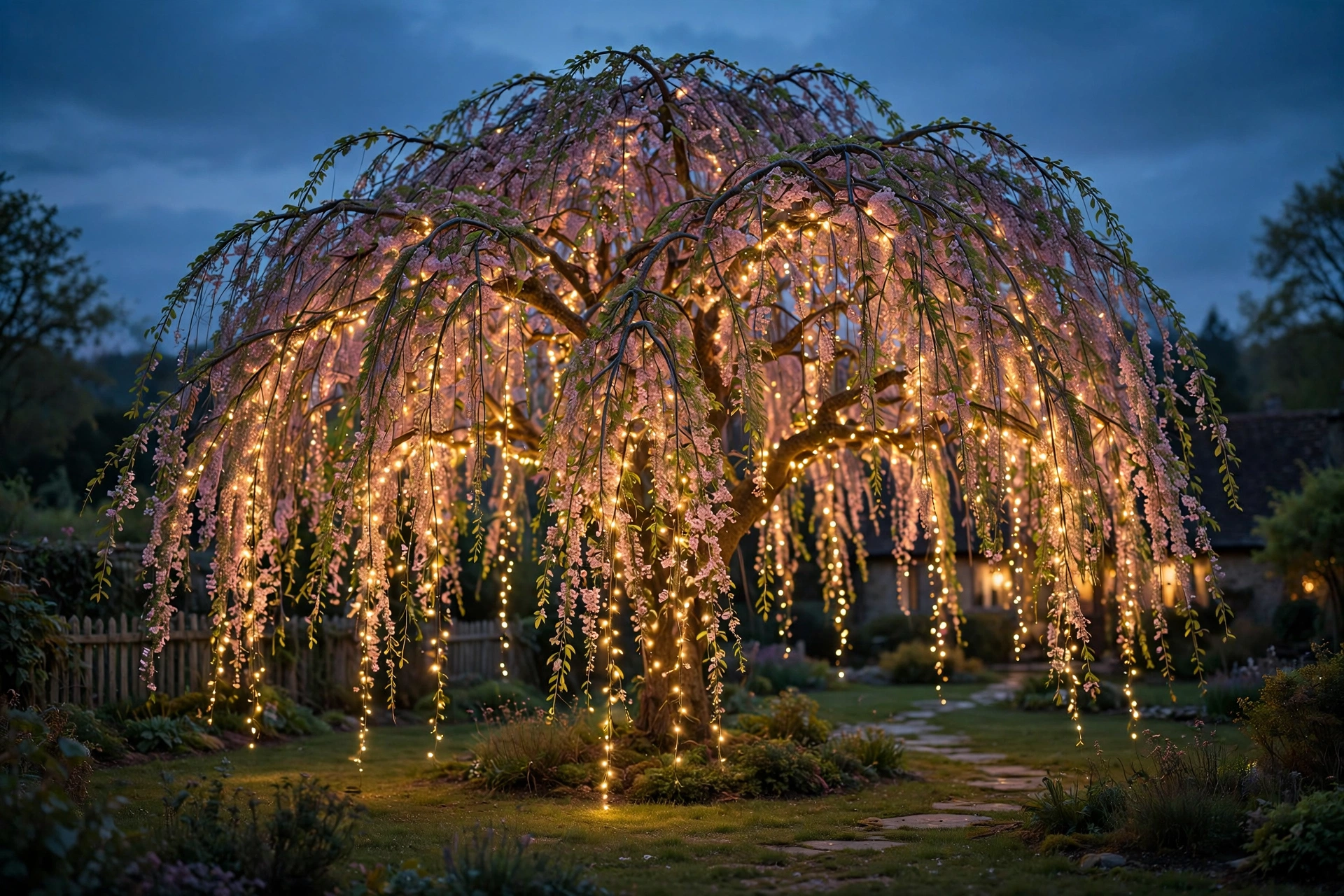
On weeping trees like cherries or birches, weave lights through the hanging branches. Thread strands in and out of the pendulous branches, letting the lights follow the natural curtain of foliage downward. The effect is pure storybook — a glowing willow-like dome you can stand under. Work from the inside out so you do not snap the delicate hanging tips, and use the lightest micro-LED strands you can find since weeping branches bend under weight.
10. Seasonal Color Swaps
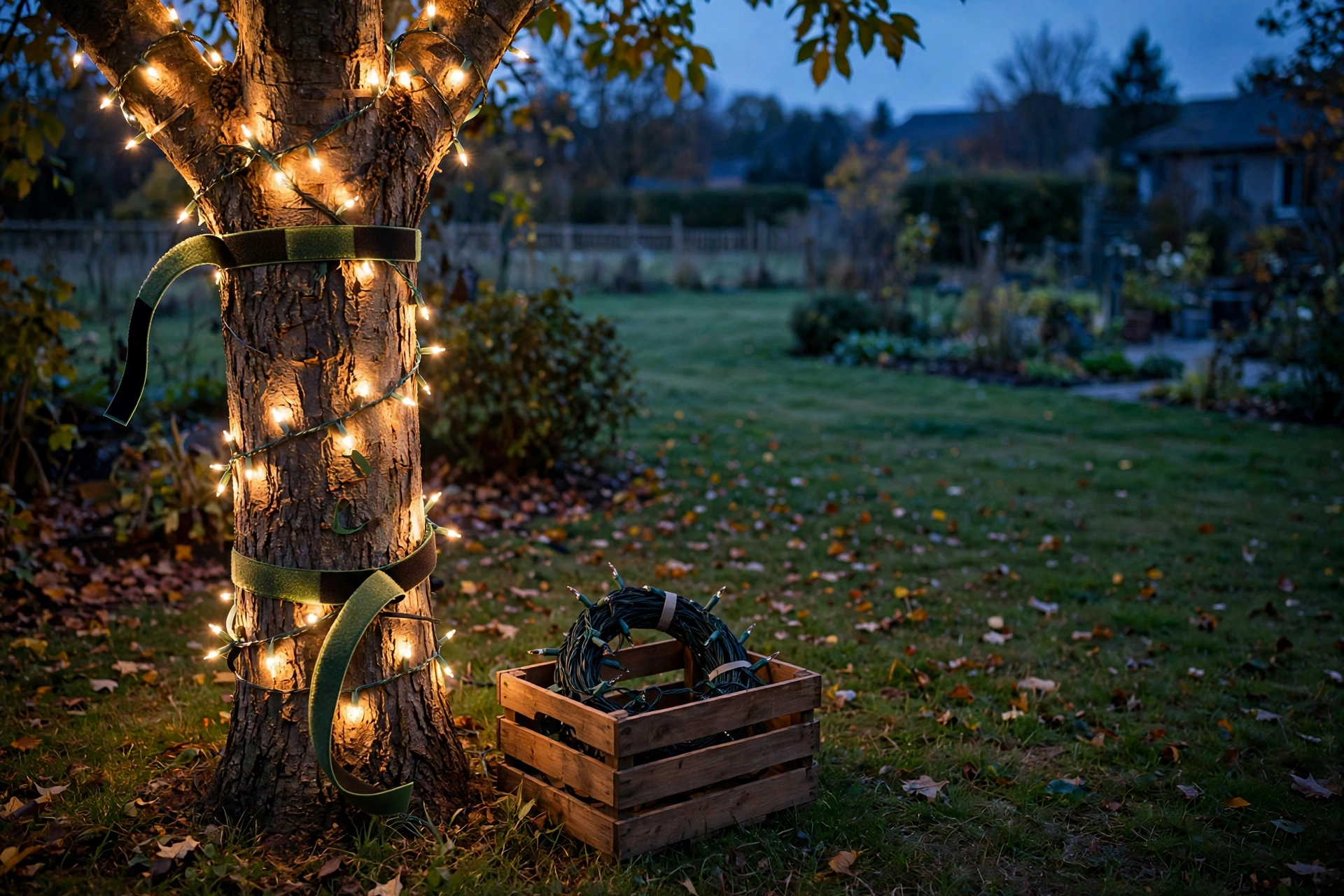
Wrap trunks with warm white for most of the year, then swap to color for holidays. Install the trunk wrap with reusable Velcro garden ties instead of twine so strands come off in minutes. Keep one set of warm white strands for everyday and a second set in amber, red-green, or icy blue for the holidays, swapping them in an afternoon. The tree becomes a year-round decoration that never looks tired, and the reusable ties protect the bark through every change.
11. The Multi-Trunk Cluster
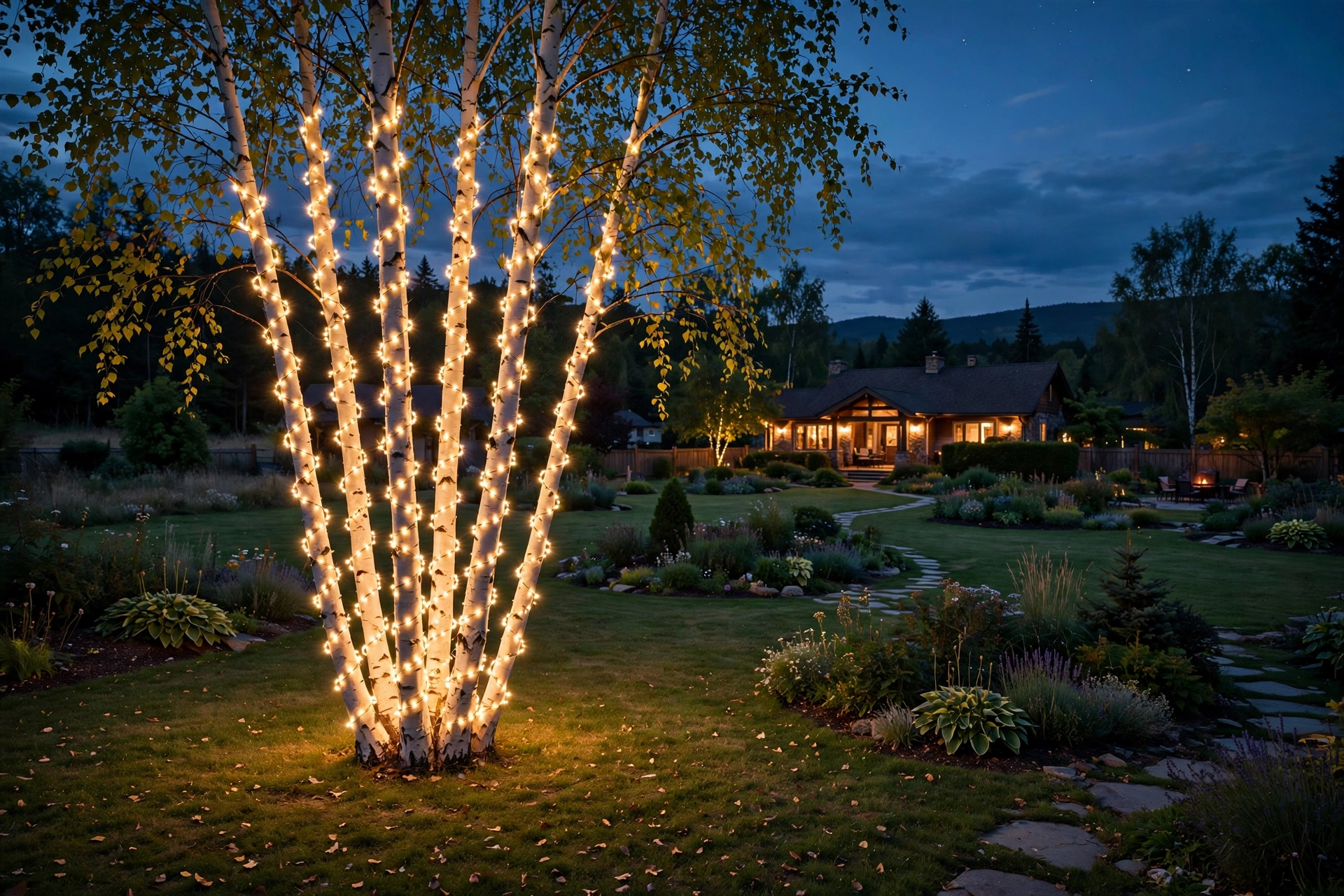
On multi-stem trees like birches or crape myrtles, wrap each stem and let the cluster glow as one. Wrap every stem of the clump with the same spacing, starting all spirals at the same height so the pattern reads as a set. Multi-stem trees wrapped this way look like a bundle of candles and are visible from across the yard. Because the stems are thin, use micro fairy lights rather than chunky C9 bulbs, which would overwhelm the delicate form.
12. The Front Yard Welcome Tree
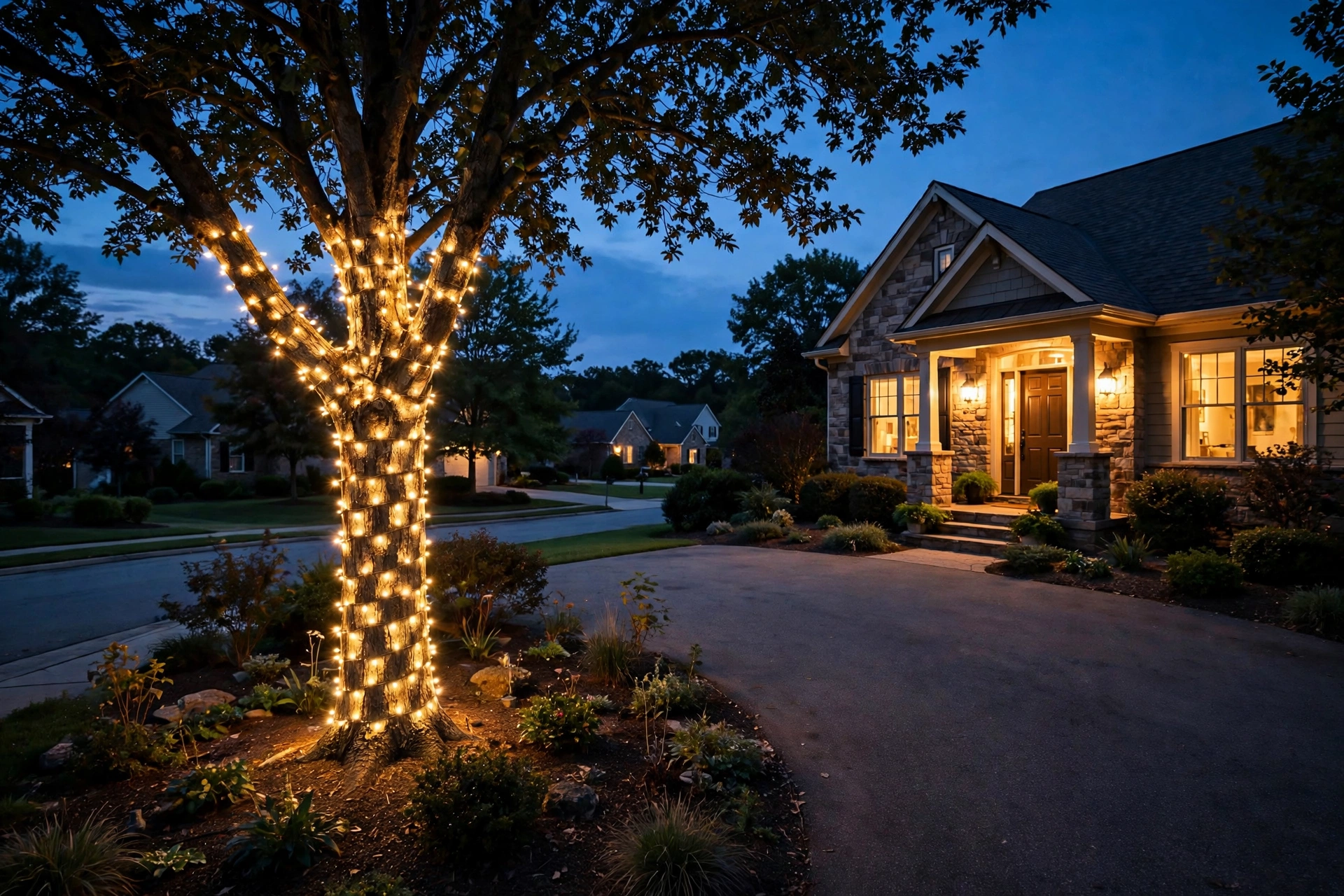
Wrap the tree nearest the front door or driveway so the house greets visitors with light. A single well-wrapped trunk by the entry says “welcome” better than any porch sign, and it is visible from the street, which adds curb appeal and a sense of security. Put it on a dusk-to-dawn sensor so it is always on when anyone arrives after dark. This is the one tree-wrapping project with a real return beyond beauty — a lit entry deters prowlers and guides guests to the door.
Quick Buying & Safety Tips
- Buy outdoor-rated fairy lights (UL/ETL wet-location listed) — tree strands live in rain, sap, and sprinklers all season.
- LED only for tree wrapping: they run cool, so they will not scorch bark or dry leaves, and a 66-foot strand sips power.
- Never nail, staple, or screw into a living tree — use loose garden twine, Velcro plant ties, or drape methods; wounds invite disease.
- Keep wraps loose enough to slide a finger underneath so the wire never girdles growing trunks or branches.
- Size before you buy: measure trunk circumference and height, then estimate one 66-foot strand per 8 feet of 12-inch trunk at 4-inch spacing — buy one spare strand.
- Use outdoor timers or solar strands so trees are lit in the evening, not burning electricity all night.
- Inspect yearly: remove strands each fall, check for bark damage or tight wires, and rewrap loosely in spring.
FAQs
Will fairy lights damage my trees?
Not if you wrap correctly. Damage comes from nails, staples, tight wires that girdle growth, and hot incandescent bulbs against bark. Loose LED strands secured with twine or plant ties are harmless, especially if you remove and rewrap them once a year.
How many strands do I need to wrap a tree?
It depends on trunk size and spacing. As a rule of thumb, a 66-foot strand wraps about 8 feet of a 12-inch-diameter trunk at 4-inch spacing. Measure your trunk’s circumference and the height you want to cover, divide the height by your spacing to get the number of loops, and multiply loops by circumference for total wire length.
Can I leave fairy lights on trees all winter?
You can, but inspect them first. Ice and wind stress the wire, and growth continues slowly even in winter. In harsh climates, take strands down in late fall and rewrap in spring — it takes an hour and doubles the lights’ lifespan.
Solar vs plug-in for tree lights?
Solar strands are easiest — no cords across the lawn — but they glow dimmer and shorter on cloudy days. Plug-in strands are brighter and run all night on a timer. For a hero tree you look at every evening, plug-in is worth the extension cord; for background trees, solar is fine.
Closing
You already own the hardest part of this project — the trees. A few strands of fairy lights and an hour of wrapping is all it takes to turn them into the best-looking feature in the yard. Start with one trunk this weekend, step back at dusk, and watch what happens. Chances are you will be ordering more strands by Monday.