
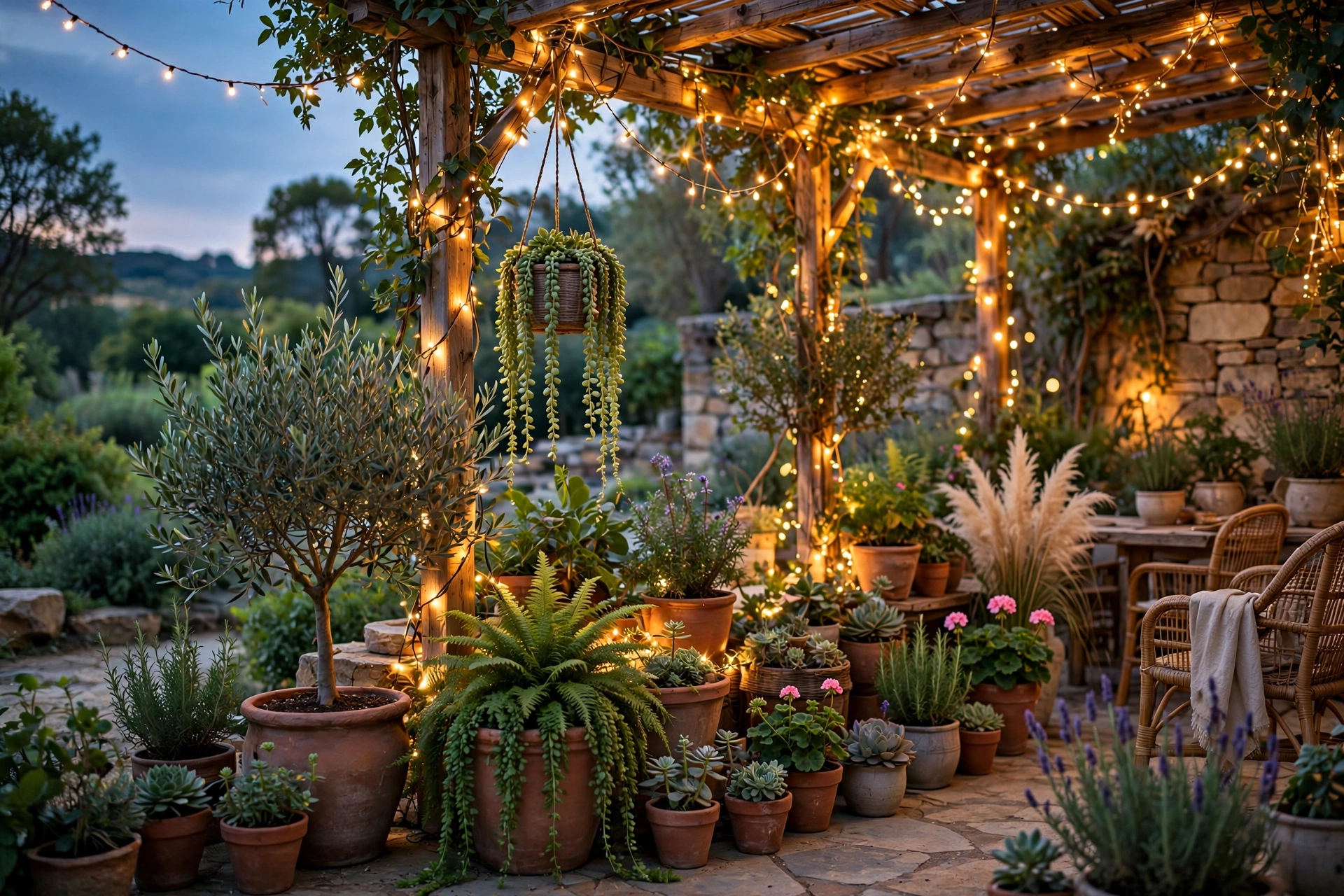
Fairy lights and potted plants were made for each other. The lights give structureless sparkle, the plants give living shape, and together they turn an ordinary pot into the thing everyone asks about. But not every combination works: the wrong light on the wrong plant looks tangled and fussy instead of magical.
The pairings below match each light style to a specific plant type, with notes on how to arrange them so the plant stays healthy and the lights stay visible. Work with what you already own first. You probably have the perfect pot sitting on your patio right now.
1. Copper Wire Micro Lights + Trailing Pothos
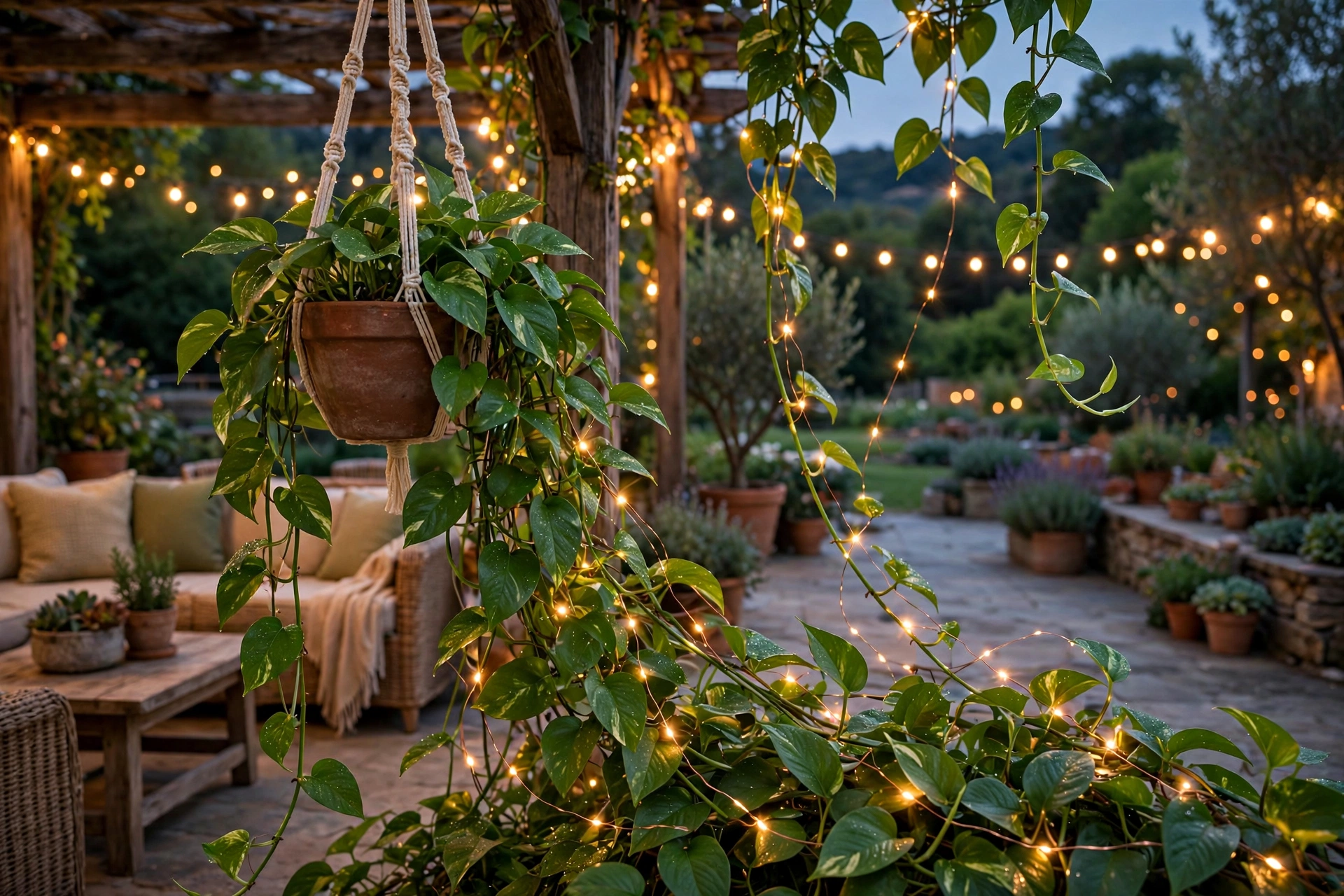
Thread a 33-foot copper wire strand through the vines of a hanging or shelf-top pothos, weaving it loosely so the wire follows the trails rather than fighting them. The hair-thin wire disappears against the stems, leaving what looks like glowing dew along the leaves. Keep the battery pack tucked behind the pot and switch it on at dusk. Tip: do not wrap the wire tightly around stems. Pothos grows fast, and a tight wrap will strangle new growth within a season. Re-drape it every few months.
2. Globe String Lights + Potted Olive Tree
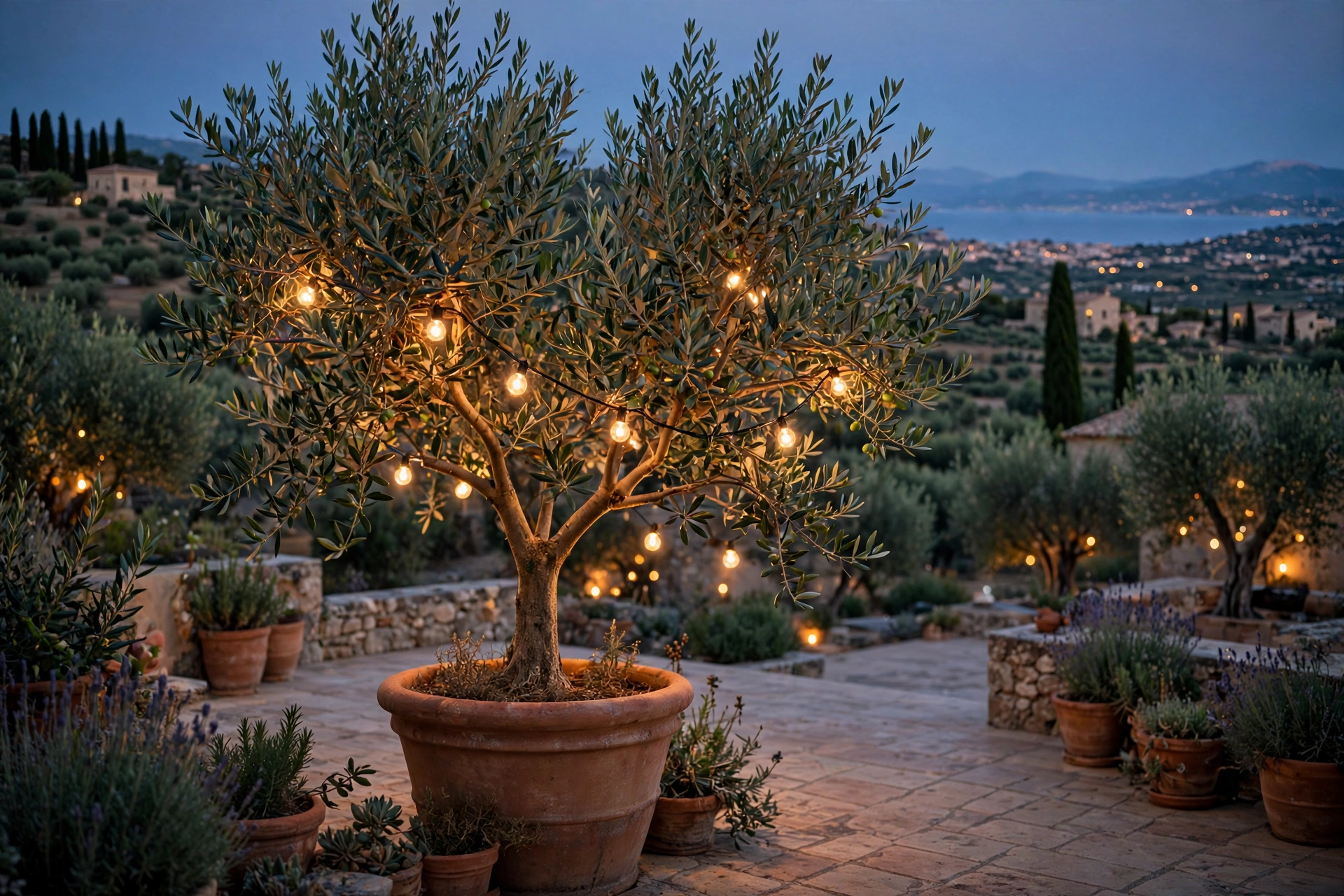
Drape one strand of small globe lights over the canopy of an olive tree in a large terracotta pot. The silvery-green leaves catch warm light beautifully, and the classic pot-and-tree silhouette keeps the look Mediterranean rather than holiday-ish. Let the strand rest naturally in the branches with a gentle swag between limbs instead of winding it trunk-to-tip. Use an outdoor-rated plug-in strand with a timer so it clicks on at sunset. Water the tree normally; the lights sit above the soil line and will not interfere.
3. Curtain Lights + Tall Fiddle-Leaf Fig
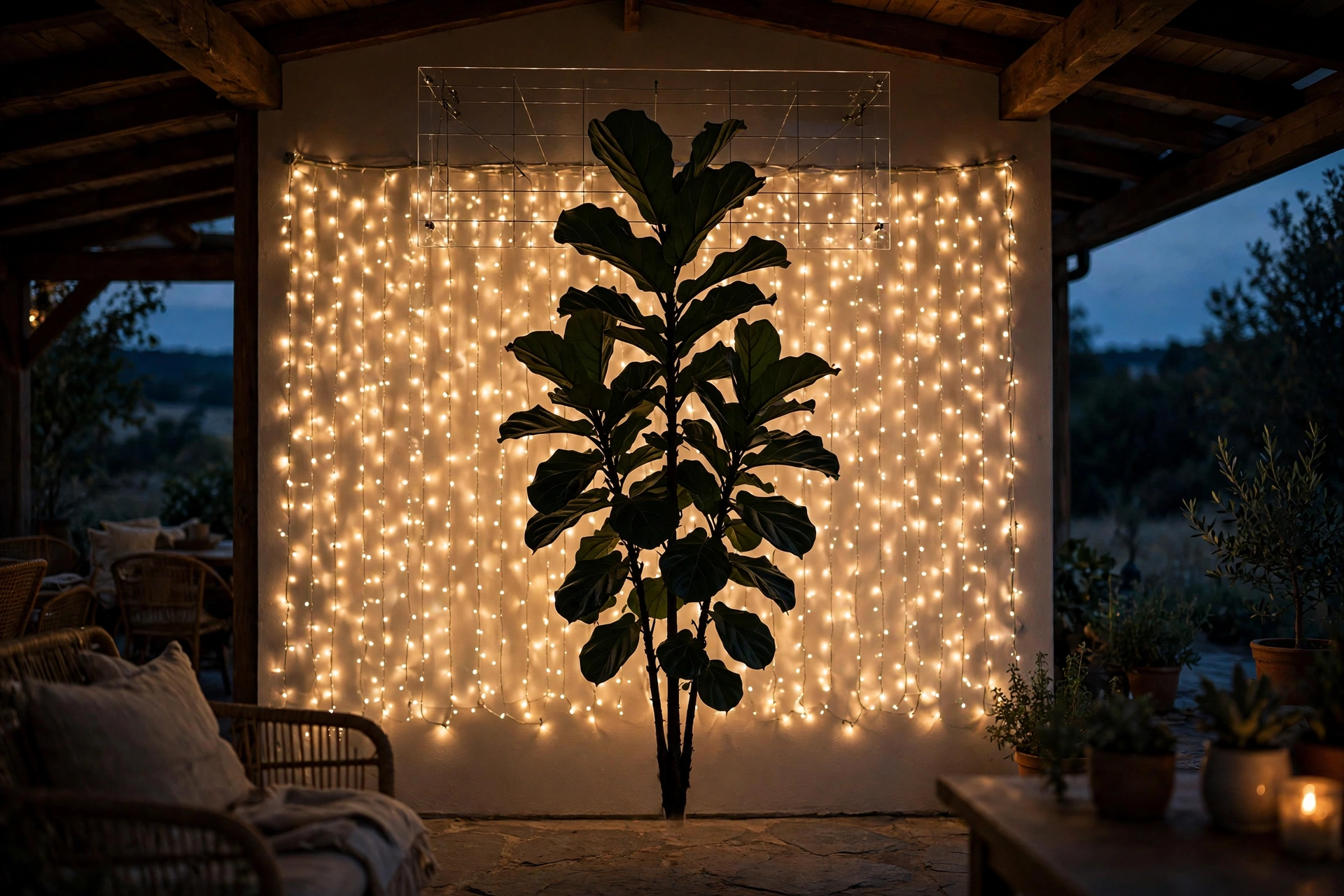
Hang a 10-by-10-foot curtain light panel behind a tall fiddle-leaf fig in a floor pot, and you get a living silhouette against a wall of tiny lights. This works indoors near a bright window or on a covered patio. Mount the curtain on the wall with adhesive hooks, keeping the top edge a few inches above the plant’s highest leaf. Choose warm white LEDs on clear wire so the panel reads as starlight, not hardware. Keep the lights a few inches off the leaves to avoid heat buildup, though LEDs run cool enough that this is mostly about looks.
4. Warm White Micro LEDs + Potted Lavender
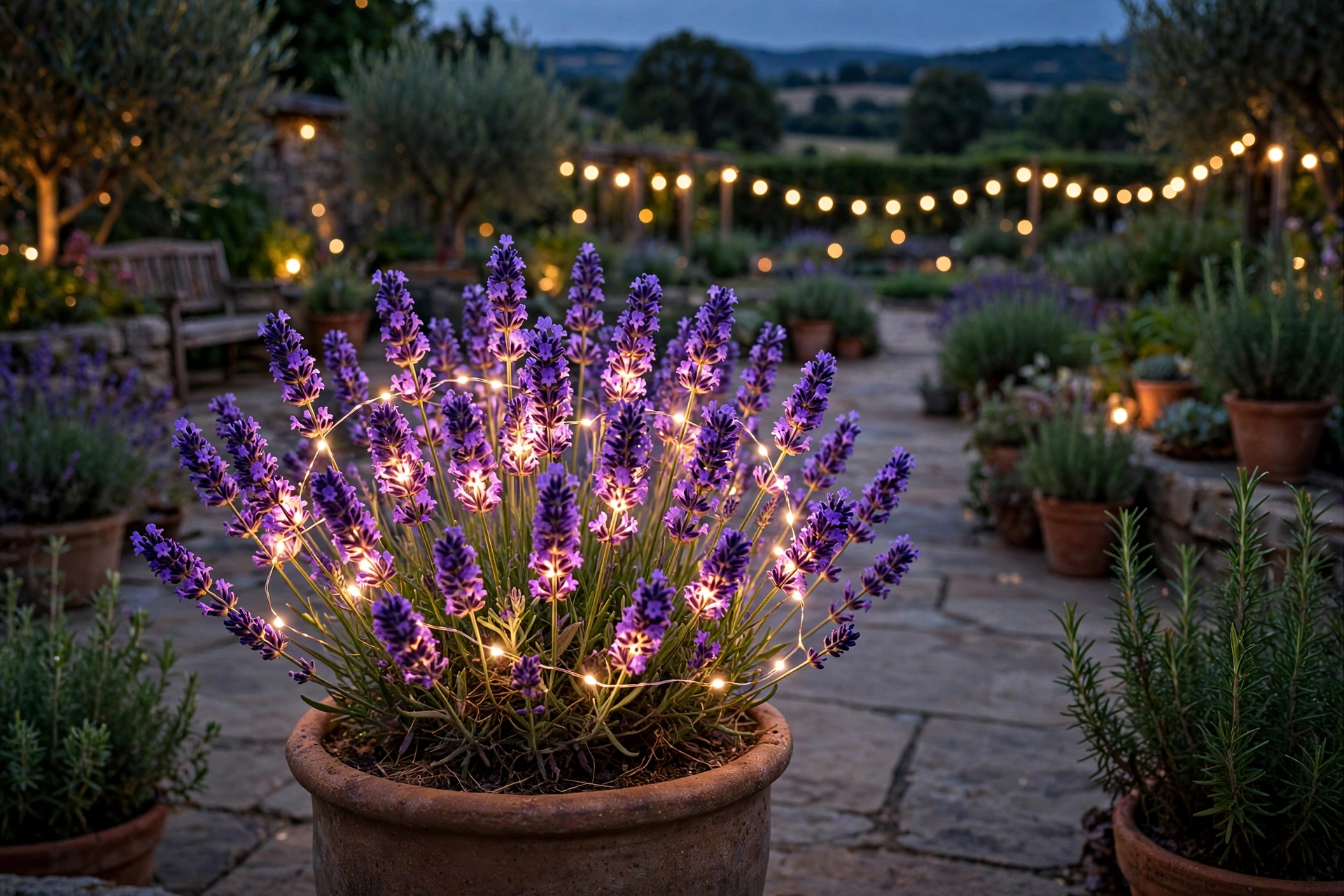
Wind micro LED fairy lights loosely through a pot of blooming lavender, and the purple spikes glow from within like a lantern. This pairing is at its best in June and July when the flowers are out. Use a short 16-foot strand so you are accenting, not burying, the plant. Push the battery pack into the soil at the back of the pot, or hide it under the rim. Lavender needs sharp drainage and full sun, so do not let the light strand tempt you into overwatering just to visit the pot more often.
5. Solar Fairy Lights + Succulent Bowl
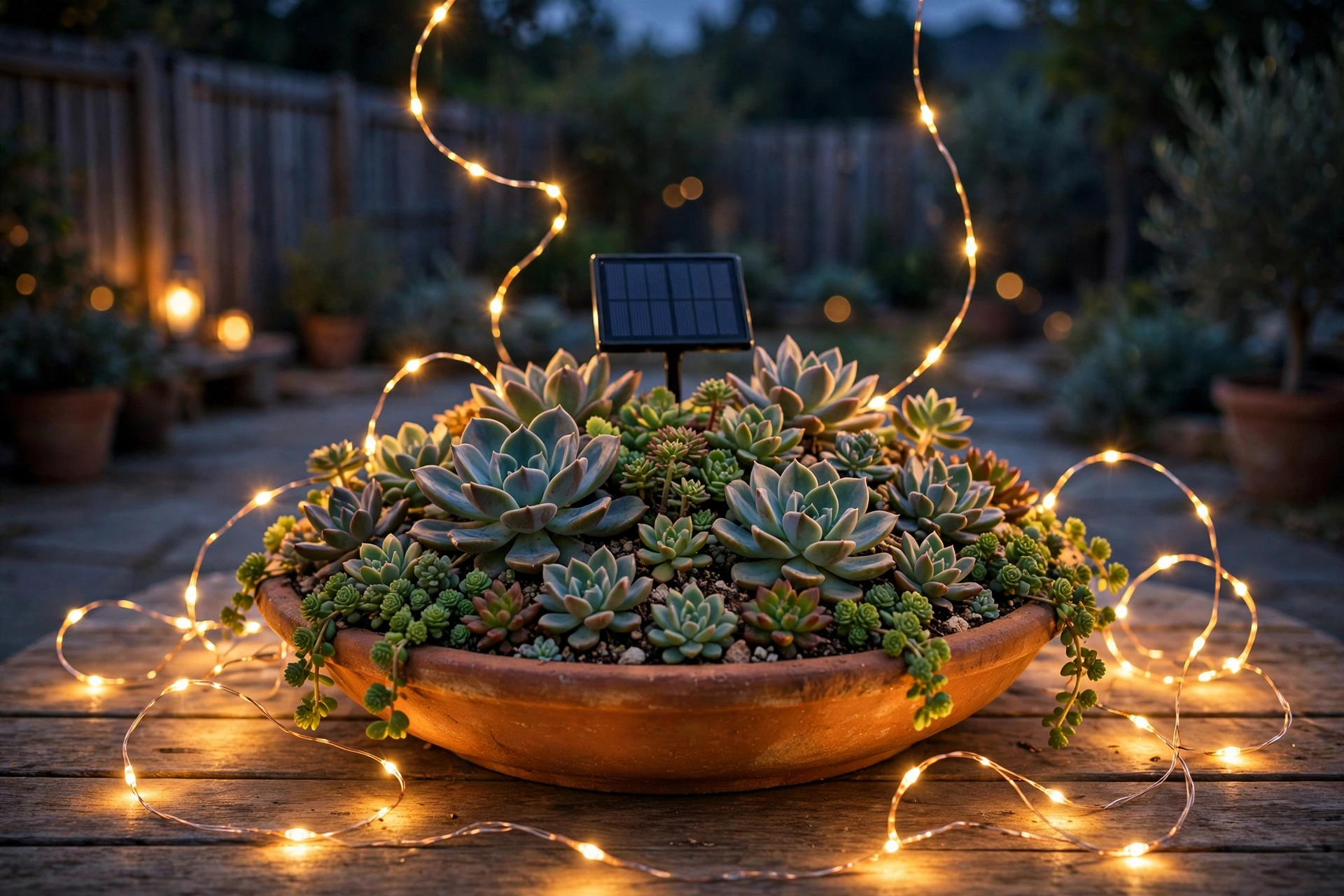
Lay a solar fairy light strand in loose loops around a wide, shallow bowl of echeveria and sedum. The solar panel stakes into the soil at the back, and the whole arrangement charges itself by day. Because succulents want gritty soil and infrequent water, choose a strand with a detachable panel on a long lead so you can lift the panel out when you water and avoid soaking the electronics. The low profile of the bowl means the lights sit at viewing height on a table, which is exactly where they look best.
6. Edison-Style Bulb Strand + Monstera Deliciosa
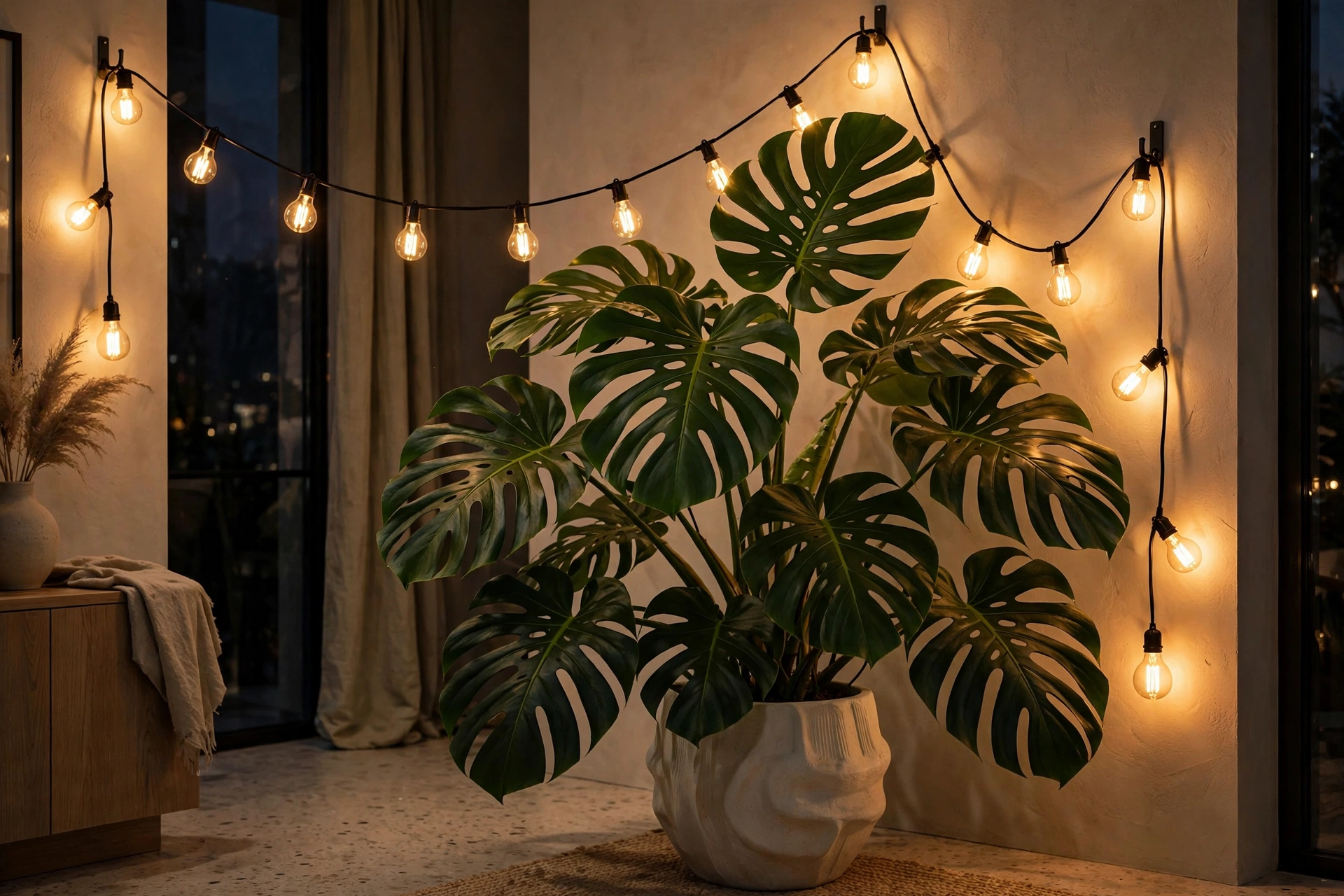
A chunky Edison-style strand draped over a large monstera makes a bold, design-magazine statement: big sculptural leaves, big vintage bulbs. Let one strand swoop from a wall hook, rest across the top of the plant, and drop to a second hook, so the bulbs hang just above the split leaves. Keep the bulbs from touching the foliage directly, since even LED Edison replicas can warm up slightly and the weight can crease a leaf. Indoors, plug the strand into a smart plug and schedule it with your evening routine.
7. Net Lights + Boxwood Topiary
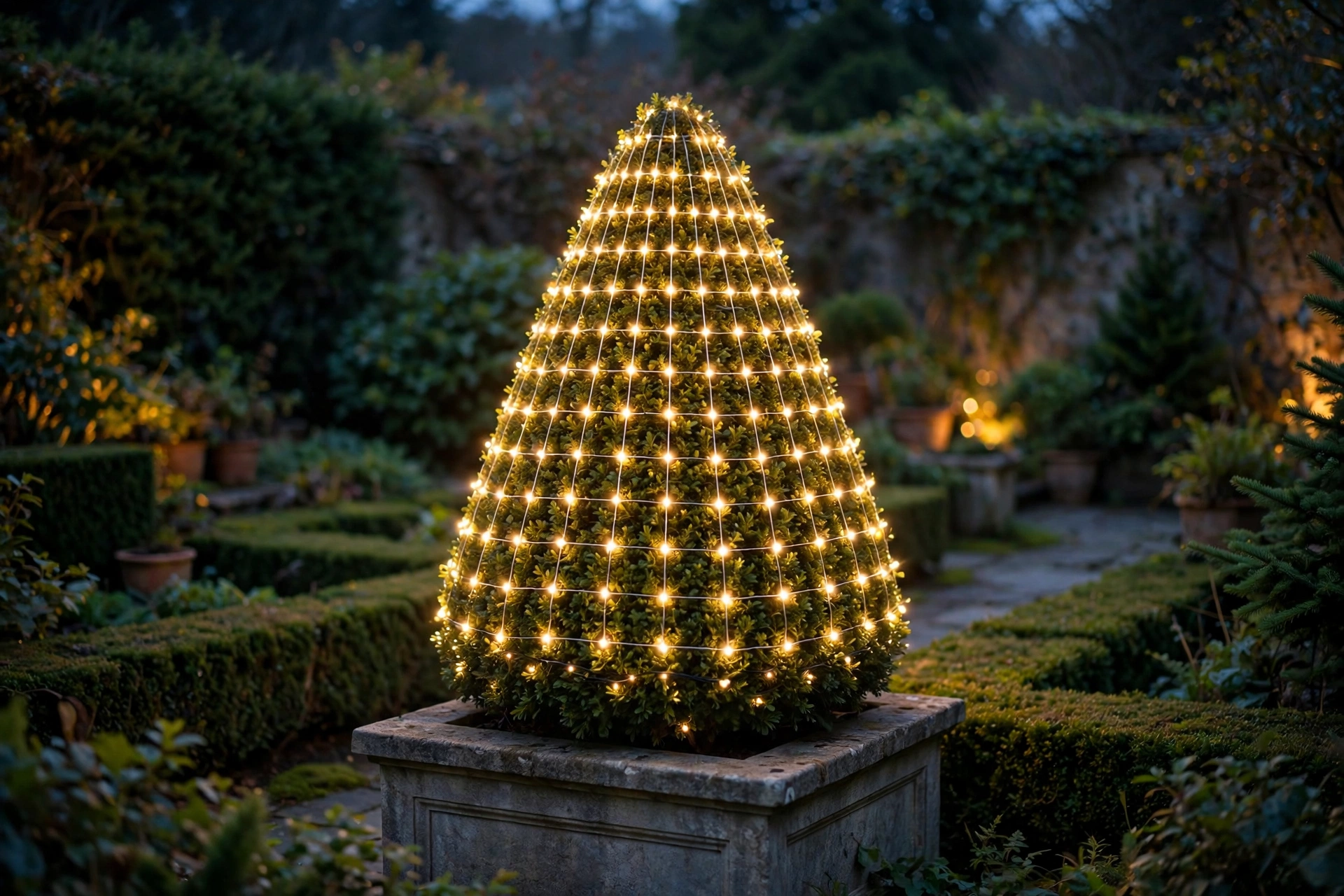
Drape a net light panel over a cone or ball boxwood topiary in a formal planter. The net’s grid distributes the lights perfectly evenly, which suits the clipped geometry of a topiary far better than a hand-wound strand ever could. Choose a net sized to the plant: a 4-by-6-foot net covers most container topiaries. Lay it over the top and let it fall naturally, then tuck the edges under the foliage. Because boxwood is evergreen, this pairing looks good in December and in July.
8. Starburst Lights + Potted Citrus Tree
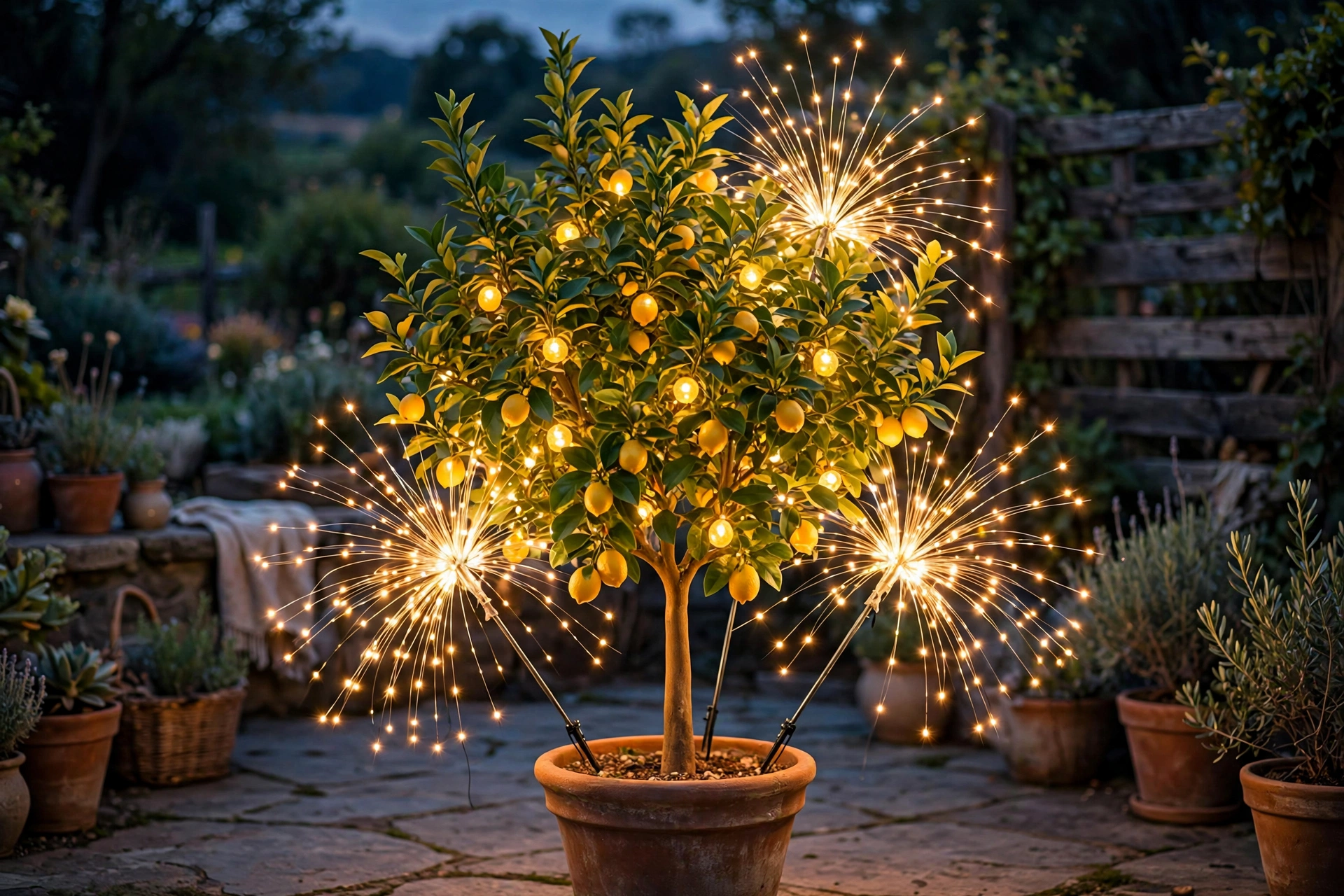
Clip a few starburst or firework-style fairy light sprays into the canopy of a potted Meyer lemon or calamondin. The branching bursts echo the shape of the tree and make the little fruits gleam. Use three to five sprays per tree, pushing the stakes into the soil and angling the bursts outward. Battery-operated sprays with built-in timers are ideal here since citrus pots move indoors for winter and you do not want to reroute extension cords twice a year. Bring the whole glowing tree inside and it becomes a living lamp.
9. Hidden Rope Light + Ornamental Grass Pot
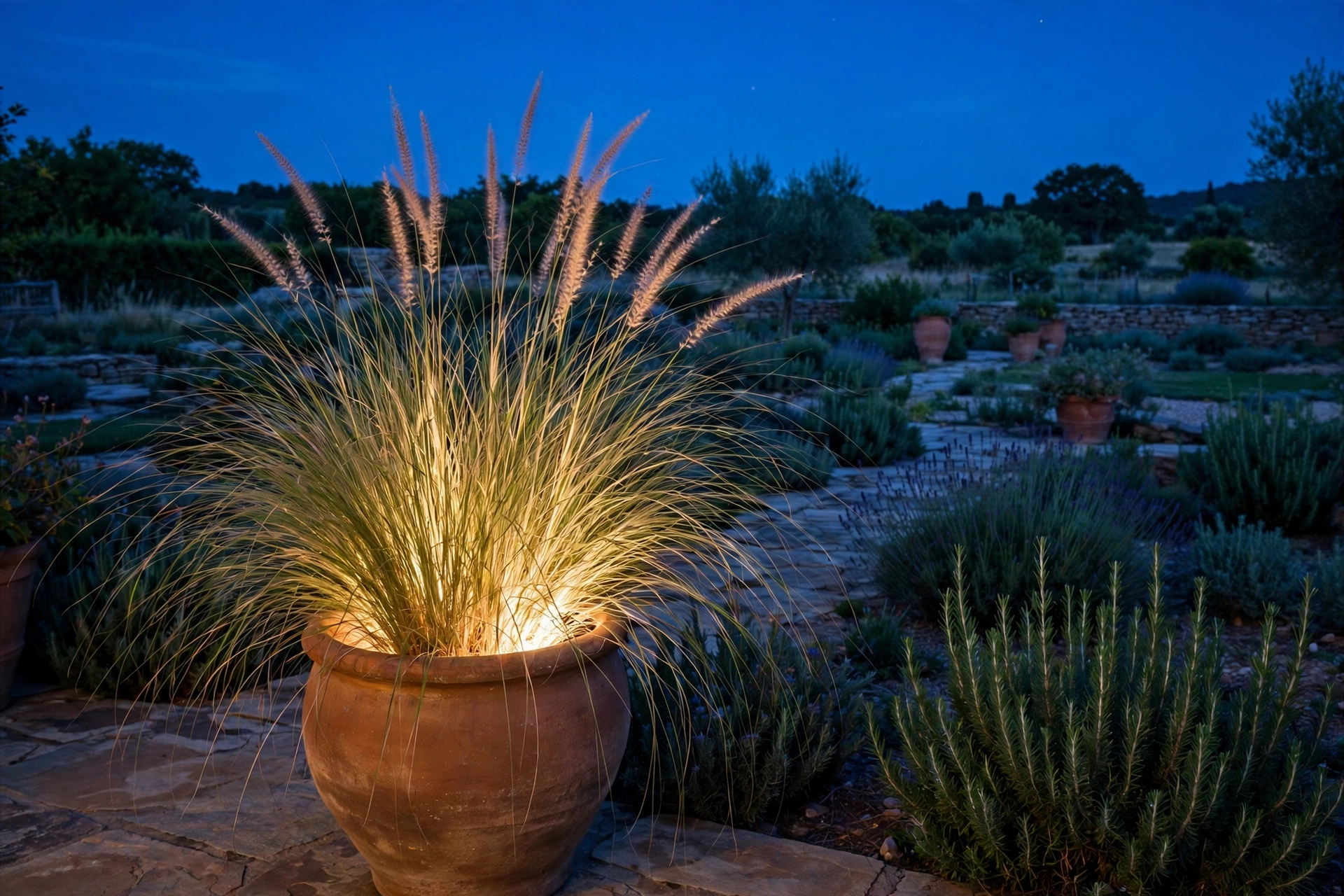
Coil a warm white LED rope light inside the rim of a large pot of fountain grass or miscanthus, so the light source itself is invisible and only the grass blades catch the glow from below. This uplighting effect makes the grass look like it is on fire in the gentlest way. Secure the rope with small clips just inside the pot rim and run the cord out the drainage side. Cut the grass back in late winter as usual; simply lift the rope coil out first and replace it after the spring flush grows in.
10. Icicle Lights + Evergreen in a Planter
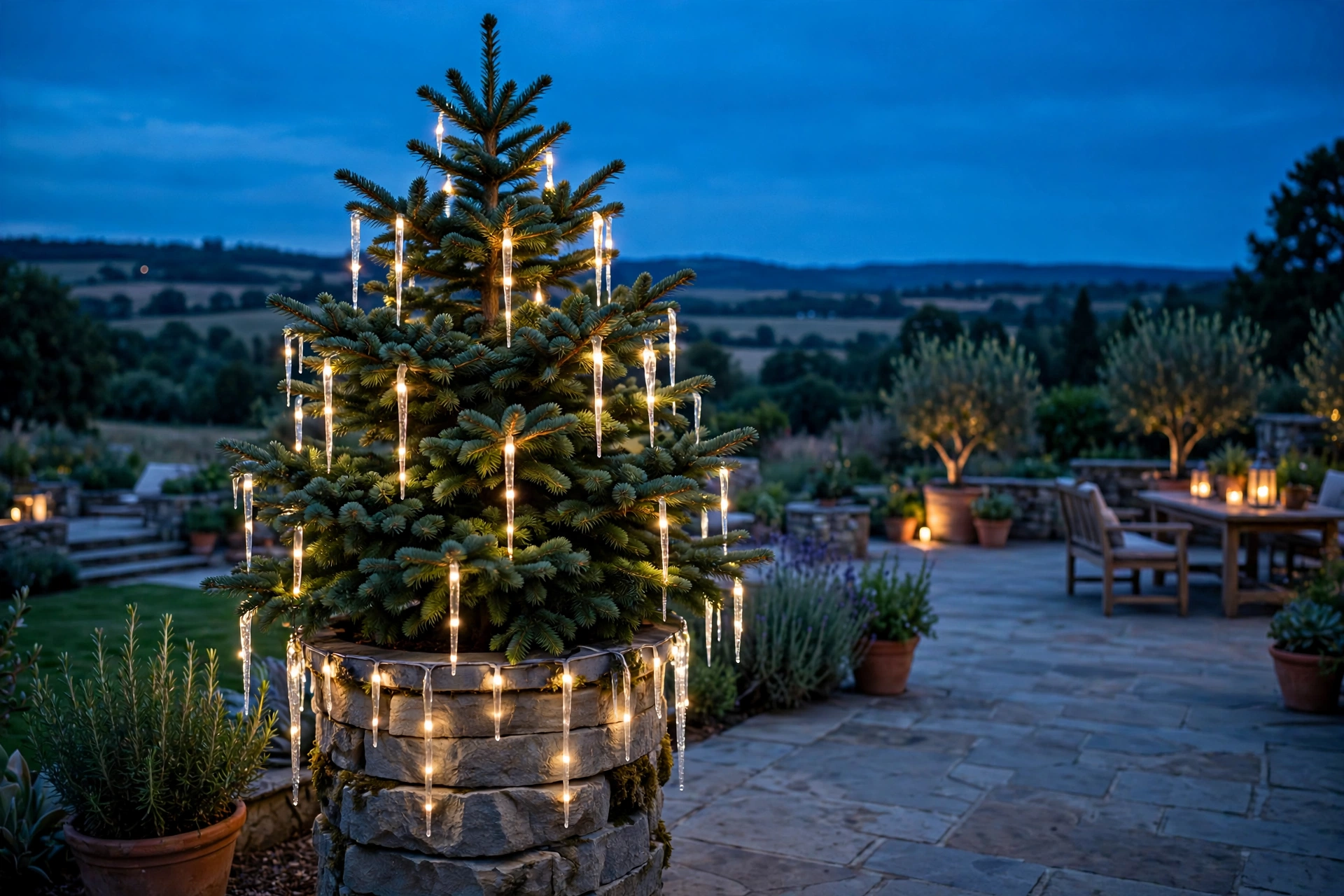
Hang a short icicle strand from the rim of a tall planter holding a dwarf Alberta spruce or arborvitae, so the drops of light hang down over the foliage. This is the classic winter look, but it works year-round on a shady patio because the evergreen never goes bare. Keep the strand to one side of the planter rather than circling it, which looks more natural. Choose icicles with staggered drop lengths for a less manufactured appearance, and plug into a timer so they greet you at dusk.
11. Paper Lantern String + Bird of Paradise
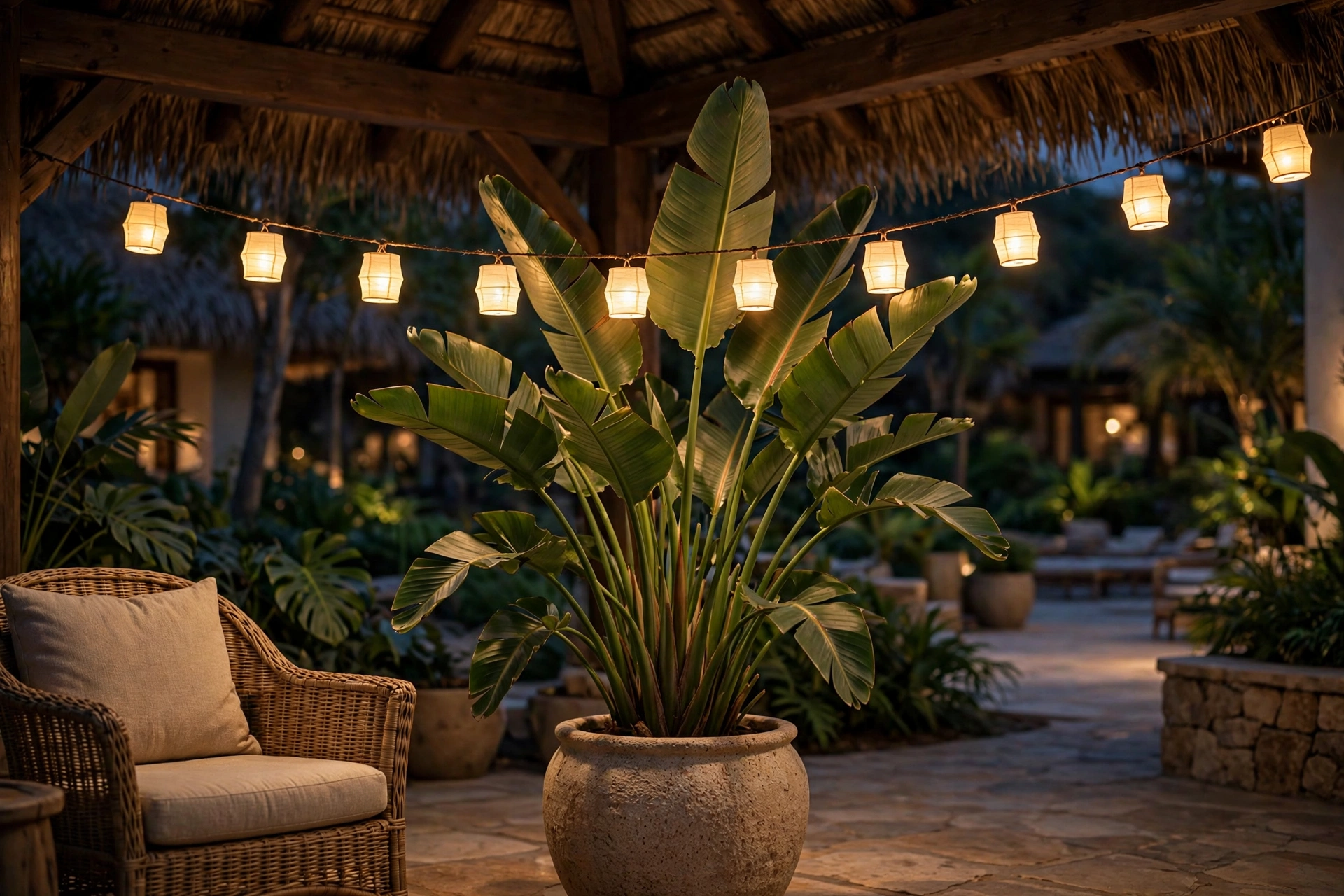
String small paper lantern lights above or around a bird of paradise in a large indoor or patio pot. The soft diffused glow of the lanterns flatters the plant’s huge paddle leaves and turns a corner into a resort vignette. Hang the strand from the ceiling or a tall shepherd’s hook so the lanterns float a foot or two above the tallest leaf. Paper lanterns are for covered areas only; one rainstorm will ruin them. Indoors, this pairing can live happily for years.
12. Twinkle Firefly Lights + Boston Fern
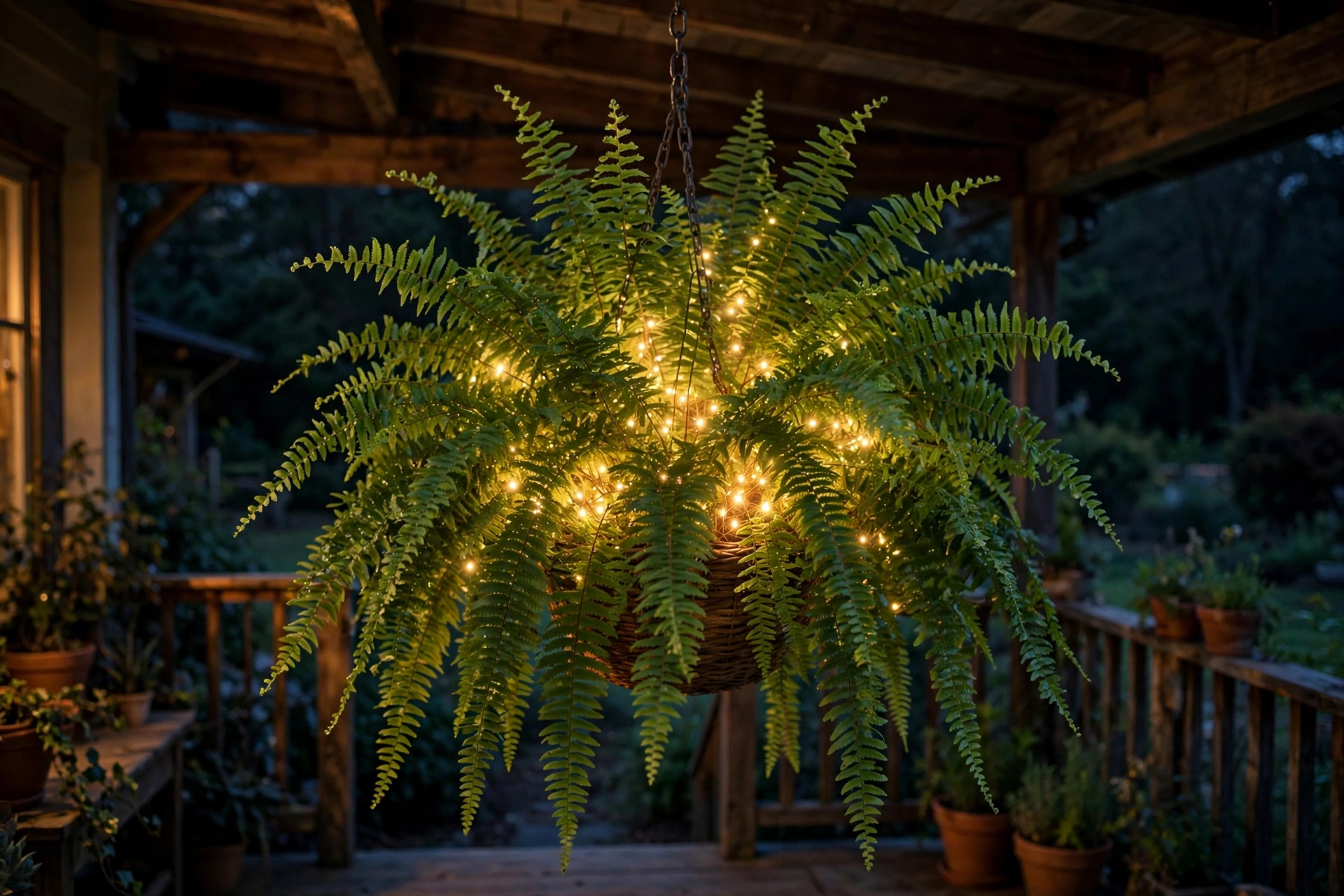
Nestle a jar or a short strand of twinkling firefly lights into the center of a lush Boston fern in a hanging basket. The fine fronds diffuse the twinkle into a soft shimmer, like the plant is breathing light. Use lights on thin wire and let them settle into the middle of the plant rather than wrapping the outside, so the glow comes from within. Ferns love humidity, so mist the plant as usual and keep the battery pack outside the basket liner where it stays dry. Replace batteries monthly in peak summer when you run them nightly.
Quick Buying & Safety Tips
- Choose LED over incandescent for every plant pairing: LEDs stay cool, so they will not scorch leaves or dry out soil.
- Match the light’s rating to the location: outdoor-rated strands for patios and balconies, indoor strands only under cover.
- Use timers or built-in dusk sensors so lights run 4 to 6 hours nightly instead of burning all night, which also protects nearby plants from light stress.
- Solar strands are perfect for planters since there is no cord to trip over while watering, but give the panel 6 hours of direct sun.
- Keep all plugs, battery packs, and connections above soil level and out of the saucer where water collects.
- Do not overload outlets: add up the wattage of every strand on a circuit and stay well under the outlet’s rating, using a GFCI outlet outdoors.
- Never nail or staple through a light wire, and keep strands clear of metal pot rims that could chafe the insulation in wind.
FAQs
Will fairy lights hurt my plants?
LED fairy lights are safe for plants. They produce almost no heat and the light levels are far below what would disrupt a plant’s day-night cycle. Just avoid wrapping wire tightly around growing stems, and keep battery packs out of wet soil.
Can I leave fairy lights in outdoor pots over winter?
If the strand is outdoor-rated, yes. Bring battery packs indoors during hard freezes, since cold drains batteries fast. Tender plants like citrus come inside anyway; hardy evergreens can keep their lights all winter.
What is the best color for plant pairings?
Warm white, around 2700K, almost always wins. It makes green foliage glow gold and flatters terracotta, wood, and stone pots. Cool white can make plants look washed out and artificial.
How do I hide the battery pack in a planter?
Tuck it behind the root ball at soil level, slip it under the pot rim, or place it in a small waterproof pouch staked at the back of the pot. Most packs are tiny; if you can see it from your chair, move your chair, not the pack.
Closing
The best fairy light and potted plant pairing is the one you will actually maintain. Start with a single pot, a single strand, and the plant you already love. Once you see how that corner glows at dusk, the rest of the patio tends to decorate itself.