
My first apartment balcony was four feet by six feet of concrete, and I was convinced there wasn’t enough room to grow anything worth looking at. Turns out the limit was never the space — it was that I hadn’t found the right planter boxes yet. After apartments in three different climates, I’ve built a real list of what holds up to wind, weight limits, and my own inconsistent watering habits. Here are 18 balcony planter box ideas worth trying. Ready? Let’s explore all 18 of them.
Quick Answer: For small balconies, rail-mounted or hanging boxes save floor space; for windy high-rises, weighted resin troughs anchor better than wood. Herbs and trailing flowers are the most forgiving starting points for beginners.
Why Balcony Planter Boxes Are Worth Your Time
Balcony boxes solve the exact problem most apartment dwellers face: wanting a garden without having any ground to plant one in. A single well-placed trough can hold six or more plants in a footprint smaller than a welcome mat, which matters enormously when every square foot of your outdoor space counts.
The practical benefit goes beyond looks — planter boxes elevated on a rail catch more light than floor-level pots often do, since they clear balcony wall shadows. They’re also fully portable, so a move to a new apartment doesn’t mean starting your garden from scratch.
The lesser-known fact: most rental balconies have a weight limit around 50–75 lbs per linear foot, and a fully soaked wooden box with mature plants can hit that number faster than people expect.
This approach is ideal for renters, first-time gardeners, and anyone working with a balcony under 40 square feet.
At a Glance
- Rail-mounted boxes free up nearly all floor space on a small balcony.
- Self-watering troughs cut watering frequency by roughly half in summer heat.
- Resin and fiberglass boxes weigh far less than concrete for weight-restricted balconies.
- Herb boxes deliver the fastest, most rewarding results for total beginners.
- Grouping boxes by light need (not just looks) prevents half your plants from struggling.
At a Glance Comparison
| Idea | Light Needs | Box Material | Difficulty | Best For |
| Rail Herb Box | Full sun | Cedar | Easy | Cooking balconies |
| Trailing Petunia Box | Full sun | Resin | Easy | Color-first balconies |
| Shade Fern Box | Part shade | Fiberglass | Easy | North-facing |
| Self-Watering Rail Trough | Full sun | Plastic composite | Easy | Frequent travelers |
| Succulent Window Box | Full sun | Terracotta-look resin | Easy | Small footprints |
| Lettuce and Greens Box | Part sun | Wood | Easy | Food growers |
| Lavender Box | Full sun | Concrete-look resin | Moderate | Fragrant balconies |
| Hanging Ivy Box | Part shade | Coco-lined wire | Easy | Vertical interest |
| Dwarf Tomato Box | Full sun | Fabric grow bag | Moderate | Food growers |
| Calibrachoa Cascade Box | Full sun | Metal rail box | Easy | Sunny railings |
| Shade Coleus Box | Full shade | Resin | Easy | Deep shade |
| Bee Balm Box | Full sun | Wood | Moderate | Pollinator gardens |
| Boxwood Hedge Row | Part sun | Fiberglass rectangular | Moderate | Formal look |
| Nasturtium Trailing Box | Full sun | Terracotta-look resin | Easy | Edible flowers |
| Geranium Classic Box | Full sun | Cedar | Easy | Traditional look |
| Ornamental Kale Box | Full sun | Wood | Easy | Fall/winter color |
| Strawberry Box | Full sun | Fabric grow bag | Moderate | Food growers |
| Mixed Foliage Texture Box | Part sun | Fiberglass | Moderate | Year-round interest |
Main Body
1. Rail Herb Box
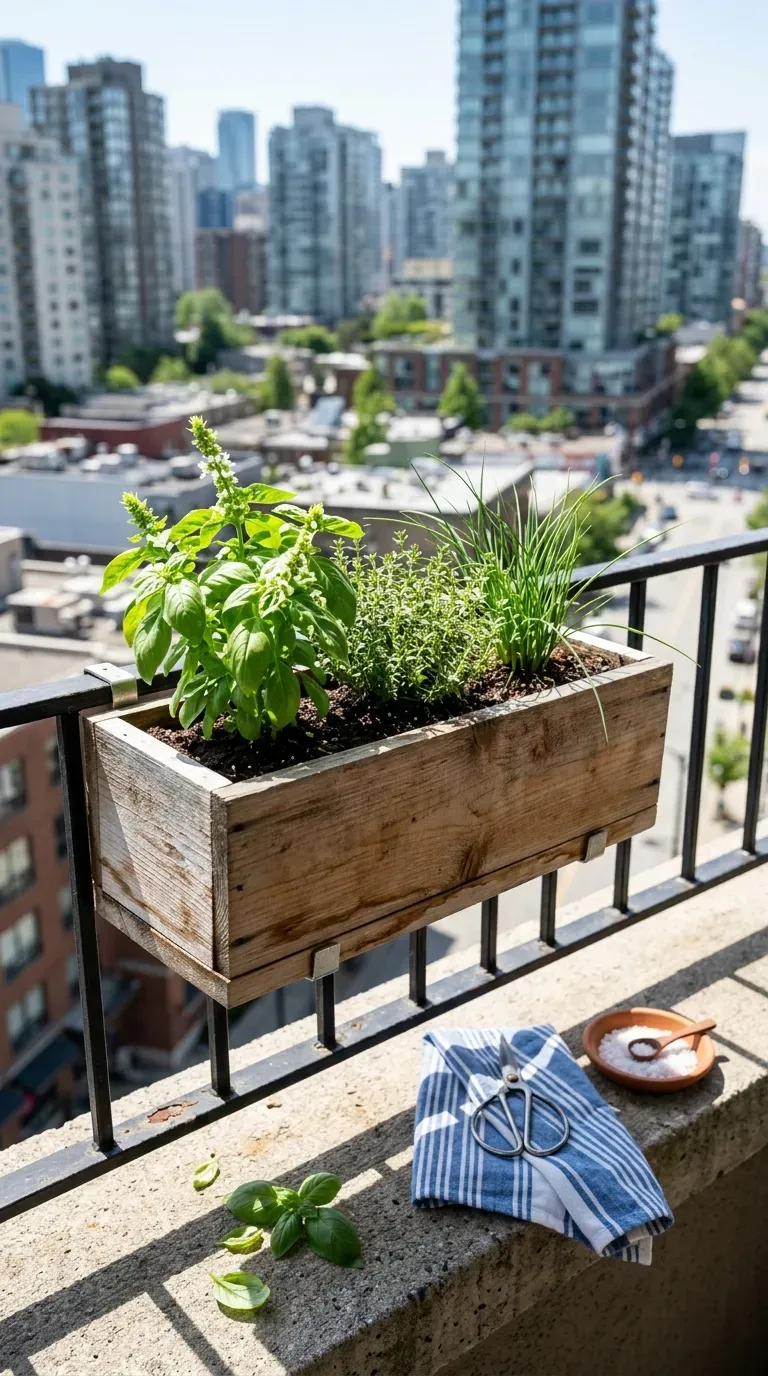
A rail-mounted herb box puts fresh basil and thyme within arm’s reach of the kitchen without using an inch of floor space.
Choose a cedar box (naturally rot-resistant outdoors) with drainage holes and a fast-draining mix. Herbs want 6+ hours of sun and dislike soggy roots, so water only when the top inch feels dry — usually every other day in peak summer.
Pro Tip: Harvest herbs from the top down, never stripping more than a third of the plant at once, so it keeps producing all season.
See our balcony herb garden guide for spacing, and Penn State Extension’s herb growing basics for planting windows.
It’s the box you’ll reach for every time you cook.
2. Trailing Petunia Box
A resin box full of trailing petunias delivers the fastest, most dramatic color payoff of anything on this list.
Use wave-type petunias in a lightweight resin box with a slow-release fertilizer mixed into the soil at planting. Water daily in full sun once temperatures rise above 85°F, and deadhead weekly to keep blooms coming.
- Full sun petunias: dense, fast color, higher watering needs
- Part-shade calibrachoa swap: similar cascade, more forgiving
Check our trailing flowers for balconies list, and Gardeners’ World’s petunia care notes.
By week four this box looks like a waterfall of color over your railing.
3. Shade Fern Box
Balconies under an overhang or facing north need plants that actually prefer indirect light, and ferns are the reliable answer.
Plant Boston or autumn fern in a fiberglass box with a peat-based, moisture-retentive mix. Water when the top inch dries, typically every 2–3 days, and mist occasionally if your balcony air runs dry.
The honest limitation: direct afternoon sun scorches fern fronds within days, so this box only works in genuinely shaded conditions.
Our shade balcony plants guide has more options, and Missouri Botanical Garden’s fern care sheet covers species detail.
It turns a dim balcony corner into the coolest seat in the house.
4. Self-Watering Rail Trough
For anyone who travels often or simply forgets to water, a self-watering rail trough is the single most forgiving box on this list.
The built-in reservoir (usually holding about a gallon) stretches watering intervals to 4–5 days even in summer heat. Fill with a well-draining mix and plant geraniums, petunias, or trailing lobelia depending on your light.
Pro Tip: Check the reservoir water level through the side indicator weekly rather than guessing — overfilling can drown roots just as fast as underfilling starves them.
See our self-watering container guide, and The Sill’s reservoir planter notes.
It’s the box that keeps plants alive through a two-week vacation.
5. Succulent Window Box
A shallow terracotta-look resin box packed with echeveria and sedum brings texture without demanding much attention.
Use a cactus-specific mix and water deeply but infrequently — every 10–14 days, letting soil dry completely between waterings. Morning sun with light afternoon shade prevents the scorch that hits succulents in full blazing heat.
Our succulents for balconies guide has variety picks, and Almanac’s succulent watering schedule covers climate adjustments.
It’s the lowest-maintenance box on this entire list.
6. Lettuce and Greens Box
A wooden box of loose-leaf lettuce, spinach, and arugula turns a balcony into a genuine salad source within weeks.
Plant in a mix rich in compost, in a spot getting 4–6 hours of sun (greens bolt fast in full blazing heat). Water consistently — the top inch should never fully dry out — and succession-sow every 2 weeks for continuous harvest.
Our balcony vegetable growing guide covers more edibles, and University of Florida Extension’s leafy greens guide has regional timing.
You’ll be harvesting your first salad within 3–4 weeks.
7. Lavender Box
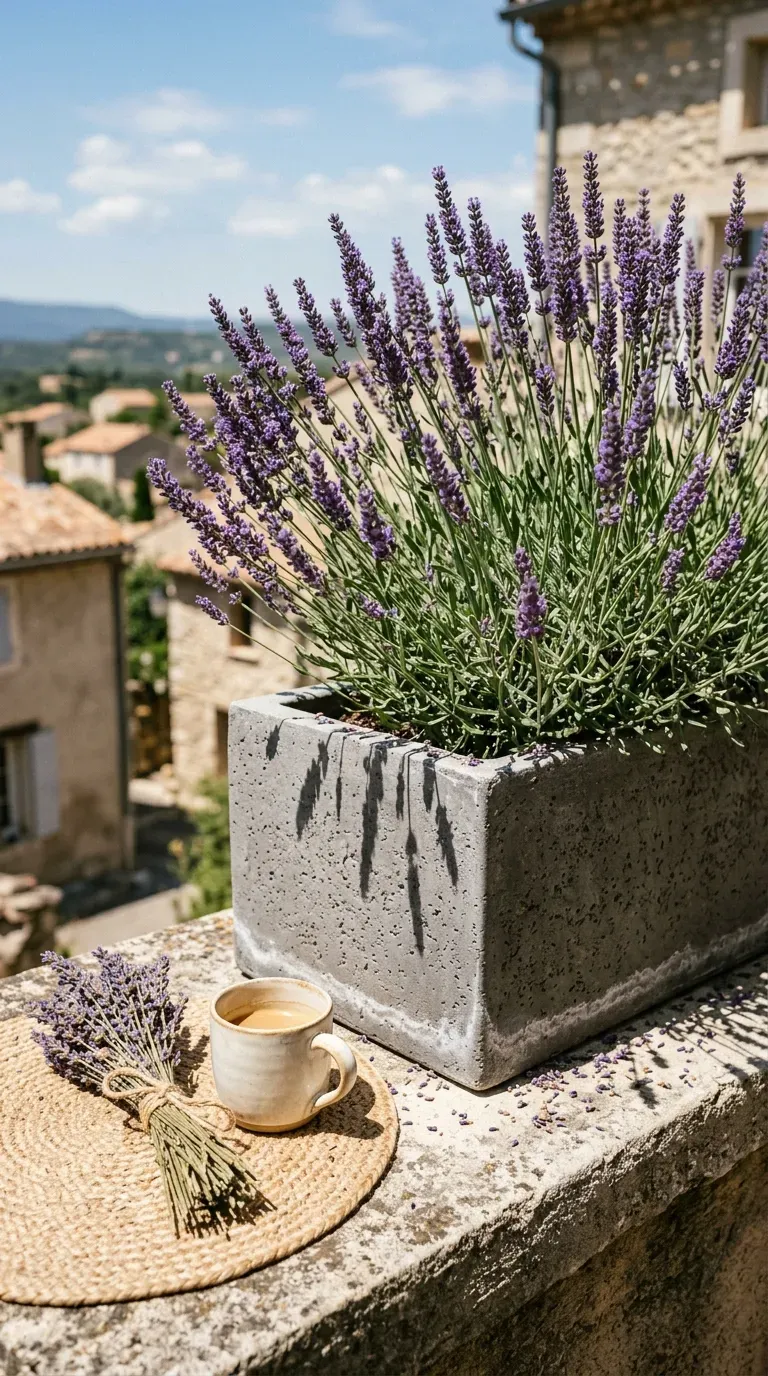
Lavender rewards a hot, dry, full-sun balcony that kills most flowering plants outright.
Use a gritty, fast-draining mix (regular potting soil holds too much moisture) in a box with strong drainage holes. Water sparingly, only when soil is fully dry, and resist the urge to fertilize heavily — lean soil produces more fragrant blooms.
This is a moderate-difficulty pick specifically because overwatering, not underwatering, is what kills it.
See our drought-tolerant balcony plants list, and RHS’s lavender growing guide.
Few plants reward neglect with fragrance quite like lavender does.
8. Hanging Ivy Box
A coco-lined wire box mounted to hang below the railing adds vertical greenery without touching your floor space at all.
English ivy tolerates part shade and irregular watering better than most trailing plants, making it ideal for a box that’s slightly harder to reach. Water when the coco liner feels dry to the touch, roughly every 3–4 days.
Our vertical balcony gardening guide has more hanging ideas, and BHG’s ivy care basics.
It softens a hard railing line from both inside and outside the apartment.
9. Dwarf Tomato Box
A fabric grow bag planted with a dwarf or patio tomato variety turns a sunny balcony into a real food source by midsummer.
Choose a determinate dwarf variety (full-size tomatoes need more root room than most boxes offer) and a rich, well-draining mix. Water consistently — inconsistent watering causes blossom end rot — and feed every 2 weeks once fruit sets.
Pro Tip: Stake the plant early, before it needs support, so you don’t disturb established roots later in the season.
Our growing tomatoes in containers guide, and University of Florida Extension’s container tomato notes.
Nothing beats a sun-warm tomato picked three feet from your kitchen.
10. Calibrachoa Cascade Box
A metal rail box of calibrachoa (mini petunia) gives dense, fine-textured color with less deadheading than full-size petunias.
Plant in a well-draining mix with slow-release fertilizer, in full sun. Water when the top inch dries — usually daily in peak heat — and calibrachoa self-cleans much of its spent blooms, cutting maintenance considerably.
Our low-maintenance flowering plants guide, and Gardeners’ World’s calibrachoa care notes.
It’s color that mostly takes care of itself.
11. Shade Coleus Box
For a fully shaded balcony, a resin box planted entirely in coleus delivers vivid foliage color without needing a single bloom.
Use a moisture-retentive mix and water whenever the top inch dries, typically every 2 days in summer. Direct sun bleaches coleus leaf color fast, so this box genuinely needs shade to perform.
- Deep shade coleus: vivid, saturated color, slower growth
- Part-sun coleus: faster growth, but color fades noticeably
Our foliage container combos, and The Sill’s shade plant notes.
It’s proof a shaded balcony can still look genuinely vibrant.
12. Bee Balm Box
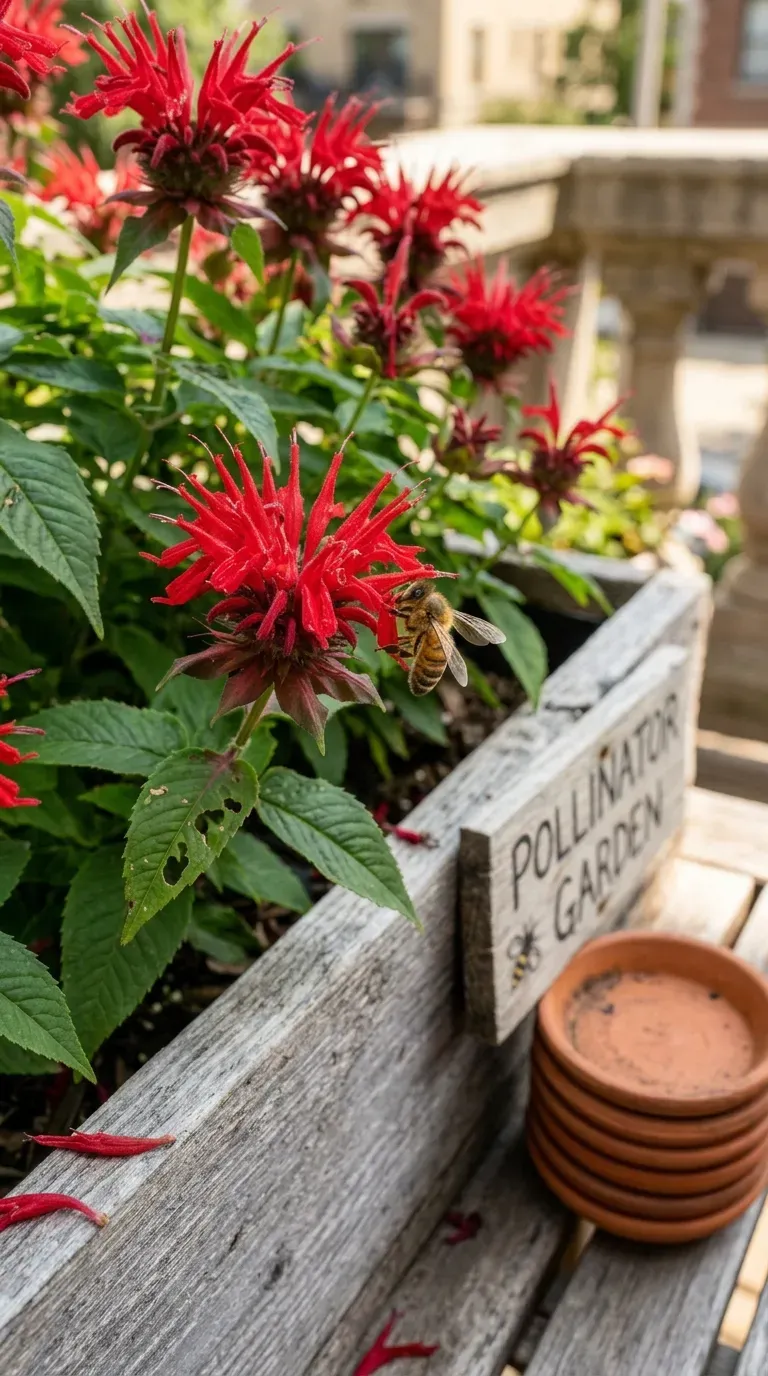
A bee balm box turns even a small balcony into a genuine pollinator stop, which matters more than people realize in dense urban areas.
Plant in a rich, well-draining mix in full sun, and water consistently — bee balm wilts dramatically when dry but recovers fast once watered. Deadhead spent blooms to extend flowering into early fall.
Our pollinator-friendly balcony plants guide, and Missouri Botanical Garden’s bee balm care sheet.
It’s a small box doing real ecological work.
13. Boxwood Hedge Row
A row of small boxwoods in a fiberglass rectangular trough mimics a formal hedge in a footprint of just a few inches deep.
Use a well-draining mix and place where boxwoods get morning sun with afternoon shade to avoid leaf browning in hot climates. Trim lightly every 4–6 weeks to maintain a clean, level line.
Our formal balcony planting ideas, and RHS’s boxwood pruning guide.
It’s the box that makes a balcony read as designed, not decorated.
14 .Nasturtium Trailing Box
Nasturtiums are the rare plant that’s both genuinely beautiful and genuinely edible, trailing dramatically over a box edge by midsummer.
Plant in lean, well-draining soil — rich soil produces more leaves than flowers — and water when the top inch dries. Both flowers and leaves are edible with a peppery bite, good in salads.
Our edible flowers for balconies guide, and Almanac’s nasturtium growing notes.
It’s a box that does double duty as decoration and dinner garnish.
15. Geranium Classic Box
A cedar box of classic red or pink geraniums is the most traditional, reliable balcony look on this entire list.
Plant in a well-draining mix in full sun, and water when the top inch dries — geraniums tolerate brief dry spells better than most flowering plants. Deadhead spent blooms regularly to keep flowering steady through fall.
Pro Tip: Pinch leggy stems back by a third in midsummer to encourage bushier, fuller growth for the second half of the season.
Our classic balcony flower combinations, and Gardeners’ World’s geranium care guide.
It’s the box that never goes out of style.
16. Ornamental Kale Box
When summer flowers fade, a wood box of ornamental kale brings color straight through fall and light frost.
Plant in well-draining soil in full sun; kale actually intensifies its purple and cream coloring after a light frost rather than dying back. Water regularly, keeping soil consistently moist but not soggy.
Our fall and winter balcony color guide, and University of Florida Extension’s ornamental kale notes.
It’s the box that keeps your balcony from going bare in October.
17. Strawberry Box
A fabric grow bag planted with everbearing strawberries gives small, sweet harvests from early summer through fall.
Use a rich, well-draining mix and full sun placement; water consistently, since inconsistent moisture causes small or misshapen fruit. Snip runners unless you want the plant spreading to fill the whole bag.
Our growing strawberries in containers guide, and University of Florida Extension’s strawberry growing notes.
There’s real satisfaction in a handful of sun-warm strawberries from a box this small.
18. Mixed Foliage Texture Box
A fiberglass box combining three foliage textures — spiky, trailing, and mounded — holds visual interest year-round without relying on blooms at all.
Try dracaena spike for height, ivy for trailing, and coral bells for mounded texture, in a well-draining mix with part sun exposure. Water based on the thirstiest plant in the group, usually every 2–3 days.
Our texture-first container design guide, and BHG’s foliage combination ideas.
It’s the box that still looks intentional in the dead of winter.
Getting Started With Balcony Planter Boxes
The easiest first step is choosing one box in a size that actually fits your railing or floor space, then picking a single forgiving plant — herbs, succulents, or geraniums all tolerate beginner mistakes well.
The most common mistake is buying a box before checking your balcony’s actual weight limit, especially for rail-mounted styles on upper floors. A soaked wood box with mature plants can weigh considerably more than the empty box suggests.
For your first purchase, get one lightweight resin or fiberglass box around 24 inches long, one bag of well-draining potting mix, and a simple rail bracket if you’re mounting rather than floor-placing.
Expect visible growth within 2–3 weeks and a full, photo-ready box by week 6–8 depending on plant choice and climate.
Frequently Asked Questions
What’s the best planter box for a small balcony?
Rail-mounted boxes are the best choice for small balconies since they add growing space without using any floor area. A 24-inch self-watering rail box holding herbs or trailing flowers works well for most apartment balconies. Check your railing’s weight capacity before mounting.
Do balcony planter boxes need drainage holes?
Yes, drainage holes are essential to prevent root rot in virtually every planter box. If yours lacks one, drill several with a masonry or standard bit, or add a gravel layer at the base. Standing water is the leading cause of container plant failure.
How much weight can a balcony hold for planters?
Most residential balconies handle roughly 50–75 lbs per linear foot, though this varies by building and should be confirmed with your property manager. A single soaked wood box with mature plants can weigh 40 lbs or more. Lightweight resin boxes reduce this load significantly.
What plants work best for a shaded balcony?
Ferns, coleus, and ivy all thrive in shaded or north-facing balcony conditions where flowering plants often struggle. These plants prefer indirect light and consistently moist, not soggy, soil. Direct afternoon sun will scorch most of them within days.
How often should I water balcony planter boxes?
Sunny boxes typically need water every 1–3 days in summer heat, while shaded boxes can often stretch to every 3–4 days. Check by pressing a finger 2 inches into the soil rather than watering on a fixed schedule, since weather shifts this considerably.
A Few Final Thoughts
Eighteen ideas is plenty to turn even the smallest apartment balcony into somewhere genuinely worth sitting. Start with one box matched honestly to your light conditions rather than the prettiest plant you saw online — that single decision determines more success than anything else on this list. A well-matched planter in the right spot will outlast three mismatched ones by a full season. Pick the idea that fits your balcony’s real conditions, commit to it, and watch how much a few boxes can change the way you use your outdoor space.