
My deck used to be a sad stretch of empty boards until I started treating it like an actual garden room instead of an afterthought. Three summers of trial, error, and a few dead geraniums later, I’ve landed on combinations that hold up to wind, blazing afternoon sun, and my habit of forgetting to water on Tuesdays. If you’ve been staring at your own deck wondering where to even start, this list of 13 deck planter ideas is the shortcut I wish I’d had. Ready? Let’s explore all 13 of them.
Quick Answer: For sunny decks, go with self-watering rail planters or glazed ceramic pots holding drought-tolerant plants like succulents and lantana. For shaded or windy decks, choose weighted fiberglass containers with ferns, hostas, or coleus. Corner decks do best with tiered plant stands to maximize a small footprint.
Why Deck Planter Gardening Is Worth Your Time
A deck garden earns its keep fast — you get color and fragrance within arm’s reach of your coffee cup, without committing to in-ground beds you’ll need to dig up later. Containers also let you chase the sun: I’ve dragged pots three feet to catch an extra hour of light more times than I’d like to admit, and it genuinely changes bloom output.
The practical upside is real too. Raised planters mean less bending, better drainage control, and far fewer weeds than a ground-level bed. You can swap plants seasonally without disturbing anything permanent, which matters if you’re renting or just indecisive like me.
The lesser-known fact: dark-colored pots on a south-facing deck can run 15–20°F hotter at the root zone than the surrounding air on a 90°F day. That heat kills more container plants than underwatering does, which is why material and color choice matters more than people think.
This approach is ideal for anyone with limited yard space, a rental with no dig rights, or a deck that just needs to stop looking like a construction leftover.
At a Glance
- Rail-mounted planters free up floor space on narrow decks without sacrificing plant count.
- Self-watering containers cut watering frequency roughly in half during peak summer heat.
- Fiberglass and resin pots survive freeze-thaw cycles that crack terracotta within a season.
- Tiered plant stands turn a 2-foot-square corner into room for six or more pots.
- Mixing trailing, upright, and filler plants in one container gives a fuller look by week three.
At a Glance Comparison
| Idea | Light Needs | Container Type | Difficulty | Best For |
| Rail Planters | Full sun | Self-watering plastic | Easy | Narrow decks |
| Glazed Ceramic Cluster | Full sun | Glazed ceramic | Moderate | Statement corners |
| Shade Fern Trio | Part shade | Fiberglass | Easy | North-facing decks |
| Herb Trough | Full sun | Wood trough | Easy | Cooking decks |
| Tiered Succulent Stand | Full sun | Terracotta | Easy | Small footprints |
| Coleus Shade Bowl | Full shade | Resin bowl | Easy | Deep shade |
| Vertical Pallet Planter | Full sun | Reclaimed wood | Moderate | DIY lovers |
| Lantana Firepot | Full sun | Concrete | Easy | Windy decks |
| Hosta Corner Grouping | Part shade | Glazed ceramic | Easy | Shady corners |
| Dwarf Citrus Container | Full sun | Half-barrel | Advanced | Warm climates |
| Boxwood Topiary Pair | Part sun | Fiberglass square | Moderate | Entryways |
| Trailing Petunia Rail Box | Full sun | Metal rail box | Easy | Sunny railings |
| Ornamental Grass Duo | Full sun | Concrete cylinder | Moderate | Privacy screening |
Main Body
1. Rail-Mounted Self-Watering Planters
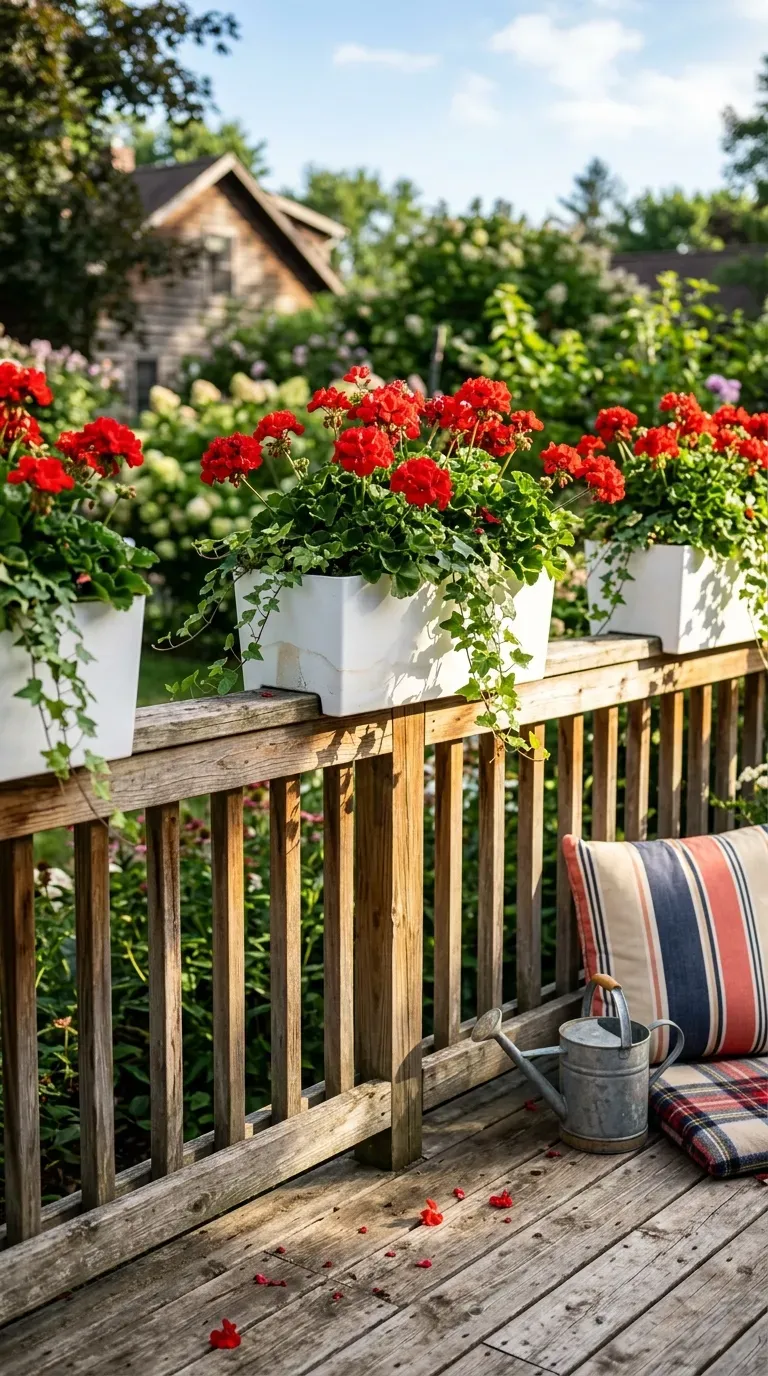
Rail planters solve the single biggest deck problem: floor space you don’t have. They hook straight onto a standard 2×4 or 2×6 railing without drilling.
Look for a self-watering reservoir model — mine holds about a gallon and stretches watering to every 4–5 days even in July. Fill with a well-draining potting mix (not garden soil, which compacts and smothers roots in a container), and plant geraniums or petunias for full sun, or trailing lobelia if your railing gets afternoon shade.
Pro Tip: Face rail planters slightly outward, not flat against the railing — it improves airflow and cuts fungal leaf spot by a noticeable margin on humid days.
Check that your railing can handle roughly 25–40 lbs per box wet before hanging anything. For more container combinations, see our best plants for railing planters guide, and for load-bearing basics, the RHS container gardening overview covers weight and drainage fundamentals well.
These boxes turn a bare railing into the first thing guests notice when they step outside.
2.Glazed Ceramic Pot Cluster
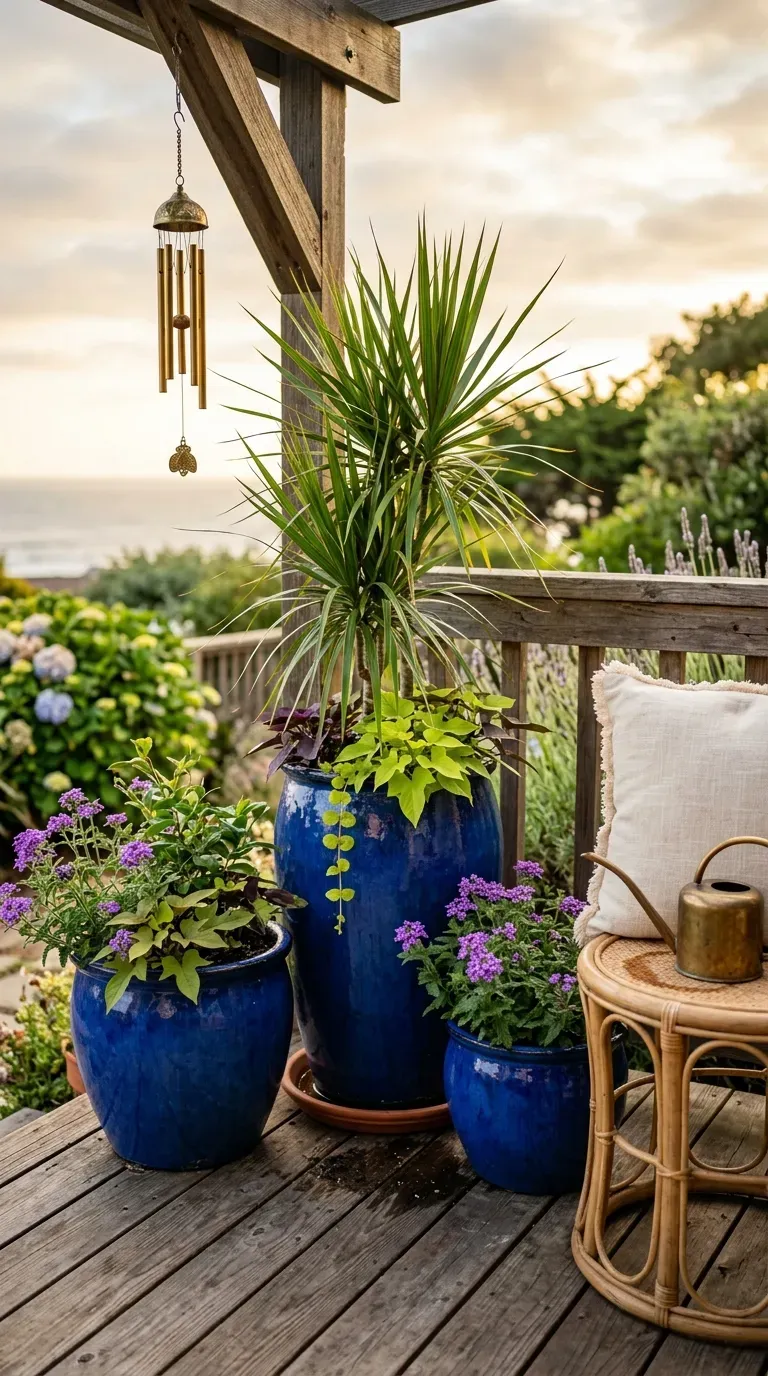
Grouping three glazed pots in ascending heights creates instant visual weight without needing a single rare plant.
Choose pots in the same glaze family but different sizes — I use 12″, 16″, and 20″ diameters. Fill the tallest with an upright anchor like dracaena, the middle with a mounding plant like sweet potato vine, and the smallest with something trailing over the edge. Water when the top 2 inches of soil feel dry; glazed ceramic holds moisture longer than terracotta, so overwatering is the real risk here.
The pro insight: glazed pots without drainage holes need a 2-inch gravel layer at the bottom, or better, drill a hole with a masonry bit before planting.
Pair this idea with our container grouping design tips, and check Gardeners’ World’s guide to pot drainage if you’re working with undrilled ceramic.
It’s a five-minute rearrangement that makes an entire deck corner feel finished.
3. Shade Fern Trio for North-Facing Decks
Ferns are the answer when your deck gets bright but indirect light and everything else you’ve tried has crisped up by July.
Boston fern, autumn fern, and Japanese painted fern handle part-to-full shade and actually prefer it — direct afternoon sun scorches their fronds within days. Plant each in its own 10–12″ fiberglass pot with a peat-based mix that holds humidity, and mist or water whenever the top inch dries out, typically every 2–3 days in summer.
- Best for consistently shaded decks under an overhang or tree canopy
- Struggles badly in direct sun exposure over 3 hours a day
- Needs humidity — group pots together to raise moisture around the foliage
See our shade container plant list for more options, and Missouri Botanical Garden’s fern care database for species-specific detail.
A fern trio turns a dim, awkward deck corner into the coolest spot to sit on a hot afternoon.
4. Wooden Herb Trough by the Grill
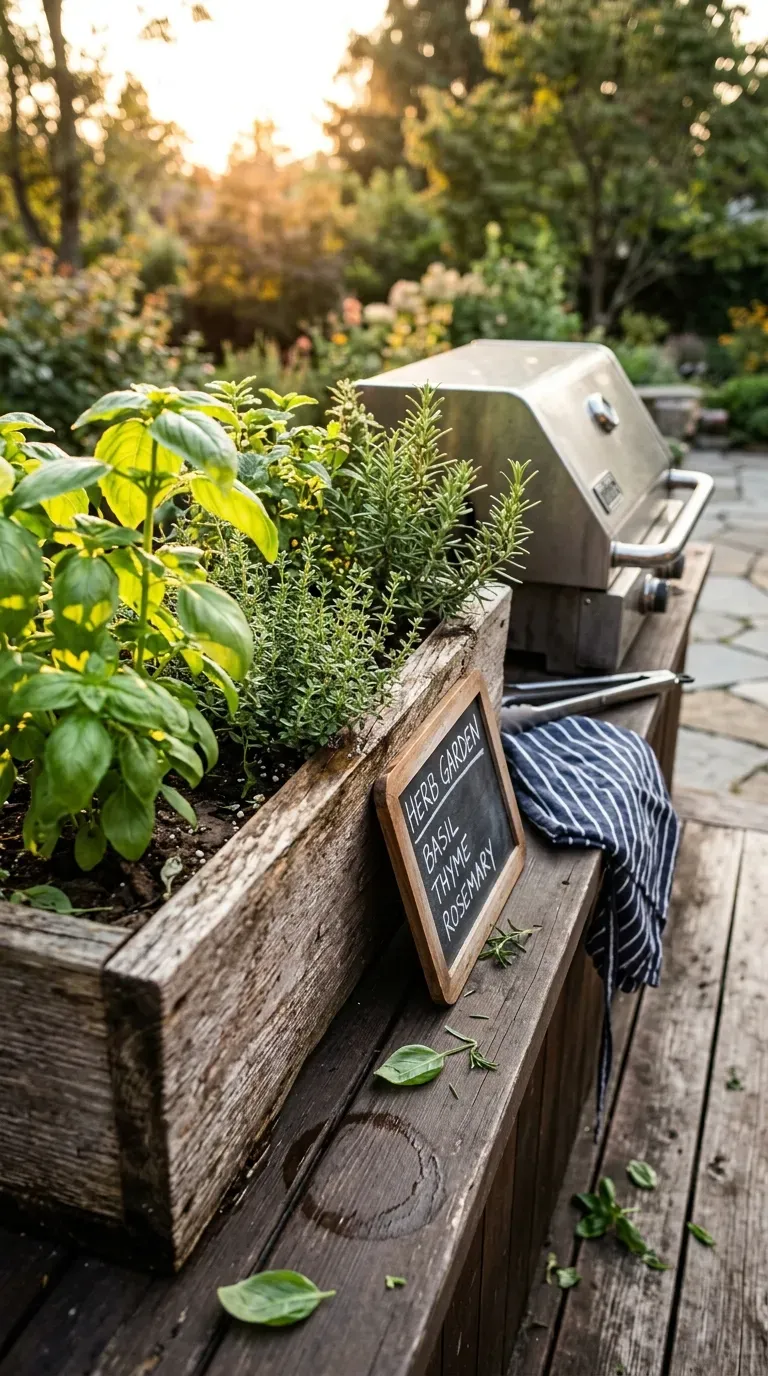
Nothing beats stepping three feet from the grill to snip fresh basil, and a wooden trough keeps the whole herb patch within reach without eating up floor space.
Use a cedar or redwood trough (both resist rot naturally) at least 8 inches deep, filled with a fast-draining potting mix cut with perlite. Basil, thyme, oregano, and rosemary all want 6+ hours of direct sun and dislike soggy roots, so water only when the soil feels dry an inch down — overwatering is the most common way people kill a herb trough by mid-July.
Pro Tip: Pinch basil flower buds the moment you see them; it delays bolting and keeps the plant producing tender leaves for another 6–8 weeks.
Our deck herb garden layout guide has spacing details, and Penn State Extension’s herb growing guide covers regional planting windows.
You’ll use this trough more than any other planter on the list — it earns its keep every time you cook outside.
5. Tiered Succulent Stand for Small Footprints
A three-tier metal plant stand turns 18 inches of deck space into room for eight or more succulents, which matters enormously on a small balcony-style deck.
Stick to drought-tolerant varieties — echeveria, sedum, and haworthia — in 4–6″ terracotta pots with a cactus-specific mix. Water deeply but infrequently, roughly every 10–14 days, letting the soil dry out completely between waterings. Terracotta’s porous walls help prevent the root rot that kills more succulents than anything else.
The mistake I made the first year: I put the stand in full afternoon sun and lost two echeverias to scorch within a week. Morning sun with light afternoon shade works far better for most varieties.
Pair with our best succulents for outdoor decks list, and Almanac’s succulent watering schedule for climate-specific timing.
It’s the highest plant density you’ll get from the smallest deck footprint on this whole list.
6. Coleus Shade Bowl
For decks under a solid roof or deep tree cover, a wide, shallow resin bowl planted entirely in coleus delivers color without needing a single flower.
Coleus comes in reds, chartreuse, and deep purple foliage that rivals any bloom, and it genuinely prefers filtered or full shade — direct sun bleaches the leaf color out fast. Use a 14–16″ bowl with good drainage holes, a moisture-retentive potting mix, and water whenever the top inch dries, usually every 2 days in peak summer heat.
- Full shade coleus: keeps vivid color, slower but steady growth
- Part-sun coleus: faster growth but leaves fade to pale green within weeks
Check our foliage-first container combos for pairing ideas, and The Sill’s shade plant care notes for indoor-outdoor crossover options.
It’s proof that a deck garden doesn’t need a single flower to feel vibrant.
7. Vertical Pallet Planter
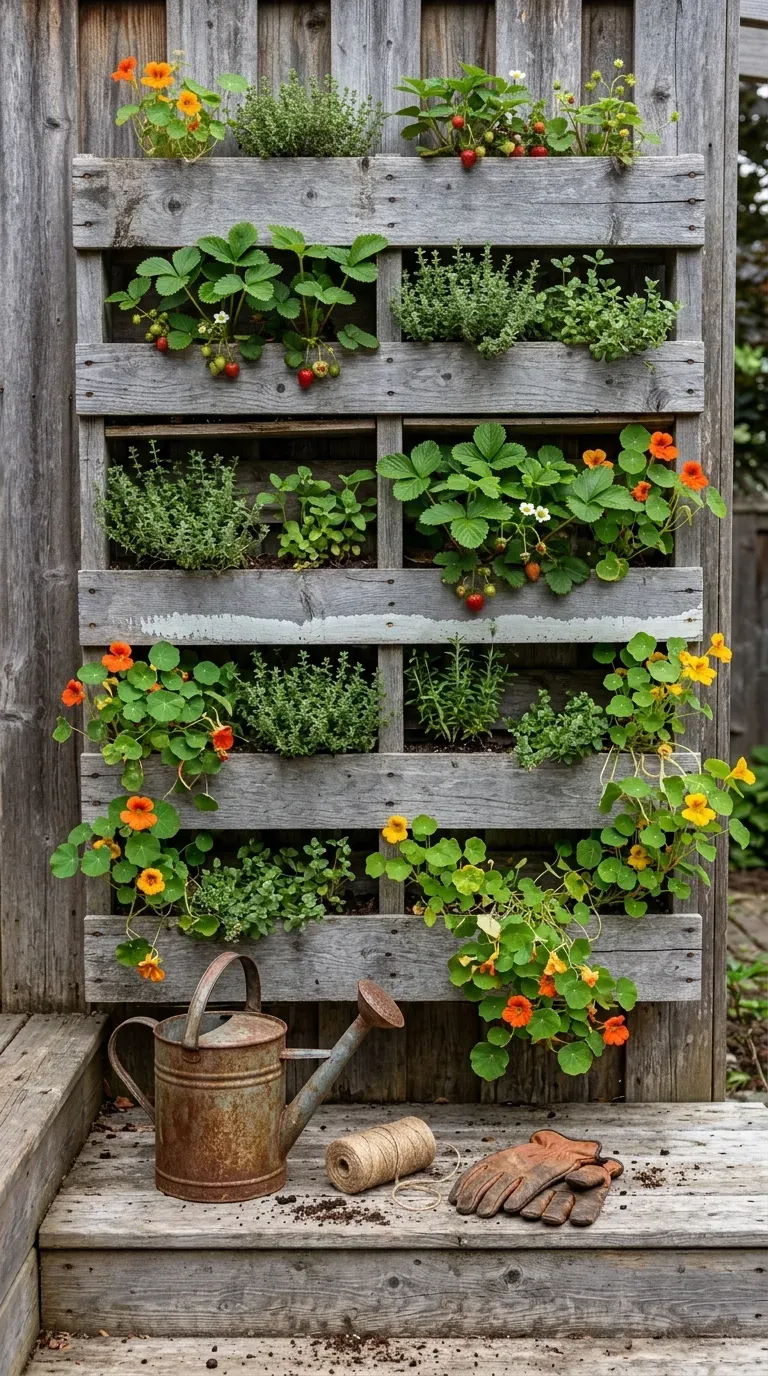
A vertical pallet planter is the DIY project that gets the most compliments for the least material cost — usually under $20 if you source the pallet free.
Line the back and base of each slat pocket with landscape fabric to hold soil in, then fill with a lightweight potting mix. Strawberries, thyme, and trailing nasturtium all do well in the shallow pockets and tolerate the quicker drying that comes with vertical planting — expect to water every day in full summer sun.
Pro Tip: Let the planted pallet lie flat and establish roots for two full weeks before standing it upright, or the young plants will slide right out of their pockets.
Our vertical garden build guide walks through the full build, and SFGate Home Guide’s pallet safety notes explain which pallets to avoid (look for HT stamps, not MB).
It’s a weekend project that solves privacy and planting space in one move.
8. Lantana Firepot for Windy Decks
Elevated or coastal decks catching steady wind will shred delicate petals fast, which is exactly why lantana earns its spot here — the small clustered blooms shrug off wind that would flatten a petunia.
Plant in a heavy concrete or weighted resin pot (lightness is your enemy on a windy deck) with well-draining soil. Lantana tolerates neglect well and actually blooms better slightly underwatered; water only when the top 2 inches are bone dry, roughly weekly.
Concrete pots also resist tipping, which matters more than people expect — I lost a full lightweight pot off a fourth-floor deck in a summer storm before switching to concrete.
Read our wind-tolerant deck plants list, and BHG’s container weight and stability guide for pot selection in exposed spots.
Lantana turns your windiest, most neglected corner into steady color from June through frost.
9. Hosta Corner Grouping
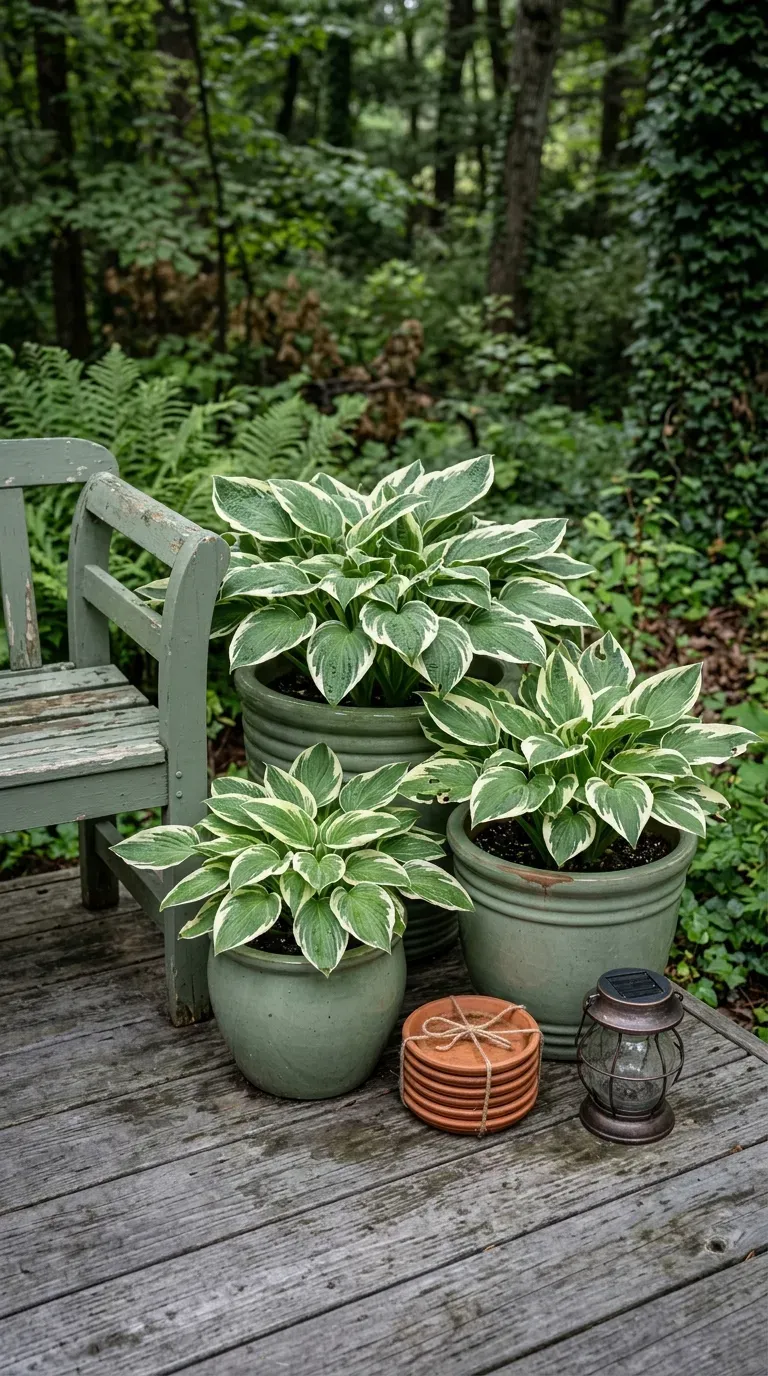
Hostas bring big, architectural leaf texture to a shaded deck corner where flowering plants would just struggle and sulk.
Choose a variegated variety for extra visual interest and plant in a wide, at-least-12″ ceramic pot with rich, moisture-retentive soil. Hostas want consistent moisture — water when the top inch dries, generally every 2–3 days — and appreciate a slow-release fertilizer in spring for fuller leaf growth.
The honest limitation: hostas struggle badly in more than 2–3 hours of direct sun, where leaves scorch at the edges and never fully recover for the season.
Our shade-loving container plants guide has more pairing options, and Missouri Botanical Garden’s hosta care sheet covers variety selection in depth.
A hosta grouping makes deep shade look intentional instead of like a plant graveyard.
10. Dwarf Citrus in a Half-Barrel
A dwarf Meyer lemon or lime in a half-barrel container is the statement piece that makes a deck feel like a warm-climate retreat, even somewhere it technically isn’t.
Use a half-barrel at least 16 inches deep with excellent drainage — citrus roots rot fast in standing water. Plant in a citrus-specific well-draining mix, water deeply when the top 2 inches dry out, and feed with a citrus fertilizer every 4–6 weeks during the growing season. In climates below 30°F, this container needs to come inside for winter.
This is genuinely an advanced pick: expect some trial and error with fruit drop the first year, which is normal as the tree establishes.
See our growing citrus in containers guide, and University of Florida Extension’s dwarf citrus care notes for feeding schedules.
There’s nothing quite like harvesting your own lemons three feet from the back door.
11. Boxwood Topiary Pair
A matched pair of boxwood topiaries flanking a deck entrance brings the kind of formal, tidy structure that makes the whole space read as designed rather than decorated.
Use square fiberglass planters (lightweight and freeze-crack resistant) with a well-draining mix, and place where they’ll get morning sun with afternoon shade — full blazing sun can brown the foliage in hot climates. Water when the top 2 inches dry, and trim lightly every 4–6 weeks in growing season to hold the shape.
Pro Tip: Rotate the pots a quarter turn every couple of weeks so growth stays even on all sides instead of leaning toward the light source.
Our formal container plant pairs guide has more symmetrical ideas, and RHS’s boxwood pruning guide covers shaping technique.
A boxwood pair is a small investment that makes a deck entrance feel genuinely finished.
12. Trailing Petunia Rail Box
A metal rail box dripping with trailing petunias is the single fastest way to add serious color volume to a sunny deck railing.
Use a wave or trailing petunia variety specifically — upright types won’t cascade the same way — in a well-draining mix with a slow-release fertilizer mixed in at planting. Petunias are heavy feeders and heavy drinkers in full sun; expect to water daily once temperatures climb above 85°F, and deadhead spent blooms weekly to keep flowering steady.
- Full sun trailing petunias: dense bloom coverage, higher water needs
- Part-shade calibrachoa alternative: similar look, more forgiving on watering
Our best trailing flowers for railings list has backup options, and Gardeners’ World’s petunia deadheading technique explains the quickest method.
By midsummer this box looks like a waterfall of color spilling over the railing edge.
13. Ornamental Grass Duo for Privacy Screening
Two tall ornamental grasses in matching concrete cylinders create a soft privacy screen without the permanence (or HOA paperwork) of an actual fence.
Feather reed grass or maiden grass both work well in containers at least 18 inches wide and deep, planted in a standard well-draining mix. These grasses are genuinely low-maintenance — water weekly in the first season to establish roots, then only during extended dry spells after that, and cut back to a few inches in late winter before new growth starts.
The surprising part: mature clumps can reach 4–5 feet tall in a single growing season, which is often more screening than people expect from a container plant.
Read our privacy plants for decks and patios guide, and Almanac’s ornamental grass care basics for cutback timing.
This duo does double duty as sculptural texture and a genuine sightline break from the neighbors.
Getting Started With Deck Planter Gardening
The easiest first step is picking one container and one plant you actually like looking at — not the most Instagrammed option, the one you’ll enjoy watering. Start with something forgiving: lantana, succulents, or an herb trough all tolerate a missed watering day without dying on you.
The most common beginner mistake is overcrowding a single small pot with three or four different plants that all want different amounts of water. Start simple, then add complexity once you understand your deck’s actual light pattern, which is often different from what you assume before you track it.
For your first purchase, get one 12–14″ fiberglass or resin pot (lightweight and crack-resistant), one well-draining potting mix bag, and a moisture meter if you tend to over- or under-water by habit.
Realistically, expect visible growth within 2–3 weeks and a filled-out, photo-ready container by week 6–8, depending on the plant and your climate.
Frequently Asked Questions
What plants work best for a sunny deck?
Lantana, petunias, and succulents handle full sun deck conditions best, especially in pots that get 6+ hours of direct light daily. Choose drought-tolerant varieties if you tend to forget watering. These also hold up well to reflected heat off wood decking.
Do deck planters need drainage holes?
Yes, drainage holes are essential to prevent root rot in nearly every container plant. If your pot lacks one, drill it with a masonry bit or add a 2-inch gravel layer at the base. Standing water is the top cause of container plant death.
How often should I water deck planters in summer?
Most sunny deck planters need water every 1–3 days once temperatures climb above 80°F, while shaded containers can often stretch to every 3–4 days. Check by pressing a finger 2 inches into the soil rather than watering on a fixed schedule.
What’s the best planter material for a windy deck?
Heavy concrete or weighted resin planters resist tipping far better than lightweight plastic or fiberglass on exposed or elevated decks. Pair heavy pots with wind-tolerant plants like lantana or ornamental grass for the best results.
Can I keep deck planters alive over winter?
It depends entirely on your climate and the plant — tropical options like dwarf citrus need to come inside below 30°F, while hostas and ornamental grasses can often survive outdoors in a sheltered, insulated pot. Check your specific plant’s cold hardiness zone before leaving anything out.
A Few Final Thoughts
Thirteen ideas is genuinely more than enough to transform even the smallest deck into somewhere you actually want to sit. Start with one or two containers that match your real light conditions rather than trying to force a pretty plant into the wrong spot — that mismatch is behind most container failures I’ve seen. A well-chosen pot in the right light will outperform three mismatched ones every time. Pick your favorite from this list, commit to it for one season, and watch how much a small, deliberate change to your deck can shift how you use the whole space. Your coffee mornings out there are about to get a lot better.