
A tiny home staircase often gets written off as too small, too steep, or too multi-purpose to spare any room for plants, but the actual constraint is usually inches, not possibility. I helped a friend fit a genuine plant display into her 200-square-foot tiny home’s ladder-style stairs last year using nothing but stair-tread risers and two rail-mounted pots, and it survives daily use by two adults and a dog. This list covers 19 tiny home staircase garden ideas that squeeze real greenery into genuinely minimal space, each with the specific dimensions, weight, and placement details that matter when every inch of a tiny home does double duty. Ready? Let’s explore all 19 of them.
Quick Answer: For ladder-style or open-tread tiny home stairs, riser-mounted or under-tread planters use dead space without adding bulk. For loft stairs with a solid railing, rail-clip pots are the most efficient option. Always prioritize lightweight containers in a tiny home, since structural weight limits matter more here than in a standard house.
Why Tiny Home Staircase Gardens Are Worth Your Time
A tiny home staircase is almost always doing at least double duty — as storage, as a ladder, sometimes as the only room divider in the whole structure — which means any plant solution has to add greenery without stealing function. In practice, the most successful tiny home staircase gardens use vertical and dead space (risers, undersides of treads, railings) rather than any horizontal surface a person or object might need.
The practical benefits matter more in a tiny home than almost anywhere else. Real plants improve air quality and add a sense of scale and life to a small structure that can otherwise feel visually flat, and choosing compact, lightweight options avoids adding meaningful weight to a structure where every pound matters, especially in a home on wheels. The lesser-known fact most people miss: tiny home staircases are frequently steeper than standard code allows (since tiny homes on trailers often aren’t subject to the same building codes), which means secured, non-tipping containers matter even more here than in a conventional home.
This approach is ideal for tiny home owners, van or skoolie dwellers with interior steps, and anyone in a genuinely space-constrained home who’s assumed a real plant display simply wasn’t possible.
At a Glance
- Riser-mounted planters use the vertical face of each step, the most commonly wasted space.
- Lightweight containers matter more in a tiny home than almost any other design choice.
- Compact succulents and herbs fit the small pot sizes tiny stairs genuinely require.
- Rail-clip and under-tread options add plants without touching any usable step surface.
- Secure, non-tipping containers are essential given how steep many tiny home stairs run.
19 Tiny Home Staircase Garden Ideas Compared
| Idea | Space Used | Container Weight | Difficulty | Best For |
| Riser-Mounted Mini Planters | Riser face only | Very light | Easy | Solid-riser stairs |
| Rail-Clip Succulent Pots | Rail only | Very light | Easy | Loft stairs with rail |
| Under-Tread Hanging Pockets | Under tread | Light | Moderate | Open-tread ladder stairs |
| Single Top-Step Statement Plant | One step corner | Light-medium | Easy | Landing at top |
| Magnetic Steel Riser Planters | Riser face only | Very light | Easy | Metal riser stairs |
| Fold-Down Step Shelf Planter | Retracts flush | Light | Moderate | Ladder-style stairs |
| Velcro-Mounted Fabric Pockets | Wall beside stairs | Very light | Easy | Any wall-adjacent stairs |
| Corner Storage-Step Plant Nook | Inside storage step | Light | Easy | Stairs with storage drawers |
| Suction-Cup Window Rail Pots | Window beside stairs | Very light | Easy | Stairs near a window |
| Compact Air Plant Cluster | Any flat surface | Negligible | Very easy | Any tiny stair type |
| Slim Vertical Wall Strip Garden | Adjacent wall | Light | Moderate | Stairs against a wall |
| Loft Ladder Rung Planters | Rung ends | Very light | Easy | Ladder-style loft access |
| Single Hanging Ceiling Planter | Overhead only | Light | Easy | Stairs with clear ceiling |
| Nesting Stackable Mini Pots | One small surface | Light | Easy | Very tight single spot |
| Herb Drawer Insert Planter | Inside step drawer | Light-medium | Moderate | Storage-step stairs |
| Foldaway Trellis Climbing Pot | Retracts flush | Light | Moderate | Stairs beside a wall |
| Magnetic Spice-Jar Micro Herbs | Metal riser or rail | Negligible | Easy | Metal-surfaced stairs |
| Slide-Out Drawer Succulent Tray | Inside step drawer | Light | Moderate | Storage-step stairs |
| Single Newel Post Topper Pot | Post top only | Light | Easy | Stairs with a newel post |
1. Riser-Mounted Mini Planters for Solid-Riser Stairs
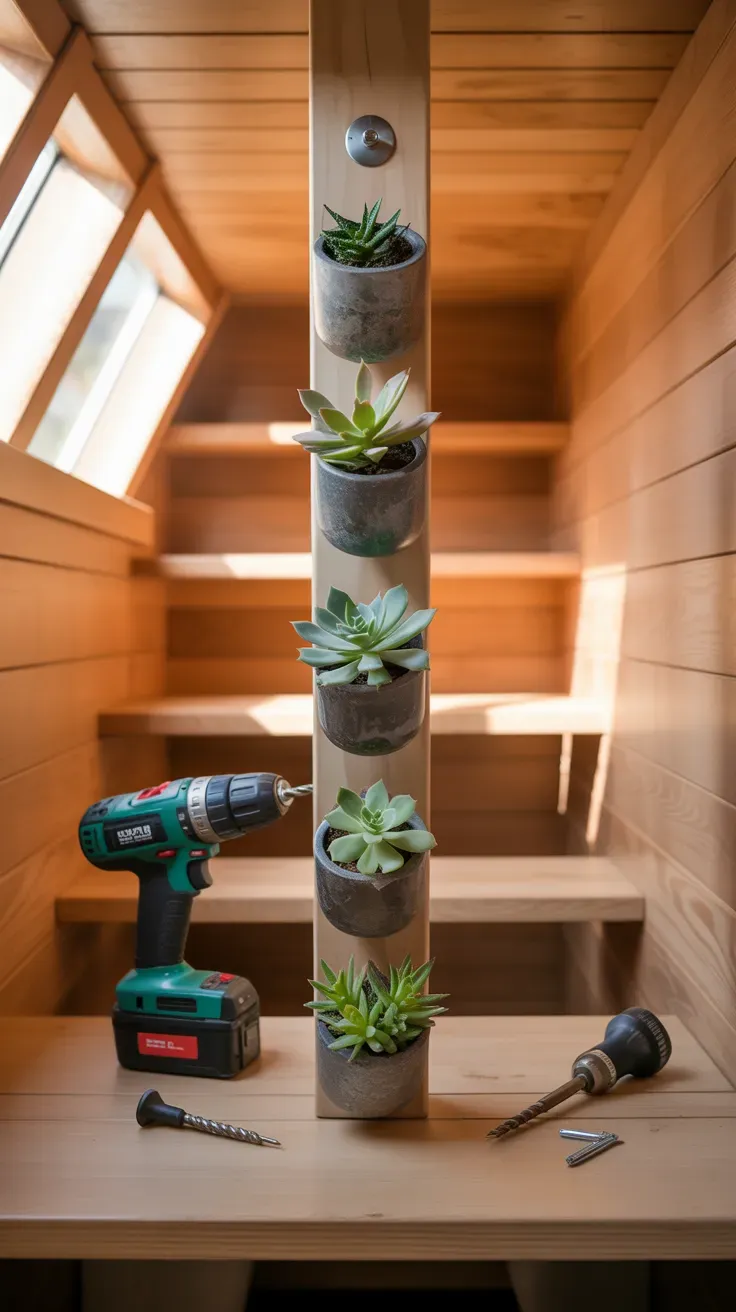
The vertical riser face of each step is dead space in most staircases, and mounting small planters there adds plants to every single step without reducing tread depth by even a fraction of an inch.
Use planters no more than 3-4 inches deep, secured with short screws directly into the riser, and plant with slow-growing succulents that won’t need frequent repotting. It needs bright light for succulents specifically, and watering every 10-14 days keeps the shallow mounted pots from staying soggy against the wood riser behind them.
Pro Tip: Choose plastic or resin planters over ceramic for riser mounting — ceramic’s weight adds up quickly across multiple steps, a real concern in a tiny home where structural weight limits matter more than in a standard house.
Internal link: maximizing dead space in compact staircase design External link: RHS guide to essential container drainage principles
This is the single most efficient use of space on this entire list, turning every step into a planting opportunity without sacrificing an inch of walkway.
2. Rail-Clip Succulent Pots for Loft Stairs With a Railing
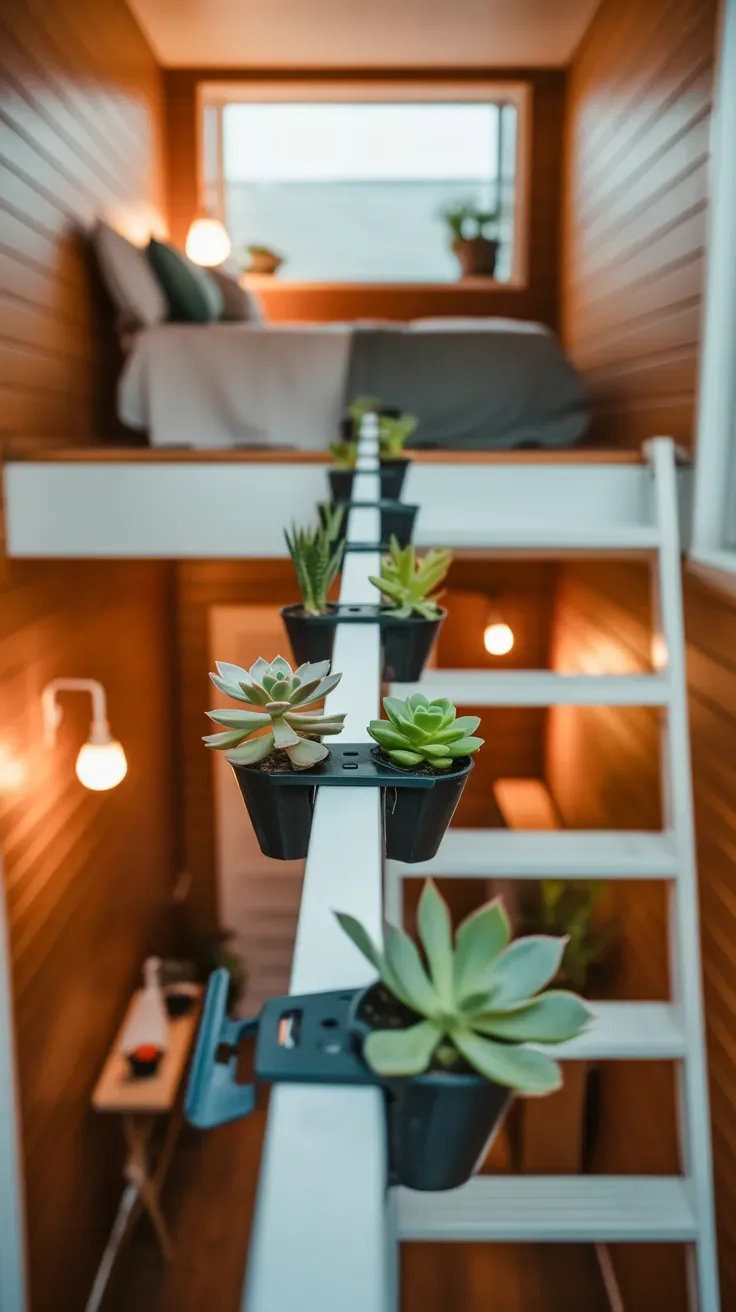
Clip-on pots designed for balcony railings work just as well on a tiny home loft staircase’s railing, adding plants at eye level without needing any floor or tread space at all.
Choose lightweight plastic clip pots rated for the specific rail thickness in your tiny home, and plant with drought-tolerant succulents that need watering only every 10-14 days, since these small, exposed pots dry out faster than larger containers. Test each clip’s grip strength before trusting it with a filled pot, since tiny home railings vary widely in thickness and material.
Internal link: rail and railing-mounted container options for tight spaces External link: SF Gate Home Guide’s guide to succulent container care
3. Under-Tread Hanging Pockets for Open-Tread Ladder Stairs
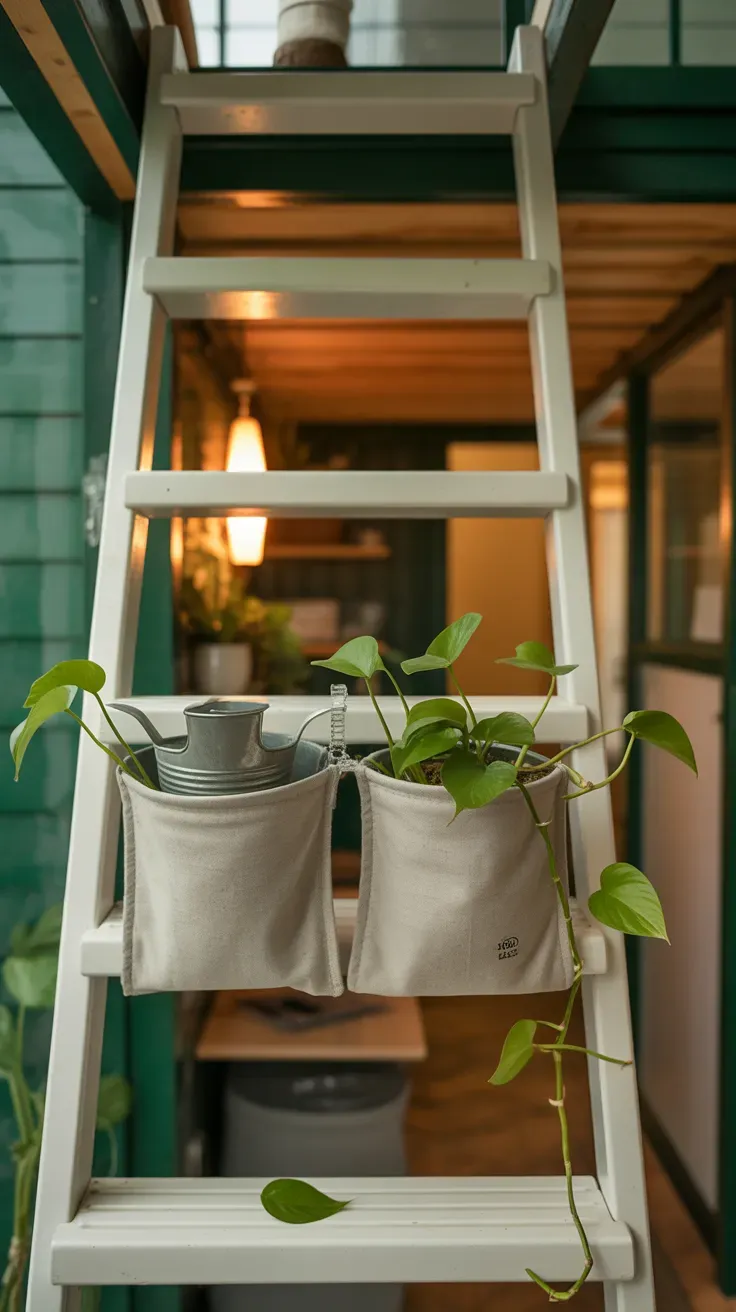
Open-tread ladder-style stairs, common in tiny homes, have genuinely unused space beneath each tread, and small hanging fabric pockets fitted there add trailing plants without touching the walking surface above or below.
Use lightweight felt or fabric pockets, mounted with small screw hooks into the tread’s underside, and plant with pothos cuttings, which root and trail easily even in small water-filled or soil pockets. It needs low to medium light (since this spot often gets minimal direct light) and watering every 7-9 days.
Internal link: using open-tread stair space for hanging plants External link: Gardeners’ World’s pothos care guide for containers
This works specifically because open-tread stairs have literal empty air beneath them that closed stairs simply don’t offer.
4. Single Top-Step Statement Plant for Maximum Impact at the Landing
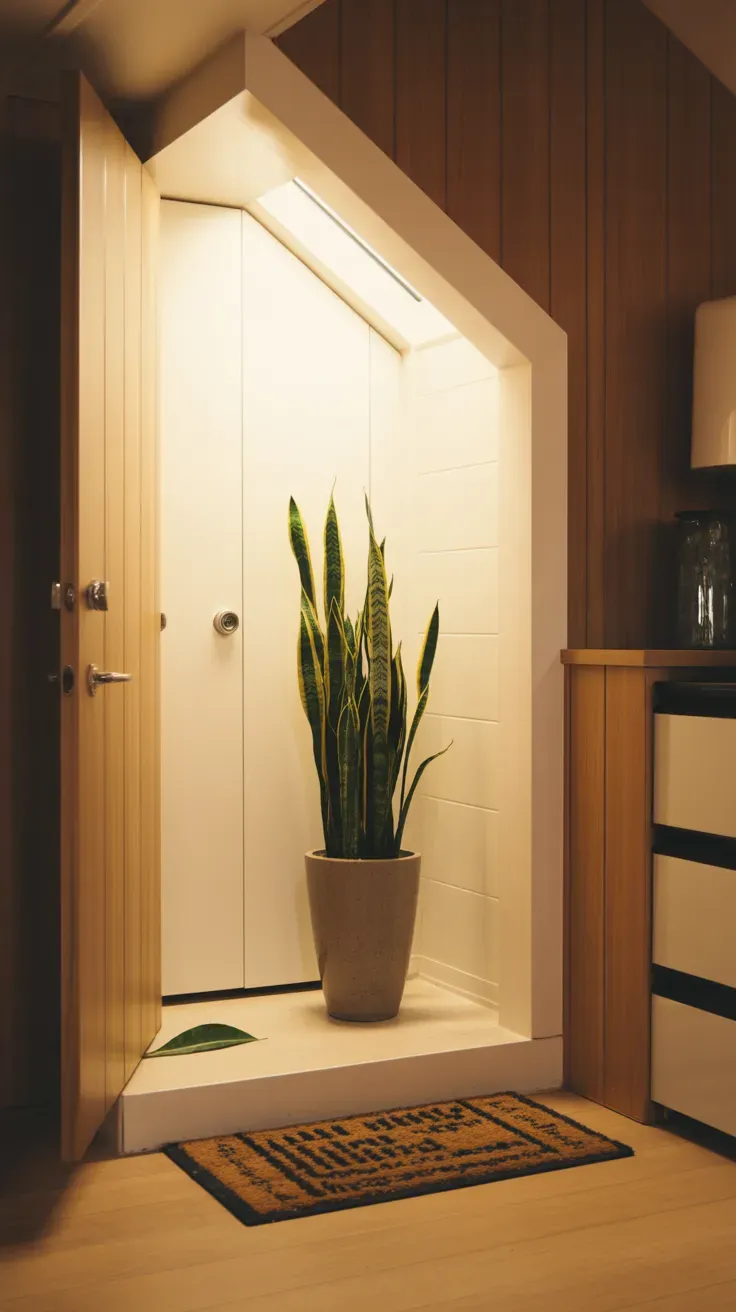
When a tiny home landing is genuinely too small for multiple plants, one tall, narrow statement plant tucked into the least-trafficked corner delivers more impact per square inch than any scattered arrangement could.
Choose a narrow-profile plant like snake plant in a cylindrical pot no wider than 8-10 inches, positioned where it won’t interfere with the loft’s typically low headroom or a door’s swing path. It tolerates low to bright light and needs watering only every 3-4 weeks, ideal for a spot that’s easy to overlook in daily tiny home life.
Internal link: statement plants for small landing corners External link: RHS care sheet for Sansevieria (Dracaena trifasciata)
5. Magnetic Steel Riser Planters for Metal-Constructed Stairs
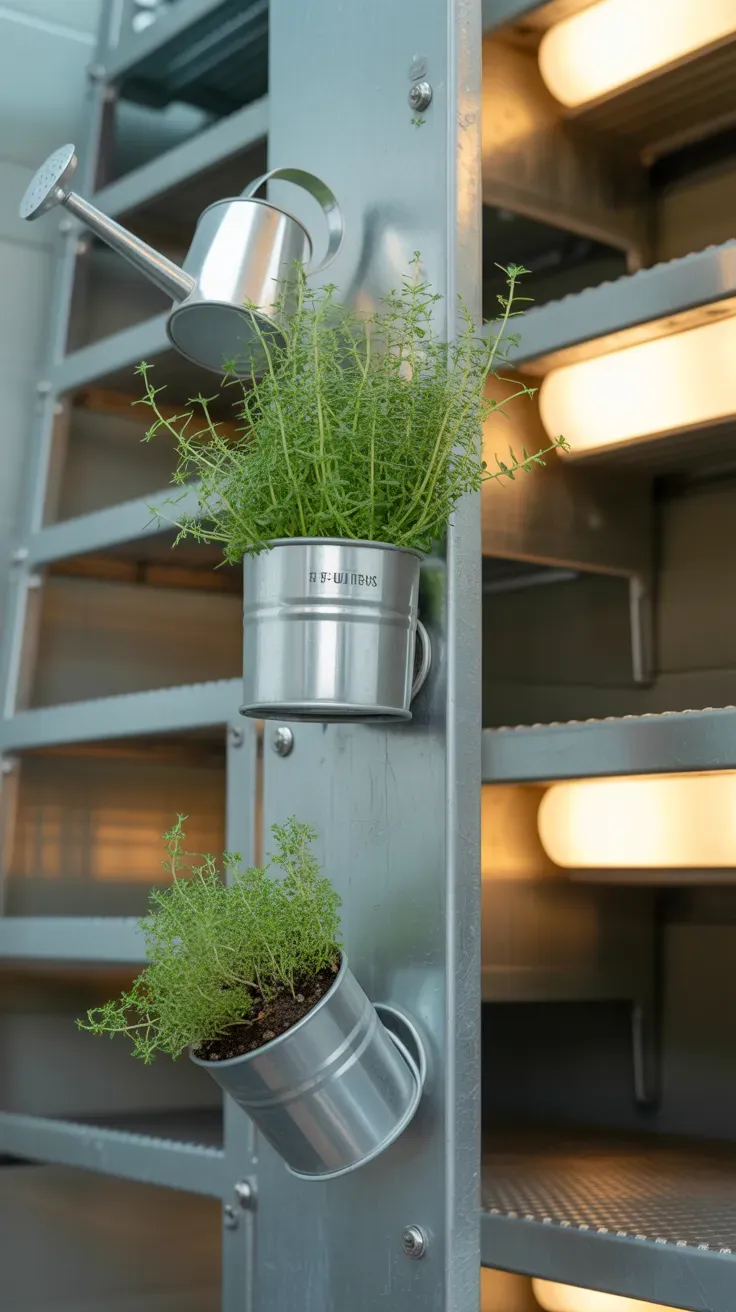
Some tiny homes use metal or steel-clad stair construction, and magnetic planters take advantage of this by attaching without any drilling, screws, or permanent modification at all.
Choose lightweight magnetic-backed planters rated for at least double the filled weight, and plant with small herbs like chives or thyme, needing full to partial light depending on the staircase’s location. This is the only truly tool-free, damage-free mounting option on the list, ideal for rented or resale-conscious tiny homes.
Pro Tip: Test magnetic strength with an empty pot first, then again once filled with damp soil — wet soil weighs meaningfully more than it looks, and a magnet rated for the dry weight alone may not hold securely once watered.
Internal link: no-drill mounting solutions for rented or temporary spaces External link: Almanac’s guide to growing herbs in containers
6. Fold-Down Step Shelf Planter for Ladder-Style Stairs
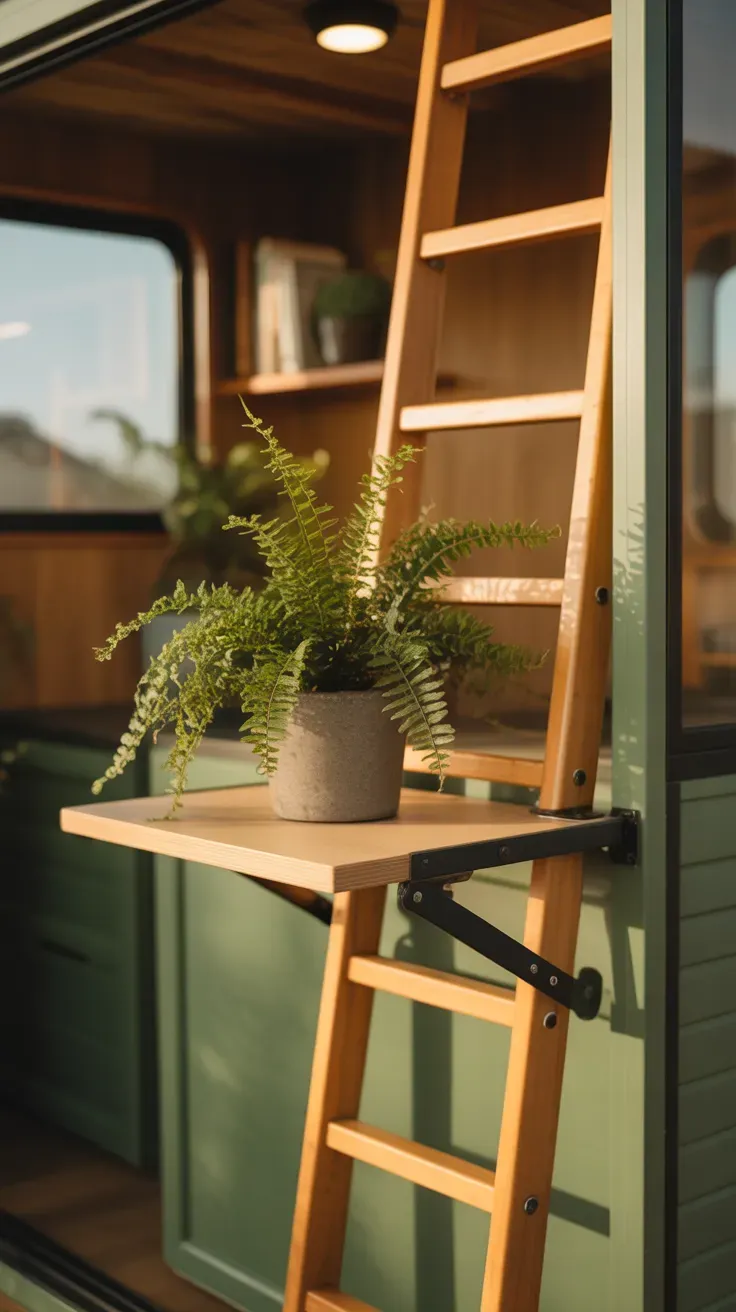
A small hinged shelf that folds flush against a ladder-style staircase when not needed, then extends to hold a single pot when the space is available, solves the fundamental tension of a tiny home ladder stair having zero permanent spare surface.
Build or buy a hinged shelf rated for at least 5-8 pounds, mounted to the ladder’s side rail, and use it for a single small plant like a compact fern, needing medium light and watering every 4-5 days. Fold it flat whenever the stairs need full clearance for moving furniture or larger items through the space.
Internal link: retractable and fold-away storage solutions for tiny homes External link: BHG’s guide to space-saving folding shelf hardware
7. Velcro-Mounted Fabric Pockets for Wall-Adjacent Stairs
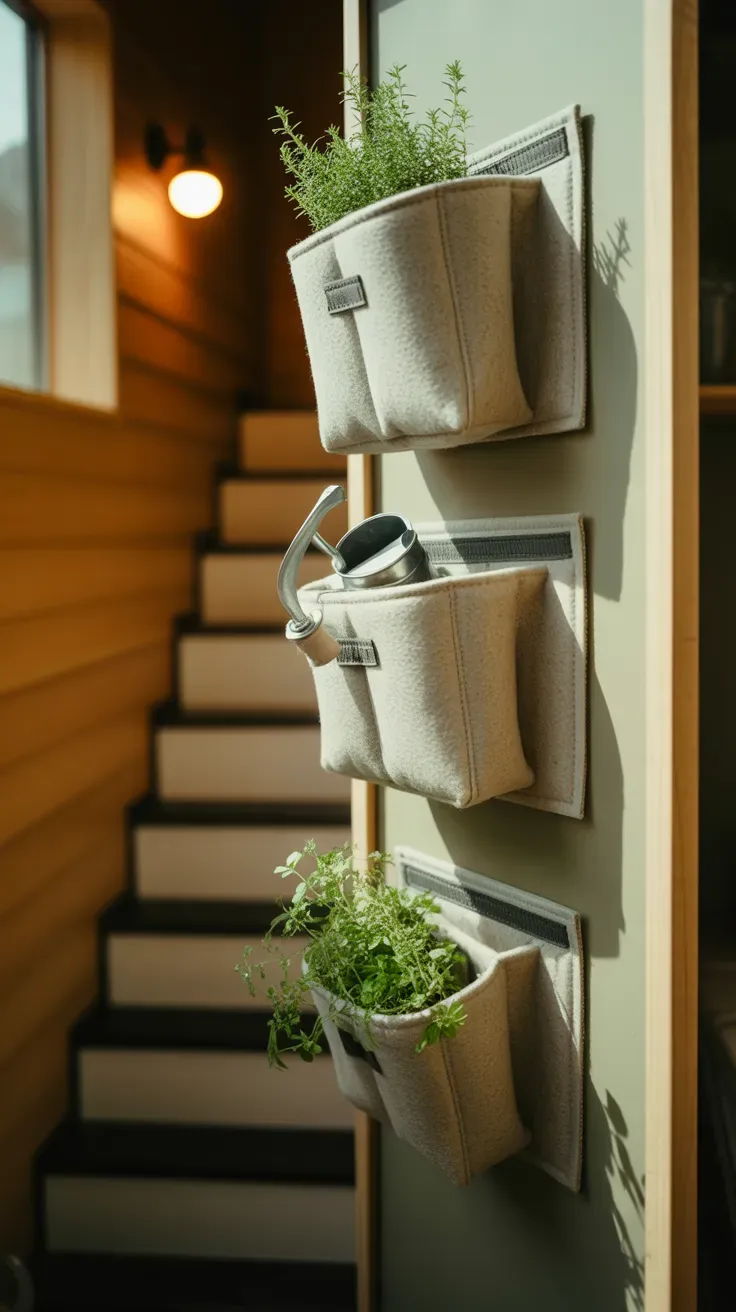
Heavy-duty velcro strips mount fabric wall pockets to the wall directly beside a staircase without any drilling, making this a fully reversible option for tiny homes where wall penetrations matter more (structural walls, resale value, or rental agreements).
Use industrial-strength velcro rated for the pocket’s filled weight, mounting pockets no more than a few inches deep to keep the total weight manageable. Plant with small herbs, needing full to partial light and watering every 5-7 days, checking the velcro’s hold periodically since repeated watering can gradually weaken adhesive strength.
Internal link: damage-free mounting solutions for renters and tiny homes External link: University of Florida Extension’s herb container growing notes
8. Corner Storage-Step Plant Nook for Stairs Doubling as Storage
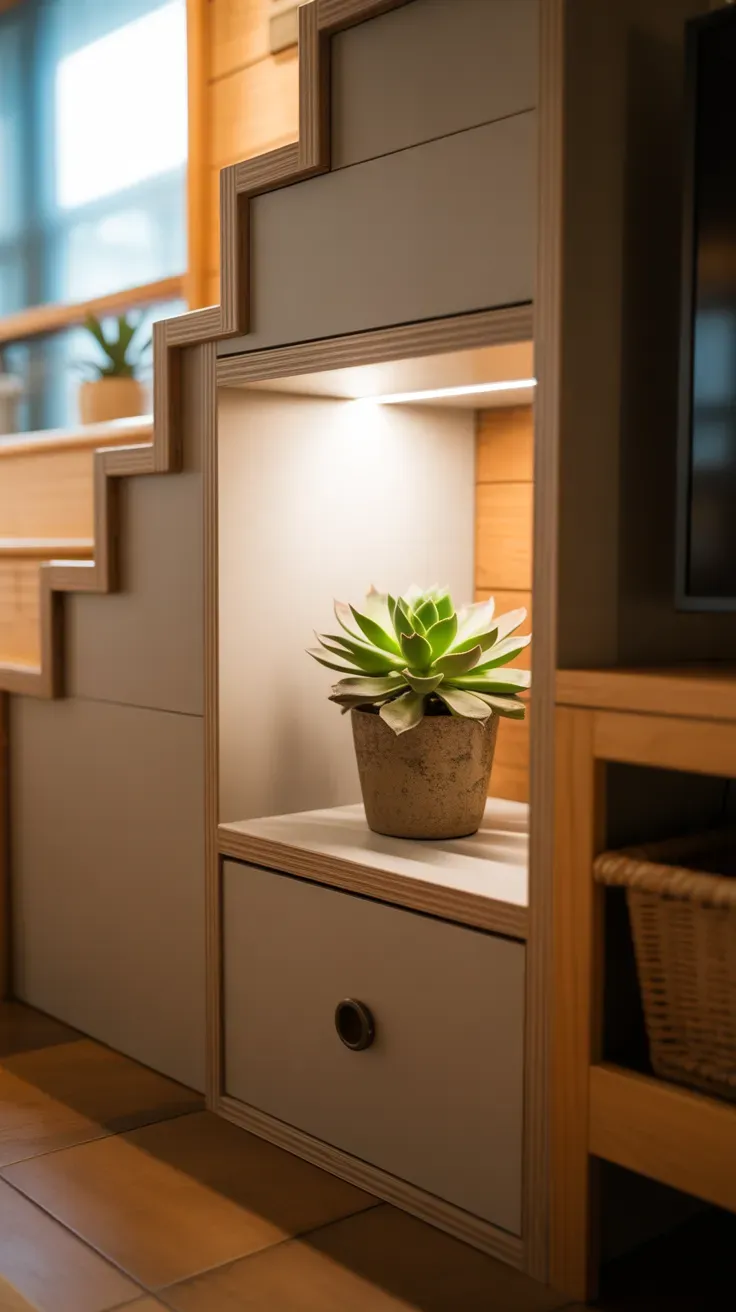
Many tiny home staircases double as storage, with each step opening into a drawer, and a small dedicated nook built into one step’s corner (rather than the full drawer space) adds a plant spot without sacrificing storage capacity.
Build a small recessed nook, roughly 6×6 inches, into one step’s non-drawer corner, and use it for a single compact succulent needing bright light and watering every 10-14 days. This works best integrated during initial tiny home construction or a storage-step retrofit rather than added after the fact.
Internal link: integrating plant space into dual-purpose tiny home furniture External link: SF Gate Home Guide’s guide to succulent container care
9. Suction-Cup Window Rail Pots for Stairs Beside a Window
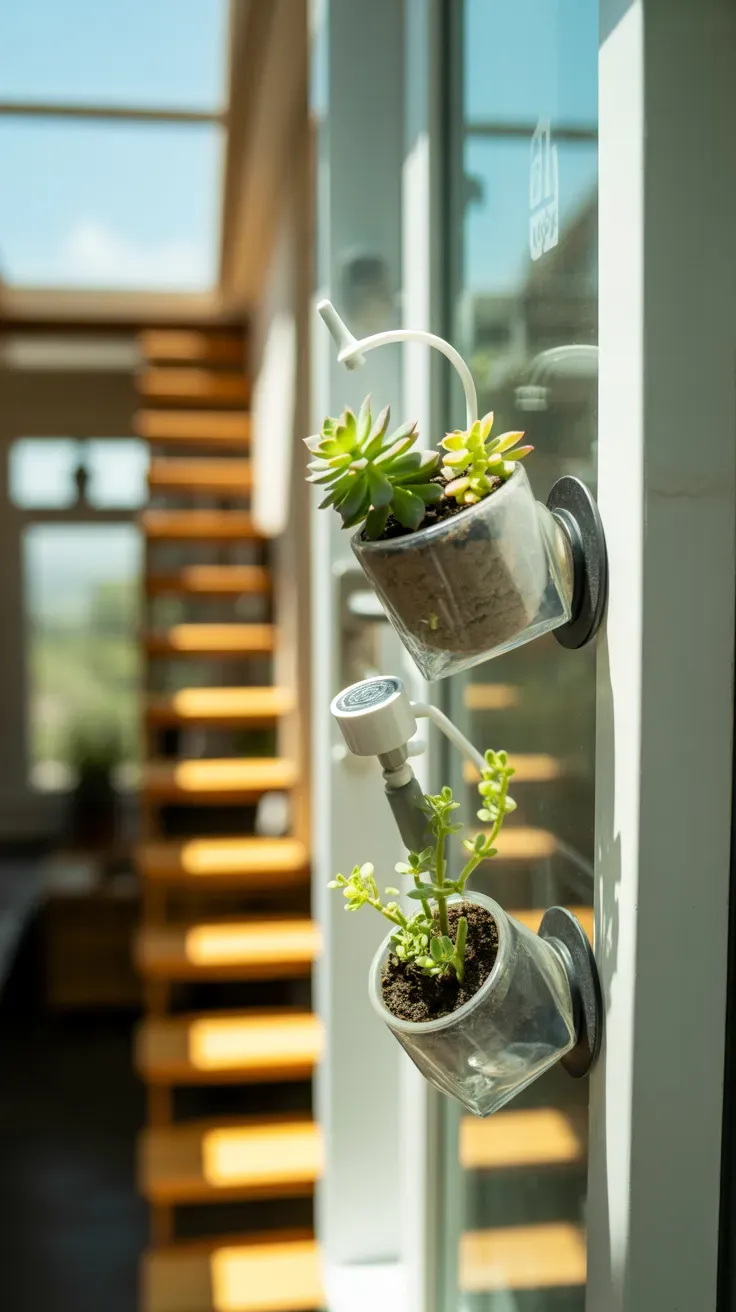
If a tiny home staircase runs beside a window, suction-cup mounted pots take advantage of both the available light and an otherwise unused vertical glass surface, adding sun-loving plants without any floor or step footprint at all.
Use small, lightweight pots rated for suction mounting (typically under 1 pound filled), and plant with sun-loving succulents that thrive in the direct light a window position provides. Needs watering every 7-10 days, and reposition periodically since suction cups can weaken with temperature fluctuation against glass over time.
Pro Tip: Clean the glass surface thoroughly with rubbing alcohol before applying suction cups — any dust or residue significantly reduces suction strength, and a fallen pot near a staircase is a real hazard worth avoiding.
Internal link: window-mounted container solutions for sunny spots External link: RHS guide to succulent light and watering needs
10. Compact Air Plant Cluster for Truly Zero-Footprint Greenery
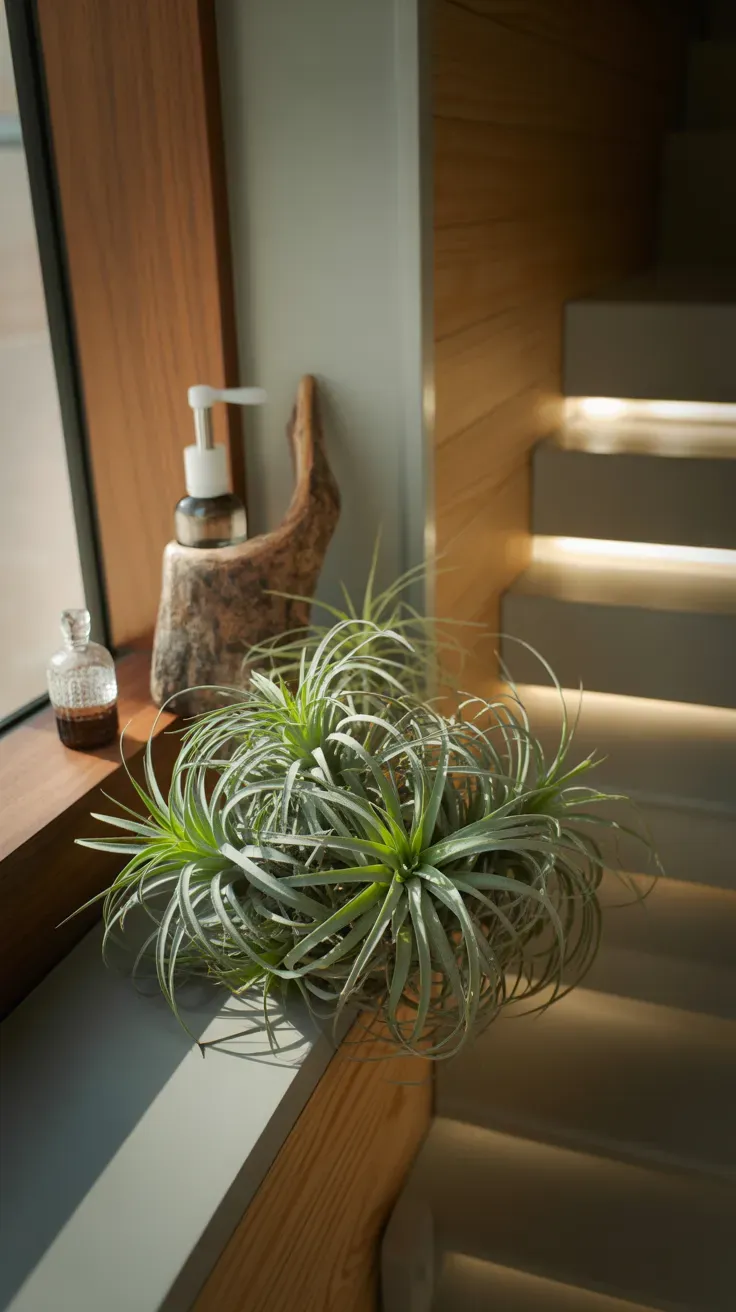
Air plants (Tillandsia) need no soil or pot at all, making them the single lowest-footprint plant option available for a tiny home staircase where literally any container might be one container too many.
Rest small clusters directly on any flat surface, tuck them into decorative driftwood, or hang them, needing bright indirect light and misting or a brief water soak every 7-10 days rather than traditional watering. Their complete lack of soil means zero mess risk on a staircase, an underrated advantage in daily tiny home traffic.
Internal link: soilless plant options for zero-footprint small spaces External link: Missouri Botanical Garden’s Tillandsia growing profile
For the absolute tightest tiny home stairs, air plants solve the space problem more completely than any container-based idea on this list.
11. Slim Vertical Wall Strip Garden for Stairs Against a Wall
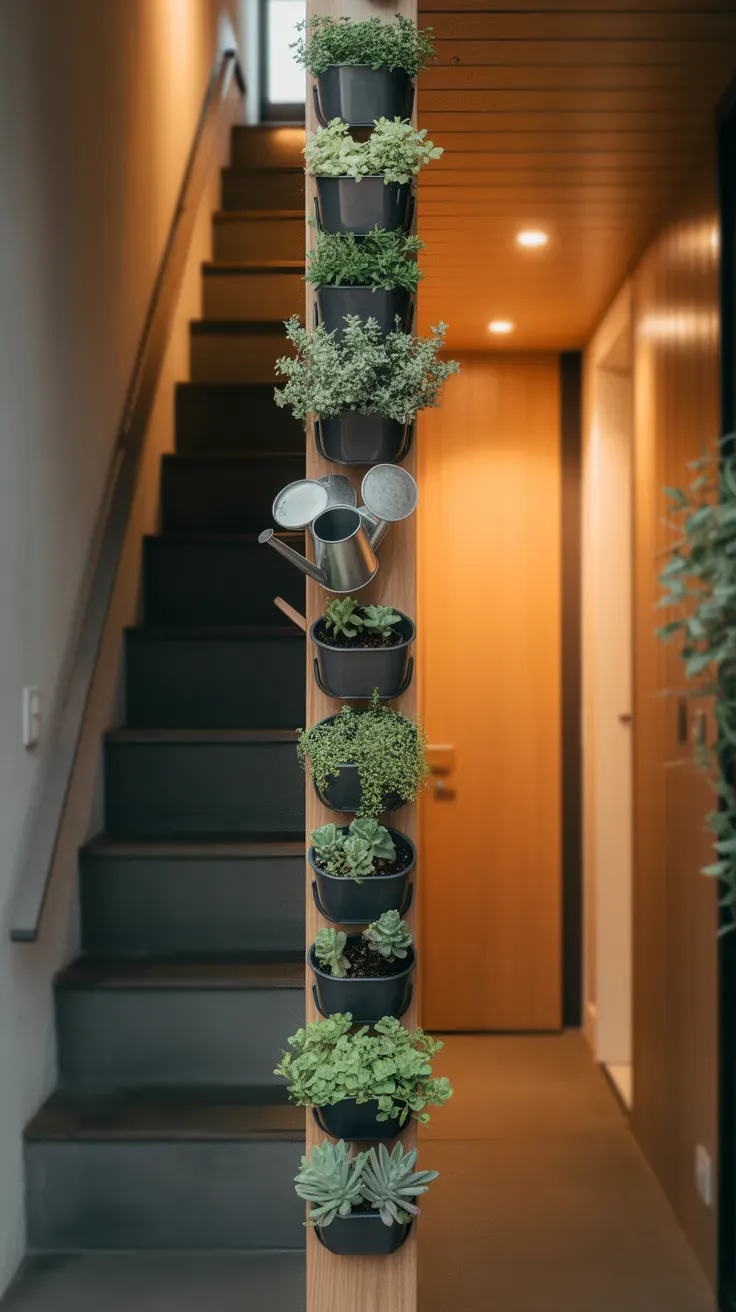
A single vertical column of small planters, mounted directly on the wall running alongside a staircase, uses height rather than width, which matters enormously in a tiny home where horizontal space is almost always the scarcer resource.
Mount 4-5 small planters in a single vertical line, spaced a few inches apart, and mix plant types by light need (succulents near the top if that’s where more light reaches, herbs or pothos lower down). Water according to each plant’s individual needs, checking the column regularly since mixed plantings require more attentive, varied care than a uniform planting.
Internal link: vertical gardening techniques for tight spaces External link: University of Florida Extension’s vertical container gardening notes
12. Loft Ladder Rung Planters for the Simplest Tiny Home Stairs
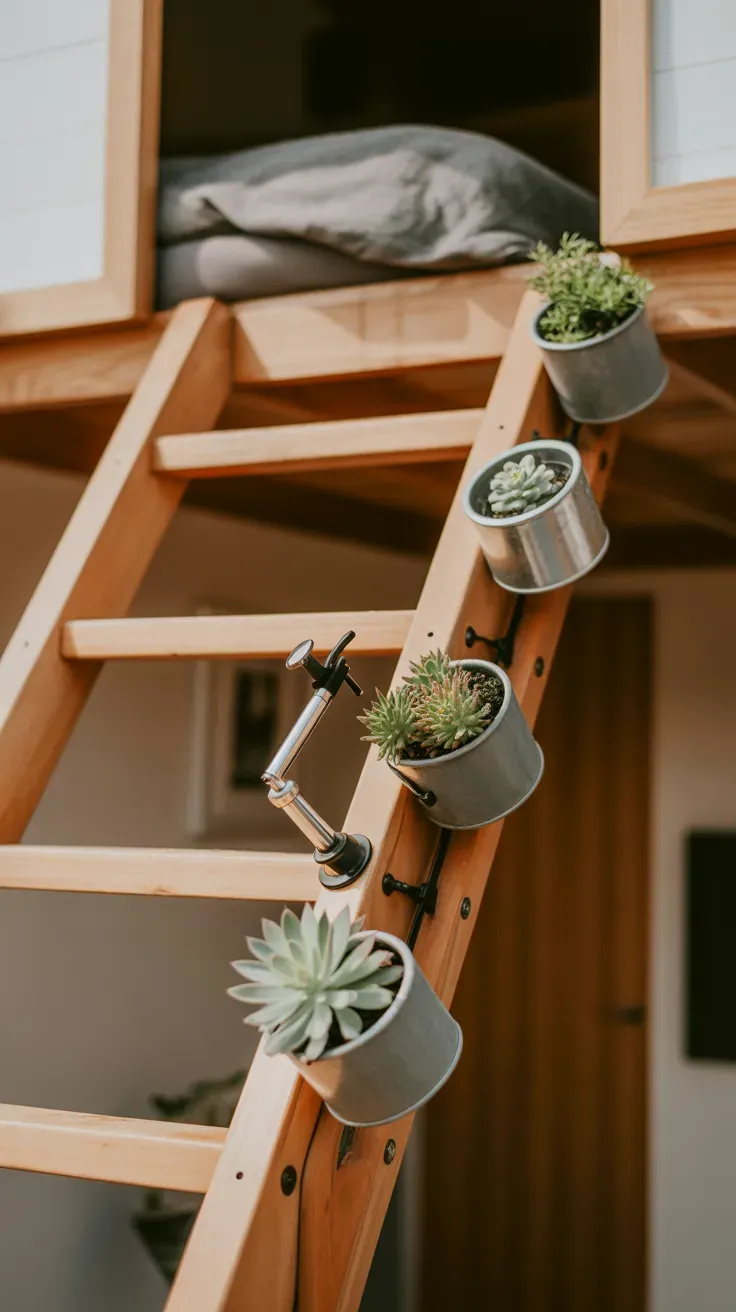
The simplest tiny home stairs are often just a ladder, and the exposed ends of each rung, which extend slightly beyond the side rails on many designs, provide a small but genuinely usable mounting point for tiny clamp-on planters.
Use small clamp-style planters rated for the rung’s diameter, and plant with the smallest, lightest succulents available, since even minor added weight at the rung’s end affects the ladder’s balance more than weight added elsewhere. Water every 10-14 days, and check clamps periodically for security given the ladder’s regular flexing under foot traffic.
Internal link: ladder-style stair solutions for the smallest tiny homes External link: SF Gate Home Guide’s guide to succulent container care
13. Single Hanging Ceiling Planter for Overhead-Only Space
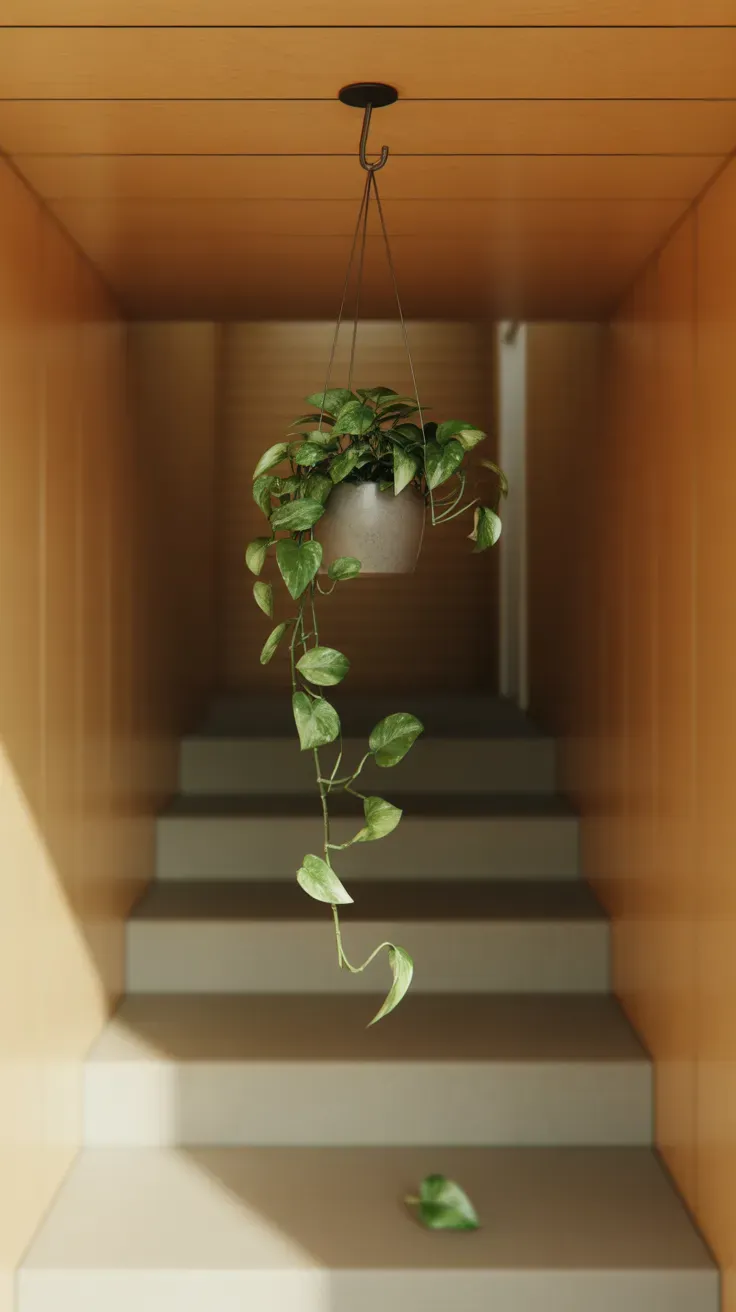
One well-placed hanging planter overhead adds a genuine plant feature using the one dimension a tiny home staircase almost always has some spare inches in — the headroom above the steps themselves.
Choose a small, lightweight hanging pot with trailing pothos or similar low-maintenance trailing plant, hung high enough to clear head height comfortably even for taller household members. It needs low to medium light and watering every 7-9 days, and a single planter (rather than multiple) keeps both the weight and visual clutter minimal.
Internal link: hanging plants for stairwells with limited floor space External link: RHS guide to hanging basket watering and feeding
14. Nesting Stackable Mini Pots for One Very Tight Spot
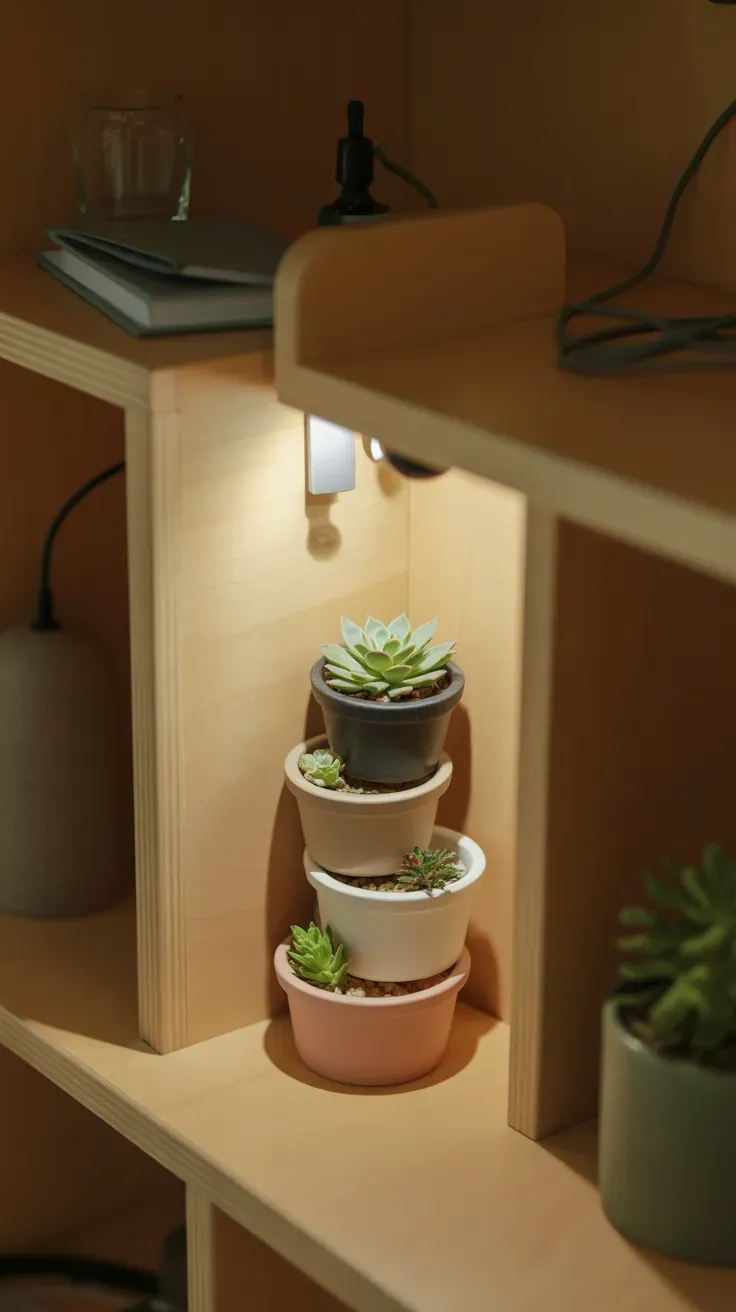
When a tiny home staircase has genuinely only one small spot available for any plant at all, nesting stackable mini pots concentrate multiple tiny plants into a single, compact footprint rather than spreading a display across space that doesn’t exist.
Use 3-4 graduated mini pots, each 2-3 inches, stacked or nested together, and plant each with a different tiny succulent for visual variety within the tight footprint. Water every 10-14 days, checking each small pot individually since their tiny soil volume dries faster than larger containers.
Internal link: creative stacking techniques for vertical container gardens External link: BHG’s guide to mini succulent container care
15. Herb Drawer Insert Planter for Storage-Step Stairs
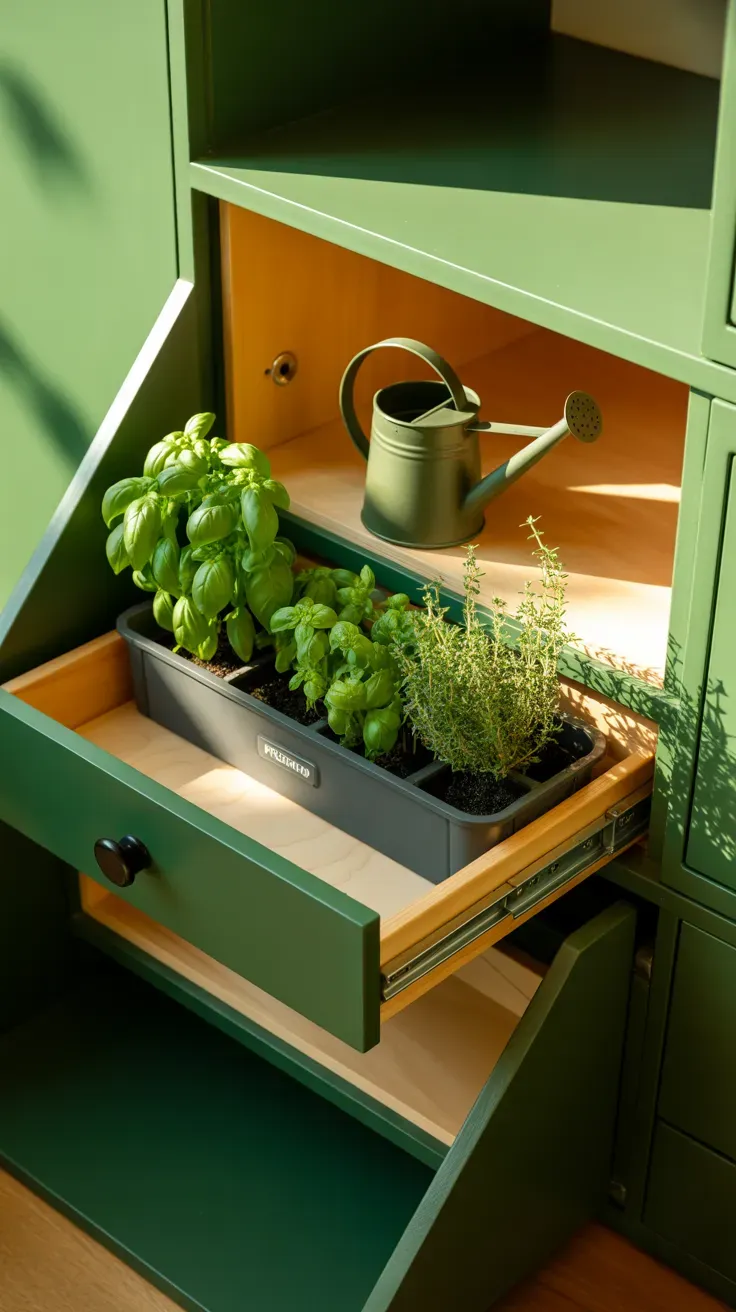
For tiny home stairs with built-in storage drawers, fitting a small waterproof planter insert into one drawer’s front section (leaving the rest for actual storage) turns dual-purpose furniture into triple-purpose furniture.
Use a shallow waterproof liner or small planter insert sized to fit within the drawer’s front few inches, planting basil and thyme, needing full to partial light when the drawer is kept open or near a window, and watering according to each herb’s needs. This only works for drawers that get regular light exposure, so it’s not viable for interior-facing storage steps.
Internal link: multi-purpose furniture solutions for tiny home living External link: Almanac’s guide to growing herbs in containers
16. Foldaway Trellis Climbing Pot for Vertical Growth That Retracts
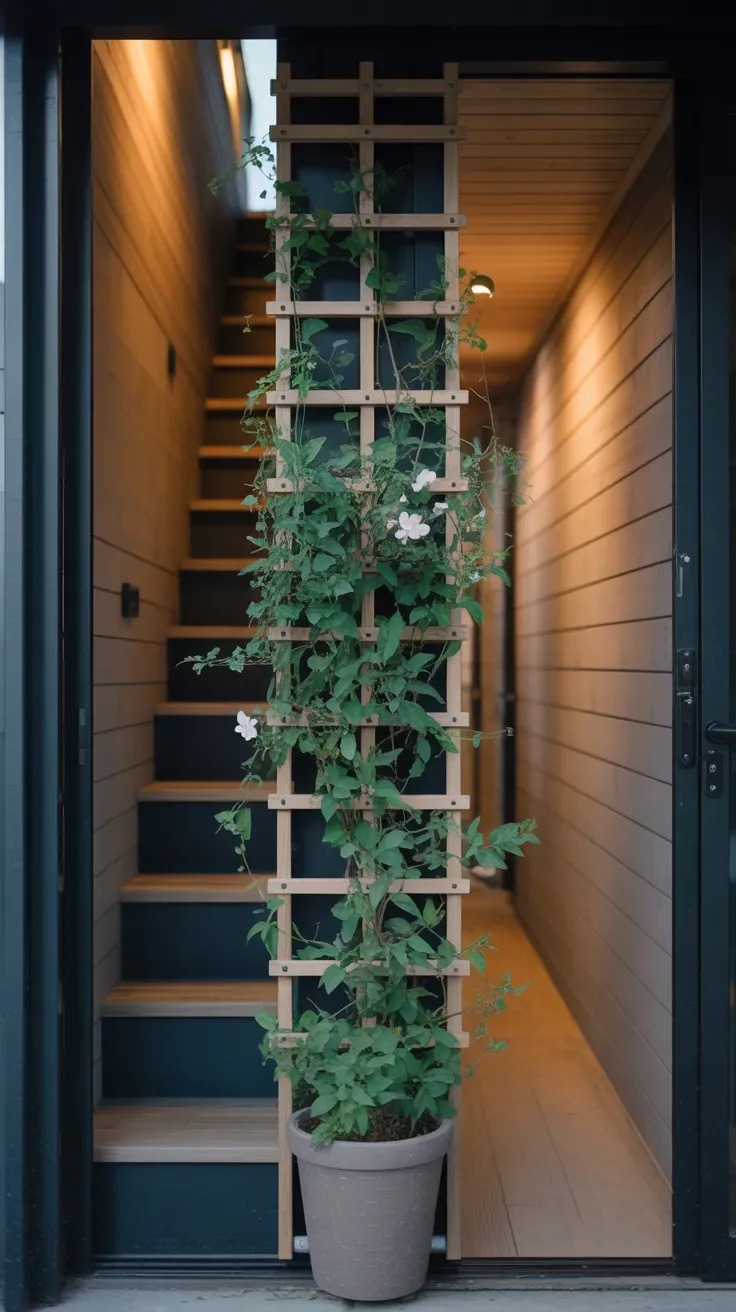
A trellis mounted on a hinge that folds flat against the wall when not needed, then extends outward to give a climbing plant vertical support, solves the tension between wanting height and needing the stairwell fully clear for moving items through.
Choose a lightweight climbing plant like a small jasmine or ivy in an 8-inch pot, needing full sun to part shade and watering every 3-4 days while establishing. Fold the trellis flat whenever the stairs need full clearance, training new growth carefully each time to avoid damaging vines during the fold-and-extend process.
Internal link: training climbing plants in narrow containers External link: Gardeners’ World’s star jasmine growing guide
17. Magnetic Spice-Jar Micro Herbs for the Smallest Possible Footprint
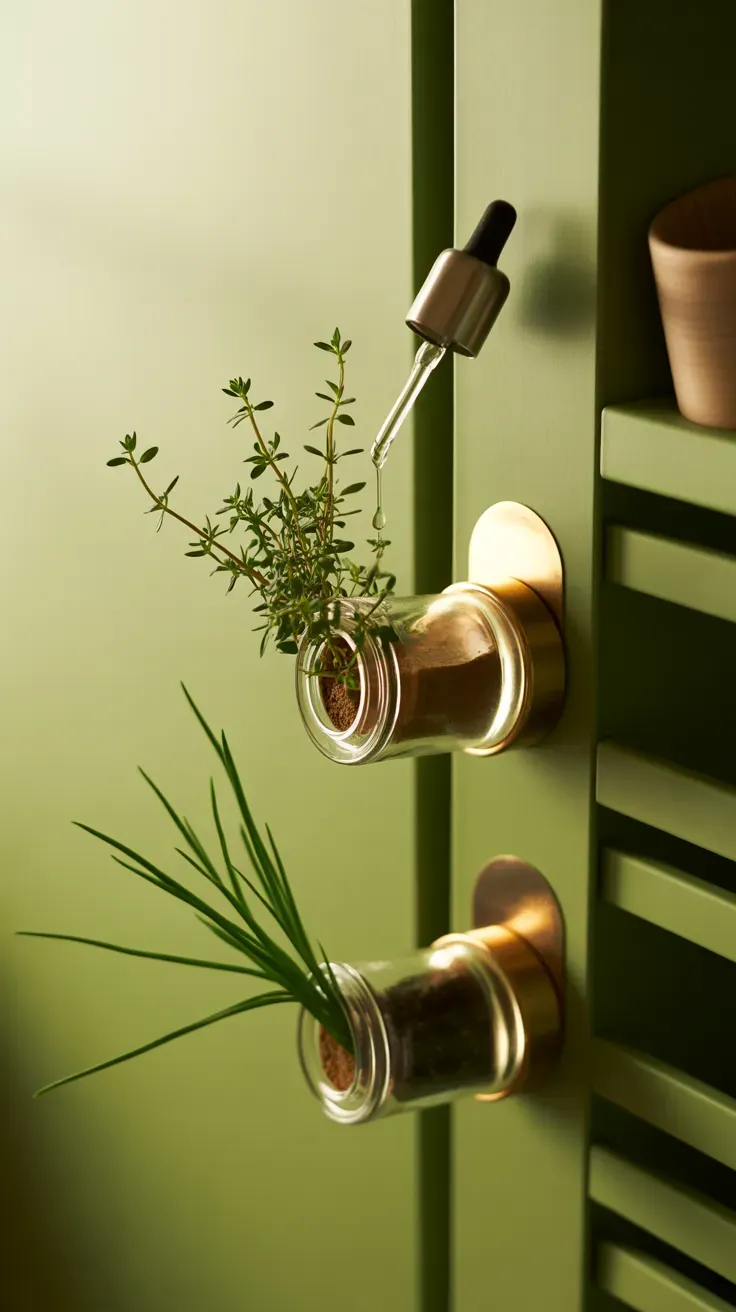
Repurposed magnetic spice jars, originally designed for a kitchen fridge or range hood, work just as well attached to any metal surface near a tiny home staircase, holding genuinely tiny herb sprigs in the smallest footprint on this entire list.
Use small glass or metal jars with strong magnetic backs, planting with thyme or chive sprigs that tolerate the very limited root space, needing bright light and careful, frequent small waterings given the minimal soil volume. This works only where an existing metal surface (railing, riser, or nearby appliance) is already present.
Pro Tip: These micro-planters need repotting into a slightly larger container every few months as roots fill the tiny jar quickly — treat this as a short-term display rather than a permanent growing solution for the plant’s long-term health.
Internal link: micro-container gardening for the smallest possible spaces External link: University of Florida Extension’s herb growing notes
18. Slide-Out Drawer Succulent Tray for Storage-Step Stairs
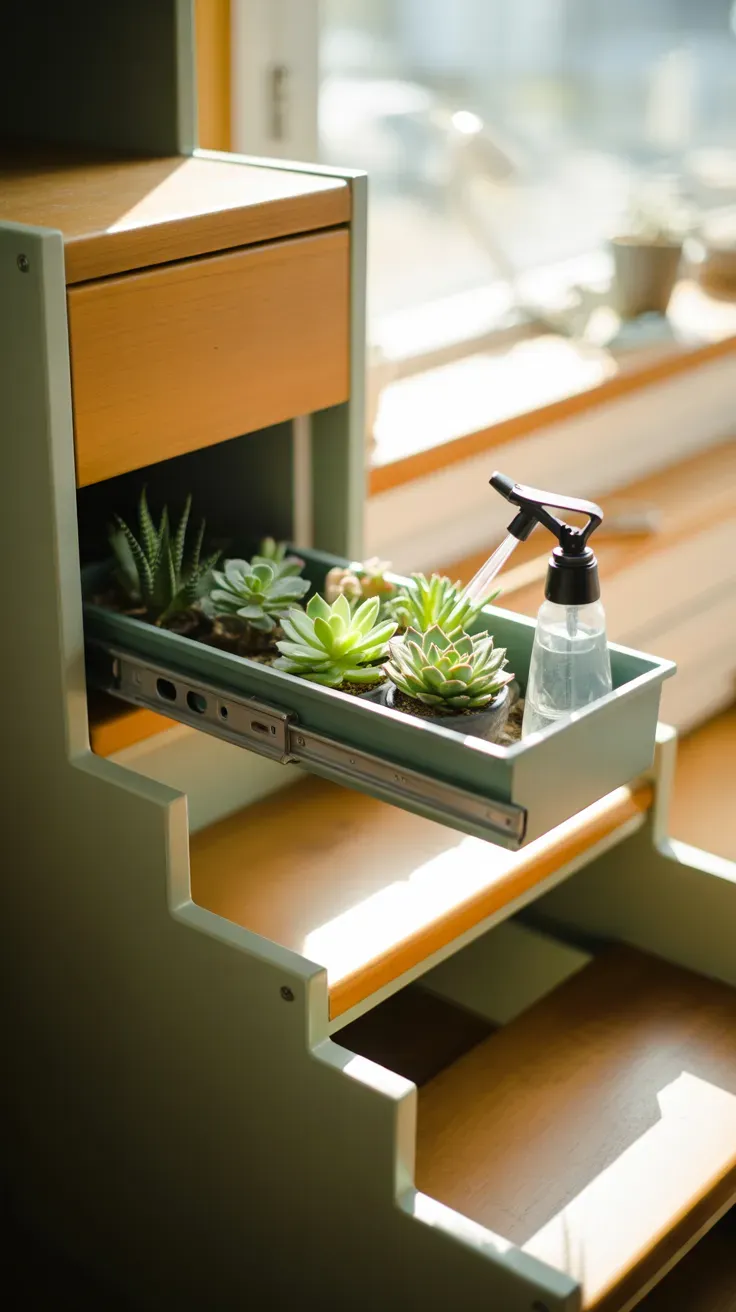
Similar to the herb drawer insert but built specifically as a removable tray rather than a fixed liner, this option lets you slide the entire succulent planting out for watering or light exposure, then tuck it fully away when the storage step needs to close completely flush.
Build or adapt a shallow tray sized to the drawer’s dimensions, using fast-draining cactus soil and small succulents that tolerate infrequent watering, roughly every 10-14 days. The removable design means you can move the tray to a sunnier spot periodically rather than relying on whatever light reaches the drawer’s fixed position.
Internal link: multi-purpose furniture solutions for tiny home living External link: SF Gate Home Guide’s guide to succulent container care
19. Single Newel Post Topper Pot for a Classic Finishing Touch
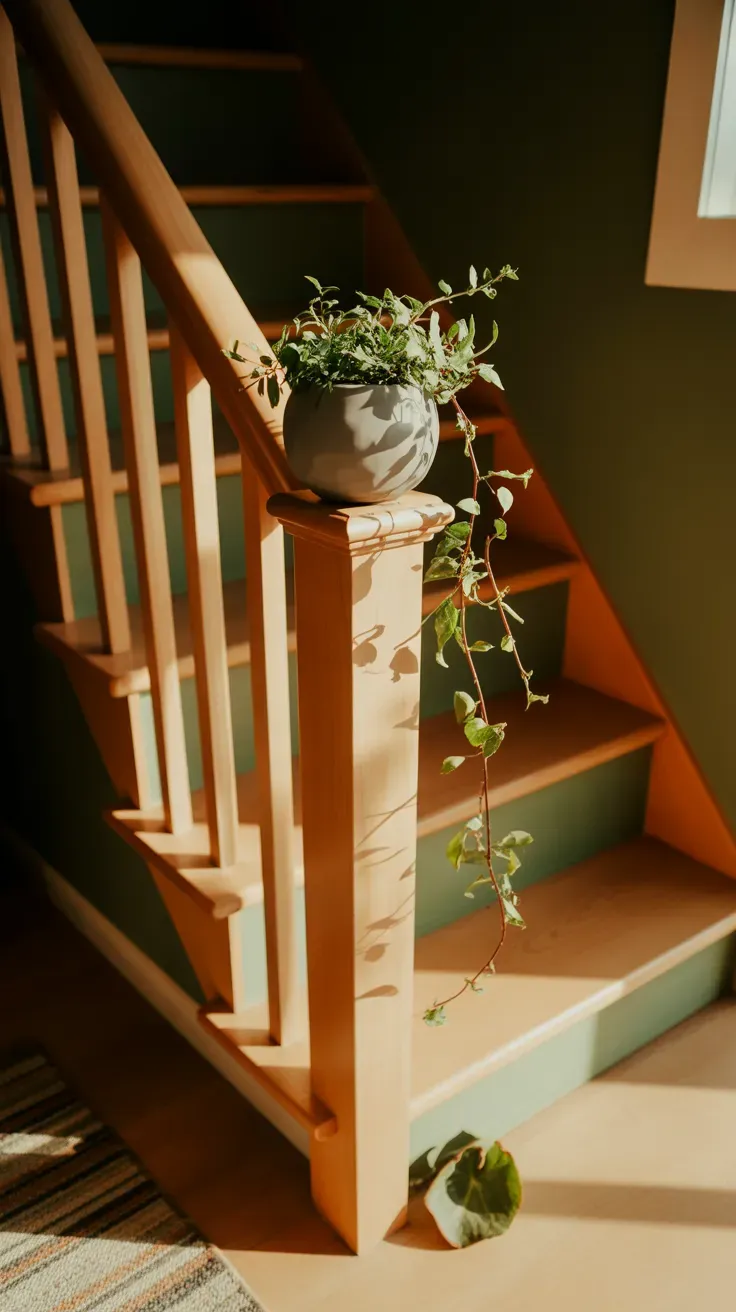
If your tiny home staircase happens to have a newel post (the vertical post anchoring the bottom of a railing), its flat top is a small but genuinely available surface that adds a classic finishing touch without using any step or floor space.
Choose a small round planter, no more than 6 inches wide, with a trailing plant like a small pothos that drapes attractively over the post’s edge. It needs low to medium light and watering every 7-9 days, and the post’s stable, fixed position means no tipping risk the way a freestanding pot might carry.
Internal link: finishing touches for compact staircase entrances External link: Gardeners’ World’s pothos care guide for containers
Closing your tiny home staircase with this small detail proves that even a post-top surface counts as usable space when every inch has to work for its place.
Getting Started With Tiny Home Staircase Gardens
The easiest first step is walking your actual staircase and noting every surface that isn’t the walking tread itself — risers, rails, undersides, posts, and adjacent walls all count as usable space in a tiny home even though they’d be overlooked in a standard house. The most common beginner mistake is choosing a container based on looks rather than weight, which matters more in a tiny home than almost any other design decision given genuine structural load limits.
For your first project, get one lightweight mounting solution (magnetic, velcro, or a simple screw-in bracket) matched to your staircase’s actual construction material, one small plant suited to your space’s real light level, and a kitchen scale to weigh a filled pot before committing to any permanent mount.
Realistically, expect small pots and mounted planters to fill out within 4-6 weeks, and plan to reassess your setup after the first month of normal daily use, since a tiny home staircase gets more foot traffic relative to its size than almost any other stair type.
Frequently Asked Questions
How much weight can a tiny home staircase safely support for plants?
This varies significantly by construction, but as a general rule, keep any single mounted planter under 3-5 pounds filled and distribute weight across multiple small points rather than one heavy container. Check your specific tiny home’s structural specifications or consult your builder if you’re planning anything beyond a few small, lightweight pots.
What are the best plants for a tiny home staircase with limited light?
Pothos, snake plant, and ZZ plant all tolerate the lower light conditions common in tiny home interiors, especially stairs positioned away from windows. Air plants are another strong option since they need no soil and tolerate a wide range of light levels with just occasional misting.
Can I mount planters without drilling into my tiny home’s walls or stairs?
Yes, magnetic planters (for metal surfaces), heavy-duty velcro strips, suction cups (for glass), and clip-on rail planters all work without any permanent drilling or damage. These are especially useful for tiny homes on wheels or rental situations where structural modifications matter more than in a standard house.
How do I keep plants from falling off a tiny home staircase during travel?
For tiny homes on trailers, secure every planter with more than gravity alone — use planters with locking clips, add a small lip or barrier edge, or choose only wall-mounted and magnetic options that stay fixed regardless of movement. Loose, freestanding pots are genuinely risky in any mobile tiny home and should be avoided entirely if the home travels regularly.
What’s the most space-efficient plant option for a genuinely tiny staircase?
Air plants and magnetic micro-herb jars use the least footprint of anything on this list, since air plants need no container at all and magnetic jars attach directly to existing metal surfaces. For anyone with truly minimal spare space, these two options add genuine greenery without requiring any new surface or mounting point to be created.
A Few Final Thoughts
Any combination of these 19 tiny home staircase garden ideas proves that limited square footage doesn’t have to mean giving up on real, living greenery. The trick is genuinely seeing risers, rails, posts, and overhead space as usable surfaces, the same way tiny home living already reframes cabinets, stairs, and furniture as multi-purpose by necessity. Prioritize lightweight, secure mounting over anything that adds meaningful weight or tipping risk, since those two factors matter more in a tiny home than in almost any standard house. Start with one small, well-matched plant in the spot that seems least useful for anything else, and you’ll likely find your tiny home’s staircase has more growing potential than its size ever suggested.