
Anyone who’s come home to a shredded pot and a suspiciously green-smeared dog knows the standard staircase garden advice doesn’t account for a curious animal with easy access to every step. I learned this the hard way after my neighbor’s cat treated her new lavender pots like a personal digging box, and it took a full redesign around non-toxic, sturdy-container choices before the plants actually survived a season. This list covers 25 pet-safe staircase garden ideas that use genuinely non-toxic plants and containers built to withstand curious noses, paws, and the occasional determined chew. Each one comes with the specific safety details and toughness ratings that separate a display that lasts from one your pet dismantles in a week. Ready? Let’s explore all 25 of them.
Quick Answer: For dogs, heavy ceramic or concrete pots with non-toxic plants like spider plant or areca palm resist tipping and chewing better than lightweight containers. For cats, elevated rail-mounted or hanging options keep plants out of paw’s reach entirely. Always double-check any plant against the ASPCA’s toxic plant list before bringing it home, since pet sensitivity varies by species.
Why Pet-Safe Staircase Gardens Are Worth Your Time
Building a staircase garden around genuine pet safety means you can stop worrying every time your dog sniffs a new pot or your cat eyes a dangling leaf, which matters enormously for anyone whose pet has full outdoor access to the entrance. In practice, choosing non-toxic plants from the start eliminates the anxious plant-identification scramble that happens after a pet has already taken a bite.
The practical benefits go beyond peace of mind. Sturdy, heavy containers that resist tipping also tend to be more weather-stable and long-lasting than lightweight plastic pots, and pet-safe plants are frequently also some of the toughest, most forgiving options for anyone without a dedicated green thumb. The lesser-known fact most people miss: “pet-safe” and “pet-proof” aren’t the same thing — a non-toxic plant can still get shredded or knocked over, so container sturdiness matters just as much as plant toxicity when a determined pet is involved.
This approach is ideal for dog owners with off-leash yard access near the staircase, households with curious or destructive cats, and anyone who’s already lost a plant or two to an enthusiastic pet.
At a Glance
- Spider plants and areca palms are genuinely non-toxic and tolerate rough handling well.
- Heavy ceramic or concrete pots resist tipping far better than lightweight plastic ones.
- Elevated and rail-mounted options keep plants entirely out of a curious cat’s reach.
- Always verify any plant against the ASPCA toxic plant database before purchasing.
- Raised planters with a barrier edge discourage digging better than open ground-level pots.
25 Pet-Safe Staircase Garden Ideas Compared
| Idea | Pet Type | Toxicity | Container Sturdiness | Difficulty |
| Areca Palm Statement Pots | Dogs & Cats | Non-toxic | Heavy ceramic | Easy |
| Spider Plant Hanging Baskets | Cats | Non-toxic | N/A (elevated) | Easy |
| Boston Fern Shade Corner | Dogs & Cats | Non-toxic | Heavy concrete | Easy |
| Rail-Mounted Herb Boxes | Cats | Non-toxic (most) | Wall-mounted | Easy |
| Parlor Palm Landing Feature | Dogs & Cats | Non-toxic | Heavy ceramic | Easy |
| Calathea Shaded Display | Cats | Non-toxic | Medium ceramic | Moderate |
| Rosemary Chew-Resistant Herb | Dogs | Non-toxic | Heavy terracotta | Easy |
| Elevated Wall Pocket Succulents | Cats | Non-toxic (varies) | Wall-mounted | Moderate |
| Bird’s Nest Fern Cluster | Dogs & Cats | Non-toxic | Heavy ceramic | Easy |
| Concrete Trough Dig-Proof Bed | Dogs | Non-toxic | Solid concrete | Moderate |
| Hanging Basket Overhead Trio | Cats | Non-toxic | N/A (elevated) | Moderate |
| Boxwood Alternative: Bamboo Palm | Dogs & Cats | Non-toxic | Heavy concrete | Easy |
| Catnip Designated Corner | Cats | Safe (intended) | Sturdy ceramic | Easy |
| Weighted Metal Urn Sunflowers | Dogs | Non-toxic | Heavy metal | Easy |
| Basil and Thyme Kitchen Steps | Dogs & Cats | Non-toxic | Medium terracotta | Easy |
| Marigold Border Planting | Dogs | Non-toxic | Ground bed | Easy |
| Cast Iron Plant Low-Light Corner | Dogs & Cats | Non-toxic | Heavy ceramic | Very easy |
| Snapdragon Color Row | Dogs | Non-toxic | Medium terracotta | Easy |
| Elevated Succulent Ladder Shelf | Cats | Non-toxic (varies) | Freestanding | Moderate |
| Zinnia Cutting Garden Steps | Dogs | Non-toxic | Ground bed | Easy |
| Barrier-Edge Raised Bed | Dogs | Non-toxic | Solid wood/stone | Moderate |
| Orchid Elevated Display | Cats | Non-toxic | Wall shelf | Moderate |
| Sunflower Statement Pair | Dogs | Non-toxic | Heavy ceramic | Easy |
| Prayer Plant Shaded Corner | Cats | Non-toxic | Medium ceramic | Moderate |
| Petunia Weighted Window Boxes | Dogs | Non-toxic | Heavy fiberglass | Easy |
1. Areca Palm Statement Pots for Bold, Safe Greenery
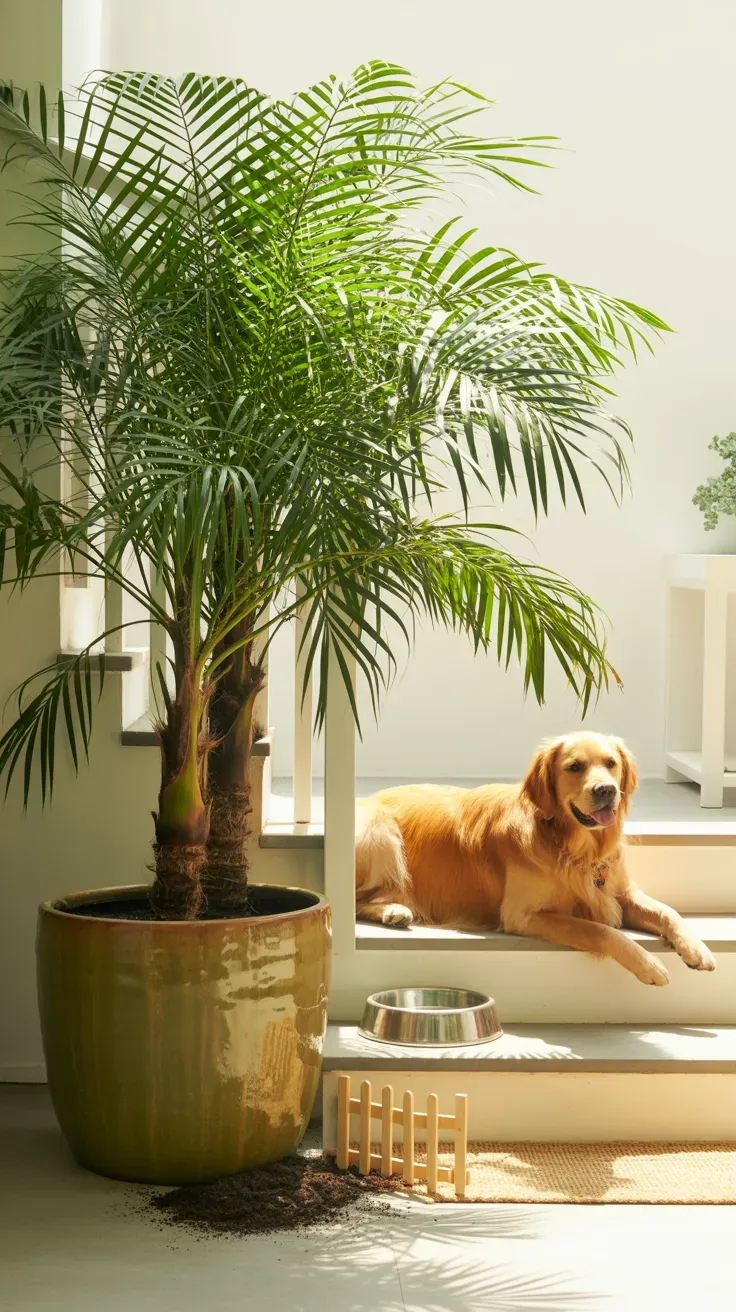
Areca palm (Dypsis lutescens) is genuinely non-toxic to both cats and dogs according to the ASPCA, and its full, bushy form makes a bold statement without needing multiple smaller pots that are easier for a pet to knock over.
Choose a heavy glazed ceramic pot, at least 14 inches wide, which resists tipping far better than lightweight plastic when a dog brushes past or a cat jumps up. It needs bright indirect light and watering weekly, and its dense root system holds soil in place well even if a curious paw digs at the surface.
Pro Tip: Weigh down lightweight pots with a layer of rocks in the bottom before adding soil, even if you’ve chosen ceramic — this lowers the center of gravity significantly and makes tipping much less likely with an enthusiastic dog nearby.
Internal link: best non-toxic large plants for homes with pets External link: ASPCA-referenced pet safety notes via Missouri Botanical Garden’s Dypsis lutescens profile
This is the single best full-size statement plant for households with pets that like to investigate everything.
2. Spider Plant Hanging Baskets for Curious Cats
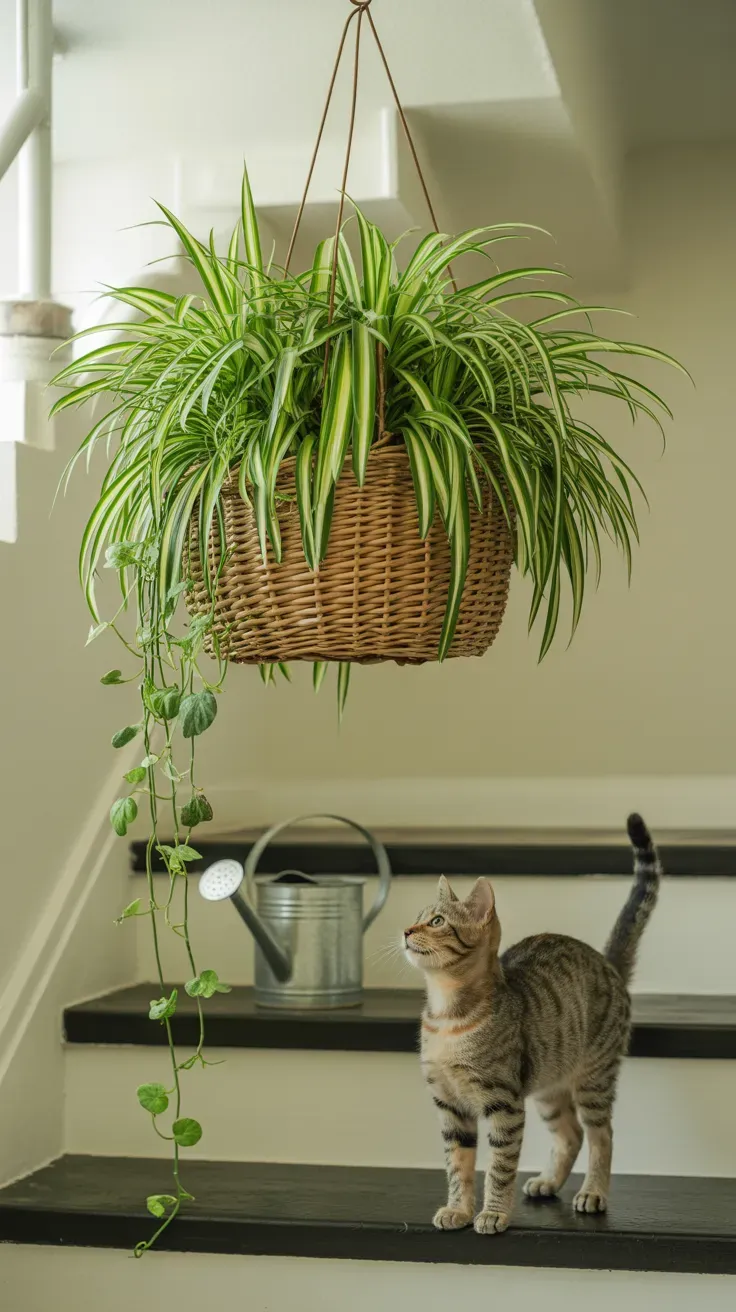
Spider plants (Chlorophytum comosum) are non-toxic to cats but genuinely irresistible to them due to a mild hallucinogenic compound similar to catnip, so hanging them well out of jumping range solves the attraction problem without needing to avoid the plant entirely.
Hang the basket at least 5-6 feet high, since cats can jump surprisingly far, and it needs bright indirect light with watering weekly. The trailing plantlets that dangle from mature spider plants are especially tempting to swat at, so keep the lowest growth trimmed if the basket hangs anywhere near a cat’s reach from a railing or ledge.
Internal link: safe hanging plant options for cat households External link: RHS growing guide for Chlorophytum comosum
3. Boston Fern Shade Corner for a Lush, Chew-Tolerant Display
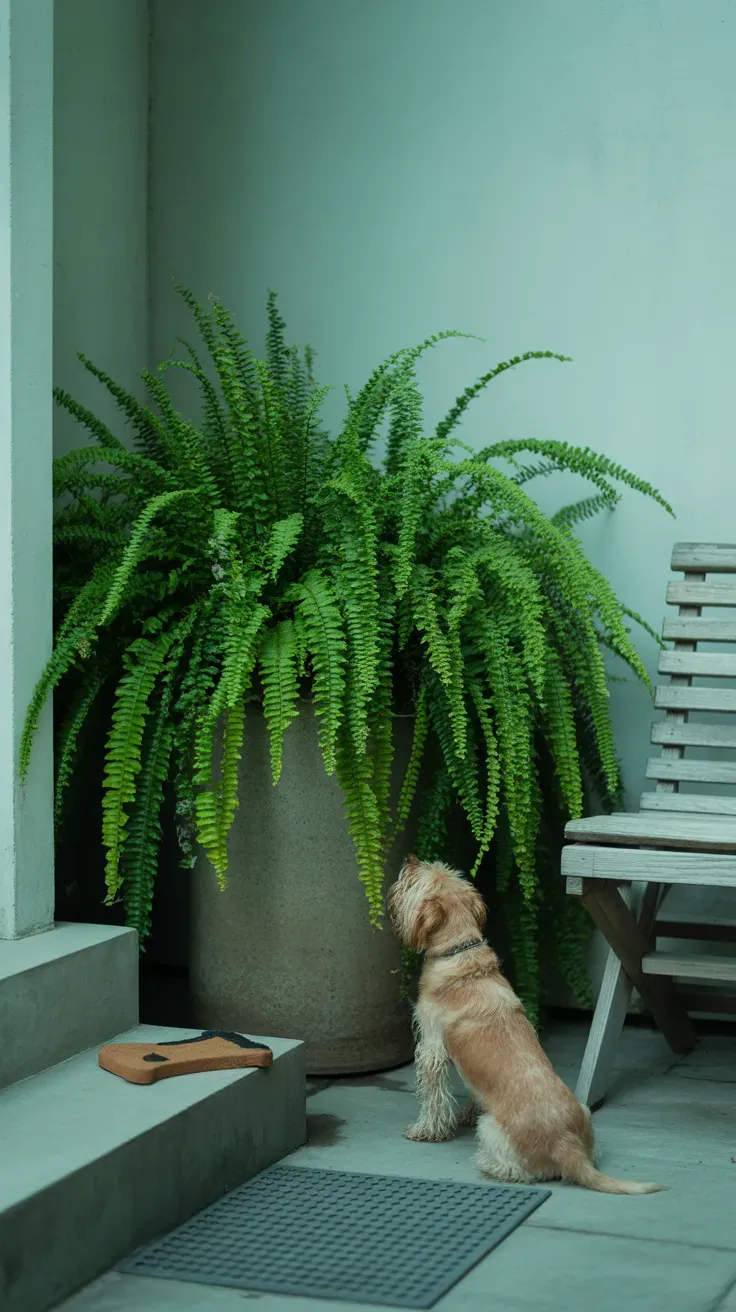
Boston fern is non-toxic to both cats and dogs and, unlike many delicate houseplants, tolerates occasional nibbling or brushing without permanent damage, since its dense fronds regrow quickly from the base.
It needs indirect light and consistently moist soil, watering every 2-3 days in warm weather. Choose a heavy concrete pot to prevent tipping if a dog investigates enthusiastically, and don’t worry too much if a curious pet takes an occasional bite — the plant’s vigorous growth typically outpaces minor damage.
Internal link: best plants for shaded outdoor stairwells External link: Missouri Botanical Garden’s Boston fern growing profile
4. Rail-Mounted Herb Boxes for Cat-Proof Elevation
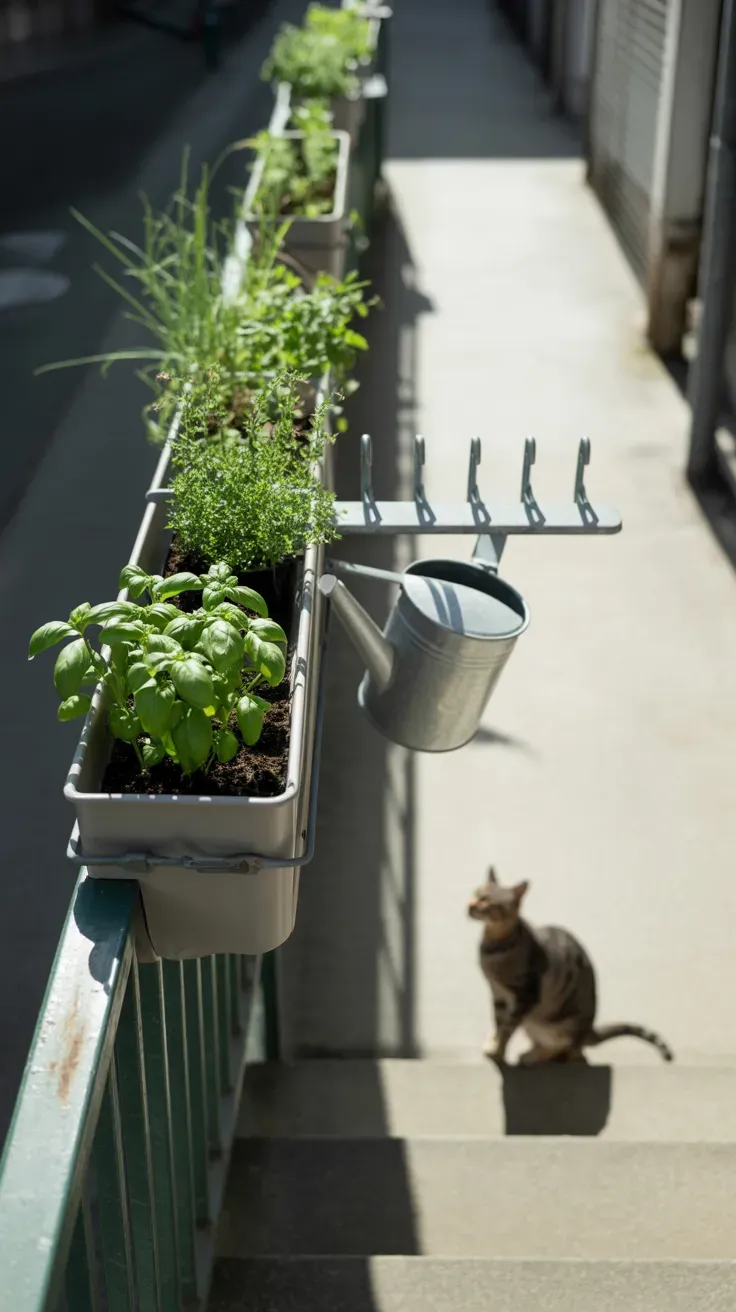
Mounting herb boxes onto a railing rather than the step itself puts them at a height most cats can’t casually reach, solving the digging-and-batting problem that ground-level pots invite.
Choose basil, parsley, and chives, all non-toxic and useful in the kitchen, mounted in boxes rated for secure rail attachment. It needs full sun and watering every 2-3 days, since these shallow rail boxes dry out faster than ground pots. Check that the mounting height genuinely exceeds your specific cat’s jumping ability — some cats clear surprising heights.
Internal link: rail and railing-mounted container options for tight spaces External link: Almanac’s guide to growing herbs in containers
5. Parlor Palm Landing Feature for Non-Toxic Tropical Height
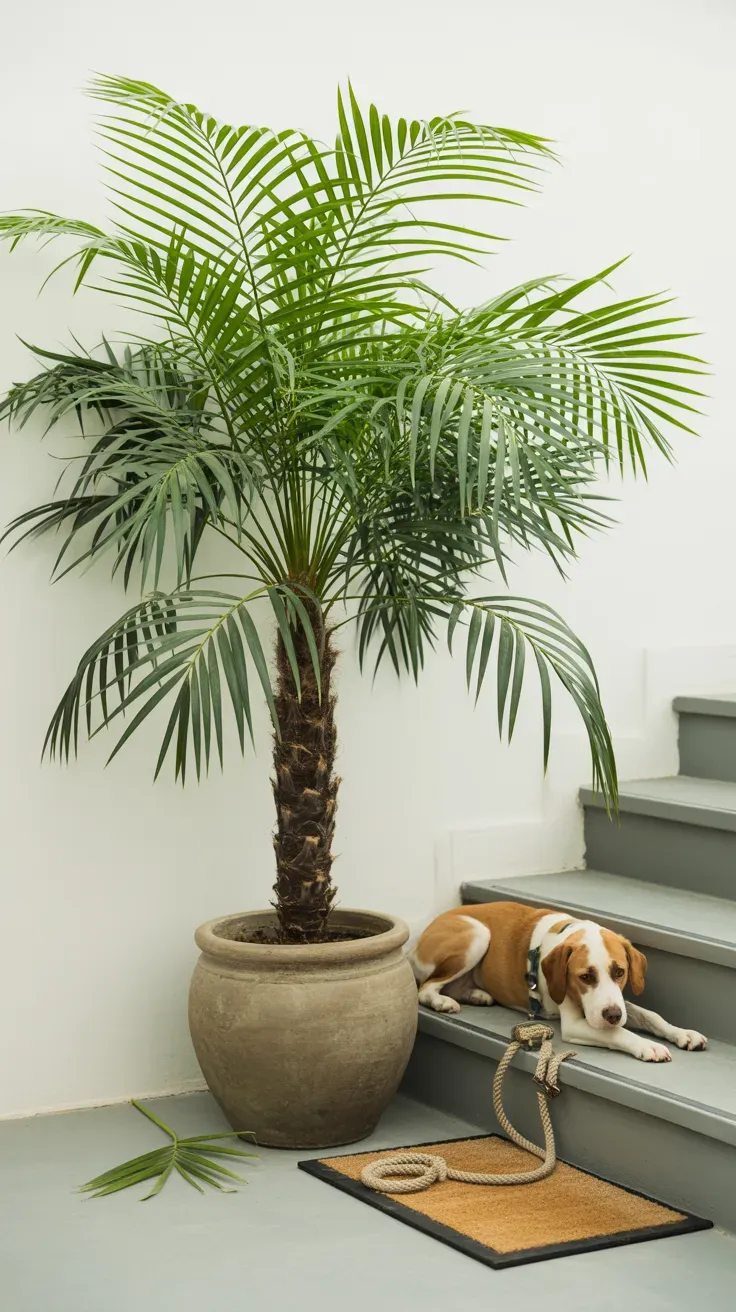
Parlor palm (Chamaedorea elegans) is non-toxic to cats and dogs and stays compact enough for a landing feature without needing the significant floor space larger palms demand.
It tolerates low to bright indirect light, making it flexible for landings with inconsistent sun exposure, and needs watering weekly, letting the top inch of soil dry between waterings. Its slow growth rate means minimal repotting and a stable root system that resists disruption from occasional pet interest.
Internal link: non-toxic palms for pet-friendly indoor and outdoor spaces External link: University of Florida Extension’s parlor palm growing notes
A parlor palm on a landing gives real presence without the risk larger, toxic statement plants would carry.
6. Calathea Shaded Display for Safe Foliage Drama
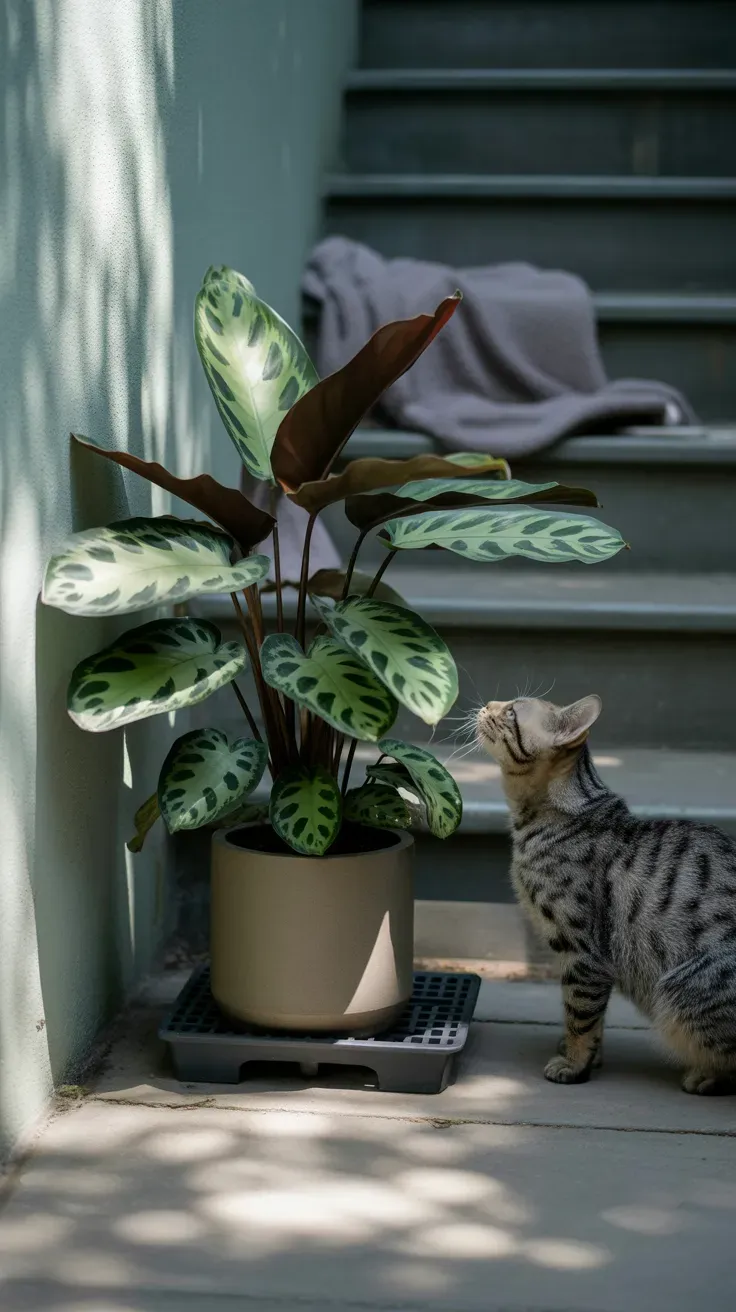
Calathea’s dramatically patterned leaves bring genuine visual interest to a shaded staircase corner, and it’s non-toxic to cats, making it a safer alternative to similarly showy but toxic foliage plants like caladium.
It needs part to full shade and consistently moist soil with higher humidity than most outdoor staircase spots naturally offer, so a sheltered, covered landing works better than fully exposed steps. Mist occasionally in dry climates, and expect some leaf curling as a normal response to humidity drops rather than a sign of illness.
Internal link: safe patterned foliage plants for cat households External link: RHS growing guide for Calathea
7. Rosemary Chew-Resistant Herb for Determined Dogs
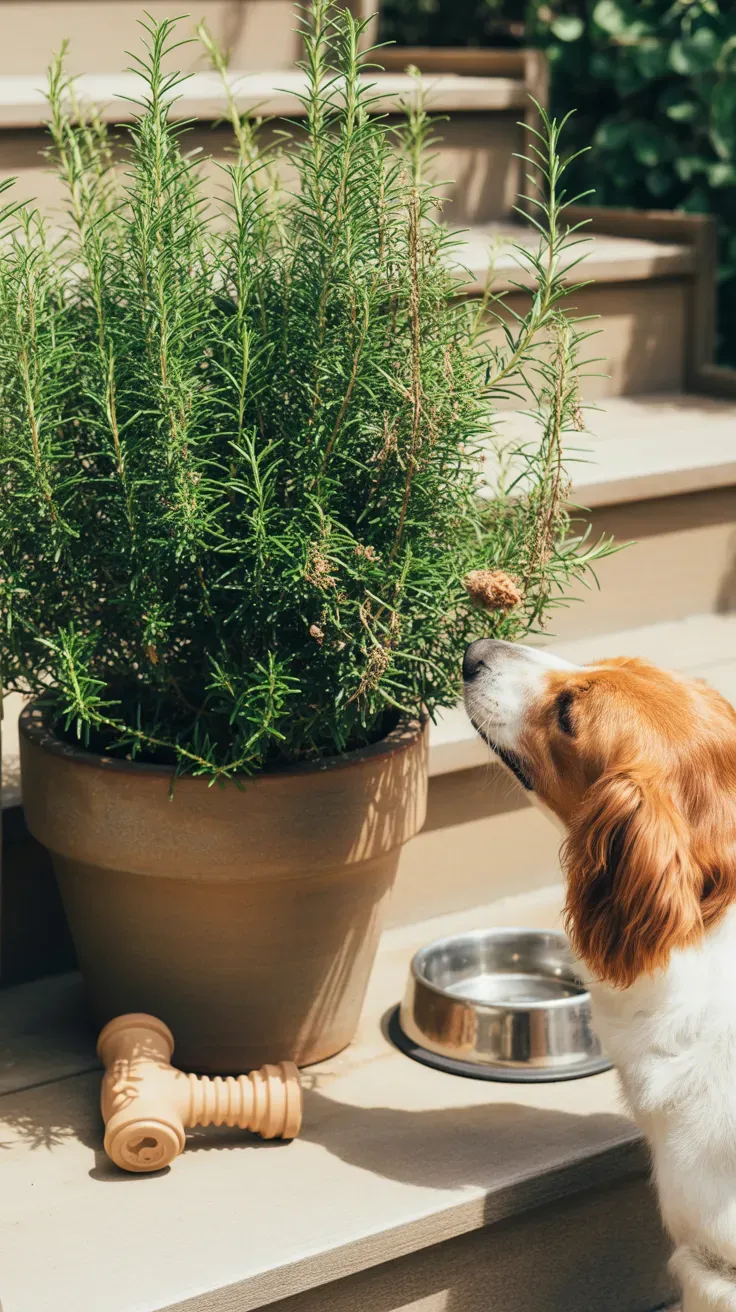
Rosemary’s woody, fibrous stems are genuinely unappealing to chew for most dogs once they’re past the puppy stage, and it’s non-toxic even if a determined pet does take a nibble.
It needs full sun and excellent drainage in a heavy terracotta pot, watering only every 7-10 days once established. Its strong scent, which many dogs find mildly off-putting up close, actually works as a natural deterrent against more serious chewing damage compared to softer, more palatable herbs.
Pro Tip: If your dog does show interest in chewing rosemary, a light spritz of diluted apple cider vinegar on the foliage (safe and non-toxic) adds an extra deterrent without harming the plant.
Internal link: chew-resistant herbs and plants for dog households External link: RHS guide to pruning and training rosemary
8. Elevated Wall Pocket Succulents for Cat-Safe Vertical Interest
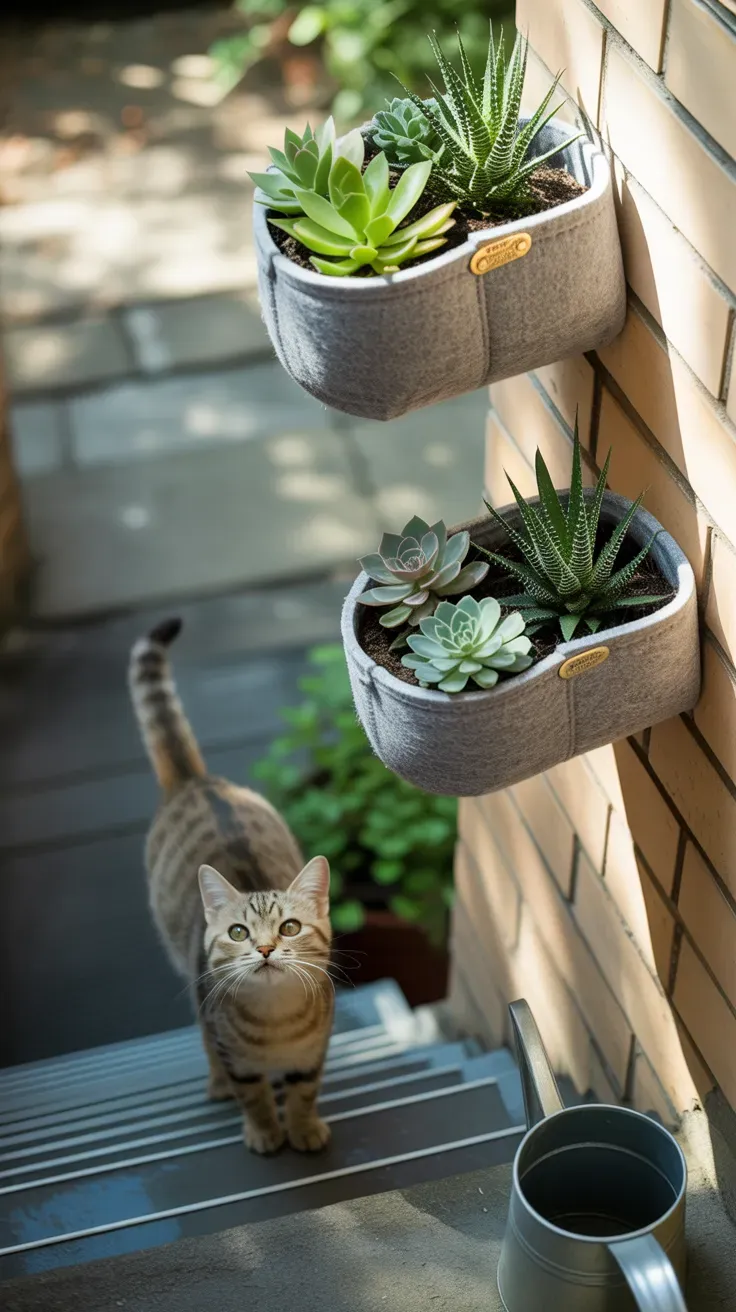
Wall pockets mounted at cat-proof height combine two safety strategies at once — genuinely non-toxic plants and physical elevation — for households with especially persistent feline investigators.
Choose haworthia or echeveria, both non-toxic succulents, in felt wall pockets mounted at least 5 feet up, needing full sun and watering only every 10-14 days. Double-check your specific succulent variety, since not all succulents are pet-safe; jade plant and aloe, for example, are both toxic to cats and dogs despite their popularity.
Internal link: verifying succulent toxicity before bringing plants home External link: SF Gate Home Guide’s guide to succulent container care
9. Bird’s Nest Fern Cluster for Sturdy, Non-Toxic Texture
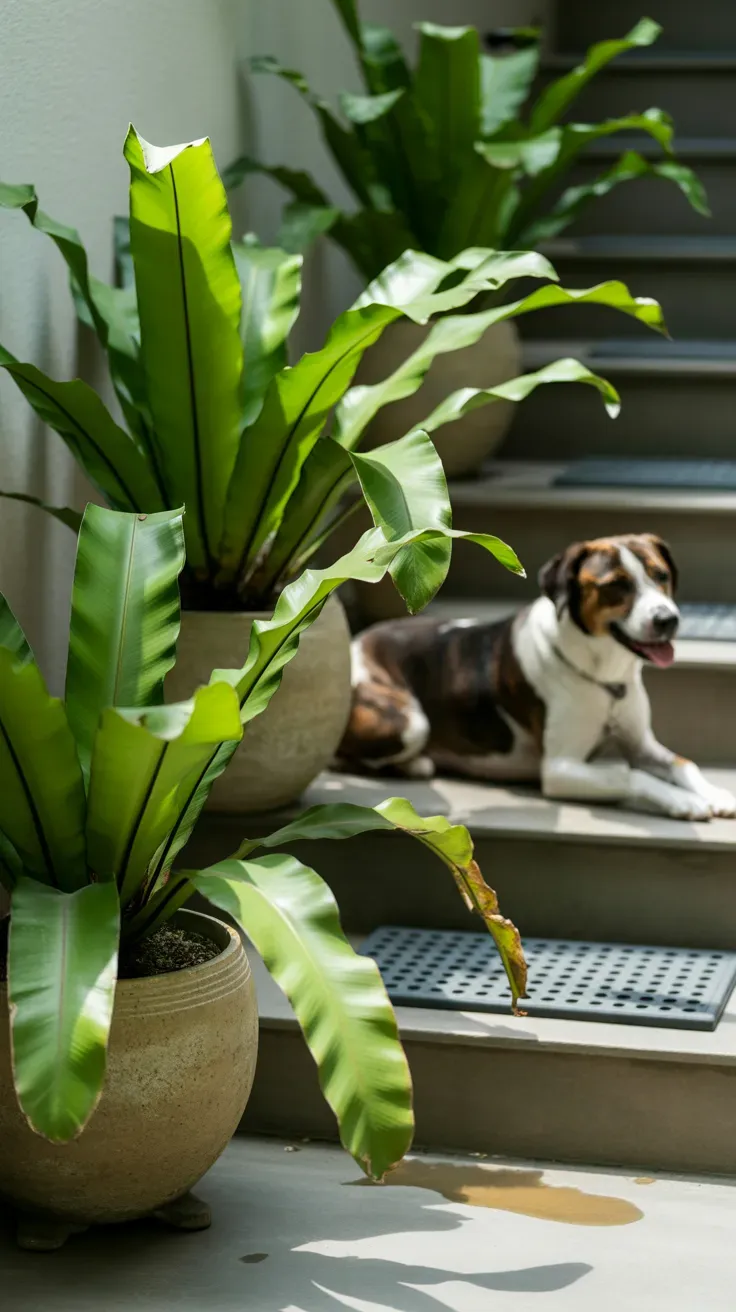
Bird’s nest fern’s wide, undivided fronds are notably sturdier than lacy fern varieties, holding up better to an occasional brush from a passing tail or curious paw without shredding.
It needs medium indirect light and consistently moist soil with high humidity, ideally 50%+, watering every 5-7 days. It’s non-toxic to both cats and dogs, and its heavier ceramic pot requirement doubles as tip resistance for households with larger, more enthusiastic dogs.
Internal link: sturdy non-toxic ferns for pet households External link: Missouri Botanical Garden’s Asplenium nidus growing profile
10. Concrete Trough Dig-Proof Bed for Persistent Diggers
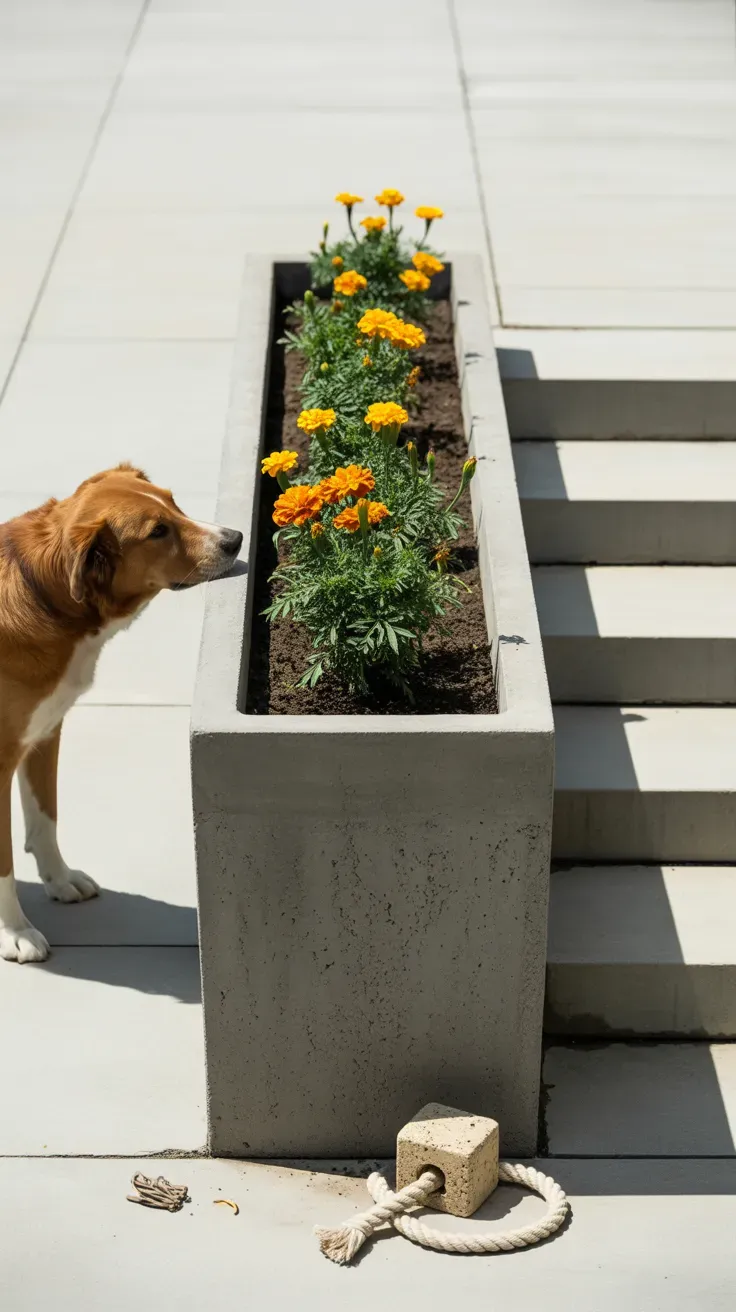
A solid concrete trough with tall, raised sides (at least 12 inches) genuinely prevents digging in a way that shallow or open-topped containers can’t, solving one of the most common pet-and-garden conflicts directly.
Fill with non-toxic marigolds, which need full sun and tolerate average soil, plus occasional disturbance from a curious nose at the trough’s exterior. The trough’s weight and depth also make it essentially impossible for even a large dog to tip over, addressing both the digging and stability concerns in one container choice.
Internal link: dig-proof container solutions for dog households External link: Almanac’s marigold growing and pet-safety notes
11. Hanging Basket Overhead Trio for Complete Cat Avoidance
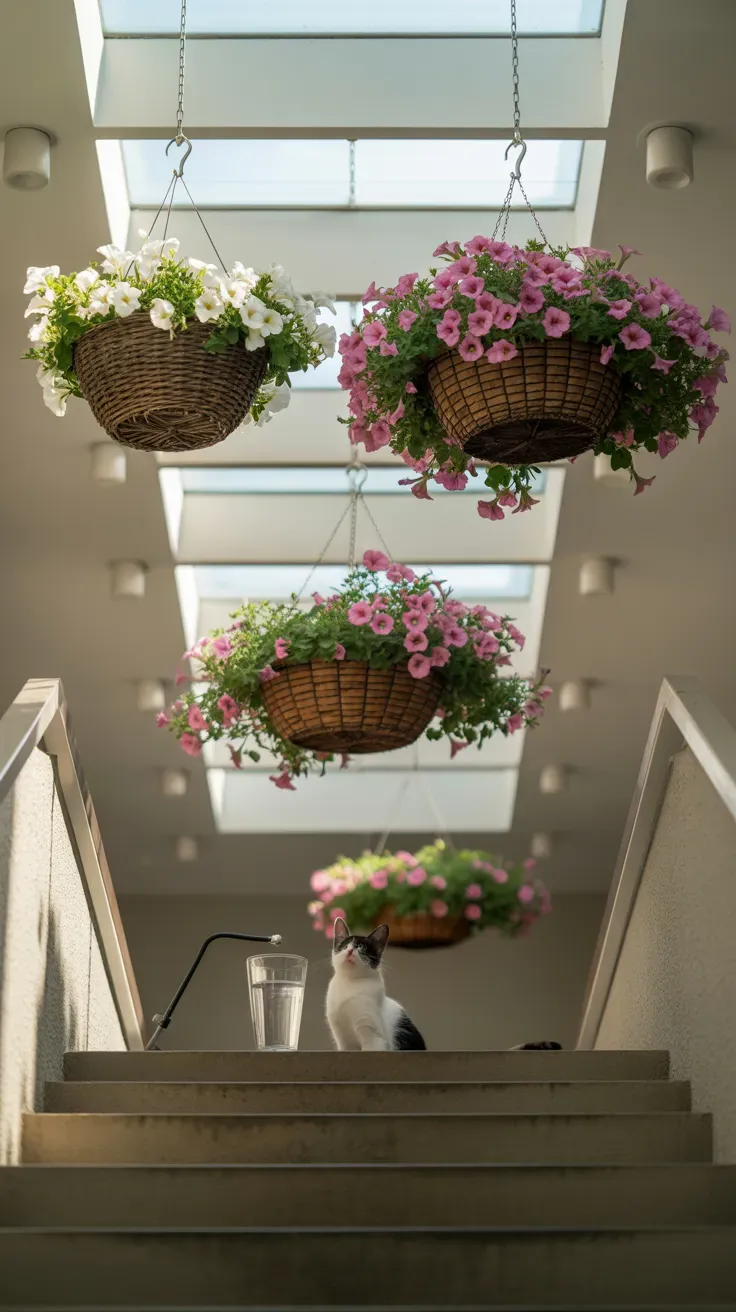
Three hanging baskets suspended well overhead removes any question of pet access entirely, making this the most foolproof option for households with cats determined to reach anything green regardless of plant toxicity.
Choose non-toxic petunias, which need full sun and daily watering in summer heat, and hang each basket at a genuinely inaccessible height, at least 6 feet, accounting for the fact that a determined cat can jump higher than most owners expect. This solves the pet-safety question through placement rather than plant choice alone.
Internal link: hanging basket care for maximum bloom External link: Penn State Extension’s petunia container growing guide
12. Boxwood Alternative: Bamboo Palm for Non-Toxic Structure
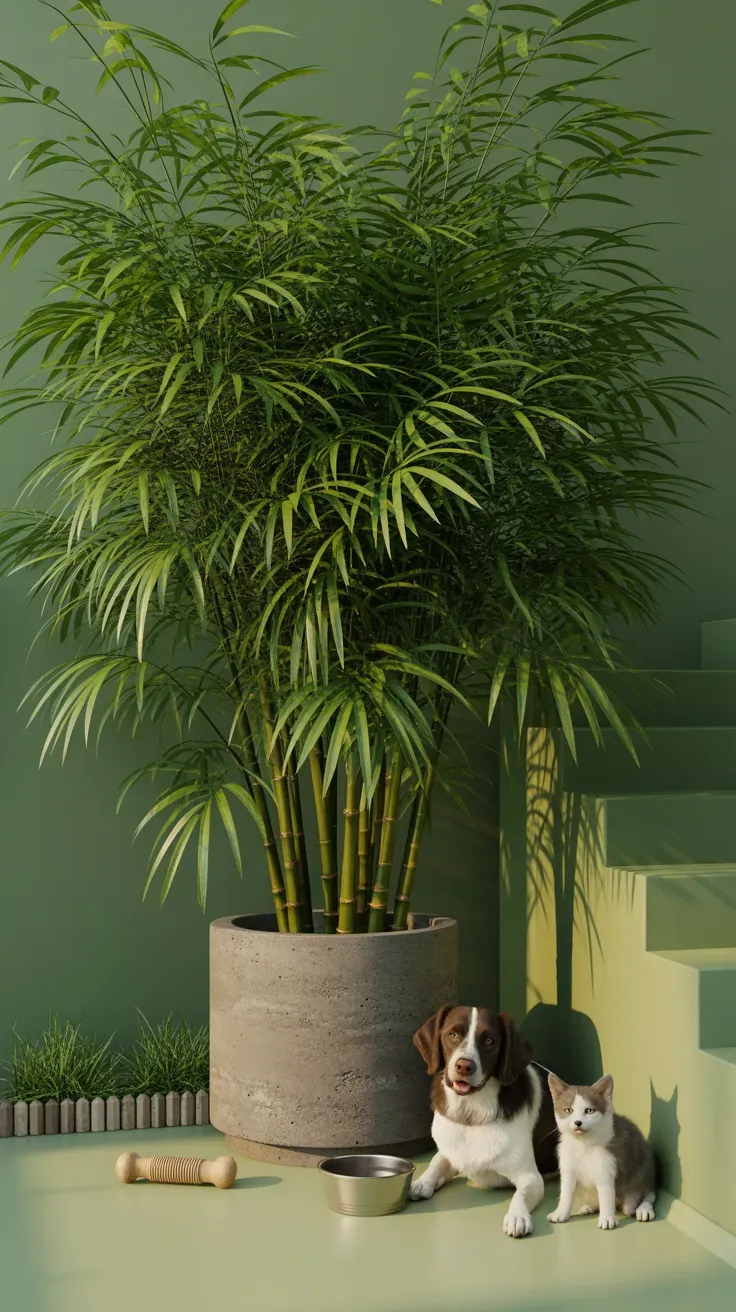
Boxwood, a common formal staircase structure plant, is actually toxic to both cats and dogs, making bamboo palm a safe substitute that still delivers similar year-round structural presence.
It handles low to medium indirect light and prefers evenly moist soil, watered roughly every 7-10 days, and it’s completely non-toxic to cats and dogs according to the ASPCA. Its multiple slender canes create a naturally layered, screening effect similar to a clipped hedge, without the toxicity risk boxwood carries.
Internal link: safe alternatives to common toxic staircase plants External link: Gardeners’ World’s guide to indoor palm care
If you’ve assumed boxwood was your only structural option, this is the plant that proves otherwise.
13. Catnip Designated Corner for Intentional Cat Engagement
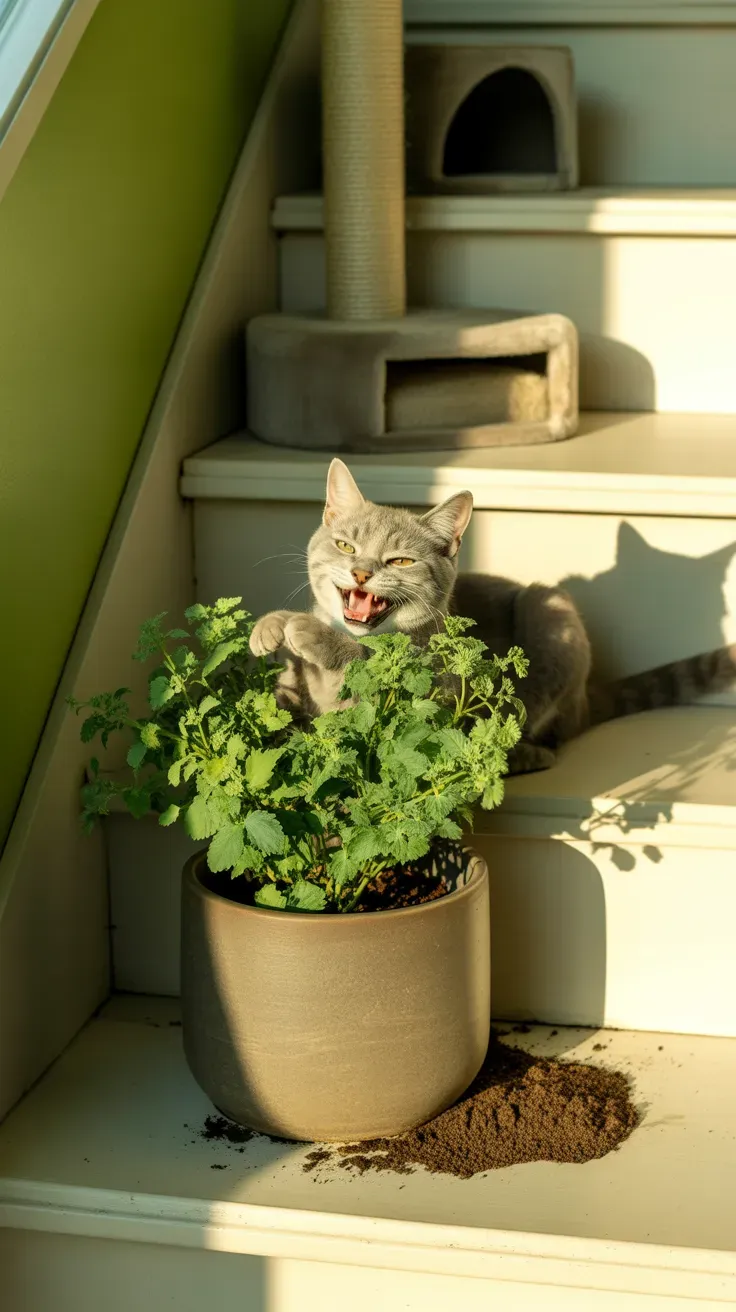
Rather than fighting a cat’s instinct to investigate and destroy plants, dedicating one corner specifically to catnip gives them a sanctioned outlet that often redirects attention away from other, less pet-appropriate plantings nearby.
It needs full sun to part shade and tolerates being roughly handled, actually regrowing readily even after enthusiastic rolling and chewing. Plant it in a sturdy, low, wide ceramic pot that won’t tip during vigorous cat interaction, and expect to replace or refresh the plant every season or two given the wear it takes.
Pro Tip: Position the catnip corner as far as reasonably possible from your other more delicate plantings — cats often become so absorbed in the catnip itself that neighboring plants get left alone entirely.
Internal link: designing pet engagement zones within garden spaces External link: ASPCA-referenced catnip safety notes via Missouri Botanical Garden’s Nepeta cataria profile
14. Weighted Metal Urn Sunflowers for Tip-Resistant Height
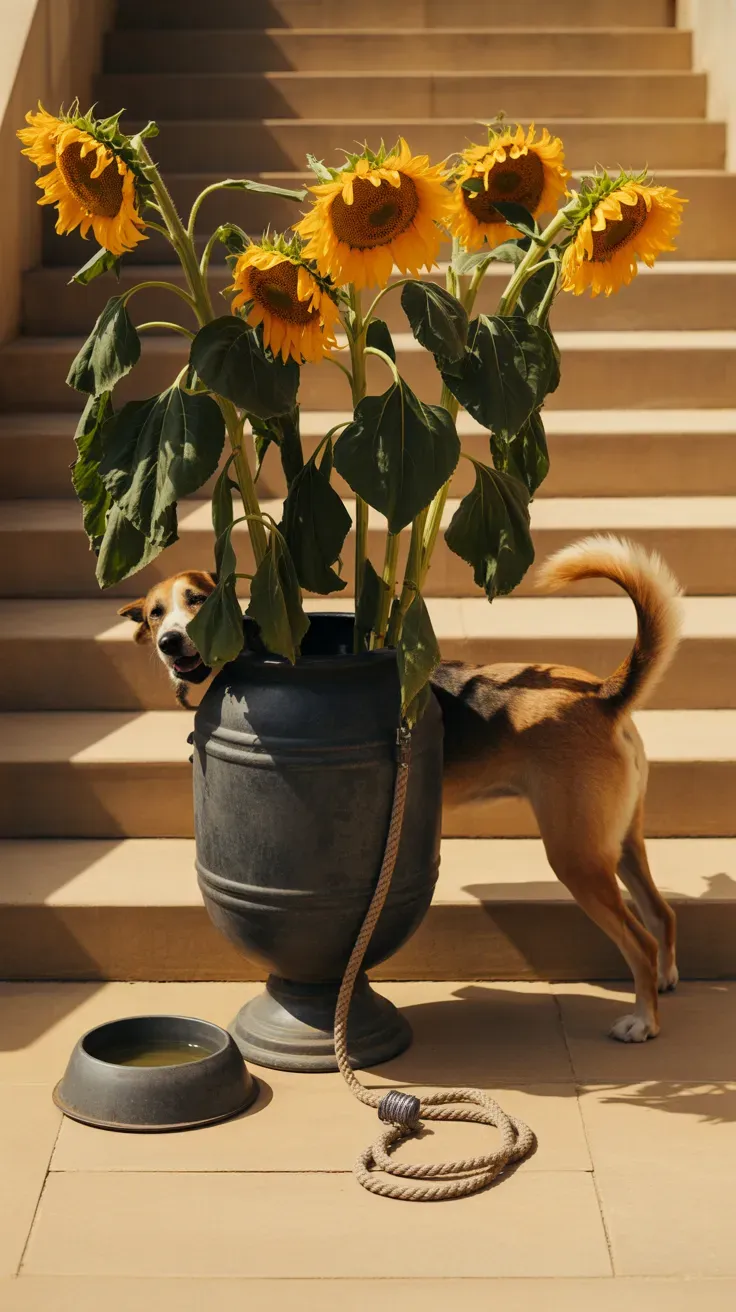
Sunflowers are non-toxic to both cats and dogs and, planted in a bottom-weighted metal urn, provide genuine height and drama that stays stable even when a large, energetic dog brushes past at full speed.
They need full sun and regular watering, roughly every 2-3 days in summer heat, and their sturdy central stalk resists bending even under moderate impact. Choose a urn with a wide, weighted base specifically, since top-heavy sunflowers in a narrow pot are genuinely prone to tipping regardless of pet interference.
Internal link: tip-resistant container choices for large dog households External link: Almanac’s sunflower growing guide
15. Basil and Thyme Kitchen Steps for Dual-Pet Safety
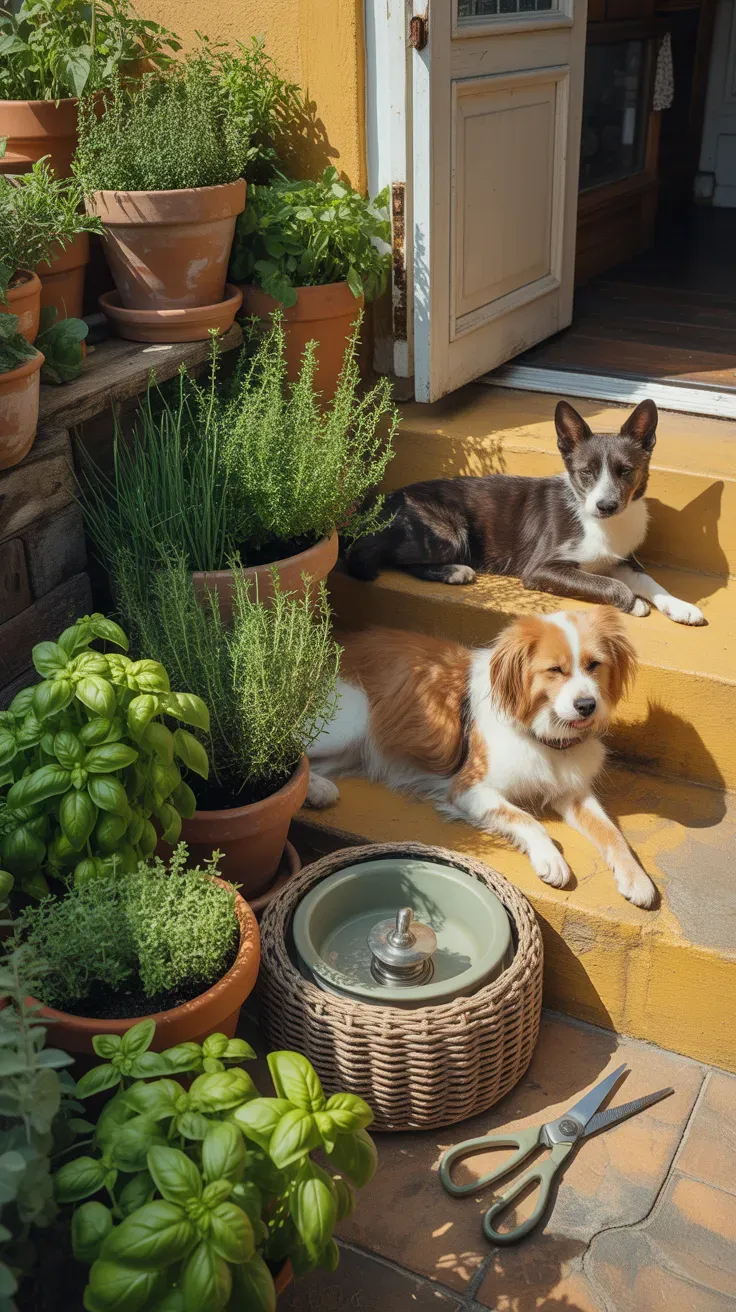
Basil and thyme are both confirmed non-toxic to cats and dogs, making this kitchen-adjacent herb combination one of the safest and most useful plantings for multi-pet households.
They need full sun and well-drained soil; basil needs watering almost daily in peak summer heat, while thyme prefers to dry out between waterings. Group them in separate pots given their different water needs, and don’t worry if either pet takes an occasional taste — both herbs are safe in small amounts.
Internal link: container herb gardens for small spaces External link: University of Florida Extension’s herb growing notes
16. Marigold Border Planting for Cheerful Dog-Safe Color
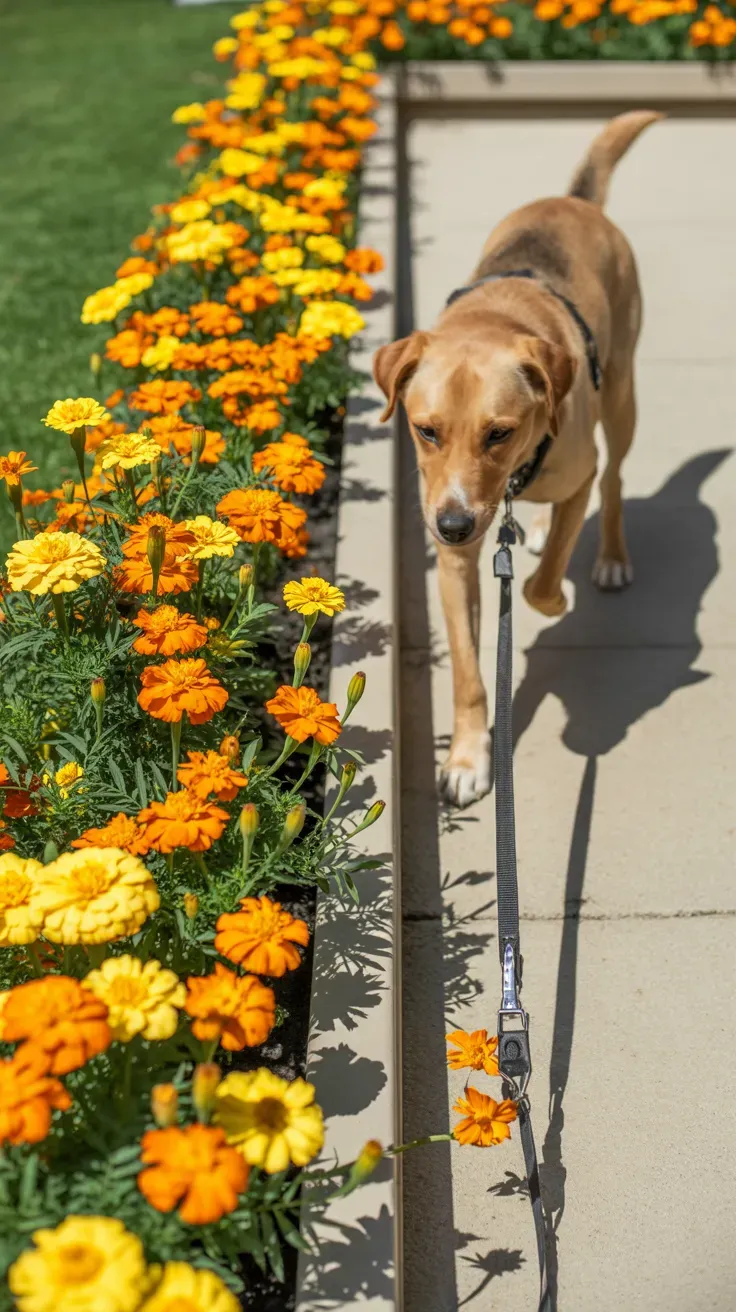
Marigolds are non-toxic to dogs and bring reliable, cheerful color to a ground-level border where a curious dog is likely to walk directly alongside or even through the planting occasionally.
They need full sun and tolerate average soil, deadheading weekly to maintain continuous bloom through the season. Their sturdy stems and relatively low growth habit (12-18 inches) mean they bounce back reasonably well from an occasional trampling, unlike more delicate flowering annuals.
Internal link: dog-safe flowering annuals for garden borders External link: University of Florida Extension’s Gaillardia and marigold growing notes
17. Cast Iron Plant Low-Light Corner for the Most Forgiving Pet-Safe Option
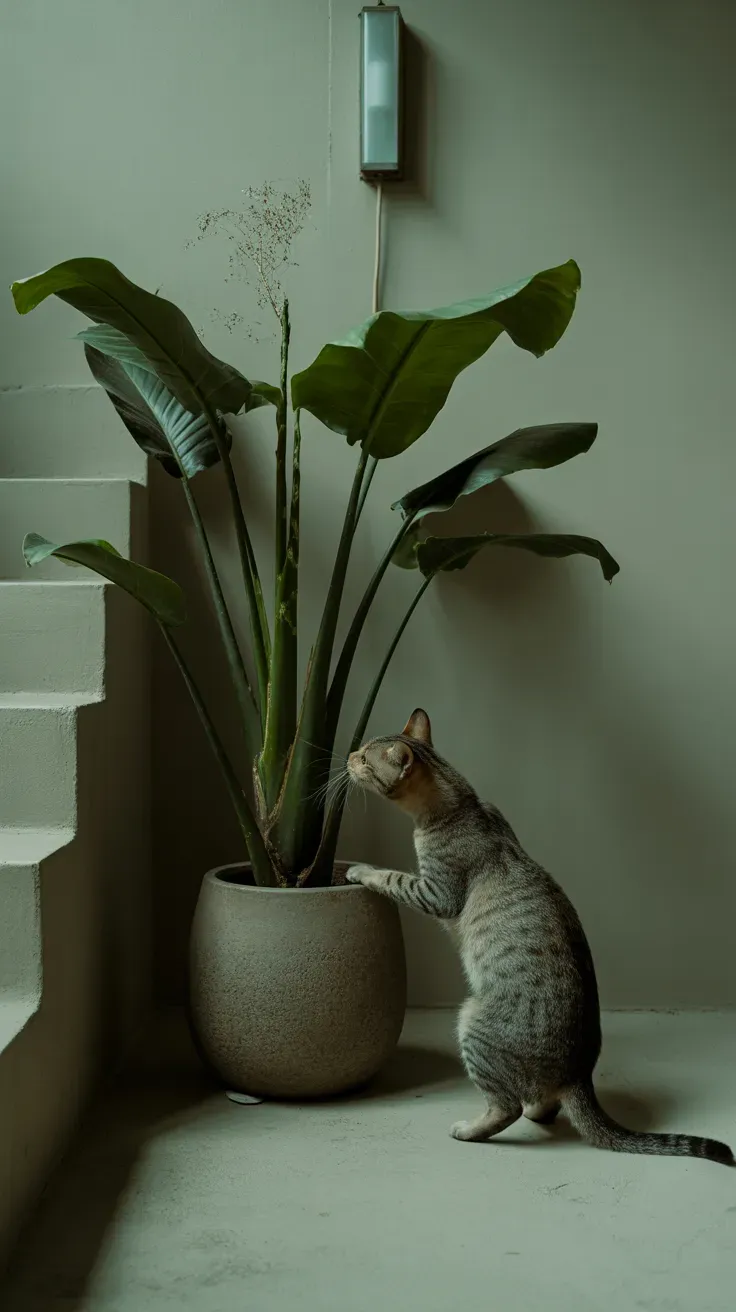
Cast iron plant (Aspidistra elatior) earns its name honestly — it tolerates low light, irregular watering, and general neglect better than almost any plant available, and it’s completely non-toxic to cats and dogs.
It tolerates low light down to genuinely dim corners and needs watering only every 2-3 weeks, making it ideal for a shaded staircase spot that also happens to be a pet’s favorite lounging area. Its tough, leathery leaves resist damage from casual pet contact far better than soft-leafed alternatives.
Internal link: low-light plants that survive neglect and pet households External link: Almanac’s cast iron plant growing guide
For the combination of genuine neglect-tolerance and pet safety, nothing else on this list is quite as forgiving.
18. Snapdragon Color Row for Safe Cool-Season Interest
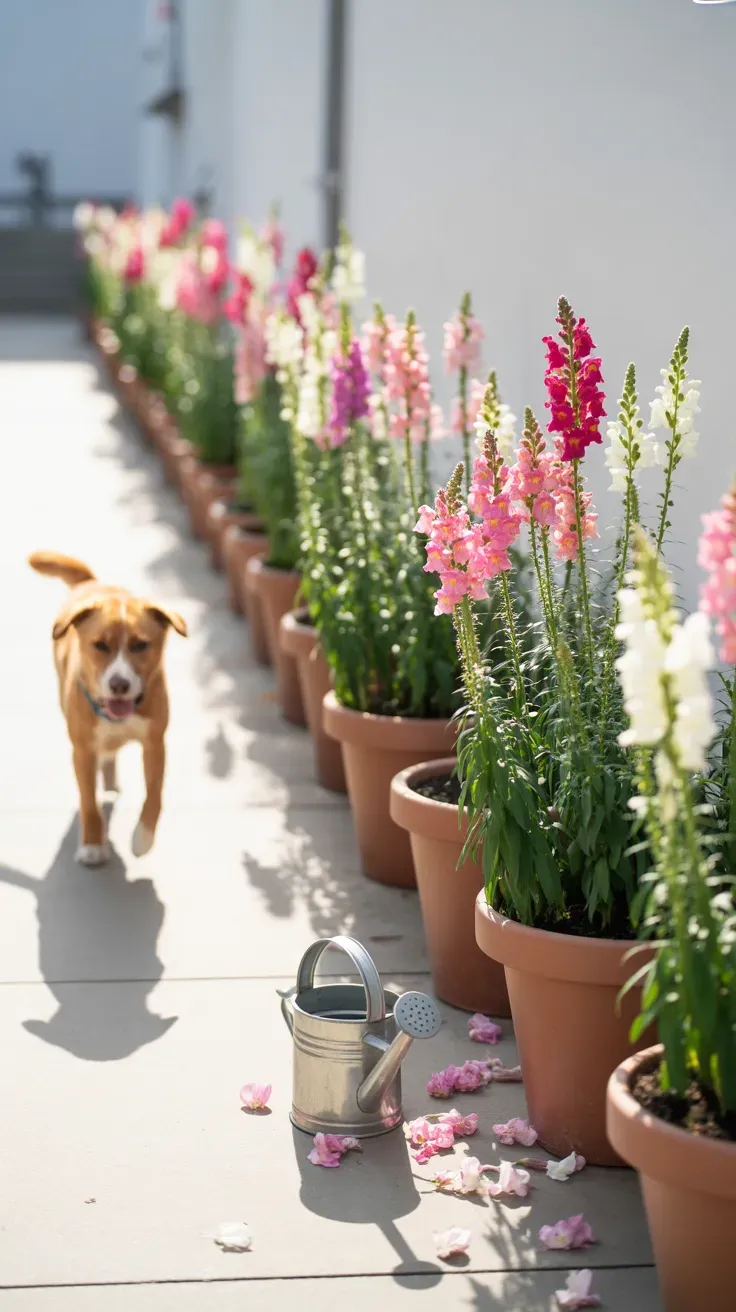
Snapdragons are non-toxic to dogs and bloom during the cooler shoulder seasons (spring and fall) when many summer annuals aren’t yet or no longer performing, filling a color gap safely.
They need full sun and consistent moisture, deadheading regularly to extend the bloom window. Their upright growth habit keeps most of the plant above typical nose and paw height once mature, reducing casual pet interaction compared to lower, sprawling flowers.
Internal link: cool-season flowering annuals for pet-safe borders External link: BHG’s snapdragon growing and care guide
19. Elevated Succulent Ladder Shelf for Multi-Level Cat Deterrence
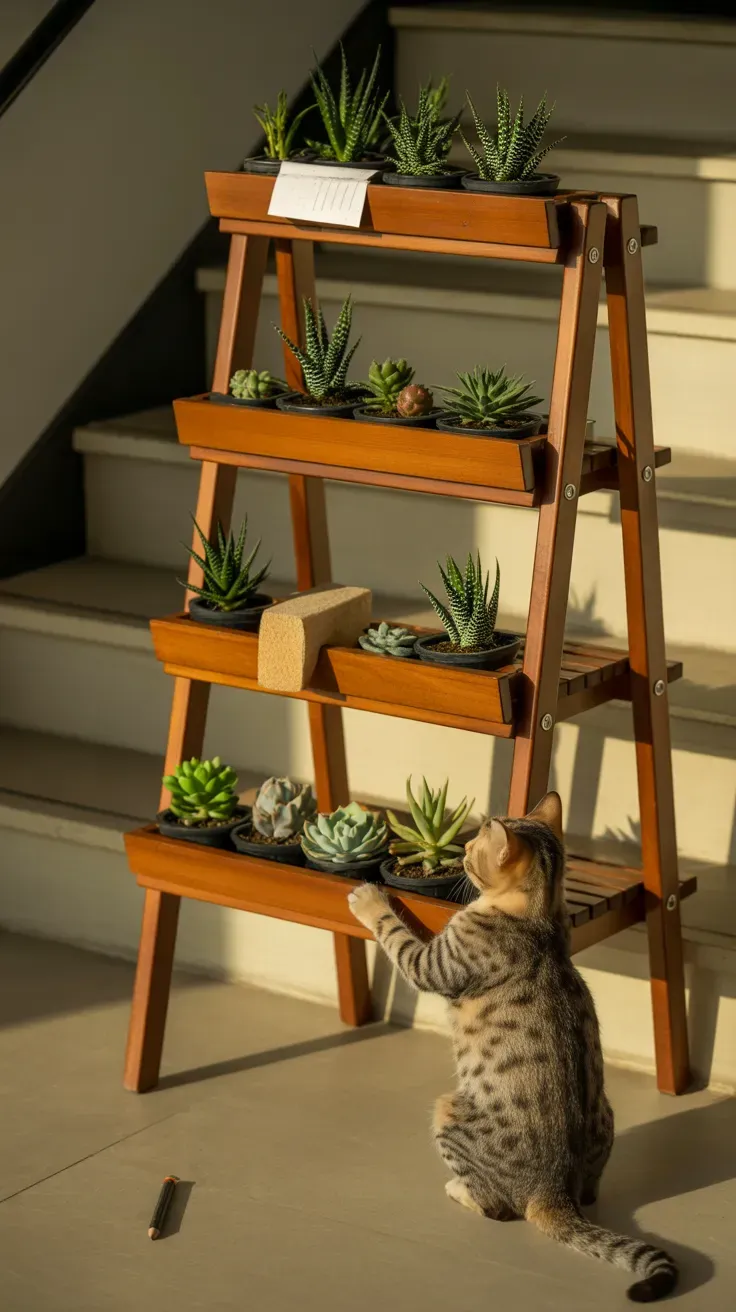
A tiered ladder shelf places the most tempting plants on the highest shelf while keeping lower, sturdier plants within easier reach, creating a graduated deterrence system rather than an all-or-nothing approach.
Place non-toxic haworthia or echeveria on the top shelf and hardier options like spider plant on the lowest, needing full sun for most succulents and watering every 10-14 days. Even determined cats often find a genuinely tall, narrow ladder shelf harder to climb than a simple pot, adding a physical barrier alongside the plant-safety strategy.
Internal link: building tiered plant stands for vertical garden displays External link: SF Gate Home Guide’s guide to succulent container care
20. Zinnia Cutting Garden Steps for Sturdy Dog-Safe Blooms
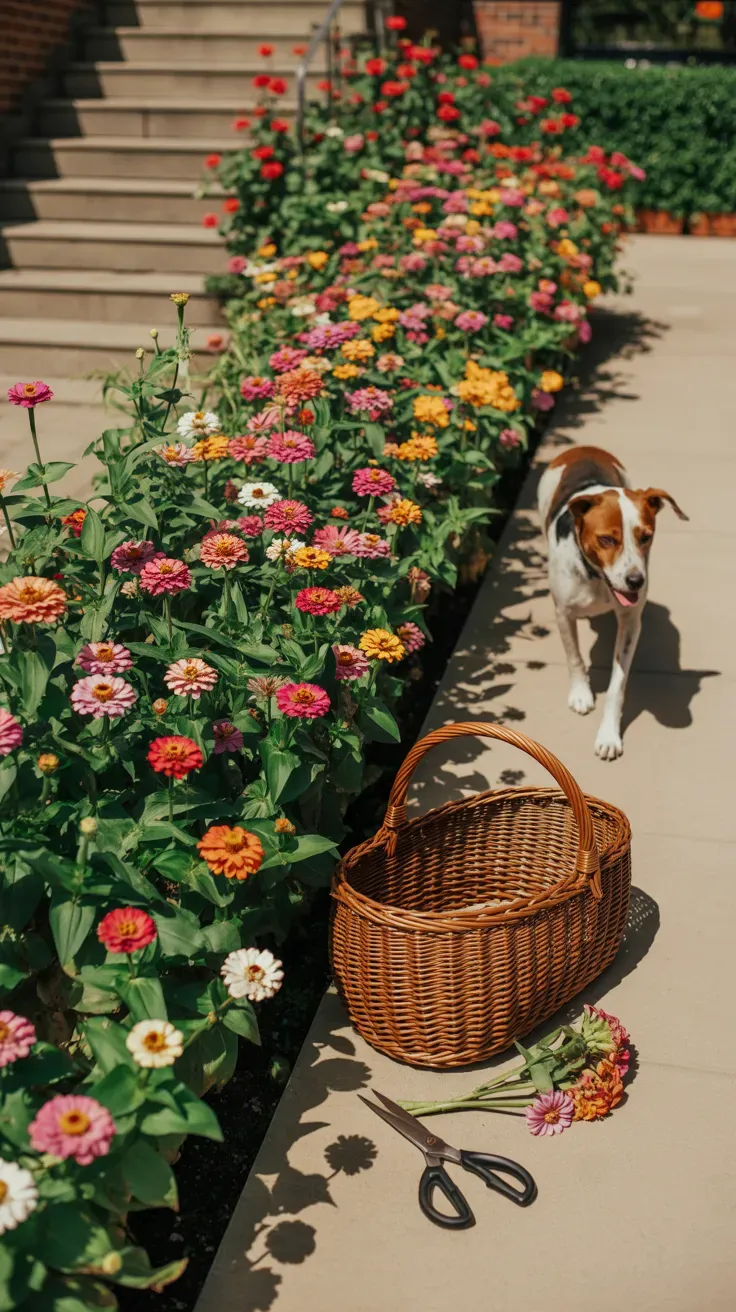
Zinnias are non-toxic to dogs and grow on genuinely sturdy, upright stems that hold up well to occasional brushing from a passing pet, unlike more delicate cutting-garden flowers.
They need full sun and regular watering, deadheading weekly to encourage continuous bloom through summer into fall. Their fast growth from seed (blooming within 6-8 weeks) also means a section trampled or damaged recovers relatively quickly compared to slower-growing perennials.
Internal link: sturdy cutting garden flowers for active dog households External link: Almanac’s zinnia growing guide
21. Barrier-Edge Raised Bed for Serious Digging Prevention
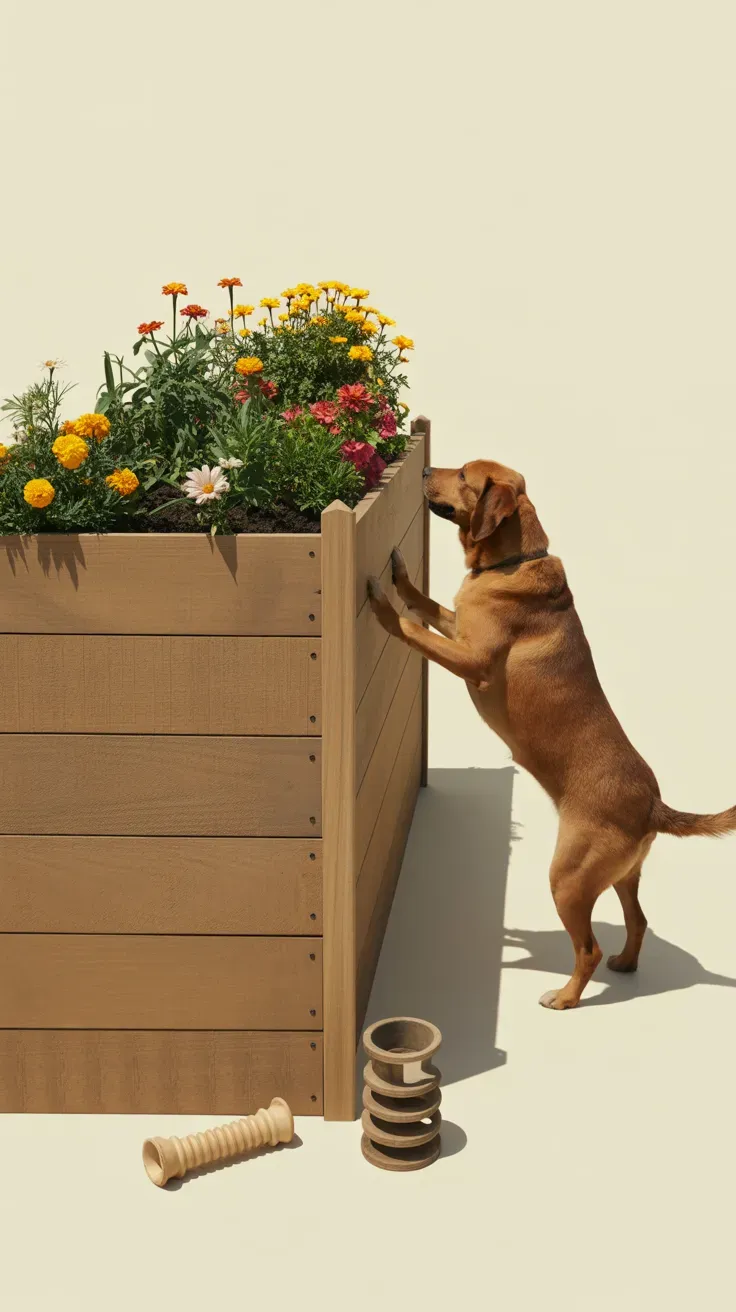
For genuinely persistent diggers, a raised bed with a solid barrier edge at least 14-16 inches tall removes physical access to the soil entirely, solving the problem more reliably than any deterrent spray or plant choice alone.
Build or buy a raised bed with solid (not slatted) sides, and fill with non-toxic flowering annuals like marigold or zinnia. It needs full sun and standard watering for whichever plants you choose, and the height itself does all the protective work regardless of which pet-safe plants go inside.
Pro Tip: If your dog is a climber rather than just a digger, add a slight inward lip or overhang to the bed’s top edge — this small addition stops even determined dogs from getting a paw-hold to climb up and over.
Internal link: structural considerations for pet-resistant raised beds External link: BHG’s guide to building raised garden beds
22. Orchid Elevated Display for Sheltered Cat-Safe Elegance
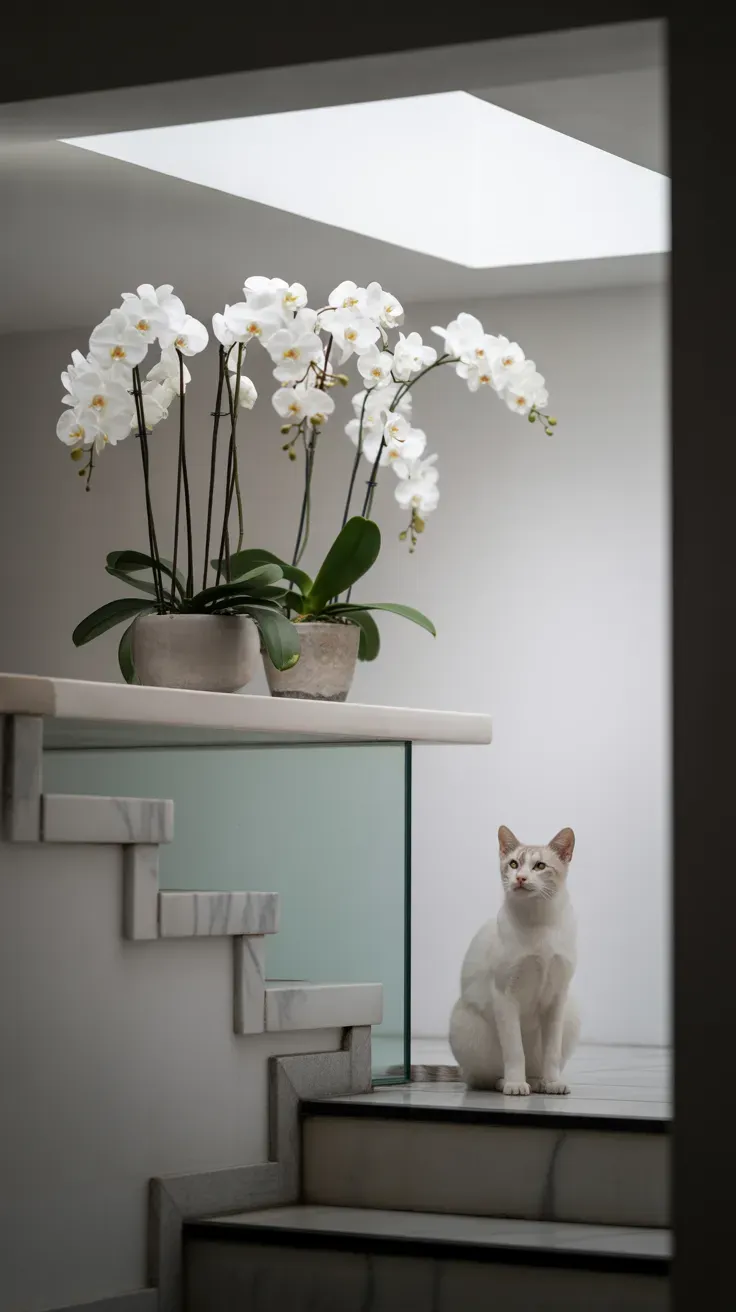
Orchids are non-toxic to cats and dogs, making them a genuinely safe choice for a sheltered entrance, though elevating them on a wall shelf still helps prevent a curious cat from batting at the delicate blooms.
They need bright indirect light and watering once weekly by soaking the roots briefly. This idea works best on a covered or substantially sheltered landing, both for the orchid’s weather sensitivity and to keep the display at a height that discourages casual pet interaction with the fragile flowers.
Internal link: orchid care for covered outdoor and entrance spaces External link: RHS growing guide for Phalaenopsis orchids
23. Sunflower Statement Pair for Bold, Worry-Free Height
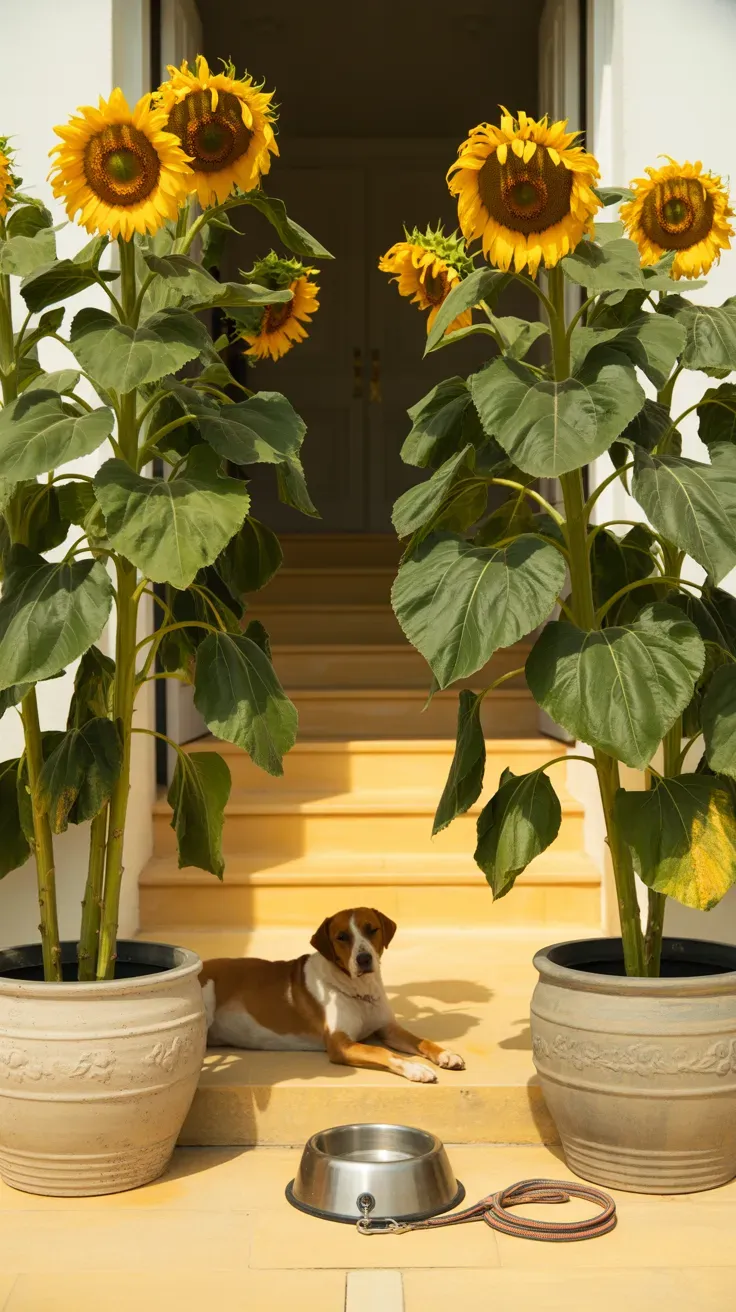
A matched pair of sunflowers flanking an entrance delivers genuine height and drama while remaining completely non-toxic, letting even the most curious or food-motivated dog investigate freely without any real risk.
They need full sun and regular watering, roughly every 2-3 days in summer heat, in heavy ceramic pots that resist tipping from an enthusiastic dog brushing past. Their large, sturdy stalks and the fact that sunflower seeds themselves are safe in moderation make this one of the lowest-worry statement plantings on the entire list.
Internal link: dog-safe flowering annuals for garden borders External link: Almanac’s sunflower growing guide
24. Prayer Plant Shaded Corner for Safe Movement and Texture
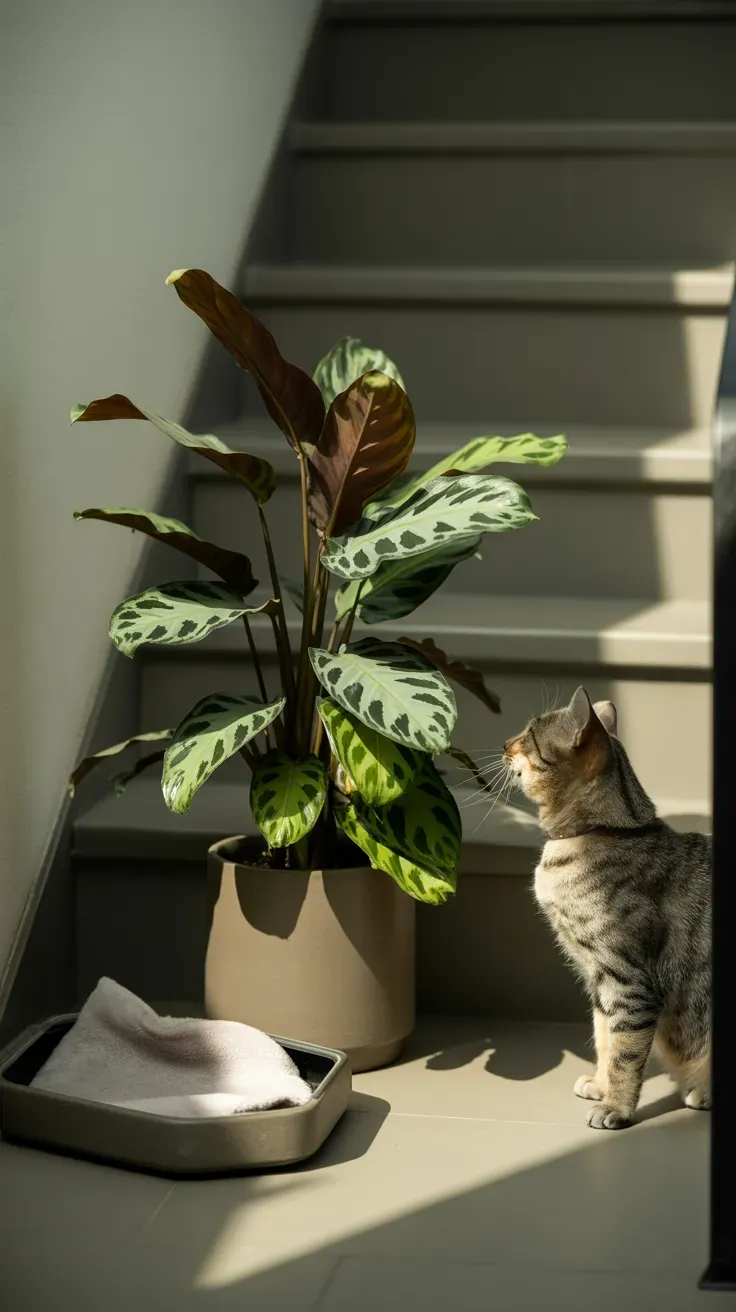
Prayer plant (Maranta leuconeura) is non-toxic to cats and offers a genuinely fascinating feature most other plants don’t — its leaves visibly fold upward each evening, providing safe, engaging movement that can actually redirect a cat’s curiosity productively.
It needs part to full shade and consistently moist soil with higher humidity, similar to calathea’s requirements, making a sheltered corner the best fit. The leaf movement happens gradually over the evening hours, giving a cat something genuinely interesting to observe without any risk if they do investigate closely.
Internal link: interesting, safe foliage plants for curious cats External link: BHG’s prayer plant care and growing guide
25. Petunia Weighted Window Boxes for Stable, Colorful Dog Safety
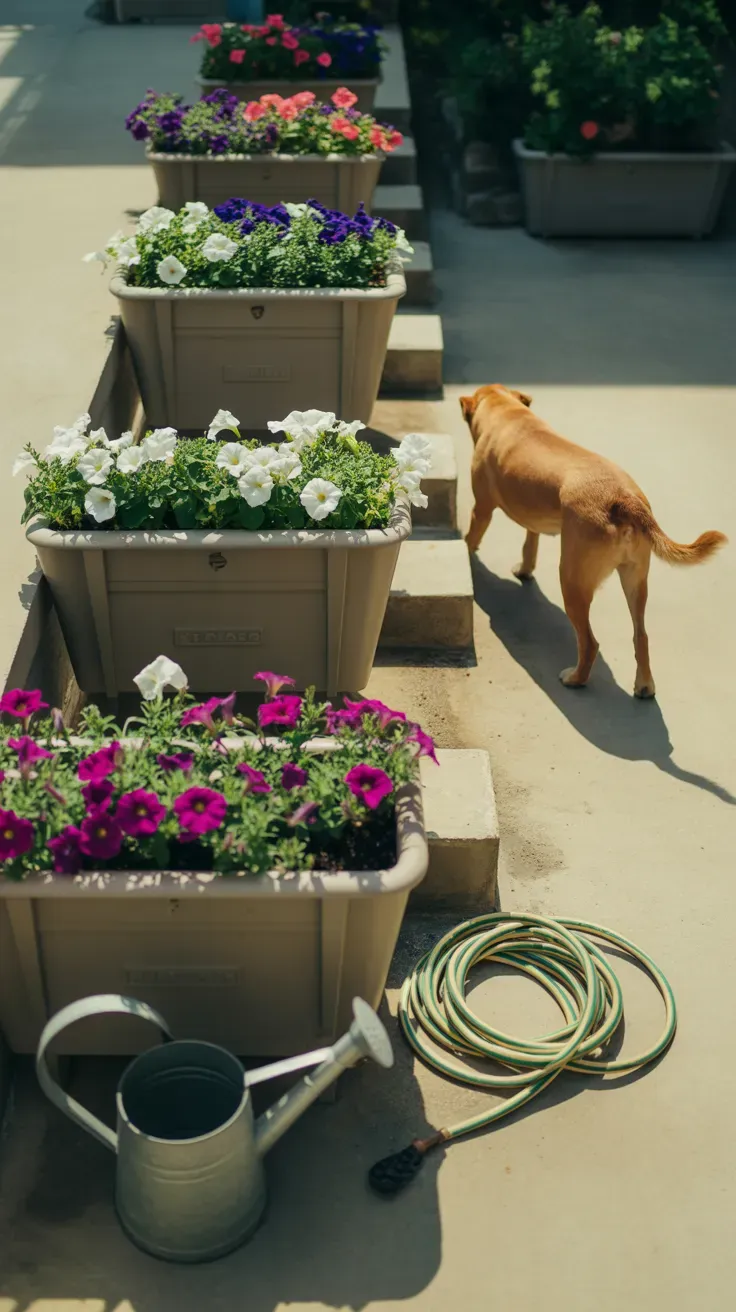
Heavy fiberglass window boxes, securely mounted and filled with non-toxic petunias, deliver reliable color while their weight and secure mounting prevent the tipping risk lighter containers would pose around an active dog.
They need full sun and daily watering in hot weather, deadheading weekly or choosing self-cleaning Wave petunias to skip that step. Mount boxes with brackets rated well beyond the container’s wet weight, since a securely fastened box removes tipping risk regardless of how enthusiastically a dog brushes past.
Internal link: self-cleaning annuals that skip the deadheading step External link: Penn State Extension’s petunia container growing guide
Closing your staircase with securely mounted, colorful petunia boxes proves pet safety and genuine visual impact aren’t mutually exclusive.
Getting Started With Pet-Safe Staircase Gardens
The easiest first step is checking every plant on your wish list against the ASPCA’s toxic and non-toxic plant database before buying anything, since many popular staircase plants (boxwood, lavender in some pets, jade plant) are more toxic than most people assume. The most common beginner mistake is assuming a plant is safe because it’s commonly sold at pet-friendly garden centers, when in reality store labeling rarely reflects genuine ASPCA safety data.
For your first purchase, get one confirmed non-toxic plant like a spider plant or areca palm, one heavy ceramic or concrete pot that resists tipping, and a bookmark of the ASPCA toxic plant list for quick reference before future purchases.
Realistically, expect to spend more time researching plant safety upfront than on the actual planting, but that research pays off in months or years of worry-free coexistence between your pets and your garden.
Frequently Asked Questions
How do I know if a plant is actually safe for my pet?
Always check the specific plant against the ASPCA’s toxic and non-toxic plant database by its Latin name, since common names can refer to multiple different plants with different toxicity levels. When in doubt, choose a plant with confirmed non-toxic status rather than assuming safety based on how the plant is marketed or labeled at a garden center.
What are the most reliably pet-safe plants for a staircase?
Spider plant, areca palm, Boston fern, and parlor palm are among the most reliably non-toxic options confirmed by the ASPCA for both cats and dogs. All four also tolerate occasional pet contact or curiosity without significant damage, making them practical as well as safe choices.
How can I stop my cat from knocking over staircase plants?
Elevating plants via hanging baskets, wall-mounted pockets, or rail boxes at heights above 5-6 feet removes physical access entirely, which works better than any deterrent spray. For plants that must stay at ground level, heavy ceramic or concrete containers resist tipping far better than lightweight plastic when a cat jumps up.
What common staircase plants should I avoid with pets?
Boxwood, lavender (mildly toxic to some pets), lily varieties, and sansevieria (mildly toxic despite its popularity) are among the frequently used staircase plants that carry genuine toxicity risk. Always verify a specific plant against the ASPCA database before planting, since many common ornamental choices carry more risk than their popularity suggests.
Can I still have flowers on a staircase with a dog that digs?
Yes, choosing sturdy non-toxic flowers like marigold, zinnia, or sunflower planted in a raised bed with a tall solid barrier edge (14+ inches) prevents digging access while still allowing genuine color. Ground-level open beds remain vulnerable regardless of plant toxicity, so the container or bed structure matters as much as the plant choice for persistent diggers.
A Few Final Thoughts
Any combination of these 25 pet-safe staircase garden ideas proves that sharing outdoor space with a curious cat or determined dog doesn’t mean giving up on a genuinely beautiful entrance. The real key is combining verified non-toxic plants with container choices sturdy or elevated enough to survive actual pet behavior, not just plant labels that sound reassuring. Double-check every addition against the ASPCA’s database before it comes home, and lean on heavy, stable containers wherever a plant will sit within a pet’s easy reach. Start with one confirmed-safe plant in a container built to last, and you’ll likely find your staircase garden survives its first season with your pet fully intact — plants included.