
Your living room is the room guests actually see, yet it’s also the room where lease restrictions feel most limiting — no drilling, no painting, no permanent fixtures. That doesn’t mean you’re stuck with bare walls and a single sad houseplant in the corner. With the right mix of plants, furniture, and a few clever renter-friendly tricks, you can build a living room that feels layered and intentional without risking a cent of your security deposit. Gardeners consistently find that the most photogenic living rooms rely more on grouping, height variation, and light-chasing than on anything bolted down. Ready? Let’s explore all 20 of them.
Why Living Room Decor Ideas for Renters Are Worth Your Time
A living room filled with damage-free plant styling gives you something a permanent renovation never could: total flexibility. In practice, you can rearrange an entire seating area in an afternoon, take every piece with you at move-out, and test ideas without a contractor or a landlord’s approval.
The financial upside matters too — a leaning shelf, a cluster of floor plants, and a few trailing vines in upcycled containers can transform a room for a fraction of what built-ins cost, while still delivering serious visual impact.
A lesser-known fact many renters don’t realize: plants like pothos and philodendron actually grow faster and fuller when their pots are slightly rootbound, which means you don’t need to size up containers constantly to get that lush, established look.
This approach is ideal for apartment dwellers who want a living room that feels finished now, not “someday when I own a place” — including busy professionals, first apartment renters, and anyone who moves every year or two.
At a Glance
- A cluster of three floor plants at staggered heights can replace an entire piece of statement furniture.
- A tension rod strung above a window frame turns trailing pothos into a living valance.
- A vintage ladder repurposed as a plant stand adds five display tiers with zero tools required.
- Grouping small pots on a coffee tray creates a centerpiece that moves with you at a moment’s notice.
- A woven room divider doubles as a plant wall, solving both privacy and greenery in one piece.
Floor Plant Trio for the Empty Corner
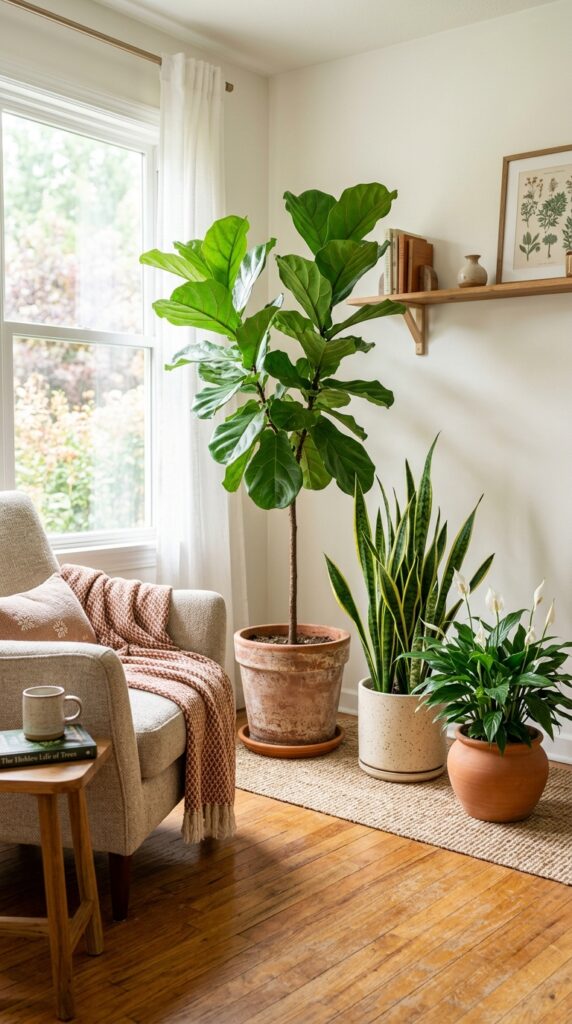
A trio of floor plants at different heights can fill an empty corner with the same visual weight as a bookshelf or armchair, and it costs a fraction as much.
Choose three plants with distinct silhouettes — a tall fiddle leaf fig, a mid-height snake plant, and a bushier peace lily — so the grouping reads as intentional rather than random. This only works if the corner gets moderate to bright indirect light; fiddle leaf figs in particular struggle and drop leaves in dim rooms.
Stagger the pots slightly forward and back instead of lining them against the wall, which adds depth. Water each plant on its own schedule rather than a shared one, since a snake plant needs far less water than a peace lily and overwatering it is the single most common way renters kill this combination.
Best varieties for this approach: fiddle leaf fig, snake plant, peace lily, rubber plant.
Read our living room floor plant grouping guide and SFGate Home Guide’s tips on grouping houseplants.
A well-placed trio like this can single-handedly anchor a room.
Tension Rod Trailing Vine Valance
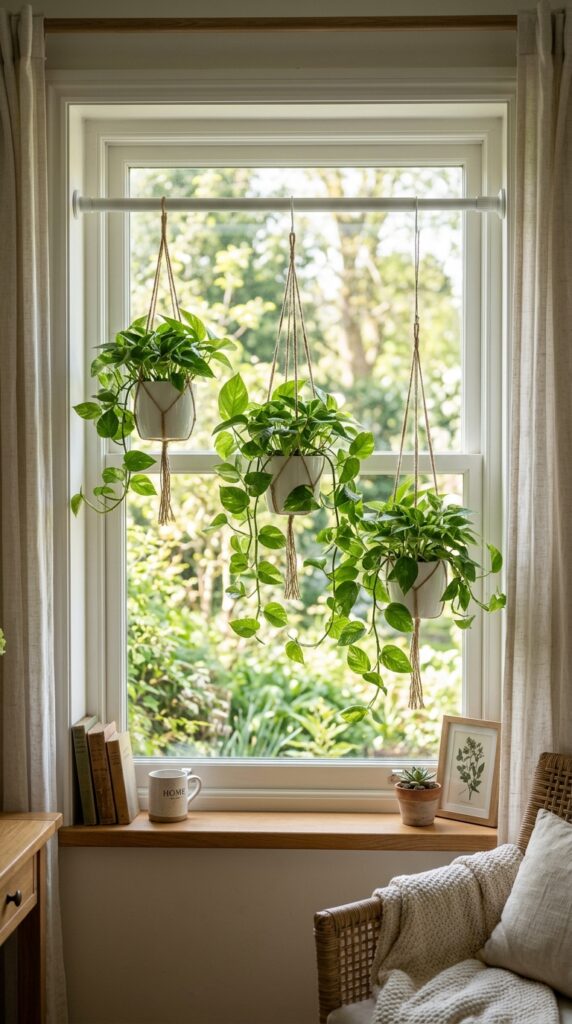
A spring tension rod wedged inside your living room window frame turns trailing pothos into a soft green valance — no curtain rod hardware required.
You’ll need a spring-loaded tension rod sized to your window’s inner frame, lightweight plastic pots (ceramic is too heavy here), and a trailing variety like pothos, heartleaf philodendron, or string of pearls. A north- or east-facing window works best, giving bright indirect light without scorching delicate leaves.
Hang the pots at staggered heights using S-hooks or macrame cord so the vines cascade unevenly. The pro insight: rotate the rod a quarter turn every couple of weeks so growth doesn’t lean permanently toward the glass.
💡 Pro Tip: Trim any yellowing leaves at the base immediately — leaving them on draws energy away from healthy new growth and can signal root issues if ignored too long.
See our window valance plant styling guide and Missouri Botanical Garden’s pothos care guide.
This trick softens even the plainest rental window in one afternoon.
Leaning Ladder Plant Stand
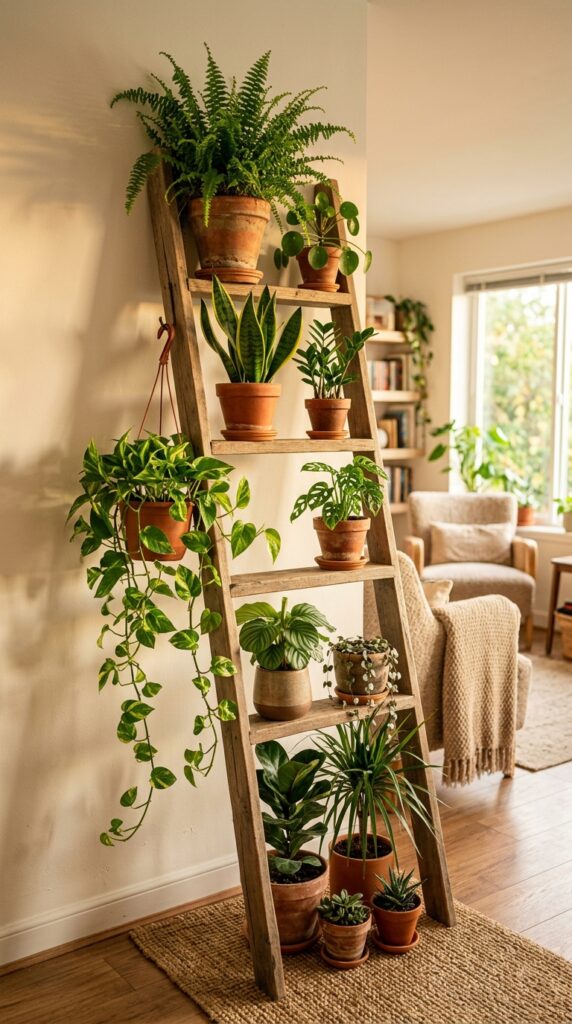
A leaning ladder shelf rests against the wall under its own weight, giving your living room five display tiers without a single wall anchor.
Look for a solid wood ladder shelf with at least four rungs, and stagger plant sizes so the tallest sits up top while trailing varieties spill from the middle rungs. A Boston fern, a snake plant, and a trailing pothos together create real variety in texture and light tolerance.
Place the ladder where it gets bright indirect light, and rotate individual pots weekly for even growth. The common mistake is loading the top rung too heavily — keep your bulkiest ceramic pots low for a stable center of gravity.
What works vs. what to avoid: Wide-based ladders with rubber feet stay put on hardwood; narrow, top-heavy designs can slide and should be avoided on smooth flooring.
See our plant ladder shelf styling guide and Gardeners’ World’s tips on indoor plant stands.
This single piece can anchor an entire wall of your living room.
Command Hook Macrame Hanging Corner
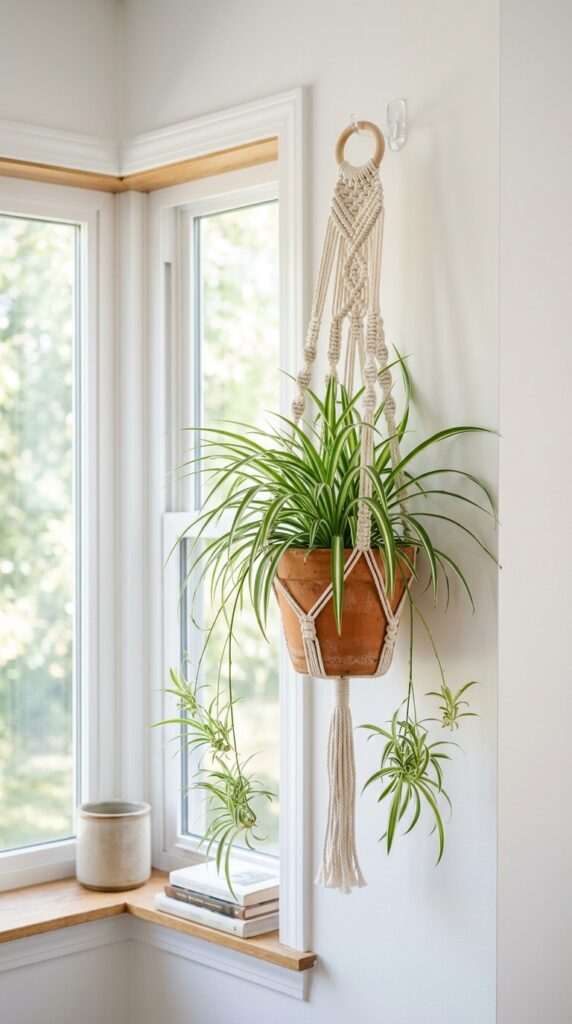
Heavy-duty adhesive hooks rated for several pounds can support a hanging macrame planter in an underused living room corner, no drilling involved.
Choose a hook rated for at least 5 lbs, paired with a macrame hanger holding a plastic-potted spider plant or pothos — heavier ceramic pots often exceed the hook’s safe limit. Clean the wall with rubbing alcohol before applying, since dust or oil significantly weakens the adhesive bond.
Press the hook firmly for a full 30 seconds and let it cure for an hour before hanging any weight. What actually works in practice is choosing corners near a window, where the hook is less noticeable and the plant still gets adequate light.
Best varieties for this approach: spider plant, pothos, string of hearts, English ivy.
Browse our macrame hanging plant tutorial and the RHS guide to hanging baskets.
A single hook can turn a forgotten corner into a genuine focal point.
Rolling Bar Cart Plant Station
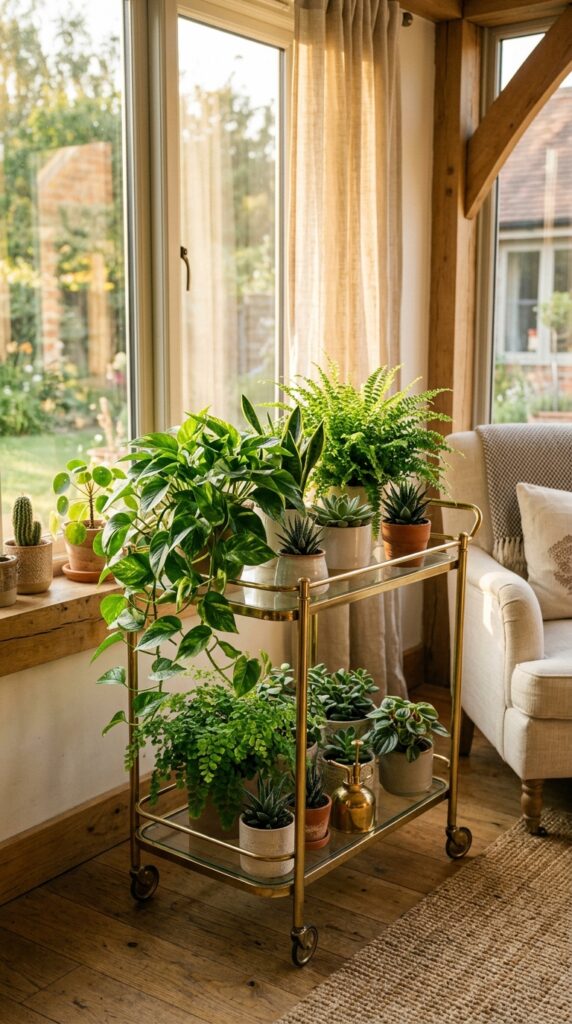
A rolling bar cart doubles as a mobile plant station, letting you chase your living room’s best light as the seasons shift.
Pick a two- or three-tier cart with locking wheels, and group plants by need: sun-loving succulents up top, shade-tolerant ferns lower where light is softer. This setup shines in living rooms with just one strong light source, since you can wheel the whole collection toward it.
Roll the cart closer to the window in winter when daylight hours shrink, and pull it back in peak summer if direct afternoon sun becomes too intense. The pro insight: line each tier with a waterproof tray, since rolling carts lack the drainage forgiveness of a fixed shelf.
For more styling ideas, see our mobile plant cart setup guide and BHG’s guide to grouping houseplants by light needs.
Mobility might be the single most useful feature a rental living room plant setup can have.
Gallery Ledge with Framed Prints and Succulents
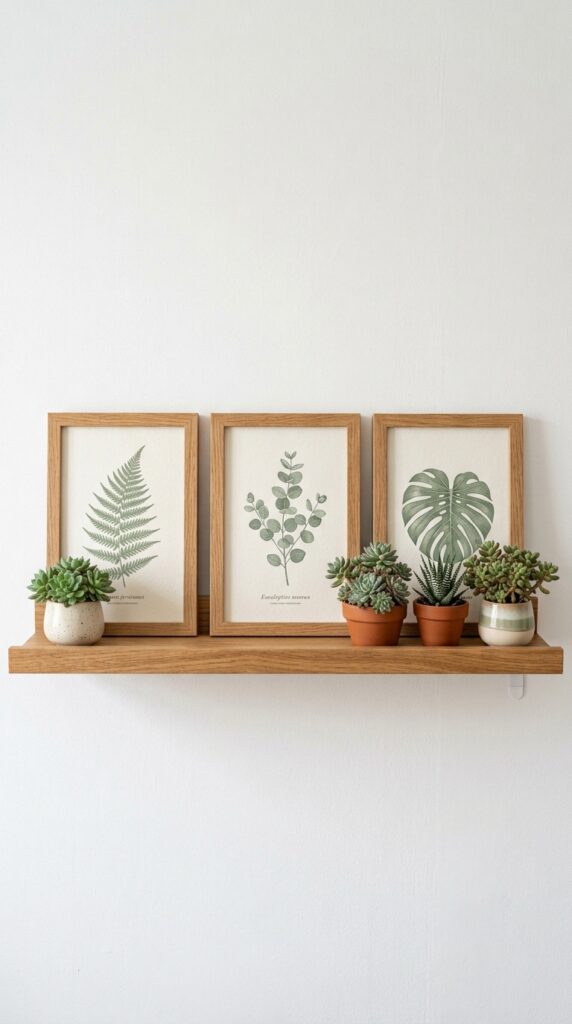
A slim floating ledge mounted with heavy-duty adhesive strips lets you mix framed art and small succulents into one cohesive living room vignette.
Use a wooden ledge under 3 feet long, adhesive strips rated for at least 10 lbs combined, and 2–3 inch succulents in plastic pots. Clean and fully dry the wall before applying the strips, since humidity or leftover dust is the most common reason they fail.
Press firmly along the whole strip and wait a full hour before loading any weight, adding items gradually to test the bond. The pro insight: keep total shelf weight — including the ledge itself — safely under the strip’s stated limit.
💡 Pro Tip: Position the ledge somewhere with at least 6 hours of bright indirect light — succulents kept in dim living rooms will stretch and lose their compact shape within a few weeks.
See our succulent shelf styling ideas and extension.psu.edu’s succulent light requirements guide.
This narrow ledge punches well above its size for visual impact.
Woven Room Divider Plant Wall
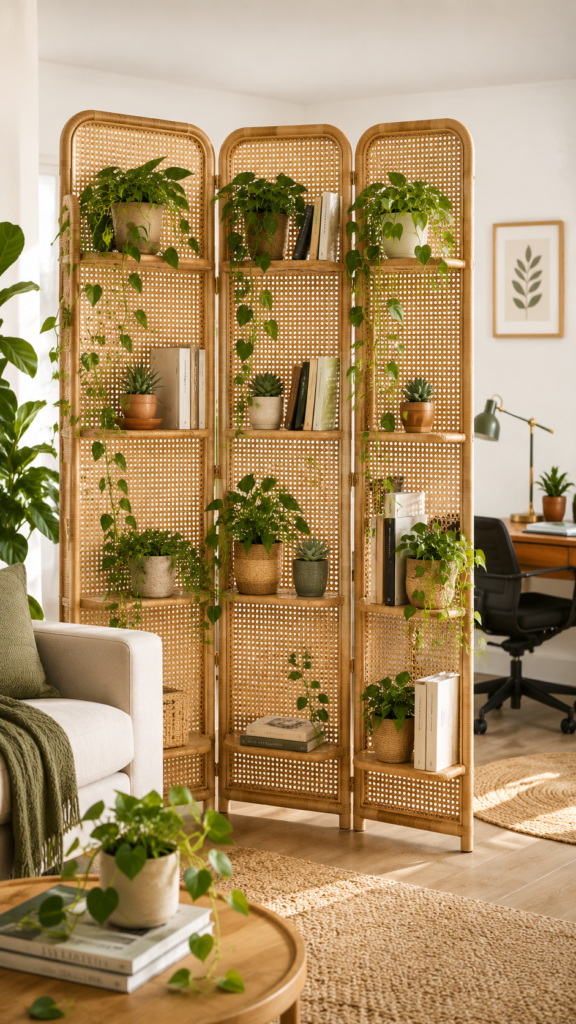
An open woven room divider does double duty in a studio-style living room: it separates zones and gives you generous plant display space on both sides.
Choose a divider with at least three open shelf tiers, placing trailing pothos on top shelves and lower-light-tolerant plants like ZZ plants toward the bottom, since shelves further from the window naturally receive less light. Position the divider so at least part of it stays open, letting light pass through to the far side of the room.
Reposition individual pots seasonally as daylight angles shift, and dust the leaves monthly — buildup is easy to overlook and can measurably reduce how much light reaches the leaf surface.
Comparison — beginner vs. advanced version: Beginners can start with three pothos on fixed shelves; advanced stylers can add trailing string of hearts and a small trellis attachment for a climbing plant.
Read our studio living room divider ideas and extension.ufl.edu’s guide to low-light houseplants.
A divider like this solves privacy and plant real estate in one move.
Coffee Table Tray Plant Centerpiece
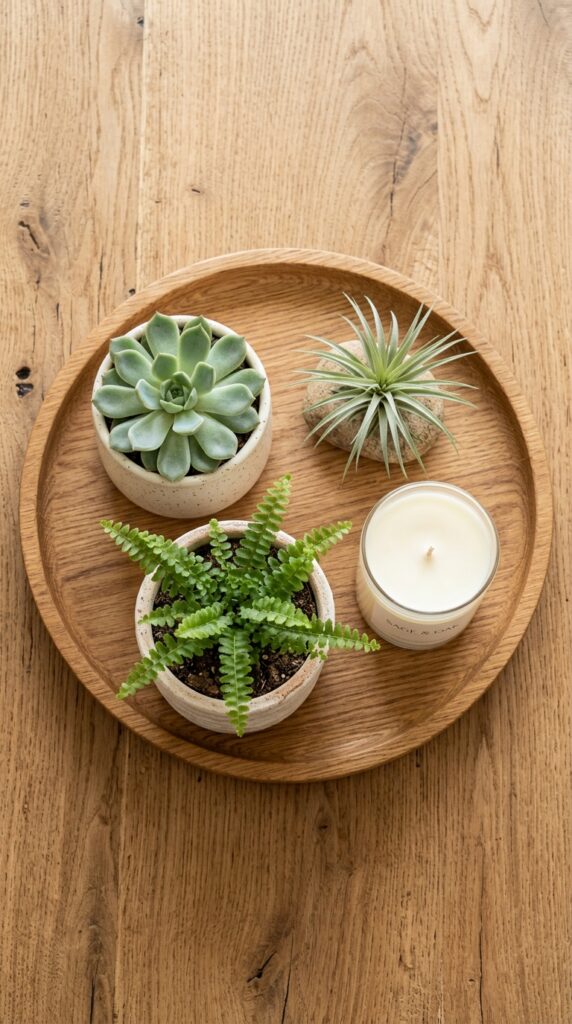
A grouped tray of small plants on your coffee table creates an instant centerpiece that requires zero installation and moves with you in seconds.
Use a shallow wooden or ceramic tray, and group three small plants with different textures — a compact succulent, a small fern, and an air plant in a glass dish — so the eye has variety to explore. This works in almost any living room, since coffee tables typically sit within reach of ambient window light even if it’s not direct sun.
Rotate the tray a quarter turn weekly so all plants get even light exposure from whichever window is nearest. The common mistake is grouping plants with wildly different watering needs on one tray without separating them — always keep succulents and ferns in their own pots rather than a single shared planter.
Best varieties for this approach: haworthia succulent, button fern, air plant, mini peperomia.
See our coffee table plant styling guide and The Sill’s guide to small tabletop plants.
It’s the easiest five-minute upgrade on this entire list.
Bookshelf Trailing Ivy Accent
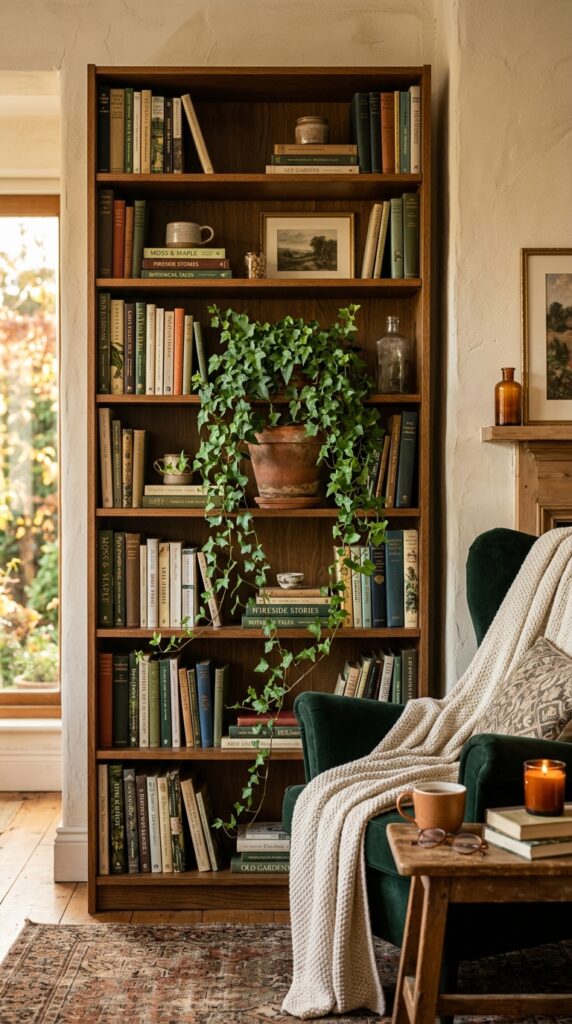
Your existing bookshelf is already one of the best display surfaces in your living room — no new furniture needed at all.
Tuck a pot of English ivy or pothos on an upper shelf so vines spill down between books and over the shelf edge, creating a living accent among your current decor. Choose a shelf that catches indirect light from a nearby window rather than a dark interior wall.
Trim trailing stems once they reach the shelf below to keep the look intentional, and rotate the pot occasionally so growth doesn’t lean entirely toward the light. Gardeners consistently find that mixing plants with books and objects reads as more curated than an isolated plant stand ever does.
What works vs. what to avoid: Trailing pothos and ivy work beautifully here; skip upright plants like snake plants, which don’t create the same cascading effect.
Check out our bookshelf plant styling ideas and Gardeners’ World’s guide to growing ivy indoors.
Sometimes the best living room upgrade is simply restyling what you already own.
Freestanding Wood Trellis Corner Accent
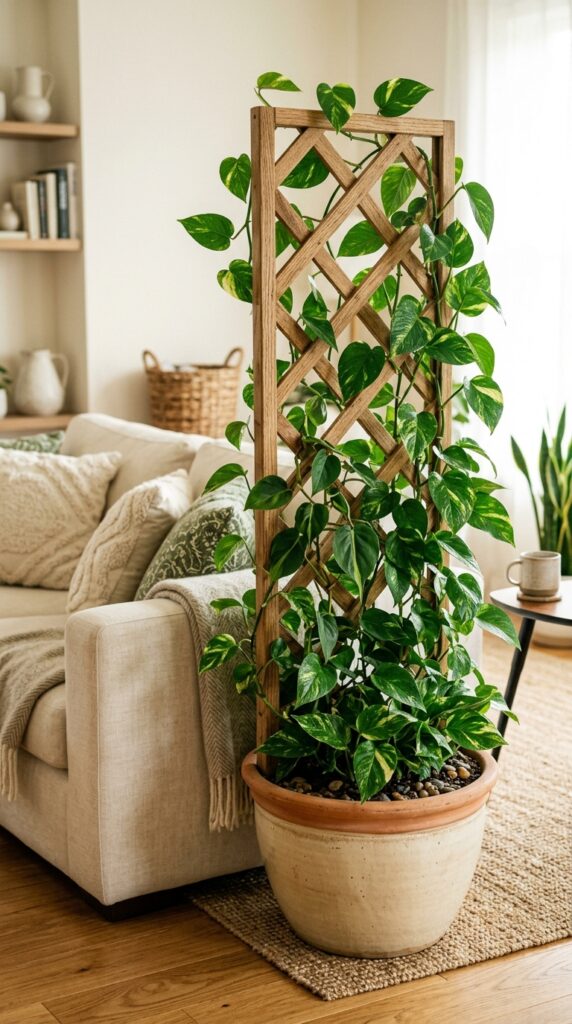
A freestanding trellis planted directly in a floor pot gives climbing plants a vertical structure without ever touching your living room wall.
Choose a wooden obelisk-style trellis and a large floor pot with drainage holes, then plant a climbing philodendron or pothos at its base. Position it in a corner near your seating area that gets bright, indirect light for at least half the day.
As the vine grows, loosely tie new growth to the trellis with soft plant twine every few weeks — don’t wait until it’s unwieldy, since untangling overgrown stems can snap them. The trellis also works well as a soft visual divider near an open doorway.
💡 Pro Tip: Wipe the trellis’s leaves down monthly with a damp cloth — dust buildup on climbing vines blocks light absorption more than most renters realize.
Read our training climbing houseplants guide and Missouri Botanical Garden’s philodendron care sheet.
A well-trained climber fills a corner the way a piece of art would.
Upcycled Basket Planter Cluster
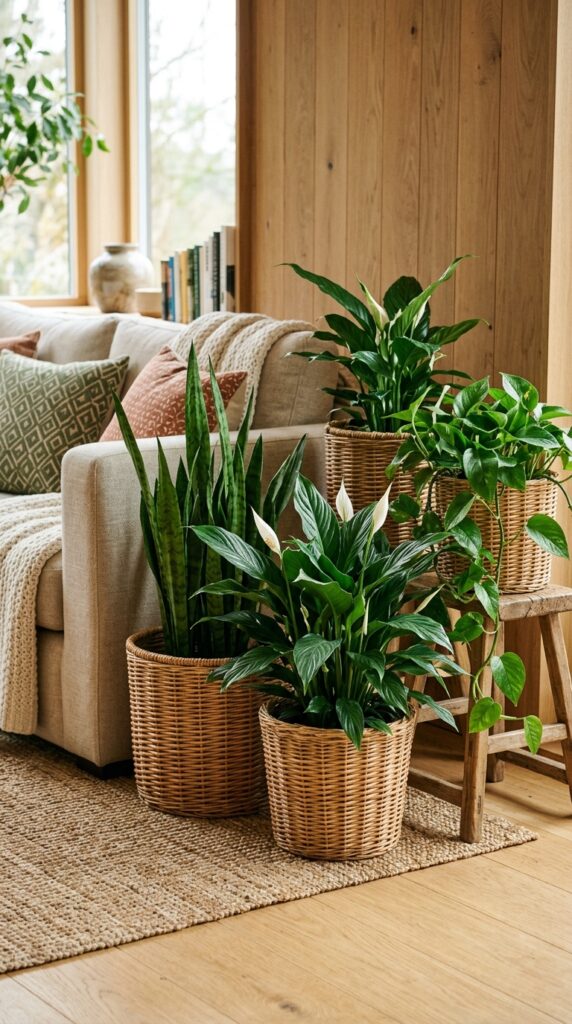
Thrifted wicker baskets make inexpensive, textured planter covers that hide plastic nursery pots while adding warmth to a living room seating area.
Find baskets slightly larger than your plants’ nursery pots, and simply slip the plastic pot inside rather than repotting directly — this preserves drainage and lets you swap plants easily. Group three baskets holding a snake plant, a pothos, and a peace lily beside your sofa for a layered, lived-in look.
Line the basket base with a small plastic saucer or tray to catch drainage water, since wicker itself isn’t waterproof and can mold if left damp. The common mistake is repotting directly into the basket — always keep the original plastic pot as an inner liner.
Best varieties for this approach: snake plant, pothos, peace lily, ZZ plant.
See our upcycled planter ideas guide and Almanac’s guide to indoor plant containers.
It’s proof that a five-dollar thrift store find can look genuinely designer.
Leaning Mirror and Trailing Plant Combo
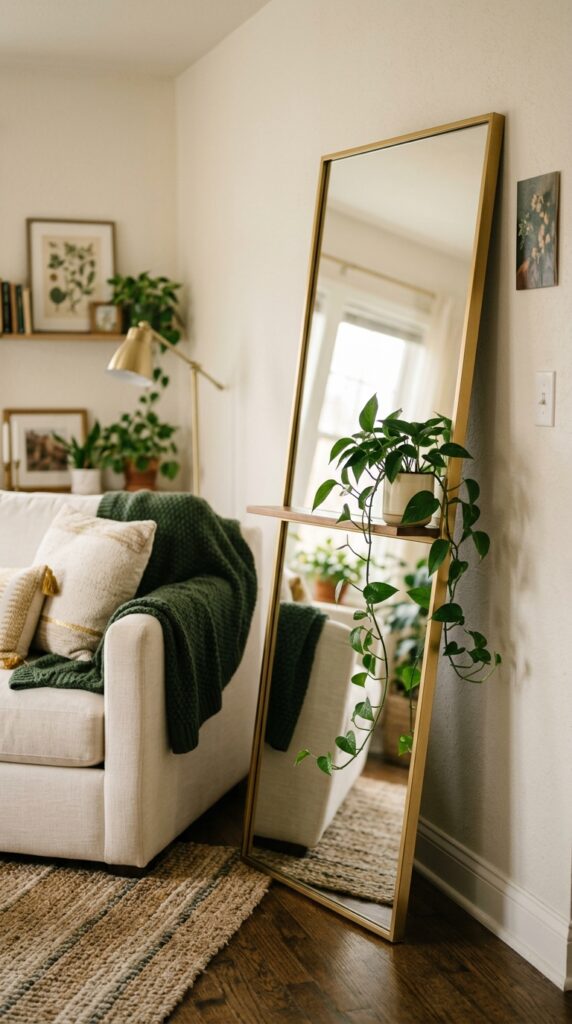
A leaning floor mirror with a built-in ledge gives your living room a plant display spot while doubling the light in the room through reflection — all resting flat against the wall, no mounting required.
Look for a leaning mirror with an integrated front shelf, and place a small trailing plant like string of pearls or a compact pothos on it. Position the mirror across from a window so it bounces natural light deeper into the seating area, indirectly benefiting the plant too.
Keep the plant lightweight, since most leaning mirror ledges aren’t built for heavy ceramic pots — a 4-inch plastic nursery pot works best. The common mistake is choosing a plant that needs bright direct light for this spot, since reflected light, while helpful, is still indirect.
Read our leaning mirror plant styling ideas and BHG’s tips on using mirrors to brighten small spaces.
It’s a two-in-one upgrade: more light, more green, zero holes.
Freestanding Pegboard Accent Wall
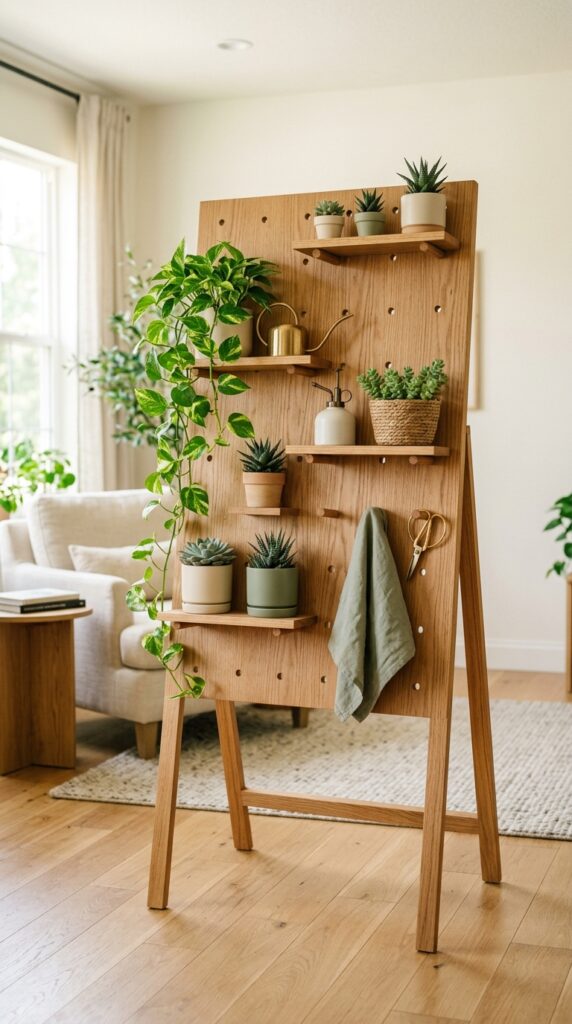
A freestanding pegboard on its own easel-style frame gives your living room all the flexibility of a mounted pegboard wall — moveable shelves, hooks, hanging points — without touching your actual wall.
Fit the pegboard with removable shelf pegs and hooks to hold a mix of succulents, a trailing pothos, and even small decor objects for a working gallery-style display. Position the frame where it gets bright indirect light, since it will likely sit a foot or two back from the nearest window.
Rearrange the pegs seasonally to try new layouts — this is one of the few renter-friendly systems that lets you fully redesign your living room’s plant wall in minutes. The pro insight: keep your heaviest pots on the lower pegs so the whole frame doesn’t feel top-heavy.
Comparison — beginner vs. advanced: Beginners can start with three or four pots on fixed pegs; advanced stylers can add small shelves and a mini trellis attachment for a climbing plant.
See our freestanding pegboard plant wall guide and BHG’s guide to creative plant wall displays.
Of all twenty ideas here, this one offers the most room to keep experimenting.
Console Table Trailing Vine Runner
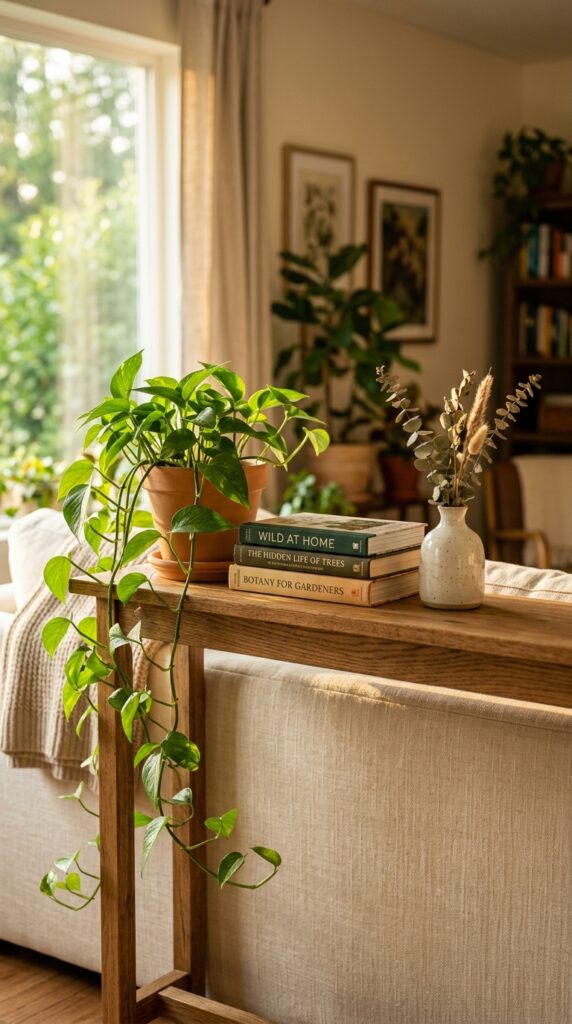
A trailing plant placed on a console table behind your sofa acts like a green runner, softening the hard edges of furniture without adding clutter.
Choose a compact trailing plant like pothos or string of pearls in a low, wide pot, and let its vines drape naturally over the table edge alongside books or a small vase. This works best if the console gets at least a few hours of ambient light daily; deep interior placement will slow growth noticeably.
Trim the longest vines back periodically to keep the trail from reaching the floor and becoming a tripping hazard. The pro insight: turn the pot 45 degrees every couple of weeks so the vine drapes evenly rather than growing lopsided toward the light.
Best varieties for this approach: pothos, string of pearls, string of hearts.
See our console table plant styling guide and Gardeners’ World’s tips on trailing houseplants.
It’s a small styling move that makes a console table feel finished.
Ceiling Tension Hook Plant Cluster
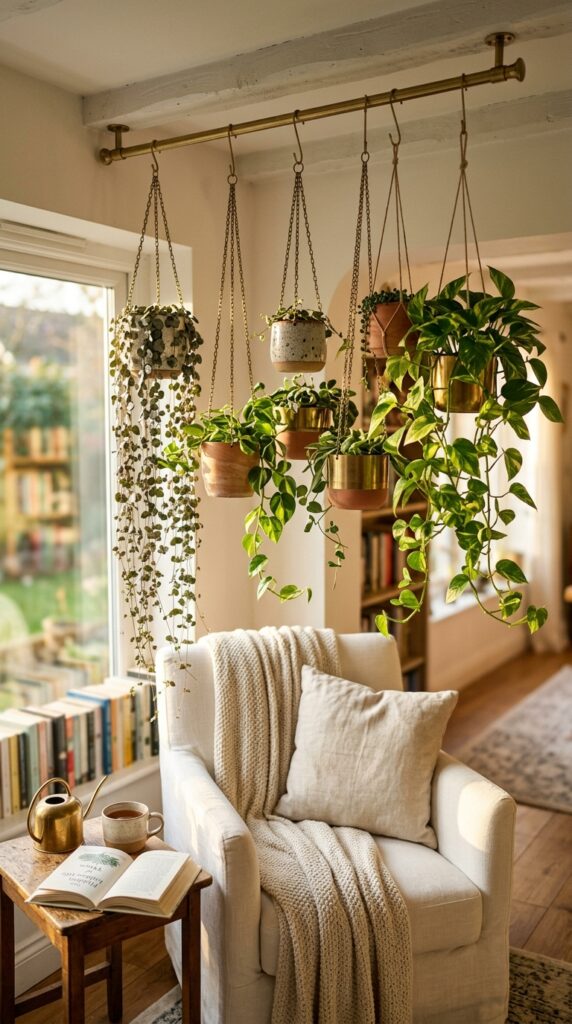
A tension-mounted ceiling hook, designed to wedge between floor and ceiling without drilling, can support a small cluster of hanging plants above a reading chair or sofa.
Choose a tension rod system rated specifically for ceiling installation with a hook attachment, then hang two or three lightweight planters with trailing string of hearts or pothos at varied lengths. This only works in rooms with ceiling height under the product’s stated range — most tension systems max out around 8–9 feet.
Test the tension firmly before hanging any plants, and recheck monthly, since temperature and humidity shifts can subtly loosen the fit. Keep total hanging weight well under the rated maximum for real safety margin.
What works vs. what to avoid: Lightweight trailing plants in plastic pots work well; large ceramic planters exceed most tension systems’ safe weight range and should be avoided.
Read our tension rod hanging plant ideas and Gardeners’ World’s guide to hanging houseplants.
Overhead greenery like this is the closest thing to a plant chandelier without a single drill hole.
Freestanding Coat Rack Hanging Garden
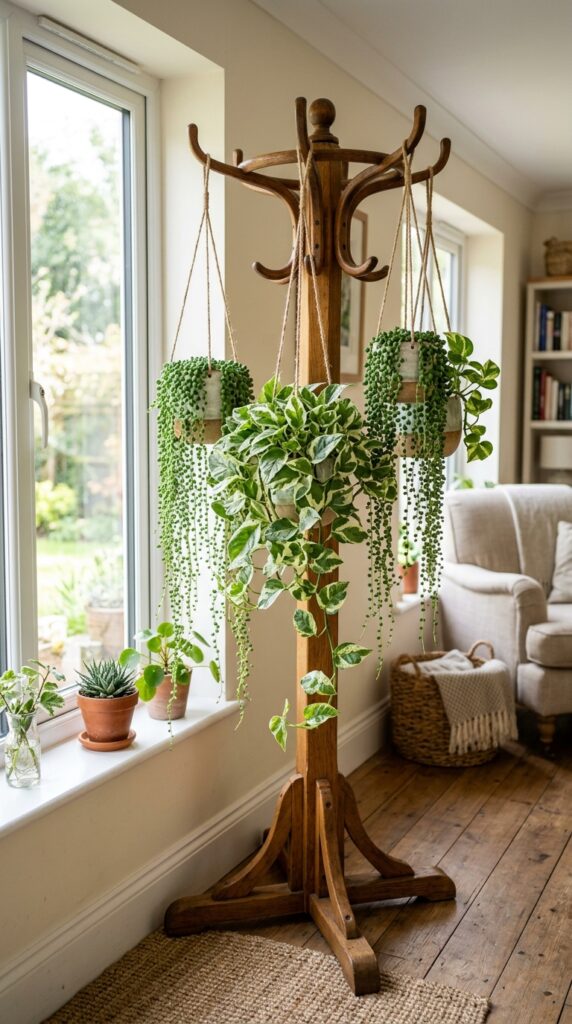
A tall freestanding coat rack, with its multiple hook arms and sturdy base, doubles as a surprisingly good hanging garden stand for a rental living room.
Choose a rack with at least three hook arms and a wide, weighted base, then hang small planters holding string of pearls, pothos, or a trailing succulent. Place it near your brightest window, since hanging pots sit several feet off the ground and further from ambient light than floor plants.
Balance weight evenly across all hooks rather than clustering pots on one side, which can tip a lighter-base rack. The pro insight: a rack with a cast iron or weighted base handles hanging plant weight far more safely than a lightweight metal one.
Best varieties for this approach: string of pearls, pothos, trailing succulents, small ferns.
See our creative hanging planter stand ideas and Missouri Botanical Garden’s guide to hanging houseplants.
Repurposing furniture like this is exactly what makes renter decor feel effortless.
Windowsill Terrarium Row
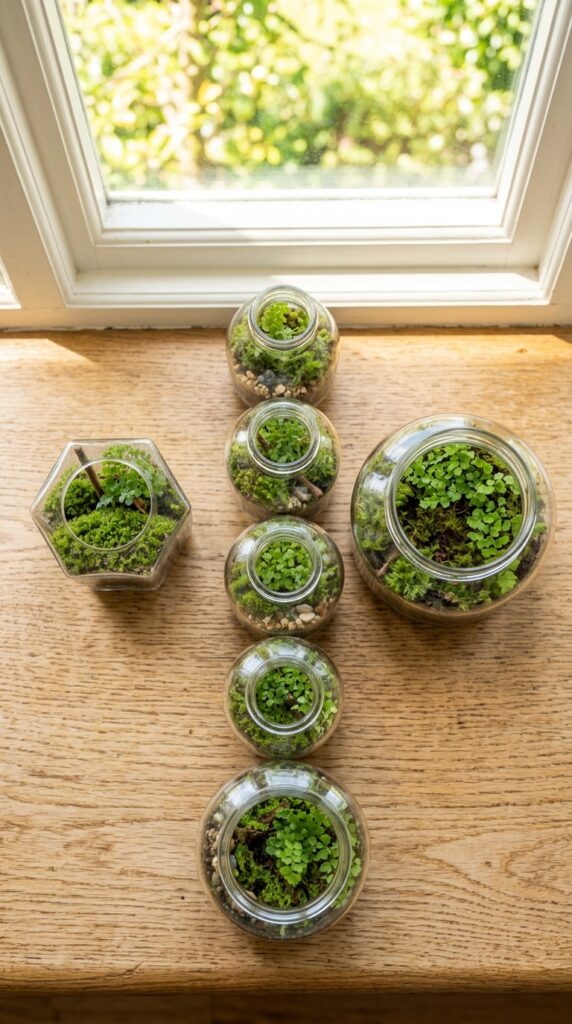
A row of small glass terrariums along a living room windowsill adds texture and depth without taking up any real floor space.
Use a few open or closed glass containers, a thin layer of pebbles for drainage, and moisture-loving plants like moss, baby’s tears, or small ferns. Closed terrariums are especially forgiving for renters who travel often, since they retain humidity for weeks between waterings.
Check closed terrariums monthly for excess condensation and crack the lid briefly if the glass fogs heavily. Open terrariums need watering roughly every 10–14 days, less often than a typical potted plant on the same sill.
💡 Pro Tip: Avoid placing terrariums in direct afternoon sun — the glass intensifies heat and can cook delicate moss and fern roots within days.
See our beginner terrarium building guide and Missouri Botanical Garden’s terrarium care basics.
A row of these adds a little pocket of jungle right at eye level.
Ottoman-Adjacent Air Plant Display
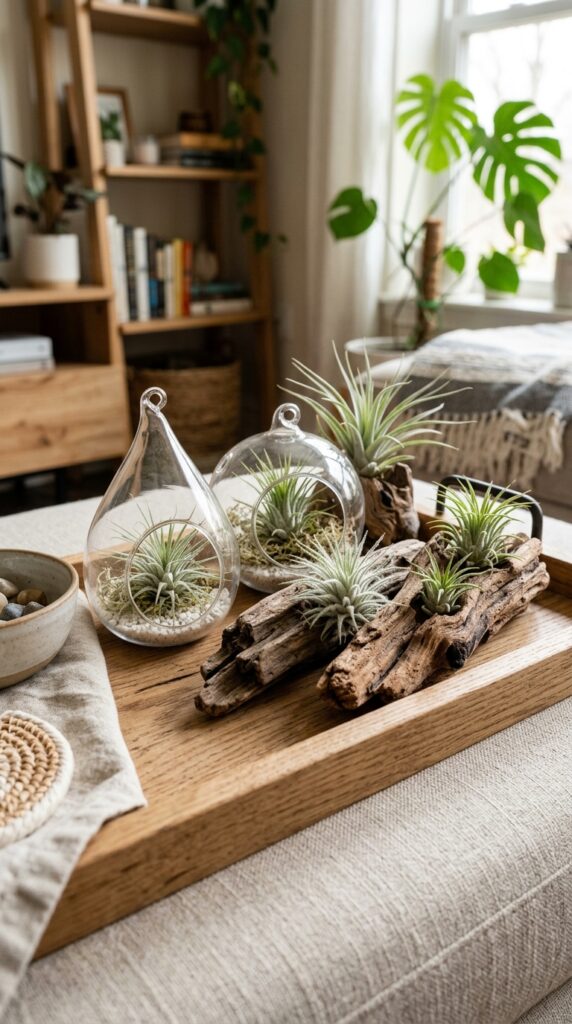
Air plants need no soil and no pot, which makes them one of the easiest ways to add texture near a low ottoman or side table without any real commitment.
Choose several Tillandsia air plants in varying sizes, displayed in small glass orbs or driftwood holders rather than buried in soil. Arrange them in a loose cluster rather than a straight row for a more natural, collected look.
Mist your air plants two to three times a week, and don’t let them sit in standing water afterward — this is the most common mistake, and it causes rot at the base within days. Let them dry upside down for about an hour post-misting before returning them to display.
Best varieties for this approach: Tillandsia ionantha, Tillandsia xerographica, Tillandsia bulbosa.
Learn more in our air plant care for beginners guide and The Sill’s air plant watering guide.
This is one of the lowest-commitment ways to add living texture near your seating area.
Vintage Trunk Plant Stand
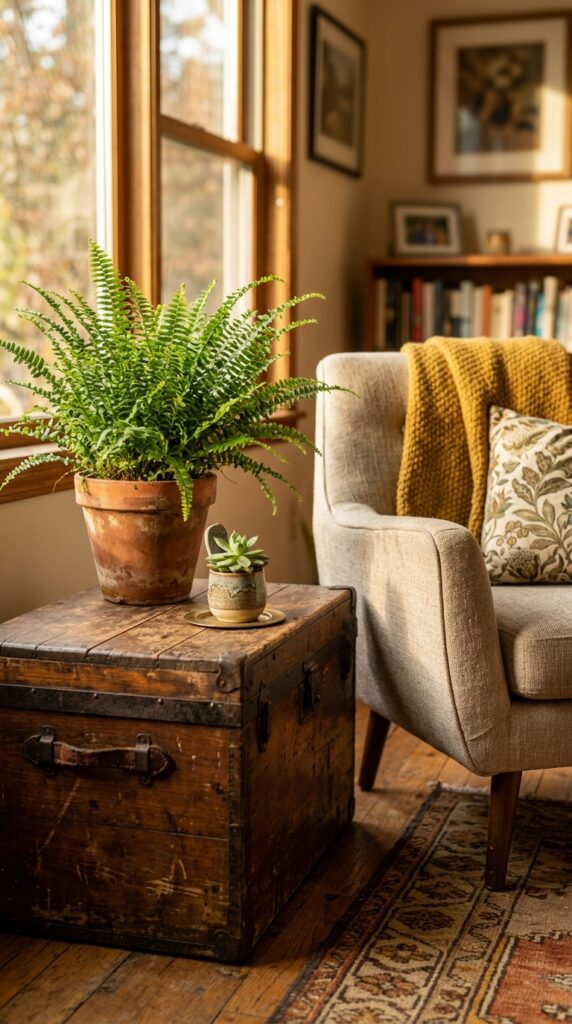
Choose a sturdy wooden or metal trunk at a height comfortable next to your seating, and top it with a mid-size fern or fiddle leaf fig in a saucer to protect the wood surface from water damage. Position the trunk where it gets at least a few hours of indirect light daily.
Always use a waterproof saucer under the pot, since a trunk’s wooden or leather-covered top can warp or stain from repeated drips. The common mistake is skipping the saucer entirely and assuming occasional watering won’t leave a mark — even small amounts of moisture add up over months.
Best varieties for this approach: Boston fern, fiddle leaf fig, ZZ plant, rubber plant.
Check out our vintage furniture plant styling guide and RHS’s guide to indoor plant containers.
It’s functional storage and greenery in one thrifted piece.
Getting Started With Living Room Decor for Renters
The easiest first step is picking just one idea from this list — a coffee table tray or a single Command hook planter — rather than trying to style the entire room at once. Starting small lets you learn how your specific living room’s light behaves before committing to a bigger setup.
The most common mistake beginners make is skipping wall prep before using any adhesive product; oils from hands or leftover dust from painting weaken the bond and lead to hooks falling days later, sometimes taking paint with them.
For your first purchase, get one heavy-duty Command hook or adhesive ledge strip, one plastic-potted pothos (nearly impossible to kill and tolerant of varied light), and nothing else. You’ll have a real result — a styled corner that doesn’t damage your wall — within a single afternoon, and within two to three weeks you’ll likely see new growth confirming the spot works.
Frequently Asked Questions
What’s the best renter-friendly way to add plants to a living room without drilling?
A leaning ladder shelf or a tension rod mounted inside a window frame are two of the most reliable options, since both rely on gravity or spring pressure rather than wall anchors. Pair either with lightweight plastic-potted trailing plants like pothos, which tolerate a wide range of light conditions found in most living rooms.
Will adhesive hooks and strips really hold without falling?
Yes, as long as you choose a product rated for the actual weight you’re hanging and prep the wall correctly first. Clean the surface with rubbing alcohol, press firmly for a full 30 seconds, and let the adhesive cure for at least an hour before adding any plant weight.
How do I style a living room with plants if I don’t have much natural light?
Focus on low-light-tolerant varieties like ZZ plants, pothos, and snake plants, and place them on the shelf tiers or console spots closest to your best window, even if that light is indirect. A room with fewer than 3–4 hours of daily brightness will limit you to these hardier species rather than sun-lovers like succulents.
Why is my trailing plant growing unevenly toward one side?
This happens when a plant reaches consistently toward its strongest light source, which is common on console tables or window ledges with light coming from just one direction. Rotate the pot a quarter turn every one to two weeks so all sides get comparable exposure.
How often should I water living room houseplants versus outdoor ones?
Indoor living room plants generally dry out slower than outdoor container plants because they’re shielded from wind and direct sun, so most houseplants like pothos or snake plants only need watering every 7–14 days. Always check the top inch of soil with your finger first, since indoor humidity and heating can shift this timeline significantly.
A Few Fi
nal Thoughts
None of these 20 DIY living room decor ideas for renters require choosing between a beautiful space and getting your deposit back. From a floor plant trio in the corner to a freestanding pegboard accent wall, the common thread is using gravity, tension, and smart furniture choices instead of a drill. Even one small change — a coffee table tray, one trailing vine, one leaning ladder — can shift how your entire living room feels. Your renter-friendly living room adventure is closer than you think — now go make it happen!