
Boho style thrives on texture, warmth, and a slightly wild, collected-over-time feel — which happens to be exactly the aesthetic that damage-free rental decor does best. Macrame, trailing vines, woven textures, and sun-bleached wood don’t need drilled anchors or painted walls to look intentional; they just need a little creativity and the right lightweight hardware. Whether you’re working with a studio apartment or a single sunny corner, boho decor rewards layering over perfection, which makes it forgiving for renters still figuring out their space. Ready? Let’s explore all 20 of them.
Why Boho DIY Decor for Rental Apartments Is Worth Your Time
Boho style is one of the most renter-friendly aesthetics that exists, precisely because it leans on texture and layering rather than built-in fixtures or permanent structure. In practice, a macrame wall hanging, a cluster of trailing plants, and a few woven baskets can transform a plain rental room without a single hole in the drywall.
The financial upside is real: most boho elements — thrifted rattan, secondhand baskets, a $15 tension rod — cost far less than the furniture-store versions of the same look, and nearly everything in this style is portable enough to take with you at move-out.
A lesser-known fact many renters don’t realize: trailing plants like pothos and string of hearts actually reinforce the boho look better than flowering plants do, since their organic, asymmetrical growth pattern is what gives boho spaces that lived-in, gathered-over-time quality flowering plants in tidy rows can’t replicate.
This approach is ideal for renters who love warmth and texture but don’t want to gamble their security deposit on a style experiment.
At a Glance
- A macrame plant hanger on a single Command hook can anchor an entire boho corner.
- A tension rod strung with trailing pothos creates a living, textured window valance.
- A cluster of woven baskets holding plants adds warmth without a single nail.
- A rattan room divider doubles as a privacy screen and a plant display wall.
- A floor cushion nook surrounded by trailing greenery turns a bare corner into a reading retreat.
Macrame Plant Hanger Corner
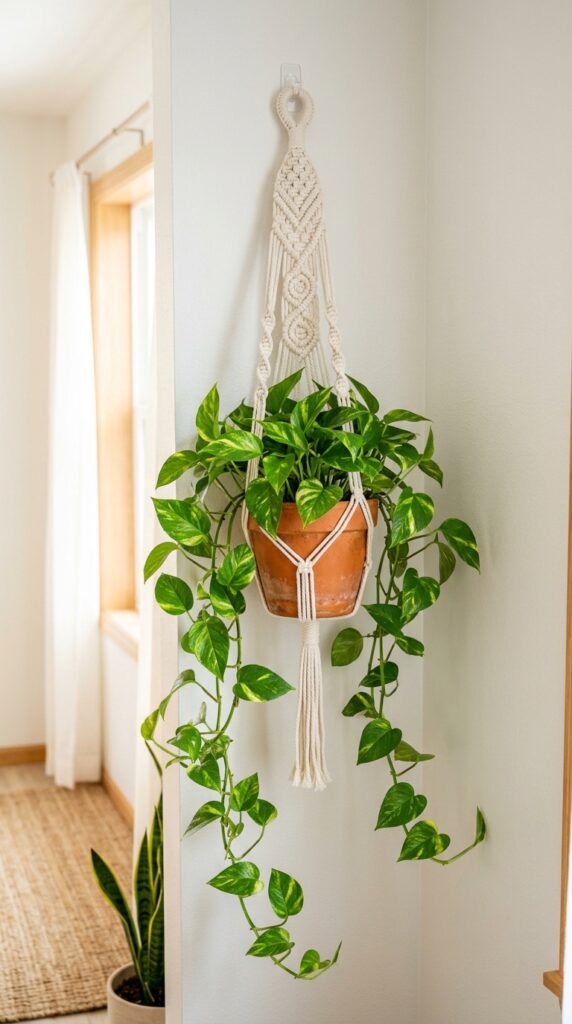
A single macrame hanger holding a trailing plant is the fastest way to bring genuine boho texture into a rental without touching a wall with anything more permanent than adhesive.
Choose a heavy-duty Command hook rated for at least 5 lbs, a hand-knotted or cotton-cord macrame hanger, and a trailing plant like pothos or string of hearts in a lightweight plastic pot. Clean the wall with rubbing alcohol before applying the hook, since oil or dust is the top reason adhesive fails.
Position the hanger in a corner that gets bright indirect light, letting the vines cascade unevenly for that gathered, organic boho look. The pro insight: knot length matters — a longer cord lets the plant hang lower and trail more dramatically than a short, tight hang.
Best varieties for this approach: pothos, string of hearts, string of pearls, spider plant.
Browse our macrame hanging plant tutorial and the RHS guide to hanging houseplants.
This one hanger can set the tone for an entire boho corner.
Tension Rod Trailing Vine Valance
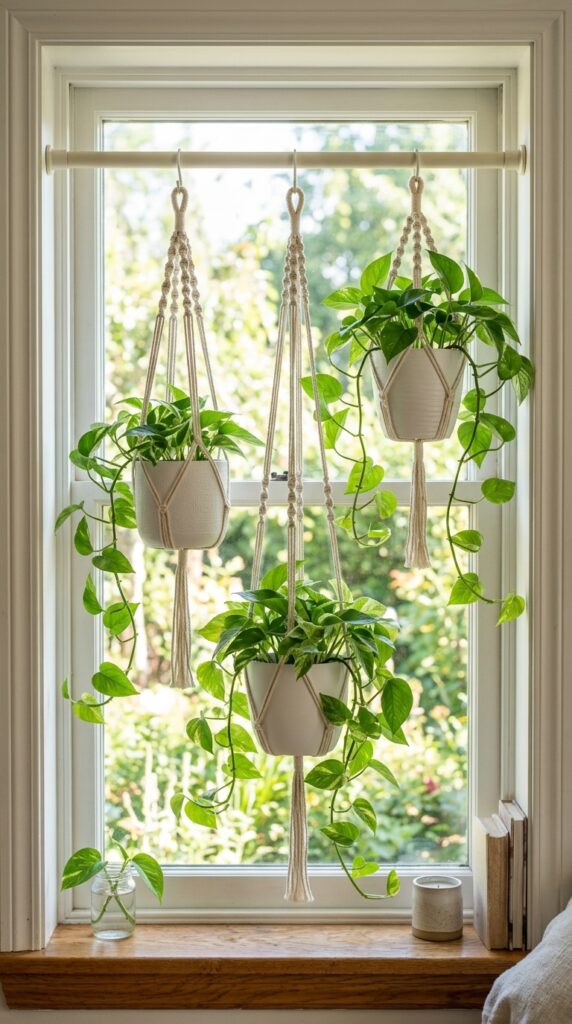
A tension rod wedged inside your window frame turns trailing pothos into a soft, living valance — a distinctly boho alternative to traditional curtains.
You’ll need a spring-loaded tension rod sized to your window’s inner frame, lightweight plastic pots, and trailing varieties like pothos, heartleaf philodendron, or string of pearls. A north- or east-facing window works best, giving bright indirect light without scorching the leaves.
Hang plants at staggered, uneven heights using macrame cord or jute twine rather than matching hardware, since asymmetry is central to the boho aesthetic. Rotate the rod a quarter turn every couple of weeks so growth doesn’t lean permanently toward the glass.
💡 Pro Tip: Mix cord materials — jute, cotton, and hemp together — rather than matching them exactly. That slight variation is what makes a boho valance read as collected rather than store-bought.
See our window valance plant styling guide and Missouri Botanical Garden’s pothos care guide.
It softens even the plainest rental window in a single afternoon.
Woven Basket Plant Cluster
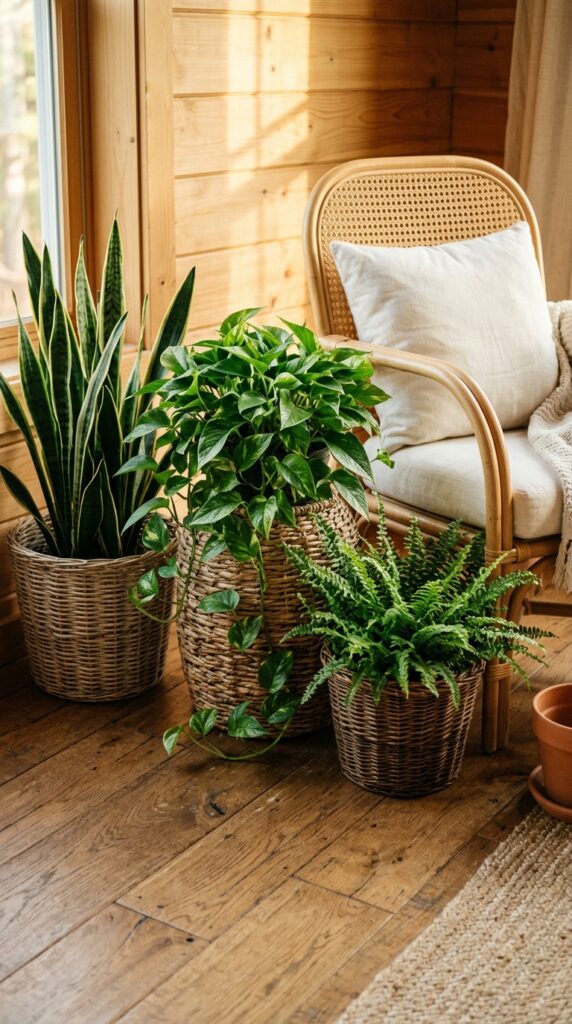
Thrifted woven baskets make inexpensive, texture-rich planter covers that hide plastic nursery pots while doubling down on the boho aesthetic.
Find baskets slightly larger than your plants’ nursery pots, and slip the plastic pot inside rather than repotting directly — this preserves drainage and lets you rotate plants easily. Group three baskets at varying heights holding a snake plant, a pothos, and a fern for a layered, collected look.
Line each basket base with a small plastic saucer to catch drainage water, since wicker isn’t waterproof and can mold if left damp. The common mistake is repotting directly into the basket — always keep the original plastic liner pot intact.
What works vs. what to avoid: Snake plants and ferns handle basket coverage well; avoid succulents here, since baskets trap more humidity than open terracotta and can encourage rot.
See our upcycled planter ideas guide and Almanac’s guide to indoor plant containers.
A thrifted basket cluster instantly warms up a bare corner.
Rattan Room Divider Plant Wall
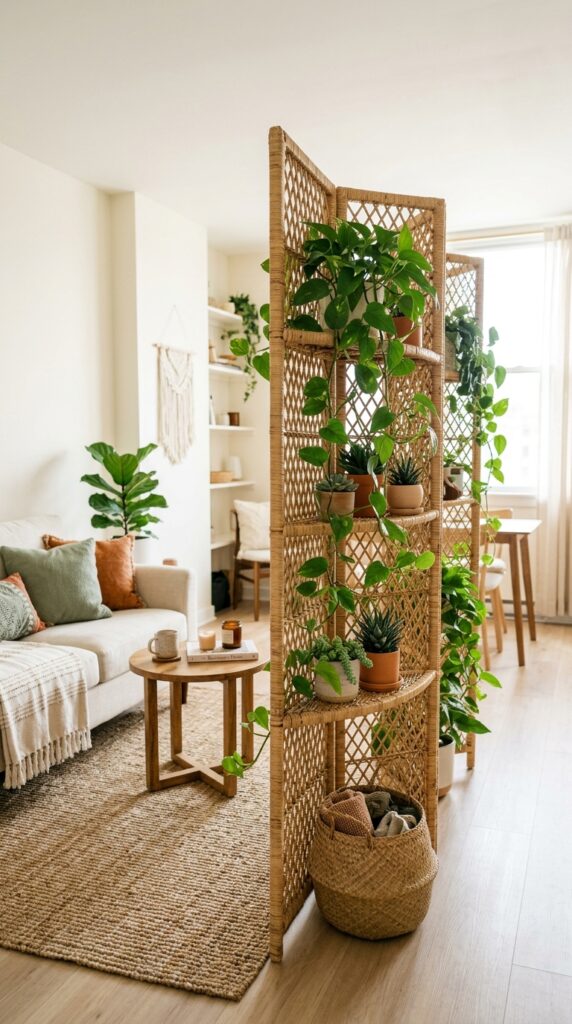
An open woven rattan divider does double duty in a studio apartment: it separates zones and gives you a genuinely boho plant display wall on both sides.
Choose a divider with at least three open shelf tiers, placing trailing pothos on top shelves and lower-light-tolerant plants like ZZ plants toward the bottom, since shelves further from the window naturally get less light. Leave part of the divider open so light can pass through to the far side of the room.
Style each shelf with a mix of plants, woven baskets, and one or two ceramic objects rather than plants alone — boho displays lean on variety of texture, not just greenery. The common mistake is overcrowding every shelf evenly; leave visual breathing room on at least one tier.
Comparison — beginner vs. advanced version: Beginners can start with three pothos and one basket; advanced stylers can add a hanging macrame piece and a small trellis for a climbing plant.
Read our studio living room divider ideas and extension.ufl.edu’s guide to low-light houseplants.
A divider like this solves privacy and boho styling in one move.
Floor Cushion Reading Nook with Trailing Greenery
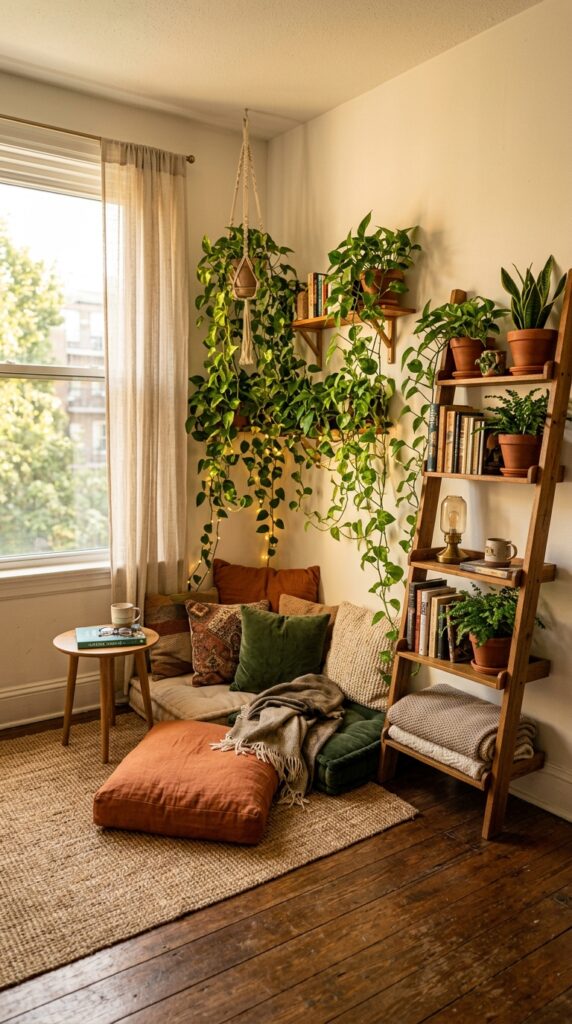
A floor cushion nook, layered with trailing plants and warm textiles, turns an empty corner into the kind of relaxed reading spot boho apartments are known for.
Use a large floor cushion or a low pouf, a woven throw, and two or three plants at varying heights — a trailing pothos overhead, a floor-level fern, and a small succulent within reach. This corner needs at least moderate indirect light to keep the greenery healthy long-term.
Layer textiles generously — a woven rug underneath, a patterned throw draped over the cushion — since texture layering is what separates boho from simply “a pillow on the floor.” The pro insight: hang the trailing plant slightly behind the cushion rather than directly above it, so leaves don’t drop onto the seating area.
Best varieties for this approach: pothos, Boston fern, small succulent.
See our cozy reading corner styling guide and BHG’s guide to small-space furniture.
It’s proof that a corner nobody uses can become your favorite spot in the apartment.
Leaning Ladder Shelf with Boho Textiles
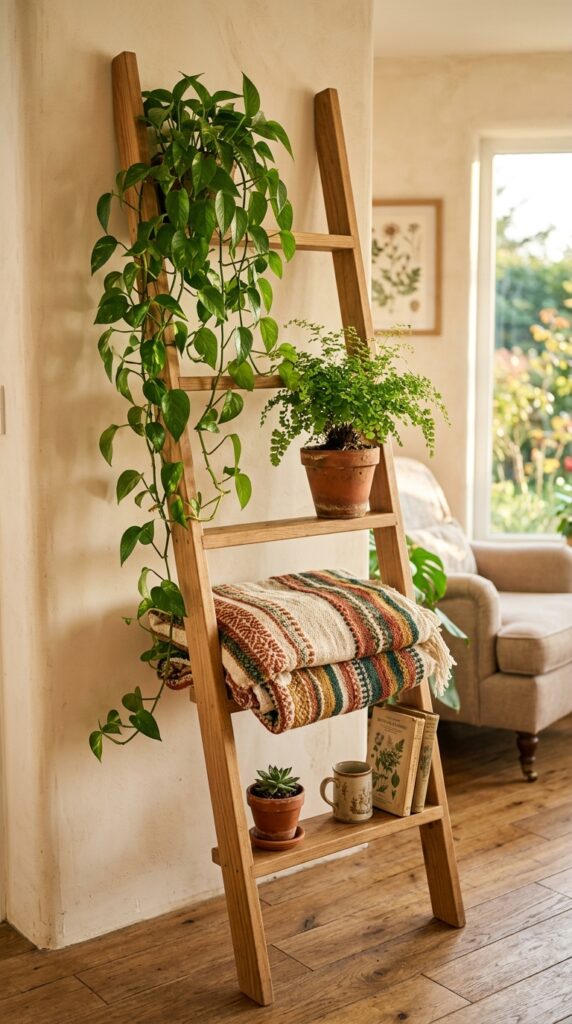
A leaning ladder shelf rests against the wall under its own weight, giving you tiers for both plants and boho textiles without a single anchor.
Look for a solid wood ladder with at least four rungs, and mix function across the tiers — a folded woven blanket on one rung, a trailing pothos and small terracotta fern pot on others. Position it where the plant tiers get bright indirect light.
Drape the blanket loosely rather than folding it perfectly square, since a slightly undone look reads as more authentically boho. The common mistake is loading the top rung too heavily — keep bulkier textiles or ceramic pots on the lower rungs for stability.
💡 Pro Tip: Choose a ladder in raw or lightly stained wood rather than a painted finish — the natural grain adds exactly the earthy texture boho styling depends on.
See our plant ladder shelf styling guide and Gardeners’ World’s tips on indoor plant stands.
This single piece can anchor an entire boho-styled wall.
Ceiling Tension Hook Plant Chandelier
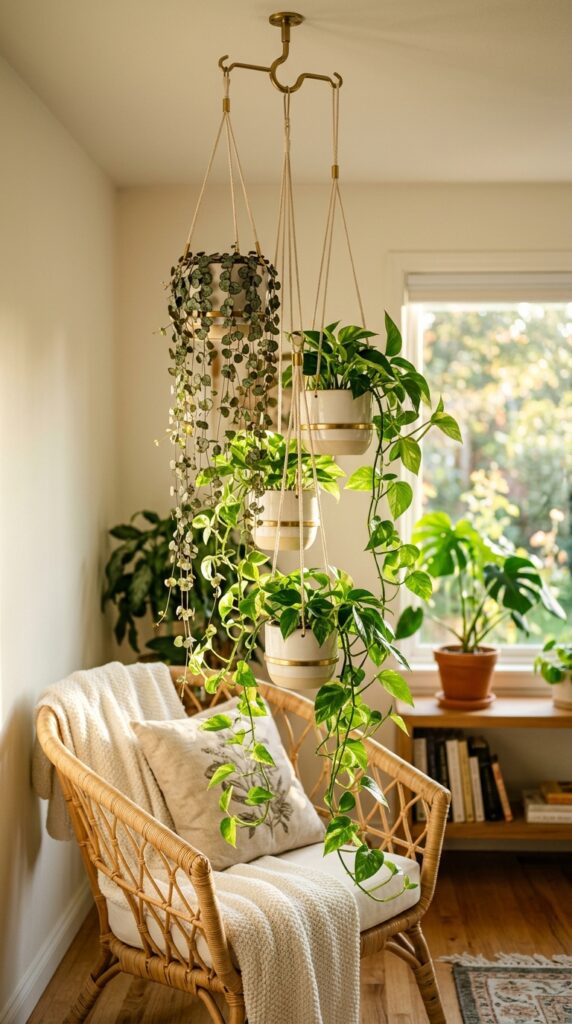
A tension-mounted ceiling hook, designed to wedge between floor and ceiling without drilling, can support a cluster of hanging plants that reads like a boho plant chandelier.
Choose a tension rod system rated specifically for ceiling installation with a hook attachment, then hang two or three lightweight planters with trailing string of hearts or pothos at varied lengths using jute or macrame cord. This only works in rooms with ceiling height under the product’s stated range — most systems max out around 8–9 feet.
Test the tension firmly before hanging any plants, and recheck monthly, since humidity shifts can loosen the fit over time. The pro insight: vary the cord lengths dramatically rather than evenly, which creates the layered, asymmetrical silhouette boho displays rely on.
What works vs. what to avoid: Lightweight trailing plants in plastic pots work well; heavy ceramic planters exceed most tension systems’ safe weight range and should be avoided.
Read our tension rod hanging plant ideas and Gardeners’ World’s guide to hanging houseplants.
Overhead greenery like this is the closest thing to a boho chandelier without a drill.
Vintage Rug Layering with Potted Plants
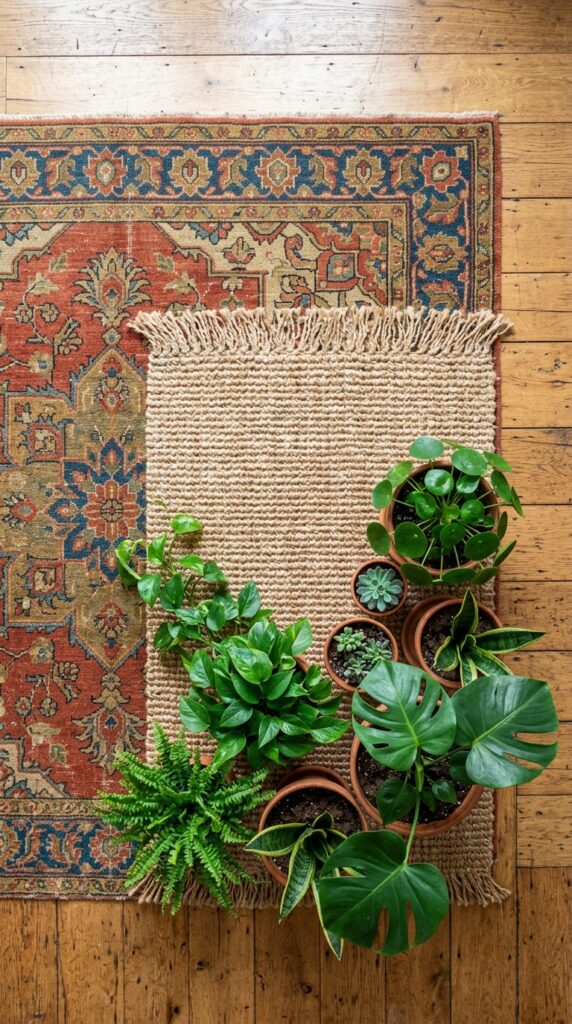
Layering two rugs — a vintage patterned piece over a plain jute base — is one of the fastest, most damage-free ways to define a boho zone in a rental living room.
Choose a smaller patterned or vintage-style rug to layer partially over a larger neutral jute rug, and anchor the corner with a cluster of terracotta potted plants at varying heights. This works in any room regardless of flooring, since rugs need no adhesive or hardware at all.
Place your plant cluster at one corner of the layered rugs rather than centered, which creates a more natural, asymmetrical composition. The pro insight: choose rug patterns with warm, earthy tones — rust, mustard, terracotta — since these read as more authentically boho than cool grays or blues.
Best varieties for this approach: snake plant, ZZ plant, rubber plant.
See our rug layering styling guide and BHG’s guide to small-space furniture.
Two rugs and a few pots can redefine an entire corner of a room.
Dried Pampas Grass in a Floor Vase
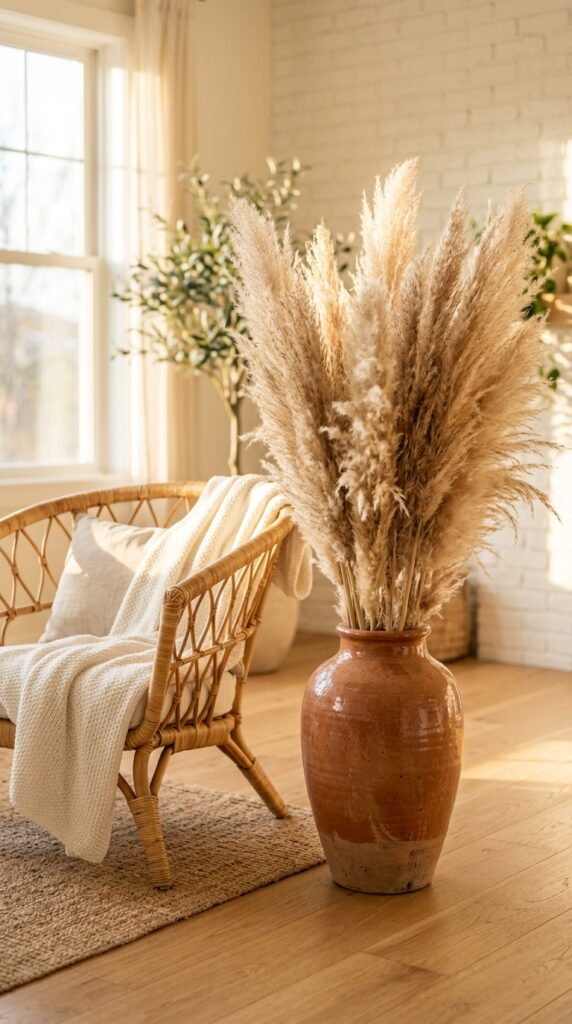
Dried pampas grass in a tall floor vase is a boho staple precisely because it needs zero care, zero water, and zero light requirements at all — a rare plant-adjacent decor piece with no maintenance whatsoever.
Choose a large ceramic or woven floor vase and several stems of dried pampas grass, trimmed to a height proportional to the vase — generally about 1.5 to 2 times the vase’s height looks balanced. Place it in any corner regardless of light, since dried grass doesn’t rely on sun exposure to stay looking good.
Fluff the plumes gently by hand after unpacking, since pampas grass compresses during shipping and needs a little manipulation to regain its full, wispy shape. The common mistake is overcrowding the vase with too many stems — three to five stems usually looks more intentional than a dense bundle.
What works vs. what to avoid: Dried pampas, bunny tail grass, and dried eucalyptus all work well; fresh-cut flowers wilt too quickly to suit this low-maintenance display style.
Read our dried botanical decor guide and BHG’s guide to dried floral arranging.
It’s the rare “plant” that never needs watering, ever.
Woven Wall Hanging with Trailing Vine
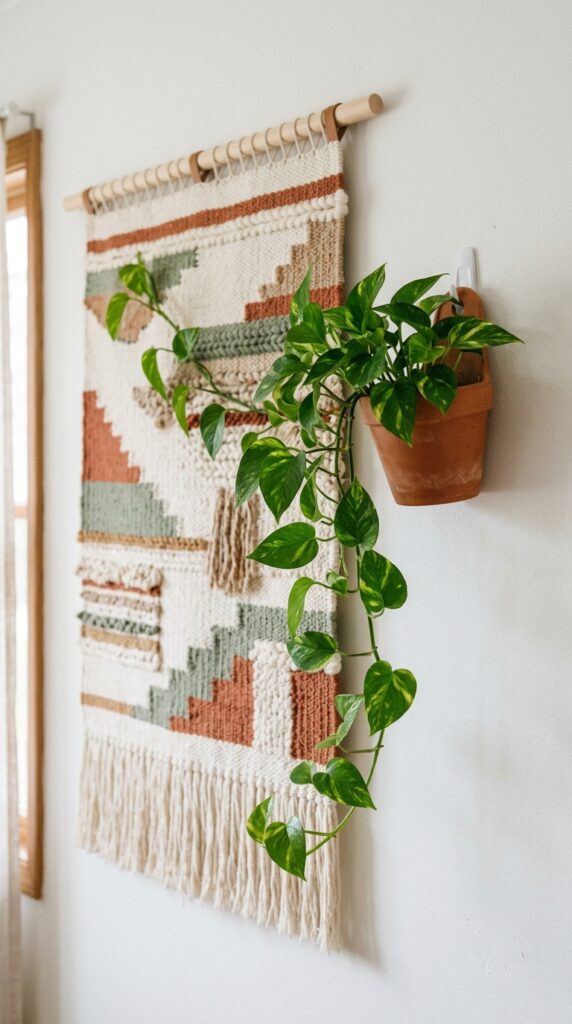
Pairing a woven tapestry wall hanging with a small trailing plant mounted beside it lets the vine grow across the fabric over time for a genuinely living piece of art.
Hang the tapestry using a Command hook rated for its weight, and mount a small pothos in a lightweight pot on a second nearby hook so its vines can be gently trained to trail across the woven texture. Position the pairing in a spot with at least moderate indirect light to keep the pothos actively growing.
Guide new vine growth along the tapestry’s threads every couple of weeks using small clear plant clips, rather than letting it hang straight down, which builds the trailing pattern gradually. The pro insight: choose a tapestry with visible texture or fringe, since a flat, smooth weave won’t hold the vine’s tendrils as naturally.
Best varieties for this approach: pothos, heartleaf philodendron.
See our woven wall hanging plant pairing guide and the RHS guide to training climbing houseplants.
Over a few months, this pairing becomes a genuinely one-of-a-kind piece.
Terracotta Pot Cluster on a Windowsill
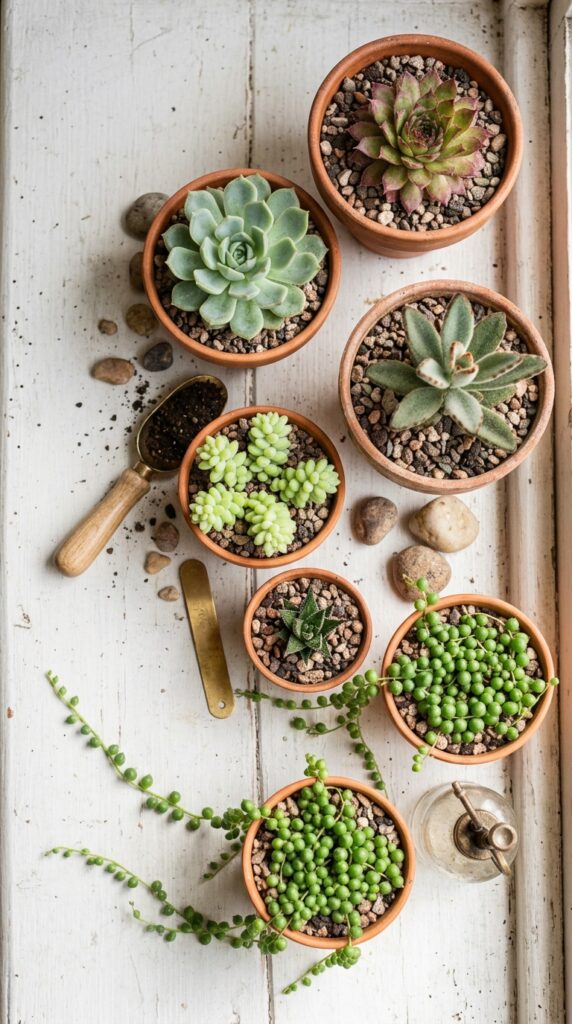
A cluster of mismatched terracotta pots along a windowsill is one of the simplest, cheapest ways to bring boho texture into a rental — and terracotta’s earthy, slightly imperfect look only improves with age.
Use a mix of terracotta pot sizes and shapes, filled with sun-loving plants like succulents, string of pearls, or a small haworthia. This works best on a south- or west-facing sill getting at least 4–5 hours of direct light daily.
Let the pots vary in tone rather than matching them — the slightly uneven weathering of terracotta over time is part of the aesthetic, not a flaw to hide. Water succulents sparingly, letting soil dry out completely between waterings, since terracotta’s porous walls already wick away excess moisture.
💡 Pro Tip: Skip the saucer under each terracotta pot on a windowsill — terracotta’s natural porosity means a little water seepage is normal, so a thin cork mat underneath protects the sill better than a saucer that traps standing water.
See our terracotta pot styling ideas and extension.psu.edu’s succulent light requirements guide.
A mismatched terracotta cluster looks better every year, not worse.
Hanging Air Plant Wall Garden
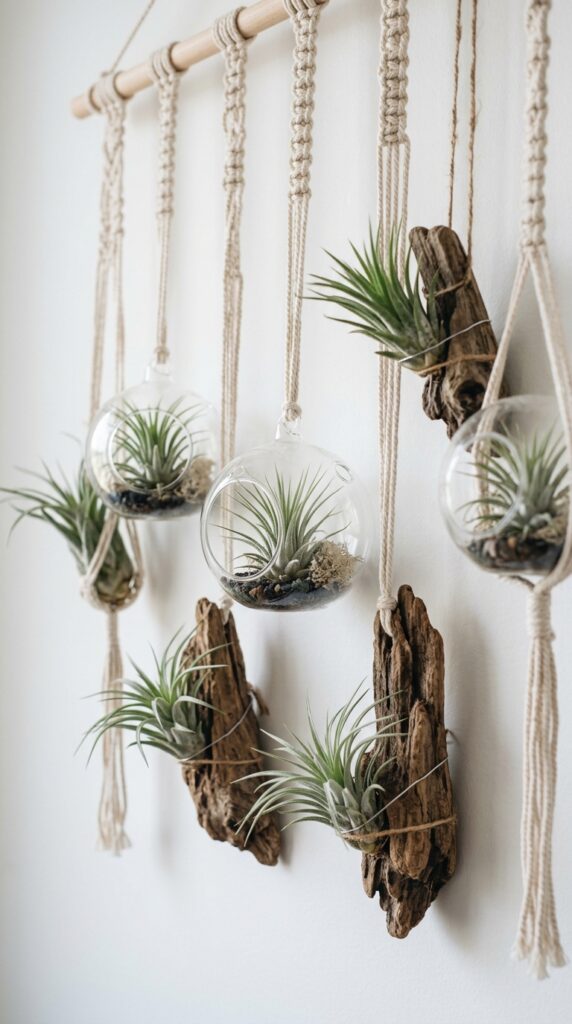
A wall garden of hanging air plants, suspended from Command hooks at varied heights, needs no soil, no pots, and almost no maintenance — a genuinely low-effort way to fill wall space with texture.
Choose several Tillandsia air plants of different sizes, small Command hooks rated for light weight, and driftwood or glass orb holders rather than traditional pots. Arrange the hooks in a loose, scattered cluster rather than a straight grid for an organic boho feel.
Mist each air plant two to three times a week, and take them down briefly to avoid dripping directly onto the wall below. The common mistake is leaving air plants in standing water after misting — let them dry upside down for about an hour before rehanging.
Best varieties for this approach: Tillandsia ionantha, Tillandsia xerographica, Tillandsia bulbosa.
Learn more in our air plant care for beginners guide and The Sill’s air plant watering guide.
This is one of the lowest-commitment ways to fill a wall with living texture.
Freestanding Wood Trellis with Climbing Vine
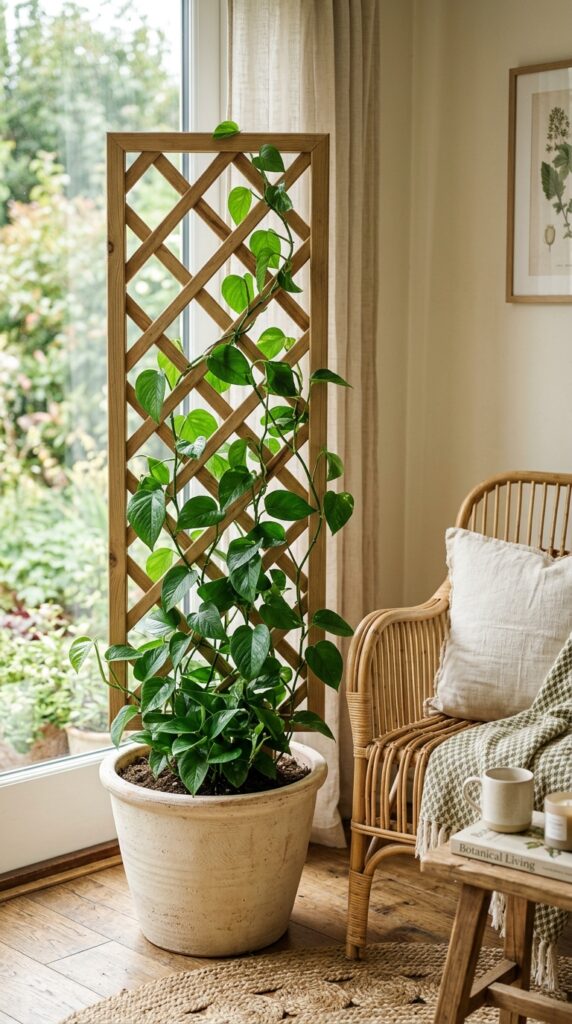
A freestanding trellis planted directly in a floor pot gives a climbing vine vertical structure and a genuinely jungle-like boho presence, without touching your wall.
Choose a wooden obelisk-style trellis and a large floor pot with drainage holes, then plant a climbing philodendron or pothos at its base. Position it in a corner near your seating area that gets bright, indirect light for at least half the day.
As the vine grows, loosely tie new growth to the trellis with jute twine every few weeks — don’t wait until it’s unwieldy, since untangling overgrown stems can snap them. The trellis also works well as a soft, living room divider near an open doorway.
Best varieties for this approach: pothos, heartleaf philodendron, climbing monstera.
Read our training climbing houseplants guide and Missouri Botanical Garden’s philodendron care sheet.
A well-trained climber fills a corner the way a piece of living art would.
Fringed Throw Pillow and Plant Corner
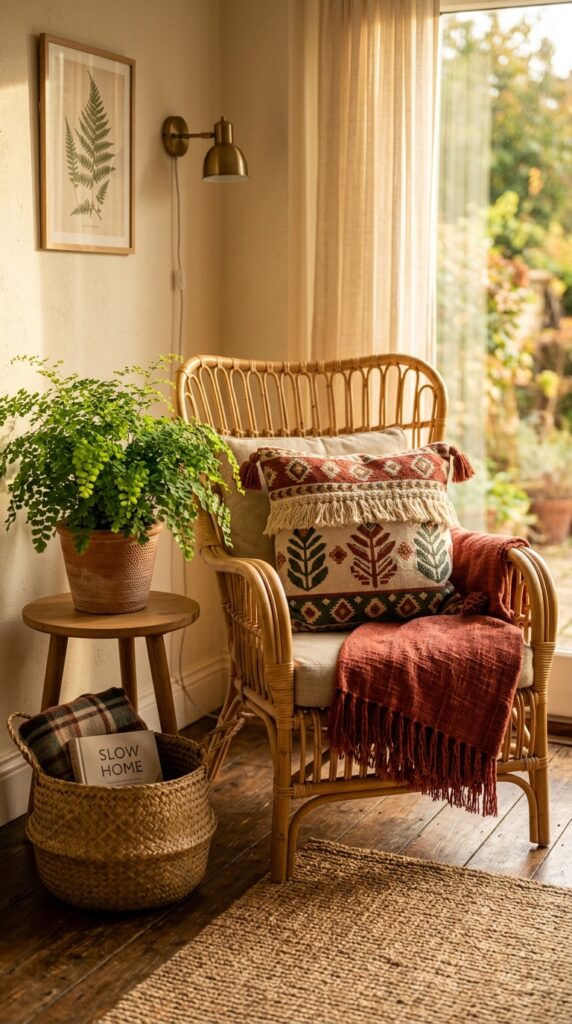
Styling a rattan chair with fringed, patterned throw pillows alongside a single well-placed plant is one of the fastest boho refreshes a rental allows, since it requires zero installation at all.
Mix two or three pillow patterns in warm, earthy tones — rust, mustard, cream — and place a mid-size fern or trailing pothos on a small stool or side table beside the chair. This corner works well even in moderate indirect light, since ferns tolerate less direct sun than many other houseplants.
Fluff and rearrange pillows regularly rather than keeping them perfectly symmetrical, since asymmetry reads as more collected-over-time than a matched set. The pro insight: mist ferns two to three times a week if your apartment runs dry, since low humidity is the most common reason indoor ferns brown at the tips.
Best varieties for this approach: Boston fern, maidenhair fern, pothos.
See our rattan furniture styling guide and Gardeners’ World’s tips on fern care.
A chair, two pillows, and one plant can transform a whole corner in under ten minutes.
Repurposed Ladder Plant and Textile Display
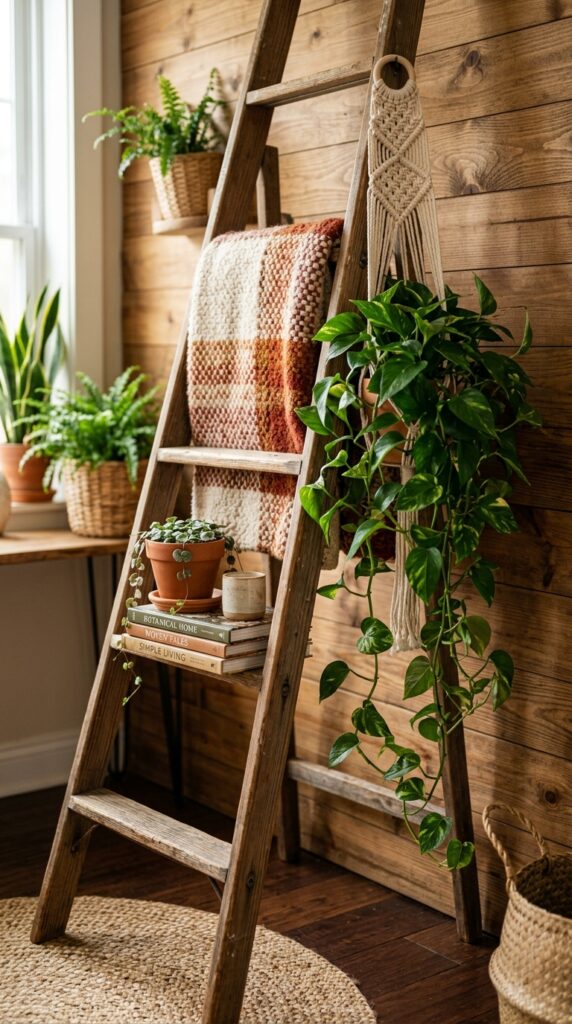
A simple wooden ladder leaned against a wall becomes an effective, entirely damage-free display piece for both plants and boho textiles at once.
Choose a narrow, lightweight ladder that leans securely at a stable angle, and drape a woven blanket over the top rung while hanging a macrame planter from a lower one. This only works if the ladder gets at least moderate indirect light for the plant portion, since deep shade will slow growth noticeably.
Check the ladder’s footing periodically on hardwood or tile, since these surfaces offer less grip than carpet and the ladder can shift slightly over time. The pro insight: rubber caps on the ladder’s feet reduce slipping significantly and protect your floor from scuff marks.
Best varieties for this approach: pothos, string of hearts, small fern.
See our plant ladder shelf styling guide and Gardeners’ World’s tips on indoor plant stands.
It’s an unexpected repurpose that adds real texture in minutes.
Suction Cup Window Terrarium Display
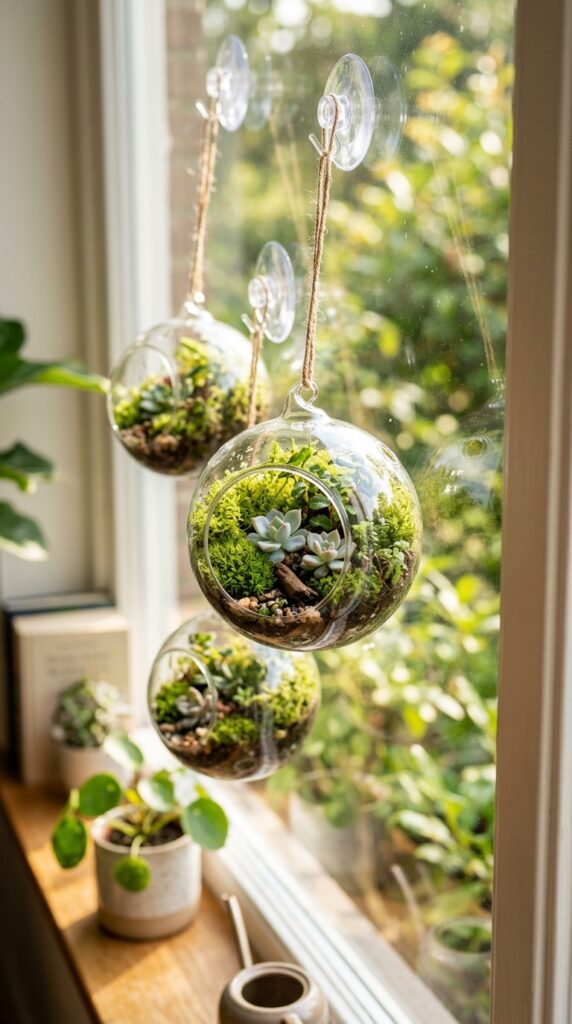
Suction cup hooks on glass let you hang small terrariums right at the window, creating a floating garden effect with a distinctly boho, gathered-glass-and-moss aesthetic.
Pick heavy-duty glass suction hooks, small glass terrarium orbs, and moisture-loving plants like moss or tiny succulents depending on the terrarium’s openness. Arrange them at varying heights across the window for a scattered, organic look rather than a straight row.
Check closed terrariums monthly for excess condensation, cracking the lid briefly if the glass fogs heavily. Open terrariums with succulents need much less frequent watering — roughly every two to three weeks, since the enclosed glass slows evaporation.
💡 Pro Tip: Avoid placing succulent terrariums in direct afternoon sun — the glass magnifies heat and can scorch delicate leaves within a single hot afternoon.
Learn more in our beginner terrarium building guide and Missouri Botanical Garden’s terrarium care basics.
This is one of the most delicate-looking, lowest-effort displays on the list.
Vintage Trunk with Plant and Textile Styling
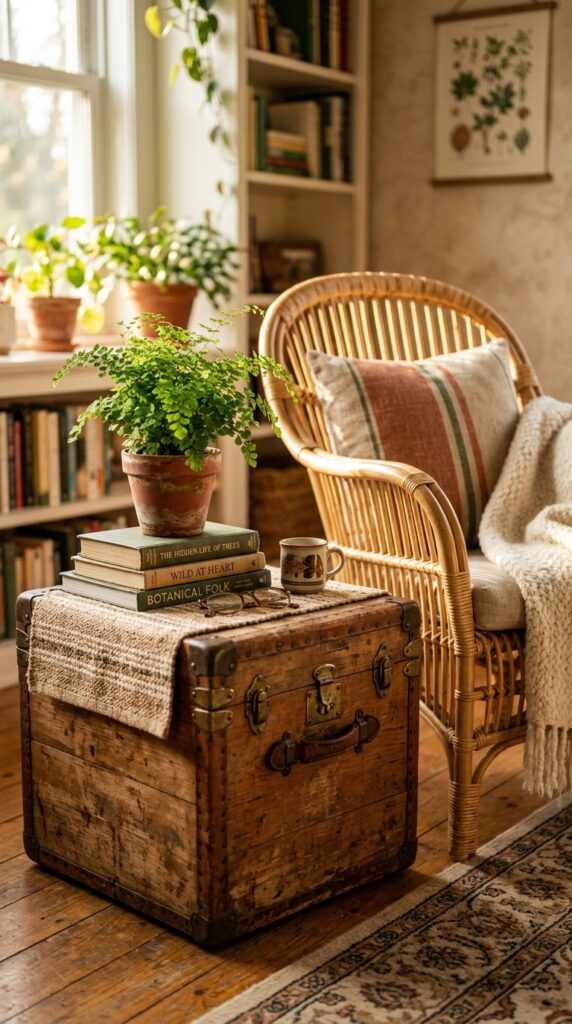
A vintage trunk topped with a woven runner and a small plant brings storage, warmth, and boho texture together without a single new hole in the wall.
Choose a sturdy wooden or leather-covered trunk at a comfortable height beside your seating, and top it with a thin woven runner, a mid-size fern in a saucer, and a small stack of books. Position the trunk where it gets at least a few hours of indirect light daily for the plant’s sake.
Always use a waterproof saucer under the pot, since a trunk’s wooden or leather top can warp or stain from repeated drips. The common mistake is skipping the saucer and assuming occasional watering won’t leave a mark — even small amounts of moisture accumulate over months.
Best varieties for this approach: Boston fern, ZZ plant, small pothos.
Check out our vintage furniture plant styling guide and RHS’s guide to indoor plant containers.
It’s functional storage and boho warmth in one thrifted piece.
Layered Plant Shadow Display with String Lights
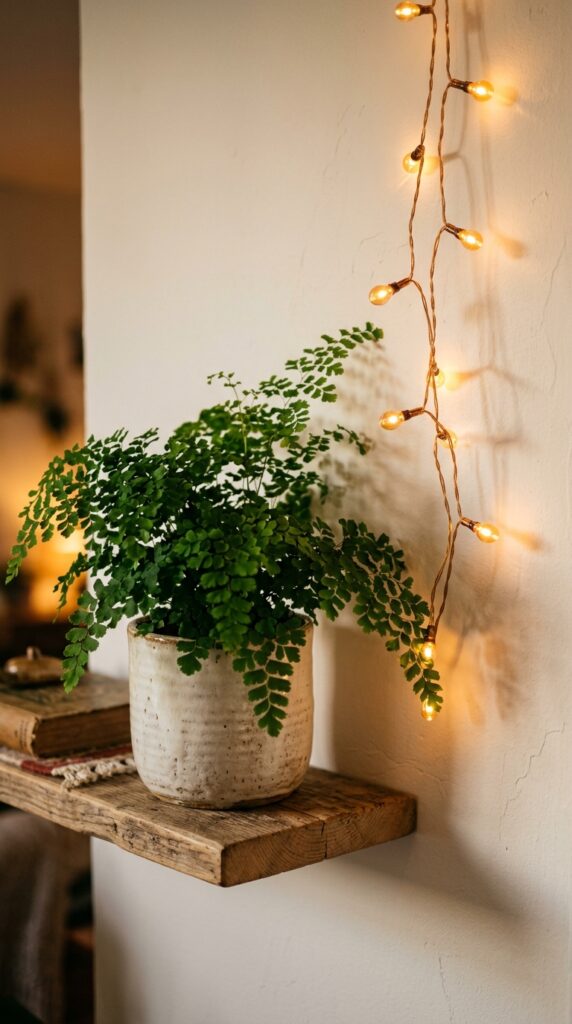
Positioning a leafy plant near warm string lights creates soft, moving shadows on a plain wall in the evening — a completely damage-free way to add ambiance and depth.
Use battery-powered or plug-in warm white string lights draped along a shelf or looped through Command hooks, positioned a foot or two behind a leafy plant like a fern or a fiddle leaf fig. This works in any room, since the effect depends on artificial light rather than sunlight.
Angle the plant and light source so leaf shadows fall across a visible section of wall rather than being obscured by furniture. The pro insight: warm white bulbs (around 2700K) cast a cozier shadow than cool white or daylight bulbs, which tend to flatten the boho mood.
Best varieties for this approach: Boston fern, fiddle leaf fig, monstera.
Read our string light plant styling guide and BHG’s guide to small-space ambient lighting.
It’s a five-minute setup that changes how the whole room feels after dark.
Mixed-Height Plant Stand Gallery
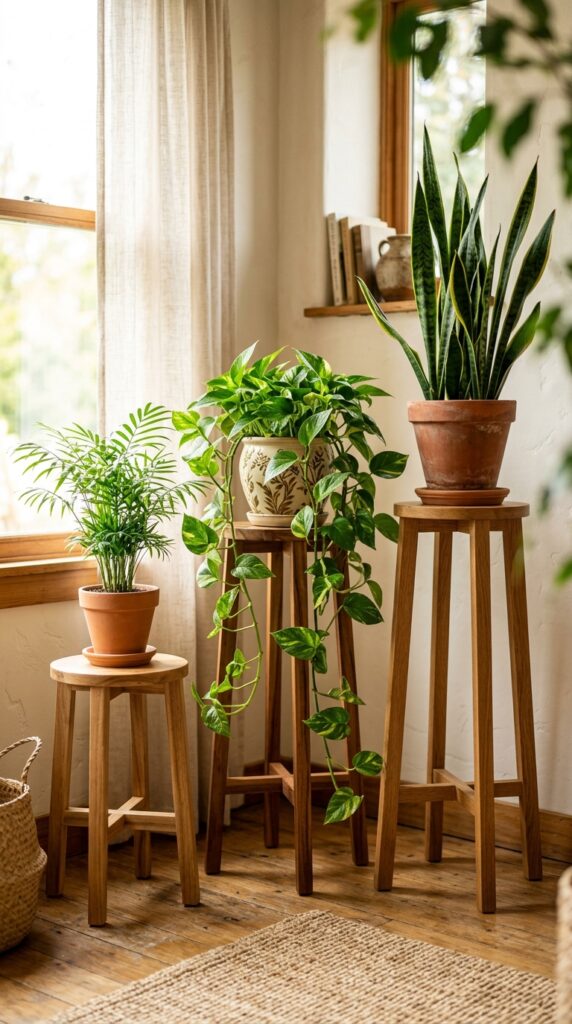
A gallery of three plant stands at staggered heights creates the layered, jungle-like density boho spaces are known for, using nothing but freestanding furniture.
Choose three simple wooden stands in different heights — short, medium, tall — and place a distinct plant on each: a compact snake plant low down, a trailing pothos at medium height, and a small parlor palm on the tallest stand. Position the whole grouping where it gets bright to moderate indirect light.
Arrange the stands in a loose triangle rather than a straight line, which reads as more natural and collected. The common mistake is choosing plants with identical leaf shapes — variety in leaf size and form is what makes a mixed-height display feel intentional rather than repetitive.
Best varieties for this approach: snake plant, pothos, parlor palm, rubber plant.
See our plant stand grouping styling guide and BHG’s guide to grouping houseplants by light needs.
Three stands and three plants can fill a corner the way a large piece of furniture would.
Getting Started With Boho Decor for Rental Apartments
The easiest first step is choosing a single anchor piece — a macrame hanger with a trailing pothos, or one cluster of mismatched terracotta pots — rather than trying to boho-ify the whole apartment at once. Starting small lets you learn how your specific rooms handle texture and light before committing to a bigger layout.
The most common mistake beginners make is buying too many matching items, which undercuts the collected-over-time feel boho depends on — mismatched terracotta, varied cord lengths, and thrifted baskets all read more authentic than a coordinated set.
For your first purchase, get one heavy-duty Command hook, one macrame hanger, and one plastic-potted pothos (nearly impossible to kill and tolerant of varied light). You’ll have a real result within a single afternoon, and within two to three weeks you’ll likely see new vine growth confirming the spot works.
Frequently Asked Questions
What’s the best renter-friendly way to hang plants for a boho look?
A macrame hanger on a heavy-duty Command hook rated for at least 5 lbs is the most reliable option, paired with a trailing plant like pothos or string of hearts in a lightweight plastic pot. Clean the wall with rubbing alcohol before applying the hook, and let the adhesive cure for a full hour before hanging any weight.
Can I achieve a boho look without buying new furniture?
Yes — thrifted baskets, a repurposed ladder, and layered secondhand rugs are core boho staples precisely because the aesthetic favors collected, slightly imperfect pieces over matched new sets. A single trailing pothos in a mismatched terracotta pot can do more for the look than an expensive new plant stand.
What plants work best for a boho apartment with limited light?
Snake plants, pothos, and ZZ plants tolerate low to medium indirect light and still deliver the trailing or upright silhouettes boho displays rely on. Avoid flowering plants or succulents in these conditions, since both need several hours of bright light daily to thrive.
How do I keep macrame plant hangers from damaging my walls?
Use a heavy-duty adhesive hook rated for the hanger and plant’s combined weight, and always clean the wall thoroughly before applying it — oil and dust are the leading cause of adhesive failure. Removing the hook slowly and at a downward angle when you move out, per the manufacturer’s instructions, prevents paint from peeling.
Why does my trailing plant look sparse instead of full and boho?
Sparse growth usually means the plant isn’t getting enough consistent light, or it hasn’t been pruned to encourage fuller branching. Pinch back the growing tips of a leggy pothos every few weeks — this encourages the plant to send out multiple new vines instead of one long, thin one.
A Few Final Thoughts
None of these 20 boho DIY decor ideas for rental apartments require permanent changes or a big budget to feel genuinely layered and lived-in. From a macrame plant hanger corner to a mixed-height plant stand gallery, the common thread is leaning on texture, asymmetry, and trailing greenery instead of anything drilled or painted. Even one small change — a single hanging pothos, one cluster of terracotta pots — can shift how your whole apartment feels. Your boho rental apartment adventure is closer than you think — now go make it happen!