
A tidy row of pots on a balcony rail can look like an afterthought, or it can look like it belongs on a magazine cover — the difference almost always comes down to style, not budget. Most home gardeners default to whatever containers were on sale, then wonder why the space still feels scattered instead of pulled together. The truth is that a garden style is really just a handful of consistent choices — plant shapes, container materials, and colors — repeated with intention. Below are 24 simple garden styles that instantly make a space feel curated, whether you’re working with a fire escape, a sunny windowsill, or a full backyard bed. Ready? Let’s explore all 24 of them.
Why Simple Garden Styles Are Worth Your Time
Choosing a style before you start buying plants saves money and prevents the “one of everything” look that makes small spaces feel cluttered. In practice, a gardener who commits to a Mediterranean terracotta palette or a monochrome white scheme ends up with a space that reads as intentional after just three or four plants — not thirty.
Beyond aesthetics, a defined style simplifies plant care. Grouping plants with similar light and water needs — say, all drought-tolerant Mediterranean herbs together — means you’re not overwatering a rosemary next to a fern that wants constant moisture.
A lesser-known fact: many of these “styles” are really climate strategies in disguise. Xeriscape and coastal-grass gardens were developed to survive drought, and Japanese moss gardens were designed for deep shade where flowering plants fail — so picking the right style for your actual light conditions solves problems before they start.
These simple garden styles are ideal for renters, apartment dwellers with balconies, and busy beginners who want a finished look without a horticulture degree.
At a Glance
- A cluster of three terracotta pots and one herb can look more finished than fifteen mismatched containers.
- Moss doesn’t need sun at all — it’s the one “plant” that thrives in your darkest corner.
- A single trailing pothos in a hanging basket can visually double the height of a small balcony.
- Xeriscape gardens can go two to three weeks without watering once established.
- White-flowering plants glow at dusk, making a monochrome garden the best style for evening entertaining.
Cottage Garden Corner
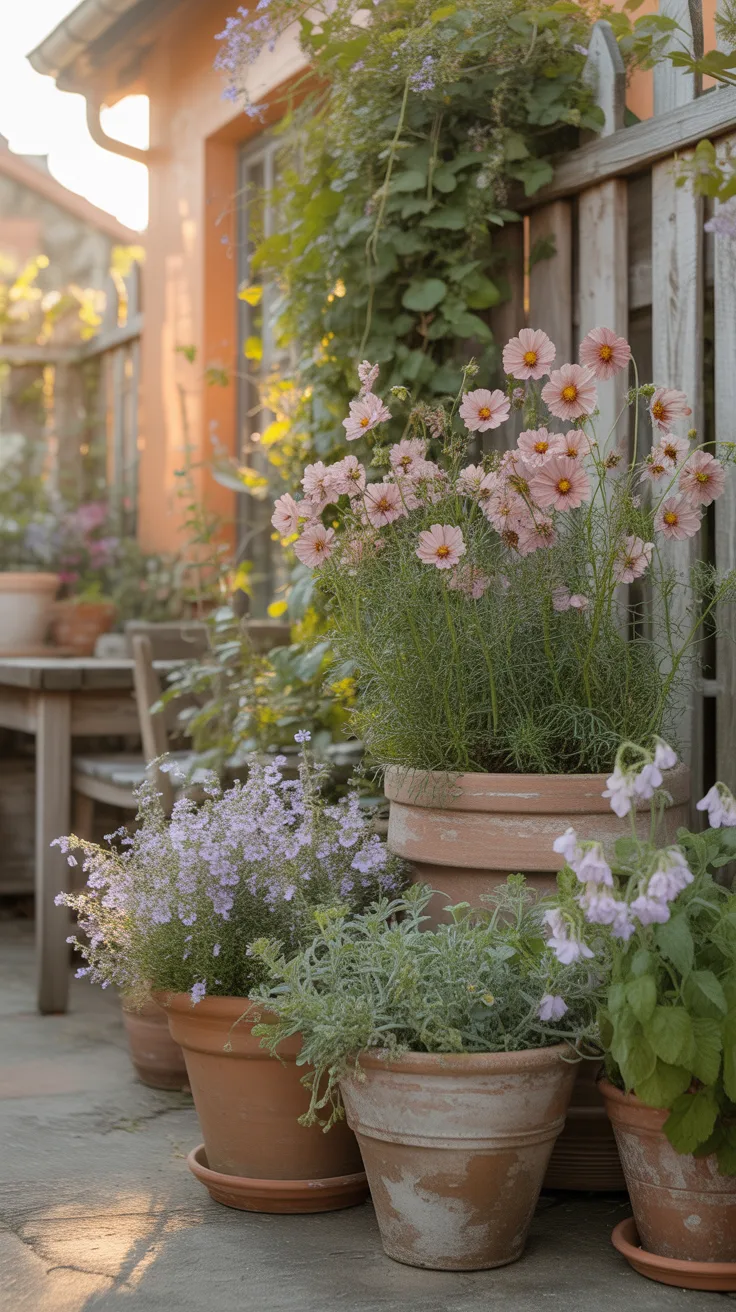
Hook: The cottage garden look thrives on generous, slightly wild overcrowding — it’s the easiest style to fake because “messy” is the goal.
The Detail: Start with three or four terracotta pots in varying sizes, planted with cosmos, catmint, and a trailing sweet pea or nasturtium. Use a peat-free, moisture-retentive potting mix, since most cottage flowers dislike drying out completely between waterings.
Cluster the pots tightly rather than spacing them evenly — cottage style depends on plants visually merging into one another. Deadhead spent blooms weekly to keep the display flowering through summer.
The common mistake is choosing only tall, upright plants; without at least one trailing variety spilling over the pot edge, the look reads as stiff rather than relaxed.
💡 Pro Tip: Plant catmint at the front of the cluster — it self-seeds lightly and fills gaps naturally, giving you that “always been here” cottage feel without replanting each year.
Learn more about building a container cottage garden on our site. For further reading, see the RHS guide to classic cottage garden planting combinations.
Even a single overflowing pot by your front door can carry this style beautifully.
Minimalist Zen Container Garden
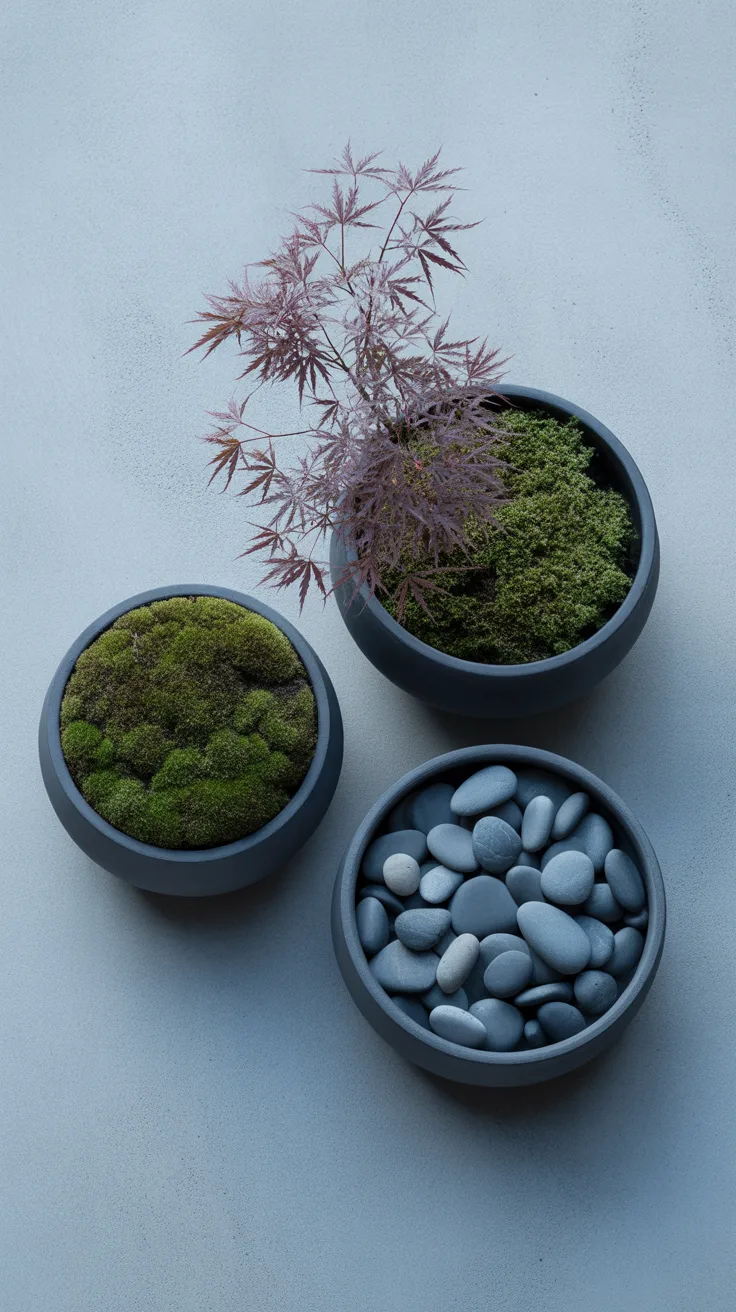
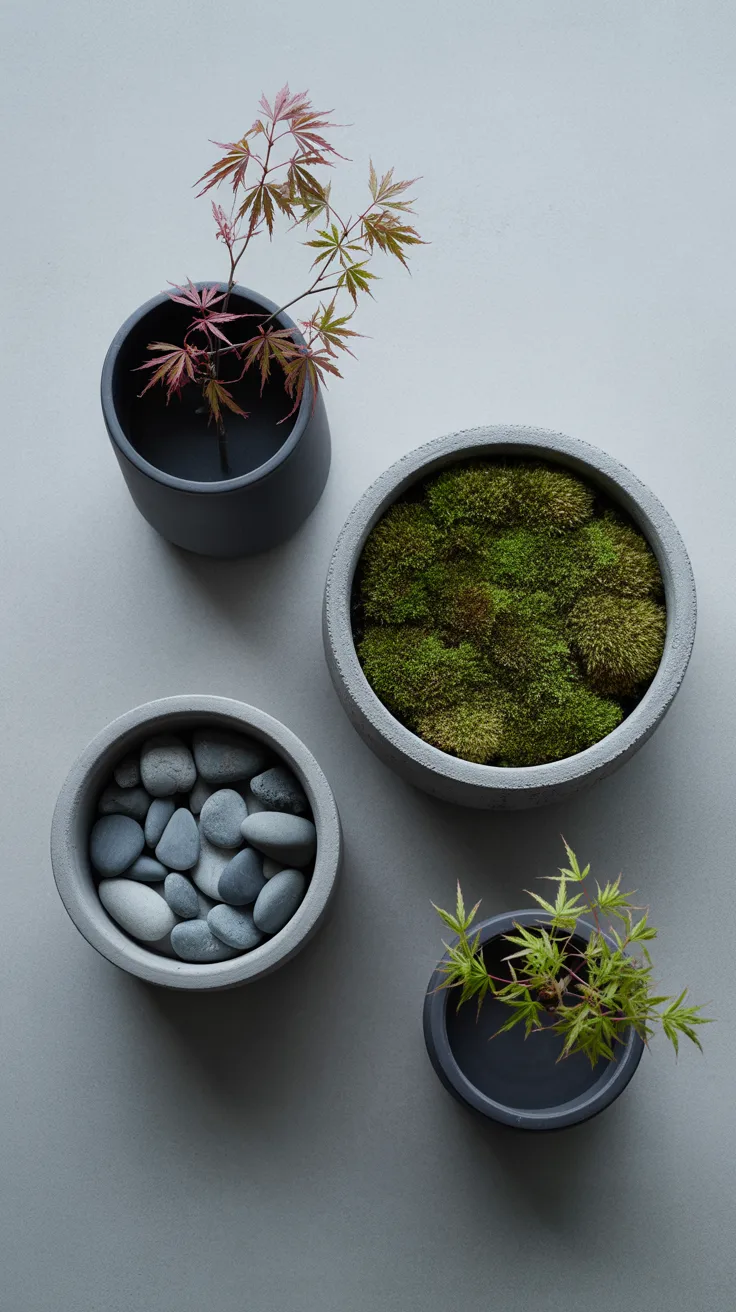
Hook: Zen minimalism works because restraint, not abundance, is the design principle — fewer elements, more negative space.
The Detail: Choose one structural plant (a dwarf Japanese maple, a small pine, or even a single fern), one groundcover like moss or creeping thyme, and a neutral mineral element such as river stones or raked gravel. Use unglazed or matte-finish containers only — glossy or patterned pots break the calm.
Position everything asymmetrically within an imaginary triangle rather than centered, which mimics traditional Japanese garden composition. Water the moss lightly with a spray bottle two to three times a week rather than soaking it.
A common misstep is adding “just one more” decorative plant — resist it; the whole point is what you leave out.
Best containers for this approach: unglazed stoneware, matte black ceramic, and raw concrete planters.
See our full minimalist container garden design guide for layout templates. The Gardenersworld guide to Japanese-inspired planting covers structural plant choices in more depth.
This style proves that three well-chosen elements can outshine a crowded shelf.
Mediterranean Terracotta Corner
Hook: Mediterranean style is the most forgiving option for hot, sunny balconies where other styles wilt by July.
The Detail: Lavender, rosemary, and a compact olive tree (or dwarf citrus in colder climates) form the backbone of this look, all planted in unglazed terracotta with excellent drainage holes.
Use a gritty, fast-draining mix — one part standard potting soil to one part coarse sand or perlite — since these Mediterranean natives rot quickly in soggy soil. Position the grouping where it gets at least six hours of direct sun daily.
The pro insight here: terracotta’s porous walls wick moisture away from roots, which is exactly why it outperforms plastic for drought-tolerant Mediterranean plants.
💡 Pro Tip: Water deeply but infrequently — once the top two inches of soil are bone dry — rather than little and often, which mimics the dry summers these plants evolved for.
Explore our Mediterranean herb garden planting list for more combinations. The Missouri Botanical Garden’s guide to Mediterranean drought-tolerant plants is a solid reference for regional adaptation.
This corner rewards neglect more than attention, which is exactly why busy gardeners love it.
Vertical Herb Wall
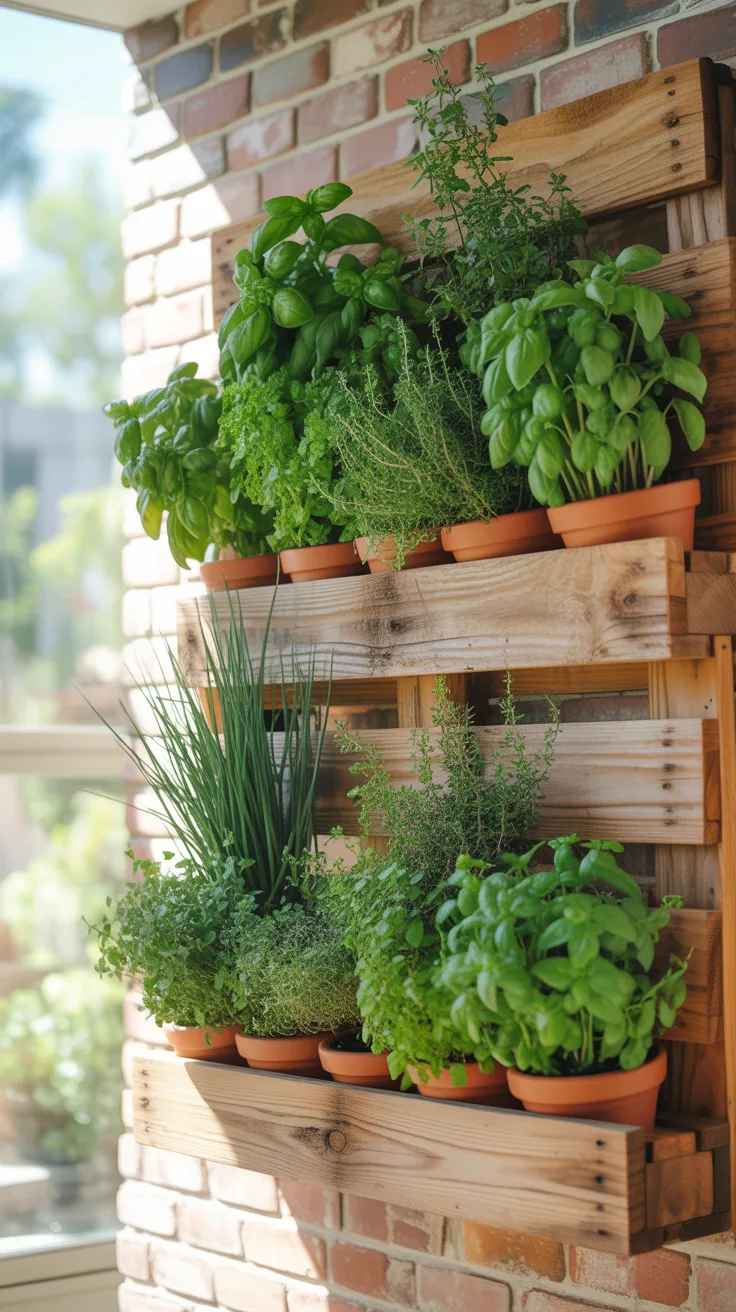
Hook: A vertical herb wall solves the classic small-space problem — no floor space, but plenty of wall.
The Detail: Mount a modular pocket planter or repurposed wooden pallet at eye level, ideally within arm’s reach of the kitchen door. Fill each pocket with a single herb variety: basil, thyme, chives, parsley, and mint (mint alone, since it spreads aggressively and will choke neighbors).
Water from the top pocket down, letting excess drain through to lower pockets, and check the bottom row daily since it dries out fastest. Harvest herbs regularly — cutting actually encourages bushier regrowth rather than harming the plant.
The common mistake is overcrowding one pocket with multiple herb types, which leads to root competition and stunted growth for both.
Best varieties for this approach: Genovese basil, English thyme, garlic chives, and curly parsley.
Read our complete vertical herb garden setup guide for mounting hardware recommendations. The Penn State Extension guide to growing herbs covers seasonal harvest timing in detail.
Fresh basil three steps from your stove changes how often you actually cook with herbs.
Woodland Shade Garden
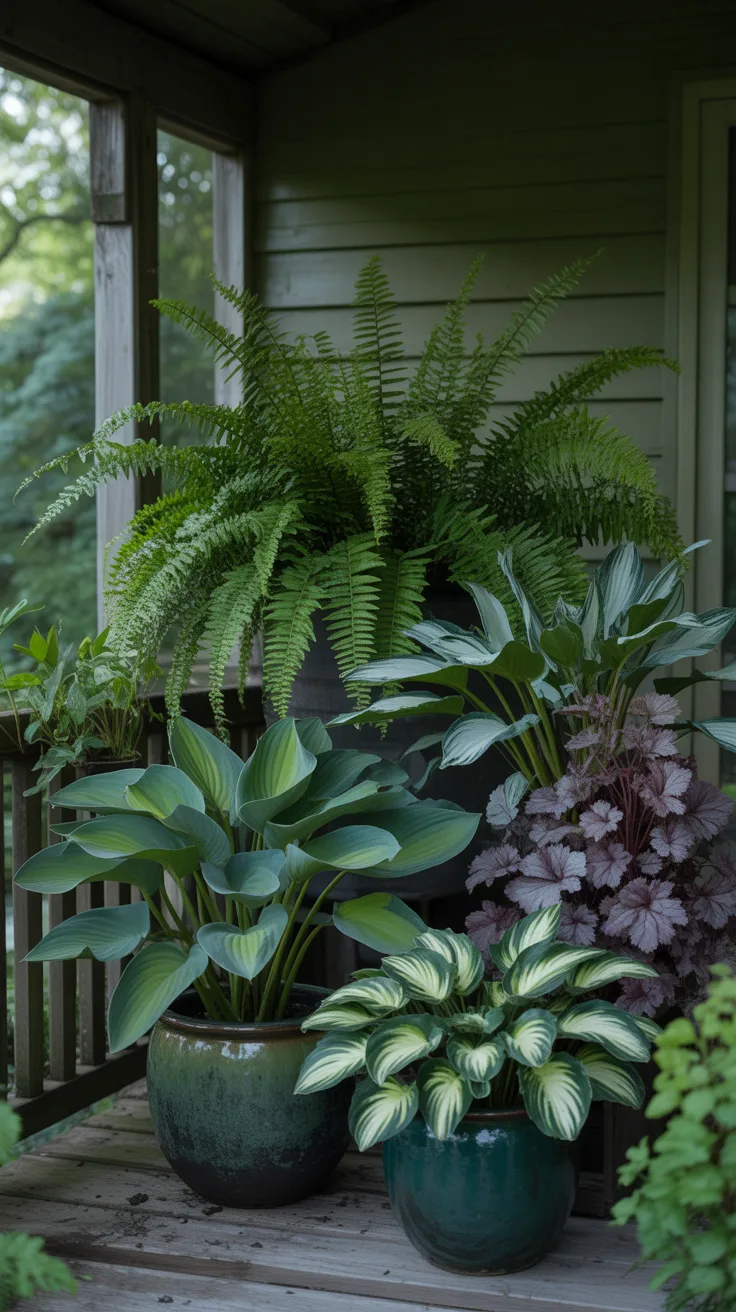
Hook: North-facing balconies and shaded porches aren’t a limitation — they’re an invitation to grow the plants that sunny gardens can’t.
The Detail: Combine Boston fern, a variegated hosta, and burgundy-leaved heuchera in glazed containers that retain moisture better than unglazed terracotta. Use a rich, humus-heavy potting mix amended with compost, since woodland plants evolved in leaf-litter-fed soil.
Water consistently, keeping the soil evenly moist but never waterlogged; shade gardens dry out slower, so check moisture before each watering rather than following a fixed schedule.
The pro insight: this style genuinely fails in bright, direct sun — ferns and hostas scorch and yellow within days, so this is one style to reserve strictly for shaded spots.
Learn about designing a shade garden in containers on our blog. The Missouri Botanical Garden’s shade plant fact sheets list reliable low-light performers.
Not suitable for south-facing windowsills — but perfect for the porch corner everything else has failed in.
Desert Xeriscape Corner
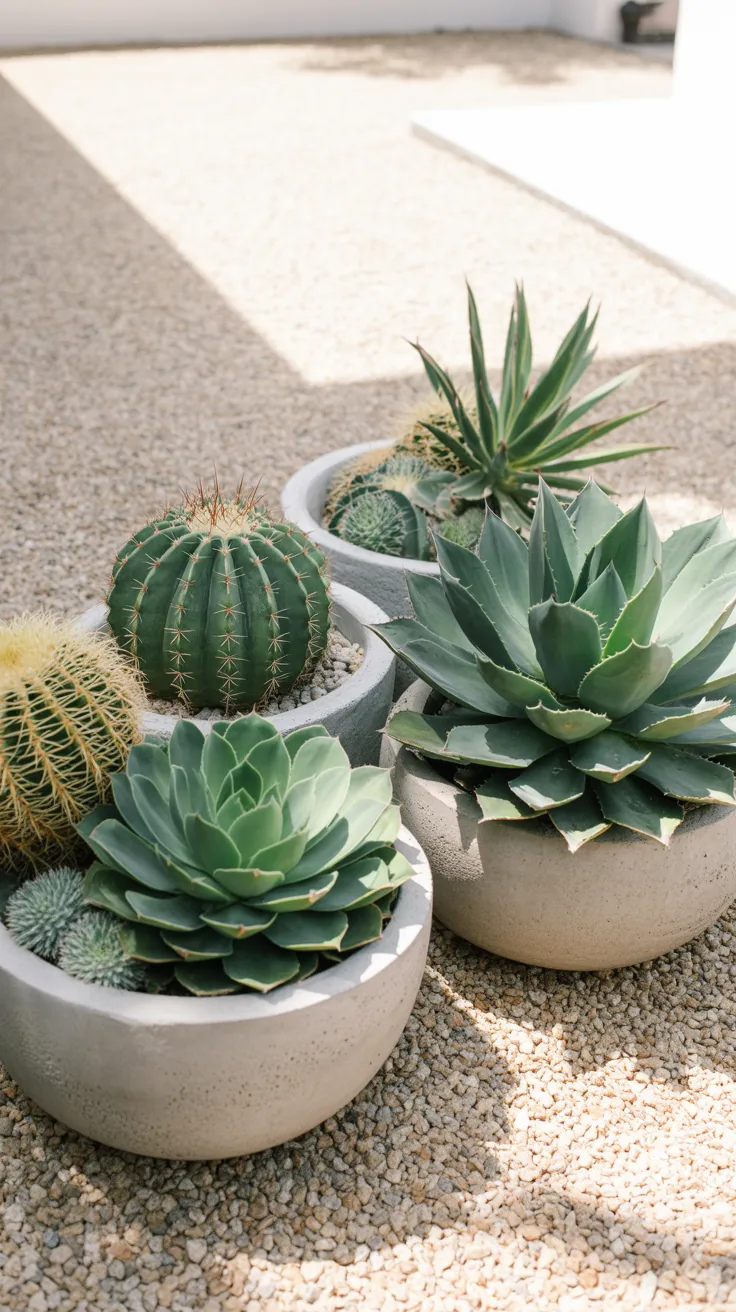
Hook: Xeriscape style is the answer for gardeners who travel often or simply forget to water — it’s built around neglect.
The Detail: Combine a small barrel cactus, an agave, and a rosette echeveria in shallow, wide concrete or unglazed clay bowls with generous drainage holes. Use a specialized cactus and succulent mix, or amend regular potting soil with 40% pumice or coarse sand.
Top-dress with decorative gravel, which reflects heat back onto the plants and keeps stems from sitting against damp soil. Water only when the soil is completely dry, roughly every two to three weeks in summer and once a month in winter.
💡 Pro Tip: Never let these pots sit in a saucer of standing water — even ten minutes of soggy roots can trigger rot in cacti that otherwise survive months of drought.
Browse our full xeriscape container plant list for more heat-tolerant combinations. The University of Florida Extension’s guide to xeriscaping principles explains the science behind drought-adapted design.
If you’ve killed succulents by overwatering before, this corner is your fresh start.
English Rose Border in Pots
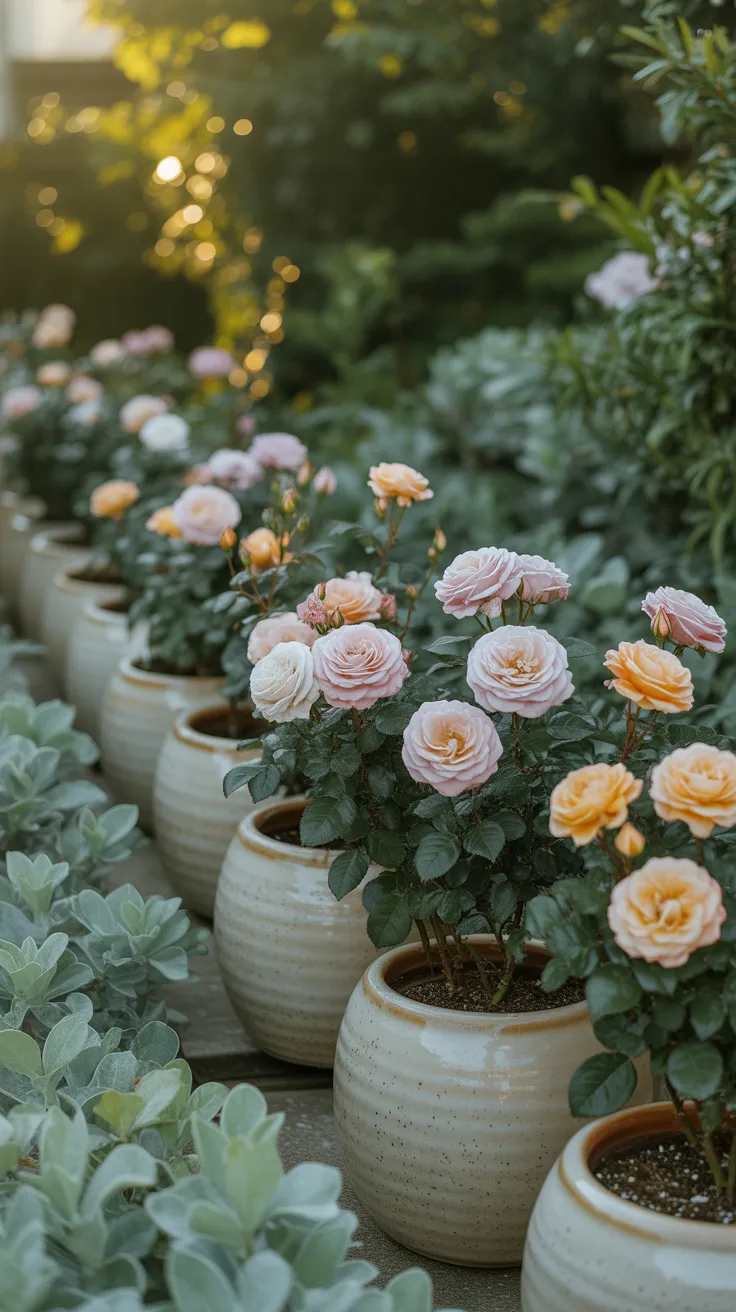
Hook: Full-size rose borders need a yard, but patio and miniature rose varieties bring the same romantic effect to a balcony rail.
The Detail: Choose compact patio roses like ‘Sweet Drift’ or miniature varieties bred specifically for container life, planted individually in pots at least 14 inches wide. Use a loam-based potting mix with added slow-release rose fertilizer at planting time.
Position roses where they’ll get six or more hours of direct sun; anything less produces leggy growth and fewer blooms. Deadhead spent flowers just above a five-leaflet leaf to encourage the next flush.
The common mistake is choosing full-size garden rose varieties for containers — their root systems outgrow pots within a season and decline rapidly.
Best varieties for this approach: ‘Sweet Drift’, ‘The Fairy’, and any rose labeled specifically as patio or miniature.
Explore our guide to growing roses in containers for feeding schedules. The RHS advice on patio and miniature roses is an excellent reference for variety selection.
A single blooming rose pot by the front step does more for curb appeal than an entire bare border.
Tropical Jungle Balcony
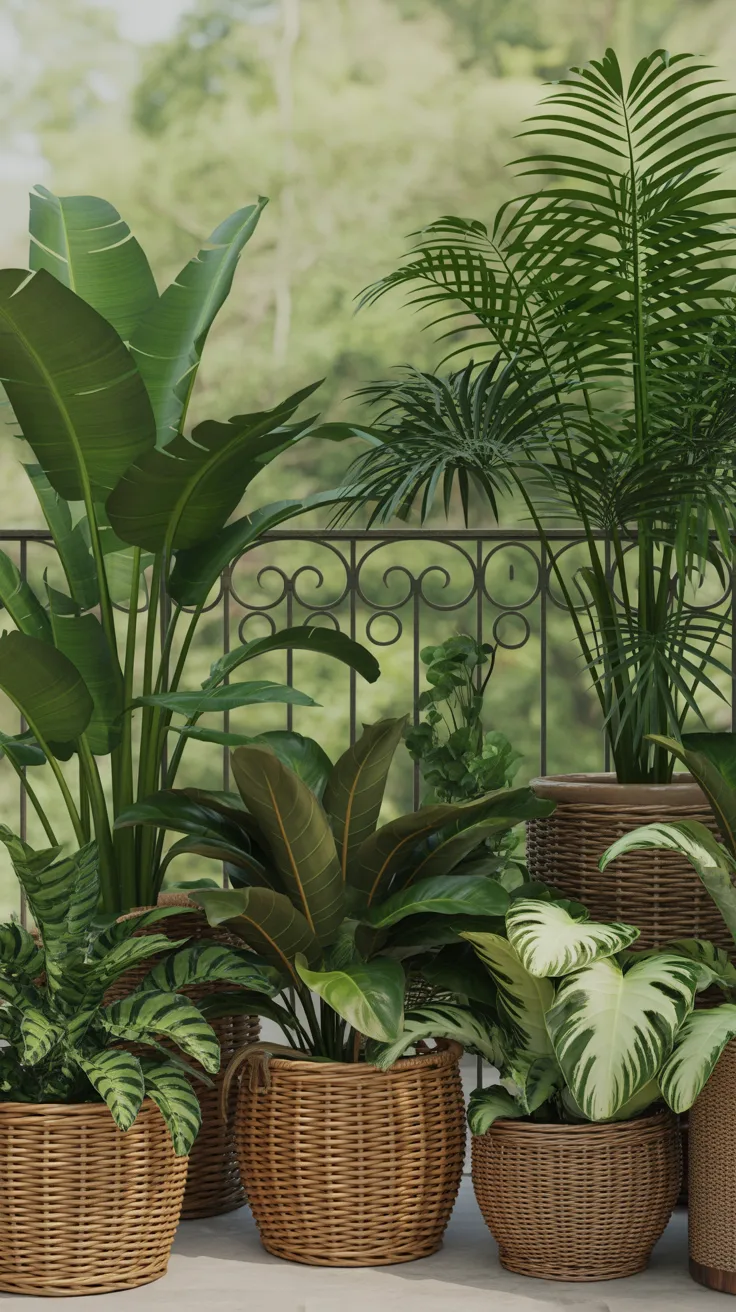
Hook: The tropical jungle look turns a plain balcony into an escape, using layered leaf shapes instead of flowers for visual interest.
The Detail: Combine a tall monstera or bird of paradise as the anchor plant with mid-height calathea and a trailing pothos, all housed in warm-toned woven rattan or wicker basket covers over plastic nursery pots. Use a chunky, well-aerated potting mix with added orchid bark for drainage.
Mist tropical foliage two to three times a week to boost humidity, especially calathea, which develops crispy leaf edges in dry air. Rotate pots a quarter turn weekly so plants grow evenly rather than leaning toward the light source.
The pro insight: layering three distinct leaf shapes — broad monstera, paddle-shaped bird of paradise, and striped calathea — creates depth that a single large plant can’t achieve alone.
Discover our tropical balcony plant pairing guide for more layering ideas. The Sill’s care guide for tropical houseplants covers humidity needs plant by plant.
Even a covered balcony with filtered light can support this jungle look with the right shade-tolerant picks.
Japanese Moss Garden
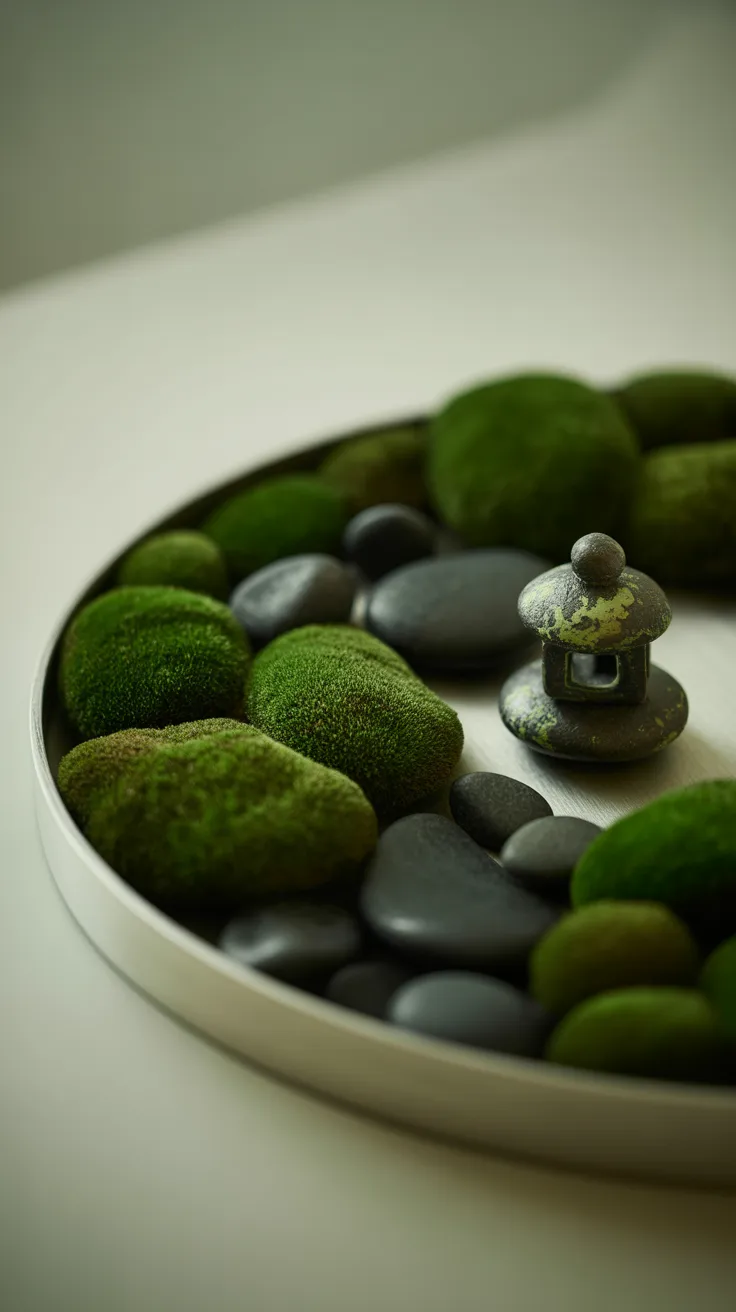
Hook: Moss is the one “plant” that actually prefers your darkest, most neglected corner — no direct sun required.
The Detail: Source cushion moss or sheet moss from a specialty nursery (avoid moss pulled from the wild, which rarely survives transplant) and press it into a shallow tray filled with a thin layer of acidic, well-draining soil. Add a few smooth black river stones and a miniature stone or ceramic ornament for scale.
Mist the moss daily with a spray bottle rather than pouring water, which can wash the moss loose before it roots. Keep it in bright indirect or even low light — direct sun will bleach and kill it within days.
The common mistake is placing moss trays on a sunny windowsill, assuming more light always helps; for moss, it’s the opposite.
Read our beginner’s guide to growing moss indoors for sourcing tips. The Almanac’s guide to moss garden care explains species differences in more depth.
This tiny tray brings calm to a windowless bathroom shelf where nothing else survives.
Coastal Grasses Garden
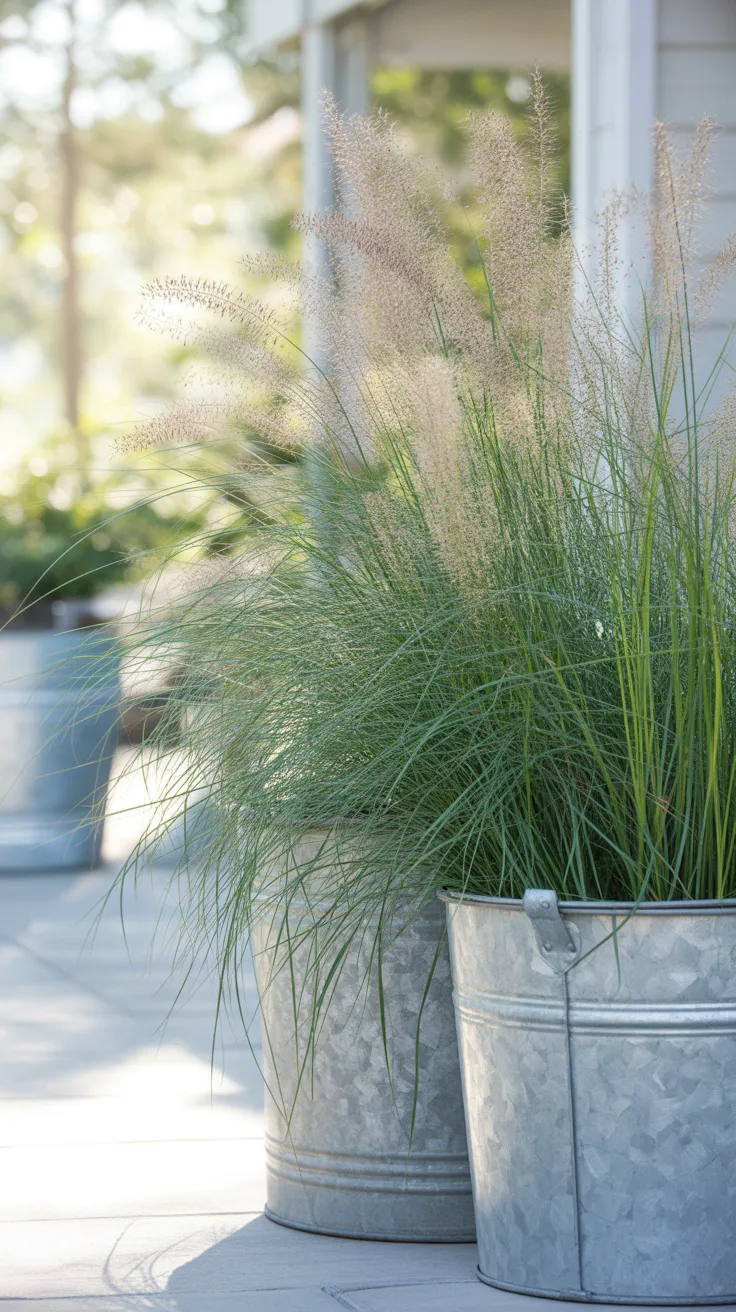
Hook: Ornamental grasses bring movement to a still container garden, swaying in even the lightest breeze.
The Detail: Plant blue fescue, feather reed grass, or dwarf pampas grass in galvanized metal buckets or containers with drainage holes drilled if needed. Use a standard well-draining potting mix; most ornamental grasses aren’t fussy about soil quality as long as water doesn’t pool at the roots.
Position them in full sun for the most vivid color and upright form — in partial shade, grasses tend to flop and lose their structured shape. Cut the previous season’s growth back to a few inches in early spring before new blades emerge.
What works vs. what to avoid: blue fescue and feather reed grass thrive in containers; running bamboo and full-size pampas grass quickly outgrow pots and should be avoided.
See our container-friendly ornamental grass list for more compact varieties. The BHG guide to growing ornamental grasses covers seasonal cutback timing.
A single pot of feather reed grass adds sound and motion that flowering plants simply can’t.
Wildflower Meadow Patch
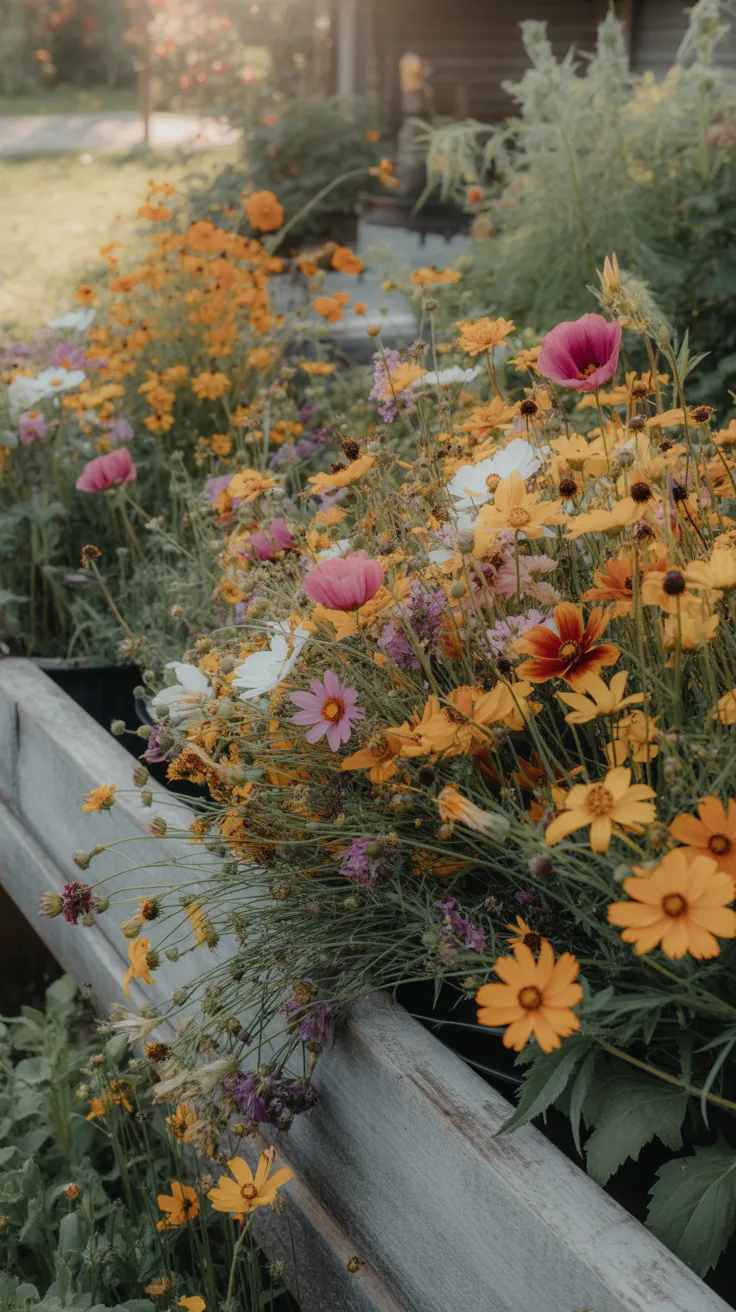
Hook: A wildflower patch is the lowest-effort style on this list because you’re working with nature’s own seed mix instead of curated rows.
The Detail: Sow a pollinator wildflower seed mix (look for one with cosmos, black-eyed Susan, and California poppy) directly into a wide, shallow wooden trough or raised bed at least 8 inches deep, filled with standard garden soil.
Scatter seeds thinly and press them into the soil surface rather than burying them deep — most wildflower seeds need light to germinate. Water gently every day for the first two weeks until seedlings establish, then reduce to twice weekly.
The pro insight: resist thinning seedlings too aggressively; wildflower patches are meant to look self-sown and slightly crowded, unlike a formal border.
💡 Pro Tip: Choose a seed mix labeled “annual” for the first year if you want blooms fast — perennial wildflower mixes often take a full season before flowering.
Check out our wildflower container gardening guide for seed mix recommendations. The Almanac’s guide to growing a wildflower garden covers regional seed timing.
This is the style to try first if you’ve never grown anything from seed before.
Formal Boxwood Parterre (Mini Version)
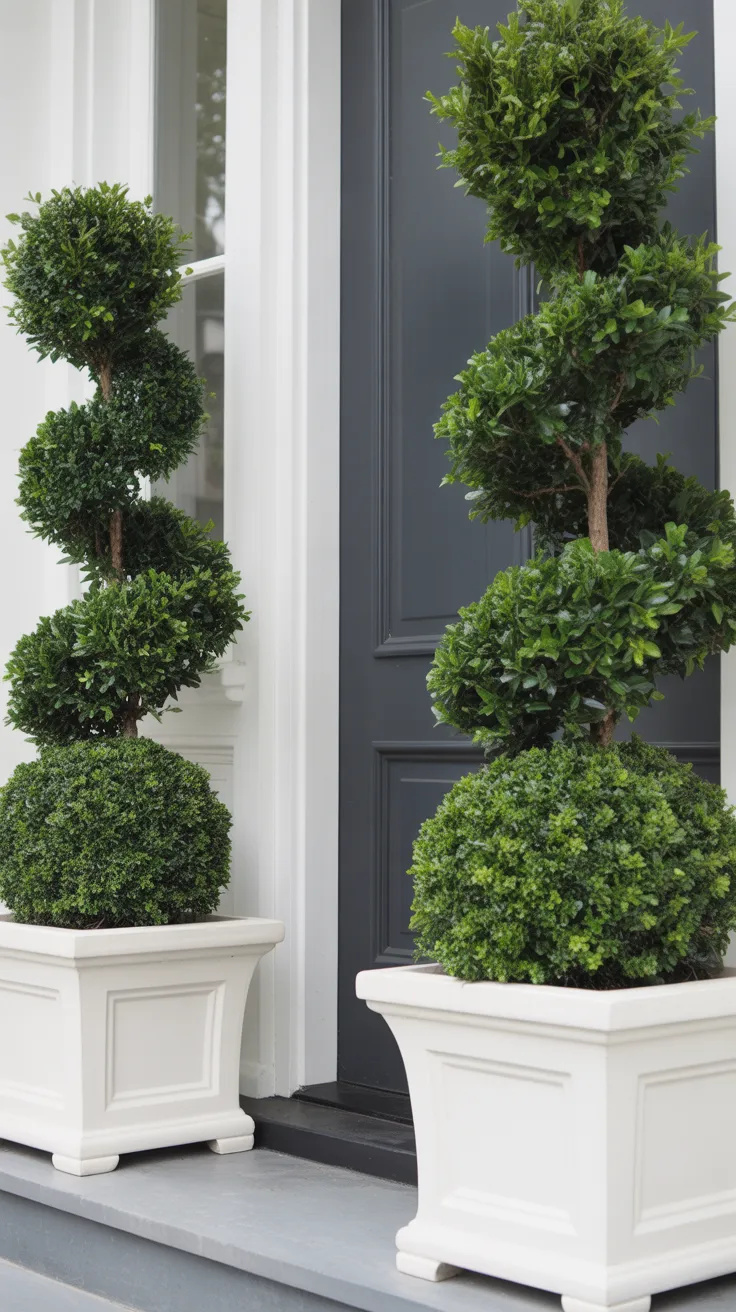
Hook: Formal topiary style delivers instant curb appeal because symmetry alone reads as “designed,” even with just two plants.
The Detail: Buy pre-shaped dwarf boxwood (spiral, ball, or cone form) and place matching pairs in identical square or cylindrical planters on either side of a doorway or entrance path. Use a well-draining, slightly alkaline potting mix, since boxwood dislikes consistently soggy roots.
Trim lightly every six to eight weeks during the growing season with sharp shears, following the plant’s existing shape rather than reshaping it drastically each time. Water deeply once the top inch of soil dries, typically once or twice weekly in summer.
The common mistake is buying mismatched pot sizes or slightly different boxwood shapes for a “pair” — formal style depends entirely on exact symmetry.
Learn more in our guide to boxwood topiary in containers. The RHS pruning guide for box (Buxus) covers shaping technique in detail.
Two matching boxwood pots can make a rental doorway look like a permanent, designed entrance.
Rustic Upcycled Container Garden
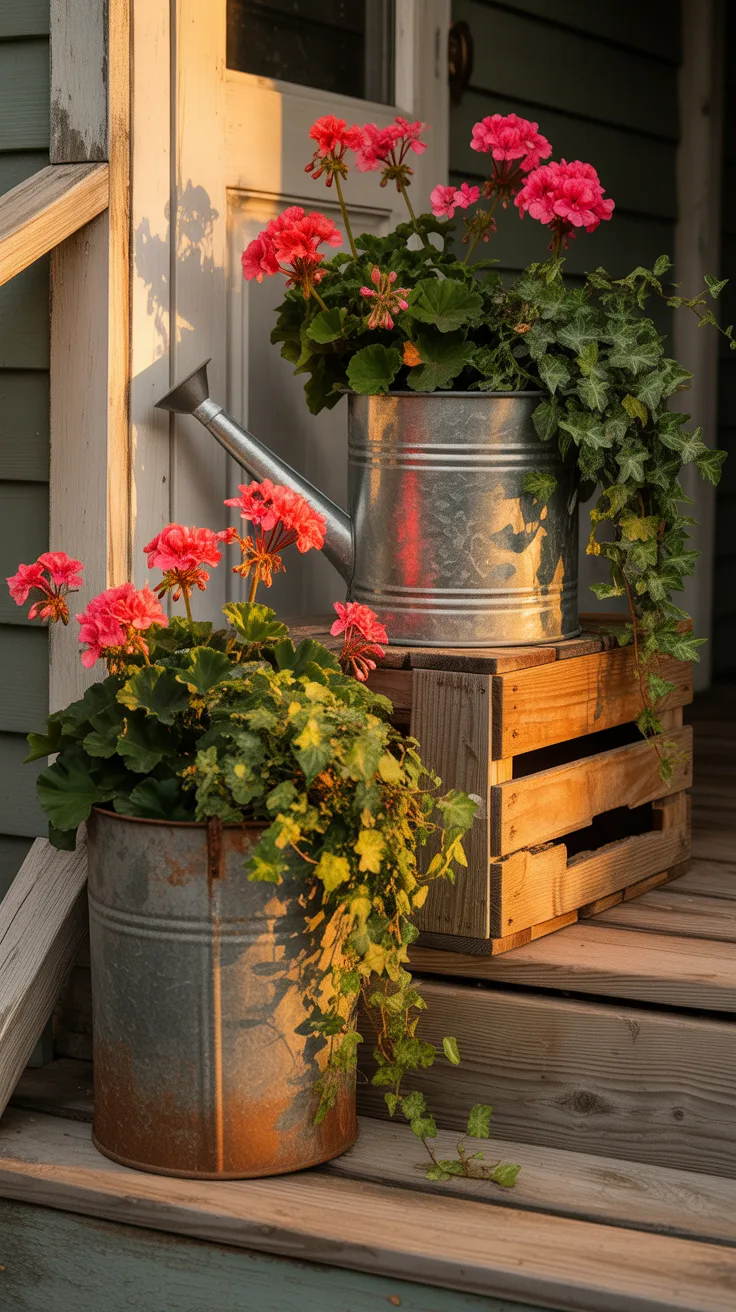
Hook: Rustic upcycled style turns “I don’t have matching pots” into the actual design concept.
The Detail: Repurpose an old watering can, wooden crate, or tin bucket as planters, drilling two or three drainage holes in the bottom of each with a metal drill bit if none exist. Fill with a standard potting mix and plant geraniums, trailing ivy, or petunias — reliable bloomers that forgive inconsistent care.
Group three to five mismatched containers together at varying heights using overturned crates or stacked bricks as risers, which keeps the eclectic mix from looking random. Water whenever the top inch of soil feels dry, checking metal containers more often since they heat up and dry out faster than clay.
The pro insight: metal containers without drainage holes will drown roots within days of heavy rain — always drill holes before planting, no exceptions.
Read our upcycled container gardening ideas for more repurposing inspiration. The SFGate Home Guide on drainage for repurposed containers explains drilling techniques for different materials.
Your grandmother’s old watering can might be the best planter you already own.
Fairy Garden Miniature
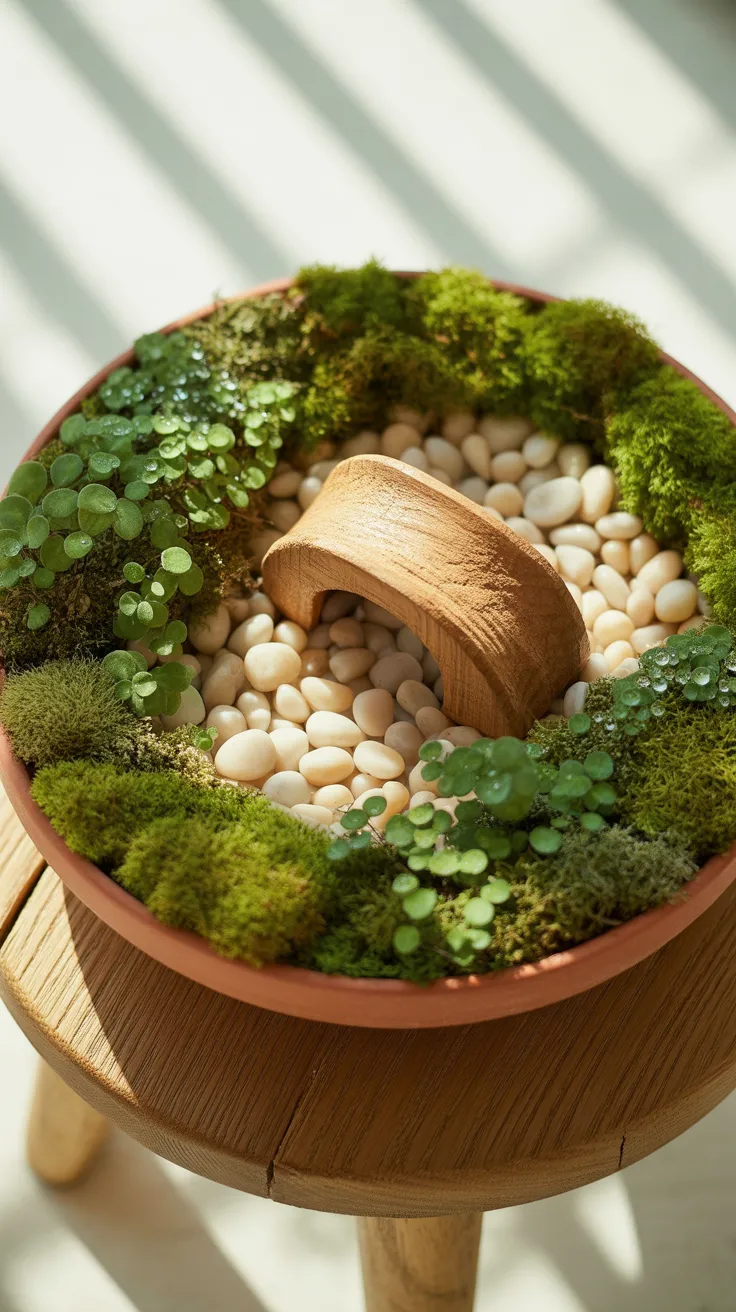
Hook: A miniature fairy garden is the easiest way to involve kids in gardening without any real risk of plants dying.
The Detail: Use a shallow, wide terracotta bowl and plant it with baby tears (Soleirolia soleirolii) or Irish moss as a lush “lawn,” which stays low and dense without any trimming. Add a few small pebbles for a path and one or two miniature ornaments — a bridge, a tiny bench, or a small figurine.
Keep the soil consistently moist, since baby tears wilts dramatically (though usually recovers) if it dries out completely. Place the bowl in bright indirect light; direct sun will scorch the delicate foliage within hours.
The common mistake is choosing plants that grow too tall or fast for the miniature scale, which quickly overwhelms the “tiny world” effect this style depends on.
Best varieties for this approach: baby tears, Irish moss, mini ferns, and dwarf mondo grass.
See our miniature fairy garden plant guide for scale-appropriate plant picks. The Missouri Botanical Garden’s guide to miniature gardening covers container selection for tiny scenes.
This bowl-sized project is often the first garden a child ever waters on their own.
Succulent Rock Garden
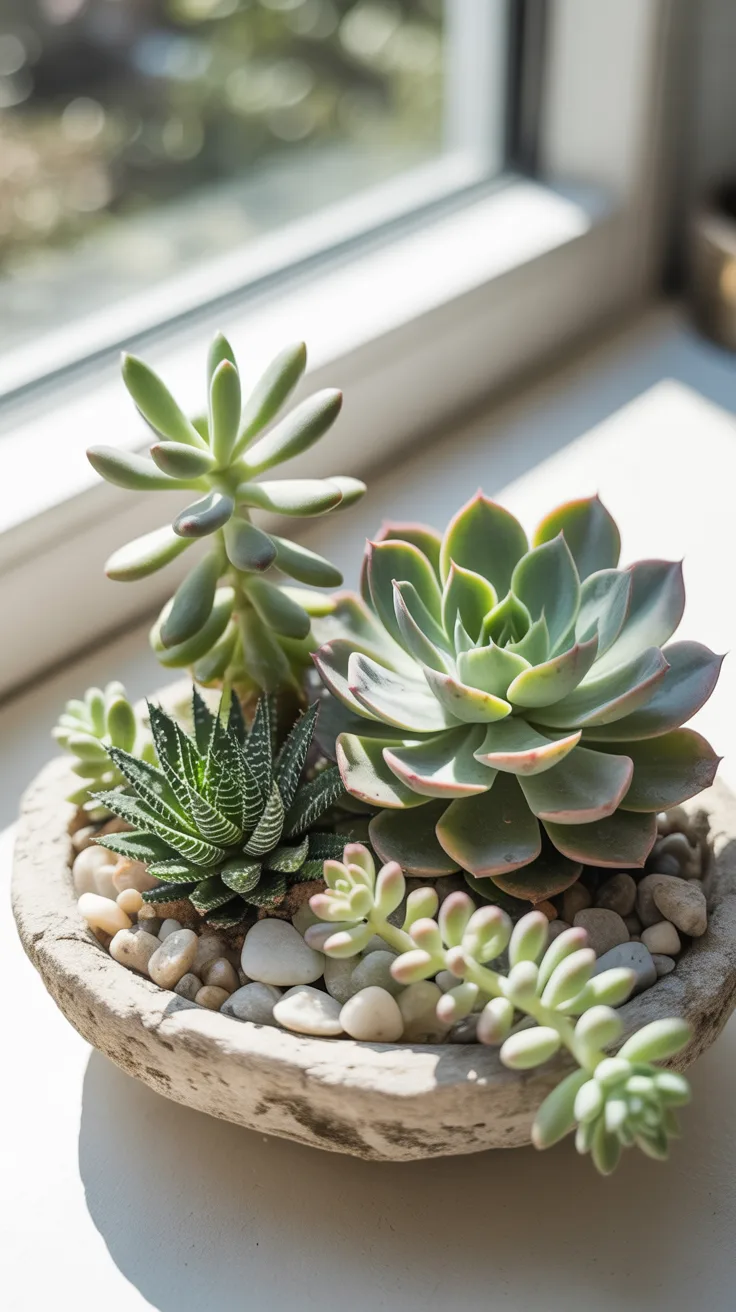
Hook: Succulent rock gardens pack the most visual variety into the smallest footprint of any style on this list.
The Detail: Combine three or four succulent varieties with different colors and forms — rosette-shaped echeveria, trailing string of pearls (sedum), and spiky haworthia — in a shallow stone or concrete trough with excellent drainage. Use a dedicated cactus and succulent mix, never standard potting soil, which retains far too much moisture.
Tuck decorative rocks between plants both for visual texture and to reduce soil splash-back onto leaves during watering. Water thoroughly then let the soil dry out completely before watering again, generally every one to two weeks depending on humidity.
Beginner vs. advanced version: beginners should stick to hardy sedum and echeveria; advanced growers can add trickier varieties like living stones (Lithops), which need very precise watering timed to their dormancy cycle.
Browse our succulent combination planting guide for more pairing ideas. The Almanac’s succulent care guide covers watering schedules by season.
This is the style most likely to survive a two-week vacation without any help.
Kitchen Herb Windowsill Garden
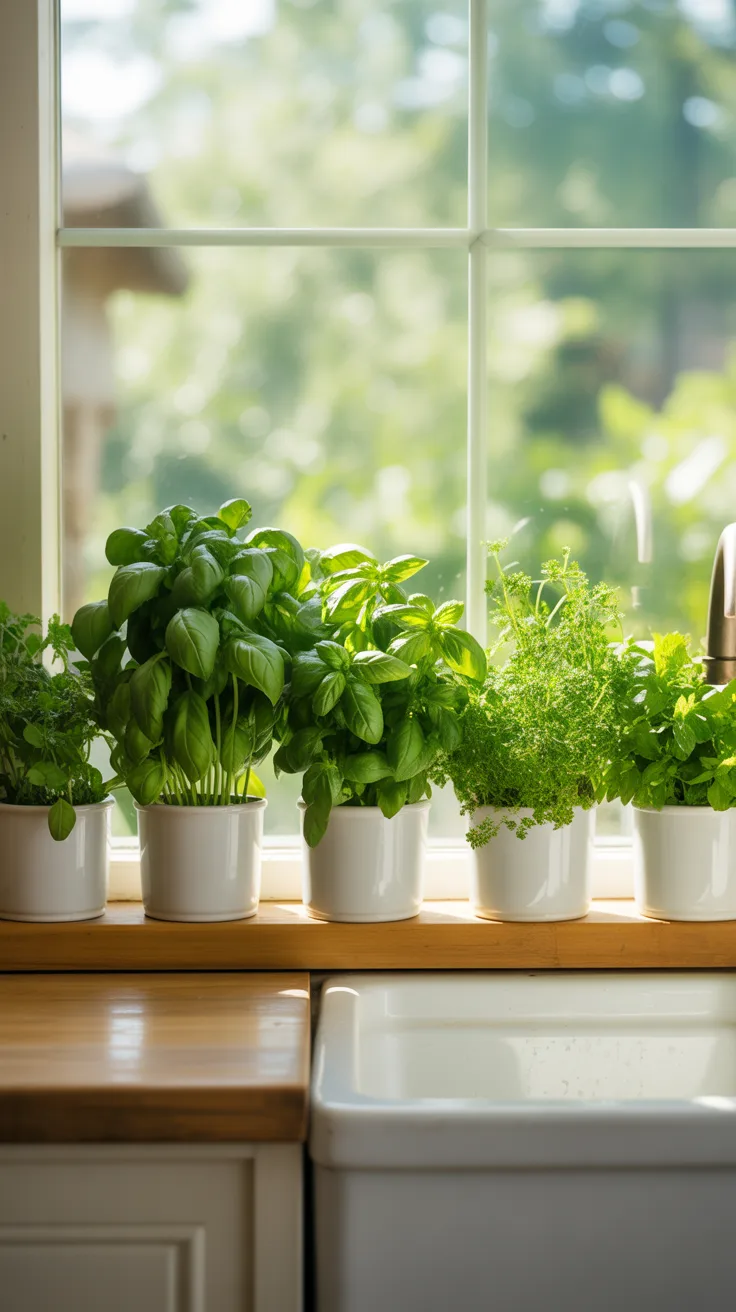
Hook: A windowsill herb garden is the single most-used style on this list simply because it earns its keep every time you cook.
The Detail: Line up basil, mint, and parsley in small individual pots (4 to 6 inches) along a south- or west-facing windowsill that gets at least four hours of direct sun daily. Use a lightweight, well-draining potting mix, and choose pots with drainage saucers to protect the sill.
Rotate the pots a quarter turn every few days so growth stays even instead of leaning toward the glass. Pinch growing tips regularly, especially on basil, to prevent it from flowering and turning bitter.
The pro insight: north-facing windows rarely provide enough light for basil specifically — if leaves turn pale and leggy, supplement with a small grow light rather than assuming the plant is dying.
Explore our complete windowsill herb garden guide for pot spacing tips. The Penn State Extension’s guide to indoor herb growing covers light requirements per herb variety.
Once you’re harvesting your own basil mid-recipe, you won’t go back to the plastic supermarket kind.
Hanging Basket Trailing Garden
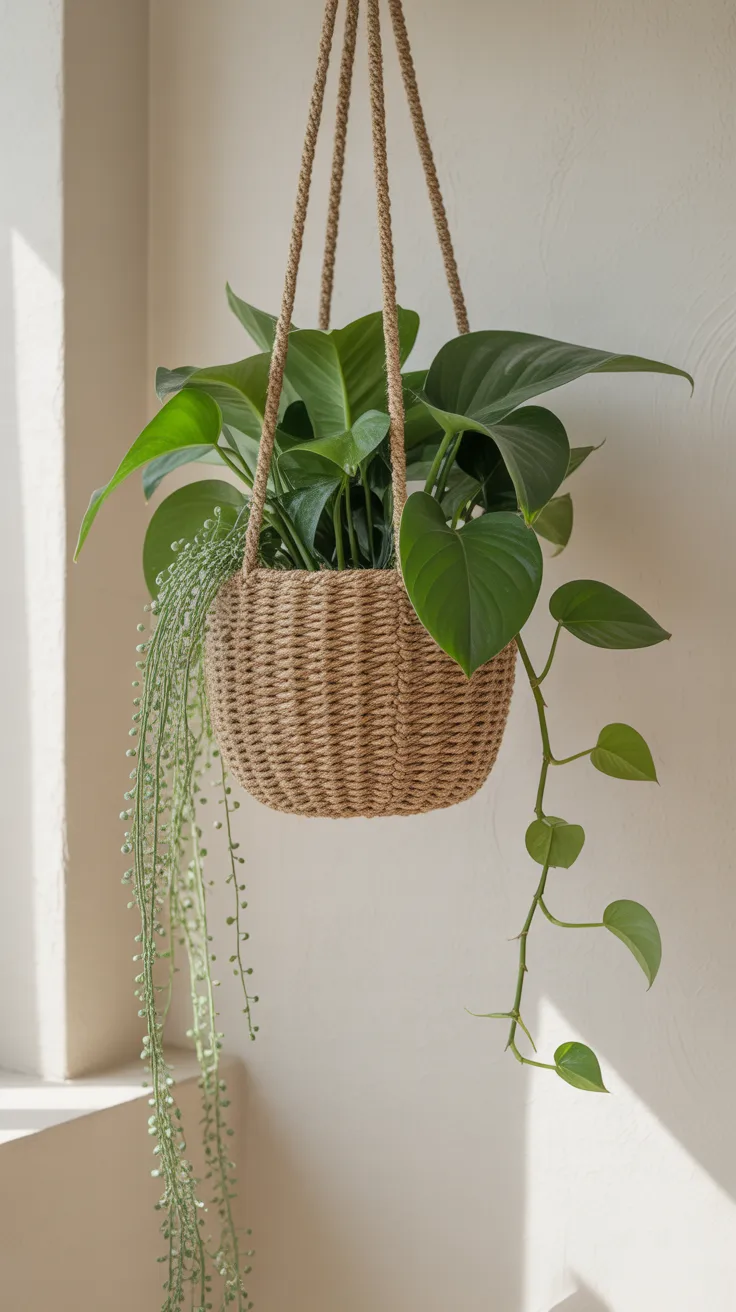
Hook: A hanging basket solves the small-space math problem — it adds greenery without using a single inch of floor or counter space.
The Detail: Plant a trailing pothos, string of pearls, or spider plant in a lightweight hanging basket with a macrame or woven jute hanger, positioned near a bright window but out of direct scorching afternoon sun. Use a lightweight, well-draining potting mix to keep the hanging weight manageable.
Water by taking the basket down to a sink rather than pouring overhead, which prevents water from dripping onto floors or furniture below. Check trailing vines monthly and trim any leggy growth back to encourage fuller, bushier trails.
The common mistake is hanging baskets too close to the ceiling, where trapped heat and poor air circulation stress the plant — leave at least a foot of clearance above.
Discover our best trailing plants for hanging baskets list. The Sill’s care guide for pothos and trailing plants covers light and watering specifics.
A single trailing basket by a window can visually add several feet of height to a small room.
Monochrome White Garden
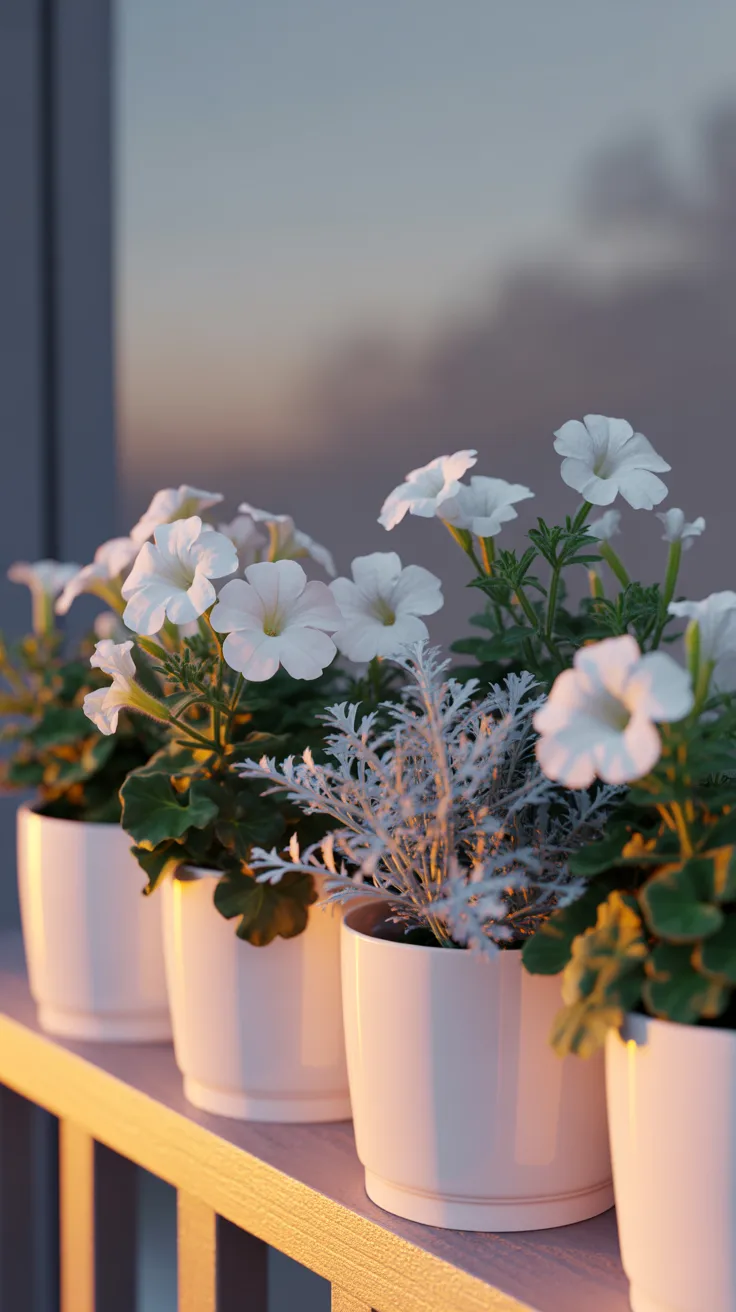
Hook: A white garden is famous for glowing at dusk — it’s the single best style for a space you actually use in the evening.
The Detail: Combine white petunias, white geraniums, and silvery dusty miller foliage in matching white or cream ceramic pots along a railing or windowsill. Use a standard well-draining potting mix with a balanced slow-release fertilizer worked in at planting.
Deadhead petunias and geraniums weekly to keep blooms coming through the season, since spent flowers left on the plant slow new bud production. Position the grouping where it gets at least five hours of sun for the fullest flowering.
The pro insight comes from famous white gardens like Sissinghurst: silver-leaved plants like dusty miller aren’t just filler — they visually brighten the white blooms around them even in low evening light.
Read our guide to designing a white and silver garden for more variety pairings. The Gardenersworld guide to white garden planting schemes offers additional plant options.
This is the style to try if you host dinners on the porch after sunset.
Butterfly and Pollinator Garden
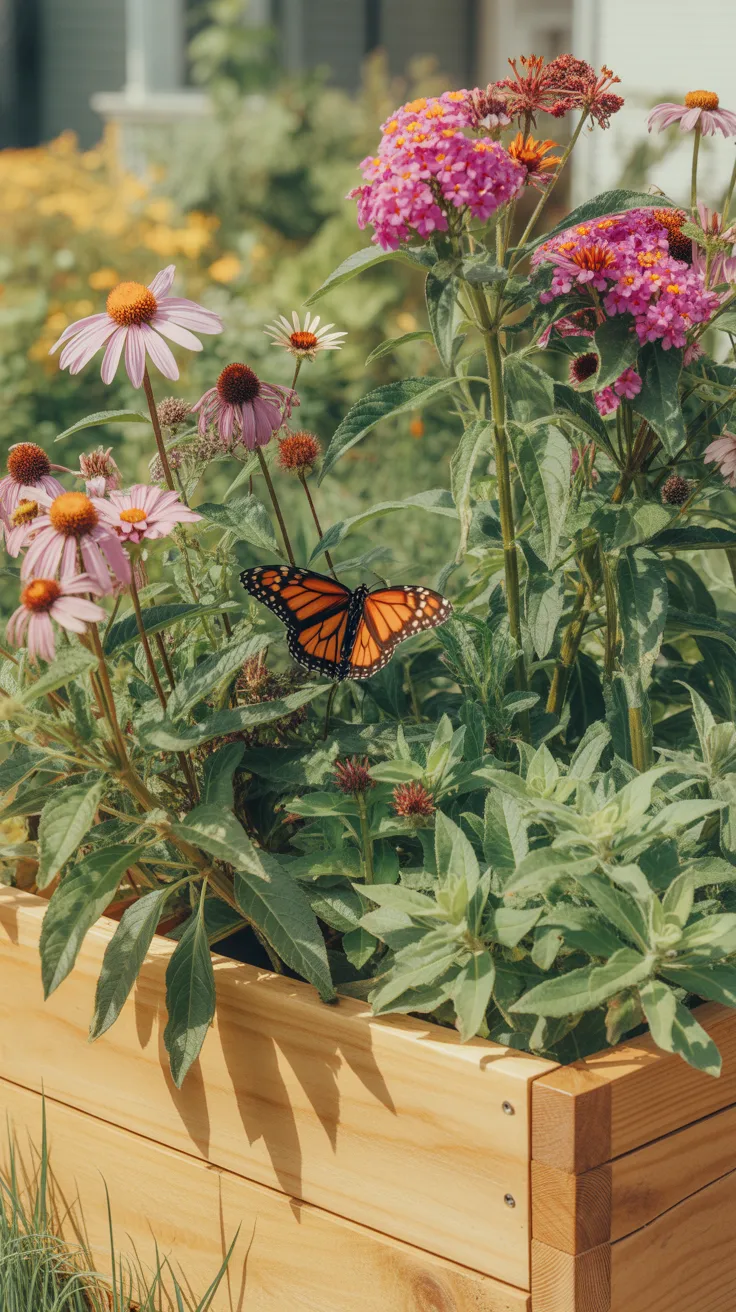
Hook: A pollinator garden gives back to your local ecosystem while still looking like a curated flower display.
The Detail: Plant milkweed (the required host plant for monarch caterpillars), purple coneflower, and lantana together in a wooden raised planter or large container at least 12 inches deep. Use a standard garden soil mix without added fertilizer, since many pollinator natives actually flower better in leaner soil.
Position the planter in full sun, where pollinators are most active, and avoid all pesticides and even “organic” insect sprays, which harm beneficial insects as readily as pests. Leave some spent flower heads through fall rather than deadheading everything — seed heads feed birds through winter.
What works vs. what to avoid: native milkweed and coneflower support local pollinators; showy hybrid flowers bred for double blooms often produce little to no usable nectar or pollen.
Explore our pollinator-friendly container garden guide for regional native options. The Missouri Botanical Garden’s guide to gardening for pollinators covers native plant selection by region.
Watching the first monarch land on your own milkweed is worth skipping the pesticide aisle entirely.
Raised Bed Vegetable Patch
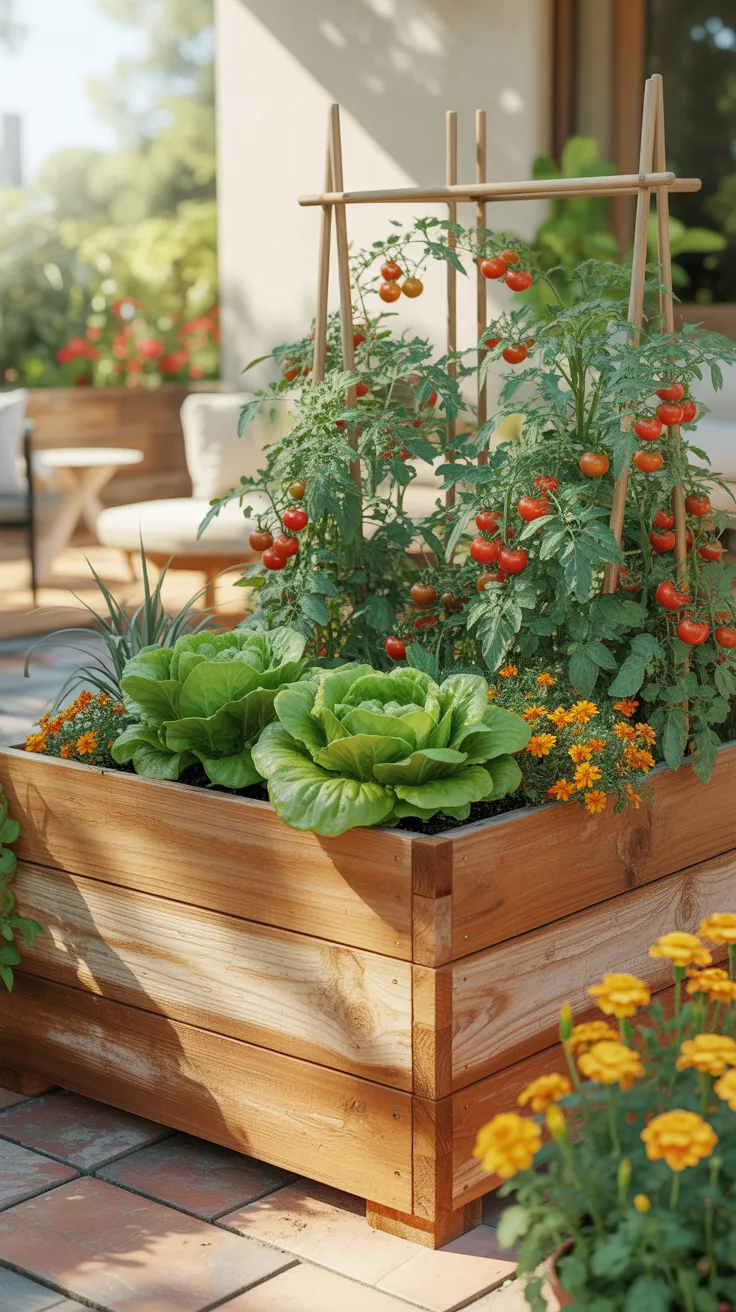
Hook: A raised bed is the style that pays you back — literally, in tomatoes — while still looking as tidy as any ornamental garden.
The Detail: Build or buy a cedar raised bed at least 12 inches deep, and plant cherry tomatoes, loose-leaf lettuce, and marigolds together — the marigolds aren’t just decorative, they help deter certain pests from the vegetables. Fill with a raised-bed soil blend of compost, topsoil, and aged manure in roughly equal parts.
Stake or cage tomatoes early, before they sprawl, and water at the base rather than overhead to reduce fungal disease on the leaves. Harvest lettuce by cutting outer leaves first, which lets the plant keep producing for weeks instead of pulling the whole head at once.
The common mistake is overcrowding a raised bed to “maximize” the space; tomatoes especially need at least 18 to 24 inches between plants for good airflow and disease prevention.
Check out our raised bed vegetable garden layout guide for spacing templates. The Almanac’s guide to raised bed gardening covers soil mix ratios in detail.
Nothing makes a garden feel more “yours” than a salad picked five minutes before dinner.
Bonsai Corner Display
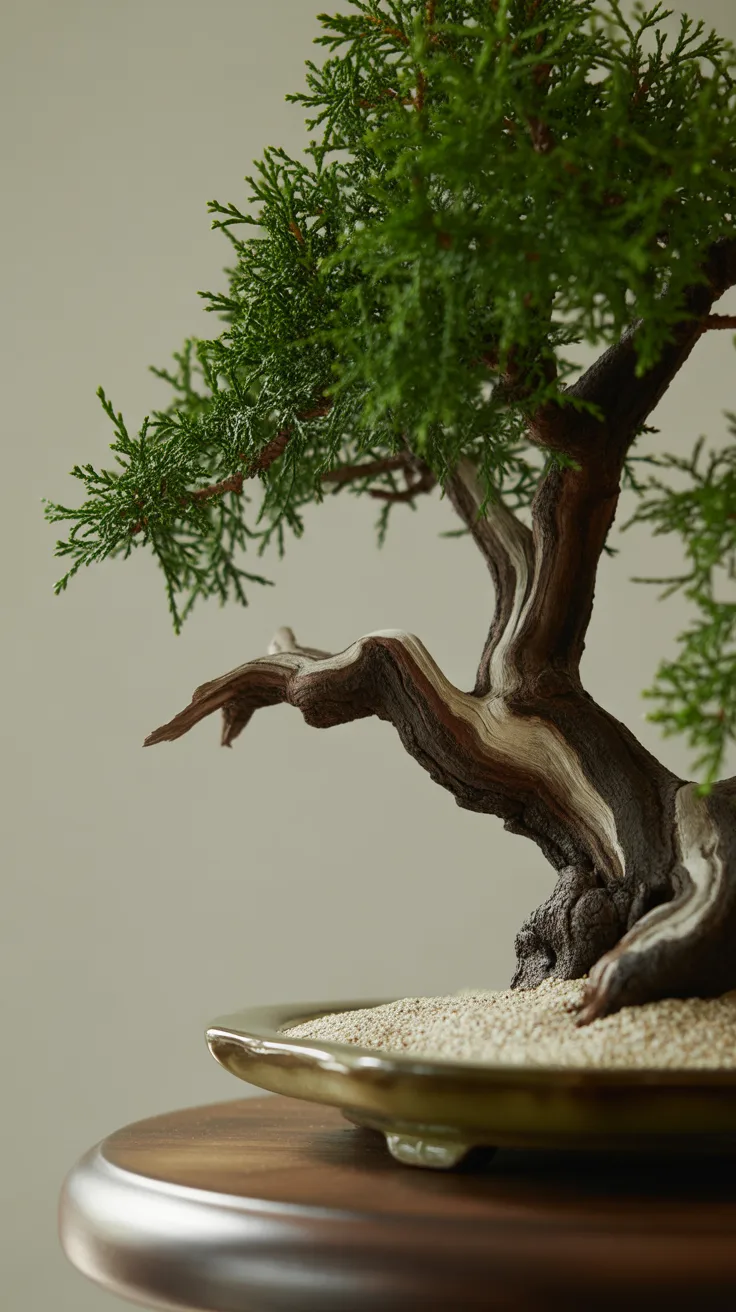
Hook: A single bonsai display proves that one carefully tended plant can carry more visual weight than an entire shelf of houseplants.
The Detail: Start with a beginner-friendly juniper or ficus bonsai (avoid tropical species if you live somewhere cold, since junipers need a winter dormancy period outdoors). Display it on a dedicated wooden stand at a height where the canopy is roughly at eye level when seated.
Water when the topsoil feels just dry to the touch, checking daily during summer since bonsai pots are shallow and dry out fast. Prune new growth back to two leaf sets throughout the growing season to maintain the miniature shape rather than letting branches grow unchecked.
The pro insight: indoor-only placement is the single most common reason beginner juniper bonsai die — junipers are outdoor trees and need real seasonal temperature changes to survive long-term.
See our beginner bonsai care guide for species-specific advice. The RHS introduction to bonsai care covers pruning technique for new growers.
This is a slow style, but a five-year-old bonsai you’ve shaped yourself is unlike anything you can buy.
Fern Grotto Shade Nook
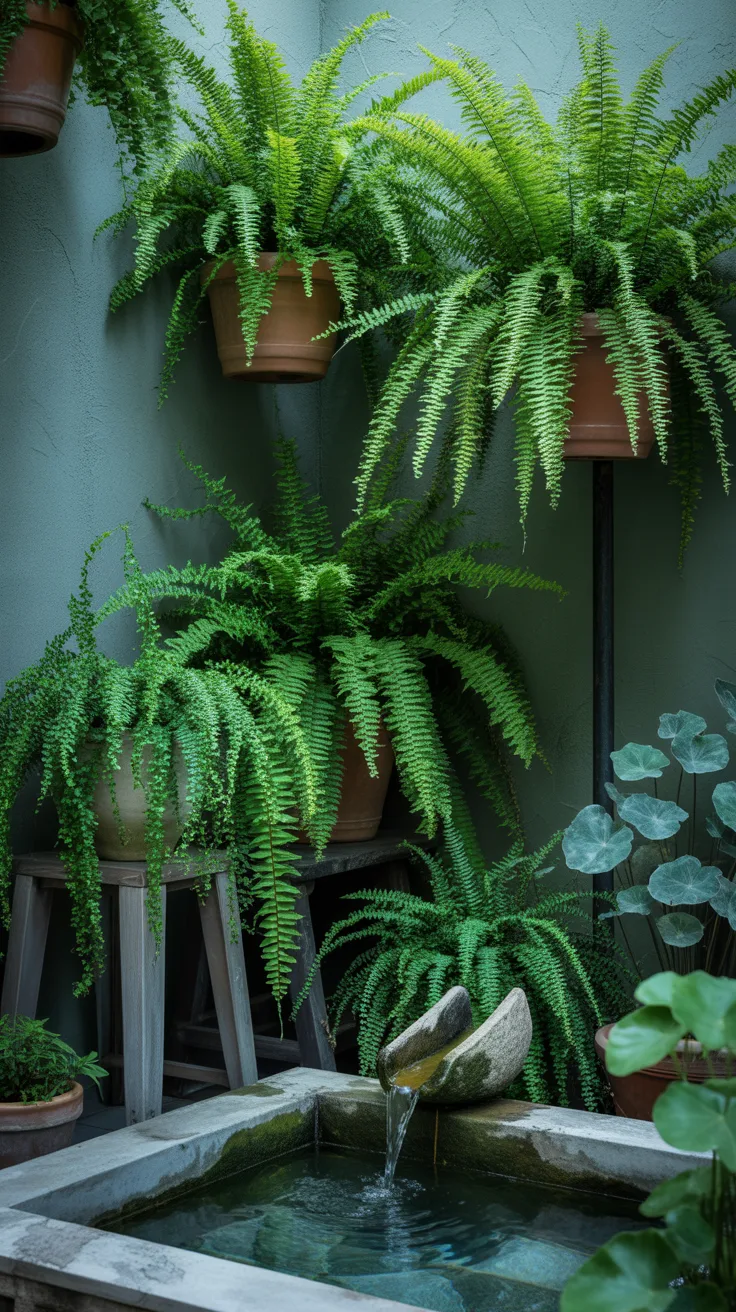
Hook: A fern grotto turns your most useless, sunless corner into the most atmospheric spot in the garden.
The Detail: Combine a full Boston fern with a delicate maidenhair fern in glazed pots at varying heights, using plant stands or an overturned crate to add levels. Use a rich, moisture-retentive potting mix amended with extra compost, since ferns need consistently damp — not soggy — soil.
If possible, add a small tabletop water feature nearby; the ambient humidity noticeably benefits maidenhair fern, which is notoriously fussy about dry air. Mist foliage most days, and never let the soil dry out completely, which causes rapid, often irreversible fern die-back.
The common mistake is placing maidenhair fern near a heating vent or drafty door — sudden temperature and humidity swings will brown its fronds within a day or two.
Read our complete guide to growing ferns outdoors for more shade-loving varieties. The Missouri Botanical Garden’s fern care fact sheet covers humidity requirements by species.
This nook only works in genuine shade — but where it works, nothing else compares.
Climbing Vine Trellis Garden
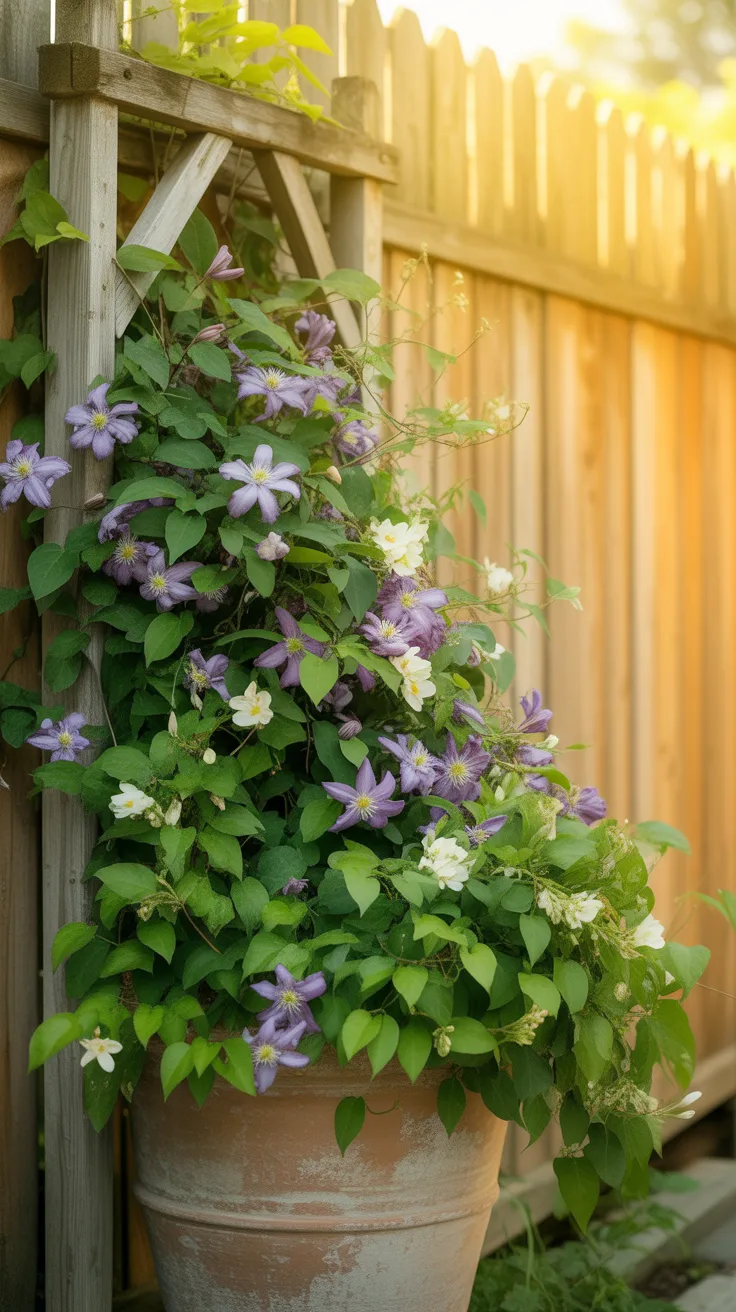
Hook: A trellis garden uses vertical space to create privacy and greenery where a flat fence used to be the whole view.
The Detail: Plant a climbing clematis or star jasmine at the base of a wooden or metal trellis, in a large terracotta or wooden container at least 16 inches wide to accommodate the mature root system. Use a rich, well-draining potting mix, and keep the base of clematis specifically shaded while the top grows in sun — a classic trick known as “cool feet, warm face.”
Train new growth onto the trellis weekly by gently weaving stems through the lattice rather than letting the vine flop and self-attach randomly. Feed with a balanced liquid fertilizer every two to three weeks during active spring and summer growth.
The pro insight: most flowering vines need at least one full growing season before they cover a trellis completely — this is a style that rewards patience over instant results.
Explore our best climbing vines for container trellises guide. The Gardenersworld guide to growing clematis covers pruning groups in detail.
By the second summer, this single pot can turn a bare fence into a flowering wall.
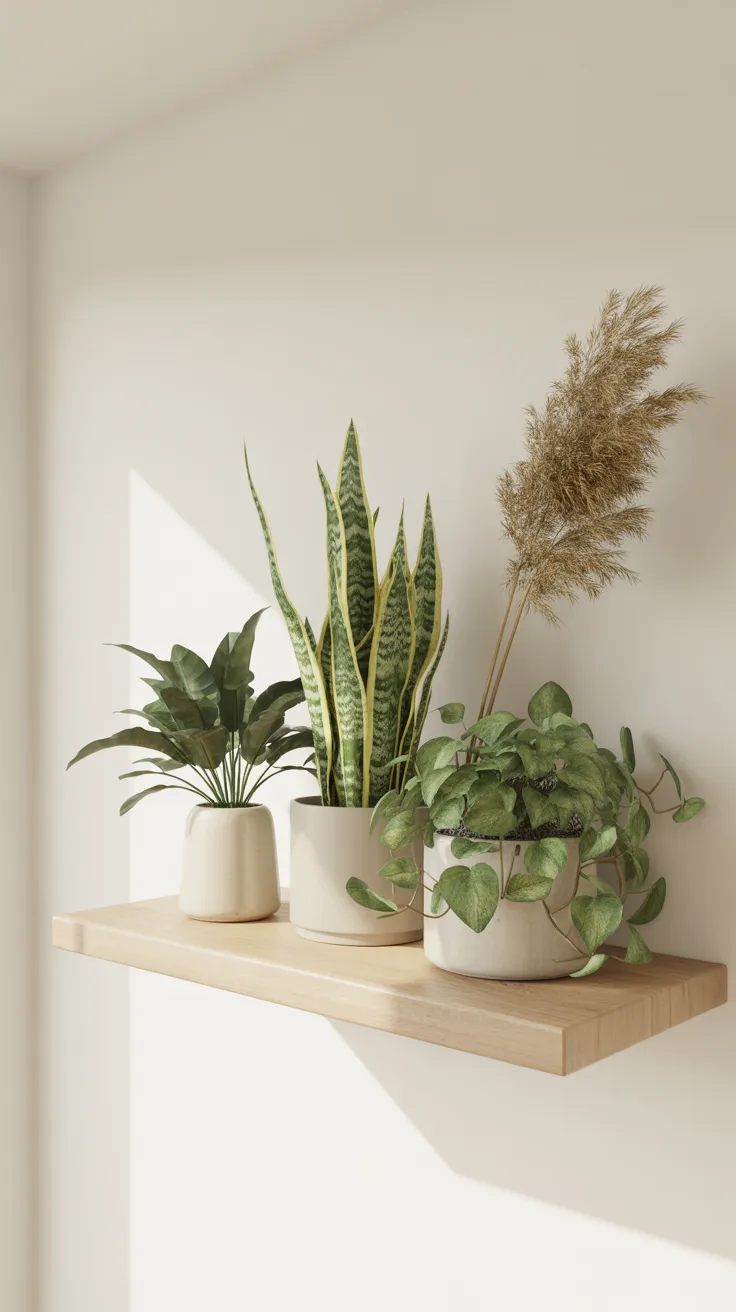
Hook: Scandinavian style pares plant decor down to light wood, cream ceramics, and just two or three forgiving plants.
The Detail: Mount a simple light-wood floating shelf and style it with a snake plant, a small trailing pothos, and one dried botanical element like a pampas grass stem, all in matching cream or unglazed ceramic pots. Use a well-draining potting mix, and choose pots with drainage holes and a hidden saucer beneath.
Position the shelf near a bright window, though both snake plant and pothos tolerate lower light well if a perfectly sunny spot isn’t available. Wipe dust from leaves monthly with a damp cloth, which keeps the minimal look actually looking clean rather than dusty and neglected.
No blockquote or list needed here — the real skill in this style is restraint: resist adding a fourth pot once the shelf looks “finished” at three.
See our Scandinavian-style houseplant shelf styling guide for more layout ideas. The Sill’s care guide for snake plant and pothos covers low-light tolerance specifics.
This shelf takes ten minutes to style and looks intentional for years.
Getting Started With Simple Garden Styles
The easiest first step is picking just one style from this list that matches your actual light conditions — not the one that looks best in photos. A north-facing windowsill will always do better with a woodland shade or fern grotto style than a Mediterranean terracotta corner, no matter how appealing the sun-drenched photo looks.
The most common beginner mistake is buying plants first and figuring out a style later, which almost always results in a mismatched collection. Choose the style, then shop with a specific plant list in hand.
For your very first purchase, buy one anchor plant suited to your light (a snake plant for low light, rosemary for full sun), one container in a material that matches your chosen style, and a bag of appropriate potting mix — cactus mix, moisture-retentive mix, or standard, depending on the style.
Realistically, most container combinations look “finished” within two to four weeks as plants settle in and begin new growth, though flowering styles like cottage or rose gardens may take six to eight weeks to reach full bloom.
Frequently Asked Questions
What is the easiest garden style for a total beginner?
The desert xeriscape corner and succulent rock garden are the most forgiving simple garden styles because they tolerate infrequent watering and low-maintenance care. Both need at least four to six hours of direct sun and a fast-draining cactus mix, and they can survive two to three weeks without attention — ideal if you travel often or tend to forget watering schedules.
How do I choose a garden style that matches my balcony’s light?
Check how many hours of direct sun your space gets before choosing a style: south- or west-facing balconies with 6+ hours suit Mediterranean, xeriscape, or rose garden styles, while north-facing or shaded spaces do better with woodland shade, fern grotto, or Japanese moss styles. Watching your space for a full day before planting prevents the most common cause of failure — mismatched light and plant choice.
Can I combine two different garden styles in one small space?
Yes, but limit it to two complementary styles — for example, a Mediterranean terracotta corner paired with a hanging basket trailing garden works because both like similar sun levels, while mixing xeriscape succulents with moisture-loving ferns in the same grouping usually fails because their watering needs directly conflict. Keep styles that share light and water requirements together, and separate ones with opposing needs by at least a few feet.
Why do my container plants keep dying even though I follow a watering schedule?
A fixed schedule often overwaters drought-tolerant plants like succulents and cacti while underwatering moisture-loving plants like ferns and calathea — check soil moisture with a finger test instead of a calendar. Push your finger two inches into the soil; if it’s still damp for succulents, skip watering, and if it’s dry for ferns or tropical plants, water immediately regardless of what day it is.
How often should I repot container plants in these garden styles?
Most container plants need repotting every one to two years, or sooner if roots are visibly circling the drainage holes or growth has noticeably slowed. Fast growers like pothos and tomatoes may need repotting within a single season, while slow growers like bonsai and succulents can often stay in the same pot for two to three years with just a top-dressing of fresh soil.
A Few Final Thoughts
Choosing among these 24 simple garden styles isn’t about picking the “correct” one — it’s about matching a style to the light, space, and time you actually have. A well-chosen container grouping in the right style will always outperform a random collection of plants bought on impulse, no matter how much more you spend on the impulse version. Start with just one style and three plants; you can always expand once you see what thrives. Remember that consistency in containers, color, and plant form is what makes a small space read as designed rather than accidental. One pot, one style, one sunny — or shady — corner: your simple garden makeover starts today.