
Weeding the same bed every single weekend gets old fast, and most gardeners don’t realize the fix isn’t a better weeding technique — it’s leaving weeds no bare soil to land on in the first place. I switched half my front bed to creeping thyme and phlox subulata three years ago and haven’t hand-weeded that section since; the plants simply outcompete anything trying to sprout. This list covers 27 ground covers that spread aggressively enough to choke out weeds while still delivering genuine, prolific bloom, sorted by sun needs, foot traffic tolerance, and climate. Each one comes with the spacing and spread rate details that tell you exactly how long until full coverage. Ready? Let’s explore all 27 of them.
Quick Answer: For sunny spots, creeping phlox and creeping thyme spread fast and bloom heavily; for shade, lamium and sweet woodruff crowd out weeds without direct sun. If you need something tough enough for light foot traffic, Irish moss or Elfin thyme are your best bets.
Why Ground Covers That Crowd Out Weeds Are Worth Your Time
A dense ground cover does the weeding for you by denying weed seeds the two things they need most — bare soil and direct light to germinate. In practice, a well-established patch of creeping phlox or sedum closes those gaps within one to two growing seasons, and after that, maintenance drops to almost nothing.
The practical benefits go beyond less weeding. Many ground covers also stabilize slopes prone to erosion, reduce watering needs once established, and several — like creeping thyme — release a pleasant scent when stepped on. The lesser-known fact most people miss: aggressive spreaders that crowd out weeds can also crowd out neighboring perennials if you don’t install a physical edge or root barrier, so “vigorous” cuts both ways.
This approach is ideal for anyone with a slope, a gap between pavers, a bed bordering a lawn, or simply a patch of yard they’re tired of weeding by hand every week.
At a Glance
- Creeping thyme tolerates foot traffic and releases fragrance when crushed underfoot.
- Sedum varieties survive drought conditions that kill most other flowering ground covers.
- Lamium and sweet woodruff handle deep shade where grass and most flowers fail.
- Several spreaders here fill a 3-foot-wide bed within two growing seasons.
- Pet-safe options like Irish moss exist for households avoiding toxic groundcovers.
27 Ground Covers Compared
| Plant | Light Needs | Spread Rate | Bloom Season | Foot Traffic |
| Creeping Phlox | Full sun | Fast | Spring | Light |
| Creeping Thyme | Full sun | Fast | Summer | Moderate |
| Sedum ‘Angelina’ | Full sun | Moderate | Summer | Light |
| Vinca Minor | Part shade | Fast | Spring | None |
| Lamium | Shade | Fast | Spring-summer | None |
| Sweet Woodruff | Shade | Moderate | Spring | None |
| Ajuga Reptans | Part shade | Fast | Spring | Light |
| Irish Moss | Part shade | Slow | N/A (foliage) | Moderate |
| Creeping Jenny | Part shade | Fast | Summer | Light |
| Snow-in-Summer | Full sun | Moderate | Late spring | None |
| Candytuft | Full sun | Slow | Spring | None |
| Dwarf Mondo Grass | Shade | Slow | N/A (foliage) | Moderate |
| Woolly Thyme | Full sun | Moderate | Summer | Moderate |
| Bugleweed ‘Black Scallop’ | Part shade | Fast | Spring | Light |
| Moss Phlox | Full sun | Fast | Spring | Light |
| Barren Strawberry | Part shade | Moderate | Spring | None |
| Creeping Veronica | Full sun | Fast | Spring-summer | Light |
| Periwinkle ‘Bowles’ | Part shade | Fast | Spring | None |
| Golden Creeping Jenny | Part shade | Fast | Summer | Light |
| Rock Cress | Full sun | Moderate | Spring | None |
| Wild Ginger | Shade | Slow | N/A (foliage) | None |
| Sedum ‘Dragon’s Blood’ | Full sun | Fast | Summer | Light |
| Lily of the Valley | Shade | Fast | Spring | None |
| Blue Star Creeper | Part shade | Moderate | Spring-summer | Moderate |
| Elfin Thyme | Full sun | Slow | Summer | Moderate |
| Foamflower | Shade | Moderate | Spring | None |
| Pachysandra | Shade | Fast | Spring | None |
1. Creeping Phlox for Blanket Spring Color
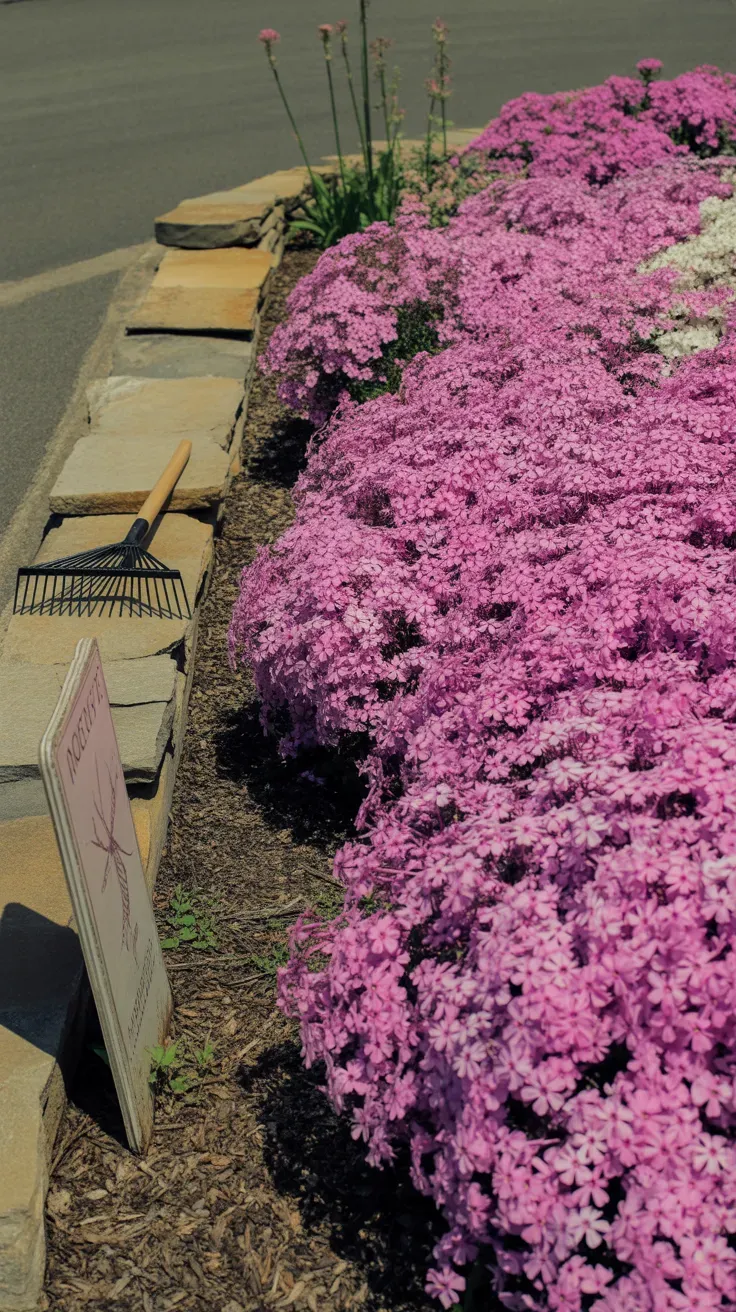
Creeping phlox (Phlox subulata) blankets sunny slopes in solid color for 3-4 weeks each spring, and its dense, needle-like foliage stays low and weed-smothering the rest of the year.
It needs full sun and well-drained soil, spacing plants 12-18 inches apart for full coverage within two seasons. Shear lightly after bloom to keep growth tight; skipping this step leads to a woodier, gappier mat within a few years, which is exactly where weeds sneak back in. It struggles in heavy clay without amendment.
Pro Tip: Plant on a slope rather than flat ground — phlox spreads faster and blooms heavier with the extra drainage a slope provides.
Internal link: best flowering ground covers for slopes External link: Missouri Botanical Garden’s Phlox subulata profile
Give it a sunny slope and creeping phlox delivers one of the showiest spring displays on this list.
2. Creeping Thyme for Fragrant, Traffic-Tolerant Cover
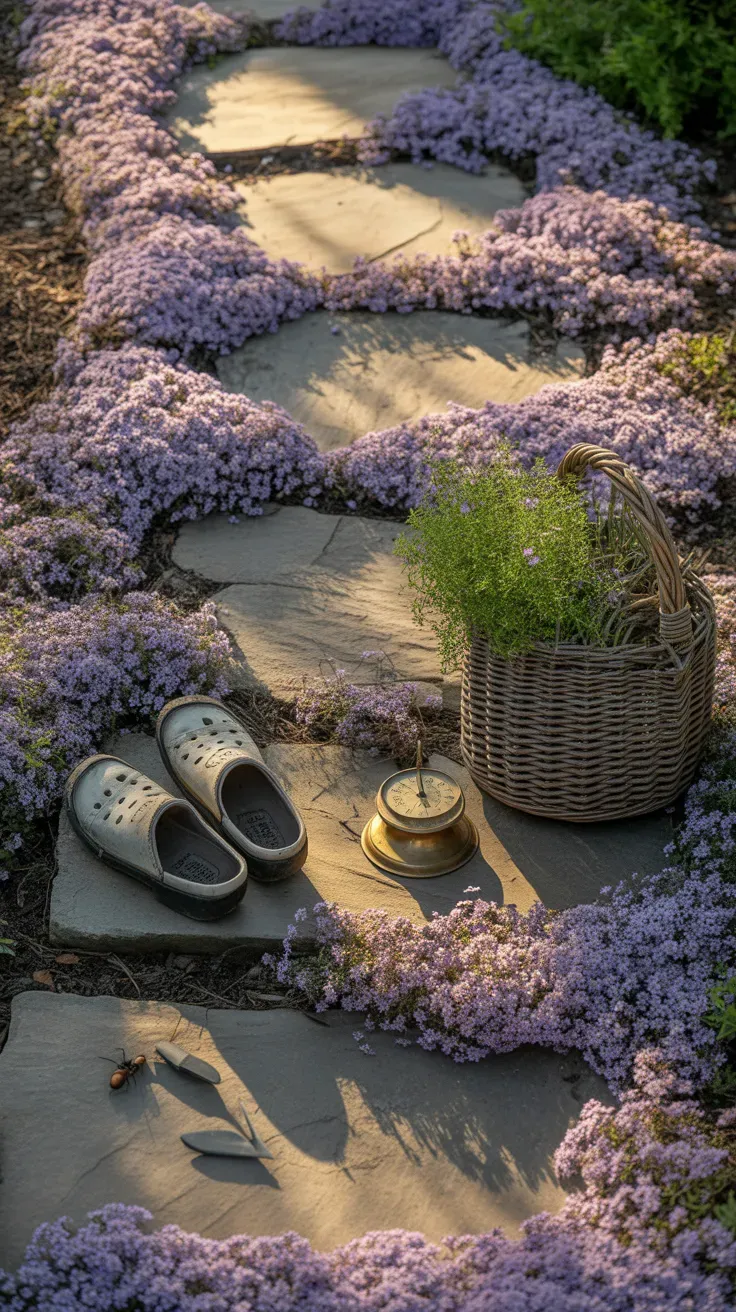
Creeping thyme (Thymus serpyllum) is one of the few ground covers that actually improves with light foot traffic, releasing a herbal scent when stepped on while filling gaps between pavers.
It thrives in full sun and lean, well-drained soil — rich soil actually makes it leggy and less weed-resistant. Space plugs 8-12 inches apart; full coverage typically takes one full growing season in favorable conditions. It tolerates drought well once established but resents standing water in winter.
Internal link: ground covers for pathways and stepping stones External link: Gardeners’ World’s guide to growing creeping thyme
For a fragrant, footpath-friendly cover, thyme is hard to beat.
3. Sedum ‘Angelina’ for Drought-Proof Gold Foliage
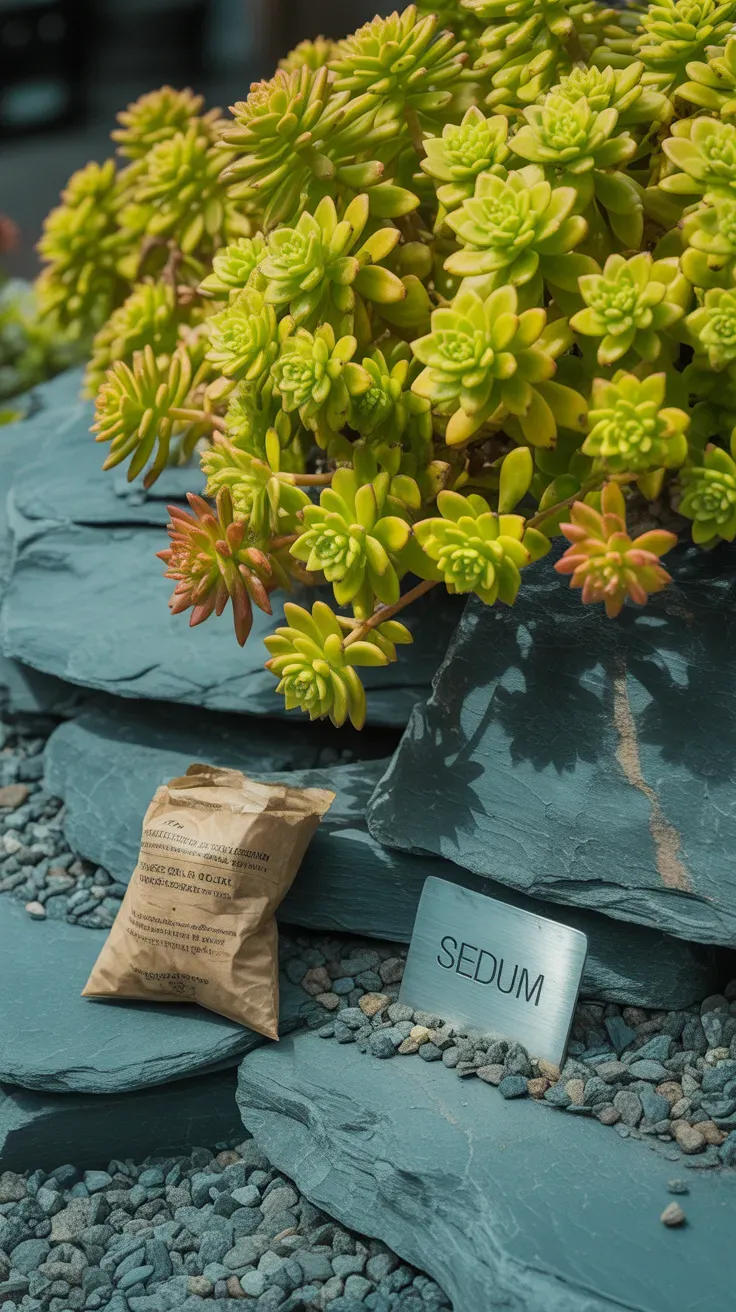
Sedum ‘Angelina’ brings year-round gold foliage color and survives drought conditions that would kill most flowering ground covers within weeks.
It needs full sun and sharply drained soil — soggy soil causes rot faster than any other issue with this plant. Space cuttings 10-12 inches apart; it roots easily from broken stems, which is part of why it spreads so reliably. Foliage turns coppery-orange in cold weather, adding seasonal interest most ground covers lack.
What works vs. what to avoid:
- Works: gravel mulch, rock gardens, unamended lean soil
- Avoid: heavy clay, consistently moist beds, deep shade
Internal link: drought-tolerant ground covers for xeriscaping External link: Missouri Botanical Garden’s Sedum rupestre profile
4. Vinca Minor for Fast, Reliable Shade Coverage
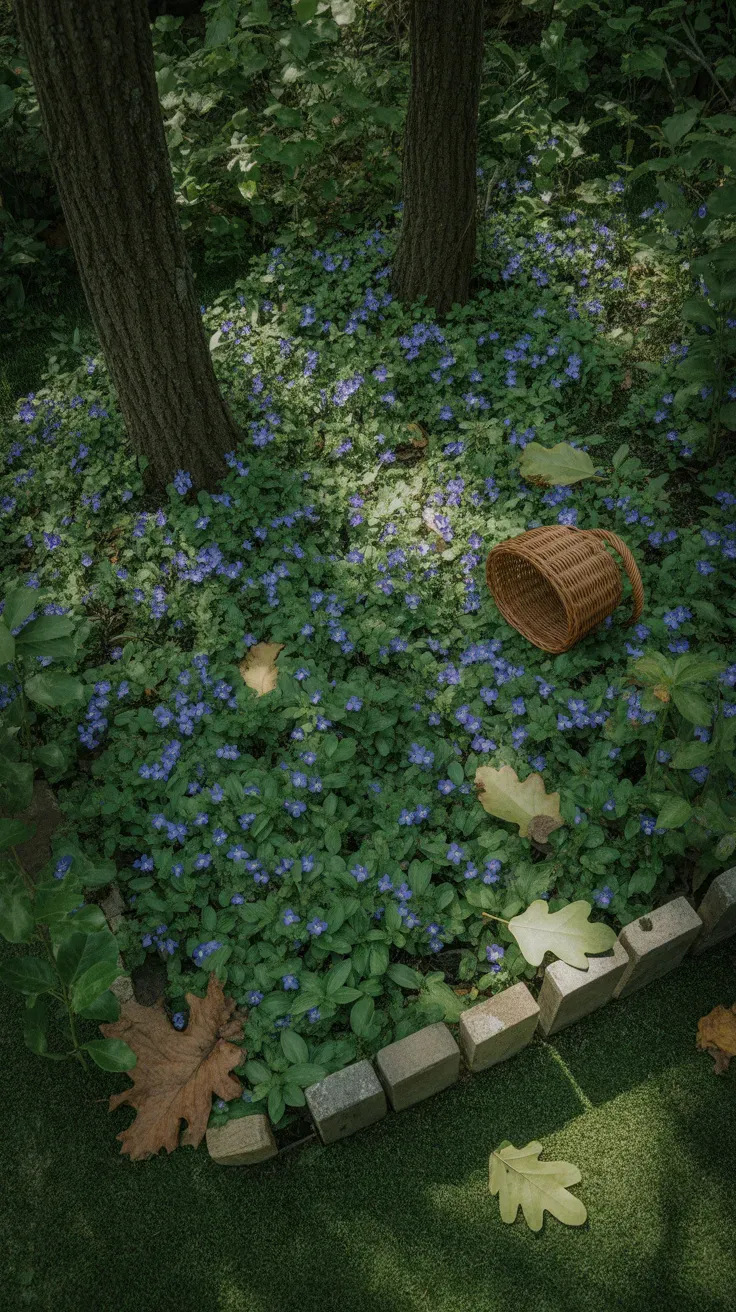
Vinca minor (periwinkle) spreads aggressively in part shade, rooting wherever its trailing stems touch soil, which makes it one of the fastest routes to full shade-bed coverage.
It tolerates deep shade to part sun and adapts to most soil types, spacing plants 12-15 inches apart for coverage within a single season. It’s evergreen in mild climates, holding weed-suppressing foliage through winter when many ground covers die back.
Pro Tip: Install a physical root barrier before planting if the bed borders a lawn — vinca readily escapes into turf and is difficult to remove once established.
Internal link: evergreen ground covers for year-round weed control External link: Penn State Extension’s notes on Vinca minor’s invasive potential
Contain it well and vinca becomes one of the most reliable shade solutions available.
5. Lamium for Brightening Dark, Dry Shade
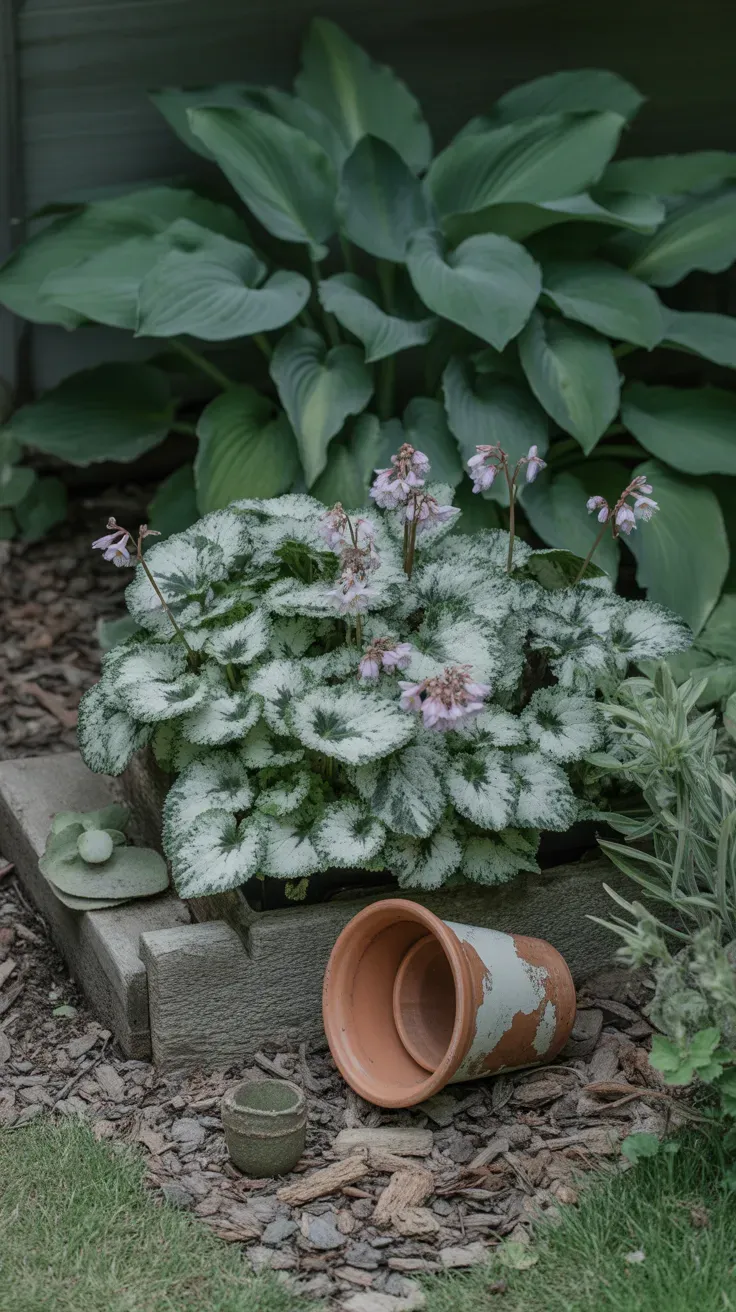
Lamium maculatum handles one of the hardest planting challenges in any yard — dry shade under mature trees — better than nearly any other flowering ground cover.
It grows in full to part shade and tolerates dry soil once established, spacing plants 12-18 inches apart. Its silver-variegated foliage brightens dark corners even outside bloom season, and it flowers from late spring into early summer in shades of pink, purple, or white depending on variety.
Internal link: plants that thrive in dry shade under trees External link: RHS growing guide for Lamium maculatum
This is the go-to pick for that stubborn bare patch beneath your biggest shade tree.
6. Sweet Woodruff for Fragrant Woodland Cover
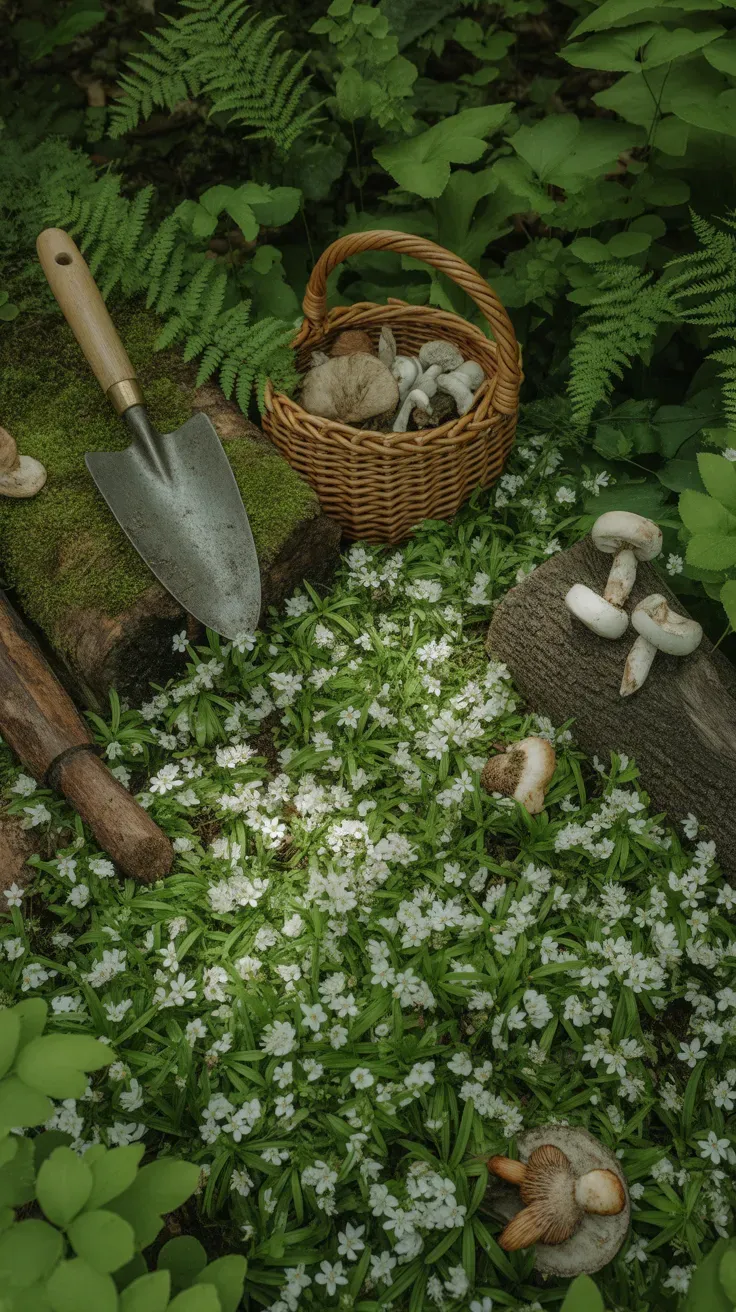
Sweet woodruff (Galium odoratum) forms a dense, fragrant carpet in full shade, releasing a hay-like sweetness when foliage is cut or crushed, which makes it a favorite for shaded paths.
It needs part to full shade and consistently moist, humus-rich soil — it struggles in dry conditions unlike lamium. Space plants 12 inches apart; it spreads via rhizomes and typically achieves full coverage within two seasons in favorable moisture.
Pro Tip: Mulch heavily the first year to retain moisture while the rhizome network establishes — inconsistent watering in year one is the most common reason sweet woodruff fails to spread.
Internal link: moisture-loving shade plants for woodland gardens External link: BHG’s guide to growing Galium odoratum
7. Ajuga Reptans for Bold Foliage Color and Spring Spikes
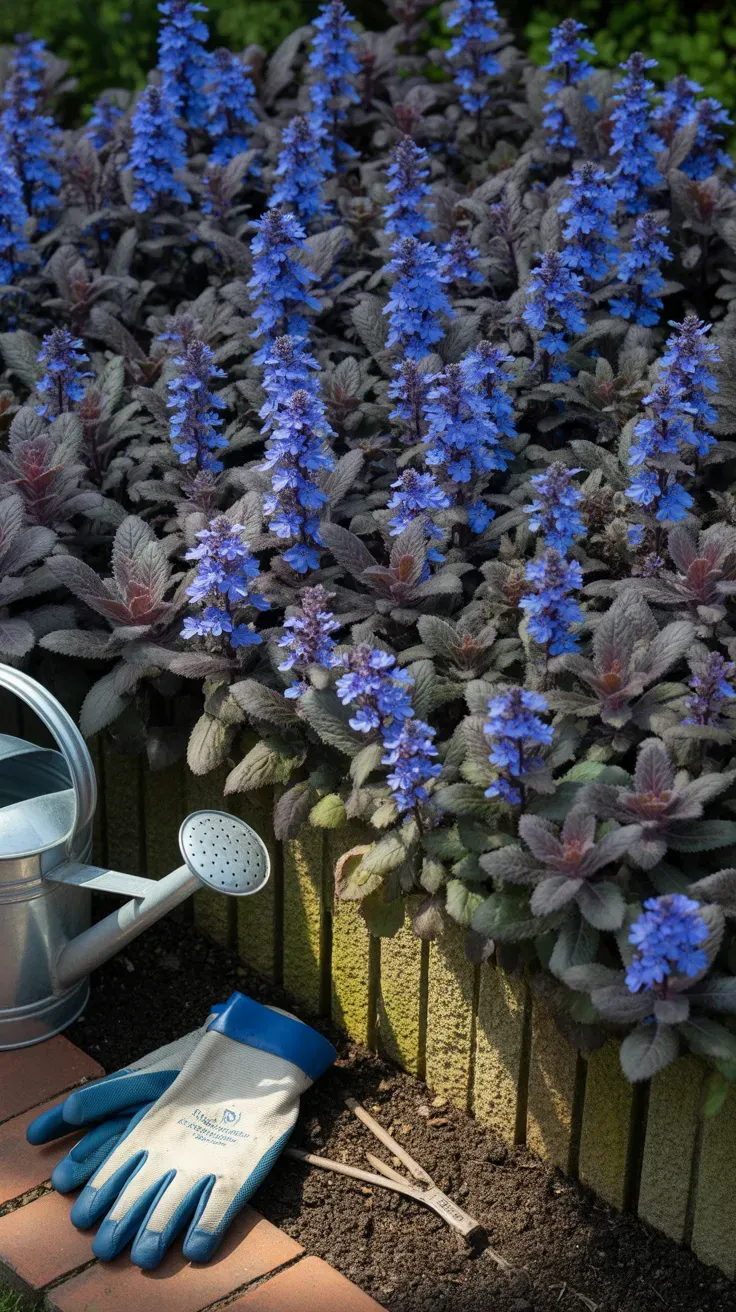
Ajuga reptans (‘Bronze Beauty’ and similar cultivars) offers two seasons of interest — deep bronze-purple foliage year-round and striking blue flower spikes each spring.
It grows in part shade to part sun and adapts to most soils, spacing plants 8-12 inches apart for coverage within one season. It spreads by stolons quickly enough that some regions consider it mildly invasive near lawns, so edging is worth installing early.
Internal link: dual-season ground covers for foliage and bloom External link: University of Florida Extension’s Ajuga growing notes
Its fast spread makes ajuga one of the quickest weed-blocking options on this list.
8. Irish Moss for a Soft, Traffic-Tolerant Green Carpet
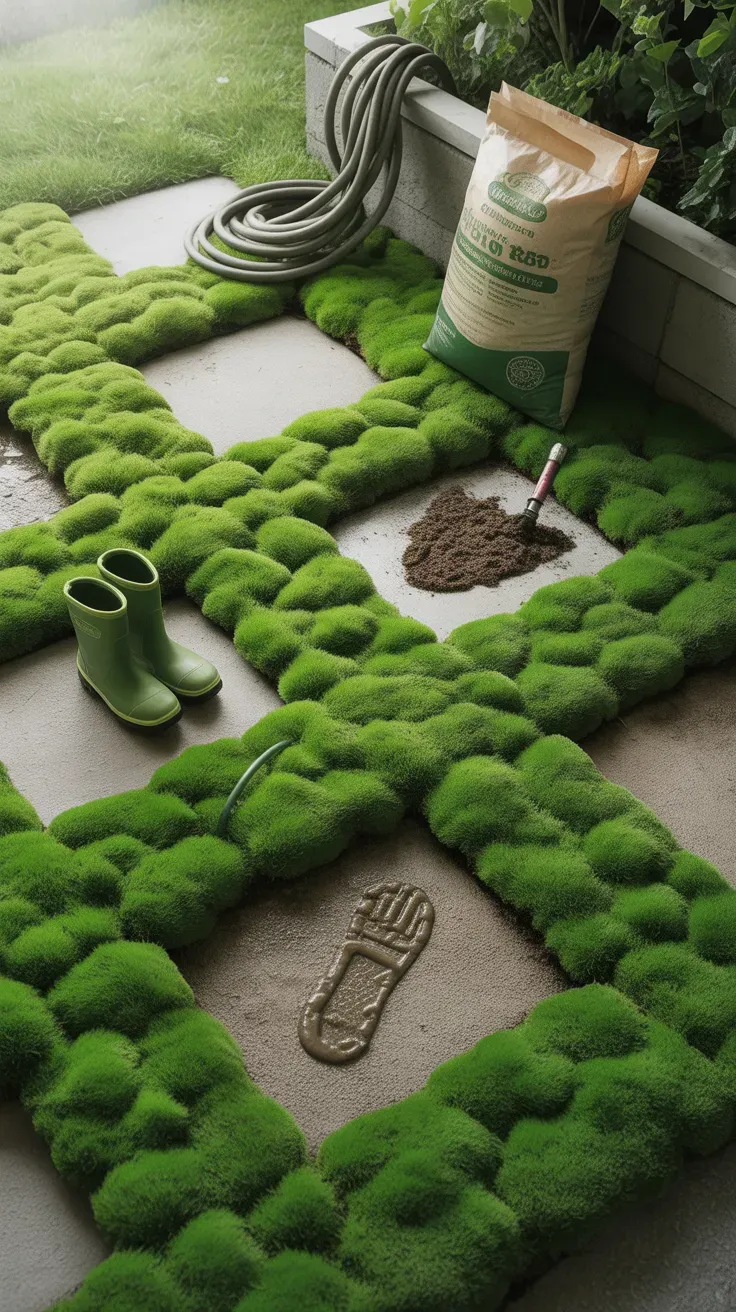
Irish moss (Sagina subulata) isn’t a true moss but forms a moss-like, cushiony green carpet dense enough to handle regular light foot traffic between stepping stones.
It prefers part shade to morning sun and consistently moist, well-drained soil — full afternoon sun in hot climates scorches it. Space plugs 6-8 inches apart; growth is slower than most spreaders here, often taking two full seasons for solid coverage. It’s non-toxic, a genuine advantage for pet households with a play area.
Internal link: soft, walkable ground covers for play areas External link: SF Gate Home Guide’s Irish moss growing tips
9. Creeping Jenny for Trailing Chartreuse Color
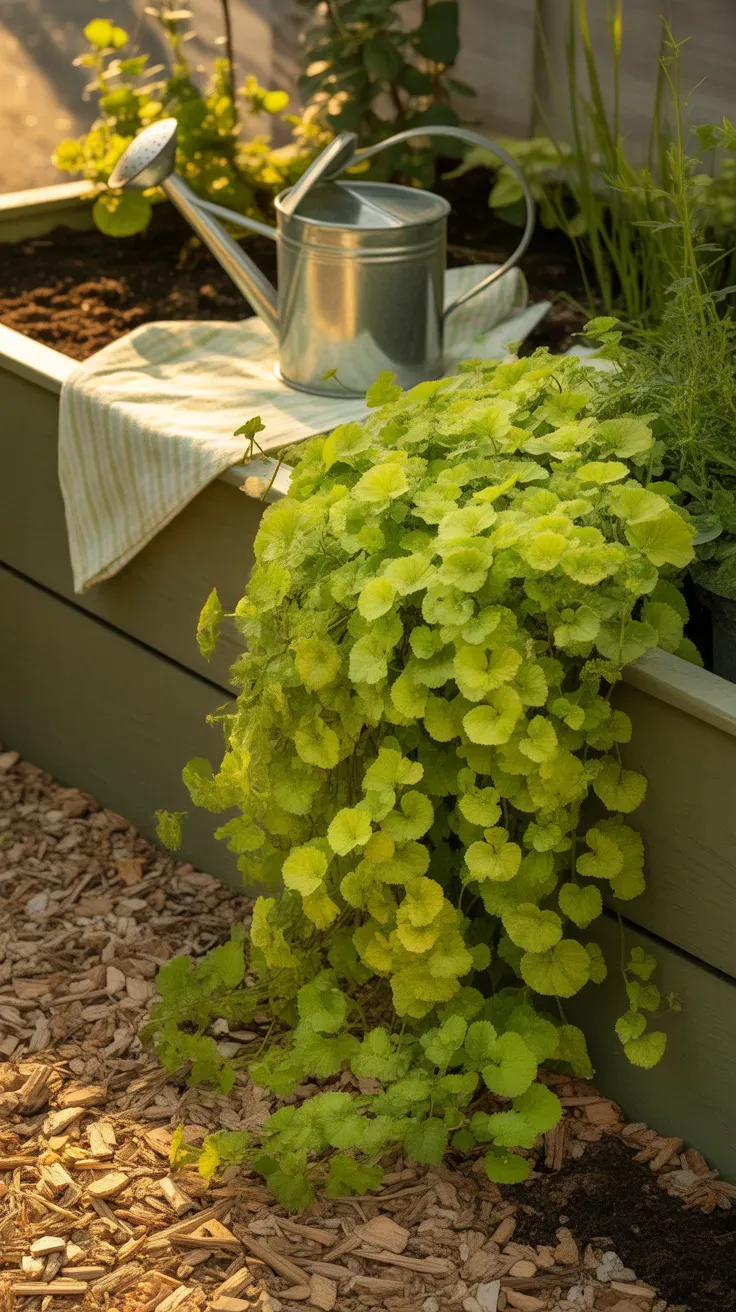
Creeping Jenny (Lysimachia nummularia ‘Aurea’) spreads fast in consistently moist soil, trailing over edges and filling gaps with vivid chartreuse foliage and small yellow summer flowers.
It grows in part shade to part sun — full sun in hot climates can scorch the golden foliage, while too much shade fades the color to green. Space plants 12 inches apart; it roots at leaf nodes wherever stems touch soil, spreading a full bed within one season in good moisture.
Pro Tip: Keep it away from ponds or wet meadows in regions where it’s classified invasive — check your local extension office before planting near natural waterways.
Internal link: ground covers for consistently moist garden beds External link: Penn State Extension’s Lysimachia nummularia invasiveness notes
10. Snow-in-Summer for Silver Foliage and White Blooms
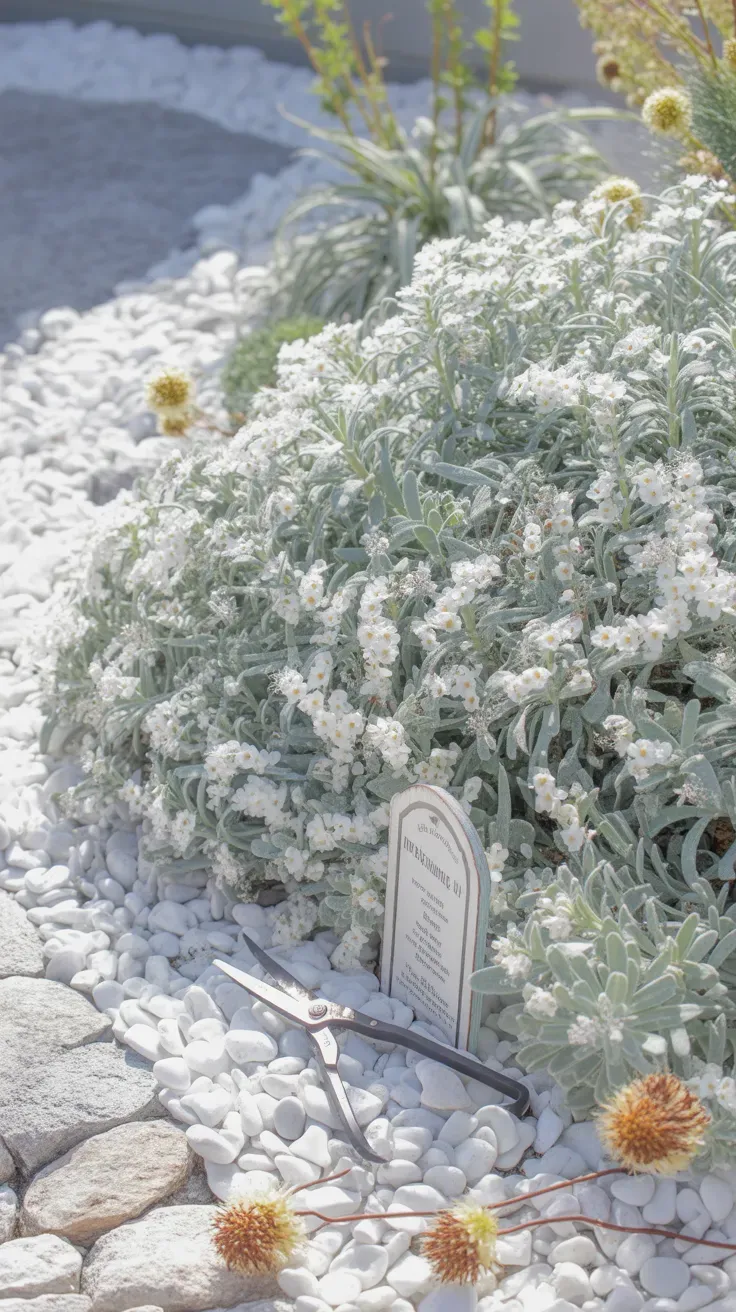
Snow-in-summer (Cerastium tomentosum) earns its name with a dense flush of small white flowers in late spring that briefly blankets its silvery, felted foliage like frost.
It needs full sun and sharply drained, even poor soil — rich, moist soil causes it to rot or grow leggy. Space plants 12-15 inches apart; it spreads via low, woody stems and handles genuine drought once established, needing almost no supplemental water after the first season.
Internal link: silver-foliage ground covers for rock gardens External link: Almanac’s growing guide for Cerastium tomentosum
11. Candytuft for Evergreen Structure With Spring Fireworks
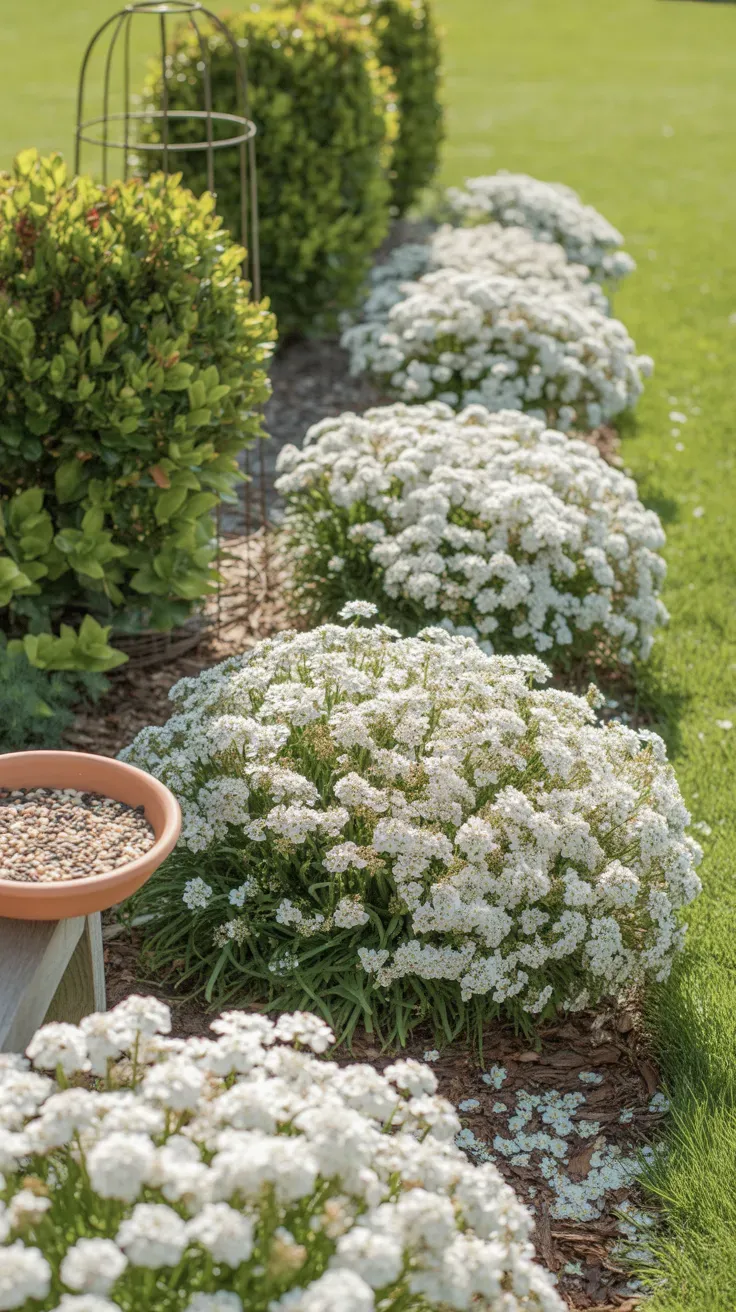
Candytuft (Iberis sempervirens) holds its dark evergreen foliage through winter, then explodes into a dense flush of pure white blooms each spring that lasts 3-4 weeks.
It needs full sun and well-drained soil, spacing plants 12-18 inches apart. Growth is slower than most on this list, so it works best as a border edger rather than a fast weed-suppressing spreader, though its evergreen habit still denies weeds bare soil year-round once mature.
Internal link: evergreen border plants for four-season structure External link: Gardeners’ World’s Iberis sempervirens care guide
12. Dwarf Mondo Grass for Grass-Like Shade Texture

Dwarf mondo grass (Ophiopogon japonicus ‘Nanus’) gives shaded beds a fine, grass-like texture without the mowing, forming tight tufts that slowly knit together into a dense mat.
It tolerates part to full shade and average soil, spacing plants 6-8 inches apart. Growth is genuinely slow — expect 2-3 years for full coverage — which makes it a poor choice if you need fast weed suppression this season, but its density once established is nearly impenetrable to weeds.
Internal link: grass-like ground covers that don’t need mowing External link: University of Florida Extension’s Ophiopogon growing notes
13. Woolly Thyme for a Fuzzy, Drought-Tough Mat
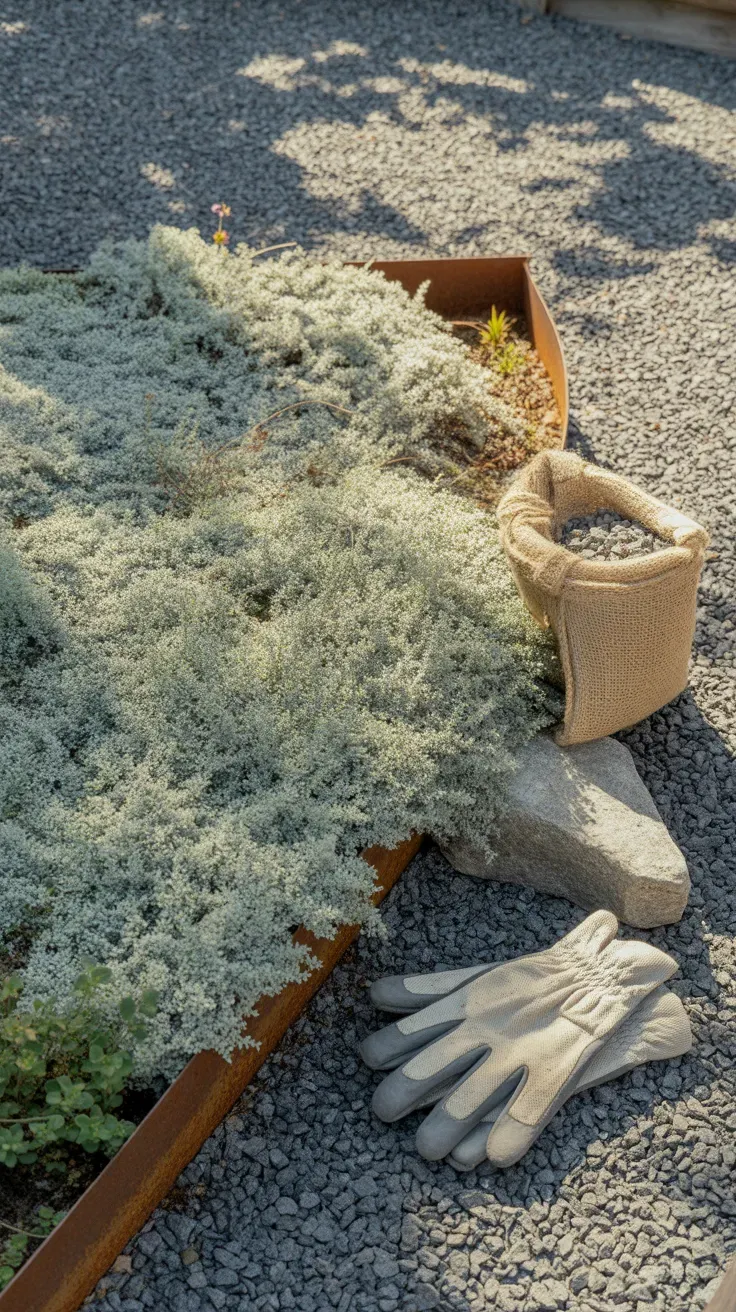
Woolly thyme (Thymus pseudolanuginosus) doesn’t bloom as showily as creeping thyme, but its dense, fuzzy silver foliage tolerates foot traffic and drought equally well, making it ideal for gravel paths and hot, dry spots.
It needs full sun and very well-drained soil, spacing plants 10-12 inches apart. It spreads faster in lean, gravelly soil than in rich garden loam, where it tends to rot.
Pro Tip: Skip the mulch entirely with woolly thyme — a gravel top-dressing instead of bark mulch keeps the crown dry and prevents the rot that kills more woolly thyme than winter cold does.
Internal link: gravel garden ground covers for dry climates External link: RHS growing guide for Thymus pseudolanuginosus
14. Bugleweed ‘Black Scallop’ for Near-Black Foliage Drama
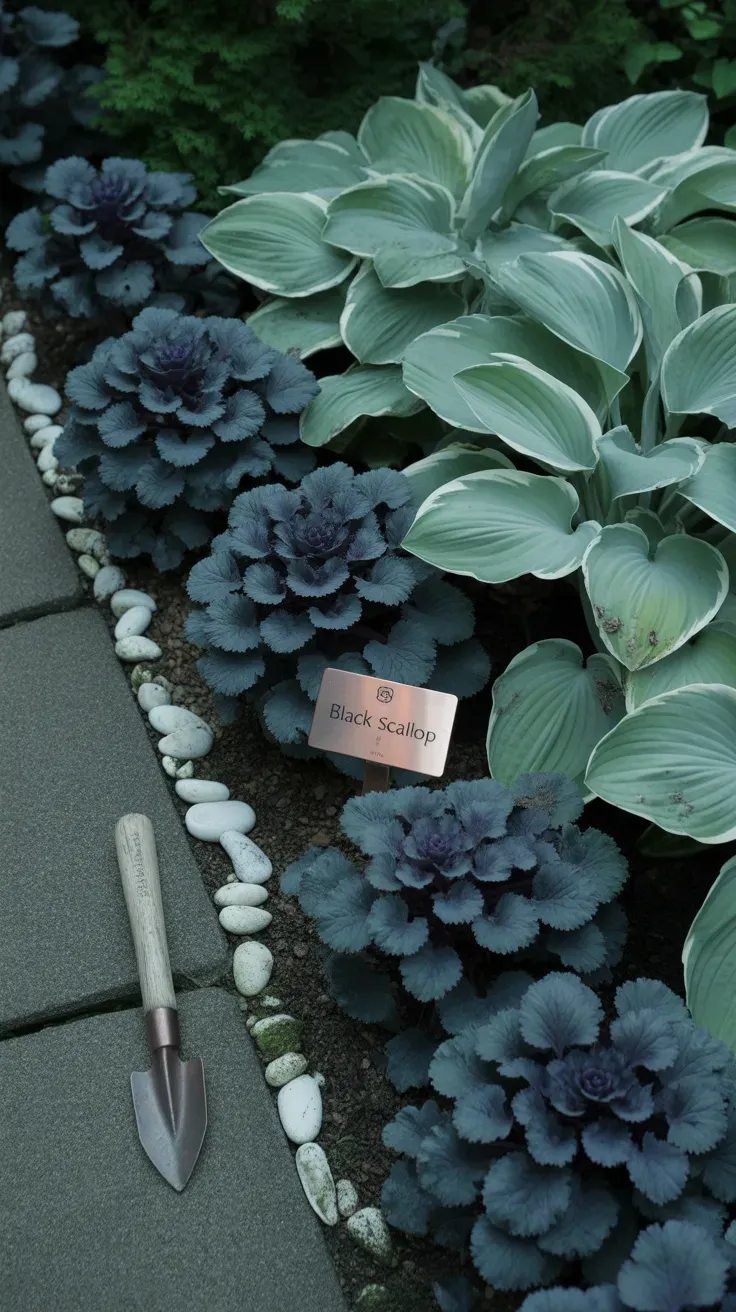
‘Black Scallop’ bugleweed brings genuinely near-black, glossy foliage that makes an intense contrast against lighter-leafed neighbors, with small blue flower spikes in spring as a bonus.
It grows in part shade to part sun and average soil, spacing plants 8-10 inches apart. Like other ajuga varieties, it spreads by stolons and can move into adjacent lawn if left unedged, so plan a barrier at planting time rather than after it spreads.
Internal link: dark foliage plants for high-contrast garden design External link: Missouri Botanical Garden’s Ajuga ‘Black Scallop’ profile
15. Moss Phlox for Rock Garden Crevice Coverage
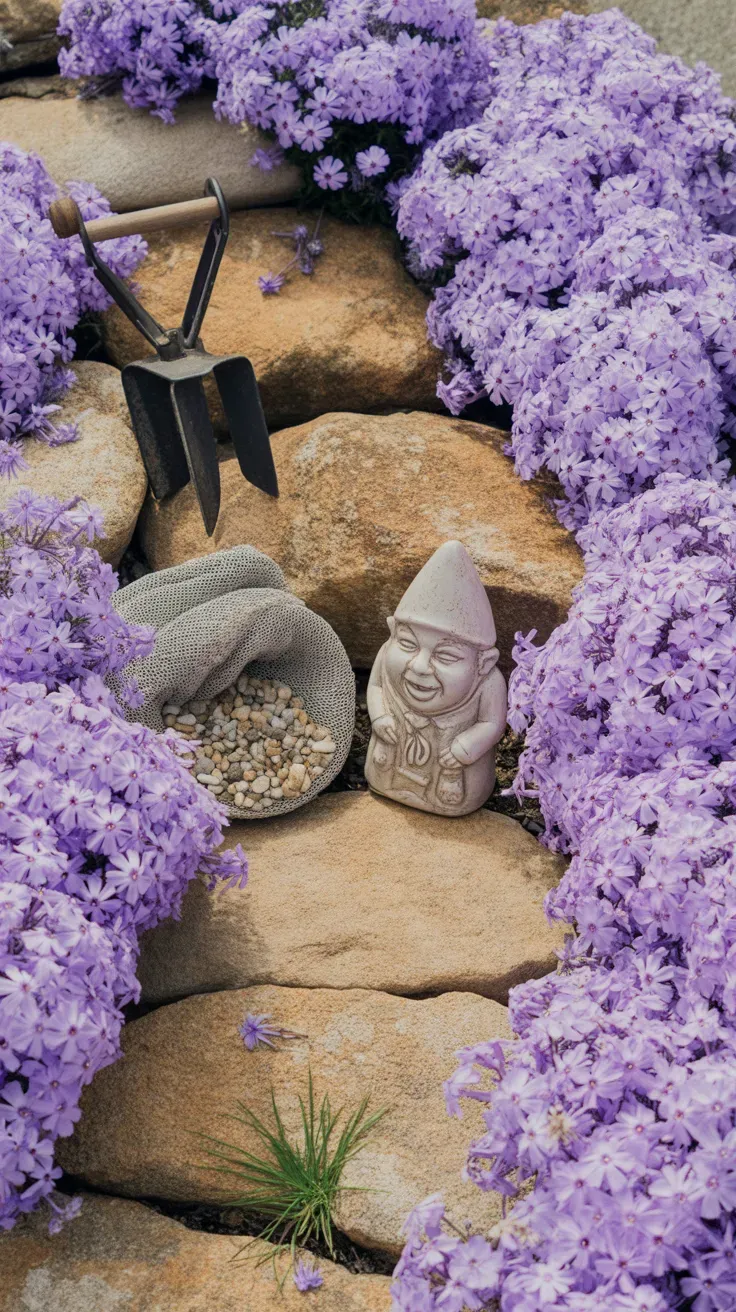
Moss phlox (a common name also used for Phlox subulata varieties with tighter, moss-like foliage) excels specifically at filling narrow rock crevices where few other flowering plants can establish roots.
It needs full sun and sharp drainage, tucked into gaps as small as 2-3 inches wide. It spreads slowly outward from crevices rather than across open ground, making it better suited to rock gardens than flat weedy beds.
Internal link: plants for filling rock garden crevices External link: Almanac’s moss phlox growing profile
16. Barren Strawberry for Look-Alike Strawberry Foliage Without Fruit Mess
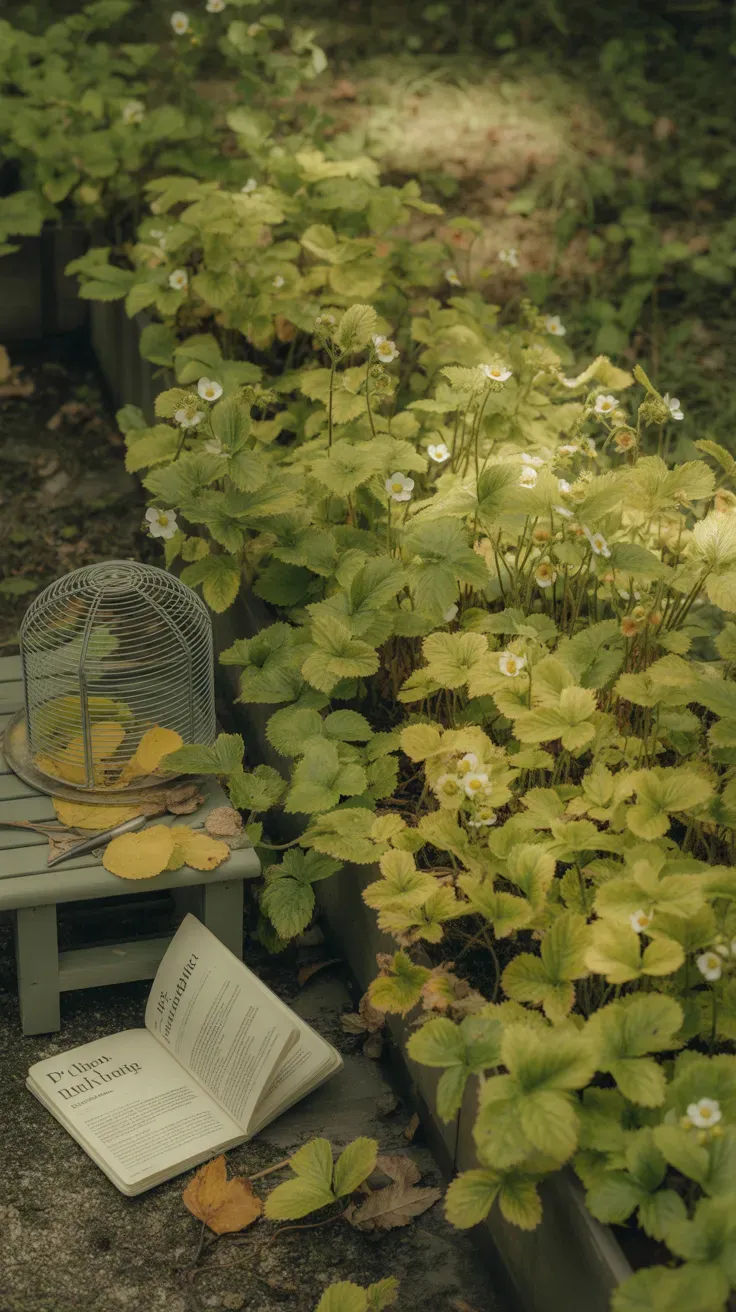
Barren strawberry (Waldsteinia fragarioides) looks nearly identical to true strawberry plants but produces no messy fruit, making it a practical ground cover for beds near walkways.
It tolerates part shade to part sun and average soil, spacing plants 12 inches apart. It spreads by runners similarly to real strawberries, filling a bed within two seasons while its glossy foliage stays attractive through most of the growing season.
Internal link: strawberry-look ground covers without the fruit mess External link: Missouri Botanical Garden’s Waldsteinia fragarioides profile
17. Creeping Veronica for Long-Blooming Blue Carpets
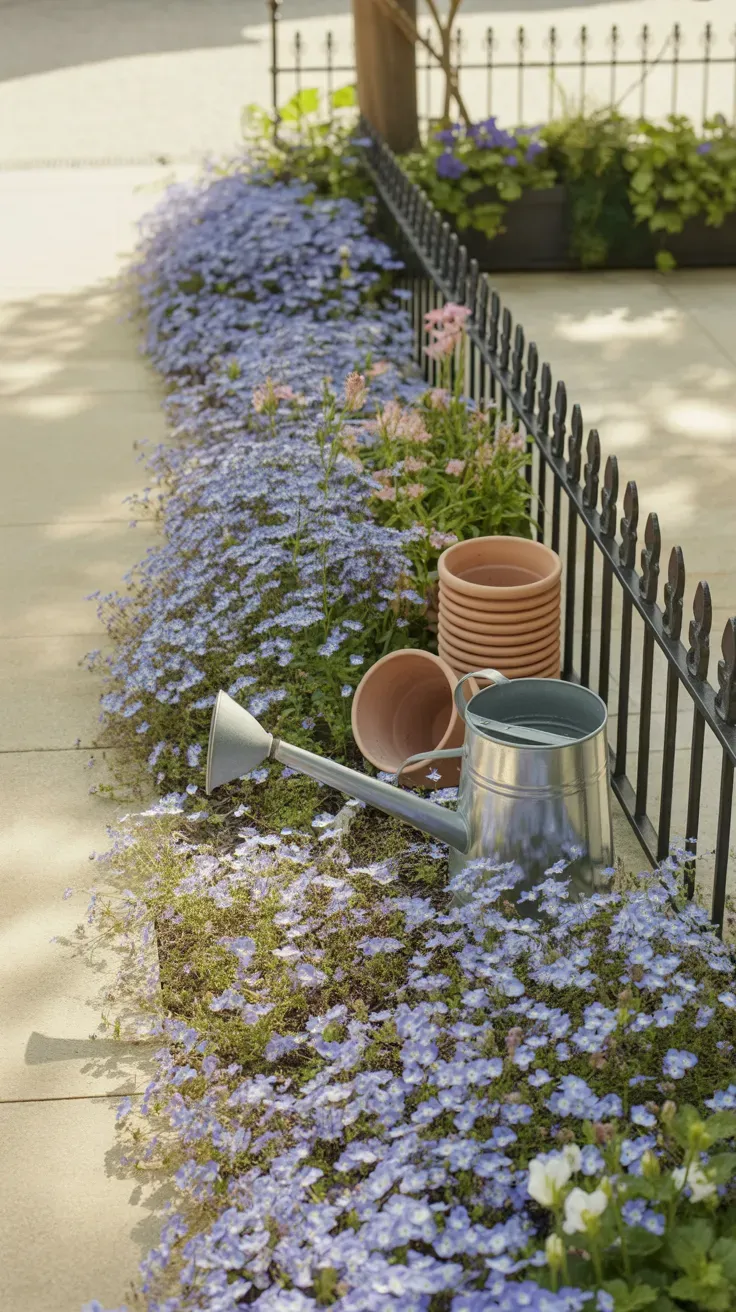
Creeping veronica (Veronica repens) blooms longer than most spring-flowering ground covers, often producing small blue flowers from mid-spring through early summer.
It needs full sun to light shade and moist, well-drained soil, spacing plants 8-10 inches apart. It spreads quickly enough to fill gaps between stepping stones within a single season and tolerates occasional light foot traffic once established.
Pro Tip: Cut back hard after the first bloom flush to encourage a smaller repeat bloom in late summer — most gardeners skip this step and miss the second flowering entirely.
Internal link: long-blooming ground covers for continuous color External link: Gardeners’ World’s Veronica repens growing notes
18. Periwinkle ‘Bowles’ for Compact Non-Invasive Coverage
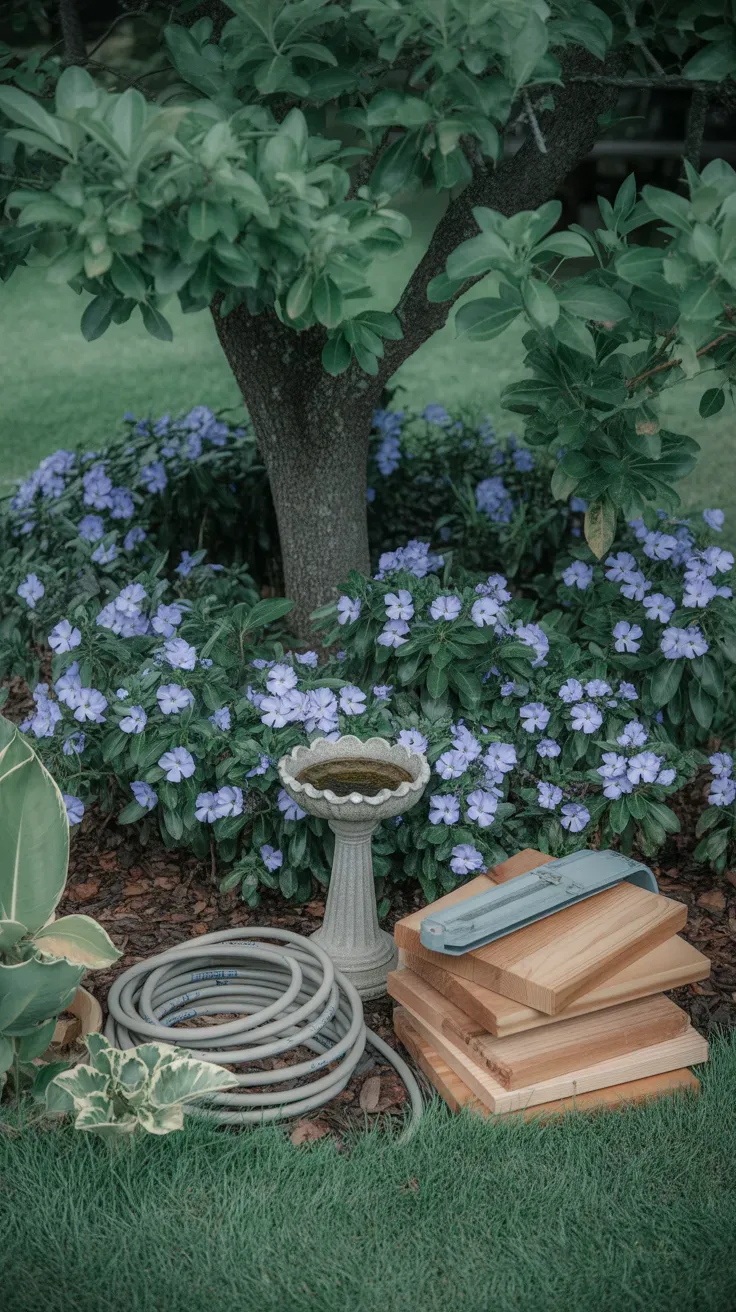
Vinca minor ‘Bowles’ offers the same reliable shade coverage as standard periwinkle but with a more compact, clumping habit that spreads less aggressively into unwanted areas.
It tolerates part to full shade and most soil types, spacing plants 12 inches apart. It’s a better choice than standard vinca for gardeners who want weed suppression without the escape-into-the-lawn tendency of the straight species.
Internal link: non-invasive alternatives to aggressive ground covers External link: RHS growing guide for Vinca minor cultivars
19. Golden Creeping Jenny for Brightening Damp Shade
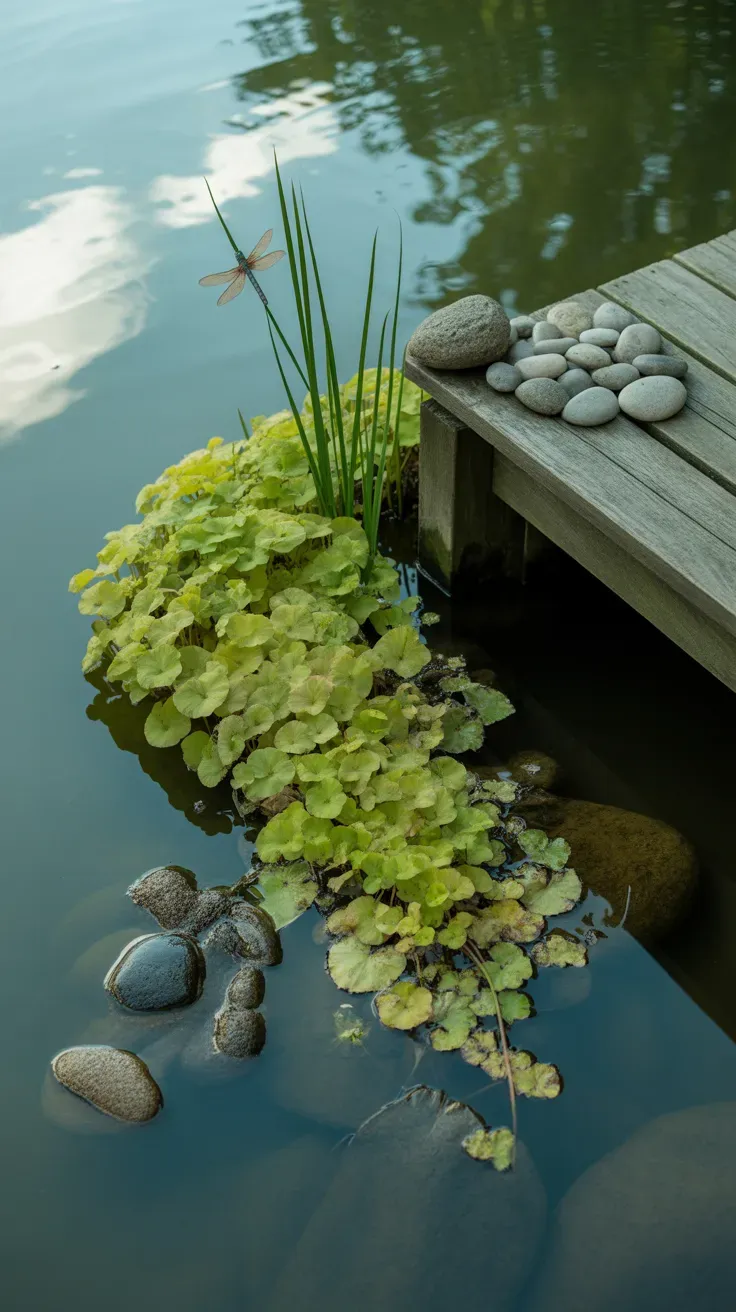
This shade-tolerant form of creeping jenny holds its golden color better in lower light than the sun-grown version, making it a strong pick for damp, shaded spots near ponds or downspouts.
It grows in part to full shade with consistently moist soil, spacing plants 10-12 inches apart. It spreads via rooting stems and can tolerate brief standing water, unlike most ground covers on this list.
Internal link: ground covers for damp shaded spots near water features External link: Penn State Extension’s moisture-tolerant ground cover list
20. Rock Cress for Cascading Spring Sheets of Color
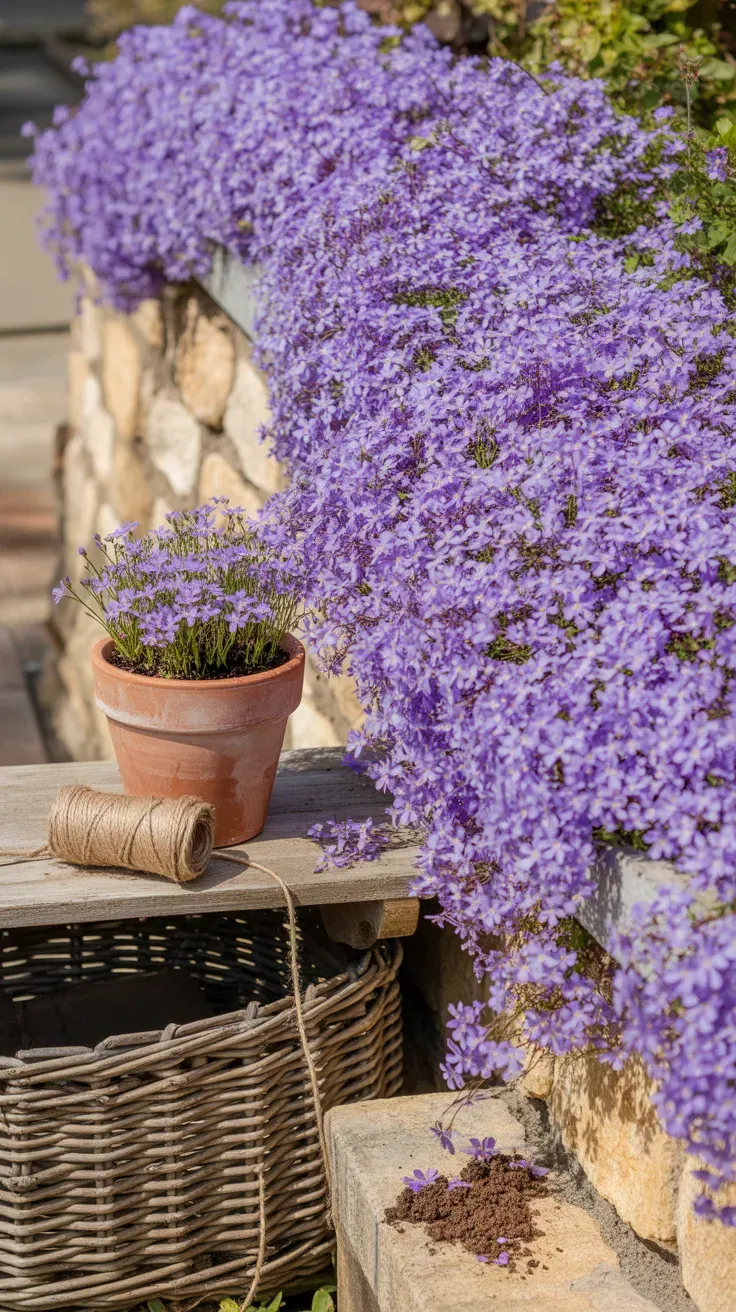
Rock cress (Aubrieta) produces a dense sheet of purple, pink, or white blooms each spring, cascading beautifully over walls and slopes where its trailing habit can spill downward.
It needs full sun and excellent drainage, spacing plants 10-12 inches apart. Shear back by about a third after bloom to keep growth compact and encourage denser weed-blocking foliage through summer.
Internal link: cascading plants for retaining walls and slopes External link: Gardeners’ World’s Aubrieta growing guide
21. Wild Ginger for Native Shade Groundcover
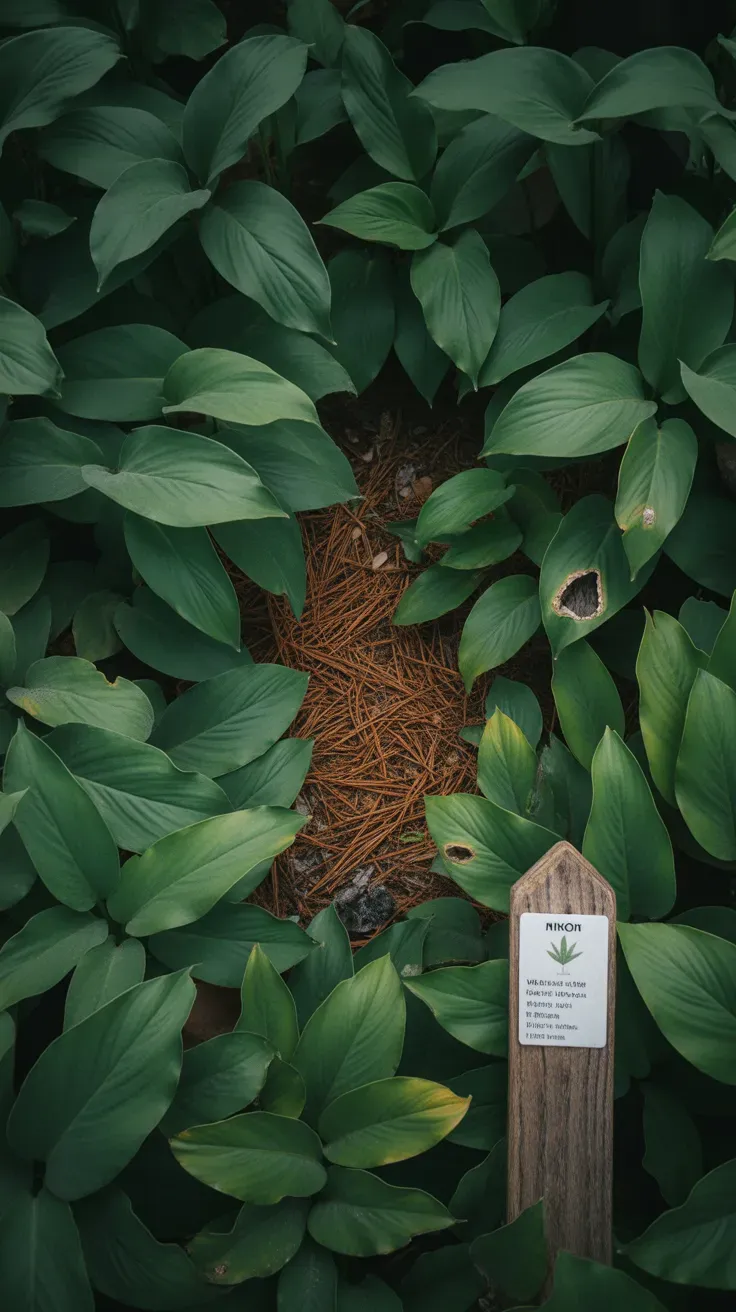
Wild ginger (Asarum canadense) is a native North American ground cover valued for its dense, heart-shaped foliage and its usefulness in native pollinator garden designs, even though its small maroon flowers hide beneath the leaves.
It needs full to part shade and rich, moisture-retentive soil, spacing plants 12 inches apart. Growth is slow — expect 2-3 years for solid coverage — but once established it forms a nearly weed-proof mat that supports native insect species better than most non-native options here.
Internal link: native ground covers that support local pollinators External link: Missouri Botanical Garden’s Asarum canadense profile
22. Sedum ‘Dragon’s Blood’ for Fast Red-Tinged Spread
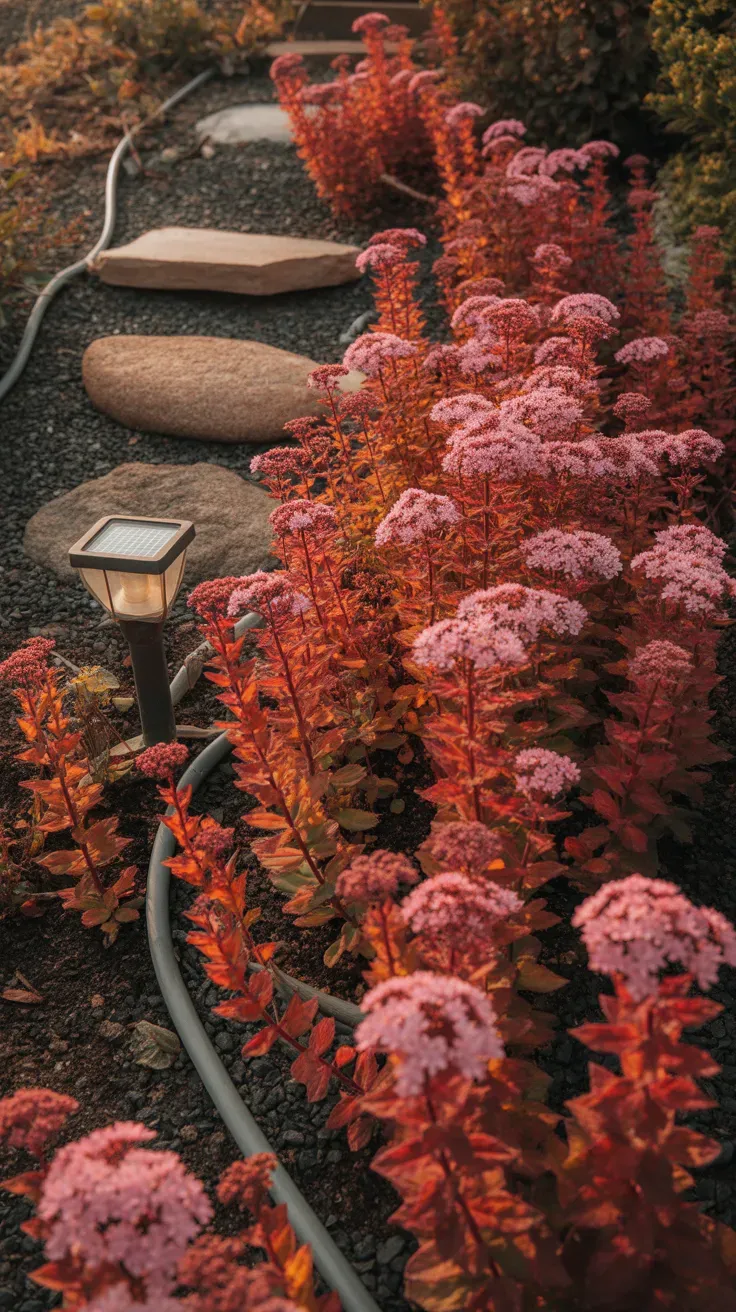
Sedum spurium ‘Dragon’s Blood’ spreads faster than most sedum varieties, forming a dense mat of red-tinged succulent foliage topped with pink summer flowers that pollinators visit heavily.
It needs full sun and well-drained soil, spacing cuttings 8-10 inches apart. It roots readily from broken stem pieces, which speeds coverage but also means stray fragments can sprout in adjacent beds if not contained.
Pro Tip: Foliage color deepens to nearly maroon in full sun and cooler fall temperatures — if it’s staying green through summer, it likely needs more direct light.
Internal link: fast-spreading sedum varieties for full sun External link: University of Florida Extension’s Sedum spurium growing notes
23. Lily of the Valley for Deep Shade Fragrance
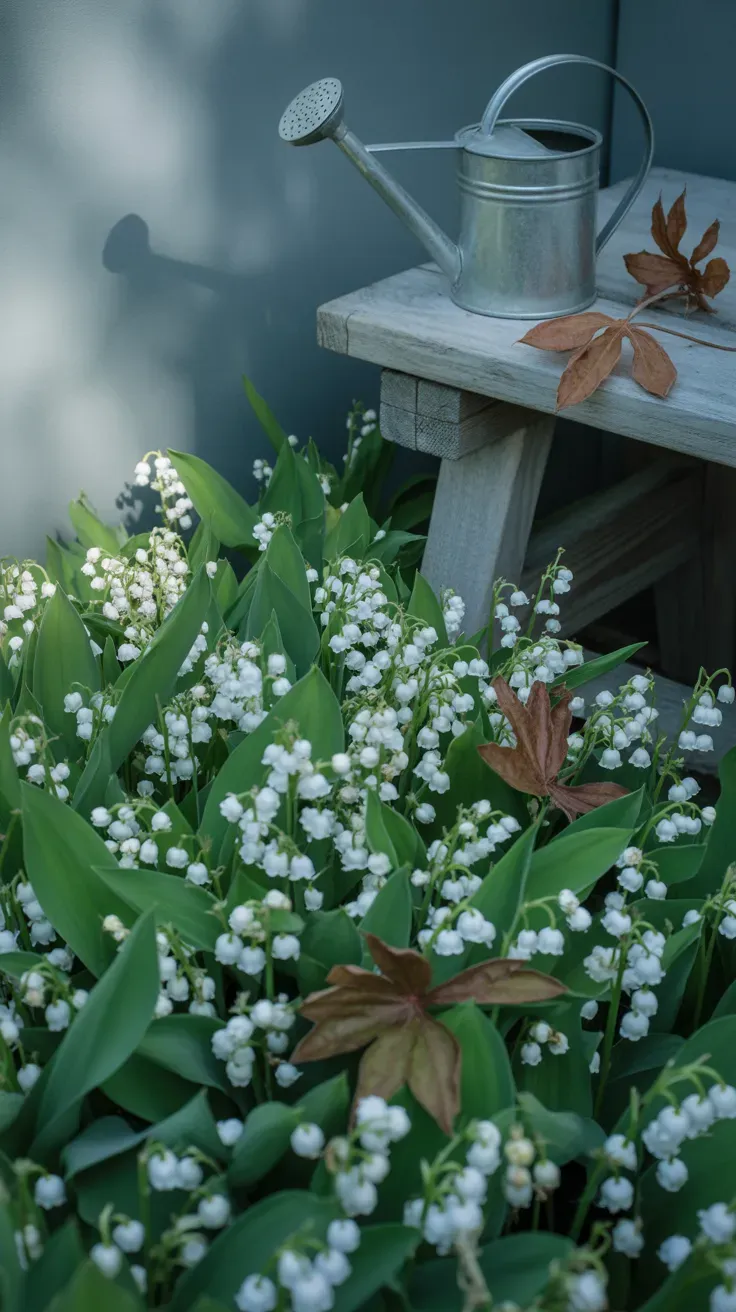
Lily of the valley (Convallaria majalis) spreads aggressively in deep shade where few flowering plants survive at all, producing fragrant white bell flowers each spring atop dense, weed-smothering foliage.
It needs part to full shade and moist, humus-rich soil, spacing plants 6-8 inches apart. It spreads via underground rhizomes fast enough to be considered invasive in some regions, so confine it with a buried barrier if planting near a woodland edge.
The one real limitation worth stating plainly: all parts of this plant are toxic if ingested, so it’s not a fit for households with pets or young children who explore garden beds.
Internal link: fragrant shade plants for deep-shade beds External link: RHS growing guide for Convallaria majalis
24. Blue Star Creeper for Delicate Star-Shaped Blooms
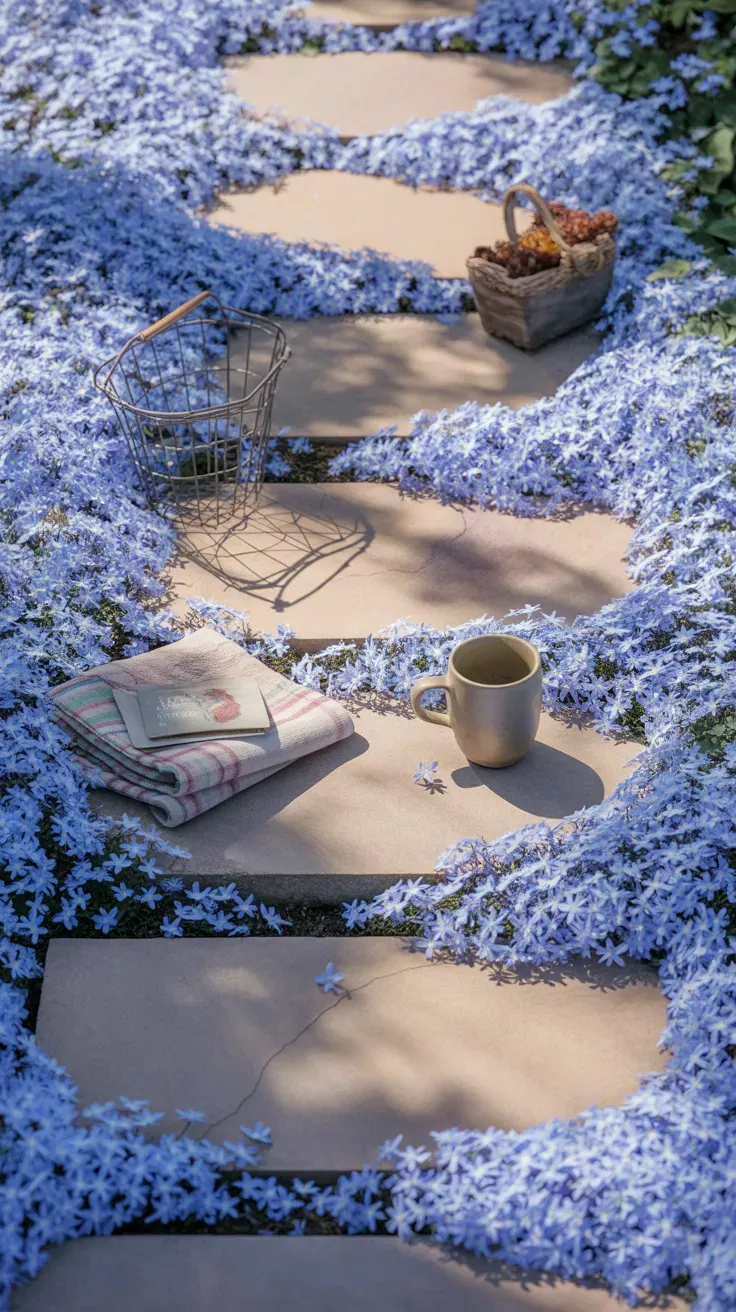
Blue star creeper (Isotoma fluviatilis) produces a near-continuous flush of tiny pale blue flowers from spring through summer, tolerating light foot traffic well enough for use between pavers.
It grows in part shade to full sun (with afternoon shade in hot climates) and needs consistent moisture, spacing plants 8-10 inches apart. It fills gaps within one growing season under good conditions but resents prolonged drought, unlike the sedums and thymes on this list.
Internal link: flowering ground covers for foot-traffic pathways External link: SF Gate Home Guide’s blue star creeper growing tips
25. Elfin Thyme for the Tightest, Most Compact Mat
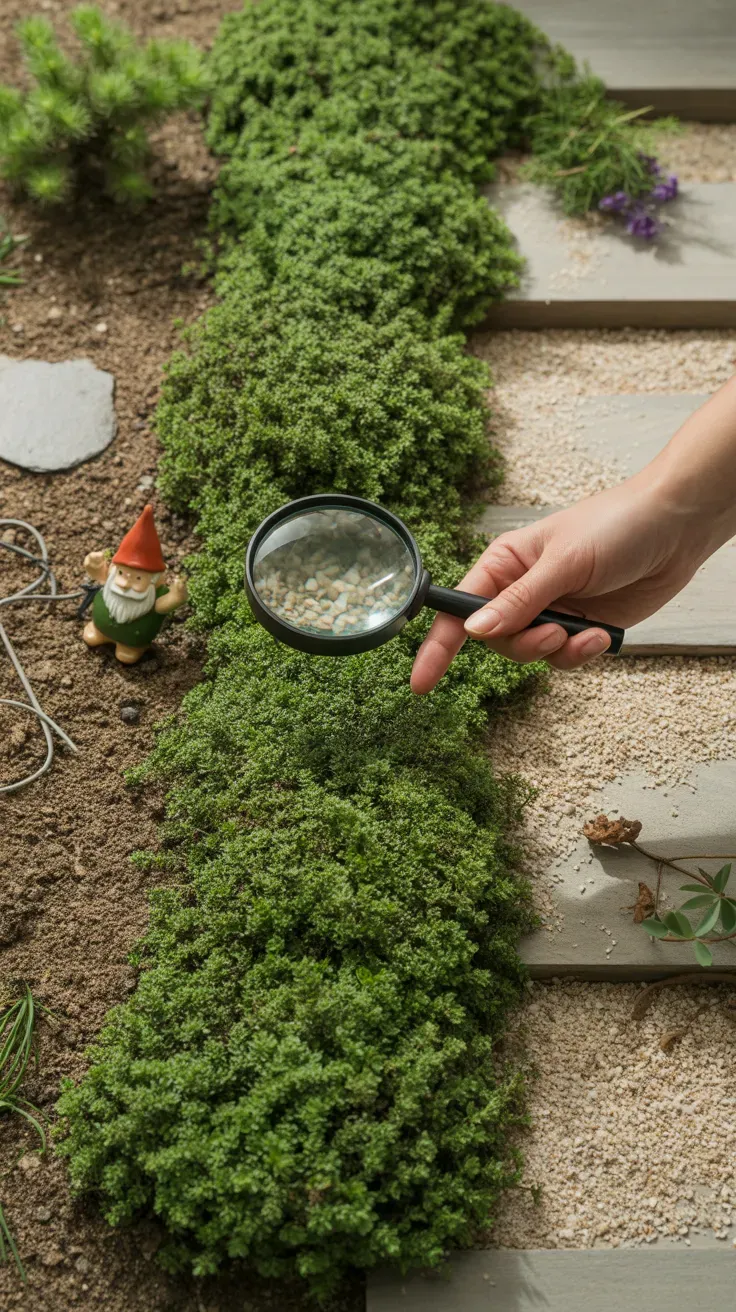
Elfin thyme (Thymus serpyllum ‘Elfin’) is the most compact thyme variety available, growing barely an inch tall and forming an unusually tight, dense mat that leaves weeds almost no room to establish.
It needs full sun and lean, sharply drained soil, spacing plugs 6-8 inches apart. Growth is notably slower than standard creeping thyme, often taking two seasons for full coverage, which makes it better suited to smaller accent areas like rock garden pockets than large open beds.
Internal link: miniature ground covers for rock garden accents External link: Almanac’s dwarf thyme growing profile
26. Foamflower for Native Woodland Texture
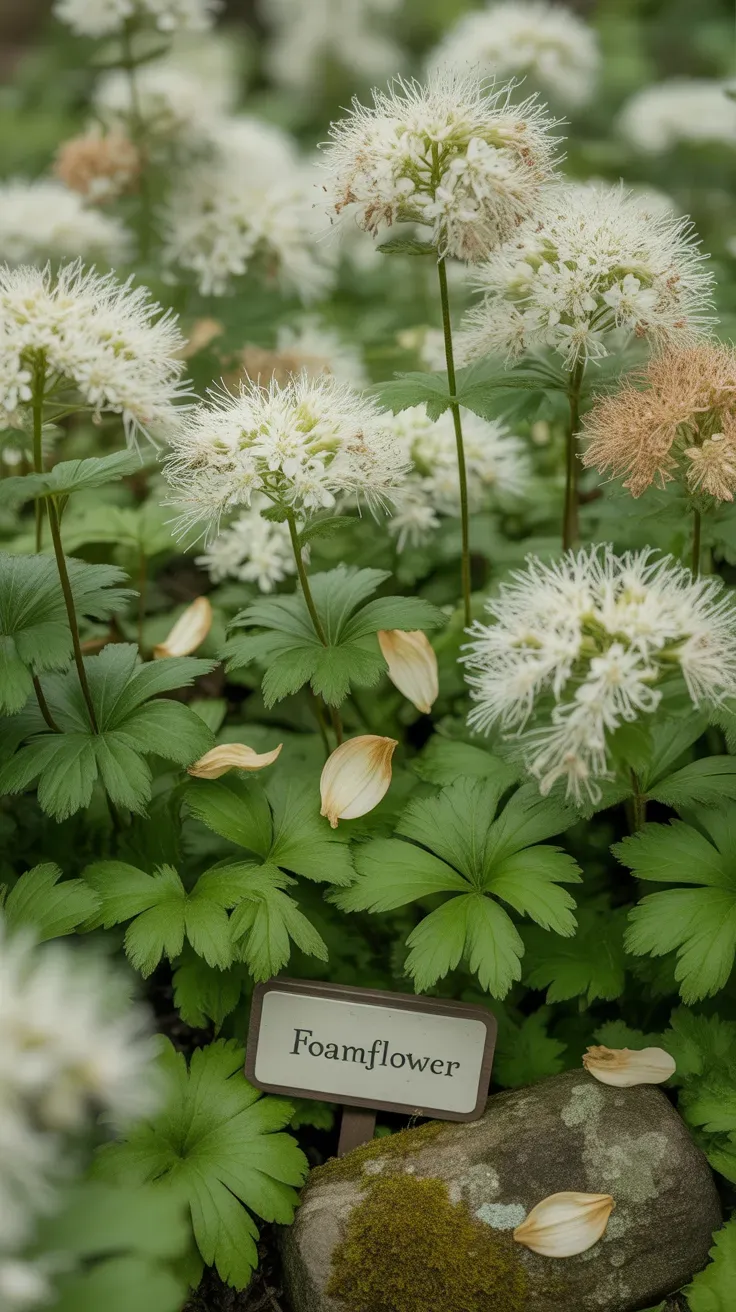
Foamflower (Tiarella cordifolia) is another native option that pairs well with wild ginger, producing airy white flower plumes each spring above attractive, slightly fuzzy heart-shaped foliage.
It needs part to full shade and moist, well-drained soil rich in organic matter, spacing plants 12 inches apart. It spreads by stolons at a moderate pace, reaching solid coverage within two seasons, and its foliage often takes on reddish tones in fall for added seasonal interest.
Internal link: native woodland plants for shaded garden beds External link: Missouri Botanical Garden’s Tiarella cordifolia profile
27. Pachysandra for Dense, No-Fuss Shade Blanket
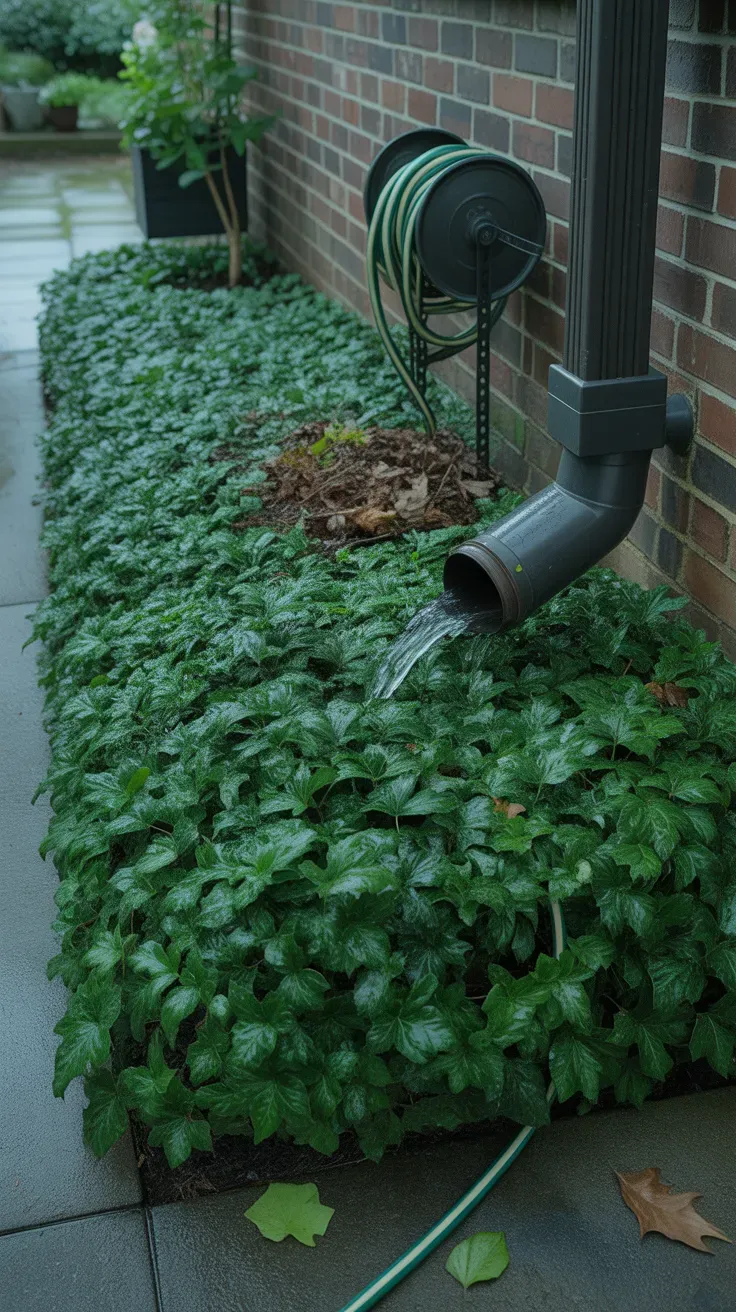
Pachysandra terminalis is the classic foundation-bed solution for deep shade, forming a dense, glossy green blanket that most gardeners plant once and never think about again.
It thrives in full to part shade and average, well-drained soil, spacing plants 8-12 inches apart. It spreads via rhizomes to form a solid, weed-proof mat within two to three seasons, and its small white flower spikes in spring, while subtle, still attract early pollinators.
Pro Tip: Avoid planting pachysandra where it can spread into a lawn edge without a barrier — it’s notoriously difficult to remove once it establishes a rhizome network under turf.
Internal link: classic shade ground covers for foundation beds External link: Penn State Extension’s Pachysandra terminalis growing guide
Getting Started With Ground Covers That Crowd Out Weeds
The easiest first step is matching a ground cover to your bed’s actual light and moisture conditions rather than picking based on bloom photos alone — a sun-loving sedum planted in shade will simply fade and leave the weed problem you were trying to solve. The most common beginner mistake is spacing plants too far apart to save money upfront, which leaves bare soil exposed to weeds for an extra season or two while the cover fills in.
For your first bed, buy enough plugs or small plants to hit the recommended spacing for your chosen species, one bag of compost to amend planting holes, and a roll of edging material if your chosen cover spreads aggressively.
Realistically, fast spreaders like creeping thyme or vinca minor show solid coverage within one growing season, while slower options like dwarf mondo grass or elfin thyme take two to three years to fully close gaps.
Frequently Asked Questions
What is the fastest-spreading ground cover to stop weeds?
Creeping thyme, creeping phlox, and vinca minor are among the fastest-spreading options, often achieving full coverage within a single growing season under good conditions. Spacing plants at the recommended 8-12 inches, rather than farther apart to save money, speeds this timeline considerably.
What ground cover works best in full shade?
Lamium, sweet woodruff, and pachysandra all tolerate full shade and spread densely enough to crowd out weeds without direct sun. Wild ginger and lily of the valley are strong native and fragrant alternatives, respectively, for the same deep-shade conditions.
Do ground covers really stop weeds from growing?
Yes, dense ground covers block weed seeds from reaching bare soil and sunlight, which most weed seeds need to germinate. Coverage needs to be genuinely dense (no visible bare soil) to work fully, so proper initial spacing of 8-18 inches depending on species matters more than the plant choice itself.
Which ground covers can handle foot traffic?
Creeping thyme, Irish moss, elfin thyme, and blue star creeper tolerate light, occasional foot traffic once established. None of these should be used for heavy, daily traffic paths — reserve those areas for pavers or stepping stones with the ground cover filling the gaps instead.
Are any of these ground covers safe for pets?
Irish moss, dwarf mondo grass, and blue star creeper are non-toxic and safe for pet households. Avoid lily of the valley, which is toxic if ingested, and use caution with vinca and pachysandra if pets tend to chew on garden foliage.
A Few Final Thoughts
Any of these 27 ground covers can turn a bed you’re constantly weeding into one you barely think about, provided you match the plant to your actual light and moisture conditions rather than the prettiest bloom photo. The real key is proper initial spacing — plant too sparsely to save money and you’re fighting weeds in the gaps for an extra season or two. Give your chosen spreader one full growing season before judging its performance, since most of these plants look modest at first and then fill in dramatically once their root systems establish. Pick one bed to start with, get the spacing right, and you’ll likely be reaching for a second area to convert before the first season is even over.