
There’s a reason Mediterranean-style front yards photograph so well — sun-bleached gravel, silvery olive foliage, and terracotta pots have a warmth that’s hard to fake with a typical lawn-and-hedge setup. The good news is you don’t need a coastal Italian villa to pull it off; most of these ideas work in ordinary suburban front yards with average soil and a few hours of afternoon sun. This style also happens to be one of the most water-wise options available, since so many Mediterranean plants evolved for dry summers and thin soil. Whether you’re redoing the whole yard or just swapping out one bed, these nine ideas each stand on their own. Let’s dive in!
Quick Answer: The fastest way to bring Mediterranean influence to a front yard is combining gravel or decomposed granite groundcover with drought-tolerant plants like olive trees, lavender, and rosemary, then layering in terracotta pots and a warm-toned stone or paver path. Even one or two of these elements — say, a gravel bed with lavender — noticeably shifts the whole yard’s feel.
Why a Mediterranean Front Yard Is Worth Your Time
Mediterranean landscaping solves a problem a lot of homeowners already have: a thirsty lawn that needs constant water and mowing to look decent. Swapping even part of that lawn for gravel, drought-tolerant shrubs, and stone paths cuts watering needs dramatically once plants are established, often to just a deep soak every 10–14 days in summer.
The style also ages well. Unlike trendy annual beds that need replanting each season, core Mediterranean plants like rosemary, lavender, and olive are perennial and only get better-looking with a few years of growth.
A lesser-known fact: many Mediterranean herbs actually perform worse in rich, amended soil — they’re adapted to poor, rocky ground, so over-fertilizing or over-watering them is the most common way to kill them.
This approach is ideal for homeowners in hot, dry summer climates (Zones 7–10 especially) who want a low-maintenance yard with real texture and color, not just green.
At a Glance
- Nine ideas covering plants, hardscaping, and decor for a full Mediterranean look.
- Most plants featured thrive in Zones 7–10 with full sun (6+ hours daily).
- Gravel and stone groundcover cuts watering needs versus a traditional lawn.
- Budget ranges from under $50 for pots to several thousand for full hardscaping.
- Works in both small urban front yards and larger suburban lots.
| Idea | Difficulty | Cost Range | Best For |
| Olive tree centerpiece | Moderate | $$$ | Focal point |
| Gravel groundcover | Moderate | $$ | Lawn replacement |
| Lavender & rosemary borders | Easy | $ | Fragrance & color |
| Terracotta pot clusters | Easy | $ | Entryways, porches |
| Stone or paver pathway | Moderate | $$$ | Walkways |
| Wrought iron accents | Easy | $$ | Gates, fencing |
| Drought-tolerant grasses | Easy | $ | Texture & movement |
| Whitewashed low walls | Difficult | $$$ | Structure |
| Citrus in containers | Moderate | $$ | Fragrance & color |
Plant an Olive Tree as Your Focal Point
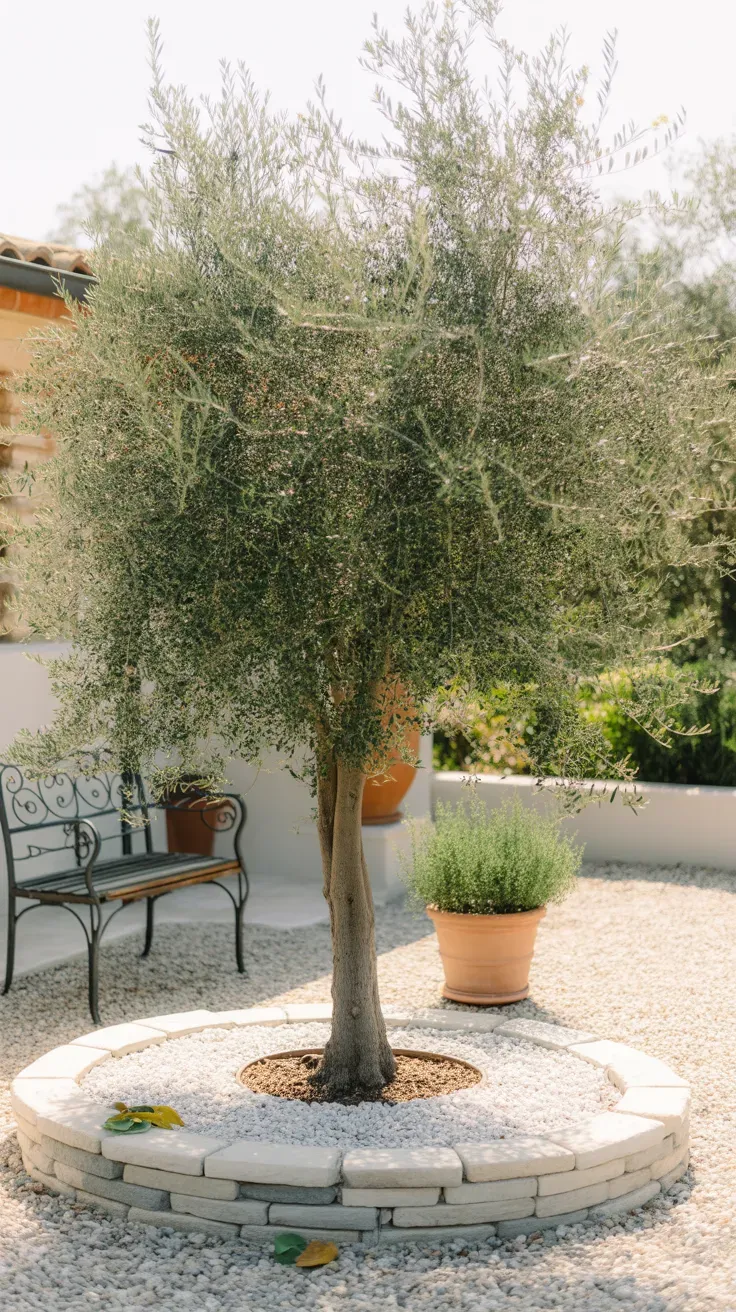
Nothing signals Mediterranean style faster than an olive tree, and modern fruitless cultivars mean you can enjoy the look without dealing with dropped fruit on the sidewalk.
Choose a variety like ‘Little Ollie’ or ‘Wilsonii’ for smaller front yards, and plant in well-draining soil with at least 6 hours of direct sun. Olives tolerate poor soil and drought once established, typically after their first full growing season, but they do need protection below 15°F (-9°C) in colder zones.
Pro Tip: Skip regular fertilizer entirely for the first two years — olive trees planted in overly rich soil often produce weak, leggy growth instead of the dense, silvery canopy you actually want.
See planting depth guidance from Greenbotanicalgarden.com and cold-hardiness notes from Missouri Botanical Garden. One well-placed olive tree can anchor an entire yard’s redesign.
Replace Lawn Sections With Gravel Groundcover
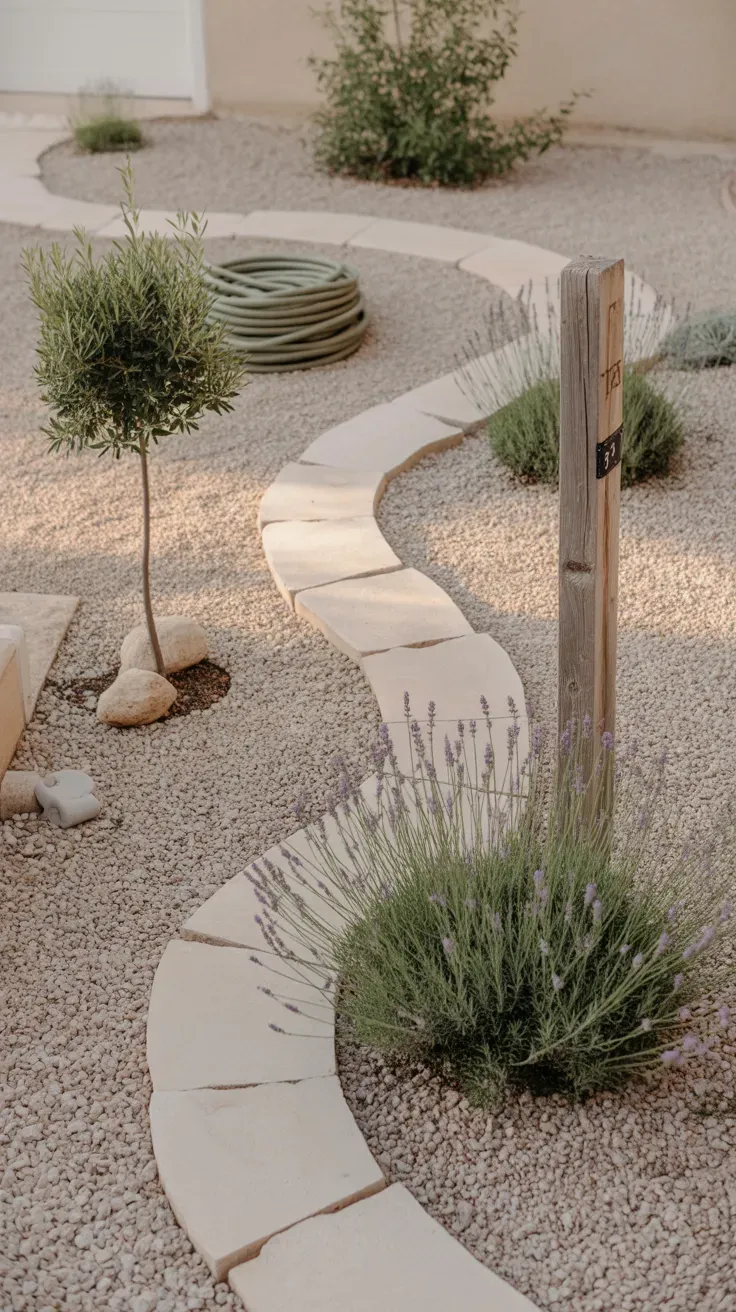
Swapping even a third of a front lawn for gravel cuts down significantly on mowing and irrigation while giving planting beds a cleaner, drier-climate look.
Use decomposed granite or pea gravel over a layer of landscape fabric to suppress weeds, and edge the gravel with steel or stone borders to keep it from migrating onto walkways. In practice, gravel beds also make a great low-maintenance buffer around trees and shrubs that dislike wet soil around their base.
- Decomposed granite: warmer tone, compacts well for paths
- Pea gravel: rounder texture, good for loose planting beds
- River rock: larger scale, best for accent areas only
Browse groundcover comparisons on Greenbotanicalgarden.com, and see xeriscaping basics from University of Florida IFAS Extension. It’s one of the highest-impact swaps on this whole list.
Border Walkways With Lavender and Rosemary
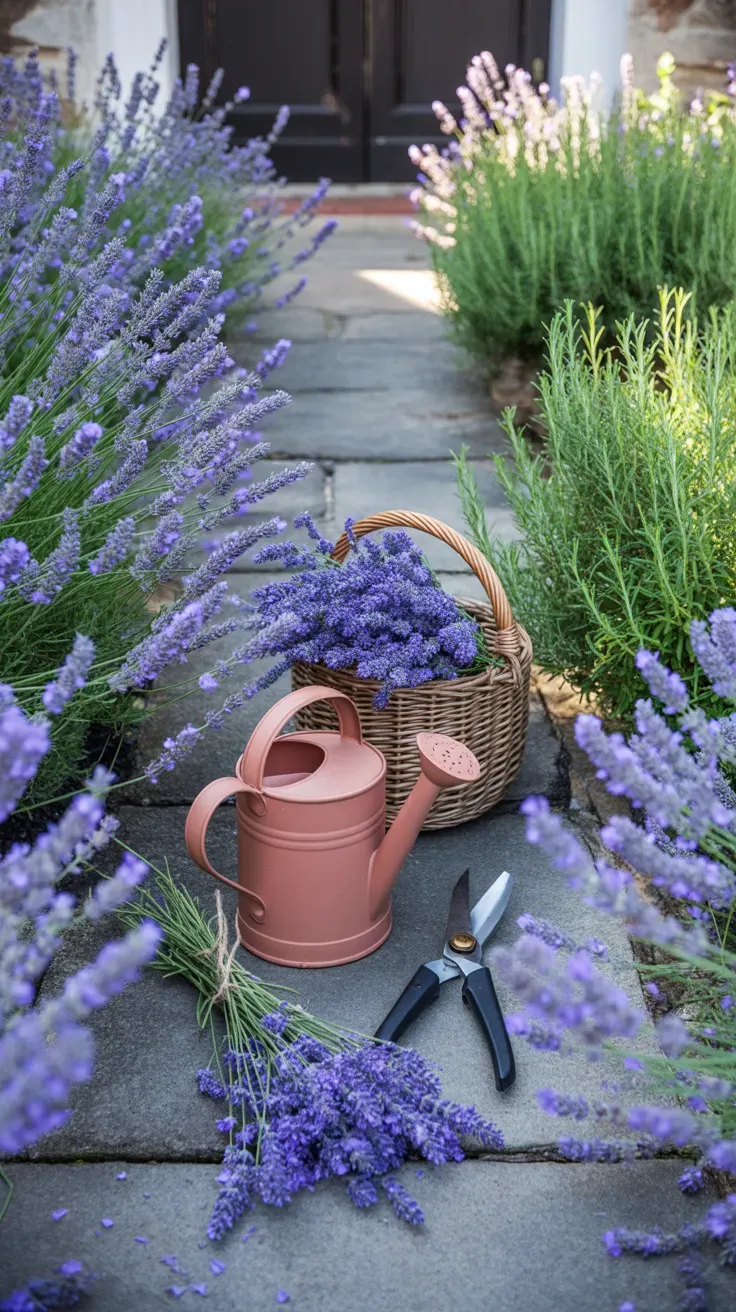
Lavender and rosemary both thrive in the same lean, well-draining soil, making them a natural pairing for a fragrant, low-water walkway border.
Space plants 18–24 inches apart to allow airflow, which helps prevent the fungal issues both plants are prone to in humid or overly wet conditions. Rosemary can be shaped into low hedges with regular light pruning, while lavender does best left slightly looser and trimmed hard just after its summer bloom.
Pro Tip: Prune lavender back by about a third right after flowering, not in fall — cutting into old woody stems later in the season often kills the plant instead of encouraging new growth.
More fragrant border ideas live on Greenbotanicalgarden.com; care specifics come from RHS. Brushing past this border on the way to your front door is half the appeal.
Cluster Terracotta Pots Near the Entryway
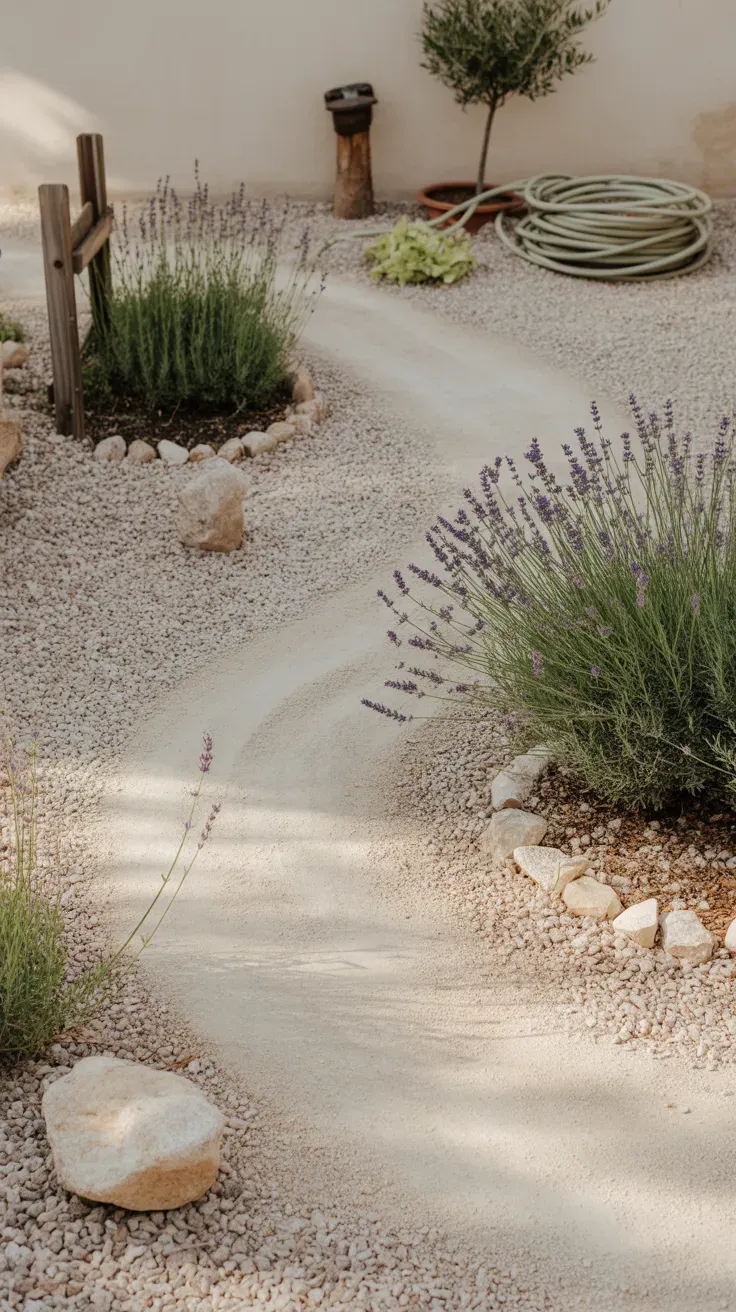
Terracotta is the fastest, lowest-commitment way to bring Mediterranean texture to a front yard, since it works on porches, steps, and driveways without any digging.
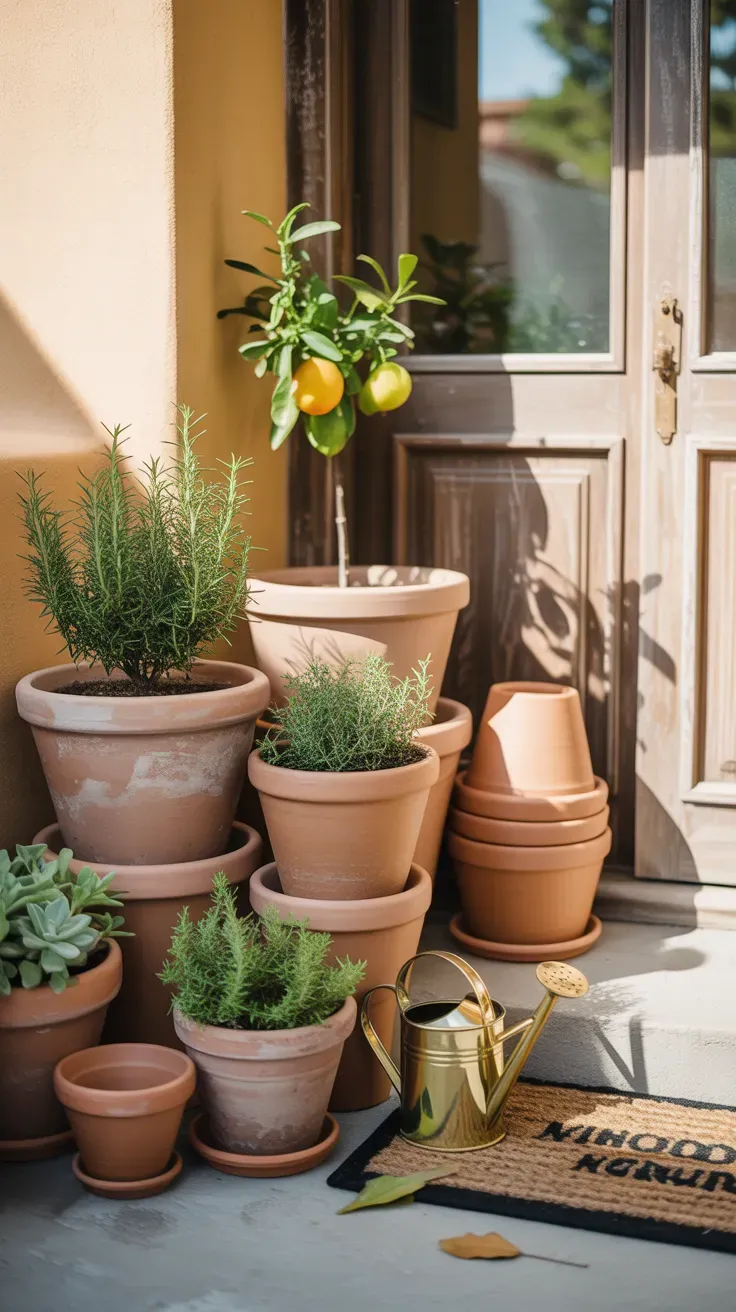
Group pots in odd numbers and varying heights for visual interest, and choose unglazed terracotta specifically — its porous surface wicks moisture away from roots, which suits Mediterranean herbs far better than glazed or plastic pots that trap water.
- Tall pot: small citrus tree or upright rosemary
- Medium pot: trailing succulents or geraniums
- Short pot: thyme or low-growing sedum
Explore container groupings on Greenbotanicalgarden.com, and see terracotta drainage notes from The Sill. This idea alone can transform a plain entryway in an afternoon.
Install a Warm-Toned Stone or Paver Pathway
The right pathway material does a lot of visual heavy lifting — warm limestone, travertine, or sandstone pavers read as Mediterranean instantly in a way cool gray concrete never quite does.
Set irregular-shaped pavers into a bed of compacted gravel rather than mortar for a more relaxed, old-world look, leaving small gaps for creeping thyme or moss to fill in over time. Expect a weekend project for a short front walkway, or plan for a professional install on anything longer than about 20 feet.
Pro Tip: Lay pavers with slightly uneven spacing rather than a perfectly even grid — true Mediterranean paths were built by hand, and that irregularity is part of what makes the look feel authentic rather than manufactured.
More hardscaping guidance is on Greenbotanicalgarden.com; paver installation basics come from BHG Gardening. It’s a bigger investment, but one of the most transformative on this list.
Add Wrought Iron Gates or Fencing Accents
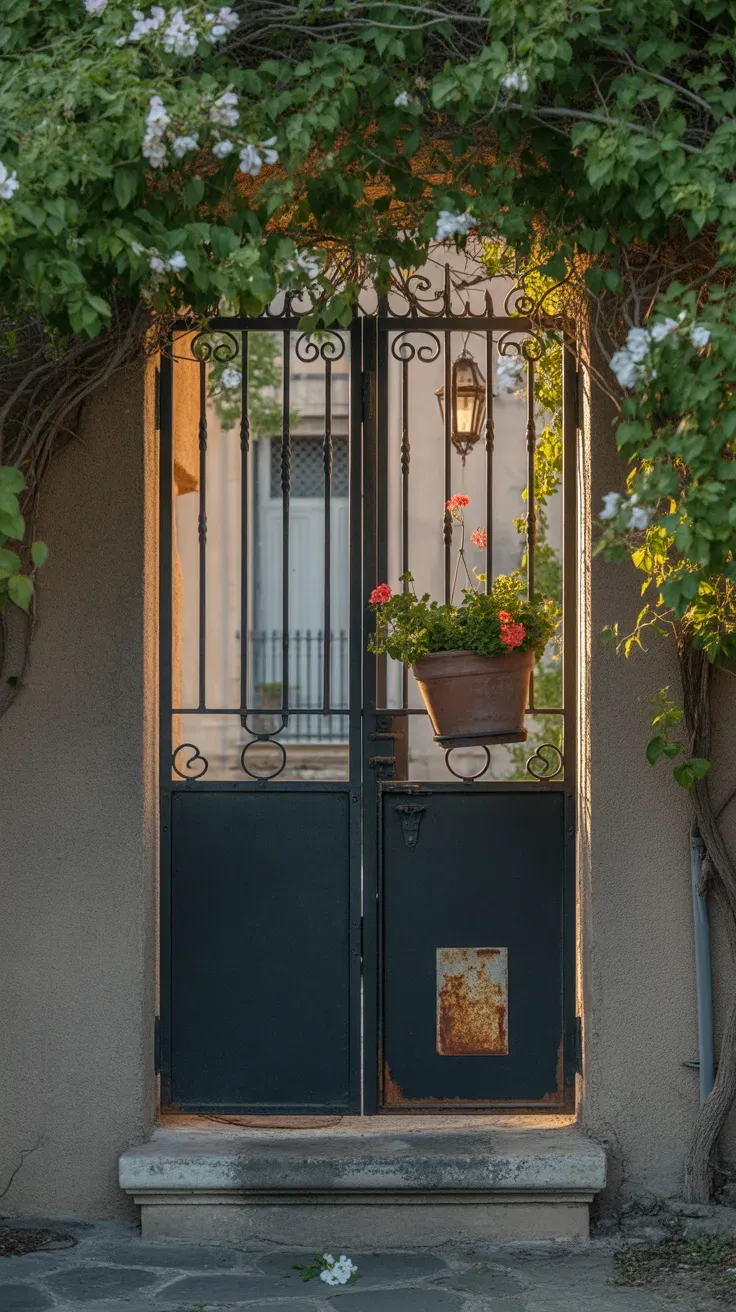
Wrought iron has been part of Mediterranean architecture for centuries, and even a small gate or fence panel adds that old-world structure without a major renovation.
A single decorative gate at the front walkway entrance, paired with a low stucco or stone wall, creates an immediate sense of arrival. Powder-coated iron holds up far better than untreated iron against rust, especially in coastal or humid climates.
- Full fence line: strongest structural statement, higher cost
- Single gate accent: budget-friendly focal point
- Window or wall grilles: subtle detail without full fencing
Find more entryway ideas on Greenbotanicalgarden.com, and see climbing vine pairings from Gardeners’ World. Even one gate section makes a front yard feel intentional.
Layer In Drought-Tolerant Ornamental Grasses
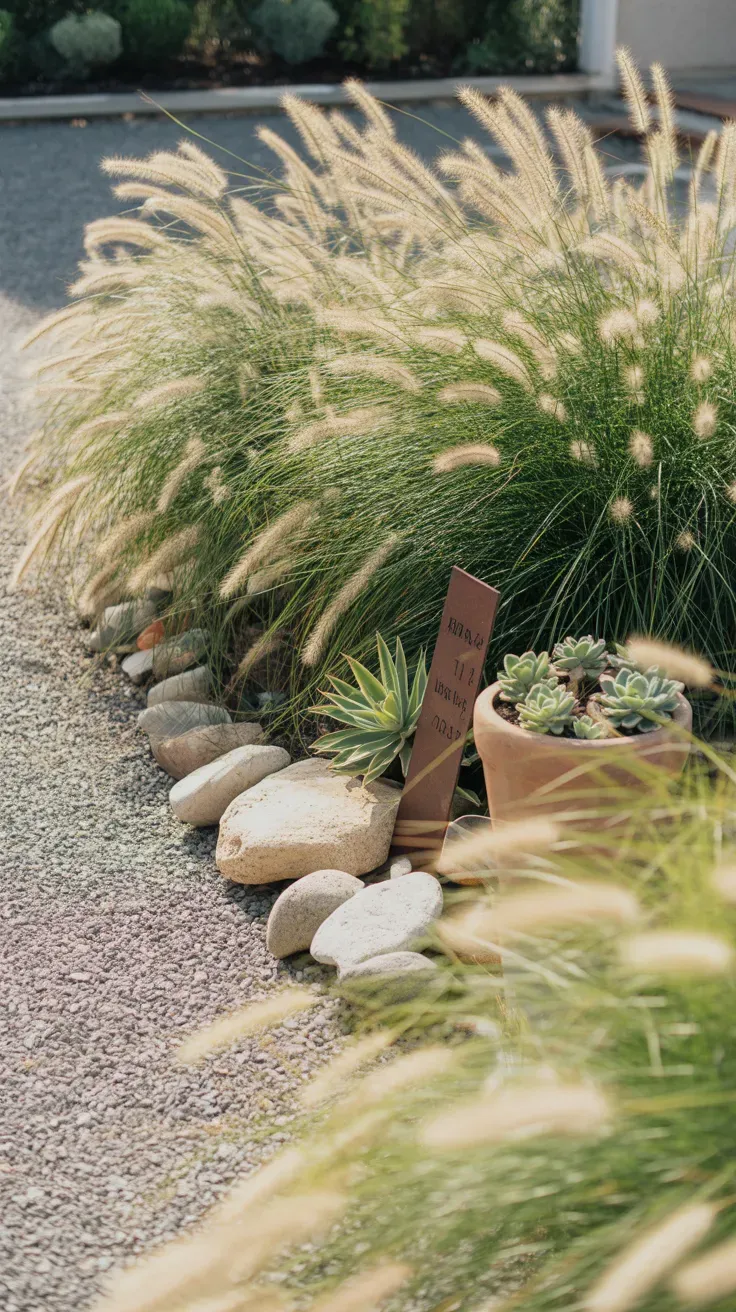
Ornamental grasses add movement and softness that keep an otherwise hard, gravel-and-stone yard from feeling too rigid or static.
Varieties like feather reed grass or blue fescue tolerate poor, dry soil well and need minimal care beyond an annual cutback in late winter to about 3–4 inches, which encourages fresh, fuller growth in spring. Plant in drifts of three or five rather than single specimens for a fuller visual effect.
Pro Tip: Resist the urge to deadhead grass seed heads through fall and winter — they catch low light beautifully and provide texture through the dormant season when other plants have gone quiet.
More texture-planting ideas are on Greenbotanicalgarden.com; grass care notes come from Penn State Extension. This idea softens every hardscape choice on the list.
Build Low Whitewashed Stucco Walls or Borders
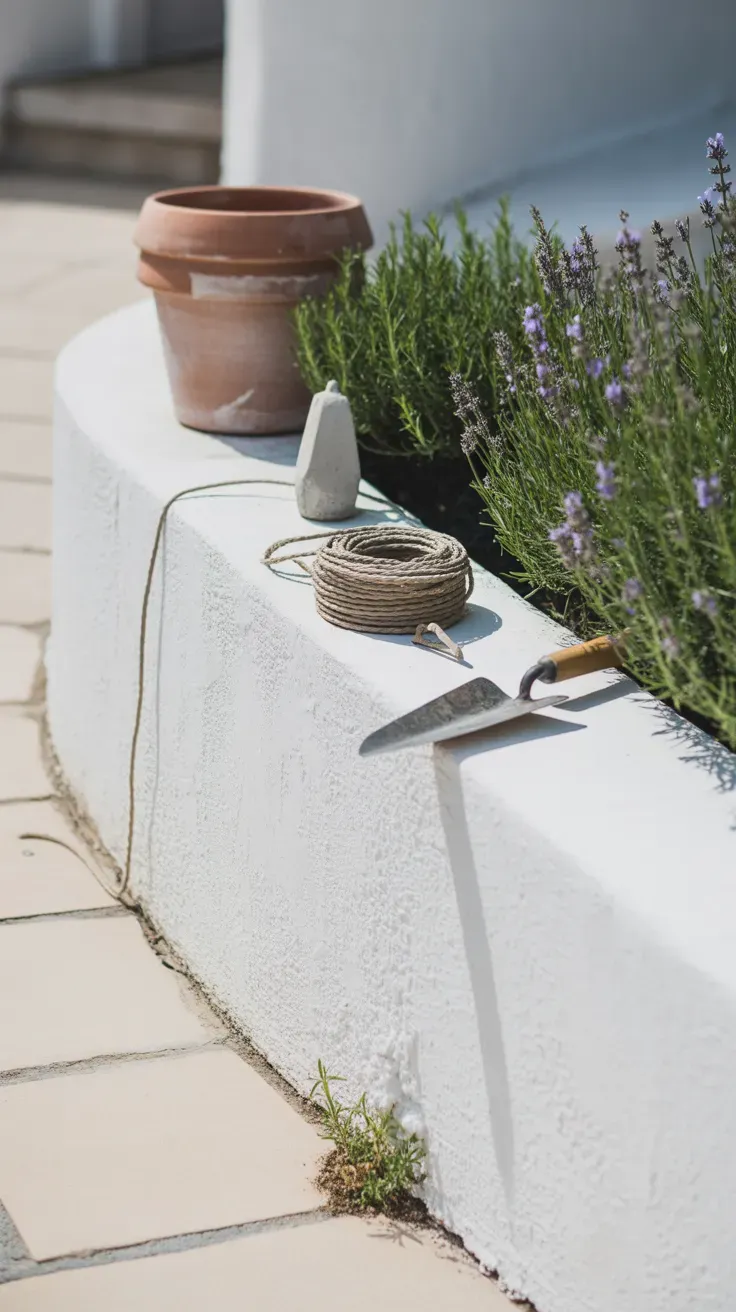
A low whitewashed wall, even just 18–24 inches tall, does more to define Mediterranean style than almost any single plant choice, since it echoes coastal architecture directly.
Cinder block cores finished with a stucco coat and lime-based whitewash are the most budget-friendly approach, and the slightly imperfect, hand-troweled texture actually reads as more authentic than a perfectly smooth finish. This is a difficult DIY project for most homeowners and often makes sense to hire out.
- Best for: defining bed edges, raised planters, low entry walls
- Avoid: structural retaining walls over 3 feet without an engineer
- Maintenance: occasional whitewash touch-ups every few years
See more structural landscaping ideas on Greenbotanicalgarden.com, and masonry basics from SFGate Home Guides. It’s the most labor-intensive idea here, but also one of the most defining.
Grow Citrus Trees in Statement Containers
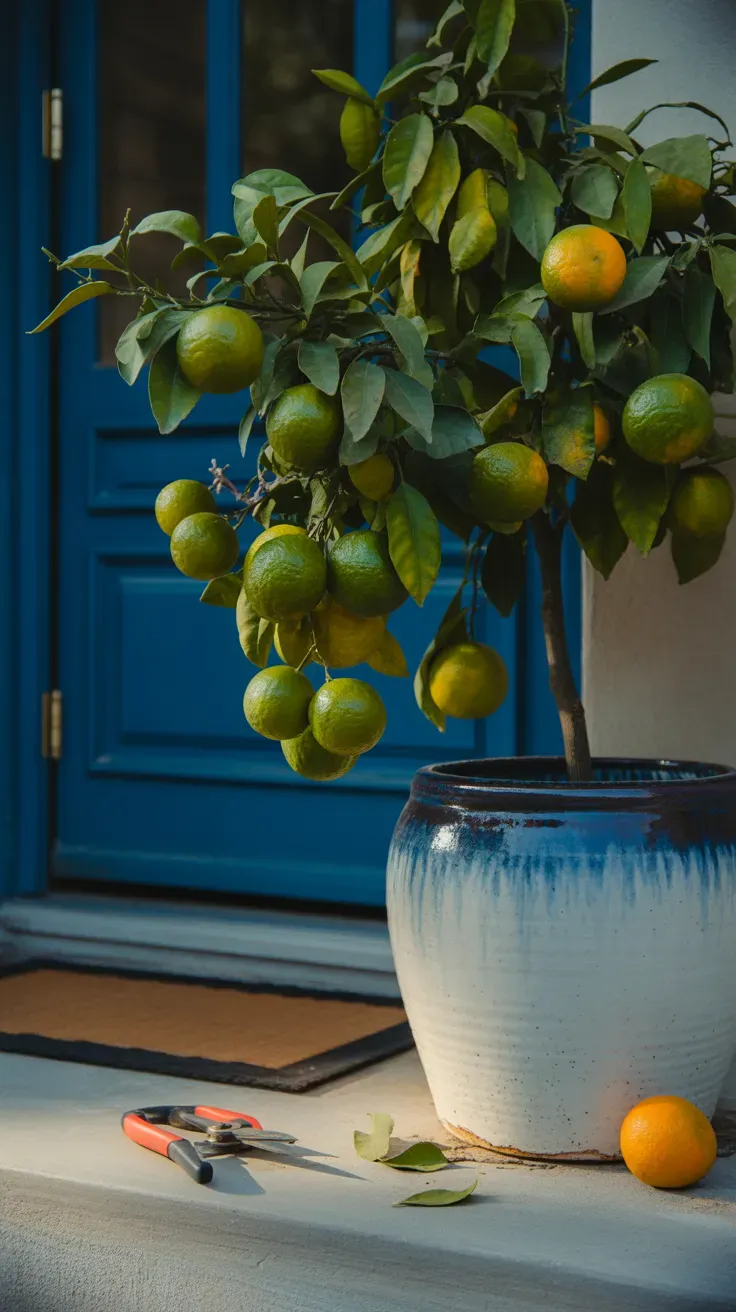
A container citrus tree by the front door brings fragrance, color, and genuine Mediterranean authenticity, especially in climates too cold for citrus to survive in-ground.
Dwarf varieties like Meyer lemon or Calamondin orange stay compact enough for large containers and can be moved indoors in winter if temperatures regularly drop below 30°F (-1°C). They need consistent watering in containers, more than in-ground plants, since pots dry out faster in full sun.
Pro Tip: Feed citrus in containers with a citrus-specific fertilizer every 4–6 weeks through the growing season — container-grown citrus exhausts nutrients from potting mix far faster than the same tree would in native soil.
More container citrus guidance is on Greenbotanicalgarden.com; cold-tolerance notes come from Almanac. A single fruiting citrus tree can make an entryway feel genuinely transporting.
Getting Started With Mediterranean Front Yard Ideas
The easiest first step is picking one or two ideas rather than attempting the whole yard at once — a lavender border and a cluster of terracotta pots alone can shift the entire look for well under $100. From there, hardscaping projects like gravel or pathways make sense to tackle next.
The most common beginner mistake is treating Mediterranean plants like typical garden plants and over-watering or over-fertilizing them; most of these species genuinely prefer to be left a little neglected once established.
To get started, buy one drought-tolerant plant — rosemary is the most forgiving — and a bag of gravel or decomposed granite for a small test bed. Realistically, expect plantings to look established and full within one full growing season, roughly 6–12 months.
Frequently Asked Questions
What plants give the most Mediterranean look for a front yard?
Olive trees, lavender, rosemary, and ornamental grasses give the strongest Mediterranean impression with the least effort. All four tolerate poor, dry soil and full sun, and most establish visible fullness within one growing season.
Do Mediterranean front yards work in cold climates?
Yes, with adjustments — swap in-ground olive and citrus trees for large containers you can move indoors below 30°F (-1°C). Lavender and rosemary both have cold-hardy cultivars rated to Zone 5 with proper winter mulching.
How much does a Mediterranean front yard redesign typically cost?
A partial redesign with pots, plants, and a small gravel bed can run under $500, while a full redesign with pathways and stucco walls often runs $5,000–$15,000. Costs vary heavily by whether hardscaping is DIY or professionally installed.
Is gravel or mulch better for a Mediterranean front yard?
Gravel is generally the better fit, since it reflects heat and drains instantly, matching the dry conditions most Mediterranean plants prefer. Organic mulch retains moisture that can encourage root rot in drought-adapted herbs like lavender and rosemary.
How much sun do Mediterranean front yard plants need?
Most Mediterranean plants, including olive, lavender, and rosemary, need at least 6 hours of direct sun daily to thrive. In partial shade, they often survive but grow leggy and bloom or fruit noticeably less.
A Few Final Thoughts
Nine ideas is enough to completely reshape a front yard, but the real appeal of Mediterranean style is how well small changes compound over time — a gravel path here, a cluster of terracotta pots there, and within a season or two the whole yard starts to feel intentional rather than piecemeal. What makes this approach especially rewarding is that it rewards a little neglect instead of punishing it, which is a welcome change from a high-maintenance lawn. Start with whichever idea fits your budget and climate best, whether that’s a single olive tree or a full stone pathway, and build outward from there. Give it one full growing season, and don’t be surprised if your front yard becomes the one you actually want to sit in front of.