
Most staircases sit there doing nothing but connecting two floors, which always struck me as a waste of good vertical space. I started with a single pothos cutting on my own landing three winters ago, and by the following spring the whole stairwell had turned into something guests actually stopped to look at. A boho staircase garden works because stairs already have the bones a jungle needs — height, changing light, and awkward corners that plants happily fill. Whether you’ve got open risers, a narrow hallway staircase, or a wide landing begging for a focal point, there’s a version of this that fits. Ready? Let’s explore all 26 of them.
Quick Answer: For a boho staircase garden, mix trailing plants (pothos, string of hearts, ivy) hung at varying heights with structural anchors like snake plants or a monstera at the base and landing. Layer in natural materials — rattan, jute, macrame — and stick to plants that match your actual light, since most stairwells get less sun than people assume. Start with two or three pieces before filling every step.
Why a Boho Staircase Garden Is Worth Your Time
A staircase is one of the few spots in a house where you look up, down, and sideways all in the same few seconds, which makes it an unusually good place to layer plants at different heights. Done well, it turns a purely functional space into the first thing people notice when they walk in.
The practical upside is real too — vertical growing means you’re not sacrificing floor space you don’t have, and trailing plants like pothos or string of hearts genuinely thrive when hung above a stairwell where light comes from a landing window. A lesser-known fact: north-facing stairwells, which most people assume are too dark for anything, are often perfect for ferns and snake plants that scorch in direct sun elsewhere.
This approach suits renters and homeowners equally, since most of it — macrame hangers, tension rods, freestanding ladders — needs zero drilling. It also suits busy people, since a handful of low-maintenance anchor plants can carry the whole look without daily attention.
At a Glance
- Trailing plants like pothos and string of hearts do the heaviest visual lifting on stairs
- Most stairwells run on indirect or low light, so choose plants accordingly, not aspirationally
- Rattan, jute, and terracotta textures are what make the look read as “boho” rather than just “plants”
- Mixing pot heights and hanging heights prevents the flat, matchy look
- A staircase garden can be built gradually — three plants now, twenty-six ideas over a year
Comparison Table: 26 Boho Staircase Garden Ideas
| # | Idea | Best Plant/Material | Light Needs | Difficulty | Pet-Safe? |
| 1 | Cascading pothos, open risers | Golden pothos | Low–medium | Easy | No |
| 2 | Macrame ferns on stair wall | Boston fern | Medium, indirect | Easy | Yes |
| 3 | Living plant ladder | Mixed trailers | Medium | Moderate | Varies |
| 4 | Terracotta trio per step | Succulents/herbs | Bright | Easy | Mostly yes |
| 5 | Fern canopy at stair top | Boston fern | Medium | Moderate | Yes |
| 6 | Rattan baskets on handrail | Pothos/ivy | Low–medium | Easy | No |
| 7 | Vertical moss wall | Sheet moss | Low, humid | Advanced | Yes |
| 8 | String of hearts on shelf | String of hearts | Bright indirect | Easy | No |
| 9 | Bamboo stakes, climbing philodendron | Philodendron | Medium | Moderate | No |
| 10 | Jute plant stand, half-landing | Areca palm | Bright indirect | Easy | Yes |
| 11 | Hanging spider plants | Spider plant | Medium | Easy | Yes |
| 12 | Air plants in glass globes | Tillandsia | Bright, no soil | Easy | Yes |
| 13 | Snake plant at bottom step | Snake plant | Low–bright | Easy | No |
| 14 | Peacock chair nook | Areca/rattan | Medium | Moderate | Yes |
| 15 | Ivy woven through banister | English ivy | Medium | Easy | No |
| 16 | Tiered shelf on stair wall | Mixed | Varies | Moderate | Varies |
| 17 | Monstera landing focal point | Monstera deliciosa | Bright indirect | Moderate | No |
| 18 | Faux greenery for dark stairwells | Quality faux | None | Easy | Yes |
| 19 | Macrame plant hammock | Pothos/philodendron | Medium | Moderate | No |
| 20 | Dried pampas with live ferns | Pampas + fern | Low–medium | Easy | Yes |
| 21 | Wall-mounted vertical garden frame | Herbs/succulents | Bright | Advanced | Mostly yes |
| 22 | Bird’s nest fern, hanging ceramic | Bird’s nest fern | Medium, humid | Moderate | Yes |
| 23 | Pothos trained up banister posts | Pothos | Low–medium | Moderate | No |
| 24 | Under-stairs reading nook, palms | Areca palm | Medium | Moderate | Yes |
| 25 | Layered rugs, potted palms at base | Areca/kentia palm | Bright indirect | Easy | Yes |
| 26 | String lights through trailing vines | Pothos/ivy | Low–medium | Easy | No |
Main Body — 26 Boho Staircase Garden Ideas
1. Cascading Pothos Down an Open-Riser Staircase
Open risers are basically free real estate for trailing plants, since there’s nothing blocking the vines from spilling straight through the gaps.
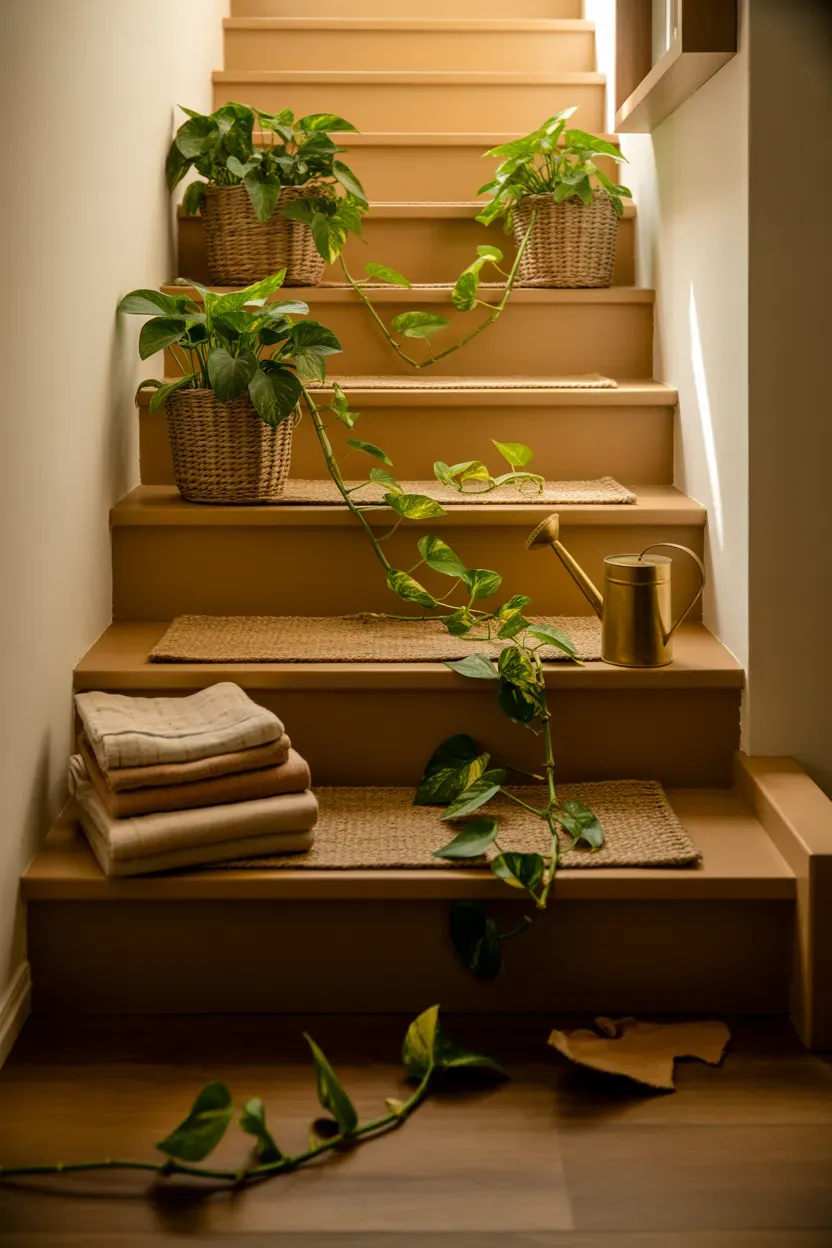
Set a golden pothos in a 6-inch pot on every second or third step, rotating the pot a quarter turn weekly so the vine grows evenly instead of leaning toward the light. Water when the top two inches of soil feel dry — for most homes that’s roughly every 9 to 12 days. The mistake I made the first time was letting vines get so long they tangled with foot traffic; trim back to the nearest node once a vine crosses the step below it.
Pro Tip: Pothos actually branches out fuller when you pinch the growing tip every few months — it redirects energy sideways instead of just chasing length.
This is one of the easiest ways to make a plain staircase feel intentional within a single afternoon. See our full pothos care guide and the RHS growing notes for more on trailing houseplant care. It’s a genuinely forgiving place to start if you’ve killed a plant before.
2. Macrame-Hung Ferns Along the Stair Wall
A row of macrame-hung Boston ferns along a bare stair wall does more to soften hard angles than almost anything else on this list.
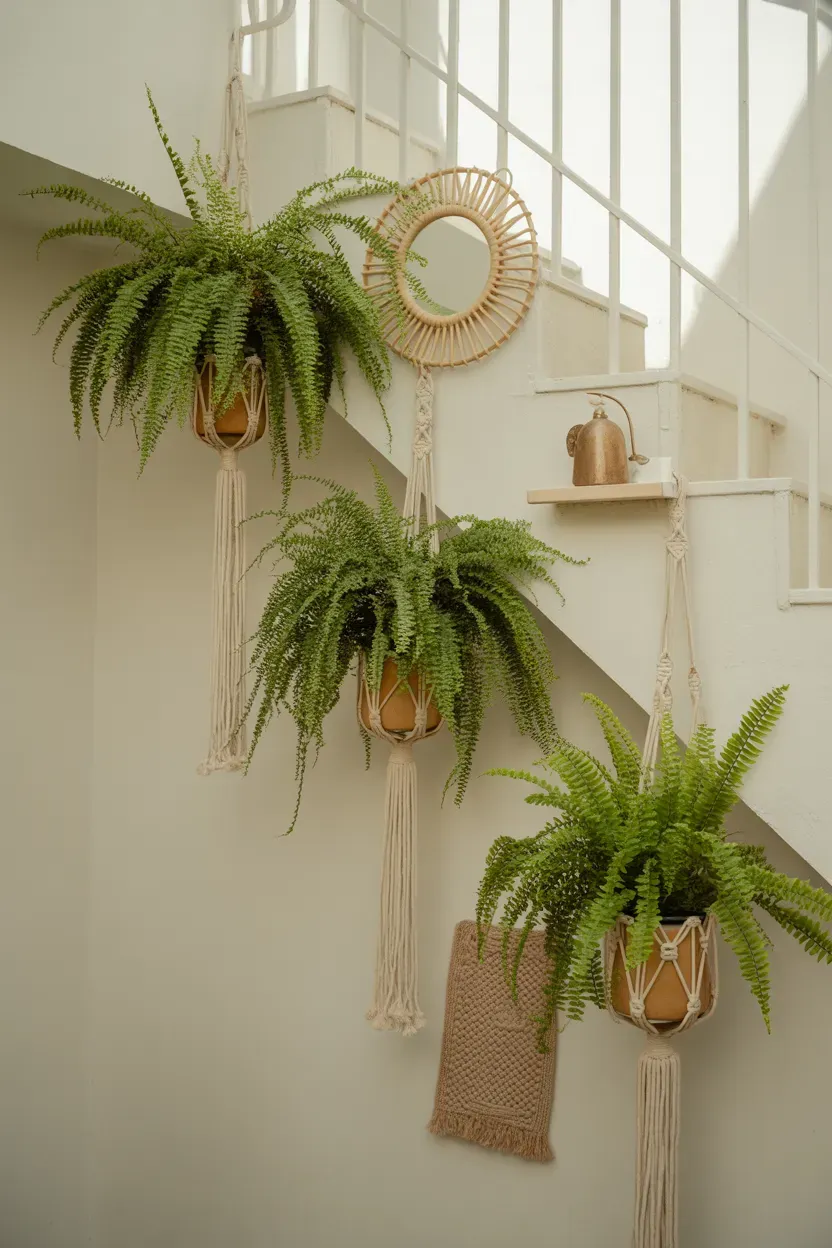
Boston ferns want humidity, which most stairwells lack, so mist twice a week or set a small humidifier nearby if fronds start crisping at the edges — that’s the number one complaint I hear from readers who try this. Hang each fern at a different height using graduated macrame cords (18, 24, and 30 inches) so the eye travels naturally up the stairs.
- Use a self-watering hanging pot to reduce drip risk on stairs
- Keep hangers at least 8 inches from the wall for airflow
- Choose S-hooks rated for at least 15 lbs
Check our macrame plant hanger guide and Missouri Botanical Garden’s fern care notes before you buy. Ferns reward patience, and this wall will look fuller every month.
3. A Living Plant Ladder on the Landing
An old wooden ladder leaned against the landing wall turns into instant vertical shelving without a single screw.
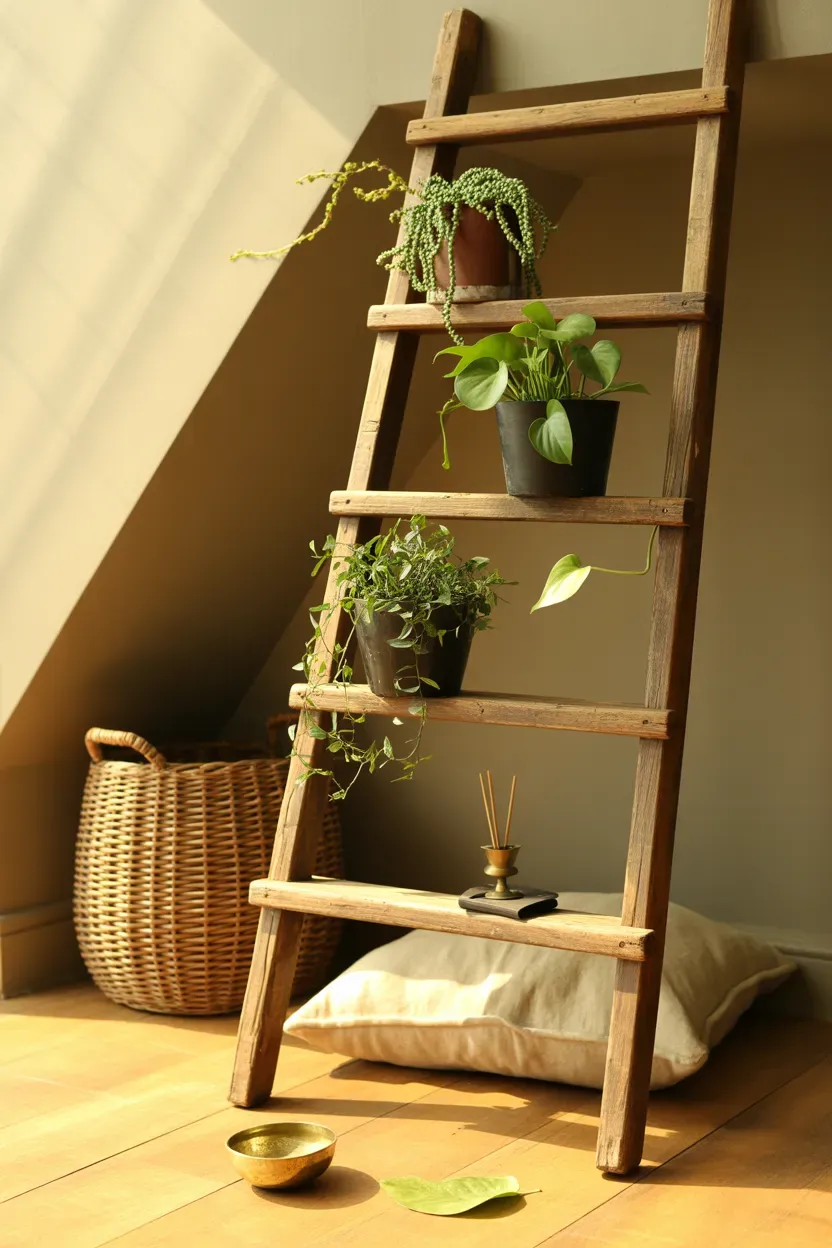
Pick a ladder with rungs at least 10 inches deep so pots don’t teeter, and lean it at a slight angle against a load-bearing wall for stability. Mix trailing plants on upper rungs with more compact, upright ones lower down so the whole thing doesn’t look top-heavy. My own ladder tipped once in the first month because I skipped the anti-slip pads — worth the $6 fix.
Pro Tip: Group plants with similar watering needs on the same rung so you’re not overwatering one to keep up with its neighbor.
Full setup notes live in our plant ladder styling guide, and Gardeners’ World has useful notes on mixing trailing species. It’s an easy weekend project with an outsized payoff.
4. Terracotta Trio on Every Third Step
Three matching terracotta pots, repeated every third step, gives a staircase rhythm without turning it into a jungle overnight.
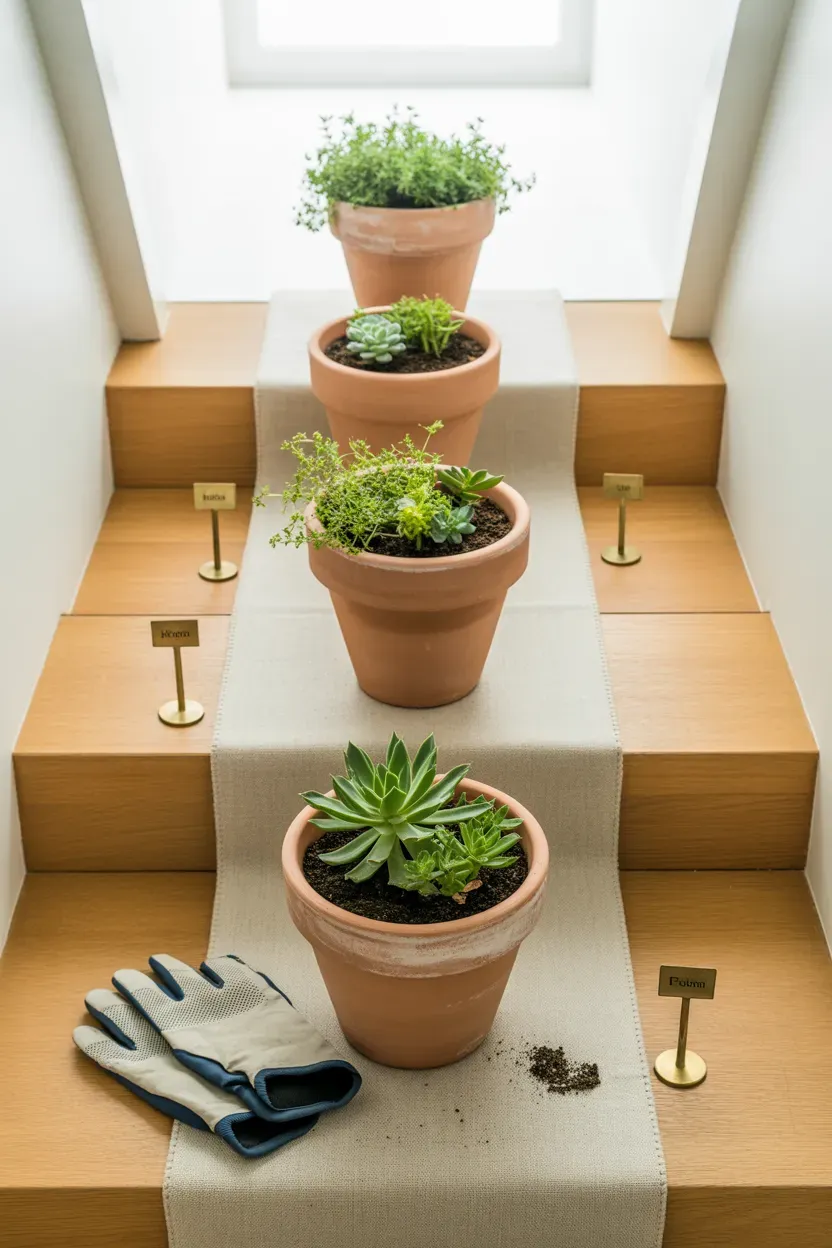
This idea only works with real light — you need at least four hours of direct or bright indirect sun hitting the steps, so it’s better suited to a staircase near a large window than a windowless interior hallway. Choose pots with drainage holes and a matching saucer to protect the wood; unglazed terracotta wicks moisture fast, so plan on watering succulents every 10 to 14 days.
- Echeveria for full sun steps
- Trailing rosemary for a fragrant, edible option
- Haworthia for lower-light landings within the group
See terracotta drainage basics and SFGate’s succulent care notes. Skip this one if your staircase runs dim — the succulents will stretch and thin within weeks.
5. Boston Fern Canopy at the Stair Top
A cluster of hanging ferns at the very top of the staircase creates a canopy effect the moment you look up from the bottom step.
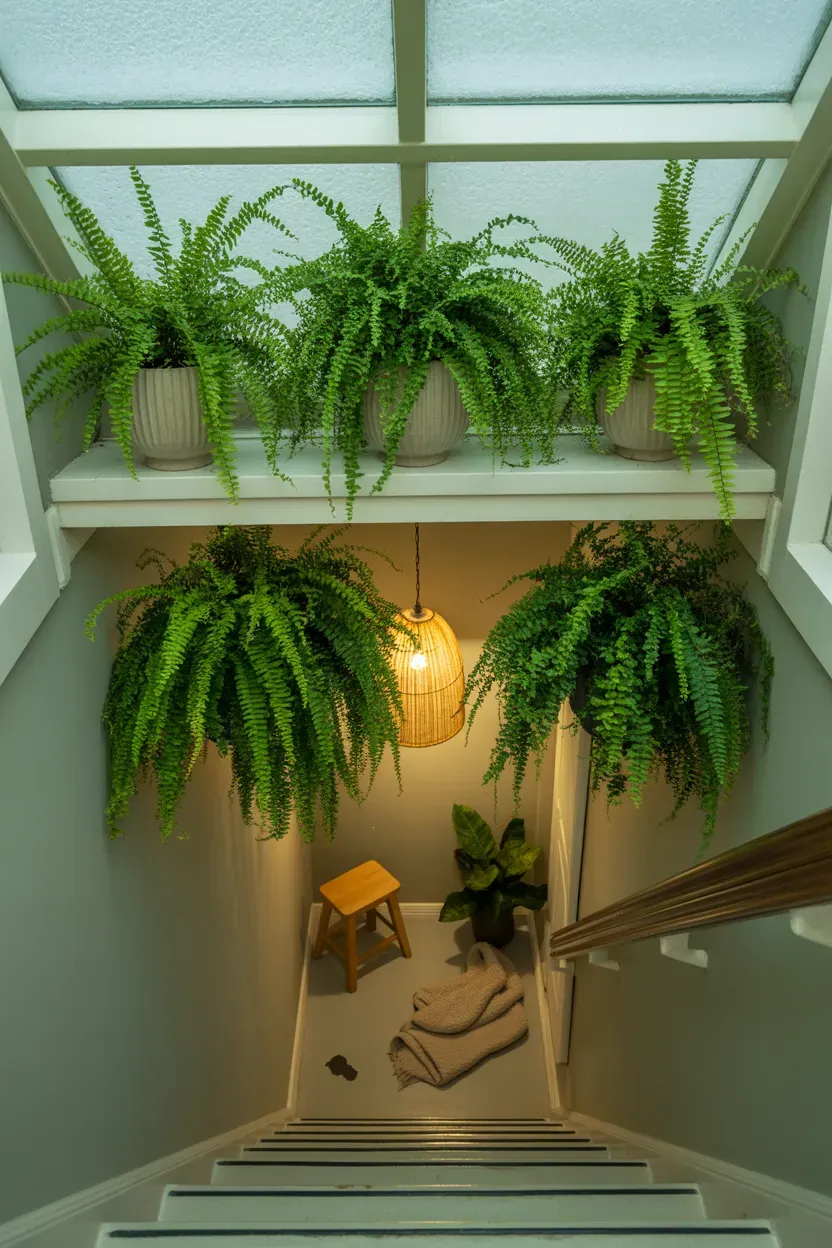
Space the hangers roughly 12 inches apart so fronds can overlap without competing for the same light, and rotate the whole cluster monthly since ferns closest to the window will always outgrow the ones set back. Check soil moisture with a finger rather than a schedule — ferns hate sitting wet, but they hate drying out completely even more.
Pro Tip: Trim any solid brown fronds all the way to the base rather than just snipping the tips — partial browning rarely reverses, and full fronds regrow faster once the dead weight is gone.
Our Boston fern care guide and Penn State Extension’s houseplant humidity notes go deeper on this. Give it a full season before judging the fullness — ferns are slow builders.
6. Rattan Baskets Lining the Handrail
Small rattan baskets clipped to the handrail turn an ordinary rail into a running planter box without any permanent hardware.
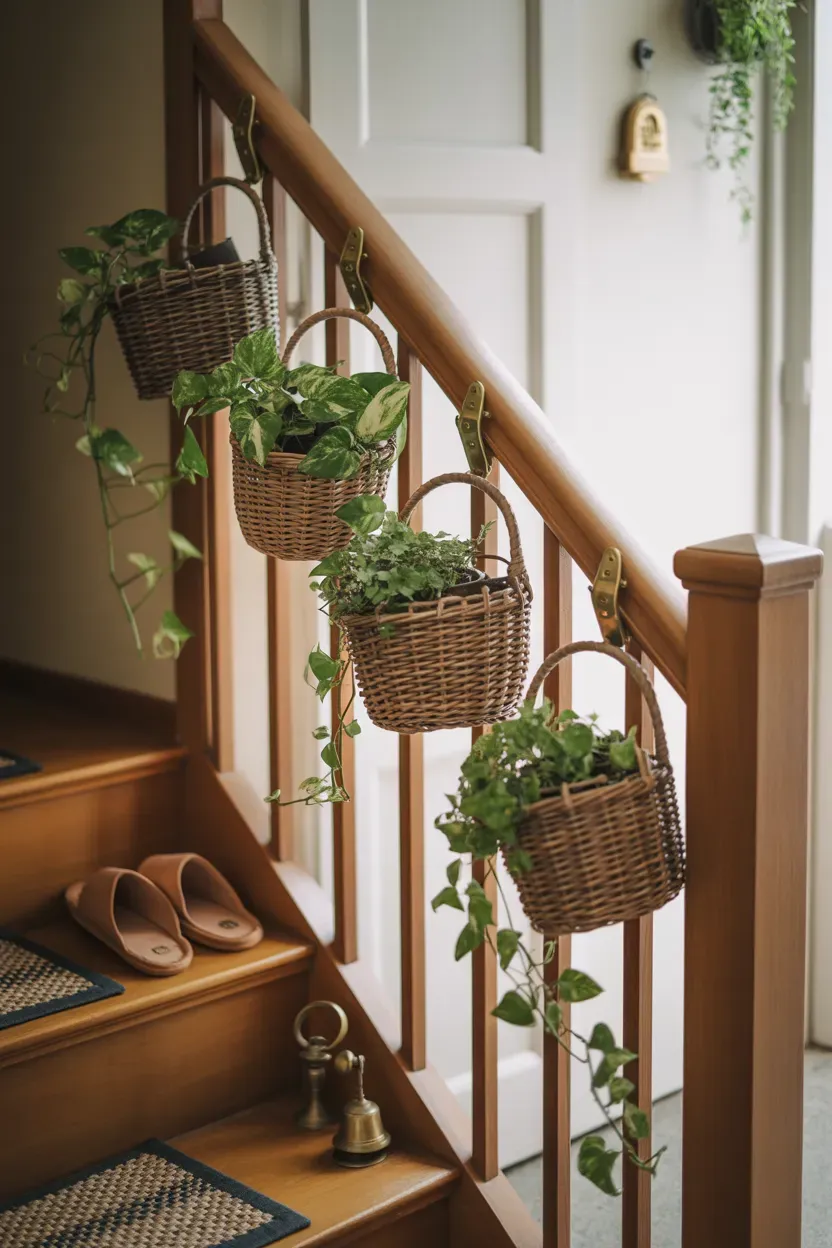
Use baskets with a plastic liner or nursery pot inside — rattan alone will mold within weeks if water touches it directly, which is a mistake I made on my first attempt. Space baskets no more than 18 inches apart so the trailing vines can eventually meet and blend into a continuous line down the rail.
- Confirm your rail can hold clip-mounted weight before loading it up
- Choose lightweight pothos or ivy over heavier succulents
- Check clips monthly, since wood expansion can loosen them
More in our rattan planter styling guide and Better Homes & Gardens on hanging basket care. It’s a small change that reads as much bigger once the vines fill in.
7. A Vertical Moss Wall Behind the Staircase
A moss wall panel behind an under-stair nook adds texture and sound-dampening that no potted plant can match.
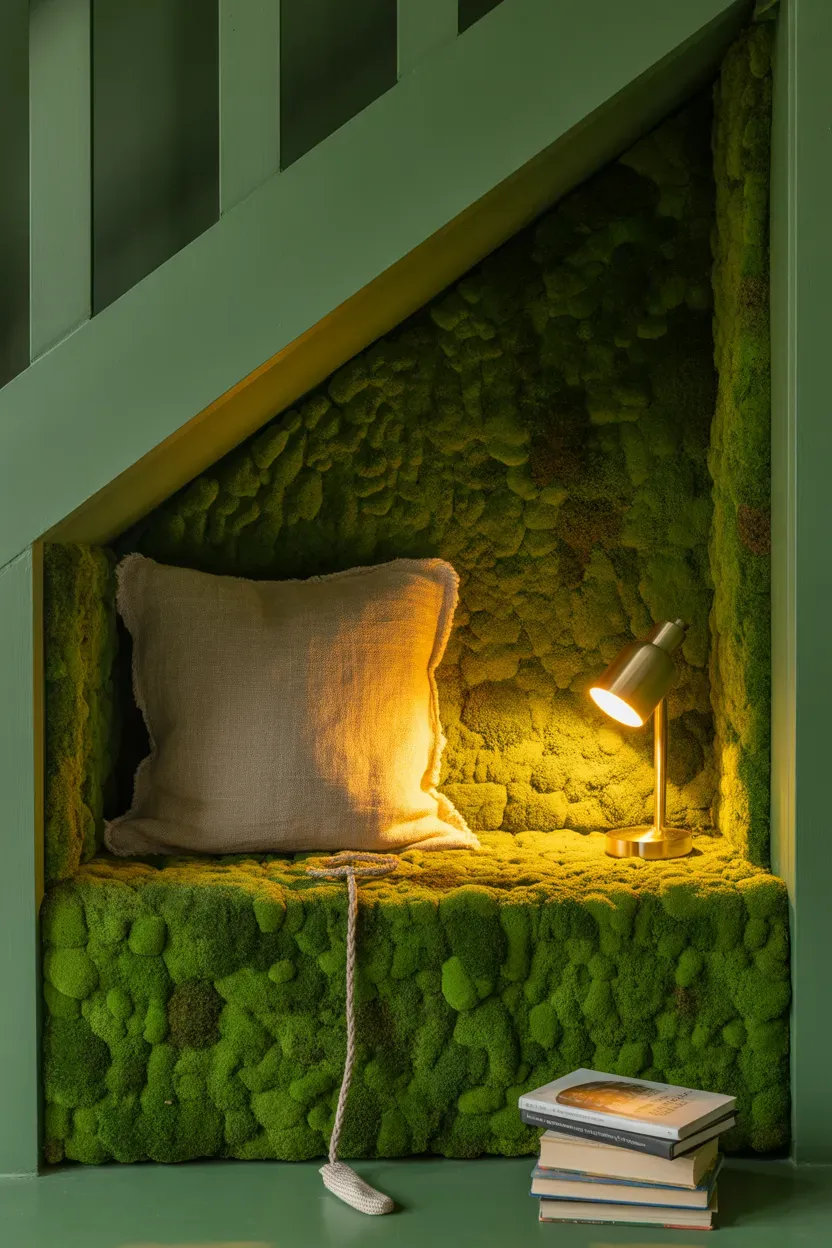
Preserved moss needs no watering or light at all, which makes it the one plant-adjacent idea here that survives a genuinely dark stairwell. Live sheet moss is possible too, but only with consistent misting and indirect light — I tried live moss under my own stairs and lost it within a month from dryness. For most homes, preserved moss panels are the realistic choice.
Pro Tip: Mount preserved moss panels with removable adhesive strips rather than glue — moss dries out and needs replacing every 2 to 3 years, and you’ll thank yourself later.
Our guide to growing moss indoors covers both live and preserved options, and Missouri Botanical Garden has background on moss biology. It’s a low-effort way to fake a jungle wall convincingly.
8. String of Hearts Trailing From a Wall Shelf
A single narrow shelf holding string of hearts creates a delicate, thread-like cascade that reads as effortlessly boho.
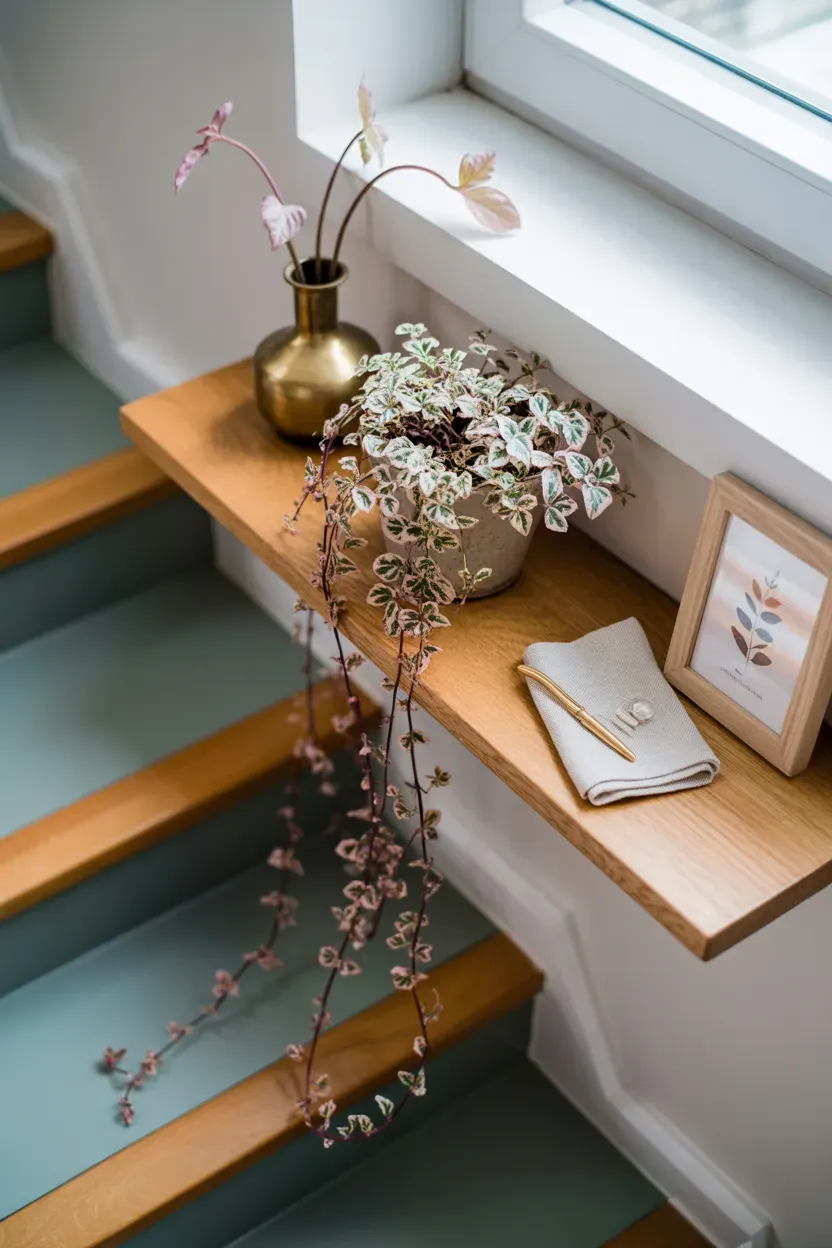
String of hearts wants bright indirect light and very infrequent watering — every 2 to 3 weeks in most homes — so it’s a poor fit for a dim interior stairwell but excellent near a landing window. Let the soil dry out completely between waterings; overwatering is the fastest way to lose this one, and I’ve done it more than once by treating it like a regular houseplant.
Its full care guide is worth reading before buying, and The Sill’s plant profiles cover succulent-adjacent trailers well too. Give it a full year to reach real cascade length.
9. Bamboo Stakes and Climbing Philodendron
Instead of letting a philodendron trail, train it upward along bamboo stakes for a jungle look that climbs rather than drips.
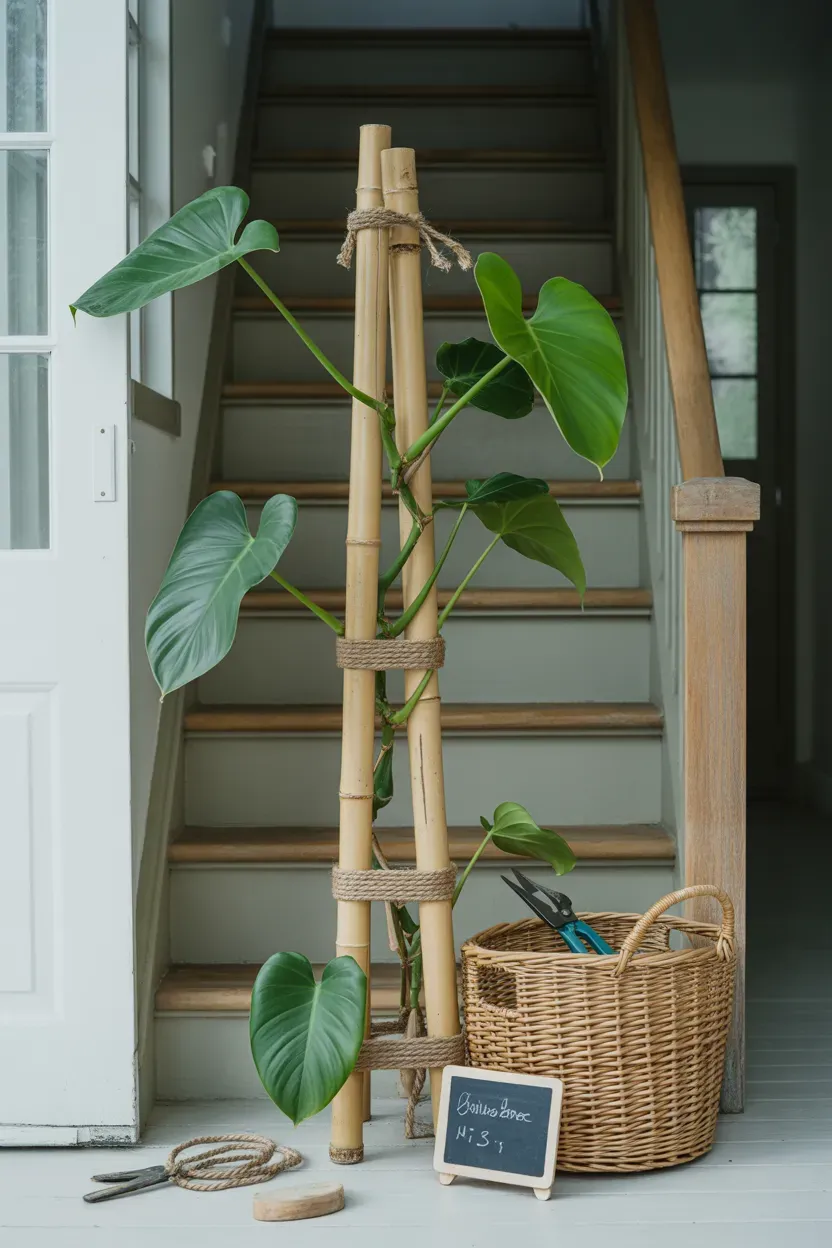
Loosely tie new growth to the stakes with soft jute every few weeks rather than binding tightly, since philodendron stems thicken as they mature and tight ties can girdle them — something I learned the hard way on a stem that snapped. Bright indirect light keeps leaves large; too little light and new growth comes in noticeably smaller.
- Use split bamboo stakes for extra stability on taller plants
- Mist aerial roots occasionally to encourage them to grip
- Wipe leaves monthly to keep them dust-free and photosynthesizing well
Our climbing philodendron support guide and Almanac.com have more on training vining houseplants. It’s a satisfying, structural alternative to the usual trailing look.
10. A Jute-Wrapped Plant Stand on the Half-Landing
A half-landing is often wasted space, and a single jute-wrapped plant stand holding an areca palm fills it without blocking the walkway.
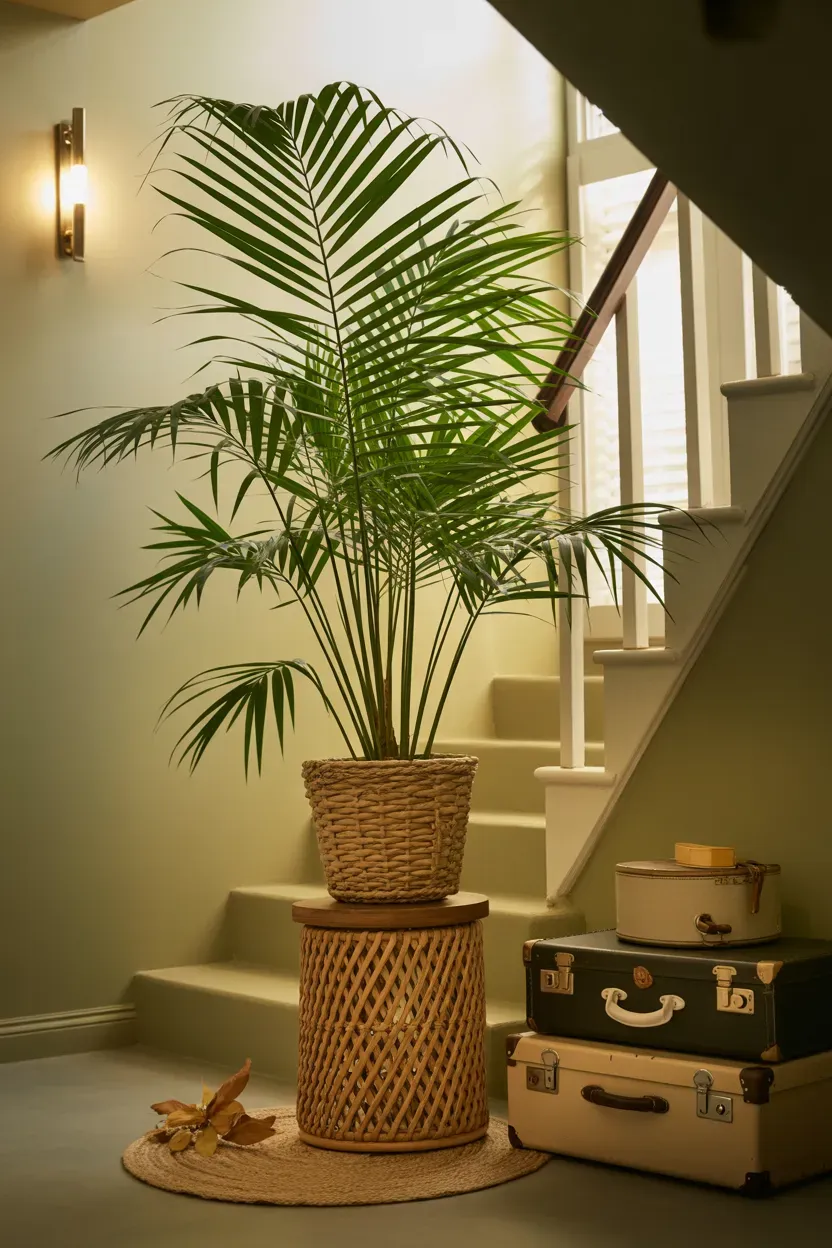
Choose a stand at least 18 inches tall so the palm’s lower fronds clear foot traffic, and place it toward the wall side of the landing rather than the center, where it’ll inevitably get brushed. Areca palms want bright indirect light and consistently moist — not soggy — soil, roughly once a week in most homes.
Pro Tip: Brown, crispy frond tips on an areca palm almost always mean low humidity or tap water with high mineral content — try filtered water for a month before assuming it’s a light problem.
More in our jute decor styling guide and University of Florida Extension’s palm care notes. This one alone can make a landing feel like a destination.
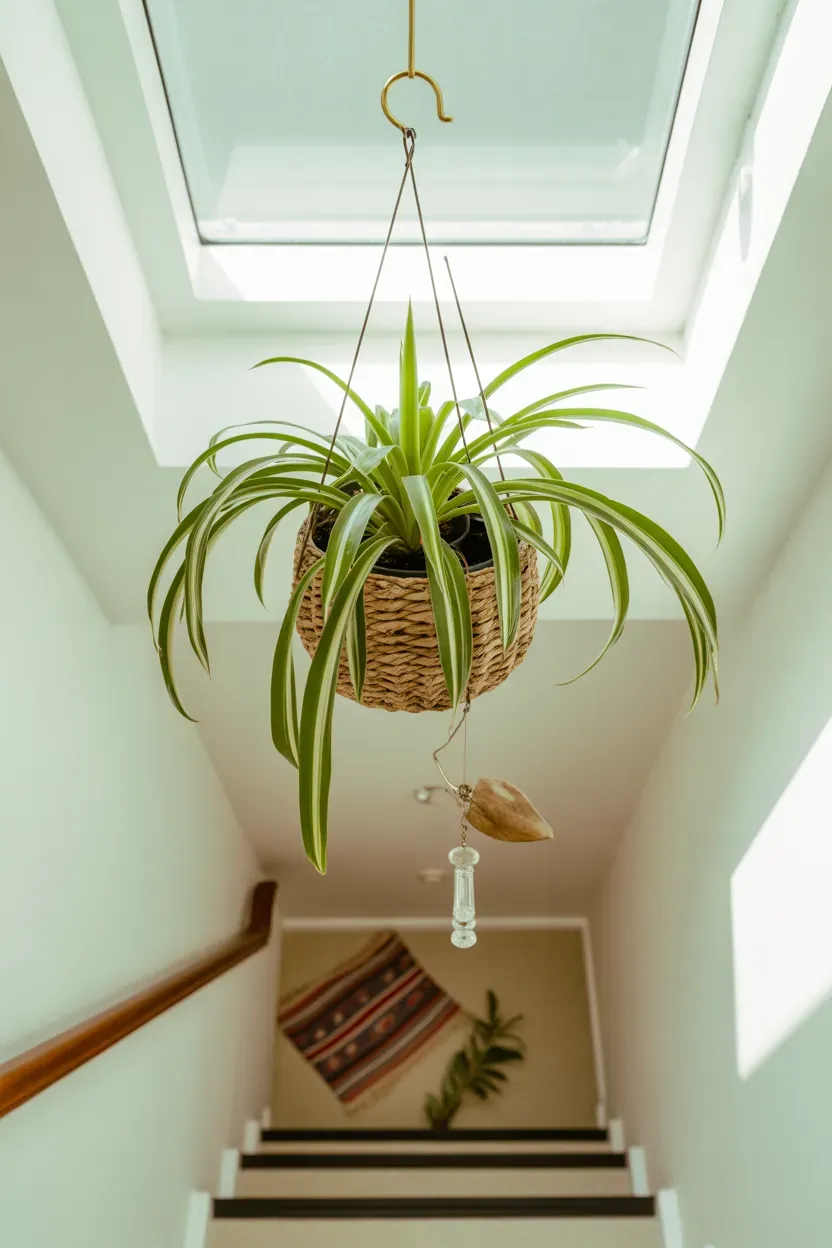
11. Hanging Spider Plants From the Stair Ceiling
Spider plants hung from a stair ceiling let their plantlets dangle freely, which is genuinely one of the easiest “jungle” effects to pull off.
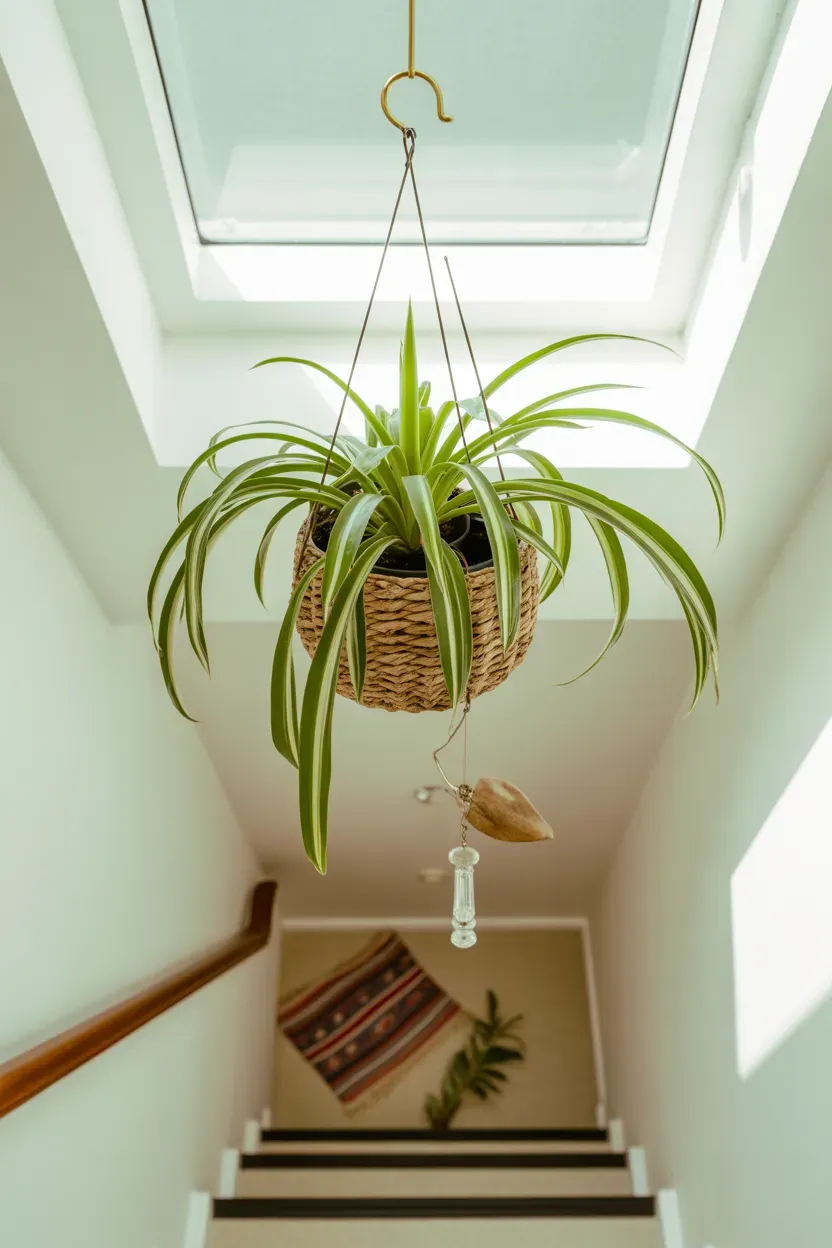
Spider plants tolerate a wide light range, which makes them one of the safer bets for a stairwell with unpredictable sun. Snip plantlets once they’re 2 to 3 inches long if you want to propagate more for other steps, or leave them to dangle for the full trailing effect — I let mine grow for a full year before I started propagating and the difference in fullness was dramatic.
- Water weekly, letting soil dry slightly between waterings
- Brown tips usually mean fluoride-sensitive tap water, not underwatering
- Repot every 2 years as roots fill the pot
Our spider plant care guide and Gardeners’ World cover propagation in detail. It’s hard to go wrong with this one.
12. A Boho Gallery of Air Plants in Glass Globes
A cluster of air plants suspended in small glass globes along the stair wall gives you jungle texture with zero soil and zero mess.
Air plants need a 20 to 30 minute soak once a week rather than watering in place, so plan on unhooking each globe for its bath — skipping this step is the single most common reason people lose tillandsia. Bright, indirect light works best; direct sun through glass can scorch leaves surprisingly fast, which happened to two of mine in a south-facing globe last July.
Our air plant care basics guide covers soaking schedules in more detail, and The Sill has good globe-mounting tips. It’s a genuinely low-commitment way to add greenery to a wall with no natural shelf space.
13. Snake Plants Anchoring the Bottom Step
A pair of tall snake plants flanking the bottom step gives the whole staircase a grounded, structural start.
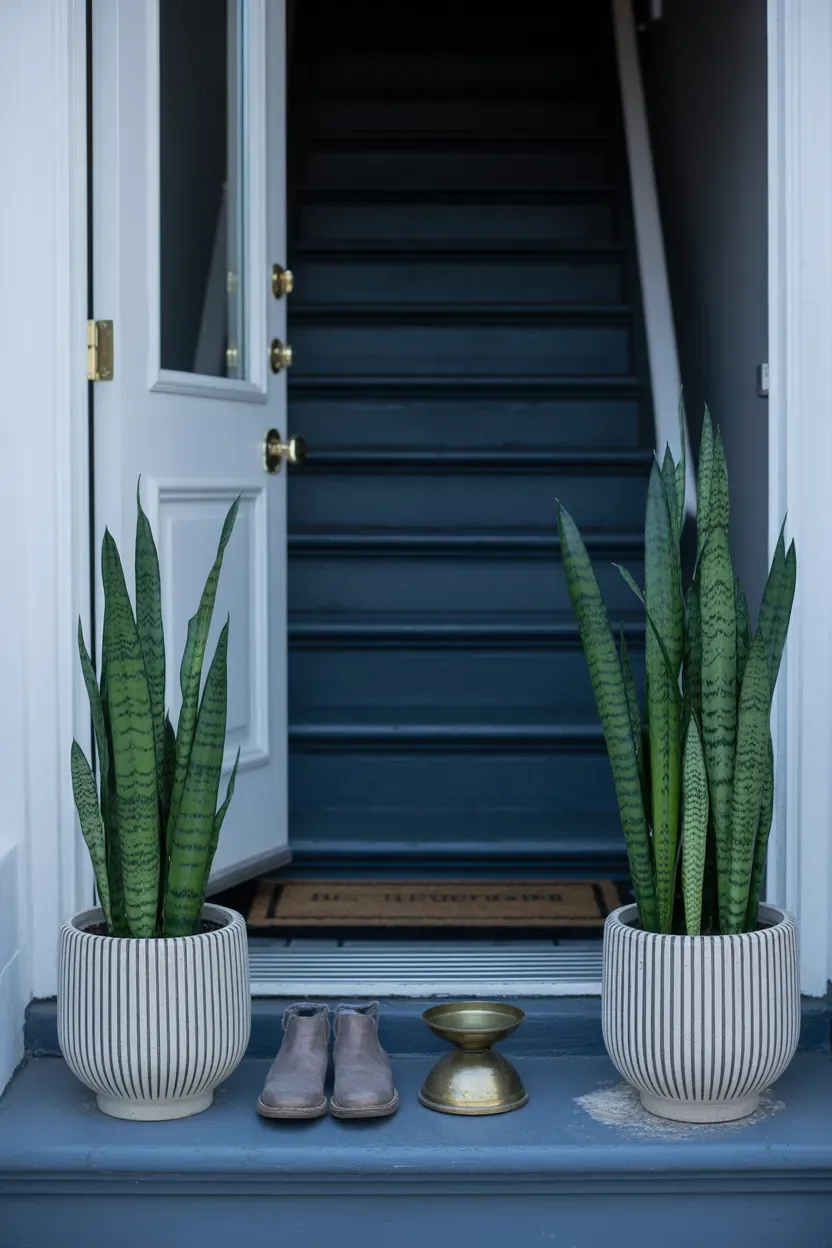
Snake plants tolerate almost any light level, including the dim entryway light most bottom steps actually get, and they only need watering every 3 to 4 weeks. This makes them the most forgiving anchor plant on this entire list — mine has survived two months of total neglect during a move without a single wilted leaf.
Pro Tip: Overwatering, not underwatering, kills nearly every snake plant that dies — when in doubt, wait another week before reaching for the watering can.
More in our snake plant low-light care guide and Penn State Extension’s succulent care notes. It’s the one idea on this list I’d recommend to an absolute beginner without hesitation.
14. A Rattan Peacock Chair Nook Under the Stairs
Tucking a rattan peacock chair and a cluster of palms into the dead space under the stairs turns wasted square footage into a genuine sitting nook.
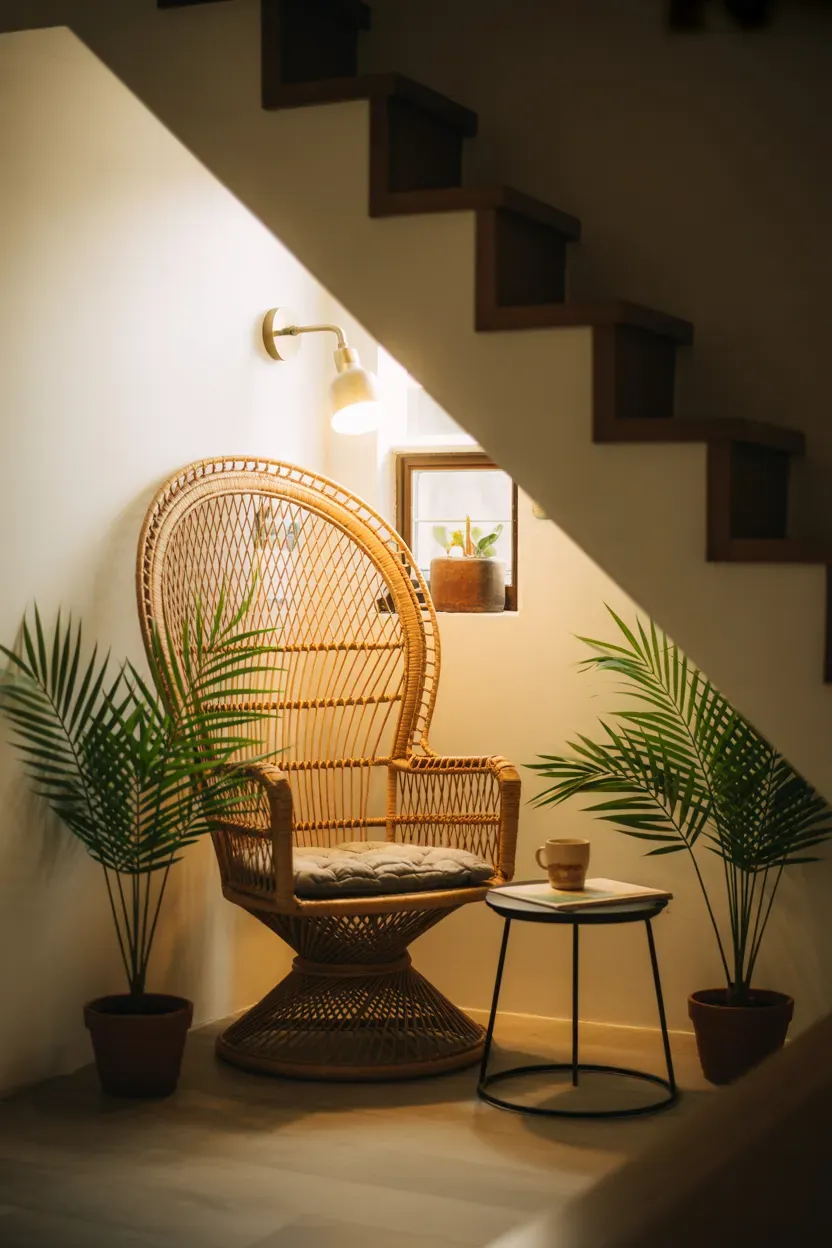
Measure the nook’s tallest usable point before buying a chair — under-stair ceilings slope, and a peacock chair’s tall fan back needs real headroom, which I underestimated on my first attempt and had to return the chair. Areca palms flanking the chair want bright indirect light; if the nook is genuinely dark, swap in ZZ plants instead.
- Confirm ceiling height at the chair’s exact placement point, not just the nook’s entrance
- Add a small rug to define the space
- Use a battery-powered lamp if there’s no nearby outlet
Our cozy nook styling guide and BHG have more on furnishing awkward spaces. This one takes the most planning but pays off the most in daily use.
15. Trailing Ivy Woven Through the Banister
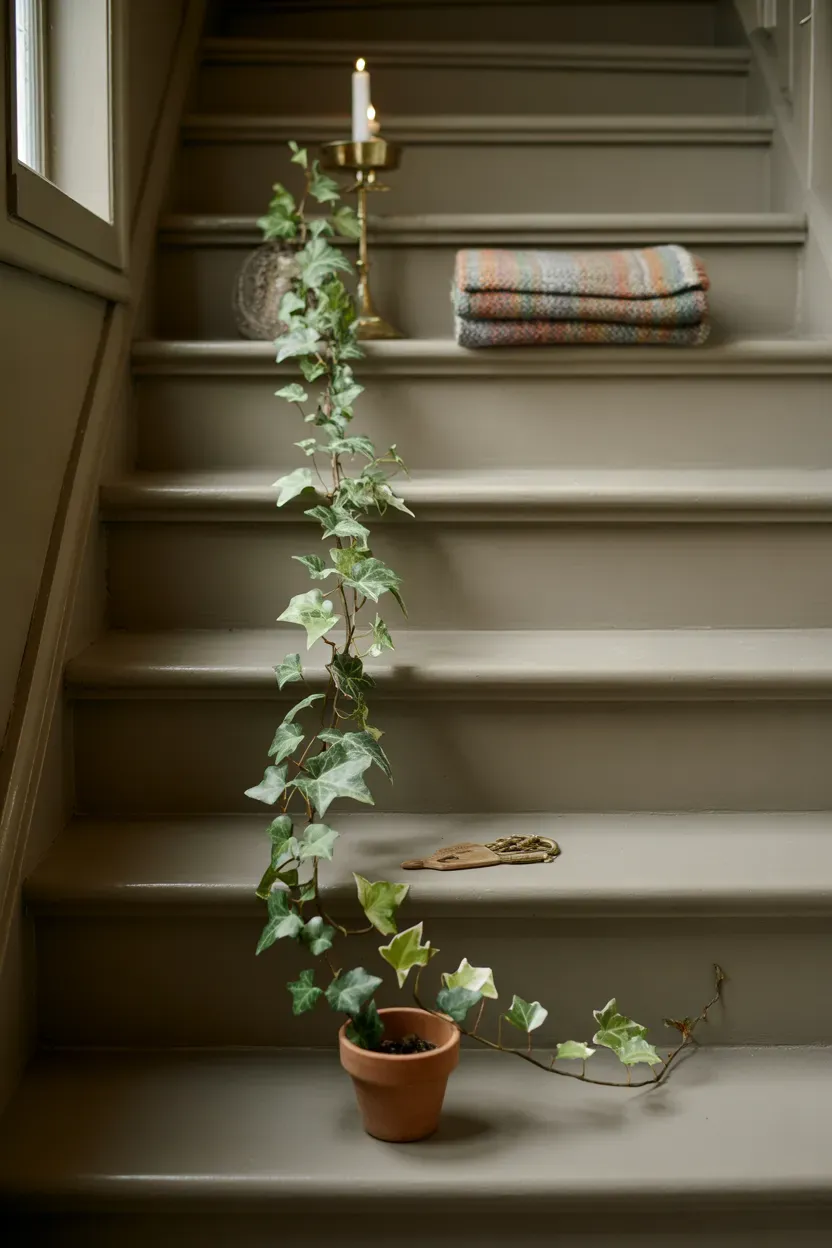
English ivy woven loosely through the banister spindles creates a garden-gate effect that’s surprisingly easy to maintain.
Ivy grows fast enough that you’ll need to re-weave and trim it every 3 to 4 weeks during spring and summer, so this idea suits people who don’t mind a little regular upkeep. It prefers cooler temperatures and medium light — mine struggled visibly the one August I left it near a heat vent, yellowing within two weeks.
Full guidance is in our trailing ivy care guide, and Missouri Botanical Garden covers ivy’s growth habits well. Keep pets in mind — ivy is mildly toxic if chewed, so this works best in pet-free households or stairs pets can’t reach.
16. A Tiered Plant Shelf Against the Stair Wall
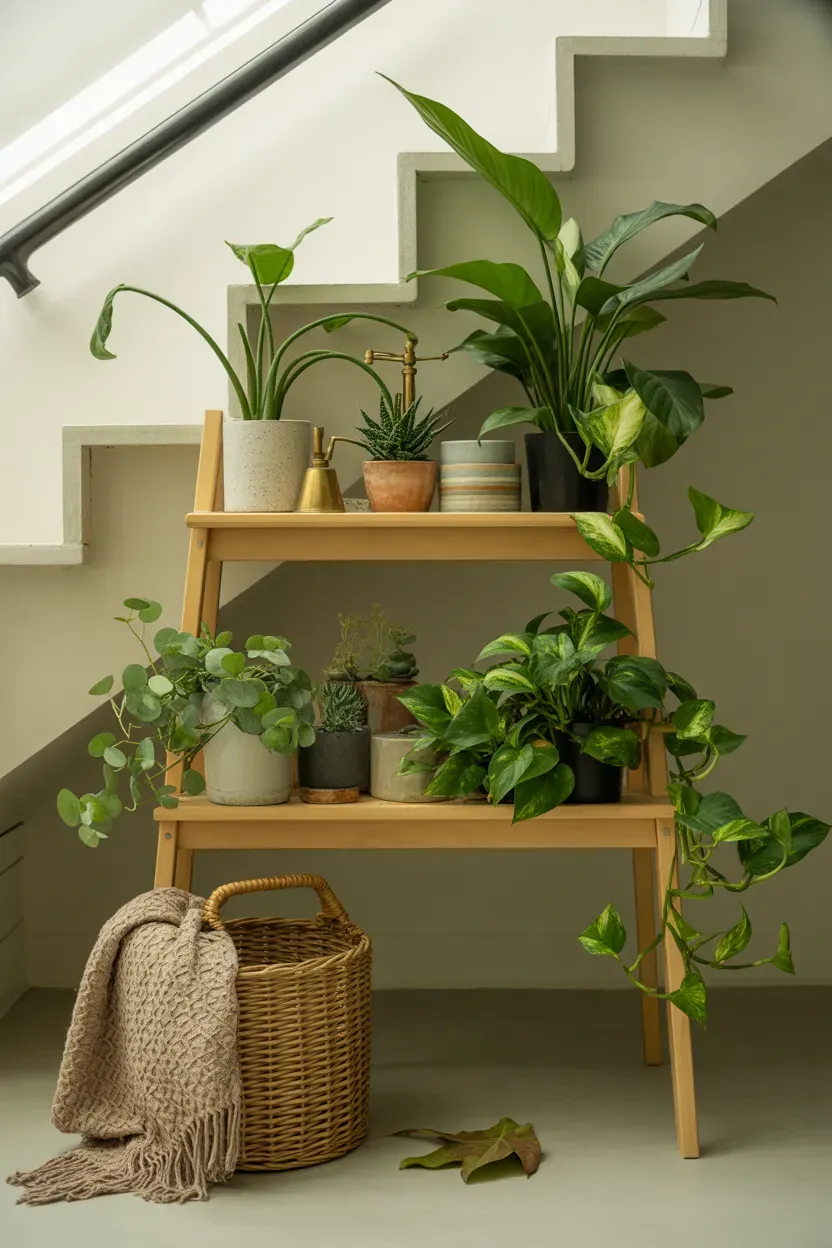
A tiered wooden shelf running alongside the staircase lets you display far more plants than individual pots ever could in the same footprint.
Group plants by light and water needs per shelf rather than by looks alone — I initially arranged mine purely for visual balance and ended up overwatering a succulent sitting next to a moisture-loving fern. Bottom shelves near the floor tend to get less light, so reserve those for snake plants or ZZ plants rather than anything that needs bright sun.
Pro Tip: Leave at least 4 inches of clearance between tiers for taller plants, or trim growth back regularly — crowded shelves block light to the tier below.
Our tiered plant shelf ideas guide and Almanac.com have more on grouping houseplants by care needs. It’s the most space-efficient idea on this whole list.
17. Monstera Deliciosa as a Landing Focal Point
A single mature monstera on the landing does more visual work than a dozen smaller plants scattered across the steps.
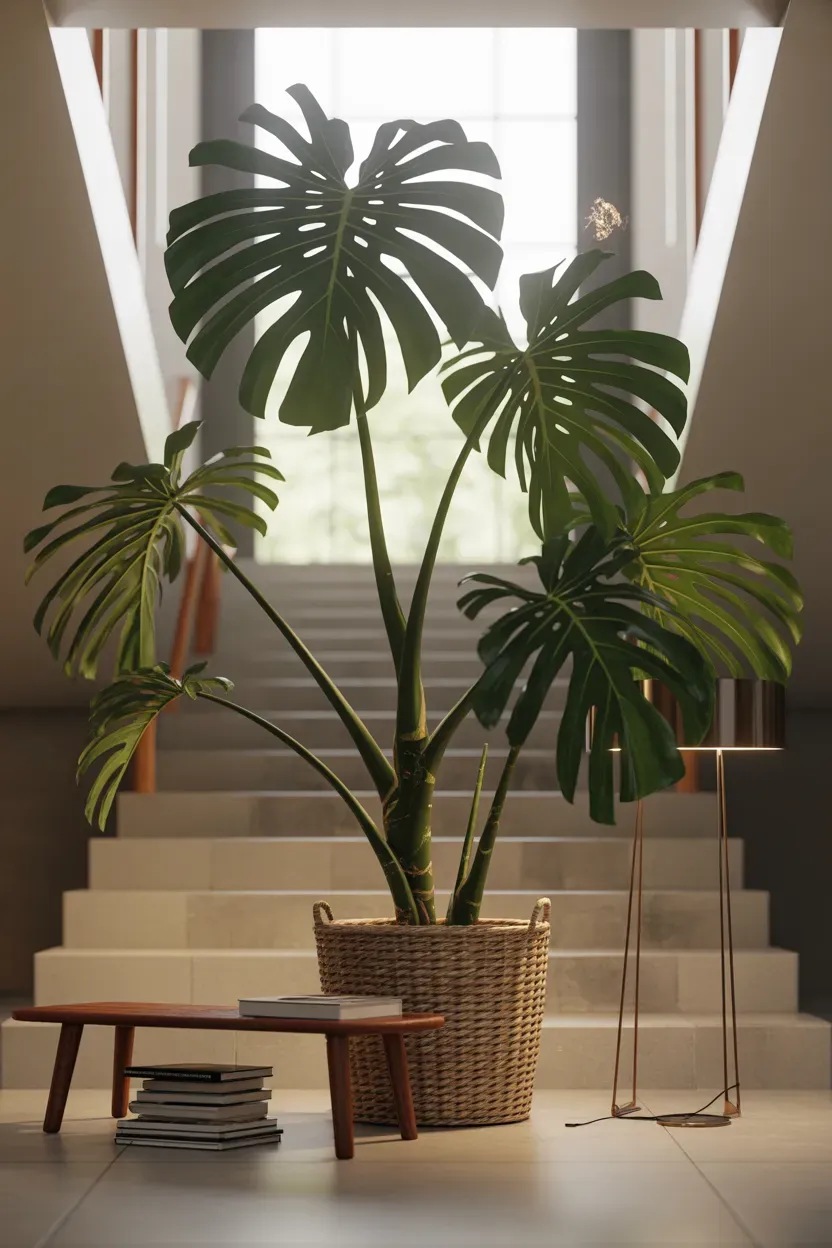
Monstera needs a moss pole or stake once it reaches about 2 feet tall, or the stems will flop under their own weight — mine toppled a side table before I finally staked it properly. Bright indirect light produces the best leaf fenestration (those signature splits); in lower light, new leaves come in noticeably more solid and less dramatic.
Full care details are in our monstera deliciosa care guide, and The Sill has good notes on staking mature plants. Give it a wide landing — this one genuinely needs room to spread.
18. Woven Wall Baskets Filled with Faux Greenery
For stairwells with genuinely no usable light, quality faux greenery in woven wall baskets is the honest answer rather than fighting a losing battle with live plants.
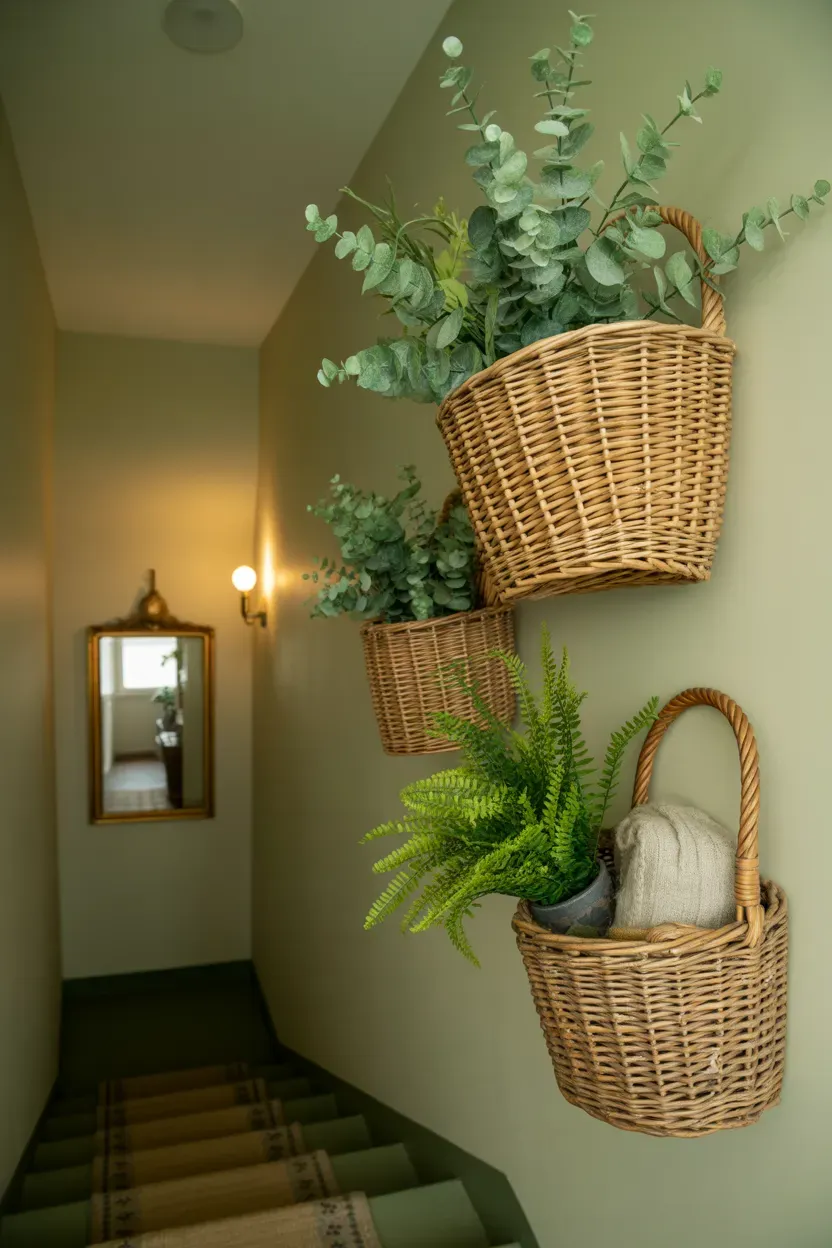
Being honest with readers here: interior stairwells with no windows genuinely cannot support live plants long-term, no matter how “low-light tolerant” the label claims. Good faux greenery — look for matte, varied leaf tones rather than uniform glossy plastic — solves this without the cycle of buying and losing live plants every few months, which I did twice before switching.
- Choose faux plants with visible vein texture, not flat-printed leaves
- Dust monthly with a soft brush to keep them convincing
- Mix two or three species so it doesn’t look uniform
Our faux plant styling guide has more on choosing realistic pieces, and BHG covers faux-versus-live decisions well. Not every idea on this list has to involve something alive.
19. A Boho Macrame Plant Hammock
A macrame hammock cradling a trailing philodendron in a stairwell corner is one of the more distinctly “boho” ideas here, and one of the easiest to install.
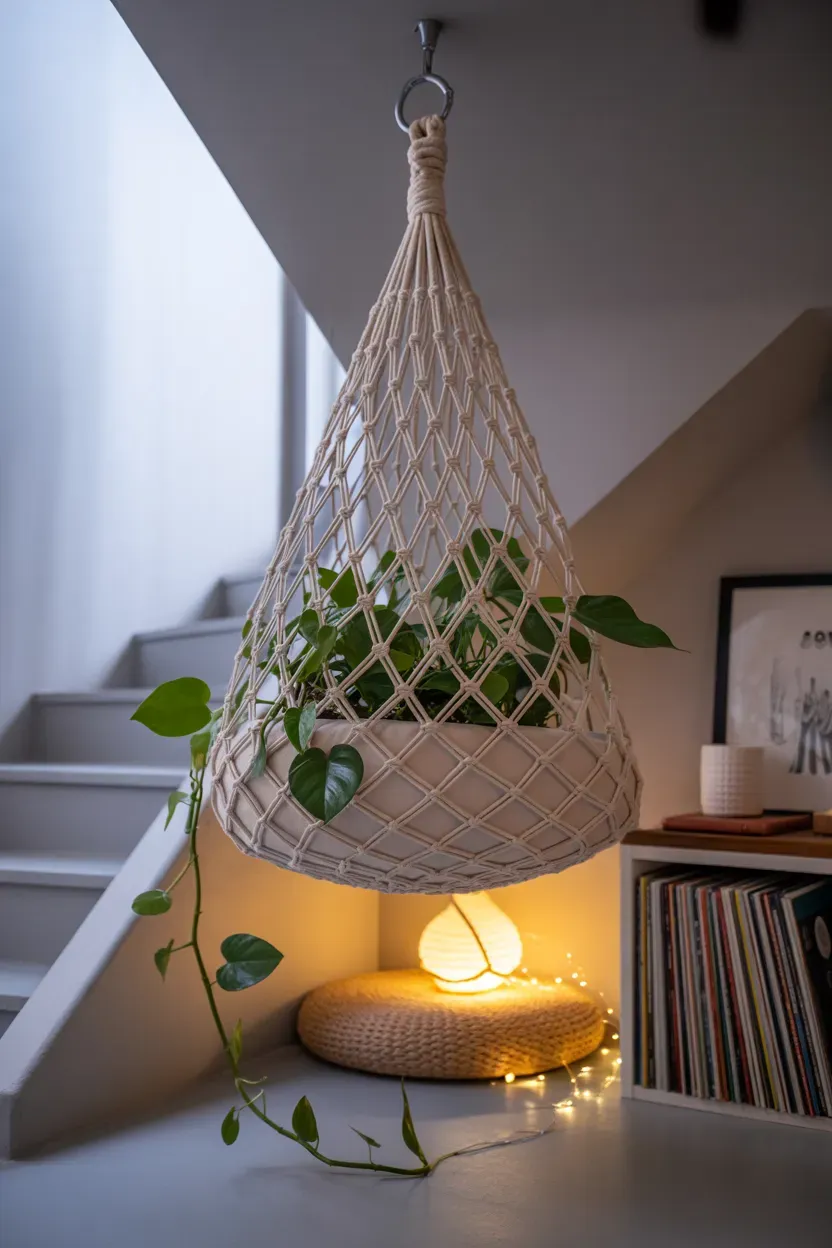
Choose a hammock with a wide enough base to actually stabilize the pot — narrow hammocks let top-heavy plants tip sideways, which happened to my first attempt within a week. Anchor the ceiling hook into a joist, not just drywall; a fully watered pot and hammock combination easily weighs 10 to 15 lbs.
Pro Tip: Position the hammock where you can reach it without a step stool — plants people can’t easily water get neglected fastest, no matter how good the intention.
Our macrame hammock DIY guide walks through knot patterns, and Gardeners’ World covers philodendron care. It’s a genuinely fun weekend project.
20. Dried Pampas Grass Paired with Live Ferns
Mixing dried pampas grass with a live fern gives you textural contrast and softens the idea that everything on a staircase needs to be actively growing.
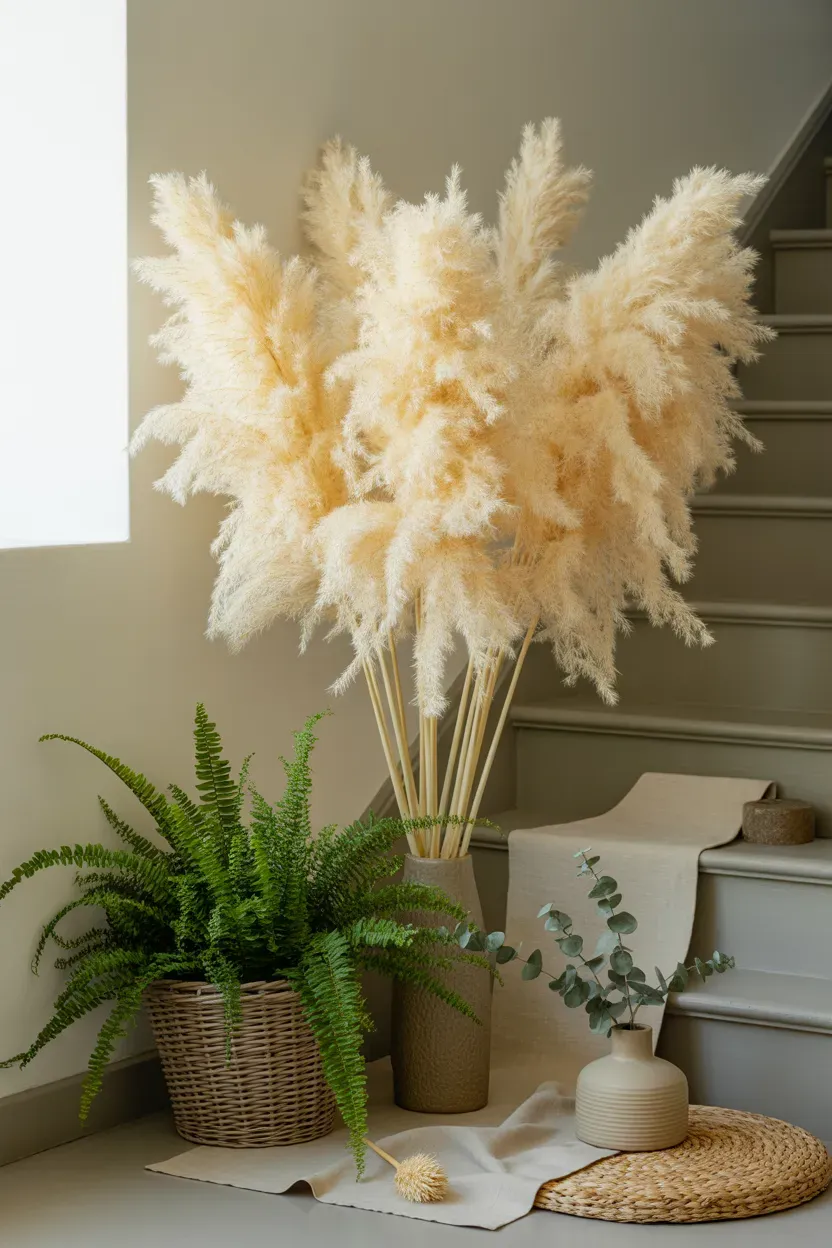
Dried pampas grass sheds fine fibers over time, so keep it away from direct foot traffic and vacuum around it every couple of weeks — I learned this after finding fibers tracked halfway down the hallway. It needs zero water or light, which makes it a genuinely useful anchor next to a fern that needs both, since it won’t compete for either resource.
Read more in our dried pampas grass decor guide, and pair it with tips from our Boston fern care guide. It’s an easy way to add texture without adding another plant to water.
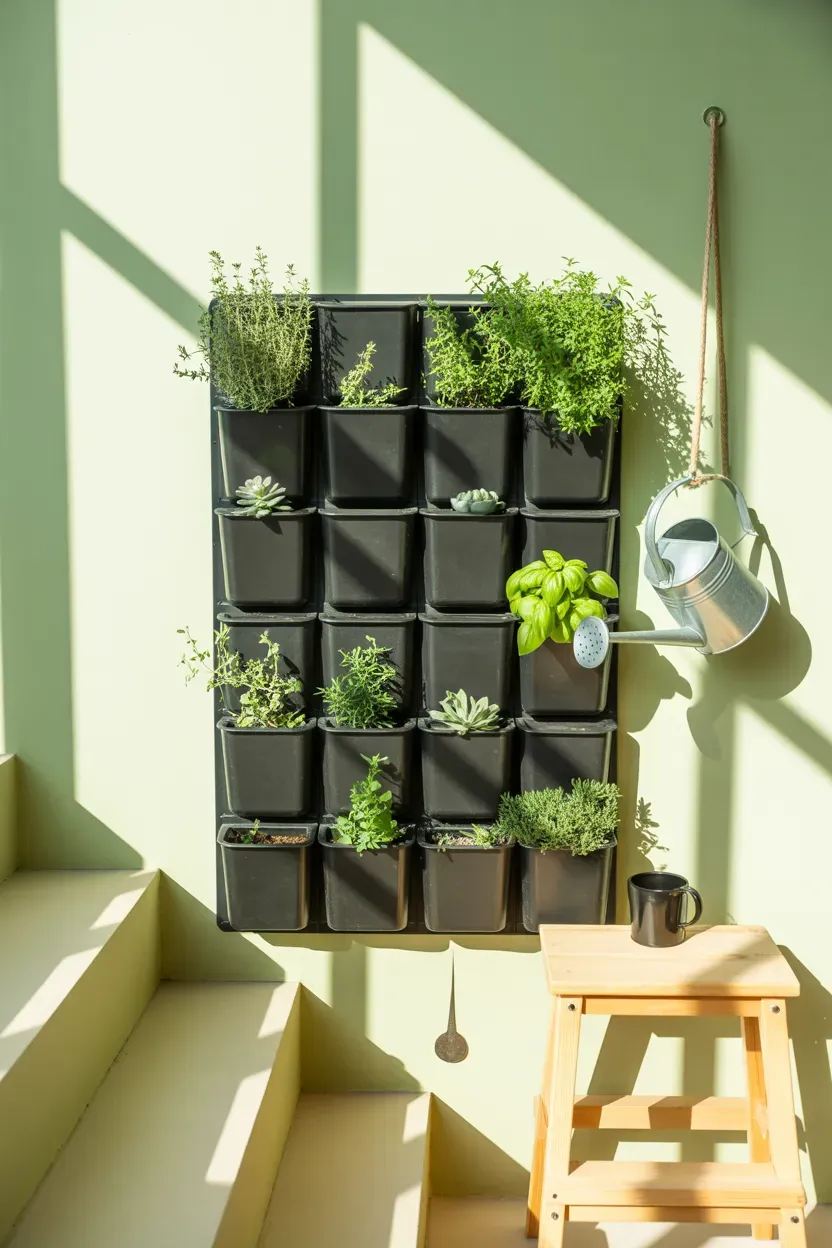
21. A Wall-Mounted Vertical Garden Frame
A modular vertical garden frame mounted on the stair wall turns a flat surface into a genuine growing wall for herbs or small succulents.
This is the most advanced idea on the list and genuinely needs a bright, sun-facing stair wall — I tried a version of this on a north-facing wall and lost half the herbs within a month. Each cell needs individual attention since drainage and light exposure vary slightly across the frame, so expect more maintenance than a typical potted arrangement.
- Choose a frame with individual drainage trays, not a single shared reservoir
- Start with hardy herbs like thyme and rosemary before adding anything delicate
- Check the wall’s weight rating before mounting when fully planted and wet
Our vertical garden frame DIY guide and University of Florida Extension cover vertical growing systems in more depth. Save this one for a staircase with real sun.
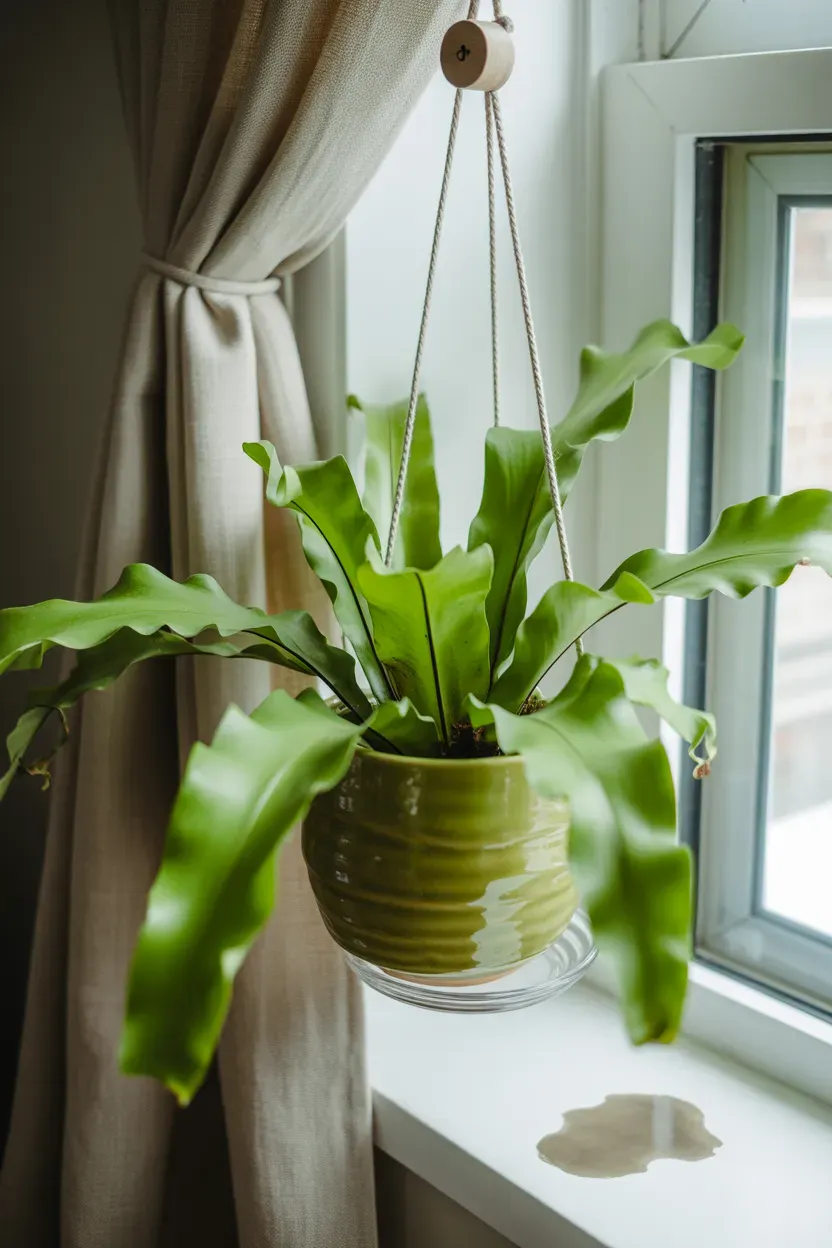
22. Bird’s Nest Fern in a Hanging Ceramic Planter
A bird’s nest fern’s wide, ruffled fronds look distinctly different from a typical trailing plant, which makes it a good way to break up visual repetition on a busy staircase.
Bird’s nest ferns want consistently humid air and never like their central rosette getting waterlogged — always water around the edges of the pot, not directly into the center, or the crown can rot. This happened to a fern I inherited from a friend within its first month in my care, so I now water from the pot’s rim exclusively.
Our bird’s nest fern care guide has full watering diagrams, and Missouri Botanical Garden covers humidity needs for tropical ferns generally. It’s an easy way to add a different leaf shape into the mix.
23. Climbing Pothos Trained Up the Banister Posts
Instead of letting pothos trail downward, train it upward around the banister’s vertical posts for a spiraling, climbing-vine effect.
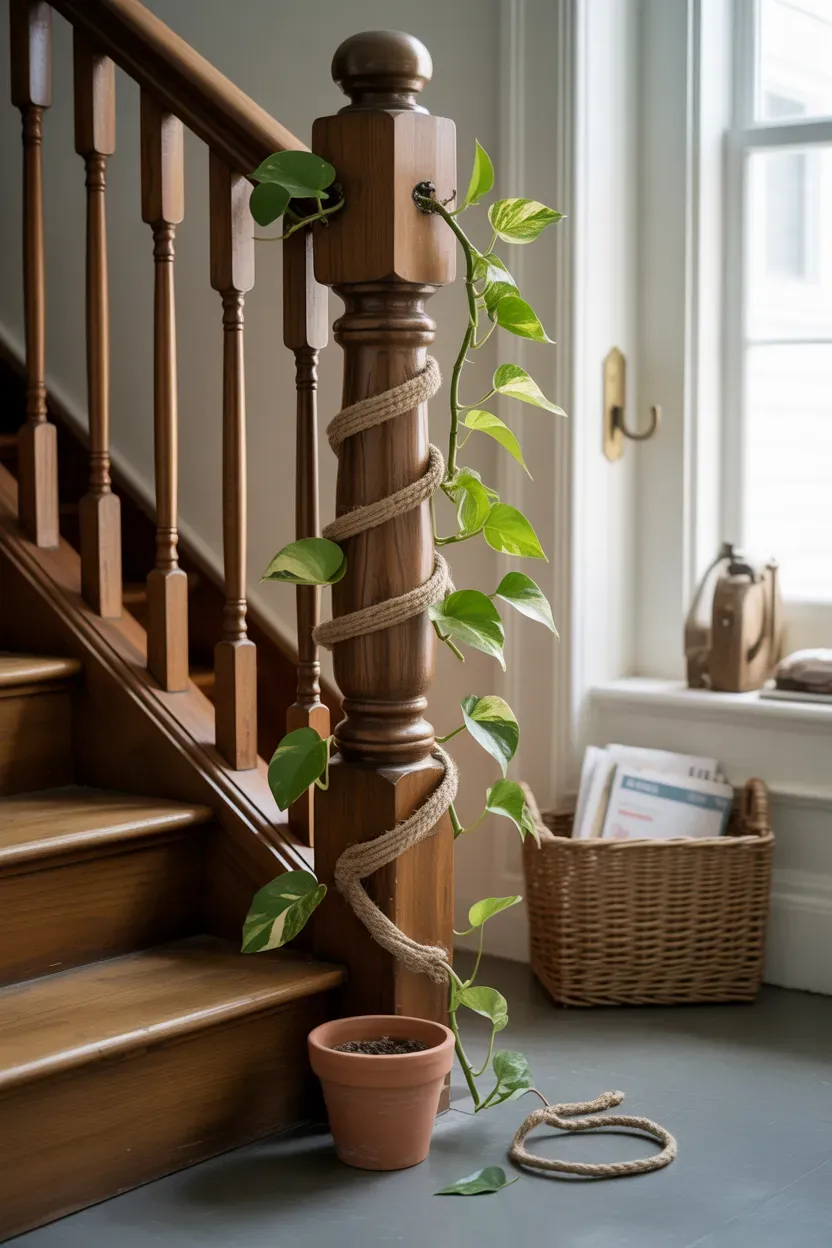
Retie the vine every few weeks as it grows, always leaving a little slack — pothos stems thicken with age, and a tight tie left too long can cut into the stem, which happened to one of mine before I started checking monthly. This trains faster in bright indirect light; in lower light, expect growth to slow noticeably and leaves to come in smaller.
Pro Tip: Wipe pothos leaves with a damp cloth every few weeks — dust buildup on glossy leaves measurably slows growth by blocking light absorption.
More training tips are in our guide to training pothos on a trellis, and RHS has general climbing-plant support advice. It’s a fresh spin on a plant most people only ever hang.
24. A Cozy Reading Nook Under the Stairs With Potted Palms
Beyond just a chair, a full reading nook under the stairs with two or three potted palms creates a small indoor jungle retreat within the retreat.
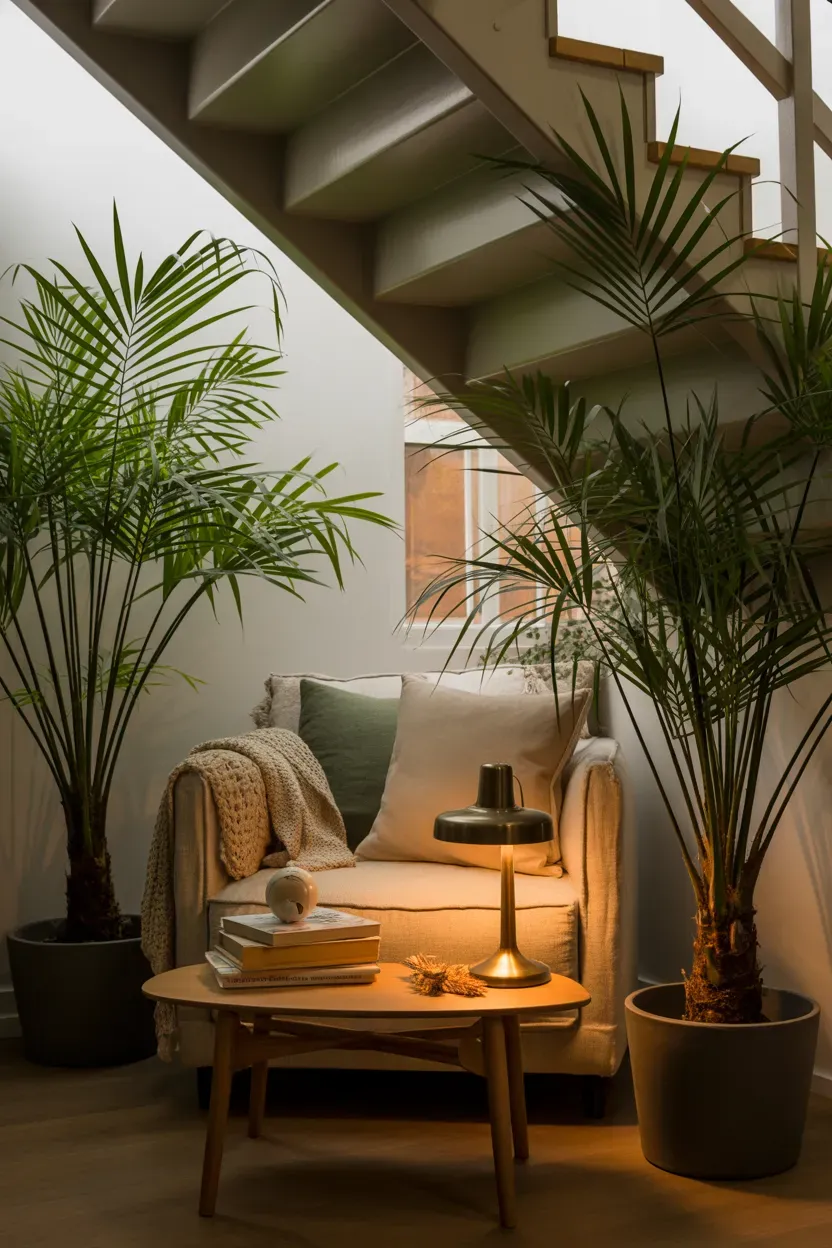
Measure available floor depth carefully before buying furniture — under-stair nooks are often shallower than they look, and I had to exchange my first armchair for a smaller wingback that actually fit. Areca palms need bright indirect light and weekly watering; in a genuinely dim nook, swap in a ZZ plant, which tolerates low light far better.
- Add a small rug to visually separate the nook from the hallway
- Use battery-powered or plug-in lighting if there’s no nearby outlet
- Leave at least 20 inches of walking clearance past the chair
Our cozy nook styling guide and BHG cover small-space furnishing well. This is the idea most likely to actually get used daily, not just admired.
25. Layered Rugs and Potted Areca Palms at the Base
Layering two rugs at the base of the staircase and flanking them with tall areca palms gives the whole entryway a grounded, welcoming jungle feel.
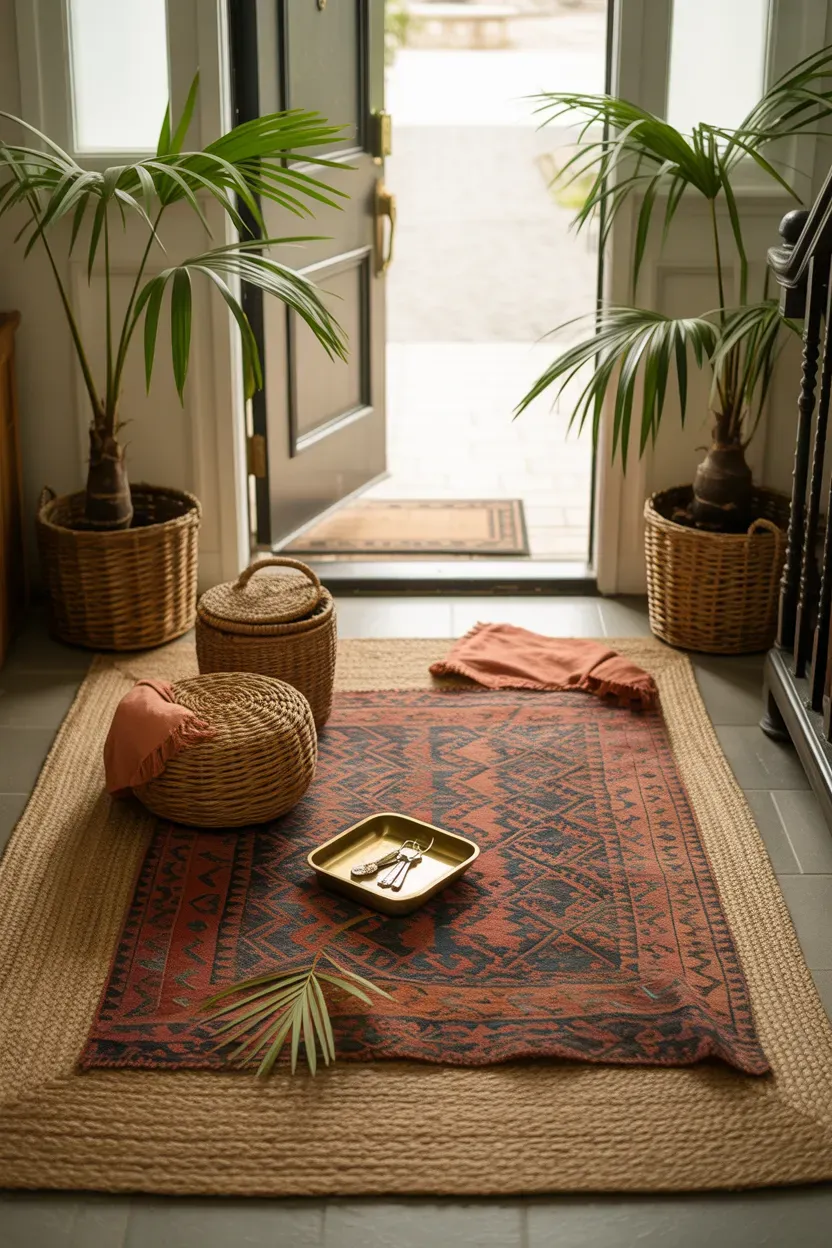
Choose a durable jute base rug for the bottom layer, since entryway traffic wears out delicate weaves fast — my first kilim-only setup frayed within four months without the sturdier jute underneath. Areca palms here want bright indirect light and steady humidity; a small humidifier nearby in winter keeps fronds from crisping when heating dries out the air.
Full palm care details are in our areca palm care guide, and University of Florida Extension has more on palm humidity needs. It’s a simple layering trick that changes how the whole entryway feels underfoot.
26. String Lights Woven Through Trailing Vines for Evening Ambiance
Weaving warm string lights through trailing pothos or ivy turns the staircase garden into something that works after dark, too.
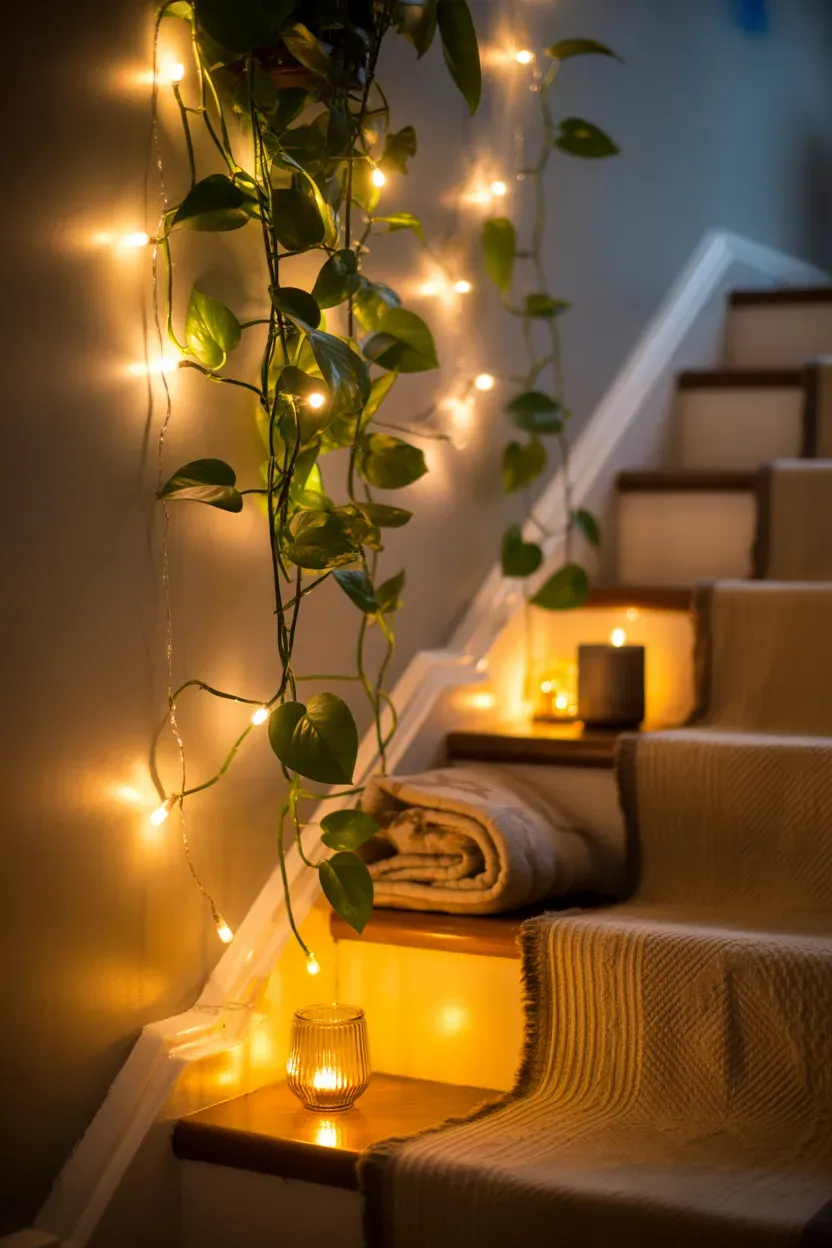
Use battery-powered or USB string lights rather than running an extension cord across steps — a trip hazard here isn’t worth the ambiance, and I switched to battery lights after nearly tripping over a cord myself. Weave the lights loosely around the vine rather than wrapping tightly, leaving room for the plant to keep growing without the wire cutting in.
Pro Tip: Warm white (2700K) bulbs flatter green foliage far better than cool white, which tends to wash leaves out and make the whole display look sterile.
Our string lights plant styling guide has more on safe placement, and BHG covers indoor string light safety generally. It’s a small finishing touch that makes the whole staircase garden feel complete.
Getting Started With a Boho Staircase Garden
The easiest first step is picking one plant, not twenty-six — a single pothos or snake plant on the bottom step will teach you more about your stairwell’s actual light than any guide can. Watch it for two to three weeks before adding anything else; if it’s thriving, you know your light level and can shop accordingly.
The most common beginner mistake is buying plants for the look you want rather than the light you actually have, which usually ends in a stretched, leggy plant within a month. Before buying anything else, gather one good watering can with a narrow spout (for precision on stairs) and one moisture meter or your own finger for checking soil.
Realistically, expect a staircase to look intentionally “styled” within about six to eight weeks of steady additions, and genuinely lush — vines trailing, ferns filled out — by the four to six month mark. This isn’t an overnight transformation, and that’s part of what makes it feel earned rather than staged.
Frequently Asked Questions
What plants work best for a dark staircase with no windows?
Snake plants, ZZ plants, and pothos tolerate low light better than almost anything else, though even these will grow slowly without at least some ambient light. If the stairwell is truly windowless, quality faux greenery is often the more honest, longer-lasting choice.
How do I hang plants safely above a staircase?
Always anchor hooks into a ceiling joist or wall stud rather than drywall alone, since a watered hanging planter can weigh 10 pounds or more. Use hardware rated for at least twice the pot’s expected wet weight, and check hooks for looseness every few months.
Will trailing plants on stairs be a tripping hazard?
Keep vines trained along walls, banisters, or hung well above head height rather than left loose across the walking path. Trim back any growth that starts reaching into the actual step area, ideally checking every two to three weeks during active growing seasons.
Are boho staircase plants safe for pets?
Not automatically — pothos, philodendron, and English ivy are all mildly to moderately toxic if chewed, while spider plants, areca palms, and most ferns are pet-safe. Check the comparison table above before choosing, and keep toxic species on higher shelves or hanging planters out of reach.
How much does it cost to fill a staircase with plants gradually?
Starting with three or four plants typically runs $40 to $80 including pots, and a fully layered staircase garden built out over six months to a year often totals $200 to $400 depending on planter choices. Buying gradually, as this list encourages, spreads that cost naturally instead of requiring it all at once.
A Few Final Thoughts
Twenty-six ideas is a lot to look at in one sitting, but no one actually builds a boho staircase garden all at once — it’s built one plant, one shelf, one macrame hanger at a time. Start with whatever idea matches the light you actually have, not the one that photographs best, and let the rest follow over the coming months. The plants that end up thriving are almost always the ones chosen honestly rather than aspirationally. A staircase that once felt like dead space between floors can become the part of the house people linger in, and that shift usually starts with something as small as one pothos on the bottom step. Give it a season before judging the results — jungle retreats, even small ones, are built slowly.